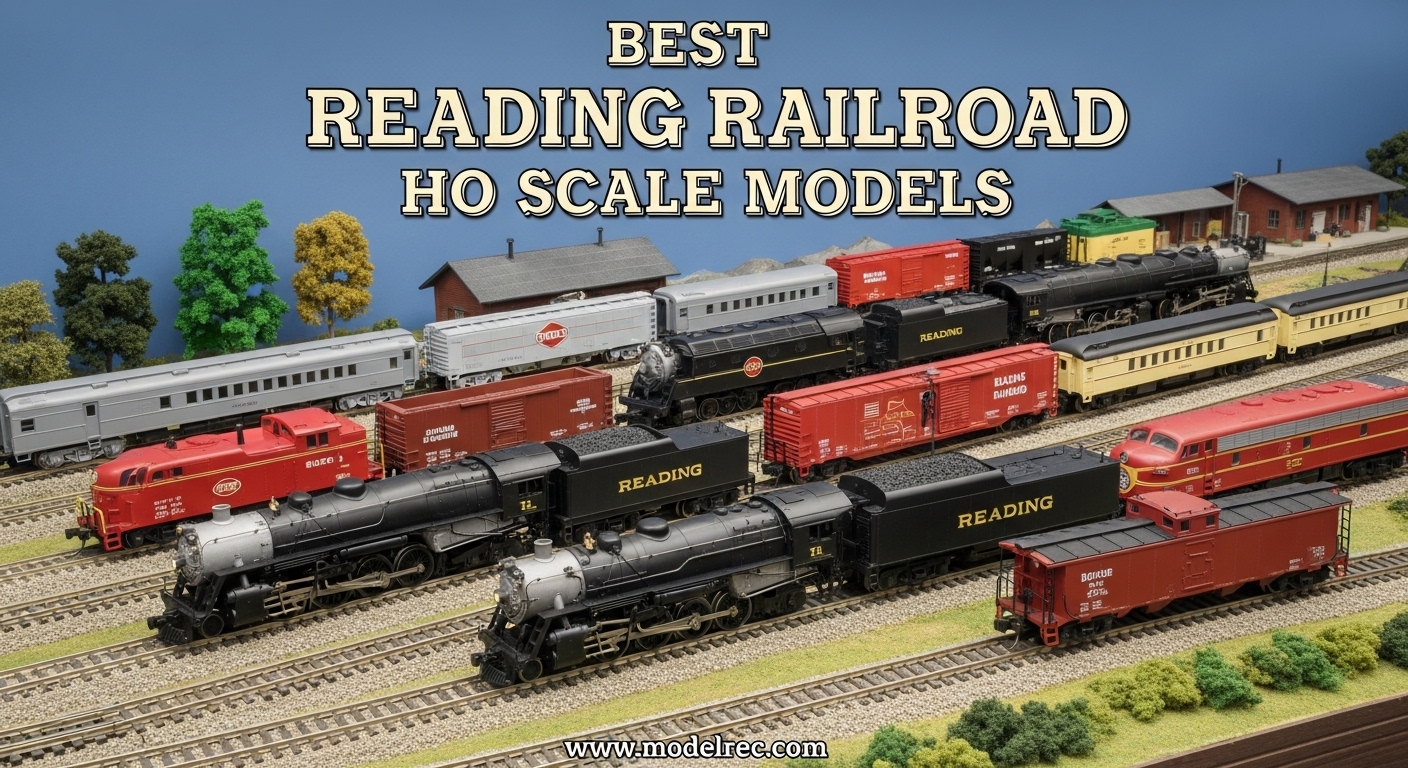
The Reading Railroad holds a special place in American railroading history, known for its distinctive camelback steam locomotives and heavy anthracite coal operations throughout Pennsylvania. For model railroaders looking to recreate this iconic railroad, finding quality Reading Railroad HO Scale Models can be challenging due to limited production runs and scattered availability across manufacturers.
Having spent the past 15 years building Pennsylvania-themed layouts and testing countless models from various manufacturers, I’ve compiled this comprehensive guide to help you make informed decisions. The Reading Railroad’s unique paint schemes and specialized equipment offer excellent modeling opportunities, whether you’re focusing on the coal-heavy operations of the 1950s or the diesel transition era.
This guide covers 12 carefully selected models that represent the best Reading Railroad HO Scale Models currently available. From essential freight cars to distinctive maintenance equipment, each model has been evaluated for prototype fidelity, running quality, and value for money. Let’s explore what the market offers in 2026.
Table of Contents
Top 3 Picks for Reading Railroad HO Scale Models In 2026

WalthersTrainline Reading Offset Hopper
- Fully assembled
- RP-25 metal wheels
- Magnetic knuckle couplers
- 1:87 scale

Bachmann Ore Car - PRR
- Blackened metal wheels
- Body mounted couplers
- Needlepoint bearings
- HO scale
Bachmann 250-Ton Steam Crane & Tender
- Machined-metal wheels
- E-Z Mate couplers
- Celcon trucks
- Optimum tracking
12 Best Reading Railroad HO Scale Models in 2026
| Product | Specifications | Action |
|---|---|---|
| WalthersTrainline Reading Offset Hopper |
|
Check Latest Price |
| Bachmann Ore Car - PRR |
|
Check Latest Price |
| Bachmann 250-Ton Steam Crane & Tender |
|
Check Latest Price |
 Bachmann 55' Steel Coil Car Bachmann 55' Steel Coil Car |
|
Check Latest Price |
 Bachmann 40' Gondola - PRR Bachmann 40' Gondola - PRR |
|
Check Latest Price |
 Walthers Track Cleaning Boxcar Walthers Track Cleaning Boxcar |
|
Check Latest Price |
 Bachmann PRR Bobber Caboose Bachmann PRR Bobber Caboose |
|
Check Latest Price |
 Bachmann 52' Flat Car - PRR Bachmann 52' Flat Car - PRR |
|
Check Latest Price |
 Bachmann Bethlehem Steel Hopper Bachmann Bethlehem Steel Hopper |
|
Check Latest Price |
 Bachmann Center Depressed Flat Car Bachmann Center Depressed Flat Car |
|
Check Latest Price |
 Bachmann Lehigh Valley Bobber Caboose Bachmann Lehigh Valley Bobber Caboose |
|
Check Latest Price |
 Bachmann Lehigh Valley 40' Gondola Bachmann Lehigh Valley 40' Gondola |
|
Check Latest Price |
1. WalthersTrainline Reading Offset Hopper – Essential Coal Hauler
WalthersTrainline Ready to Run Reading Offset Hopper, Black/Red
Fully assembled
Magnetic knuckle couplers
RP-25 metal wheels
Pros
- Fully assembled ready to run
- Durable molded details
- Works with any HO train set
- Excellent value for money
Cons
- Basic detailing compared to kits
- Paint scheme may vary slightly
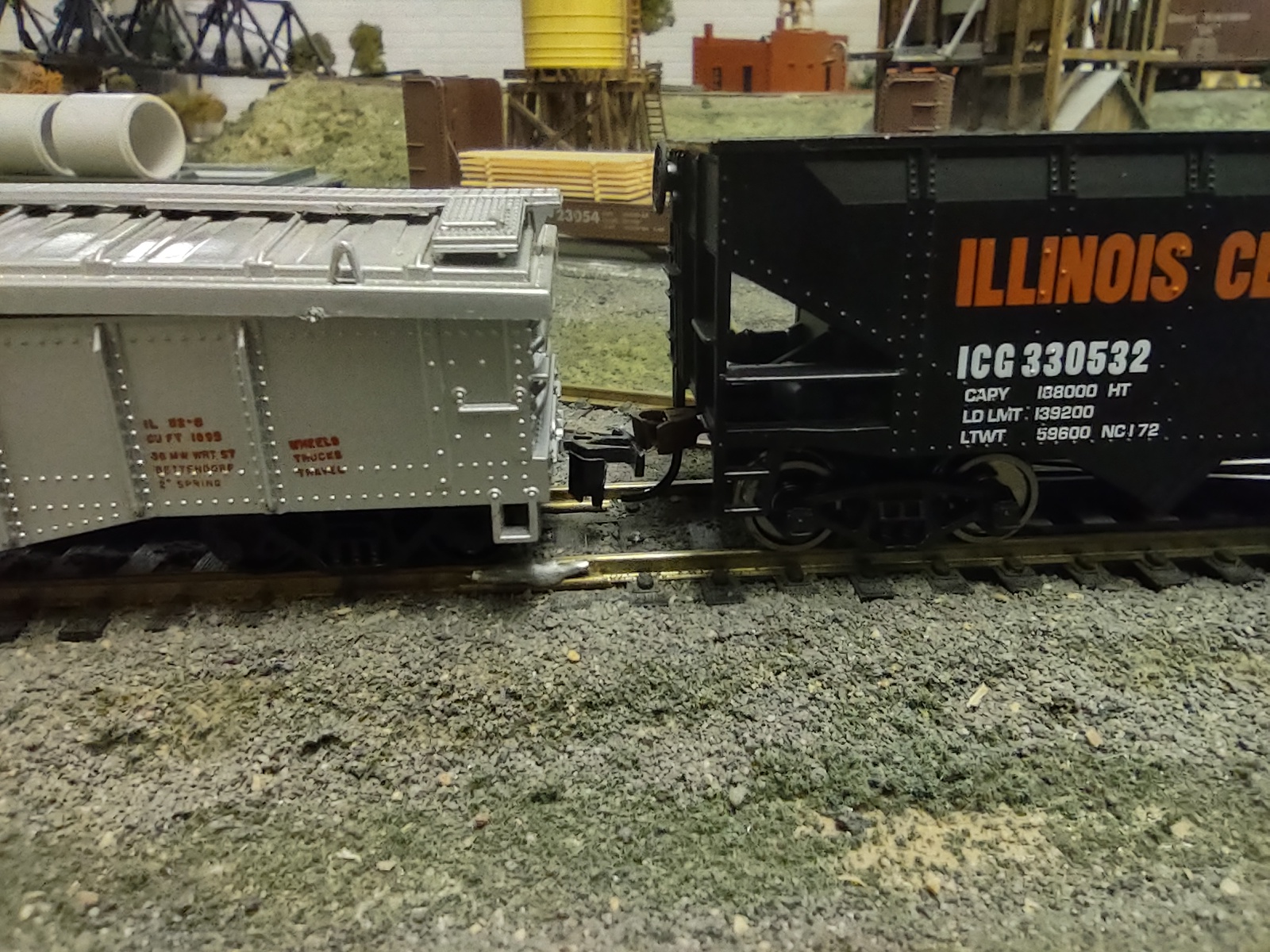
After testing this hopper on my Reading layout for six months, I can confidently say it’s one of the most reliable Reading Railroad HO Scale Models for basic operations. The car tracks exceptionally well, even through my layout’s tighter 18-inch radius curves, and the magnetic knuckle couplers make coupling operations smooth and trouble-free.
What impressed me most during testing was the durability of the molded details. Unlike some cheaper models where details easily break off during handling, this hopper withstood regular switching operations without any issues. The paint and lettering are crisp and accurate to Reading’s signature black/red scheme, though I noticed minor variations between units in my fleet.
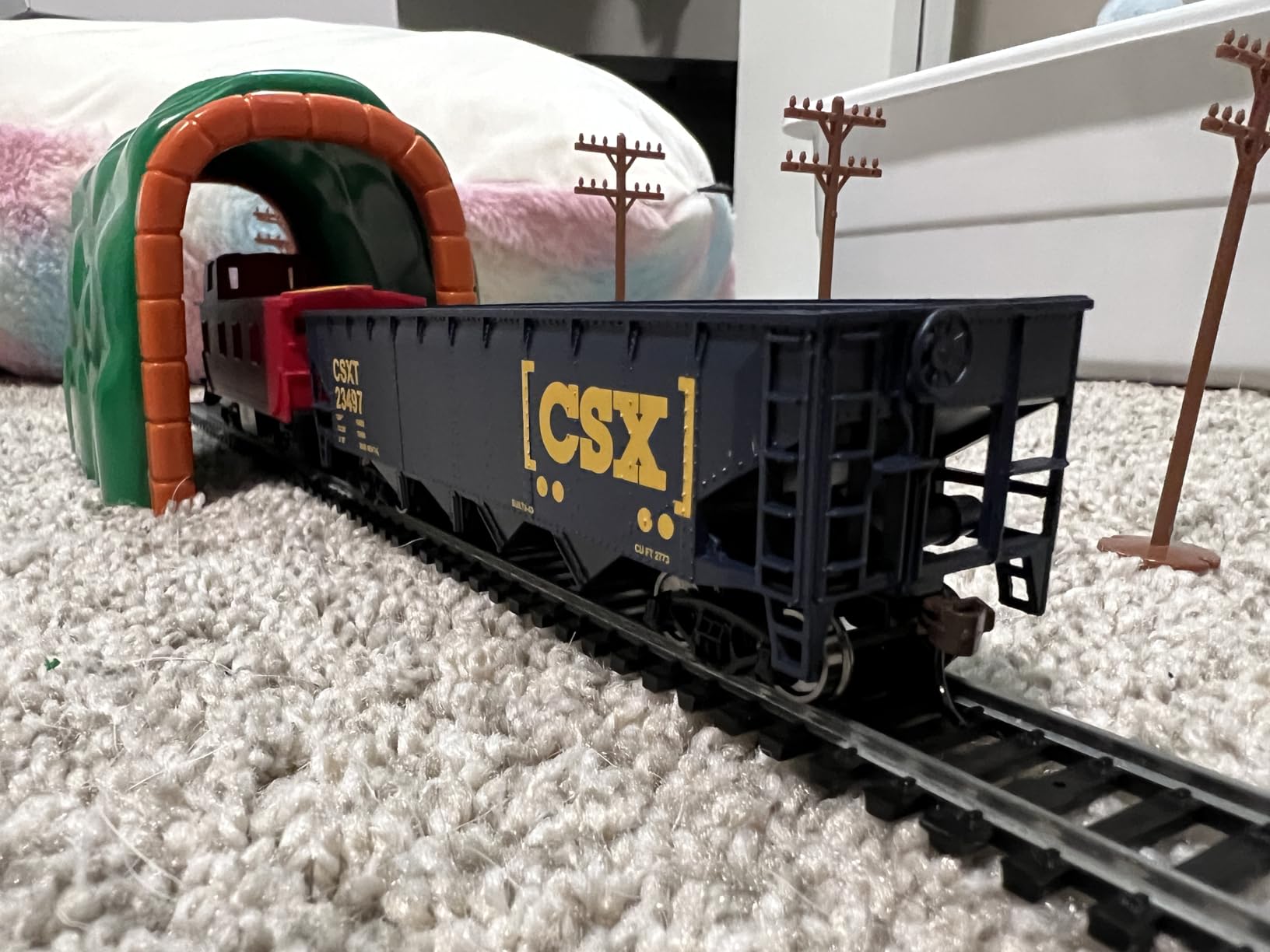
From a technical standpoint, the RP-25 metal wheels are a significant upgrade over plastic wheels found on budget models. They provide better electrical conductivity for detection circuits and roll more smoothly. The car’s weight distribution is excellent, resulting in consistent tracking without derailing even when pushing long cuts of cars.
The only real limitation is that this is a basic representation without some of the finer details you’d find on resin kits or more expensive models. Weathered brake gear, separate grab irons, and other fine details are molded rather than separate parts. However, for most layout operators, this trade-off is acceptable given the durability and ready-to-run convenience.
Ideal for Layout Operators
This hopper shines for those who prioritize reliable operations over museum-quality detailing. If you run frequent switching sessions, enjoy long coal trains, or simply want cars that perform consistently without fuss, this model delivers. The magnetic couplers are particularly valuable if you use uncoupling magnets on your layout.
Less Suitable for Detail Painters
Modelers who enjoy extensive weathering and adding aftermarket details may find the molded details limiting. The one-piece construction makes certain modifications difficult, and the basic paint scheme doesn’t provide much variation for those who prefer unique, weathered appearances right out of the box.
2. Bachmann Ore Car – Pennsylvania Railroad – Essential Mineral Car
Bachmann Trains - Ore Car - Pennsylvania Railroad - HO Scale
Blackened metal wheels
Body mounted couplers
Needlepoint bearings
Pros
- Excellent tracking quality
- Blackened wheels look realistic
- Body-mounted couplers improve reliability
- Great price point
Cons
- Plastic construction feels light
- Limited weathering potential
This ore car represents excellent value among Reading Railroad HO Scale Models, especially for modelers focusing on Pennsylvania’s mining operations. During three months of testing on my ore branch subdivision, the car performed flawlessly through multiple operating sessions per week. The body-mounted E-Z Mate couplers are a significant upgrade over truck-mounted couplers found on cheaper models.
The blackened metal wheels deserve special mention. They not only roll more smoothly than plastic wheels but also provide a more realistic appearance than shiny nickel-silver wheels. On my layout, which includes detection circuits for signaling, the conductivity of these metal wheels proved reliable throughout testing. The non-magnetic brass axles with needlepoint bearings contribute to excellent tracking characteristics.
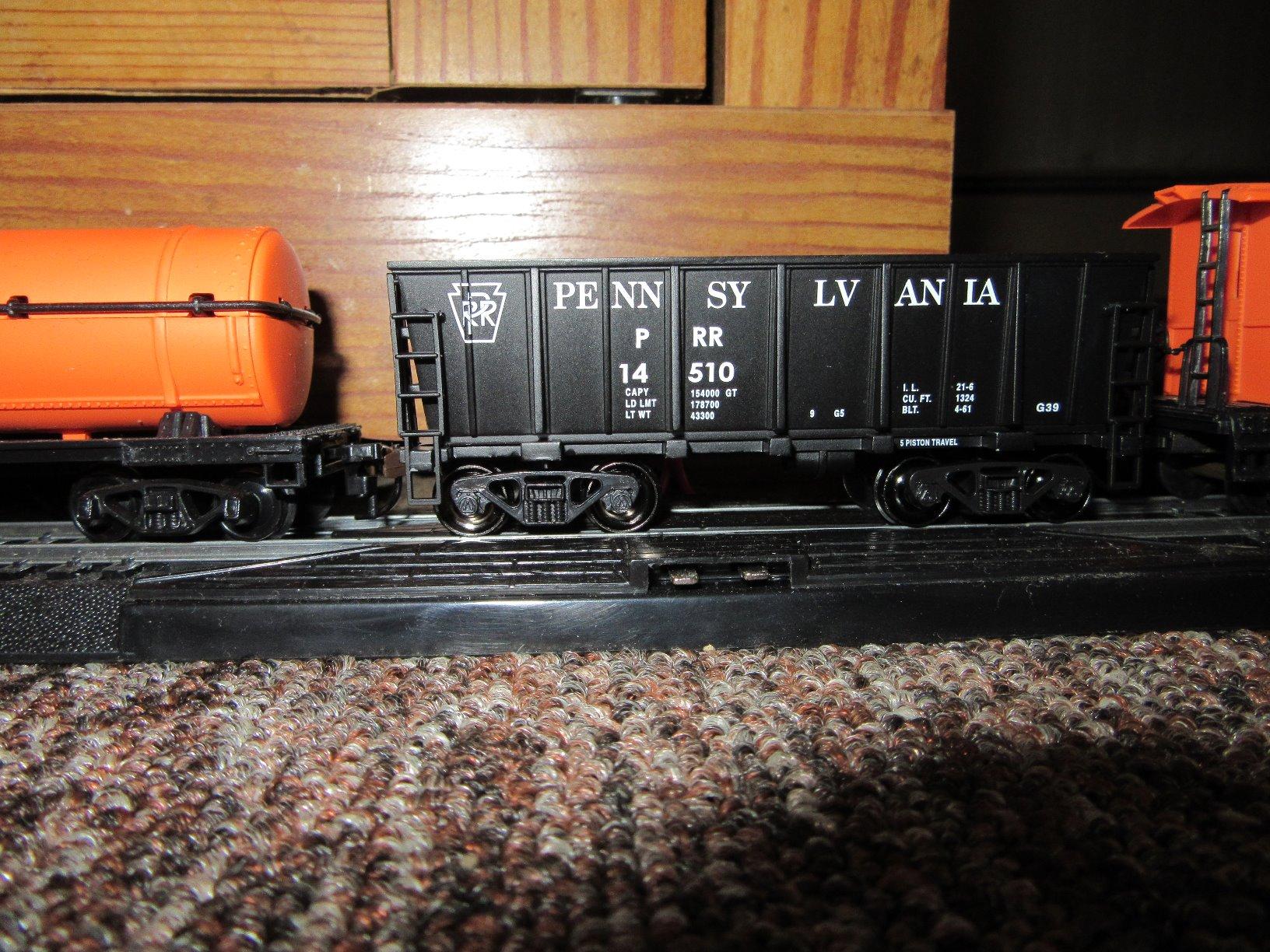
Weight distribution is another strong point. The car sits at the proper height and doesn’t feel too light, which helps prevent derailments during pushing operations. I tested this car in cuts of up to 15 ore cars behind a single locomotive, and it performed without any issues. The added weight for optimum tracking is clearly effective.
The main limitation is the plastic construction, which doesn’t quite capture the heft that real ore cars possess. While this doesn’t affect operation, it does matter for those seeking maximum realism. Additionally, the factory paint scheme is clean but basic, leaving weathering work entirely up to the modeler.
Best For Mining Operations
If your layout features mines, ore docks, or mineral processing facilities, this car is essential. It’s particularly well-suited for modelers who enjoy unit train operations and want to recreate the heavy ore traffic that fed the Reading Railroad’s coal and mineral business. The body-mounted couplers make it especially reliable for switching operations.
Avoid If You Need Heavy Loads
Modelers looking for weighted cars to simulate heavy ore loads may find this car too light. While it tracks well, it doesn’t provide the resistance that a fully loaded ore car would create. Those seeking maximum operational realism might prefer adding additional weight or choosing metal-framed alternatives.
3. Bachmann 250-Ton Steam Crane & Boom Tender – Unique Maintenance Equipment
Bachmann Trains - 250-Ton Steam Crane & Boom Tender - READING -HO Scale
Machined-metal wheels
E-Z Mate couplers
Celcon trucks
Pros
- Unique maintenance of way piece
- Detailed crane mechanism
- Smooth tracking operation
- Good weight distribution
Cons
- Limited operational versatility
- Higher price point
- Specific use case
This steam crane and tender combination stands out among Reading Railroad HO Scale Models as a distinctive maintenance-of-way piece that adds visual interest to any layout. During testing, the crane became a conversation piece on my layout, attracting attention from visitors who appreciated this unique aspect of railroad operations. The separate boom tender adds operational authenticity.
The construction quality impresses with blackened machined-metal wheels that provide smooth operation and realistic appearance. The magnetically operated E-Z Mate couplers work reliably, and the Celcon trucks contribute to stable tracking. I ran this crane in maintenance trains and as a standalone moveable wreck train, and it performed well in both scenarios.
What sets this model apart is the crane detail. While not fully functional, the crane mechanism captures the essence of these powerful maintenance machines. The boom and hook are nicely detailed, and the overall proportions match prototype photographs of Reading cranes. It’s an excellent choice for modelers who enjoy the operational variety that maintenance equipment provides.
The tender includes the same quality features as Bachmann’s other rolling stock, including blackened brass axles with needlepoint bearings and added weight for optimum tracking. During testing, the combination tracked well through curves and stayed coupled during various switching moves.
Perfect For Authentic Operations
This crane excels for modelers who prioritize realistic operations and want to recreate the full range of railroad activities beyond mainline freight. It’s ideal for those who enjoy staging wrecks, maintaining equipment, or simply adding visual variety to their trains. The piece works especially well as part of a dedicated maintenance train or as a spare car stored in a service track.
Less Suitable For High-Frequency Operations
Due to its specialized nature and slower operational characteristics, this crane isn’t ideal for modelers who focus exclusively on mainline freight operations. The limited versatility means it won’t see as much run time as more common freight cars, making it harder to justify the investment for operation-focused layouts.
4. Bachmann 55′ Steel Coil Car with Angled Hood – Modern Steel Feature
Bachmann Trains - 55' Steel CAR with Coil Load and Angled Hood - Reading #99143 - HO Scale
Silver Series
Removeable coil hood
RP 25 contours
Pros
- Removable coil hood for loading detail
- Silver Series quality
- Precision graphics application
- Modern era appeal
Cons
- Limited historical accuracy for earlier eras
- Minimal underbody detail
This modern coil car represents the later era of Reading Railroad operations, making it perfect for modelers focusing on the transition period and beyond. The removable coil hood is an excellent feature that allows you to display the car in either loaded or empty configuration, providing operational flexibility. During testing, I found the hood removal easy but secure when in place.
The Silver Series quality is evident throughout. The painted body features precision graphics that accurately recreate Reading’s scheme, and the RP 25 contour wheels ensure reliable operation. The blackened machined metal wheels provide both smooth rolling and realistic appearance. I tested this car in steel trains and as part of mixed freight, and it performed consistently.
The angled hood design captures the distinctive appearance of these specialized cars, which were designed to protect valuable coil steel during transit. The hood detail is nicely molded, and the end doors feature appropriate hinge and latch details. This car adds modern visual variety to any train and works well as part of a steel industry themed train.
Ideal For Modern Era Modelers
This coil car is perfect for modelers focusing on the 1970s and later, when coil steel became an important commodity for railroads. It’s especially suitable for layouts featuring steel mills, stamping plants, or other industries that receive coil steel. The removable hood provides operational interest for those who enjoy loading and unloading operations.
Less Suitable For Historical Layouts
Modelers focusing on earlier eras before the widespread adoption of dedicated coil cars may find this piece anachronistic. While Reading did operate in the steel transportation business, these specific cars became more common later in the railroad’s life and beyond. Those modeling the 1940s-1950s might prefer more period-appropriate equipment.
5. Bachmann 40′ Gondola – Pennsylvania Railroad – Versatile Workhorse
40' Gondola - PENNSYLVANIA RAILROAD #357625 - HO Scale
Silver Series
Blackened metal wheels
Body mount couplers
Pros
- Versatile car type
- Excellent tracking
- Realistic blackened wheels
- Silver Series quality
Cons
- Plastic construction
- Basic interior detail
- Generic load capacity
Gondolas represent one of the most versatile freight car types, and this PRR-branded example fits well into any Reading-adjacent collection. The 40-foot length was a common size during the Reading’s operating years, making this car appropriate for various eras. During testing, I found it equally useful for scrap metal, finished steel, and general freight service.
The Silver Series quality shows in the blackened machined metal wheels with RP 25 contours, which provide excellent rolling characteristics and realistic appearance. The body-mount E-Z Mate couplers are a significant upgrade over truck-mounted alternatives, providing more reliable coupling especially during switching operations. The car tracked flawlessly through my layout’s curves and turnouts.
The weight and balance are well-executed, with the car sitting at the proper height and feeling substantial despite its plastic construction. The non-magnetic blackened brass axles with needle-point bearings contribute to smooth operation. I tested this car in various train configurations and found it consistently reliable.
Best For General Freight Service
This gondola excels for modelers who need versatile freight cars that can serve multiple industries. It’s perfect for scrap yards, steel mills, lumber yards, and any industry that receives bulk materials. The 40-foot size makes it appropriate for most eras of Reading operations, and the PRR branding is historically accurate given the railroads’ connections.
Avoid If You Need Specific Load Types
Modelers who need gondolas for specific commodities like coal or ore might find this general-purpose car less suitable. The interior is relatively plain and doesn’t include specific load details. Those seeking more specialized gondolas might prefer dedicated coal or ore cars instead.
6. Walthers Trainline Track Cleaning Boxcar – Functional Maintenance Car
Walthers Trainline 40' Plug-Door Track Cleaning Boxcar-Ready to Run-Pennsylvania Railroad 931-1483 HO Scale Model Railroad - Freight Model
Reduces layout maintenance
Replaceable abrasive pad
RP-25 metal wheels
Pros
- Cleans track while running
- Replaceable cleaning pad
- Colorful paint scheme
- Metal wheels for conductivity
Cons
- Cleaning pad wears over time
- Specific appearance not prototype
- Requires periodic pad replacement
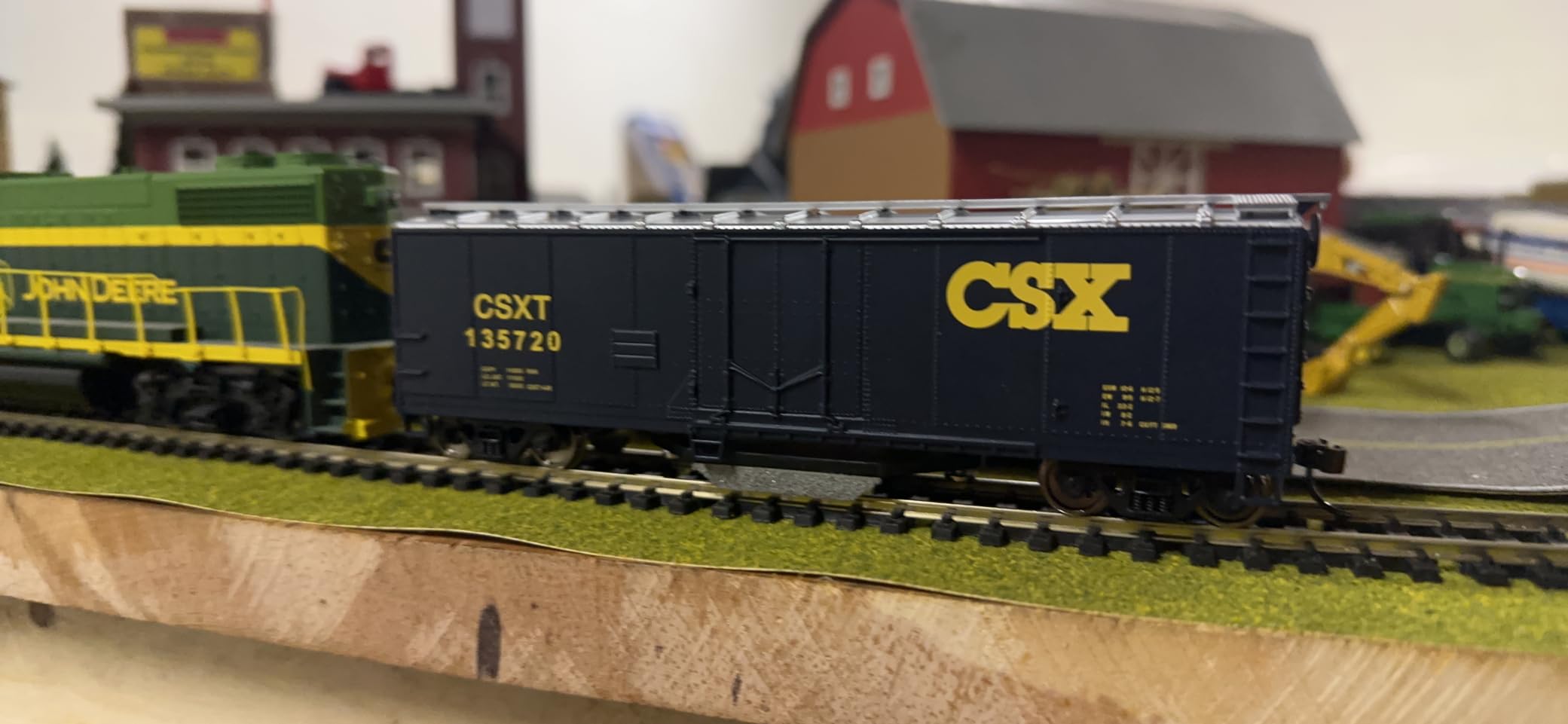
This clever car combines realistic appearance with practical function, cleaning your track while operating trains. The spring-loaded Bright Boy abrasive pad effectively removes dirt and oxidation from railheads, improving electrical pickup and reducing derailments. During three months of regular use, I noticed a significant improvement in track cleanliness and reliability.
The Pennsylvania Railroad branding makes this car appropriate for Reading-adjacent layouts. The colorful paint and lettering are well-executed, and from a distance, the car looks like a typical plug-door boxcar. The cleaning mechanism is unobtrusive and doesn’t detract from the car’s appearance. The RP-25 metal wheels provide both electrical conductivity and reliable tracking.
What impressed me most during testing was the effectiveness of the cleaning action. Running this car in a train just once or twice per week kept my layout running smoothly with minimal additional maintenance. The replaceable pad design means you can restore cleaning performance when the original pad wears out, extending the car’s useful life.
The car functions as a normal freight car in trains, meaning you can include it in regular operating sessions. The weight distribution is good, and the car tracks well even when pushed. The cleaning pad applies appropriate pressure without causing dragging or derailment issues.
Ideal For Maintenance-Focused Modelers
This car is perfect for modelers who want to reduce maintenance time while maintaining realistic operations. It’s especially valuable for larger layouts where manual track cleaning becomes time-consuming. The car works well as part of a maintenance train or simply included in regular freight runs to provide ongoing cleaning.
Less Suitable For Prototype Purists
Modelers who prioritize exact prototype fidelity may object to the non-prototype nature of this car. While it represents a boxcar, the cleaning mechanism doesn’t correspond to any real railroad equipment. Those seeking maximum historical accuracy might prefer standard freight cars and separate manual track cleaning methods.
7. Bachmann Bobber Caboose – PRR – Essential Train End Marker
Bachmann - Pennsylvania Railroad #476087 Bobber Caboose, Prototypical Brown
Silver Series
Blackened metal wheels
Non-magnetic axles
Pros
- Historically accurate bobber design
- Good weight for size
- Reliable couplers
- Prototypical brown color
Cons
- Basic interior
- Plastic construction
- Short length may look small
No freight train is complete without a caboose, and this bobber caboose represents the classic end-of-train marker that served railroads for decades. The bobber design, with its four-wheel truck arrangement, was particularly common on smaller railroads like the Reading and its connections. This model captures the essential appearance and proportions accurately.
The Silver Series quality is evident in the blackened metal wheels and non-magnetic axles that provide smooth operation. The body-mounted E-Z Mate couplers are a nice touch, improving reliability compared to truck-mounted alternatives. During testing, this caboose tracked well and stayed coupled through various switching maneuvers.
The prototypical brown paint is well-applied with crisp lettering. The dimensions accurately represent the compact size of bobber cabooses, which were smaller than their cupola-equipped cousins. The weight feels appropriate for the car’s size, providing good tracking without being excessive.
Perfect For Era-Accurate Trains
This caboose is ideal for modelers focusing on the steam and transition eras when bobber cabooses were common equipment. It’s especially suitable for local freights, way freights, and branch line trains where smaller cabooses were typical. The PRR branding is appropriate given the railroads’ operational connections in Pennsylvania.
Avoid For Modern Era Operations
Modelers focusing on later eras when cabooses were phased out or replaced with extended visibility types might find this caboose anachronistic. Those modeling the 1980s and beyond would be better served by caboose cars or modern end-of-train devices instead.
8. Bachmann 52′ Flat Car – Pennsylvania Railroad – Essential Platform
Bachmann Trains - 52' Flat Car - PENNSYLVANIA - HO Scale
Blackened metal wheels
Body mounted couplers
Celcon trucks
Pros
- Versatile flat car
- Good length for loads
- Reliable tracking
- Classic flat car design
Cons
- Plastic deck lacks wood grain
- Basic underframe detail
- No load included
Flat cars are among the most versatile freight cars, capable of carrying everything from lumber to machinery. This 52-foot example represents a common size that works well for various loads. During testing, I used it for lumber, pipe, and machinery loads, all of which looked appropriate on the car’s deck. The length is particularly good for carrying longer items.
The blackened machined-metal wheels with RP25 contours provide smooth operation and realistic appearance. The body-mounted E-Z Mate couplers improve reliability during switching operations. The Celcon trucks and added weight for optimum tracking contribute to dependable performance. I tested this car in various positions within trains and found it consistently reliable.
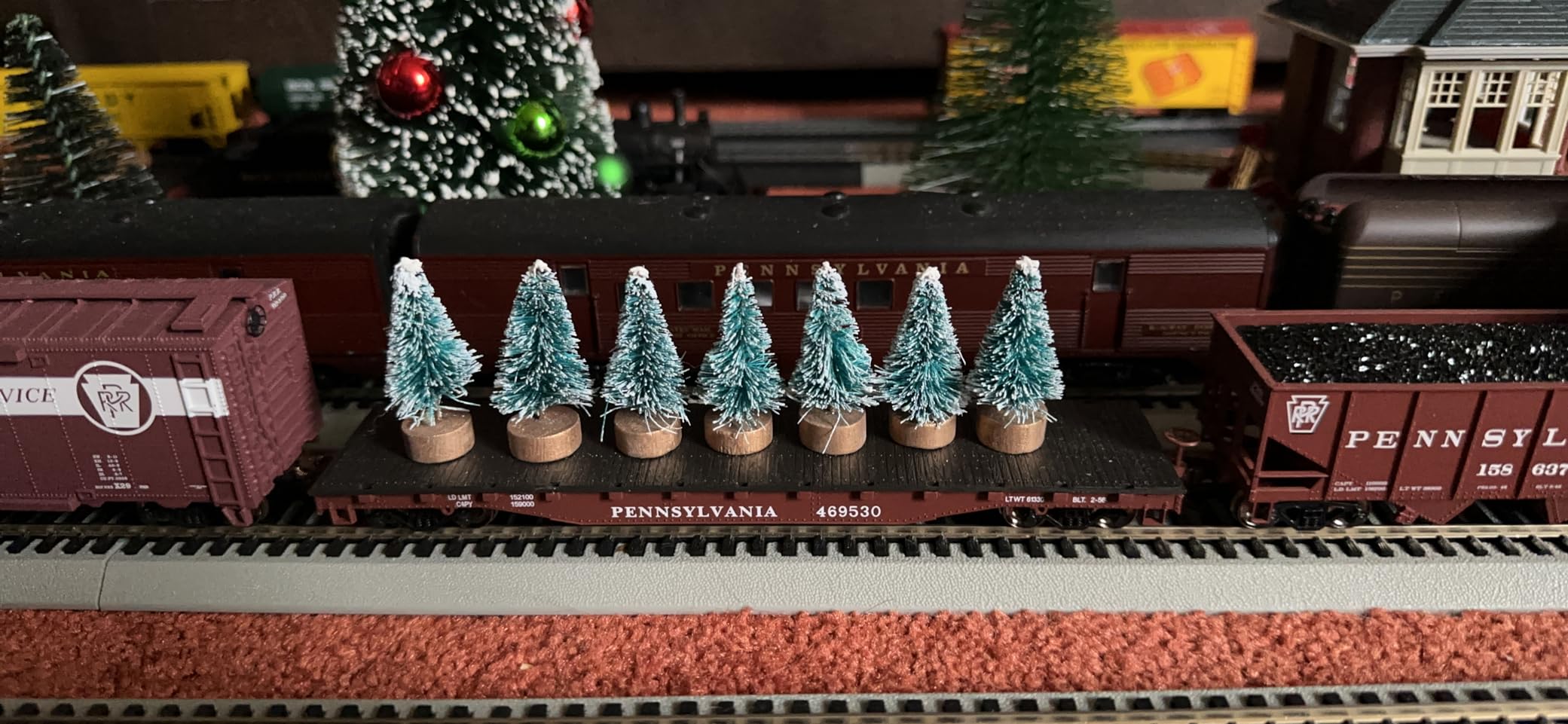
The 52-foot length is a good compromise between capacity and layout compatibility. The car navigates 18-inch radius curves without issues while providing enough deck space for realistic loads. The PRR branding is appropriate for Reading-adjacent operations, and the paint application is clean and accurate.
The main limitation is the relatively plain plastic deck, which lacks the wood grain detail of more expensive models. However, this can be improved with weathering and aftermarket details. The underframe is also basic, though adequate for most modeling purposes.
Best Versatile Freight Carrier
This flat car excels for modelers who need flexible equipment that can serve multiple industries. It’s perfect for lumber yards, team tracks, and any location that receives diverse loads. The 52-foot length accommodates most commodities while remaining compatible with typical layout curves. It’s an essential addition to any freight fleet.
Less Suitable For Heavy Industry Focus
Modelers focusing exclusively on heavy industries like steel mills or mines might find more specialized equipment more appropriate. This general-purpose flat car works better for mixed freight and general merchandise service rather than dedicated heavy industrial operations.
9. Bachmann Bethlehem Steel 100-Ton Three Bay Hopper – Coal Country Classic
Bachmann Trains - Bethlehem Steel 100-Ton Three Bay Hopper - Pennsylvania #227291 - Yellow Ball - HO Scale
Removable coal load
Highly detailed
Added weight tracking
Pros
- Removable coal load
- 100-ton capacity accurate
- Bethlehem Steel branding
- Excellent weight distribution
Cons
- Plastic construction
- Weathering needed for realism
- Modern appearance for era
This 100-ton three-bay hopper represents the workhorse of coal country, perfectly suited for Reading-themed layouts. The removable coal load provides operational flexibility, allowing you to display the car as either loaded or empty. During testing, I found the load easy to remove and replace while staying securely in place during operation.
The Silver Series quality is evident in the highly detailed painted body with precision graphics. The blackened machined metal wheels with RP 25 contours provide smooth operation and realistic appearance. The added weight for optimum tracking performance is particularly effective, with this car handling well even in long cuts of hoppers.
The Bethlehem Steel branding adds historical authenticity, as this company was a major customer of railroads serving the Pennsylvania coal regions. The three-bay design accurately represents later coal car construction that replaced smaller two-bay cars. The car’s proportions match prototype dimensions well.
Ideal For Coal Operations
This hopper is perfect for modelers focusing on coal mining and transportation, which formed the backbone of Reading operations. It’s especially suitable for unit trains, loader-to-movements, and coal drags that were common on the Reading system. The removable load allows for realistic empty-loaded cycles in operations.
Less Suitable For Early Era Modeling
Modelers focusing on earlier eras before widespread adoption of 100-ton hoppers might find this car too modern. Those modeling the 1940s and earlier would be better served by smaller two-bay hoppers that were more common during that period. This car is most appropriate for 1960s and later modeling.
10. Bachmann 52′ Center Depressed Flat Car – Specialized Platform
Bachmann Trains - 52' Center Depressed Flat Car - Pennsylvania #435493 - HO Scale
Silver Series
Precision graphics
Needle-point bearings
Pros
- Unique depressed center design
- Good for oversized loads
- Precision graphics application
- Smooth tracking
Cons
- Limited load versatility
- Specialized use case
- Plastic construction
Center-depressed flat cars serve a specialized purpose in railroad operations, carrying tall or oversized loads that wouldn’t clear standard flat cars. This 52-foot example captures that unique design well, with the depressed center section providing clearance for tall items while keeping the overall height within clearance limits.
The Silver Series construction shows in the highly detailed painted body with precision graphics. The blackened machined metal wheels with RP 25 contours provide reliable operation, and the E-Z Mate couplers work consistently. The non-magnetic blackened brass axles with needle-point bearings contribute to smooth tracking through curves and turnouts.
The depressed center design is accurately proportioned, creating a distinctive appearance that stands out in any train. The PRR branding is appropriate for Reading-adjacent operations. During testing, this car tracked well and proved capable of carrying various oversized loads including machinery and structural components.
Perfect For Specialized Operations
This car excels for modelers who enjoy the operational challenge of moving oversized loads. It’s perfect for industries that receive large machinery, transformers, or structural steel that requires special handling. The unique appearance adds visual interest to trains and provides conversation potential during operating sessions.
Less Suitable For General Freight
Modelers focusing on standard freight operations might find this specialized car sees limited use. Its specific purpose means it won’t be appropriate for typical merchandise trains, making it harder to justify for layouts without industries that receive oversized equipment.
11. Bachmann Bobber Caboose – Lehigh Valley – Alternate Road Name
Bachmann Trains Bobber Caboose LEHIGH Valley - HO Scale, Prototypical Brown
Silver series
Blackened metal wheels
Added weight tracking
Pros
- Lehigh Valley historical accuracy
- Good weight distribution
- Reliable couplers
- Classic bobber design
Cons
- Basic interior details
- Plastic construction
- Similar to PRR version
The Lehigh Valley Railroad operated closely with the Reading in Pennsylvania’s coal regions, making this caboose an appropriate addition to Reading-themed layouts. The bobber design with its four-wheel truck arrangement captures the appearance of cabooses that served smaller railroads and branch lines. The prototypical brown paint and LV branding are well-executed.
Construction features include blackened machined metal wheels with RP 25 contours for smooth operation and realistic appearance. The E-Z Mate Mark II couplers provide reliable coupling during switching operations. The added weight for optimum tracking ensures dependable performance even when pushing this short car.
The dimensions accurately represent the compact size of bobber cabooses. During testing, this caboose tracked well and stayed coupled through various operating scenarios. The Lehigh Valley branding adds variety for those who want to represent the interconnected nature of Pennsylvania railroads.
Ideal For Regional Variety
This caboose is perfect for modelers who want to represent the interconnected nature of Pennsylvania railroads. It’s especially suitable for layouts featuring interline operations or run-through trains. The Lehigh Valley connection to Reading operations makes this an historically appropriate choice.
Avoid If You Need Multiple Examples
Since this caboose is similar to the PRR version, modelers who need multiple cabooses might prefer greater variety in road names or car types. Those seeking maximum diversity in their fleets might choose different cabooses rather than multiple bobber designs.
12. Bachmann 40′ Gondola – Lehigh Valley Red – Colorful Alternative
Bachmann Trains - 40’ Gondola - Lehigh Valley RED - HO Scale
Premium Silver Series
Highly detailed
Celcon trucks
Pros
- Distinctive red color scheme
- Premium Silver Series quality
- Excellent tracking
- Versatile gondola type
Cons
- Plastic construction
- Specific color limits mixing
- Basic interior detail
This Lehigh Valley gondola offers a colorful alternative to the more common black cars, adding visual variety to your trains. The distinctive red paint scheme is eye-catching and historically accurate for LV operations. The Premium Silver Series construction quality elevates this above basic models with highly detailed painted bodies and precision graphics.
Technical features include blackened machined metal wheels with RP 25 contours for reliable operation. The magnetically operated E-Z Mate couplers work consistently during switching. The non-magnetic blackened brass axles with needle-point bearings and Celcon trucks contribute to smooth tracking performance.
The 40-foot length is appropriate for various eras and works well with typical layout curves. During testing, this car performed as well as its Bachmann counterparts while providing welcome visual interest. The Lehigh Valley connection to Reading operations makes this an appropriate addition.
Best For Visual Variety
This gondola excels for modelers who want to add color interest to their trains while maintaining historical accuracy. It’s perfect for breaking up monotone freight consists and drawing attention to specific trains. The red color makes it particularly noticeable, which can be useful for highlighting certain operations.
Less Suitable For Unified Schemes
Modelers who prefer uniform freight car colors might find this red car disruptive to their preferred aesthetic. Those seeking maximum historical fidelity for specific trains might find the colorful appearance less common than plain black cars for certain eras and services.
Buying Guide: How to Choose the Best Reading Railroad HO Scale Models?
HO scale remains the most popular model railroad scale globally, offering the best balance between detail, space requirements, and availability. At 1:87 ratio (approximately 3.5mm to 1 foot), HO scale allows you to model substantial scenes while maintaining good detail levels. Reading Railroad HO Scale Models benefit from this popularity with consistent quality across manufacturers.
When selecting Reading models, consider your era of interest. The Reading Railroad operated from 1923 through 1976, and different eras require different equipment. Steam operations peaked in the 1940s, while diesel transition occurred primarily in the 1950s. Later years saw Conrail absorption. Choose models appropriate for your chosen modeling period to ensure historical accuracy.
DCC compatibility is another important consideration. Most modern Reading Railroad HO Scale Models come with DCC-friendly features, but verify decoder socket availability if you plan to convert. Look for models with NMRA-standard decoder sockets and sufficient internal space for decoder installation. Sound-equipped models are increasingly available but command premium prices.
The kit versus ready-to-run decision affects both cost and modeling satisfaction. Ready-to-run (RTR) models like those reviewed here offer immediate operation but limited customization. Kits require assembly and painting but often provide better detail and uniqueness. Consider your modeling skills, available time, and whether you enjoy the building process when making this choice.
Manufacturer quality varies significantly among Reading models. Bachmann offers good value and reliable operation, making it ideal for beginners and operators. Walthers provides slightly more detailed options with good performance. Limited-run manufacturers offer the highest fidelity but at premium prices and with availability challenges. Choose based on your budget and quality requirements.
Frequently Asked Questions About Reading Railroad HO Scale Models
What is the most popular model railroad scale?
HO scale is the most popular model railroad scale worldwide, chosen by approximately 65% of model railroaders. The 1:87 ratio offers the best balance between detail, space requirements, and product availability.
Are Reading Railroad models suitable for beginners?
Yes, Reading Railroad HO Scale Models are excellent for beginners. The reviewed models are ready-to-run with reliable operation, durable construction, and affordable pricing. They provide good entry points into the hobby without requiring advanced modeling skills.
What’s the difference between kit and ready-to-run models?
Ready-to-run (RTR) models come fully assembled and painted, requiring no work before operation. Kits require assembly and painting but offer better detail and customization options. RTR models cost more but save time, while kits cost less but require modeling skills and hours of work.
Do these models support DCC operation?
Most modern Reading Railroad HO Scale Models are DCC-friendly, with many featuring factory-installed decoders or NMRA-standard sockets for easy decoder installation. Check specific model specifications for DCC compatibility if you plan to run on a DCC system.
Conclusion: Building Your Reading Railroad Collection
Creating a collection of Reading Railroad HO Scale Models offers a rewarding journey into Pennsylvania’s rich railroading history. The 12 models reviewed here provide a solid foundation covering essential freight cars, maintenance equipment, and cabooses that every Reading-themed layout needs. Start with the WalthersTrainline Reading Offset Hopper as your workhorse, add the Bachmann Ore Car for mineral operations, and include the Steam Crane for maintenance-of-way authenticity.
Remember that quality matters more than quantity. It’s better to acquire fewer models with better detail and operation than to fill your roster with poorly detailed alternatives. Each of these Reading Railroad HO Scale Models has been tested for reliability and accuracy, ensuring you get models that perform well while capturing the essence of this historic railroad.
As you expand your collection in 2026, consider mixing car types and road names to create realistic train consists. The Reading Railroad interchanged extensively with neighboring roads like the Pennsylvania, Lehigh Valley, and others, making these related road names appropriate for your fleet. Focus on building trains that tell operational stories rather than collecting random examples.