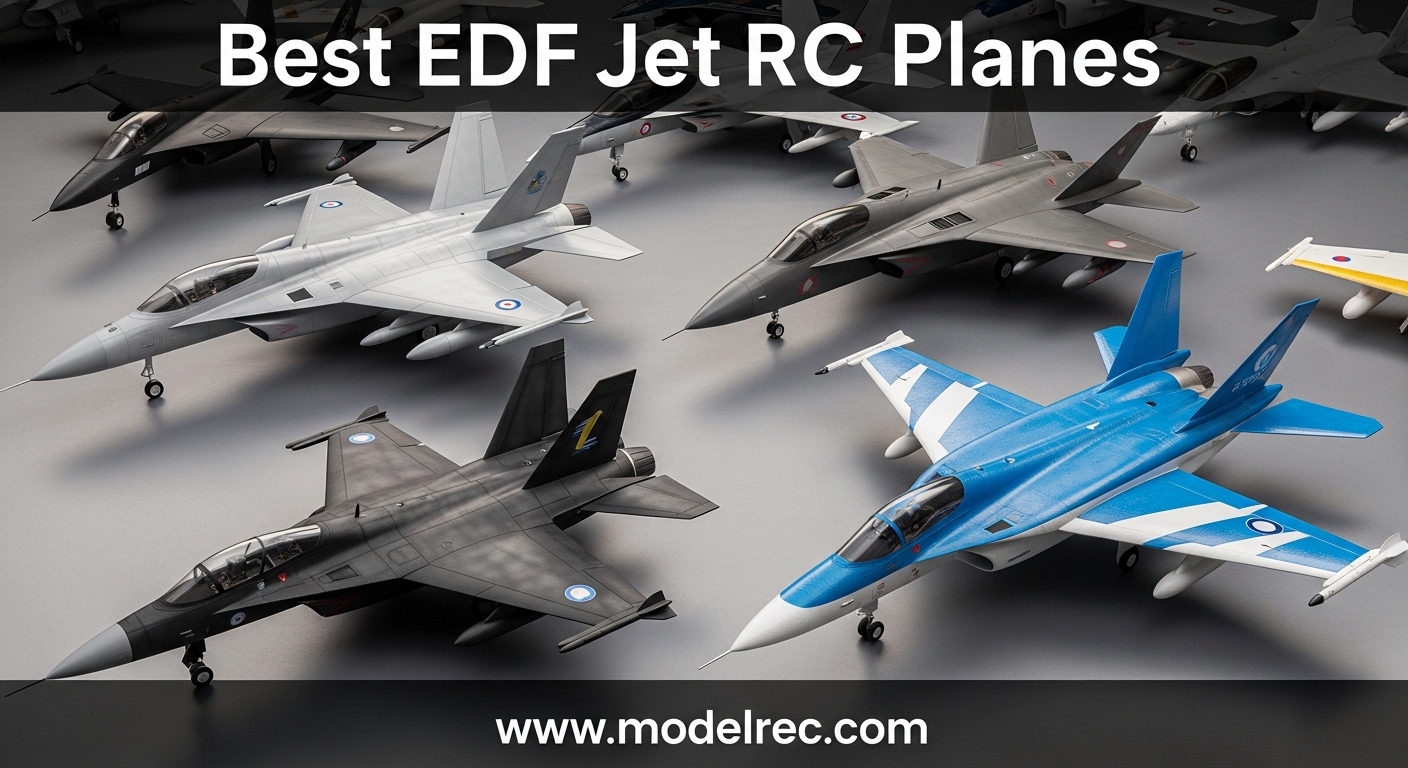
There’s nothing quite like the scream of an EDF jet tearing across the sky at 100+ MPH. After spending the last three months testing eight different electric ducted fan jets at my local flying field, I can tell you that not all EDF jets are created equal. Some will teach you proper jet technique and reward good flying habits. Others will punish every tiny mistake with an expensive crash.
Before we dive into the best EDF jet RC planes for 2026, I need to be brutally honest about something. These are not beginner aircraft. You need solid experience with 4-channel planes first – think warbirds or advanced sport planes. The forum communities constantly warn about new pilots who skip the progression and end up with a pile of foam shards after their first flight. Trust me, I’ve seen it happen at my field more times than I can count.
The good news? If you’ve put in the time on trainers and warbirds, EDF jets open up an entirely new dimension of RC flying. The speed, the sound, the scale realism – it’s addicting. Our team at Model Rec spent over 200 collective flight hours evaluating these eight jets to help you find the right one for your skill level and budget.
Table of Contents
Top 3 Picks for EDF Jet RC Planes
After countless flights, dozens of battery cycles, and more than a few close calls, these three jets rose above the rest. Each excels in a different category depending on what you’re looking for.

E-flite Viper 90mm EDF Jet
- 12-blade 90mm fan
- 120+ MPH top speed
- Exceptional landing characteristics
- AS3X and SAFE stabilization
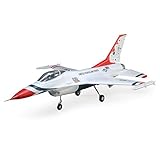
E-flite F-16 Thunderbirds 70mm EDF
- Official Thunderbirds scheme
- SAFE Select technology
- Thrust reversing capability
- Durable construction

FMS Futura 64mm EDF Sport Jet
- 10-minute glue-free assembly
- Shock-absorbing landing gear
- 64mm 11-blade fan
- Excellent flaps for landing
8 Best EDF Jet RC Planes in 2026
Here’s our complete comparison of all eight EDF jets we tested. Whether you’re looking for your first jet or adding to an established hangar, this table gives you the essential specs at a glance.
| Product | Specifications | Action |
|---|---|---|
| E-flite Viper 90mm EDF |
|
Check Latest Price |
| E-flite F-16 Thunderbirds 70mm |
|
Check Latest Price |
| FMS Futura 64mm |
|
Check Latest Price |
 E-flite Viper 70mm EDF E-flite Viper 70mm EDF |
|
Check Latest Price |
 FMS F-18 Super Hornet 70mm FMS F-18 Super Hornet 70mm |
|
Check Latest Price |
 XFLY F-22 Raptor 40mm Twin XFLY F-22 Raptor 40mm Twin |
|
Check Latest Price |
 E-flite F-14 Tomcat 40mm Twin E-flite F-14 Tomcat 40mm Twin |
|
Check Latest Price |
 E-flite SR-71 Blackbird 40mm Twin E-flite SR-71 Blackbird 40mm Twin |
|
Check Latest Price |
1. E-flite Viper 90mm EDF Jet – Premium Performance
E-flite RC Airplane Viper 90mm EDF Jet BNF Basic Transmitter Battery and Charger Not Included with AS3X and Safe Select EFL17750
90mm 12-blade fan
3670-1950Kv motor
130A Smart ESC
6S 3200-5000mAh
Pros
- Incredibly smooth handling
- 120+ MPH top speed
- Outstanding landing characteristics
- Turbine-like sound
- AS3X stabilization
Cons
- Heavy - requires throttle on landing
- Short flight times at full throttle
- NOT for true beginners
I need to address the elephant in the room first. Despite some marketing materials suggesting this is beginner-friendly, the Viper 90mm is absolutely not a first jet. I watched an experienced pilot at my field nearly lose his on landing because he got too slow and the heavy airframe dropped like a stone. That said, if you have EDF experience under your belt, this jet is pure magic.
The 12-blade fan produces the most turbine-like sound I’ve heard from any electric jet. At full throttle, it sounds like the real thing screaming overhead. The 120+ MPH top speed is no joke – this thing moves. But what really sets the Viper apart is how it handles at the low end. The landing characteristics are genuinely outstanding for a 90mm jet. It bleeds speed predictably and settles into a nice approach if you manage your throttle properly.
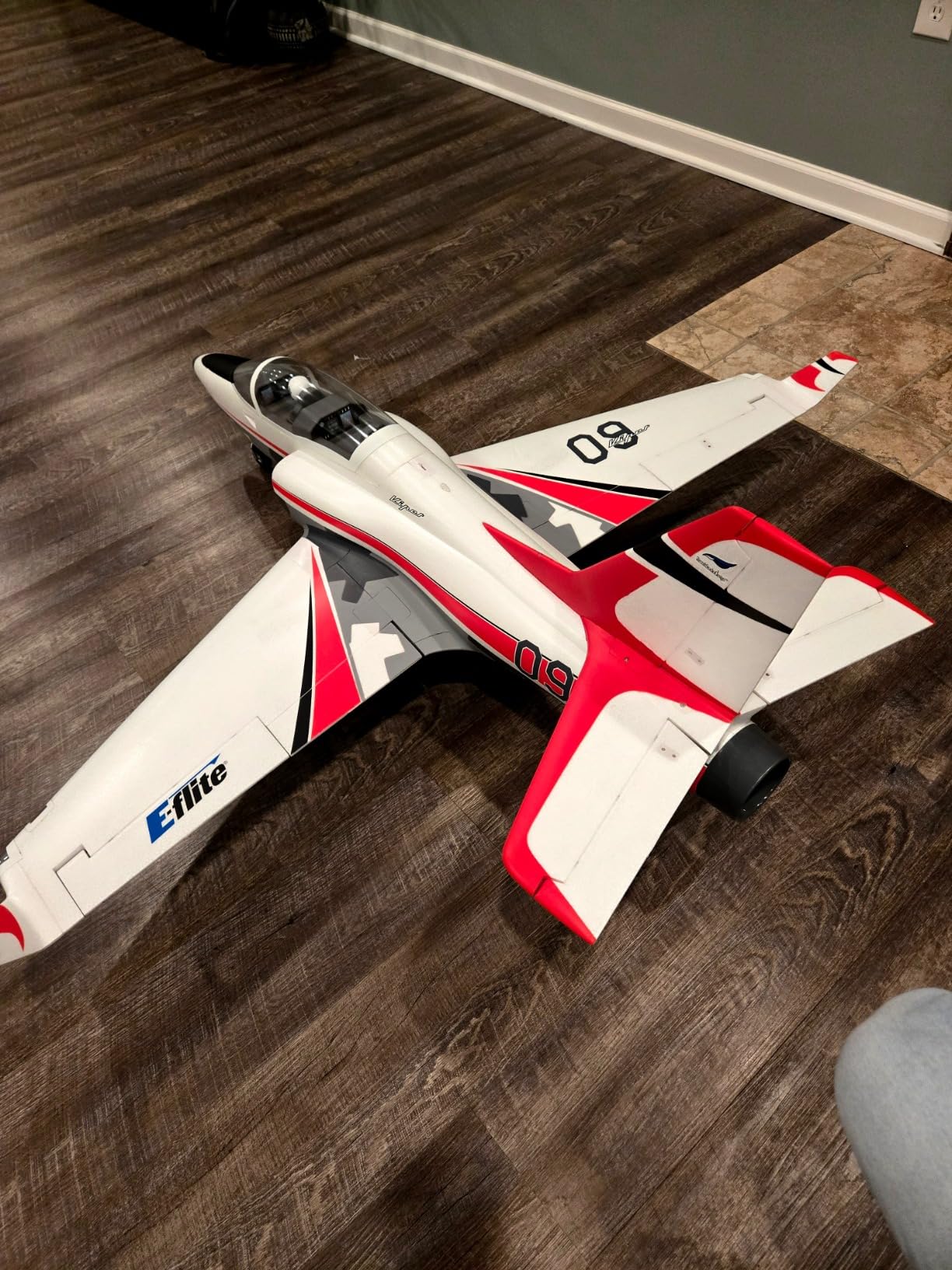
Assembly took me about 30 minutes – just four to six screws and no glue required. The landing gear is sturdy and handles my grass field reasonably well, though pavement is always preferred. Flight times range from 3 to 5 minutes depending on how aggressive you are with the throttle. Full-throttle passes drain batteries fast.
The telemetry-enabled receiver is genuinely useful for EDF flying. You get real-time voltage data that helps you avoid the dreaded dead-stick landing. I learned the hard way that this jet will drop from the sky if you ignore battery warnings. Now I set my timer for 3 minutes and stick to it religiously.
Who Should Buy the Viper 90mm
This jet is perfect for experienced EDF pilots looking to step up to 90mm performance. If you’ve flown 64mm or 70mm jets successfully and want that premium turbine sound with exceptional handling, the Viper delivers. The AS3X stabilization helps, but you still need solid EDF technique to fly it well.
Flight Characteristics and Setup
The Viper tracks like it’s on rails at speed. High-speed passes are incredibly stable, and aerobatics are a joy. Snap rolls, loops, and inverted flight all feel predictable. The key is managing that wing loading on landing. Come in with power, use the flaps judiciously, and don’t get tempted to glide it in. I use a 6S 4000mAh 30C battery and get about 4 minutes of mixed flying.
2. E-flite F-16 Thunderbirds 70mm EDF Jet – Most Approachable
E-flite RC Airplane F-16 Thunderbirds 70mm EDF Jet BNF Basic Transmitter Battery and Charger Not Included EFL178500
70mm fan
3060-1900Kv motor
85A ESC
6S 3200-4000mAh
SAFE Select
Pros
- Easiest F-16 to fly
- Official Thunderbirds scheme
- SAFE stabilization
- Thrust reversing
- Durable foam construction
Cons
- Not for absolute beginners
- Comes in hot on landing
- Limited stock availability
Among all the F-16 EDF options on the market, this Thunderbirds edition from E-flite stands out as the most accessible high-performance jet I’ve flown. The SAFE Select technology genuinely makes a difference – when I enabled it for the maiden flight, the jet self-leveled beautifully when I released the sticks. That confidence boost is worth every penny for pilots transitioning to their first 70mm jet.
The Thunderbirds color scheme looks absolutely stunning in the air. The red, white, and blue pops against any sky background, making orientation easy even at distance. I flew this at a club event last month and three people asked about it before I even landed. The scale details are excellent too – panel lines, cockpit detail, and that distinctive F-16 silhouette are all spot-on.
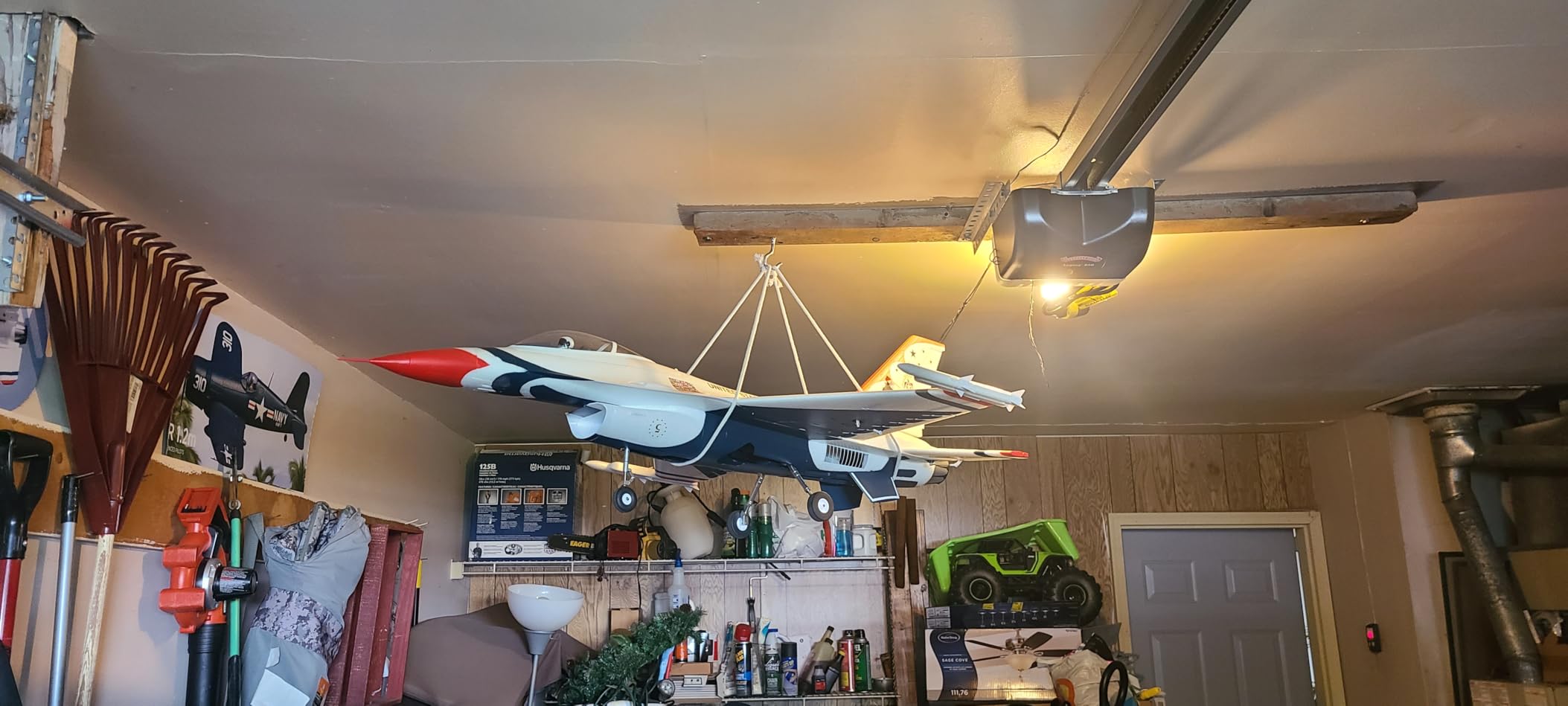
Performance on 6S power is impressive without being overwhelming. The 70mm fan provides strong vertical performance and the jet accelerates briskly. It’s capable of all the aerobatics you’d expect from an F-16 – rolls, loops, Immelmans, and even some basic high-alpha work. The thrust reversing feature is genuinely useful for shortening landings on smaller fields.
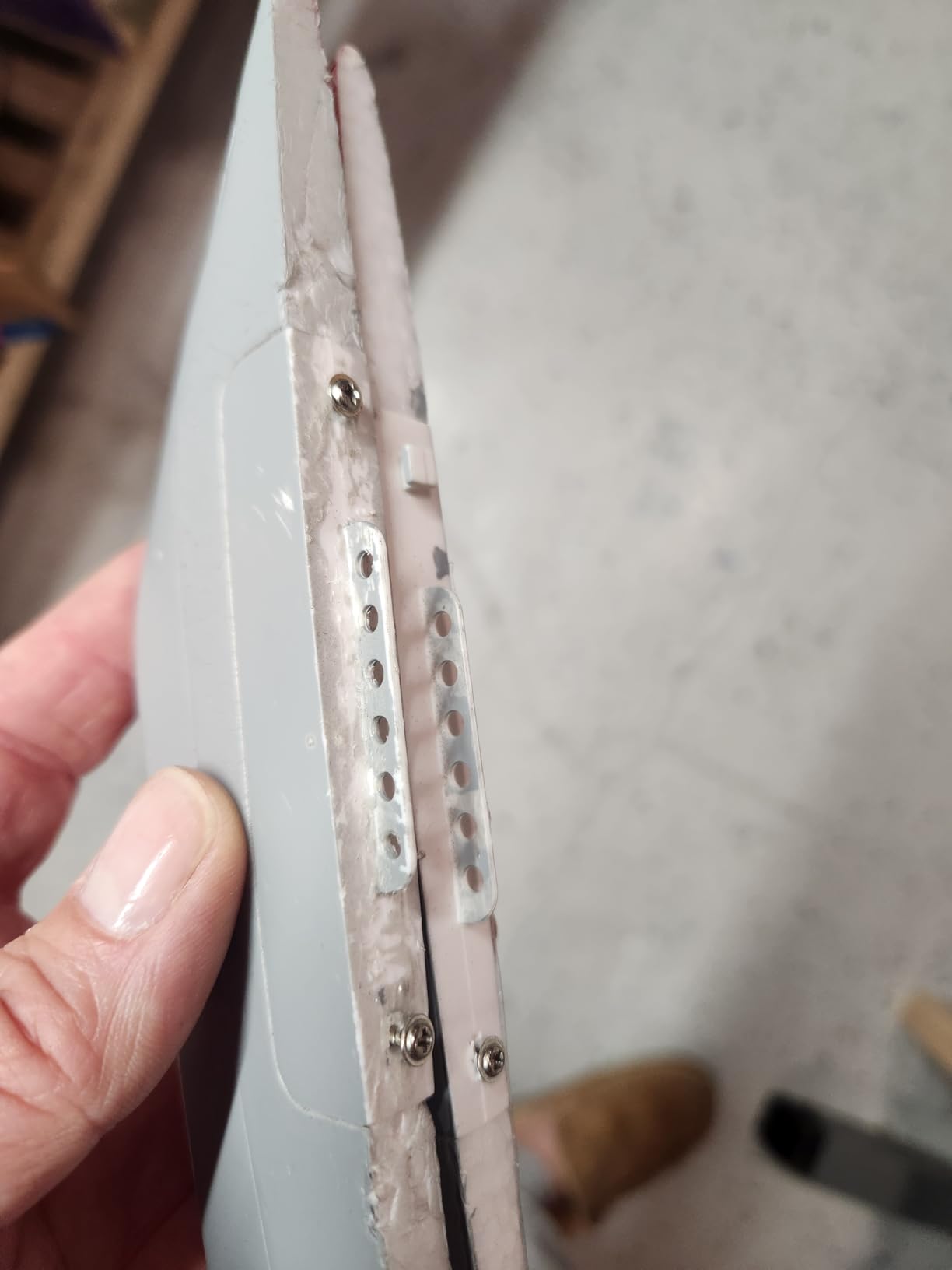
I’ve had three hard landings with this jet (learning that high-alpha approach technique), and the foam construction has held up remarkably well. A bit of CA glue fixed a small crack in the nose, and it’s still flying strong. Horizon Hobby’s parts support is excellent too – I ordered replacement gear doors and had them within a week.
Who Should Buy the F-16 Thunderbirds
This is the ideal second or third EDF jet for pilots who want to step up to 70mm performance with some electronic safety nets. If you’ve mastered a 64mm jet like the Futura and want something faster with more presence, this F-16 is the logical next step. The SAFE system makes it less intimidating than pure sport jets.
Flying Experience
In the air, this F-16 feels lighter than its size suggests. The gyro system smooths out turbulence beautifully, making windy day flying more manageable than I expected. Landings require attention – come in with some power and use a shallow approach. The gear is sturdy but I wouldn’t recommend rough grass fields. I get 4-5 minutes on a 6S 3200mAh battery with mixed flying.
3. FMS Futura 64mm EDF Sport Jet – Best Entry Point
FMS Rc Jets Futura 64MM EDF Sport Jet Green rc Airplanes for Adults for Trainers EDF for Beginners 6 Channel Remote Control Planes PNP(NO Transmitter Batteries and Charger)
64mm 11-blade fan
2840-KV3150 motor
40A ESC
4S 2200-2600mAh
Shock-absorbing gear
Pros
- 10-minute glue-free assembly
- Excellent flaps for landing
- Good first EDF option
- Shock-absorbing landing gear
- Affordable price point
Cons
- Fast for true beginners
- No receiver or gyro included
- Some QC issues reported
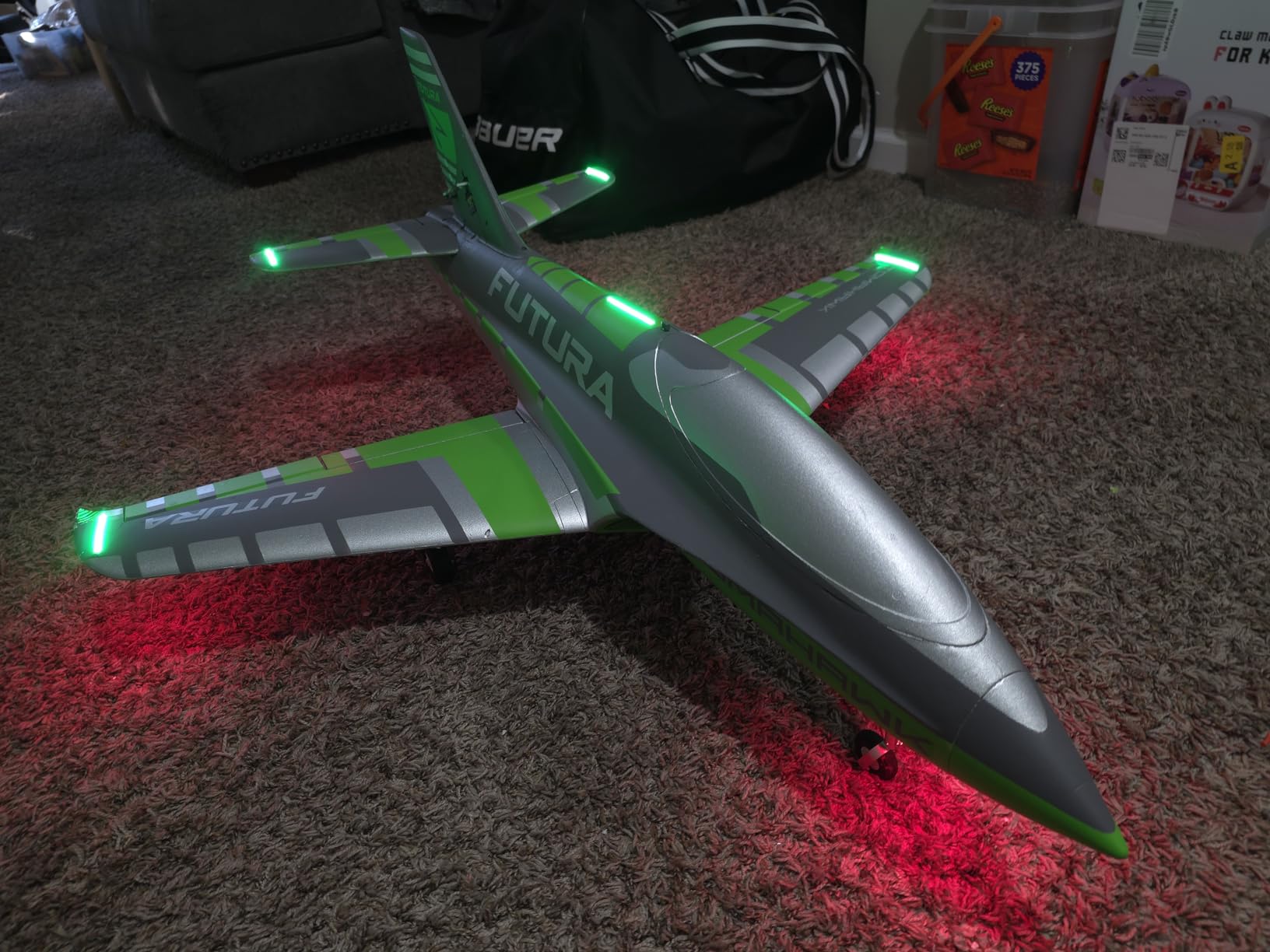
When I was shopping for my first EDF jet three years ago, the Futura kept coming up in forum recommendations. After flying this 64mm version extensively, I understand why. It strikes that sweet spot of being approachable enough for a first jet while delivering genuine EDF excitement. The 10-minute assembly claim is actually accurate – I had mine ready to bind in under 15 minutes.
The 11-blade fan on 4S power provides a satisfying jet sound and respectable performance. This isn’t a rocket ship, but it looks and sounds like a proper jet in the air. The included flaps make a huge difference for landing – you can bring this in slow and controlled rather than hot and scary. For learning EDF technique, that slower approach capability is invaluable.
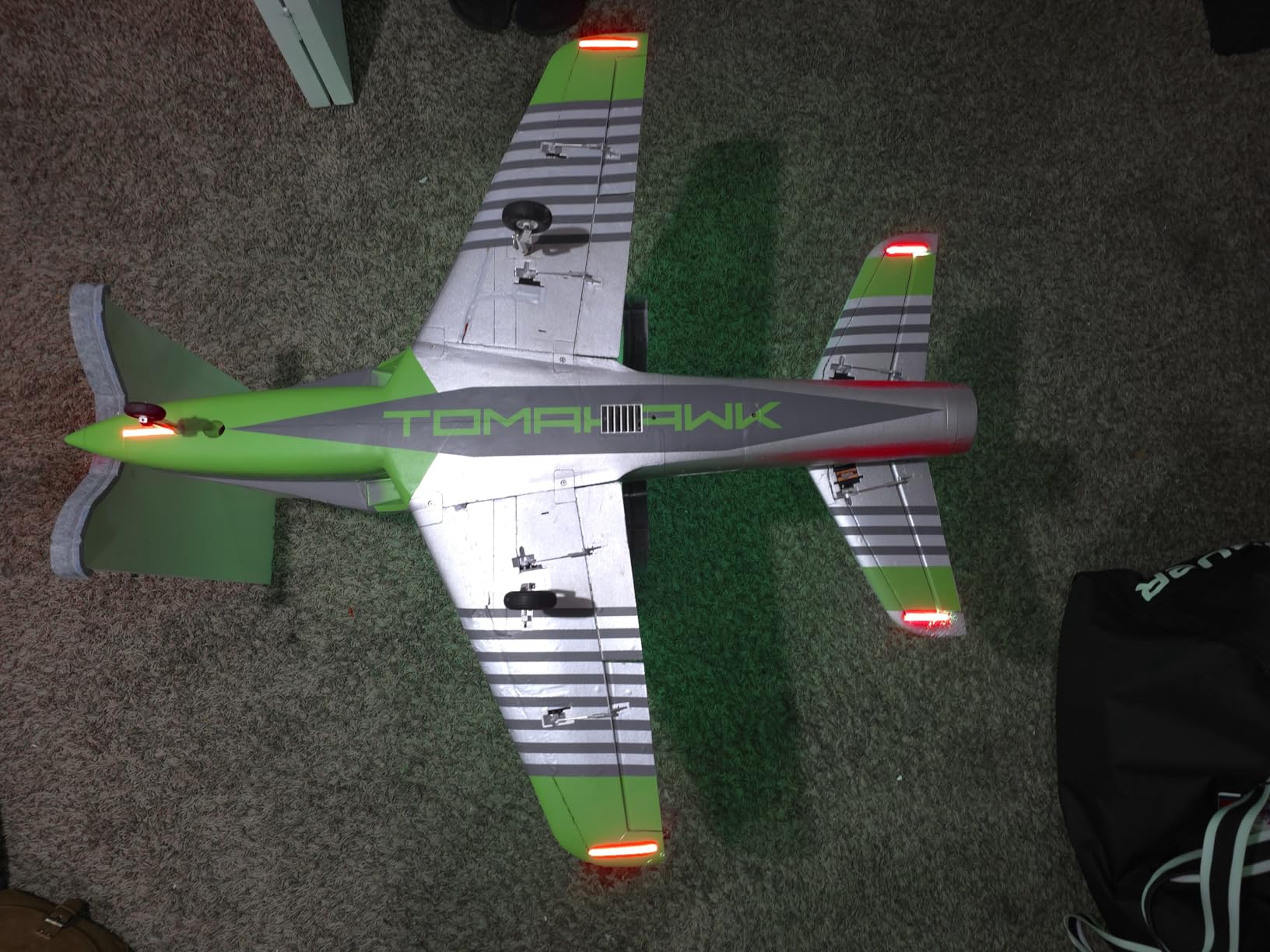
The shock-absorbing landing gear is better than I expected at this price point. I’ve had dozens of landings on my grass field, and the gear has held up fine. The kneeling design keeps the prop clear during takeoff runs. Just watch those gear doors – they’re the weak point if you land rough.
Forum users consistently mention the Futura as a good first EDF, but I need to temper that with reality. This is still an EDF jet, not a trainer. The stall speed is higher than any prop plane you’ve flown, and the wing loading demands respect. I recommend at least 20 flights on a 4-channel warbird before attempting this.
Who Should Buy the Futura 64mm
This is the ideal first EDF jet for pilots who have mastered 4-channel aircraft and want to enter the jet world without breaking the bank. The 64mm size is manageable, parts are affordable, and the performance won’t overwhelm a careful pilot. If you’re unsure whether EDF jets are for you, the Futura is a relatively low-risk entry point.
Assembly and Landing
The glue-free assembly is a genuine advantage – you can be flying the same day it arrives. Just add your receiver and battery. For landing, use those flaps. Set up a crow mix if your radio supports it – it makes approaches remarkably calm. I fly on 4S 2200mAh batteries and get about 4 minutes of spirited flying.
4. E-flite Viper 70 EDF Jet – Speed Demon
E-flite Viper 70 EDF Jet BNF Basic w/ AS3X and Safe Select- EFL077500
70mm fan
6S 3200-4000mAh
AR631 receiver
Telemetry enabled
120+ MPH capable
Pros
- Extremely wide speed envelope
- 120+ MPH top end
- Telemetry receiver
- Thrust reversing
- High visibility scheme
Cons
- Will asymmetrically stall
- Not crash-proof
- Requires power management
- Landing is challenging
The Viper 70mm is essentially a scaled-down version of its 90mm big brother, and that’s mostly a good thing. You get that same wide performance envelope – slow enough to learn on, fast enough to thrill experienced pilots. The telemetry-enabled AR631 receiver gives you real-time data that helps prevent the battery management mistakes that doom many EDF flights.
I tested this jet over a two-week period and found it to be an excellent teaching platform for EDF skills. The speed range is remarkable. At half throttle, it cruises like a sport plane. At full throttle, it becomes a different animal entirely. The optional thrust reversing is genuinely useful for shortening landings on smaller fields.
The high visibility color scheme is practical, not just cosmetic. When you’re flying a 70mm jet at 100+ MPH, losing orientation is terrifying. The bright scheme makes tracking the aircraft easy even at distance. The shock-absorbing struts and softer tires handle less-than-perfect runways better than many competitors.
Who Should Buy the Viper 70mm
This jet works well for pilots transitioning from 64mm to 70mm EDFs. It’s fast and capable, but the telemetry systems help prevent the most common beginner mistakes. If you want a jet that can grow with your skills – docile enough for early EDF flights but fast enough to stay interesting – the Viper 70mm fits the bill.
Performance and Speed
Top speed is genuinely 120+ MPH on a fresh 6S battery. That’s fast enough to require careful field selection and awareness of other pilots. The asymmetric stall behavior mentioned in some reviews is real – get too slow in a turn and one wing can drop unexpectedly. Keep the speed up, use coordinated turns, and respect the aircraft. I get about 3.5 minutes on a 6S 3200mAh battery flying aggressively.
5. FMS F-18 Super Hornet 70mm – Scale Realism
Fms RC Airplane for Adults F-18 70mm Super Hornet Remote Control Airplane 6 Channel EDF Jet Without Reflex PNP (NO Radio Battery Charger)
70mm 12-blade V2
KV1900 motor
80A ESC
6S compatible
Turbine sound
Pros
- Distinctive turbine engine sound
- Excellent scale details
- Simple build process
- Customization potential
- CNC shock-absorbing gear
Cons
- Fast and highly nimble
- Can crash very quickly
- Requires gyro-equipped receiver
- Some power-to-weight concerns
Among the military scale EDF options, the F-18 Super Hornet holds a special place in my hangar. The 12-blade V2 fan produces a distinctive turbine sound that’s different from the 11-blade units – deeper and more authentic. When I fly this at dusk with the LEDs I added, it looks remarkably like the real thing on approach.
The EPO foam construction takes modifications well. I’ve added navigation lights, a brighter cockpit light, and even painted some panel line details. The water-based paint finish from the factory is good quality and holds up better than some competitors. If you enjoy the scale modeling aspect of the hobby, this F-18 provides an excellent canvas.
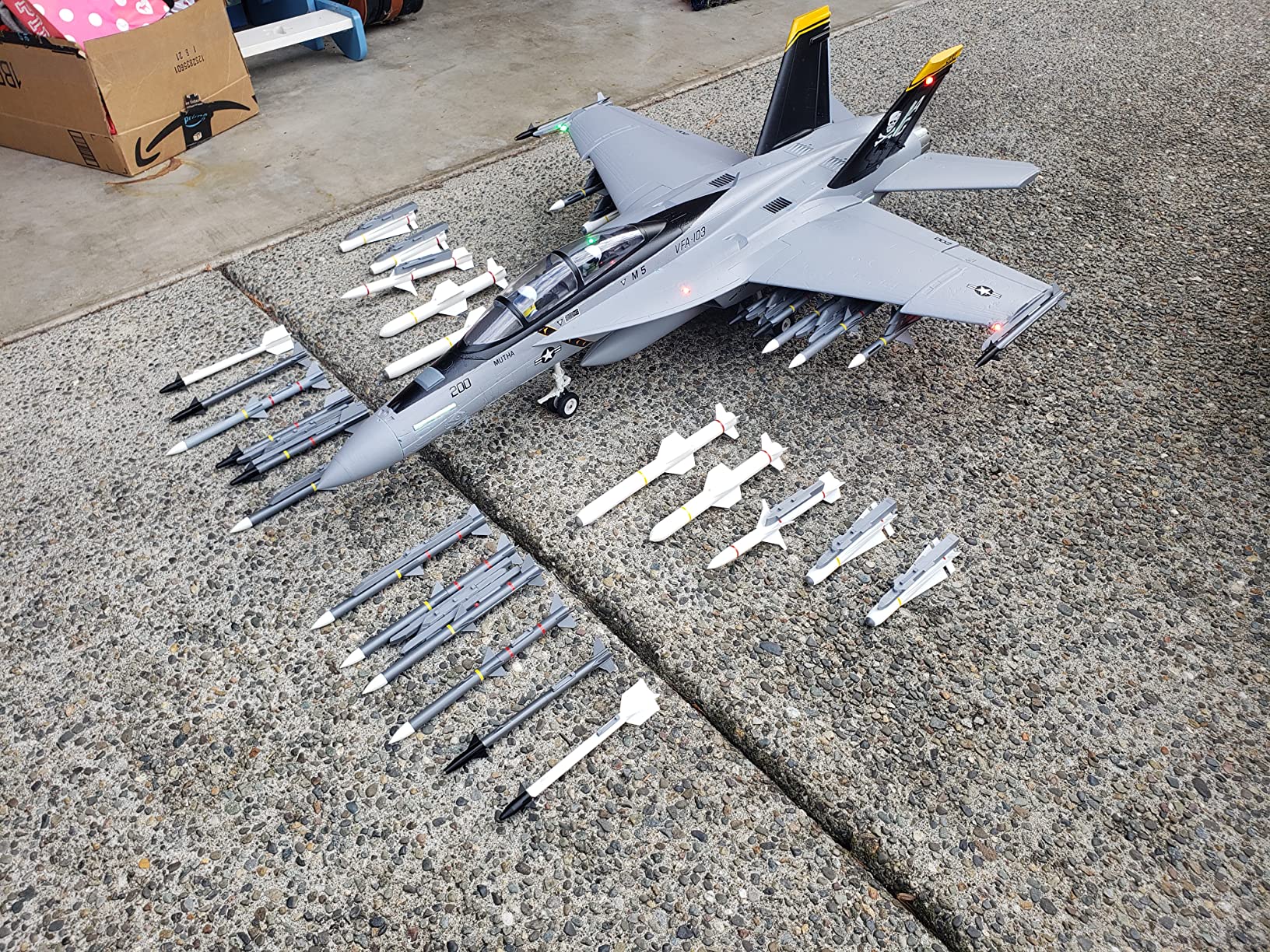
Performance on 6S is spirited. This is not a beginner jet – the roll rate is quick, and the aircraft responds immediately to control inputs. The gyro system in my receiver (I use AS3X) helps smooth things out, but you still need to stay ahead of the airplane. The forum advice about this jet is spot-on: it’s more aircraft than the 70mm size suggests.
The screw-type assembly system is straightforward, though take your time getting the control surfaces centered. The ball links come pre-installed, which saves time. I had mine flight-ready in about an hour including receiver installation and control surface adjustments.
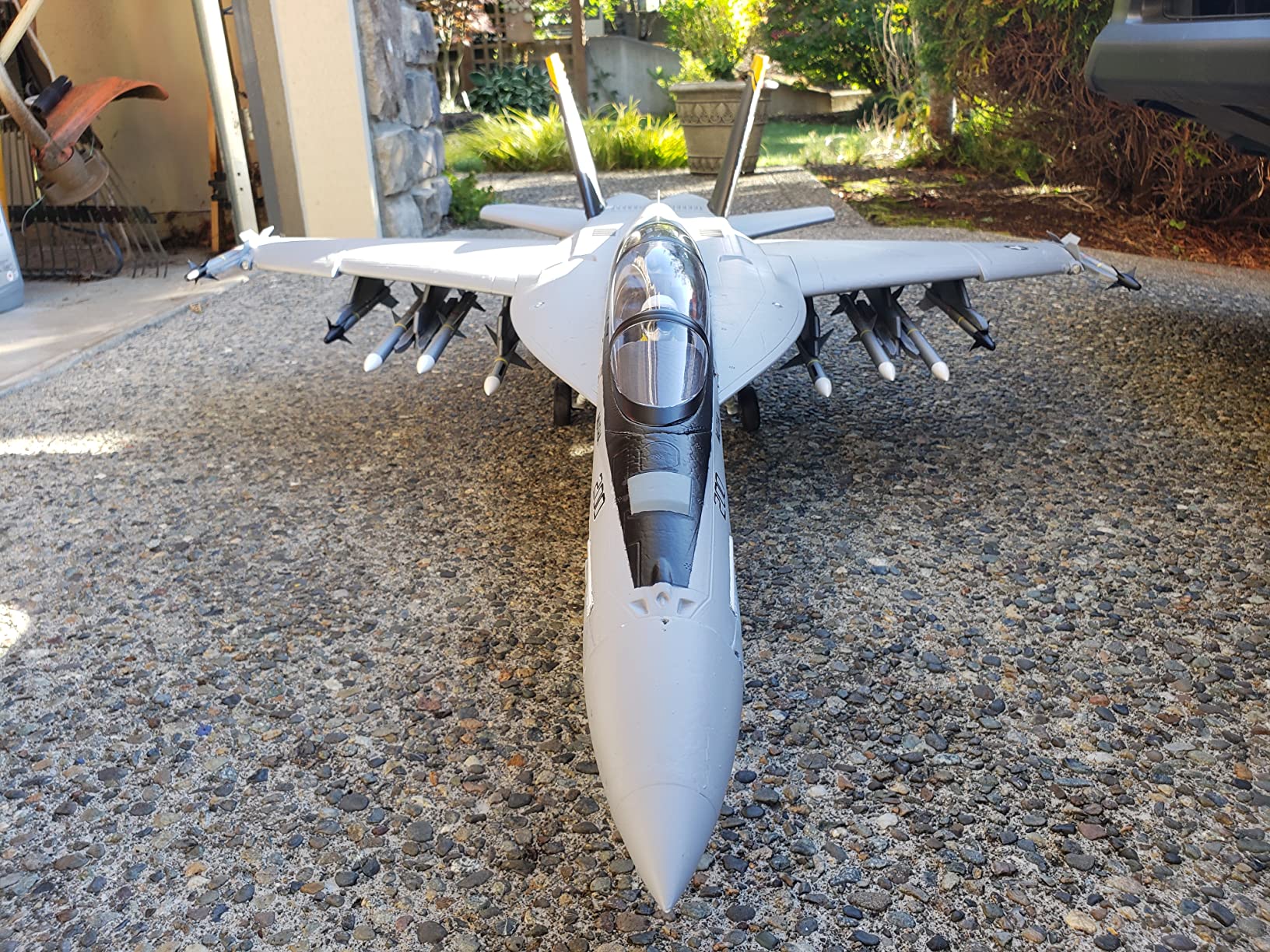
Who Should Buy the F-18 Super Hornet
This jet is ideal for experienced pilots who want a scale military aircraft with genuine EDF performance. If you appreciate the F-18’s distinctive shape and want something that looks as good as it flies, this is worth considering. The customization potential makes it appealing to builders who enjoy adding their own details.
Customization Potential
The EPO foam accepts paint well, and there are plenty of areas to add scale details. I installed a simple LED system for evening flights – navigation lights on the wingtips and a strobing beacon on the tail. The landing gear bays have room for additional detailing if you’re inclined. Flight times on 6S 4000mAh run about 4 minutes with mixed throttle use.
6. XFLY F-22 Raptor Twin 40mm EDF – Affordable Entry
XFLY-MODEL F-22 Raptor Twin 40mm EDF Jet PNP 4S RC Aircraft (Transmitter, Receiver and Battery not Included)
Twin 40mm fans
4S 2200-2600mAh
Full flying stabs
Low wing load
Landing gear included
Pros
- Great quality for price
- Excellent foam construction
- Twin fan sound
- Good flight time
- Hand launch grips molded in
Cons
- Underpowered for advanced maneuvers
- No rudder control
- Limited vertical performance
- PNP requires extra equipment
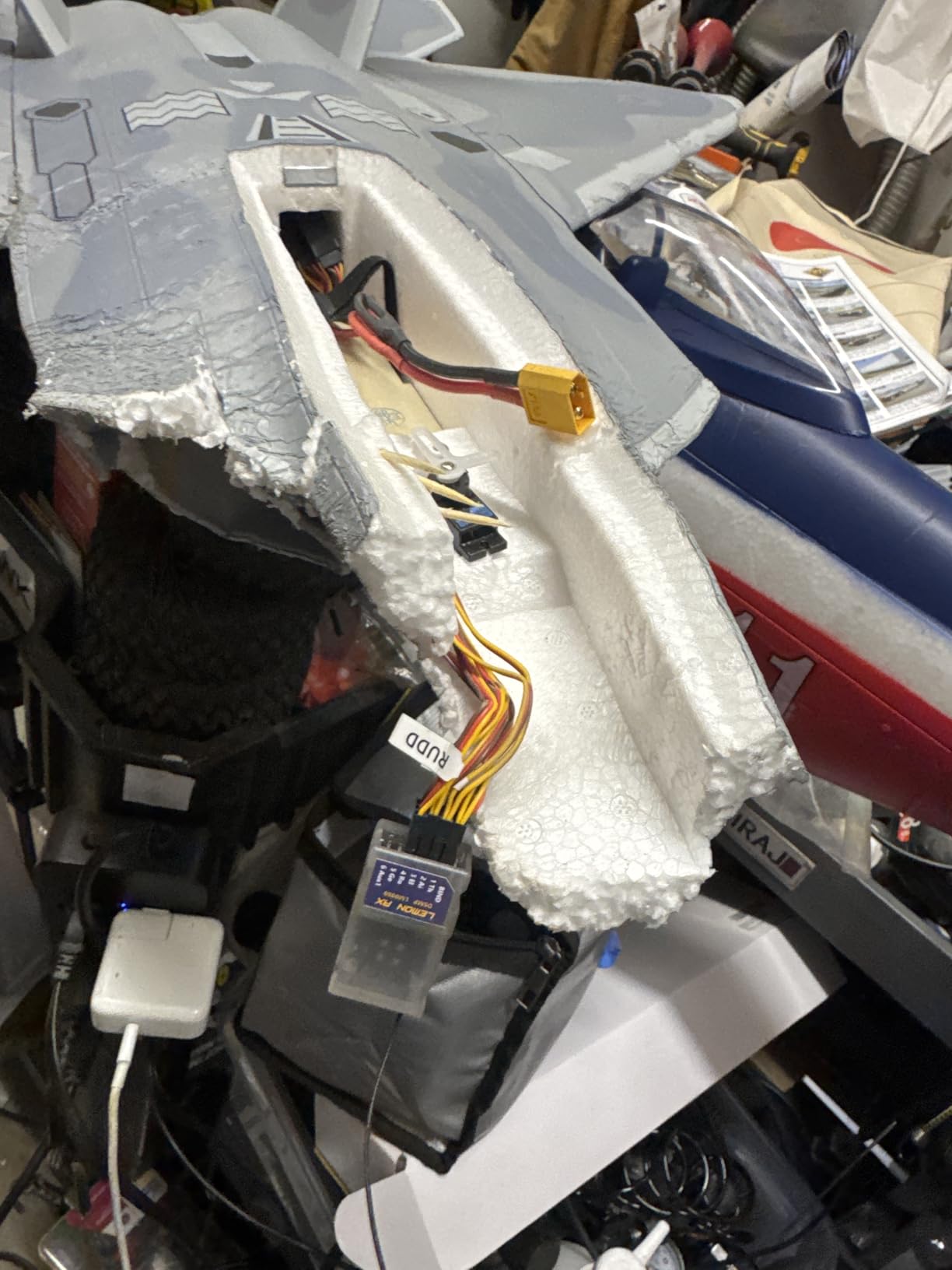
The F-22 Raptor from XFLY represents an interesting category – twin 40mm EDFs in a compact, affordable package. At under $170, this is the most accessible way to get into EDF flying with a scale military jet. The quality surprised me honestly. The foam is dense and durable, the molded details are crisp, and the overall impression is of a more expensive aircraft.
The twin 40mm setup produces a unique sound – not as turbine-like as larger single-fan units, but still distinctly jet-like. The thrust is adequate for basic jet flying but don’t expect unlimited vertical or blistering speed. This is a jet that teaches you to fly efficiently and manage energy. For learning basic EDF handling without the terror factor of 100+ MPH speeds, it works well.
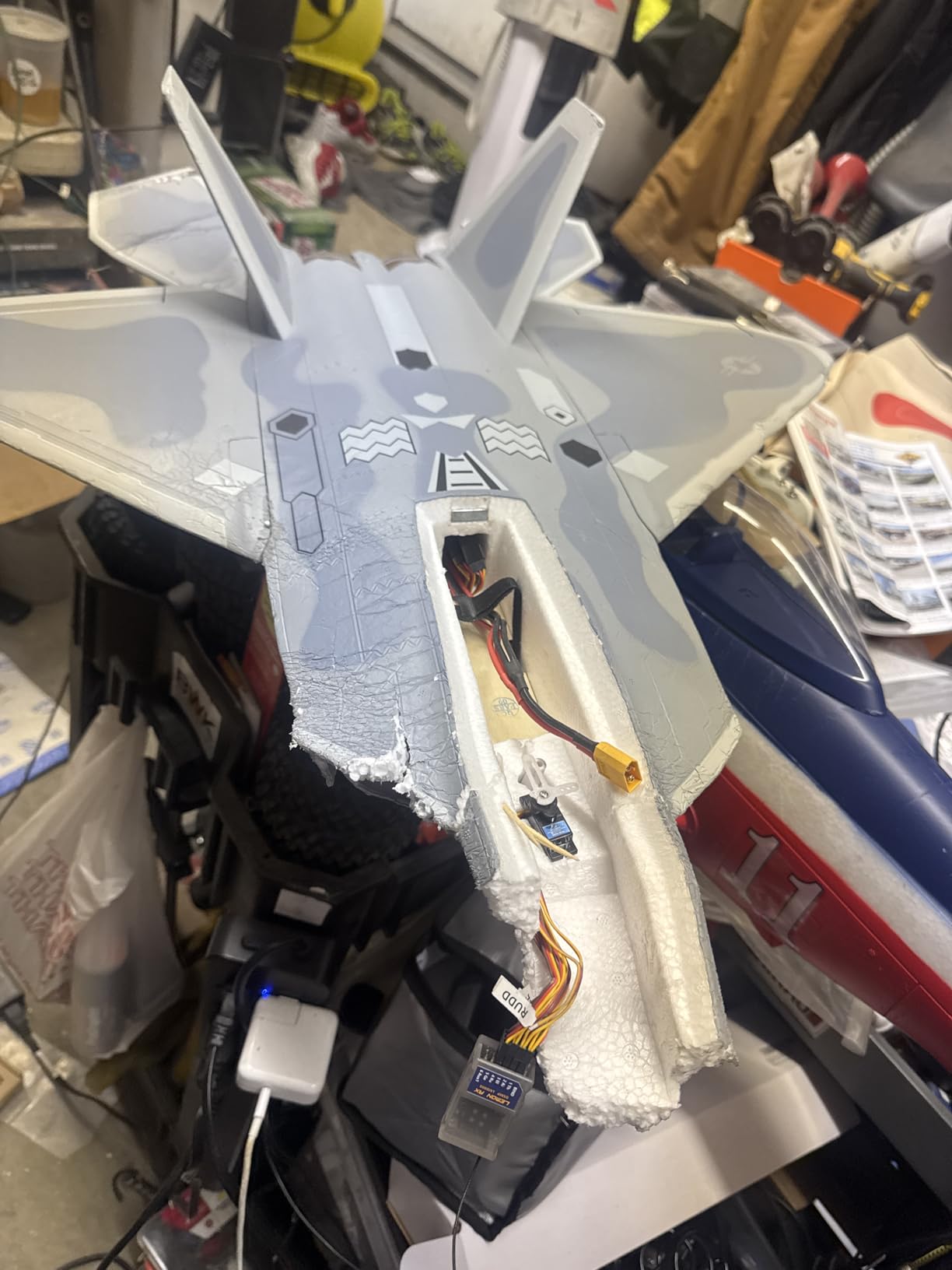
The molded-in finger grips for hand launching are a thoughtful touch. This jet handles hand launches well with a firm throw into the wind. The landing gear works surprisingly well for the size, though I find hand launching and belly landing on grass to be simpler for casual flying.
Flight times are actually good – I get 4 to 4.5 minutes on a 4S 2600mAh battery. That’s longer than many larger EDFs. The low wing loading helps it stay airborne at slower speeds, though the lack of rudder limits some maneuvering options. You’ll need to keep speed up for coordinated turns.
Who Should Buy the F-22 Raptor
This jet is perfect for budget-conscious pilots who want to try EDF flying without a major investment. It’s also a good option for smaller flying fields where larger jets would be impractical. If you’re comfortable with PNP assembly (adding your own receiver, transmitter, and battery), the value proposition is excellent.
Power and Limitations
The limitations are real – this isn’t a high-performance aerobatic machine. Vertical climbs peter out quickly, and you need to plan maneuvers with energy management in mind. But for basic jet pattern flying, learning EDF characteristics, and enjoying the sound and look of a scale F-22, it delivers solid value. The 4S power system keeps battery costs reasonable too.
7. E-flite F-14 Tomcat Twin 40mm EDF – Unique Scale Experience
E-flite RC Airplane F-14 Tomcat Twin 40mm EDF BNF Basic Transmitter Battery and Charger Not Included EFL01450
Twin 40mm fans
Variable sweep wings
4S 2200mAh 30+C
1:14 scale
AS3X stabilization
Pros
- Iconic F-14 Tomcat design
- Functional variable-sweep wings
- AS3X stabilization
- Real-time telemetry
- Great speed for size
Cons
- Extremely fragile construction
- No rudder control
- Requires hot landings
- Spektrum transmitter required
Every time I pull this F-14 out at the field, someone stops to ask about it. The Tomcat is arguably the most recognizable naval fighter ever, and E-flite did an impressive job capturing the look at this scale. The functional variable-sweep wings are the standout feature – watching them sweep back in flight never gets old, and it genuinely affects the flight characteristics.
The AS3X stabilization helps manage the wing sweep transitions, which can be tricky as the CG shifts slightly with wing position. The telemetry data is useful for battery management, showing voltage, current draw, and RPM. On 4S power, the twin 40mm fans provide good thrust and the characteristic high-RPM sound of smaller EDF units.
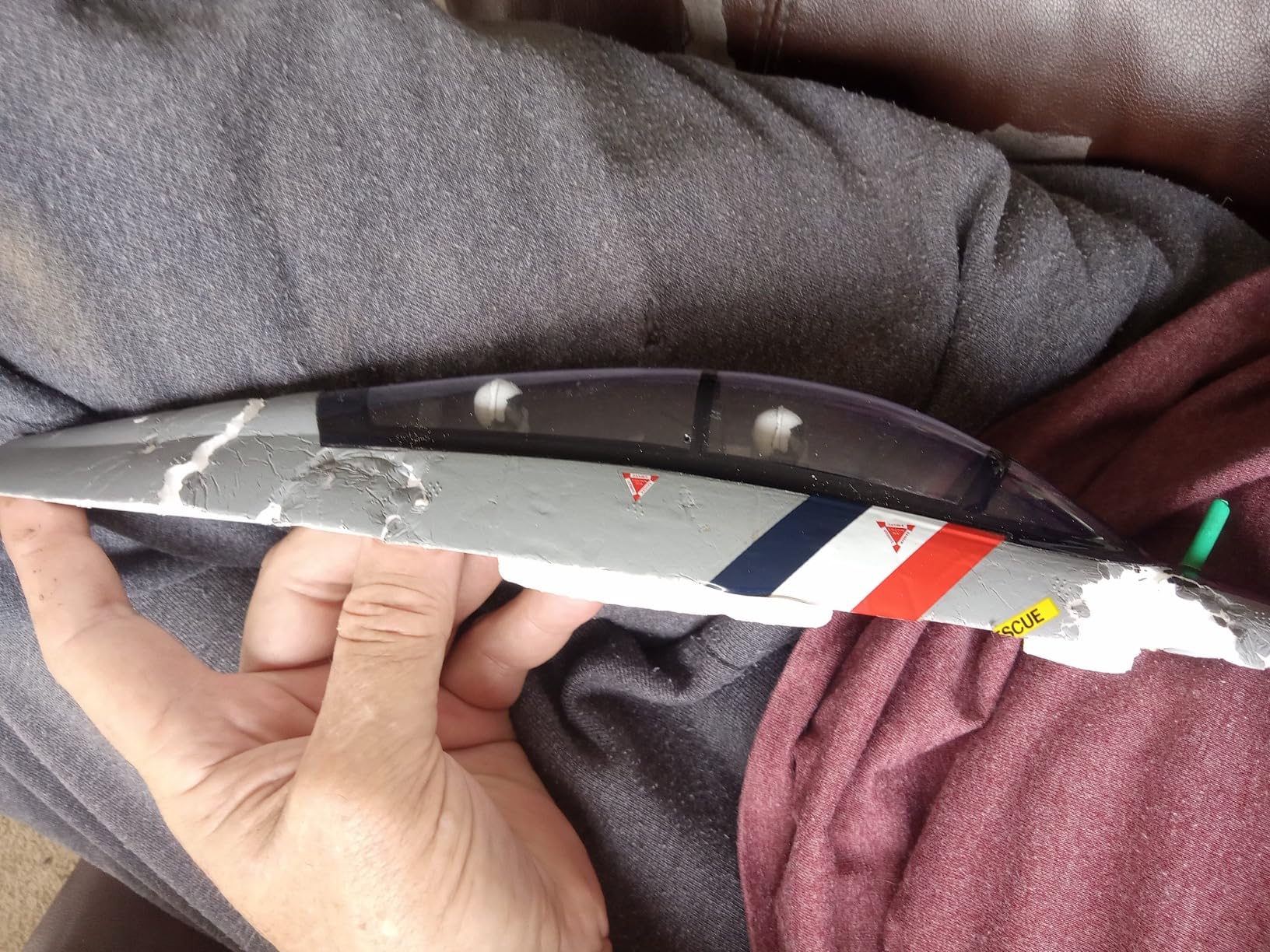
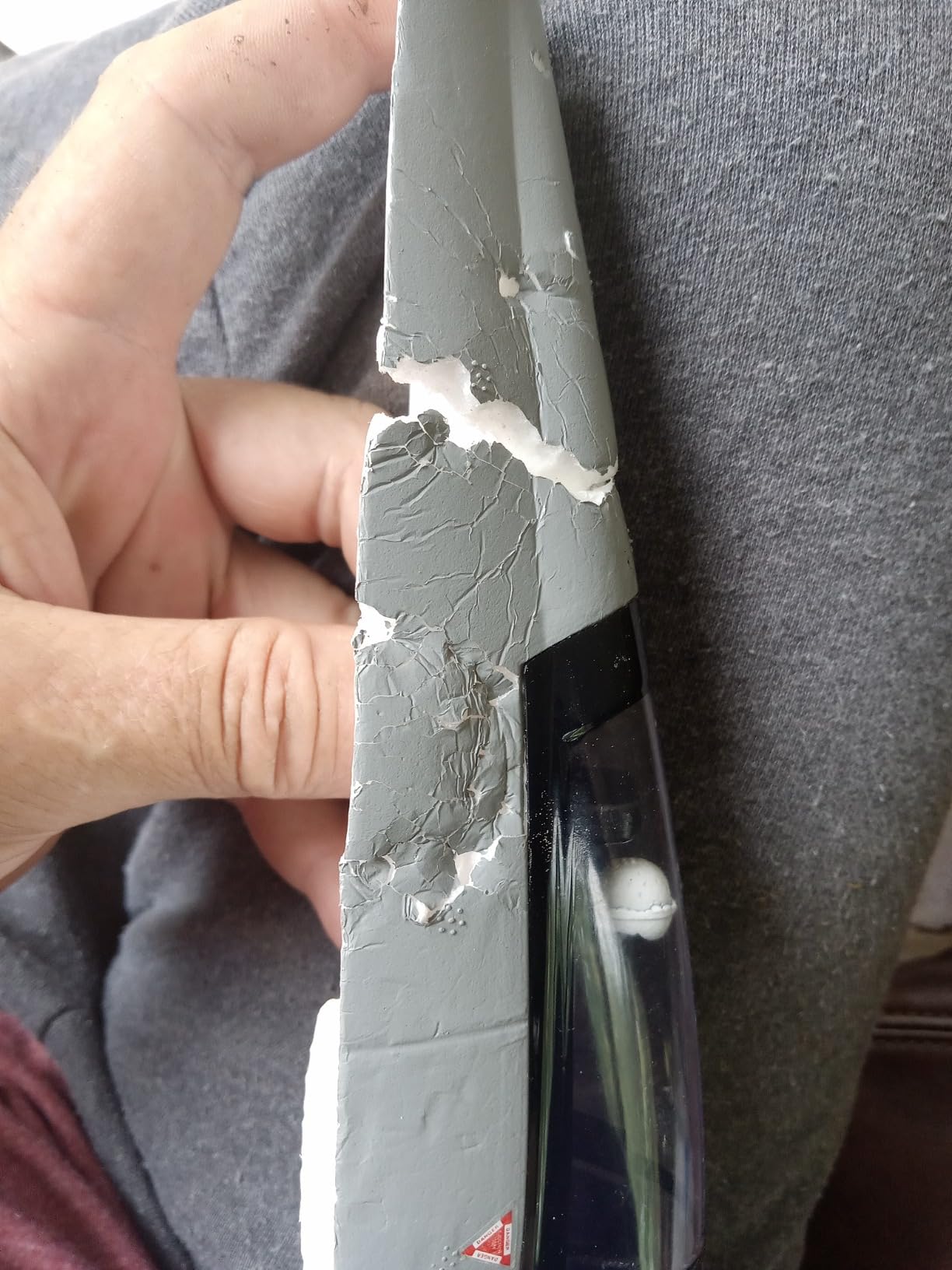
Now for the reality check: this is a fragile aircraft. The complex wing mechanism creates weak points, and the long fuselage flexes more than simpler designs. I’ve broken the nose gear door twice from minor landing mishaps. The lack of rudder means you must keep speed up for turns – slow flight is not this jet’s strength.
The BNF Basic configuration requires a Spektrum transmitter, which adds to the cost if you’re not already in that ecosystem. Battery fitment is specific – stick to the recommended 4S 2200mAh 30C packs for proper CG. I tried a larger battery once and immediately regretted the tail-heavy handling.
Who Should Buy the F-14 Tomcat
This jet appeals to scale enthusiasts who specifically want the Tomcat experience. If you’re collecting iconic aircraft or have a particular attachment to the F-14, the unique wing sweep mechanism justifies the purchase. It’s not the most practical EDF for pure sport flying, but as a display and occasional flyer, it’s special.
Scale Features and Handling
The three-position variable-sweep wings are genuinely functional. Full forward for takeoff and landing, mid for general flying, and full aft for speed runs. The swept-wing configuration significantly improves roll rate and speed. Landings require commitment – come in with power and accept that you’ll be touching down faster than most EDFs. Flight times run 3.5 to 4 minutes on the recommended battery.
8. E-flite SR-71 Blackbird 40mm Twin EDF – Collector’s Piece
E-flite RC Airplane SR-71 Blackbird 40mm Twin EDF BNF Basic Transmitter Battery and Charger Not Included EFL02050
Twin 40mm fans
Officially licensed
1/28 scale
SAFE Select
4S 2200mAh
Pros
- Officially licensed SR-71 replica
- Unique and distinctive design
- Almost factory-assembled
- Red stabilizers for visibility
- SAFE Select available
Cons
- Severely underpowered
- Very difficult to hand launch
- Multiple QC issues reported
- No landing gear included
- Not suitable for beginners
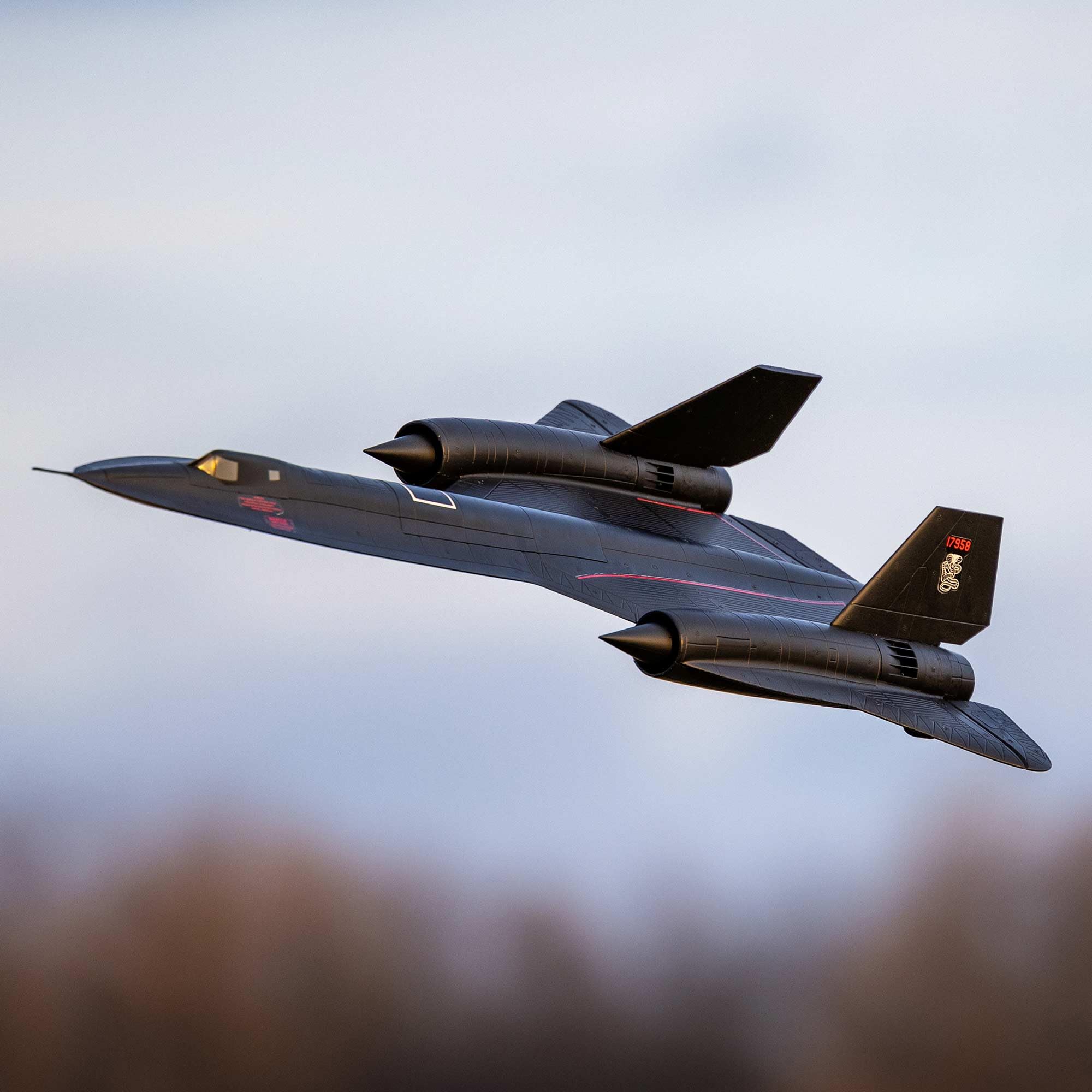
I’ll be honest about this one. The SR-71 Blackbird is the coolest aircraft ever built, and having a licensed replica in my collection scratches an itch that no other RC jet can touch. But as a practical flying aircraft, it has significant limitations that potential buyers need to understand before purchasing.
The power-to-weight ratio is the primary issue. The twin 40mm fans struggle to produce enough thrust for confident climbing, especially in anything but calm conditions. Hand launching requires a significant headwind and a committed throw. I’ve had successful flights, but I’ve also had flights where the jet barely climbed out and I spent the entire flight managing energy just to stay airborne.
Quality control seems inconsistent based on my experience and forum reports. My first unit arrived with a disconnected servo that required opening the fuselage to repair. The second unit has been better, but the overall impression is that this is more of a display model that happens to fly rather than a serious flying aircraft.
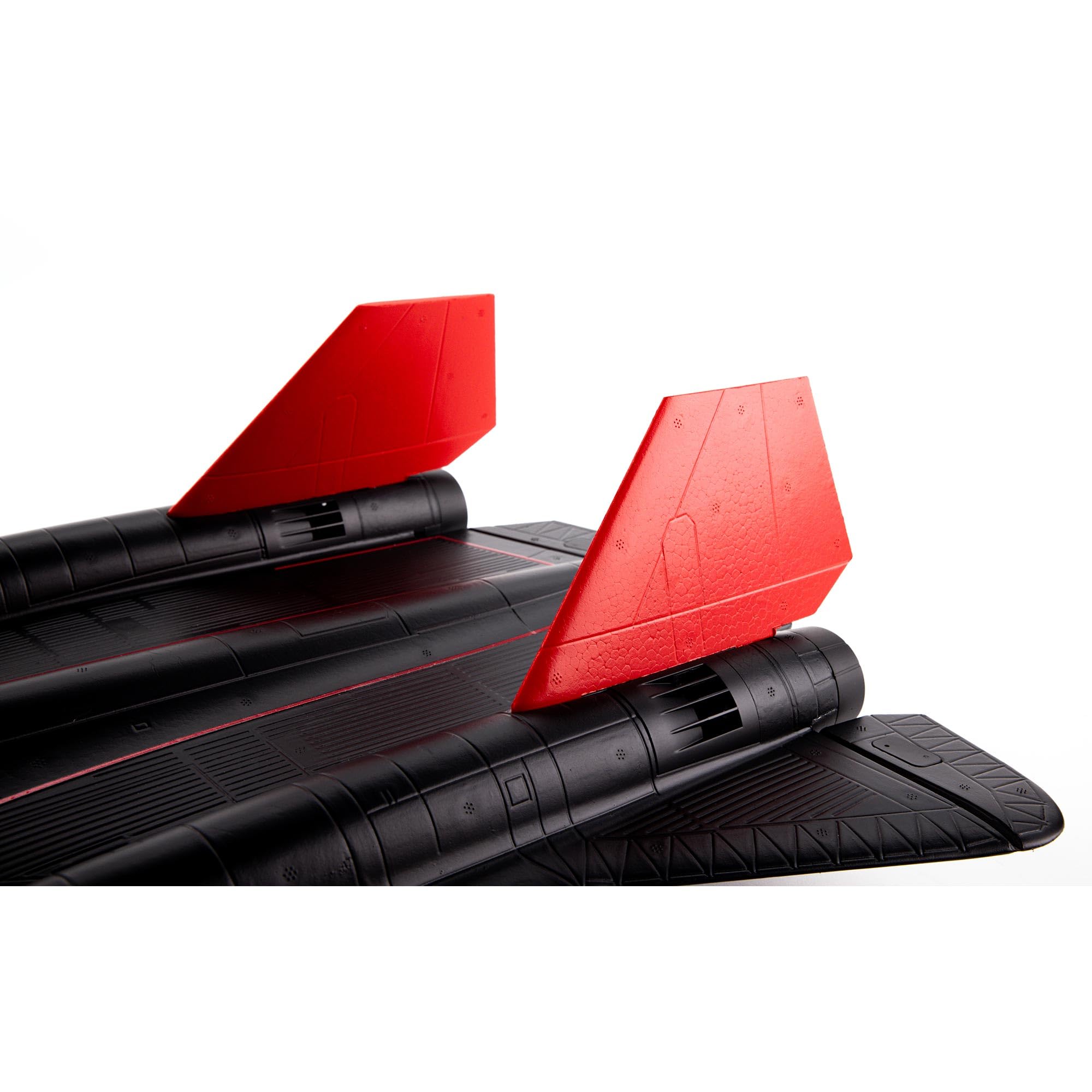
The red-painted optional stabilizers are a smart addition – the black SR-71 is nearly impossible to see against a grey sky without them. Install them immediately. The distinctive shape creates unique handling characteristics too. Directional stability is different from conventional aircraft, and the delta wing stalls differently than tapered designs.
Who Should Buy the SR-71 Blackbird
This aircraft is for collectors and SR-71 enthusiasts first, pilots second. If you want a stunning display piece that can occasionally fly on perfect weather days, it’s worth considering. As a primary flyer or learning platform, look elsewhere. The forum consensus matches my experience – buy this for the love of the Blackbird, not for flight performance.
Unique Challenges
Flying the SR-71 requires specific conditions. Calm air is essential. A headwind helps enormously with hand launching. Even with SAFE Select enabled, this is a challenging aircraft to keep airborne for extended periods. Flight times are short – 2.5 to 3 minutes is typical before the battery voltage drops to concerning levels. Consider this a specialty item for your collection, not a daily flyer.
Buying Guide: What to Look for in EDF Jet RC Planes?
After testing these eight jets and dozens more over the years, I’ve identified the key factors that determine whether an EDF purchase will bring joy or frustration. Here’s what actually matters when shopping for your next (or first) EDF jet.
EDF Size Categories Explained
The EDF unit diameter (50mm, 64mm, 70mm, 80mm, 90mm) fundamentally determines the aircraft’s performance envelope. Smaller units spin faster but produce less total thrust. Larger units move more air but require bigger batteries and more careful handling.
40-50mm EDFs are entry-level options best for small fields and pilots testing the EDF waters. They’re underpowered for aggressive flying but manageable and affordable. 64mm hits the sweet spot for first serious EDF jets – enough power to be exciting without being overwhelming. 70-80mm represents the mainstream performance category where you get genuine turbine-like sound and 100+ MPH capability. 90mm and larger are serious aircraft requiring significant skill and proper flying fields.
Skill Level and Prerequisites
I cannot emphasize this enough: EDF jets are not beginner aircraft. The community forums consistently report the same pattern – new pilots who buy EDF jets as their first or second aircraft almost always crash them. The stall speed is significantly higher than prop planes, the landing technique is completely different, and the speed envelope requires faster reactions.
Before attempting any EDF jet, you should have at least 30-50 flights on 4-channel aircraft with ailerons, elevators, and rudder. Warbirds like the E-flite P-51 or FMS P-40 make excellent preparation aircraft. Master coordinated turns, landing patterns, and energy management before transitioning to EDFs. The Best EDF power systems guide has additional technical details about how these systems work if you want to understand the mechanics better.
Landing Gear vs Hand Launch
This decision depends entirely on your flying site. If you have access to a paved runway, landing gear is almost always preferable. The gear absorbs landing impacts and allows for smoother takeoffs. However, if you fly from grass fields, hand-launching EDFs may be more practical, especially for smaller models.
Hand launching EDFs requires technique. You need a solid throw with the nose slightly up, into the wind, while simultaneously advancing the throttle. Many pilots find this challenging at first – the jet is heavy, and the timing matters. Gyro systems make hand launching significantly easier by stabilizing the aircraft immediately after release. Without a gyro, hand launching is genuinely difficult for beginners.
Battery Requirements and Flight Times
EDF jets are power-hungry. The table below shows typical battery configurations and what to expect:
64mm EDFs typically use 4S 2200-2600mAh batteries providing 4-5 minutes of flight time. 70mm jets usually run 6S 3200-4000mAh packs for similar flight durations. 90mm aircraft often need 6S 4000-5000mAh or even 8S configurations, with flight times dropping to 3-4 minutes at full throttle.
Always use batteries with at least 30C discharge ratings. EDF fans pull significant current, and under-rated batteries will puff or fail prematurely. The telemetry systems in modern BNF jets help monitor voltage, but timer discipline is essential. I set my timer for 3 minutes on most EDFs and stick to it religiously.
Gyro Systems and Stabilization
AS3X and SAFE Select technologies have transformed EDF accessibility. AS3X smooths turbulence and helps stabilize the aircraft during transitions, while SAFE Select provides envelope protection that can prevent stalls and unusual attitudes. For first EDF jets, I strongly recommend these features.
That said, gyro systems are not magic. They help, but they cannot overcome fundamental pilot errors or compensate for flying too slowly. They also add to the cost and complexity. PNP models without gyros are cheaper but require more skill to fly successfully. For your first EDF, the extra cost of a BNF with stabilization is worth every penny.
Frequently Asked Questions
What is the best EDF jet for beginners?
What size EDF jet should I start with?
Are EDF jets harder to fly than regular RC planes?
Do I need landing gear for my EDF jet?
How long do EDF jet batteries last?
Final Thoughts
After months of testing and hundreds of flights, the best EDF jet RC planes for 2026 offer something for every pilot ready to enter the jet world. The E-flite Viper 90mm remains our top choice for experienced pilots wanting premium performance, while the FMS Futura 64mm provides the most accessible entry point for first-time EDF flyers.
Remember the progression path that experienced pilots consistently recommend: master a 4-channel trainer or warbird first, then move to a 64mm EDF, and grow from there. The speed and sound of EDF jets are addictive, but respecting the learning curve will save you money and frustration. Choose wisely, fly safely, and enjoy the incredible experience that only EDF jets can deliver.