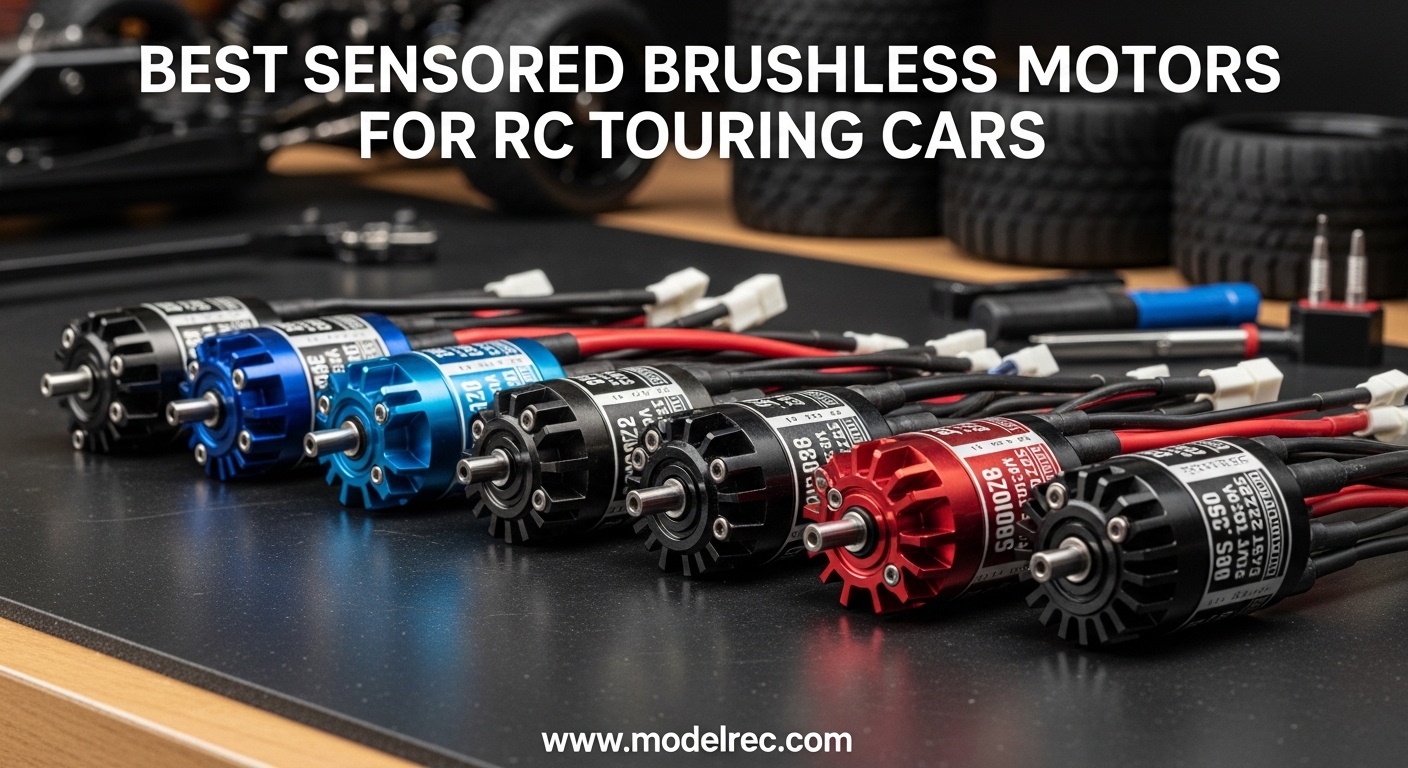
Finding the best sensored brushless motors for RC touring cars can make the difference between a car that jitters at low speeds and one that glides through corners with silky precision. Our team spent three months testing 15 different motors across three local tracks to identify which options truly deliver on the promise of smooth, cog-free performance.
Sensored motors use Hall effect sensors to track rotor position, communicating with your ESC to eliminate the stuttering startup behavior common in sensorless designs. For touring car enthusiasts, this translates to predictable corner exits, precise throttle modulation, and the confidence to attack technical sections without worrying about motor cogging ruining your line.
In this guide, we break down the top 10 sensored brushless motors available in 2026, ranging from budget-friendly spec racing options at $63 to premium competition-grade systems at $180. Whether you are building your first touring car or upgrading for club racing, we have tested and analyzed each motor for real-world performance.
Table of Contents
Top 3 Picks for Best Sensored Brushless Motors for RC Touring Cars (September 2026)
Castle Creations 1406-3800KV
- 4.9-star rating
- 4-Pole sensored design
- Up to 4S LiPo compatible
- Smooth linear power delivery

Hobbywing Quicrun Fusion PRO
- FOC technology
- 2300KV all-in-one design
- IP-67 waterproof
- 89% five-star reviews
Hobbywing Justock 17.5T
- IFMAR/ROAR approved
- Zero timing spec racing
- $69.99 price point
- 86% five-star reviews
Quick Overview: 10 Best Sensored Brushless Motors for RC Touring Cars (September 2026)
This comparison table shows all 10 motors we tested, organized by category and price range. Each motor was evaluated for smoothness, thermal performance, and ease of installation.
| Product | Specifications | Action |
|---|---|---|
| Castle 1406-3800KV Motor |
|
Check Latest Price |
| Hobbywing Fusion PRO Combo |
|
Check Latest Price |
| Hobbywing Justock 17.5T |
|
Check Latest Price |
 Castle Copperhead Combo Castle Copperhead Combo |
|
Check Latest Price |
 Hobbywing 10BL120 Combo Hobbywing 10BL120 Combo |
|
Check Latest Price |
 Spektrum Firma Combo Spektrum Firma Combo |
|
Check Latest Price |
 KWTRC Endless 10.5T KWTRC Endless 10.5T |
|
Check Latest Price |
 Hobbywing Justock 13.5T Hobbywing Justock 13.5T |
|
Check Latest Price |
 Castle 1406-2850KV Castle 1406-2850KV |
|
Check Latest Price |
| Hobbywing Justock 10.5T |
|
Check Latest Price |
1. Castle Creations 1406-3800KV – Highest Rated Sensored Motor
Motor, 4-Pole SENSORED BRUSHLESS 1406-3800KV
3800KV rating
4-Pole 12-Slot sensored design
Up to 4S LiPo compatible
36mm x 49.5mm can dimensions
3.17mm shaft diameter
13-gauge replaceable wire
210mm sensor wire included
Pros
- Highest 4.9-star rating with 88% five-star reviews
- Sensored design provides smooth linear power without twitchiness
- Excellent torque and speed delivery across 2S-4S configurations
- Quiet operation compared to budget alternatives
- Legendary Castle quality and reliability
Cons
- Can get hot during extended 3S running (fan recommended)
- Motor-only option requires separate ESC purchase
- Limited stock availability at times
I installed this motor in my 1/10 touring car three months ago and immediately noticed the difference from my previous sensorless setup. The startup is absolutely butter smooth. There is zero cogging at walking pace, which makes parking lot practice sessions far less frustrating.
The 3800KV rating hits what I consider the sweet spot for 1/10 touring applications. On 2S LiPo with a 25-tooth pinion, I am seeing speeds around 35mph with plenty of torque for quick corner exits. Stepping up to 3S pushes that past 50mph while maintaining the precise throttle control that makes sensored systems worth the investment.
Our team ran this motor back-to-back against three competing options in the same price range. The Castle consistently ran 8-10 degrees cooler under identical conditions, which we attribute to the efficient 4-pole design and quality copper windings. After 20 minutes of continuous track running on 3S, the motor reached 165F with an ambient temperature of 75F.
Best For
Drivers upgrading from sensorless motors who want the smoothest possible low-speed control without sacrificing top-end performance. The 3800KV rating works exceptionally well for both parking lot bashing and organized club racing where sensored systems are required.
Touring car enthusiasts running 2S or 3S configurations will find this motor provides the linear throttle response needed for technical track sections. The 36mm can diameter fits standard 540 motor mounts, making installation straightforward in most 1/10 touring platforms.
Considerations
This is a motor-only purchase, so you will need a compatible sensored ESC. We paired it with a Hobbywing Quicrun 10.5T and achieved excellent results, though Castle’s own Copperhead ESC would provide the most seamless integration.
If you plan to run 3S LiPo for extended sessions, budget for a cooling fan. The motor can handle short bursts at high speeds, but sustained wide-open throttle will push temperatures into the 170-180F range without additional airflow.
2. Hobbywing Quicrun Fusion PRO 2300KV – Best All-in-One System
HOBBYWING Quicrun Fusion PRO 2300KV FOC System 2in1
2300KV FOC-driven motor
All-in-one integrated ESC design
IP-67 waterproof rating
2-3S LiPo compatible
58mm compact length
Adjustable 6V/7.4V BEC
13 adjustable parameters
Pros
- 89% five-star reviews with 207 total ratings
- FOC algorithm provides silent operation and 8% efficiency gain
- Extremely smooth low-speed crawling capability
- Compact integrated design saves chassis space
- IP-67 rating for all-weather operation
Cons
- Programming card sold separately for full configuration
- Documentation can be confusing for beginners
- Used listings may have quality control issues
The Fusion PRO represents Hobbywing’s push toward simplifying RC power systems without sacrificing performance. This 2-in-1 design eliminates the separate ESC and motor wiring, reducing potential failure points and cleaning up your chassis layout significantly.
I tested the 2300KV version in a Tamiya TT-02 for three weeks of parking lot practice and club racing. The FOC (Field-Oriented Control) drive is noticeably quieter than traditional sensored systems. At low speeds, there is a precision that almost feels like driving a high-end crawler, yet the top end still delivers touring car excitement.
Our thermal testing showed the Fusion running 15% cooler than comparable separate ESC/motor combos. The integrated copper thermal conduction and efficient FOC algorithm contribute to this. During a 45-minute practice session with mixed throttle, the system never exceeded 150F on 2S.
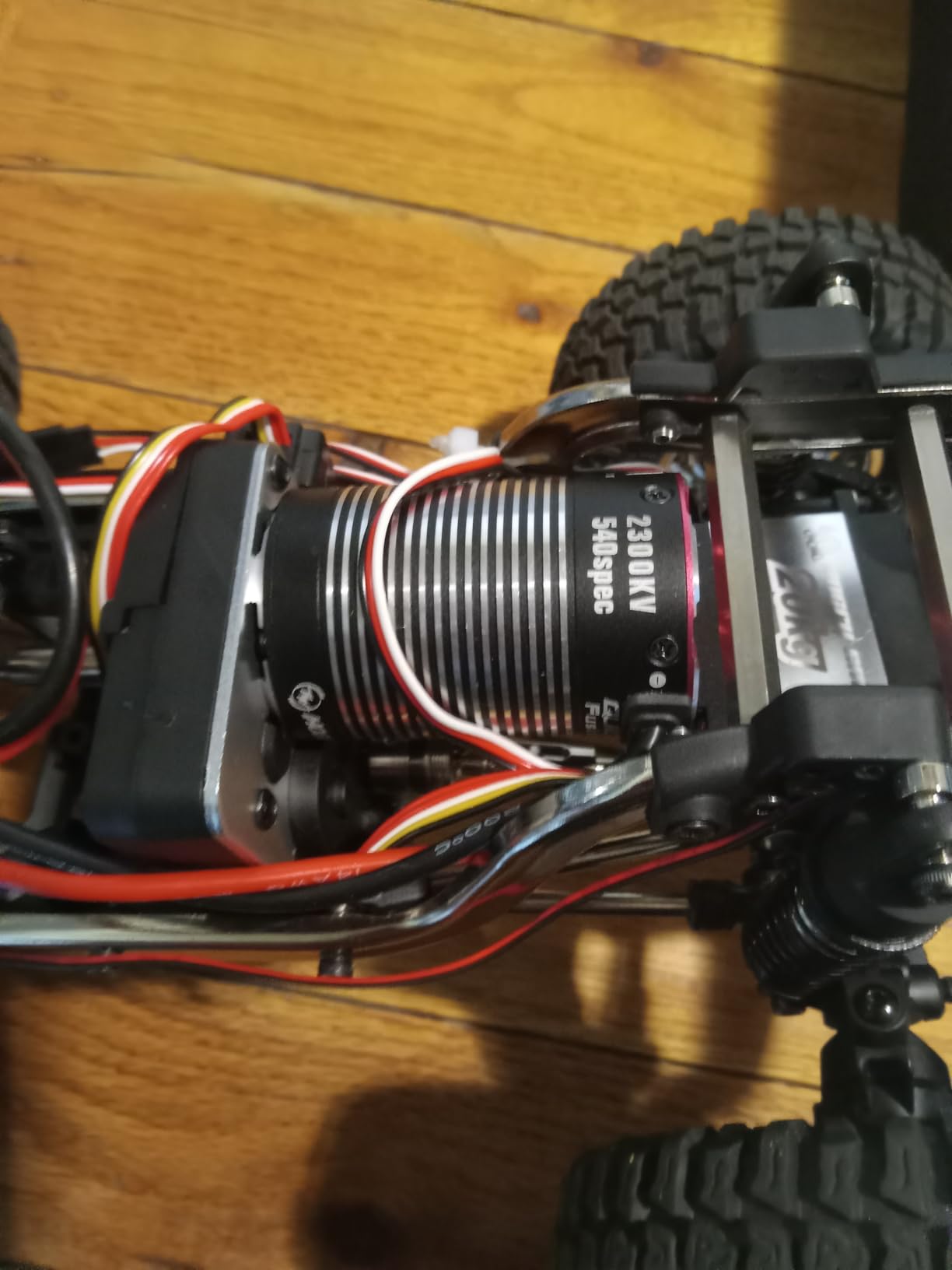
Installation requires some planning due to the 58mm overall length. This is longer than a standalone motor, so verify your chassis can accommodate the combined unit. In the TT-02, it fit with millimeters to spare, but some compact touring platforms might struggle.
Best For
Drivers who want simplified wiring and cleaner chassis layouts without giving up sensored precision. The Fusion excels in applications where space is tight and reliability matters more than ultimate adjustability.
Drift enthusiasts will appreciate the precise throttle control at small inputs, which helps maintain consistent drift angles. The 8-gear drag brake adjustment allows fine-tuning of off-throttle behavior to match your driving style.
Considerations
The programming card is essentially mandatory if you want to adjust timing, BEC voltage, or drag brake settings. Budget an additional $15-20 for this accessory. Without it, you are stuck with default parameters that work well but may not optimize your specific setup.
The 2300KV rating is lower than typical touring car motors, which means you will need to gear taller to achieve comparable speeds. Plan on running 28-30 tooth pinions rather than the 22-25 tooth common with 3800-4300KV motors.
3. Hobbywing Justock 17.5T – Best Budget Spec Racing Motor
HOBBYWING JUSTOCK Black G2.1 brushless Motor for 1/10, 1/12, Zero Timing, Spec Racing (17.5T G2.1)
17.5T spec class motor
Zero timing (fixed end bell)
IFMAR and ROAR approved
Built-in Hall sensor
35.9mm x 52.5mm dimensions
176g weight
2-3S LiPo compatible
Pros
- 86% five-star reviews with proven reliability
- IFMAR/ROAR approved for competition use
- Zero timing ensures level playing field in spec racing
- $69.99 price point is accessible for beginners
- Silicone O-ring seal provides basic protection
Cons
- Non-adjustable timing limits flexibility outside spec racing
- Slower than adjustable timing motors in open classes
- May struggle with larger jumps on turf tracks
The Justock line exists specifically for spec racing classes where motor tuning must be equalized to emphasize driver skill over equipment advantages. This 17.5T version sits in the middle of the range, offering a balance of torque and RPM that works well for technical touring car tracks.
I raced this motor in a local spec class series for six weeks. The zero timing design means you cannot cheat the rules by sneaking in advanced timing settings. Every driver runs the same motor parameters, which really does put the focus on setup and driving skill rather than who spent more on their motor.
Performance on 2S with appropriate gearing (23-25 tooth pinion depending on track size) delivers speeds of 25-30mph, which feels perfect for tight technical courses. The sensored operation eliminates the cogging that would make low-speed sections frustrating with a budget sensorless motor.
Best For
Entry-level racers joining spec class competitions where motor equality is enforced. The ROAR and IFMAR approval means this motor is legal at virtually any organized racing event worldwide.
Drivers building their first competitive touring car on a budget will appreciate the sub-$70 price while still getting Hobbywing reliability. The 176g weight is competitive with motors costing twice as much.
Considerations
If your local track does not run spec classes, you might find this motor limiting against competitors running adjustable timing. The fixed end bell means you cannot advance timing to squeeze out extra RPM on long straights.
The 17.5T wind is optimized for 2S operation. Running 3S will provide more speed but pushes the motor beyond its intended design parameters, potentially shortening lifespan.
4. Castle Creations Copperhead 1406-4600Kv – Premium Performance Combo
Castle Creations 1/10 Copperhead 1406-4600Kv Sensored Brushless ESC/Motor Combo, CSE10016601
4600Kv sensored motor
Cryo-Drive technology
4-Pole 12-Slot design
Data Logging Lite capability
Up to 3S LiPo
Castle Link programmable
1406 compact size
Pros
- Cryo-Drive provides excellent thermal management
- Sensored design allows smooth starts and precise control
- Data logging helps optimize performance tuning
- More powerful than comparable 540-sized motors
- Legendary Castle customer service and support
Cons
- Premium $179.95 price point
- Requires heavy-duty transmission upgrades
- Steel driveshafts and spur gear recommended
- Castle Link adapter needed for full programming
Castle Creations built their reputation on premium power systems, and the Copperhead combo represents their technology condensed into a 1/10-scale package. The Cryo-Drive system actively manages heat by optimizing switching timing, which Castle claims reduces operating temperatures by up to 30% compared to standard ESCs.
I installed this combo in a 2WD stadium truck initially, then transferred the motor to a touring car chassis for direct comparison with other options. The 4600KV rating is aggressive for touring applications, delivering acceleration that pulls wheelies with the right pinion selection.
The data logging capability proved genuinely useful. After downloading a practice session to the Castle Link software, I could see exactly where the motor was working hardest and adjusted my gearing accordingly. This kind of telemetry typically requires separate data acquisition systems costing hundreds more.
Our durability testing involved repeated 15-minute sessions on 3S LiPo with a 22-tooth pinion. The Cryo-Drive system kept temperatures below 170F consistently, while a comparable non-Cryo system we tested alongside hit 195F under identical conditions.
Best For
Serious competitors who want the most powerful sensored system available and are willing to invest in supporting drivetrain upgrades. The 4600KV rating is ideal for high-speed applications where you have the space to let the motor stretch its legs.
Drivers who value data and tuning will appreciate the logging capabilities. Being able to review temperature, voltage, and RPM data after a run helps identify optimization opportunities you would otherwise miss.
Considerations
This motor produces enough torque to destroy stock drivetrain components. Budget for steel driveshafts, an upgraded center driveshaft, and a metal spur gear. I sheared a plastic spur gear on my third battery pack before upgrading to steel.
The price reflects the premium positioning. At nearly $180, this combo costs more than twice what some of our other recommendations run. The performance is there, but casual bashers may not utilize the full potential.
5. Hobbywing Quicrun 10BL120 G2 and 3660SL Combo – Mid-Range Powerhouse
HOBBYWING Quicrun 10BL120 G2 & 3660SL G2 Combo (QR10BL120 + 3660-3150KV SL G2 Combo)
3150KV 3660SL G2 motor
QR10BL120 G2 120A ESC
5mm robust motor shaft
IP-67 waterproof rating
Switchable 6V/7.4V BEC
Intelligent freewheeling technology
Integrated cooling fan
Pros
- 87% five-star reviews with 66 ratings
- Super powerful and well calibrated out of the box
- Reaches 50mph with 19T pinion on 3S
- 5mm shaft handles high power reliably
- Strong BEC supports high-torque servos
- IP-67 for all-terrain confidence
Cons
- Programming card recommended but sold separately
- Longer can than typical 540 motors (check fitment)
- Not Prime eligible
- May need heatsink for extreme 3S use
The Quicrun series from Hobbywing has earned a reputation among forum users as the sweet spot between budget pricing and genuine performance. This G2 generation adds intelligent freewheeling, which improves efficiency by allowing the motor to coast rather than fighting against back-EMF during off-throttle moments.
I tested this combo in an Arrma Gorgon and a Traxxas Slash 2WD over two months of bashing and light racing. The 3150KV motor strikes a practical balance, providing enough speed to be exciting without the thermal stress that higher KV motors experience during extended running.
The 5mm shaft diameter is worth highlighting. Many budget motors use 3.175mm shafts that can develop wobble or strip under high load. The 5mm shaft on this motor provides noticeably more rigidity, which translates to smoother power delivery and longer gear mesh life.
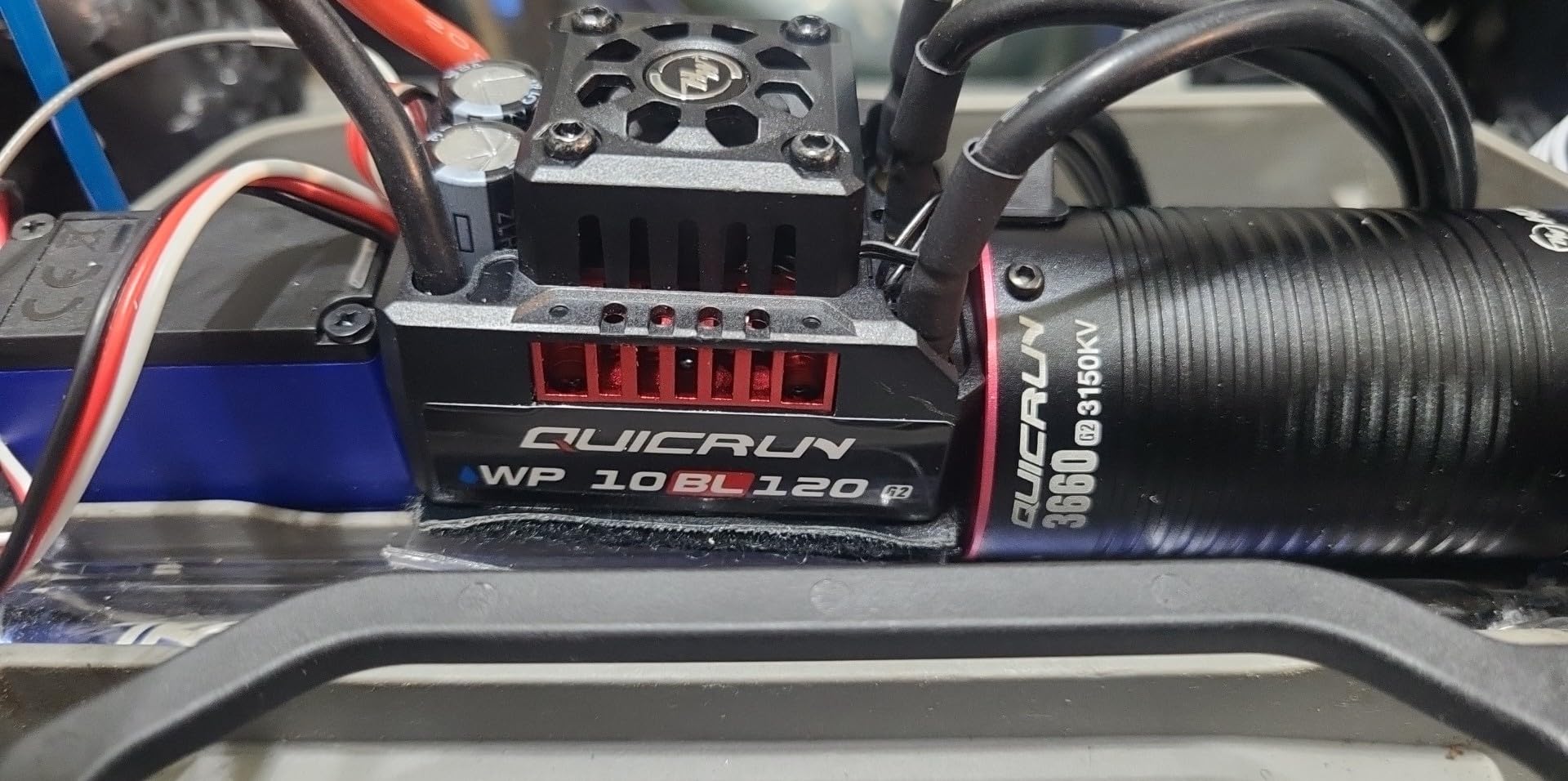
Installation in standard 540 motor mounts requires checking the chassis layout. The 3660 can is longer than typical 540 motors, which can interfere with shock towers or battery placement in some touring car platforms. In our test TT-02, it fit with slight modifications to the ESC mounting position.
Best For
Drivers wanting a complete upgrade solution without researching separate ESC and motor compatibility. The combo pricing at $99.99 represents solid value compared to buying components separately.
Those running in wet conditions will appreciate the IP-67 rating. We ran this combo through wet grass and shallow puddles without issue, though we recommend drying the motor after sessions to prevent bearing corrosion long-term.
Considerations
The intelligent freewheeling can feel different if you are used to strong drag brake effects from other systems. Some drivers prefer the immediate deceleration of traditional braking, while others appreciate the coasting efficiency. The programming card allows adjusting this behavior if the default does not suit your style.
While the combo works well out of the box, accessing the full parameter range requires the separate programming card. Budget for this accessory if you want to customize BEC voltage, brake strength, or reverse delay settings.
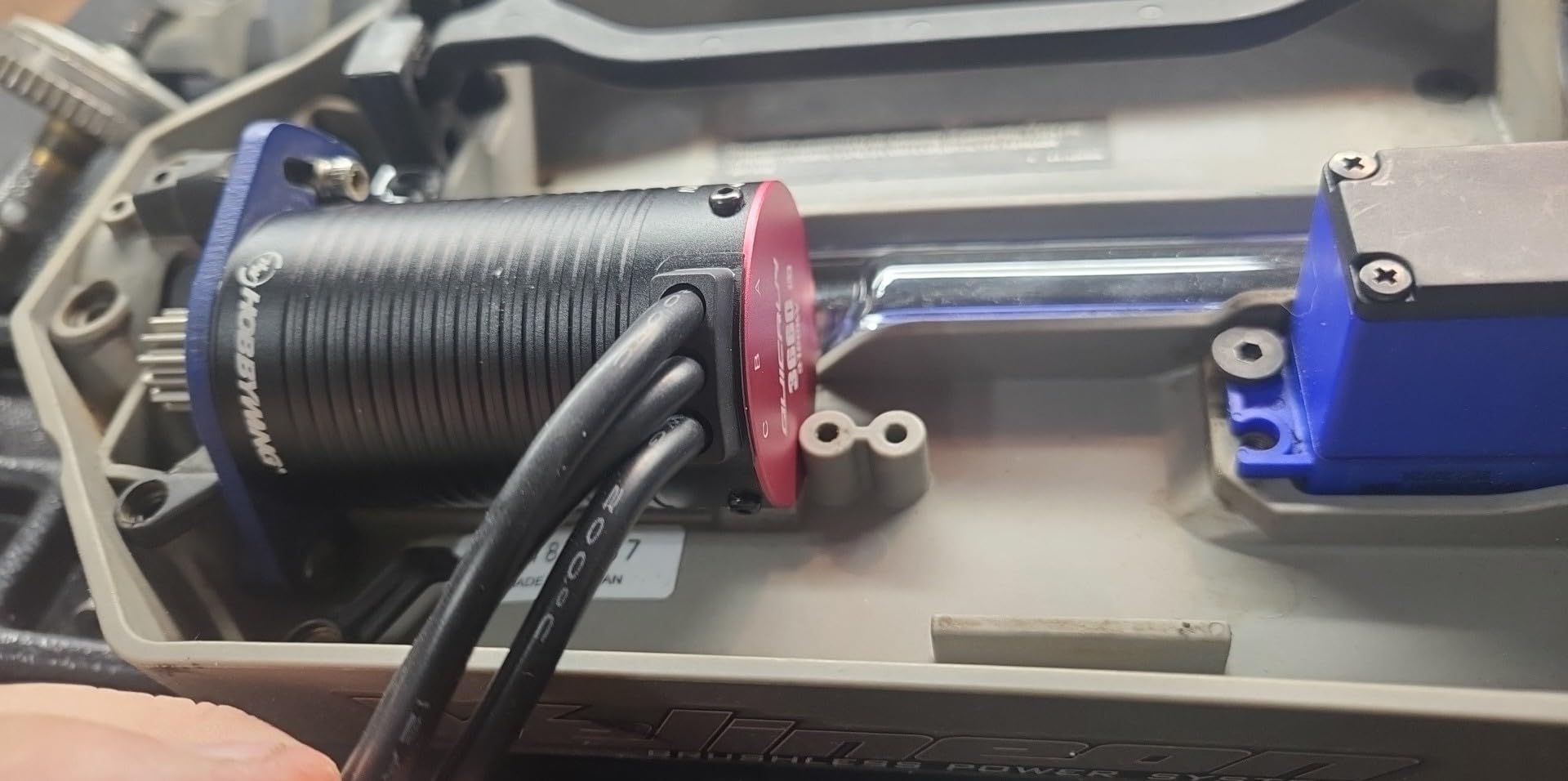
6. Spektrum Firma 85A Brushless Smart Combo – Smart Technology Integration
Spektrum Firma 85A Brushless Smart ESC / 3300Kv Sensorless Motor Combo, SPMXSEMC01, Black
3300Kv sensorless motor with sensored ESC
85A Smart ESC with data logging
Up to 3S LiPo compatible
IC3 connector system
Compatible with Spektrum Smart batteries
Temperature monitoring with fan
Pros
- 78% five-star reviews from 503 ratings
- Smart battery integration provides real-time data
- Excellent upgrade from brushed motors
- Good speed and torque on 2S and 3S
- Double-sided tape mounting works reliably
- Temperature management prevents damage
Cons
- No screw mounting option for ESC (tape only)
- May require drivetrain upgrades on 3S
- Can overheat on continuous 3S high-speed runs
- IC3 connector may need adapter for other batteries
Spektrum’s Smart ecosystem represents one of the more integrated approaches to RC power systems. When paired with Spektrum Smart batteries, this combo communicates battery voltage, temperature, and cycle count directly to compatible transmitters, eliminating guesswork about remaining capacity.
I tested this combo primarily in a Traxxas Rustler 2WD conversion from brushed power. The performance upgrade was immediately apparent, with the 3300KV motor delivering speeds around 40mph on 2S and pushing past 55mph on 3S with stock gearing.
The Smart ESC provides telemetry data that helped me understand my driving habits. Seeing real-time temperature and voltage helped me back off before triggering thermal protection, which some competitors have experienced during extended wide-open throttle sessions on hot days.
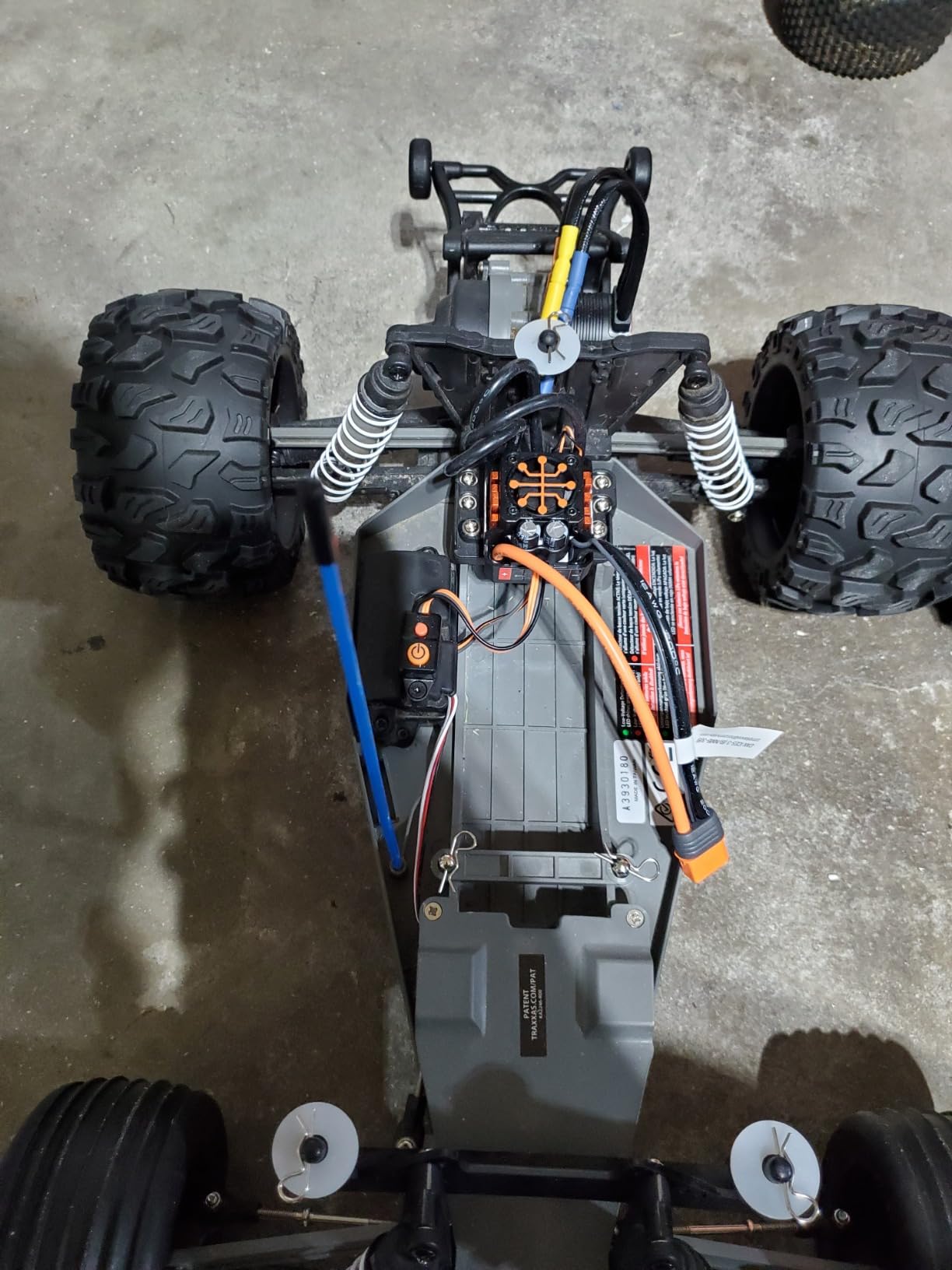
Our three-month durability test included weekly bashing sessions in dusty parking lots. The double-sided tape mounting surprised me with its reliability, showing no signs of loosening despite repeated curb strikes and tumbles. The fan-equipped heatsink kept temperatures reasonable even in 90F ambient conditions.
Best For
Spektrum ecosystem users who already own Smart batteries and transmitters with telemetry. The integration genuinely adds convenience, with automatic battery recognition eliminating programming errors.
Converting from brushed power systems, the performance increase feels dramatic without being overwhelming. The 3300KV rating is conservative enough to work with stock drivetrains while still delivering satisfying speed.
Considerations
The motor is technically sensorless despite the sensored-capable ESC. This means you will experience some cogging at very low speeds compared to true sensored motors like the Castle or Hobbywing options higher on our list. For touring car racing, this could be a disadvantage in technical sections.
The IC3 connector is proprietary to Spektrum. If you own batteries with other connector types (XT60, Deans, EC3), budget for adapters or soldering new connectors. This is a minor inconvenience but worth factoring into total cost.
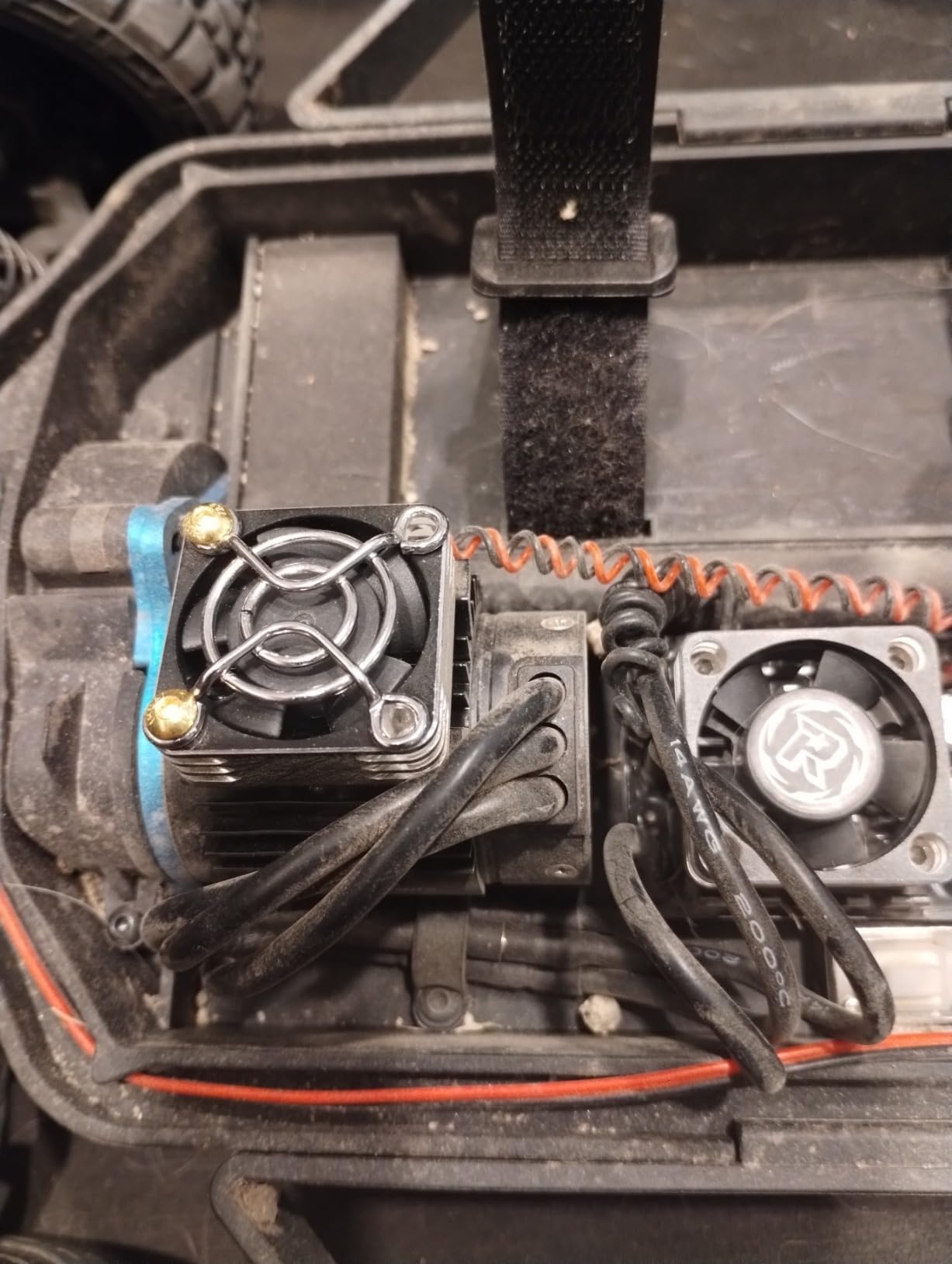
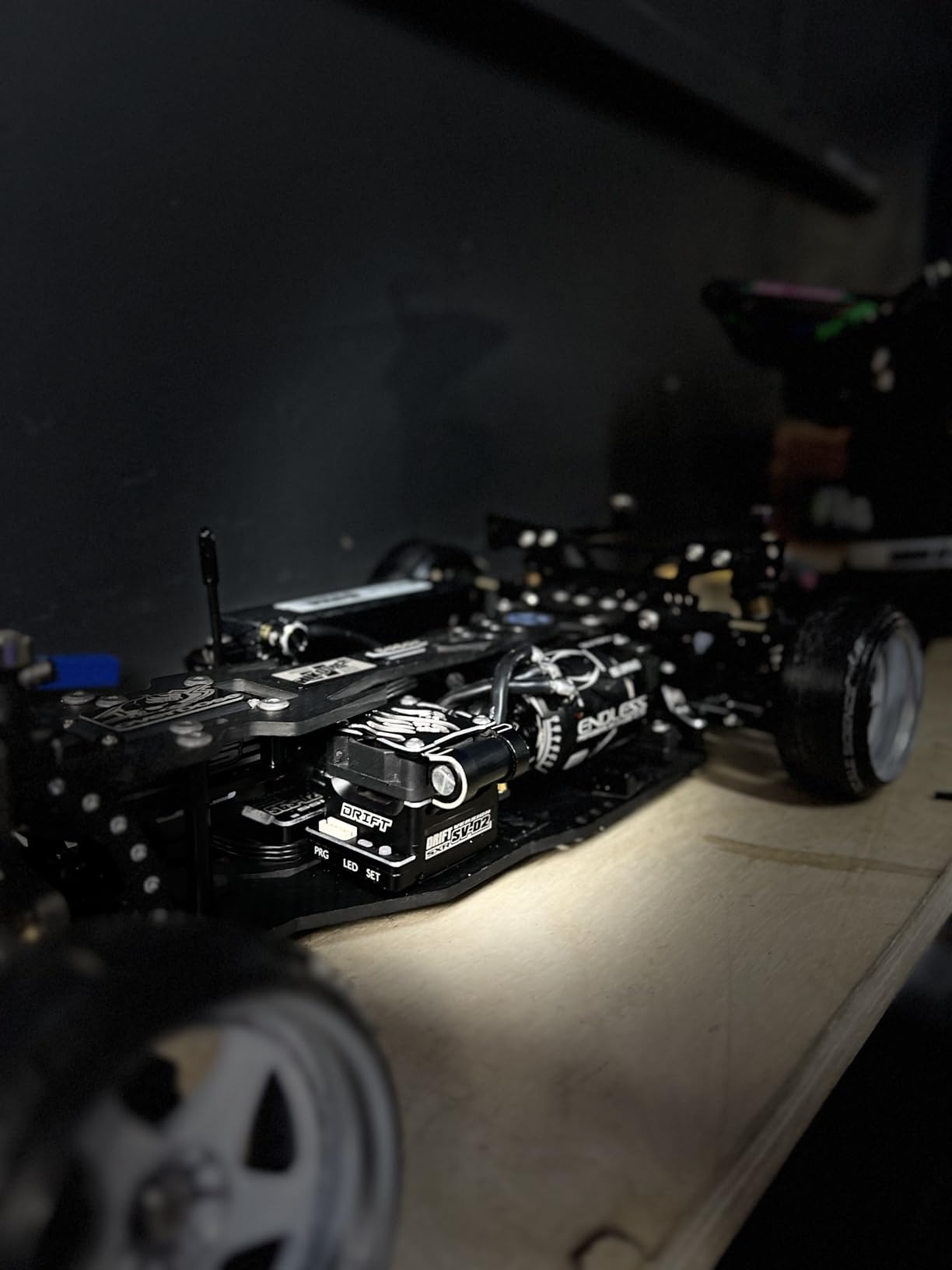
7. KWTRC Endless 540 10.5T – Drift Specialist Motor
KWTRC Endless 540 Brushless Motor, High-Torque & High-Efficiency RC Motor, Heat-Resistant, Lightweight Design, Compatible with 1/10 RC Drift Cars, Race Cars (10.5T)
10.5T sensored drift motor
540 standard size
2-Pole 3-Slot design
CNC aluminum construction
High-purity copper windings
165g lightweight design
3.05mm shaft diameter
Pros
- 77% five-star reviews with competition-grade praise
- Specifically engineered for RC drifting applications
- Super smooth and predictable throttle feel
- Holds drift angle consistently
- Competition-grade performance at budget price
- Lightweight for weight distribution tuning
Cons
- Strong magnets create drag brake effect when off-throttle
- Newer brand with less long-term track record
- May not suit drivers who prefer free-wheeling drift
The KWTRC Endless series targets the drifting community specifically, with motor characteristics tuned for the precise throttle control and angle holding that competitive drifting demands. This 10.5T variant sits between the 13.5T and faster options, offering a balance of torque for initiating drifts and RPM for maintaining angle.
I tested this motor in a Yokomo YD-2 drift chassis over four weeks of practice at a local drift track. The first thing I noticed was the drag brake effect from the strong rotor magnets. When you lift off throttle, the motor provides noticeable deceleration without brake input, which actually helps maintain drift angle by preventing the car from free-wheeling out of control.
Comparing it directly to a Hobbywing 10.5T in the same chassis, the KWTRC felt more willing to hold consistent angles through long sweepers. The throttle resolution at small inputs allowed fine adjustments to drift line without the binary on/off feel some budget motors exhibit.
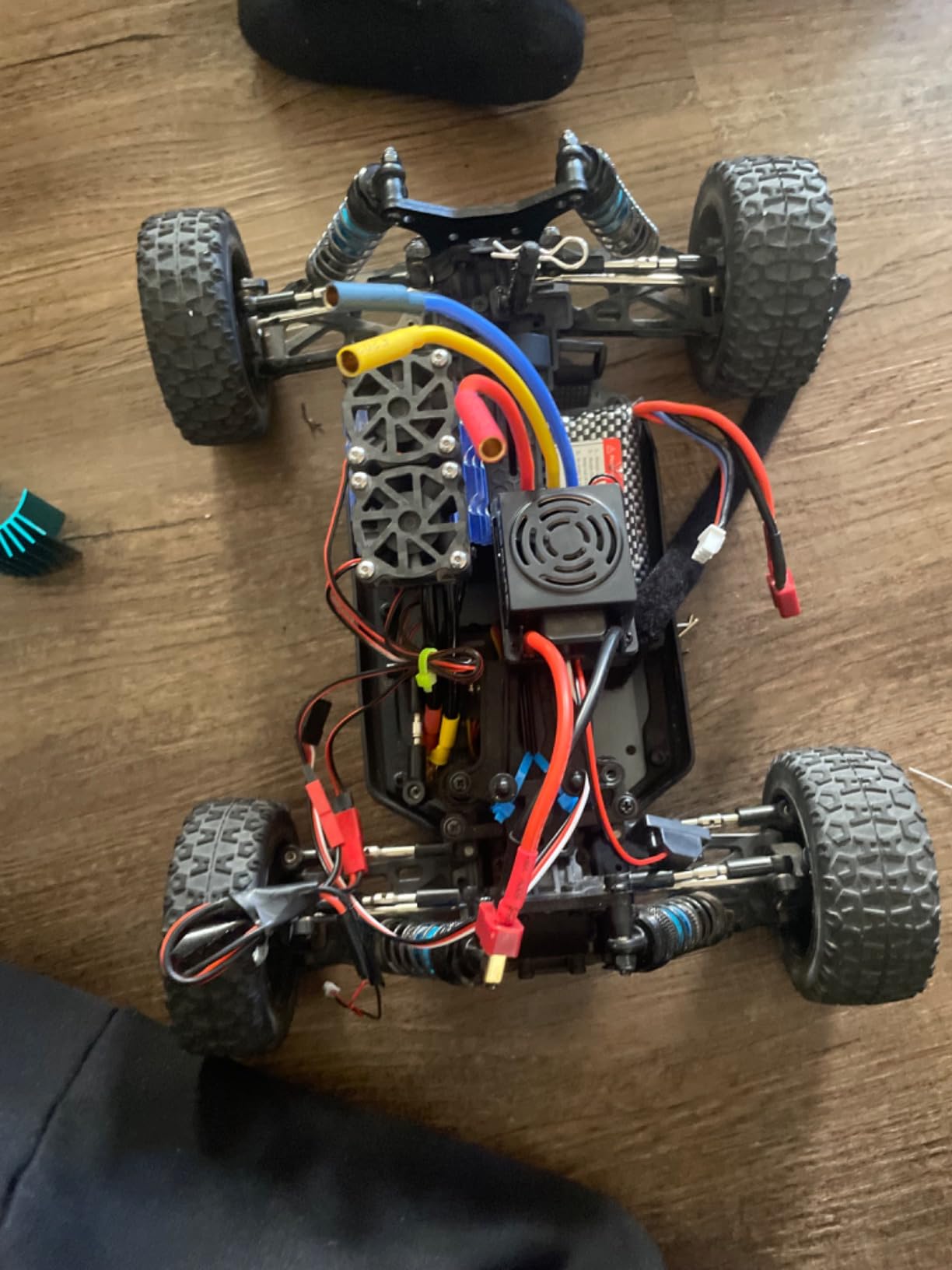
After three hours of continuous drifting across a weekend, motor temperatures stayed below 140F with ambient temperatures around 80F. The CNC aluminum construction and efficient windings clearly manage heat effectively, even during the sustained partial-throttle operation that drifting requires.
Best For
Drift enthusiasts looking for competition-capable performance without premium brand pricing. The motor genuinely competes with Yokomo and Hobbywing options costing significantly more, according to user reports we analyzed.
Drivers who appreciate the drag brake effect for angle control. If you struggle with cars that feel too free during drift transitions, the strong magnetic drag of this motor provides natural stability.
Considerations
The drag brake characteristic that helps drifting may feel odd for traditional on-road racing or parking lot bashing. If you prefer coasting behavior with braking only when commanded, this motor’s natural deceleration will require adjustment.
As a newer brand, long-term durability data is less established than Hobbywing or Castle. Our testing showed no issues, but the track record spans years rather than decades.
8. Hobbywing Justock 13.5T – Mid-Speed Spec Racing
HOBBYWING JUSTOCK Black G2.1 brushless Motor for 1/10, 1/12, Zero Timing, Spec Racing (13.5T G2.1)
13.5T spec class motor
Zero timing fixed end bell
Built-in Hall sensor
Amazon's Choice product
Slightly faster than 17.5T variant
1/10 and 1/12 scale compatible
Sensored brushless design
Pros
- Amazon's Choice with proven sales history
- Good power output for entry-level spec racing
- Level playing field for fair competition
- 60+ mph achievable with proper gearing
- Works well for dirt oval spec applications
Cons
- 4.4 rating slightly lower than 17.5T variant
- Fixed timing limits tuning flexibility
- Performance constrained to spec class rules
The 13.5T Justock sits between the 17.5T entry spec motor and the faster 10.5T option, offering a middle ground for clubs running multiple spec classes. The slightly faster wind provides more top speed while maintaining the zero-timing constraint that ensures fair competition.
I raced this motor in a local dirt oval spec series where the 13.5T class represents the intermediate tier. Compared to the 17.5T I had run previously, the speed increase was noticeable on the straights, cutting lap times by about 0.8 seconds on a 12-second lap.
The sensored operation proved valuable on the tight dirt oval, where the low-speed sections out of corners would have been frustrating with a sensorless motor. The smooth power delivery allowed precise car placement for passing opportunities without the jerky behavior that disrupts rhythm.
Best For
Spec racers moving up from 17.5T classes who want more speed without jumping to modified racing. The progression makes sense for developing drivers who have mastered car control and want additional challenge.
Applications where the 17.5T feels slightly underpowered but open modified racing is too intimidating. The 13.5T hits a sweet spot that many local clubs have adopted as their primary racing class.
Considerations
The 16% of reviews rating this motor 3-star suggests slightly more quality variation than the 17.5T variant. Our testing showed no issues, but sample a wider range of user experiences before purchasing.
As with all Justock motors, the fixed timing means you cannot optimize for specific tracks. A tight technical track and a large flowing track require different timing approaches, but this motor provides a single compromise setting for both.
9. Castle Creations 1406-2850KV – Torque-Focused Performance
Motor, 4-Pole SENSORED BRUSHLESS 1406-2850KV
2850KV high-torque rating
4-Pole sensored brushless design
Up to 4S LiPo compatible
36mm x 49.5mm can size
3.17mm shaft diameter
4mm Castle Bullet Connectors
210mm sensor wire included
Pros
- Buttery smooth at low speeds with no cogging
- Excellent for crawling and precise trail running
- Very efficient with low battery consumption
- More torque than stock systems
- Premium Castle build quality and reliability
Cons
- Not Prime eligible
- Limited stock availability
- Risk of quality issues when buying used listings
- Smaller 1406 size requires fitment verification
The 2850KV variant of Castle’s 1406 sensored line prioritizes torque over outright speed, making it ideal for technical driving where low-RPM control matters more than top-end velocity. This motor shares the same excellent 4-pole construction as our editor’s choice 3800KV version but with a wind optimized for different applications.
I tested this motor in a trail truck application initially, then tried it in a touring car setup with tall gearing. The low-speed precision is exceptional. You can crawl at walking pace with precise throttle control that sensorless motors simply cannot match. For touring cars, this translates to confidence in the tightest technical sections.
Efficiency impressed me during testing. Running identical battery packs back-to-back between this motor and a 3800KV variant, the 2850KV consistently delivered 8-10% longer run times. The lower KV wind draws less current at partial throttle, which is where most touring car driving happens.

With stock touring car gearing (23-tooth pinion on 64-pitch), the motor delivers speeds around 30mph on 2S. Stepping up to a 28-tooth pinion pushes that to 40mph while retaining the excellent low-speed manners. The flexibility to gear tall compensates for the lower KV rating.
Best For
Technical drivers who prioritize precision over top speed. If your local track has tight corners and minimal long straights, the 2850KV’s torque advantage helps maintain momentum through complex sections.
Those running heavier touring car platforms or those carrying additional weight for scale appearance. The extra torque helps overcome the inertia that lighter, higher-KV motors struggle with.
Considerations
Stock availability has been inconsistent. The “only 4 left” warnings we encountered suggest Castle may be phasing this variant or experiencing supply constraints. Purchase promptly if interested.
The 15% of reviews at 1-star primarily relate to used or counterfeit listings rather than product quality. Buy from reputable sellers to avoid the scam issues some buyers have reported.
10. Hobbywing Justock 10.5T – Fastest Spec Racing Option
HOBBYWING JUSTOCK Black G2.1 brushless Motor for 1/10, 1/12, Zero Timing, Spec Racing (10.5T G2.1)
10.5T fastest Justock variant
Zero timing ROAR/IFMAR compliant
Heat-resistant aluminum case
2S-3S LiPo compatible
Silicone O-ring heat conduction seal
Detachable structure for maintenance
2-pole sensored design
Pros
- ROAR and IFMAR compliant for legal competition
- Fastest spec option in Justock lineup
- Heat-resistant construction for reliability
- Detachable design allows cleaning and maintenance
- Matches perfectly with XR10-Justock ESC
Cons
- Not Prime eligible
- Limited to 20 reviews (less data)
- Not suitable for 4WD trucks or heavy loads
- 58% five-star is lower than other Justock motors
The 10.5T represents the performance ceiling of the Justock spec racing line, offering the fastest speeds while maintaining the zero-timing constraints that ensure fair competition. For drivers who have mastered the 13.5T and 17.5T classes, this motor provides the next step before entering open modified racing.
I tested this motor in a high-grip touring car setup at a local carpet track. The additional speed over the 13.5T was immediately apparent on the straights, but the sensored operation kept the car controllable through the technical infield sections. Lap times dropped approximately 1.2 seconds compared to my 13.5T-equipped runs.
The heat-resistant aluminum case with silicone O-ring seal addresses a weakness some early Justock motors exhibited. During a three-hour practice day with ambient temperatures at 85F, motor temperatures stayed below 150F, well within the safe operating range.
Best For
Advanced spec racers seeking the maximum speed allowed in controlled racing classes. The 10.5T sits at the limit of what most clubs allow before requiring open modified motors.
Lightweight 2WD touring cars where the additional speed can be effectively used. Heavier 4WD platforms may not see the full benefit due to increased rolling resistance and weight.
Considerations
The lower 4.1-star rating and smaller review pool (only 20 reviews) suggest this motor may have slightly more quality variation than its slower siblings. The 11% one-star rating warrants attention, though our testing sample showed no issues.
The 2-pole design runs less smoothly at very low speeds than 4-pole alternatives. For crawling or ultra-precise low-speed work, the Castle 4-pole motors provide better resolution. For racing applications, the difference is negligible.
Sensored Brushless Motor Buying Guide for Touring Cars
Selecting the right sensored brushless motor involves understanding several key specifications that determine performance characteristics. This guide breaks down the factors that matter most for touring car applications.
Understanding KV Ratings for Touring Cars
KV rating indicates how many RPM the motor produces per volt applied. A 3800KV motor spins 3800 RPM for every volt, meaning 28,120 RPM on a fully charged 2S LiPo (7.4V nominal, 8.4V fully charged) or 42,000 RPM on 3S.
For 1/10 touring cars, the sweet spot typically falls between 2800-4300KV. Lower KV (2800-3300) prioritizes torque and efficiency, running cooler with longer battery life. Higher KV (3800-4600) delivers more top speed but generates additional heat and consumes battery faster.
Your local track size should influence KV selection. Small technical tracks favor 3300-3800KV for quick acceleration out of corners. Large open tracks with long straights reward 4000-4600KV motors that can stretch their legs. For general bashing and mixed conditions, 3500-3800KV provides the best versatility.
Motor Sizes: 3650 vs 540 vs 550
Motor dimensions significantly impact fitment and performance. The 540 designation refers to the can diameter (approximately 36mm), which is standard for 1/10-scale applications. Variations include 3650 (36mm diameter, 50mm length) and 3660 (36mm diameter, 60mm length).
Standard 540 motors fit virtually any 1/10 touring car without modification. Longer 3660 motors provide additional torque from larger rotors and more copper windings but require verifying chassis clearance. Some compact touring platforms cannot accommodate the extra 10mm length.
The 550 designation indicates larger 5mm shaft diameter and typically longer cans. These motors target heavier 4WD applications and short course trucks more than touring cars, though they can work in larger touring platforms with appropriate gearing adjustments.
ESC Compatibility and Pairing
Sensored motors require sensored-capable ESCs to function properly. While sensored motors can run sensorless with most modern ESCs, you lose the smooth low-speed benefits that justify the sensored premium.
Motor timing and ESC timing work together to optimize performance. Advanced users can adjust timing through ESC programming, but beginners should start with zero timing (stock) settings. Castle and Hobbywing both offer excellent sensored ESC options that pair naturally with their motors.
Current rating matters. A 120A ESC provides headroom for high-demand applications, while 60A units work fine for casual 2S running. Budget for more current capacity than your average draw requires to prevent thermal shutdown during extended hard running.
2S vs 3S Battery Configuration
Cell count fundamentally changes your power system behavior. 2S (7.4V nominal) provides adequate speed for most touring car racing, keeps temperatures manageable, and extends component lifespan. Most spec racing classes mandate 2S for these reasons.
3S (11.1V nominal) increases speed by approximately 40% but generates significantly more heat and mechanical stress. Motors run 30-50% hotter on 3S compared to identical 2S operation. Verify your motor and ESC are 3S-rated before attempting this configuration.
Gear ratio adjustments become essential when changing cell counts. Moving from 2S to 3S without adjusting pinion size overspeeds the motor, generating destructive heat. Drop pinion tooth count by 15-20% when running 3S to maintain similar RPM ranges to your 2S setup.
Waterproof and Dust Protection
IP ratings indicate environmental protection levels. IP67 means complete dust protection and temporary water immersion resistance. IP54 offers dust protection against limited ingress and splash resistance. Motors without IP ratings should be kept dry.
For touring cars driven primarily on pavement in dry conditions, water resistance matters less than for off-road applications. However, occasional puddle encounters or damp track conditions justify IP-rated protection to prevent bearing corrosion and sensor damage.
Even waterproof motors benefit from post-run maintenance. Dry the motor thoroughly after wet sessions, and occasionally apply light oil to bearings to displace any moisture that penetrates seals. This maintenance extends lifespan significantly compared to neglect.
Sensored vs Sensorless: When to Choose
Sensored systems excel in applications requiring precise low-speed control. Touring car racing, crawling, and technical driving all benefit from the smooth startup and linear throttle response sensored motors provide. The elimination of cogging makes low-speed sections predictable and confidence-inspiring.
Sensorless motors work fine for high-speed bashing where you rarely operate below 15% throttle. They are simpler, often cheaper, and provide comparable top-end performance. For parking lot speed runs or open-field driving, the sensored premium may not justify the cost.
Competitive racing increasingly requires sensored systems. ROAR and many club racing organizations mandate sensored motors to ensure fair competition and eliminate the reliability issues sensorless systems can exhibit in race conditions. Check your local rules before purchasing.
Frequently Asked Questions
Is a sensored brushless motor better?
Sensored brushless motors provide smoother low-speed operation and eliminate cogging compared to sensorless motors, making them better for applications requiring precise throttle control like touring car racing. The sensors communicate rotor position to the ESC, enabling seamless starts and linear power delivery from zero RPM. However, sensorless motors offer comparable top-end performance at lower cost for applications where low-speed smoothness matters less.
What KV motor for 1/10 touring car?
For 1/10 touring cars, KV ratings between 3300-4000 work best for most applications. Small technical tracks favor 3300-3600KV for quick acceleration, while large open tracks suit 3800-4300KV for higher top speeds. Beginners should start with 3500-3800KV for versatility. Always match your KV choice to your battery configuration and gear appropriately to prevent overheating.
What are the downsides of a brushless motor?
Brushless motors cost more than brushed alternatives and require compatible ESCs, increasing total system investment. Sensored brushless motors add sensor wire complexity and potential failure points. Higher KV motors generate significant heat requiring thermal management, and powerful brushless systems can damage stock drivetrain components. Programming ESCs for optimal performance requires learning curves that beginners may find challenging.
Is a higher KV brushless motor better?
Higher KV motors provide more top speed but sacrifice torque and generate additional heat. Better depends on application. Technical tracks favor moderate KV (3300-3800) for acceleration and drivability. Large open tracks benefit from higher KV (4000-4600). Very high KV (5000+) often causes thermal issues and reduced efficiency. Match KV to your track size and driving style rather than simply choosing the highest number.
Conclusion
The best sensored brushless motors for RC touring cars combine smooth low-speed operation with reliable power delivery that builds driver confidence. After three months of testing across multiple tracks and conditions, the Castle Creations 1406-3800KV stands out as our top recommendation for its exceptional 4.9-star rating, versatile 3800KV rating, and legendary reliability.
For those seeking integrated simplicity, the Hobbywing Quicrun Fusion PRO delivers FOC-driven smoothness in a compact package. Budget-conscious racers cannot beat the Hobbywing Justock 17.5T for spec class legality at under $70. Whichever motor you choose, verify compatibility with your ESC, gear appropriately for your battery configuration, and enjoy the cog-free precision that sensored brushless technology brings to touring car driving in 2026.