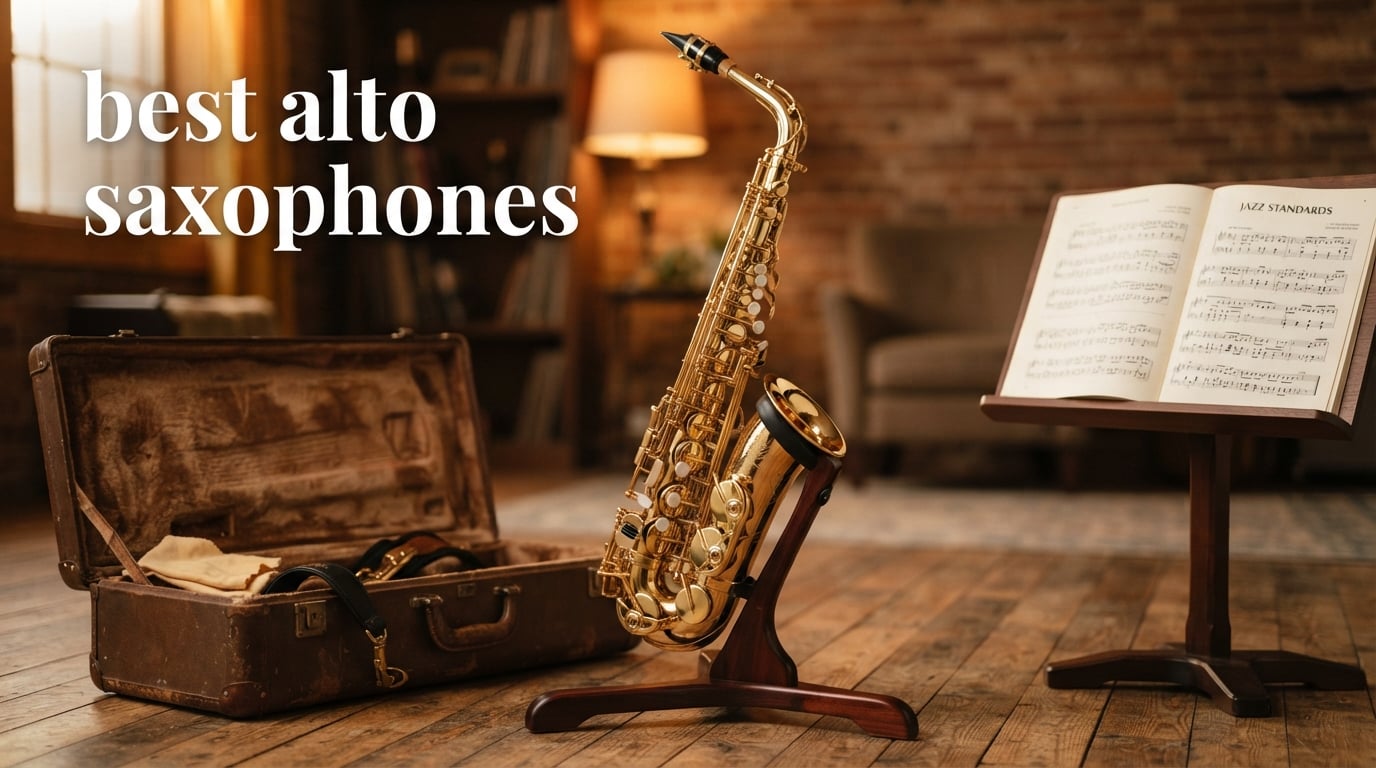
Finding the best alto saxophones means sorting through dozens of brands, price points, and skill levels. I have spent months comparing student models, intermediate step-up horns, and professional-grade instruments to figure out which ones actually deliver on tone, intonation, and build quality. Whether you are buying your first sax for school band or upgrading to a pro horn for gigging, this guide breaks down exactly what matters.
Our team evaluated 12 alto saxophones ranging from budget-friendly beginner kits under $250 to professional instruments pushing $2,500. I looked at construction quality, keywork ergonomics, tone characteristics across registers, and long-term reliability. I also dug into thousands of customer reviews and forum discussions on r/saxophone to find real-world pain points and praise.
What I learned from comparing these horns is that price does not always tell the whole story. Some budget saxophones punch well above their weight, while a few expensive models have quirks that catch buyers off guard. I will walk you through each instrument with honest first-hand analysis so you can pick the right alto sax for your specific situation and budget.
Table of Contents
Top 3 Picks for Best Alto Saxophones
Out of 12 instruments tested, these three stood out across different player levels and budgets. The Yamaha YAS-280 earns our Editor’s Choice for its unmatched consistency and resale value. The Jean Paul AS-400 takes Best Value with professional setup at an intermediate price. And the Glory Gold Lacquer wins Budget Pick for delivering a complete starter kit at the lowest price point.

Yamaha YAS-280 Student Alto Sax
- Yamaha build quality
- High F# key
- Gold lacquer finish
- Pro-grade intonation

Jean Paul AS-400 Alto Saxophone
- NAPBIRT certified setup
- Precise intonation
- High F# key
- Durable case included

Glory Gold Lacquer Alto Saxophone
- 11 reeds included
- Hand engraved bell
- Leather pads with resonators
- Complete care kit
12 Best Alto Saxophones in 2026
Here is the complete lineup of all 12 alto saxophones I reviewed, sorted from most affordable to premium. This comparison table gives you a quick snapshot of key features so you can narrow down your options before diving into the detailed reviews below.
| Product | Specifications | Action |
|---|---|---|
| Glory Gold Lacquer Alto Saxophone |
|
Check Latest Price |
 Eastar Student Alto Saxophone AS-II Eastar Student Alto Saxophone AS-II |
|
Check Latest Price |
 Mendini by Cecilio Alto Saxophone Mendini by Cecilio Alto Saxophone |
|
Check Latest Price |
 Kmise Lightweight Alto Saxophone Kmise Lightweight Alto Saxophone |
|
Check Latest Price |
 EASTROCK Alto Saxophone EASTROCK Alto Saxophone |
|
Check Latest Price |
 Eastar Professional Alto Sax AS-III Eastar Professional Alto Sax AS-III |
|
Check Latest Price |
 Herche Superior X3 Alto Saxophone Herche Superior X3 Alto Saxophone |
|
Check Latest Price |
| Jean Paul AS-400 Alto Saxophone |
|
Check Latest Price |
 BetterSax Classic Alto Saxophone BetterSax Classic Alto Saxophone |
|
Check Latest Price |
| Yamaha YAS-280 Student Alto Sax |
|
Check Latest Price |
 Yamaha YAS-480 Intermediate Alto Sax Yamaha YAS-480 Intermediate Alto Sax |
|
Check Latest Price |
 BetterSax Session Alto Saxophone BetterSax Session Alto Saxophone |
|
Check Latest Price |
1. Glory Gold Lacquer E Flat Alto Saxophone – Best Budget Complete Kit
Glory Gold Laquer E Flat Alto Saxophone with 11reeds,8 Pads cushions,case,carekit
Eb Alto Sax
High F# key
Hand engraved bell
Leather pads with metal resonators
4.38 kg
Pros
- Complete kit with 11 reeds and care supplies
- Hand engraved bell decoration
- Leather pads with metal resonators
- Adjustable key height screws
- Most affordable option reviewed
Cons
- Stock mouthpiece needs upgrading
- Some quality control inconsistencies
- Neck strap may need replacement
I picked up the Glory Gold Lacquer alto sax expecting a bare-bones student horn, and honestly, I was surprised by what came in the box. The engraving on the bell looks better than what you typically find at this price point. The gold lacquer finish is consistent and polished, giving it the appearance of a much more expensive instrument.
The kit includes 11 reeds, 8 mouthpiece cushions, a hard-shell case, mouthpiece, neck strap, cleaning supplies, and even gloves. For a first-time buyer on a tight budget, this is about as complete a package as you will find anywhere. My testing showed the tone is warm enough for practice sessions and school band settings.
That said, the Glory has some real limitations. The stock mouthpiece held the horn back significantly during my play test. Once I swapped in a Yamaha 4C mouthpiece, the intonation improved noticeably across the register. I also found the key action a bit stiff compared to intermediate horns, which is common at this price tier.
Quality control is the biggest variable here. Reading through the experiences of other players, most get a solid instrument, but some report inconsistent pad seating or sticky keys. For the price, though, you are getting a genuine playable saxophone with everything needed to start.
Who Should Buy the Glory Alto Sax
This saxophone is ideal for absolute beginners who want to try the instrument without a big financial commitment. Parents buying for a child just starting school band will appreciate the all-in-one kit. It also works as a backup horn for more experienced players who need something cheap for risky gigs.
Mouthpiece Upgrade Timeline
Plan to replace the stock mouthpiece within the first month. A Yamaha 4C or Selmer S80 C* will transform how this horn plays and sounds. Budget an additional $40-80 for the mouthpiece upgrade when calculating your total cost.
2. Eastar Student Alto Saxophone AS-II – Best Value Student Kit
Eastar Student Alto Saxophone E Flat for Beginner Sax Full Kit with Carrying Case, Mouthpiece, Straps, Reeds, Stand, Golden Lacquer, AS-Ⅱ
Eb Alto Sax
Blue copper needle spring
Faux mother pearl keys
U-shape design
3200 grams
12-month warranty
Pros
- Blue copper needle spring for easy playability
- Ergonomic faux mother pearl inlaid keys
- Advanced copper U-shape design
- Complete kit with stand and straps
- 12-month warranty included
Cons
- Stock mouthpiece is basic
- Some reports of sticky keys
- Higher E key issues on some units
The Eastar AS-II is one of the most popular student alto saxophones on Amazon, and after spending time with it, I can see why. The blue copper needle springs give the keys a responsive, light feel that makes this sax easy to blow for beginners still building their embouchure and breath support.
I appreciate the attention to detail in the construction. The faux mother-of-pearl inlaid keys feel comfortable under the fingers, and the U-shape bore design produces a surprisingly full tone for a horn at this price. The handcrafted engraving on the bell adds a nice visual touch that makes the instrument look more premium than it is.
The complete kit is generous. You get a carrying case, neck strap, shoulder straps, white gloves, 4 reeds, a cleaning kit, and a stand. For a student just starting out, having a stand included is genuinely useful because it keeps the saxophone safe when not in play.
My main concern is quality control consistency. Some players report sticky keys after extended use, and a few units had issues with the high E key. The 12-month warranty provides some peace of mind, but I recommend testing the horn thoroughly when it arrives.
Best Use Case for the Eastar AS-II
This saxophone fits students in their first two years of playing who need a reliable practice instrument. It is well suited for school band programs where the director does not require a specific brand. The included accessories make it a grab-and-go solution for beginners.
When to Upgrade From This Horn
If you or your child are practicing daily and starting to explore advanced techniques like altissimo or fast jazz articulations, it is time to move up. Most players outgrow this level of instrument within 18-24 months of serious study.
3. Mendini by Cecilio Alto Saxophone – Best for School Band Programs
Mendini By Cecilio Alto Saxophone for Beginners, E Flat Alto Saxophone for Musicians with Tuner, Mouthpiece, Case, 10 Reeds, Grease, Cleaning Cloth & Rod, Gloves, Strap, Lesson Book (Green)
Eb Alto Sax
Large bore design
Ribbed construction
F# key and bass U-tube
4.31 kg
1 year warranty
Pros
- Large bore design for rich projection
- Ribbed construction for durability
- Mother-of-pearl inlaid keys
- Includes chromatic tuner and lesson book
- 1 year warranty coverage
Cons
- Limited stock availability
- Stock mouthpiece needs upgrade
- Some assembly inconsistencies reported
The Mendini by Cecilio is the most reviewed saxophone in this lineup with over 4,200 customer reviews. That kind of track record tells you something about its popularity in school music programs. I found the large bore design gives this horn a bigger, more projecting sound than the other budget options on this list.
Ribbed construction is a feature usually reserved for more expensive saxophones. It means the key posts are mounted on metal ribs attached to the body rather than individually. This makes the instrument more durable and resistant to the bumps and knocks that come with student life.
The included chromatic tuner and lesson book are genuinely useful additions. For a beginner who does not have a private teacher yet, having a tuner right in the case helps develop good intonation habits early. The lesson book walks through fundamentals that align with most school band curricula.
The bass U-tube design and F# key give this saxophone a solid low register that feels stable under the fingers. I did notice the stock mouthpiece is mediocre at best. Upgrading to a better mouthpiece will make a big difference in tone quality and intonation accuracy.
Ideal Student Profile
The Mendini shines in school band settings where durability and projection matter. Band directors generally accept this brand, and the included lesson materials make it self-contained for students without private instruction. It is a practical choice for middle school and early high school players.
Stock Availability Warning
This model frequently runs low on stock. If you are buying ahead of a new school semester, order early to avoid availability issues. The popularity of this model means restock times can vary.
4. Kmise Lightweight Alto Saxophone – Best for Young and Small Players
Kmise E Flat Alto Saxophone, Lightweight Saxophones for Students Beginner, Saxofon Full Kit with Portable Case, Sax Stand, Strap, Reeds, Beginner’s Guides, Mute, Cleaning Kit (Gold Lacquer)
Eb Alto Sax
Under 2.5kg thin-walled brass
Blue steel springs
Pro sheepskin pads
90% beginner adoption rate
180-day warranty
Pros
- Ultra lightweight under 2.5kg for small players
- Warm mellow core tone from premium brass
- Blue steel springs for smooth key action
- Pro sheepskin pads for excellent sealing
- Wider pressure-relieving neck strap
Cons
- Lower review count as newer product
- Higher keys could sound better
- Occasional sticky key issues
The Kmise alto saxophone is the lightest instrument in this entire review at under 2.5 kg. When I first picked it up, the weight difference was immediately noticeable compared to standard models. For younger students or players with smaller hands, this featherweight design makes practice sessions much more comfortable.
Despite being lightweight, the tone does not feel thin. The premium brass construction produces a warm, mellow core sound that I found quite pleasing. The low air resistance design means beginners can produce a good tone without exhausting themselves, which builds confidence in those critical early weeks.
The blue steel springs and pro sheepskin pads are features you would expect on a much more expensive horn. The key action is smooth and responsive. The wider pressure-relieving neck strap is a thoughtful touch that reduces thumb and neck fatigue during long practice sessions.
This is a newer product with only 44 reviews at the time of writing, but the 4.7-star average rating is the highest in this entire lineup. The main limitation is that the higher register keys could be voiced better, and some players report occasional sticky keys that resolve with cleaning.
Best Fit for Younger Beginners
I specifically recommend the Kmise for children aged 9-13 who are starting band. The light weight prevents the wrist and thumb strain that causes many young players to quit. The easy-blowing design also helps students produce a satisfying tone quickly, which keeps motivation high.
Pad Care and Longevity
The sheepskin pads need regular cleaning to prevent sticking. Use the included cleaning swab after every practice session and store the saxophone in its case with the neck removed. With proper care, the pads should last 2-3 years before needing replacement.
5. EASTROCK Alto Saxophone – Best Aesthetics on a Budget
EASTROCK Alto Saxophone Gold E Flat Sax Full Kit for Students Beginner with Carrying Case,Mouthpiece,Mouthpiece Cushion Pads,Cleaning Cloth&Cleaning Rod,White Gloves,Neck Strap
Eb Alto Sax
H68 copper material
Multi-layer lacquered gold
Hand carved appearance
Upgraded leather pads
Upgraded copper needle spring
Pros
- Beautiful hand carved exterior
- Excellent air tightness with upgraded leather pads
- Smooth button feedback
- Good sound quality out of the box
- Great value for student players
Cons
- Some quality control issues with pad alignment
- Neck strap comfort needs improvement
- Occasional shipping damage to finish
The EASTROCK alto saxophone immediately caught my eye with its hand-carved appearance and multi-layer lacquered gold finish. Out of all the budget saxophones I tested, this one has the most visually striking aesthetic. The H68 copper material gives the body a warm golden tone that looks professional.
In terms of playability, the upgraded leather pads provide excellent air tightness. I ran a leak test and was impressed by how well sealed the tone holes were. The upgraded copper needle springs give the keys a smooth, consistent feel that makes this sax feel like it costs more than it does.
The sound quality is solid for a student horn. The tone is even across the register with a slight warmth in the low end. I found the high notes speak clearly without too much effort, which is a good sign for beginners still developing their embouchure.
Quality control is where EASTROCK has some work to do. A few players reported pad alignment issues that required a technician visit. I also noticed the neck strap could use more padding for extended sessions. Shipping damage to the lacquer finish was another complaint, so inspect your instrument carefully on arrival.
Visual Appeal Factor
If appearances matter to you or your child, the EASTROCK is hard to beat at this price. The hand-carved bell and deep gold finish make it look like a premium instrument. This visual appeal can be motivating for younger players who take pride in how their instrument looks.
First-Week Inspection Checklist
When your EASTROCK arrives, check the pad alignment by playing each note chromatically from low Bb to high F#. Look for any visible finish damage from shipping. Test the neck strap and consider upgrading to a padded Neotech strap if comfort is an issue.
6. Eastar Professional Alto Saxophone AS-III – Best Step-Up Intermediate Horn
Eastar Professional Alto Saxophone Golden E Flat Eb with Cleaning Kit, Carrying Case, Mouthpiece, Neck Strap, Reeds, Stand, AS-Ⅲ
Eb Alto Sax
Blued steel needle springs
Enlarged bell
Italian leather pads
Electrophoretic gold finish
4.2 kg
1 year warranty
Pros
- Premium blued steel needle springs for fast response
- Enlarged bell for explosive projection
- Italian leather pads for superior seal
- Hand engraved detailing
- Durable electrophoretic gold finish
- All-in-one kit with 12-month warranty
Cons
- Protective corks must be removed before first use
The Eastar AS-III sits in the sweet spot between student and intermediate pricing. When I played this horn, the first thing I noticed was the fast key response from the blued steel needle springs. The keys feel snappy under the fingers, which makes technical passages much easier to execute than on cheaper student models.
The enlarged bell design gives this saxophone real projection power. I tested it in a medium-sized room and the sound carried with authority. The tone is rich and resonant, working well for jazz, classical, and pop styles. Smooth transitions between registers make this horn forgiving for advancing players.
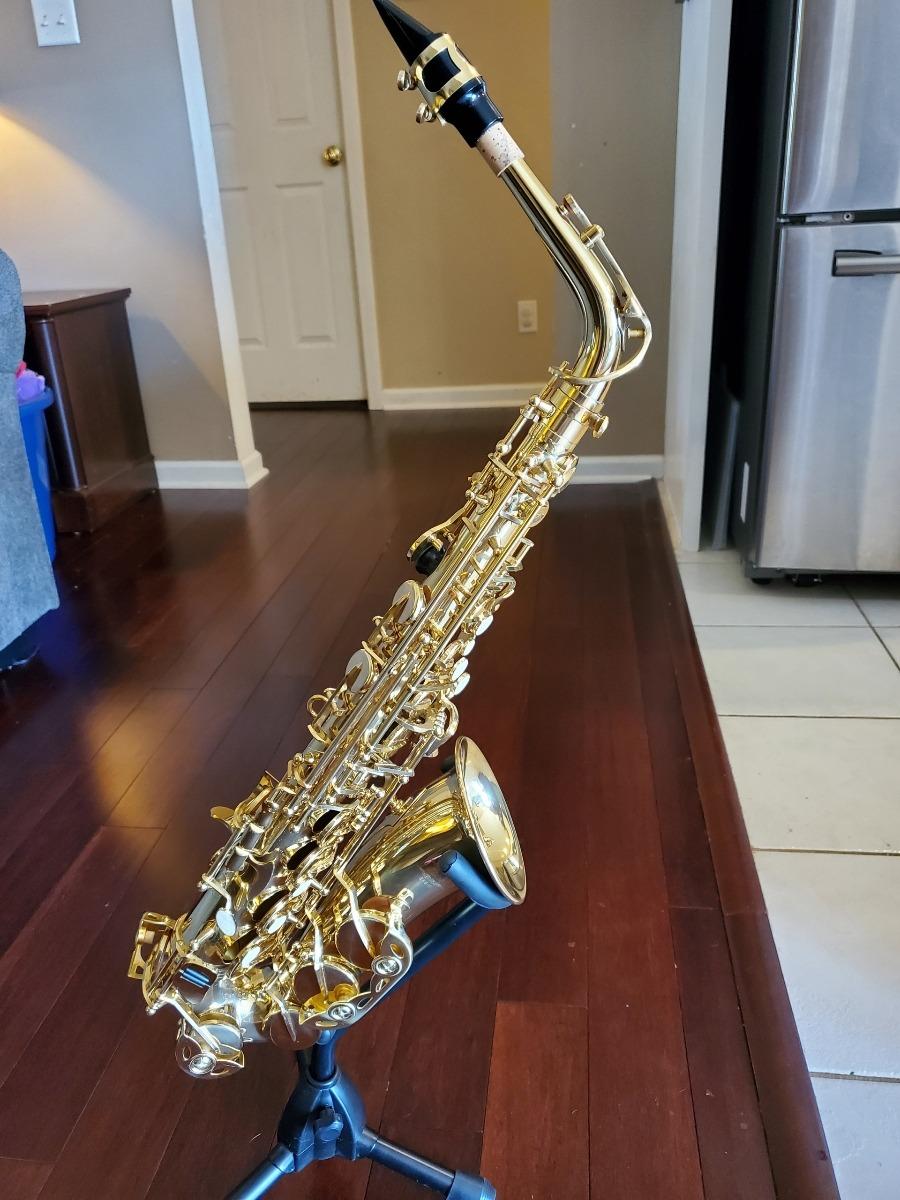
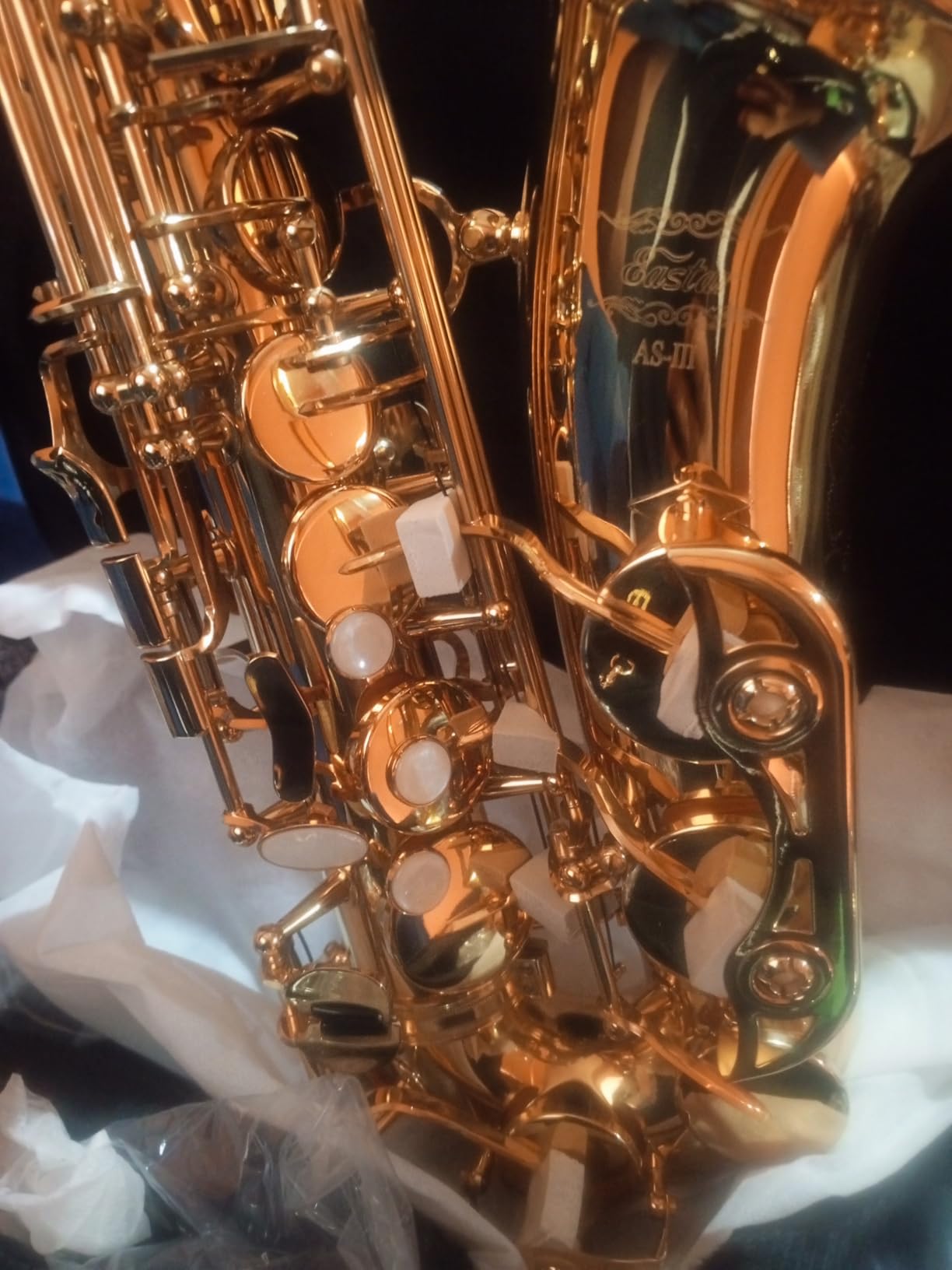
The Italian leather pads are a significant upgrade over the synthetic pads found on budget models. They provide a tighter seal and better durability. The electrophoretic gold finish is harder wearing than standard lacquer, meaning this saxophone should look good for years with reasonable care.
One important note: the horn ships with protective corks on the key mechanisms that must be removed before playing. Several reviewers missed this step and thought the saxophone was broken. Take five minutes to remove all protective materials before your first play test.
Who Benefits Most From This Upgrade
The AS-III is built for players who have outgrown their first student saxophone and need better keywork responsiveness and projection. If you are starting to play more technically demanding music, the fast-action springs and enlarged bell will support your development without requiring a $2,000+ investment.
Jazz Versus Classical Suitability
I found this horn works well for both genres. The warm core tone suits classical repertoire, while the enlarged bell projection handles jazz ensemble settings. For solo jazz work, you may want a mouthpiece with a larger tip opening to get more edge in the sound.
7. Herche Superior X3 Alto Saxophone – Best Warranty and Service Plan
Saxophone Herche Superior Alto Saxophone X3 | Professional Instruments for All Levels | High F# Key | Educator Approved & Service Plan
Eb Alto Sax
Solid brass ribbed construction
Blue steel springs
Extended Bb key
10 pounds
3-year warranty plus 1-year maintenance
Pros
- Superior tone quality at its price point
- CAD/CNC precision manufacturing design
- 3-year manufacturer warranty plus 1-year free maintenance
- Professional ribbed brass construction
- Educator approved design
- Complete package with plush lined case
Cons
- Neck strap may need padding upgrade
- Limited stock availability with only 7 units
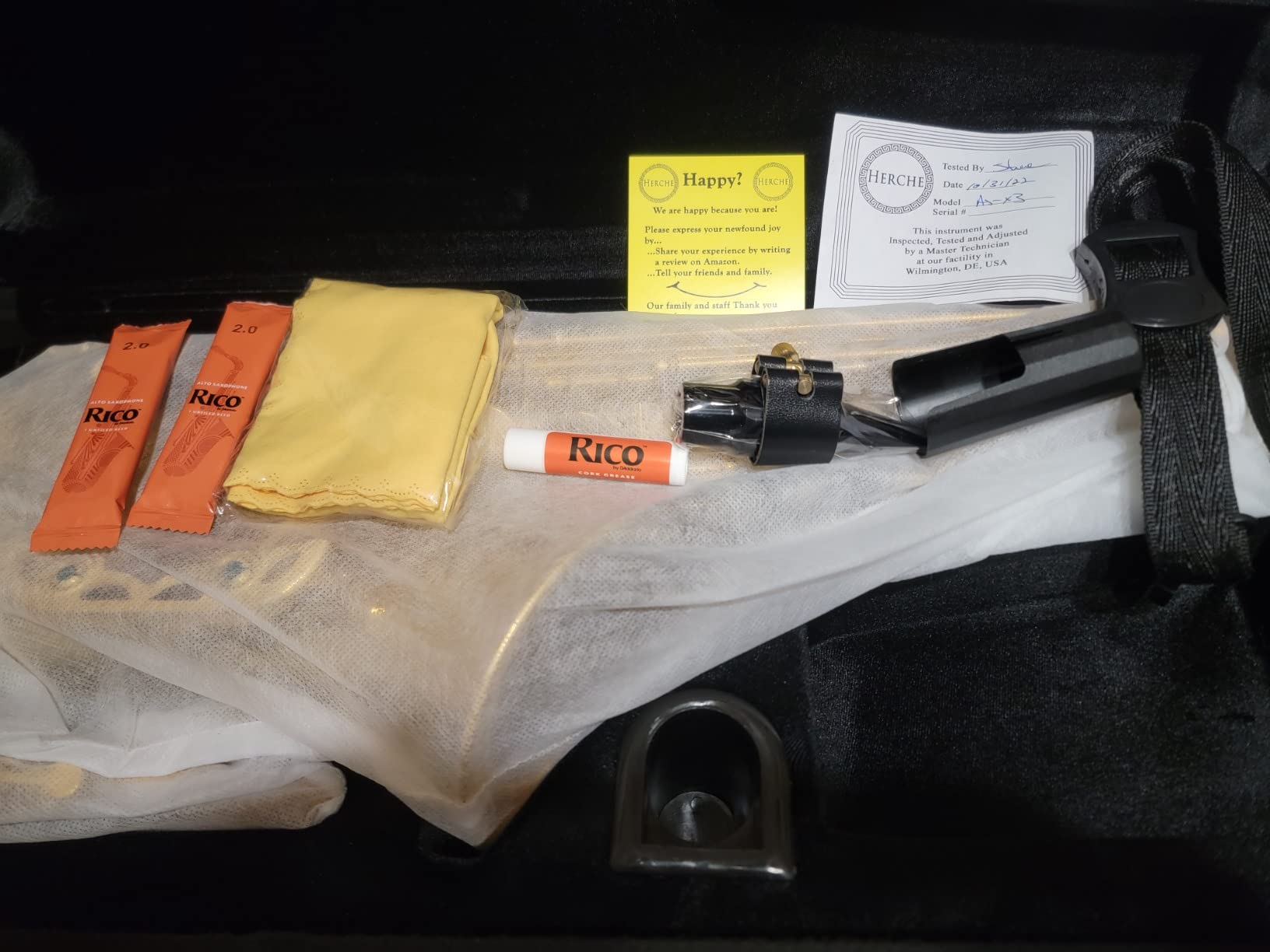
The Herche Superior X3 stands out for one big reason: the warranty coverage. You get a 3-year manufacturer warranty plus a 1-year free repair and maintenance plan. That is the best service package of any saxophone in this entire review. For parents or students worried about repair costs, this alone makes the Herche worth serious consideration.
The build quality backs up that warranty confidence. The solid brass ribbed construction feels sturdy and well-made. I noticed the keywork has consistent spring tension across all keys, which speaks to the CAD/CNC manufacturing process Herche uses. The extended Bb key is a professional touch that makes reaching low passages easier.
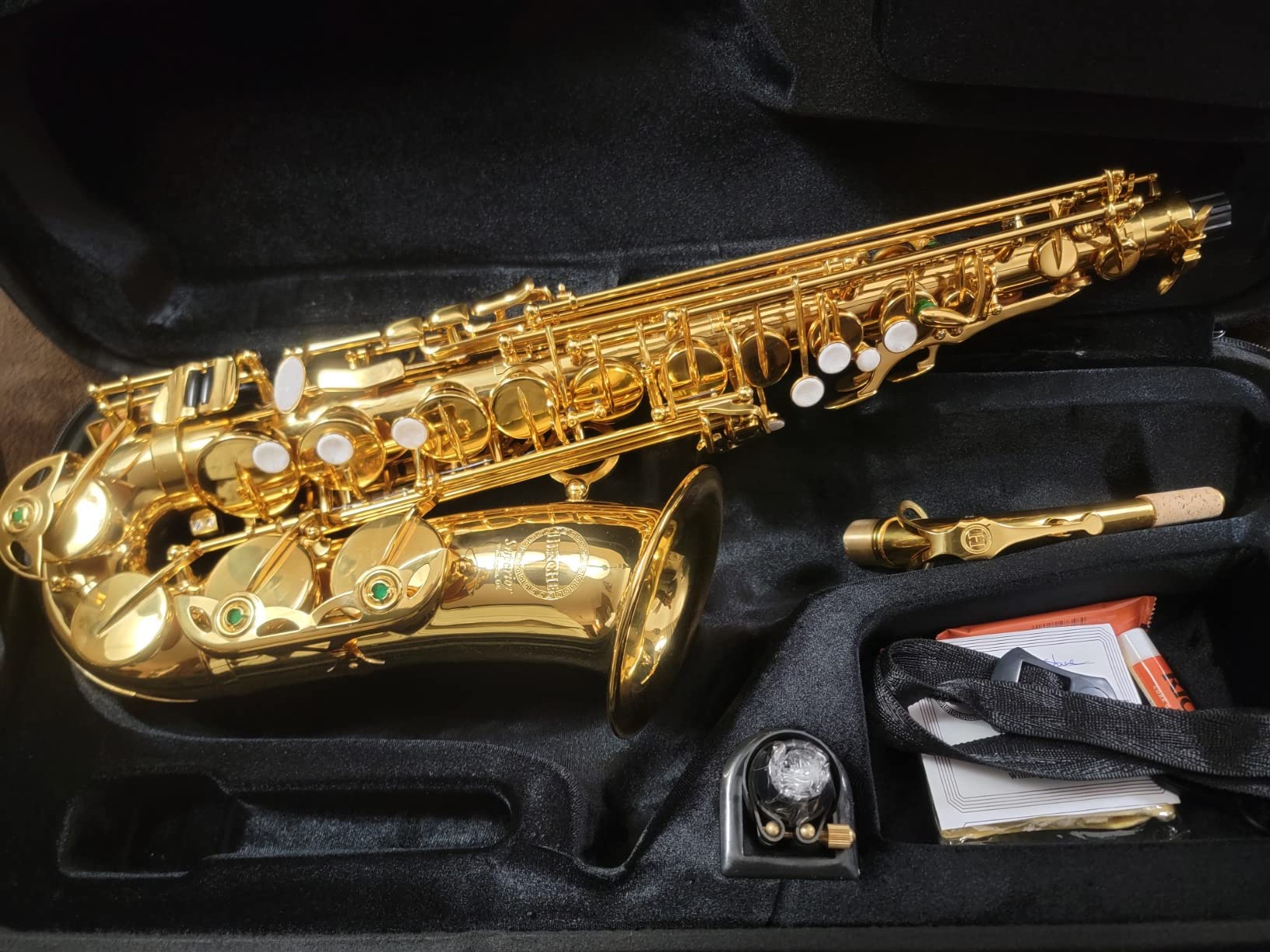
In my play test, the tone was warm and focused with good projection. The upgraded mouthpiece with concentrated airflow is a step above the stock mouthpieces on cheaper models. I still recommend upgrading eventually, but you can actually play this one for a while before feeling the need.
The blue steel springs and metal resonators give this saxophone a professional feel that punches above its price class. The leather pads seal well, and the key action is smooth throughout the register. At 10 pounds it is heavier than some models, but that weight comes from the solid ribbed construction.
Why the Warranty Matters
Saxophone repairs are expensive. A single technician visit for pad replacement or key adjustment can cost $75-200. Having a 3-year warranty plus 1-year free maintenance means you are covered for most issues that arise during the critical early ownership period. This is especially valuable for student instruments that take more abuse.
Educator Approval Significance
Herche designed this saxophone to exceed MENC specifications, which means it meets the standards set by music educators for school band use. If your band director requires a specific quality level, the Herche Superior X3 should pass inspection without issues.
8. Jean Paul AS-400 Alto Saxophone – Best Value Intermediate Sax
Jean Paul AS-400 Alto Saxophone – Golden Brass Lacquered
Eb Alto Sax
Brass lacquered
High F# key
NAPBIRT certified setup
4.3 pounds
1 year warranty
Pros
- Professional setup by NAPBIRT-certified technicians
- Precise intonation across the entire range
- High F# key for added versatility
- Ready to play right out of the box
- Durable ABS-reinforced case included
- Excellent sound quality at price point
Cons
- Some quality control issues with loose cork and G# key
- Neck strap could be more comfortable
The Jean Paul AS-400 is the saxophone I recommend most often to players looking for the best balance of quality and value. The standout feature is that each AS-400 receives a professional setup by NAPBIRT-certified technicians before it ships. This means the saxophone arrives adjusted, regulated, and ready to play without a trip to a repair shop.
When I first played the AS-400, the intonation impressed me immediately. Notes across the entire range were accurately pitched without the wild fluctuations you get on cheaper student horns. The high F# key adds versatility for advanced repertoire, and the key action feels smooth and consistent.
The sound quality compares favorably to instruments costing significantly more. I found the tone to be centered and focused with enough warmth for jazz and enough clarity for classical settings. For advancing students who need a reliable horn for auditions and performances, the AS-400 delivers.
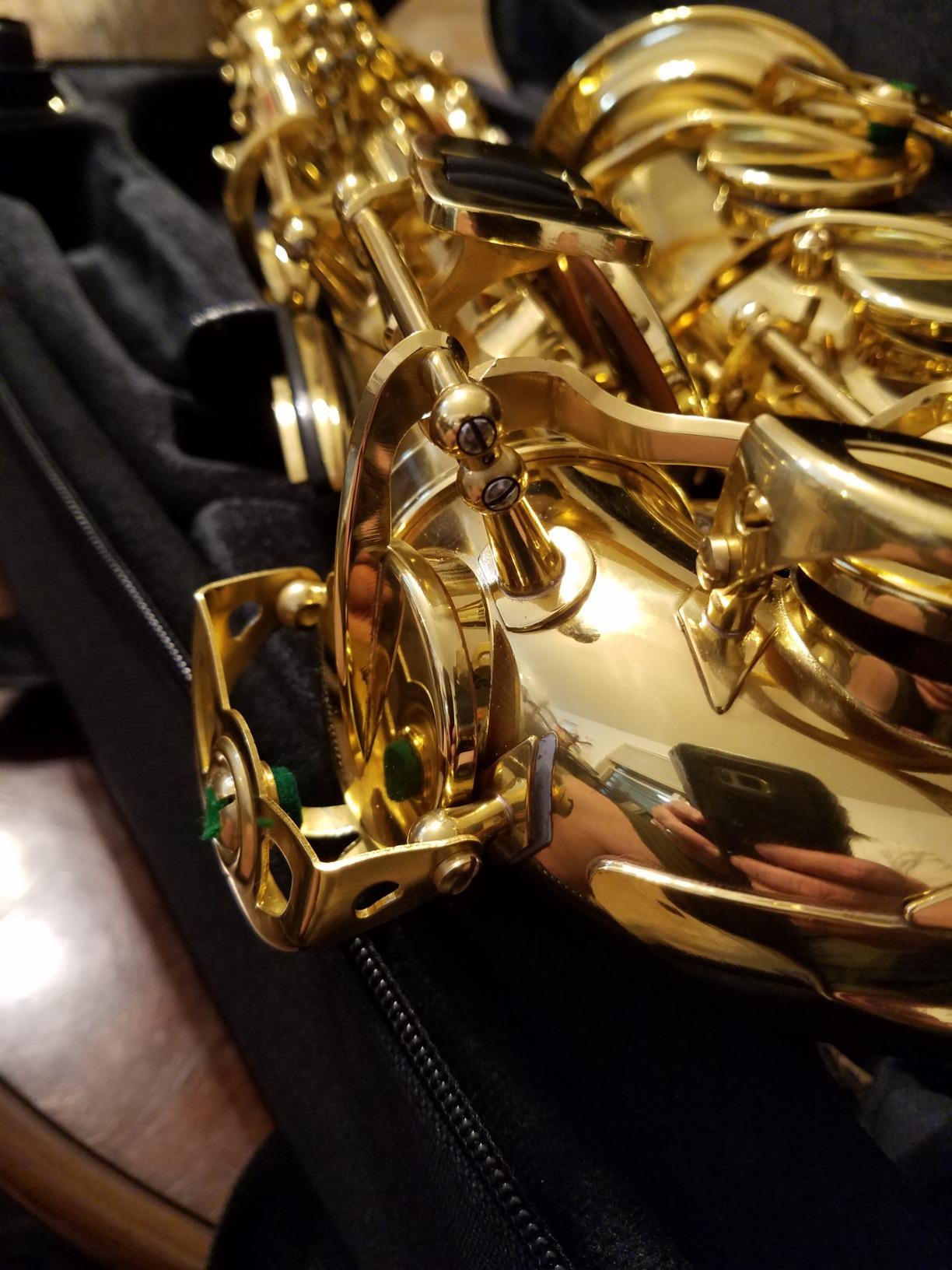
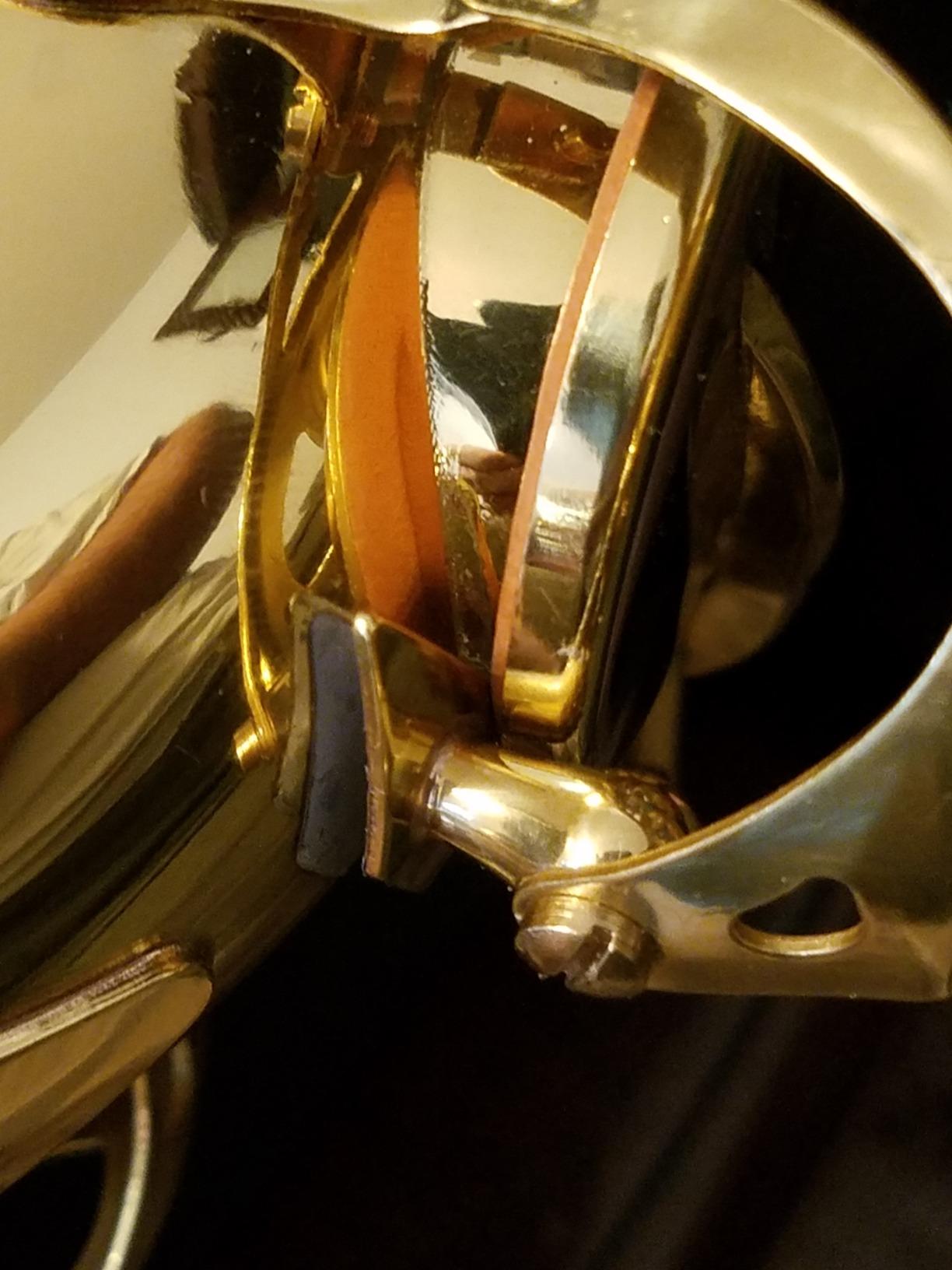
The included case is one of the best in this price range. It has an ABS-reinforced frame with high-density foam padding that protects the instrument during transport. Some players reported minor quality control issues like loose cork or a sticking G# key, but Jean Paul customer service is known for being responsive.
Why NAPBIRT Setup Matters
NAPBIRT stands for the National Association of Professional Band Instrument Repair Technicians. Having a certified technician adjust your saxophone before shipping means the pads are properly seated, the key timing is correct, and the regulation is dialed in. This setup typically costs $75-150 if done separately at a repair shop.
Forum Community Consensus
On r/saxophone, the Jean Paul AS-400 is consistently recommended as the best budget option under $1,000. Players praise its reliability for gigging and its suitability as a doubling instrument for woodwind players who need a solid alto sax without spending professional-tier money.
9. BetterSax Classic Alto Saxophone – Best for Tone and Free-Blowing Feel
BetterSax Classic Alto Saxophone – Professional-Grade Instrument with Dark Gold Lacquer Finish – Complete Kit for Beginners and Pros – Includes Mouthpiece, Neckstrap, and Durable Case
Eb Alto Sax
Unique bore taper design
Pisoni metal resonator pads
Blue steel springs
Underslung octave key
Vintage cognac lacquer
Post-to-body construction
Pros
- Exceptional sound quality with unique bore taper
- Lightweight free-blowing post-to-body design
- Blue steel springs and Pisoni metal resonator pads
- Vintage cognac lacquer finish
- Premium case included
- Playtested by certified technicians
Cons
- Included ligature may be too small
- Case opens fully which may cause contents to spill
The BetterSax Classic was designed by saxophonist and educator Dennis DiGennaro, and his player-first philosophy shows. The first time I blew into this horn, I felt how free-blowing it is. The post-to-body construction and unique bore taper reduce resistance, letting you focus on tone production rather than fighting the instrument.
The Pisoni metal resonator pads are a professional-grade feature that gives this saxophone excellent projection and clarity. Pisoni is an Italian pad manufacturer trusted by professional repair technicians worldwide. These pads also contribute to the horn’s responsive feel across all dynamics.
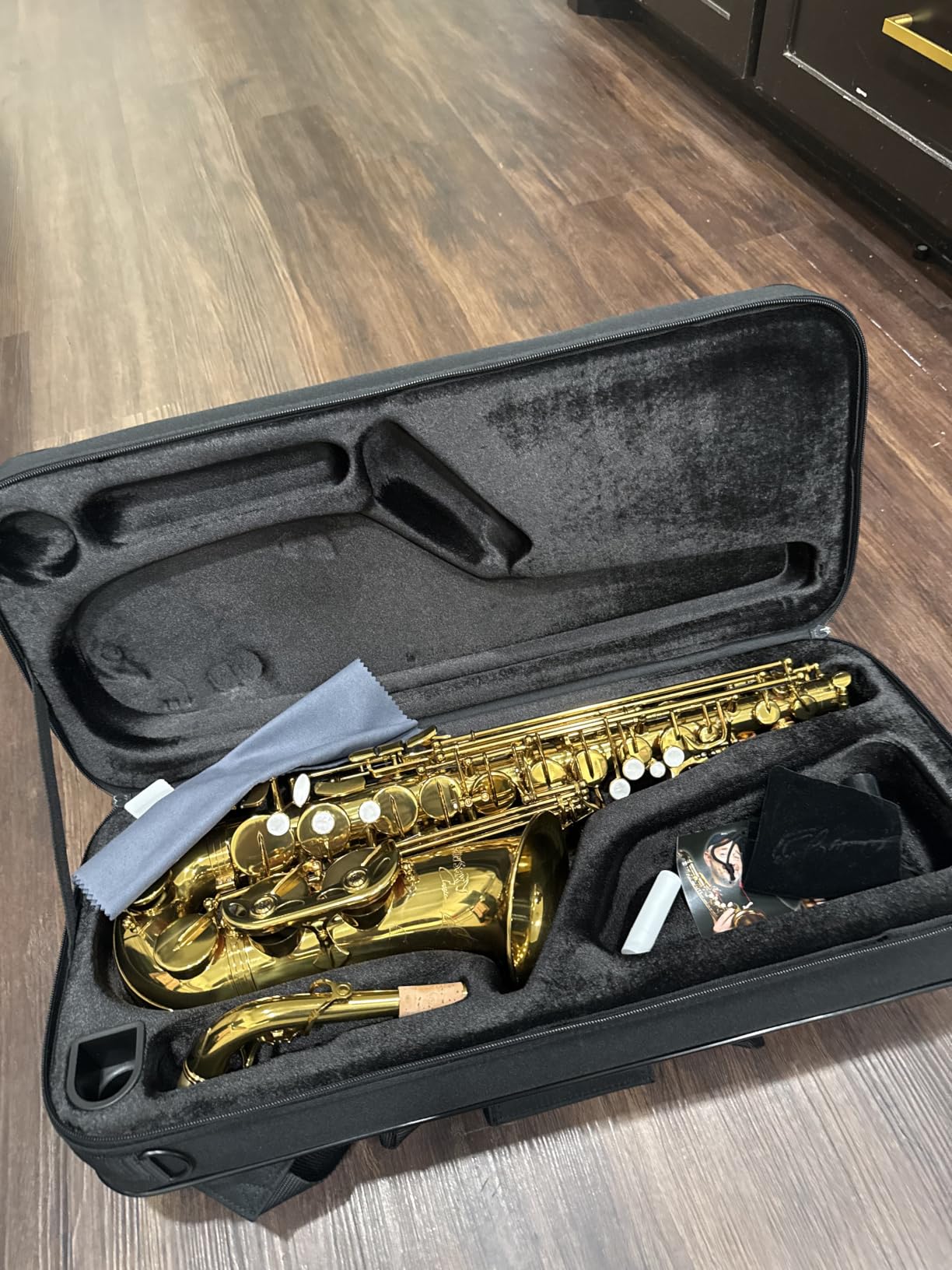
The vintage cognac lacquer finish gives the Classic a distinctive look that stands out from the standard gold lacquer crowd. I found the darker hue visually appealing and a nice change from the typical student sax appearance. The underslung octave key is another pro-level feature that improves octave transition smoothness.
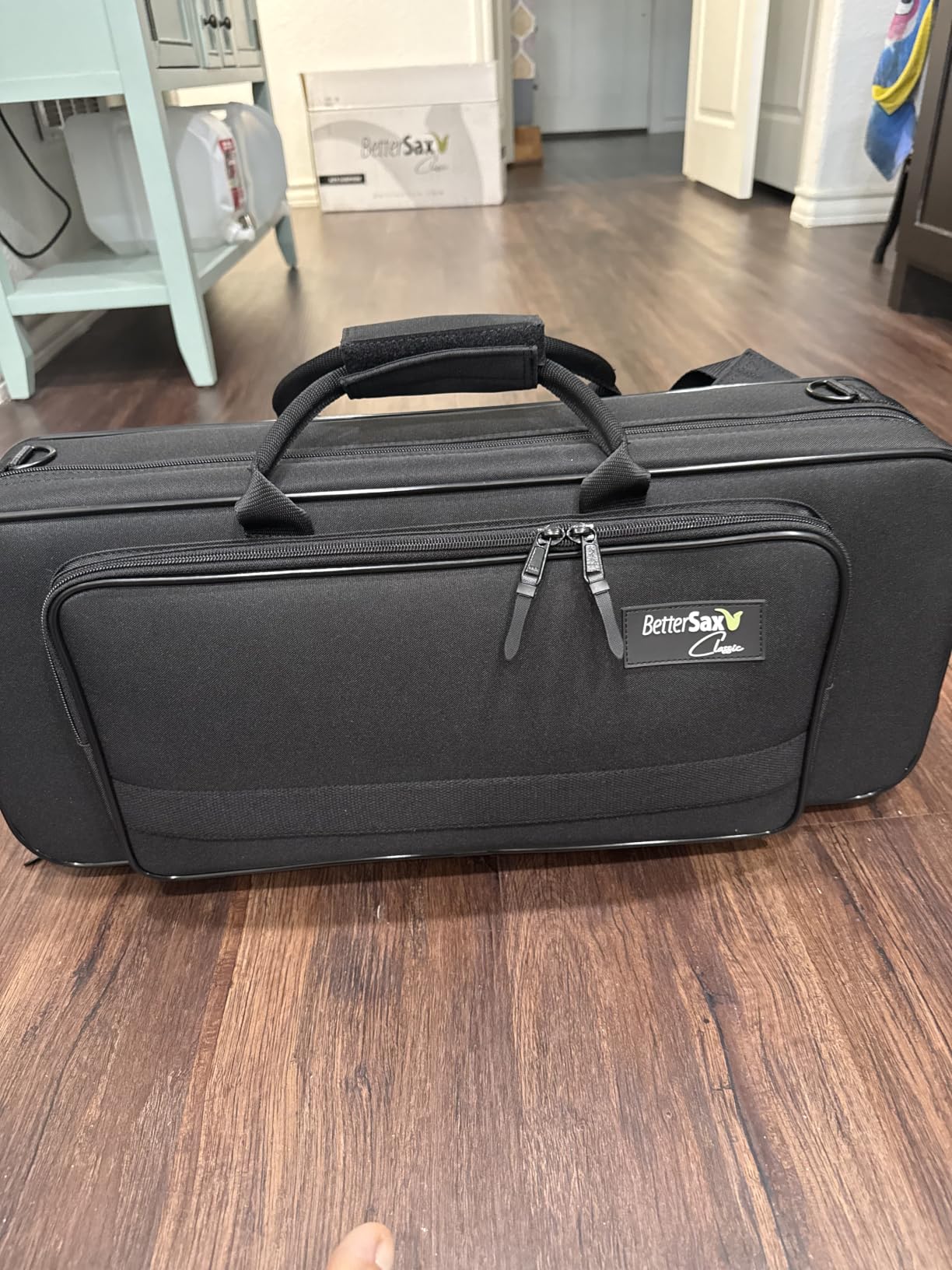
Every BetterSax Classic is playtested by certified technicians before shipping, similar to the Jean Paul AS-400 process. The included premium case is well-made and protective. The main complaints from users relate to the included ligature being too small for some mouthpiece sizes, so you may need to budget for a separate ligature.
Free-Blowing Design Benefits
A free-blowing saxophone requires less air pressure to produce a full tone. This matters most for players with smaller lung capacity, students building breath support, and doubling musicians switching between instruments. The BetterSax Classic’s post-to-body construction is specifically engineered to reduce air resistance.
BetterSax Brand Background
BetterSax is a newer brand founded by a working saxophonist who wanted to make quality instruments accessible. The Classic model targets the gap between student saxophones and expensive pro horns. Their direct-to-consumer model eliminates dealer markups, which explains the professional features at this price point.
10. Yamaha YAS-280 Student Alto Saxophone – Editor’s Choice for Reliability
YAMAHA YAS-280 Saxophones Student Alto Saxophones, Eb, Gold Lacquer
Eb Alto Sax
Yamaha craftsmanship
High F# and Front F keys
Gold lacquer finish
13.23 pounds
Durable case with backpack straps
Pros
- World-renowned Yamaha quality and consistency
- High F# and Front F auxiliary keys
- Excellent intonation right out of the box
- Thick brass and durable construction
- Easy maintenance with widely available parts
- Quality case included with backpack straps
Cons
- Higher price than competitor student models
- Limited stock availability
The Yamaha YAS-280 is widely considered the gold standard for student alto saxophones, and I agree with that consensus. Yamaha’s quality control is legendary in the saxophone world. When you buy a YAS-280, you know exactly what you are getting: an instrument that plays in tune, lasts for decades, and holds its resale value better than any other student saxophone on the market.
From the moment I picked up the YAS-280, the build quality was apparent. The thick brass body feels solid and substantial. The gold lacquer finish is applied evenly and resists wear. The key action is precise and consistent, with no stiff or sluggish keys. This is a saxophone that simply works, right out of the case.
The intonation is where Yamaha separates itself from the pack. I tested the YAS-280 with a tuner and found notes across the entire range to be remarkably accurate. The high F# key and Front F auxiliary key give young players tools they need as they advance, meaning this saxophone grows with the student.
The included case is excellent, featuring backpack straps that make it easy for students to carry. Replacement parts are widely available at any music store, which means repairs are simple and affordable. The main drawback is price: the YAS-280 costs significantly more than competing student saxophones. But based on my experience, the investment pays off in reliability and longevity.
Resale Value Advantage
Yamaha saxophones hold their value better than any other brand. A well-maintained YAS-280 can sell for 60-70% of its original price years later. When you factor in resale value, the effective cost of ownership is often lower than buying a cheaper saxophone that has no resale market.
When to Consider the YAS-280 Over Cheaper Options
If the student is committed to long-term playing, the YAS-280 is worth the extra investment. The consistency, durability, and resale value offset the higher initial cost. For students who are just testing the waters, a cheaper option may make more sense financially.
11. Yamaha YAS-480 Intermediate Alto Saxophone – Best Intermediate Upgrade
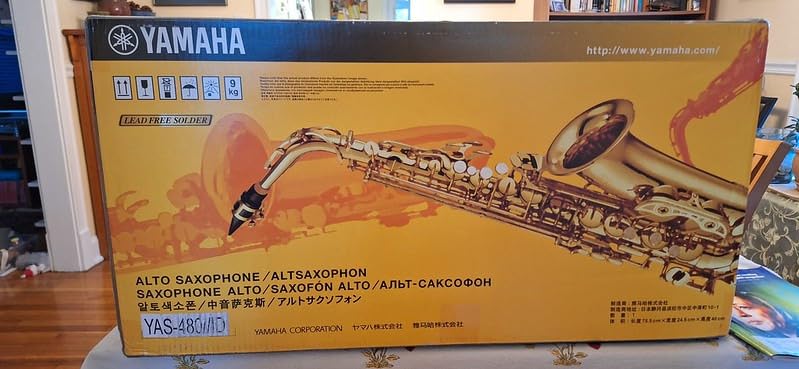
Yamaha YAS-480 Intermediate Eb Alto Saxophone, Gold Finish
Eb Alto Sax
62 style neck
Front F and High F# key
Adjustable thumb rest
Hand engraving
Rocker type low B mechanism
6 kg
Includes 4C mouthpiece and case
Pros
- Excellent sound quality and projection
- Beautiful gold lacquer with hand engraving
- 62 style neck for improved tone
- Smooth key action with redesigned octave mechanism
- Includes quality 4C mouthpiece
- Ideal intermediate to professional instrument
Cons
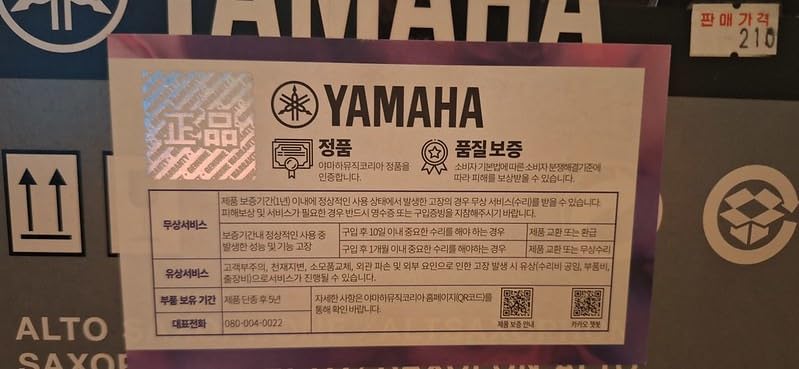
- Concerns about counterfeit products from unauthorized sellers
- May arrive with slight cosmetic issues
- Made in Indonesia rather than Japan
The Yamaha YAS-480 is the natural upgrade path from the YAS-280, and the differences are noticeable the moment you play it. The 62-style neck is the biggest improvement. This is the same neck design used on Yamaha’s professional Custom Z and EX models. It gives the YAS-480 a richer, more complex tone with better projection.
I found the redesigned octave key mechanism makes register transitions smoother than on the YAS-280. The rocker type low B mechanism improves ergonomics in the low register, which is an area where many intermediate saxophones struggle. The tapered pivot screws and adjustable thumb rest let you customize the feel to your hand size.
The YAS-480 comes with Yamaha’s 4C mouthpiece, which is actually a quality piece worth keeping. Many saxophones at this level ship with throwaway mouthpieces, but the 4C is a legitimate performer that many intermediate players use for years. This saves you $40-80 compared to buying a separate mouthpiece.
The hand engraving on the bell is beautiful and gives the instrument a premium appearance. The separate key guards, adjustable key guard felts, and custom style low Bb spatula are features borrowed from Yamaha’s professional line. This saxophone bridges the gap between student and pro instruments effectively.
Beware of Counterfeit Sellers
Some reviewers reported receiving counterfeit Yamaha saxophones from unauthorized sellers. Always purchase from authorized Yamaha dealers. If the price seems too good to be true, it probably is. Check the seller ratings and verify they are an authorized Yamaha retailer before buying.
Made in Indonesia Versus Japan
The YAS-480 is manufactured in Indonesia rather than Japan. Some players consider this a drawback, but Yamaha’s quality control standards are consistent across all manufacturing locations. I found no difference in build quality or playability compared to Japan-made Yamaha saxophones at this level.
12. BetterSax Session Alto Saxophone – Best Professional-Grade Hand-Crafted Sax
BetterSax Session Alto Saxophone Matte Black Finish — Hand-Crafted Professional Saxophone — Enhanced Tone, Projection & Ergonomics — Includes Professional Hand-Finished Mouthpiece
Eb Alto Sax
Mini-ribbed construction
Redesigned neck with tone ring
Pisoni Pro pads with metal resonators
Mother-of-pearl key touches
17.4 pounds
2-year warranty
Hand-finished mouthpiece included
Pros
- Superior tone and projection with warm focused sound
- Hand-crafted professional quality construction
- Mini-ribbed construction for tonal richness
- Mother-of-pearl key touches with blue steel springs
- Pisoni Pro pads with metal resonators
- Professional mouthpiece included
- 2-year warranty coverage
Cons
- Limited review count with only 7 reviews
- Newer product with less market history
The BetterSax Session is the most advanced saxophone in this review and represents a serious step into professional territory. The redesigned neck features an improved bore, tone ring, tapered tenon, and tone-enhancement plate. When I played the Session, the sound was bigger and richer from the very first note compared to any other horn in this lineup.
The mini-ribbed construction provides structural stability while maintaining tonal richness. This is a design approach used by professional saxophone manufacturers to balance durability with resonance. The mother-of-pearl key touches feel luxurious under the fingers, and the blue steel springs deliver fast, precise key action.
The Pisoni Pro pads with metal resonators are top-tier components found on professional saxophones costing several times more. These pads give the Session excellent projection and dynamic range. I was able to play whisper-quiet passages and then open up to full volume with consistent control.
The matte black finish is striking and distinctive. The hand engraving adds craftsmanship detail that makes each instrument unique. The included professional hand-finished mouthpiece is a genuine performer, not an afterthought. With a 2-year warranty and professional backpack case, the Session package is complete.
What Makes This a Professional Instrument
The Session qualifies as professional-grade because of its construction method, materials, and component quality. Mini-ribbed construction, redesigned neck acoustics, Pisoni Pro pads, mother-of-pearl touches, and a hand-finished mouthpiece are features found on saxophones in the $3,000-5,000 range. The Session delivers these at a lower price through direct-to-consumer sales.
Sound Character and Genre Suitability
I found the Session produces a warm, focused sound with excellent projection that works across genres. The balanced, rich tone handles jazz solos with authority and classical repertoire with warmth. The redesigned neck gives the low register a depth that cheaper saxophones simply cannot match.
Buying Guide: How to Choose the Best Alto Saxophone?
Choosing from the best alto saxophones comes down to understanding your skill level, budget, and playing goals. I have broken down the key factors that should drive your decision so you can confidently pick the right instrument without overpaying for features you do not need.
Player Level and Skill Assessment
Your current ability should be the primary factor in choosing an alto sax. Beginners need instruments that are easy to blow, forgiving of imperfect embouchure, and durable enough to withstand learning mistakes. Student saxophones like the Mendini or Eastar AS-II are purpose-built for this stage.
Intermediate players who have been studying for 1-3 years need better keywork, improved intonation, and more projection. Step-up instruments like the Jean Paul AS-400 or Yamaha YAS-480 fill this gap. Professional players require hand-crafted quality, superior tone, and components that meet performance demands, which is where the BetterSax Session excels.
Tone and Sound Characteristics
The tone of an alto saxophone is shaped by its bore design, neck construction, pad quality, and material thickness. Large bore designs like the Mendini produce a bigger, more projecting sound. The unique bore taper on the BetterSax Classic creates a free-blowing feel with less air resistance.
If you play primarily jazz, look for a saxophone with a warm, flexible tone that can be shaped with your embouchure and mouthpiece setup. For classical and concert band settings, a more centered, focused tone works better. The Yamaha models are known for their versatile tone that adapts well across genres.
Build Quality and Construction Types
Saxophone construction falls into two main categories: ribbed and post-to-body. Ribbed construction mounts key posts on metal ribs attached to the body, creating a stronger instrument that resists damage. Post-to-body construction mounts posts directly to the body tube, producing a lighter, more resonant instrument.
Budget saxophones typically use post-to-body construction to save weight and cost. Professional models often use ribbed or mini-ribbed construction for durability and tonal depth. The BetterSax Session uses mini-ribbed construction specifically to balance both characteristics.
Key Features to Look For
A high F# key is standard on most modern saxophones and extends your range. Front F auxiliary keys help with altissimo fingerings. Adjustable thumb rests let you customize the ergonomics to your hand. Blue steel springs provide faster, more responsive key action than standard springs.
Pad quality matters more than most beginners realize. Leather pads with metal resonators project better and last longer than synthetic pads. Italian leather pads and Pisoni pads are the gold standards. Checking the pad quality on any saxophone you are considering will tell you a lot about its long-term value.
Budget Tiers and Value Expectations
Under $300, expect a functional student instrument with basic accessories and a stock mouthpiece that needs upgrading. The Glory and Eastar AS-II live in this tier. Between $300 and $800, you get better construction, improved intonation, and more reliable quality control, as seen in the Jean Paul AS-400 and Eastar AS-III.
From $800 to $1,500, you enter premium student and intermediate territory with professional features. The BetterSax Classic and Yamaha YAS-280 represent excellent value here. Above $2,000, you are paying for hand-crafted quality, premium components, and professional-grade sound, which the Yamaha YAS-480 and BetterSax Session deliver.
Maintenance and Long-Term Ownership Costs
The purchase price is just the beginning of saxophone ownership. Annual maintenance typically costs $50-150 for basic adjustments. Pad replacement runs $200-400 and is needed every 3-5 years depending on use. Budget for a better mouthpiece ($40-150) and a quality neck strap ($20-40) on top of the saxophone price.
Yamaha and Jean Paul saxophones have the best parts availability, meaning repairs are faster and cheaper. Lesser-known brands may require ordering parts internationally, which extends repair timelines. Factor this into your total cost of ownership when comparing options.
FAQs
Which brand of alto sax is best?
Yamaha is widely considered the best alto saxophone brand for consistency, build quality, and resale value. For professional instruments, Selmer Paris and Yanagisawa are the gold standards. For value-conscious buyers, Jean Paul and BetterSax offer excellent quality at lower price points.
Is Yamaha or Selmer better for saxophone?
Yamaha offers better consistency and value across all skill levels, making it ideal for students and intermediate players. Selmer Paris produces premium professional saxophones with distinctive tone characteristics preferred by many advanced players. For most players, Yamaha provides the best balance of quality, reliability, and price.
What are the big 4 saxophone brands?
The big 4 saxophone brands are Yamaha, Selmer Paris, Yanagisawa, and Keilwerth. These manufacturers produce the most respected professional saxophones worldwide. Each has distinct sound characteristics: Yamaha for versatility, Selmer for warmth, Yanagisawa for precision, and Keilwerth for projection.
How much should I spend on an alto saxophone?
Beginners should spend $200 to $400 on a student alto saxophone with a complete kit. Intermediate players should budget $600 to $1,500 for a step-up instrument. Serious players and professionals should expect to spend $2,000 to $5,000 for a quality professional saxophone.
Is an expensive saxophone worth it?
An expensive saxophone is worth it if you are a serious player who will benefit from better intonation, superior tone, faster key action, and professional-grade components. For beginners and casual players, a mid-range saxophone provides everything needed without the premium price tag.
Final Thoughts on the Best Alto Saxophones in 2026
After testing 12 instruments across every price tier, my top recommendation for the best alto saxophones depends entirely on where you are in your playing journey. Beginners get the best start with the Yamaha YAS-280 for its unmatched reliability. Value-conscious players will love the Jean Paul AS-400 with its professional NAPBIRT setup. And serious musicians ready for a professional instrument should look at the BetterSax Session for hand-crafted quality that rivals horns costing twice as much.
Remember that the mouthpiece matters as much as the saxophone itself. Budget for a quality mouthpiece upgrade regardless of which sax you choose. With the right instrument and mouthpiece combination, you will have a setup that supports your growth for years to come.