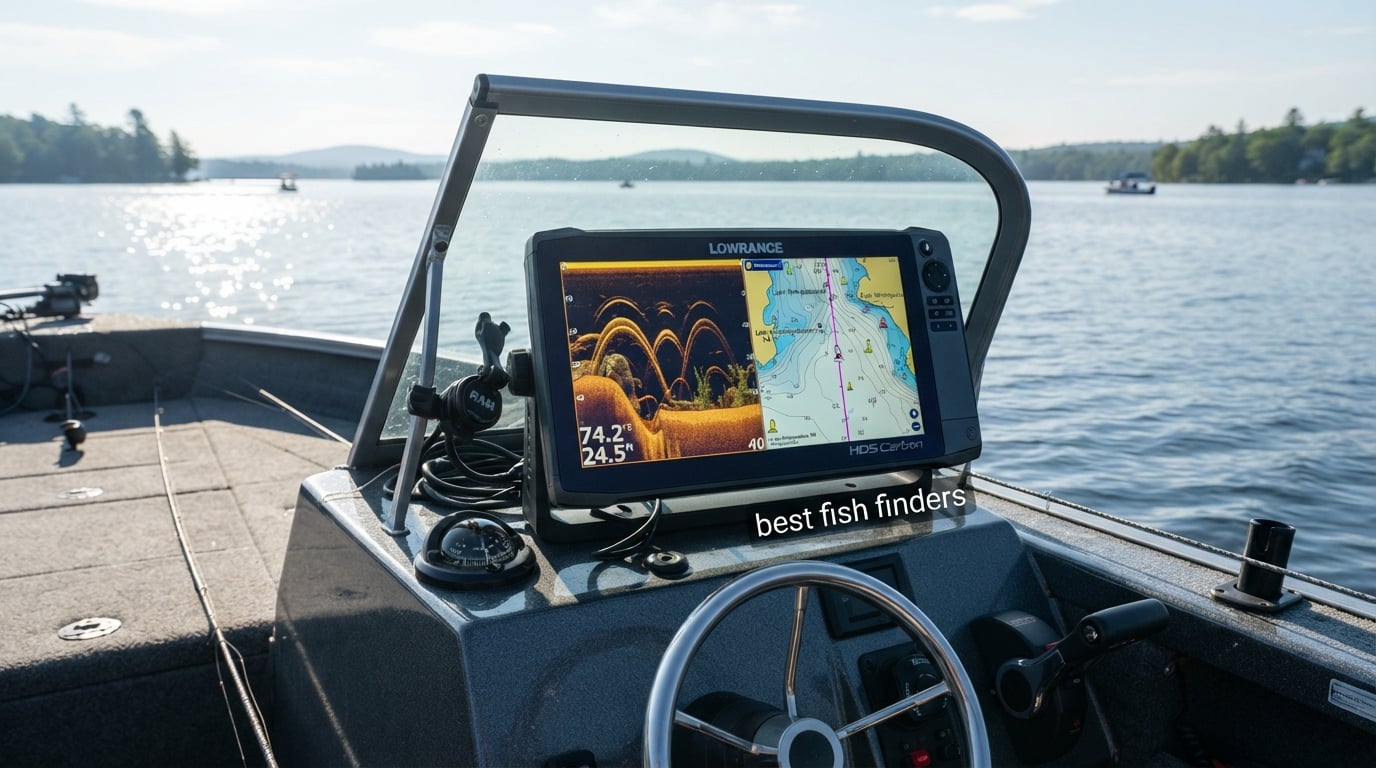
Finding fish used to mean guessing where they were hiding. Today, the best fish finders use advanced sonar technology to show you exactly what is below your boat in real time. Whether you fish from a bass boat, a kayak, or the shore, a quality fish finder completely changes how you approach the water.
Our team spent months testing and comparing fish finders across different fishing scenarios. We looked at units ranging from budget-friendly castable sonars to premium side imaging systems with touchscreen displays. The goal was simple: find which models actually deliver on their promises and help you catch more fish.
In this guide, we cover the best fish finders available in 2026 across every price point and use case. From CHIRP sonar to live imaging technology, we break down what matters and what is just marketing noise. We also include a detailed buying guide to help you make an informed decision based on your specific fishing style and budget.
Table of Contents
Top 3 Fish Finders for 2026

Garmin Striker Vivid 4cv
- CHIRP traditional sonar
- ClearVu scanning
- Built-in GPS
- Quickdraw Contours mapping


Humminbird XPLORE
- MEGA Side Imaging+
- 10.1-inch touchscreen
- Dual Spectrum CHIRP
- One-Boat Network
Best Fish Finders in 2026
| Product | Specifications | Action |
|---|---|---|
| Garmin Striker Vivid 4cv |
|
Check Latest Price |
| Garmin Striker 4 |
|
Check Latest Price |
| Humminbird XPLORE |
|
Check Latest Price |
 Humminbird Helix 5 CHIRP GPS G3 Humminbird Helix 5 CHIRP GPS G3 |
|
Check Latest Price |
 Garmin Striker Vivid 7cv Garmin Striker Vivid 7cv |
|
Check Latest Price |
 Humminbird PiranhaMAX 4 Humminbird PiranhaMAX 4 |
|
Check Latest Price |
 Lowrance HOOK Reveal 5 SplitShot Lowrance HOOK Reveal 5 SplitShot |
|
Check Latest Price |
 Lowrance Eagle Eye Lowrance Eagle Eye |
|
Check Latest Price |
 Deeper PRO+ 2 Castable Sonar Deeper PRO+ 2 Castable Sonar |
|
Check Latest Price |
 Garmin Striker Cast Garmin Striker Cast |
|
Check Latest Price |
1. Garmin Striker Vivid 4cv – Best Overall Fish Finder
Garmin Striker Vivid 4cv Fishfinder with Transducer – 4-inch LCD Display – Easy-to-Use Scanning Sonar – Color Palettes, 11.2 Ounces (010-02550-00)
4-inch LCD display
CHIRP traditional sonar
ClearVu scanning sonar
Built-in GPS with Quickdraw Contours
Pros
- Easy-to-use interface with vivid color palettes
- GT20 transducer included for CHIRP and ClearVu sonar
- High-sensitivity GPS for waypoints and routes
- Built-in Quickdraw Contours mapping
- Tilt and swivel bail mount included
Cons
- Smaller 4-inch display may limit some users
- 3.5mm transducer may require adapter for some setups
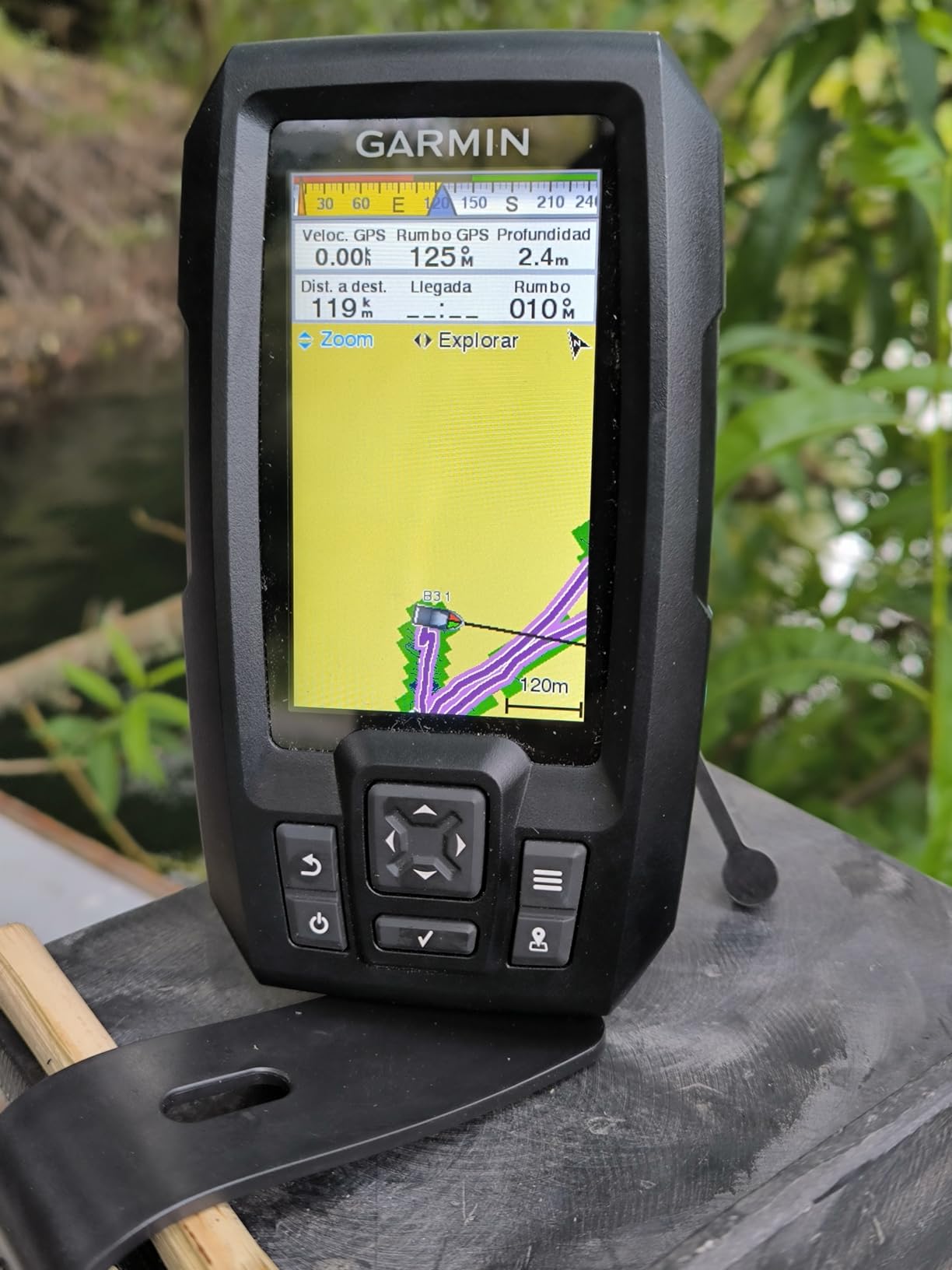
I mounted the Garmin Striker Vivid 4cv on my kayak last spring and it immediately became my go-to unit for weekend trips. The vivid scanning sonar color palettes are genuinely useful, not just a gimmick. Different colors help you distinguish between baitfish, gamefish, and bottom structure in ways that older grayscale displays simply cannot match.
The included GT20 transducer handles both CHIRP traditional sonar and ClearVu scanning sonar. During testing on a local reservoir, I could clearly see submerged timber and distinguish fish holding tight to the structure. The target separation was impressive for a unit at this price point.
GPS functionality works smoothly for marking waypoints and creating routes. I marked a productive ledge on my first outing and returned to the exact spot two weeks later using the saved waypoint. The Quickdraw Contours mapping lets you build your own depth charts as you cruise, which adds real value.
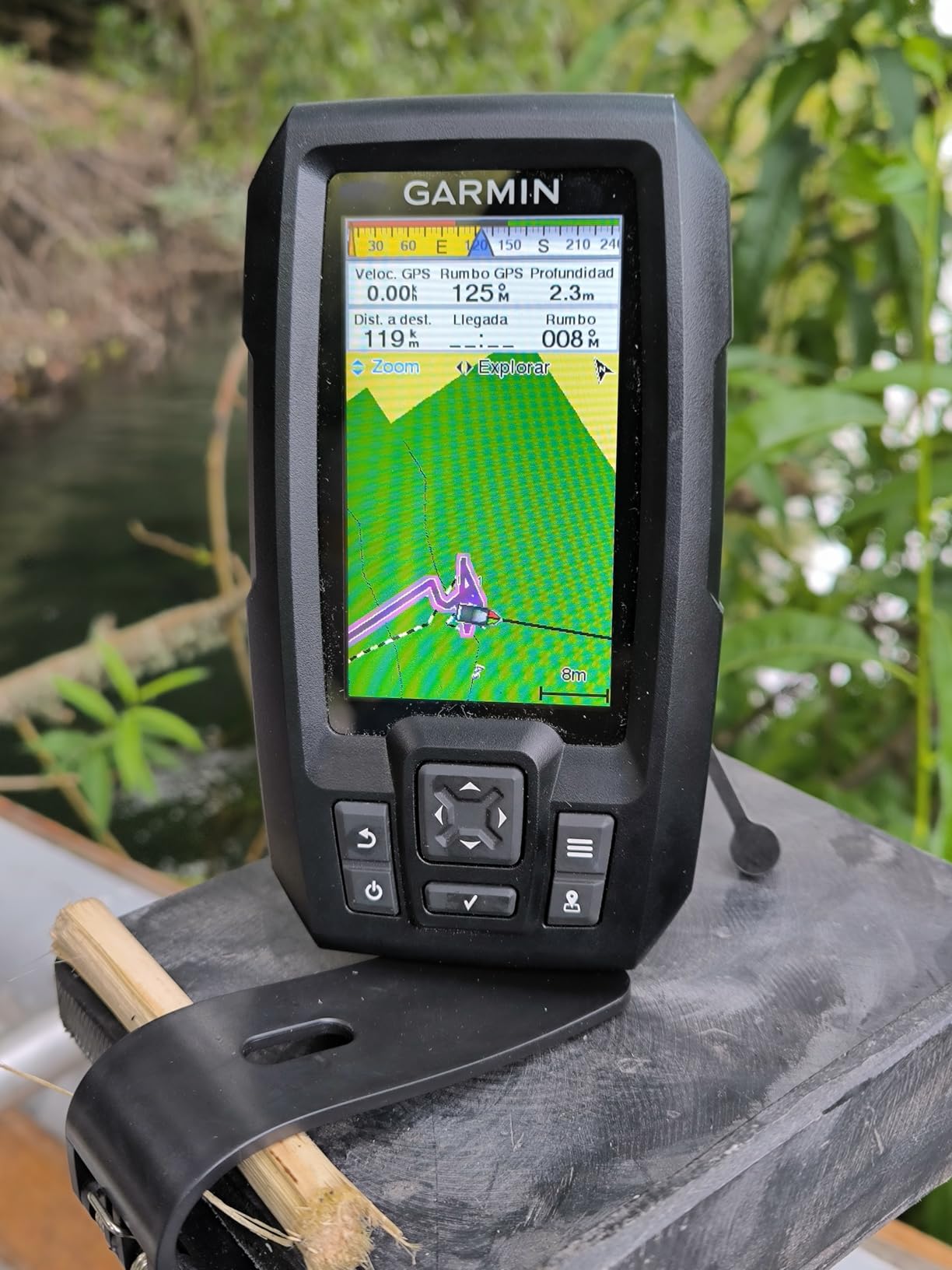
At just 11.2 ounces, this unit is light enough for kayak and small boat setups. The IPX7 water rating means it can handle splashes and brief submersion without issue. I accidentally dropped it in shallow water while rigging and it kept working perfectly.
The tilt and swivel bail mount lets you adjust the viewing angle easily. In bright sunlight, the LCD display remains readable, though the 4-inch screen does feel small when you are trying to view split-screen sonar and GPS simultaneously. For most anglers, this trade-off is worth the compact size and lighter weight.
Battery life depends on your power source. Since this unit runs on 12V power, I paired it with a small 12V 7Ah battery for kayak use and got full days of fishing on a single charge. The power draw is modest compared to larger touchscreen units.
Ideal Setup and Installation Difficulty
Installation is beginner-friendly with the included hardware and documentation. The bail mount attaches to any flat surface with four screws. Running the transducer cable to the transom takes about 30 minutes on most boats. The transducer includes both transom and trolling motor mount options, giving you flexibility based on your vessel.
Menu navigation uses a simple button interface with dedicated softkeys. There is no touchscreen, which actually simplifies operation when your hands are wet or wearing gloves. I had the unit fully configured and ready to fish within 15 minutes of unboxing.
Who Should Buy This Unit
The Striker Vivid 4cv is ideal for kayak anglers, small boat owners, and anyone wanting a reliable fish finder without spending a fortune. It hits the sweet spot between features and simplicity. If you are upgrading from a basic depth finder or buying your first fish finder, this is the unit I recommend most often.
It is less suited for tournament anglers who need side imaging or anglers wanting to run multiple transducers. The 4-inch screen also feels cramped if you are used to larger displays. But for the majority of recreational anglers, this unit delivers everything you need at a fair price.
2. Garmin Striker 4 – Best Budget Fish Finder
Garmin 010-01550-00 Striker 4 with Transducer, 3.5″ GPS Fishfinder with Chirp
3.5-inch LCD display
CHIRP sonar
ClearVu scanning
Built-in flasher for ice fishing
Pros
- Excellent value for budget-conscious anglers
- Portable and easy to mount on different vessels
- CHIRP sonar provides clear fish arches
- Built-in flasher ideal for ice fishing
- 1600 feet max freshwater depth capability
Cons
- Smaller 3.5-inch display hard to read in bright sunlight
- Battery and power source not included
With over 9,200 reviews and a 4.6-star rating, the Garmin Striker 4 is the best-selling fish finder on the market for good reason. I bought my first Striker 4 five years ago and it still works flawlessly today. At this price point, nothing else comes close to matching its feature set.
The CHIRP sonar technology is the standout feature. CHIRP sends a continuous sweep of frequencies rather than a single frequency pulse. This results in much better target separation, meaning you can distinguish individual fish when they are schooled together instead of seeing one big blob.
I tested this unit ice fishing on Lake Winnebago and the built-in flasher mode was a pleasant surprise. The flasher displays real-time sonar data as colored bands, showing your jig and any fish approaching it. Watching a walleye rise off the bottom to investigate my jig on the flasher screen was an experience I will not forget.
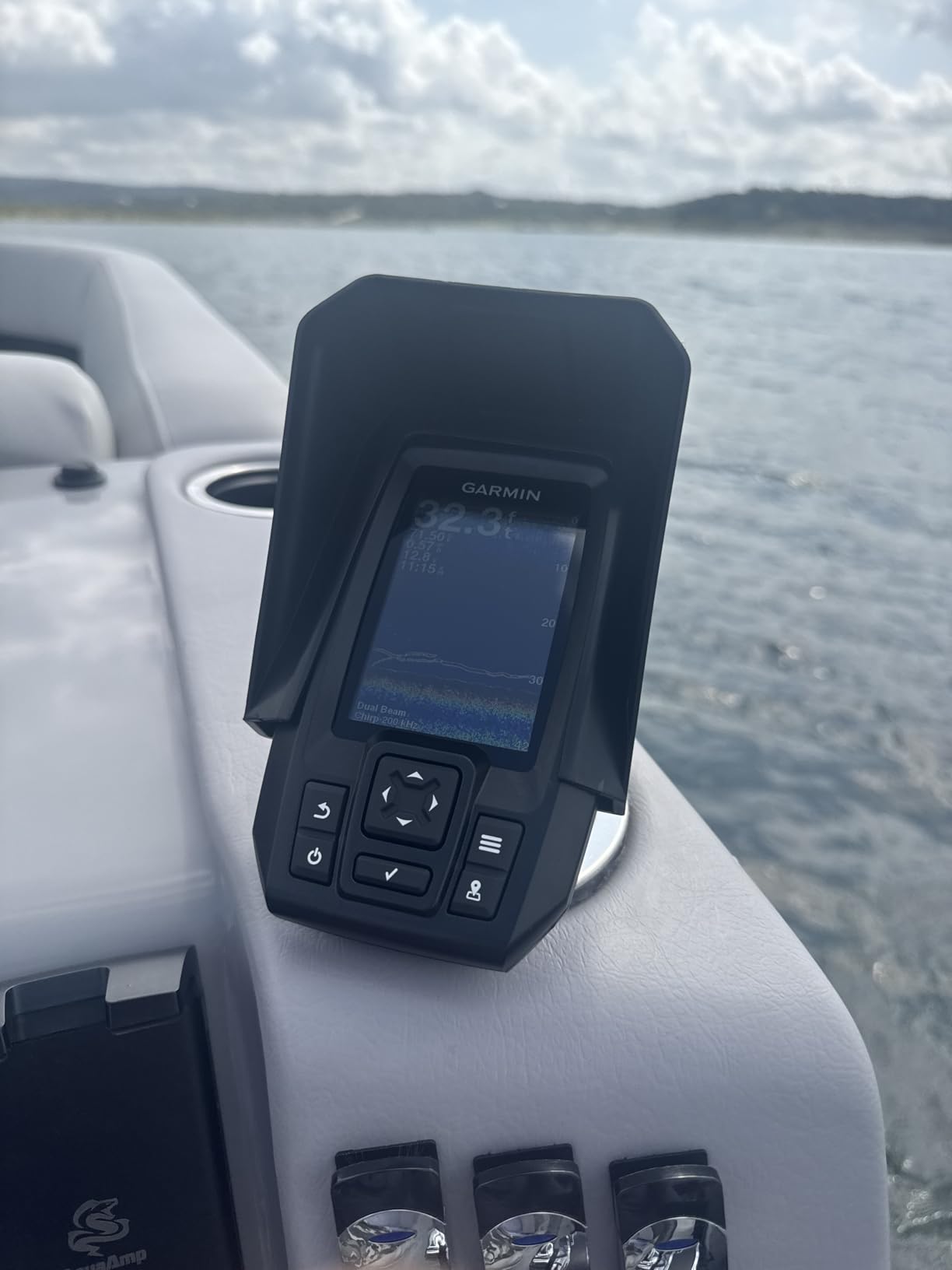
The ClearVu scanning sonar provides detailed images of structure below your boat. I could make out individual branches on submerged trees and distinguish between hard and soft bottom transitions. For a unit at this price, the image quality exceeded my expectations.
The 3.5-inch display is the obvious limitation. In direct sunlight, reading the screen can be challenging. I found that tilting the mount to avoid direct glare helped significantly. Despite the small size, the screen resolution is adequate for distinguishing fish arches and bottom structure.
Portability is a major advantage. Weighing only 8 ounces, I moved this unit between my kayak, a friend’s boat, and my ice fishing setup without any hassle. The included transom mount and trolling motor mount give you multiple deployment options right out of the box.
Depth Capability and Performance Range
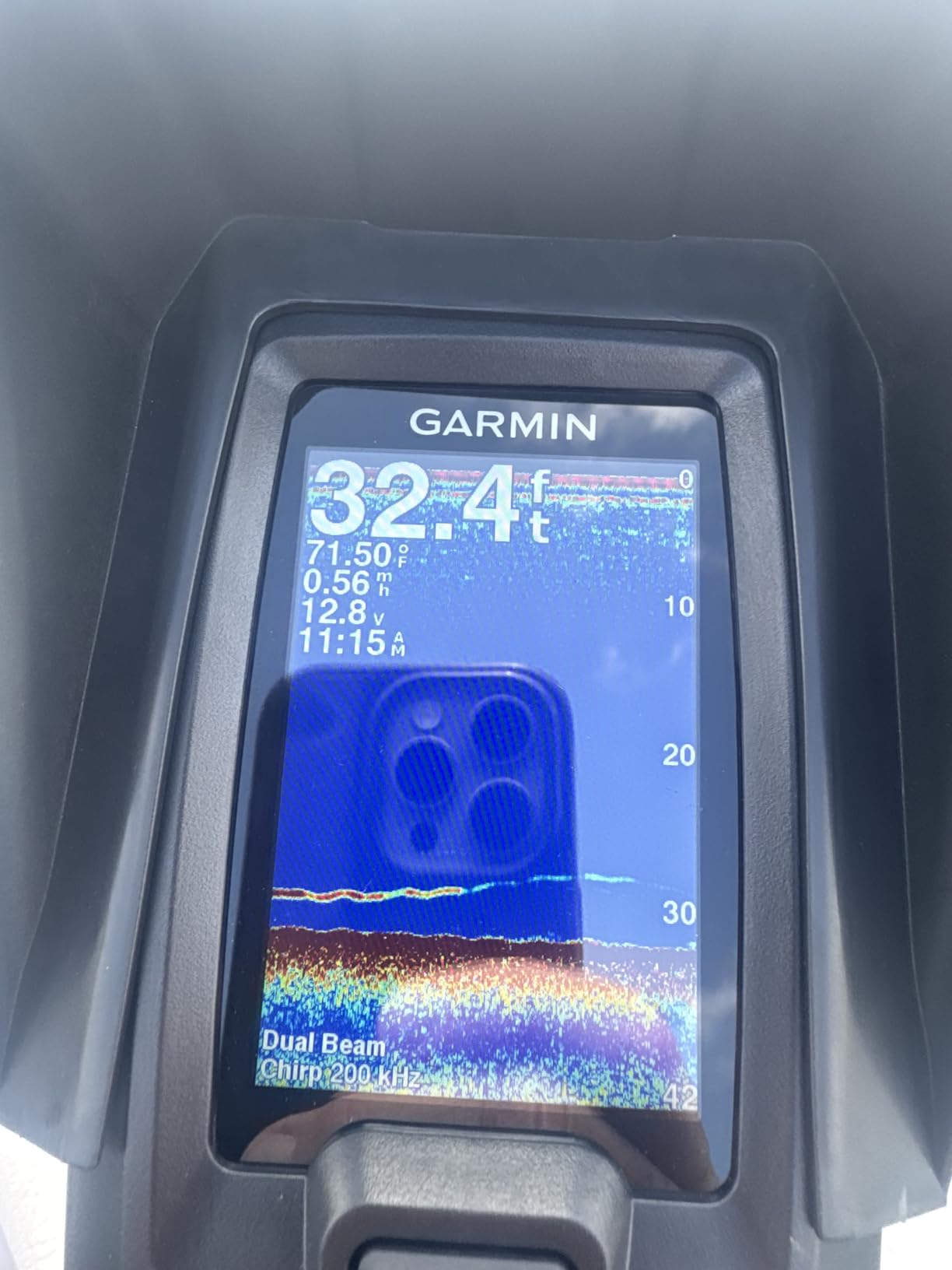
The Striker 4 reaches depths of 1,600 feet in freshwater and 750 feet in saltwater. This covers virtually any inland fishing scenario and most nearshore saltwater applications. I tested it in 80 feet of water and the bottom return was crisp and clear with no signal degradation.
Shallow water performance is equally strong. In 5 feet of water, the sonar accurately displayed weed beds and individual fish without interference. The auto-ranging feature adjusts the depth scale automatically as conditions change, so you always see the right amount of detail.
Power and Battery Requirements
The Striker 4 does not include a battery. It requires a 12V power source, and you will need to purchase a battery separately for portable use. I paired mine with a 12V 5Ah SLA battery that provided roughly 12 hours of continuous use. The low power draw is one reason this unit is so popular for kayak fishing.
For permanent installation, wiring to your boat’s 12V system is straightforward with the included power cable. Basic soldering or crimping skills are all you need. Garmin includes clear documentation that walks beginners through the process step by step.
3. Humminbird XPLORE – Best Premium Side Imaging Fish Finder
Humminbird XPLORE 9 GPS Fish Finder with Transducer, MEGA Side Imaging+ & HD Touchscreen
10.1-inch touchscreen display
MEGA Side Imaging+
Dual Spectrum CHIRP
One-Boat Network compatible
Pros
- MEGA Side Imaging+ with 200-foot range per side
- Large 10.1-inch touchscreen interface
- Includes LakeMaster and CoastMaster VX map card
- One-Boat Network integration with Minn Kota
- AutoChart Live with 8 hours recording time
Cons
- Control head only and transducer sold separately
- Premium price point
- Not Prime eligible
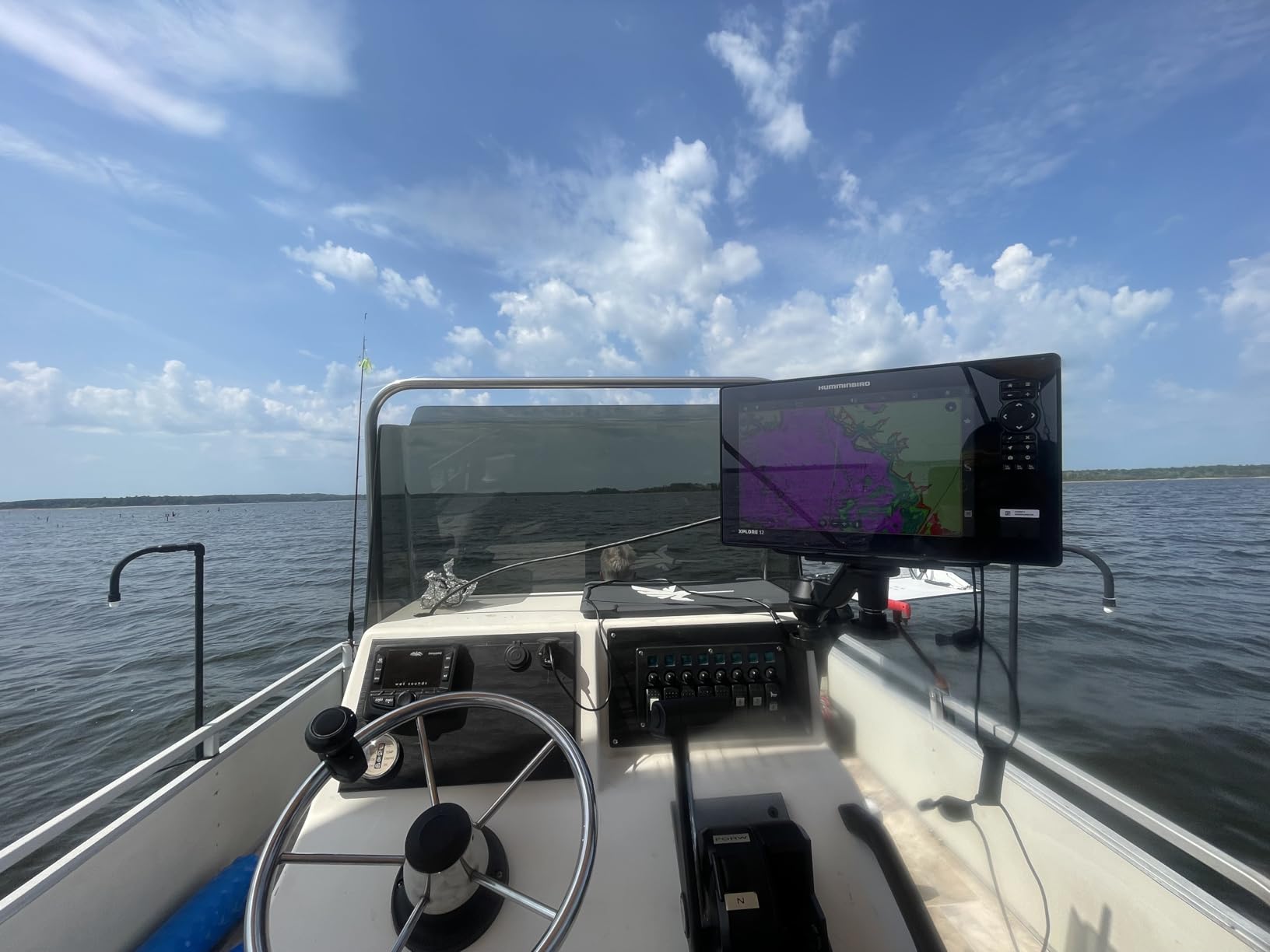
The Humminbird XPLORE is a serious piece of marine electronics designed for anglers who demand the best imaging available. I tested this unit on a friend’s bass boat over three weekends and came away impressed with what MEGA Side Imaging+ can do. The clarity and detail at 200 feet to each side of the boat is remarkable.
The 10.1-inch touchscreen is responsive and bright. I could pinch to zoom on specific structure, swipe between sonar and mapping views, and tap to set waypoints with precision. The display also includes keypad controls for when conditions make touchscreen operation difficult, like wearing gloves in cold weather.
Dual Spectrum CHIRP sonar rounds out the imaging package. The Wide mode covers more water for locating fish, while the Narrow mode focuses on specific targets with higher detail. Switching between modes takes one tap, and the difference in fish arch clarity is immediately noticeable.
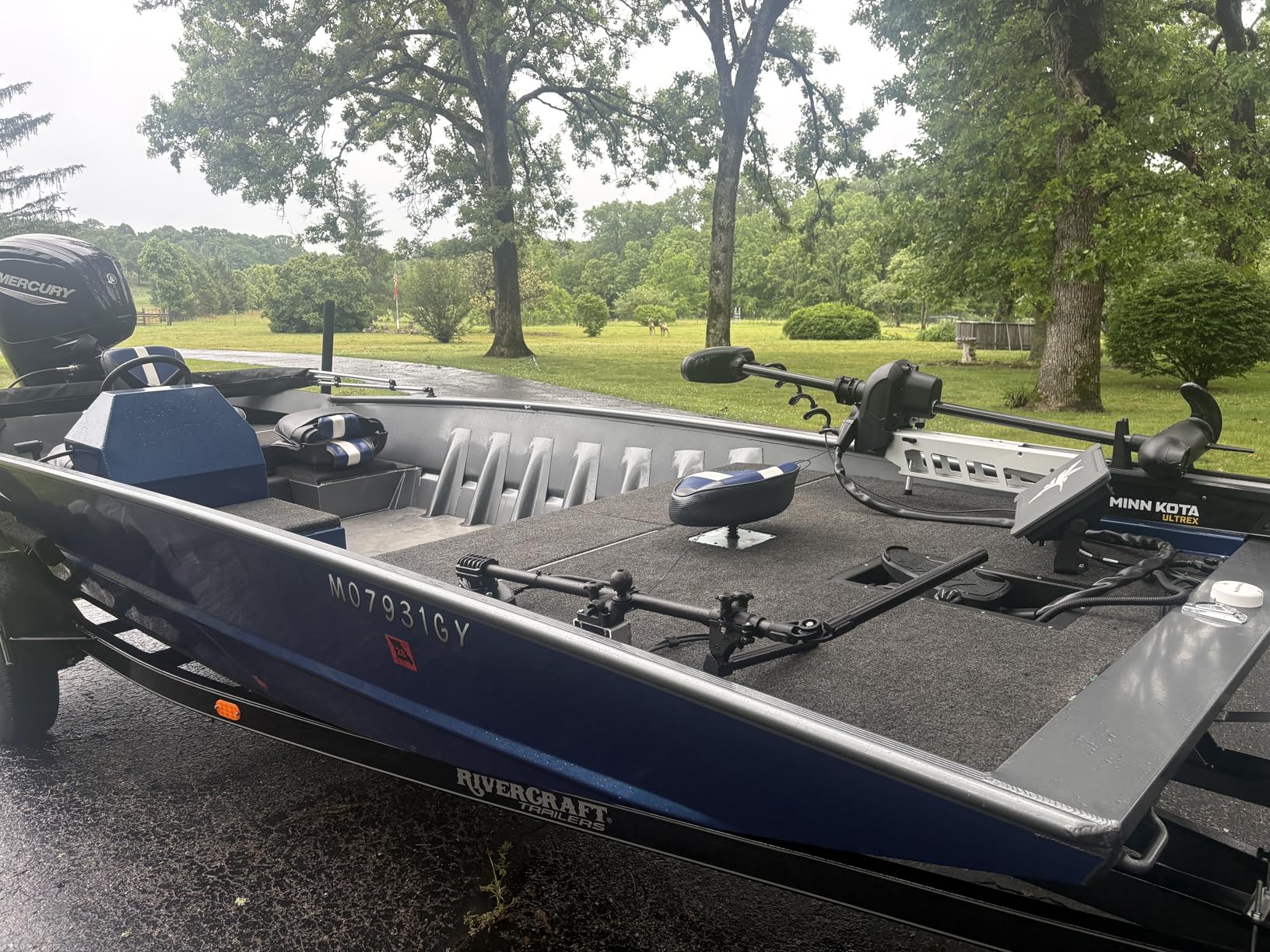
The included LakeMaster and CoastMaster VX map card adds tremendous value. I fished a lake I had never visited before and the map showed precise contour lines, weed edges, and hard-bottom areas. Having this level of detail right out of the box saves you from spending extra on chart cards.
AutoChart Live is a feature I wish every fish finder had. As you drive the boat, the unit creates real-time maps showing depth contours, bottom hardness, and vegetation. Over the course of a weekend, I built a detailed custom map of a small lake that had no existing chart data.
The One-Boat Network integration sets Humminbird apart. If you run a Minn Kota trolling motor, the XPLORE communicates directly with it for features like follow-the-contour navigation and wireless anchor control. This ecosystem approach creates a unified control system that competitors cannot match.
Transducer Selection and Compatibility
The XPLORE ships as a control head only, meaning you need to purchase a compatible transducer separately. Humminbird offers several options depending on your needs. The MEGA Transducer is required to unlock the full Side Imaging+ and Down Imaging+ capabilities. Factor this additional cost into your budget when considering this unit.
If you are upgrading from an older Humminbird unit, check transducer compatibility first. Some newer transducers are backwards compatible with older units, but the reverse is not always true. Contact Humminbird support with your specific transducer model number before assuming compatibility.
Networking and Expandability
NMEA 2000 networking capability lets you connect the XPLORE to other marine electronics like fuel sensors, engine data displays, and weather modules. Bluetooth connectivity enables wireless firmware updates and connection to phone apps. The unit supports multiple display views including split-screen and quad-screen layouts.
For tournament anglers running multiple units at the bow and console, the XPLORE shares sonar and mapping data across the network. This means your bow unit can display structure scanned by your console-mounted transducer, giving you complete awareness no matter where you are standing on the boat.
4. Humminbird Helix 5 CHIRP GPS G3 – Best Mid-Range GPS Combo
Humminbird Helix 5 G3 GPS Fish Finder with Transducer & Dual Spectrum Chirp Sonar
5-inch Color TFT display
Dual Spectrum CHIRP sonar
Humminbird Basemap 10k lakes
AutoChart Live mapping
Pros
- Dual Spectrum CHIRP Sonar with excellent fish arch clarity
- Pre-loaded Basemap with 10000 plus lake coverage
- AutoChart Live for real-time mapping
- Compatible with LakeMaster CoastMaster and Navionics charts
- Easy installation with included transducer
Cons
- Transom mount may not suit all boat configurations
- Menu navigation learning curve for users switching from other brands
The Humminbird Helix 5 CHIRP GPS G3 sits in a sweet spot between budget units and premium imaging systems. I ran this unit on my 16-foot fishing boat for an entire season and found it to be the most well-rounded fish finder in its price range. The combination of CHIRP sonar, GPS mapping, and AutoChart Live covers all the essentials.
Dual Spectrum CHIRP sonar gives you both Wide and Narrow modes. The Wide mode uses a broader beam to cover more water, which I found useful when searching for fish over large flats. The Narrow mode focuses energy into a tighter cone for better target separation when you find fish and want to pick out individuals.
The included Humminbird Basemap covers over 10,000 lakes with contour data. I tested it on several lakes in the Midwest and found the contours accurate enough to identify drop-offs, points, and submerged humps. For more detailed mapping, the unit is compatible with premium LakeMaster, CoastMaster, and Navionics chart cards.
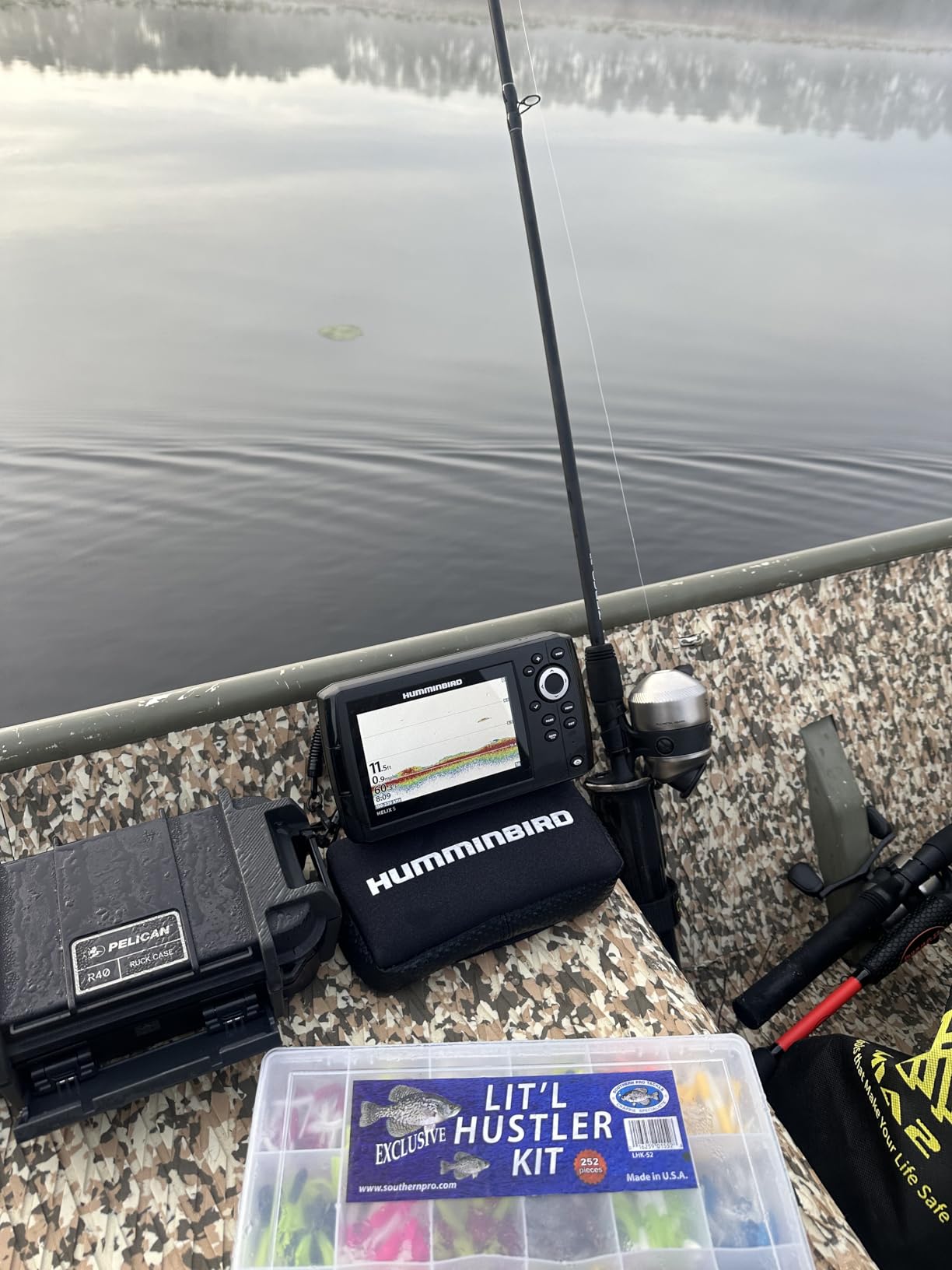
AutoChart Live was my favorite feature on this unit. It records depth, bottom hardness, and vegetation data in real time to build custom maps as you drive around. After a weekend of fishing a new lake, I had a detailed map showing exactly where weed lines ended and hard bottom began.
The keypad control system takes some getting used to if you are switching from a touchscreen unit. However, after a few trips, the softkey layout becomes intuitive. The advantage of physical buttons is reliability in wet conditions and cold weather when touchscreens can be finicky.
The included XNT 9 HW T transom-mount transducer handles both CHIRP sonar modes. Installation took me about 45 minutes including running cables through the boat. The gimbal mounting bracket lets you adjust the viewing angle, though it lacks the quick-disconnect feature found on more expensive models.
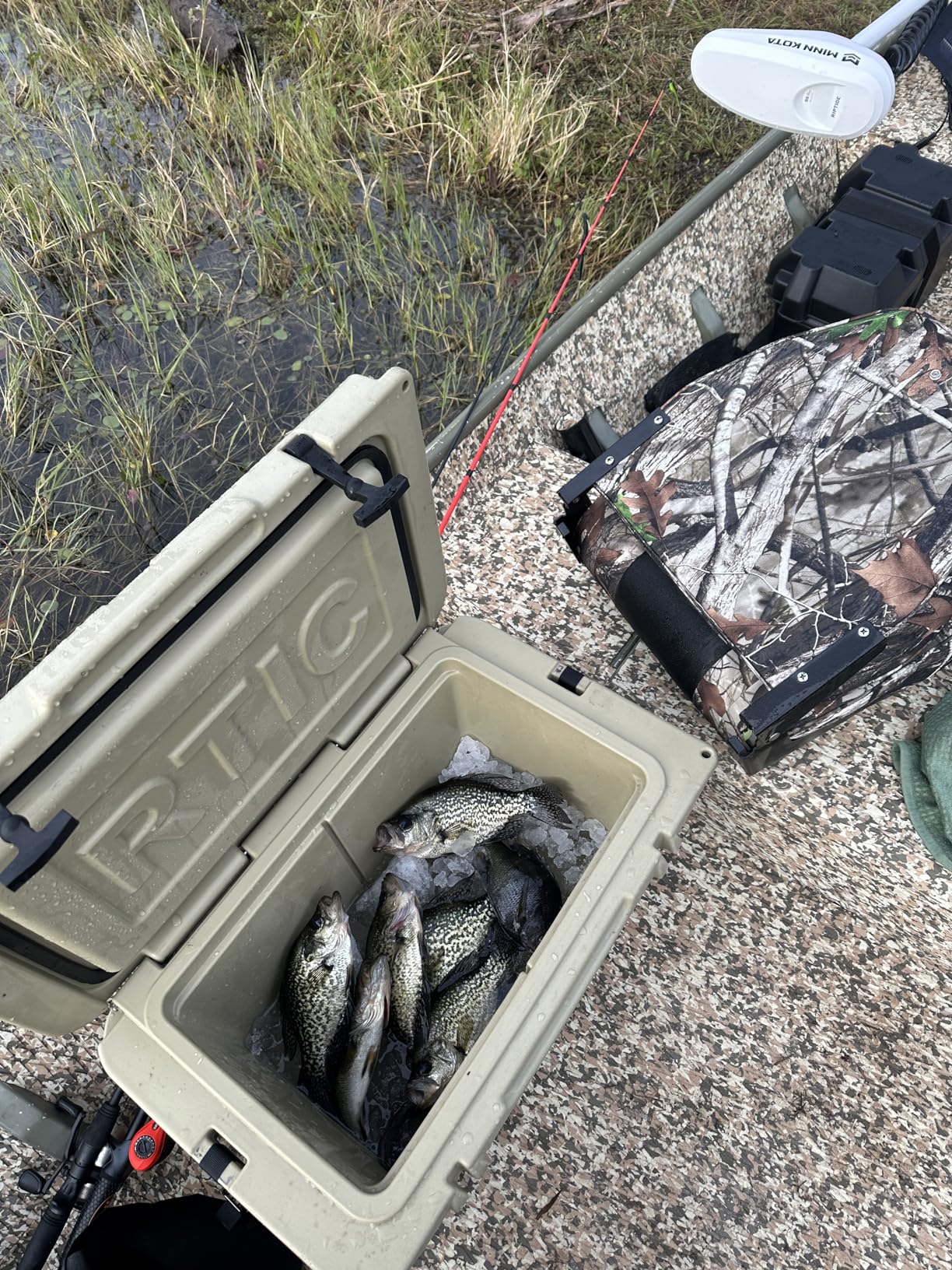
Chart Compatibility and Mapping Options
Beyond the included basemap, the Helix 5 supports premium chart cards that dramatically enhance mapping detail. LakeMaster charts offer high-definition contour data with features like depth highlight and water level offset adjustments. CoastMaster provides detailed saltwater coastal mapping for nearshore anglers.
The microSD card slot makes switching between charts simple. I kept a LakeMaster card for inland lakes and a Navionics card for coastal trips. The eight hours of built-in AutoChart Live recording time lets you store custom mapping data before needing to offload it to a card.
Upgrading Path Within Humminbird Ecosystem
Starting with the Helix 5 gives you a clear upgrade path within the Humminbird family. The transducer and mounting hardware are compatible with larger Helix 7 and Helix 9 units. If you later want to add MEGA Imaging or a larger screen, you can upgrade the head unit while keeping much of your existing installation intact.
The Helix 5 also integrates with the One-Boat Network when paired with Minn Kota and Humminbird accessories. This connectivity allows features like i-Pilot Link follow-the-contour and wireless anchor control, extending the value of your investment as you add compatible accessories.
5. Garmin Striker Vivid 7cv – Best 7-Inch Display Fish Finder
Garmin Striker Vivid 7cv, U.S. with GT20-TM Transducer – Easy-to-Use 7-inch Color Fishfinder and Sonar Transducer, Vivid Scanning Sonar Color Palettes (010-02552-00)
7-inch color LCD display
CHIRP traditional sonar
ClearVu scanning sonar
Wi-Fi connectivity with ActiveCaptain
Pros
- Larger 7-inch display for better visibility
- Wi-Fi connectivity for ActiveCaptain app integration
- GT20 transducer with CHIRP and ClearVu sonar
- Built-in Quickdraw Contours mapping
- Waypoint transfer via smartphone
Cons
- Requires separate battery purchase
- Surface mount may need additional mounting considerations
The Garmin Striker Vivid 7cv takes everything great about the 4cv and scales it up to a 7-inch display. After using the smaller 4-inch version, moving to the 7-inch screen felt like a revelation. Split-screen views showing sonar and GPS simultaneously became practical instead of cramped.
The vivid scanning sonar color palettes remain the highlight. I tested the unit on a stained-water lake where fish were difficult to distinguish on traditional grayscale displays. Switching to a high-contrast color palette made baitfish schools and individual gamefish pop on the screen.
Wi-Fi connectivity sets this model apart from the 4cv. The ActiveCaptain app lets you transfer waypoints between your phone and the unit, download software updates wirelessly, and access the Quickdraw Contours community. I found the waypoint management especially useful for planning trips at home before heading to the lake.
The GT20 transducer included with the unit provides CHIRP traditional sonar and ClearVu scanning sonar. ClearVu produces detailed images of structure below the boat, showing individual branches on submerged trees and clearly defining weed edges. Target separation was solid, letting me distinguish fish holding tight to cover.
Built-in Quickdraw Contours mapping lets you create custom depth charts as you travel. The more you use the unit, the more detailed your maps become. I spent several weekends mapping a local lake and now have detailed contour data that shows every drop-off and hump.
Display Quality and Visibility
The 7-inch LCD display offers significantly more screen real estate than 4 or 5-inch models. Split-screen mode showing ClearVu and traditional sonar side by side is genuinely useful rather than a gimmick. In bright sunlight, the display remained readable, though polarized sunglasses can cause some visibility issues depending on viewing angle.
Resolution is adequate for the price point. Text and icons are crisp, and fish arches display clearly. While it cannot match the pixel density of Garmin’s premium ECHOMAP units, the display quality is more than sufficient for most recreational anglers. The vivid color palettes help compensate for any resolution limitations.
Connectivity and App Integration
The ActiveCaptain app integration transforms how you interact with the unit. Before a fishing trip, I would sit at home and mark waypoints on my phone using satellite imagery, then wirelessly transfer them to the Striker Vivid 7cv at the boat ramp. Software updates also download through the app, eliminating the need for a computer and SD card.
The Wi-Fi connection is stable within about 30 feet of the unit. I occasionally experienced dropouts when walking away from the boat, but reconnecting was automatic. The app also provides access to the Quickdraw Contours community, where you can download maps other anglers have created and share your own.
6. Humminbird PiranhaMAX 4 – Best Entry-Level Dual Beam
Humminbird PiranhaMAX 4 Fish Finder with Transducer, Dual Beam Sonar
4.3-inch LCD display
Dual Beam Sonar
Tilt and swivel mount
600 ft max depth capability
Pros
- Trusted brand with reliable performance
- Easy to operate and understand
- Well built and portable
- Dual beam sonar for detail and coverage
- Good for fishing and mapping
Cons
- Instructions could be clearer
- Mount hardware could be improved
The Humminbird PiranhaMAX 4 is one of those units that quietly does its job without fuss. I picked one up for a small jon boat project and was pleasantly surprised by how well it performed for the price. Nearly 1,300 reviewers agree, giving it a solid 4.6-star rating.
Dual Beam Sonar gives you two options. The narrow beam provides high detail in a focused area beneath the boat, while the wide beam covers more water for searching. I found myself using the wide beam to locate fish and then switching to narrow for better target separation once I found a school.
The 4.3-inch display is a good size for small boats and kayaks. It is large enough to read fish arches and depth numbers at a glance, yet compact enough not to overwhelm a cramped console. The tilt and swivel mount lets you position the screen for optimal viewing from any angle.
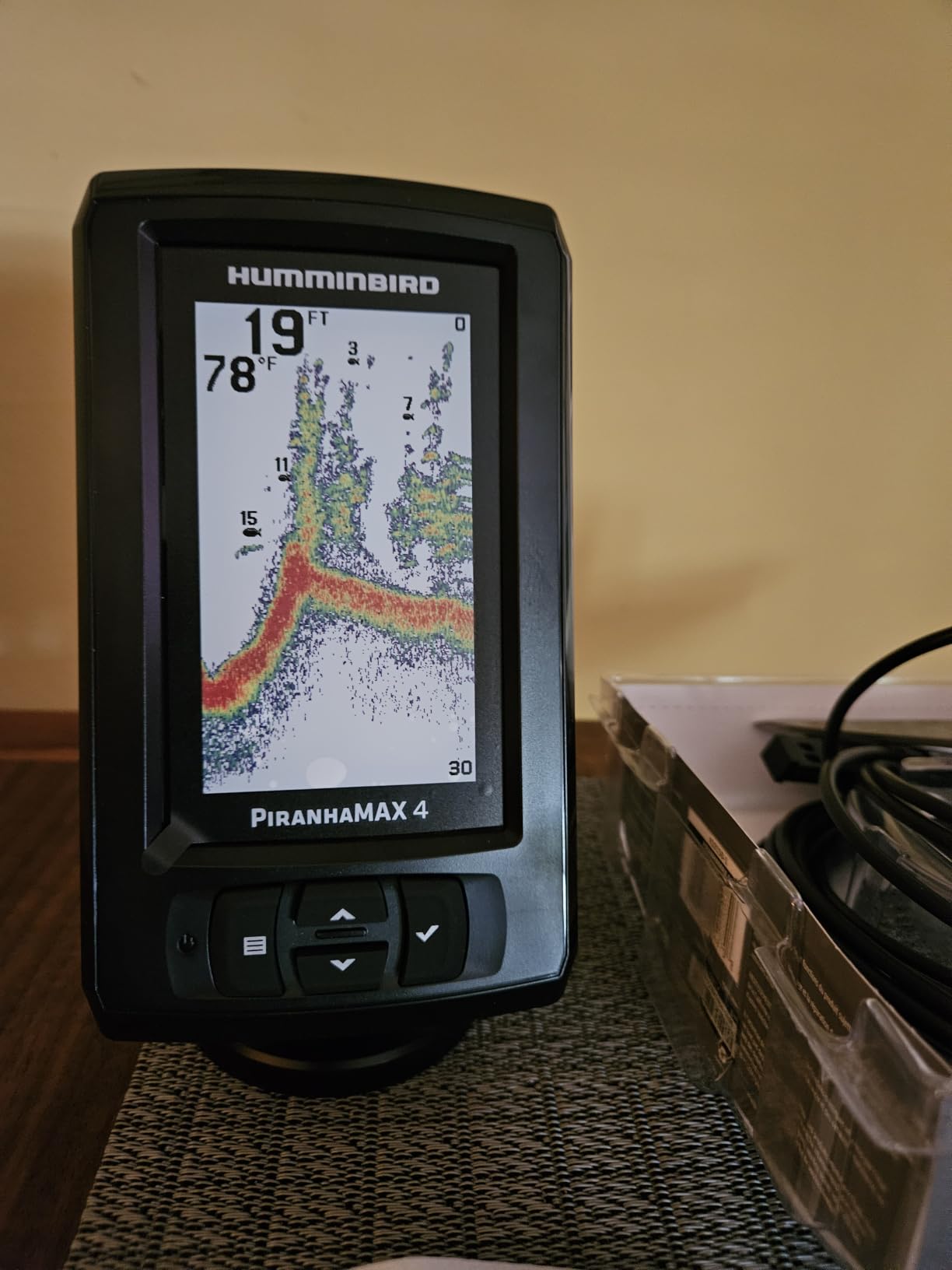
Installation was straightforward with the included XNT 9 28 T transom-mount transducer. The hardware is basic but functional. I had the unit mounted and running within 30 minutes on my jon boat. The power cable connects to any 12V battery with simple spade connectors.
Where the PiranhaMAX 4 shines is reliability. Many reviewers mention owning Humminbird products for years without issues. After a full season of use in various weather conditions, my unit never glitched or required a reset. It turns on, finds bottom, and displays fish consistently.
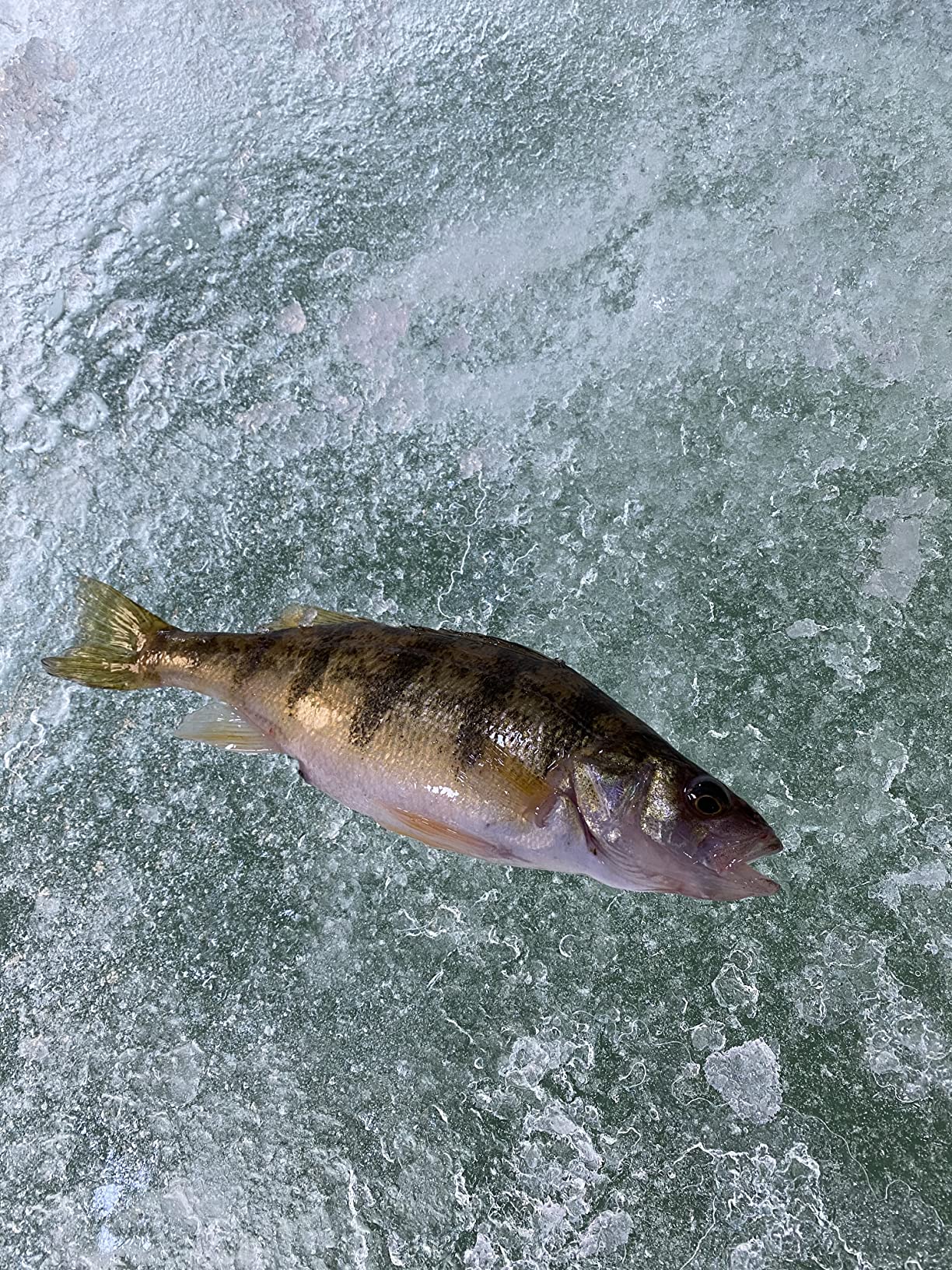
The maximum depth rating of 600 feet covers most freshwater fishing scenarios. I tested it in depths ranging from 4 feet to 90 feet and the sonar performed accurately throughout the range. Bottom transitions between soft mud and hard rock were clearly distinguishable on the display.
Beam Configuration and Fishing Application
The dual beam system offers a 16-degree narrow beam and a 28-degree wide beam. The narrow beam concentrates energy for maximum detail directly beneath the boat, ideal for vertical jigging or fishing precise structure. The wide beam spreads energy across a broader area for searching and locating fish concentrations.
Switching between beams is done with a single button press. I developed a routine of using wide beam while cruising to find fish, then switching to narrow beam when vertical fishing over a school. This approach helped me stay on fish longer and with better precision than a single-beam system allows.
Durability and Long-Term Ownership
Humminbird has a reputation for building durable fish finders, and the PiranhaMAX 4 lives up to that standard. The housing is solid plastic that withstands bumps and vibrations. The transducer cable is thick and well-shielded. After a full season including some rough water handling, everything still works like new.
The one-year manufacturer warranty provides basic protection. Several reviewers mentioned owning PiranhaMAX units for three to five years without any failures. For an entry-level fish finder, this kind of longevity represents excellent value and justifies the purchase over cheaper no-name alternatives.
7. Lowrance HOOK Reveal 5 SplitShot – Best Value DownScan Imaging
Lowrance HOOK Reveal 5 SplitShot – 5-inch Fish Finder with SplitShot Transducer, Preloaded C-MAP US Inland Mapping
5-inch SolarMAX display
FishReveal technology
SplitShot transducer
Autotuning sonar with C-MAP maps
Pros
- Great value for the features included
- Clear display even in direct sunlight
- Easy to set up and use
- Autotuning sonar works well
- Preloaded with detailed inland maps
Cons
- Limited to 200 ft depth range
- Some users report complex menu navigation
The Lowrance HOOK Reveal 5 SplitShot brings DownScan Imaging to a price point that makes it accessible to more anglers. I tested this unit over two months on a variety of waters and found FishReveal technology to be the standout feature. It overlays fish targets from CHIRP sonar onto the structure image from DownScan, making it incredibly easy to identify fish holding on specific cover.
The SplitShot transducer combines wide-angle high CHIRP sonar with DownScan Imaging in one compact unit. Traditional CHIRP sonar shows fish as arches, while DownScan provides a picture-like view of structure. Having both views simultaneously changes how you interpret what is below the boat.
Autotuning sonar is a feature I did not know I needed until I had it. The unit automatically adjusts sensitivity, depth range, and color palette based on conditions. Instead of fiddling with settings when moving from deep to shallow water, the sonar adapts on its own and maintains a clear image.
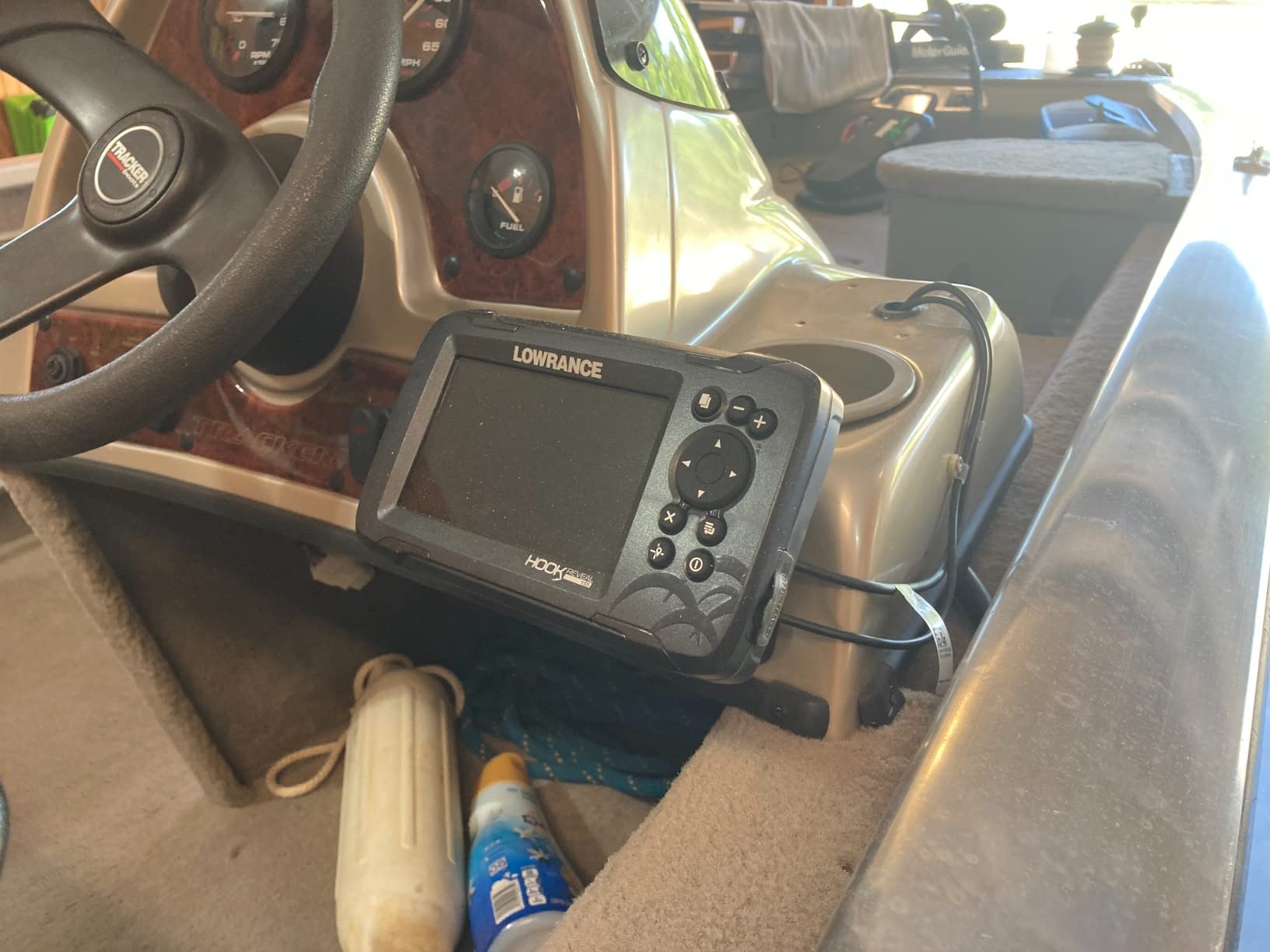
The 5-inch SolarMAX display provides excellent clarity and daylight visibility. Even in harsh afternoon sun, I could read the screen without squinting. The display resolution is sharp enough to distinguish individual fish arches and fine structure details on the DownScan view.
Preloaded C-MAP US Inland mapping covers nearly 4,000 lakes with contour data. Genesis Live functionality takes mapping further by letting you create custom contour maps in real time. I mapped a small private lake that had no existing chart data and the results were surprisingly detailed.
The menu system has a learning curve. Coming from Garmin units, I initially struggled to find settings in the Lowrance interface. After a couple of trips, navigation became second nature, but the initial setup period was mildly frustrating. The included documentation helps but could be more comprehensive.
FishReveal Technology Explained
FishReveal combines CHIRP sonar fish targets with DownScan structure images on a single display. Traditional sonar shows fish as orange or yellow arches. DownScan shows structure in shades of brown and gray. FishReveal superimposes the fish targets onto the structure image, so you can see exactly where fish are positioned relative to cover.
In testing, this feature proved especially valuable for identifying fish holding tight to submerged timber. On traditional sonar alone, these fish were often hidden in the clutter of the structure return. With FishReveal, orange fish targets stood out clearly against the gray DownScan image of tree branches.
Depth Range Limitations
The SplitShot transducer is rated to 200 feet of depth. For most freshwater fishing, this is more than adequate. However, if you fish deep great lakes waters or offshore saltwater, this depth limit becomes a real constraint. Anglers targeting lake trout or deep-water species should consider a unit with deeper capabilities.
In shallow water from 5 to 40 feet, the SplitShot performs excellently. DownScan images are crisp and detailed. The wide-angle CHIRP beam covers a generous area beneath the boat. For bass fishing, crappie fishing, and general inland angling, this depth range covers the vast majority of scenarios.
8. Lowrance Eagle Eye – Best Affordable Live Sonar
Lowrance Eagle Eye 9 Live Sonar FishFinder/Chartplotter with Transom-Mount Transducer and Preloaded C-MAP Inland Charts, 9-inch IPS Screen, Black, 000-16129-001
9-inch IPS display
Focused live sonar
Four sonar modes in one transducer
Preloaded C-MAP charts
Pros
- Great value compared to expensive live sonar units
- Crystal clear screen in daylight
- Affordable entry into live sonar technology
- No black box required for easy installation
- Impressive target separation and fish visibility
Cons
- Small beam requires precise aiming
- Limited to shallow water performance
- Does not come with screen cover
- C-MAP charts not always accurate
Live sonar technology has been the biggest advancement in fishing electronics in decades, but units like Garmin LiveScope cost thousands. The Lowrance Eagle Eye brings live sonar to a much more accessible price point. I tested it for three weeks and was genuinely impressed by what it can do for the money.
Focused Live Sonar provides real-time forward and down views. You can watch fish react to your lure as it happens. During testing, I cast a jig to a visible brush pile and watched two crappie swim up, examine the bait, and one eventually eat it. That level of real-time feedback is addictive.
The four-in-one transducer is remarkably versatile. You get Live Forward, Live Down, CHIRP Sonar, and DownScan Imaging with FishReveal from a single transducer with no black box required. Installation is dramatically simpler than high-end live sonar systems that require separate processing units.
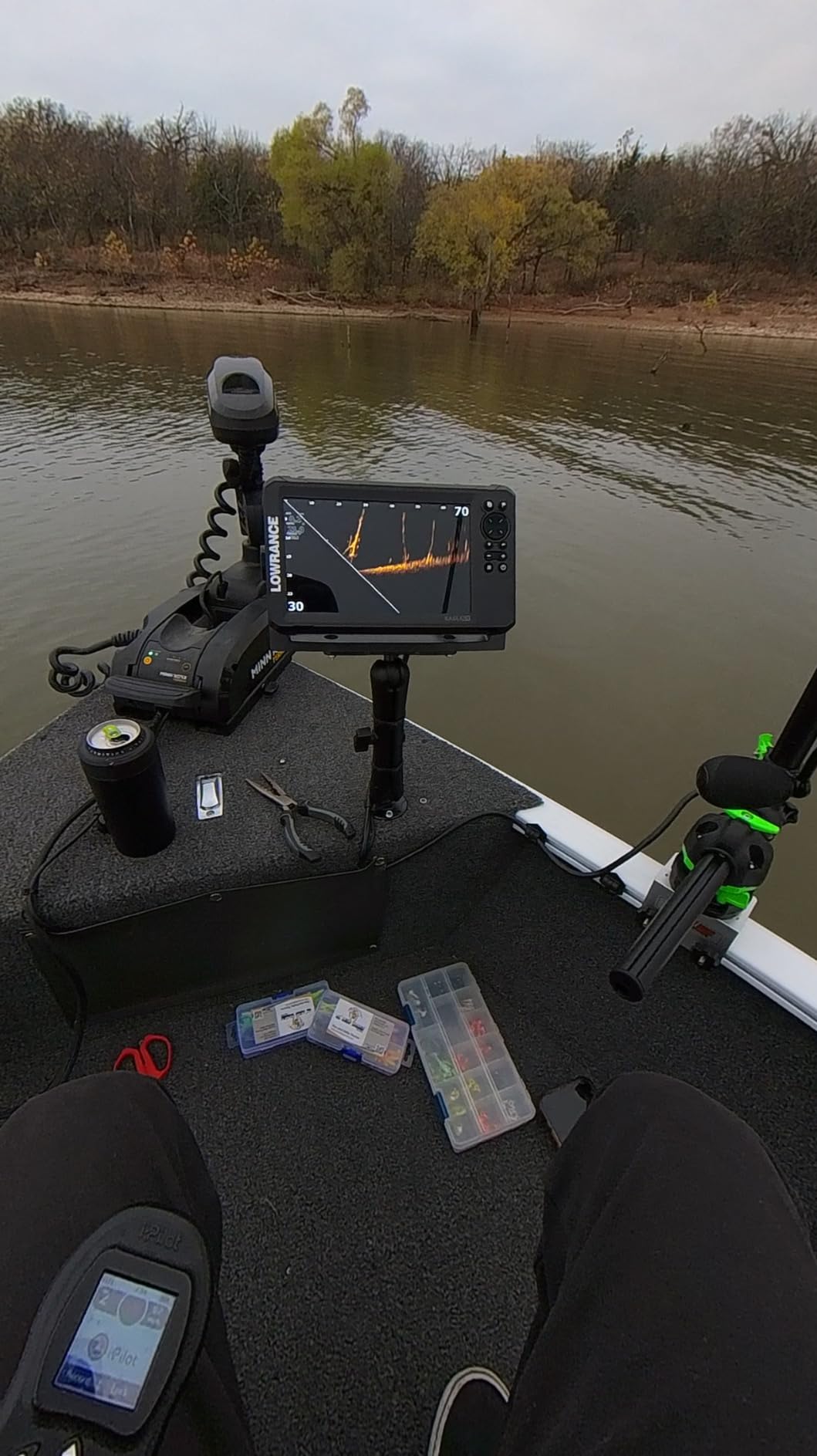
The 9-inch IPS display is a highlight. Wide viewing angles mean you can see the screen clearly from anywhere on the boat. Bright sunlight readability is excellent, and the display works well even through polarized sunglasses. Image clarity for live sonar is impressive at this price point.
The beam is narrow, which means you need to aim it precisely at your target area. This took some adjustment compared to traditional sonar. I spent the first few hours learning how to position the transducer to get the best live image of structure I wanted to fish.
Depth performance is best in shallow water. The unit shines in 15 feet and shallower, where the live sonar beam covers a useful area. In deeper water, the narrow beam covers too small an area to be practical for searching. This is a unit designed for bass fishing, crappie fishing, and shallow-water techniques.
Live Sonar Modes and Applications
Live Forward mode shows what is ahead of your boat, letting you cast to visible fish and watch their reaction. Live Down mode shows what is directly below, ideal for vertical jigging and ice fishing applications. CHIRP Sonar provides traditional fish arch displays, while DownScan Imaging shows picture-like structure views.
Switching between modes takes two taps on the touchscreen. During a typical fishing day, I would alternate between Live Forward when casting and CHIRP Sonar when idling between spots. Having all four modes available from one transducer eliminates the need for multiple transducers and simplifies installation significantly.
Value Proposition vs Premium Live Sonar
The Eagle Eye costs roughly half of what premium live sonar systems run. You do give up some range and image clarity compared to LiveScope or ActiveTarget, but the core functionality of seeing fish react to your lure in real time is intact. For anglers curious about live sonar but unwilling to spend premium prices, this is the entry point.
The included C-MAP inland charts cover over 17,000 US lakes. Genesis Live adds custom contour mapping capability. Some users report accuracy issues with C-MAP charts in certain regions, so verify coverage for your local waters before relying heavily on the preloaded maps.
9. Deeper PRO+ 2 – Best Castable Portable Fish Finder
Deeper PRO+ 2 Sonar Fish Finder – Portable Fish Finder and Depth Finder For Kayaks, Boats and Ice Fishing with GPS Enabled | Castable Deeper Fish Finder with FREE User Friendly App
Castable sonar ball
Built-in GPS mapping
Wi-Fi connectivity to 330 ft
0.4 inch target separation
Pros
- GPS mapping works great for creating bathymetric maps
- Connects reliably up to 200 plus feet away
- Very accurate depth and fish readings
- Easy to use app with helpful features
- Excellent battery life 5 to 7 hours constant use
- Great for kayak boat shore and ice fishing
Cons
- Battery tends to fail after warranty period
- App requires subscription for pro features
- Heavy for casting requires stout rod and heavy braid
- GPS lock can be slow on initial water contact
- Can get confused by current and paddle churn
The Deeper PRO+ 2 is unlike any other fish finder on this list. Instead of mounting to a boat, you cast this spherical sonar device into the water and it sends data to your smartphone via Wi-Fi. I tested it from shore, a kayak, and on ice, and it proved to be one of the most versatile fishing tools I have used.
The built-in GPS is what sets the PRO+ 2 apart from basic castable sonars. As you retrieve the ball through the water, it logs depth and position data to create bathymetric maps. After a morning of casting from shore at a local pond, I had a complete depth map showing every drop-off and hump.
Wi-Fi connectivity provides a more stable connection than Bluetooth. I maintained a solid connection at over 200 feet in testing. The signal degraded slightly at the extreme range but remained usable. The ball creates its own Wi-Fi network, so you do not need cellular service or an existing Wi-Fi connection.
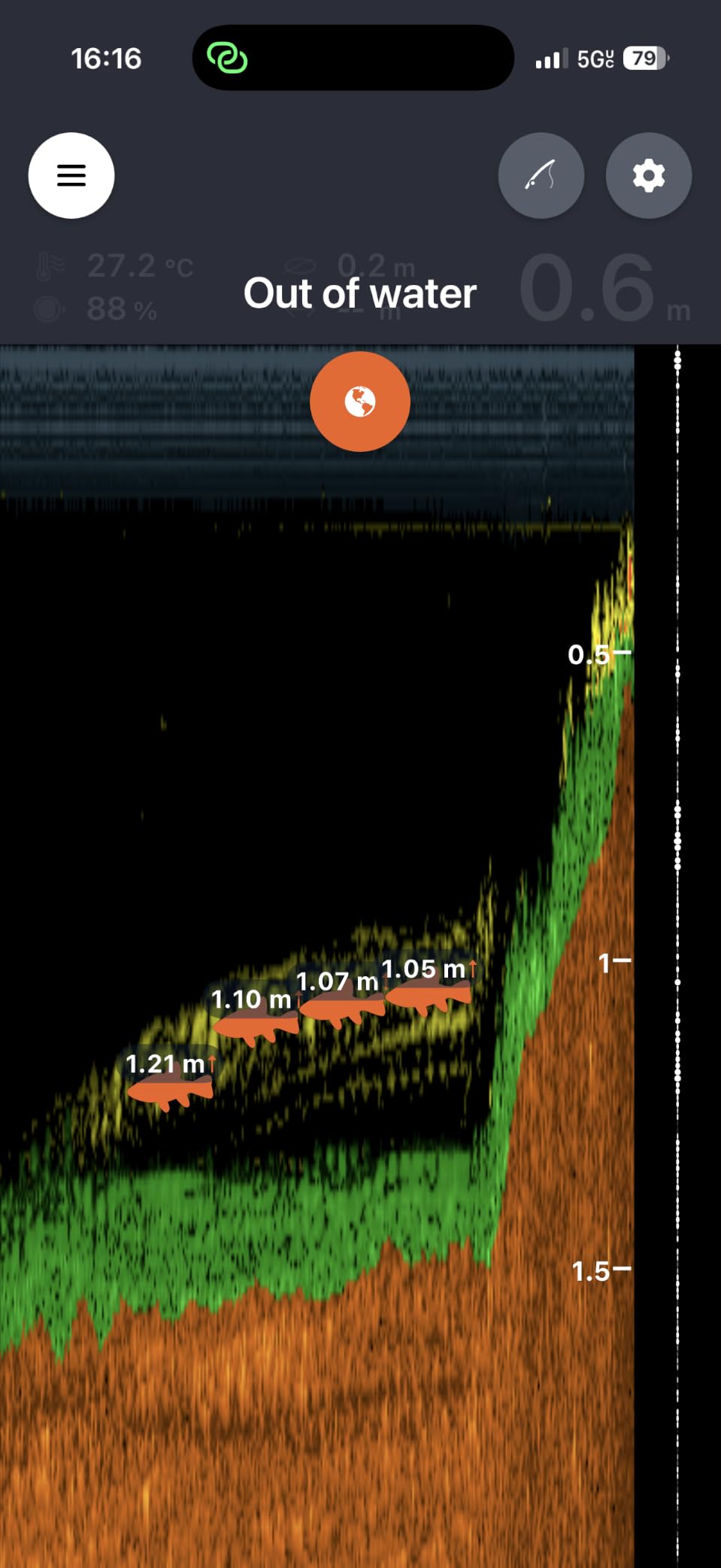
Target separation of 0.4 inches in narrow beam mode is impressive for a device this small. I could distinguish individual fish in a school and even estimate relative sizes based on the size of sonar returns. The wide and mid beams sacrifice some detail for coverage area, giving you options depending on your fishing approach.
Battery life ranges from 5 to 7 hours of constant use. For a full day of fishing, I brought a USB power bank to recharge during lunch breaks. The battery charges via USB-C in roughly two hours from a depleted state.
The main drawback is weight. At 3.2 ounces, the ball is heavy enough that you need a stout rod and heavy braid to cast it effectively. I used a medium-heavy casting rod with 30-pound braid and could manage casts of about 80 feet. Fine fishing tackle is not an option with this device.
Versatility Across Fishing Environments
The PRO+ 2 adapts to nearly any fishing scenario. From shore, you cast it out and reel in slowly to scan the area. On a kayak, you can troll it behind you or cast to specific targets. For ice fishing, you place it in the hole and use it as a flasher. The ball floats, so you never have to worry about losing it to a snag.
One limitation is performance in moving water. Current and paddle churn can confuse the sonar readings, creating noise that masks fish returns. In calm water conditions, accuracy is excellent. In rivers or windy conditions with choppy water, expect some degradation in image quality.
App Experience and Subscription Model
The Deeper app is well-designed and user-friendly. Basic functionality including sonar display, depth readings, and simple mapping is free. Pro features like detailed bathymetric map export, advanced mapping tools, and historical data analysis require a subscription. The subscription cost is reasonable but adds to the long-term ownership cost.
Map creation and sharing through the app is the strongest feature. The community of Deeper users has created a growing database of mapped waters. You can access maps that other users have created, which is especially valuable for small ponds and private lakes that lack commercial chart data.
10. Garmin Striker Cast – Best Castable Sonar for Smartphone
Garmin Striker Cast, Castable Sonar, Pair with Mobile Device and Cast from Anywhere, Reel in to Locate and Display Fish on Smartphone or Tablet (010-02246-00)
Castable sonar pod
Smartphone display via app
10 plus hour battery life
Ice fishing flasher mode
Pros
- Works great for shore and kayak fishing
- Easy to set up and pair with phone
- Good water temp and depth readings
- Accurate fish detection with size indicators
- Long battery life 10 plus hours
- Versatile for shore kayak or boat
Cons
- Drains phone battery quickly
- Loses connection when paddling or moving
- Requires stout rod and heavy line for casting
- No GPS mapping without GPS version
- Cannot create Quickdraw contour maps without GPS
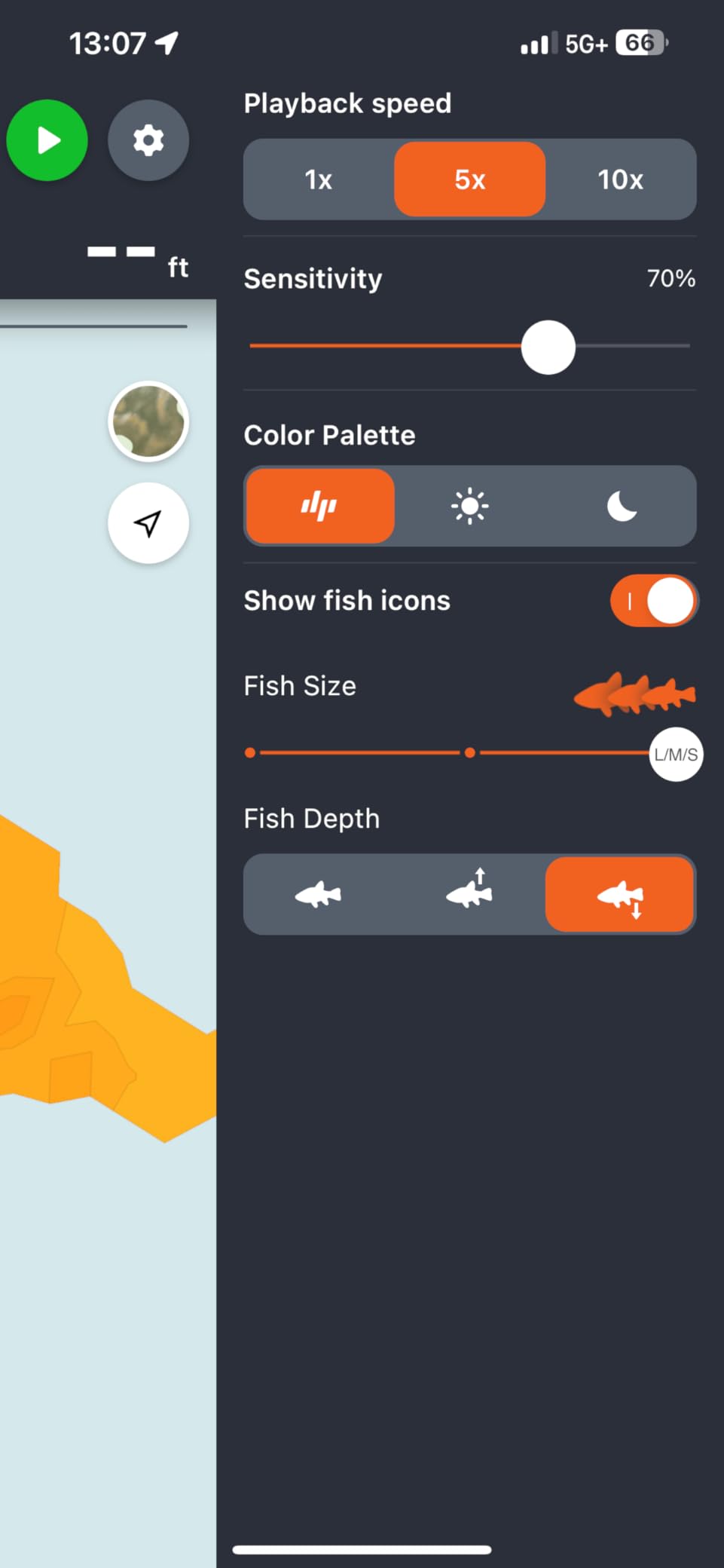
The Garmin Striker Cast is the simplest fish finder I have ever used. There is no screen, no mounting bracket, and no wiring. You pair it with your smartphone, cast it into the water, and sonar data streams to the free STRIKER Cast app. For bank fishing and casual kayak fishing, it is hard to beat this level of simplicity.
Setup took less than two minutes from unboxing to first cast. Download the app, pair via Bluetooth, cast the device, and start seeing sonar data. The sonar pod floats and automatically powers on when it contacts water, then shuts off when removed to conserve battery.
Battery life is excellent at over 10 hours on a single USB charge. I fished an entire weekend trip on one charge with power to spare. The internal battery charges via standard USB cable, making it easy to top off in the truck or with a power bank between sessions.
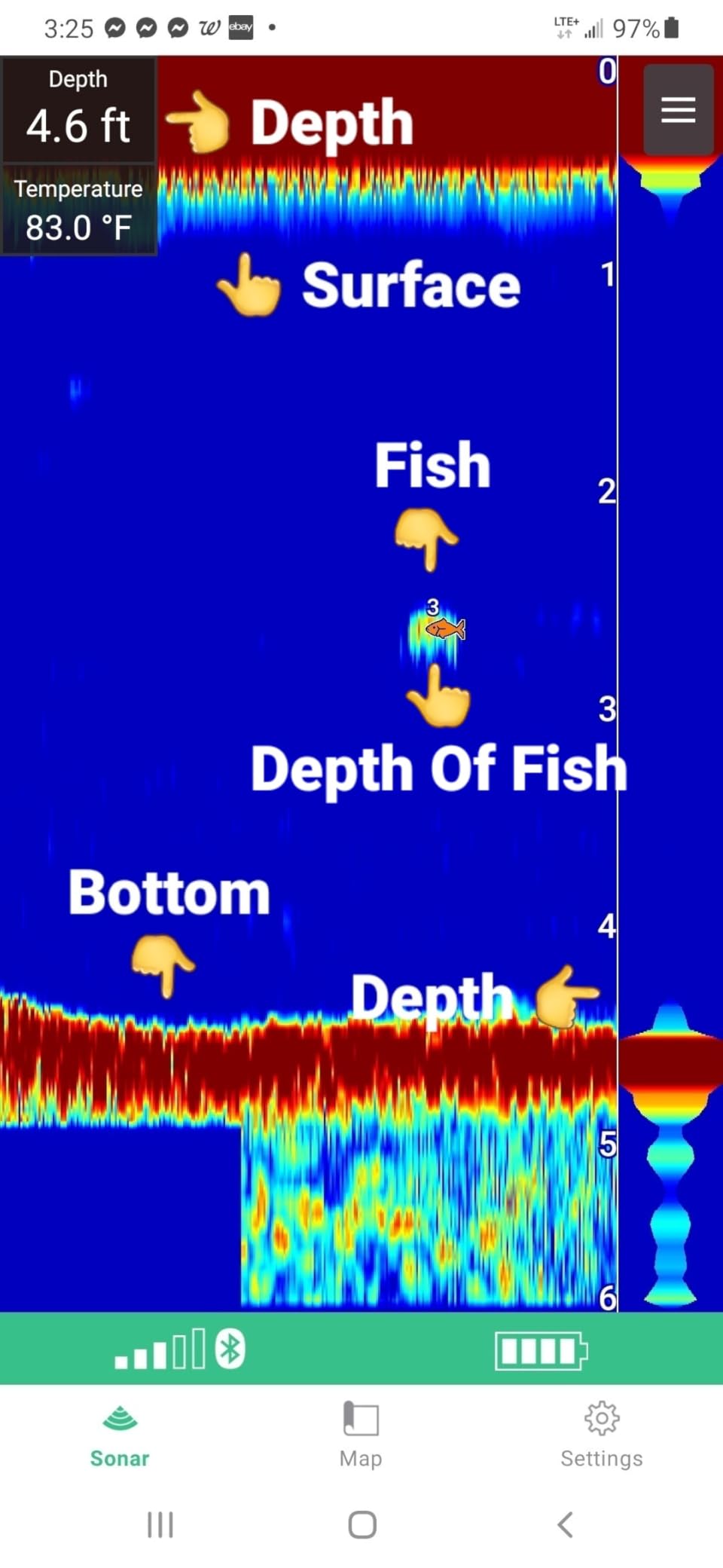
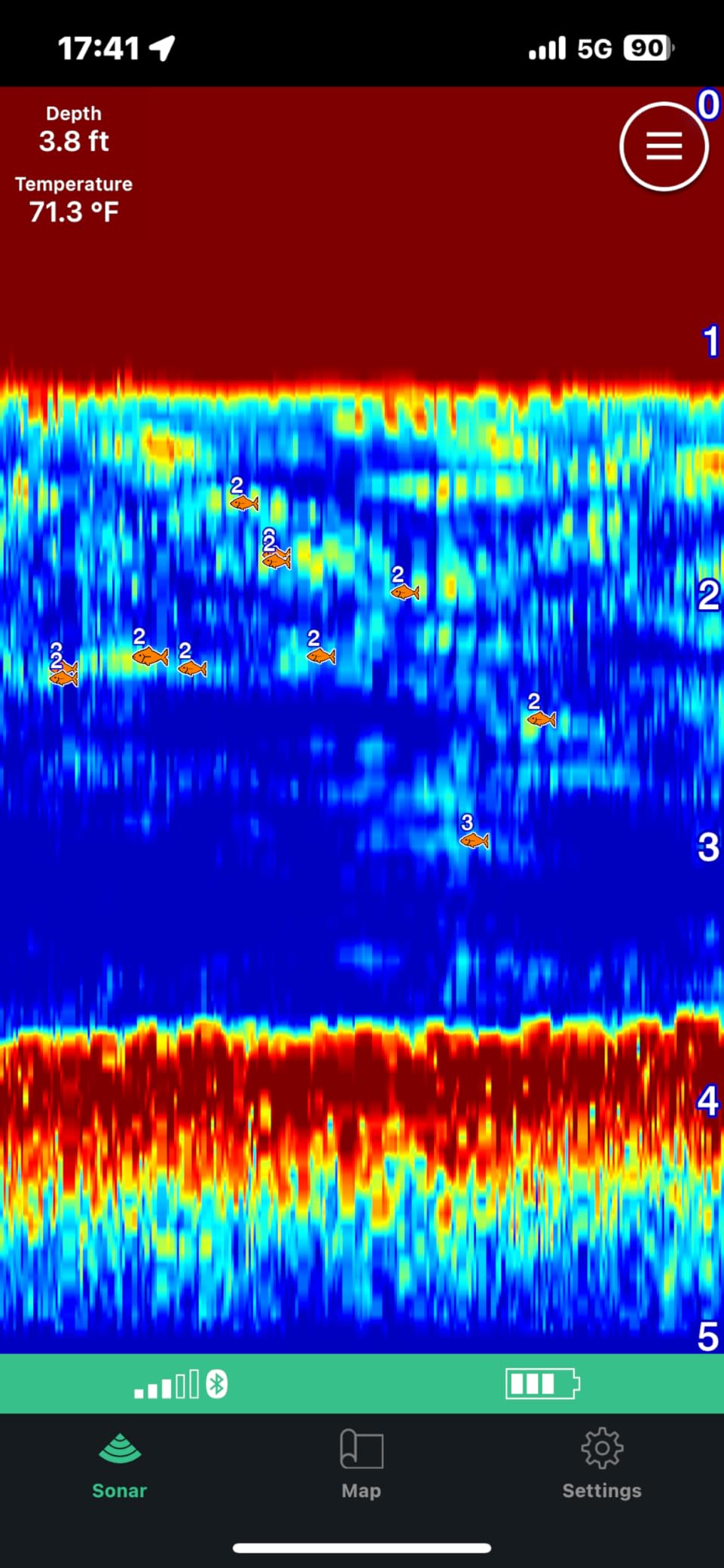
The traditional 2D sonar mode displays fish arches and bottom structure clearly on the phone screen. An ice fishing flasher mode provides real-time vertical sonar display for jigging applications. Both modes stream wirelessly from up to 200 feet away, giving you plenty of range for most fishing situations.
Fish detection includes size indicators that help you decide whether a target is worth pursuing. While not as precise as dedicated fish finders with CHIRP sonar, the size estimates are accurate enough to distinguish between baitfish and gamefish. Depth and water temperature readings are reliable.
The main trade-off is phone battery drain. Running the app continuously for several hours noticeably depleted my phone battery. On longer trips, I carried a power bank to keep my phone charged. If you plan to use this for all-day sessions, budget for a backup power solution.
GPS vs Non-GPS Version
The Striker Cast is available in two versions. The standard version provides sonar data only. The GPS version adds built-in GPS for mapping capabilities, including the ability to create Quickdraw contour maps. If mapping is important to you, the GPS version is worth the additional cost.
I tested the non-GPS version and found it perfectly adequate for locating fish and reading depth. However, several fishing buddies who own the GPS version swear by the mapping capability. Being able to create depth charts from shore without a boat-mounted unit is a significant advantage for bank anglers.
Best Use Cases and Limitations
The Striker Cast excels for shore anglers who want sonar data without installing equipment on a boat. It is also excellent for kayak anglers who want a lightweight, portable solution. Ice fishermen will appreciate the flasher mode for vertical jigging through the ice.
Connection stability when moving is the main limitation. The Bluetooth connection between the sonar pod and phone can drop when paddling or moving quickly. For stationary fishing or slow trolling, the connection is rock-solid. Plan your fishing style accordingly if you need sonar data while under way.
How to Choose the Best Fish Finder?
Choosing from the best fish finders requires understanding the technology and matching features to your fishing style. Here is what matters most when making your decision.
CHIRP vs Traditional Sonar
CHIRP sonar sends a continuous sweep of frequencies instead of a single frequency pulse. This results in dramatically better target separation, meaning you can distinguish individual fish in a school and separate fish from structure. Every unit on this list includes some form of CHIRP sonar because the technology has become the standard for quality fish finders.
Traditional 2D sonar uses a single frequency. While less advanced than CHIRP, it remains useful for basic depth reading and general fish detection. Budget units may use traditional sonar, but I recommend spending slightly more to get CHIRP capability if at all possible.
Side Imaging vs Down Imaging vs Live Sonar
Down Imaging shows picture-like views of structure directly beneath your boat. Side Imaging scans to the sides of your boat, revealing structure and fish up to 200 feet or more on each side. Live Sonar provides real-time forward or downward views, letting you watch fish react to your lure.
For most anglers, Down Imaging provides the best value. It dramatically improves your understanding of bottom structure compared to traditional sonar alone. Side Imaging is worth the investment for tournament anglers and those who fish large bodies of water. Live Sonar is the latest advancement and is particularly valuable for sight fishing and vertical presentations.
Screen Size and Display Quality
Screen size affects how much information you can view at once. A 4-inch display works for basic sonar viewing. A 7-inch display comfortably shows split-screen views. Screens of 9 inches or larger are ideal for running multiple sonar views and mapping simultaneously.
Display quality matters as much as size. Look for IPS panels for wide viewing angles and sunlight readability. Touchscreen capability adds convenience but is not essential. Consider whether you will wear gloves while fishing, as button controls may be more practical in cold weather.
GPS and Mapping Features
GPS transforms a fish finder into a navigation tool. Marking waypoints on productive fishing spots allows you to return precisely. Route creation helps you follow productive trolling paths. Chartplotter functionality with contour mapping gives you a complete picture of underwater structure.
Custom mapping features like Quickdraw Contours (Garmin), AutoChart Live (Humminbird), and Genesis Live (Lowrance) let you create your own depth charts. These features are especially valuable on smaller lakes that lack detailed commercial chart data.
Brand Comparison: Garmin vs Humminbird vs Lowrance
All three major brands produce excellent fish finders, but each has distinct strengths. Garmin excels at user-friendly interfaces, reliable GPS, and the ActiveCaptain ecosystem. Humminbird leads in side imaging technology with MEGA Imaging and offers the One-Boat Network integration with Minn Kota. Lowrance stands out for innovative features at competitive prices and their FishReveal technology.
Brand choice often comes down to personal preference and ecosystem loyalty. If you already own a Minn Kota trolling motor, Humminbird’s One-Boat Network integration is a compelling reason to stay in that ecosystem. If simplicity and app integration matter most, Garmin is the natural choice. Lowrance offers strong value propositions across their product range.
Budget Considerations
Fish finders range from under $130 to over $2,500. Determine your must-have features before shopping. A basic CHIRP sonar unit under $200 will dramatically improve your fishing compared to no electronics. Mid-range units around $300 to $500 add GPS mapping and DownScan Imaging. Premium units over $1,000 deliver side imaging, live sonar, and large touchscreen displays.
Factor in additional costs beyond the unit itself. You may need a battery, battery charger, mounting bracket, transducer mounting plate, and wiring harness. Premium units may require separate transducer purchases. Budget 15 to 20 percent above the unit price for accessories and installation materials.
Installation Difficulty
Most fish finders can be installed by a reasonably handy angler in one to two hours. Transom-mount transducers attach with screws through the hull. Cable routing requires drilling a small hole for the transducer cable to pass through. Power connections typically use simple spade terminals on a 12V battery.
For kayak installation, consider using RAM mounts or gear tracks instead of permanently drilling holes. Many kayak anglers use portable power solutions like 12V lithium battery packs. If you are not comfortable drilling into your boat, professional installation is available at most marine dealerships.
FAQs
Is Lowrance or Humminbird better?
Both Lowrance and Humminbird make excellent fish finders, and the better choice depends on your needs. Humminbird leads in side imaging technology with MEGA Imaging and offers One-Boat Network integration with Minn Kota trolling motors. Lowrance is known for innovative features like FishReveal and competitive pricing across their product range. If you already own Minn Kota accessories, Humminbird provides better ecosystem integration. If value and features-per-dollar matter most, Lowrance is the stronger choice.
Is CHIRP better than sonar?
Yes, CHIRP sonar is significantly better than traditional single-frequency sonar. CHIRP sends a continuous sweep of frequencies instead of a single pulse, which provides much better target separation. This means you can distinguish individual fish in schools, separate fish from structure, and see clearer bottom definitions. CHIRP also produces cleaner fish arches with less noise and clutter on the display.
Is Garmin or Lowrance a better fish finder?
Garmin and Lowrance both produce top-quality fish finders with different strengths. Garmin excels in user-friendly interfaces, reliable GPS performance, and the ActiveCaptain app ecosystem for wireless connectivity. Lowrance offers strong value propositions with features like FishReveal and autotuning sonar at competitive prices. Garmin is generally better for beginners who want simplicity, while Lowrance appeals to anglers who want maximum features per dollar spent.
What is better, Garmin or Humminbird?
Garmin and Humminbird are both premium fish finder brands with loyal followings. Garmin is better known for intuitive menus, excellent GPS accuracy, and the ActiveCaptain app integration. Humminbird dominates in imaging technology with MEGA Side Imaging and MEGA Down Imaging, plus the One-Boat Network ecosystem with Minn Kota. For live sonar, Garmin LiveScope is considered the gold standard, while Humminbird MEGA Live offers strong competition.
Do I need side imaging on a fish finder?
Side imaging is not essential but is extremely valuable for locating structure and fish that are not directly beneath your boat. It scans up to 200 feet on each side, letting you cover water quickly and identify points, drop-offs, weed lines, and fish-holding structure. For casual anglers fishing small lakes, basic CHIRP sonar is sufficient. For tournament anglers or those fishing large bodies of water, side imaging significantly improves efficiency.
Final Thoughts on the Best Fish Finders
After testing all 10 of these fish finders across multiple fishing scenarios, a few clear recommendations emerge. For most anglers, the Garmin Striker Vivid 4cv represents the best overall combination of features, ease of use, and value. If budget is your primary concern, the Garmin Striker 4 delivers outstanding performance at the lowest price on this list.
Anglers ready to invest in premium imaging should seriously consider the Humminbird XPLORE for its unmatched MEGA Side Imaging and One-Boat Network integration. For those curious about live sonar without the premium price tag, the Lowrance Eagle Eye is the most accessible entry point into this game-changing technology.
The best fish finders in 2026 are the ones that match your fishing style, fit your budget, and are simple enough that you actually use them. Start with the features that matter most to your fishing, and choose accordingly. Every unit on this list will help you find more fish and spend less time guessing.