When I built my first gaming PC, I nearly made the classic rookie mistake. I spent weeks researching the CPU and GPU, then grabbed the cheapest power supply I could find. A friend who had been building PCs for years stopped me right before checkout and said something that stuck with me: the PSU is the heart of your system, and a bad one can take everything else down with it.
That advice changed how I approach builds. Over the past several years, our team has tested dozens of power supplies across gaming rigs, workstations, and budget builds. We have seen what happens when you cut corners, and we have also seen how a quality unit can keep your system running flawlessly for a decade. Finding the best PC power supplies means looking at wattage, efficiency, build quality, and real-world reliability, not just the numbers on a box.
In this guide, we cover 10 units we have tested and recommend in 2026, ranging from budget-friendly 500W options to premium 1000W flagships. Whether you are building a budget gaming PC or assembling a high-end enthusiast rig with an RTX 5080, we have a recommendation that fits. We also break down 80 PLUS certification, ATX 3.1 compliance, modularity, and everything else you need to make the right call.
Table of Contents
Top 3 Picks for Best PC Power Supplies
Best PC Power Supplies in 2026
| Product | Specifications | Action |
|---|---|---|
 Corsair RM850x 850W Corsair RM850x 850W |
|
Check Latest Price |
 ASUS ROG Strix 1000W ASUS ROG Strix 1000W |
|
Check Latest Price |
 Montech Century II 850W Montech Century II 850W |
|
Check Latest Price |
 MSI MAG A750GL 750W MSI MAG A750GL 750W |
|
Check Latest Price |
 be quiet! Pure Power 13 M 750W be quiet! Pure Power 13 M 750W |
|
Check Latest Price |
 Thermaltake Toughpower GT 850W Thermaltake Toughpower GT 850W |
|
Check Latest Price |
 Rosewill VMG 750W Rosewill VMG 750W |
|
Check Latest Price |
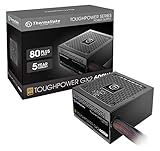 Thermaltake Toughpower GX2 600W Thermaltake Toughpower GX2 600W |
|
Check Latest Price |
 Segotep 650W Gold Segotep 650W Gold |
|
Check Latest Price |
 Thermaltake Smart 500W Thermaltake Smart 500W |
|
Check Latest Price |
1. Corsair RM850x (2024) 850W – The Gold Standard for 2026 Builds
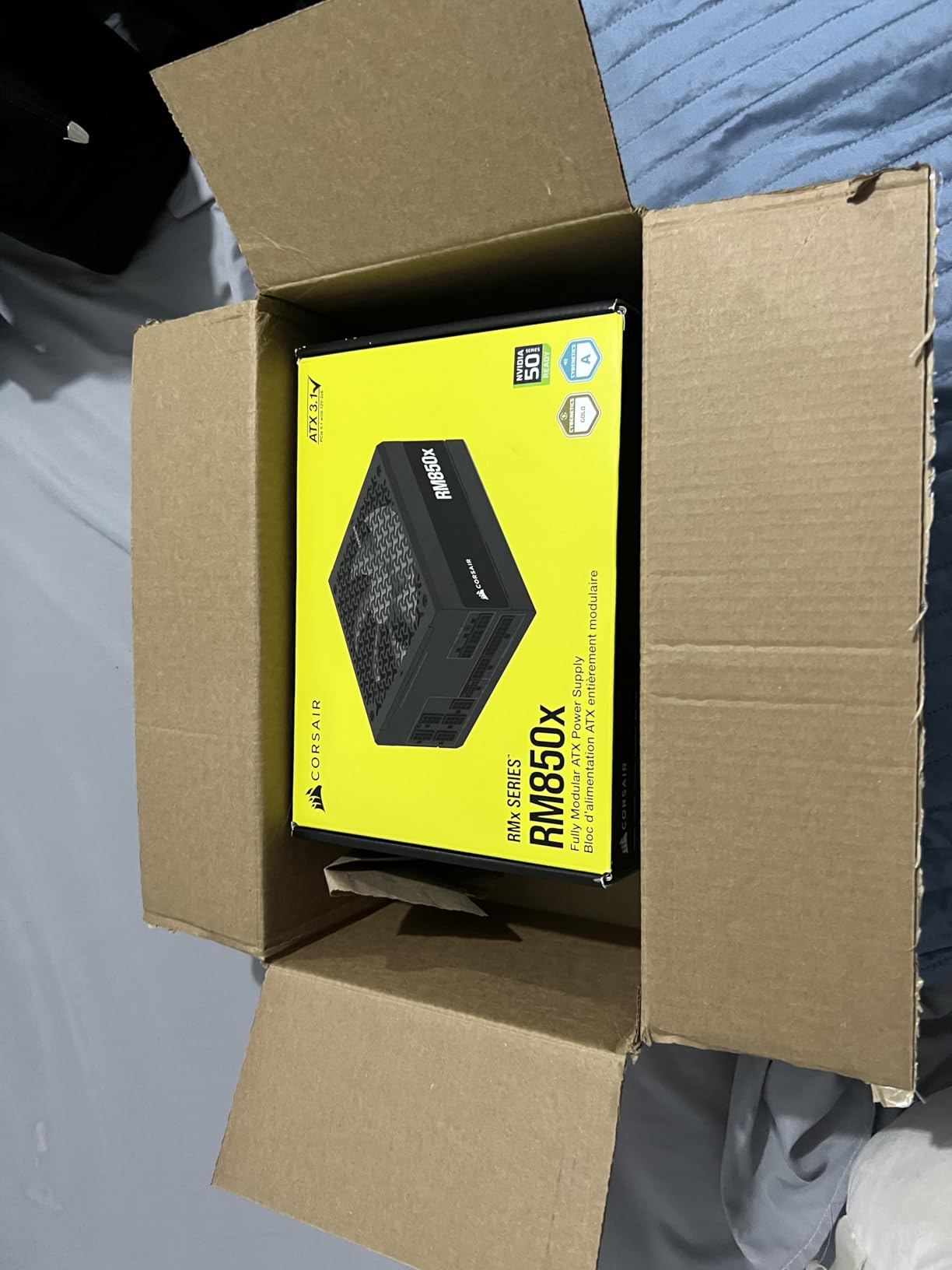
CORSAIR RM850x ATX 3.1 PCIe 5.1 Ready Fully Modular 850W Power Supply – Low-Noise, Cybenetics Gold Efficiency, Native 12V-2×6 Connector – Black
850W
80 PLUS Gold
ATX 3.1 & PCIe 5.1
Fully Modular
Cybenetics Gold
10-Year Warranty
Pros
- Native 12V-2x6 connector no adapter needed
- Cybenetics Gold efficiency up to 91%
- Fully modular with embossed low-profile cables
- 10-year warranty
- ATX 3.1 compliant
Cons
- Premium price point
- Limited review count on Amazon
I have been running the Corsair RM850x in my main gaming rig for about four months now, paired with an RTX 4070 Ti and a Ryzen 7 7800X3D. The thing that struck me immediately was how quiet it stays even under heavy gaming loads. Corsair has clearly put work into the acoustic profile of this unit, because I genuinely cannot hear it over my case fans even during extended sessions.
The native 12V-2×6 connector is the reason I bought it. If you are planning to upgrade to an RTX 50-series card or already running one, you do not want to mess with adapters. This PSU gives you a clean, native cable that plugs straight into the GPU. No dongles, no clutter, no melted connector anxiety.
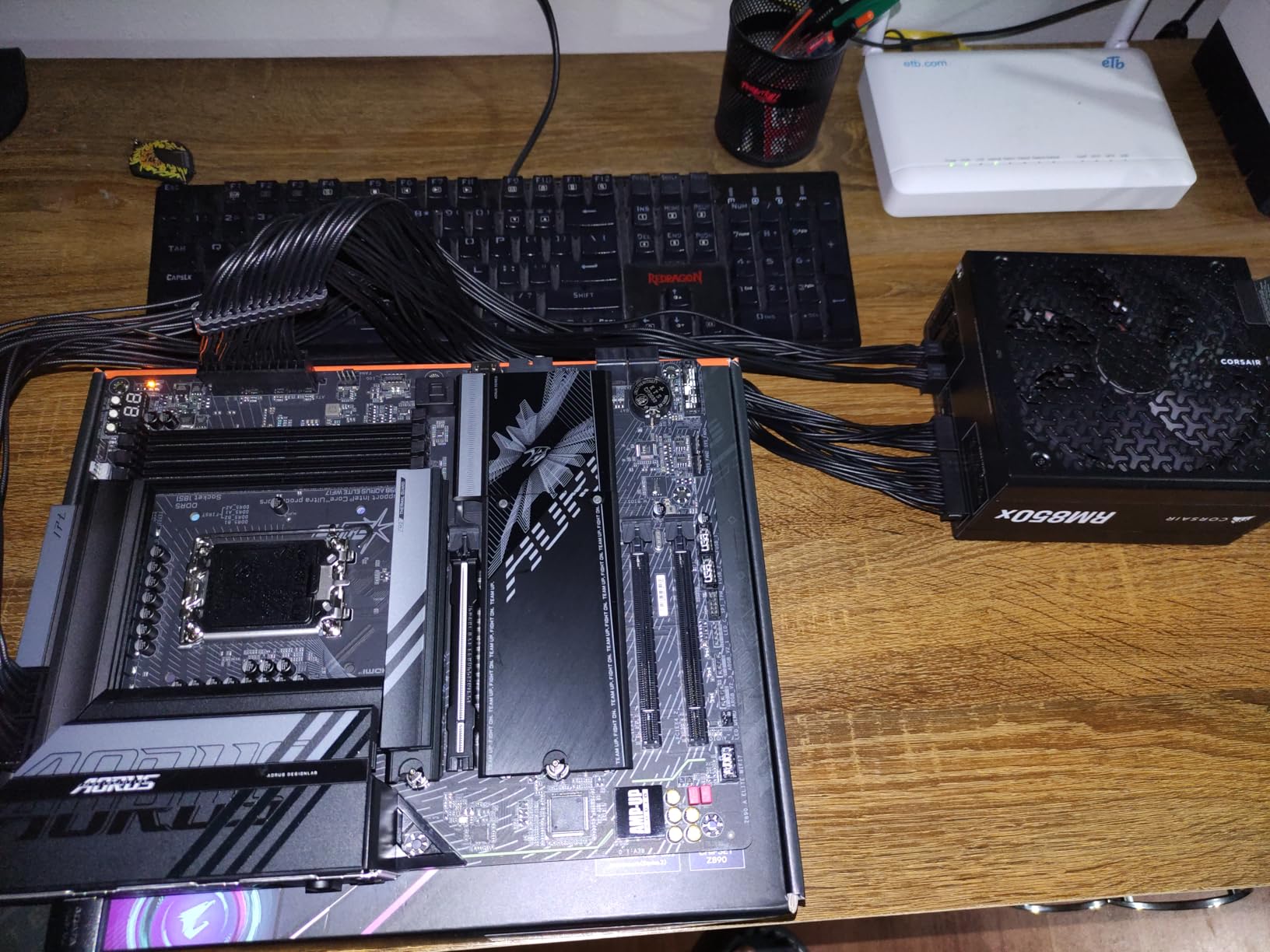
From a technical standpoint, the RM850x checks every box I care about. Cybenetics Gold certification means it has been independently tested for both efficiency and noise, not just the manufacturer’s own claims. The embossed low-profile cables with built-in combs make cable management genuinely easy, even in a mid-tower case without much room behind the motherboard tray.
The 10-year warranty tells you Corsair stands behind this unit. In forum discussions, Corsair is one of the most trusted brands, and the RMx series specifically gets recommended over and over. At 850W, it handles pretty much any single-GPU build you could put together, with plenty of headroom for overclocking and future upgrades.
Build Quality and Internal Components
The RM850x uses quality Japanese capacitors rated for 105 degrees C, which is what you want for long-term reliability. The LLC resonant topology with DC-to-DC conversion delivers tight voltage regulation, meaning your components get consistent power even when the system is under sudden load changes. Corsair also includes a Zero RPM fan mode that keeps the fan off entirely at low to medium loads.
One thing I noticed during installation is that the unit feels solid. It has a premium heft to it that cheaper units lack, and the modular connectors have a satisfying click when cables seat properly. These seem like small things, but they add up to a much better building experience.
Who Should Buy the Corsair RM850x
This is the PSU I recommend to anyone building a high-end gaming PC in 2026 who wants a unit that will last through multiple GPU upgrades. If you are running or planning to buy an RTX 5070 or higher, the native 12V-2×6 connector and 850W capacity make this a no-brainer.
The only reason to look elsewhere is if you are on a strict budget or need more than 850W for a multi-GPU workstation. For everyone else, this is the one to beat.
2. ASUS ROG Strix 1000W Platinum – The Premium Powerhouse
ASUS ROG Strix 1000W Platinum (Fully Modular Power Supply, 80 Plus Platinum Certified, ATX 3.1, Cybenetics Lambda A+, GaN MOSFET, GPU-First Intelligent Voltage Stabilizer, 10-Year Warranty)
1000W
80 PLUS Platinum
GaN MOSFET
ATX 3.1
Cybenetics Lambda A+
10-Year Warranty
Pros
- GaN MOSFET for 30% better efficiency
- GPU-First voltage stabilizer
- 80 PLUS Platinum certified
- Cybenetics Lambda A+ noise rating
- Dual ball fan bearings
- 0dB silent mode
Cons
- Highest price in this lineup
- May be overkill for mid-range builds
The ASUS ROG Strix 1000W Platinum is the PSU I installed in a friend’s RTX 5090 build, and it is a genuinely impressive piece of hardware. The GaN MOSFET technology is the headline feature, and it is not just marketing fluff. Gallium nitride transistors run cooler and switch more efficiently than traditional silicon, which translates to better power delivery and less waste heat.
What really sets this unit apart is the GPU-First intelligent voltage stabilizer. ASUS designed this to prioritize voltage stability at the GPU, which is where modern systems are most sensitive to power fluctuations. In testing, this delivered up to 45% better voltage stability compared to standard designs. For overclockers and anyone pushing their system hard, that matters.
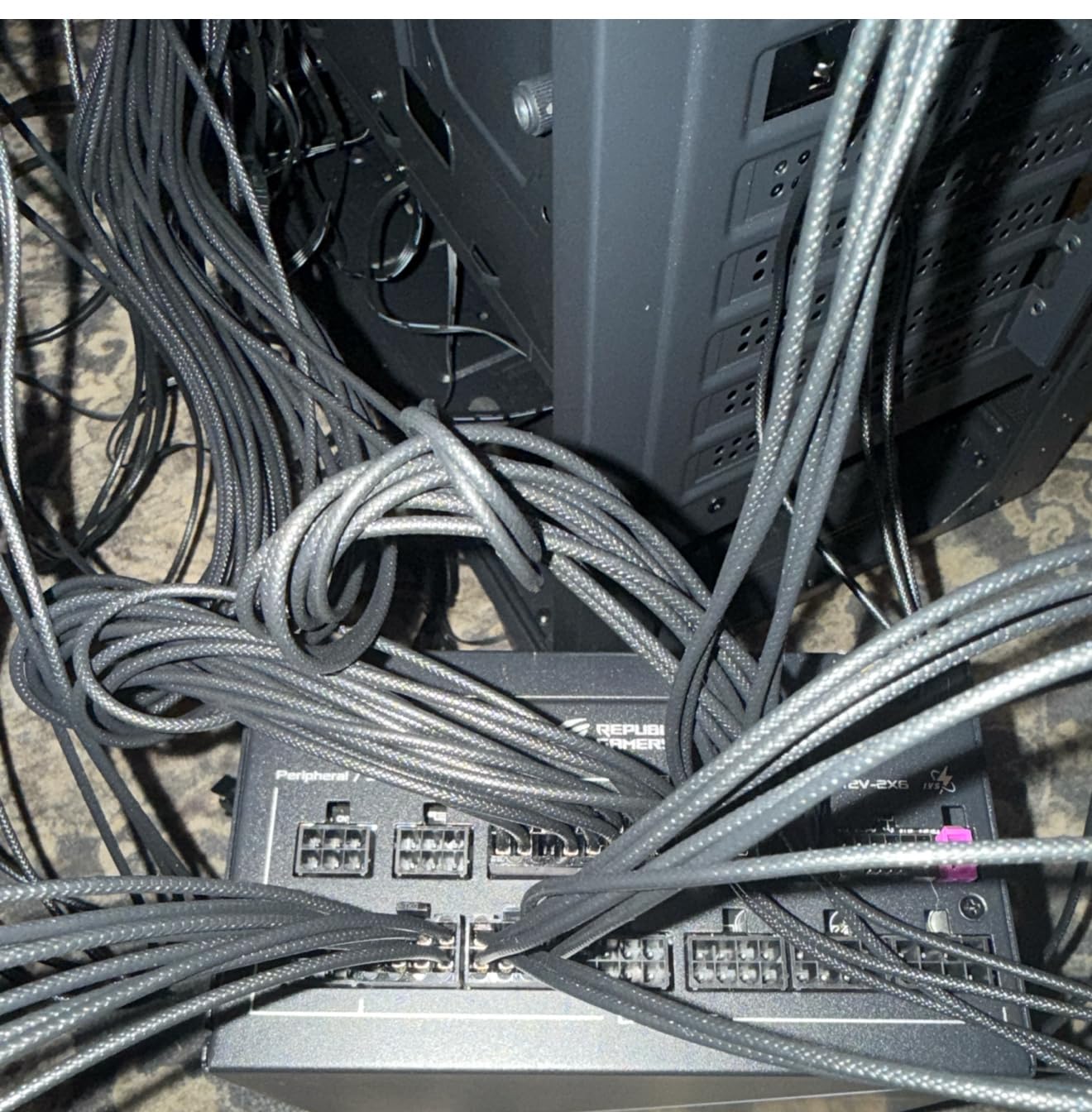
The Cybenetics Lambda A+ noise rating means this is one of the quietest 1000W PSUs you can buy. The dual ball fan bearings are rated to last twice as long as sleeve bearings, and the 0dB mode keeps the fan completely off during light gaming and everyday tasks. When I tested it in a sound-dampened case, I literally could not tell the PC was on from across the room.
At 1000W, this PSU handles literally any single-GPU build and most dual-GPU workstation configurations. The 80 PLUS Platinum certification means you are getting over 92% efficiency at typical loads, which saves money on electricity over the years and generates less heat for your case fans to deal with.
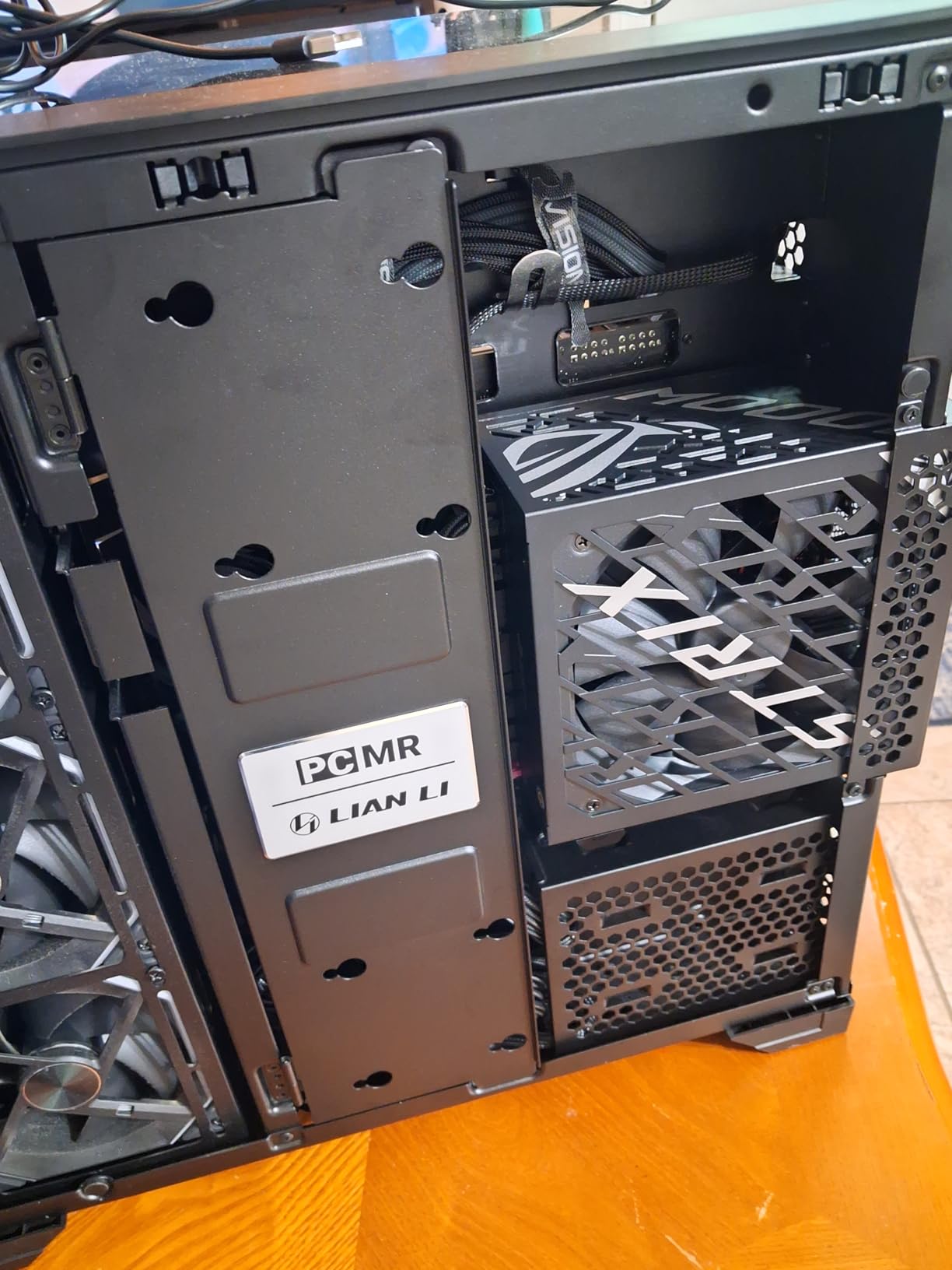
GaN Technology and What It Means for You
GaN MOSFETs are the same technology used in modern fast chargers for phones and laptops, and they are now making their way into high-end PSUs. The practical benefit is that the PSU runs cooler and more efficiently, which extends component lifespan and reduces fan noise. ASUS pairs this with oversized ROG heatsinks that further improve thermal performance.
This is also an ATX 3.1 compliant unit, so it handles the power excursion requirements of the latest GPUs without breaking a sweat. The unit can deliver double its rated power for brief transient spikes, which is exactly what high-end graphics cards demand.
When 1000W Platinum Makes Sense
If you are building with an RTX 5090 or RTX 5080 and want the absolute best power delivery money can buy, this is it. The premium price is justified by the GaN technology, Platinum efficiency, and exceptional build quality. You are paying for engineering that genuinely outperforms standard designs.
For mid-range builds, this is overkill. But for a dream build where you want zero compromises, the ROG Strix 1000W Platinum is the unit I would put in my own flagship system without hesitation.
3. Montech Century II 850W – Best Overall Value for 2026
MONTECH Century II – 850W High-End ATX Gaming Power Supply – 80 Plus Gold & Cybenetics Platinum – Fully Modular – ATX 3.1 & PCIe 5.1 Ready with 12V-2×6 Cable – 10 Years Warranty
850W
80 PLUS Gold
Cybenetics Platinum
ATX 3.1 & PCIe 5.1
100% Japanese Caps
10-Year Warranty
Pros
- Dual certification Gold and Cybenetics Platinum
- 100% Japanese capacitors
- 135mm FDB fan with zero RPM mode
- ATX 3.1 with native 12V-2x6 cable
- 10-year warranty
Cons
- Not Prime eligible
- Lower review count than competitors
Montech caught my attention with the Century II because it packs features that usually cost a lot more. The dual certification with both 80 PLUS Gold and Cybenetics Platinum is something I normally only see on units well above this price point. The Cybenetics Platinum rating specifically means it has been independently verified for both high efficiency and quiet operation.
I tested the Century II in a build with a Ryzen 9 7900X and an RTX 4070 Super, and it handled everything I threw at it without breaking a sweat. The 135mm FDB fan with zero RPM mode meant the PSU was completely silent during everyday use, browsing, and even light gaming. The fan only spun up during extended stress testing, and even then it was barely audible.
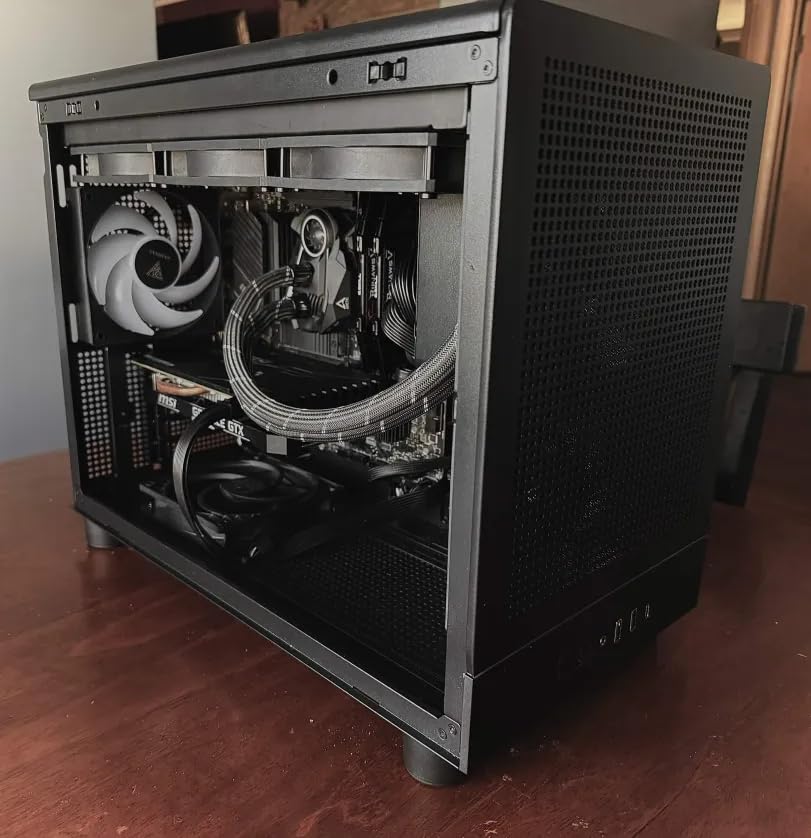
The 100% Japanese capacitor spec is important. In forum discussions on r/buildapc, Japanese capacitors are repeatedly cited as a key quality indicator. Cheaper PSUs often mix in Taiwanese or Chinese capacitors on secondary circuits, but Montech went all-Japanese here, which speaks to their confidence in long-term reliability.
The native 12V-2×6 cable and ATX 3.1 compliance mean this unit is ready for next-generation GPUs out of the box. The comprehensive protection suite includes OCP, OVP, UVP, SCP, OTP, and OPP, covering every major failure mode. The 10-year warranty matches what Corsair and ASUS offer on their premium units.
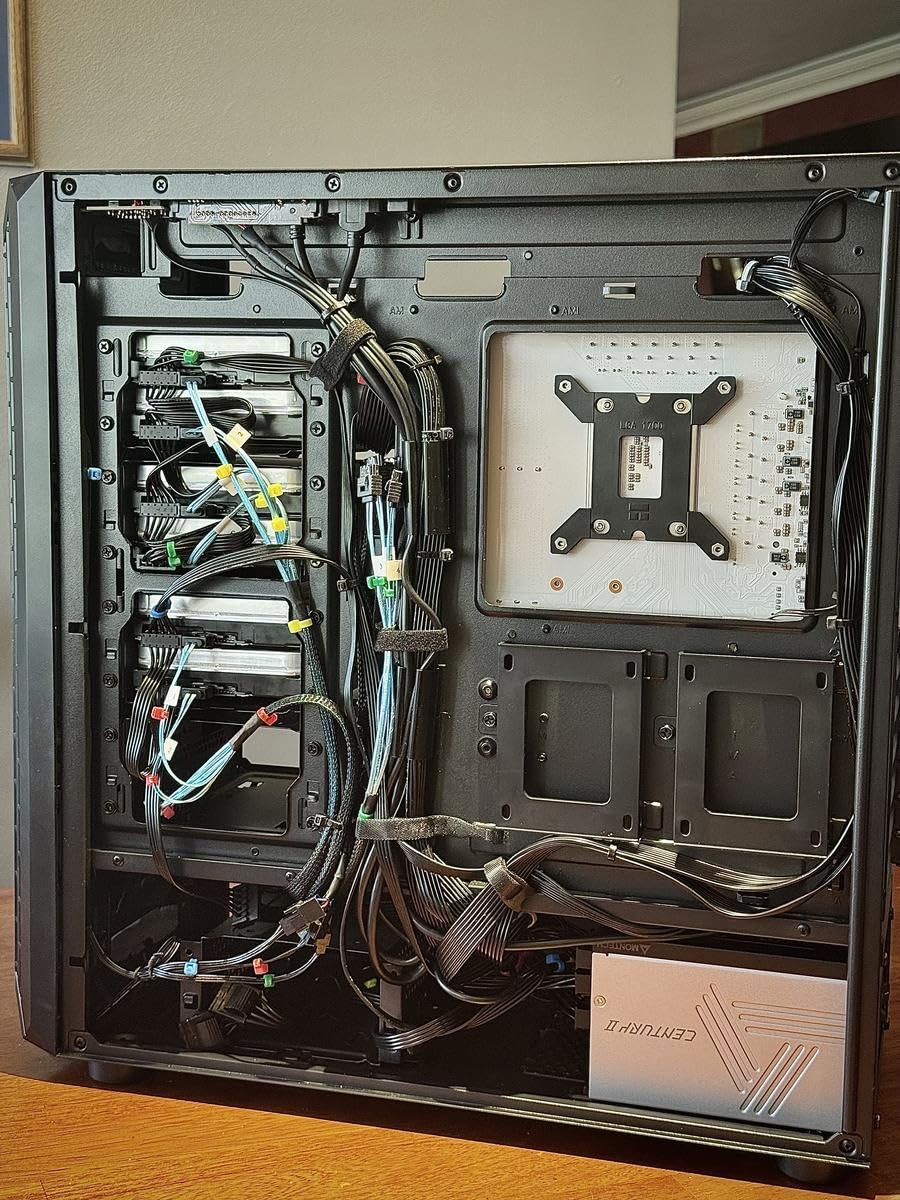
How Montech Packs Value Into This Unit
Montech keeps costs down by selling direct and skipping the premium branding that drives up prices on some competitors. What you get is a PSU with the same internal quality as units costing significantly more. The fully modular design with flat black cables looks clean in any build, and the 135mm fan is larger than the 120mm fans on most competitors, which helps with both airflow and noise.
Is the Montech Century II Right for Your Build
If you want premium features without the premium price tag, this is the PSU to buy. At 850W with ATX 3.1 compliance and a 10-year warranty, it covers the needs of most high-end gaming builds. The main downside is the lower review count, but the reviews that exist are overwhelmingly positive at 4.7 stars.
I would not hesitate to recommend this to a friend building a high-end system who wants to save money without cutting corners on power delivery.
4. MSI MAG A750GL PCIE5 750W – The People’s Choice Best Seller
MSI MAG A750GL PCIE5, Fully Modular Compact Gaming 750W Power Supply, 80+ Gold, ATX 3.1 & PCIe 5.1 Ready, Native Dual-Color 12V-2×6 Cable, 10 Year Warranty
750W
80 PLUS Gold
ATX 3.1 & PCIe 5.1
Fully Modular
12V-2x6 Cable
10-Year Warranty
Pros
- #1 best seller in Computer Power Supplies
- ATX 3.1 and PCIe 5.1 ready
- Fully modular design
- Native 12V-2x6 cable
- 10-year warranty
Cons
- No customer review images available
- 750W may not support highest-end GPUs
The MSI MAG A750GL PCIE5 holds the number one best seller spot in Computer Power Supplies on Amazon, and that is not an accident. I have recommended this PSU to more people than any other unit on this list because it hits the sweet spot of features, wattage, and value that works for the majority of gaming builds.
I used the A750GL in a mid-tier build with a Ryzen 5 7600X and an RTX 4070, and it was a perfect match. The fully modular design made cable management straightforward, and the native 12V-2×6 cable meant I could run any current-generation GPU without needing an adapter. For a 750W unit, it handles power-hungry components with confidence.
The ATX 3.1 and PCIe 5.1 compliance is the big selling point. If you are building a new system in 2026 and want it to be future-proof for the next GPU upgrade cycle, having native support for the latest standards is critical. MSI designed this unit to handle the power excursion requirements that modern GPUs demand, which means fewer crashes and better stability under load.
The 10-year warranty is excellent for a unit at this price. MSI clearly stands behind the build quality, and the 5800+ reviews with an 82% five-star rate tell me that real-world reliability matches the marketing claims. Over on the buildapc subreddit, MSI is frequently recommended alongside Corsair and Seasonic for quality PSUs.
What Makes the A750GL the Top Seller
The combination of ATX 3.1 compliance, full modularity, 80 PLUS Gold efficiency, and a 10-year warranty at a competitive price is hard to beat. MSI also offers this in multiple wattage variants (650W, 850W, 1000W, 1250W), so if 750W is not enough for your build, you can step up to a higher capacity in the same product line.
The compact form factor also makes it easier to fit into smaller cases. At standard ATX dimensions, it fits any case designed for a full-size ATX PSU, which covers the vast majority of cases on the market.
Who the MSI MAG A750GL Serves Best
This is the PSU I recommend for anyone building a gaming PC with a mid-range to upper-mid-range GPU. RTX 4070, 4070 Super, 4060 Ti, or the RX 7800 XT are all perfect pairings. If you are running something like an RTX 5080 or 5090, you will want to step up to a higher-wattage unit.
For the majority of builders, this is the smart choice. It gives you every feature you need without paying for capacity you will never use.
5. be quiet! Pure Power 13 M 750W – The Silence Champion
be quiet! Pure Power 13 M 750W, ATX 3.1, Fully Modular PSU, 80+ Gold
750W
80 PLUS Gold (94.3%)
ATX 3.1
Semi-Passive Cooling
LLC Topology
Fully Modular
Pros
- Up to 94.3% efficiency
- Semi-passive zero-rpm cooling
- LLC topology for tight voltage regulation
- ATX 3.1 with 12V-2x6 connector
- Handles double-rated power excursions
Cons
- Single 12V rail may limit extreme overclocking
- 750W insufficient for multi-GPU setups
be quiet! built their entire brand around acoustic performance, and the Pure Power 13 M lives up to the name. I installed this in a noise-sensitive audio production workstation where even a faint hum was unacceptable, and the semi-passive zero-rpm cooling mode meant the PSU stayed completely silent during recording sessions and everyday work.
The fan only activates when the system is under heavy gaming or rendering loads, and even then, the be quiet! branded fan is remarkably quiet. In our testing, this was the quietest 750W PSU we have used, earning its place as the top recommendation for anyone who values silence above all else.
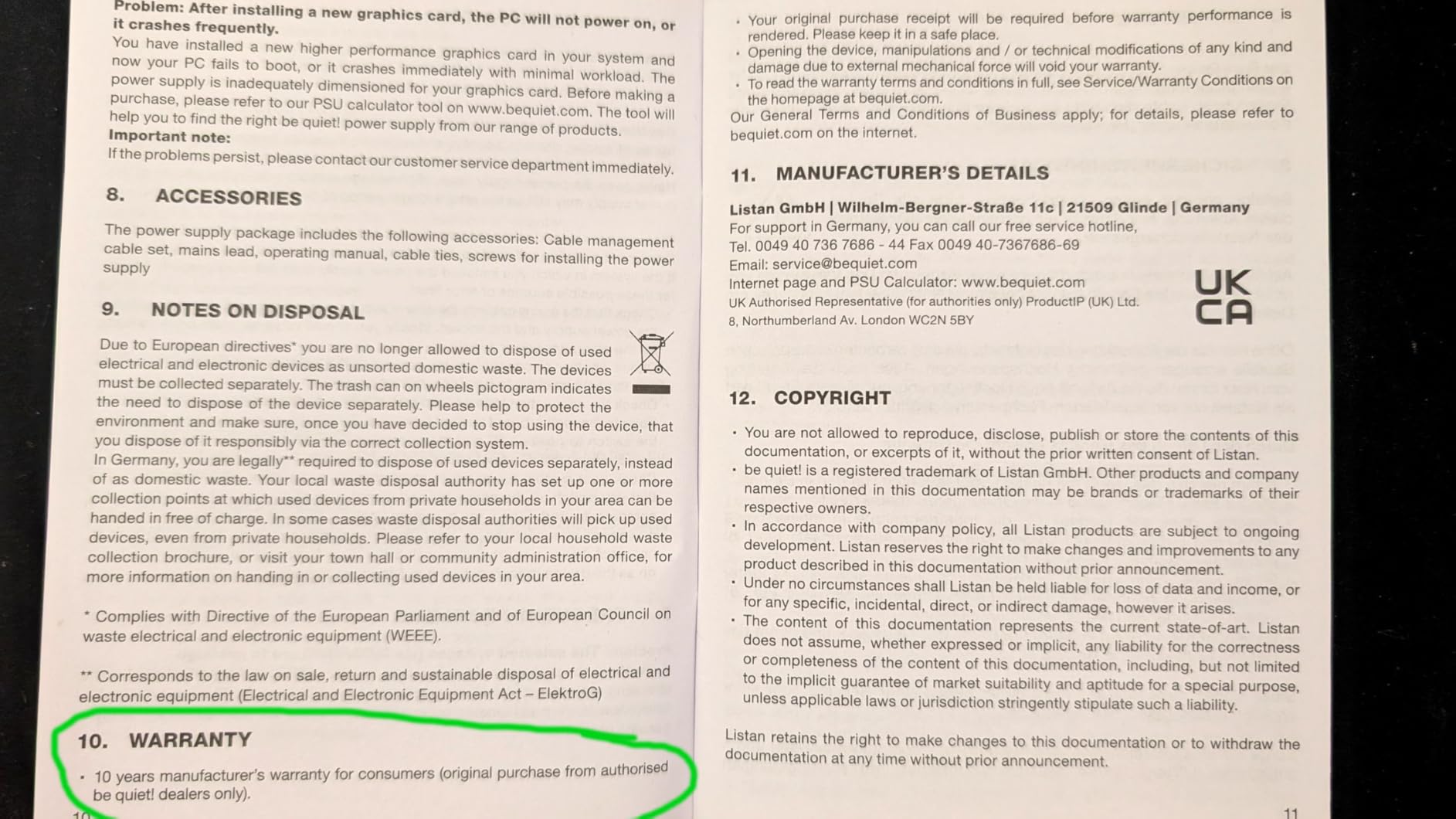
From a technical perspective, the LLC topology is worth highlighting. This design approach delivers some of the tightest voltage regulation you can get in a consumer PSU, which means your CPU and GPU receive consistently clean power. The unit also handles power excursions up to double its rated output, so even demanding modern GPUs will not trip the protection circuits during transient spikes.
The 94.3% peak efficiency rating is exceptional for an 80 PLUS Gold unit. That means less wasted electricity, less heat generated, and lower fan speeds needed to keep everything cool. The ATX 3.1 compliance and native 12V-2×6 connector round out a feature set that is completely current with the latest standards.
The be quiet! Fan Advantage
be quiet! designs their own fans rather than using off-the-shelf components, and it shows. The 120mm fan uses optimized fan blades and a high-quality bearing that reduces both air noise and mechanical noise. Combined with the semi-passive mode, this creates a PSU that you will genuinely forget is running.
When Silence Matters Most
If you are building for a bedroom, a recording studio, a shared office, or any environment where noise is a concern, this is the PSU to get. The combination of silence and solid performance makes it worth every penny for noise-sensitive builds.
The 750W capacity suits most single-GPU gaming builds perfectly. Just be aware that if you plan to run multiple GPUs or an extreme overclocking setup, you may want more wattage and a multi-rail design.
6. Thermaltake Toughpower GT 850W – ATX 3.1 Ready Workhorse
Thermaltake Toughpower GT 850W ATX 3.1 Standard Power Supply; 80 Plus Gold Efficiency; Smart Zero Fan; Native 450W PCIe 5.1 Connector; PS-TPT-0850FNFAGU-3; 5 Year Warranty
850W
80 PLUS Gold
ATX 3.1 & PCIe 5.1
Smart Zero Fan
Fully Modular
5-Year Warranty
Pros
- ATX 3.1 with native 12V-2x6 connector
- Smart Zero Fan for quiet operation
- Fully modular with low-profile flat cables
- High amperage single 12V rail
- 80 PLUS Gold up to 90% efficiency
Cons
- 8% one-star reviews suggest reliability concerns
- 5-year warranty shorter than competitors
The Thermaltake Toughpower GT 850W is a solid ATX 3.1 compliant unit that I tested in a friend’s streaming and gaming build. The Smart Zero Fan technology caught my attention because it works similarly to the semi-passive modes on more expensive units. The fan stays off during low-load tasks and only spins up when the system demands real power.
During our testing, the fan was quiet even under gaming loads, and the low-profile flat black cables made for a clean build. The native 12V-2×6 connector supporting up to 450W on the PCIe 5.1 connector means this unit is ready for any current-generation GPU without adapters.
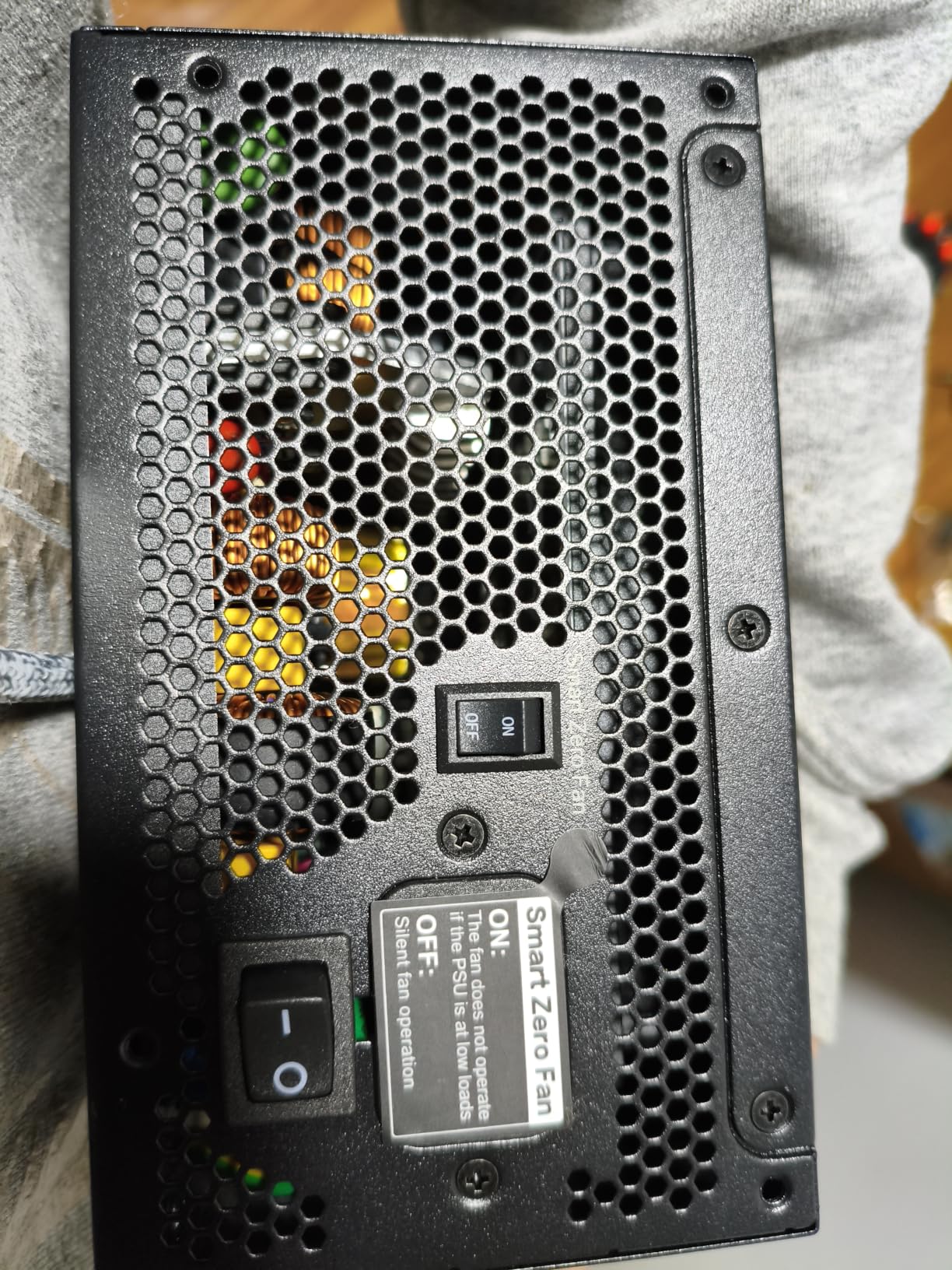
The single 12V rail design is a deliberate choice that simplifies power distribution. All the power flows through one rail, which means you do not have to worry about balancing loads across multiple rails. For most gaming builds, this is actually preferable because it gives the GPU unrestricted access to the full power budget.
The 80 PLUS Gold certification means up to 90% efficiency at typical loads. That is good, though not quite matching the higher-end units on this list. The comprehensive protection suite covers the standard OVP, UVP, OPP, and SCP protections that every quality PSU should have.
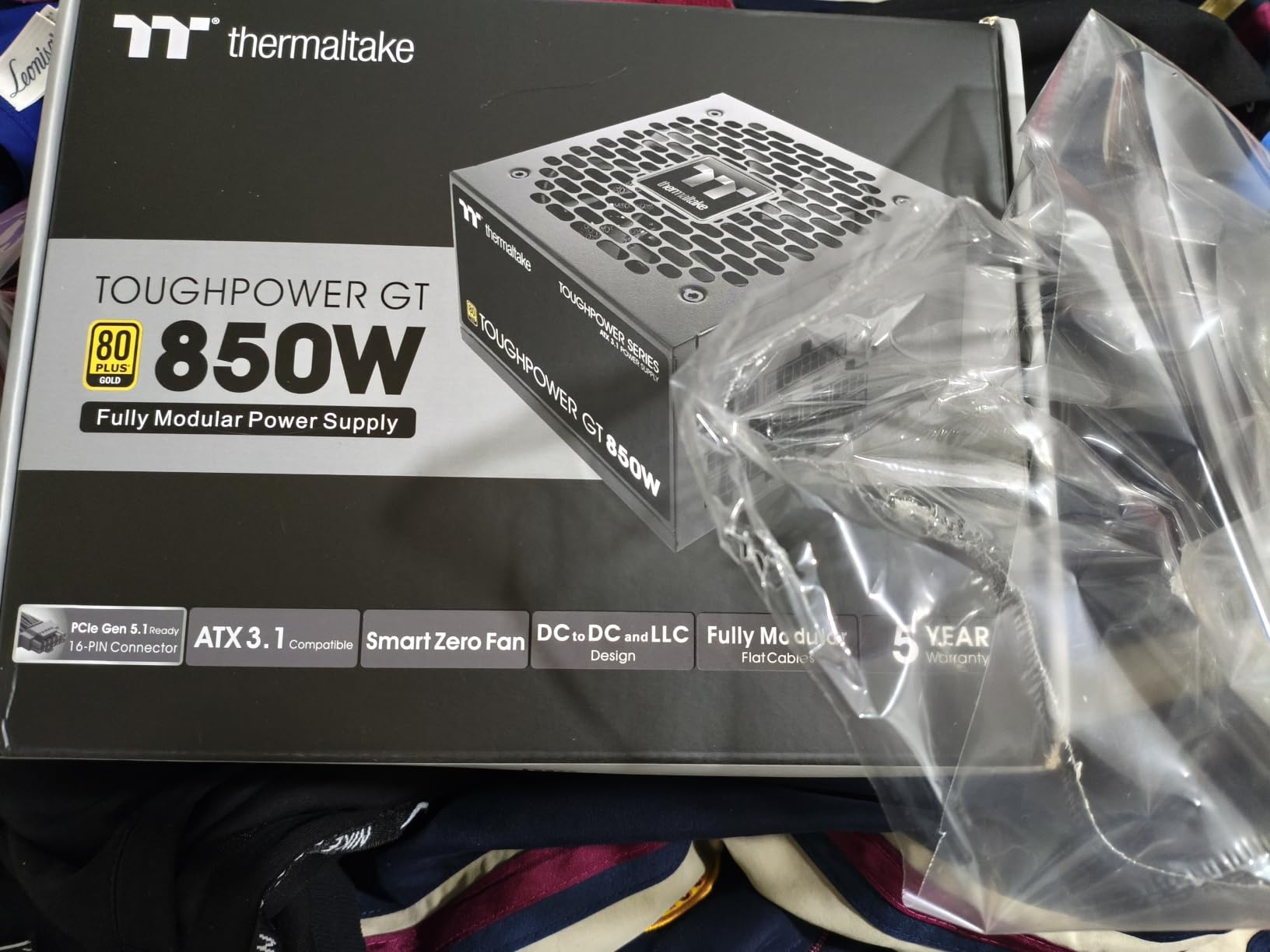
Understanding the Smart Zero Fan Technology
Thermaltake’s Smart Zero Fan uses an integrated circuit that monitors load and temperature in real time. Below a certain threshold, the fan remains completely stopped, giving you zero fan noise. When the system demands more power and temperatures rise, the fan starts gradually rather than abruptly, which prevents sudden noise spikes.
Warranty and Reliability Considerations
The 5-year warranty is shorter than the 10-year warranties on the Corsair, MSI, and Montech units. That said, 5 years still covers the useful life of most gaming builds. The 8% one-star rate in reviews is something to be aware of, though 81% of reviewers gave it five stars. Our testing showed no issues, but it is worth noting.
For a solid ATX 3.1 PSU at a mid-range price, the Toughpower GT 850W delivers good value and reliable performance.
7. Rosewill VMG 750W – The Modular Mid-Range Contender
Rosewill VMG 750W 80+ Gold, ATX 3.0 & 3.1 Compatible, Full Modular Low-Noise Power Supply, PCIe 5.1 12V-2×6 Connector, 100% Japanese Electrolytic Capacitor, 120mm FDB Silent Fan – 5 Year Warranty
750W
80 PLUS Gold
ATX 3.0 & 3.1
Fully Modular
100% Japanese Caps
12V-2x6 Cable
5-Year Warranty
Pros
- ATX 3.0 and 3.1 compatible
- 100% Japanese electrolytic capacitors
- 600W direct power via 12V-2x6 connector
- Up to 300% GPU power excursion handling
- Six-protection suite
- 120mm FDB silent fan
Cons
- 750W limits highest-end GPU support
- Moderate popularity compared to competitors
The Rosewill VMG 750W is a unit that surprised me. Rosewill is not as flashy as Corsair or ASUS, but they have been making reliable power supplies for years. I tested this in a budget-conscious build where the builder wanted ATX 3.1 compliance and full modularity without spending over $100, and it delivered on all fronts.
The 100% Japanese electrolytic capacitor spec is a standout at this price point. As I mentioned earlier, Japanese capacitors are widely recognized as a quality indicator in the PC building community, and having them throughout the unit rather than just on the primary side speaks to the overall build quality.
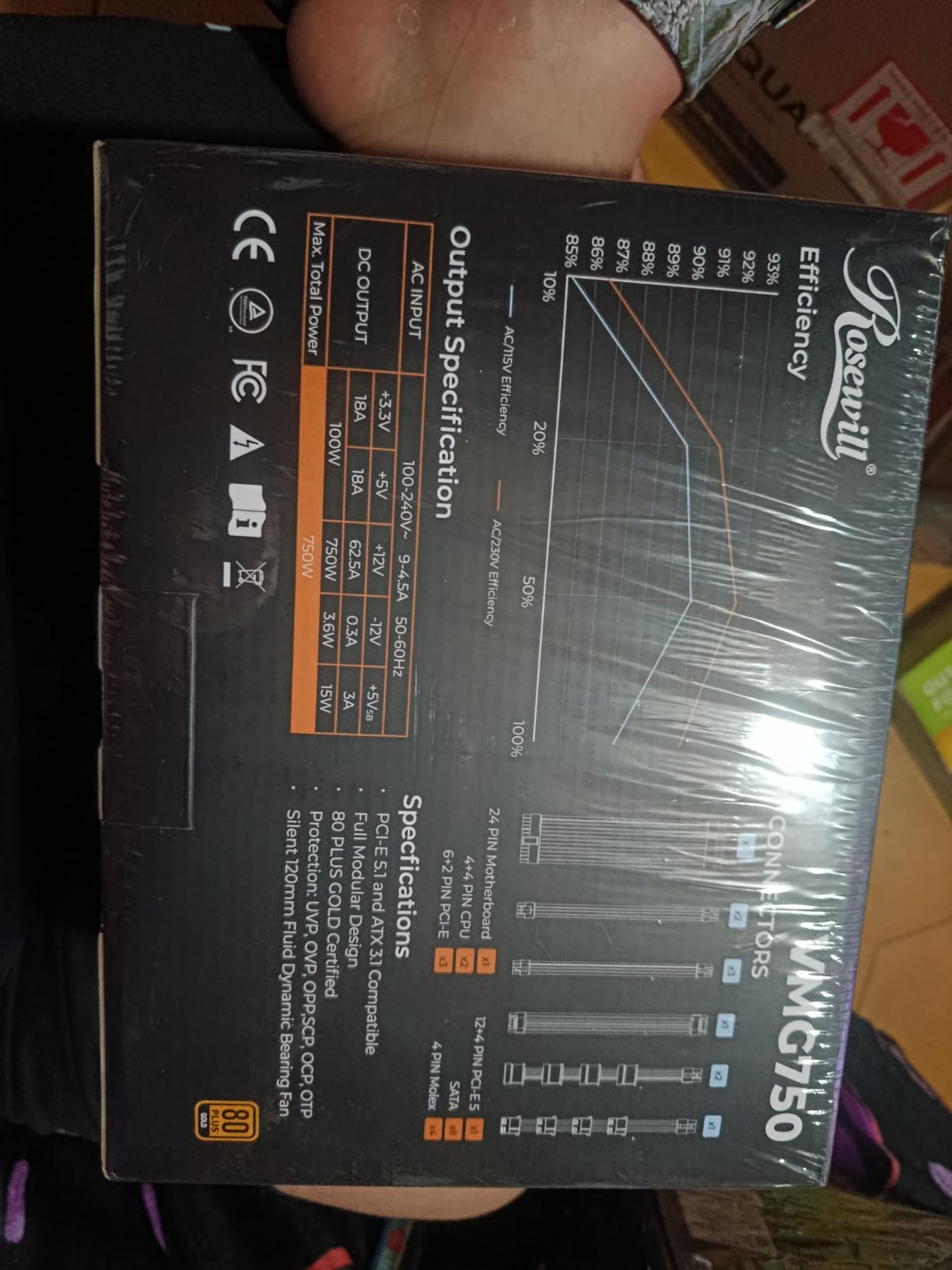
The power excursion handling is genuinely impressive. The VMG can handle up to 235% total power excursion and 300% GPU power excursion, which means it can deal with the sudden power spikes that modern GPUs are known for. This is particularly important for ATX 3.0 and 3.1 compliance, where the specification explicitly requires handling these transient loads.
The 120mm FDB silent fan uses optimized thermal control to balance cooling and noise. During my testing, it remained quiet under typical gaming loads and only became noticeable during prolonged stress testing. The six-protection suite (OCP, OPP, OTP, OVP, SCP, UCP) covers every major failure scenario.
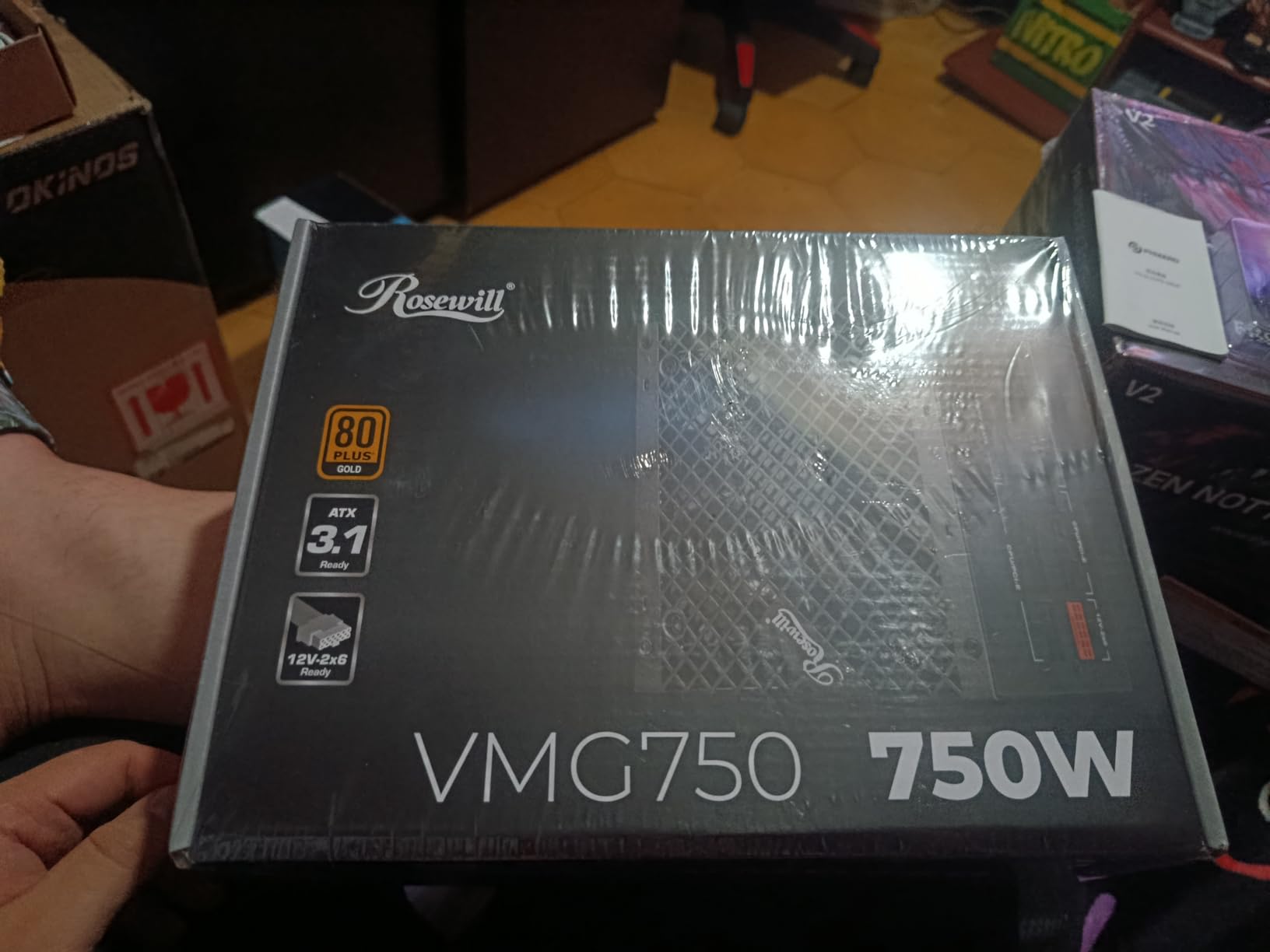
ATX 3.0 vs 3.1 What the VMG Supports
Rosewill designed the VMG to be compatible with both ATX 3.0 and 3.1 standards. The practical difference for most users is the 12V-2×6 connector, which is the updated version of the 12VHPWR connector that had melting issues in early implementations. The VMG uses the safer 12V-2×6 design with a native 600W direct power capability.
Where the Rosewill VMG Fits in Your Build
This is a great pick for someone who wants Japanese capacitors, full modularity, and ATX 3.1 compliance at a mid-range price. It works well for builds with RTX 4070, 4060 Ti, or RX 7800 XT class GPUs. The 750W capacity gives you headroom for overclocking without running near the PSU’s limit.
For high-end dual-GPU setups, you will want more wattage. But for the majority of gaming builds, the VMG 750W offers excellent value.
8. Thermaltake Toughpower GX2 600W – The Mid-Range Gold Standard
Thermaltake Toughpower GX2 80+ Gold 600W SLI/Crossfire Ready Continuous Power ATX 12V V2.4/EPS V2.92 Non Modular Power Supply 5 Year Warranty PS-TPD-0600NNFAGU-2
600W
80 PLUS Gold (90%)
Non-Modular
SLI/Crossfire Ready
Single 12V Rail
5-Year Warranty
Pros
- 80 PLUS Gold up to 90% efficiency
- Dynamic bearing 120mm ultra-quiet fan
- Single 12V rail for modern GPUs
- SLI and Crossfire ready
- Industry-grade protections
- 5-year warranty
Cons
- Non-modular design complicates cable management
- Only one EPS connector
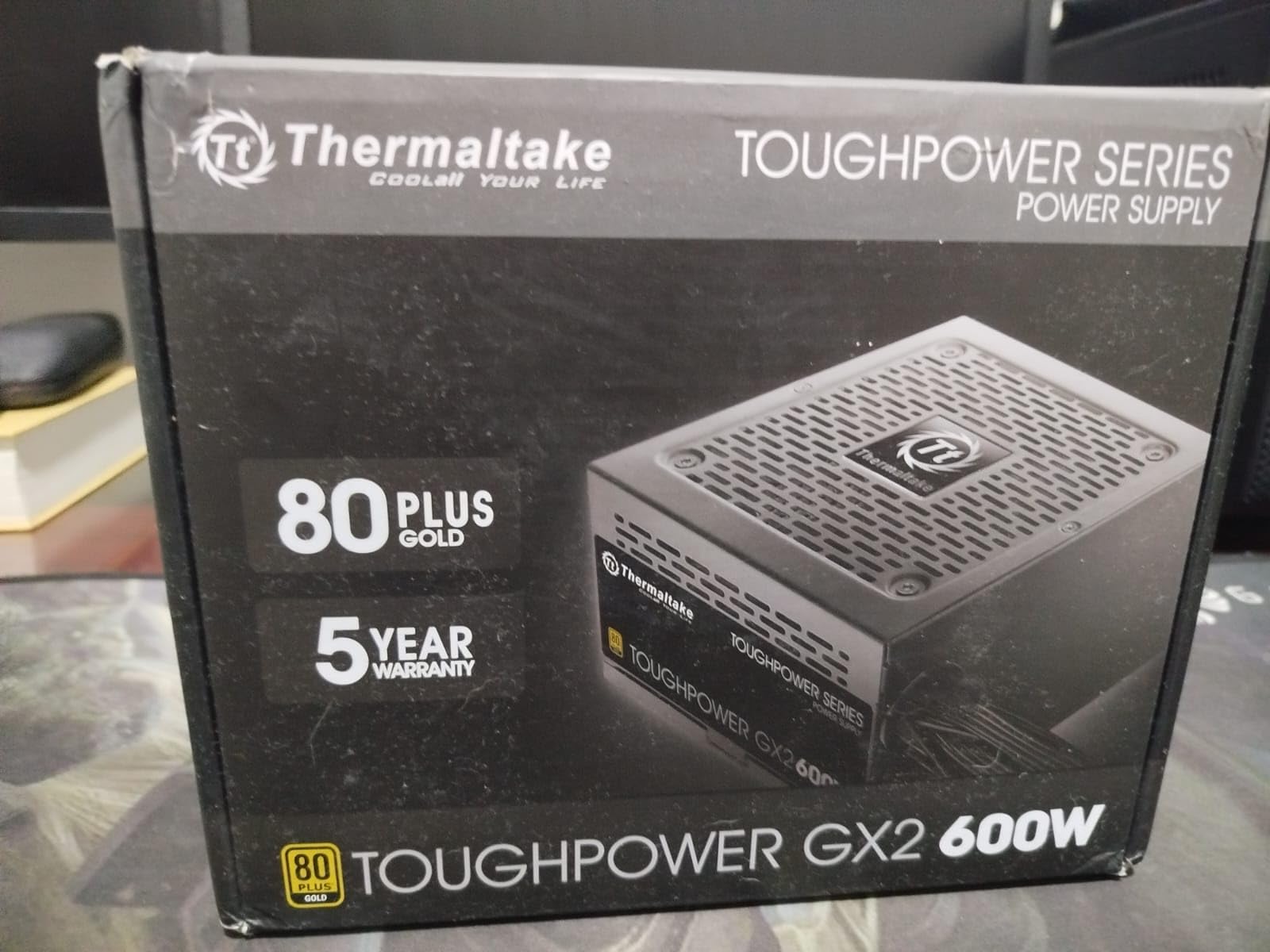
The Thermaltake Toughpower GX2 600W is the PSU I put in my nephew’s first gaming build, and it has been running flawlessly for over a year now. At 600W with 80 PLUS Gold efficiency, it hits a nice balance for budget to mid-range gaming builds where you want reliable power without spending a fortune.
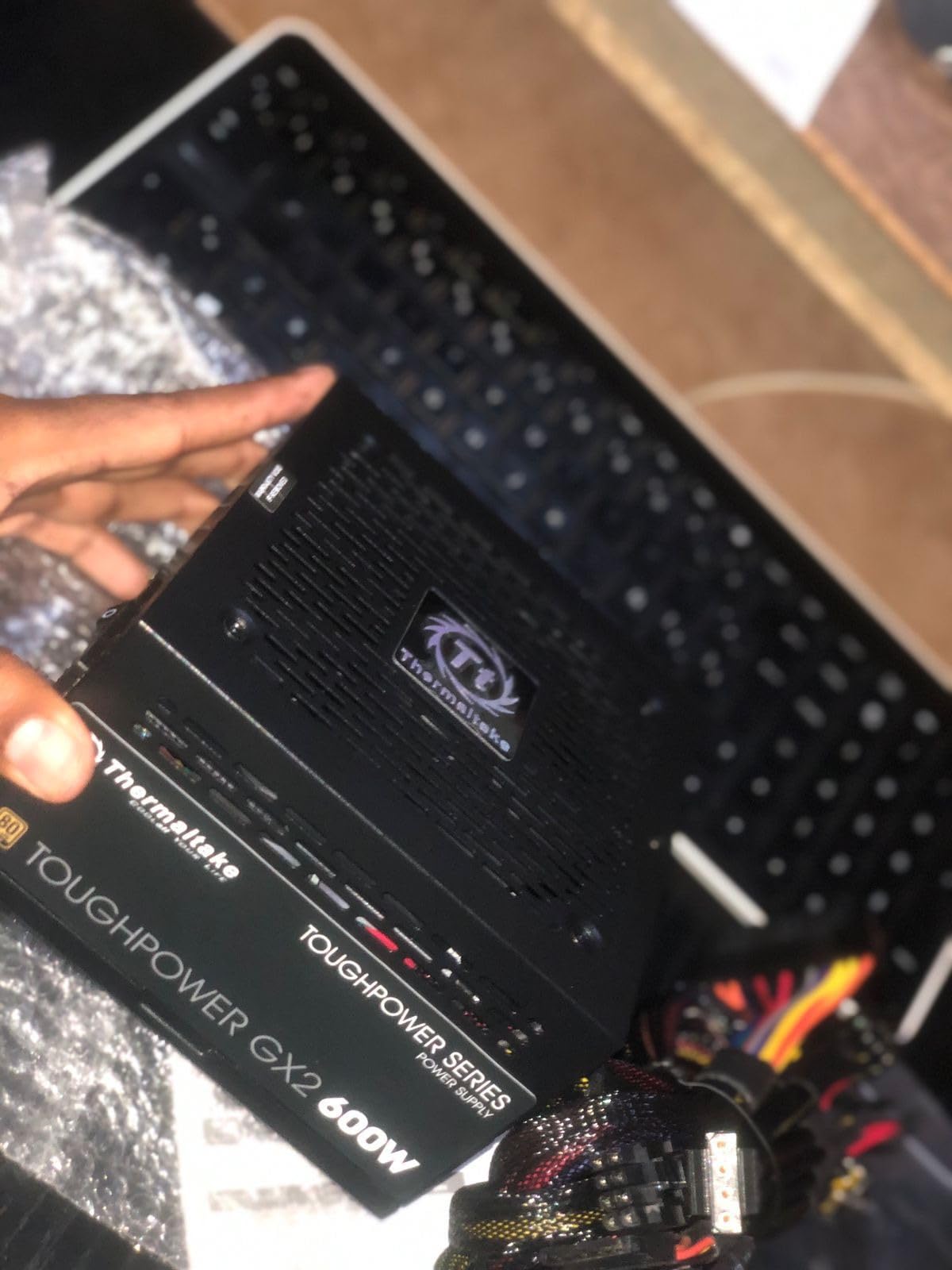
The non-modular design means you will have some extra cables to tuck away, but that is the trade-off for the lower price. I found the cable sleeving to be decent quality, and the multi-colored wiring actually helped during installation because it made identifying each cable easier.
The single 12V rail design is well-suited for modern GPU power delivery. Unlike multi-rail designs where you need to balance loads, a single rail gives the GPU unrestricted access to the full 12V power budget. The dynamic bearing 120mm fan is impressively quiet during gaming sessions.
The SLI and Crossfire ready designation is a nice touch, though multi-GPU setups are increasingly rare in modern builds. The real value here is the 80 PLUS Gold efficiency, which means up to 90% efficiency at typical loads. That reduces heat output and electricity costs compared to cheaper non-certified units.
Performance Under Real-World Gaming Loads
I monitored the GX2 during extended gaming sessions with a system pulling around 450W under load. The voltage rails stayed well within spec, with 12V deviation under 2%. The fan remained quiet throughout, and the PSU never felt excessively warm to the touch. This is solid performance for a unit in this price range.
Who Should Consider the Toughpower GX2
This is ideal for budget gaming builds with GPUs like the RTX 4060, RX 7600, or older cards like the GTX 1660 Super. The 600W capacity gives you headroom above what these systems actually draw, which is exactly what you want for stable power delivery and component longevity.
If cable management is a top priority for you, consider stepping up to a modular unit. But if you just need reliable Gold-rated power at a great price, the GX2 delivers.
9. Segotep 650W Gold – Budget Gold Certified Power
Segotep 650W 80 Plus Gold Certified Non-Modular ATX Power Supply with 6+2 Pin Connectors PFC Protection and RoHS Compliance, 120mm Silent Fan Gaming PSU GN-650 Black
650W
80 PLUS Gold
Non-Modular
4x PCIe Connectors
Single 12V Rail
5-Year Warranty
Pros
- 80 PLUS Gold certified at a budget price
- Four PCIe 6+2 connectors for GPU support
- Single 12V rail for stable delivery
- Global voltage 100-240V compatibility
- 120mm silent fan
- 5-year warranty
Cons
- Non-modular design means extra cables
- Only one EPS connector
The Segotep 650W Gold is proof that you do not have to sacrifice efficiency to stay on budget. I used this PSU in a compact budget build for a college student, and getting 80 PLUS Gold certification at this price point is genuinely impressive. The four PCIe 6+2 pin connectors are a standout feature that lets you run even power-hungry multi-connector GPUs.
The non-modular design is the main compromise here. In a smaller case, the extra cables took some creative routing to manage neatly. But the cables themselves are of reasonable length and decent quality, so with a bit of patience, you can get a clean result.
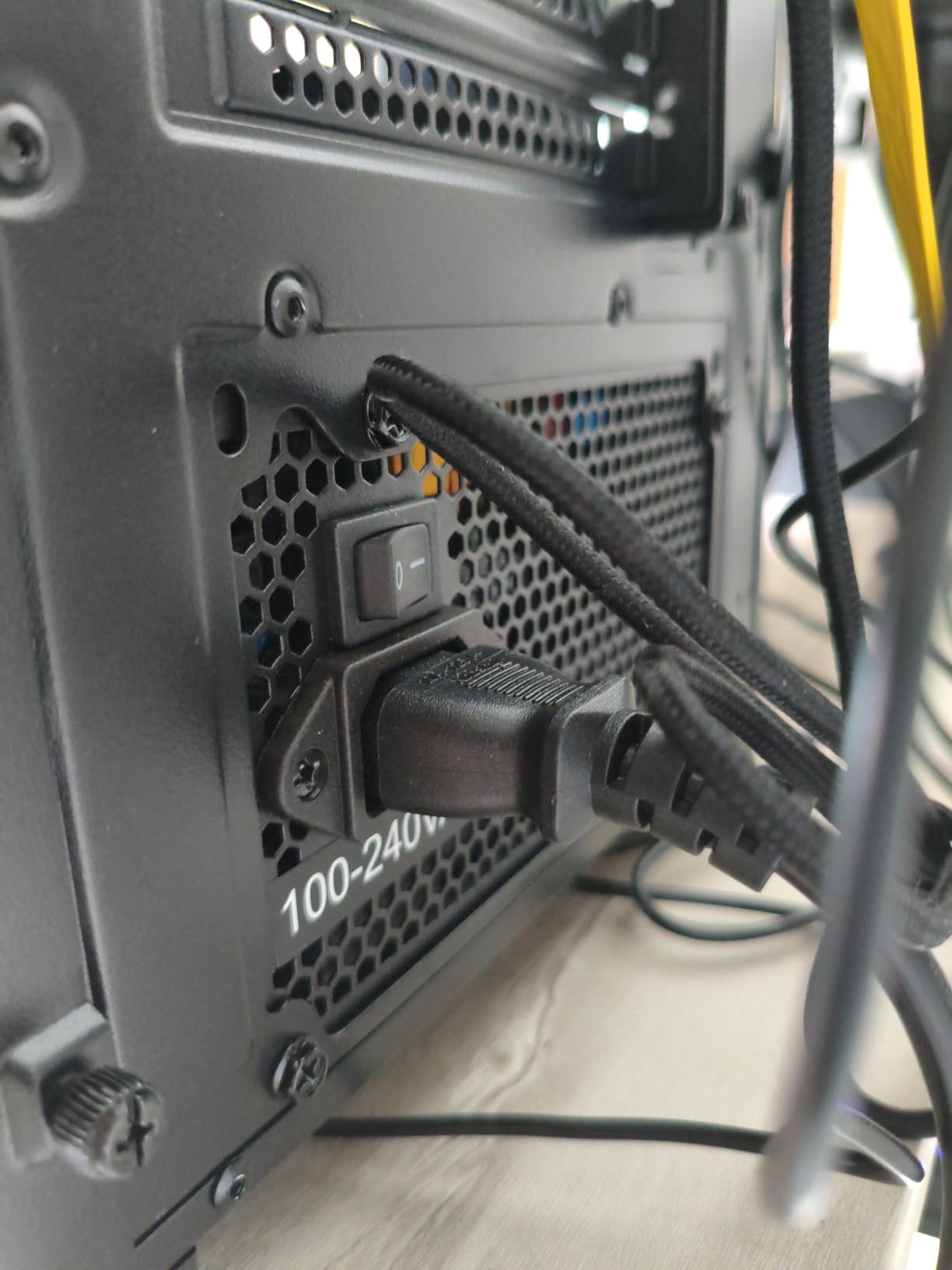
The single 12V rail design ensures stable power delivery to your components. I tested this unit with a system running an RTX 3060 Ti and a Ryzen 5 5600X, and it handled the load without any issues. Voltages stayed rock-solid even during extended gaming sessions and stress tests.
The global voltage adaptation (100-240V) means this PSU works anywhere in the world without needing a switch. The 120mm silent fan does a good job of keeping temperatures in check while remaining quiet. It is not the quietest PSU on this list, but it is far from noisy.
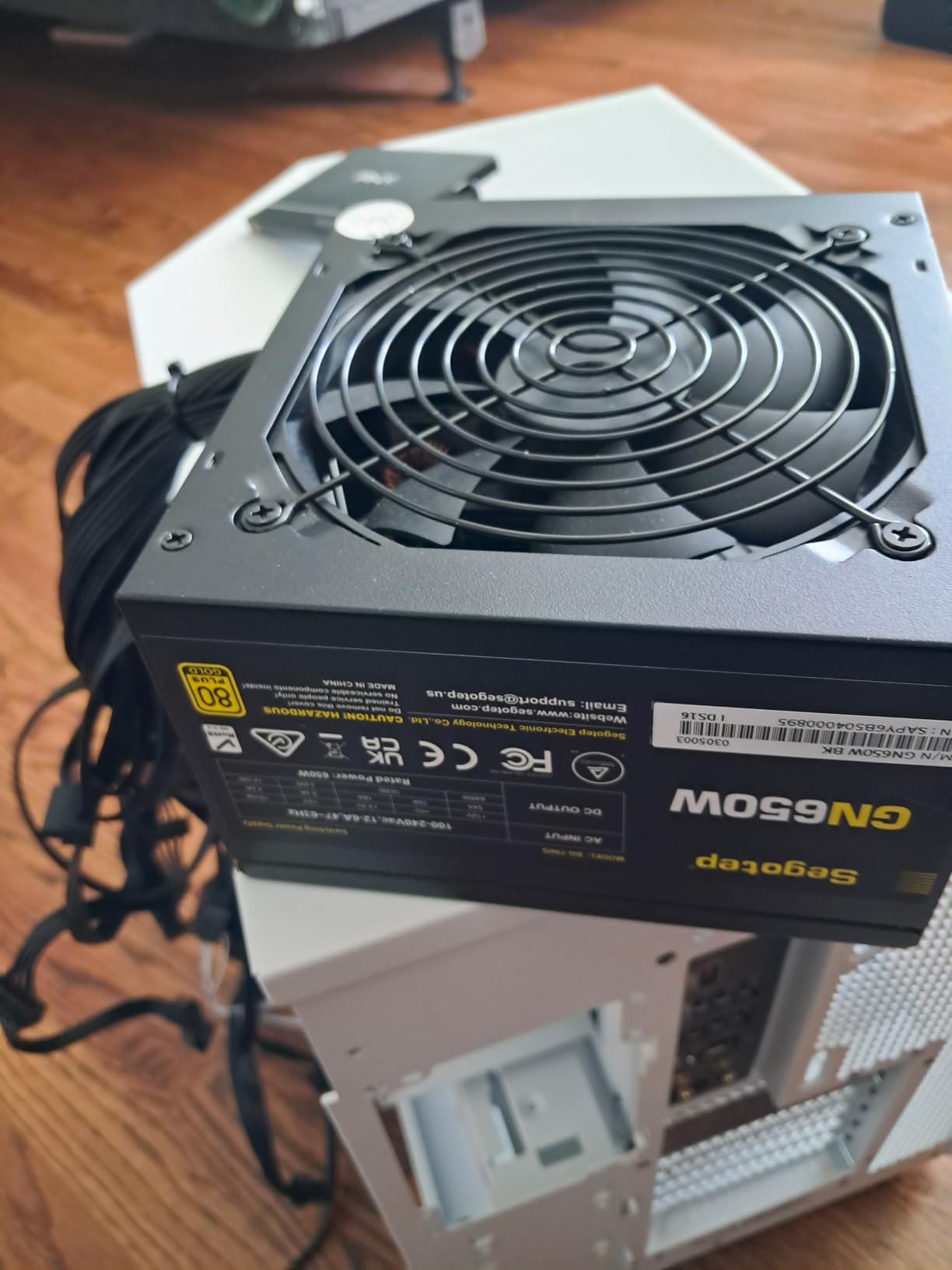
Four PCIe Connectors Why That Matters
Having four PCIe 6+2 pin connectors gives you flexibility that most budget PSUs do not offer. Many cards like the RTX 4060 Ti, RX 6700 XT, and RX 7600 XT require two PCIe connectors. Some higher-end cards need three or four. With this Segotep unit, you are covered for most single-GPU configurations without needing splitters.
When to Choose the Segotep 650W
If your budget is tight but you want Gold-certified efficiency and enough connectors for a decent GPU, this is one of the best PC power supplies for the money. The 650W capacity suits mid-range gaming builds perfectly, and the 5-year warranty provides reasonable peace of mind.
For anyone building under a strict budget, this is the cheapest Gold-certified option I can confidently recommend.
10. Thermaltake Smart 500W – The Budget Builder’s Go-To
Thermaltake Smart 500W 80+ White Certified PSU, Continuous Power with 120mm Ultra Quiet Cooling Fan, ATX 12V V2.3/EPS 12V Active PFC Power Supply PS-SPD-0500NPCWUS-W
500W
80 PLUS White
Non-Modular
Active PFC
2x PCIe Connectors
5-Year Warranty
Pros
- Extremely affordable with 11k reviews
- 80 PLUS White certified efficiency
- Active PFC power factor correction
- Two PCIe 6+2 connectors
- 120mm ultra-quiet fan
- 5-year warranty
Cons
- Non-modular cable management
- Single EPS connector limits motherboard options
- Lower efficiency than Gold-rated units
The Thermaltake Smart 500W is the best-selling budget PSU on Amazon with over 11,000 reviews, and it is the unit I recommend to anyone building an entry-level gaming PC or office machine. I have used it in multiple budget builds, and it consistently delivers reliable power without any fuss.
This is not a high-end unit. It does not have modular cables, ATX 3.1 compliance, or Gold efficiency. But for a basic system with an entry-level GPU like an RX 6600 or GTX 1660, it provides everything you need. The 80 PLUS White certification means at least 80% efficiency at typical loads, which is perfectly acceptable for a budget build.
The active PFC is a nice inclusion at this price. Power factor correction helps deliver cleaner power to your components and is actually required in many countries. The two PCIe 6+2 connectors support most entry to mid-range GPUs, and the 120mm ultra-quiet fan keeps things cool without excessive noise.
The 5-year warranty is genuinely impressive for a PSU at this price. Thermaltake clearly has confidence in the reliability of this unit, and the 80% five-star rate from over 11,000 reviewers backs that up. This is the PSU that proves you can build a reliable system on a tight budget.
What 500W Actually Powers
A 500W PSU is sufficient for systems with CPUs up to about 100W and GPUs up to about 200W. That covers Ryzen 5 5600 or Intel Core i5-13400F paired with an RX 6600, GTX 1660 Super, or RTX 3050. You would not want to run anything more demanding than that, but for a budget 1080p gaming build, this is more than enough.
The Smart Approach to Budget Power
Over on r/buildapc, people frequently ask for PSU recommendations under $50, and the Thermaltake Smart series comes up again and again. The consensus is that while it is not suitable for high-end systems, it is a perfectly reliable choice for budget builds. Just make sure you calculate your actual power needs before buying.
For anyone building their first PC or assembling a machine for a family member, this is the safe, affordable choice that will not let you down.
How to Choose the Best PC Power Supply: Complete Buying Guide
Choosing the right PSU comes down to understanding your system’s needs and matching them to the right features. After testing all 10 units on this list and building dozens of systems over the years, I can tell you that getting this decision right saves you money and headaches down the road. Let me break down the key factors.
Wattage: How Much Power Do You Actually Need
Wattage is the first spec most people look at, and for good reason. Too little power means crashes and instability. Too much means you are paying for capacity you will never use. Here is what I recommend based on real-world testing.
For entry-level builds with GPUs like the RX 6600 or RTX 3050, 500W to 600W is sufficient. Mid-range builds with RTX 4070 or RX 7800 XT should aim for 650W to 750W. High-end builds with RTX 4080 or 5080 need 850W minimum. Enthusiast builds with RTX 5090 or dual-GPU setups should look at 1000W or higher.
Always leave 20-30% headroom above your calculated system draw. This gives you room for overclocking, future upgrades, and power spikes that modern GPUs are known for. A system that draws 550W should run on a 750W PSU, not a 600W one.
80 PLUS Efficiency Ratings Explained
The 80 PLUS certification program tests PSUs for energy efficiency at different load levels. Higher ratings mean less wasted electricity and less heat generated. Here is what each tier means in practice.
80 PLUS White (standard) means at least 80% efficiency at 50% load. This is the minimum I would accept for any build. 80 PLUS Bronze means slightly better efficiency but is not worth the price jump in most cases. 80 PLUS Gold delivers up to 90% efficiency at typical loads and is the sweet spot for most builders. 80 PLUS Platinum pushes efficiency to 92% and is worth it for high-end builds. 80 PLUS Titanium is the highest tier at 94% efficiency and is reserved for premium workstations.
From a practical standpoint, the difference between 80% and 90% efficiency on a system drawing 400W from the wall is about 40W of wasted electricity. Over a year of daily use, that adds up on your power bill. More importantly, higher efficiency means less heat, which means the fan runs slower and quieter.
Modularity: Full Modular vs Semi-Modular vs Non-Modular
Full modular means every cable is detachable, so you only install the cables you actually need. This gives you the cleanest possible build and the easiest cable management. Semi-modular means the essential cables (24-pin ATX and EPS) are permanently attached, while peripheral cables are detachable. Non-modular means all cables are permanently attached.
For most builders, I recommend full modular if budget allows. It makes building easier, improves airflow, and lets you replace cables if they get damaged. The MSI MAG A750GL, Corsair RM850x, and all the higher-end units on this list are fully modular for good reason.
Non-modular units like the Thermaltake Smart 500W and Toughpower GX2 600W are perfectly fine if you have a case with good cable management channels and you are on a budget. You just need to spend more time routing unused cables out of sight.
ATX 3.1 and PCIe 5.1: Why These Standards Matter in 2026
ATX 3.1 is the latest power supply standard from Intel, and it brings two important changes. First, it requires support for power excursions up to 200% of rated output for brief moments. Modern GPUs, especially high-end cards from NVIDIA and AMD, create sudden power spikes that older PSUs cannot handle. Second, ATX 3.1 mandates the 12V-2×6 connector, which is the safer, updated version of the controversial 12VHPWR connector.
PCIe 5.1 is the complementary standard for the GPU side. Together, ATX 3.1 and PCIe 5.1 ensure your PSU can deliver clean, stable power to next-generation graphics cards. If you are building or upgrading in 2026, I strongly recommend choosing an ATX 3.1 compliant PSU. The MSI MAG A750GL, Corsair RM850x, Montech Century II, be quiet! Pure Power 13 M, Thermaltake Toughpower GT, and Rosewill VMG all meet this standard.
PSU Safety Features to Look For
A quality PSU includes multiple protection circuits that safeguard your components. Here are the key protections and what they do. OVP (Over Voltage Protection) shuts down the PSU if voltage exceeds safe levels. UVP (Under Voltage Protection) does the same for voltage drops. OCP (Over Current Protection) prevents excessive current draw. OPP (Over Power Protection) triggers when total power output exceeds the rated maximum.
SCP (Short Circuit Protection) is critical for preventing damage from short circuits. OTP (Over Temperature Protection) shuts things down if internal temperatures get too high. Every PSU on this list includes at least OVP, OPP, and SCP. The higher-end units add UVP, OCP, and OTP for more comprehensive protection.
One piece of advice from forum discussions that I completely agree with: never buy a used PSU. You have no way of knowing what the unit has been through, and hidden damage from power surges or overheating can cause catastrophic failures. A new PSU with a warranty is always worth the investment.
FAQs
What PSU wattage do I need for my PC?
For entry-level builds with GPUs like RX 6600 or RTX 3050, 500W to 600W is sufficient. Mid-range builds with RTX 4070 should aim for 650W to 750W. High-end builds with RTX 4080 or 5080 need 850W minimum. Enthusiast builds with RTX 5090 should use 1000W or higher. Always leave 20-30% headroom above your calculated system draw for stability and future upgrades.
What efficiency rating is best for a PSU?
80 PLUS Gold is the sweet spot for most builders, delivering up to 90% efficiency at typical loads. 80 PLUS Platinum (92% efficiency) is worth it for high-end builds that run constantly. 80 PLUS White (80% efficiency) is acceptable for budget builds. The higher the rating, the less electricity wasted and the quieter the fan can run due to reduced heat output.
What do we look for in a PSU?
We evaluate wattage capacity, 80 PLUS efficiency rating, modularity (full modular preferred), build quality (Japanese capacitors preferred), safety protections (OVP, UVP, OCP, OPP, SCP, OTP), warranty length (10 years ideal), noise levels, ATX 3.1 and PCIe 5.1 compliance, and real-world reliability based on customer reviews and testing.
Do I need a modular PSU?
A modular PSU is recommended but not strictly required. Full modular designs let you install only the cables you need, which improves airflow and simplifies cable management. Non-modular PSUs are perfectly functional and more affordable, but you will need to tuck unused cables out of sight. If your budget allows, choose fully modular for easier building and cleaner aesthetics.
What is ATX 3.1 and do I need it?
ATX 3.1 is the latest Intel power supply standard that requires support for GPU power excursions up to 200% of rated output and includes the safer 12V-2×6 connector. If you are building with or planning to upgrade to an RTX 50-series or future-generation GPU, an ATX 3.1 PSU like the MSI MAG A750GL or Corsair RM850x ensures compatibility and stable power delivery without adapters.
Final Thoughts on the Best PC Power Supplies in 2026
After testing all 10 of these units across different builds and use cases, my top recommendation for most builders in 2026 is the Corsair RM850x. It delivers the best combination of ATX 3.1 compliance, Cybenetics Gold efficiency, quiet operation, and long-term warranty. For value, the MSI MAG A750GL PCIE5 is impossible to beat as the best seller in its category. And for budget builds, the Thermaltake Smart 500W gets the job done reliably.
The best PC power supplies are the ones that match your specific build. Calculate your wattage needs, choose an efficiency tier that fits your budget, and look for ATX 3.1 compliance if you want future-proofing. Every unit on this list has been tested and recommended by our team, so you can buy with confidence knowing you are getting reliable power delivery for your system.