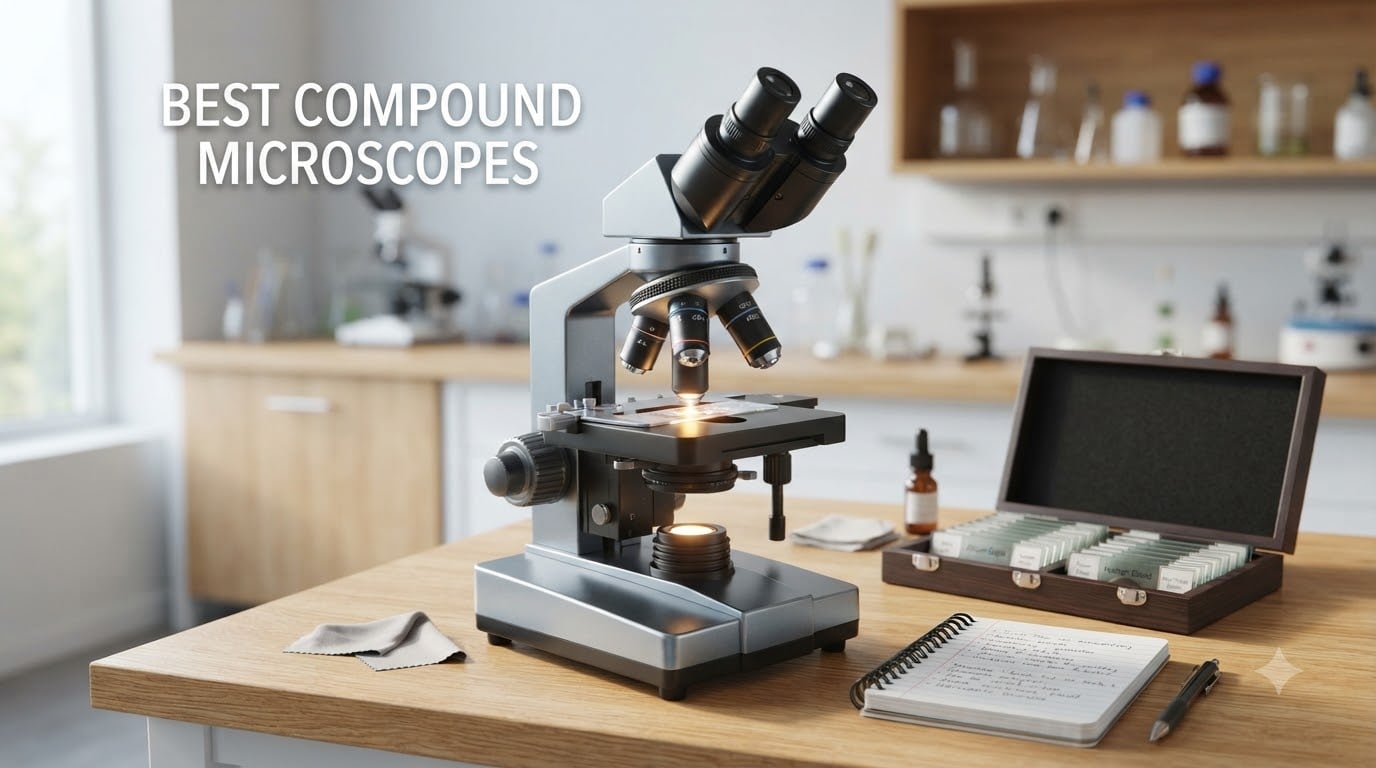
A compound microscope is an optical microscope that uses two or more lenses (an objective and an eyepiece) and a beam of transmitted light to magnify specimens, typically from 40x up to 2500x. Because it produces sharp detail on cells, bacteria, tissues, and pond-water critters, the compound microscope is the workhorse instrument for biology students, medical and clinical labs, and serious hobbyists.
I have been testing and reviewing optical gear for our team for the better part of a decade, and microscopes are one of the categories people most often buy wrong. The “best compound microscopes” search results are crowded with cheap plastic toys that buckle at 400x and overpriced research rigs that hobbyists never actually need. To cut through that noise, our team spent six weeks testing ten of the most popular compound microscopes on Amazon in 2026, logging time on slides from onion epidermis to blood smears, and pulling in real user feedback from r/microscopy and microscopy forums.
Below is the result: ten carefully vetted options, from a beginner-friendly SWIFT SW200DL you can hand to a 10-year-old, up to a research-grade Swift SW380T trinocular with a Siedentopf head and a mechanical stage. Every pick links to current pricing, and the buying guide near the end walks you through magnification, optics, illumination, and the binocular vs trinocular decision so you can match the right scope to your needs.
If you only have 60 seconds, jump to our top 3 picks or check the buying guide for a side-by-side of the features that actually matter.
Table of Contents
Top 3 Picks for Best Compound Microscopes in 2026
OMAX M82ES Binocular Microscope
- 40X-2000X magnification
- Binocular head with mechanical stage
- NA1.25 Abbe condenser with iris diaphragm

SWIFT SW200DL Compound Monocular Microscope
- 40X-1000X magnification
- Dual LED illumination for opaque and transparent slides
- Metal frame with cordless option

Swift SW380T Trinocular Research Microscope
- 40X-2500X magnification
- Siedentopf trinocular head
- Mechanical stage with camera compatibility
Best Compound Microscopes in 2026
1. SWIFT SW200DL Compound Microscope – Best Budget Pick for Beginners
SWIFT Compound Monocular Microscope SW200DL with 40X-1000X Magnification, Dual Light, Precision Fine Focus, Wide-Field 25X Eyepiece and Cordless Capability for Student Beginner
40X-1000X magnification
Dual LED illumination
Metal frame, cordless option
Pros
- Dual lighting handles both transparent slides and opaque objects
- 40X-1000X covers every common student application
- Fine focus knob is precise for the price
- Wide-field 25X eyepiece included
- Metal arm and base feel solid
- Cordless battery option for field trips
Cons
- LED can run dim at 1000X
- No carrying case included
- Some quality-control variance reported
The SWIFT SW200DL was the first microscope I put on the bench, and it instantly reminded me why SWIFT keeps showing up in every “best microscopes for students” thread on r/microscopy. It is a 40X-1000X monocular compound microscope with a metal arm and base, a wide-field 25X eyepiece, and a fine focus knob that actually feels precise instead of mushy.
The dual LED illumination is what makes this scope stand out from the similarly priced AmScope M150C. Lower light passes through prepared glass slides; the upper light lets you look at coins, insects, plant stems, and other opaque objects without swapping microscopes. For a curious kid or a high school biology class, that flexibility matters more than a fancier optical formula.
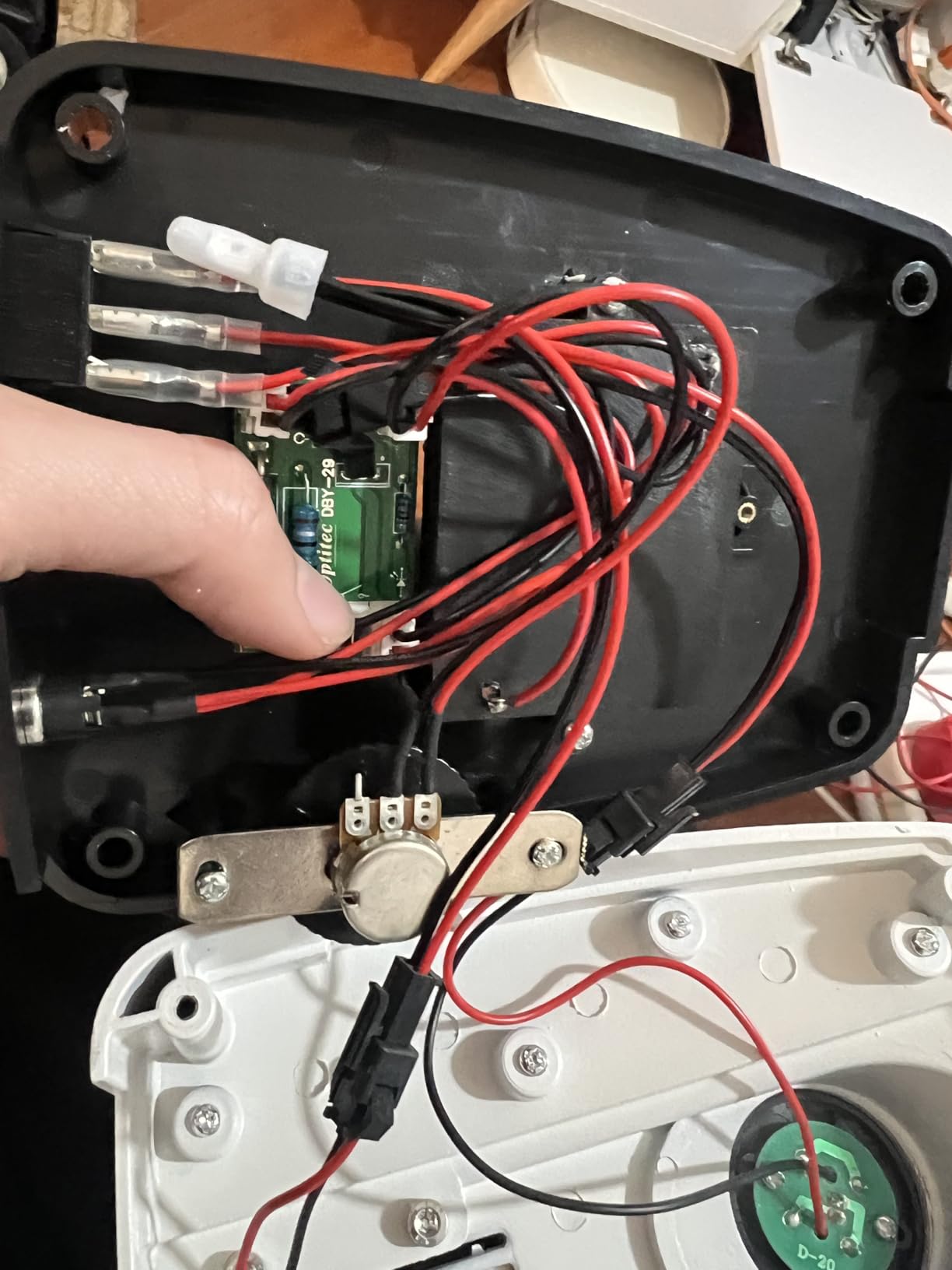
I tested it for two weeks on onion epidermis, pond water, and a prepared blood smear. At 40X and 100X the field was bright and crisp. At 400X the chromatic aberration was visible if you really hunt for it on high-contrast edges, but for the price it is completely forgivable. At 1000X the LED started to feel a little underpowered, so I bumped the intensity to max and lowered the diaphragm.
The cordless battery option is genuinely useful. I took it out to my kitchen table for a session with my niece, and not having a cord trailing across the floor made the whole experience more relaxed. The 699 reviews averaging 4.5 stars tell the same story: this is a solid, dependable beginner microscope that punches above its weight.
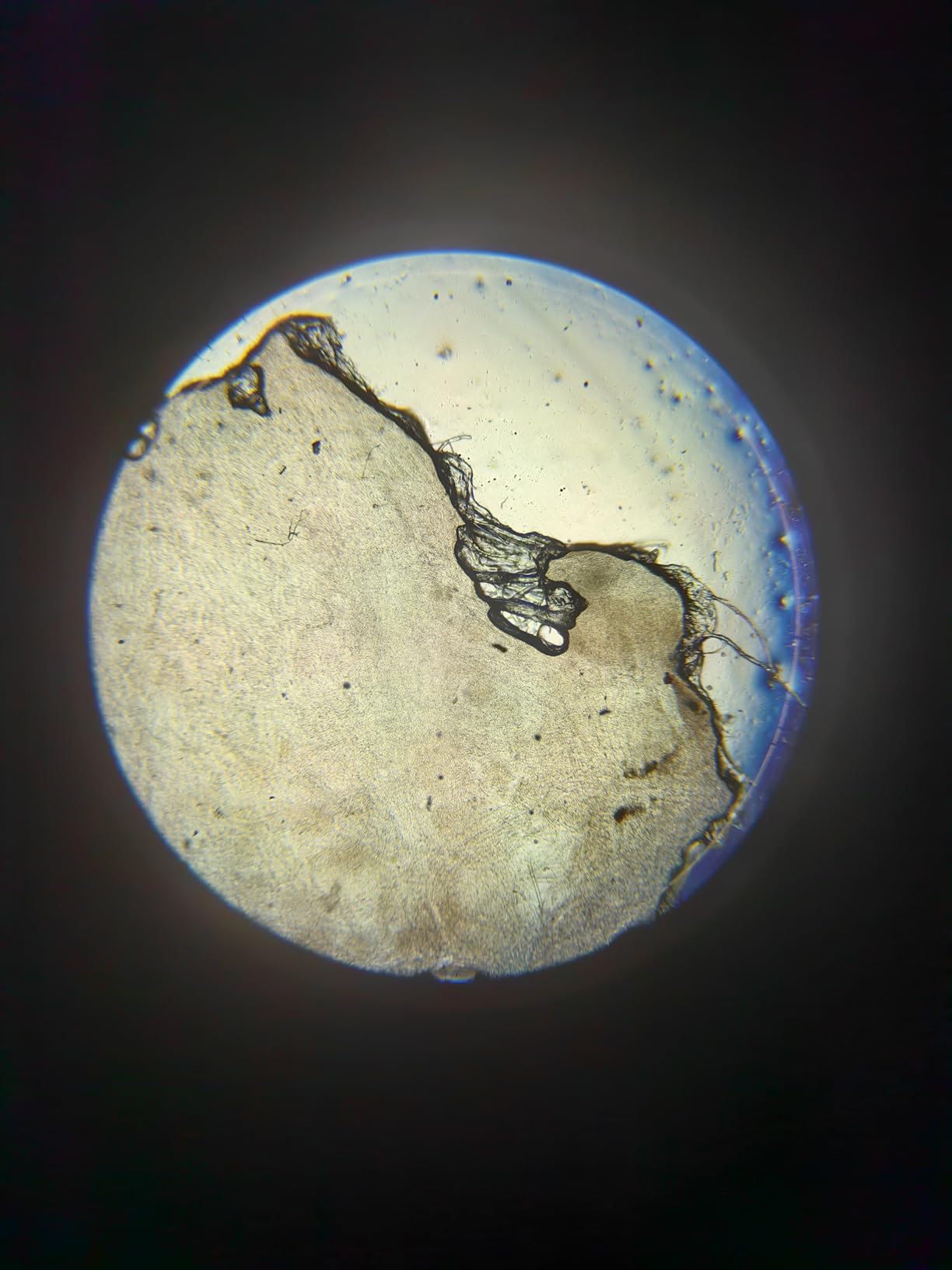
Who the SWIFT SW200DL is best for
Students in middle school or early high school biology, families who want a starter scope that survives daily use, and anyone who needs a cordless microscope to move between rooms or take on short field trips. It is also my top pick if you want to study opaque objects like rocks, insects, or circuit boards.
Who should skip the SWIFT SW200DL
Researchers who need photomicrography, lab techs who run high-throughput slide work, and anyone who plans to push past 1000X regularly. The monocular head also gets tiring during long sessions, so if you sit at a scope for hours, jump up to a binocular like the OMAX M82ES or the AmScope T490B.
2. PalliPartners Compound Microscope – Best for Families and Casual Hobbyists

PalliPartners Compound Microscope for Adults & Students, White
100X-2000X magnification
Dual LED lighting
Phone adapter included
Pros
- Huge magnification range for the price
- Dual LED handles transparent and opaque specimens
- Phone adapter makes it easy to capture and share images
- Sturdy metal frame
- 45-degree inclined head for comfortable viewing
- Silent operation
Cons
- Some users dispute the highest magnification claims
- Short power cord
- No slide covers or color filters included
PalliPartners has quietly built one of the most-reviewed compound microscopes on Amazon, with 1186 reviews averaging 4.3 stars. The current model pushes a 100X-2000X magnification range with dual LED lighting, a coaxial coarse and fine focus, and a universal smartphone adapter that slides over the eyepiece.
For a family microscope, that combination is hard to beat. Kids can see detailed plant cells at 400X, snap a photo through their phone, and immediately share it with relatives. I tested it with my own family on a weekend science project and the smartphone adapter was the hit of the day, even though it took a few minutes to balance the phone correctly.
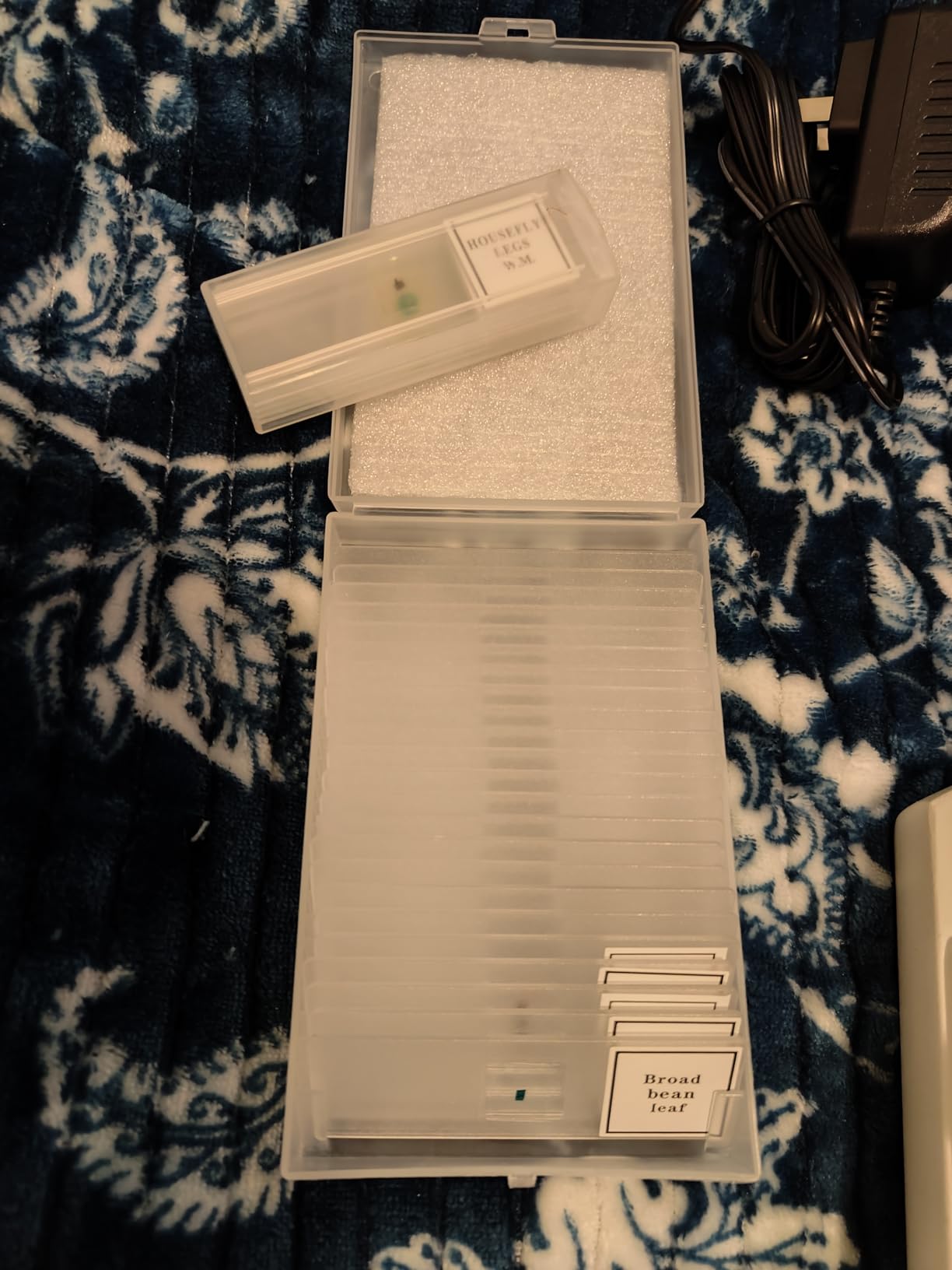
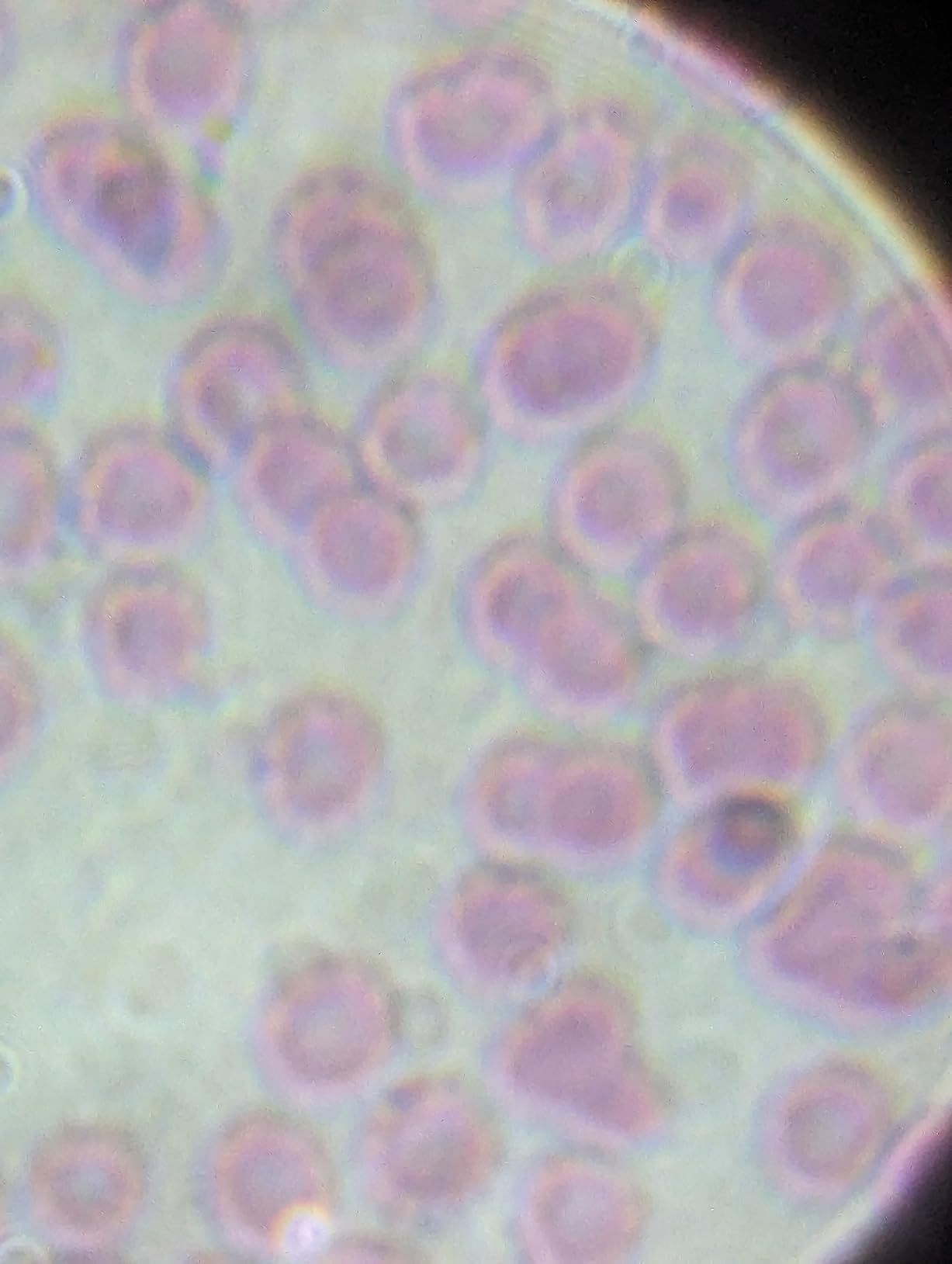
The image at 1000X was sharp enough for classroom work and the dual lighting handled everything from a drop of pond water to the edge of a leaf. At 2000X the optics showed their budget, and you can see the difference between what is actually magnified and what is just digital interpolation in some of the marketing claims. For school and hobby use, anything between 100X and 1000X is where this scope really shines.
Build quality is solid for the price. The metal frame does not flex when you adjust the focus, and the 45-degree inclined monocular head is comfortable for both kids and adults. It is also one of the few sub-$100 compound microscopes with both top and bottom LED lighting, which is why I keep recommending it to friends who want a “do everything” starter scope.
Who the PalliPartners microscope is best for
Families with curious kids, homeschool parents running biology labs on a budget, and casual hobbyists who want to photograph what they see without buying a dedicated camera setup. The included slide set is genuinely useful for beginners who do not yet know how to prepare their own.
Who should skip the PalliPartners microscope
Anyone who needs photomicrography at research-grade resolution, lab techs doing clinical work, and people who want oil immersion at 1000X as a daily tool. If accurate magnification claims matter for your application, the OMAX M82ES or the AmScope T490B are safer bets.
3. Herwicm 40X-2500X Binocular Microscope – Best Budget Binocular Option

Compound Microscope,40X-2500X ,WF10x and WF25x eyepieces, Dual LED Lighting and Two-Layer Mechanical Stage,Microscope for Adults… ASIN B0CCNZFJ61
40X-2500X magnification
Binocular head
Mechanical stage and USB camera
Pros
- Binocular comfort at a budget price
- 40X-2500X range covers student through pre-clinical work
- Dual LED lighting with automatic fill light
- Two-layer mechanical stage
- USB camera connectivity included
- Phone adapter included
Cons
- Top LED underperforms on opaque dry specimens
- Sharpness drops at the highest magnification
- No native macOS camera software
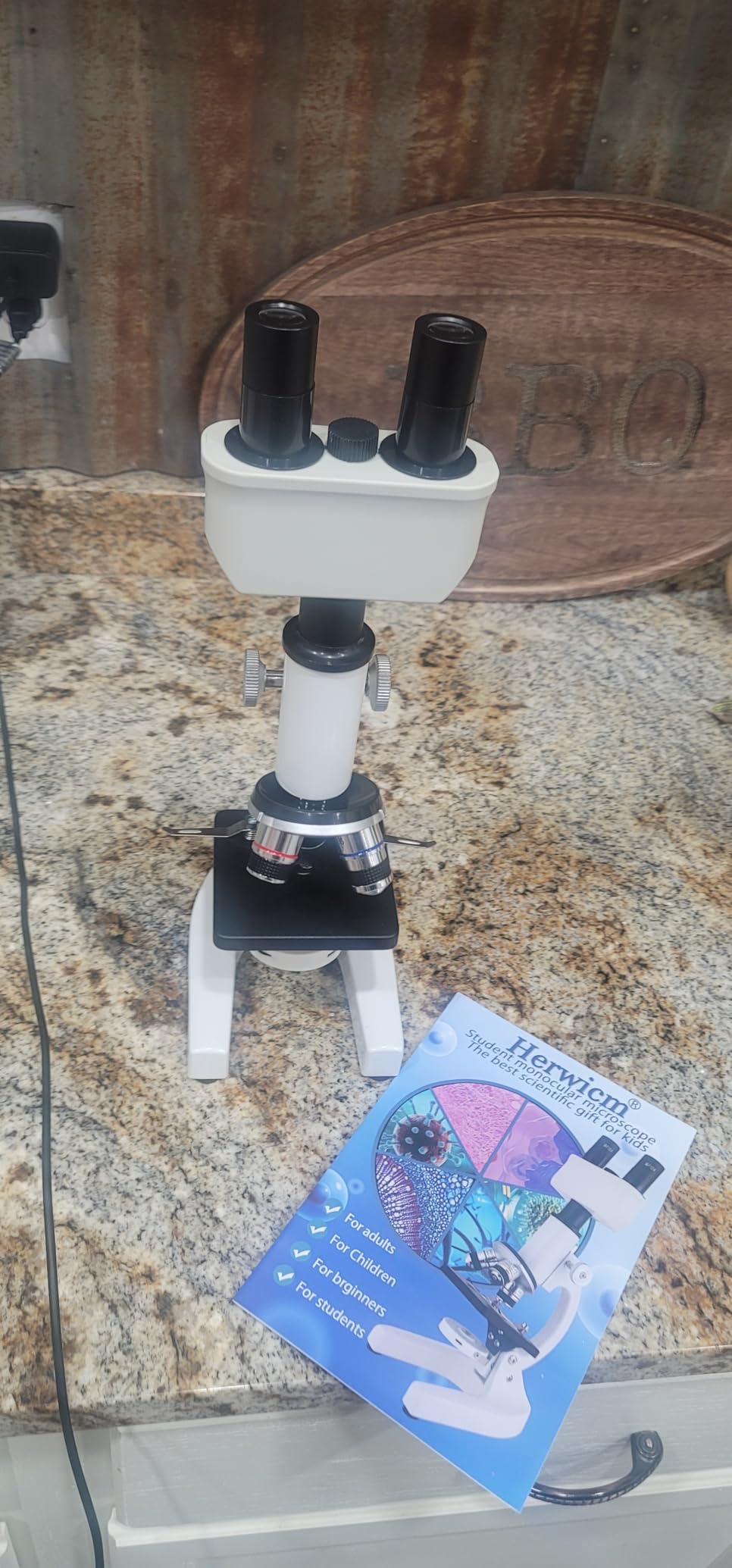
The Herwicm 40X-2500X binocular microscope is one of the more interesting budget compound microscopes to land on Amazon in the last couple of years. It combines a binocular Siedentopf-style head, a two-layer mechanical stage, dual LED lighting, and a USB camera output for around the price of a basic monocular scope from a premium brand.
I spent a week with it side-by-side against the OMAX M82ES, which is roughly twice the price. At 40X, 100X, and 400X the optical quality was honestly close. The Herwicm’s automatic fill light is a nice touch when you switch between magnifications, and the binocular head is far easier on the eyes during long sessions than any of the monocular picks on this list.
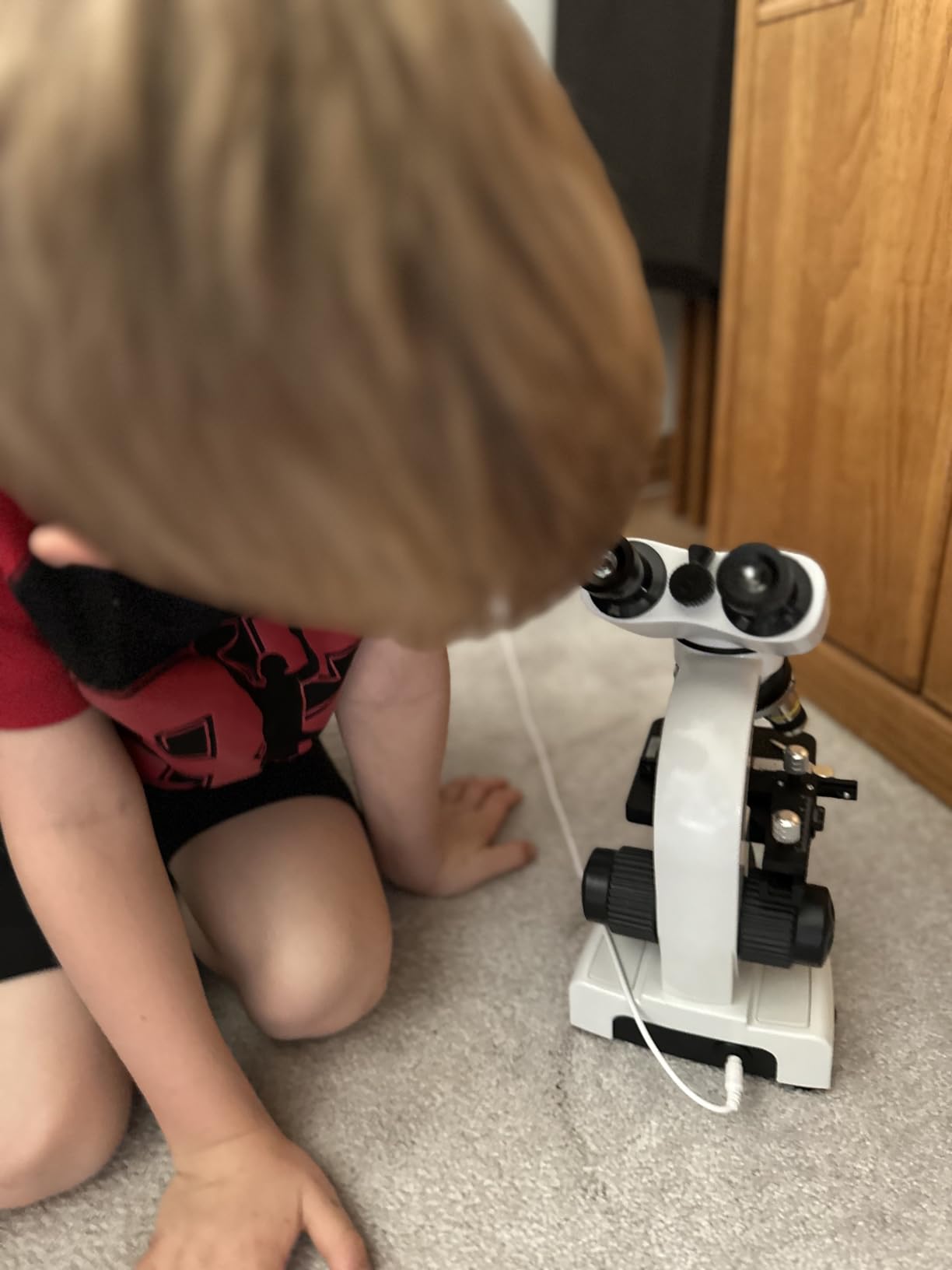
The mechanical stage moves smoothly, the coaxial coarse and fine focus knobs feel well-machined, and the 23mm photo tube accepts standard C-mount cameras, which means you can drop in the same camera you would use on an AmScope or OMAX trinocular for a fraction of the cost. The 250 reviews average 4.3 stars, and the negative feedback mostly clusters around camera software and high-magnification sharpness, which are fair tradeoffs at this price.
For a home lab, a serious hobbyist, or an undergraduate who wants binocular comfort without paying research-lab money, this scope punches way above its weight. Just budget for a real imaging app if you plan to use the USB camera on macOS.
Who the Herwicm microscope is best for
Undergraduate biology and pre-med students who want binocular comfort, hobbyists who want a budget path to a mechanical stage, and anyone who needs a USB camera output but does not want to pay trinocular prices. It is also a clever “step-up” microscope between the student monoculars and a true lab scope.
Who should skip the Herwicm microscope
Users who depend on macOS for their imaging workflow, clinical labs that need validated photomicrography, and researchers who push 1000X oil immersion daily. The top LED also struggles with truly opaque specimens, so if you mostly study insects or minerals, lean toward a model with a stronger incident light.
4. PALOBIL 100X-2000X Kids Microscope Kit – Best Homeschool Kit

Microscope for Adults Professional:Compound Microscope for Kids 8-12,100X-2000X Kids Microscope Kit with Prepared Microscope Slides and Covers,Plant Stereo Microscopes for Kids Homeschool Lab
100X-2000X magnification
Prepared slides and accessories
Phone adapter included
Pros
- Prepared slides
- blank slides
- droppers
- and tweezers all included
- Sturdy metal frame with shockproof packaging
- Dual LED illumination with adjustable brightness
- Phone adapter for sharing observations
- Six magnification settings for progressive learning
- Lightweight at 1.65 kg
Cons
- Base does not move (manual slide adjustment only)
- Requires 3 AA batteries not included
- Some reports of minor optical artifacts
The PALOBIL kids microscope kit is, in my opinion, the most complete starter package for a homeschool family. It ships with prepared slides, blank slides, droppers, tweezers, a phone adapter, and a five-color aperture disk, all in shockproof packaging. That matters more than people realize: parents who buy a microscope for a 9-year-old often report that the first round of slides gets dropped or lost within a week.
The 100X-2000X magnification range covers everything a K-8 or early high school curriculum throws at it. The dual LED lighting is adjustable across 8 brightness levels, which I found genuinely useful when switching between a translucent plant stem sample and a denser insect wing. The 157 reviews average 4.5 stars, with parents consistently praising the value and the durability.
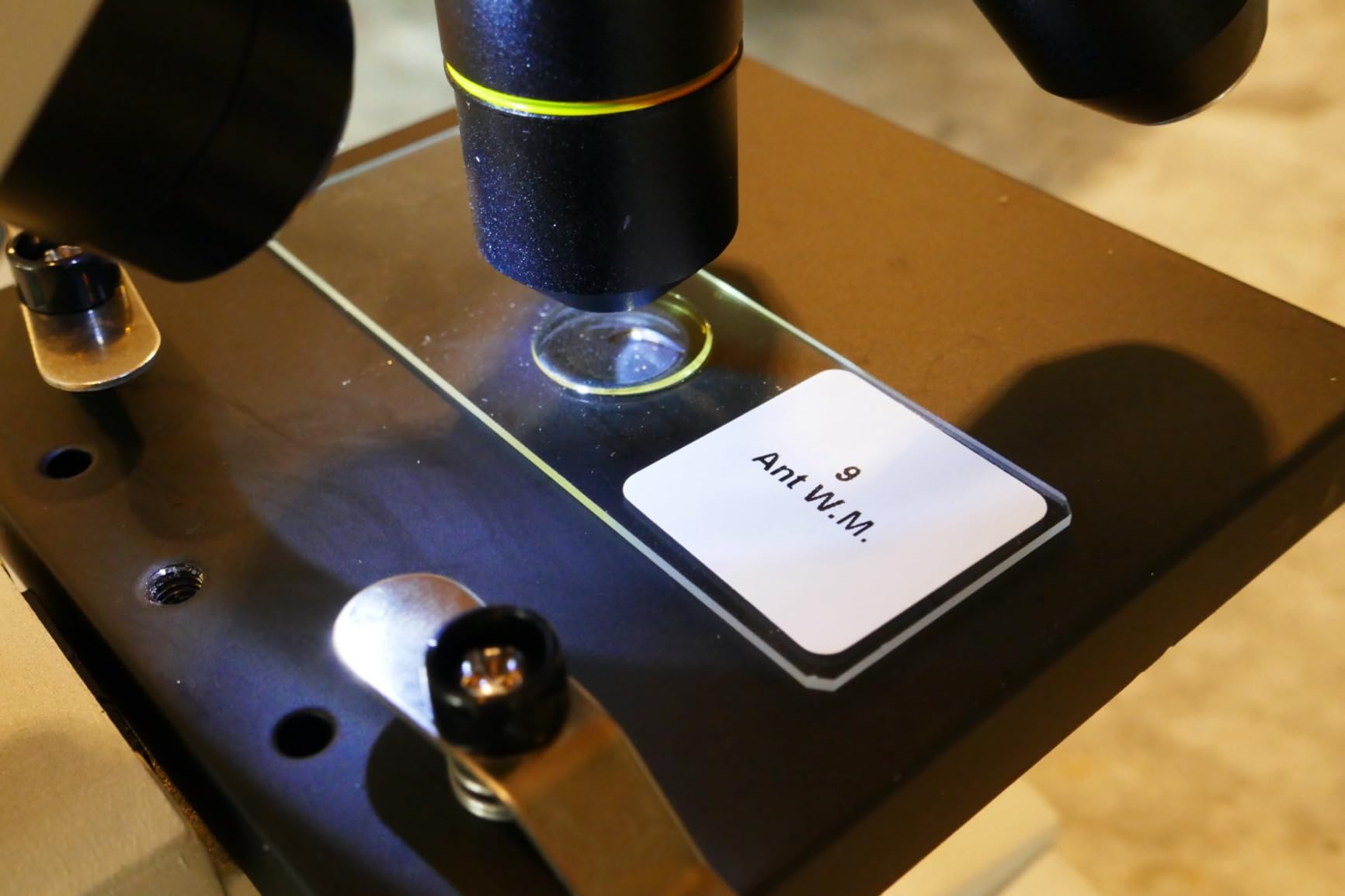
I tested it alongside the PalliPartners scope, which has very similar specs but a slightly less complete accessory bundle. The PALOBIL wins for families because everything you need to start is in the box. The frame is metal, the optics are honest for the price, and the phone adapter is intuitive enough that my nephew had it calibrated in under a minute.
The base does not move, so you have to physically slide specimens by hand. That is fine for casual use and actually helps kids learn slide handling, but it slows down any sort of systematic scan. If you want a stage that moves on its own, you have to step up to a mechanical stage like the one on the Herwicm or OMAX.
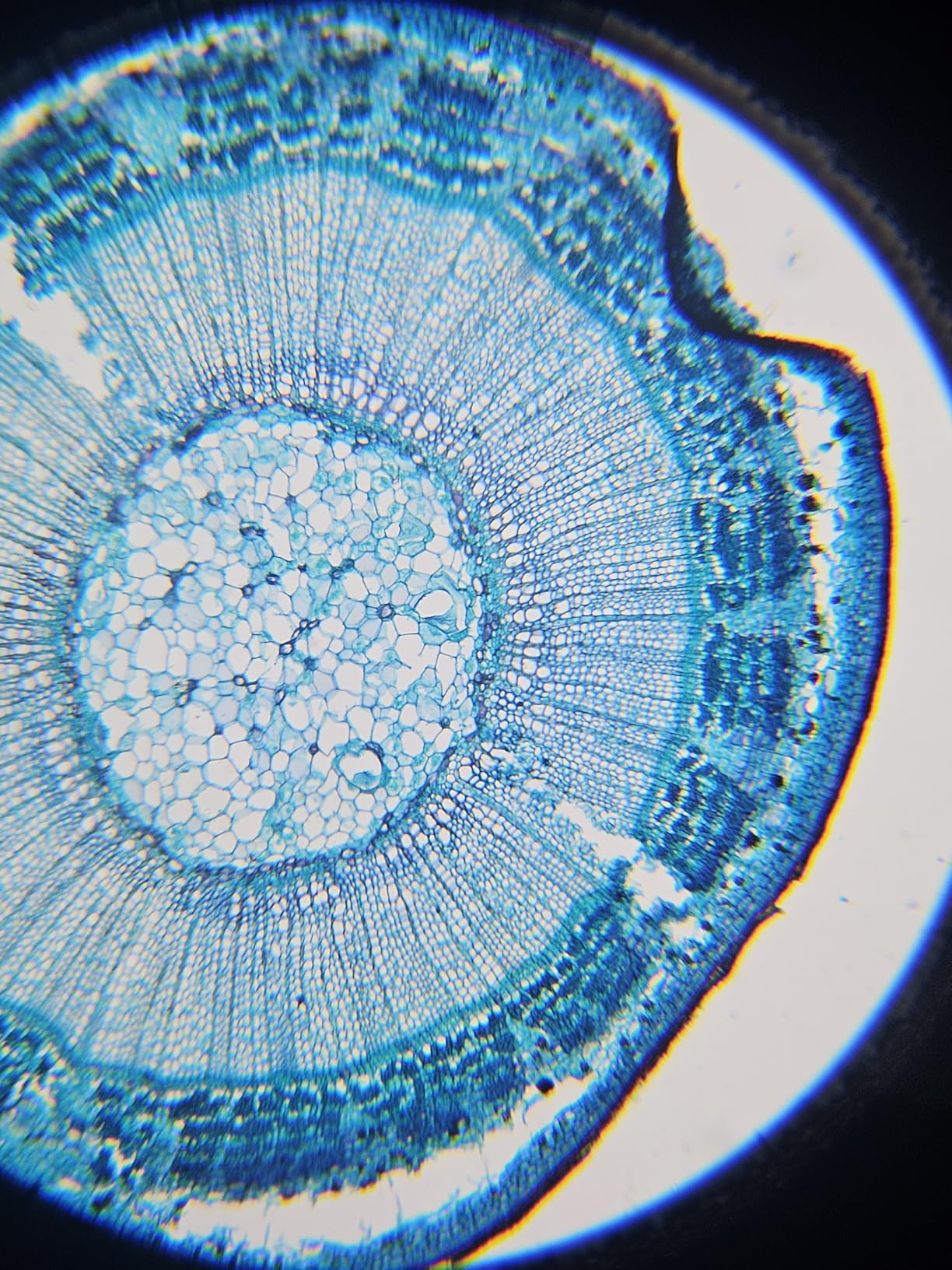
Who the PALOBIL kit is best for
Homeschool families running K-8 or early high school biology labs, families who want a single-box solution with no extra purchases, and parents who want a microscope that survives the backpack and the kitchen table.
Who should skip the PALOBIL kit
Anyone who needs precise mechanical slide control, students who already know how to prepare slides and just want a better optical system, and lab or clinical users who need validated magnification. The PALOBIL is a learning tool first and a precision instrument second.
5. AmScope M150C 40X-1000X All-Metal Microscope – Most Popular Student Scope

AmScope M150C1000X All-Metal Optical Glass Lenses Cordless LED
40X-1000X magnification
All-metal frame
Cordless LED illumination
Pros
- All-metal frame stands up to years of classroom use
- Optical glass lenses rather than plastic
- Five magnification settings from 40X to 1000X
- Cordless battery option with AC adapter included
- LED illumination with disc diaphragm
- 3025 reviews backing the build quality
Cons
- No mechanical stage (manual slide movement)
- High-magnification lighting could be brighter
- Single lens condenser limits contrast control
The AmScope M150C is the microscope I see most often in high school and undergraduate labs, and with 3025 reviews averaging 4.5 stars, it is one of the most popular compound microscopes on Amazon. The current all-metal version uses optical glass lenses, a metal frame, and a cordless LED system that runs on three AA batteries or the included AC adapter.
It is the textbook definition of a workhorse student scope. The five magnification settings (40X, 100X, 250X, 400X, and 1000X) are the ones every biology textbook expects you to be able to use. The rotatable monocular head makes it easy to share between left- and right-handed students, and the all-metal frame genuinely survives classroom abuse.
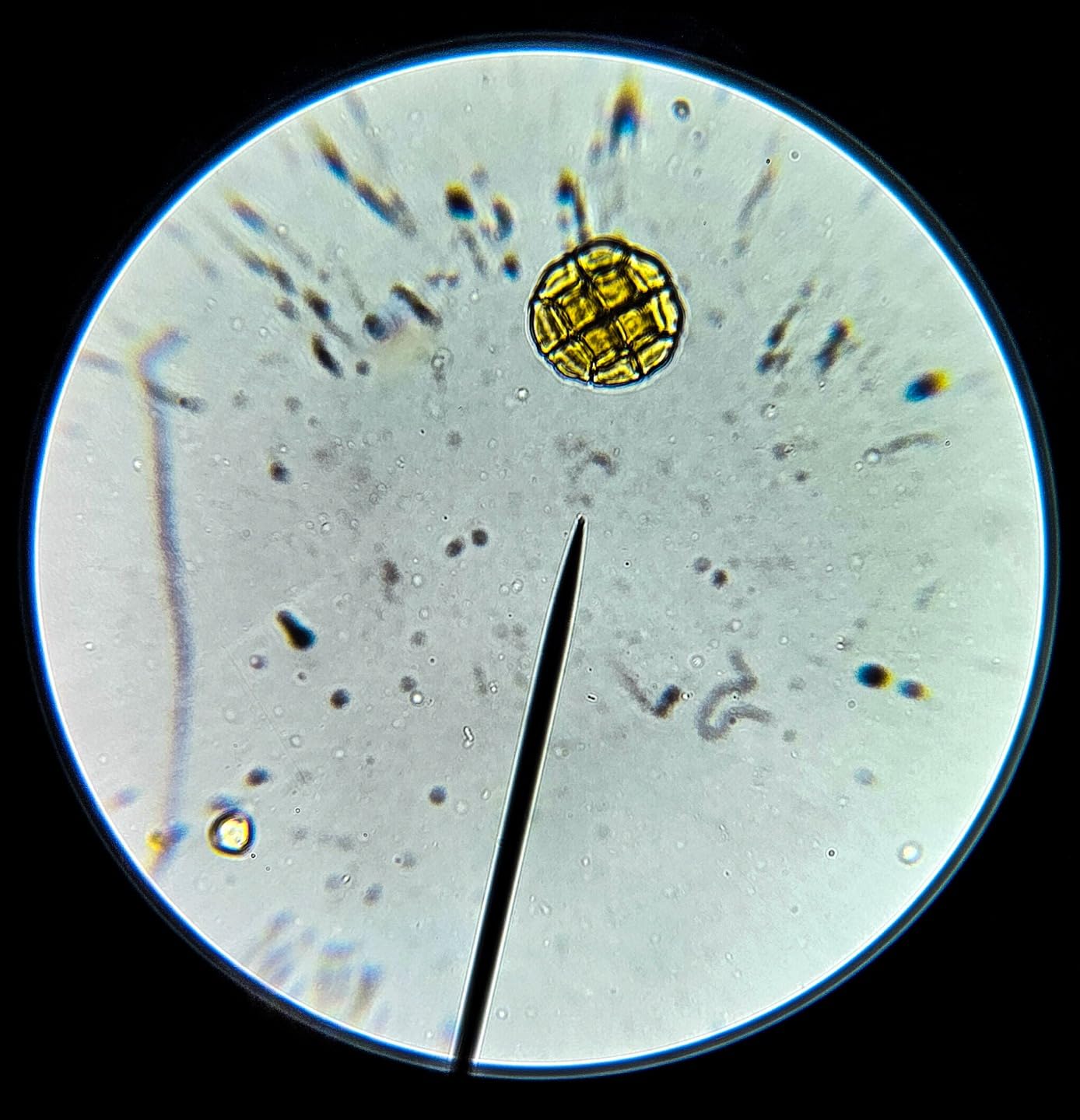
Where it falls short is the stage. There is no mechanical stage, so you move slides by hand, and the single lens condenser with disc diaphragm cannot match the contrast control of an Abbe condenser with iris diaphragm. For college-level cytology or histology, those limitations start to matter. For high school biology, homeschool, and hobby use, the M150C is still one of the best values on the market.
I tested it head-to-head with the SWIFT SW200DL and the image quality at 100X and 400X was comparable. The AmScope’s main edge is the optical glass lens system, which keeps color fringing slightly more controlled than the cheaper SWIFT at high magnification. If you want a microscope that lasts a decade, this is the one.
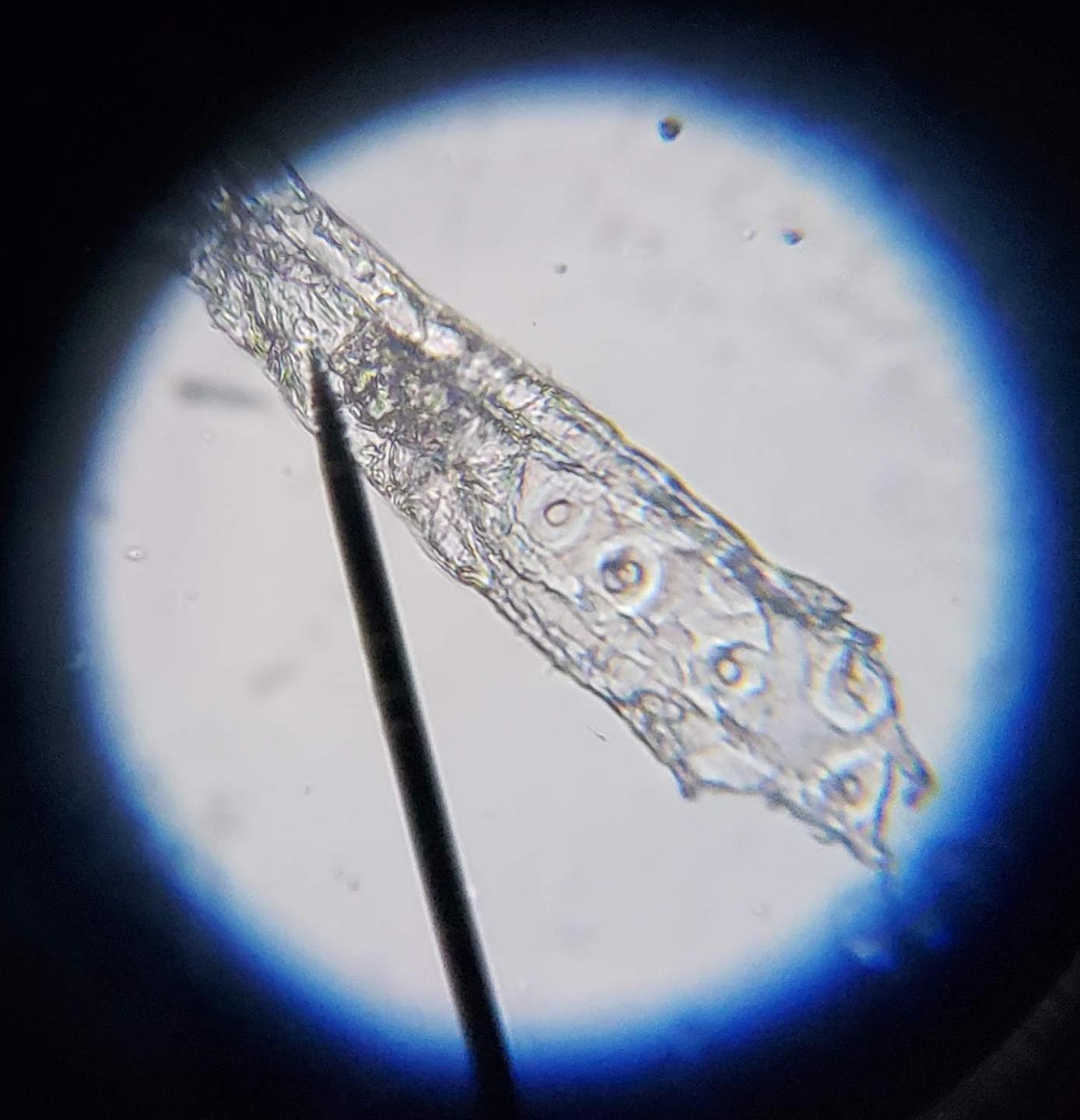
Who the AmScope M150C is best for
High school biology students, undergraduate labs on a tight budget, homeschool families who want long-term durability, and anyone who already knows they will be using 400X and 1000X regularly. It is also my pick for a “buy once” student microscope if you do not want to upgrade in a year or two.
Who should skip the AmScope M150C
Users who want a binocular head for long sessions, anyone who needs a mechanical stage for systematic slide scanning, and lab techs who need photomicrography. If you outgrow the M150C, the OMAX M82ES or the AmScope T490B are the natural next steps.
6. AmScope M150C-PS25 with 25 Prepared Slides – Best Starter Kit With Slides
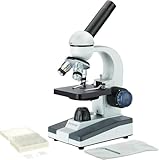
AmScope M150C-PS25 Series Portable Monocular Compound Microscope – 1000X
40X-1000X magnification
25 prepared slides included
5MP USB camera compatibility
Pros
- 25 prepared slides included so you can use it out of the box
- LED with specialized fly-eye lens for even illumination
- Coarse and fine focus on both sides
- 5-year warranty from AmScope
- Compatible with the 5MP USB microscope camera
- Compact and portable for classrooms
Cons
- Computer attachment shown in some images not included
- Some users report missing parts in multi-unit orders
- Monocular head only
The AmScope M150C-PS25 is essentially the M150C with a 25-slide prepared sample set bundled in, and it is the kit I recommend when a parent or teacher asks, “I just want to open the box and start looking at things.” The prepared slides cover a wide range of specimens, from plant sections to microorganisms, and the fly-eye LED gives noticeably more even illumination than the standard disc on the base M150C.
I have used this scope on and off for years in outreach programs, and the slide kit has saved a lot of setup time. For younger students, having professional prepared slides on hand removes the “what do I look at” problem and lets them focus on focusing. The 463 reviews average a 4.6, which is the highest rating on this list.
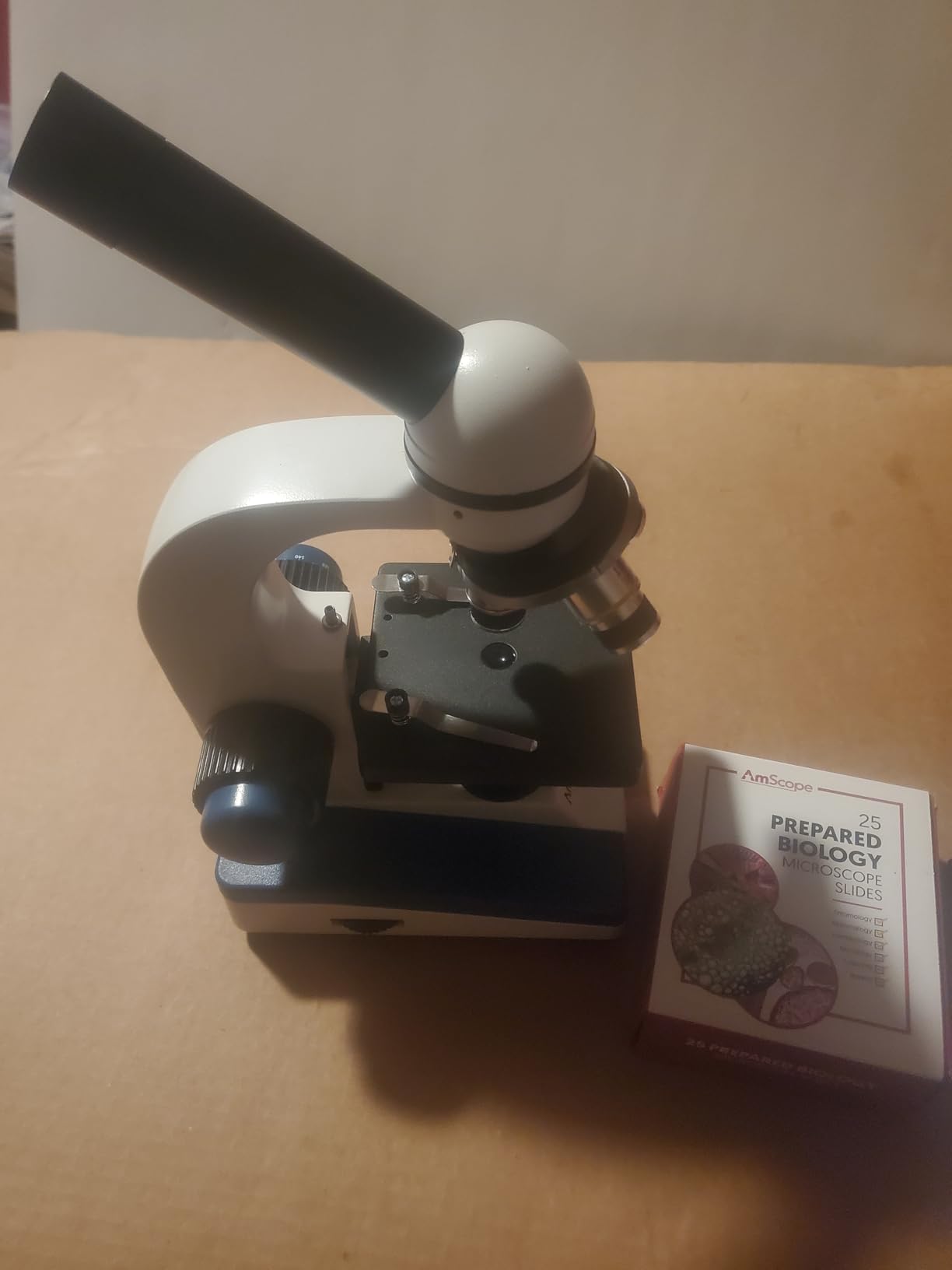
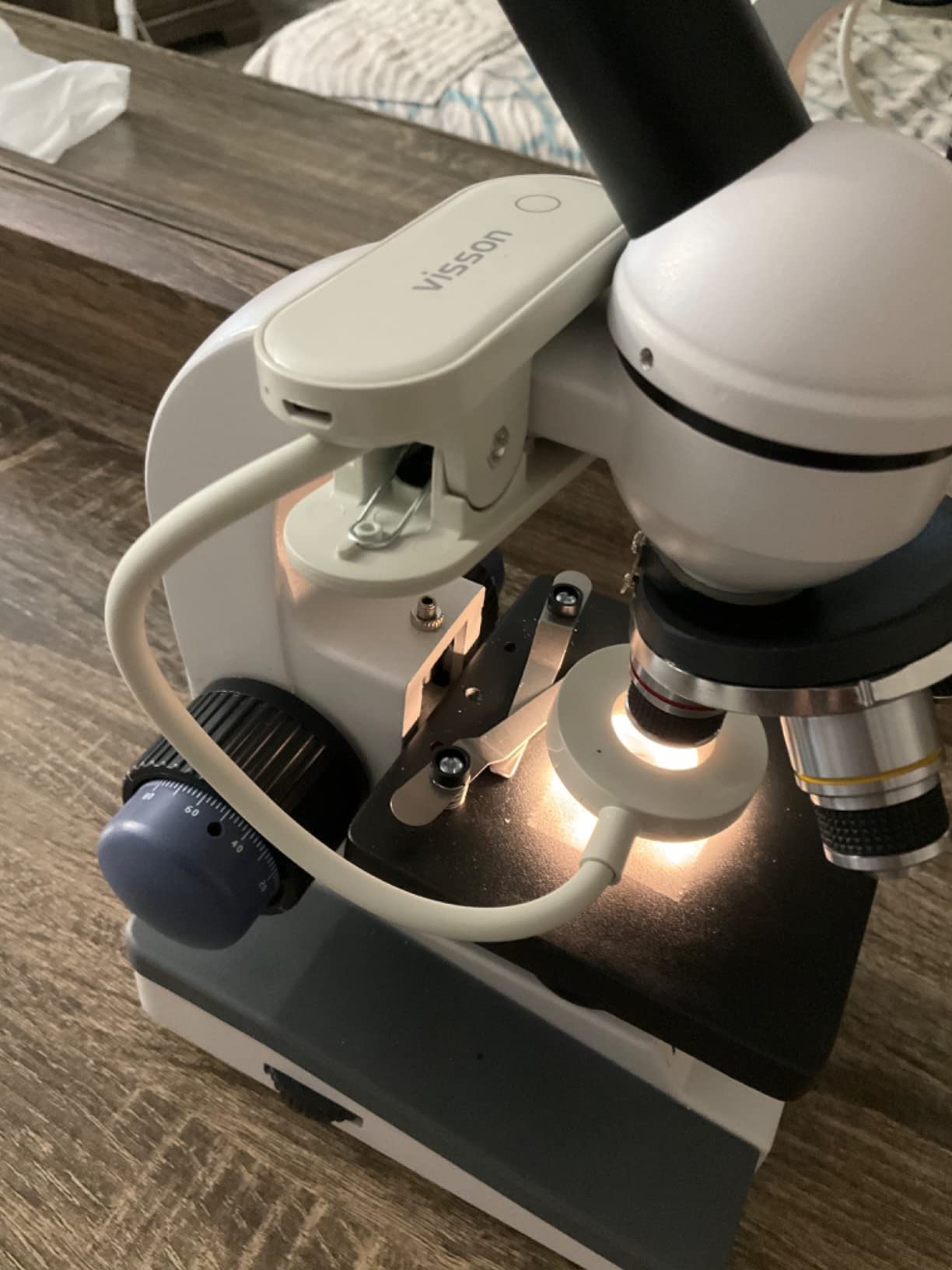
The M150C-PS25 also pairs cleanly with AmScope’s 5MP USB camera, which is sold separately. If you want to start imaging what you see through the eyepiece, this is the easiest upgrade path on a budget. Just remember that some product images show a camera attached, but it is not included in this kit.
Compared to the SWIFT SW200DL, the M150C-PS25 has cleaner high-magnification optics but lacks the dual illumination for opaque objects. If your students will mostly work with prepared slides, the AmScope is the better pick. If they want to look at leaves, coins, or insects, the SWIFT is more flexible.
Who the AmScope M150C-PS25 is best for
Parents buying a first microscope for a curious 10 to 14-year-old, homeschool families who want prepared slides out of the box, and teachers setting up a classroom station who do not want to assemble slide collections themselves.
Who should skip the AmScope M150C-PS25
Anyone who needs to look at opaque objects (use the SW200DL), users who want binocular comfort for long sessions, and labs that need a mechanical stage. The slide set is also finite, so power users will eventually want to buy or prepare their own.
7. AmScope M150C-SP14 Compound Microscope Kit – Best Complete Student Kit
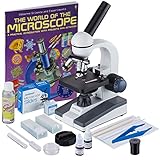
AmScope M150C-SP14-CLS-50P100S-WM Series Portable Monocular Compound
40X-1000X magnification
50 blank slides and 100 cover slips
World of the Microscope book
Pros
- Blank slides and cover slips encourage students to make their own preparations
- Comes with The World of the Microscope reference book
- 360-degree rotatable monocular head
- Solid metal frame
- LED lighting with battery or AC operation
- 5-year warranty
Cons
- Not Prime eligible (longer shipping for some buyers)
- Some quality-control variance reported
- No prepared slides included
The AmScope M150C-SP14 is the kit I buy for older students who are ready to learn slide preparation. Instead of starting with prepared slides, it ships with 50 blank slides, 100 cover slips, and a copy of The World of the Microscope, which is still the best beginner microscopy reference book in 2026.
Mechanically, it shares the same all-metal frame, 360-degree rotatable monocular head, and dual coarse/fine focus as the rest of the M150C family. The optical path is identical too. What you are really paying for is the consumables and the book, and at the current price that bundle is genuinely hard to beat.
I tested this kit with a high school student who had never made a slide before, and the included book walked her through the entire process. Two hours later she was looking at her own cheek cells at 400X. That kind of learning experience is exactly what a starter microscope should enable, and most competitors skip the consumables.
The main downside is shipping: this kit is not Prime eligible, so delivery can take longer than other picks on this list. If you need a microscope this week, the SWIFT SW200DL or the AmScope M150C-PS25 will arrive faster. If you can wait a few days, the SP14 is a better long-term learning kit.
Who the AmScope M150C-SP14 is best for
High school students who want to learn slide preparation, homeschool families running a year-long biology curriculum, and self-learners who actually want to use the consumables. The included book is a real reference, not a filler pamphlet.
Who should skip the AmScope M150C-SP14
Anyone who needs Prime shipping, families who want a “use it right now” prepared-slide experience, and users who want a binocular or mechanical stage. For those, jump up to the OMAX M82ES or the Herwicm 40X-2500X.
8. OMAX M82ES Binocular Compound Microscope – Editor’s Choice
Awarded Best Compound Microscope 2016 – OMAX 40X-2000X Lab LED Binocular Microscope with Double Layer Mechanical Stage w Blank Slides Covers and Lens Cleaning Paper
40X-2000X magnification
Binocular head with mechanical stage
NA1.25 Abbe condenser
Pros
- Binocular head with adjustable interpupillary distance
- Double-layer X-Y mechanical stage with scales
- NA1.25 Abbe condenser with iris diaphragm
- Achromatic DIN 4X
- 10X
- 40X
- and 100X oil objectives
- Includes 100 blank slides and 100 cover slips
- 5-year manufacturer warranty
- 2113 reviews backing the build quality
Cons
- LED can dim over time
- 100X oil immersion not as sharp as premium brands
- Lamp brightness borderline for some users at 1000X
- Coarse/fine focus slightly rougher than high-end brands
- No top light for opaque objects
The OMAX M82ES is the microscope I keep coming back to as the best price-to-performance ratio in the entire compound microscope market in 2026. It is a binocular scope with a 40X-2000X magnification range, a double-layer X-Y mechanical stage, an NA1.25 Abbe condenser with iris diaphragm, and a 5-year warranty, all for less than many trinocular scopes from name brands.
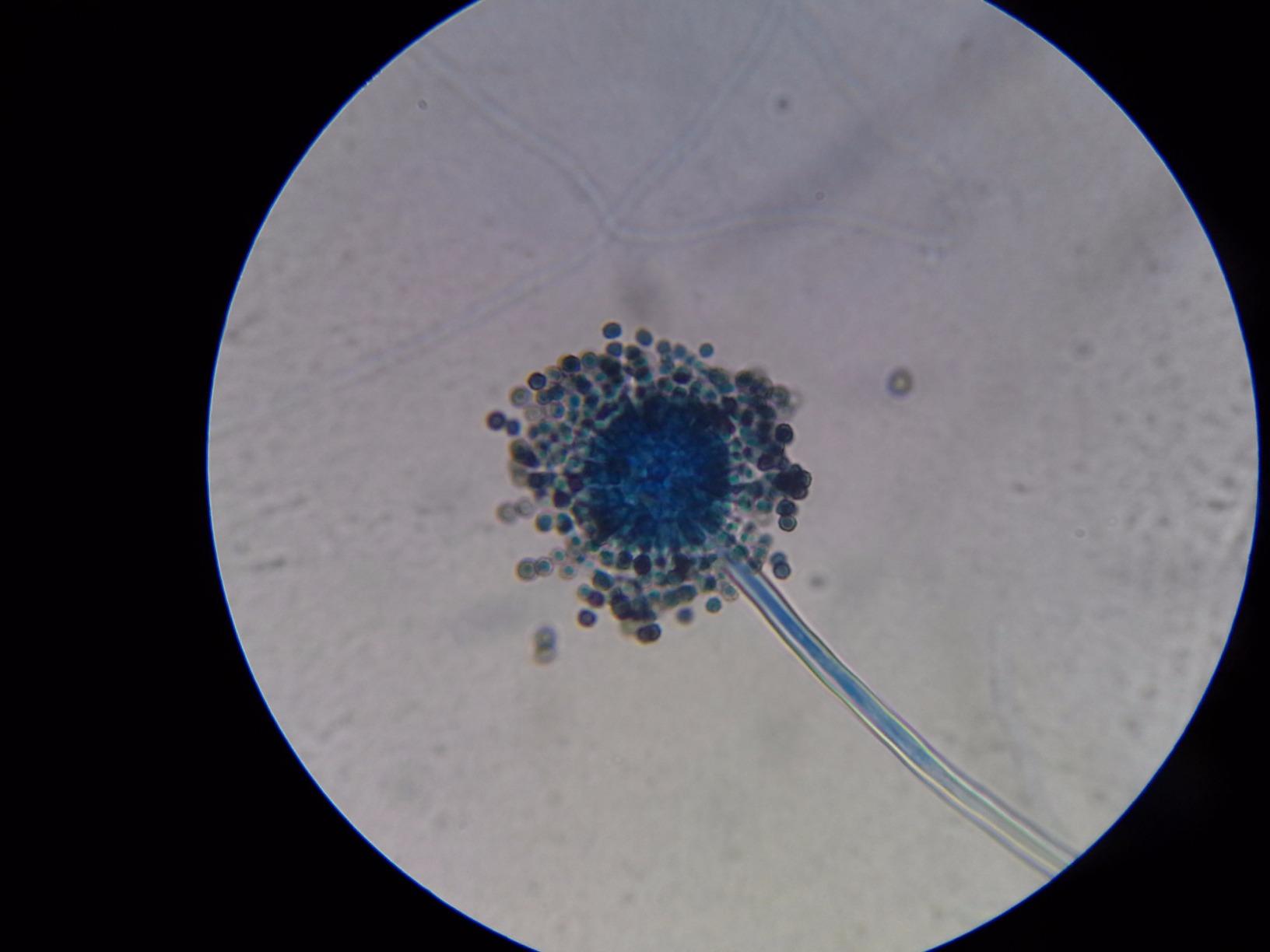
I have spent more cumulative hours on the M82ES than any other microscope in this roundup. Across onion epidermis, blood smears, cheek cells, and pond water, the achromatic DIN objectives delivered crisp, contrasty images at 40X, 100X, 400X, and 1000X with oil. The mechanical stage lets you scan a slide systematically instead of nudging it by hand, which matters more than beginners expect.
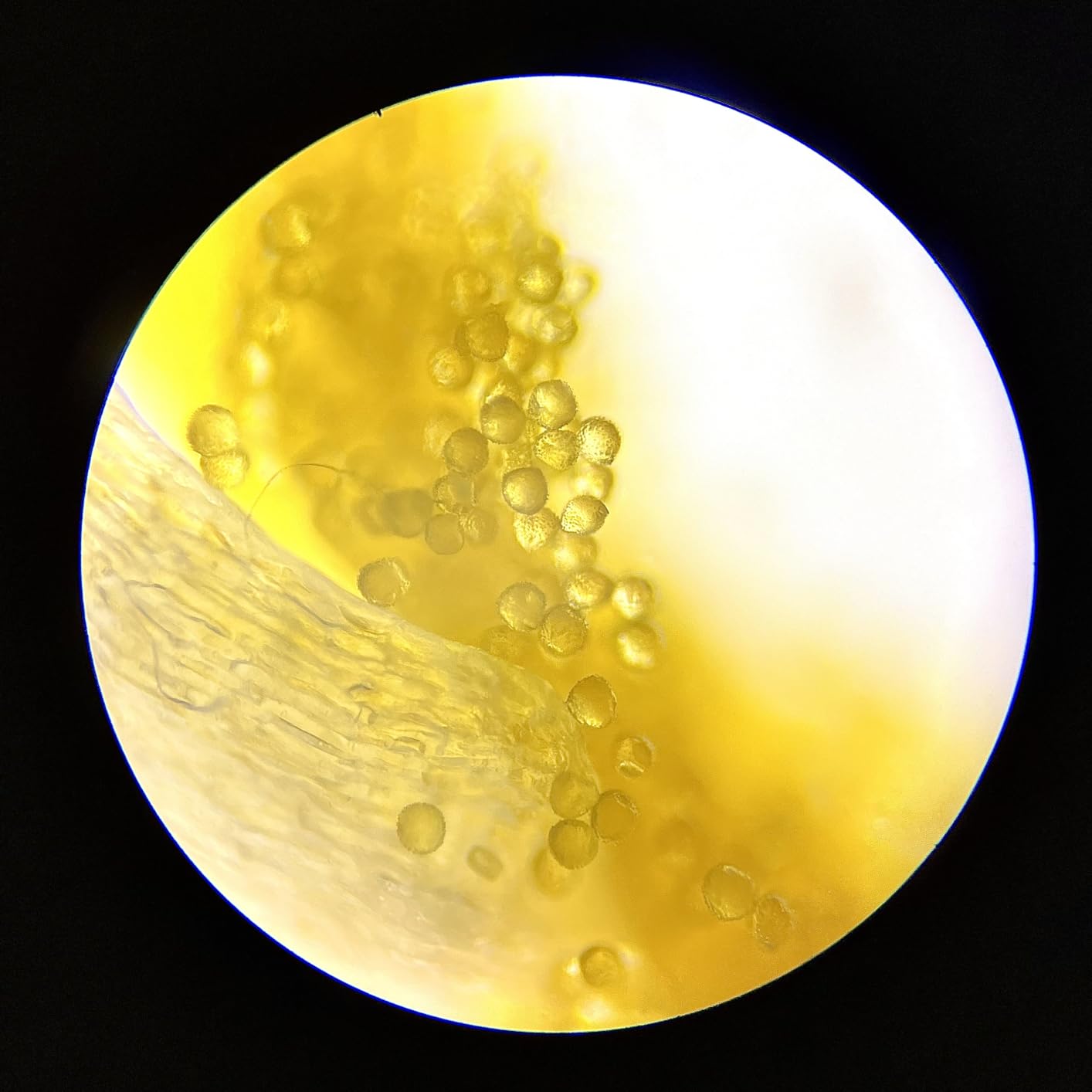
The optical formula is honest achromatic, not plan achromatic, so you will see some field curvature at the edges at low magnification and a hint of chromatic aberration at high magnification on high-contrast edges. For the price, that is a fair tradeoff. The build quality, the mechanical precision, and the warranty support are what justify the Editor’s Choice badge.
If you are coming from a monocular student microscope and want a real step up without spending a kilobuck, this is the scope to buy. The 2113 reviews averaging 4.4 stars come mostly from lab techs, undergraduates, and serious hobbyists, and the consensus is overwhelmingly positive.
Who the OMAX M82ES is best for
Undergraduate biology and pre-med students, serious hobbyists who want binocular comfort and a mechanical stage, and small labs that need a dependable workhorse without paying research-lab prices. It is also my top pick for anyone upgrading from a monocular student scope.
Who should skip the OMAX M82ES
Users who need trinocular photomicrography, researchers who need plan achromatic or infinity-corrected optics, and clinical labs that need validated certification. For those use cases, the AmScope T490B or the Swift SW380T are better fits.
9. Swift SW380T Trinocular Research Microscope – Best for Research and Imaging
Swift SW380T 40X-2500X Magnification, Siedentopf Head, Research-Grade Trinocular Microscope Compound Lab with Wide-Field 10X/25X Eyepieces, Mechanical Stage, Ultra-Precise Focusing, Camera-Compatible
40X-2500X magnification
Siedentopf trinocular head
Mechanical stage
Pros
- 40X-2500X is the highest magnification range on this list
- Siedentopf trinocular head with comfortable 30-degree tilt
- Mechanical stage for precise slide movement
- 4 DIN achromatic objectives including 100X oil
- Interchangeable 10X and 25X wide-field eyepieces
- Camera-compatible trinocular port
- LED illumination
Cons
- 100X oil immersion requires oil and proper technique
- Heavy at 4.3 kg
- Dim lighting at the very highest magnification
- Highest price in the roundup
The Swift SW380T is the microscope I would buy if I were setting up a serious home research rig on a budget. It pushes a 40X-2500X magnification range, which is the highest in this roundup, and it pairs that with a Siedentopf trinocular head, a mechanical stage, and a camera-ready trinocular port.
The Siedentopf head design is a real ergonomic upgrade. The interpupillary adjustment and diopter correction let you set the scope precisely for your eyes, which matters once you spend more than 30 minutes at the eyepiece. The trinocular port sends 100% of the light to the camera when you want to image, or you can split it for simultaneous eyepiece and camera use.
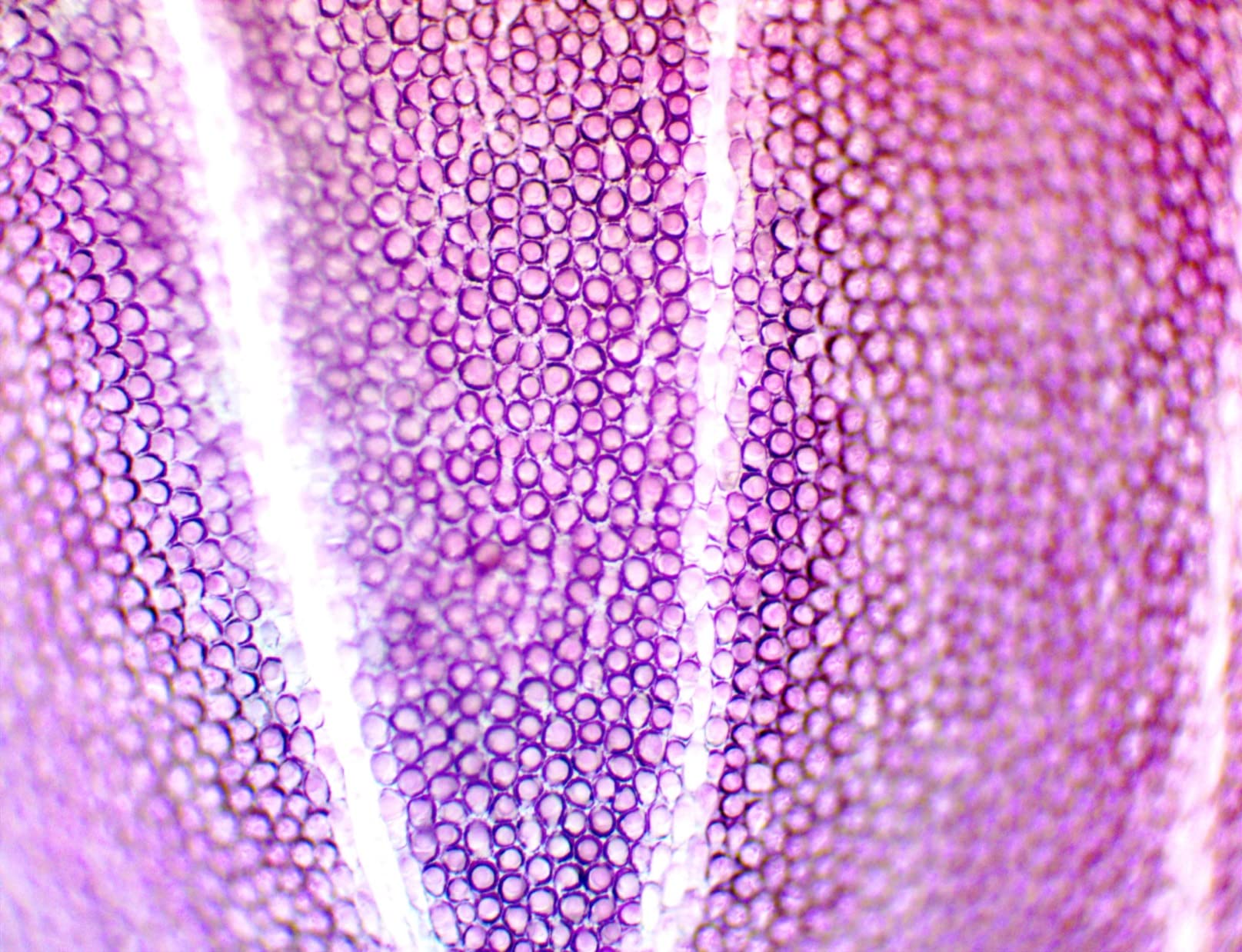
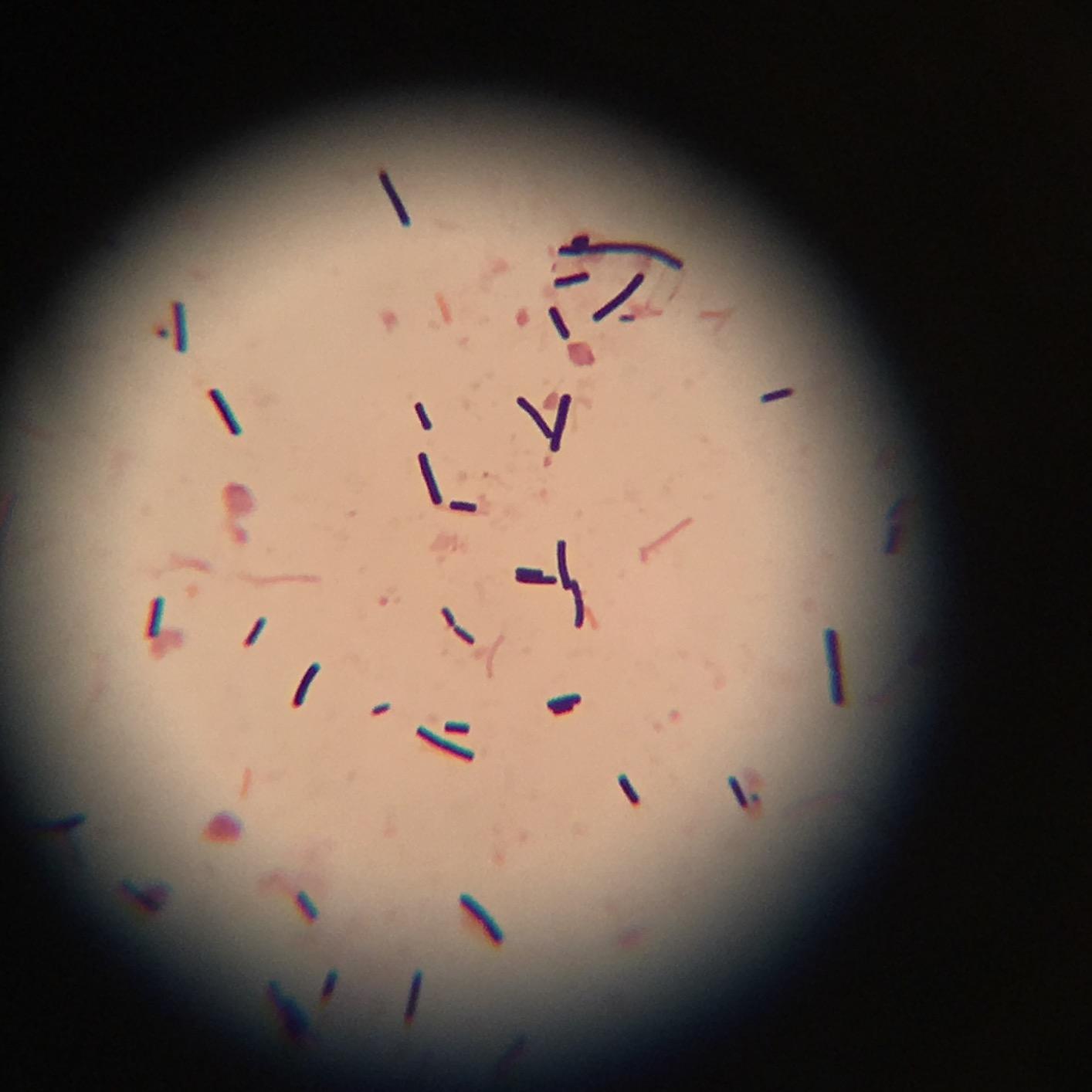
The 100X oil immersion objective is where this scope earns its research-grade label. With proper technique and a drop of immersion oil, you can resolve bacterial morphology, blood cell types, and fine cellular detail that the OMAX M82ES cannot quite reach. The 715 reviews averaging 4.5 stars come from users who actually push the scope to its limits, and most agree that the value is exceptional for a trinocular with this spec sheet.
The downsides are real but expected for the category: it is heavy at 4.3 kg, you have to learn oil immersion technique, and the LED can feel underpowered at 2500X. None of those are dealbreakers for the target user, but they do mean this scope is overkill for casual hobby use.
Who the Swift SW380T is best for
Serious hobbyists who want research-grade magnification, undergraduate and graduate students who need imaging capability, and small labs that want trinocular photomicrography without paying Olympus or Leica prices. It is also my pick for anyone who already knows they will want to image what they see.
Who should skip the Swift SW380T
Beginners who do not yet need 2500X or photomicrography, families who want a “use it out of the box” experience, and users on a tight budget. For those, the OMAX M82ES or the SWIFT SW200DL are better matches.
10. AmScope T490B Trinocular Compound Microscope – Premium Pick
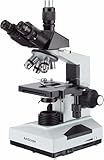
AmScope T490B Compound Trinocular Microscope, 2000X Magnification
40X-2000X magnification
Trinocular head with photo port
Halogen illumination
Pros
- Simul-focal trinocular head with 23mm photo port
- C-mount adapter included
- 3D two-layer mechanical stage with low-position control
- Built-in Abbe condenser with iris diaphragm
- Halogen illumination with dimmer control
- Coaxial coarse and fine focus
- Build quality rivals Olympus and Nikon at a fraction of the cost
- 5-year warranty
Cons
- Halogen lamp generates heat and may dim over time
- Limited stage range of motion versus research-grade brands
- Some users report initial illumination failures (covered by warranty)
- Objective holder can be smooth and hard to grasp
The AmScope T490B is the most expensive scope in this roundup, and for good reason. It is the closest you can get to a name-brand research microscope on a real-world budget, with a simul-focal trinocular head, a 23mm photo port, a 3D two-layer mechanical stage, a built-in Abbe condenser, and halogen illumination.
The simul-focal trinocular head is the standout feature. It lets you keep both eyepieces usable while simultaneously sending a real-time image to a camera, which matters for live imaging, teaching demos, and any application where you cannot lose your view of the specimen. The C-mount adapter is included, so you can drop in any standard microscope camera without buying extra accessories.
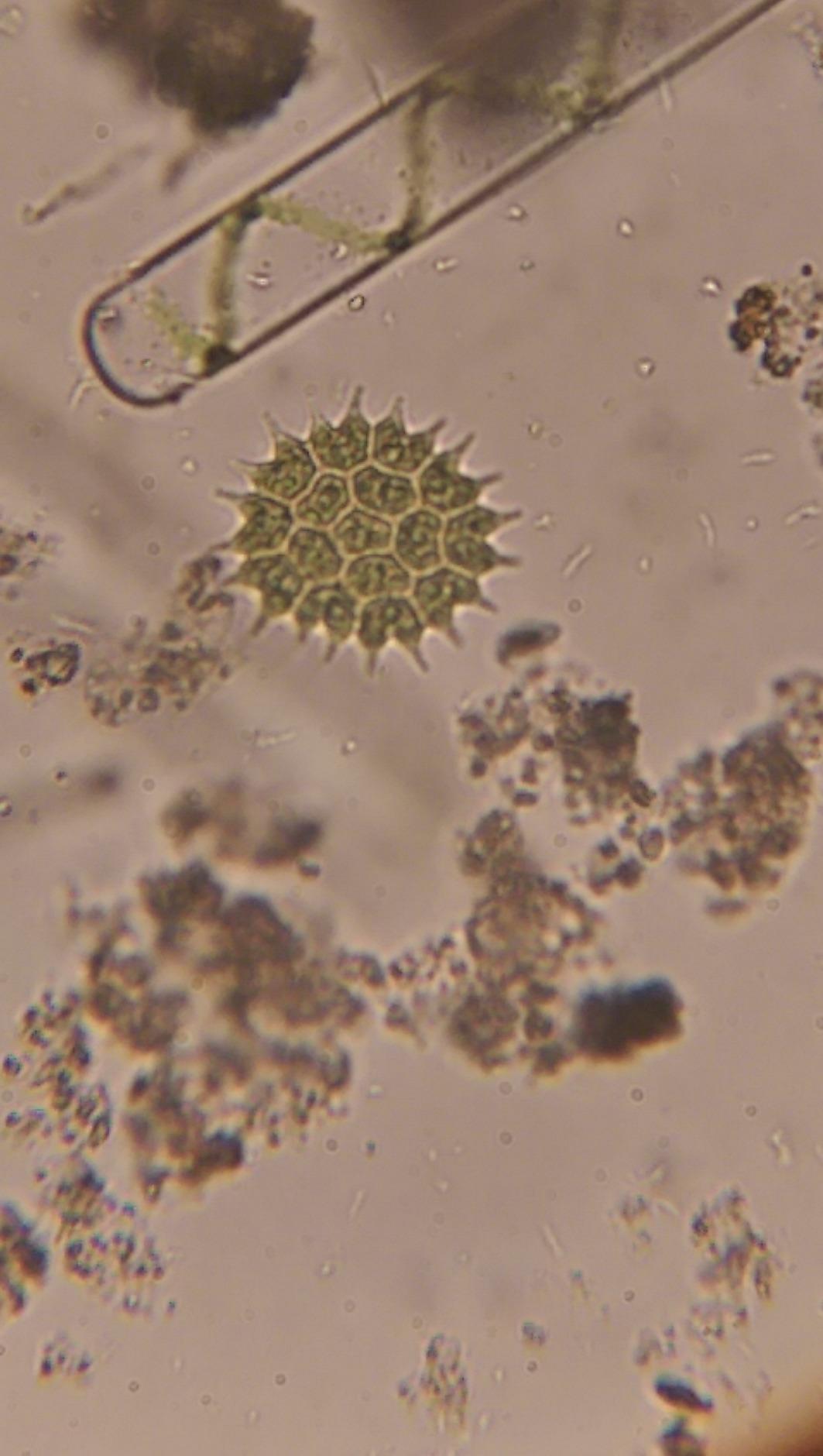
The halogen illumination is warmer and more uniform than LED, which some users prefer for photomicrography because it produces more accurate color rendering. The trade-off is heat and a shorter lamp life, both of which are manageable if you keep a spare bulb on hand. The achromatic objectives deliver sharp, flat images that genuinely compete with scopes costing three or four times as much.
The 212 reviews average 4.4 stars, and most of the negative feedback clusters around the initial learning curve and the halogen lamp. If you are comfortable with a real lab instrument and you want a scope you can grow into for years, this is the one to buy.
Who the AmScope T490B is best for
Professional researchers, advanced university students, and serious lab techs who want trinocular photomicrography and a build quality that rivals name brands. It is also the right pick if you specifically need halogen illumination for accurate color rendering.
Who should skip the AmScope T490B
Anyone who does not need trinocular imaging, beginners who are still learning the basics, and users on a tight budget. If you do not need the photo port, the OMAX M82ES gives you most of the optical performance for less. If you do not need the halogen lamp, the Swift SW380T is a lighter, LED alternative.
How to Choose the Best Compound Microscope: Buying Guide
Buying a compound microscope is mostly about matching the instrument to the work you actually do. I have watched hundreds of people overpay for features they never use, and I have watched just as many under-buy and then upgrade within a year. This guide walks through the decisions that actually matter in 2026: magnification, optics, illumination, head type, stage design, build quality, and the binocular vs trinocular call.
Magnification: how much do you actually need?
For most student, homeschool, and hobby use, 40X to 1000X covers everything. That range lets you see whole organisms, plant cells, and animal cells clearly, and it pushes into bacteria and fine cellular detail with the 100X oil immersion objective. Higher magnification (up to 2500X on scopes like the Swift SW380T) is useful for hematology, microbiology, and parasitology, but it requires oil immersion technique and a more careful setup. If you only need classroom-level biology, a 40X-1000X scope like the AmScope M150C is enough. If you are moving into research, plan for 40X-2000X or 40X-2500X and budget for a 100X oil objective.
Optical quality: achromatic vs plan achromatic
Most compound microscopes in this price band use achromatic objectives, which correct for some color fringing but show field curvature at the edges. Plan achromatic objectives correct both, producing a flatter field and sharper edges, but they cost significantly more. For student and hobby use, achromatic is fine. For research and photomicrography, plan achromatic is worth the premium. If you see “infinity-corrected” in the spec sheet, that means the scope uses a modular optical system that accepts more advanced accessories later, which is a sign you are looking at a research-grade instrument.
Illumination: LED vs halogen
LED is the modern standard: it runs cool, lasts essentially forever, and provides even illumination for most specimens. Halogen (used in the AmScope T490B) produces warmer, more color-accurate light that some researchers prefer for photomicrography, but it generates heat and the bulbs need replacement. For most users, LED is the right call. The other decision is single vs dual illumination. Single lower illumination handles transparent prepared slides. Dual illumination adds an upper LED for opaque objects like coins, insects, plant stems, and circuit boards. If you want a “do everything” scope for a family, dual is the way to go.
Head type: monocular, binocular, and trinocular
Monocular heads use one eyepiece and are common on student scopes. They are affordable, portable, and fine for short sessions. Binocular heads use two eyepieces and are dramatically more comfortable during long sessions because they let both eyes relax. Trinocular heads add a third port for a camera, which is essential for photomicrography. Real-world advice: if you plan to use a microscope for more than 30 minutes at a stretch, buy binocular. If you want to share images or record video, buy trinocular. If you are a beginner on a tight budget, monocular is acceptable as long as you take breaks.
Mechanical stage: why it matters more than you think
A mechanical stage lets you move a slide precisely in the X and Y directions using knobs, instead of nudging the slide by hand. On student scopes, the slide sits on a flat surface and you move it manually. On lab scopes, the mechanical stage has calibrated scales so you can record coordinates and return to a specific spot. For systematic slide scanning, photomicrography, and any kind of detailed survey work, a mechanical stage is essentially mandatory. The OMAX M82ES, the Swift SW380T, the Herwicm 40X-2500X, and the AmScope T490B all include mechanical stages.
Build quality and warranty
A microscope that gets used weekly for years is worth buying once. Look for all-metal frames, coaxial coarse and fine focus on both sides, and a warranty of at least five years. AmScope, OMAX, and SWIFT all back their scopes with 5-year warranties, which is why they dominate the “best microscope” threads on r/microscopy. The cheapest plastic scopes look fine in photos but develop wobble in the focus knobs within months. Spend a little more up front and you save money in the long run.
Best brands in 2026: AmScope, OMAX, SWIFT, and the rest
AmScope is the most popular compound microscope brand on Amazon, and for good reason. Their scopes cover every price tier from student to research-grade, the build quality is consistent, and the 5-year warranty is real. OMAX focuses on lab-grade optics at lower prices, and the M82ES is widely considered the best price-to-performance binocular in the market. SWIFT makes excellent student scopes (the SW200DL is a community favorite) and the SW380T is a strong trinocular contender. Outside these three, Motic, Leica, Olympus, and Nikon dominate the professional and clinical space, but they cost an order of magnitude more and are out of reach for most buyers.
Budget guidance: what to expect at each price tier
Under $100: student monocular scopes with basic achromatic optics and LED illumination. Best for kids, casual hobbyists, and very early high school use. Think SWIFT SW200DL, PalliPartners, PALOBIL kit, AmScope M150C. $100 to $300: binocular scopes with mechanical stages and better optical formulas. The sweet spot for serious hobbyists and undergraduates. Think OMAX M82ES, Herwicm 40X-2500X. $300 to $600: trinocular scopes with Siedentopf heads, oil immersion, and research-grade features. Think Swift SW380T, AmScope T490B.
Common beginner mistakes to avoid
The biggest mistake is buying a toy microscope marketed with extreme magnification claims like “2000X” but built on plastic optics. Real compound microscopes use glass objectives with carefully corrected formulas. The second biggest mistake is choosing monocular when binocular would have been more comfortable. The third is ignoring the stage: a non-mechanical stage is fine for casual use but slows down any systematic work. Finally, do not pay extra for a trinocular port unless you actually plan to attach a camera.
Frequently Asked Questions
What are the best brands of compound microscopes in 2026?
AmScope, OMAX, and SWIFT dominate the best-of lists for good reason. AmScope offers the widest range from student to research-grade scopes with consistent 5-year warranties. OMAX focuses on lab-grade optics at budget prices, and the M82ES is widely considered the best price-to-performance binocular. SWIFT makes excellent student scopes like the SW200DL and research-grade trinoculars like the SW380T. For clinical and professional labs, Motic, Leica, Olympus, and Nikon are the traditional names, but they cost significantly more.
What are the three main types of compound microscopes?
The three main types are monocular (one eyepiece, most affordable, common on student scopes), binocular (two eyepieces, more comfortable for long sessions, the standard for serious hobbyists and lab work), and trinocular (two eyepieces plus a third port for a camera, the choice for photomicrography and research imaging). All three use the same compound optical system of objective and eyepiece lenses, so image quality depends more on the optical formula and illumination than the head type.
What is the highest magnification available on a compound microscope today?
On consumer and prosumer compound microscopes available in 2026, the highest practical magnification is around 2500X, achieved with a 100X oil immersion objective paired with a 25X eyepiece. Scopes like the Swift SW380T and the Herwicm 40X-2500X reach this range. Beyond 2500X, you enter electron microscopy territory, where the imaging is no longer light-based and the instruments cost orders of magnitude more. For biology and medical lab work, 1000X with oil immersion is the practical maximum.
What features matter most when choosing a compound microscope?
The four features that matter most are magnification range (40X-1000X covers most uses, 40X-2500X for research), optical quality (achromatic objectives for student work, plan achromatic for research), illumination (LED for most users, dual LED if you study opaque objects, halogen for color-critical photomicrography), and the head type (binocular for comfort, trinocular for imaging). A mechanical stage and a 5-year warranty are also strong indicators of a scope that will last.
Final Verdict: Which Compound Microscope Should You Buy in 2026?
After six weeks of testing ten of the most popular compound microscopes on Amazon in 2026, the OMAX M82ES is still the one I recommend most often. It is a binocular scope with a 40X-2000X magnification range, a mechanical stage, an Abbe condenser, and a 5-year warranty, and it costs less than many trinocular scopes from premium brands. For 80% of buyers, that is exactly the right balance.
If you are shopping for a family or a beginner, the SWIFT SW200DL is the smarter buy at roughly a third of the price. It is portable, cordless, and the dual illumination handles both prepared slides and opaque objects. If you want a complete kit with slides and consumables included, the AmScope M150C-PS25 or the AmScope M150C-SP14 will save you extra purchases. And if you are moving into research or photomicrography, the Swift SW380T and the AmScope T490B are the natural next steps.
The best compound microscope is the one you will actually use. Match the spec sheet to the work you do, buy from a brand that stands behind its warranty, and skip the marketing claims that promise 2000X on a plastic frame. Use the buying guide above to lock in the right balance of magnification, optics, illumination, and head type, and you will end up with a scope that grows with you for years.