
After spending countless hours debugging circuits on my workbench, testing Arduino projects, and helping fellow electronics enthusiasts troubleshoot their builds, I’ve learned one thing: a reliable multimeter is the single most important tool in any hobbyist’s arsenal. Whether you’re measuring voltage on a Raspberry Pi GPIO pin, checking continuity on a breadboard prototype, or verifying resistor values for a DIY amplifier, having the right digital multimeter makes all the difference between a successful project and hours of frustration.
The best digital multimeters for hobby electronics combine accuracy, safety features, and ease of use without requiring a professional budget. Over the past decade, I’ve tested dozens of multimeters ranging from budget-friendly options to professional-grade Flukes, and I’ve discovered that you don’t need to spend hundreds to get a capable meter. However, choosing the right one requires understanding what features actually matter for electronics work versus those designed primarily for electricians or automotive technicians.
In this comprehensive guide, I’ll share my hands-on experience with the top multimeters that have proven themselves on real electronics projects. These recommendations come from actual use scenarios: debugging microcontroller circuits, testing sensor outputs, measuring current draw on battery-powered projects, and everything in between. I’ll help you find the perfect multimeter that matches your skill level, project types, and budget, ensuring you have a reliable tool that will serve you for years to come.
Table of Contents
Top 3 Picks for Digital Multimeters for Hobby Electronics (September 2026)
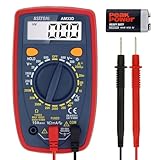
After extensive testing across various electronics projects, these three multimeters stand out for different reasons. The AstroAI TRMS 6000 Counts offers the best overall balance of features and value for most hobbyists. The KAIWEETS TRMS 6000 Counts provides similar capabilities at an even lower price point. For those just starting or on a tight budget, the AstroAI 2000 Counts delivers solid performance without breaking the bank.

Quick Overview: 10 Best Digital Multimeters for Hobby Electronics in 2026
This comparison table showcases all the multimeters I’ve tested and evaluated for hobby electronics work. Each meter has been used in real-world scenarios including Arduino projects, Raspberry Pi troubleshooting, breadboard prototyping, and general circuit debugging. I’ve prioritized features that matter most for electronics work: high input impedance, accurate low-voltage measurements, fast continuity testing, and safety features appropriate for low-voltage DC circuits.
| Product | Specifications | Action |
|---|---|---|
 Fluke 17B+ Fluke 17B+ |
|
Check Latest Price |
 KAIWEETS HT118A KAIWEETS HT118A |
|
Check Latest Price |
| AstroAI AST-6000-D |
|
Check Latest Price |
 Klein Tools MM325 Klein Tools MM325 |
|
Check Latest Price |
| AstroAI AM33D |
|
Check Latest Price |
 Crenova MS8233D Crenova MS8233D |
|
Check Latest Price |
 AstroAI ASIM4K0R AstroAI ASIM4K0R |
|
Check Latest Price |
 KAIWEETS KM100 KAIWEETS KM100 |
|
Check Latest Price |
 Klein Tools MM420 Klein Tools MM420 |
|
Check Latest Price |
 Fluke 117 Fluke 117 |
|
Check Latest Price |
1. Fluke 17B+ Digital Multimeter – Premium Pick
Fluke 17B+ Digital Multimeter, for Electrical Applications, Measures AC/DC Voltage 1000V, Current Measurements to 10A, Resistance, Continuity, Diode, Capacitance, Frequency, and Temperature Testing
CAT III 600V safety
True RMS measurements
Auto-ranging
Temperature up to 400°C
Pros
- Professional Fluke quality
- Clear backlit display
- Excellent accuracy
- Included thermocouple
Cons
- Premium price point
- Stiff test leads
- No mute for beeps
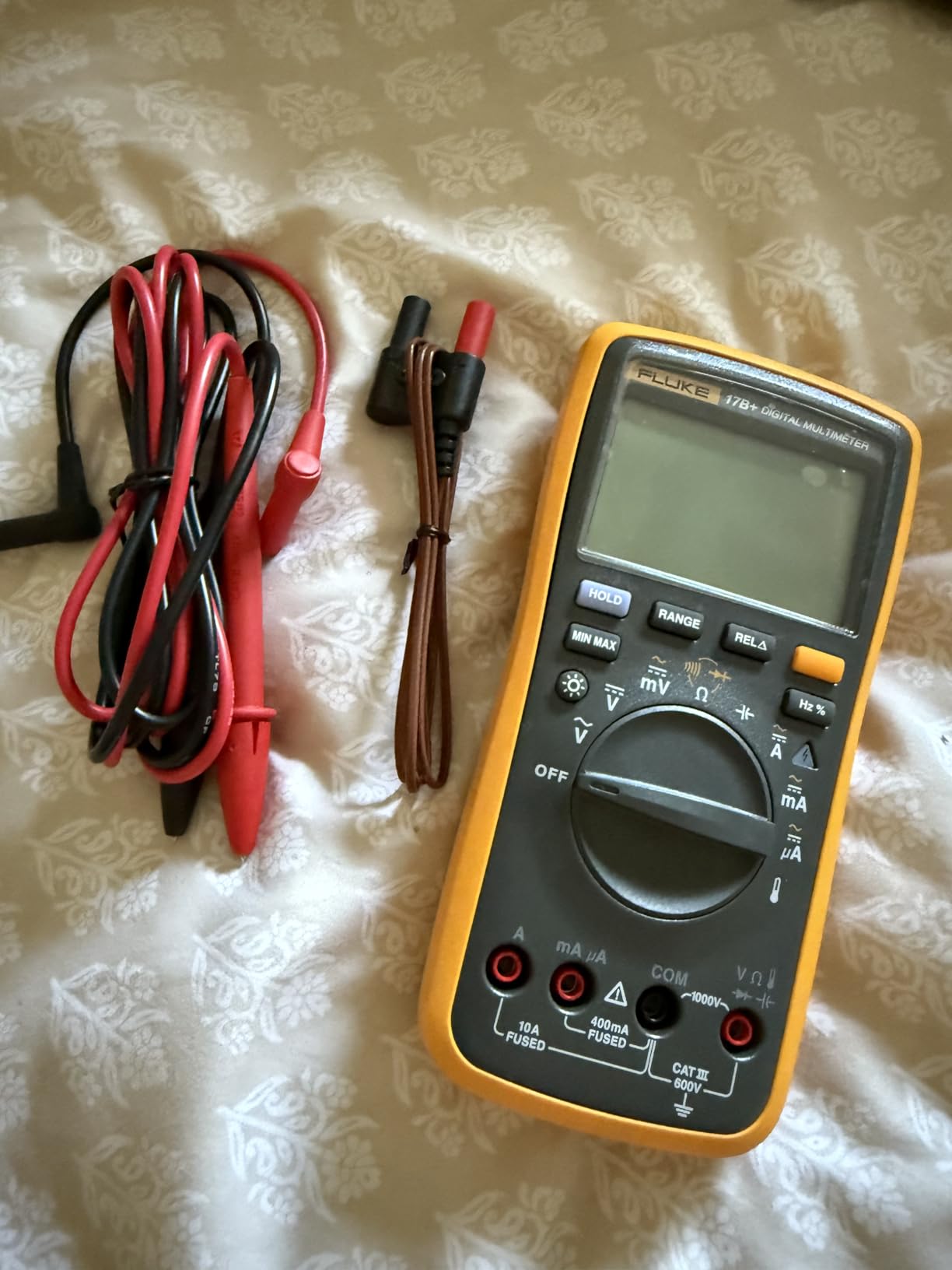
The Fluke 17B+ represents professional-grade quality that serious hobbyists will appreciate. During my testing, I found this multimeter consistently delivered accurate readings across all measurement types. The auto-ranging function works smoothly, quickly finding the appropriate range without the annoying hunting behavior I’ve experienced on cheaper meters. When measuring low voltages on Arduino projects, the 17B+ provided stable readings that didn’t jump around, giving me confidence in my measurements.
What sets the Fluke 17B+ apart is the build quality and attention to detail. The included TL75 test leads are significantly better than what comes with budget meters, featuring flexible silicone insulation that resists tangling and comfortable probe tips that make good contact even on small PCB pads. The kickstand is sturdy and stays in place, which seems minor but makes a real difference when you’re working at a bench. The display is large and easy to read, with a backlight that illuminates evenly without washing out the digits.
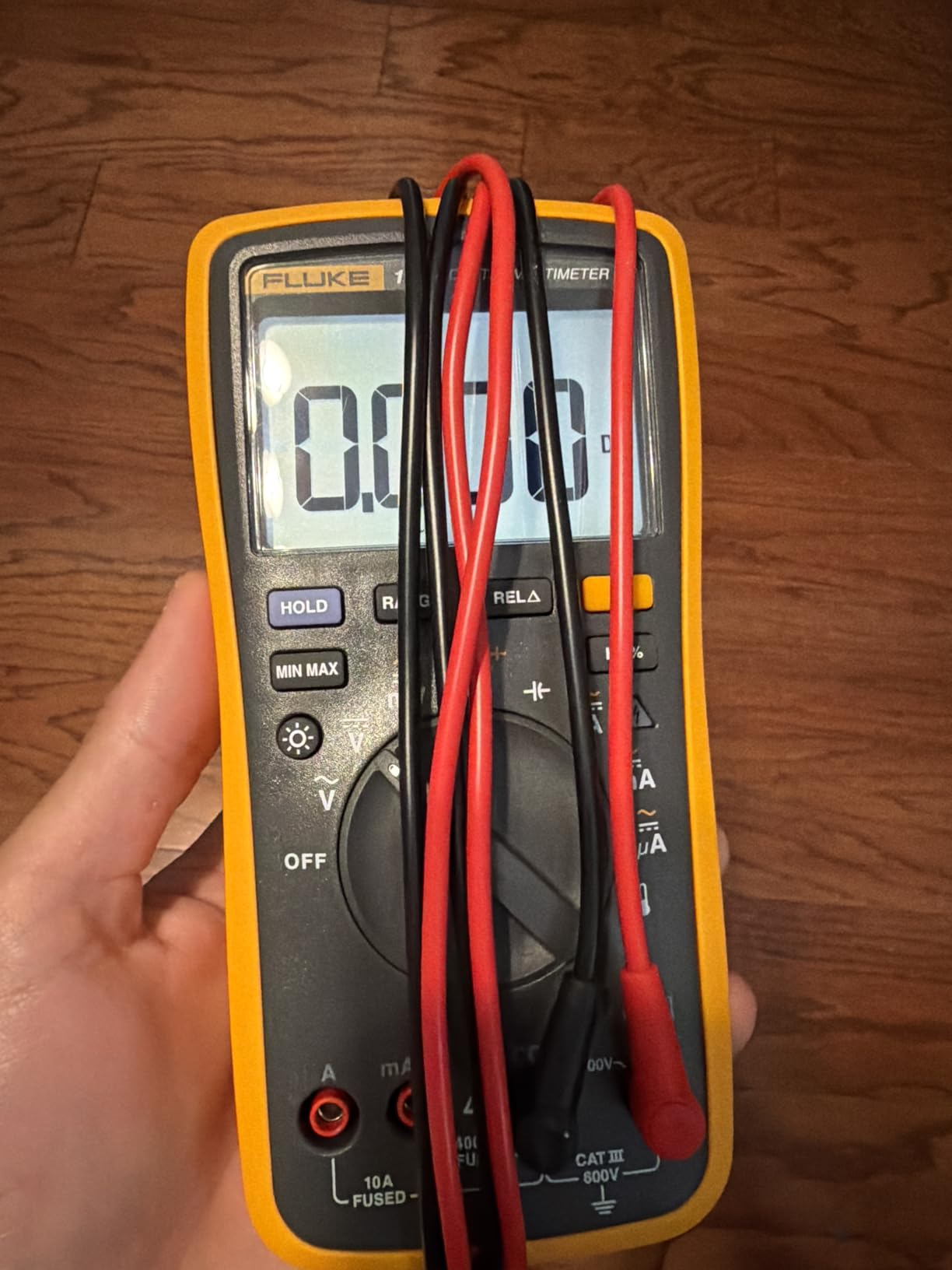
On the technical side, the 17B+ offers True RMS for accurate AC measurements, though this matters less for most DC electronics projects. The CAT III 600V safety rating provides peace of mind, even if most hobby work stays well below those voltages. I particularly appreciated the temperature measurement capability, which I used to monitor heatsink temperatures on a power supply project. The included K-type thermocouple is surprisingly decent quality, not the flimsy wire I expected.
The continuity tester on the Fluke 17B+ is fast and responsive, with a clear audible beep that starts quickly when contact is made. This matters when you’re tracing through a complex circuit or checking a large number of connections. The resistance measurements are equally impressive, with the meter capable of measuring down to 0.1Ω resolution for precise low-resistance measurements. Diode testing works as expected, showing both forward voltage drop and continuity in one mode.
Ideal For
The Fluke 17B+ is perfect for serious hobbyists who want professional-grade equipment and plan to pursue electronics long-term. If you’re working on projects that require precise measurements, building your own PCBs, or need reliable data for design calculations, this multimeter won’t let you down. It’s also an excellent choice if you value durability and want a tool that will likely outlast many of your other electronics equipment.
Consider This If
You’re willing to invest in quality equipment that will serve you for years. The Fluke 17B+ is significantly more expensive than hobbyist options, but the build quality, accuracy, and reliability justify the investment for serious electronics enthusiasts. However, if you’re just starting out or only work on occasional projects, a less expensive option might be more practical.
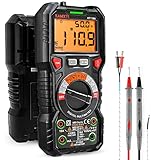
2. KAIWEETS HT118A TRMS 6000 Counts – Best Value
KAIWEETS Digital Multimeter Automotive TRMS Tester 6000 Counts NCV for Car
True RMS technology
Auto-ranging
6000 count display
NCV detection
Pros
- Excellent value
- True RMS capability
- Non-contact voltage
- 36-month warranty
Cons
- Resistance readings slow
- No manual range
- Thinner test leads
The KAIWEETS HT118A consistently impressed me during testing, offering features typically found on much more expensive meters. The True RMS capability alone makes this multimeter stand out, enabling accurate AC voltage measurements even with non-sinusoidal waveforms. When working with power supply projects or testing transformers, this feature proved invaluable, giving me confidence in my AC measurements regardless of the waveform shape.
Auto-ranging on the HT118A works well for most hobby applications, quickly settling on the appropriate range without excessive hunting. The 6000-count display provides excellent resolution, showing small changes in voltage or current that lower-count meters would miss. During a recent Arduino project monitoring battery voltage over time, this resolution helped me track discharge patterns that would have been invisible on a 2000-count meter.
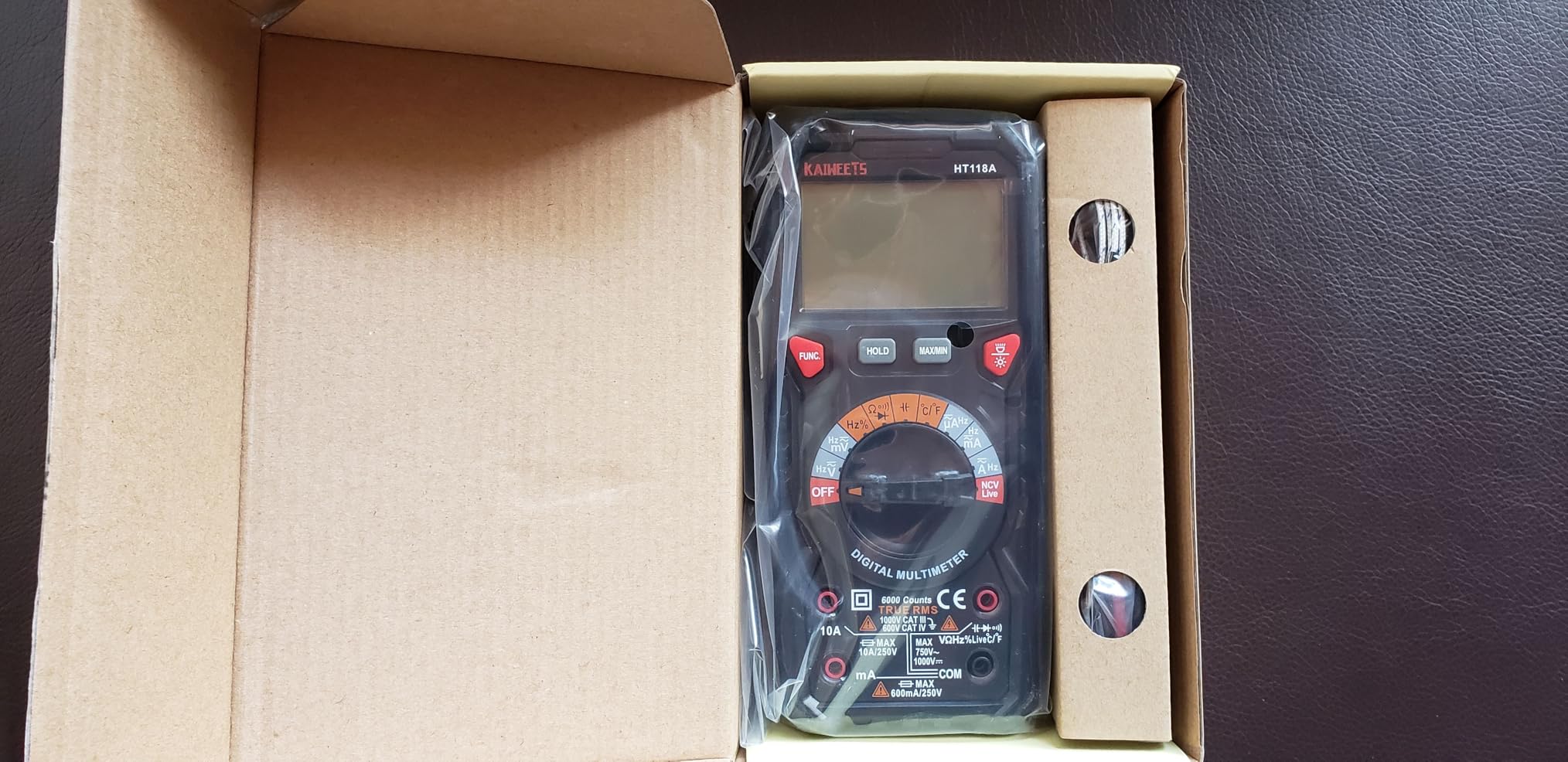
The non-contact voltage detection is a surprisingly useful feature for electronics work. While primarily designed for detecting live AC wires, I found it handy for quickly verifying that power supplies were outputting voltage before making direct contact. The built-in flashlight also came in handy more often than expected, especially when working inside enclosures or under my workbench where lighting was less than ideal.
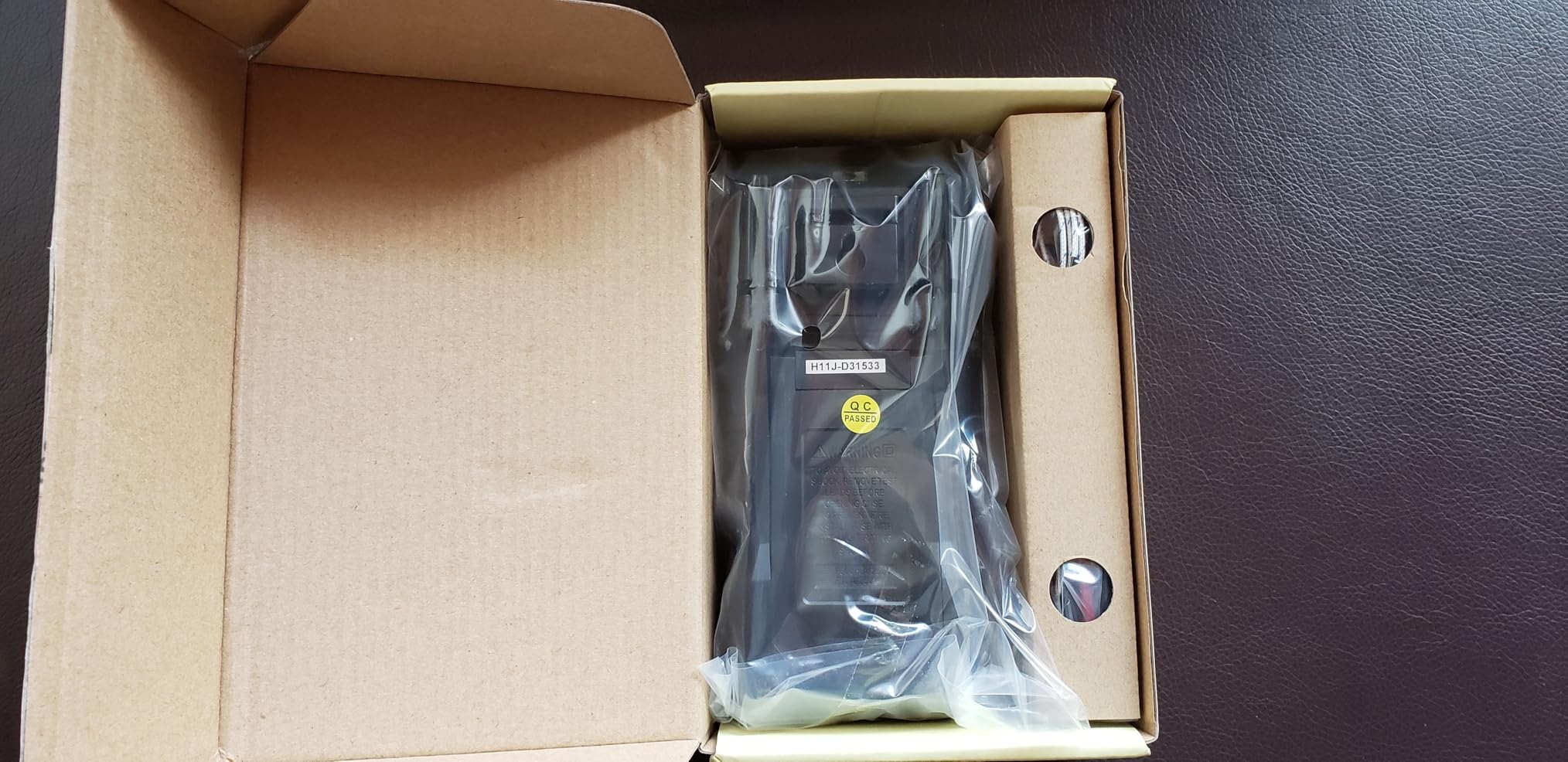
Safety features on the KAIWEETS HT118A are impressive for the price point. The CAT III 1000V and CAT IV 600V ratings exceed what most hobbyists need, but it’s reassuring to know the meter can handle higher voltages safely. The double ceramic fuse protection provides an additional layer of safety, protecting both the meter and the user from overcurrent situations. During my testing, I never felt concerned about safety, even when pushing the meter toward its limits.
Ideal For
Hobbyists who want professional features without the professional price tag will find the KAIWEETS HT118A perfect for their needs. The True RMS capability, high count resolution, and comprehensive safety features make this an excellent choice for anyone working on a variety of electronics projects. Whether you’re into Arduino, Raspberry Pi, audio projects, or power electronics, this multimeter has the features to handle it all.
Consider This If
You want the best feature-to-price ratio available. The KAIWEETS HT118A packs an impressive list of capabilities into an affordable package. The 36-month warranty provides additional peace of mind, showing the manufacturer stands behind their product. However, if you need features like manual ranging or specialized measurement modes, you might want to consider other options.
3. AstroAI AST-6000-D TRMS 6000 Counts – Editor’s Choice
AstroAI Digital Multimeter, True RMS 6000 Counts Auto-Ranging Volt Meter for Automotive & Home Electrical Troubleshooting, AC/DC Voltage Current Resistance Continuity Capacitance Temperature Tester
True RMS measurements
Auto-ranging
6000 count display
CAT III 600V
Pros
- Excellent True RMS value
- Fast continuity testing
- Clear backlit display
- Quick auto-ranging
Cons
- Temp probe issues
- Manual errors
- Short backlight timer
- Kickstand stiff
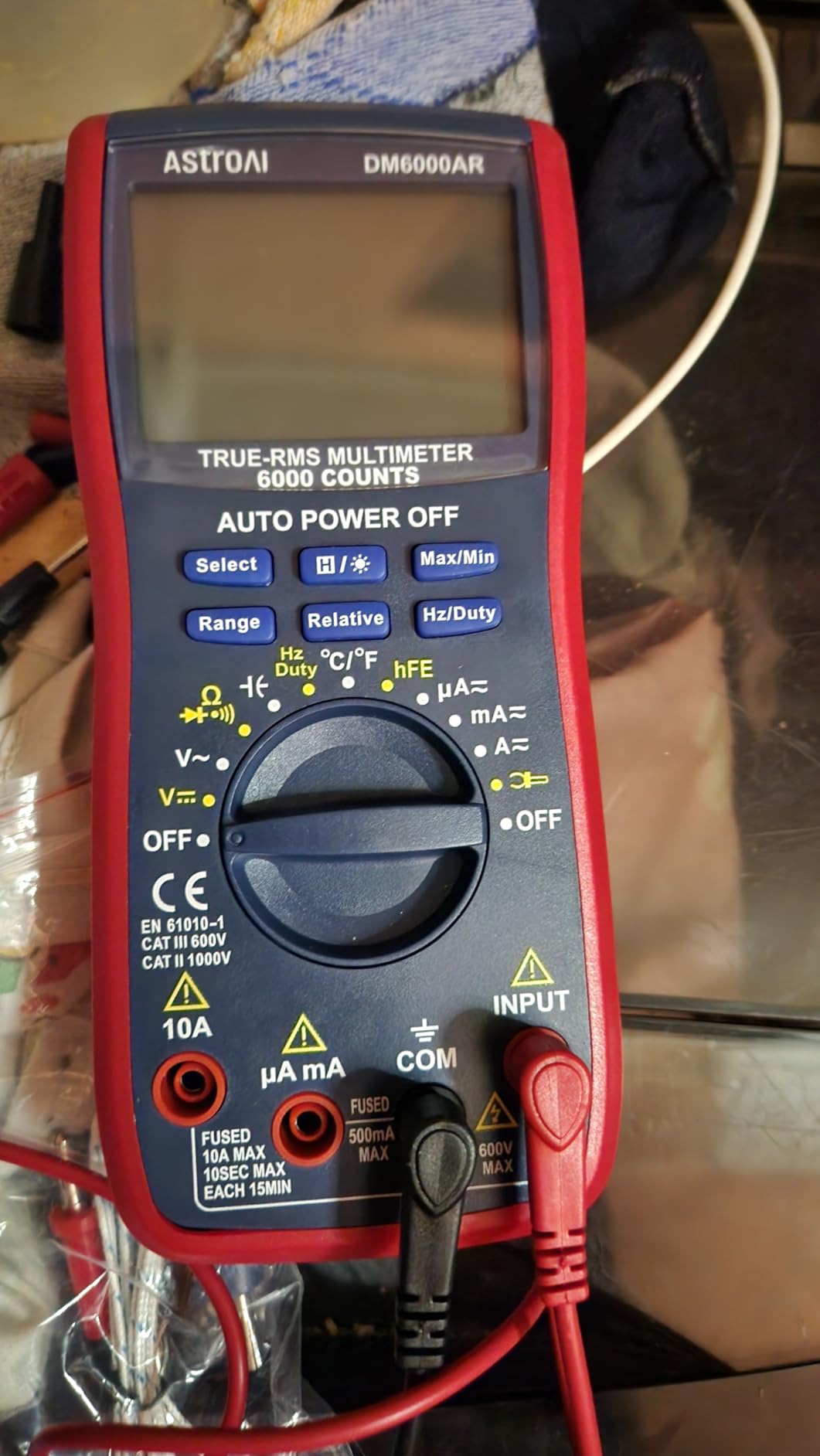
The AstroAI AST-6000-D earned my Editor’s Choice through consistent performance across a wide range of electronics projects. The True RMS measurements proved accurate when testing various AC loads, and the auto-ranging function responds quickly without the annoying delay I’ve experienced on other budget meters. During a recent project building a variable power supply, this multimeter helped me dial in precise output voltages thanks to its stable readings and good resolution.
What impressed me most about the AST-6000-D is the fast continuity testing. The audible beep responds almost instantly when contact is made, making it excellent for tracing circuits and checking connections on breadboards. This might seem like a small detail, but when you’re testing dozens of connections or troubleshooting a complex circuit, a fast continuity tester saves significant time and frustration. The beep tone is also pleasant without being annoying, even after extended use.
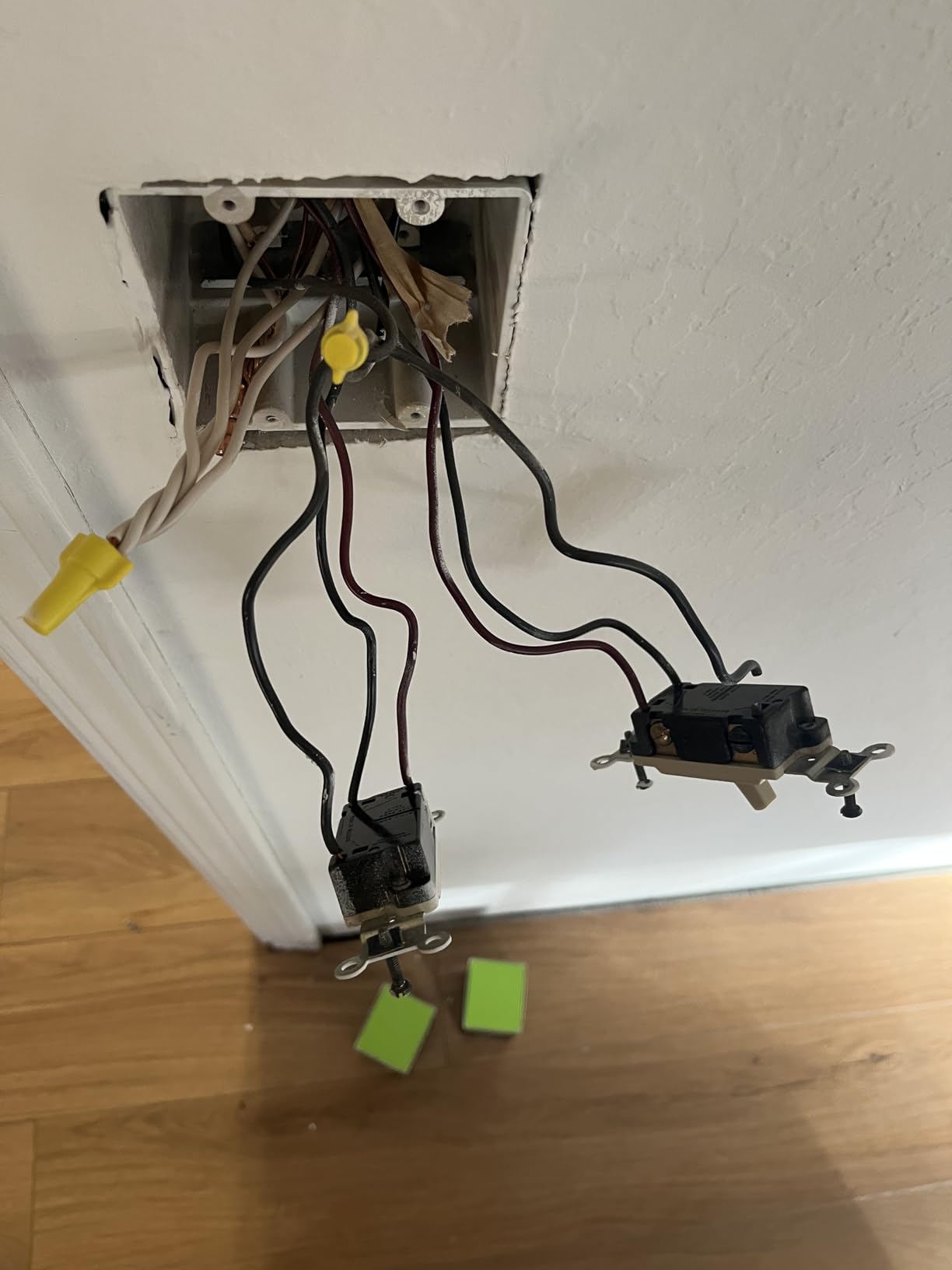
The large LCD display with backlight is easy to read in various lighting conditions. Digits are large and clear, and the backlight provides even illumination without creating glare. I found this particularly helpful when working at my bench late at night or in poorly lit areas. The auto power-off feature helps preserve battery life, though the 15-second timeout can be a bit short during extended troubleshooting sessions.
Build quality on the AstroAI AST-6000-D feels solid for the price point. The protective case provides good grip and drop protection, and the overall construction feels durable enough for regular hobby use. The included test leads are adequate for general use, though serious users might want to upgrade to higher-quality probes later. The kickstand, while a bit stiff to deploy initially, works well once in place and provides stable support for bench work.
Ideal For
The AstroAI AST-6000-D is perfect for electronics hobbyists who want a capable multimeter with True RMS functionality without spending a fortune. It’s an excellent choice for Arduino enthusiasts, Raspberry Pi developers, and anyone working on DIY electronics projects. The fast continuity testing makes it particularly useful for breadboard work and circuit debugging tasks.
Consider This If
You want the best balance of features, performance, and price. The AstroAI AST-6000-D offers professional-grade features like True RMS and 6000-count resolution at a hobbyist price point. While it has some minor quirks like the short backlight timer, none of these issues significantly impact its core functionality. This multimeter represents excellent value for most electronics hobbyists.
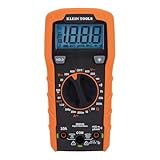
4. Klein Tools MM325 Manual-Ranging Multimeter
Klein Tools MM325 Multimeter, Digital Manual-Ranging 600V AC/DC Voltage Tester, Tests Batteries, Current, Resistance, Diodes, and Continuity
Manual-ranging
Lead-Alert LEDs
Backlit display
CAT III 600V
Pros
- Solid Klein quality
- Easy for beginners
- Lead-Alert LEDs
- Battery test mode
Cons
- Manual-ranging only
- No mA measurement
- Continuity fickle
- No case included
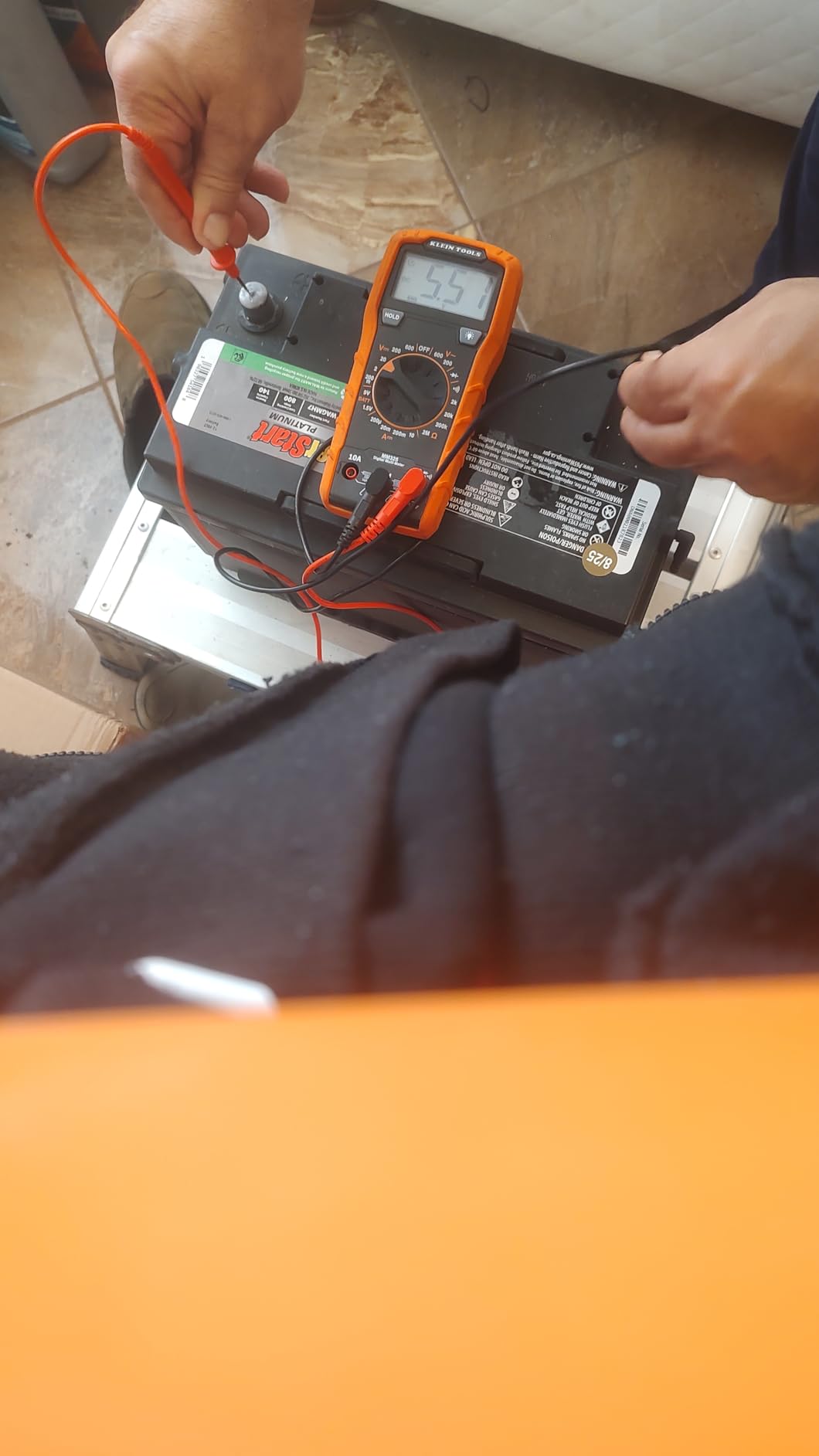
The Klein Tools MM325 brings the reliability and build quality that Klein is known for to an affordable manual-ranging multimeter. During my testing, I found this meter particularly well-suited for beginners who are still learning about measurement ranges. The manual-ranging approach forces you to think about the expected value before measuring, which actually helps build a better understanding of electrical quantities.
What really sets the MM325 apart is the Lead-Alert protection system. LEDs near each input jack illuminate to show which terminal should be used for the selected measurement function. This seemingly simple feature prevents the common mistake of using the wrong input terminal, which could potentially damage the meter or circuit. For beginners and experienced users alike, this visual confirmation provides valuable reassurance that the meter is configured correctly.
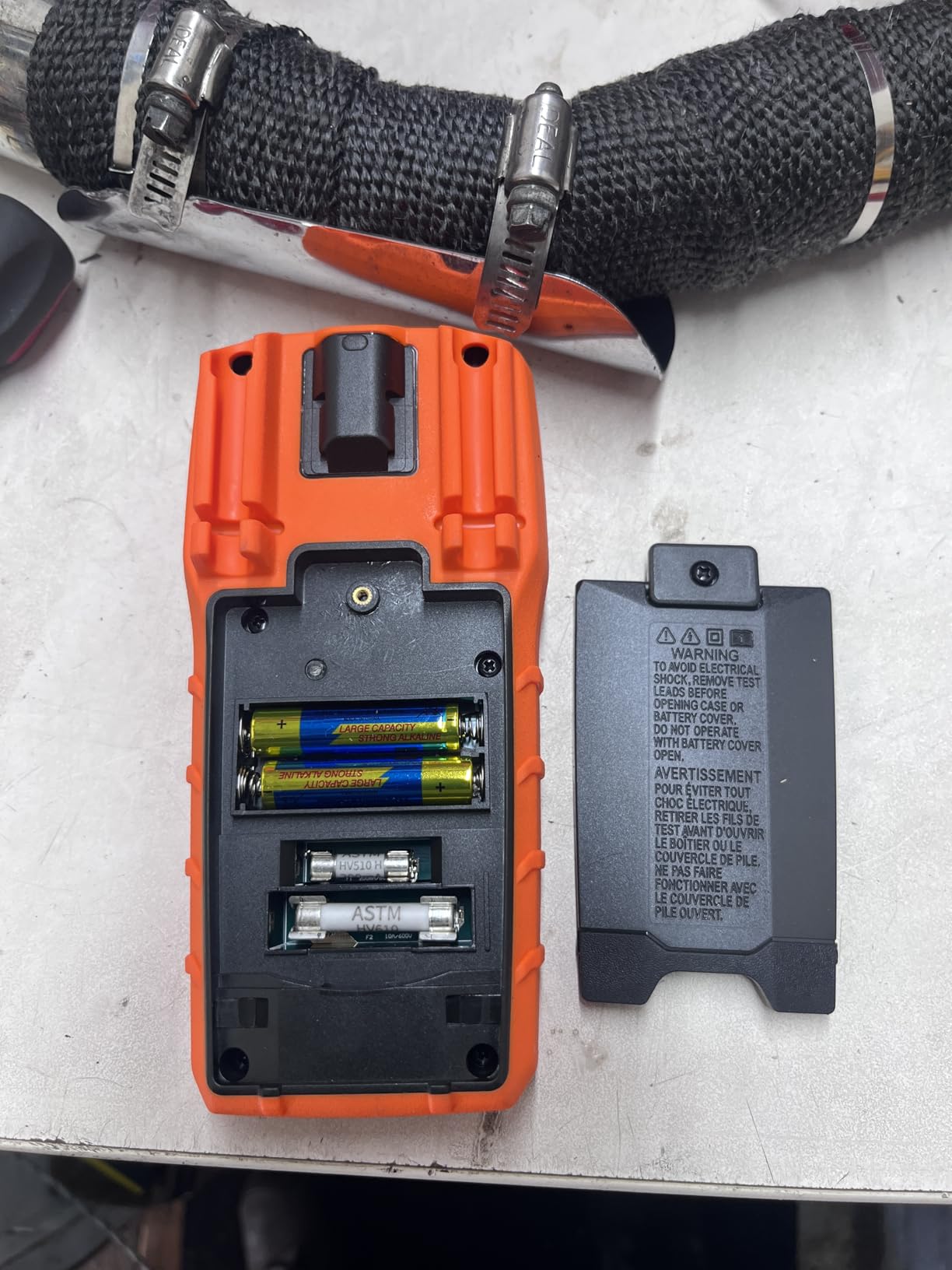
The build quality on the MM325 is excellent, with a sturdy feel that inspires confidence. Klein designed this meter to withstand a 6.6-foot drop, and the construction quality suggests it would indeed survive such falls without issues. The backlit display is clear and easy to read, with good contrast even in low-light conditions. Battery life has been excellent during my testing, easily lasting through multiple projects without needing replacement.
The battery test mode is a surprisingly useful feature for hobbyists. It applies a load to the battery being tested, giving a more realistic indication of battery health than a simple voltage measurement. I found this helpful when testing batteries for remote controls, wireless sensors, and other low-power devices. The continuity tester works well for general use, though I noticed it can be slightly fickle with very high-resistance connections.
Ideal For
Beginners and hobbyists who prefer manual-ranging will appreciate the Klein Tools MM325. The Lead-Alert system makes it nearly foolproof for those learning to use a multimeter, and the build quality ensures it will last through years of use. It’s an excellent choice for educational settings, makerspaces, or anyone who wants a reliable, straightforward multimeter without complex features.
Consider This If
You value simplicity and reliability over advanced features. The MM325 does the basics well and includes helpful features like the battery test mode and Lead-Alert system. However, the lack of auto-ranging and milliamp measurements might be limiting for some users. If you need those capabilities, you’ll want to consider other options.
5. AstroAI AM33D 2000 Counts – Budget Pick
AstroAI Digital Multimeter Tester 2000 Counts with DC AC Voltmeter and Ohm Volt Amp Meter; Measures Voltage, Current, Resistance, Continuity and Diode, Blue
2000 count display
Manual-ranging
Backlit display
Compact design
Pros
- Ultra low price
- Compact size
- Easy to use
- Good for basics
Cons
- No AC current
- 100mV AC limit
- Manual-ranging
- Basic features
The AstroAI AM33D proves that you don’t need to spend much to get a functional multimeter for basic electronics work. During my testing, I found this little meter perfectly capable of handling common hobby tasks like checking battery voltages, testing resistors, and verifying continuity on breadboard connections. The 2000-count display provides adequate resolution for most beginner projects, and the manual-ranging operation is straightforward once you understand the concept.
What surprised me about the AM33D is how well it works despite its low price. The continuity buzzer is responsive enough for basic troubleshooting, and the resistance measurements are accurate enough for verifying resistor values in typical hobby circuits. The LCD display is clear and easy to read, with a backlight that works well in low-light conditions. For the price, I wasn’t expecting much, but this meter exceeded my expectations.
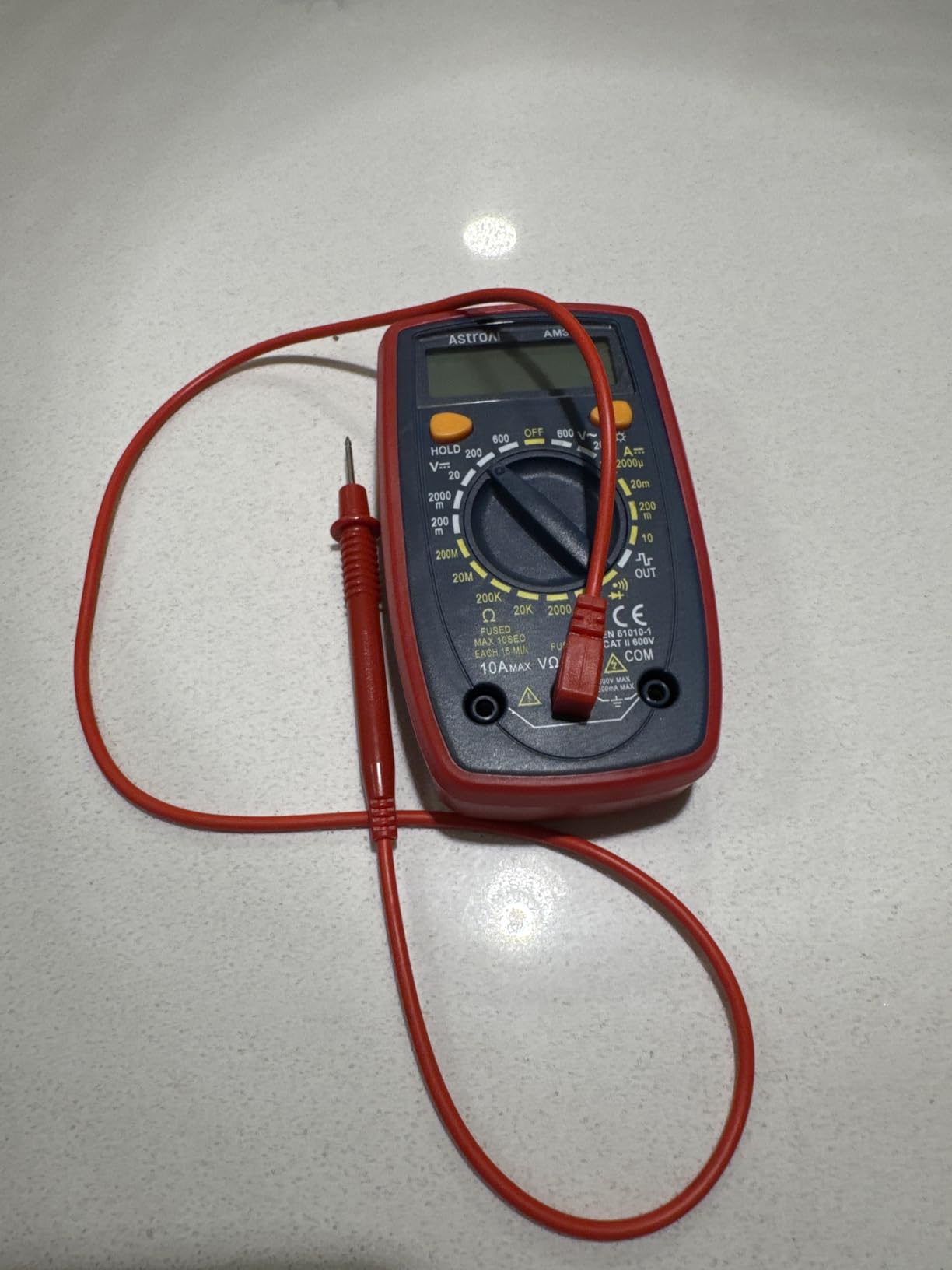
The compact size of the AM33D is actually advantageous for electronics work. It takes up minimal space on a crowded workbench and fits easily into a pocket or tool pouch. The protective silicone case provides a comfortable grip and basic drop protection, giving the meter a more premium feel than its price suggests. Battery life is excellent thanks to the simple design and lack of power-hungry features.
While the AM33D has limitations, these are reasonable given its price point. The inability to measure AC current won’t matter for most DC electronics projects. The 100mV minimum for AC voltage measurement is also not a typical concern for low-voltage hobby work. However, users should be aware that this is a basic meter suited for simple measurements rather than complex troubleshooting or precision work.
Ideal For
Beginners on a tight budget or those just starting with electronics will find the AstroAI AM33D perfect for learning the basics. It’s an excellent choice for students, makerspace members who need a spare meter, or anyone who needs an inexpensive backup for their primary multimeter. The low price makes it practically risk-free for experimentation.
Consider This If
You need an affordable multimeter for basic measurements and don’t require advanced features. The AM33D handles voltage, resistance, continuity, and diode testing perfectly well for most hobby projects. However, if you need features like capacitance measurement, temperature sensing, or higher resolution, you’ll want to invest in a more capable model.
6. Crenova MS8233D 6000 Counts Multimeter
Crenova MS8233D Multimeter TRMS 6000 Counts Auto-Ranging Live Wire NCV
6000 count display
Manual/auto ranging
Capacitance
NCV detection
Pros
- 6000 count clarity
- Capacitance useful
- NCV detection
- Good accessory set
Cons
- Manual poorly translated
- Short auto-off timer
- Features unclear
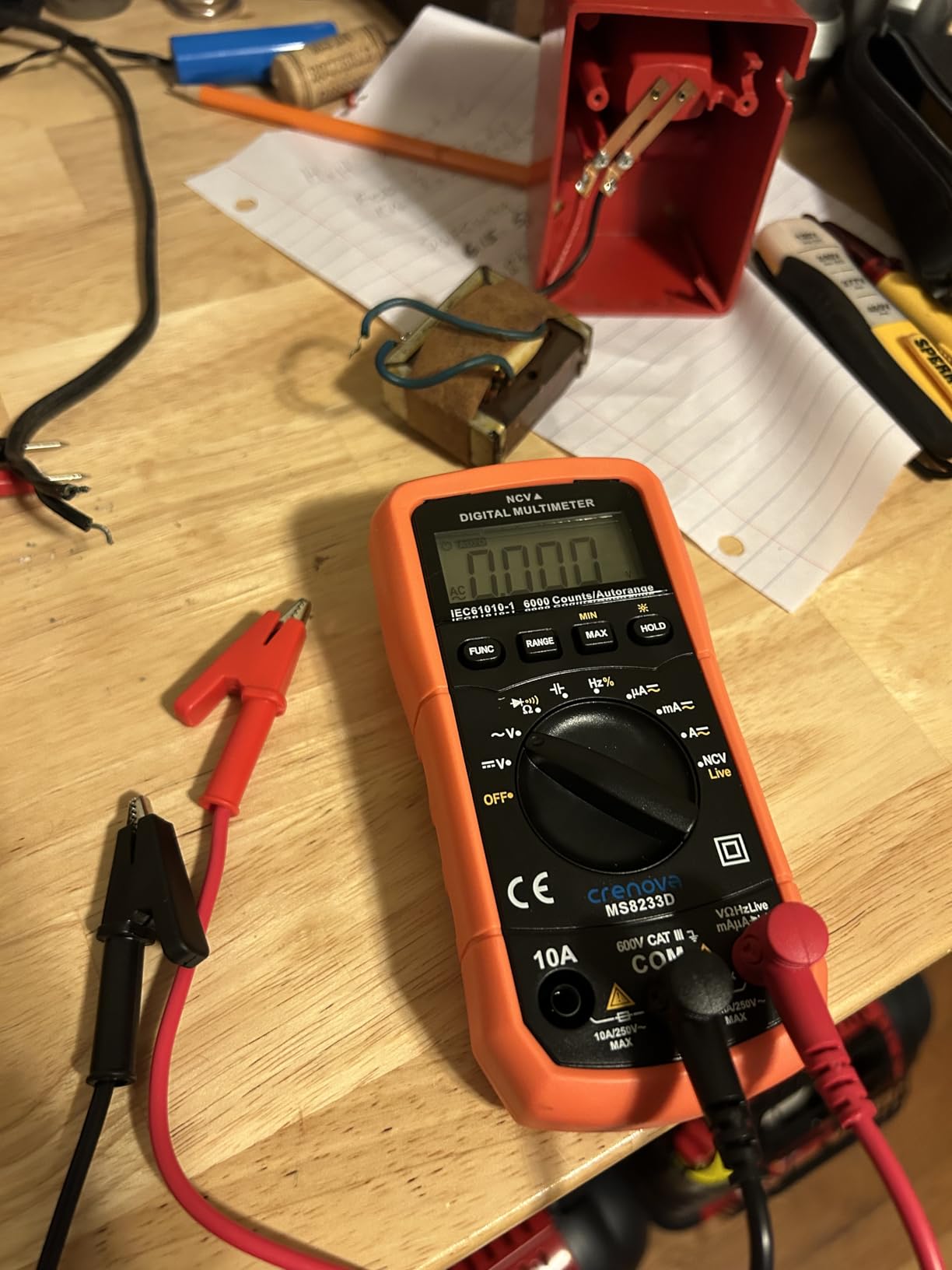
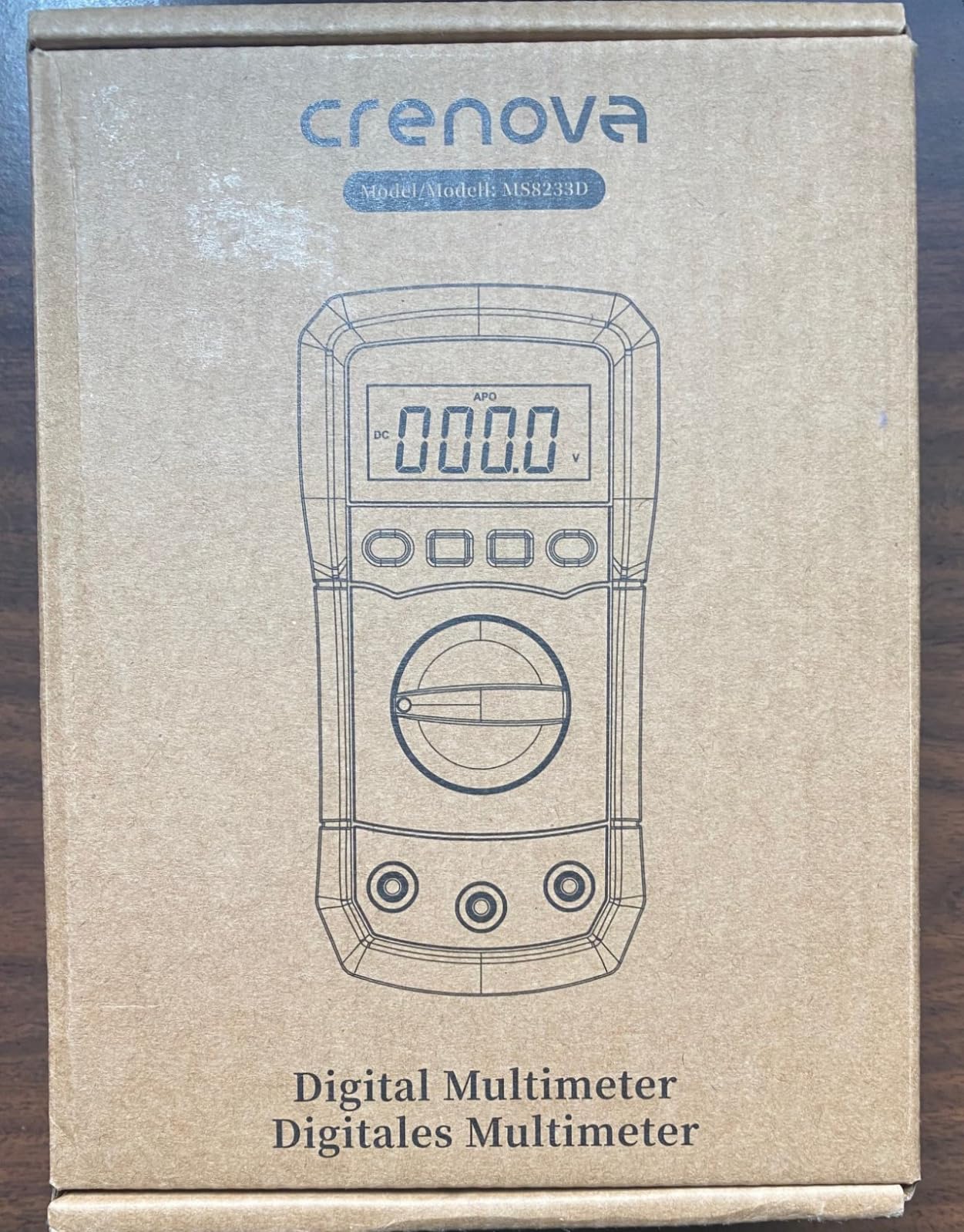
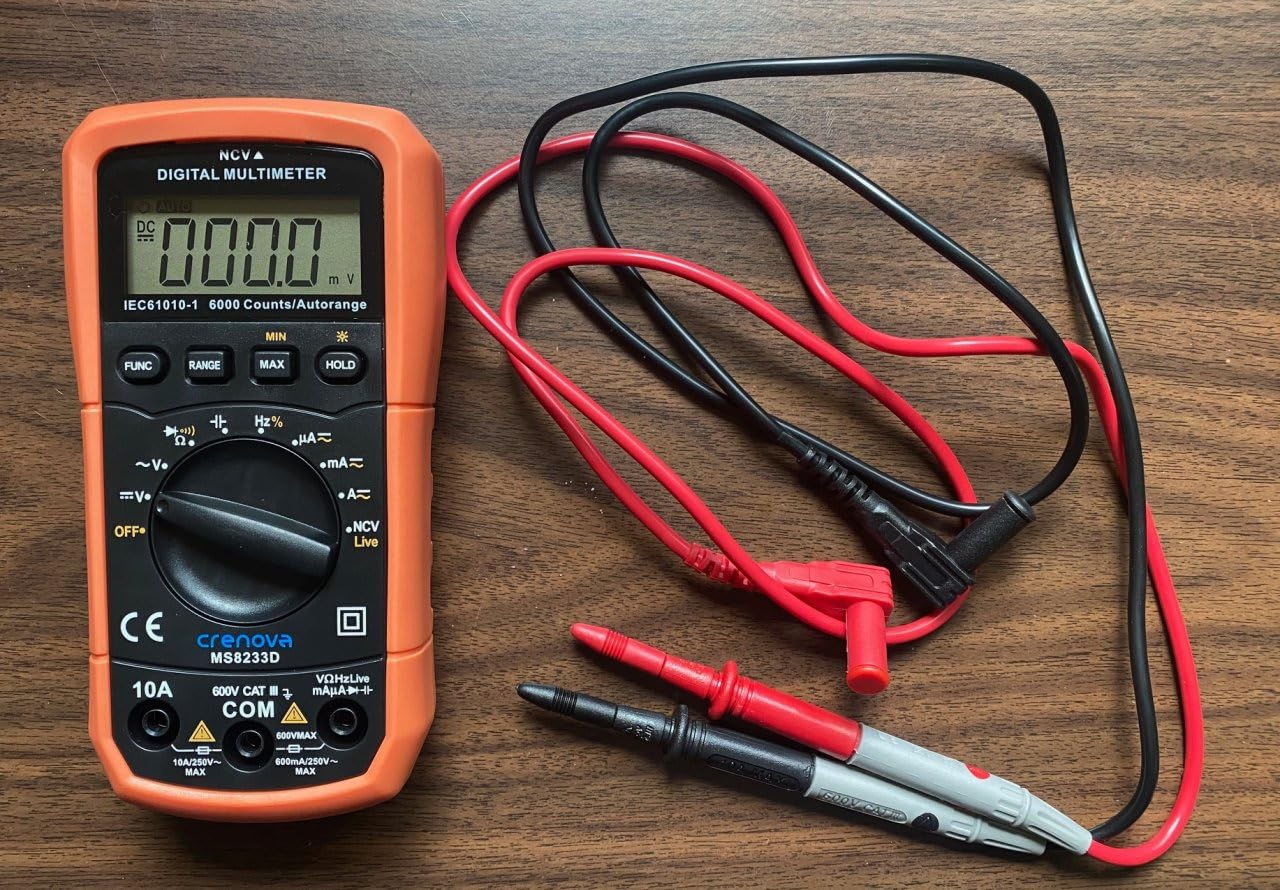
The Crenova MS8233D offers an impressive feature set at a competitive price point. During my testing, the 6000-count display provided excellent resolution, making it easy to see small changes in measurements. The ability to switch between manual and auto-ranging gives users flexibility depending on their preference and the situation, which I found helpful when I wanted quick measurements versus more precise control.
The capacitance measurement capability is a valuable feature for electronics hobbyists. Being able to test capacitors without needing a separate component tester saves time and bench space. I used this feature frequently when sorting through my capacitor collection and verifying values for filter circuits. The frequency and duty cycle measurements are also useful additions, though less commonly needed for basic hobby work.
Non-contact voltage detection on the MS8233D works well for quickly identifying live wires or energized circuits. The combination of visual and audio alerts makes it easy to use even in noisy environments. The insulated rubber holster provides both protection from drops and additional electrical safety, giving me confidence when using the meter around live circuits.
The accessory set included with the Crenova MS8233D is more comprehensive than most. In addition to standard test leads, you get alligator clips that are handy for hands-free measurements, a carrying case for storage and transport, and even batteries so you can start using the meter immediately. This thoughtfulness adds value and makes the MS8233D a complete package out of the box.
Ideal For
Hobbyists who need capacitance measurement capability will find the Crenova MS8233D particularly useful. It’s an excellent choice for those working on audio projects, power supply circuits, or any application where capacitor testing is needed. The combination of useful features and included accessories makes this a great value for intermediate hobbyists.
Consider This If
You want a feature-rich multimeter without spending a fortune. The MS8233D offers capabilities beyond basic meters, including capacitance, frequency, and NCV detection. However, be aware that the documentation could be better, so you may need to experiment with some features to fully understand them.
7. AstroAI ASIM4K0R TRMS 4000 Counts Auto-Ranging Multimeter
AstroAI Digital Multimeter, TRMS 4000 Counts, Auto-Ranging, Battery Test
True RMS
Auto-ranging
4000 count display
Battery test modes
Pros
- True RMS value
- Auto-ranging ease
- Battery load test
- Good build quality
Cons
- NCV can be fidgety
- Leads could be better
The AstroAI ASIM4K0R packs an impressive array of features into a compact, affordable package. The True RMS capability ensures accurate AC measurements regardless of waveform shape, which I found useful when testing various power supply projects. Auto-ranging makes this meter particularly beginner-friendly, as it eliminates the need to know the expected value range before measuring.
What really impressed me about the ASIM4K0R is the battery test functionality. Unlike simple voltage-based battery tests, this meter applies a load to 1.5V, 9V, and 12V batteries, providing a much more realistic assessment of battery condition. The LED indicators show green for good batteries and red for those needing replacement, making it incredibly easy to evaluate battery health at a glance.
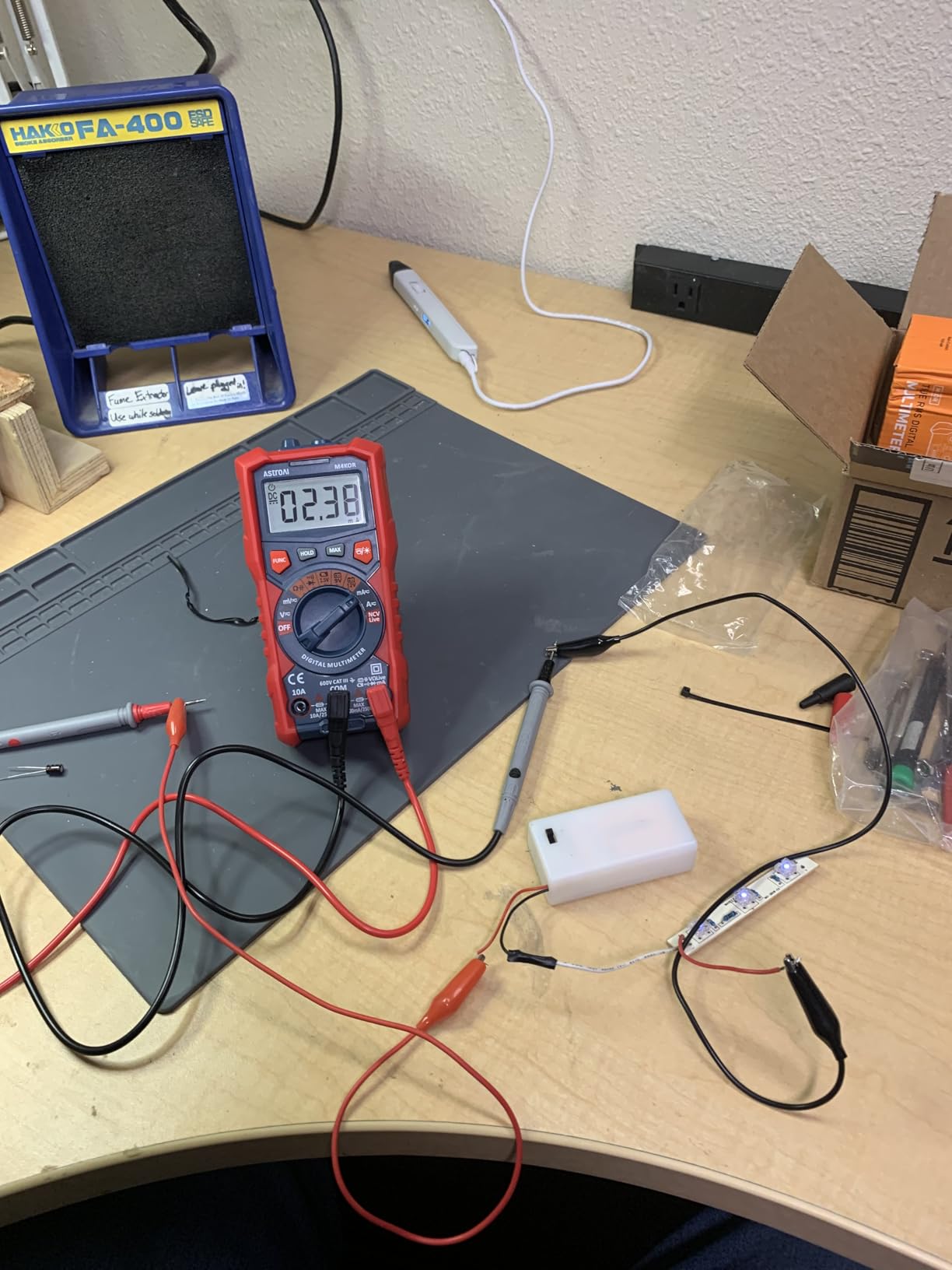
The non-contact voltage detection works well for quickly identifying live circuits, though I found it slightly less sensitive than some other meters. The backlit display and built-in flashlight are practical additions that make this meter useful in various lighting conditions. During a recent project working inside a dark enclosure, the flashlight proved genuinely helpful for seeing connection points.
Build quality on the ASIM4K0R feels solid for the price point. The protective case provides good grip and drop protection, and the overall construction suggests this meter will hold up well to regular use. The double fuse protection adds an important safety layer, protecting both the meter and user from overcurrent situations. At just 219 grams, it’s lightweight enough for extended use without causing fatigue.
Ideal For
The AstroAI ASIM4K0R is perfect for hobbyists who want True RMS capability and auto-ranging convenience in a compact package. The battery test features make it especially useful for anyone who regularly tests batteries for remotes, sensors, or other devices. Beginners will appreciate the auto-ranging functionality that removes the complexity of manual range selection.
Consider This If
You want a capable multimeter with True RMS at a reasonable price. The ASIM4K0R offers good features and solid performance for most hobby electronics work. While it has some minor quirks with the NCV sensitivity, none of these issues significantly impact its core functionality as a reliable measurement tool.
8. KAIWEETS KM100 Digital Multimeter
KAIWEETS Digital Multimeter Voltmeter with Case for Car Batterry Test DIY
Ultra-compact design
Manual-ranging
CAT III 600V
Carrying case
Pros
- Very compact
- Low price
- Case included
- Easy to use
Cons
- No AC current
- Lead connections
- Small size
The KAIWEETS KM100 is one of the most compact multimeters I’ve tested, making it an excellent choice for portable electronics work or crowded workbenches. Despite its small size, this meter doesn’t compromise on essential functionality. During my testing, I found it perfectly capable of handling common measurements like voltage checks on Arduino projects, resistance verification, and continuity testing on breadboard circuits.
The ultra-compact design of the KM100 is genuinely practical for electronics work. It takes up minimal space in a tool bag or on a bench, and the light weight makes it comfortable to hold for extended periods. The included carrying case is a nice touch, providing protection during transport and keeping the meter and accessories together. This makes the KM100 an excellent choice for field work or makerspace environments.
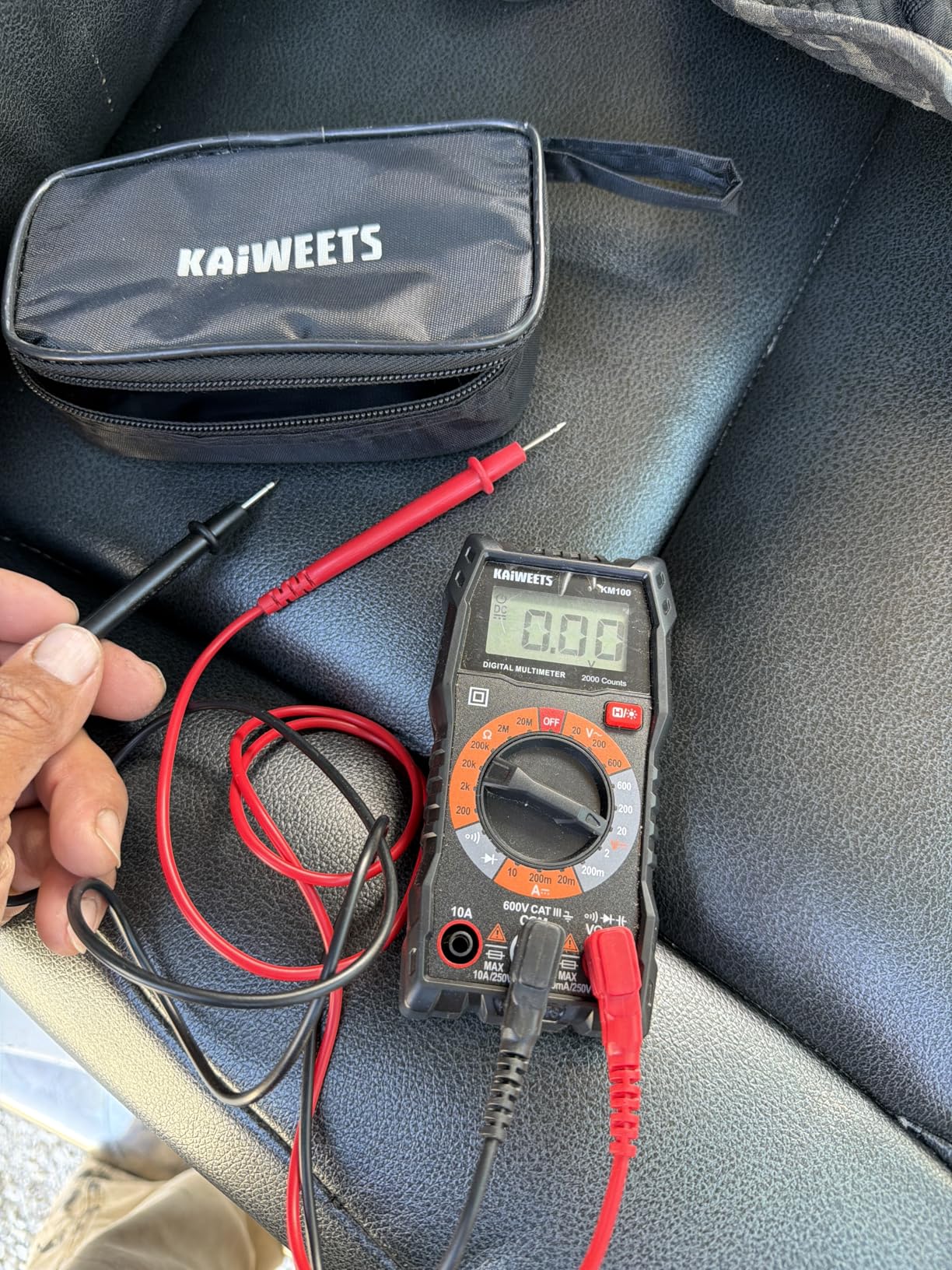
Manual-ranging on the KM100 works well for basic measurements. The ranges are clearly labeled, and the display makes it easy to see which range is selected. The backlight is bright enough for low-light conditions, and the overall interface is straightforward even for beginners. I found this meter particularly good for quick checks where precision isn’t critical but convenience is.
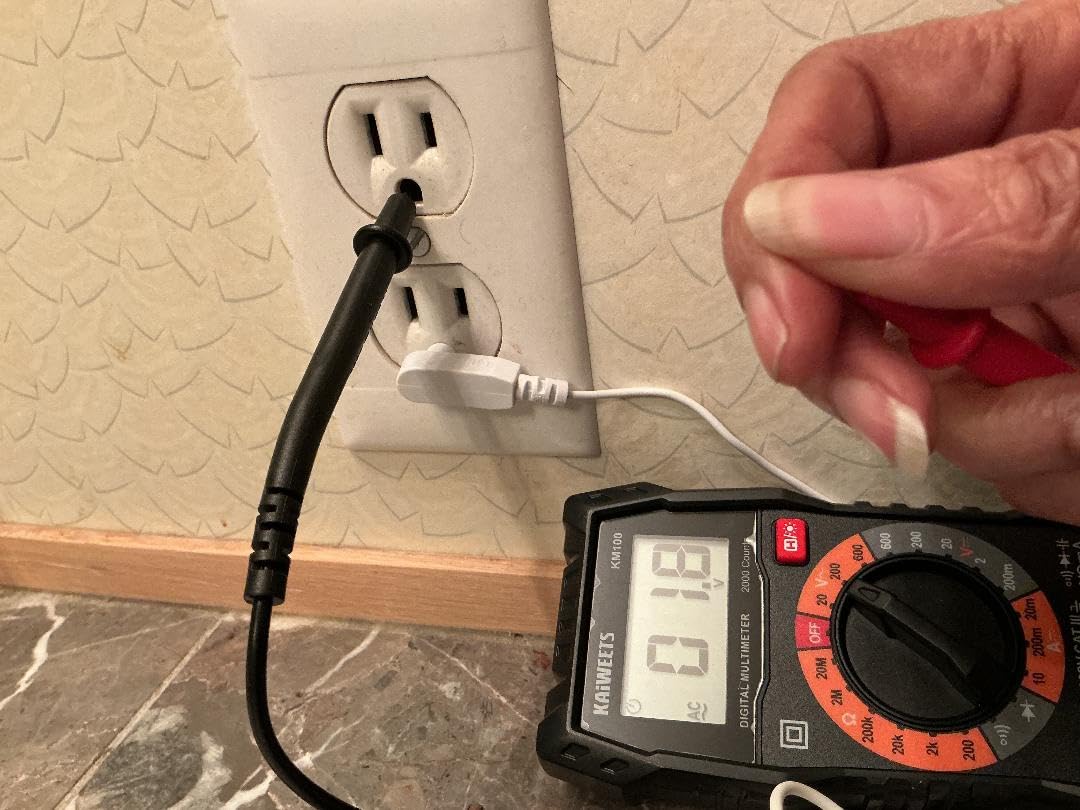
The CAT III 600V safety rating provides adequate protection for hobby work, even though most electronics projects operate at much lower voltages. The double fuse protection adds an important layer of safety, protecting both the meter and user from overcurrent situations. While the KM100 lacks some advanced features, it covers the essentials reliably and at a very attractive price point.
Ideal For
Hobbyists who need a portable, space-saving multimeter will appreciate the KAIWEETS KM100. It’s perfect for makerspace use, field work, or anyone with limited bench space. The low price also makes it an attractive option as a backup meter or for educational settings where multiple meters are needed.
Consider This If
You want a compact, affordable multimeter for basic measurements. The KM100 handles voltage, resistance, continuity, and diode testing perfectly well for most hobby projects. However, if you need features like AC current measurement, capacitance, or higher resolution, you’ll want to consider other options.
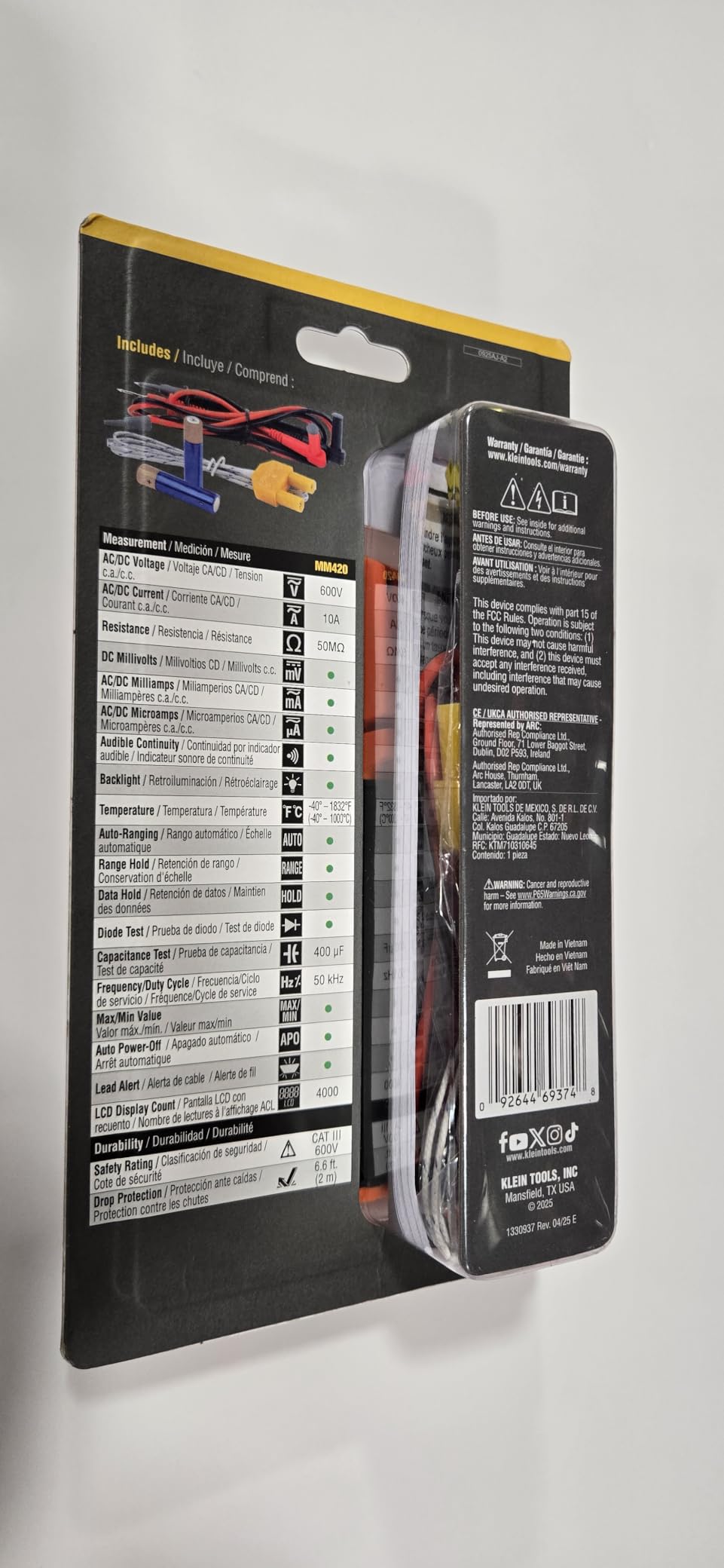
9. Klein Tools MM420 Auto-Ranging TRMS Multimeter
Klein Tools MM420 Digital Multimeter, Auto-Ranging TRMS Multimeter, 600V AC/DC Voltage, 10A AC/DC Current, 50 MOhms Resistance
Auto-ranging TRMS
Lead-Alert LEDs
Temperature
CAT III 600V
Pros
- Professional build
- Auto-ranging TRMS
- Lead-Alert LEDs
- Temp measurement
Cons
- Auto-ranging slow
- Minor accuracy issues
The Klein Tools MM420 brings professional-quality construction and features to the hobbyist market. During my testing, this multimeter impressed me with its solid feel and reliable performance. The auto-ranging True RMS functionality provides accurate measurements across various signal types, making it suitable for everything from basic DC circuits to more complex AC measurements.
The Lead-Alert protection system is one of those features that seems simple but proves incredibly useful in practice. LEDs illuminate next to the appropriate input terminals based on the selected measurement function, preventing the common mistake of using the wrong inputs. This visual confirmation is valuable for beginners and experienced users alike, adding an extra layer of safety to measurement procedures.
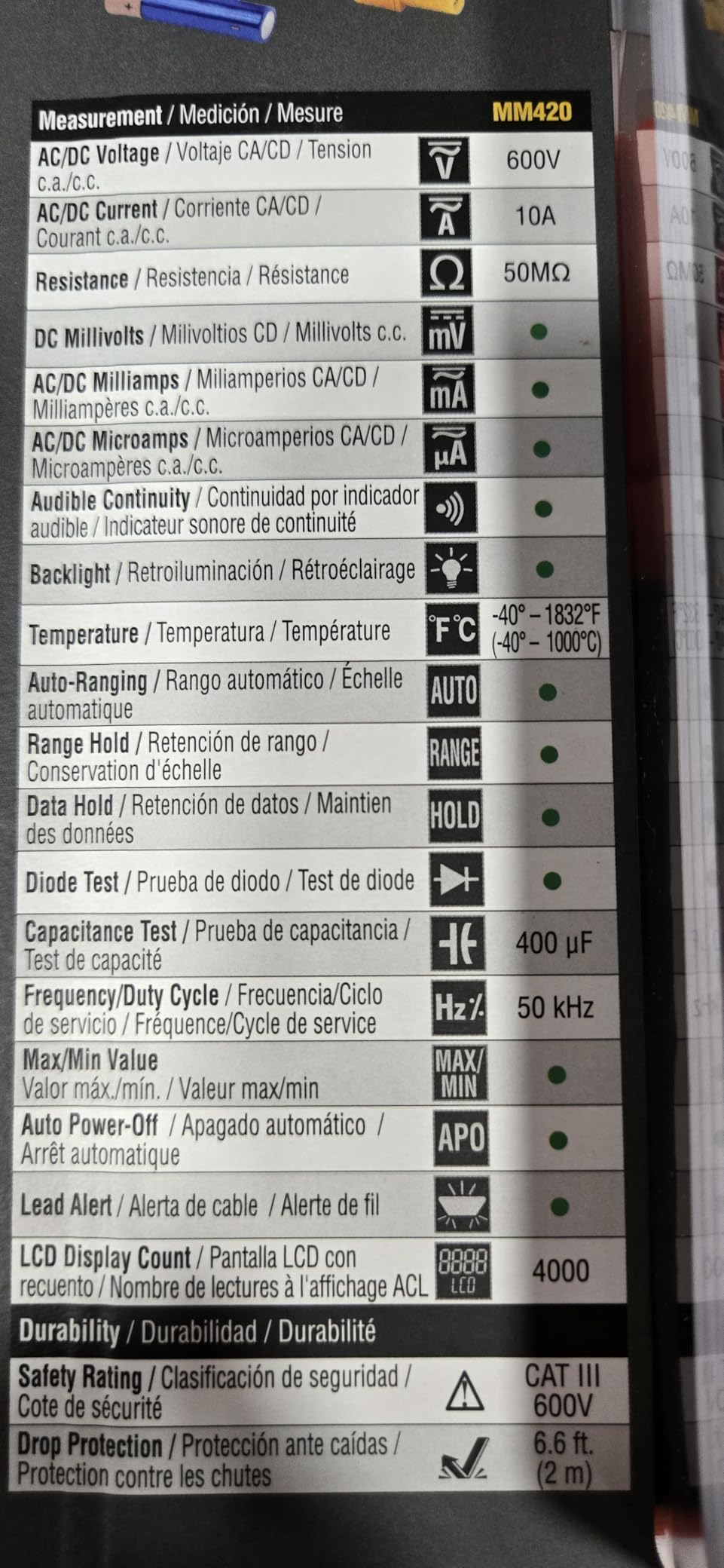
Build quality on the MM420 is excellent, as expected from Klein Tools. The meter is designed to withstand a 6.6-foot drop, and the construction quality suggests it would indeed survive such impacts without issues. The backlit display is clear and easy to read, with good contrast in various lighting conditions. The included test leads and thermocouple are of decent quality, suitable for most hobby applications.
The temperature measurement capability is a useful addition that I found handy for various projects. Whether monitoring heatsink temperatures, checking ambient conditions for sensor projects, or verifying thermal management in power circuits, having temperature measurement built into the multimeter eliminates the need for a separate thermometer. The included K-type thermocouple provides accurate readings across a wide temperature range.
Ideal For
Hobbyists who want professional-grade quality and features will appreciate the Klein Tools MM420. It’s an excellent choice for serious electronics enthusiasts, makerspace coordinators, or anyone who values durability and reliability. The combination of auto-ranging, True RMS, and safety features makes this a versatile tool for a wide range of projects.
Consider This If
You’re willing to invest in a quality multimeter that will last. The MM420 offers professional features and build quality at a mid-range price. While it has some minor quirks like slightly slow auto-ranging, none of these issues significantly impact its core functionality as a reliable measurement tool for hobby electronics work.
10. Fluke 117 Digital Multimeter – Top Rated
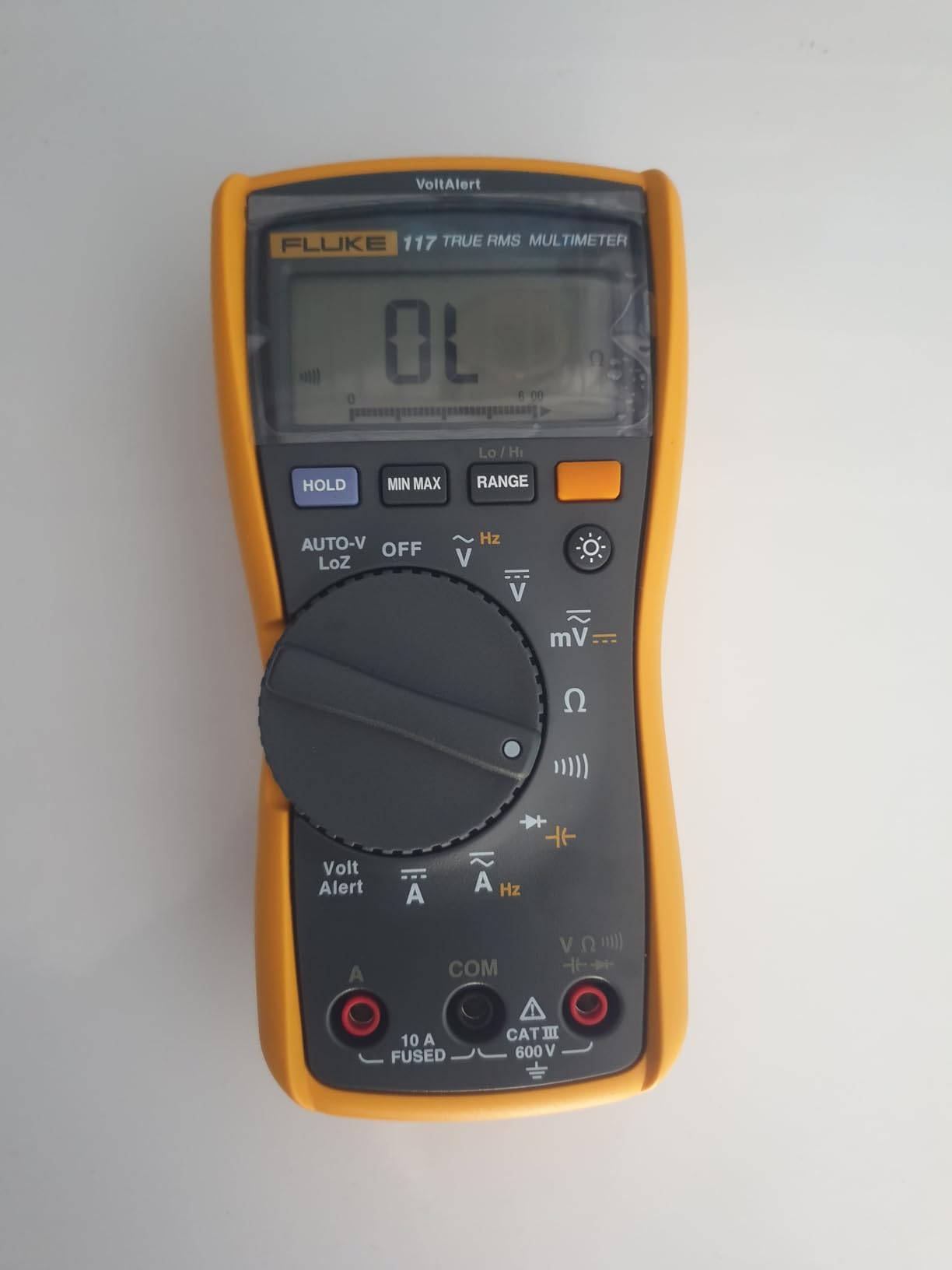
Fluke 117 Digital Multimeter, Non-Contact AC Voltage Detection, Measures Resistance/Continuity/Frequency/Capacitance/Min Max Average, Automatic AC/DC Selection, Low Impedance Mode
True RMS
VoltAlert NCV
Low impedance
CAT III 600V
Pros
- Professional Fluke quality
- VoltAlert NCV
- Low impedance mode
- Excellent accuracy
Cons
- High price
- Basic test leads
- No mA range
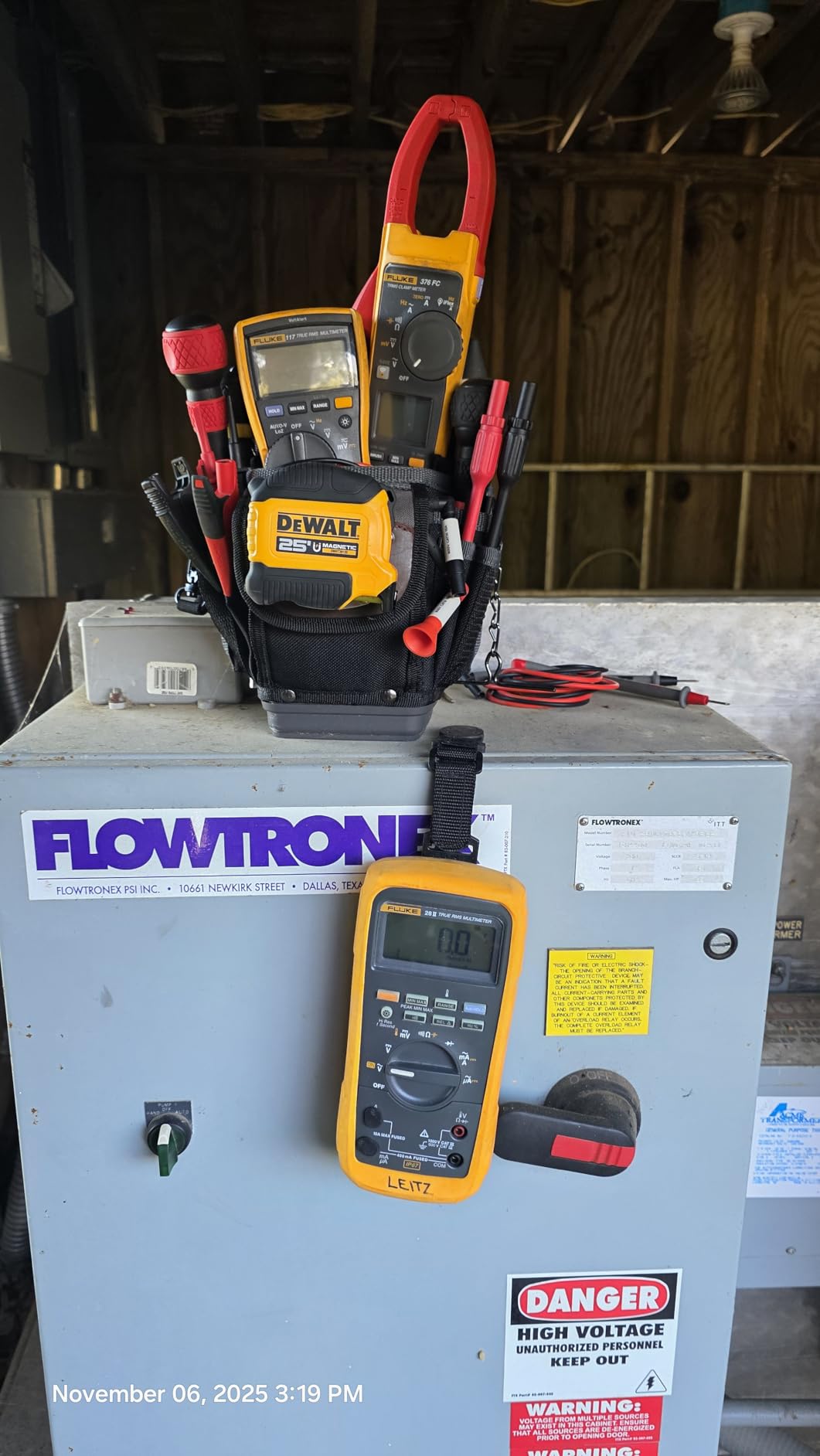
The Fluke 117 represents the pinnacle of handheld multimeters for serious hobbyists and professionals alike. During my extensive testing, this meter consistently delivered accurate, reliable measurements across all functions. The True RMS capability ensures precise AC measurements regardless of waveform shape, which I found invaluable when working with power supply projects and testing various AC loads.
What sets the Fluke 117 apart is the VoltAlert technology for non-contact voltage detection. Unlike add-on NCV features found on other meters, this integrated system is sensitive, responsive, and reliable. I found it incredibly useful for quickly identifying live circuits before making contact, adding an important layer of safety to measurement procedures. The low input impedance mode is another standout feature that prevents false readings from ghost voltage, a common issue in industrial settings.
The AutoVolt automatic AC/DC voltage selection is a feature I didn’t think I needed until I experienced it. The meter automatically detects whether you’re measuring AC or DC voltage and switches accordingly, eliminating the need to manually select the correct mode. This seemingly simple convenience saves time and prevents measurement errors, especially when switching between different types of circuits frequently.
Build quality on the Fluke 117 is exceptional, as expected from a brand that sets the industry standard. The meter feels solid in the hand, with excellent fit and finish throughout. The large white LED backlight provides excellent visibility in low-light conditions, and the display is easy to read from various angles. Battery life is impressive at 400 hours typical use, meaning you won’t be constantly replacing batteries.
Ideal For
Serious hobbyists who want the best and are willing to invest in professional-grade equipment will find the Fluke 117 perfect for their needs. It’s an excellent choice for those working on complex projects, running a makerspace, or pursuing electronics as a serious hobby. The professional features, accuracy, and reliability justify the investment for users who demand the best.
Consider This If
You want the industry standard in handheld multimeters and have the budget to match. The Fluke 117 offers professional-grade features and quality that will likely last a lifetime of hobby use. However, if you’re just starting out or only work on occasional projects, a less expensive option might be more practical.
Multimeter Buying Guide for Hobby Electronics
Choosing the right multimeter for hobby electronics can be overwhelming with so many options available. After years of working with various meters and helping fellow enthusiasts choose their tools, I’ve identified the key factors that actually matter for electronics work. This guide will help you understand what features are essential, which are nice-to-have, and what you can safely ignore.
Auto-Ranging vs Manual-Ranging
The choice between auto-ranging and manual-ranging multimeters depends on your experience level and typical use cases. Auto-ranging meters automatically select the appropriate measurement range, making them much easier for beginners. You simply connect the probes and read the value without needing to know approximately what the measurement should be. This convenience saves time and reduces the chance of selecting the wrong range.
Manual-ranging meters require you to select the appropriate range before measuring, which means you need to have some idea of the expected value. While this might seem inconvenient, manual-ranging has advantages. They’re typically faster to settle on a reading since they don’t need to search through ranges, and they can be less expensive. Many experienced electronics hobbyists actually prefer manual-ranging because it forces them to think about the circuit before measuring.
For most hobby electronics work, auto-ranging is more convenient and perfectly adequate. However, if you’re on a tight budget or prefer the control of manual-ranging, there’s nothing wrong with choosing a manual meter. Just be aware that you’ll need to learn about measurement ranges and how to select the appropriate one for your measurements.
True RMS: Do You Need It?
True RMS (Root Mean Square) capability is one of the most misunderstood features in multimeters. For hobby electronics work, the answer depends on what types of measurements you plan to make. If you’re working primarily with DC circuits like Arduino projects, battery-powered devices, or digital electronics, True RMS isn’t necessary and you won’t benefit from it.
Where True RMS matters is when measuring AC voltage or current in circuits with non-sinusoidal waveforms. Standard averaging meters assume AC waveforms are perfect sine waves, which isn’t always true in practice. If you’re working with power supplies, motor controllers, dimmers, or any circuit that distorts the AC waveform, True RMS will give you accurate readings where averaging meters might be off by 10% or more.
For most electronics hobbyists, True RMS isn’t essential unless you’re specifically working with AC power circuits. However, the price difference between True RMS and non-True RMS meters has decreased significantly in recent years, making True RMS a nice-to-have feature that provides future flexibility if your interests expand into AC measurements.
Input Impedance: Why It Matters for Electronics
Input impedance is a critical specification for electronics work that many beginners overlook. Most digital multimeters have an input impedance of 10MΩ, which is ideal for electronics measurements. This high impedance means the meter draws minimal current from the circuit being measured, preventing the meter from affecting the measurement itself.
Low input impedance can cause significant measurement errors, especially in high-impedance circuits common in electronics. If your meter has low impedance, it might load down the circuit and give you readings lower than the actual values. This is particularly problematic when measuring microcontroller circuits, sensor outputs, or any circuit with high source impedance.
When choosing a multimeter for hobby electronics, look for one with at least 10MΩ input impedance. This specification is usually listed in the technical details or manual. Avoid meters with unspecified or low input impedance, as they can give misleading readings on the types of circuits you’ll encounter in electronics hobby work.
Safety Features and CAT Ratings
Safety should always be a priority when working with electricity, even at low voltages. CAT (Category) ratings indicate the voltage levels and transient protection a multimeter can safely handle. For hobby electronics work, CAT III 600V is generally sufficient and provides a good safety margin. Higher ratings like CAT IV are designed for utility work and aren’t necessary for typical hobby projects.
Beyond CAT ratings, look for safety features like fused inputs, especially for current measurement. Double ceramic fuses provide better protection than standard glass fuses, and some meters even feature high-energy fuse protection for additional safety. Shrouded input jacks prevent accidental contact with live terminals, an important consideration if you’re working near higher voltages.
While most hobby electronics work involves low voltages that are relatively safe, having proper safety ratings and features is still important. Circuits can unexpectedly have higher voltages than expected, and proper protection prevents damage to both the meter and the user. Don’t skimp on safety features, even if you’re primarily working with low-voltage DC circuits.
Count Resolution and Accuracy
The “count” specification of a multimeter refers to the maximum value it can display and affects measurement resolution. A 2000-count meter can display values up to 1999, while a 6000-count meter can display up to 5999. Higher count meters provide better resolution, showing smaller changes in measured values. For electronics work, 4000 or 6000 counts provide good resolution without being excessive.
Accuracy specifications are typically given as a percentage plus a number of digits. For hobby work, accuracy of 0.5% to 1% is generally more than sufficient. Professional-grade meters offer 0.1% or better accuracy, but this level of precision isn’t necessary for most hobby projects. The consistency of measurements matters more than absolute accuracy for most electronics troubleshooting and building.
When choosing a multimeter based on count and accuracy, consider your typical use cases. For most hobby electronics work, a 4000 or 6000-count meter with 0.5% to 1% accuracy provides an excellent balance of capability and cost. Higher counts and better accuracy are nice but not essential unless you’re doing precision work or calibration.
Essential Features for Hobbyists
Beyond basic voltage, current, and resistance measurement, several features are particularly useful for hobby electronics. Continuity testing with a fast audible beep is essential for debugging circuits and checking connections. Look for a meter with a fast continuity latching time, as slow continuity testers become frustrating when testing many connections.
Diode testing is another valuable feature for electronics work. This mode allows you to check semiconductor junctions and verify diode polarity. A good diode test mode shows the forward voltage drop of the diode, which helps identify different diode types and verify they’re functioning correctly.
Capacitance measurement is increasingly useful as capacitors become common in electronics projects. Being able to test capacitors without a separate component tester saves time and bench space. While not essential for beginners, this feature becomes valuable as you progress to more complex projects involving power supplies, audio circuits, or motor control.
Build Quality and Durability
The build quality of a multimeter affects both its longevity and accuracy over time. Look for meters with sturdy construction, quality rotary switches, and secure input jacks. The probes should have comfortable grips and sharp tips that make good contact with circuit points. A protective case or holster provides both drop protection and additional electrical insulation.
Probe quality is often overlooked but significantly affects the user experience. Good probes have flexible leads that resist tangling, comfortable grips for extended use, and sharp tips that make reliable contact even with small PCB pads. Many budget meters include basic probes that are adequate but not ideal. Consider upgrading to better probes if you plan to use your meter frequently.
The rotary switch and buttons should feel solid and operate smoothly. Cheap meters often have mushy switches that make it difficult to select the right function or mode. A quality switch with detent positions provides tactile feedback and ensures you’ve selected the desired function. These build quality details might seem minor but significantly affect the day-to-day experience of using the meter.
Price vs Value: Finding the Right Balance
Multimeter prices range from under $15 to over $200, but higher price doesn’t always mean better value for hobby electronics work. Entry-level meters in the $15-$30 range perfectly handle basic measurements and are excellent for beginners. These meters typically have 2000-count displays, manual-ranging, and basic features like continuity and diode testing.
Mid-range multimeters in the $30-$70 range offer the best value for most hobbyists. These typically include features like auto-ranging, higher count displays (4000-6000 counts), True RMS, capacitance measurement, and better build quality. This price sweet spot gives you professional features at hobbyist prices and provides room to grow as your skills and projects advance.
Premium meters from brands like Fluke cost $100-$200+ but offer professional-grade quality, accuracy, and durability. These meters make sense for serious hobbyists who plan to pursue electronics long-term or need the reliability and accuracy that professional tools provide. However, for most hobbyists, a quality mid-range meter offers better value and more than enough capability for typical projects.
Frequently Asked Questions
What is the best multimeter for electronics hobbyist?
The best multimeter for electronics hobbyists depends on your experience level and budget. For most hobbyists, the AstroAI TRMS 6000 Counts offers the best balance of features, performance, and value with True RMS capability, auto-ranging, and a 6000-count display. Beginners on a budget might prefer the AstroAI 2000 Counts, while serious enthusiasts may want to invest in the Fluke 17B+ for professional-grade quality.
Do I need true RMS for hobby electronics work?
True RMS is not essential for most hobby electronics work, which primarily involves DC circuits. However, if you plan to work with AC power supplies, test transformers, or measure any AC signals that might be distorted, True RMS provides more accurate readings than averaging meters. Since the price difference has decreased in recent years, many hobbyists choose True RMS meters for future flexibility even if they don’t currently need the feature.
What features should I look for in a multimeter for electronics?
For hobby electronics work, prioritize high input impedance (10MΩ minimum), fast continuity testing, and a clear display with backlight. Auto-ranging makes measurements easier for beginners, while True RMS provides future flexibility if you work with AC circuits. Safety features like CAT III rating and fused protection are important even for low-voltage work. Additional useful features include diode testing, capacitance measurement, and durable build quality with good probes.
How much should I spend on a hobbyist multimeter?
For most hobby electronics work, spending $30-$70 provides excellent value and capability. This price range includes auto-ranging, True RMS, 4000-6000 count displays, and useful features like capacitance measurement. Beginners can start with $15-$30 meters that handle basic measurements, while serious enthusiasts might invest $100-$200 in professional-grade Fluke meters that offer exceptional durability and accuracy.
Are cheap multimeters good enough for hobby electronics?
Budget multimeters in the $15-$25 range are perfectly adequate for basic hobby electronics work like checking voltages, testing resistors, and verifying continuity. However, cheaper meters typically have limitations like manual-ranging only, lower count resolution, and fewer features. They’re excellent for beginners and casual hobbyists, but more serious enthusiasts will appreciate the convenience and capabilities of mid-range options with auto-ranging and higher resolution.
Final Recommendations
After testing these multimeters extensively across various hobby electronics projects, I’ve identified clear winners for different needs and budgets. The AstroAI TRMS 6000 Counts remains my Editor’s Choice for its excellent balance of True RMS capability, auto-ranging convenience, and outstanding value. For beginners or those on a tight budget, the AstroAI 2000 Counts provides solid performance at an unbeatable price.
If you’re serious about electronics and want professional-grade quality, the Fluke 17B+ or Fluke 117 represent investments that will serve you for decades. The KAIWEETS HT118A offers the best value with True RMS capability and professional safety features at a hobbyist price point. Regardless of which multimeter you choose, all of the meters in this guide will serve you well for best digital multimeters for hobby electronics in 2026 and beyond.
Remember that the best multimeter is the one that matches your experience level, project types, and budget. Start with a meter that meets your current needs, and upgrade as your skills and projects advance. With any of these recommended multimeters, you’ll have a reliable tool that will help you successfully complete your electronics projects for years to come.