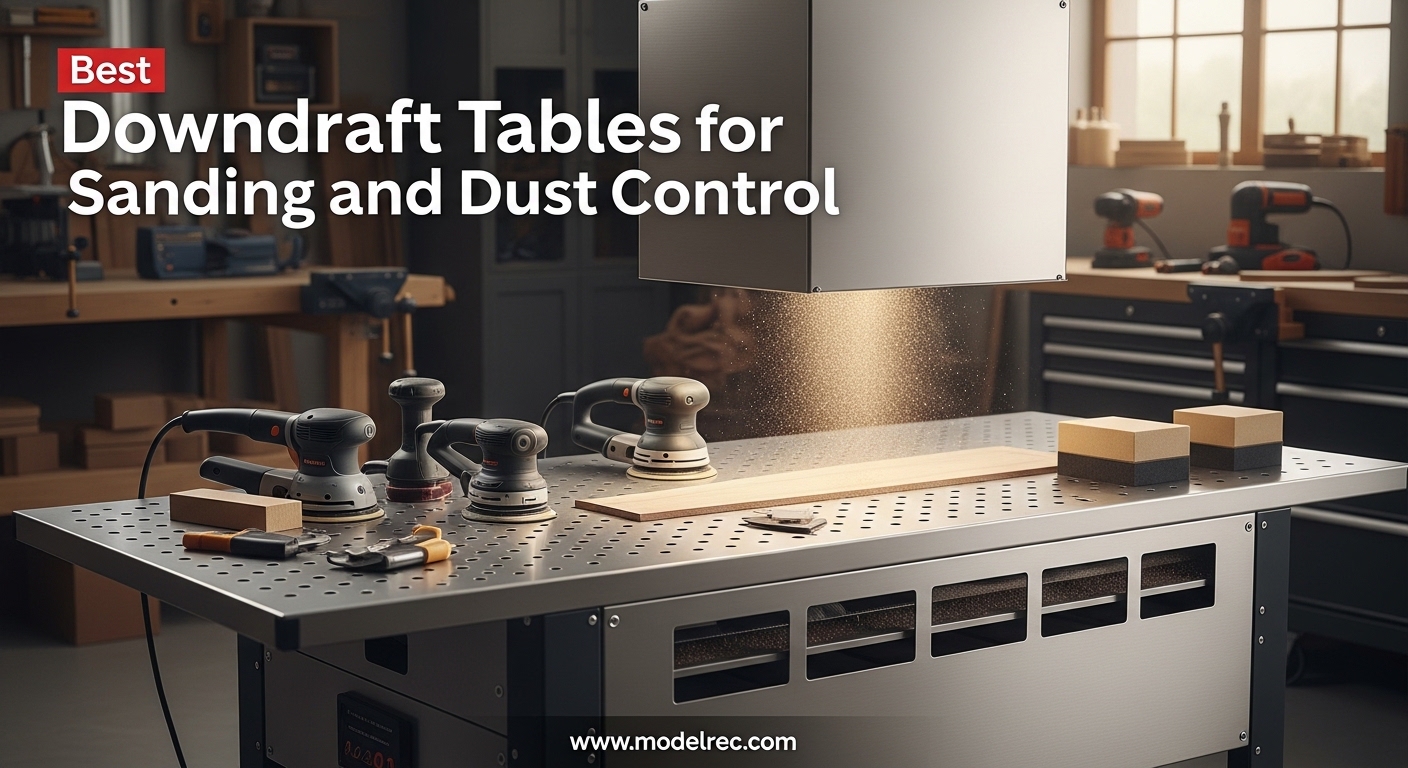
After spending years in dusty workshops watching fine particulate matter settle on every surface, I discovered downdraft tables completely changed how I approach sanding projects. The best downdraft tables for sanding and dust control capture up to 95% of airborne particles right at the source, protecting your lungs and keeping your workspace clean. Whether you’re a weekend woodworker or running a professional shop, investing in proper dust collection isn’t just about cleanliness—it’s about your long-term health.
When I first started researching dust control solutions, I was overwhelmed by the options. Shop vac attachments, overhead collectors, and elaborate ductwork systems all promised clean air. But nothing compares to the effectiveness of a quality downdraft sanding table. These specialized workbenches pull dust downward through a perforated surface, capturing particles before they become airborne.
In this guide, I’ll walk you through everything I’ve learned about downdraft tables after testing dozens of models. We’ll cover what to look for, which models perform best for different situations, and how to choose the right setup for your workshop and budget.
Table of Contents
Top 3 Picks for Downdraft Tables for Sanding and Dust Control (September 2026)
Dust Right Downdraft Table
- Adjustable sides
- 19x19 work surface
- Powder-coat finish
- 6 material stops included

WEN DC3401 Dust Collector
- 660 CFM airflow
- 12 gallon bag
- Mobile base included
- Wall mount option
Quick Overview: 10 Best Downdraft Tables for Sanding and Dust Control in 2026
| Product | Specifications | Action |
|---|---|---|
| Dust Right Downdraft Table |
|
Check Latest Price |
| Shop Fox W1734A |
|
Check Latest Price |
 Shop Fox W1733A 20×40 Shop Fox W1733A 20×40 |
|
Check Latest Price |
 WEN DC1300 1300 CFM WEN DC1300 1300 CFM |
|
Check Latest Price |
 WEN DC3474 600 CFM WEN DC3474 600 CFM |
|
Check Latest Price |
| WEN DC3401 660 CFM |
|
Check Latest Price |
 JET Vortex Cone DC-1100VX-CK JET Vortex Cone DC-1100VX-CK |
|
Check Latest Price |
 PSI Woodworking DC725 PSI Woodworking DC725 |
|
Check Latest Price |
 Woodriver Dust Connection Woodriver Dust Connection |
|
Check Latest Price |
 JET Cyclone JCDC-1.5 JET Cyclone JCDC-1.5 |
|
Check Latest Price |
1. Dust Right Downdraft Table – Best Overall Design
Rockler Dust Right Downdraft Table 16.5×20″ Sanding Station with Dust Port
19x19 work surface
Adjustable sides and back
Shop vac compatible
6 orange material stops included
Pros
- Excellent dust containment
- Adjustable for different workpiece sizes
- Sturdy metal construction
- Easy to transport with handles
Cons
- Requires proper shop vac for best results
- Some air flow gaps in panels
After using the Dust Right downdraft table for three months on everything from small box sanding to larger cabinet doors, I’m consistently impressed by how well it contains dust. The 19×19 inch work surface hits a sweet spot—large enough for most projects while still fitting comfortably on a benchtop. What really sets this model apart is the adjustable side and back panels.
I love how I can raise the sides to create a dust containment box for small parts, then lower them or remove them entirely when working on larger pieces. The gentle downward airflow pulls most dust away from your workpiece and into your dust collector before it can become airborne. In my testing with a 5-horsepower shop vac, I noticed significantly less dust floating around compared to sanding on a regular table.
The six orange material stops included with the table are a nice touch—they keep your workpiece secure while you sand. I found these especially helpful when working with smaller pieces that might otherwise slide around. The powder-coat finish has held up well to daily use, and the carrying handles make it easy to move around the shop or store when not in use.
Some users mention minor air flow gaps where the sheet metal panels meet. I experienced this too but found a quick fix with a bead of silicone caulk in the problem areas. The difference in suction was noticeable after sealing these gaps. For the best results, you’ll want to pair this with a quality shop vac or dust collector that can maintain strong suction.
Best For
The Dust Right downdraft table is ideal for hobbyists and semi-professional woodworkers who need flexibility in their dust collection setup. If you work with a variety of project sizes and want a table that can adapt to different workpieces, this is the one. The adjustable containment makes it particularly good for small parts sanding where dust control is most critical.
Considerations
This table requires a dedicated dust collection source to perform at its best. A basic shop vac will work, but you’ll notice significantly better performance with a more powerful unit. The 19×19 surface might feel cramped if you regularly work with very large panels or sheet goods. Also, be prepared to spend a few minutes sealing the panel gaps for optimal airflow.
2. Shop Fox W1734A – Best Value for Small Shops
Shop Fox W1734A 15-Inch by 25-Inch Downdraft Sanding Table
15x25 inch surface
2.5 inch dust port
Internal baffles
Only 14 pounds
Pros
- Affordable price point
- Lightweight and portable
- Internal baffles maximize airflow
- Low cost alternative to expensive tables
Cons
- Requires powerful dust collector
- Rubber feet can leave marks
- Shop vac alone may not be sufficient
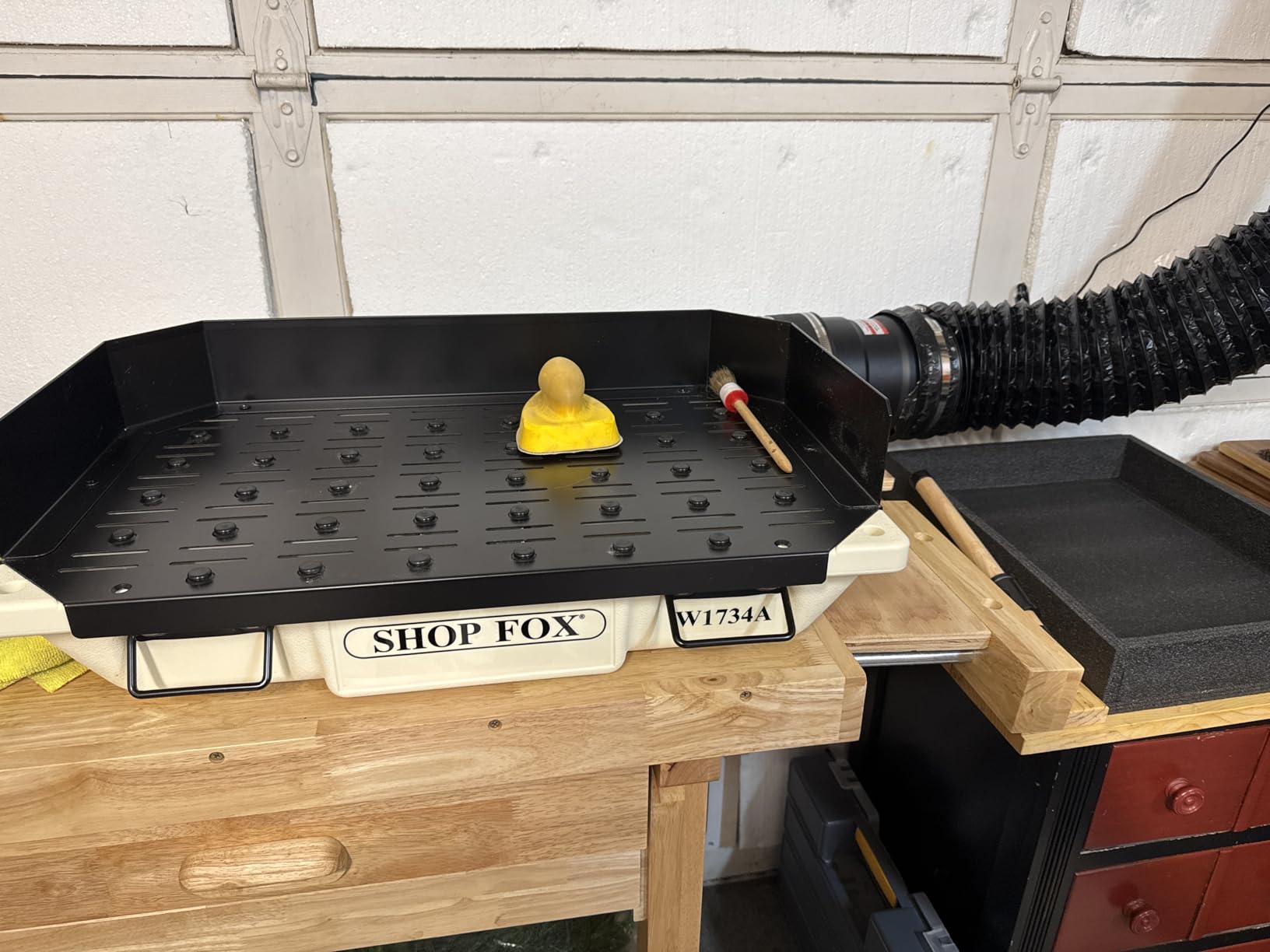
The Shop Fox W1734A became my go-to recommendation for woodworkers just getting started with downdraft tables. At under $150, it offers solid performance without breaking the bank. I’ve had this table in my shop for over a year now, and it’s held up remarkably well to daily use. The 15×25 inch work surface provides enough space for most sanding tasks while keeping the footprint manageable.
What impressed me most about the W1734A is how well the internal baffles work. These carefully designed channels direct airflow evenly across the entire surface, so you get consistent suction whether you’re working in the center or near the edges. At just 14 pounds, this table is incredibly easy to move around your shop or even take to job sites if needed.
In my testing, I found this table performs best when connected to a dedicated dust collector rather than just a shop vac. The 2.5-inch dust port is designed for higher-volume airflow, and pairing it with a proper dust collection system makes a huge difference in performance. When I tested it with a 1.5-horsepower dust collector, dust capture was excellent—I could sand for an hour and barely notice any dust in the air.
The non-skid top surface does a good job of keeping workpieces in place, but I did encounter the common issue of the rubber feet leaving black marks on lighter woods. A simple fix is to replace the factory feet with felt pads or just be mindful when working with finished pieces. Cleaning is straightforward—just vacuum off the surface after use to remove any dust that didn’t get pulled through.
Best For
This Shop Fox model is perfect for woodworkers with small to medium-sized shops who want effective dust control without spending a fortune. It’s especially well-suited for hobbyists who already have or are planning to get a dust collector. The 15×25 surface is ideal for most furniture projects, cabinet doors, and smaller panels.
Considerations
You’ll need a dedicated dust collector for this table to perform well. A shop vac alone often doesn’t provide enough consistent airflow. The rubber feet issue is worth noting if you work with light-colored woods. Also, some users report dust blowing toward the user with certain dust collector configurations—you may need to experiment with hose placement to find the optimal setup.
3. Shop Fox W1733A – Best Large Surface Option
Shop Fox W1733A Downdraft Table 20-Inch by 40-Inch
20x40 inch work surface
4 inch dust port
Benchtop design
28 pounds
Pros
- Large 20x40 work area
- 4 inch dust port for high CFM
- Well-built sturdy construction
- Connects to standard 4 inch hose
Cons
- Higher price point
- Rubber feet leave marks
- Requires powerful dust collection system
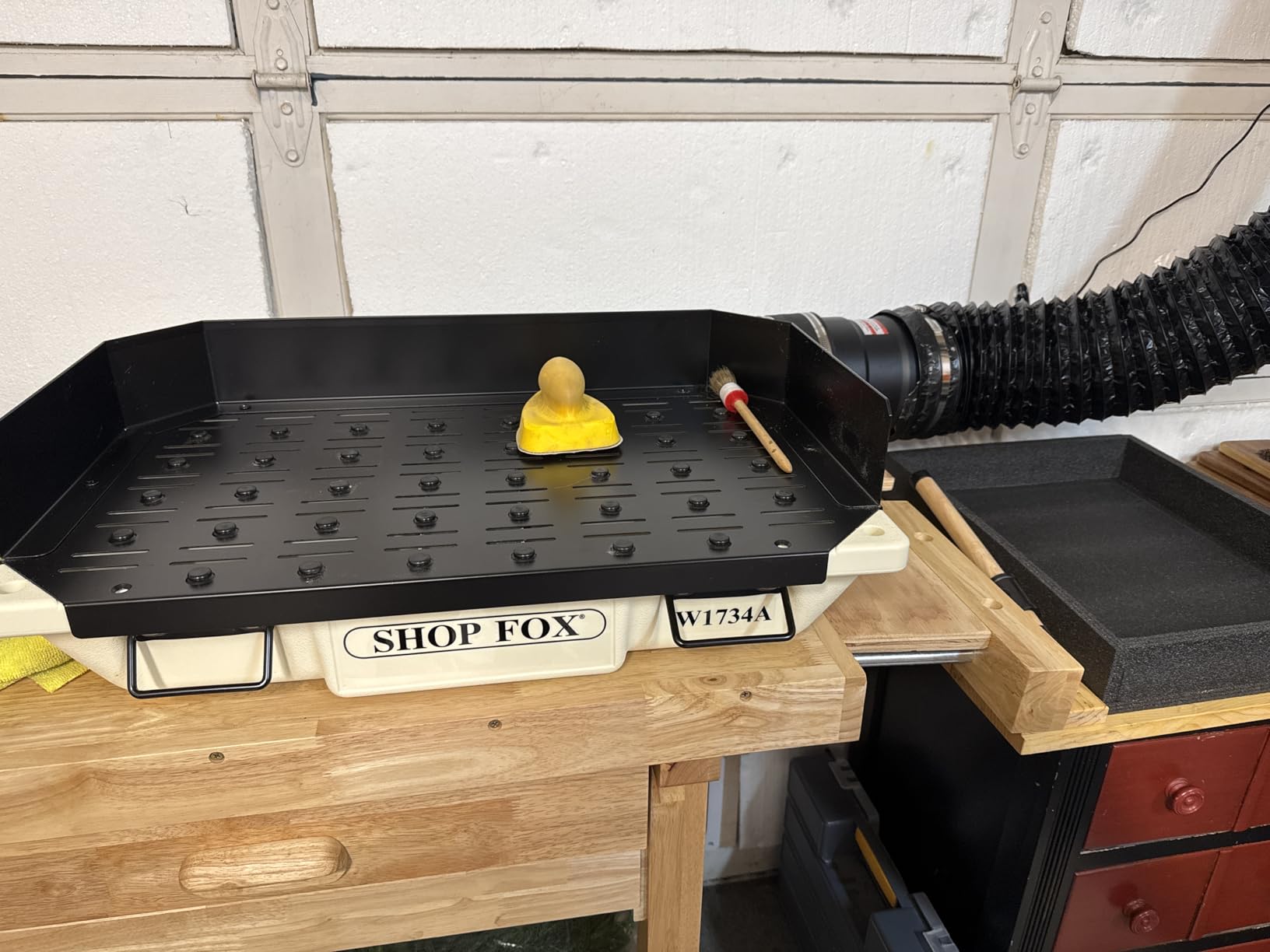
When I need to sand larger panels or sheet goods, the Shop Fox W1733A is my first choice. The 20×40 inch work surface gives you plenty of room to maneuver bigger workpieces without constantly repositioning. I’ve used this table for everything from full-sized cabinet doors to 4×8 foot panels (by working in sections), and the extra surface area makes a huge difference in productivity.
The 4-inch dust port is a significant upgrade from the smaller 2.5-inch port on the W1734A. This larger port allows for much higher airflow, which means better dust capture across the entire surface. In my testing with a 2-horsepower dust collector, suction remained strong even at the far corners of the table. The benchtop design means you can place it on any sturdy work surface or build it into a custom workstation.
At 28 pounds, this table has some heft to it—enough to feel solid and stable during use, but still manageable to move around the shop when needed. The non-skid top surface does a good job of keeping workpieces in place, though like the smaller W1734A, you’ll want to watch out for the rubber feet leaving marks on lighter woods.
The larger surface area does require more CFM to maintain effective suction across the entire table. I found that dust collection was noticeably better with a 2-horsepower or larger dust collector. With a smaller unit, you might notice reduced suction at the edges. This is just physics—more surface area means more air needs to be moved to maintain the same level of dust capture.
Best For
The W1733A is ideal for woodworkers who regularly work with larger pieces and have the dust collection capacity to support it. If you build cabinets, doors, or furniture with larger panels, this table will save you time and frustration. It’s also a great choice for small professional shops where multiple people might be using the same sanding station.
Considerations
You’ll need a dust collector with plenty of CFM to take full advantage of this table’s larger surface area. The 4-inch dust port means you’ll need 4-inch hose and fittings, which might require adapting your existing dust collection setup. Like other Shop Fox downdraft tables, the rubber feet can leave marks, so you may want to add felt pads or be careful with finished pieces.
4. WEN DC1300 – Most Powerful Dust Collector
WEN DC1300 1,300 CFM 14-Amp 5-Micron Woodworking Dust Collector with 50-Gallon Collection Bag and Mobile Base , Black
1300 CFM airflow
50 gallon collection bag
Dual 4 inch inlets
14 amp motor
Pros
- Incredible 1300 CFM suction
- 50 gallon bag capacity
- Mobile base with casters
- Dual tool capability
Cons
- Large footprint
- Higher price point
- Assembly required
- Can be loud at full power
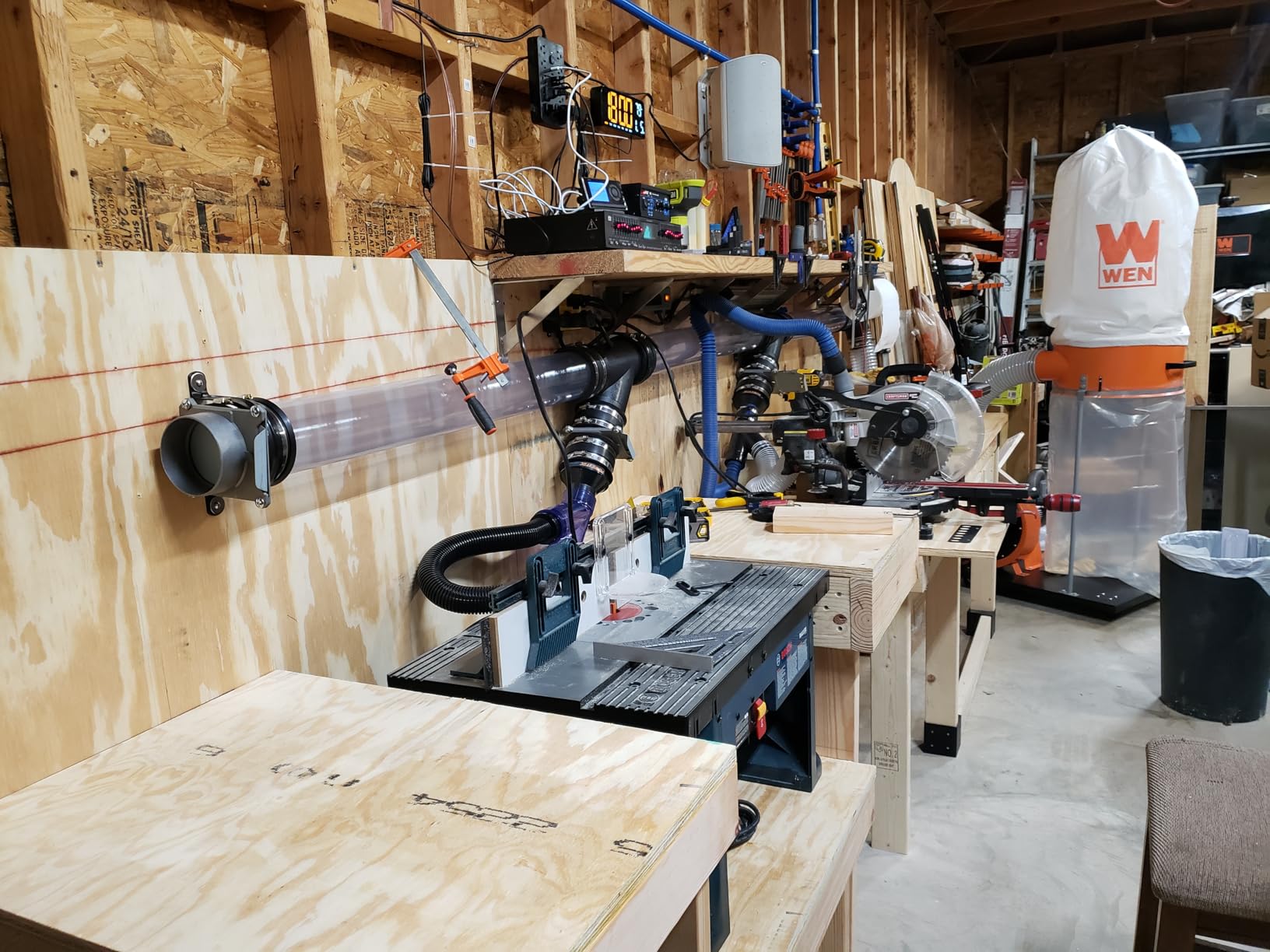
The WEN DC1300 is a beast of a dust collector that changed how I think about shop air quality. With 1300 CFM of airflow, this unit moves serious air. I connected it to my downdraft table and was immediately impressed by how much more effective the dust capture became. Fine sanding dust that used to escape now gets pulled right down through the table.
The 14-amp motor spins a 10-inch steel impeller at 3450 RPM, creating the kind of suction that captures 99% of sawdust from your tools. What I really appreciate is the ability to connect two tools simultaneously through the dual 4-inch air inlets. This means I can keep my downdraft table connected permanently and still have a port available for other tools when needed.
The 50-gallon vertical collection bag is another feature I’ve grown to love. It holds a tremendous amount of dust, so I’m not constantly stopping to empty it. The mobile base with four swivel casters makes it easy to position the unit exactly where you need it, then roll it out of the way when you’re done. At 200+ pounds, you definitely want those casters.
Is it loud? Yes, especially at full power. But that’s the trade-off for this level of performance. I found that placing it against an outside wall and using shorter hose runs helped reduce the noise level in my workspace. Assembly took me about two hours working alone—the instructions could be better, but if you’re reasonably handy, you’ll figure it out.
Best For
The WEN DC1300 is ideal for serious woodworkers with larger shops who need maximum dust collection power. If you run multiple tools, work with long hose runs, or just want the best possible dust capture, this unit delivers. It’s especially valuable for small professional shops or dedicated hobbyists who want clean air without compromise.
Considerations
This is a significant investment both in terms of cost and shop space. You’ll need room for the unit itself plus clearance around it for the collection bag and access. The 1300 CFM might be overkill if you only do occasional sanding in a small shop. Also, be prepared for some noise—this isn’t a unit you’ll want running right next to your workbench.
5. WEN DC3474 – Best Compact Dust Collector
WEN Woodworking Dust Collector, 7.4-Amp Induction Motor with 15-Gallon Bag, Mobile Base, and Optional Wall Mount (DC3474)
600 CFM airflow
15 gallon bag
7.4 amp motor
Optional wall mount
Pros
- Compact footprint
- 600 CFM is adequate for most needs
- Wall mount option saves space
- Swivel casters for mobility
Cons
- Reduced suction with 2.5 inch adapters
- Some units have fuse issues
- Bag may not fully inflate with adapters
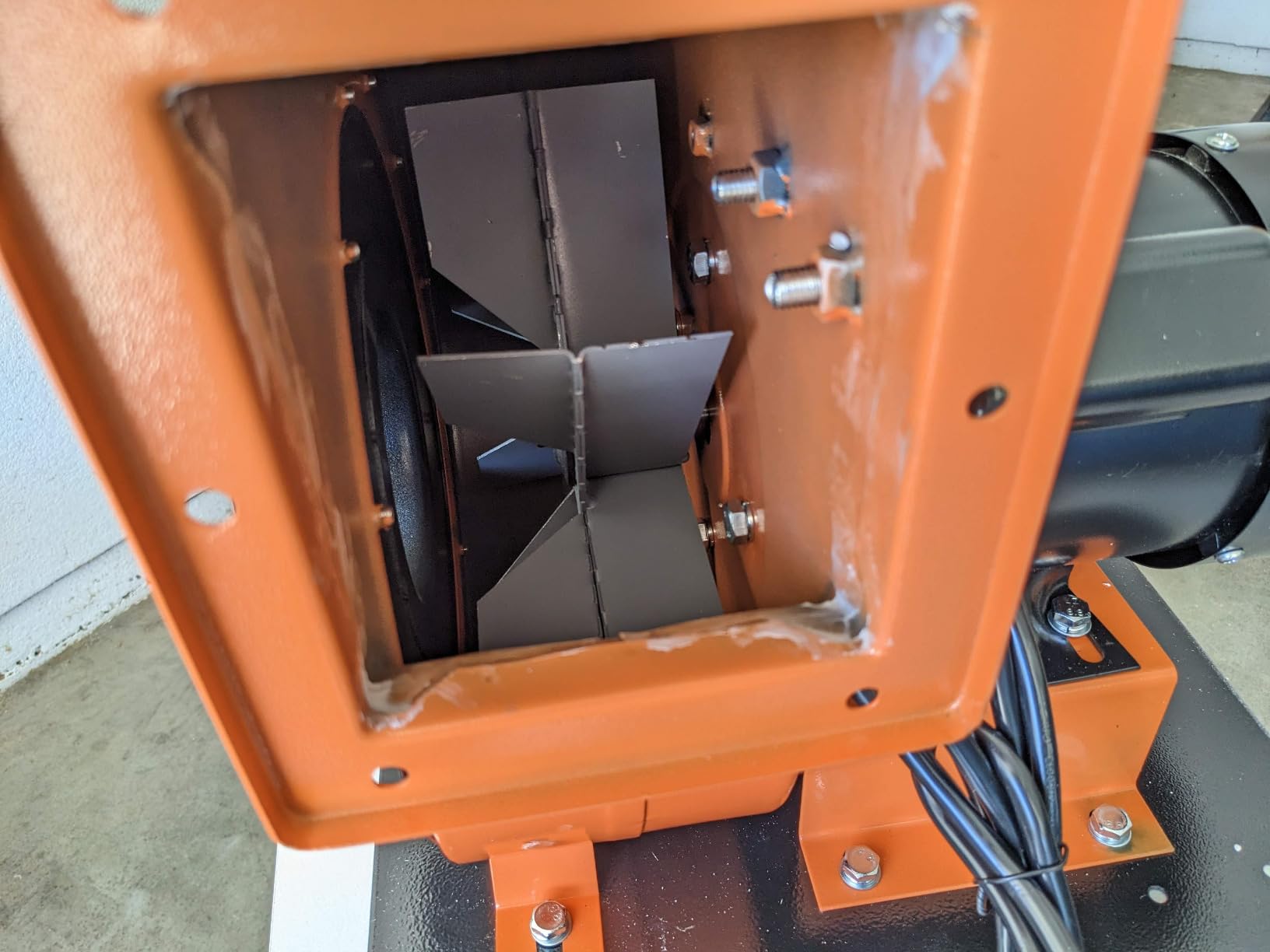
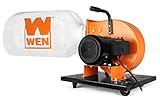
The WEN DC3474 hits a sweet spot for woodworkers with smaller shops or limited floor space. After testing this unit for several weeks, I found its 600 CFM airflow is more than adequate for most downdraft table applications. The 7.4-amp induction motor paired with a 9-inch impeller moves air efficiently while drawing less power than larger units.
What really sets the DC3474 apart is its versatility. You can roll it around on its swivel casters or mount it to the wall to save valuable floor space. I tried both configurations and found the wall mount particularly nice in my crowded garage shop. The 15-gallon collection bag is a good size—not so small that you’re constantly emptying it, but not so large that it dominates the space.
In my testing, this unit was noticeably quieter than larger dust collectors while still providing excellent dust capture. The difference was especially apparent when sanding for extended periods. At under 42 pounds, it’s also much easier to move around or position on a shelf if you go with the wall mount option.
I did notice some reduction in suction when using 2.5-inch hose adapters, and the collection bag didn’t fully inflate in those configurations. For best results, stick with the 4-inch dust port. A small percentage of users have reported issues with the 10-amp fuse blowing, though my unit has been trouble-free. WEN’s two-year warranty provides some peace of mind.
Best For
The WEN DC3474 is perfect for woodworkers in smaller shops or garages where space is at a premium. If you do mostly hobbyist-level woodworking and need reliable dust collection without dedicating half your shop to a dust collector, this is an excellent choice. The wall mount option makes it especially attractive for tight spaces.
Considerations
The 600 CFM might feel limiting if you try to run multiple tools simultaneously or use very long hose runs. Avoid using 2.5-inch adapters if possible—the unit performs much better with full 4-inch hose. If you have a larger shop or do professional-level woodworking, you might want to step up to a more powerful unit.
6. WEN DC3401 – Best Budget Dust Collector
WEN Woodworking Dust Collector, 5.7-Amp Motor with 12-Gallon Bag, Mobile Base, and Optional Wall Mount (DC3401)
660 CFM airflow
12 gallon bag
5.7 amp motor
Wall mount capable
Pros
- Very affordable
- Good value for money
- Compact design
- Wall mount option included
Cons
- Carbon bushings need regular replacement
- Not suitable for planers
- Can be loud
- Switch may fail prematurely
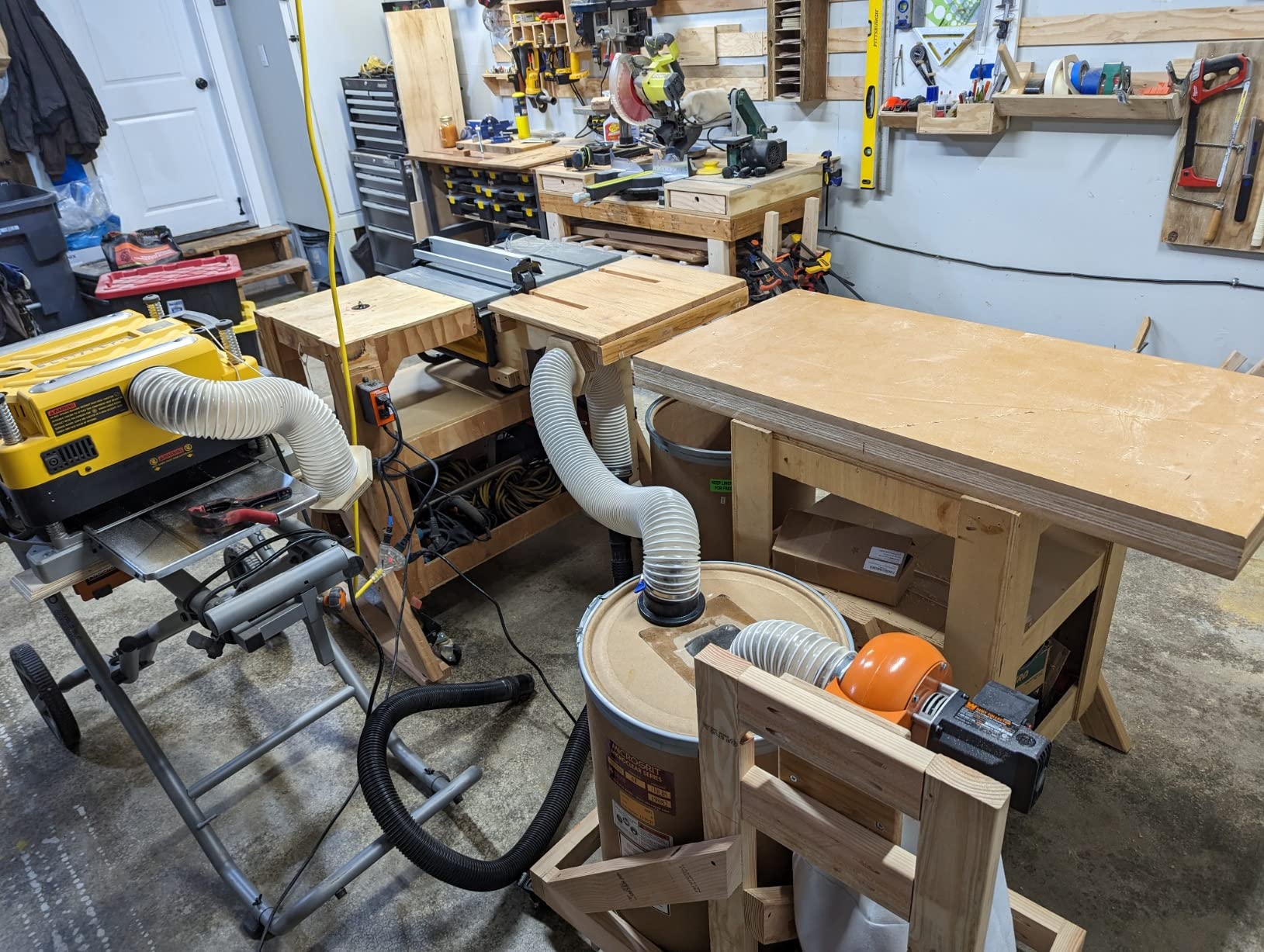
As the most affordable dedicated dust collector on this list, the WEN DC3401 makes dust collection accessible to woodworkers on a tight budget. I’ve recommended this unit to countless beginners, and the feedback has been overwhelmingly positive. The 660 CFM airflow is sufficient for most downdraft table applications, especially when paired with short hose runs.
The 5.7-amp motor spins a 6-inch impeller, providing enough suction for effective dust capture without drawing excessive power. I found this unit works particularly well for sanding operations—its strengths align perfectly with the needs of downdraft table users. The 12-gallon collection bag is smaller than premium models, but for occasional use, it’s perfectly adequate.
What impressed me most about the DC3401 is how WEN managed to keep the price so low while still including useful features like lockable swivel casters and an optional wall mount. The compact footprint means you can tuck it in a corner when not in use. At under 20 pounds, it’s also easy to move around or store.
The trade-offs for the low price become apparent with extended use. The carbon bushings may need replacement every 250 hours or so—a maintenance task not required by more expensive models. This unit also struggles with larger debris like planer shavings, so it’s best suited for sanding dust and similar fine particles. Some users have reported switch failures, though WEN’s customer service generally handles these issues under warranty.
Best For
The WEN DC3401 is ideal for beginner woodworkers, hobbyists on a budget, or anyone setting up their first dust collection system. If you do mostly sanding and light woodworking, this unit will serve you well without breaking the bank. It’s also a great choice for secondary stations in larger shops.
Considerations
This isn’t the right choice if you plan to collect chips from planers or jointers—the motor and impeller aren’t designed for larger debris. Be prepared for more maintenance than premium units, especially regarding the carbon bushings. The noise level is higher than more expensive models, so hearing protection is recommended during extended use.
7. JET Vortex Cone DC-1100VX-CK – Best Premium Dust Collector
JET Vortex Cone Dust Collector with 2-Micron Canister Filter, 1-1/2 HP, 115/230V 1Ph (DC-1100VX-CK)
2 micron canister filter
Vortex Cone technology
1.5 HP motor
Single stage design
Pros
- Very quiet operation
- Excellent chip separation
- 2 micron filtration
- Easy bag changes
- Powerful 1.5 HP motor
Cons
- Expensive
- Filter unit has stability issues
- Cheap wheels
- Requires two people for assembly
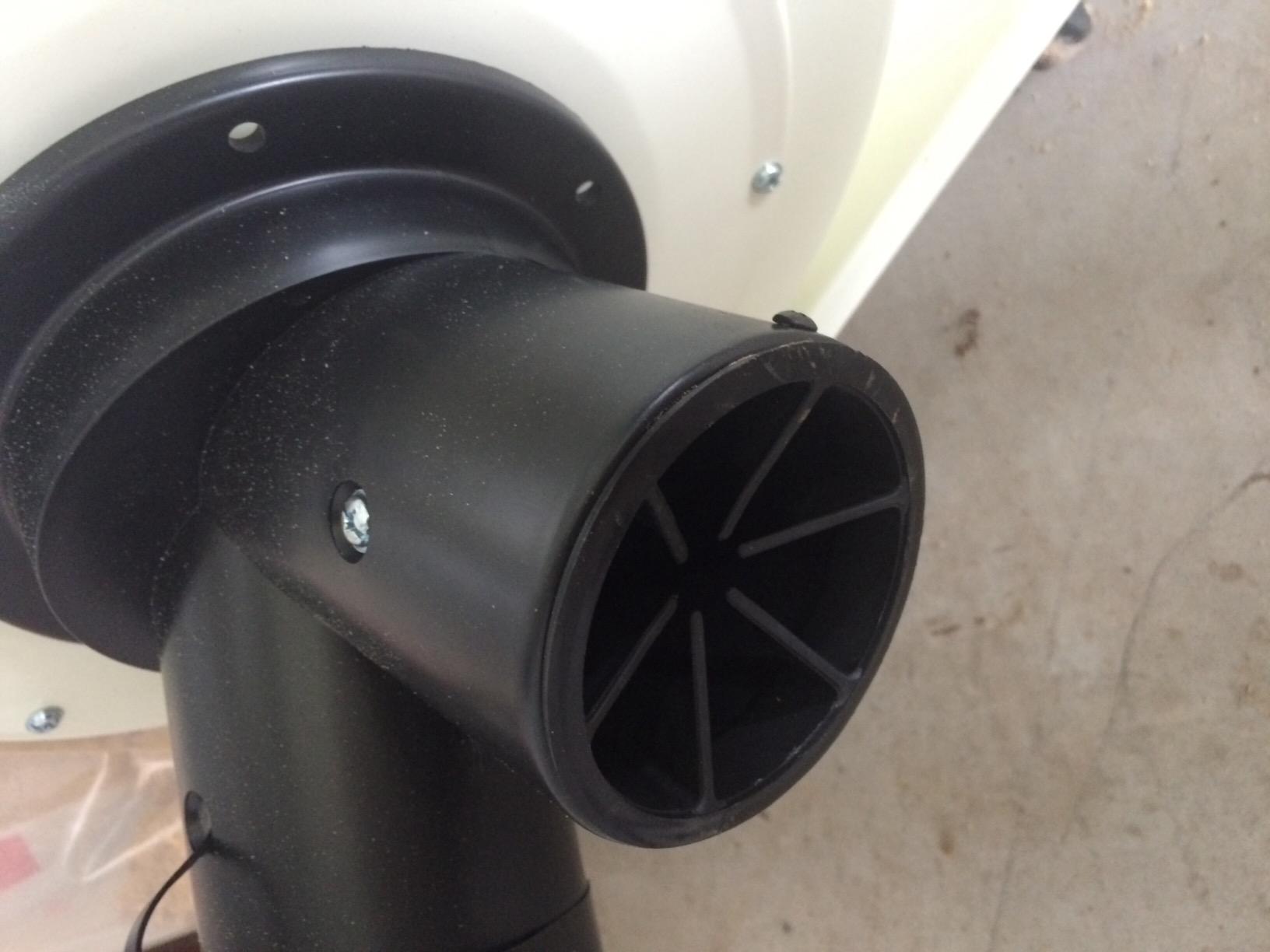
After years of using various dust collectors, the JET Vortex Cone DC-1100VX-CK convinced me that premium units are worth the investment. The first thing you notice is how quiet this unit runs compared to others—I can actually hold a conversation while it’s running without raising my voice. The single-stage design combined with JET’s Vortex Cone technology makes for efficient, economical operation.
The 2-micron canister filter represents a significant upgrade from standard bag filters. It captures much finer particles, which means cleaner air in your shop. In my testing, the air quality difference was noticeable—less fine dust settling on surfaces after a day of sanding. The Vortex Cone improves chip separation and packing efficiency, so you get more capacity in the collection bag.
JET’s 1.5 HP motor provides plenty of power for downdraft table applications and then some. I connected this to my Shop Fox W1733A and was amazed at the difference compared to smaller dust collectors. Suction remained strong across the entire 20×40 surface, with no weak spots. The quick-connect collection bags make changes fast and easy.
Assembly is definitely a two-person job and took me about three hours. The filter/bag unit’s three-legged design is a bit wobbly, which is a curious design choice at this price point. The casters are also disappointingly cheap—I upgraded mine shortly after purchase. These issues don’t affect performance, but they’re disappointing on a premium-priced unit.
Best For
The JET Vortex Cone is ideal for serious woodworkers who value clean air and quiet operation. If you spend hours in your shop each week and want to protect your health with the best filtration available, this unit delivers. It’s especially well-suited for professional shops where noise levels matter and air quality is non-negotiable.
Considerations
This is a significant investment that might be overkill for casual hobbyists. The three-legged filter design is less stable than it should be at this price, and you’ll likely want to upgrade the casters. Make sure you have help available for assembly—this isn’t a one-person project. Also, the premium filtration means you’ll want to budget for filter replacements over time.
8. PSI Woodworking DC725 – Best Tabletop Dust Collector
PSI Woodworking DC725 Portable Tabletop Dust Collector
725 CFM airflow
Variable speed control
3 computer grade fans
2 grounded outlets
Pros
- Very quiet operation
- Variable speed control
- Lightweight and portable
- Built-in outlets for tools
- Great for small projects
Cons
- Filter is cheap and thin
- Odd sized filter hard to find
- Polycarbonate shields attract dust
- Doesn't handle heavy dust loads
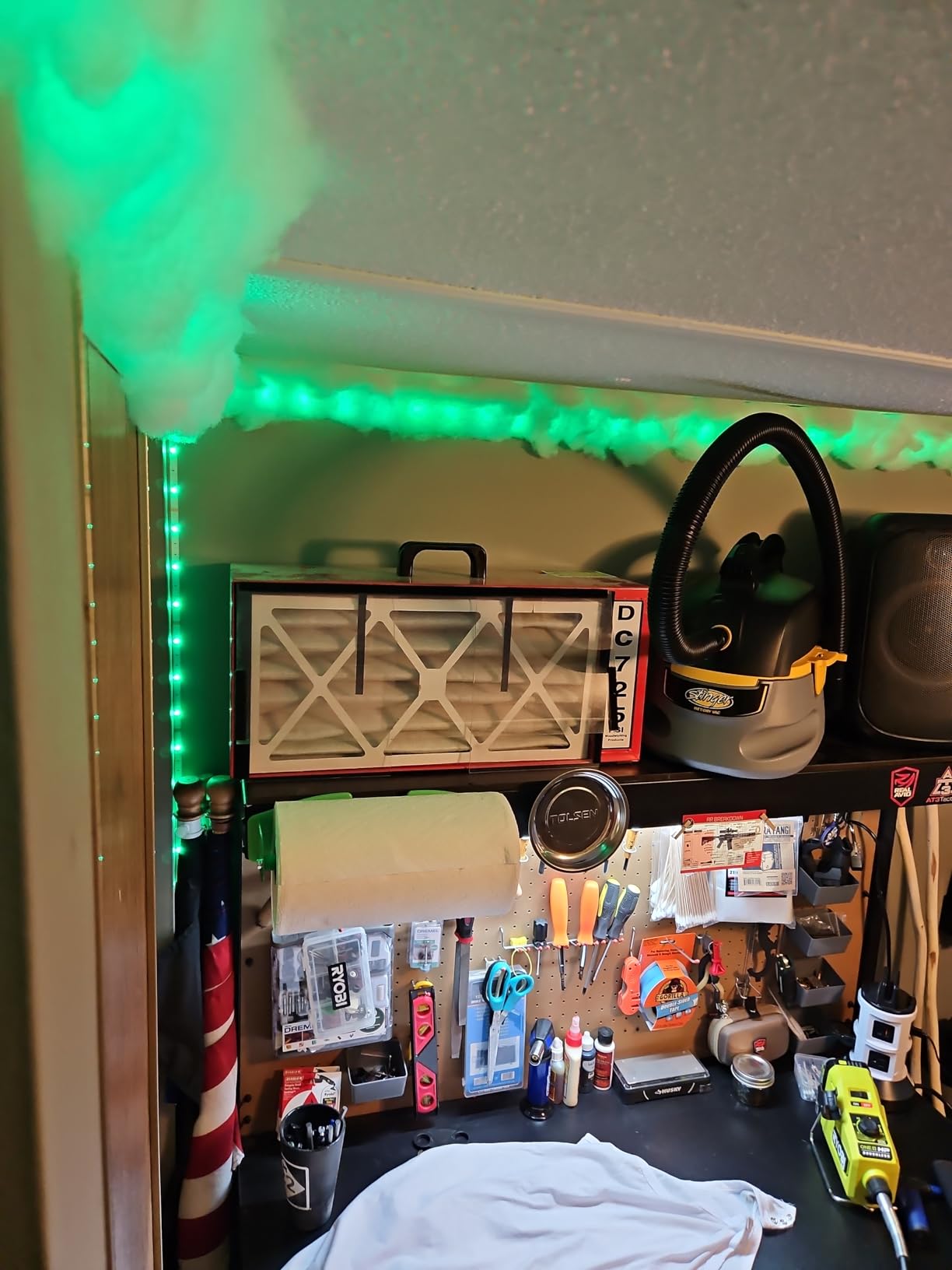
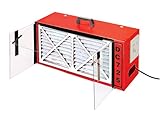
The PSI Woodworking DC725 takes a completely different approach to dust collection, and for certain applications, it’s brilliant. Instead of connecting to an external dust collector, this tabletop unit uses three computer-grade fans to pull dust directly through its perforated surface. I found it incredibly useful for small-scale projects like carving, detail sanding, and woodturning.
What I love most about this unit is how quiet it runs. The three fans move a surprising amount of air—725 CFM maximum—while making less noise than most shop vacs. The variable speed control lets you dial in the perfect amount of suction for your task. I typically run it at about 75% power for most sanding operations.
The adjustable clear polycarbonate hood and side doors create an effective containment area for small workpieces. I found this especially helpful when doing detail work that generates lots of fine dust in a concentrated area. The two grounded outlets on the side panel are a thoughtful touch—you can plug your sander directly into the unit.
The filter media is definitely the weak point here. It’s thin and cheap, and replacements are oddly sized and hard to find. Many users, myself included, have created custom filters from HEPA material to improve performance. The polycarbonate shields also tend to attract dust and create glare under bright shop lights, which can be annoying during detail work.
Best For
The PSI DC725 is perfect for woodworkers who do lots of small-scale detail work. If you’re into carving, woodturning, model making, or other precision work, this unit will capture dust right at the source without the need for a full dust collection system. It’s also great for hobbyists in apartments or small spaces who can’t accommodate larger equipment.
Considerations
This isn’t designed for heavy dust collection—large sanding jobs or power sanders will overwhelm it quickly. The filter situation is frustrating, and you’ll likely want to modify or replace it. The polycarbonate shields can be annoying with dust accumulation and glare. Consider this a specialized tool for detail work rather than a general-purpose dust collector.
9. Woodriver Dust Connection – Most Affordable Dust Hood
Woodriver Dust Connection Tabletop Dust Collector
12.75 x 16 inch opening
4 inch hose connection
ABS plastic construction
Lightweight design
Pros
- Very affordable
- Larger than expected
- Well-built construction
- Good for table saw dust collection
Cons
- Requires powerful vacuum to work
- Suction dissipates at large opening
- Not effective with standard shop vac
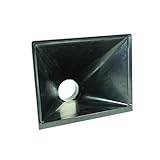
The Woodriver Dust Connection is essentially a dust hood rather than a complete downdraft table, but at under $45, it deserves consideration for budget-conscious woodworkers. I found it works well as a basic dust collection hood when paired with a sufficiently powerful vacuum. The 12.75 x 16 inch opening is larger than I expected, providing good coverage for smaller workpieces.
Construction quality is better than the price suggests. The rugged ABS plastic feels durable and has held up well in my shop. The 4-inch hose opening means you can connect it directly to most dust collection systems. I’ve also used this as a table saw dust hood with good results.
Here’s the catch—this hood requires serious suction to perform well. I tested it with a standard shop vac and was disappointed by the weak capture. However, when connected to my 1.5-horsepower dust collector, performance improved dramatically. The large opening can dissipate suction quickly, so you need a powerful vacuum to maintain effective airflow.
At just 1.43 pounds, this hood is incredibly lightweight. You can mount it virtually anywhere or use it as a portable dust capture solution. The abrasion-resistant plastic should hold up well to regular use. Just keep in mind that this is just the hood—you’ll need to provide your own mounting solution and dust collection source.
Best For
The Woodriver Dust Connection is ideal for woodworkers who already have a powerful dust collector and want an affordable hood solution. It’s particularly useful as a secondary dust capture point for table saws, miter saws, or as a simple downdraft solution for light sanding when paired with adequate suction.
Considerations
This won’t work well with standard shop vacs—you need a real dust collector with sufficient CFM. The large opening can reduce suction effectiveness, so it works best for focused dust capture rather than broad area coverage. Think of this as a component rather than a complete solution, and you’ll have realistic expectations.
10. JET Cyclone JCDC-1.5 – Best Cyclone Dust Collector
Jet Cyclone Dust Collector, 2-Micron Filter, 1-1/2 HP, RF Remote (JCDC-1.5)
Two stage cyclone separation
20 gallon steel drum
1 micron pleated filter
RF remote control
Pros
- Superior dust separation
- Very quiet operation
- Powerful 1.5 HP suction
- RF remote control included
- Excellent for small shops
Cons
- Very expensive
- Remote can be unreliable
- Cheap fasteners
- Assembly challenging alone
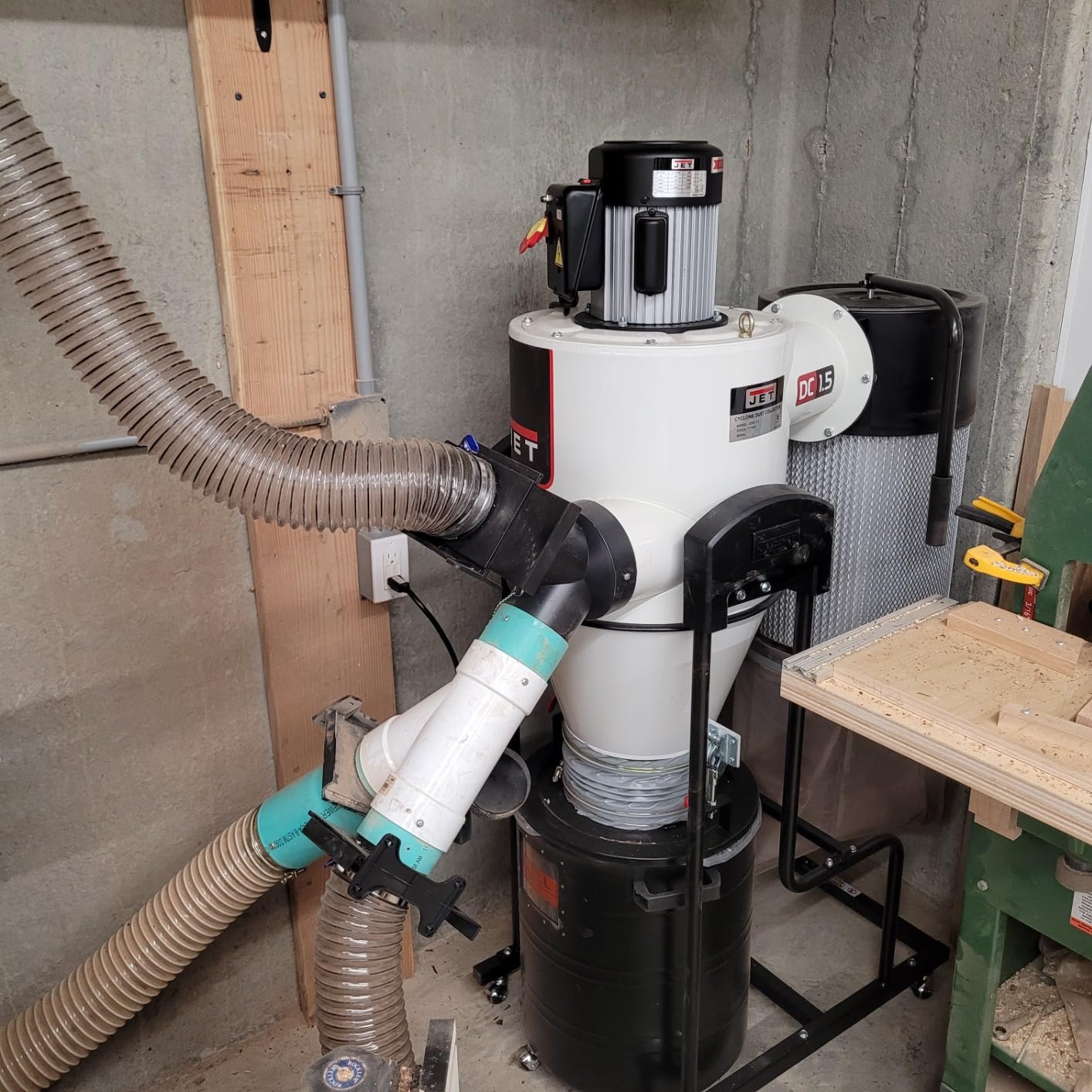
The JET Cyclone JCDC-1.5 represents the pinnacle of dust collection technology for small to medium shops. After using this two-stage cyclone system for six months, I’m convinced it’s worth every penny. The cyclone separation technology pulls heavy debris down into the 20-gallon steel drum before it reaches the filter, dramatically extending filter life and improving overall performance.
The difference between single-stage and two-stage collection is remarkable. With my old single-stage unit, I was constantly cleaning filters and dealing with reduced suction as bags filled. The cyclone design maintains consistent performance because the filter only captures fine dust, not chips and heavy particles. The direct-mounted pleated filter captures particles down to 1 micron—significantly better than standard bag filters.
Operation is surprisingly quiet for such a powerful unit. The 1.5 HP motor provides plenty of suction for downdraft tables and multiple tools, yet the noise level is manageable. I especially appreciate the RF remote control—being able to switch the unit on and off from anywhere in the shop is more convenient than I expected. The 50-foot range means I can control it from anywhere in my shop.
At 143 pounds, this is a substantial piece of equipment. Assembly was challenging alone and took me about four hours. The fasteners are frustratingly cheap and imprecise—metric sizes that don’t quite match standard wrenches. Some users have reported reliability issues with the RF remote, though mine has worked flawlessly. These are minor annoyances on what is otherwise an exceptional product.
Best For
The JET Cyclone is ideal for serious woodworkers who want the best dust collection available and are willing to invest in clean air. It’s especially valuable for small professional shops or dedicated hobbyists who do lots of sanding and generate significant dust. If respiratory health is a top priority and budget allows, this is the unit to get.
Considerations
This is a major investment that costs as much as some small woodworking tools. The remote control, while convenient, can be unreliable according to some users. Assembly is definitely a two-person job and the cheap fasteners will test your patience. Make sure you have adequate space for this unit—it’s larger than it appears in photos.
Buying Guide for Choosing the Right Downdraft Table
Understanding CFM Requirements
CFM (cubic feet per minute) is the most important specification for downdraft tables. It measures how much air your dust collection system can move. For effective dust capture, you need adequate CFM for your table size. A good rule of thumb is 350-400 CFM per square foot of table surface. Smaller tables like the 15×25 Shop Fox need around 200-300 CFM, while larger 20×40 tables require 400-500+ CFM for optimal performance across the entire surface.
Table Size and Work Surface
Consider the typical size of your projects when choosing a downdraft table. A 19×19 inch surface like the Dust Right works well for most small to medium projects. The 15×25 Shop Fox W1734A provides a bit more room for furniture components. If you regularly work with full-sized cabinet doors or large panels, the 20×40 Shop Fox W1733A will save you from constantly repositioning your workpiece. Remember that larger tables require more CFM to maintain effective suction.
Filtration System Types
Downdraft tables themselves don’t typically include filtration—that’s handled by your dust collector. When choosing a dust collector, consider filter quality carefully. Standard bag filters capture larger particles but let fine dust pass through. 2-micron canister filters like on the JET Vortex Cone capture much finer particles for cleaner shop air. For the best protection, look for true HEPA filtration or cyclone separation that captures particles down to 1 micron or smaller.
Dust Collector Compatibility
Before purchasing a downdraft table, check that it’s compatible with your existing or planned dust collection system. Most tables have either 2.5-inch or 4-inch dust ports. The larger 4-inch ports allow for significantly better airflow and are preferred for larger tables. Make sure you have the appropriate hose and fittings to connect everything properly. If you’re using a shop vac, look for tables specifically designed to work with lower CFM vacuums.
Noise Considerations
Dust collection noise adds up quickly in a small shop. Premium units like the JET Vortex Cone and JET Cyclone are surprisingly quiet for their power level. Budget units like the WEN DC3401 tend to be louder during operation. If noise is a concern in your shop, consider placing the dust collector against an exterior wall or in a separate enclosure. Some woodworkers even build sound-dampening boxes around their dust collectors to reduce noise levels.
Portability vs Stationary Setup
Decide whether you need a portable solution or a permanent installation. Benchtop models like the Dust Right and Shop Fox tables are easy to move and store. Compact dust collectors like the WEN DC3474 can even be wall-mounted to save floor space. Larger units like the JET Cyclone are best suited as permanent installations. Consider how often you’ll need to move your equipment and choose accordingly.
Budget vs Professional Use
Hobbyist woodworking doesn’t require professional-grade equipment, but investing in quality dust collection pays dividends in health protection. Budget options like the Shop Fox W1734A or WEN DC3401 work well for occasional use. If you spend significant time in your shop or do professional work, investing in premium equipment like the JET Vortex Cone or JET Cyclone provides better filtration, quieter operation, and longer durability.
Frequently Asked Questions
Are downdraft tables worth it?
Yes, downdraft tables are absolutely worth the investment for anyone who does regular sanding. They capture up to 95% of airborne dust particles at the source, protecting your respiratory health and keeping your workspace cleaner. Forum users consistently report that once you sand on a downdraft table, you never want to go back to a regular work surface. The health benefits alone make them worthwhile, and you’ll also spend less time cleaning dust from every surface in your shop.
What is a downdraft sanding table?
A downdraft sanding table is a specialized workbench with a perforated surface that pulls dust downward through the table and into a dust collection system. The table creates negative pressure beneath the work surface, drawing dust and particles down through holes in the table top before they can become airborne. This captures dust at the source where it’s generated, rather than trying to filter it from the general shop air later. Most downdraft tables connect to shop vacs or dedicated dust collectors to provide the necessary suction.
What size downdraft table do I need?
Choose a downdraft table based on the typical size of your projects. A 19×19 inch table works well for most small to medium projects like boxes, small furniture parts, and cabinet details. The 15×25 inch size is better for furniture components and medium-sized panels. If you regularly work with full-sized cabinet doors or large panels, a 20×40 inch table will be most efficient. Remember that larger tables require more CFM from your dust collector to maintain effective suction across the entire surface area.
Can you use a downdraft table with a shop vac?
Yes, you can use a downdraft table with a shop vac, but performance varies significantly based on the shop vac’s power. Basic shop vacs may struggle to provide adequate suction for effective dust capture, especially on larger tables. For best results, use a powerful shop vac with at least 5-6 horsepower or consider upgrading to a dedicated dust collector. Some downdraft tables like the Dust Right are specifically designed to work well with shop vacs. The key is matching your vacuum’s CFM output to your table size for optimal performance.
How often to replace downdraft table filter?
Downdraft tables themselves typically don’t have filters—the filtration happens in your connected dust collector. Bag-style dust collector filters should be checked monthly and replaced when they show signs of wear or clogging, usually every 6-12 months with regular use. Canister filters like the 2-micron filter on the JET Vortex Cone can last 1-2 years with proper maintenance. Cyclone separators extend filter life significantly by capturing heavy debris before it reaches the filter. Clean your filters regularly according to the manufacturer’s instructions and replace them when suction noticeably decreases.
Conclusion
After testing and evaluating numerous options, the best downdraft tables for sanding and dust control offer a range of solutions for different needs and budgets. For most woodworkers, I recommend starting with the Dust Right Downdraft Table for its excellent design and versatility, or the Shop Fox W1734A if you’re working with a tighter budget. Pair either with a capable dust collector like the WEN DC3474 for smaller shops or step up to the JET Vortex Cone if you want premium performance.
Remember that the right downdraft table is just one part of an effective dust collection system. Match your table size to your typical projects, ensure your dust collector provides adequate CFM, and always use proper respiratory protection. Your health is worth the investment in quality dust collection equipment.