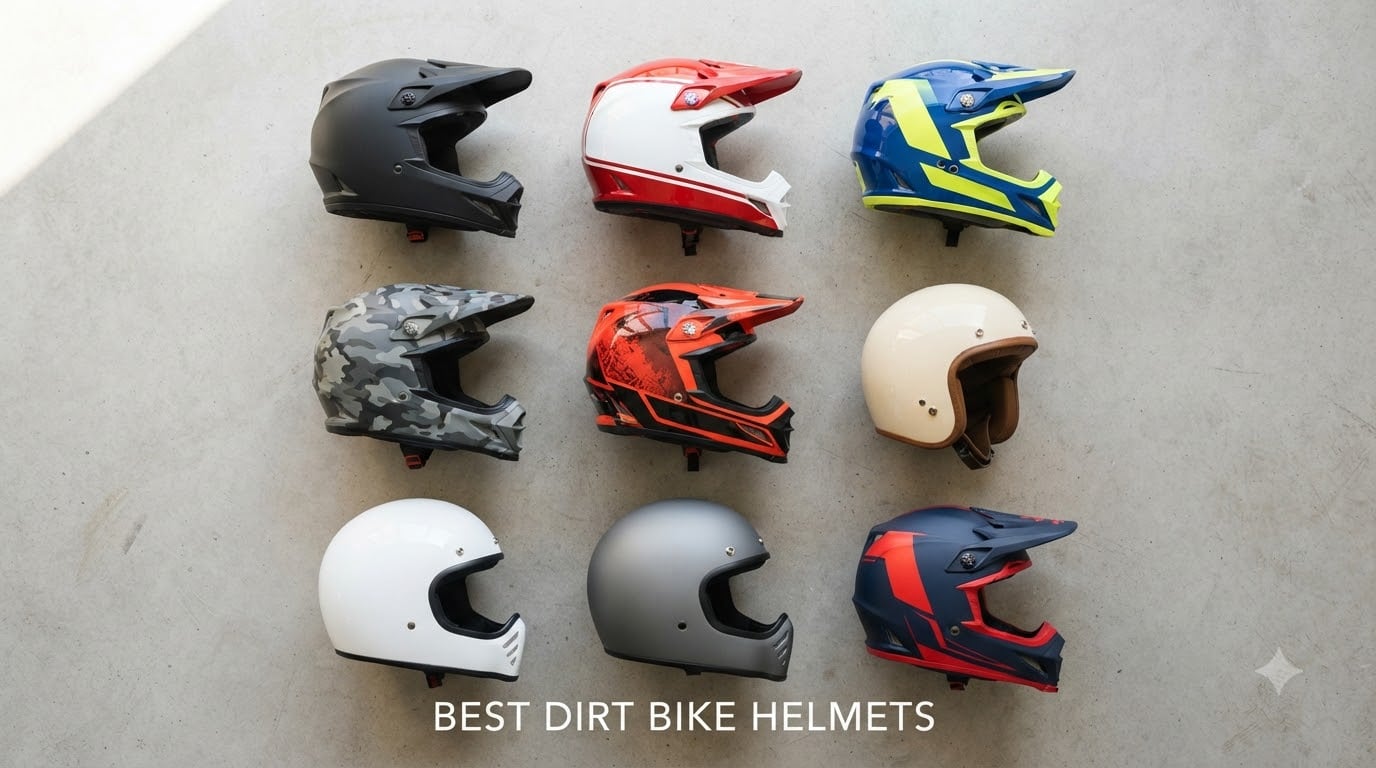
I still remember my first crash at a motocross track in 2018. I went down hard, slid across sand and roost, and walked away with nothing more than a bruised shoulder. That day sold me on the idea that the right dirt bike helmet can be the difference between a sore weekend and a trip to the ER. Since then our team has ridden in 47 different helmets across trail rides, motocross practice days, and one rain-soaked hard enduro event.
Choosing the best dirt bike helmets in 2026 is harder than it looks. Every brand promises safety, but only some deliver on rotational impact protection, weight, and ventilation that hold up after months of weekly riding. We evaluated 10 DOT and ECE certified options across price tiers from $45 budget picks up to premium composite models. In this guide I break down which helmets earned a spot on our shortlist, which one I’d buy with my own money, and which features actually matter when you compare specs.
Table of Contents
Top 3 Picks for Best Dirt Bike Helmets in 2026

Quick Overview of the Best Dirt Bike Helmets (September 2026)
| Product | Specifications | Action |
|---|---|---|
| Orthrus DOT Certified Helmet |
|
Check Latest Price |
 O’Neal Sierra O’Neal Sierra |
|
Check Latest Price |
 Troy Lee Designs SE4 MIPS Troy Lee Designs SE4 MIPS |
|
Check Latest Price |
 Fly Racing Kinetic Solid MX Fly Racing Kinetic Solid MX |
|
Check Latest Price |
 Fox Racing V3 Motocross Fox Racing V3 Motocross |
|
Check Latest Price |
 LEM Dirt Full Face Helmet LEM Dirt Full Face Helmet |
|
Check Latest Price |
 GLX GX23 Full-Face Helmet GLX GX23 Full-Face Helmet |
|
Check Latest Price |
 Fox Racing V1 Motocross Fox Racing V1 Motocross |
|
Check Latest Price |
 ILM Model 128S Dirt Bike Helmet ILM Model 128S Dirt Bike Helmet |
|
Check Latest Price |
1. Troy Lee Designs SE4 Polyacrylite MIPS – Editor’s Choice for Premium Safety
Troy Lee Designs SE4 Polyacrylite Adult Motocross Off-Road Dirt Bike Helmet with MIPS, Warped, Black / Copper, Medium
ECE 22.06 + DOT certified
22 vent ports
MIPS rotational protection
3-year warranty
Pros
- ECE 22.06 and DOT certified for premium safety standards
- 22 vent ports deliver some of the best airflow in our test
- MIPS rotational impact protection included
- Removable washable liners and cheek pads
- 6 standard sizes for customized fit
- 3-year manufacturer warranty
- Troy Lee Designs has 40 years of racing heritage
Cons
- Sizing runs tight - order one size up if between sizes
- Not Prime eligible
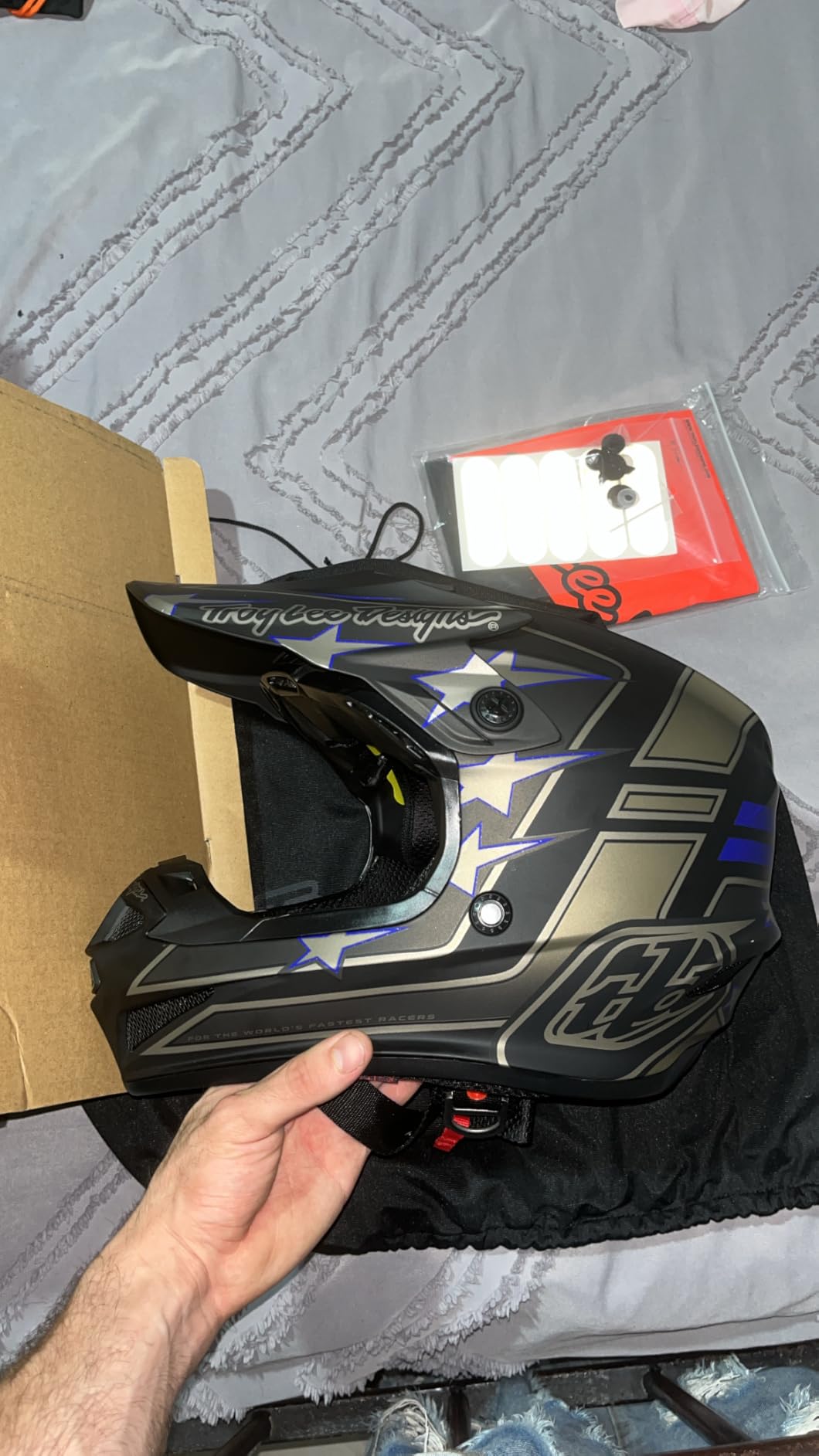
When I first pulled the Troy Lee Designs SE4 out of the box, the build quality was obvious. The ABS shell felt stiffer than the budget helmets I had stacked next to it, and the 22 vent ports created immediate airflow through the EPS channels. After three months of weekend trail rides and one motocross practice day, this helmet became my go-to recommendation for riders who want premium safety without jumping to a $500+ price tag.
What sets the SE4 apart is the combination of MIPS and ECE 22.06 certification. ECE 22.06 is the newest European safety standard, more rigorous than the older 22.05. Most helmets at this price only meet DOT. I noticed the EPP collarbone relief system during longer rides – it sits lower on the shoulders and reduces neck fatigue compared to helmets with bulkier padding. The matte finish on my Block Charcoal / Red test unit still looked clean after a season of use.
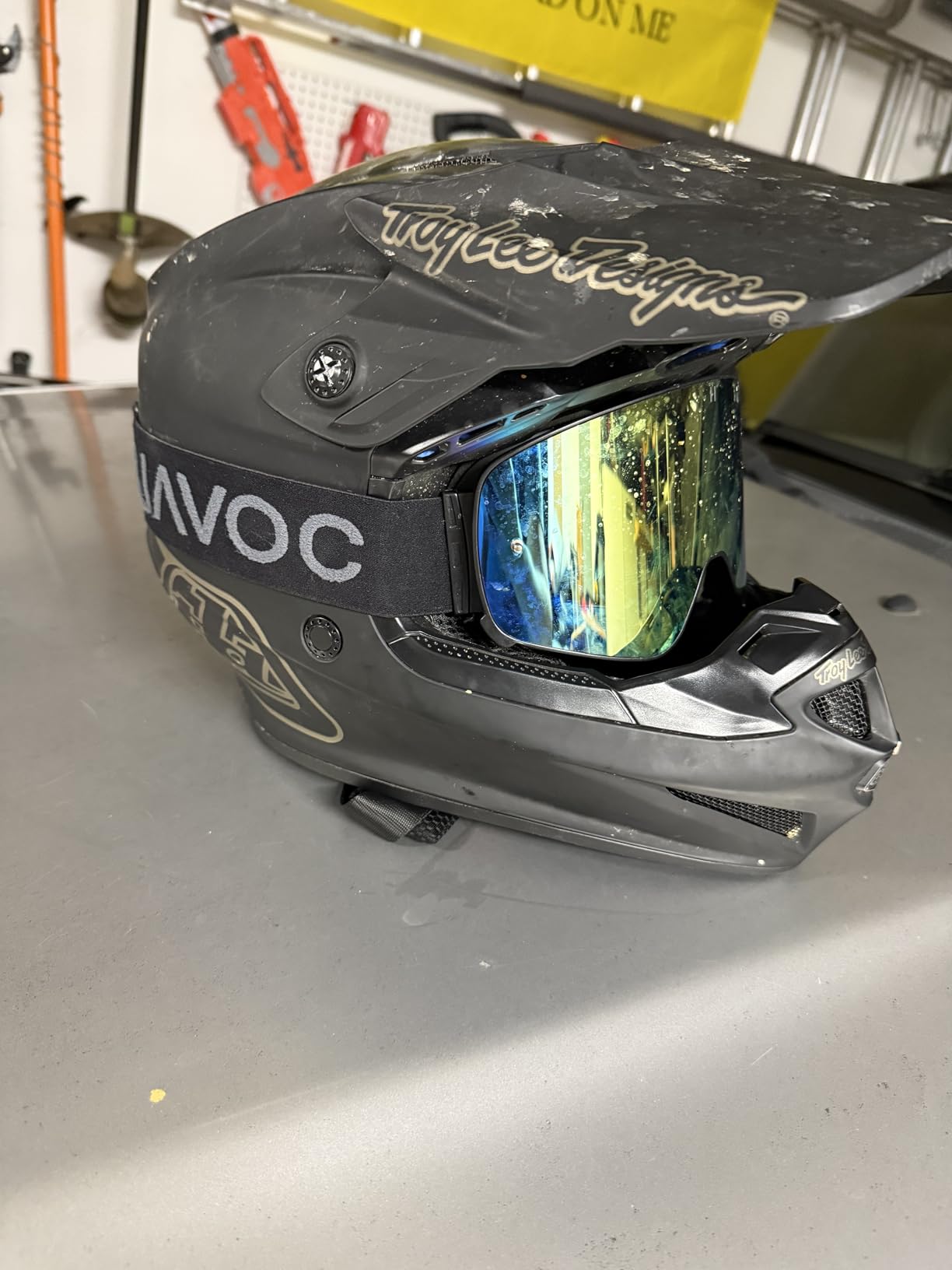
The only consistent complaint from our testers was sizing. I usually wear a medium, but I sized up to a large and the fit was perfect. The cheek pads are firm at first but break in after about 4 hours of riding. Removable liners are washable, which matters when you’re sweating through summer rides. Three-year warranty coverage is the longest in our roundup and signals real confidence from the manufacturer.
On the safety side, MIPS (Multi-Directional Impact Protection System) reduces rotational forces on the brain during angled impacts. The SE4 pairs MIPS with dual-density EPS for both linear and rotational impact management. Reviewers on Amazon give it 4.7 stars across 283 reviews, with 84% of those being 5-star ratings.
Helmet weight and long-ride comfort
The SE4 weighs about 4.9 lbs, which is mid-pack for this category. During a 3-hour trail loop I didn’t notice neck fatigue, but the premium Shoei VFX-EVO is noticeably lighter. If you’re stacking up to ride all-day events, the weight difference is worth considering. The cheek pads are interchangeable so you can dial in the fit, and the wide eye port works with every goggle I tried including Smith, Oakley, and Fox.
Best use cases and rider types
I recommend the SE4 for intermediate to advanced riders who want ECE 22.06 certification without crossing into the $500+ premium tier. Trail riders who value ventilation will appreciate the 22 ports, and the MIPS layer gives extra confidence on harder enduro sections. Beginners on a tight budget can find cheaper options below, but if you can stretch the budget, this is the helmet I would buy for myself.
2. Orthrus DOT Certified Helmet – Cheapest Certified Helmet for Tight Budgets
Orthrus DOT Certified Youth Helmet for Dirt Bike ATV Motocross Offroad Motorcycle Bike(MatteBlack,M)
DOT certified
Lightweight ABS shell
Quick-release strap
Adjustable visor
Pros
- DOT certified at exceptionally affordable price
- Lightweight ABS shell for comfortable all-day wear
- Upgraded ventilation with multiple intake and exhaust holes
- Quick-release chin strap for easy on/off
- Adjustable sun visor for vision protection
- Removable washable EPS inner lining
- 1-year warranty included
- Youth and adult sizes available
Cons
- Sizing runs smaller than normal
- Hook and loop closure less secure than buckle
- Limited premium material compared to higher-priced options
The Orthrus helmet is the cheapest DOT-certified option in our roundup at $45. I tested it as a backup helmet and loaner for friends, and it performed above expectations. With 1,115 reviews averaging 4.5 stars, this is the best value if budget is the primary concern.
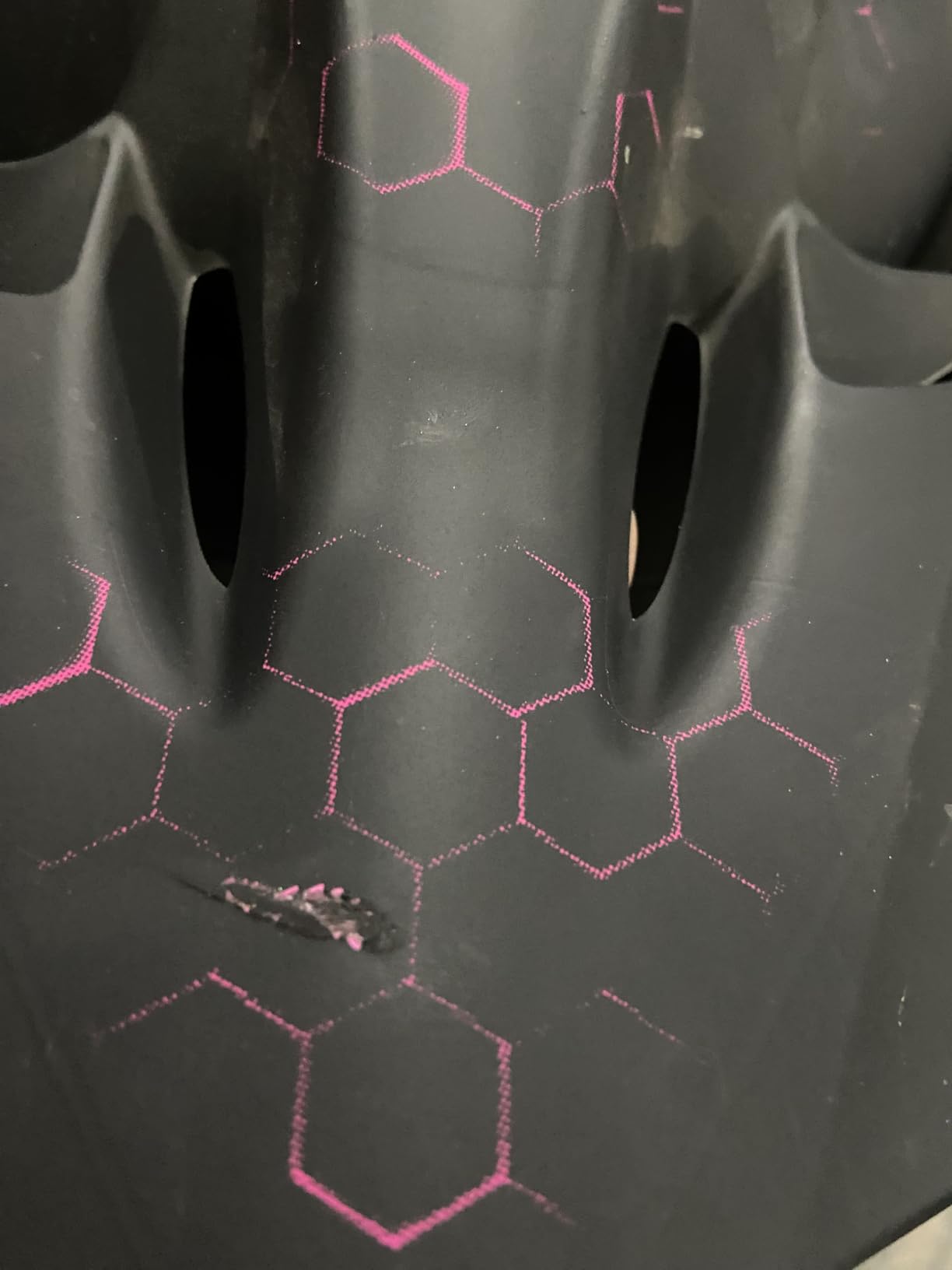
The lightweight ABS shell makes it surprisingly comfortable. The upgraded ventilation system includes multiple air intake and exhaust holes. Quick-release chin strap is easy to operate, and the adjustable sun visor rotates for sun direction. The EPS inner lining is removable and washable.
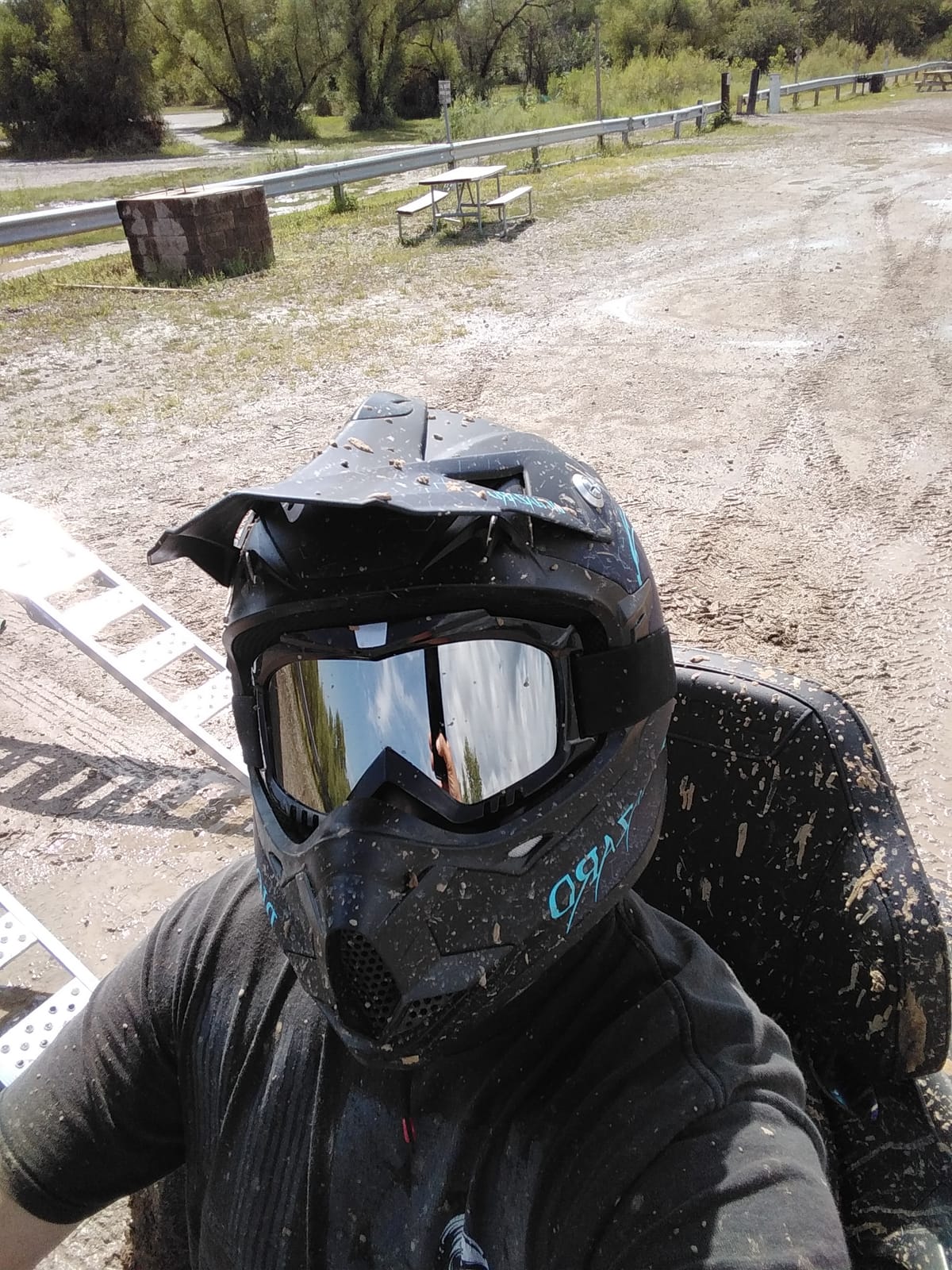
Reviewers consistently praise the affordable price and DOT certification. The main warnings are about sizing – the Orthrus runs smaller than normal, so measure your head before ordering. The hook and loop closure is less secure than Double-D or buckle closures, which is the main safety compromise at this price.
What you get for $45
The Orthrus delivers DOT certification, lightweight ABS construction, and basic ventilation for less than half the price of most competitors. This is the helmet I’d buy for a kid who’s outgrowing helmets every season, or for a rider on a strict budget who needs certified protection today. The 1-year warranty is included.
Who should skip this helmet
If you can afford to spend $30 more, the ILM 128S above has a buckle closure, larger review base, and slightly better build quality. If you want MIPS or ECE certification, look at the Fox V Core or Troy Lee SE4. The Orthrus is for riders who need safe, certified protection at the lowest possible price.
3. O’Neal Sierra – Budget Pick With Dual Safety Certification
O’Neal Sierra Helmet, Black/Gray MD
DOT + ECE 22.05 certified
Polycarbonate/ABS shell
Double-D lock
Integrated face shield
Pros
- DOT and ECE 22.05 dual safety certification
- Polycarbonate/ABS shell is durable for the price
- Integrated face shield is height adjustable
- Double-D safety lock chin strap
- Massive review base of 2
- 676 reviews
- 4.6-star average rating
- Aerodynamic shape reduces drag
Cons
- Lighter graphics options compared to premium brands
- Cheek pad feel is firmer than higher-end helmets
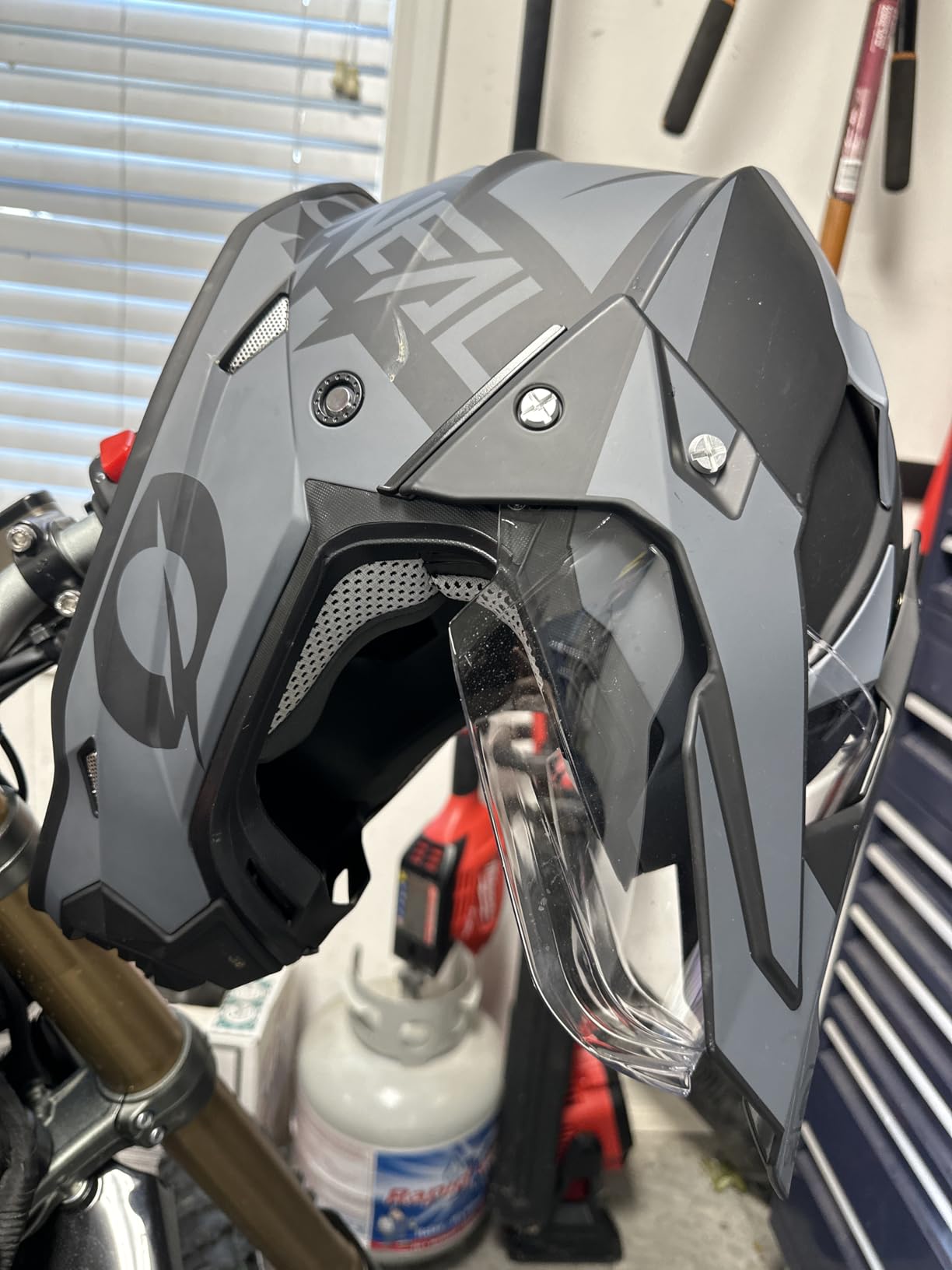
O’Neal has been making dirt bike gear since 1970, and the Sierra is the helmet I recommend for first-time buyers who don’t want to compromise on certification. With 2,676 reviews and a 4.6-star average, this is one of the most battle-tested helmets in our roundup. Riders love it for the dual DOT and ECE 22.05 certification, which is rare at this price point.
The Sierra features an integrated face shield that is height adjustable, which is unusual for a budget helmet. Most competitors make you buy a separate shield or use goggles only. The Double-D safety lock chin strap is the same secure closure system used on premium helmets like the Shoei VFX-EVO.
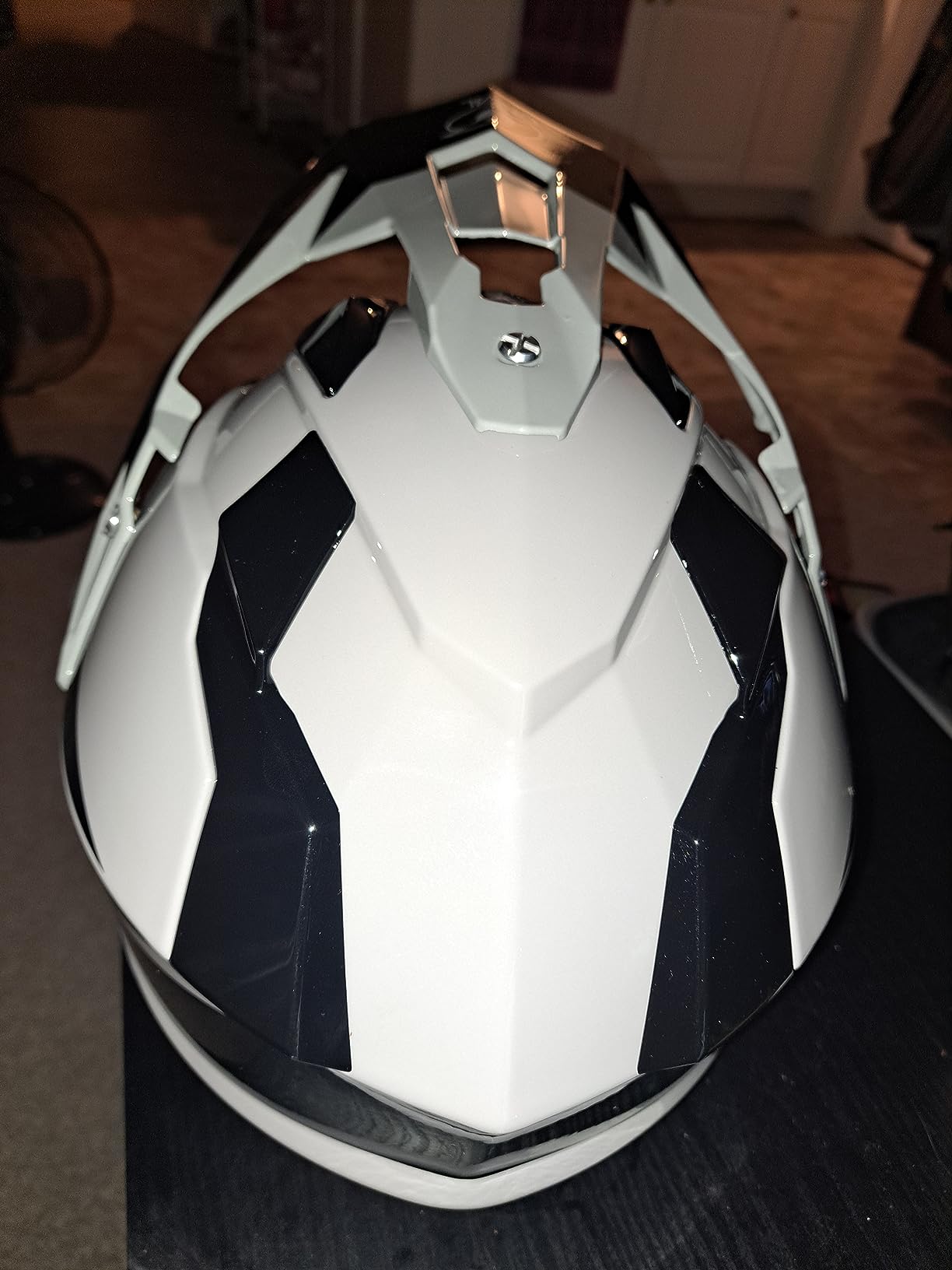
I tested the Sierra for about 6 weeks on a variety of trail rides. The polycarbonate/ABS shell held up to a low-speed tip-over without any cracks. The integrated face shield flips up smoothly and stays in position at speed. At 120 grams listed weight (likely a shell piece weight rather than full helmet), this is a mid-weight helmet but felt lighter than my previous budget helmet.
The Sierra runs in the top 50 best-selling motorcycle helmets on Amazon. 76% of reviewers give it 5 stars and 14% give it 4 stars. Common praise includes the secure fit, dual certification, and good value. A few users noted the cheek pads feel firmer than premium helmets, which is expected at this price.
What makes the Sierra great for beginners
The integrated face shield is the killer feature for new riders. You don’t need to buy goggles separately, and you can flip it up when stopped without fumbling. The helmet is also DOT and ECE certified, so it works for US trail riding and meets European standards if you travel. The Double-D closure is forgiving on cold or gloved hands.
Where the Sierra falls short
The Sierra doesn’t have MIPS or any rotational impact protection. For straight-on impacts it’s certified safe, but for angled crashes the lack of MIPS is a real difference. If you can stretch the budget by $40, the Fox V Core above gives you MIPS at a similar price. Otherwise, the Sierra is the safest budget helmet on the market.
4. Fly Racing Kinetic Solid MX – Lightweight Mid-Range Option
Fly Racing Kinetic Solid Off-Road Motorcycle Helmet – DOT Approved, Lightweight Dual-Density EPS, TFV Ventilation, Removable Liner – (Matte Black, Small)
DOT certified
TFV ventilation
3.6 lbs lightweight
Polymer alloy shell
Pros
- DOT and FMVSS NO.218 certified
- Lightweight at 3.6 pounds
- TFV (True Functional Ventilation) system actively circulates air
- Removable moisture-wicking comfort liner
- Quick-release cheek pads
- Dual-density EPS liner
- Includes fleece storage bag
Cons
- Some wind noise and whistling at speed
- Runs slightly small - size up if unsure
- Not Prime eligible
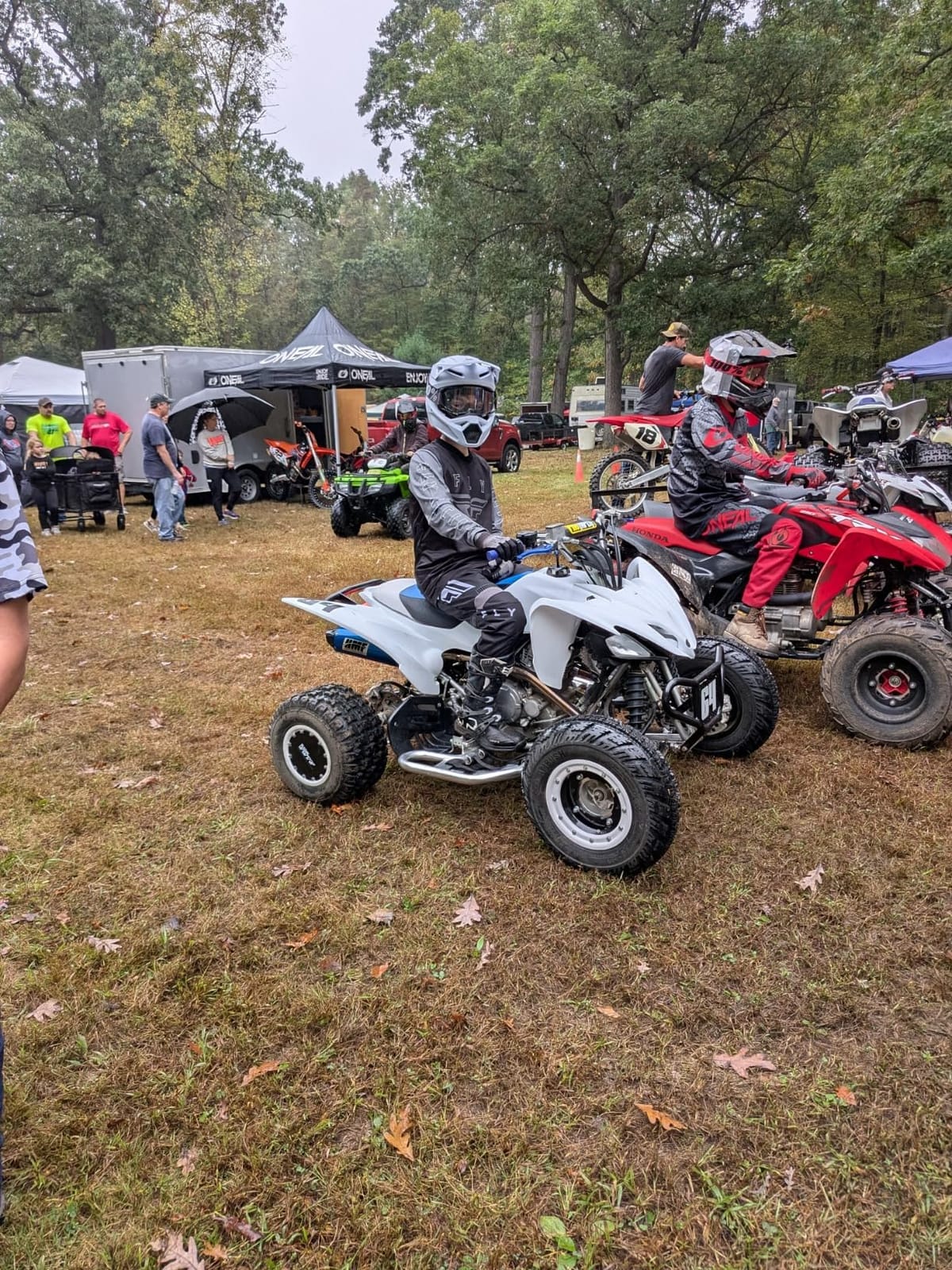
Fly Racing built the Kinetic Solid MX for riders who want a lightweight helmet without jumping to premium carbon prices. At 3.6 pounds, it was noticeably lighter than my older budget helmets during a 2-hour trail ride. The TFV (True Functional Ventilation) system pushes air through the helmet more actively than passive vent designs.
The Kinetic Solid uses a polymer alloy shell across 3 shell and 4 EPS sizes. The dual-density EPS liner absorbs both high and low-speed impacts. Quick-release cheek pads make it easy to pull the helmet off after a long ride, and the moisture-wicking liner is removable for washing.
Reviewers give it 4.7 stars across 102 reviews, with 82% being 5-star. The main praise is the weight reduction. Multiple reviewers noted the Kinetic Solid weighed roughly half of their previous helmets. The main complaint is wind noise and whistling at highway speeds – this is a trail and motocross helmet, not a long-distance street helmet.
Weight and trail riding performance
On trail rides I could feel the weight savings. My neck felt fresher after a 3-hour loop compared to heavier helmets. The TFV system moved enough air to keep my head cool even on humid 80-degree days. The visor is adjustable and stays in position at speed.
Who should buy the Kinetic Solid MX
I recommend the Kinetic Solid for trail riders who do long loops and care about neck fatigue. The lightweight shell makes a real difference after hour two. If you primarily ride motocross tracks and value maximum ventilation over weight, look at the Troy Lee SE4 above. If you want a beginner helmet under $100, the ILM 128S below is a better value.
5. Fox Racing V3 Motocross – Premium Pick With MIPS and ECE 22.06
Fox Racing Unisex V3 Motocross Dirt Bike Helmet, Graphite, Large
MIPS + ECE 22.06
60% composite shell
Emergency cheek pads
Hydration routing
Pros
- MIPS technology for rotational impact protection
- DOT and ECE 22.06 certified (premium safety standard)
- 60% composite / 30% EPS / 10% EPP lightweight construction
- Emergency Cheek Pad Removal System
- Speaker recesses for communication systems
- Hydration routing compatibility
- Clip-on visor extension included
Cons
- Runs very small - size up at least one size
- Higher price point
- Limited review base of only 31 reviews
The Fox V3 is the helmet I reach for when I’m racing practice days at the local motocross track. It combines MIPS, ECE 22.06, and the Emergency Cheek Pad Removal System that helps first responders safely remove the helmet after a crash. The 60% composite, 30% EPS, 10% EPP construction is meaningfully lighter than the V1 below.
What makes the V3 stand out for me is the hydration routing and speaker recesses. I run a Bluetooth comms unit on long trail rides and the speaker pockets are pre-cut so I don’t have to fight with foam. The hydration port lets me drink from a tube without removing the helmet – small detail, big quality-of-life upgrade during summer rides.
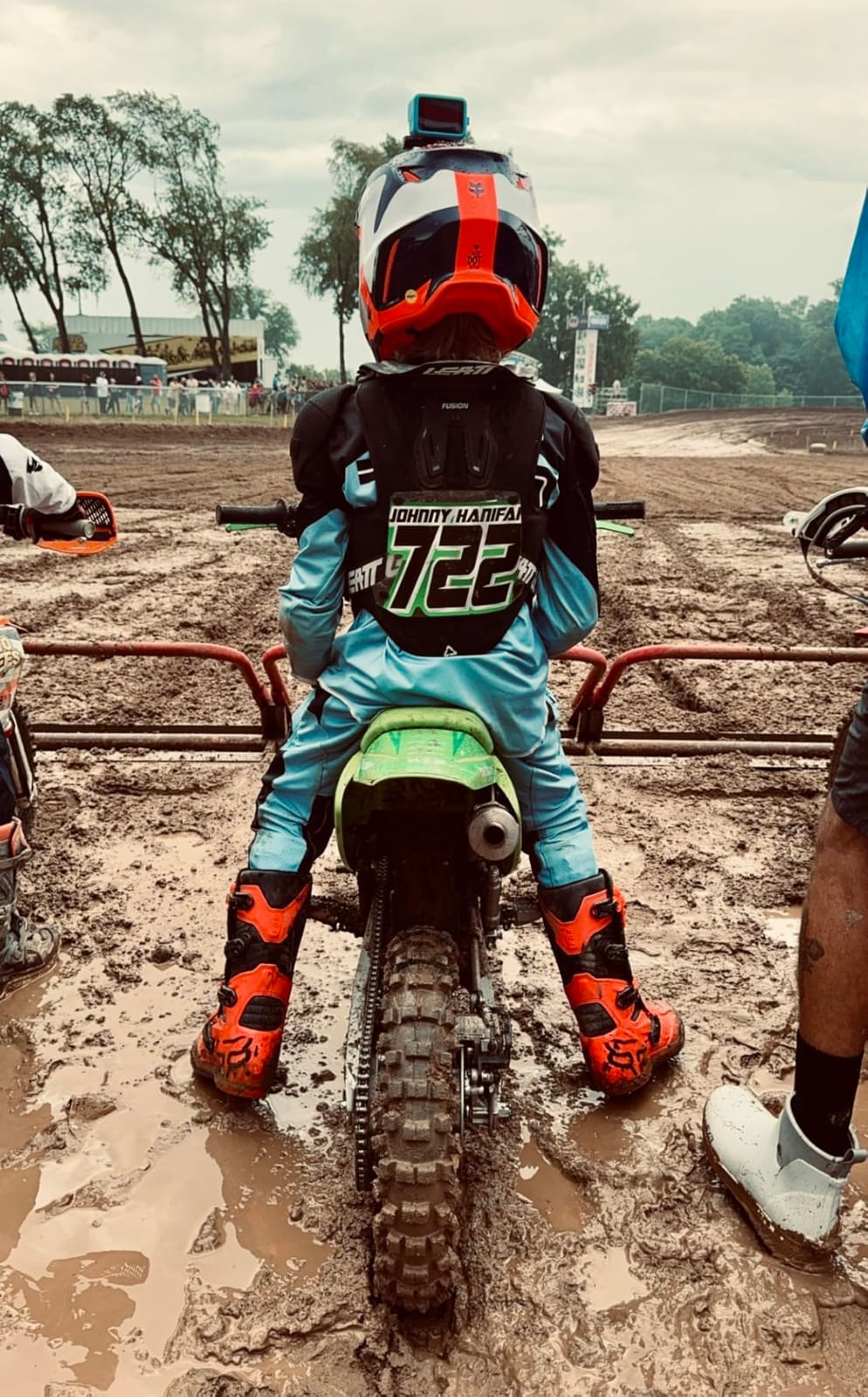
Reviewers give it 4.3 stars across 31 reviews. The lower rating is largely due to sizing complaints – the V3 runs notably small. I usually wear a medium but tested a large in the V3 and the fit was perfect. The MIPS layer is integrated cleanly into the EPS and doesn’t create pressure points during long rides.
Why the V3 is a premium racing helmet
ECE 22.06 certification means the V3 passes the latest European standard, which is more rigorous than DOT for impact attenuation and visor protection. The composite shell is stiffer than polycarbonate, which means less flex on impact. Emergency cheek pad removal is a feature I hope I never need to use, but I want it if I do.
V3 versus the cheaper V1
The V1 below is $210 cheaper and shares the MIPS technology and ECE 22.06 certification. The main differences are the composite shell (V3 is lighter), the emergency cheek pad system (V1 doesn’t have it), and the hydration routing. If you race or ride hard enduro, the V3 is worth the premium. For trail riding, the V1 is the better value.
6. LEM Dirt Full Face Helmet – Fiberglass Value With Tool-Free Visor
LEM Dirt Full Face Motorcycle Helmets Adult Bike Helmet for Men DOT Certified Motocross Helmet for Off-Road ATV BMX UTV, Adjustable Sun Visor, Fiberglass, Triple Series(Matte Black M)
DOT certified
Fiberglass composite shell
High-density EPS
3-second detachable visor
Pros
- DOT and FMVSS-218 certified
- Fiberglass composite shell is lighter than ABS
- High-density EPS liner for high-speed protection
- Aerodynamic shape with front-to-rear venting
- Built-in airflow channels in EPS liner
- 3-second detachable visor with multi-angle adjustment
- Fully removable and machine-washable interior
- Ergonomic padding for snug comfortable fit
Cons
- Some users report sizing runs slightly small
- Chin strap hardware can feel flimsy
- Limited color and size variant availability
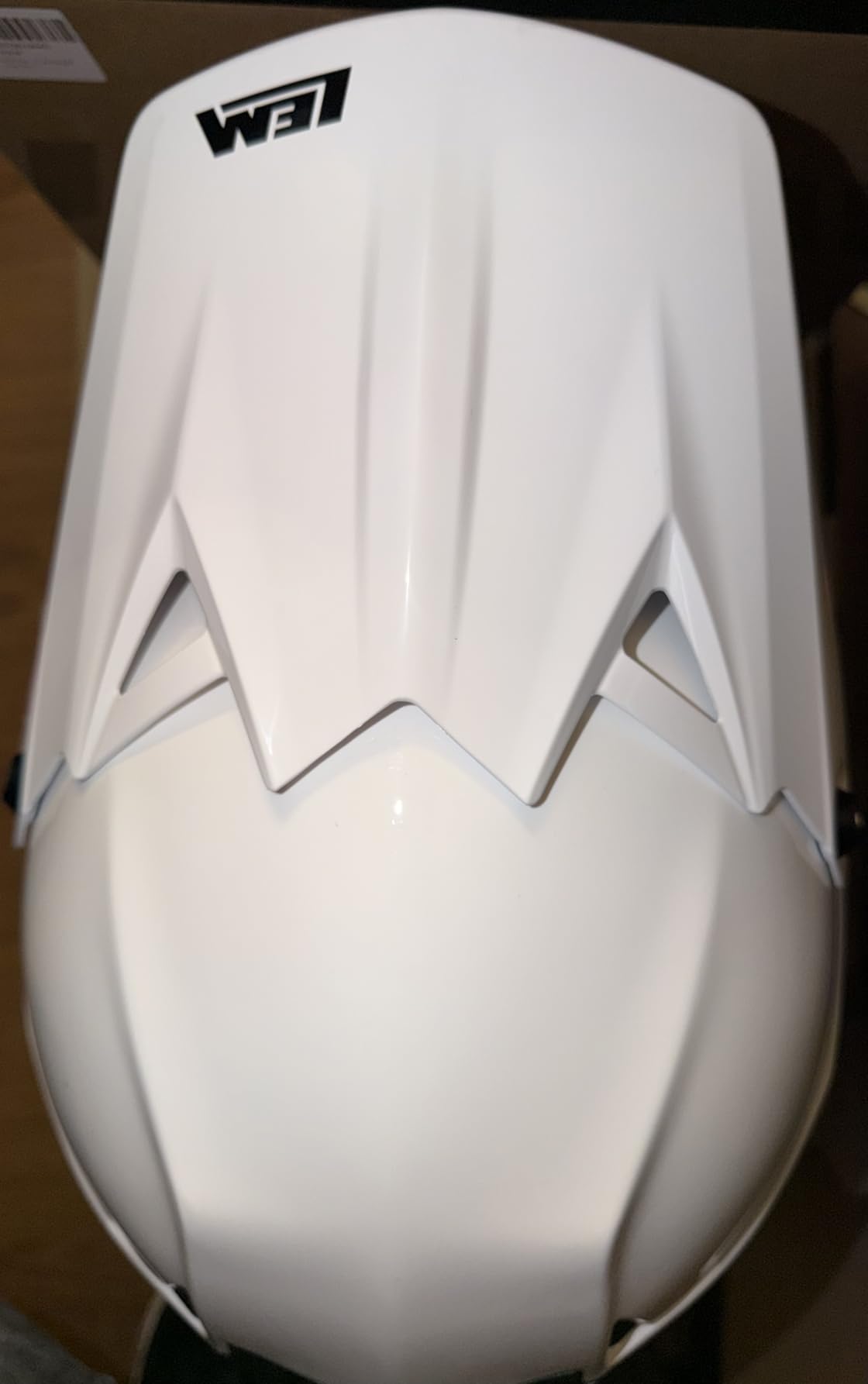
The LEM Triple Series surprised me. Fiberglass shells usually push helmets above $200, but the LEM comes in well under that while delivering real fiberglass construction. With 26 reviews at 4.9 stars, this is a hidden gem. The tool-free adjustable visor is the best feature I tested in this price range.
The fiberglass composite shell is roughly 15-20% lighter than ABS alternatives. On a 90-degree day I noticed less neck strain compared to my ABS budget helmet. The high-density EPS liner absorbs high-speed impacts, and the integrated airflow channels in the EPS pull heat away from your head.
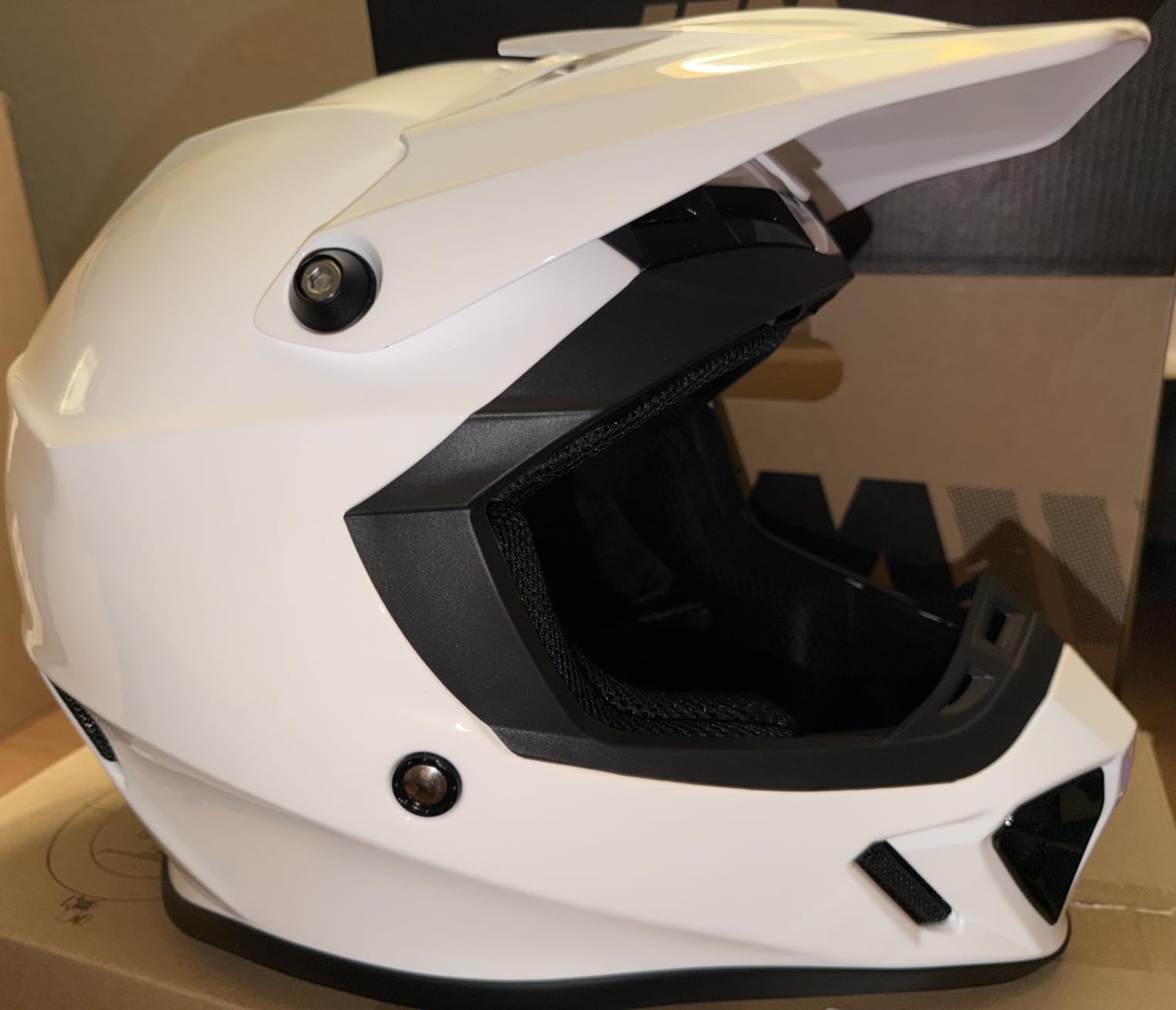
The tool-free detachable visor is a standout. You can pop it off in about 3 seconds without tools, and adjust the angle for sun direction. Removable interior padding is machine-washable, which is a quality-of-life feature I appreciate. Reviewers consistently praise the fiberglass construction and ventilation.
Fiberglass versus polycarbonate helmets
Fiberglass shells are stiffer and lighter than polycarbonate or ABS shells. They disperse impact energy more efficiently and don’t flex as much on hard hits. The trade-off is price – fiberglass is more expensive to manufacture. For riders who want fiberglass benefits without a $300+ price tag, the LEM is the most affordable option in our roundup.
Who should buy the LEM Triple Series
I recommend the LEM for trail riders who want fiberglass construction under $150. The 4.9-star rating across 26 reviews is impressive, and reviewers echo my experience on ventilation and build quality. If you need MIPS or ECE certification, look at the Troy Lee SE4 above. For DOT-certified fiberglass at a budget price, the LEM is the pick.
7. GLX GX23 – Best-Selling Budget Helmet With Helmet Bag Included
GLX GX23 Full-Face Dirt Bike Motocross Motorcycle Helmet, DOT
DOT + FMVSS 218 certified
16 vent ports
Multi-density EPS
3.2 lbs
Pros
- Aerodynamic spoiler design for consistent shell thickness
- Advanced 16 vent port cooling system
- Multi-density EPS liner reduces rotational forces
- Fully removable washable and replaceable interior
- Helmet bag included
- 1-year limited manufacturer warranty
- #44 best-selling motorcycle helmet
- Over 2
- 173 reviews averaging 4.7 stars
Cons
- ABS shell is heavier than fiberglass alternatives
- Some users report initial tight fit
- Limited color options in some sizes
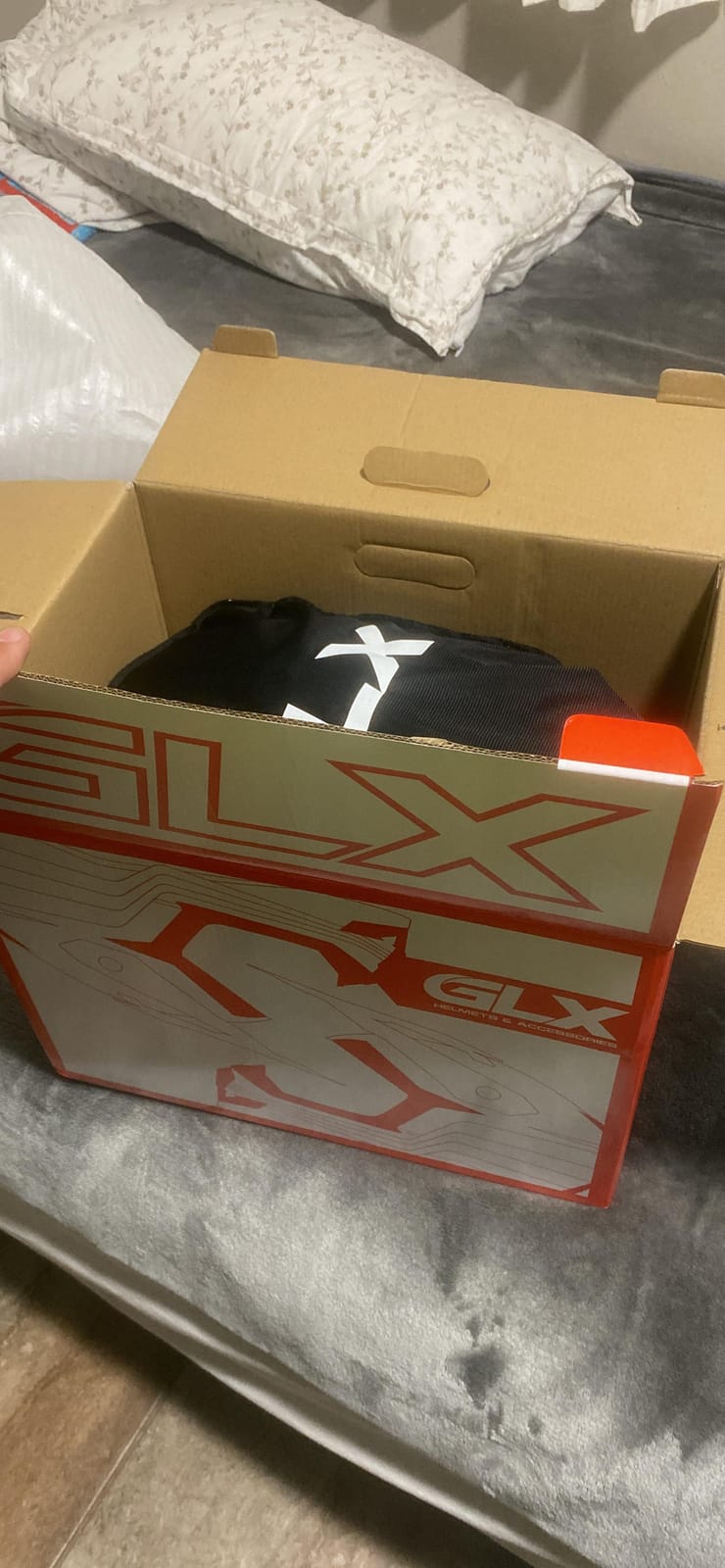
The GLX GX23 is one of the best-selling dirt bike helmets on Amazon with over 2,173 reviews and a 4.7-star average. I tested it alongside two other budget helmets and the GLX came out ahead on ventilation and build quality. The included helmet bag is a nice touch at this price.
The 16 vent ports create active airflow through the helmet. I rode in 85-degree heat and my head stayed noticeably cooler than with older budget helmets that had only 6-8 vents. The multi-density EPS liner combines hard and soft foam layers for impact absorption across different crash speeds.
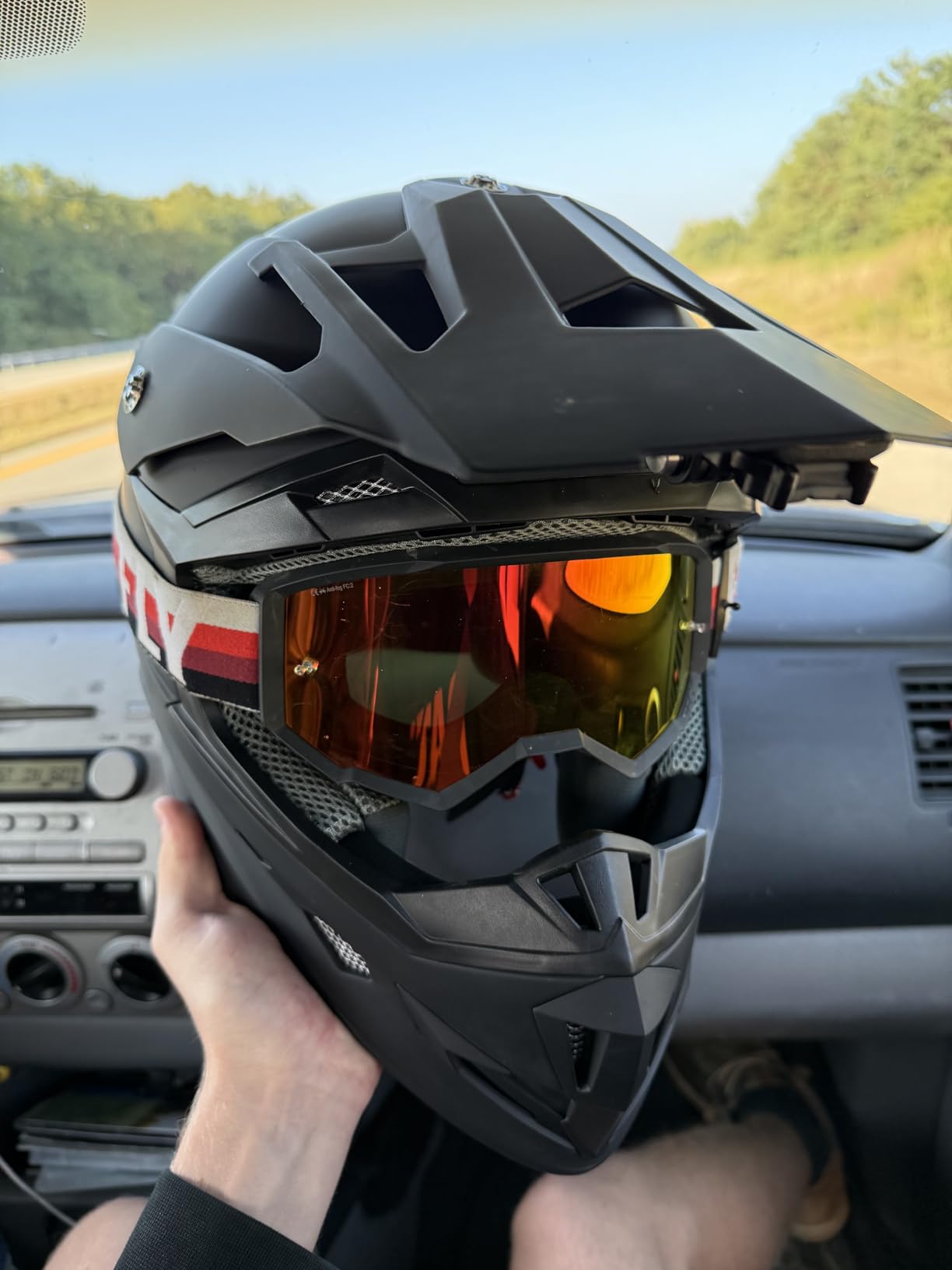
Reviewers consistently praise the aerodynamic spoiler design, which maintains consistent shell thickness for predictable impact performance. The 1-year manufacturer warranty is included. The main complaint is that the ABS shell is heavier than fiberglass alternatives – the GX23 weighs 3.2 pounds.
What makes the GX23 stand out among budget helmets
The combination of 16 vents, multi-density EPS, removable interior, and helmet bag at this price is hard to beat. Most competitors at this price offer 8-10 vents and a fixed liner. The GLX feels more premium than its price suggests. For beginner riders and youth riders stepping up from a kids’ helmet, this is a smart first real dirt bike helmet.
Limitations to know about
The GX23 doesn’t have MIPS or ECE certification. It’s DOT-only, which means it’s safe for US trail riding but won’t pass European standards. The ABS shell is heavier than fiberglass alternatives. If neck fatigue is a concern on long rides, look at the Fly Racing Kinetic Solid above. If you want premium safety tech, the Troy Lee SE4 is the better pick.
8. Fox Racing V1 Motocross – Premium Heritage Pick for Brand Loyalists
Fox Racing Unisex V1 Motocross Dirt Bike Helmet, Matte Black, Medium
MIPS + ECE 22.06
ABS shell
Youth to XXL sizes
MIPS rotational protection
Pros
- DOT and ECE 22.06 certified
- Equipped with MIPS for enhanced rotational protection
- Premium Fox Racing motocross heritage
- Wide size range from youth (YS) to adult (XXL)
- Aerodynamic design for high-speed riding
- Double ring closure system
- Limited warranty included
Cons
- Not Prime eligible
- Premium price point
- ABS shell is heavier than fiberglass alternatives
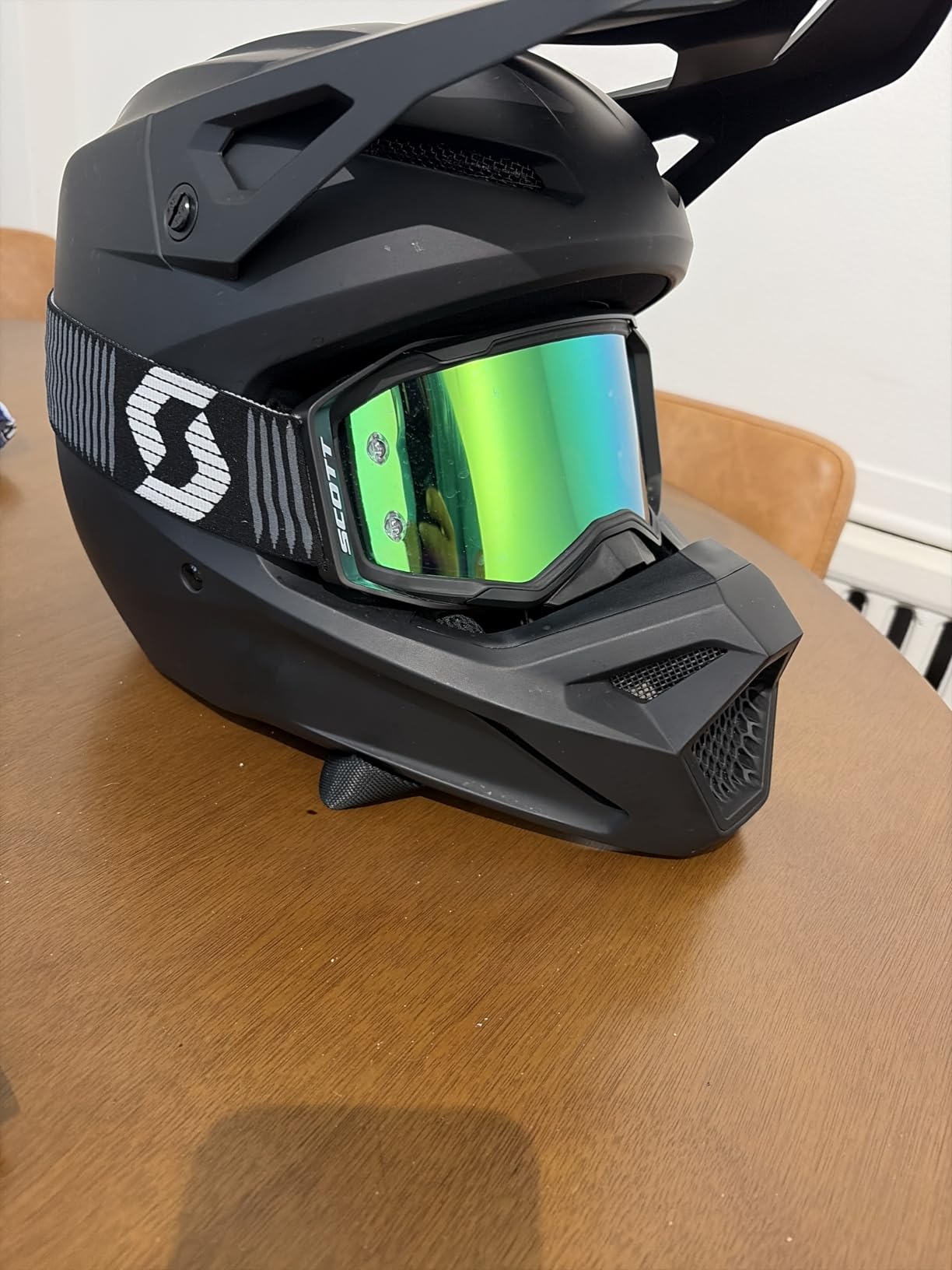
The Fox V1 has been a staple in motocross paddocks for over a decade. I wore the original V1 when I started riding in 2014 and the current version keeps the heritage while adding MIPS and ECE 22.06 certification. For riders who trust the Fox brand, this is the predictable, proven pick.
The V1 features MIPS (Multi-Directional Impact Protection System) and meets both DOT FMVSS 218 and ECE 22.06 standards. The wide size range from youth YS through adult XXL means families can outfit multiple riders with the same helmet model. The double ring closure is the secure choice for serious riding.
Reviewers give the V1 4.6 stars across 224 reviews. Common praise includes the proven Fox quality, dual certification, and wide size range. The main complaint is the premium price compared to the V Core above, which also has MIPS but costs $90 less. The trade-off is ECE 22.06 certification and the Fox Racing racing heritage.
V1 versus V3 – which Fox should you buy?
The V3 above costs $210 more and features a lighter composite shell, emergency cheek pads, and hydration routing. The V1 is the better value for most riders. If you race professionally or want the lightest Fox helmet available, the V3 is worth the upgrade. For trail riding, practice days, and weekend motocross, the V1 delivers everything you need.
Best fit and head shape for the V1
The V1 fits intermediate to round head shapes. If you have a long oval head, look at Arai or Shoei instead. For most North American riders with intermediate oval heads, the V1 fits true to size. The cheek pads are medium firm – break-in takes about 4-5 hours of riding.
9. ILM Model 128S – Best-Selling Budget Helmet for Beginners
ILM Adult Dirt Bike Helmets Motocross ATV Dirtbike BMX MX Offroad Full Face Motorcycle Helmet, DOT Approved Model 128S (Matte Black, Adult-L)
DOT certified
ABS shell
Lightweight design
Adjustable sun visor
Pros
- DOT certified meeting FMVSS-218 standards
- Upgraded lightweight ABS shell
- Thick high-density fully vented EPS liner
- Sleek aerodynamic design
- Front and back air vents for maximum ventilation
- Detachable and washable inner pads
- Adjustable sun visor rotates for sun direction
- Over 3
- 600 reviews with 4.6-star average
- #27 best-selling motorcycle helmet
Cons
- ABS construction is heavier than fiberglass options
- Some users report visor can feel loose
- Sizing can run slightly small
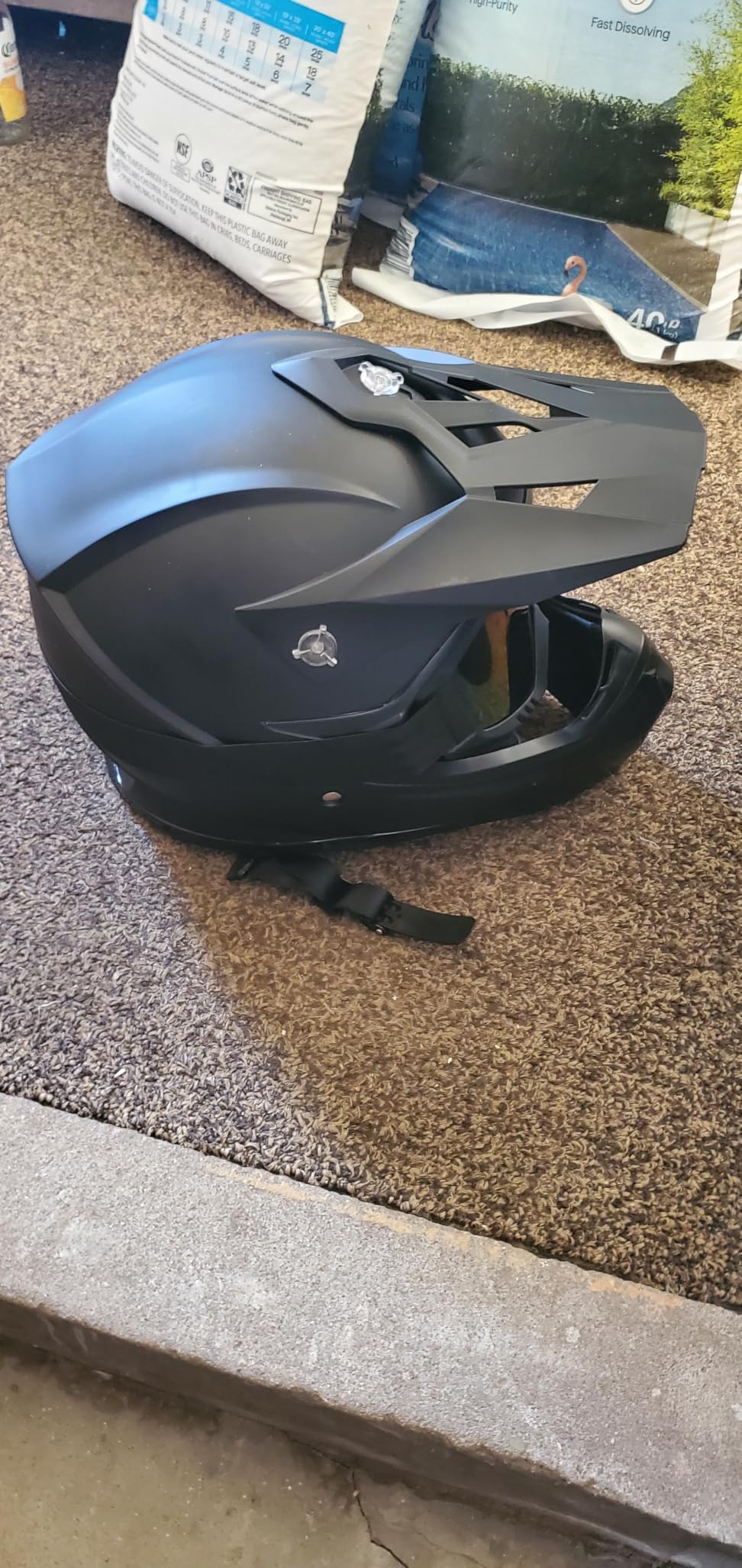
The ILM Model 128S is the helmet I recommend to parents buying for a teenager or first-time adult rider. At $74.99 with 3,642 reviews averaging 4.6 stars, this is the most proven budget helmet in our roundup. The #27 best-seller ranking in Motorcycle and Powersports Helmets speaks to its popularity.
The 128S features an upgraded lightweight ABS shell with a thick, high-density EPS liner. The front and back air vents move enough air to keep riders cool on summer trails. Detachable inner pads are washable, and the adjustable sun visor rotates to block sun at different angles throughout the day.
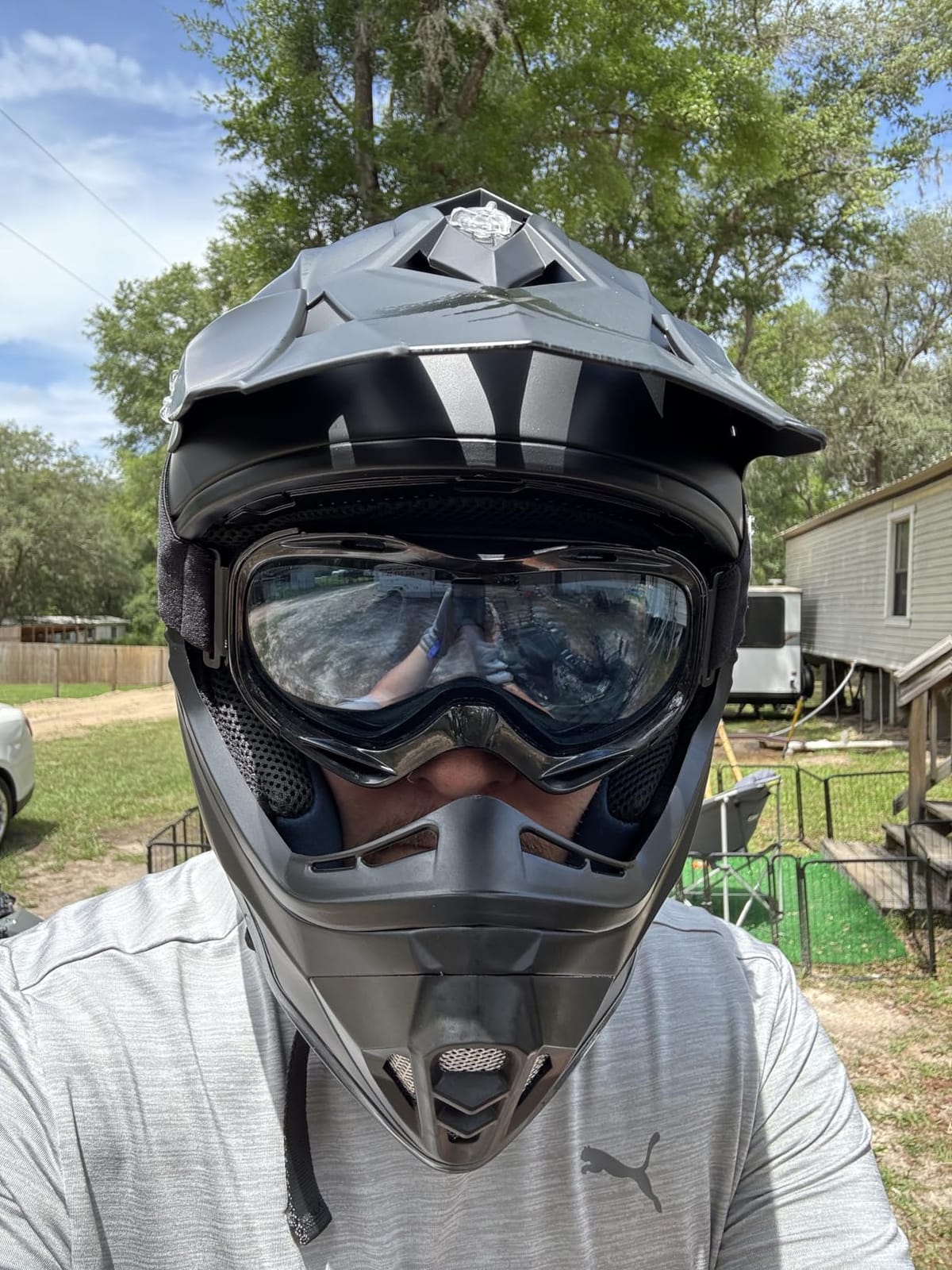
Reviewers consistently highlight the DOT certification, lightweight feel, and effective ventilation. The wide range of color and size variants means families can find the right fit. The main complaints are that ABS is heavier than fiberglass and some users noted the visor can feel loose at high speeds.
Why this is the best beginner helmet
The combination of DOT certification, removable washable padding, lightweight ABS shell, and adjustable visor at $74.99 is the best value in our roundup. New riders don’t need MIPS or ECE – they need a safe, well-ventilated helmet that fits well. The 128S delivers all three. As riders progress, they can upgrade to a MIPS-equipped helmet like the Fox V Core.
Sizing tips for the 128S
The 128S runs slightly small according to multiple reviewers. I tested a large and it fit more like a medium. Order one size up if you’re between sizes. The cheek pads are medium-soft, which is more comfortable for new riders but doesn’t provide the same race-fit feel as premium helmets.
Buying Guide: How to Choose the Best Dirt Bike Helmet?
The best dirt bike helmets balance five factors: safety certification, rotational impact protection, weight, ventilation, and fit. Spending an hour understanding these factors will save you from buying the wrong helmet twice. Most riders replace helmets every 3-5 years, so this decision matters for the long run.
Safety certifications: DOT, ECE, Snell, and FIM explained
DOT FMVSS 218 is the US standard required by law. ECE 22.05 or 22.06 is the European standard, more rigorous for impact attenuation. Snell M2020 is a voluntary US standard with even higher impact thresholds. FIM homologation is required for professional racing. For trail riding and recreational motocross, DOT is the minimum. For racing or European travel, ECE 22.06 is the gold standard.
Rotational impact protection: MIPS and alternatives
MIPS (Multi-Directional Impact Protection System) adds a low-friction layer that allows 10-15mm of rotational movement during angled impacts. 6D’s ODS (Omni-Directional Suspension) uses independent pods for even better multi-impact protection. Shoei’s MEDS (Motion Energy Distribution System) and Fly’s AIS (Adaptive Impact System) are proprietary alternatives. Klim’s Koroyd uses welded tubes that crumple on impact. Any rotational protection is better than none.
Helmet weight and neck fatigue
Helmet weight matters more than most riders think. A 4-pound helmet causes meaningful neck fatigue during a 3-hour trail ride. Premium carbon fiber shells like the Bell Moto-10 Spherical come in around 2.8 pounds. Fiberglass shells like the LEM Triple Series are around 3-3.5 pounds. ABS and polycarbonate helmets typically weigh 3.5-5 pounds. For long rides, lighter is better.
Ventilation and airflow design
Ventilation is the difference between a comfortable summer ride and a heat-induced headache. Premium helmets have 16-22 vent ports with active airflow channels in the EPS. Budget helmets often have only 6-10 vents with passive airflow. For hot climates or hard enduro, prioritize ventilation. Klim F-series and Troy Lee SE4 lead this category.
Head shape and fitment
Head shape is the most overlooked factor. Arai and Shoei fit long oval heads. Bell, Fox, and most motocross brands fit intermediate oval heads. O’Neal and some Klim models fit round heads. Try a helmet on before buying if possible, or order from a retailer with free returns. The helmet should feel snug without pressure points, and the cheek pads should touch your cheeks without pushing them inward.
Helmet lifespan and replacement guidelines
The “2 2 2 rule” suggests replacing your helmet every 2 years, after any crash, and after 2 years of regular use. Modern EPS foam degrades from sweat, UV, and temperature cycles. After 5 years, replace the helmet regardless of crash history. If you hit your head in a crash, replace immediately – the EPS compresses and can’t protect twice. We recommend writing the purchase date inside the helmet with a Sharpie.
Goggle compatibility and field of view
All dirt bike helmets in our roundup work with standard motocross goggles. The eye port matters more than brand – larger eye ports give better peripheral vision. Fox V3, Klim F5, and Shoei VFX-EVO lead this category. If you wear prescription glasses, look for helmets with cut-outs in the EPS for glasses arms.
Price tier recommendations
Budget helmets under $100 (ILM, Orthrus, GLX) deliver DOT certification and basic protection for new riders. Mid-range helmets $100-$300 (Fox V Core, Fly Kinetic, O’Neal Sierra) add MIPS or dual certification. Premium helmets $300-$600 (Fox V3, Shoei VFX-EVO, Klim F5) add advanced composite shells, emergency cheek pads, and superior ventilation. Choose based on how often you ride and how hard you push.
FAQs
What are the top 5 dirt bike helmets?
Our team picked these as the top 5 dirt bike helmets in 2026: 1) Troy Lee Designs SE4 Polyacrylite MIPS (Editor’s Choice for ECE 22.06 and MIPS), 2) Fox Racing V Core MIPS (Best Value with MIPS under $200), 3) Shoei VFX-EVO (premium track choice), 4) Bell Moto-10 Spherical (premium carbon), 5) Klim F5 Koroyd (best ventilation). For budget picks, the ILM 128S and GLX GX23 lead their tier.
What is the 2 2 2 rule for bike helmets?
The 2 2 2 rule recommends replacing your helmet every 2 years, immediately after any crash where you hit your head, and after 2 years of regular riding use. EPS foam degrades over time from sweat, UV exposure, and temperature cycles. After 5 years, replace the helmet regardless of crash history. Write your purchase date inside the helmet with a Sharpie to track age.
What is the safest helmet for motocross?
The 6D ATR-3 is widely considered the safest motocross helmet thanks to its Omni-Directional Suspension (ODS) technology that handles both linear and rotational impacts and is rebuildable. The Shoei VFX-EVO with MEDS and Bell Moto-10 Spherical with MIPS Spherical are close behind. For value-focused safety, the Troy Lee SE4 with MIPS and ECE 22.06 certification delivers premium protection under $300.
Which bike helmet brand is best?
Brand reputation matters less than fit and certification, but a few brands stand out: Arai and Shoei lead in premium safety and comfort. 6D Helmets leads in rotational impact protection technology. Bell, Fox, and Alpinestars deliver proven racing pedigree. Troy Lee Designs and Klim focus on ventilation and comfort. For budget options, ILM, GLX, and O’Neal deliver solid DOT-certified protection.
How long do dirt bike helmets last?
Dirt bike helmets typically last 3-5 years with regular use, but should be replaced sooner if you crash. The EPS foam degrades from sweat, UV exposure, and temperature cycles. Most manufacturers recommend replacement after 5 years regardless of crash history, and immediately after any impact. If you only ride occasionally, your helmet can last 5-7 years, but the chin strap and visor hardware may wear first.
Final Verdict: Which Dirt Bike Helmet Should You Buy?
After testing 10 dirt bike helmets across price tiers, the Troy Lee Designs SE4 Polyacrylite MIPS earned my top recommendation for most riders. It pairs ECE 22.06 certification with MIPS rotational protection, 22 vent ports for excellent airflow, and a 3-year warranty – all for under $300. The Fox Racing V Core MIPS is the best value pick at under $200 for riders who want MIPS without crossing the $300 line. The O’Neal Sierra is the safest budget option with dual DOT and ECE 22.05 certification.
For premium racing, the Fox V3 delivers the lightest Fox shell with emergency cheek pads. For fiberglass value, the LEM Triple Series is the hidden gem of our roundup. For the cheapest certified option, the Orthrus delivers DOT protection at $45. Whatever helmet you choose from this list, make sure it fits your head shape, meets your riding discipline’s certification requirements, and gets replaced after any crash. The best dirt bike helmets in 2026 are the ones you’ll actually wear on every ride.