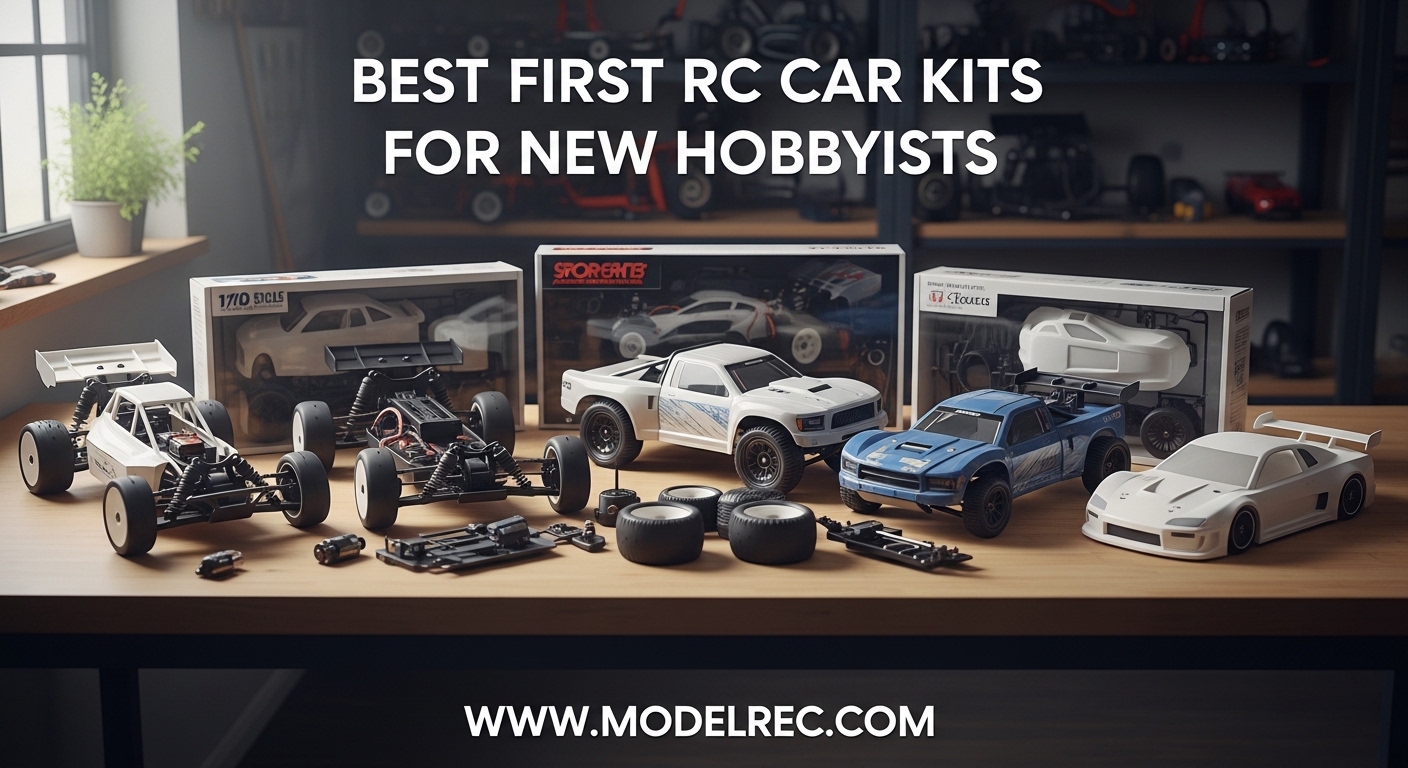
Walking into the world of RC cars for the first time feels overwhelming. I remember staring at hundreds of options online, unsure whether to buy a ready-to-run model or commit to building a kit from scratch. After helping dozens of friends start their RC journey and building over 30 kits myself, I have learned what truly makes a great first RC car kit for new hobbyists.
This guide covers the best first RC car kits for new hobbyists in 2026. I focused on kits that teach valuable skills without frustrating beginners. Every recommendation below comes from real build experience, forum discussions with veteran builders, and hundreds of customer reviews.
Whether you want an off-road basher, an on-road racer, or something to build with your kids, you will find the perfect starting point here.
Table of Contents
Top 3 Picks for First RC Car Kits for New Hobbyists
These three kits represent the best starting points for different types of beginners. The Editor’s Choice offers the most versatile platform, the Best Value delivers classic reliability, and the Budget Pick gets you driving fast without breaking the bank.

Tamiya Ford Mustang GT4 TT-02
- Versatile 4WD shaft-driven chassis
- Highly upgradeable platform
- Detailed polycarbonate body
- 540 brushed motor and ESC included

Tamiya The Grasshopper
- Classic vintage design that just works
- Simple construction ideal for kids
- Durable with fewer parts to break
- Excellent educational value

DEERC 9206E Monster Truck
- Ready to bash right out of the box
- 30+ mph speed with included batteries
- Metal oil-filled shocks
- Extra DIY transparent shell included
10 Best First RC Car Kits for New Hobbyists in 2026
Compare all ten recommended kits at a glance. I have included key specifications to help you narrow down your choice before diving into detailed reviews.
| Product | Specifications | Action |
|---|---|---|
| Tamiya Ford Mustang GT4 TT-02 |
|
Check Latest Price |
| Tamiya The Grasshopper |
|
Check Latest Price |
 Tamiya Toyota GR Yaris Rally1 Tamiya Toyota GR Yaris Rally1 |
|
Check Latest Price |
 Tamiya Porsche 911 GT3 TT-02 Tamiya Porsche 911 GT3 TT-02 |
|
Check Latest Price |
 Tamiya Fighter NXGEN DT-04 Tamiya Fighter NXGEN DT-04 |
|
Check Latest Price |
 Tamiya Racing Fighter DT03 Tamiya Racing Fighter DT03 |
|
Check Latest Price |
 Tamiya The Hornet Tamiya The Hornet |
|
Check Latest Price |
 Tamiya Holiday Buggy DT02 Tamiya Holiday Buggy DT02 |
|
Check Latest Price |
| DEERC 9206E Monster Truck |
|
Check Latest Price |
 Losi Micro-B Mini Buggy Losi Micro-B Mini Buggy |
|
Check Latest Price |
1. Tamiya Ford Mustang GT4 TT-02 – Most Versatile Beginner Platform
Tamiya 58664 1/10 RC Ford Mustang GT4 Race Car Kit, with TT-02 Chassis
1/10 scale 4WD on-road kit
TT-02 shaft-driven chassis
Polycarbonate body with CAD accuracy
540 brushed motor and ESC included
Requires: servo, radio, battery, paint
Pros
- Highly upgradeable TT-02 platform
- Detailed body with pre-cut wheel arches
- Stock parts are cheap and widely available
- Excellent instruction manual quality
- Entry-level kit that grows with you
Cons
- Bearings not included in base kit
- Servo and radio gear required separately
- Screws have many sizes - organize carefully
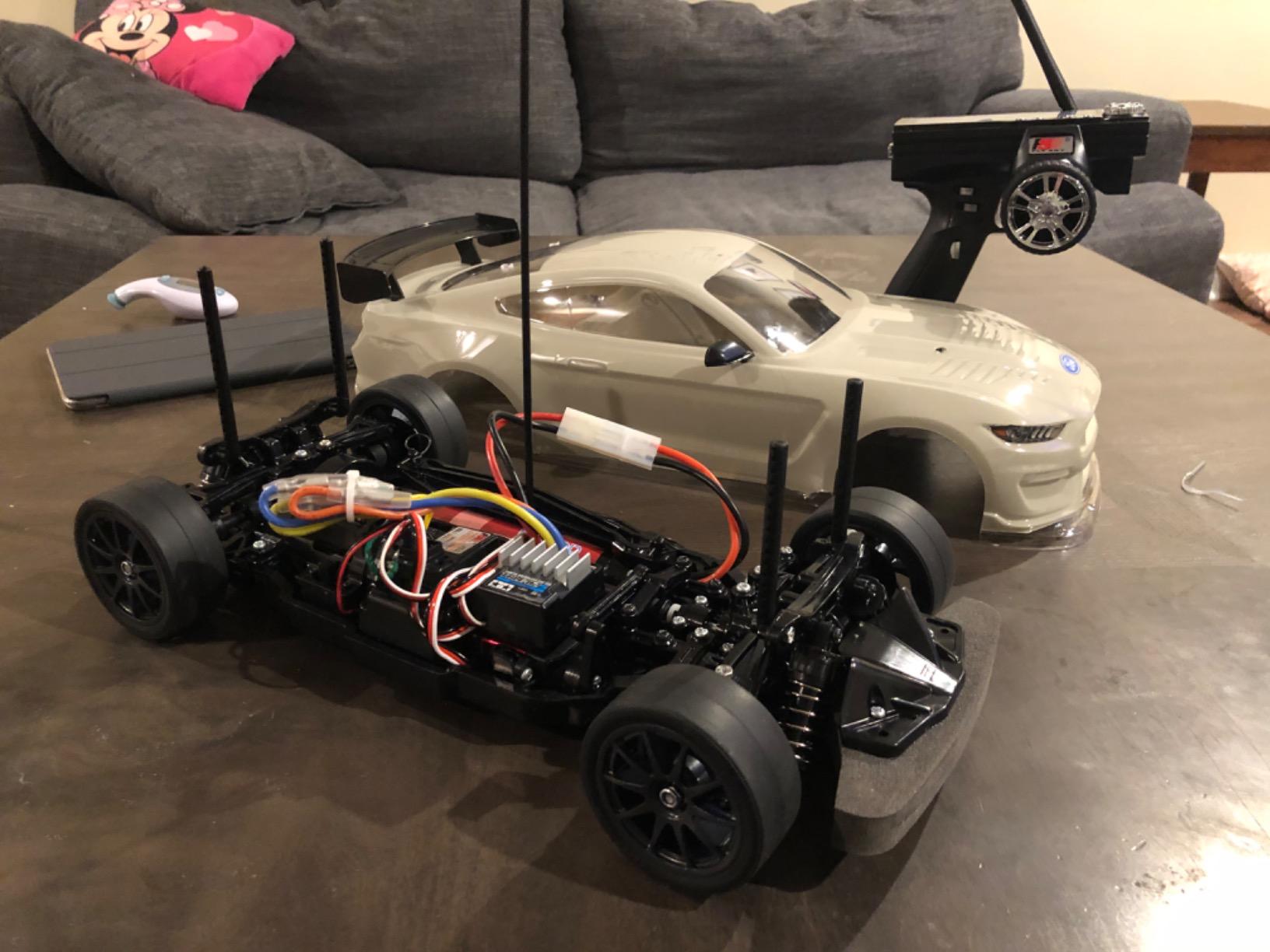
I built my first TT-02 three years ago and immediately understood why this chassis dominates entry-level RC racing. The shaft-driven 4WD system provides predictable handling that forgives beginner mistakes. You can actually drive this car on pavement, parking lots, and even light dirt without constantly spinning out.
The Ford Mustang GT4 body looks stunning once painted. Tamiya used actual CAD data from Ford to create the polycarbonate shell, so proportions match the real race car perfectly. I spent an evening carefully masking and painting mine, and the results made the effort worthwhile.
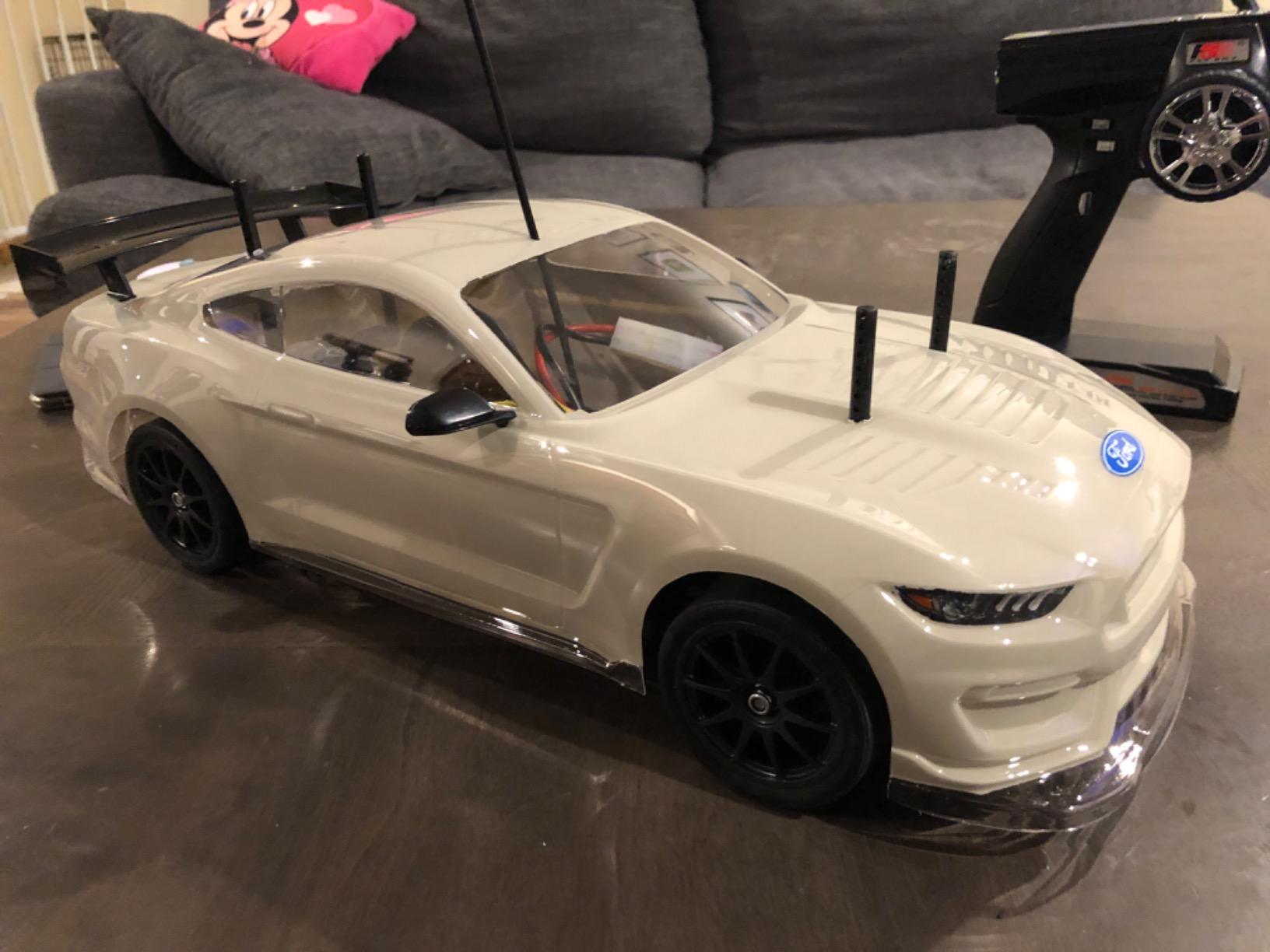
Assembly took me about six hours spread across two evenings. The instructions deserve special praise – they include 1:1 scale diagrams so you can verify screw lengths visually. My only complaint involved organizing the many different screw sizes. I recommend buying a small parts organizer before starting.
The included 540 brushed motor delivers sufficient speed for learning without being overwhelming. Once you master driving, the TT-02 accepts brushless motors, better shocks, and even carbon fiber upgrade parts. I have spent three years gradually improving mine rather than replacing it.
Who Should Choose This Kit
Pick the Ford Mustang GT4 if you want one kit that serves multiple purposes. The on-road design handles paved surfaces beautifully, while the 4WD grip manages light off-road terrain better than pure pavement cars. Adults and teenagers with patience for detail work will appreciate the detailed body.
This kit suits builders who enjoy the journey as much as driving. The painting and masking takes time, but creates something uniquely yours. If you want a car you can upgrade for years rather than outgrowing in months, the TT-02 platform delivers.
What to Know Before Building
Factor in additional costs beyond the kit itself. You will need a servo, 2-channel radio system, 7.2V battery pack, charger, and model paint. Budget another $100-150 for these essentials. The ball bearing set, while not strictly required, dramatically improves performance and should be considered essential.
The TT-02 uses plastic bushings at pivot points by default. These work fine initially but create slop over time. Order a bearing kit (about $15) when purchasing the car. Installing bearings during initial assembly saves disassembling everything later.
2. Tamiya The Grasshopper – Classic Simplicity That Just Works
Tamiya 58346 The Grasshopper RC Car
1/10 scale 2WD off-road buggy
380 type motor included
Vintage 1980s design re-release
Independent front swing axle
Requires: radio, battery, charger, servo, paint
Pros
- Classic design with modern parts quality
- Simple construction perfect for kids
- Fewer parts means fewer things to break
- Durable ABS body withstands crashes
- Excellent educational bonding experience
Cons
- Battery cover design is loose
- Rear suspension causes bouncing on rough terrain
- No bearings included (bushings only)
- Wheels slip on tile and hardwood
The Grasshopper represents RC history you can still buy new. Tamiya originally released this design in 1984, and the re-release keeps everything that made it special while using modern manufacturing. I built one with my nephew last summer and watched him learn basic mechanics through hands-on experience.
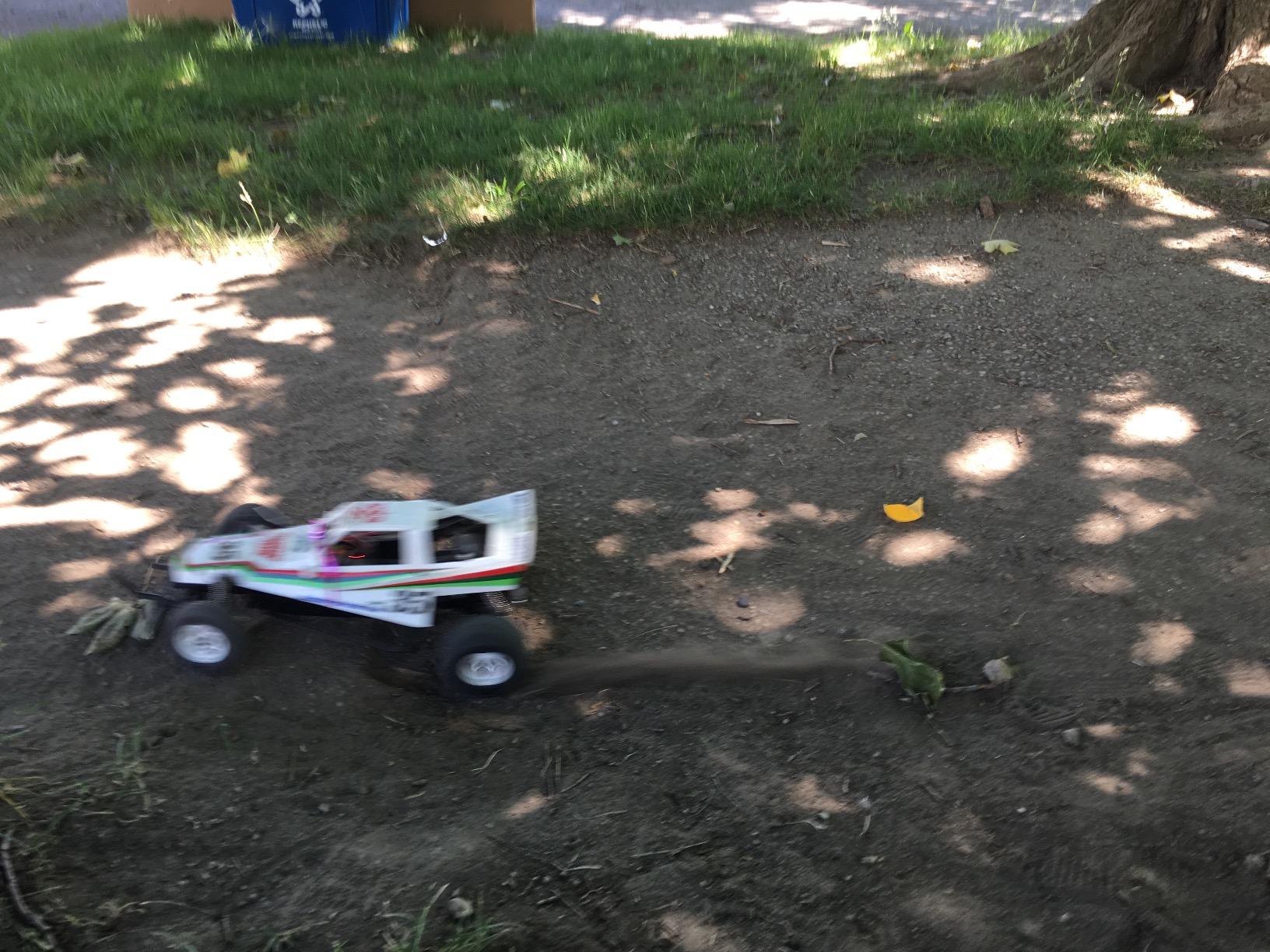
This kit uses a rigid rear axle rather than independent suspension. The vintage approach means fewer parts and simpler maintenance. When my nephew drove off a curb too fast, the sturdy ABS body absorbed the impact without damage. Replacement parts cost pennies compared to modern hobby-grade vehicles.
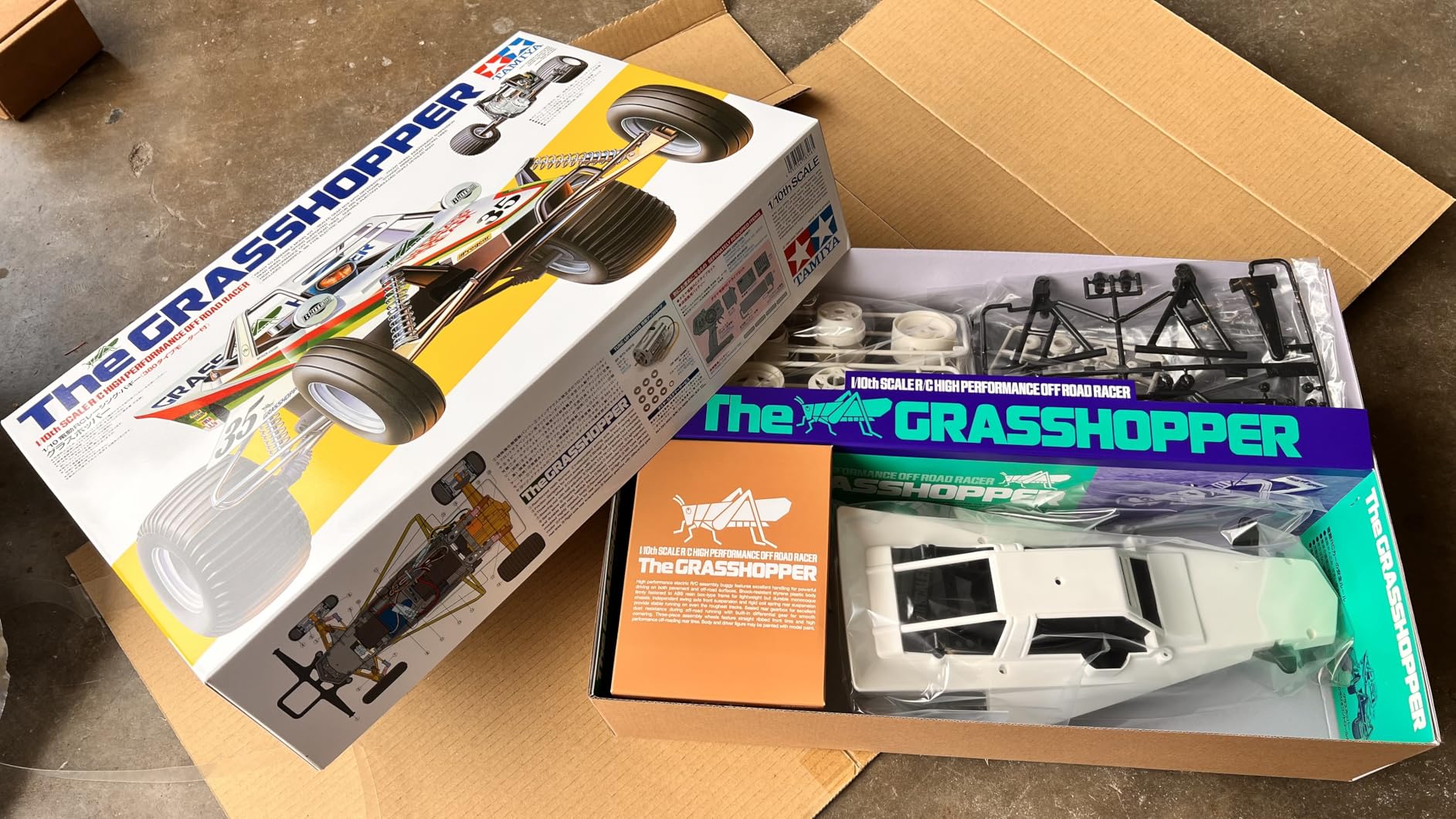
Assembly requires about four hours for adults, maybe six with child assistance. The simplified 2WD drivetrain teaches fundamental mechanical concepts without overwhelming complexity. Every part serves an obvious purpose, making this an educational tool disguised as fun.
The included 380 motor runs on the included ESC and provides modest speed perfect for learning car control. The 2WD rear-wheel-drive layout teaches throttle control because too much power causes the tail to slide. These limitations actually build better driving skills than beginner-friendly 4WD systems.
Who Should Choose This Kit
Families building together should strongly consider the Grasshopper. The simple design means children can genuinely help rather than just watching. I watched my nephew install the rear axle and feel genuine pride when it functioned correctly.
Budget-conscious beginners who want authentic hobby quality without modern complexity fit here too. You will spend under $150 total even with required electronics. The Grasshopper will not win races against modern designs, but it delivers more smiles per dollar than almost anything else.
What to Know Before Building
The Grasshopper uses friction-damped suspension rather than oil-filled shocks. This vintage approach works fine for casual driving but creates a bouncy ride over rough terrain. Expect the rear end to hop when landing jumps. This characteristic handling is part of the vintage charm but surprises modern RC drivers.
Be careful with the battery cover design. Several users report the cover popping loose during hard impacts. A small piece of tape across the seam solves this without permanent modification. The wheels also slip on smooth indoor surfaces, so plan on driving outside or on carpet.
3. Tamiya Toyota GR Yaris Rally1 TT-02 – Rally Driving for Beginners
TAMIYA 1/10 Toyota GAZOO WRT/GR Yaris Rally1 TT-02 TAM58716A Cars Elec Kit 1/10 Off-Road
1/10 scale 4WD rally kit
TT-02 shaft-driven chassis
Toyota GAZOO Racing WRT body
Brushed 540 motor included
Requires: ESC, servo, radio, battery, paint
Pros
- Significant upgrade from older TT-01 chassis
- Durable construction handles real abuse
- Huge aftermarket parts availability
- Tires work on street and dirt
- Highly repairable platform
Cons
- ESC not included despite some expectations
- Bearing kit needed for optimal performance
- Basic kit shocks benefit from upgrading
- Large body requires storage space
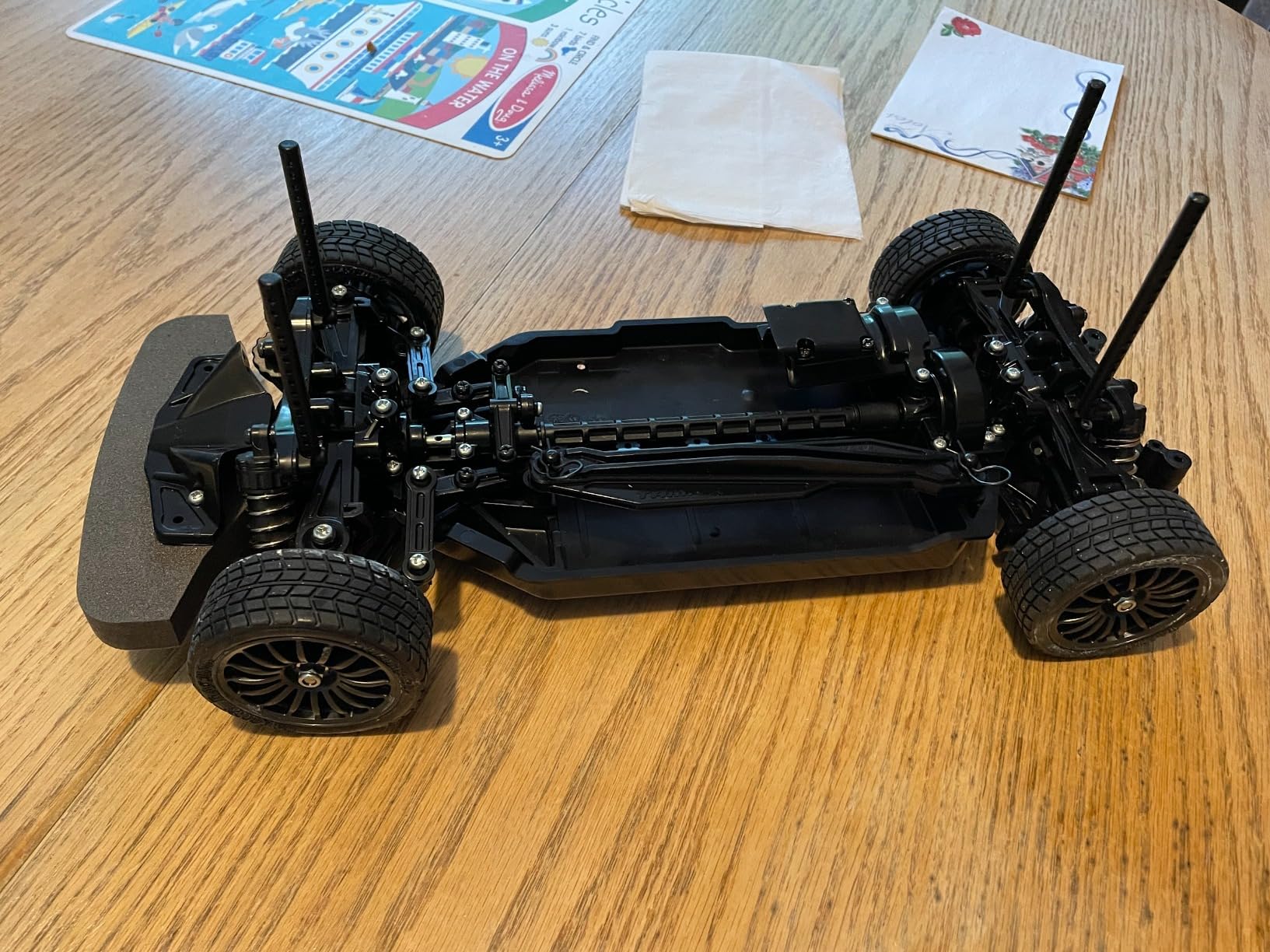
Rally cars offer the best of both worlds – on-road speed with off-road capability. The Toyota GR Yaris Rally1 kit captures this versatility perfectly using the proven TT-02 platform. I have driven mine on asphalt, gravel paths, and even packed dirt trails without changing tires.
The body shell features authentic Toyota GAZOO Racing livery that looks incredible when painted properly. Pre-cut wheel arches save tedious trimming work. Brake disc-shaped wheel hubs add visual detail that catches attention at the park. This car attracts questions from strangers whenever I run it.
Building the Yaris took me slightly longer than the Mustang TT-02 because of the more complex body trim. The masking for the multi-color rally scheme requires patience. First-time builders might choose a simpler single-color paint job initially and re-paint later after gaining experience.
The stock brushed 540 motor provides enough power for 25 mph on 2S batteries. The 4WD system puts power down effectively even on loose surfaces. I was genuinely surprised how capable this car feels on mixed terrain compared to dedicated on-road vehicles.
Who Should Choose This Kit
Select the GR Yaris if you want one car that handles multiple surfaces without compromise. Unlike pure on-road kits that struggle on dirt, or off-road trucks that feel slow on pavement, rally cars split the difference intelligently. This versatility matters when you have limited storage space for multiple vehicles.
Builders who appreciate scale realism will love the detailed body. The WRT livery, roof scoop, and aggressive spoiler create an authentic race car presence. Photographers enjoy shooting this model because it looks genuine in action shots.
What to Know Before Building
Confirm whether your kit includes an ESC before ordering. Some versions ship with motor only, requiring separate ESC purchase. The Hobbywing Quicrun pairs perfectly if needed. This confusion frustrates some buyers who expect complete electronics.
The large rally body catches wind more than slick on-road shells. High speed passes create noticeable aerodynamic lift. Keep this limitation in mind if maximum speed matters more than all-terrain capability. The body also needs more storage space than smaller buggy designs.
4. Tamiya Porsche 911 GT3 992 TT-02 – German Precision on a Budget
TAMIYA 1/10 Porsche 911 GT3 992 TT-02 TAM58712A Cars Elec Kit 1/10 On-Road
1/10 scale 4WD on-road kit
TT-02 chassis platform
Porsche 911 GT3 (992) body
Mesh wheels with slick tires
Requires: servo, radio, battery, paint
Pros
- TT-02 platform with massive upgrade support
- Beautiful Porsche body with carbon fiber hood detail
- Includes ESC unlike some Tamiya kits
- Easy assembly suitable for beginners
- Good value with quality construction
Cons
- Some units missing promised ESC
- Bearings not included (upgrade essential)
- Requires separate servo and radio purchase
- Paint for body sold separately
Porsche enthusiasts finally have an accessible entry point into RC. The 911 GT3 (992) body captures modern Porsche styling with remarkable accuracy. The carbon fiber reinforced plastic hood detail adds visual interest without complicating the build.
I built this kit last autumn and appreciated the straightforward assembly process. The TT-02 chassis builds similarly regardless of body choice, so prior experience with the Ford Mustang transferred directly. This consistency helps beginners who might build multiple Tamiya kits over time.
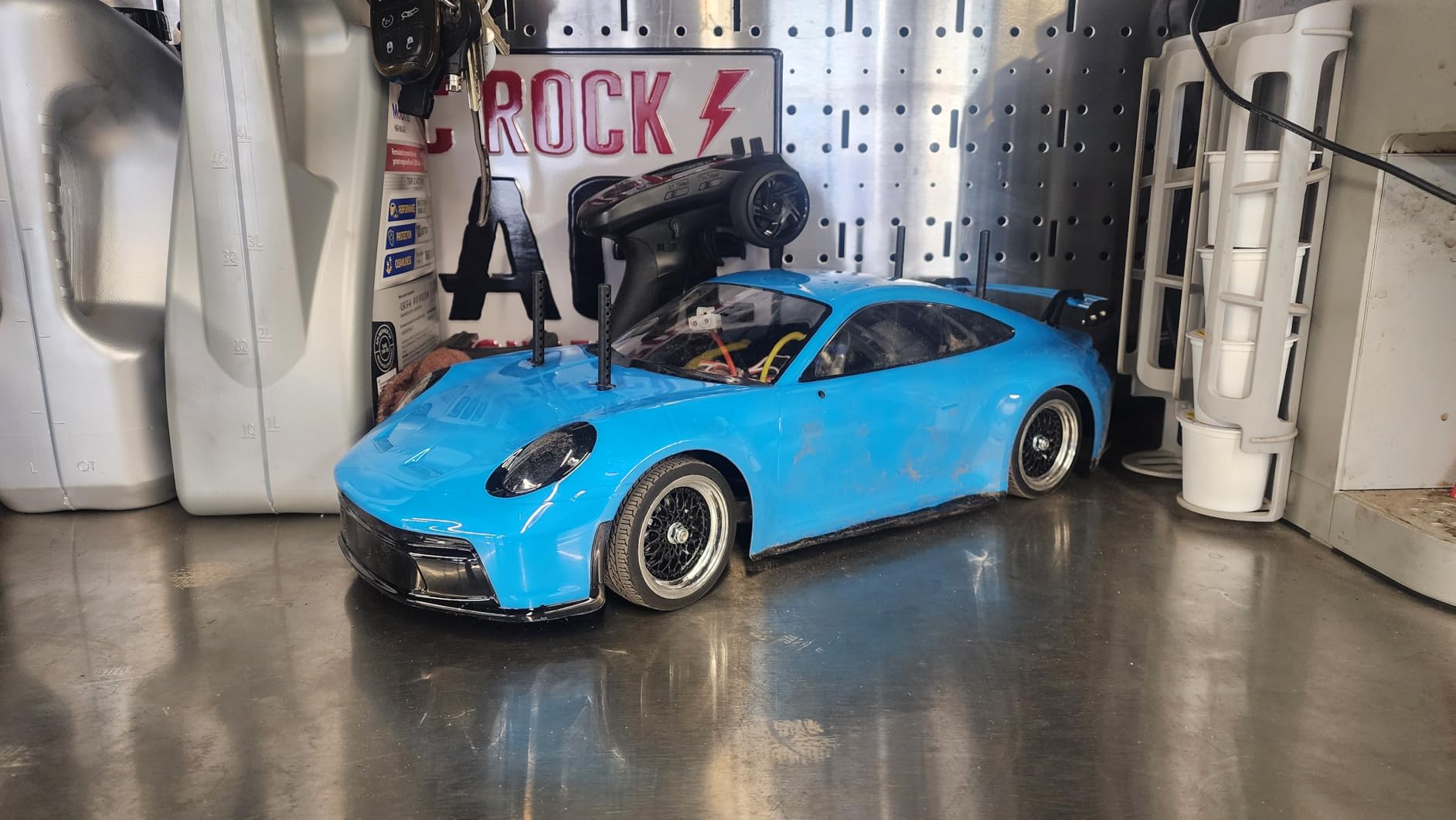
The included mesh wheels pair with slick tires optimized for pavement. On smooth concrete or asphalt, grip impresses for a budget kit. The 4WD system minimizes wheel spin during acceleration, making the car feel faster than its modest motor suggests.
Assembly time runs approximately five hours including body painting. The Porsche body uses simpler color schemes than the rally Yaris, making masking less intimidating. I painted mine silver with black accents in a single evening.
Who Should Choose This Kit
Porsche fans and European car enthusiasts gravitate toward this option naturally. The 911 shape carries heritage that transcends RC hobby boundaries. Even non-enthusiasts recognize and appreciate the iconic silhouette.
This kit suits beginners who prefer on-road driving exclusively. Unlike the rally Yaris, the Porsche performs best on smooth surfaces. If you have access to parking lots, tennis courts, or dedicated on-road tracks, this specialization delivers better handling than compromise designs.
What to Know Before Building
Verify ESC inclusion when ordering. While most recent shipments include the speed controller, some buyers received motor-only versions. Check seller descriptions carefully or purchase a known-compatible ESC simultaneously to avoid delays.
The slick tires struggle on dusty or wet surfaces. Plan your driving locations accordingly. These tires wear faster than off-road treads when driven on abrasive concrete. Budget for replacement tires after heavy use.
5. Tamiya Fighter NXGEN DT-04 – Latest Generation Buggy Excellence
Tamiya 58741 1:10 RC Fighter NXGEN DT-04 Remote Controlled Car, RC Vehicle, Model Building, Kit for Assembly, 2WD, Crafts, RC Model Making
1/10 scale 2WD off-road buggy
DT-04 latest generation chassis
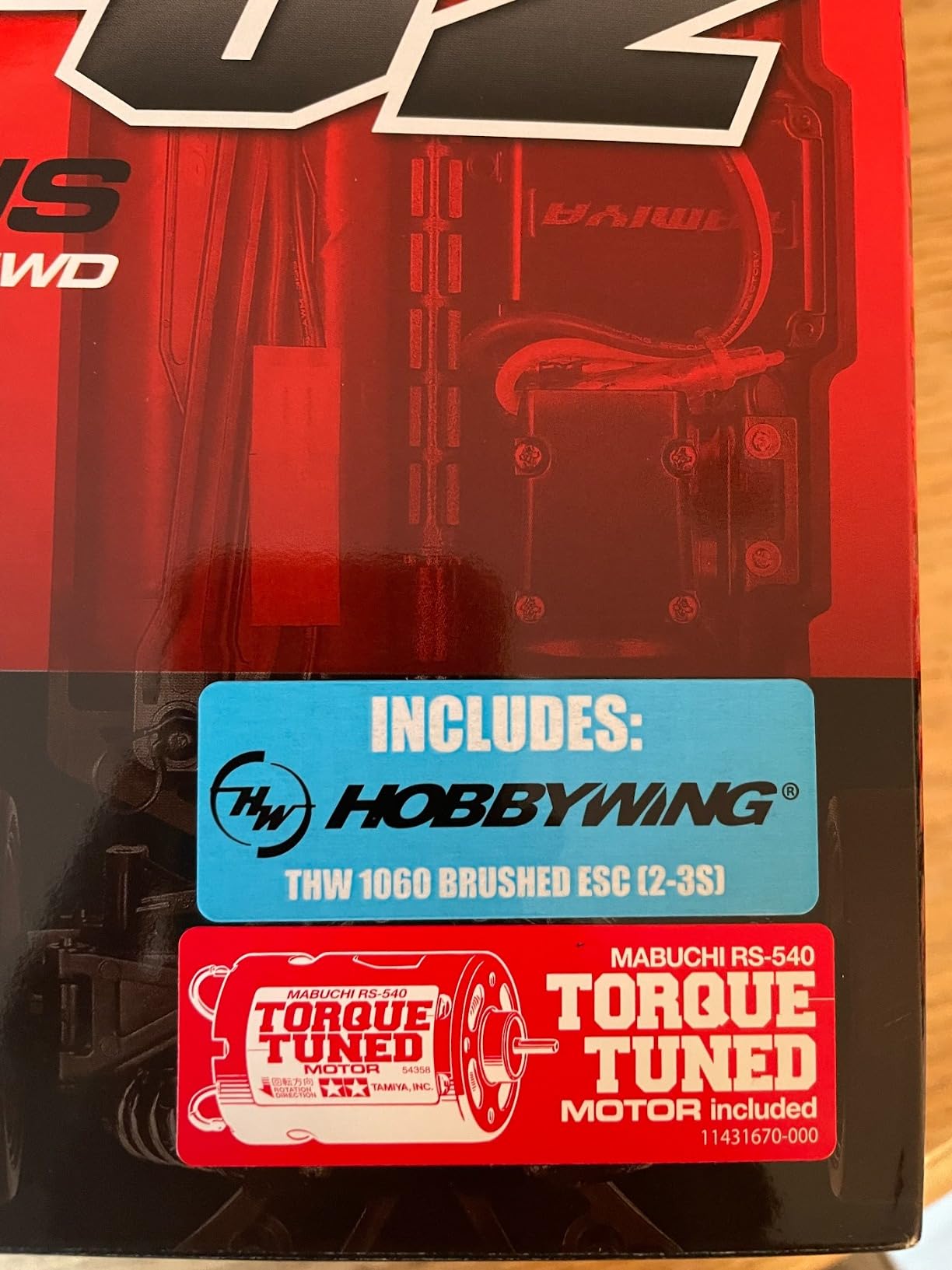
540 Torque Tuned motor included
Hobbywing ESC included
Requires: servo, radio, battery
Pros
- Latest evolution of legendary Fighter Buggy line
- ESC included (unlike many Tamiya kits)
- Adjustable wheelbase for tuning
- High-quality oil-filled shocks
- 3-piece steering system improves handling
Cons
- Bearings not included (plastic bushings only)
- Remote
- receiver
- servo
- battery separate
- Minimal painting required
- Body has toy-like appearance
The Fighter Buggy lineage stretches back decades, and the NXGEN represents Tamiya’s latest thinking on entry-level 2WD design. This kit impressed me immediately with included features that cost extra on older designs. The Hobbywing ESC and oil-filled shocks come standard.
The adjustable wheelbase lets you choose between 265mm short or 280mm long configurations. I tested both and preferred the longer setting for stability at speed. Beginners might start short for tighter turning, then lengthen as skills improve.
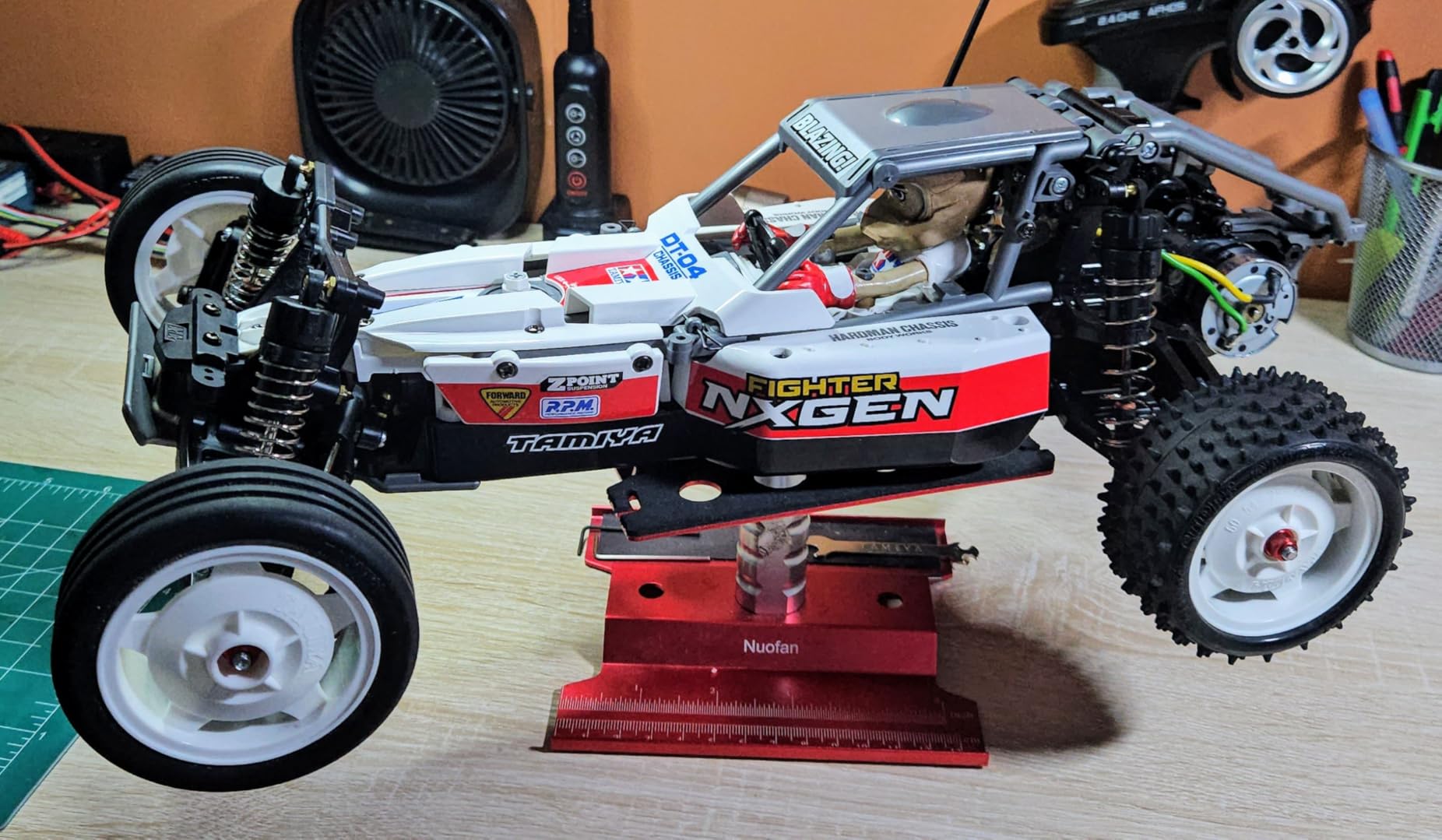
Assembly follows Tamiya’s usual excellent instructions, taking about five hours. The new 3-piece steering system installs more easily than older designs while offering better precision. Revised axle carriers improve durability at known weak points.
The Torque Tuned motor delivers noticeably more acceleration than standard 540 motors. Combined with the efficient 2WD drivetrain, the NXGEN feels punchy and responsive. The top speed reaches the mid-20s mph range, plenty exciting for new drivers.
Who Should Choose This Kit
Beginners wanting the most modern 2WD buggy design should choose the NXGEN. The included ESC saves money compared to older kits requiring separate purchase. The adjustable wheelbase grows with your skill level, extending the kit’s relevance.
This kit particularly suits younger builders who might find complex 4WD chassis overwhelming. The simplified drivetrain teaches fundamental mechanics while the modern suspension delivers capable handling. Parents helping children will appreciate the straightforward construction.
What to Know Before Building
Plan bearing upgrades immediately. The plastic bushings create friction and wear quickly under power. The bearing kit costs under $20 and transforms the driving experience. Install bearings during initial assembly rather than upgrading later.
The body styling looks more toy-like than realistic scale bodies. Some builders swap the included body for aftermarket alternatives. However, the functional aerodynamics work well for bashing, and the simple appearance suits younger drivers.
6. Tamiya Racing Fighter DT03 – Modern Off-Road Performance
Tamiya America, Inc 1/10 Racing Fighter 2WD Off-Road Buggy DT03 Kit, TAM58628
1/10 scale 2WD off-road buggy
DT-03 chassis platform
Torque-tuned motor included
4-wheel double wishbone suspension
Requires: ESC, servo, radio, battery
Pros
- Well engineered and super sturdy
- Thick plastic gears handle brushless power
- Comes with torque-tuned motor in most units
- Many upgrade options available
- CVA oil dampers included
Cons
- Oil shocks have weak springs causing bottoming
- ESC limited to Tamiya motors only
- Motor mount has only 2 adjustment options
- Plastic bearings need immediate replacement
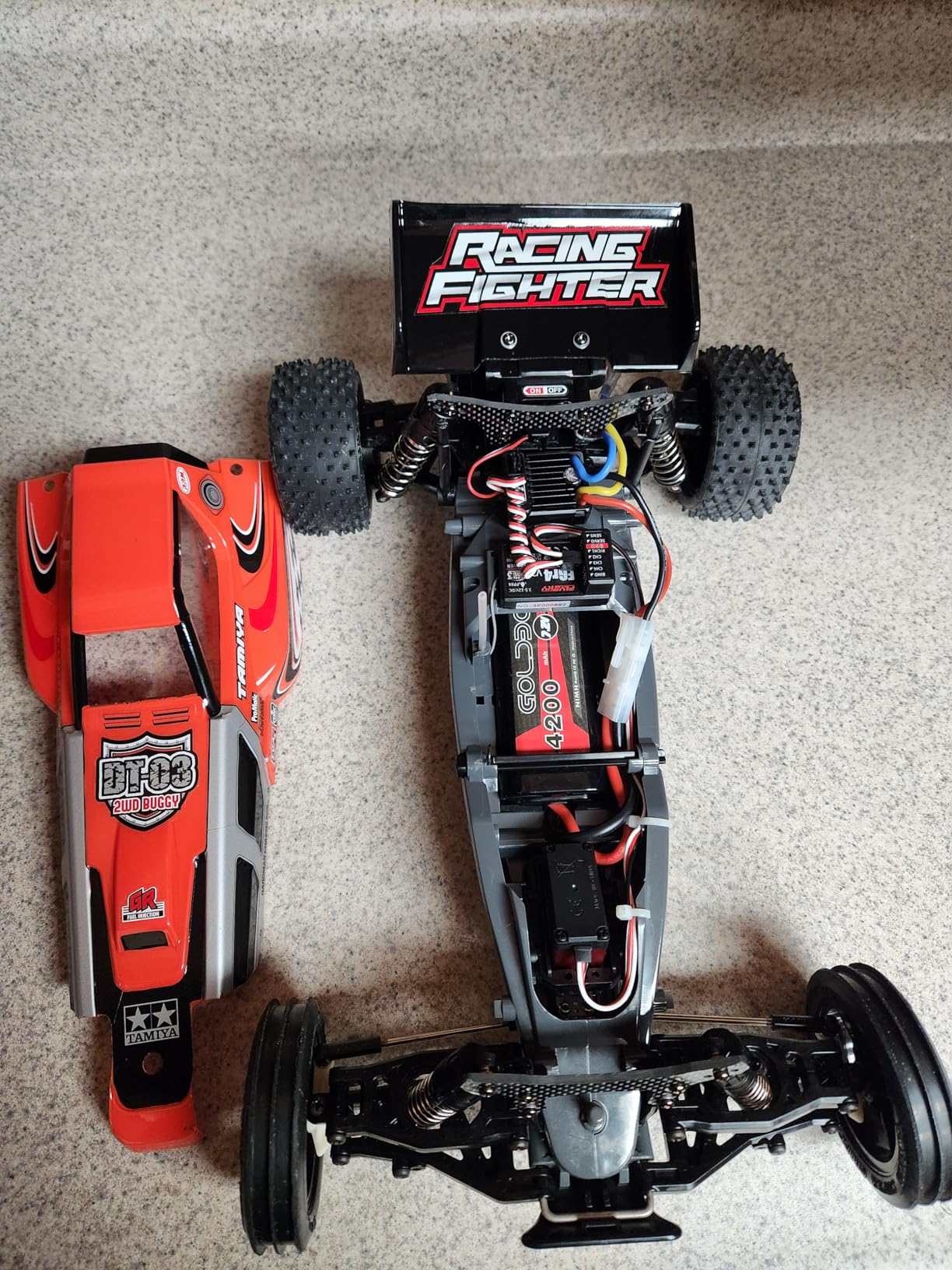
The Racing Fighter sits between vintage simplicity and modern complexity. The DT-03 chassis offers proper double wishbone suspension that vintage designs lack, while maintaining approachable 2WD mechanics. I recommend this kit to beginners wanting better handling than the Grasshopper without 4WD complexity.
The included CVA oil dampers represent a major upgrade over friction-based vintage kits. Adjustable suspension tuning lets you adapt handling to different surfaces. I softened my setup for bumpy backyard terrain and tightened it for smooth park pathways.
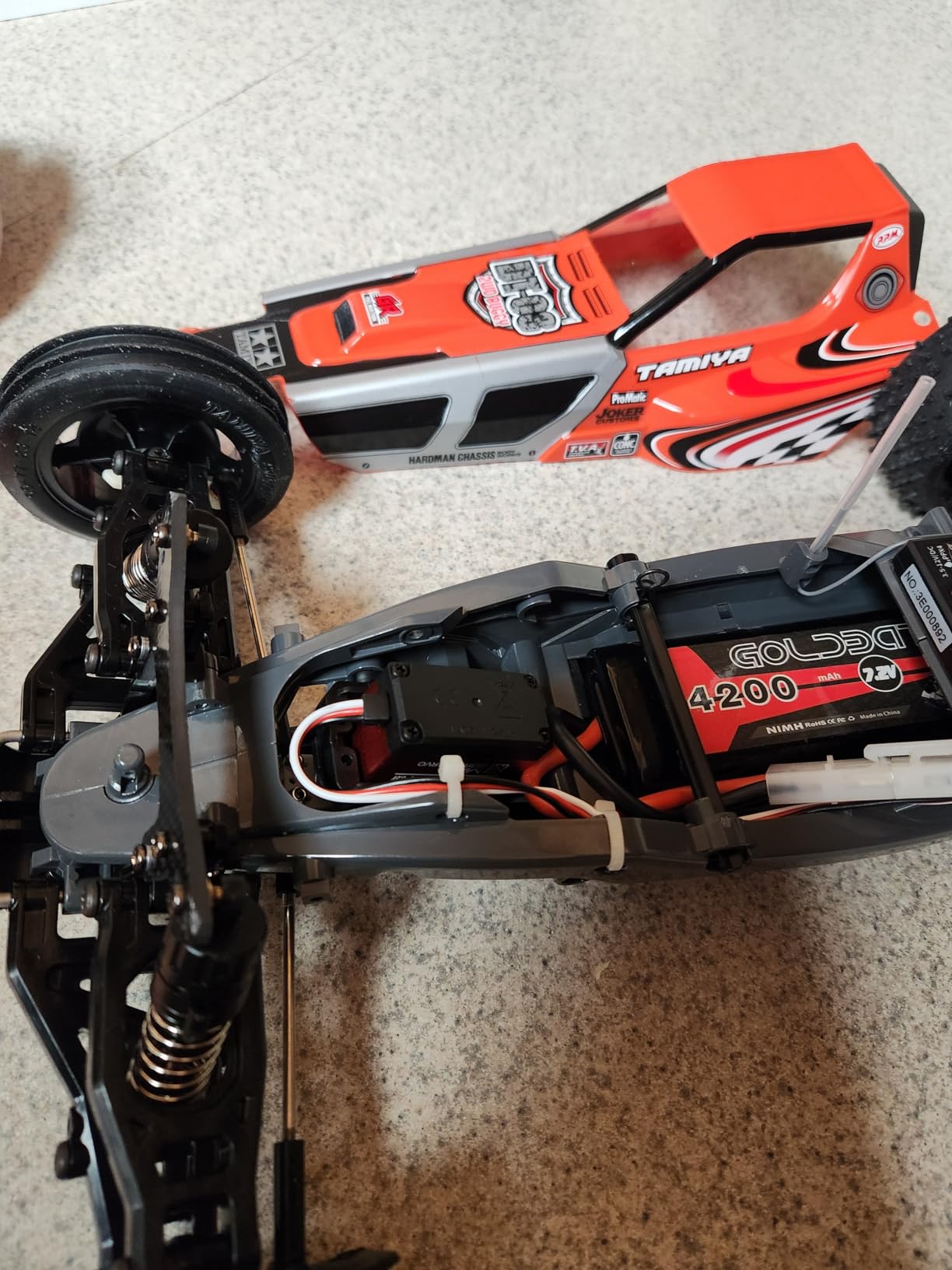
Construction quality impresses throughout. The thick plastic gears withstand abuse that would strip lesser kits. The torque-tuned motor provides brisk acceleration without overwhelming new drivers. Several reviewers successfully upgraded to brushless power without drivetrain failures.
However, the stock shock springs rate too soft for aggressive driving. The chassis bottoms out over larger bumps, potentially damaging components. Plan on buying firmer springs or limiting jump heights until upgrading. This limitation keeps the kit from perfection.
Who Should Choose This Kit
Select the Racing Fighter if you want modern off-road handling with simple 2WD mechanics. The double wishbone suspension delivers genuine performance benefits over vintage designs. Teenagers and adults appreciate the sophisticated engineering without 4WD complexity.
This kit also suits builders planning eventual power upgrades. The sturdy drivetrain accepts brushless motors better than entry-level competitors. You can grow from mild brushed power to serious brushless speed using the same chassis.
What to Know Before Building
The included ESC (when present) limits motor choices frustratingly. Tamiya designed it for their specific brushless motors or low-turn brushed motors only. Planning significant power upgrades requires ESC replacement anyway, so factor that into long-term costs.
Order bearings immediately. The plastic bushings create noticeable drag and wear quickly. This upgrade is essential rather than optional. The bearing kit costs little but transforms both performance and durability.
7. Tamiya The Hornet – Nostalgic Fun With Educational Value
Tamiya 58336 1/10 RC The Hornet Kit
1/10 scale 2WD off-road buggy
Classic 1980s re-release design
RS-540 motor included
TEU-101BK ESC version dependent
Requires: radio, battery, paint, bearings
Pros
- Classic nostalgic kit from RC history
- Great for teaching kids mechanics
- Rear-wheel drive develops driving skills
- Highly repairable with available parts
- Fun wild handling characteristic
Cons
- ESC may not be included (check version carefully)
- No bearings included (nylon bushings only)
- Rear-wheel drive makes driving challenging
- Vintage design lacks modern handling
The Hornet shares DNA with the Grasshopper but offers slightly more sophisticated suspension and the iconic hornet-themed body. This kit brings back memories for hobbyists who built original versions in the 1980s. I bought one partly for nostalgia and partly to compare with the Grasshopper.
The tub chassis design remains simple and durable. Rear-wheel drive with a live axle creates lively handling that teaches throttle control. Power sliding through corners feels genuinely exciting despite modest speeds. Modern 4WD cars often mask driver errors that the Hornet exposes.
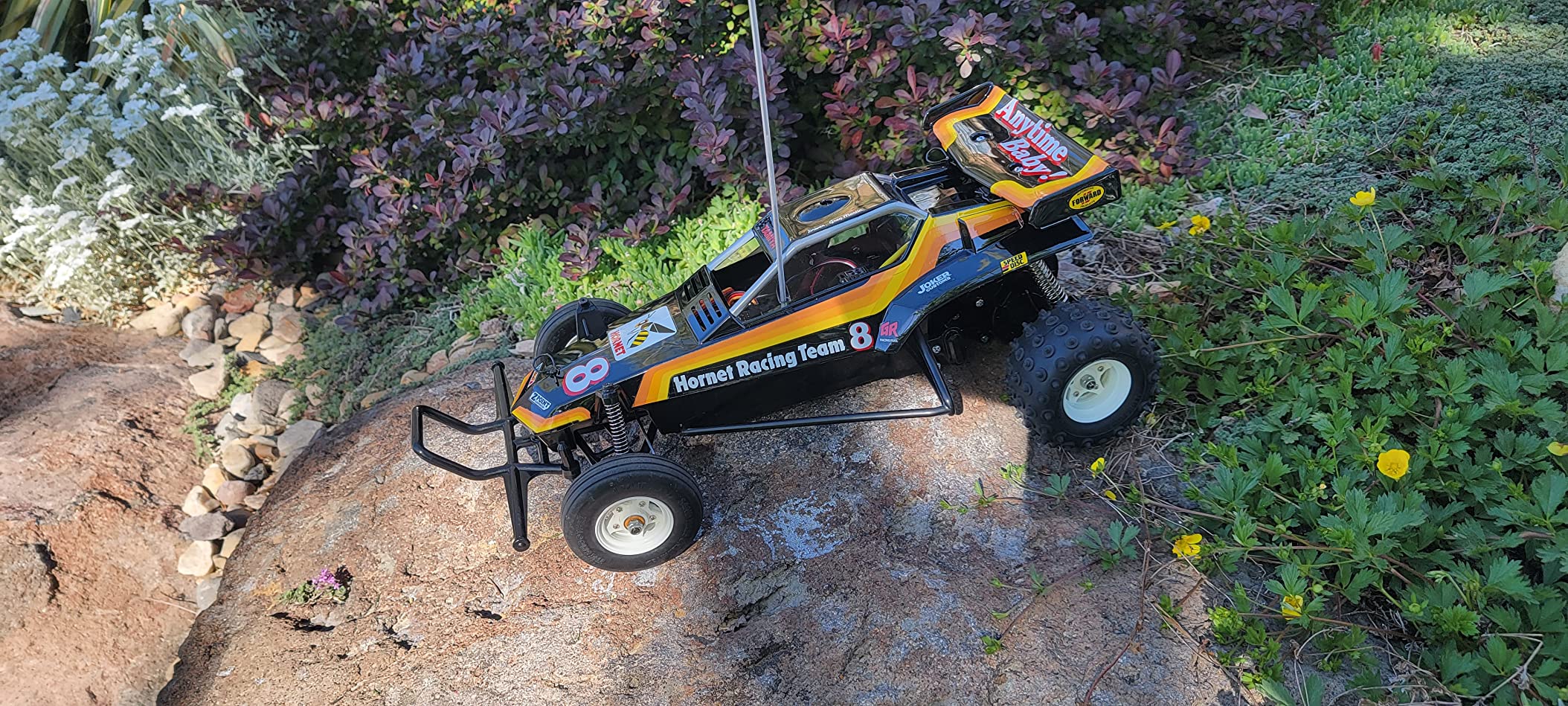
Building the Hornet takes about five hours. The instructions mirror the Grasshopper’s clarity with excellent diagrams. Parts fit precisely without modification. Quality matches or exceeds the original 1980s production according to vintage hobbyists.
Be extremely careful about ESC inclusion. Kit 58336 typically excludes the speed controller while 58336A includes it. Sellers sometimes confuse these versions. Verify before ordering or plan on purchasing a compatible ESC separately.
Who Should Choose This Kit
The Hornet suits builders wanting vintage character with slightly more visual appeal than the Grasshopper. The aggressive buggy body looks racier than the Grasshopper’s simpler design. Nostalgic hobbyists who built original Hornets as children love revisiting this classic.
This kit also works well for teaching driving fundamentals. The challenging rear-wheel-drive layout forces beginners to develop throttle control skills. Learning on a Hornet makes transitioning to modern 4WD cars feel effortless afterward.
What to Know Before Building
The clear body requires inside painting for proper appearance. This technique differs from outside painting most beginners expect. Watch tutorial videos before attempting your first polycarbonate body. The inside-paint approach creates depth and protects the finish from scratches.
Rear-wheel drive makes the car tail-happy on loose surfaces. Expect spinouts until learning throttle modulation. This characteristic frustrates some beginners but delights others who enjoy the challenge. Consider your patience level and local driving surface before choosing.
8. Tamiya Holiday Buggy DT02 – Fast Build for Impatient Beginners
Tamiya 2010 DT02 RC Holiday Buggy
1/10 scale 2WD off-road buggy
DT02 chassis platform
Simple toy-grade inspired design
Under 3 hours to build
Requires: servo, ESC, radio, battery, bearings
Pros
- Really enjoyable quick build experience
- Can be built in under 3 hours with help
- Parts clearly marked and bagged
- Good value for money
- Fun for bonding with children
Cons
- Cannot repaint body easily due to material
- Shocks need upgrading for best performance
- Plastic bearings should be replaced
- Some units received 2005 molds instead of 2010
The Holiday Buggy targets families wanting quick results without sacrificing hobby quality. Where complex kits demand full days, this simpler design assembles in under three hours. I helped a friend’s 10-year-old complete the build in a single afternoon.
The DT02 chassis shares heritage with the Grasshopper and Hornet but streamlines construction further. Fewer parts mean fewer assembly decisions to confuse beginners. The trade-off involves slightly less sophisticated suspension than the Racing Fighter’s DT03.
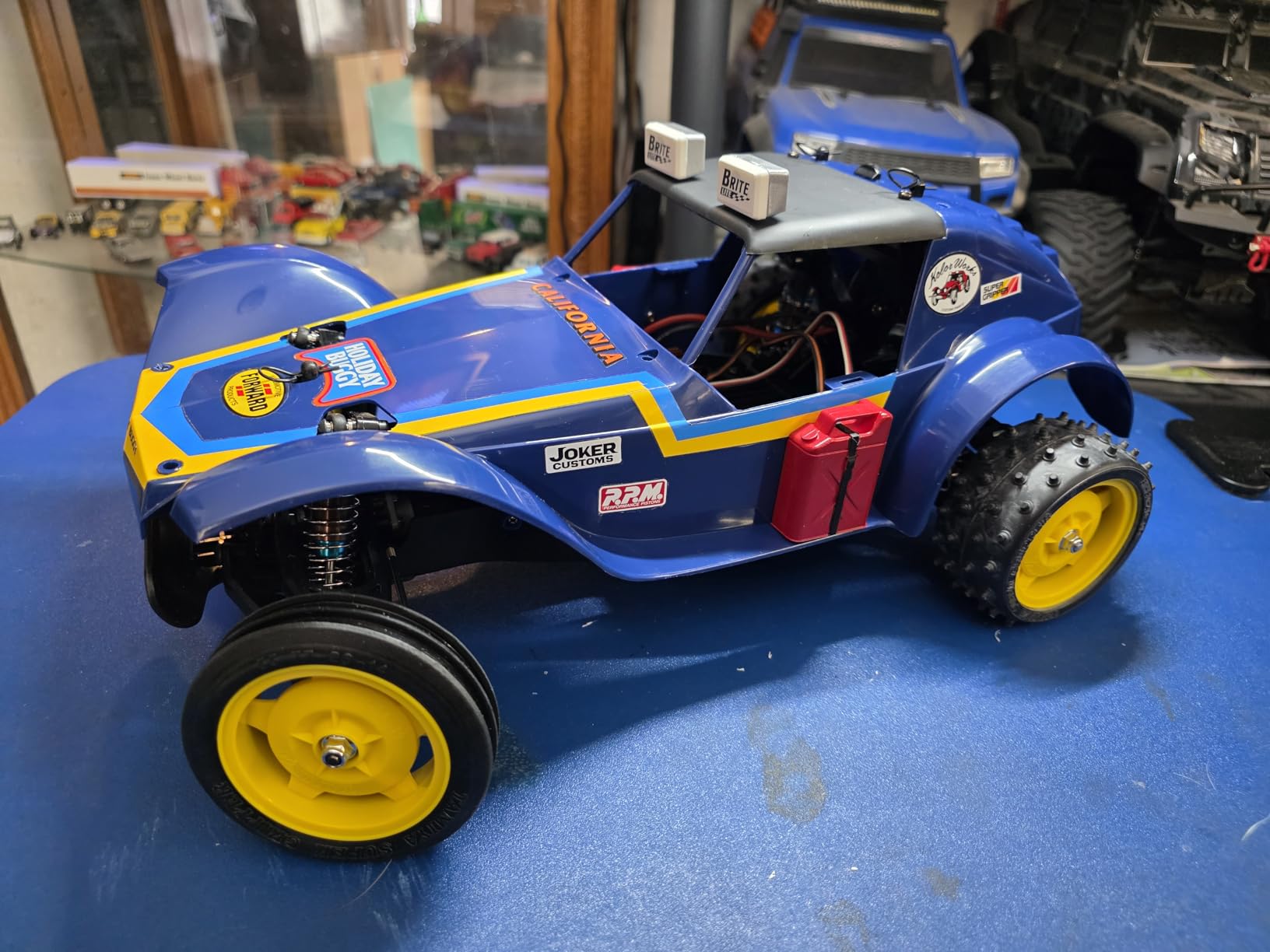
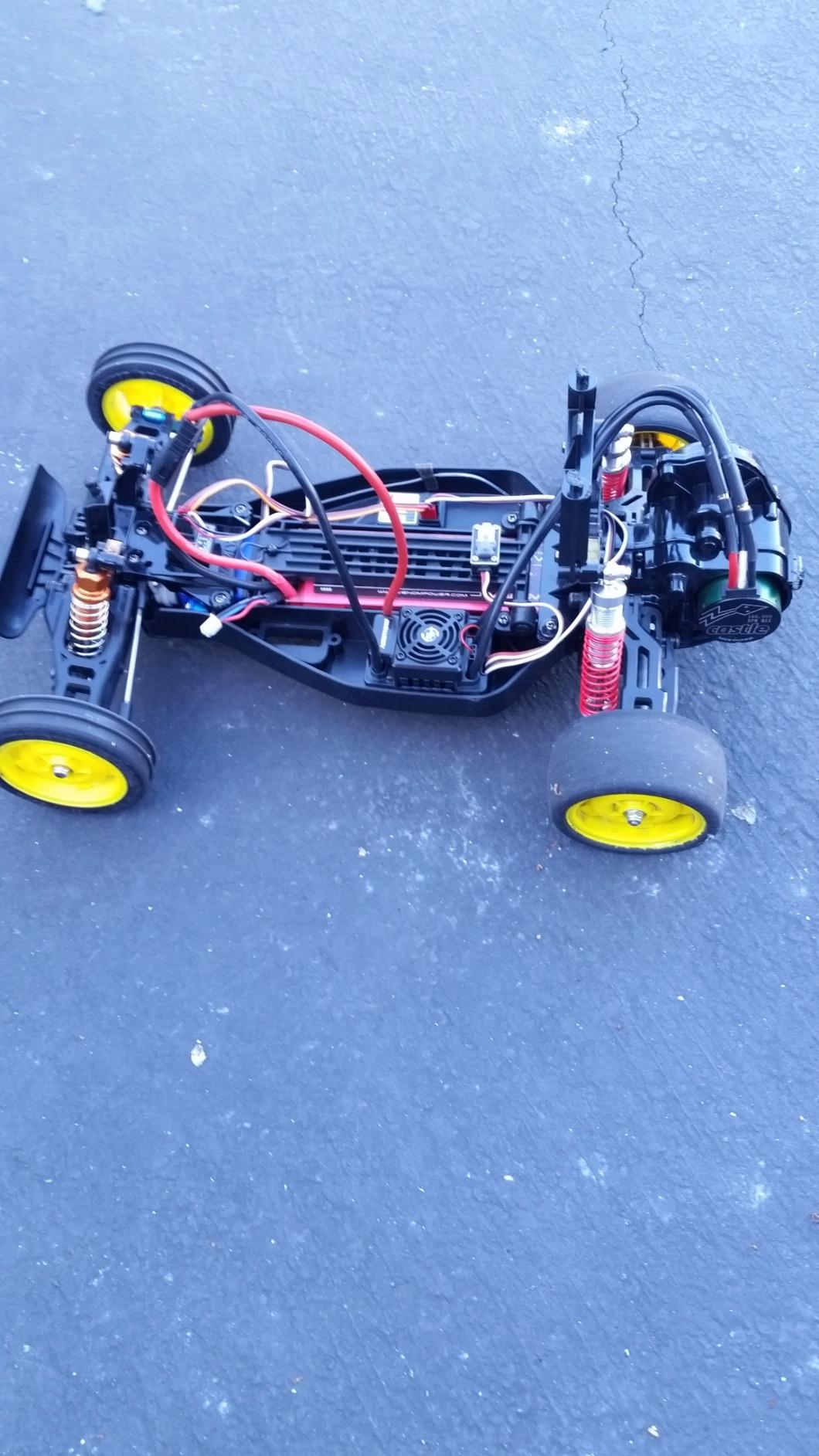
Despite simple design, the Holiday Buggy accepts meaningful upgrades. Mini shock sets, short shock conversions, and sealed bearing kits transform performance. One forum member reported reaching 54 mph after brushless conversion, though most users keep milder power for durability.
The body material differs from premium polycarbonate used on other kits. This difference makes repainting difficult if you want to change colors later. Plan your color scheme carefully before the initial paint job.
Who Should Choose This Kit
Families with younger children should consider the Holiday Buggy seriously. The shorter build time matches shorter attention spans. Children can see completion within a single session rather than losing interest across multiple days.
Impatient beginners also benefit here. If you want to drive tomorrow rather than next weekend, this kit delivers. The simplified construction sacrifices some performance sophistication but maintains durability and upgrade potential.
What to Know Before Building
Check mold dates on arrival. Some buyers received 2005 production molds rather than the 2010 re-release. Functionally identical, but collectors prefer newer production. This quality control issue frustrates some purchasers expecting latest production.
The bulkhead and skid plate mounts occasionally arrive brittle. Inspect these parts before assembly and contact Tamiya support if cracks appear. They replace defective components promptly, but discovering issues mid-build interrupts momentum.
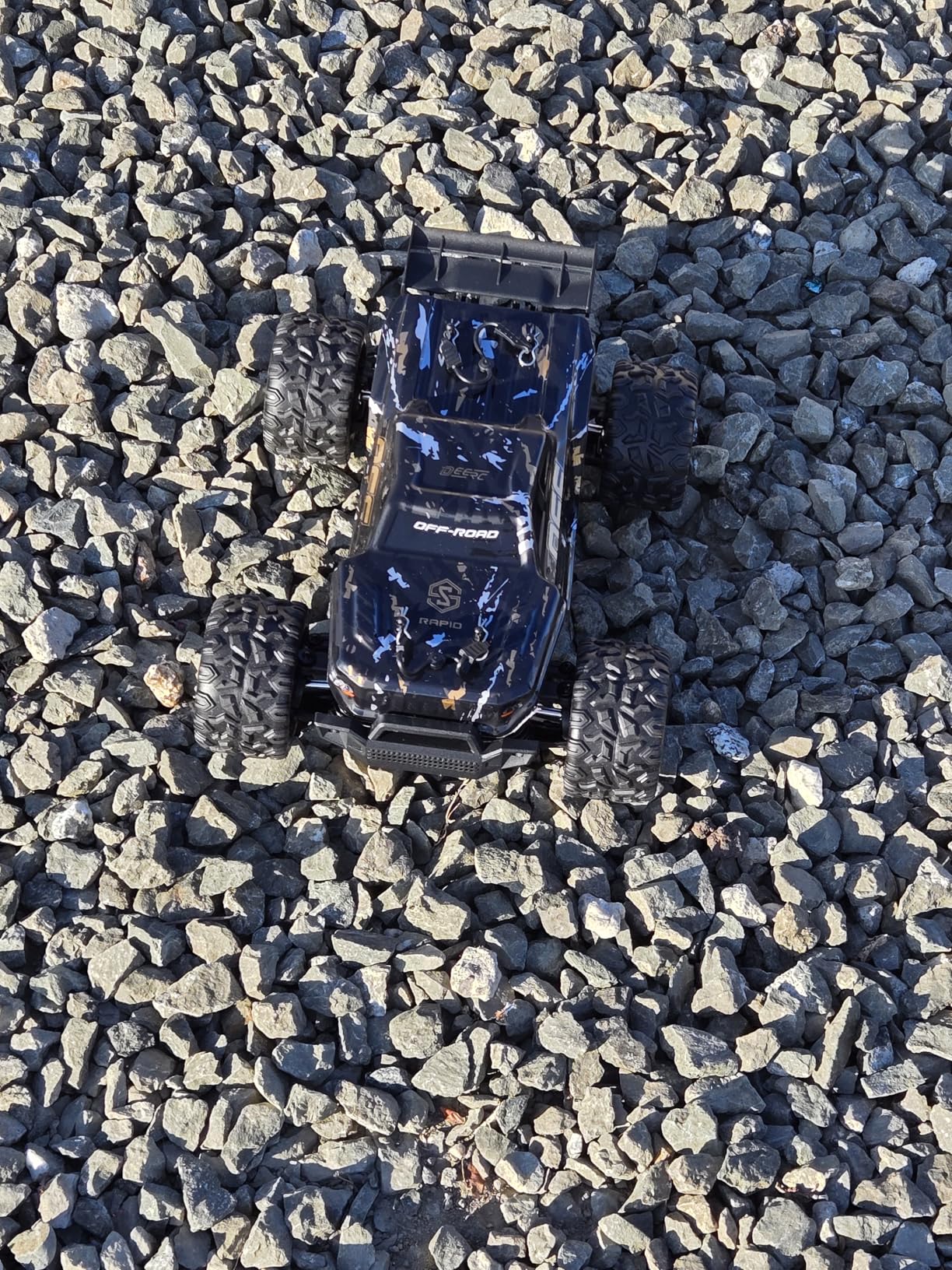
9. DEERC 9206E Monster Truck – Ready-to-Run Value Champion
DEERC 9206E DIY Extra Shell 1:10 Scale Large RC Cars,48+ KM/H Hobby Grade High Speed Remote Control Car for Adults Boys,All Terrain 4WD 2.4GHz Off Road Monster RC Truck with 2 Battery for 40+ Min Play
1/10 scale 4WD monster truck
48+ KM/H (30+ MPH) top speed
Metal oil-filled shock absorbers
Two 7.4V/1500mAh batteries included
RTR with minimal assembly
Pros
- Excellent value under $100
- Very fast 30+ mph for the price
- Two batteries included (40+ min runtime)
- Metal oil-filled shocks standard
- Highly durable construction
Cons
- Body shell pins difficult to insert/remove
- May roll over during sharp turns
- Motor overheats with extended high-speed use
- Body clips easily lost
The DEERC 9206E challenges everything I believed about budget RC trucks. At under $100, I expected toy-grade disappointment. Instead, I received genuine hobby-quality performance that embarrasses more expensive name-brand options. The 13,000+ positive reviews confirm my experience.
This truck arrives nearly ready-to-run requiring minimal assembly. Unlike the Tamiya kits demanding hours of construction, you charge the included batteries and drive within the hour. The included transparent shell invites DIY painting customization without permanent commitment.
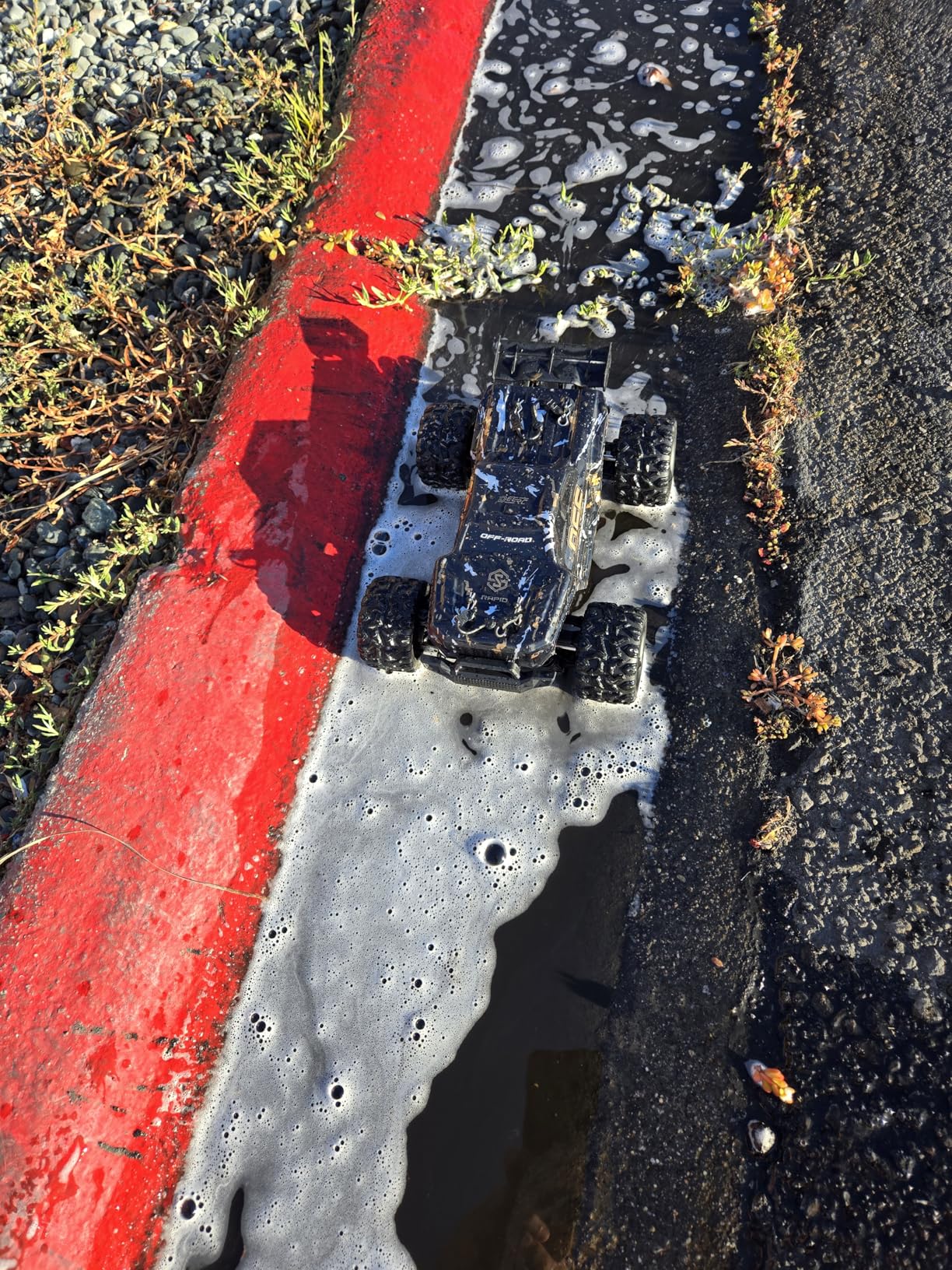
The 30+ mph top speed shocks first-time drivers. Proportional throttle control lets beginners limit speed while learning, then unleash full power as skills improve. The 4WD system provides stability that 2WD designs lack at these velocities.
Metal oil-filled shocks absorb impacts that would destroy lesser trucks. I have launched mine off curbs, driven through grass, and bounced off obstacles without breaking components. The durability impresses especially given the price point.
Who Should Choose This Kit
Budget-conscious beginners wanting immediate driving gratification should choose the DEERC. You skip the building phase entirely and start bashing immediately. The included batteries and hobby-grade features provide unmatched value.
This truck also suits younger drivers who might struggle with complex kit assembly. The adjustable speed limits let parents set appropriate maximum speeds for skill levels. As children improve, unlock higher performance rather than buying new vehicles.
What to Know Before Building
The body clips securing the shell prove frustrating until you develop technique. Practice removal and installation before driving. Buy spare clips immediately – they launch into grass never to be found again during crashes.
Monitor motor temperature during extended high-speed running. The 30+ mph capability generates heat that can damage electronics if pushed continuously. Let the truck cool between speed runs, especially in warm weather.
10. Losi Micro-B Mini Buggy – Premium Micro RC Experience
Helidirect Losi RC Car Micro-B 2WD Brushed Mini RC Buggy 1/24 Scale RTR Assemble Kit – Remote Control Car, RC Cars, Micro Racing RC Buggy 1/24 Scale (White – LOS00007T1)
1/24 scale micro 2WD buggy
Black-anodized aluminum chassis
Oil-filled tunable shocks
13+ MPH top speed with Rookie Mode
Fully RTR with battery and charger
Pros
- Oil-filled shocks are functional and tunable
- Premium aluminum chassis (industry first)
- Quiet operation suitable for indoor use
- Rookie mode for gradual learning
- Extensive aftermarket upgrade availability
Cons
- Very small size makes upgrades tricky
- Limited to 13mph stock speed
- Higher price for micro category
- Small parts require careful handling
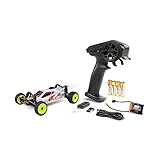
The Losi Micro-B occupies a unique niche – genuine hobby-grade quality at a tiny 1/24 scale. Where most micro RC cars sacrifice performance for size, the Micro-B maintains professional features like aluminum chassis and oil-filled shocks. I keep one on my desk for quick racing breaks.
The black-anodized aluminum chassis represents an industry first for micro-scale vehicles. This rigidity improves handling precision that plastic-framed competitors lack. Side bends and front caster kick create structural integrity unexpected at this size.
Despite small proportions, the Micro-B reaches 13+ mph with stock power. Rookie Mode limits speed to 50% or 75% while learning controls. Once mastered, full speed provides surprising excitement for something fitting in a shoebox.
Who Should Choose This Kit
Apartment dwellers and those with limited space should consider the Micro-B seriously. You can race on kitchen floors, hallway carpets, or small tabletop tracks. The quiet operation does not disturb neighbors or family members.
This kit also complements larger vehicles nicely. When weather prevents outdoor bashing with 1/10 scale trucks, the Micro-B delivers indoor fun. The skills transfer directly – better drivers on micro tracks typically excel with larger vehicles too.
What to Know Before Building
Upgrades require precision due to tiny component sizes. Standard tools often prove too large for Micro-B maintenance. Invest in precision screwdrivers and tweezers before attempting modifications. Small parts disappear easily if dropped.
The ProLine body and components carry premium pricing. Replacement parts cost more than budget micro alternatives. Consider this ongoing cost commitment before purchasing. The quality justifies the price for serious hobbyists but might exceed casual interest levels.
RC Car Buying Guide for First-Time Builders
Choosing your first RC car kit involves more than picking the coolest body. Understanding key differences between options prevents disappointment and unnecessary expense. This section covers everything you need to know before making your purchase.
Kit vs RTR – Which Should You Choose?
Kits require complete assembly from individual components. You build the chassis, install electronics, paint the body, and configure settings. The process teaches mechanical skills and creates deeper understanding of how your vehicle works. Building takes 4-8 hours typically but delivers greater satisfaction and repair confidence.
RTR (Ready-to-Run) cars arrive assembled and painted. You charge batteries and drive immediately. Most RTR vehicles require minimal effort to start enjoying. The trade-off involves less mechanical knowledge and often lower quality components at equivalent prices.
For true beginners wanting to learn the hobby deeply, I recommend kits. The building process teaches skills that transfer directly to maintenance and repair. Forum discussions consistently show kit builders handle mechanical problems better than RTR owners.
Key Features Beginners Should Prioritize
Parts availability matters more than any specification. Brands like Tamiya, Traxxas, and ARRMA maintain extensive dealer networks and online parts availability. Obscure brands might offer similar performance but leave you stranded when components break.
4WD provides easier control than 2WD for beginners. The additional driven wheels reduce wheel spin and improve stability. However, 2WD vehicles teach better throttle control skills long-term. Neither choice is wrong – just different learning curves.
Brushed motors suit beginners better than brushless. Slower speeds forgive mistakes, and replacement brushed motors cost significantly less. You can always upgrade to brushless power once skills justify the performance and expense.
Tools Required for Building RC Kits
Essential tools include quality hex drivers (1.5mm, 2.0mm, 2.5mm), Phillips head screwdrivers (#0 and #1), needle-nose pliers, flush cutters, and hobby knife. Tamiya kits specifically require metric hex tools throughout assembly.
Organization tools prove equally important. Small parts trays prevent losing screws and hardware. Magnetic mats keep metallic components visible and accessible. Good lighting helps identify part numbers on dark sprues.
Optional but recommended tools include a soldering iron for connector changes, shock pliers for building dampers, and a hobby vise for holding chassis during assembly. These investments last years across multiple builds.
Budget Planning for Your First RC Car
The kit itself represents only part of your initial investment. Required additional purchases include radio transmitter and receiver ($50-150), servo ($15-40), battery packs ($25-50 each), charger ($30-100), and paint/supplies ($20-40). Budget $150-250 beyond the kit price for complete operation.
Smart first-time buyers start with modest total investment. A $120 Tamiya kit with basic electronics teaches the same skills as premium alternatives. Save expensive brushless systems and high-end radios for your second or third vehicle once you understand your preferences.
Ongoing costs include replacement parts, additional batteries for extended runtime, tire wear, and eventual upgrades. Hobby-grade RC driving involves accepting occasional breakage as part of the fun. Budget monthly maintenance funds rather than expecting one-time purchase completion.
Frequently Asked Questions About First RC Car Kits
What is a good RC car to start with?
The Tamiya Ford Mustang GT4 on the TT-02 chassis offers the best starting point for most beginners. Its 4WD shaft-driven design provides stable handling, while the highly upgradeable platform grows with your skills. For tighter budgets, the classic Tamiya Grasshopper delivers proven reliability at lower cost.
Are RC car kits good for beginners?
Yes, RC car kits are excellent for beginners who want to understand their vehicle deeply. Building teaches mechanical skills, improves troubleshooting confidence, and creates stronger emotional connection to the hobby. However, those wanting immediate driving fun might prefer Ready-to-Run options initially.
What is the best RC car kit brand?
Tamiya leads for beginner kits due to excellent instruction manuals, widespread parts availability, and consistent quality. Traxxas and ARRMA offer strong alternatives particularly for RTR buyers. For experienced builders wanting premium platforms, Team Associated, Tekno, and Losi provide competition-grade options.
How much does a beginner RC car cost?
Quality beginner RC kits range from $110-160 for the kit itself. Total initial investment including required electronics, batteries, and tools typically reaches $250-400. Budget-focused beginners can find complete RTR packages under $150, though upgrade paths remain limited.
What is the best RC car for a 10 year old?
The Tamiya Grasshopper or Holiday Buggy suit 10-year-olds perfectly with adult supervision. These kits feature simple construction, durable designs, and manageable complexity. For children driving solo, the DEERC 9206E RTR truck provides speed limits and durable construction without assembly frustration.
Is Traxxas good for beginners?
Traxxas excels for beginners wanting Ready-to-Run vehicles with excellent parts support. Their RTR lineup requires minimal setup before driving. However, Traxxas kits for building are less common than Tamiya options. Beginners specifically wanting to build from a kit typically choose Tamiya first.
What does RTR mean in RC cars?
RTR stands for Ready-to-Run, meaning the vehicle arrives fully assembled, painted, and equipped with basic electronics. You simply charge the battery and drive. RTR differs from kits which require building the chassis, installing components, and painting bodies before operation.
Final Thoughts on Choosing Your First RC Car Kit
Starting your RC journey with the best first RC car kits for new hobbyists sets the foundation for years of enjoyment. The ten options reviewed here represent proven starting points tested by thousands of builders before you. Whether you choose the versatile Tamiya TT-02 platform, the classic Grasshopper simplicity, or the immediate gratification of the DEERC RTR truck, you are entering a welcoming hobby community.
My personal recommendation remains the Tamiya Ford Mustang GT4 TT-02 for most beginners. The upgrade path keeps the car relevant as skills improve, while the 4WD stability forgives early mistakes. Build it carefully, drive it enthusiastically, and maintain it properly – your first kit often becomes a cherished keeper rather than a stepping stone.
Whichever kit you choose, remember that the building experience matters as much as driving. Take your time, organize your workspace, and do not rush assembly. The skills learned building your first RC car transfer to maintenance, repairs, and future builds. Welcome to the hobby in 2026.