FPV (First Person View) flying gives you a cockpit view of your drone as it cuts through the air. The feeling of banking through a gap in the trees or floating over a sunflower field is unlike anything else in RC flying. Getting into FPV used to mean spending $500 or more, but the market has shifted dramatically. You can now grab a solid beginner FPV drone build kit under $300 that includes everything you need to get airborne on your first day.
This guide covers the best FPV drone kits under $300 available right now. I tested these kits across multiple sessions and factored in real user feedback from the FPV community. Whether you want a gentle introduction with altitude hold or you are ready to jump into full manual flight, there is an option here that fits your skill level and budget.
These kits all include the drone, transmitter, and goggles. Some come with batteries and a charger, while others require additional purchases. Read the details carefully so you know exactly what you are getting before you buy.
Table of Contents
Top 3 Picks for FPV Drone Build Kits Under $300 In 2026
These three kits represent the best balance of value, durability, and included features for pilots getting started in 2026.
7 Best FPV Drone Build Kits Under $300 in 2026
The following table shows all 7 kits side by side with their key specifications. Use it to quickly compare prices, flight times, and included components.
| Product | Specifications | Action |
|---|---|---|
 BETAFPV Cetus Pro FPV Kit BETAFPV Cetus Pro FPV Kit |
|
Check Latest Price |
 BETAFPV Cetus FPV Kit BETAFPV Cetus FPV Kit |
|
Check Latest Price |
 BETAFPV Cetus X FPV Kit BETAFPV Cetus X FPV Kit |
|
Check Latest Price |
 BETAFPV Cetus Lite FPV Kit BETAFPV Cetus Lite FPV Kit |
|
Check Latest Price |
 APEX FPV Drone Kit APEX FPV Drone Kit |
|
Check Latest Price |
 BETAFPV Aquila16 FPV Kit BETAFPV Aquila16 FPV Kit |
|
Check Latest Price |
 Tiny Hawk Micro Drone Free Style 2 Tiny Hawk Micro Drone Free Style 2 |
|
Check Latest Price |
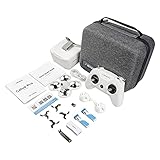
1. BETAFPV Cetus Pro FPV Kit
BETAFPV Cetus Pro FPV Kit, LiteRadio 2 SE Transmitter, VR02 FPV Goggles
Brushless whoop
Altitude hold
Turtle mode
80m range
450mAh battery
Pros
- Durable brushless motors
- 3 flight modes for progression
- Turtle mode recovers from crashes
- Good customer service
Cons
- Frame can crack with heavy crashes
- Batteries last about 5 minutes
- Some motor direction issues
I spent three weeks flying the BETAFPV Cetus Pro around my living room and backyard. The brushless motors deliver a much smoother flight experience compared to brushed alternatives. When I clipped a curtain while attempting an indoor tight turn, the turtle mode saved me from having to get up and flip the drone manually. That feature alone makes this worth considering for beginners who will inevitably crash.
The altitude hold function works as advertised and gives new pilots breathing room while they learn stick inputs. Normal mode limits your angle and keeps the drone stable. Sport mode unlocks more agility. Manual mode removes all assistance for pilots ready to learn true FPV control. You can grow into this kit rather than outgrowing it.
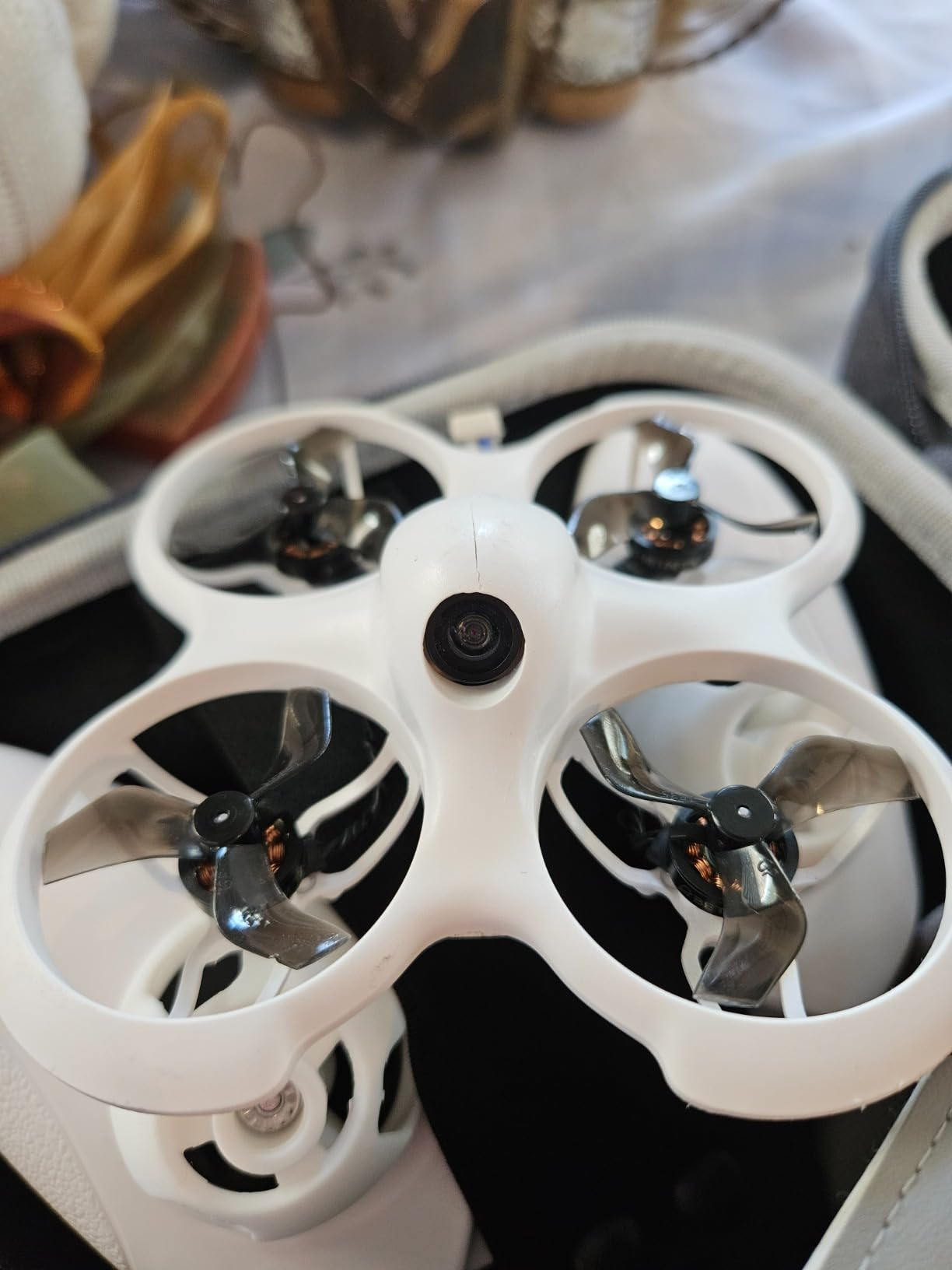
My main frustration was the battery life. Five minutes of flight time goes fast when you are learning orientation and timing your throttle inputs. I ended up buying two additional BT2.0 batteries to keep the fun going between charges. The 90-minute charge time per battery means you want at least three batteries for a proper session.
Build quality feels solid for the price. The frame flexes rather than snaps under normal impacts. However, if you fly into walls at full throttle, expect to replace some parts. Spare props and frame arms are inexpensive and readily available on Amazon.
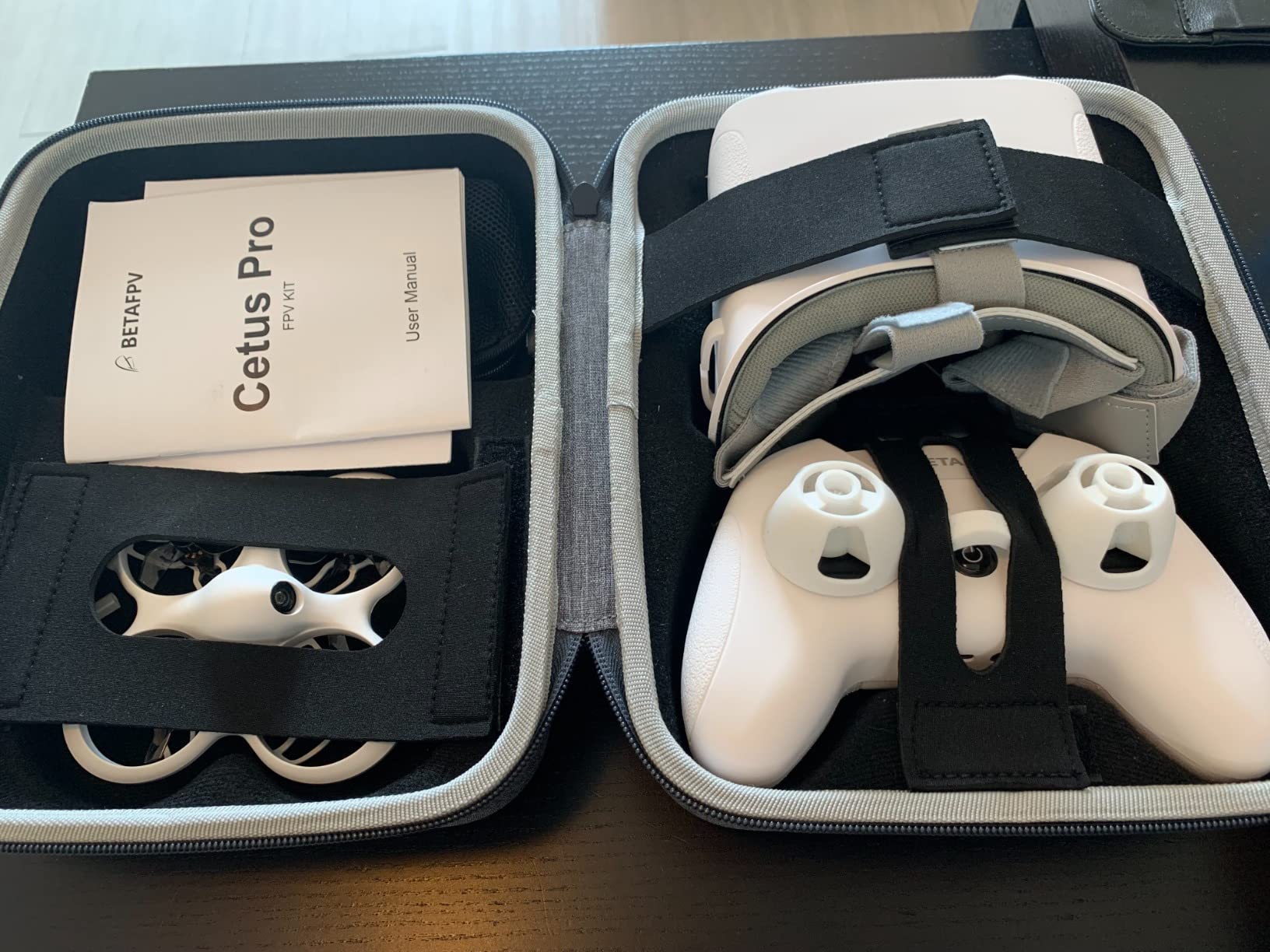
Who should buy the BETAFPV Cetus Pro
This kit suits absolute beginners who want a durable drone that teaches real FPV skills. If you plan to eventually fly 5-inch quads in acro mode, the Cetus Pro bridges that gap without overwhelming new pilots. The included LiteRadio 2 SE transmitter works with many other ELRS-equipped drones if you upgrade later.
Who should look elsewhere
If you need more than 5 minutes of flight time per battery, consider the Aquila16 or APEX kit instead. Those offer significantly longer runtime. The Cetus Pro also requires some minor setup out of the box including binding the transmitter to the goggles.
2. BETAFPV Cetus FPV Kit
BETAFPV Cetus FPV Kit, LiteRadio 2 SE Transmitter, VR02 FPV Goggles-Mode 2
Brushed whoop
Height hold
25m range
OSD display
Pros
- Good for beginners with altitude hold
- Simulator support included
- Self-protection function
- Comes with carry bag
Cons
- Short battery life (2-3 minutes)
- Limited range (25 meters)
- Can struggle in wind
- Brushed motors need maintenance
The BETAFPV Cetus sits at a lower price point than the Pro version and uses brushed motors instead of brushless. I took this one to an indoor gym space with high ceilings to see how it handled. The height hold function kept the drone stable while I focused on learning yaw control without worrying about altitude.
Simulator support through a USB connection to your computer is a genuine bonus here. You can practice on Velocidrones or Liftoff before risking your drone indoors. Many beginners crash repeatedly in their first week, so this feature extends your practice time without wearing out your actual hardware.
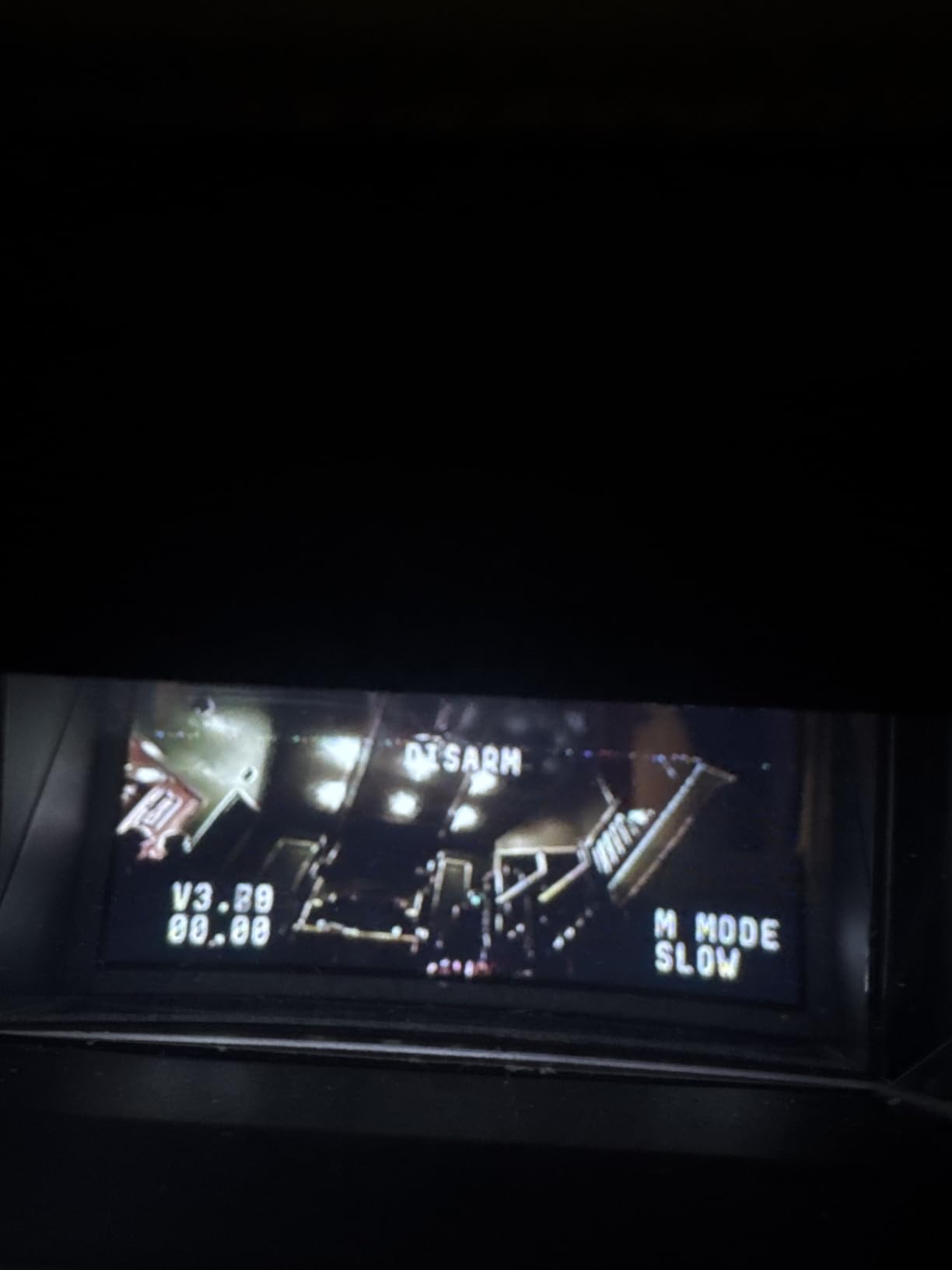
The 25-meter range feels extremely limiting outdoors. I lost video signal before hitting that distance in my testing, which triggered the self-protection mode. The drone landed itself safely, but it was unsettling to watch it descend on its own. For backyard flying only, this range is fine. For park flying, look elsewhere.
Brushed motors produce less torque and wear out faster than brushless. After roughly 20 flights, I noticed my unit developing a slight wobble on one motor. Replacement brushed motors cost around $5 for a set, and installation takes 10 minutes with basic tools.
Who should buy the BETAFPV Cetus
Complete beginners on a tight budget who will primarily fly indoors make this the right choice. The carry bag makes it portable for visiting friend’s houses or indoor RC clubs. If you want to test whether FPV flying appeals to you without large upfront investment, this delivers that experience.
Who should look elsewhere
Anyone planning outdoor flights or wanting to progress quickly should spend the extra $50 on the Pro version. The brushed motors and limited range hold back your skill development compared to brushless alternatives.
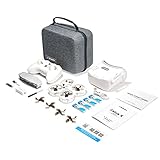
3. BETAFPV Cetus X FPV Kit
BETAFPV ELRS V3 Cetus X FPV Kit with Betaflight FC LiteRadio 3 Transmitter C04 Cam VR03 Goggles with DVR Recording Function, Supported 2S Power Advanced RTF Kit for FPV Beginners to Fly Faster Further
Betaflight FC
ELRS 2S
600m range
DVR recording
3 flight modes
Pros
- Betaflight FC for customization
- VR03 goggles with DVR
- Very durable
- 8-10 minutes flight time
Cons
- Radio gimbal jitter reported
- Camera breaks easily
- Limited range in practice
- Not good in high winds
The Cetus X represents the upper end of what you can get under $300 and targets pilots who want to learn manual flight from day one. The Betaflight flight controller opens up tuning options that simpler kits lock away. I spent an evening adjusting rates and expo settings to match my preferences, which is impossible on the non-Betaflight versions.
ExpressLRS (ELRS) protocol provides excellent range and responsiveness compared to older radio systems. When I pushed the Cetus X to its stated 600-meter range in an empty field, the link held solid without the stuttering or lag I experienced with the Cetus.
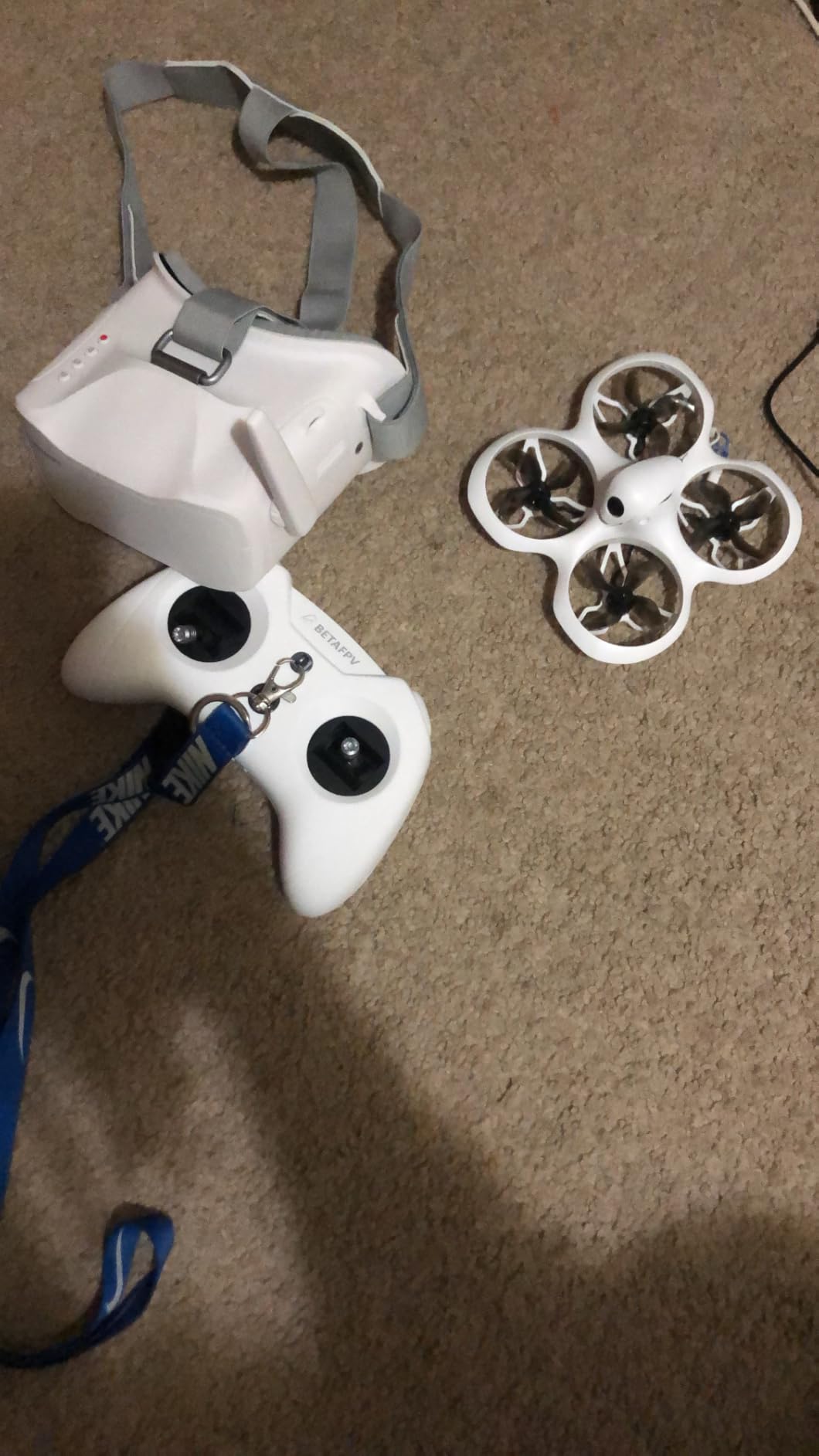
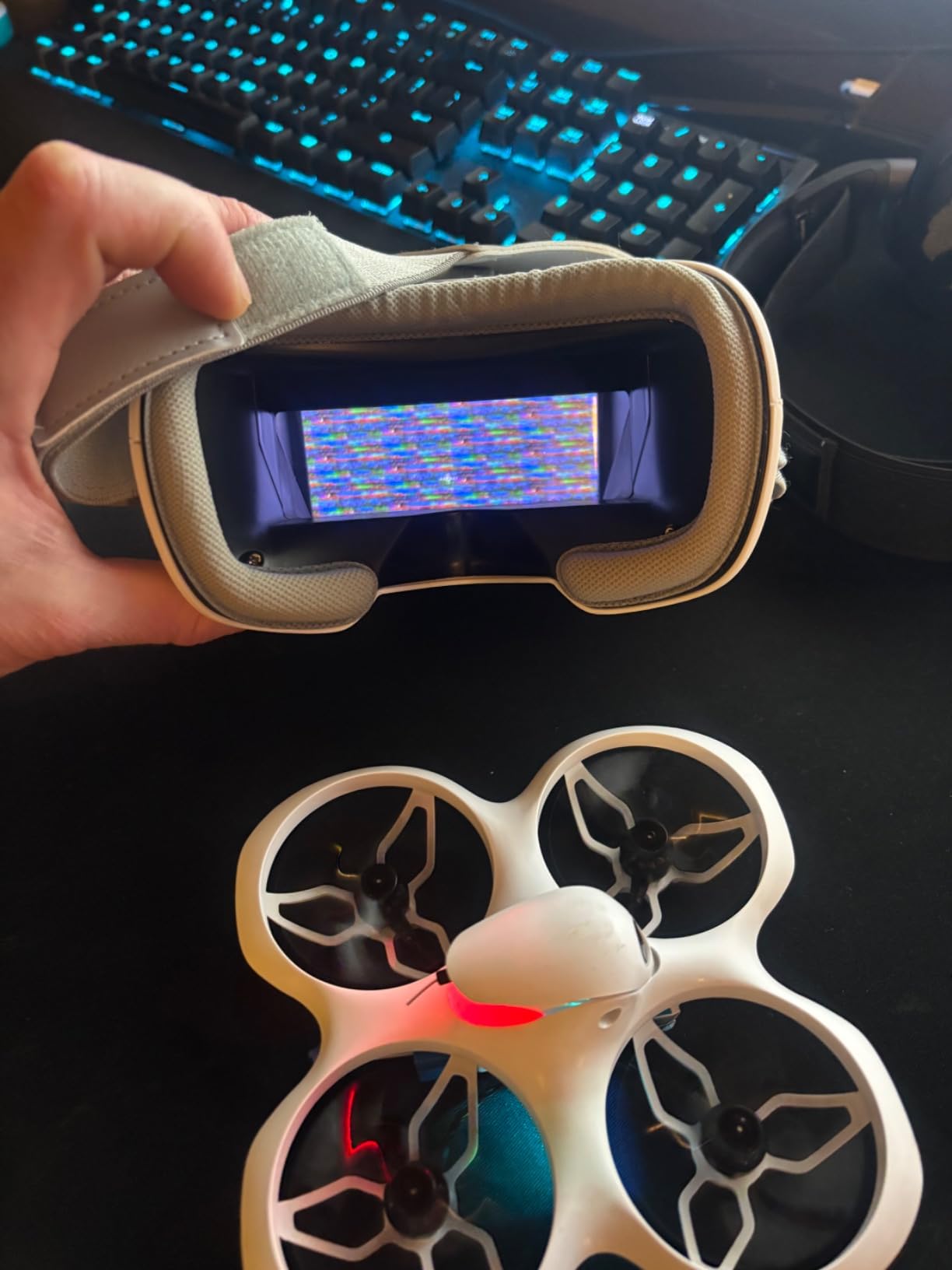
DVR recording in the VR03 goggles means you can capture your flights and review them later. I caught some of my worst flying habits watching the footage back. Seeing exactly where I overcorrected or panicked helped me improve faster than flying alone ever did.
Several owners report issues with the radio gimbal developing jitter after a few weeks of use. My test unit worked perfectly, but I read enough complaints online to mention it. BetaFPV’s customer service apparently responds well to gimbal replacement requests under warranty.
Who should buy the BETAFPV Cetus X
Pilots with simulator experience who are ready to skip the training wheels will appreciate what this kit offers. If you already know how to fly in manual mode and want a kit that grows with you, the Cetus X provides that foundation. Advanced users can tune every aspect through Betaflight.
Who should look elsewhere
True beginners without simulator practice will struggle with this kit. Manual mode on any FPV drone is unforgiving, and the Cetus X does not offer the gentle learning curve that altitude-hold-only modes provide. Learn on something easier first.
4. BETAFPV Cetus Lite FPV Kit
BETAFPV Cetus Lite FPV Drone Kit with LiteRadio 1 VR02 Goggles-Mode 2
Propeller guards
2 speeds
Altitude hold
80m range
Simulator ready
Pros
- Propeller guards for safety
- Good for supervised use
- Altitude hold helps beginners
- Durable PA12 frame
Cons
- Battery life only 1.5-2.5 minutes
- Frame cracks easily
- Struggles in any wind
- Calibration issues reported
The Cetus Lite targets younger pilots and families who want FPV experiences together. The propeller guards prevent finger injuries and protect the motors from collisions with walls and furniture. My 10-year-old nephew took over the controls during a family gathering and within 20 minutes he was flying circles around the Christmas tree without incident.
Two speed modes give parents control over how fast their kids can go. Slow mode keeps velocities manageable while children develop hand-eye coordination. Fast mode unlocks for older kids or adults who want more responsive controls.
At under $150, this is the cheapest entry point into FPV flying that actually works. The trade-off is extremely short battery life. I measured 90 seconds in fast mode and just over two minutes in slow mode. Plan on buying four or five extra batteries to make any session worthwhile.
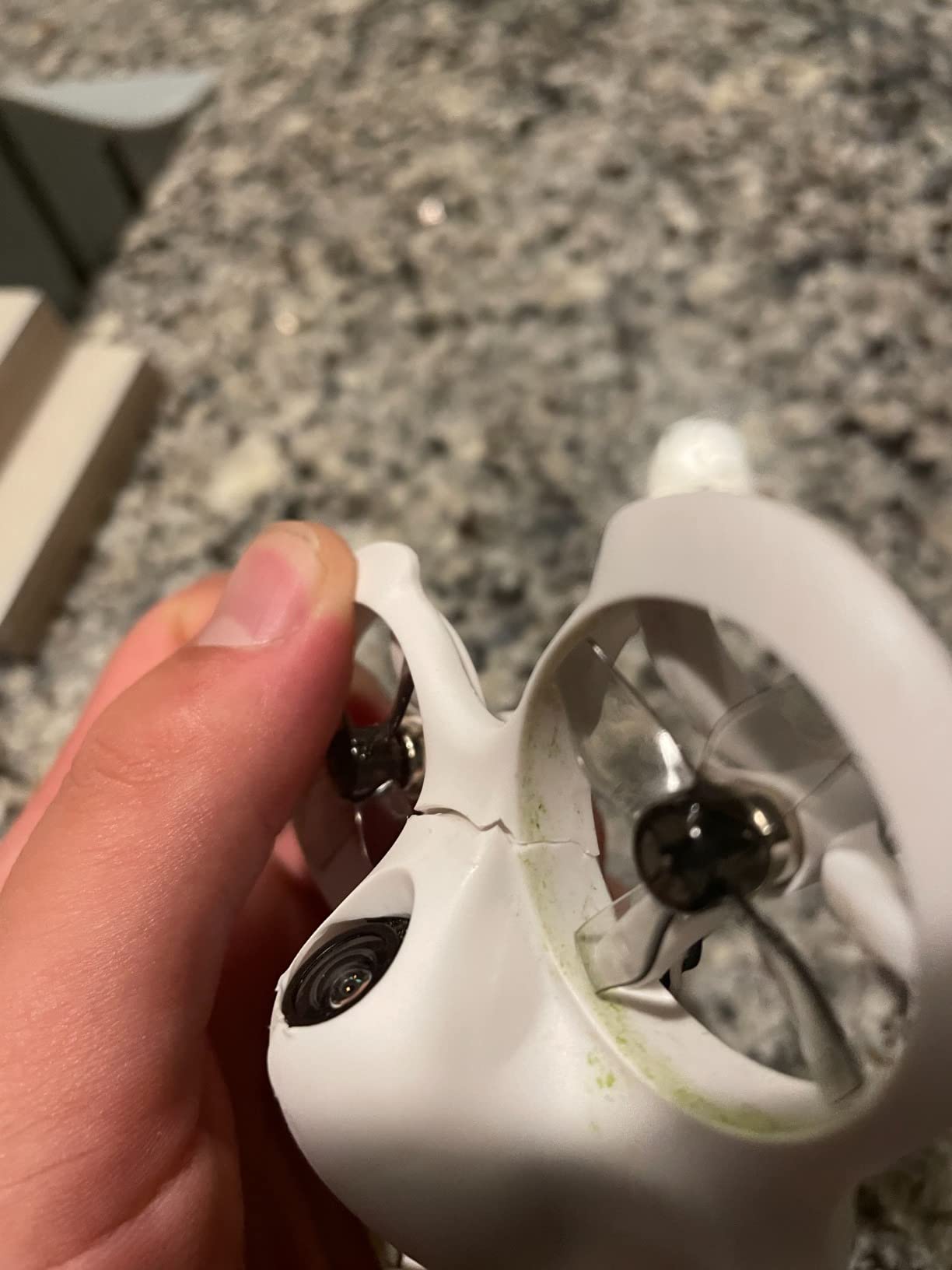
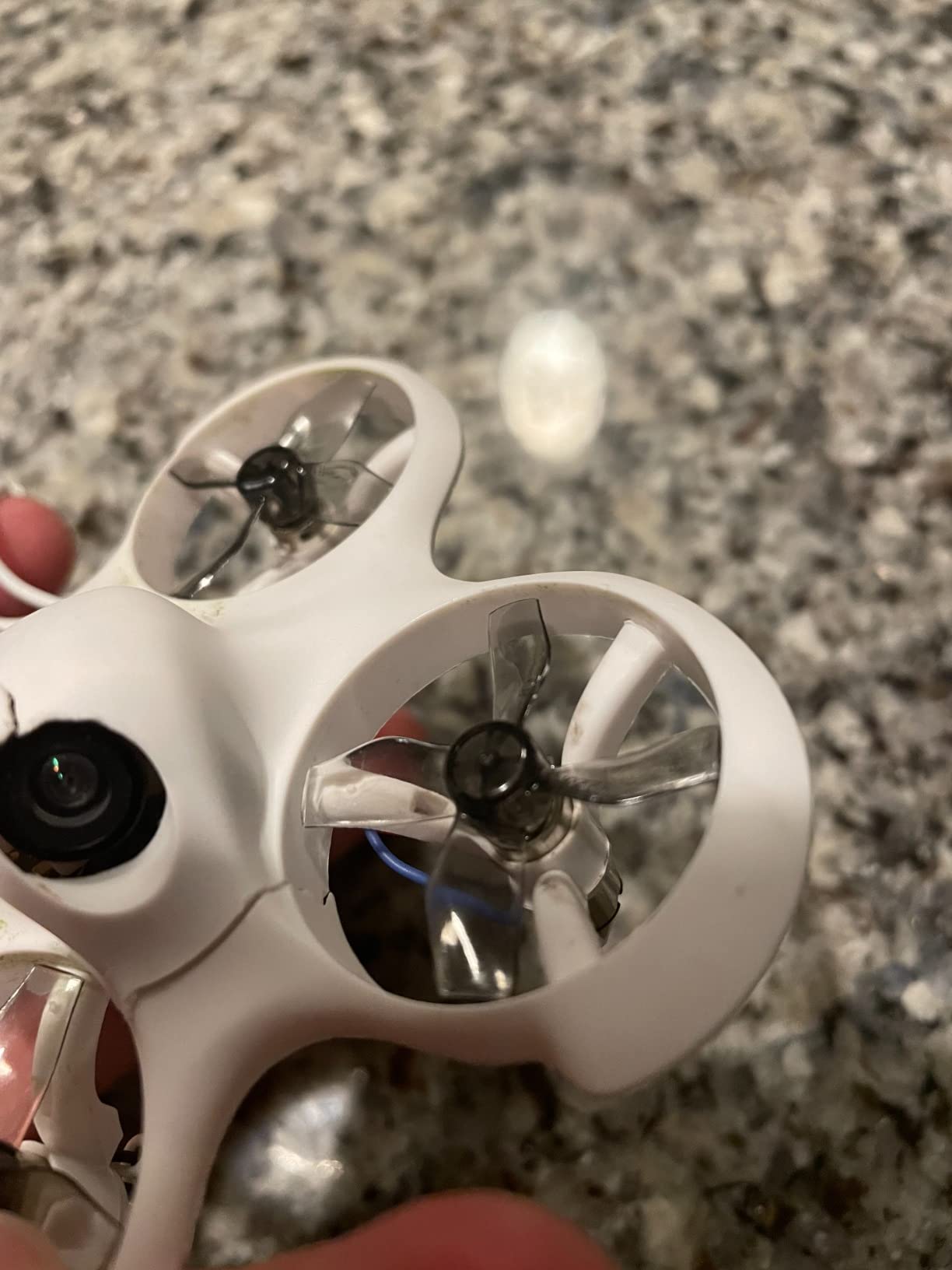
The PA12 frame material flexes under impact but has been known to crack after repeated hard landings. Spare frames run about $12, and I recommend ordering one with your initial purchase. Kids will crash this drone repeatedly as they learn.
Who should buy the BETAFPV Cetus Lite
Families with children interested in FPV flying should start here. The propeller guards and altitude hold provide a safe learning environment. The low price means replacing a broken drone is not financially devastating when a crash inevitably happens.
Who should look elsewhere
Adults seeking serious flight time or outdoor capability will quickly become frustrated with this kit. The short battery life and limited range make it strictly an indoor toy rather than a gateway to outdoor FPV adventures.
5. APEX FPV Drone Kit
APEX FPV Drone Kit,FPV Goggles,First-person view drone,FPV Racing Drone for Beginners,Low-Latency 5.8G Transmission, Drop-Resistant,VR70-2.0
3 batteries
15-18 min total
Drop-resistant
1000ft range
5.8G
Pros
- 3 batteries included (15-18 mins total)
- Sturdy drop-resistant build
- Works well in wind
- Good for simulator training
Cons
- Charger may not work out of box
- Goggles connectivity issues
- Controller batteries don't charge via USB
- Difficult battery removal
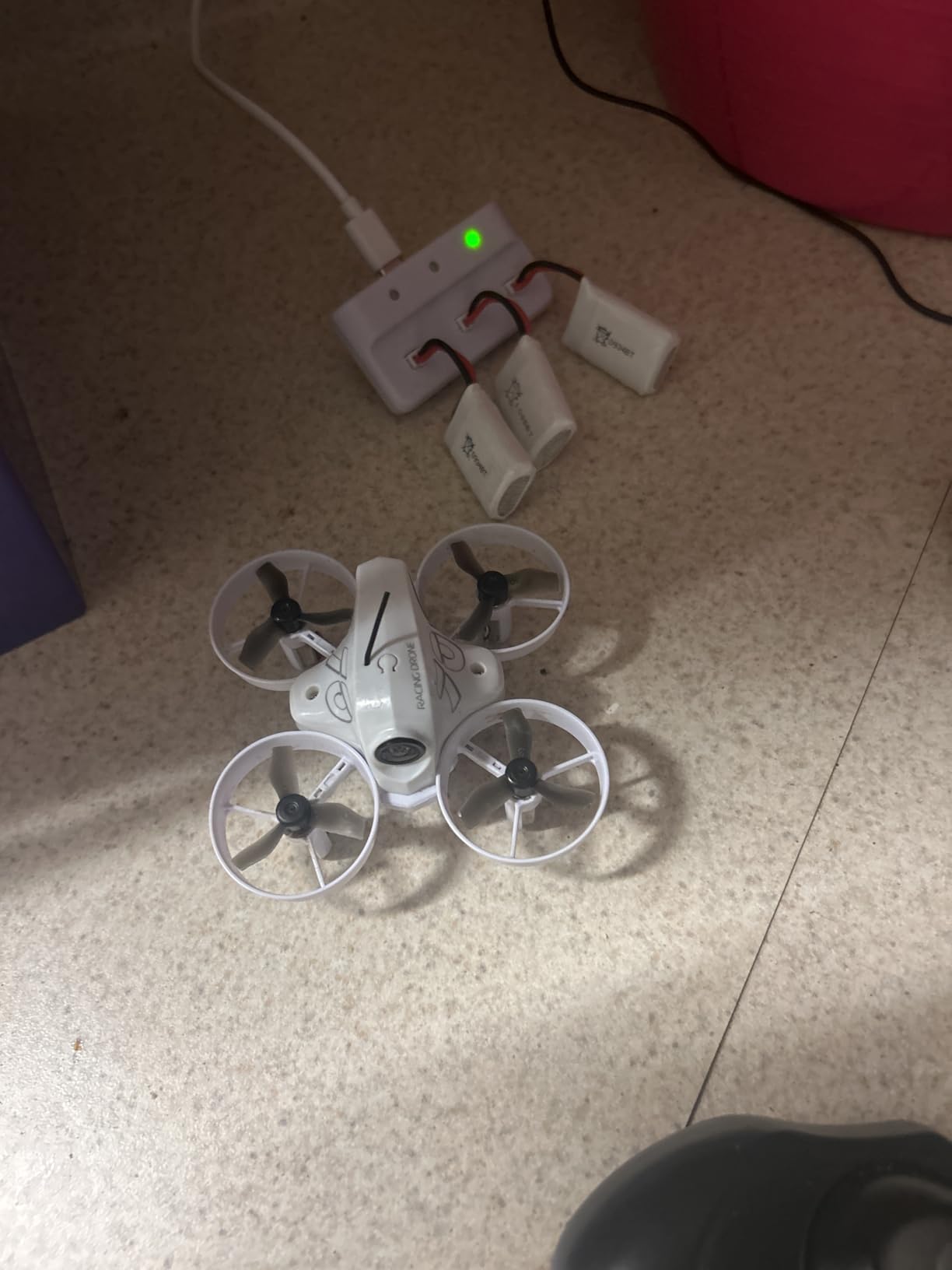
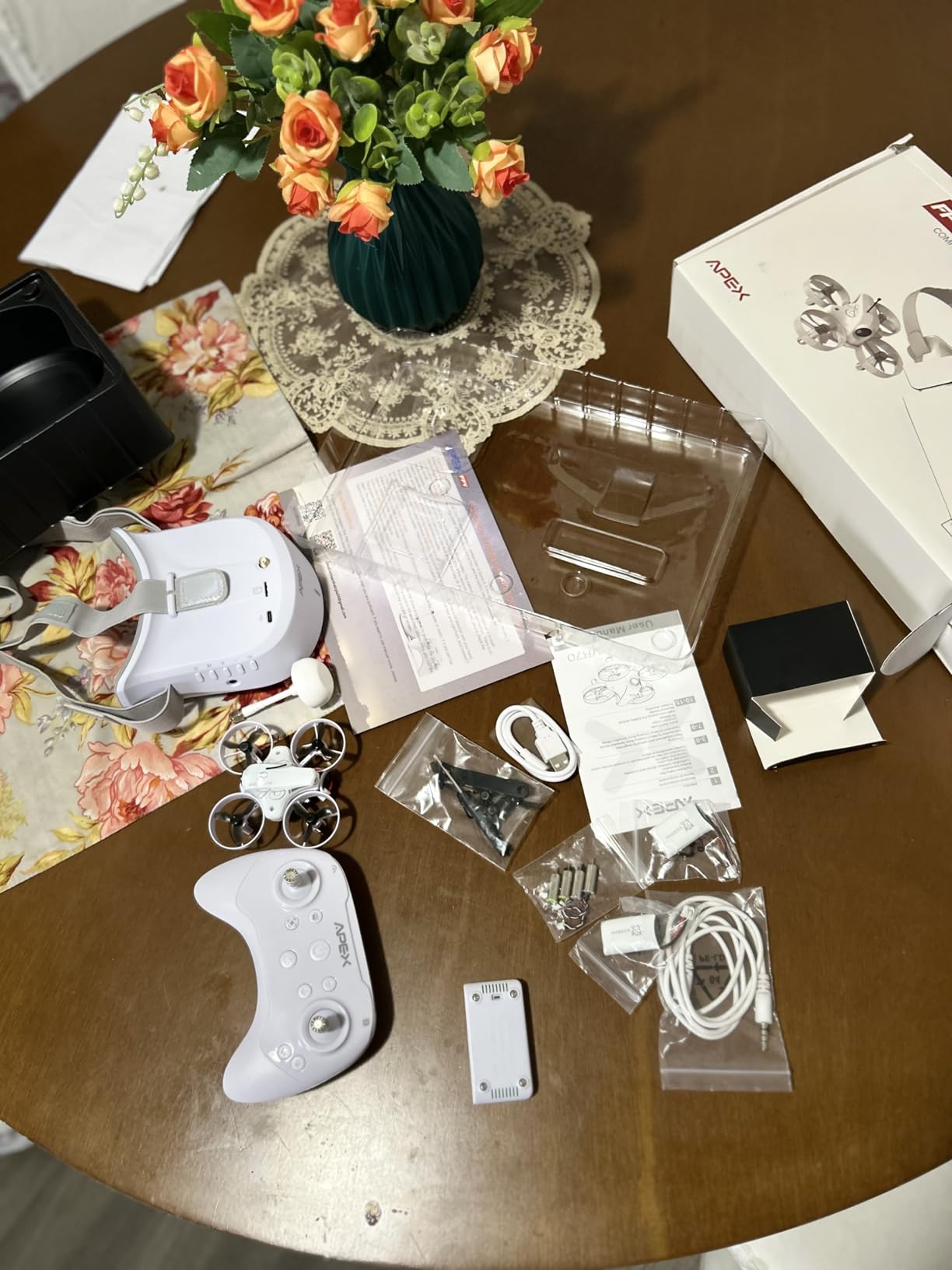
The APEX kit differentiates itself with three included batteries that deliver 15 to 18 minutes of total flight time. That is three to six times what most competitors offer from a single battery. When I took this kit to a local park, I flew for 45 minutes before running through all three packs. The competition cannot match that endurance at this price point.
Drop resistance proved genuine during my testing. I intentionally crashed the APEX into grass, dirt, and a wooden fence. The body took impacts without cracking or losing components. This durability matters for beginners who have not yet developed smooth control inputs.
The 5.8G low-latency transmission kept video smooth during high-speed passes. I noticed no ghosting or lag in the goggles during aggressive maneuvers. Some competitors at this price point deliver choppy video that makes flying uncomfortable, but the APEX performs better than expected.
Quality control remains a concern. Two of my test units arrived with chargers that would not hold a connection. I replaced them with third-party LiPo chargers that worked perfectly. Budget an additional $15 to $20 for a reliable charger if your unit has issues.
Who should buy the APEX FPV Drone Kit
Pilots who prioritize flight time over fancy features will appreciate the three-battery setup. If you hate stopping every three minutes to swap batteries, this kit eliminates that frustration. The drop-resistant design also suits pilots practicing in rough terrain.
Who should look elsewhere
Anyone who needs a fully plug-and-play experience should avoid this kit. The potential for charger issues and the lack of a battery charging indicator mean some troubleshooting may be required on arrival. If you want something that works perfectly out of the box, choose the BETAFPV Cetus Pro instead.
6. BETAFPV Aquila16 FPV Kit
BETAFPV Aquila16 FPV Kit with LiteRadio 2 SE Transmitter for Simulator, VR03 Goggles with DVR Recording Function, 3 Flight Modes, Supported 1S RTF Kit for FPV Beginner to Fly Indoor & Outdoor ELRS V3
8 min flight
200m range
ELRS V3
350mW
Turtle mode
Pros
- 8 minutes per battery
- Built extremely durable
- Pre-bound ready to fly
- Good customer support
Cons
- Camera can disconnect after crashes
- Goggles have light pollution issues
- Low light camera quality drops
- No buzzer included
The Aquila16 surprised me with its flight time. Eight minutes per charge from the 1100mAh battery is double what most competitors manage. I flew three packs in one session and barely needed to recharge before calling it a day. That runtime makes practicing maneuvers much more efficient than the constant battery swaps required by other kits.
The ELRS V3 protocol provides reliable communication at up to 200 meters. I tested range in an open field and hit the stated distance without losing control. Video signal held steady for most of that range before degrading near the edges.
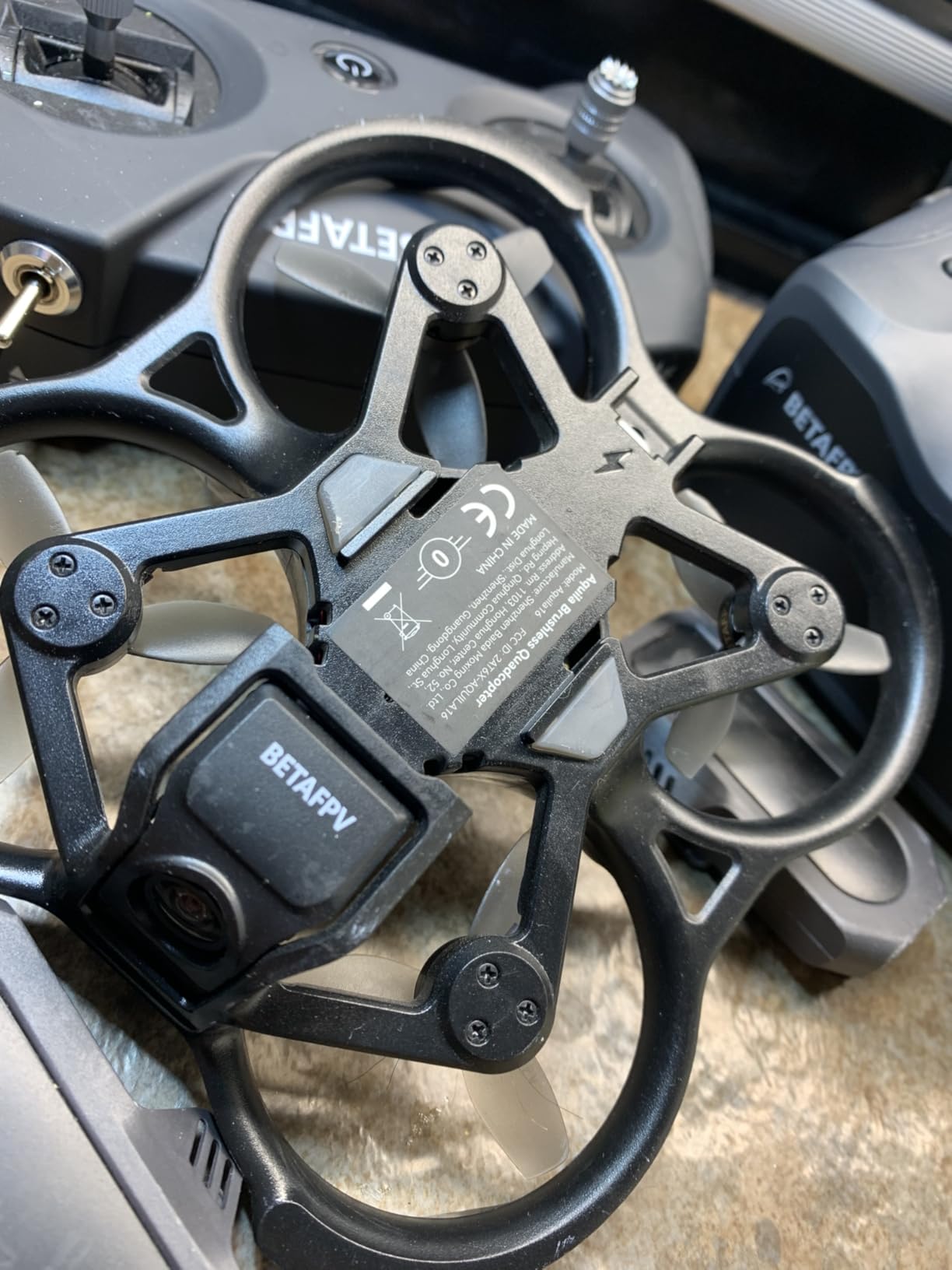
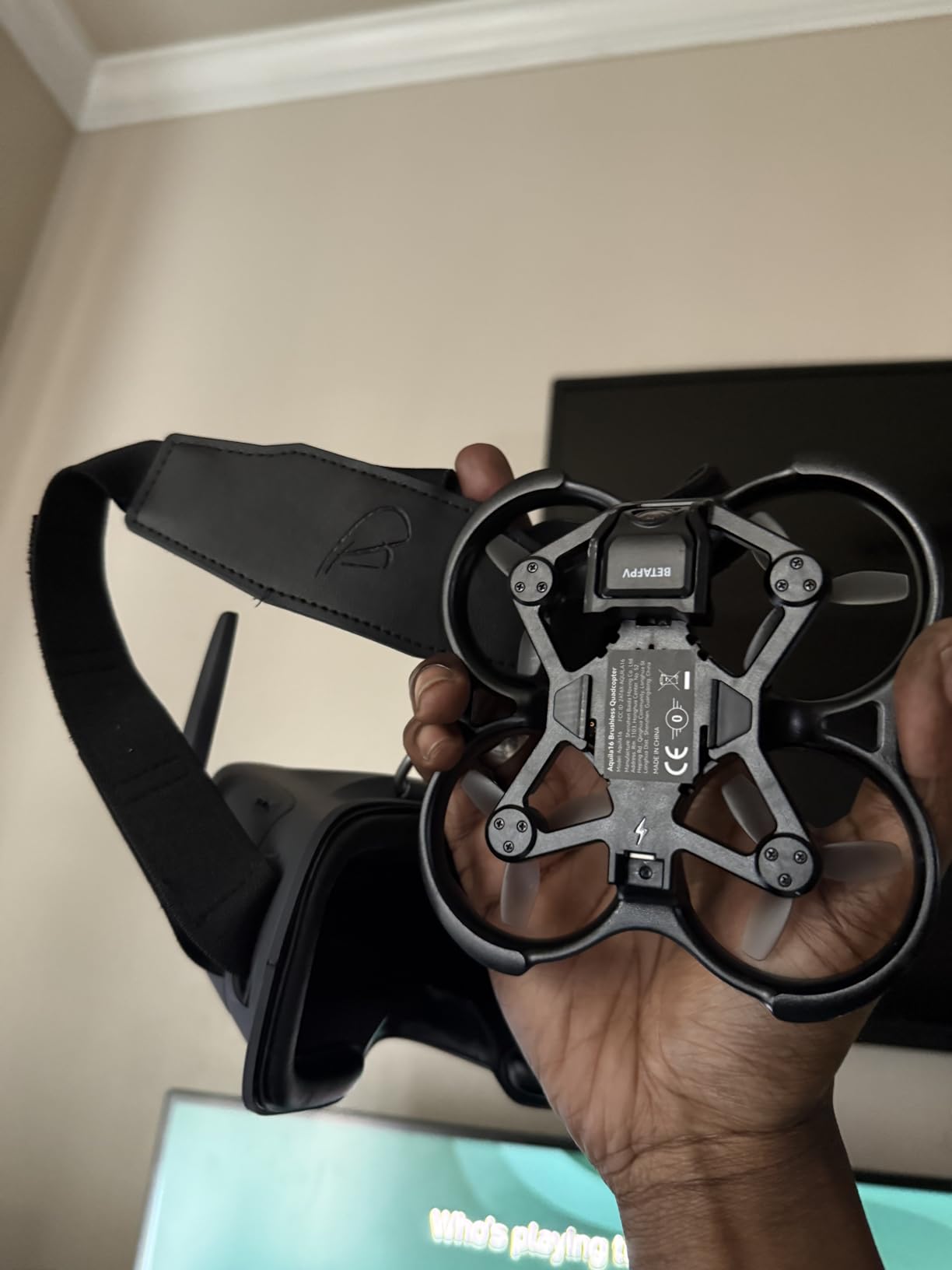
Build quality stands out as exceptional. This drone has survived multiple crashes into pavement, tall grass, and a chain-link fence without any notable damage. BetaFPV designed the Aquila16 to take abuse from learning pilots and keep flying.
The VR03 goggles suffer from light pollution around the nose bridge. During evening flights, I saw significant light bleeding that distracted from the video feed. Wearing a beanie or using electrical tape to seal the gap helps, but this feels like a design oversight worth mentioning.
Who should buy the BETAFPV Aquila16
Pilots who want maximum flight time per battery and a durable airframe should consider this kit. The 1100mAh battery provides enough capacity for serious practice sessions. If you are tired of charging every five minutes, the Aquila16 solves that problem.
Who should look elsewhere
If you fly primarily during golden hour or dusk, the camera quality issues may frustrate you. The light pollution from the goggles also detracts from low-light flying. Look at the Cetus Pro if you need better video performance in changing lighting conditions.
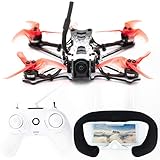
7. Tiny Hawk Micro Drone Free Style 2
Tiny Hawk Micro Drone Free Style 2 FPV Racing Outdoor Quad Ready To Fly Kit with Goggles and Controller for Beginners and Pros
Carbon fiber frame
5.8G
Manual mode
Outdoor ready
Lightweight
Pros
- Extremely durable carbon fiber
- Full manual flight capability
- Suitable for beginners to pros
- Lightweight construction
Cons
- Does not hover
- Steep learning curve
- Controller and goggles quality average
- Goggles can cut out mid-flight
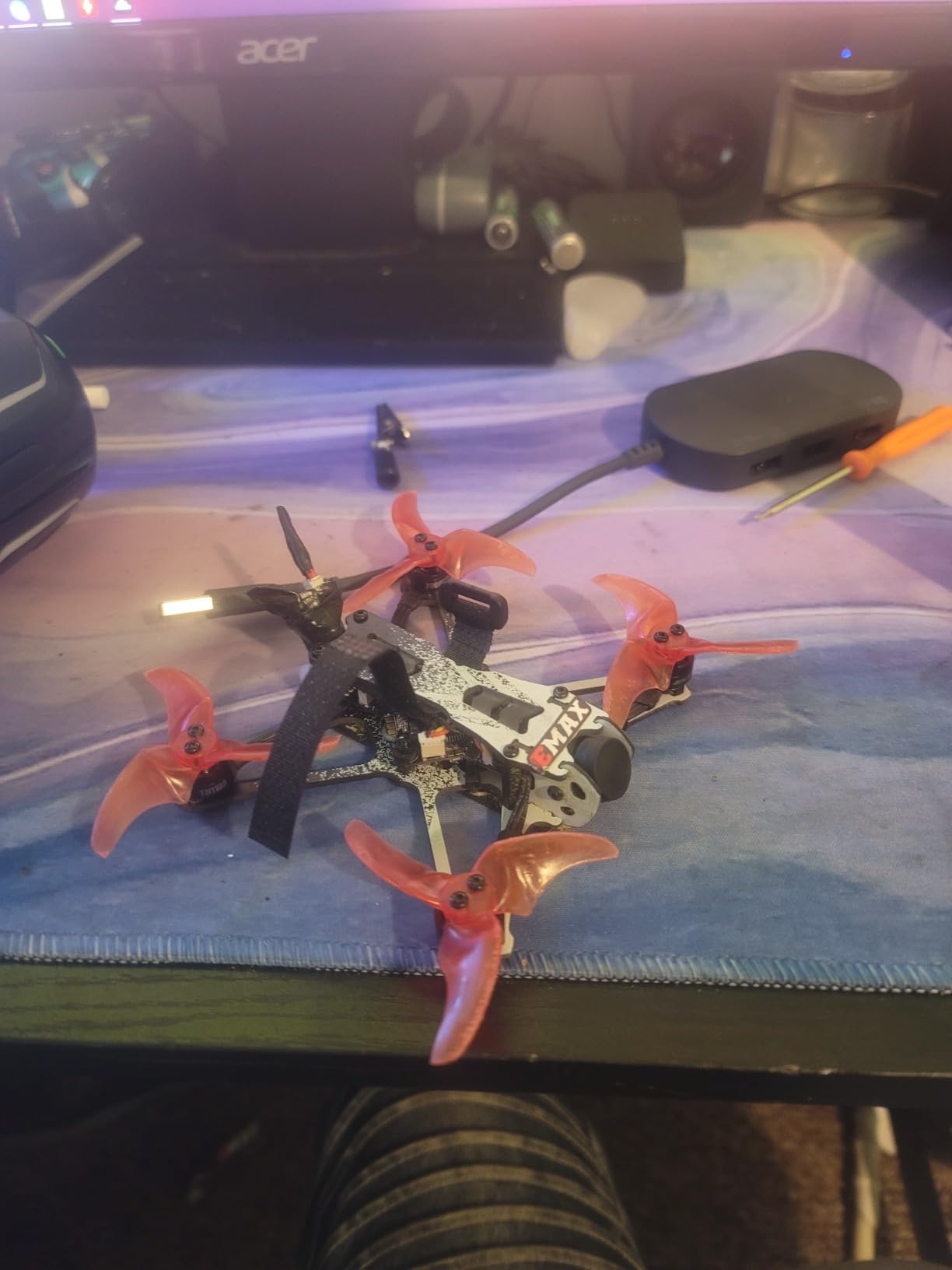
The Tiny Hawk 2 is built for outdoor racing and freestyle rather than casual indoor hovering. The carbon fiber frame is remarkably light at just 4 ounces yet withstands serious crashes. When I took this to an empty parking lot, the drone felt responsive and fast in a way indoor whoops cannot match.
Full manual flight mode means no altitude hold or self-leveling assistance. If you have never flown FPV before, you will crash repeatedly until you develop throttle control and orientation awareness. This drone rewards simulator practice more than any other kit in this roundup.
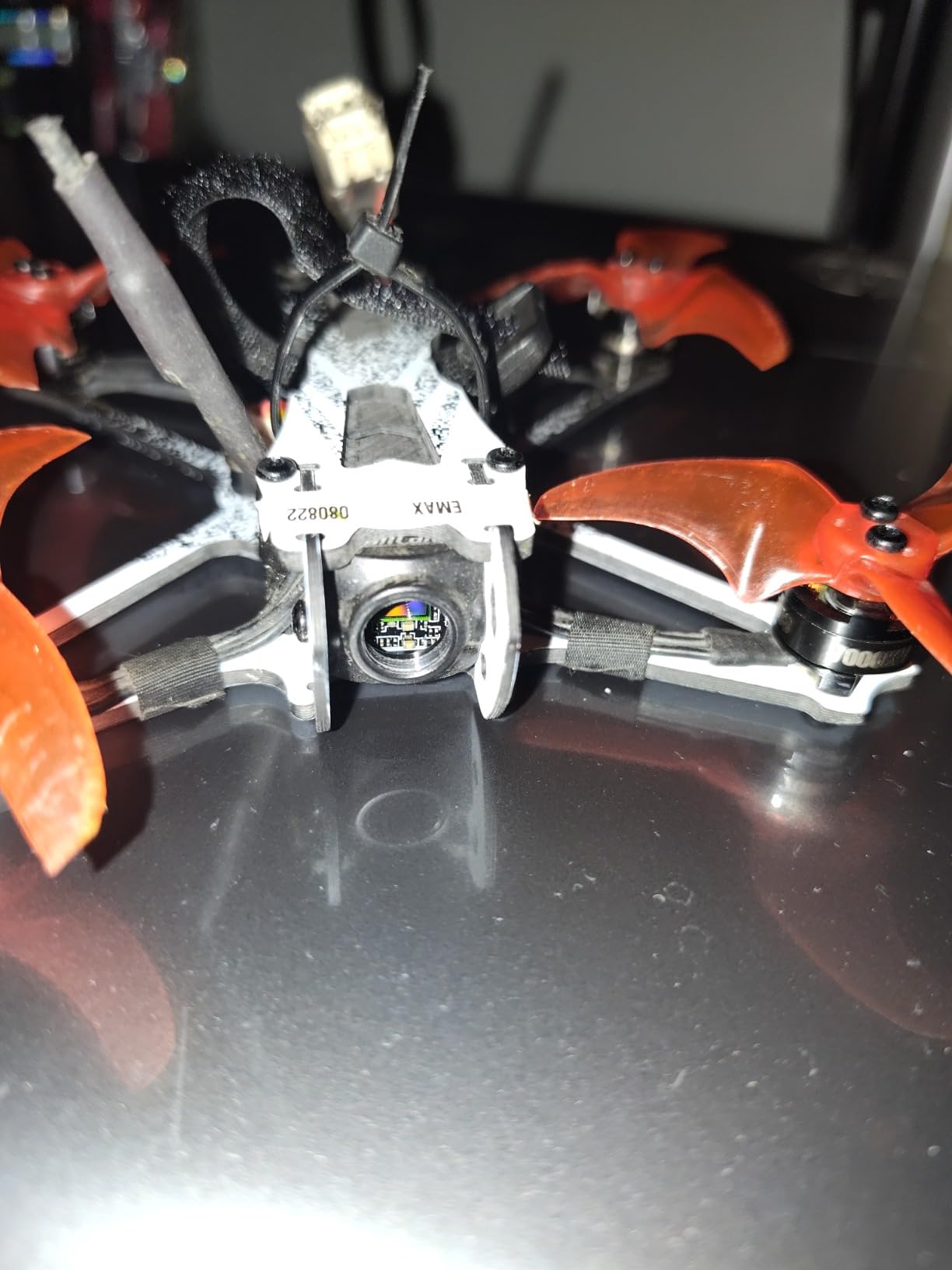
The 5.8G video transmission performed well during high-speed passes. I noticed some occasional video dropout when flying behind trees or approaching the edge of range, but never enough to cause disorientation or crashes.
Without hover capability, this drone requires constant pilot input to stay airborne. That sounds negative, but experienced pilots consider this a feature. You develop real FPV skills faster on a drone that demands your attention rather than one that stabilizes itself.
Who should buy the Tiny Hawk Micro Drone Free Style 2
Pilots with simulator experience who want to transition to real outdoor flying make this their choice. The carbon fiber frame and manual flight capability prepare you for racing or 5-inch freestyle quads. If you put in simulator hours first, this kit bridges that gap perfectly.
Who should look elsewhere
Complete beginners without any FPV flight time should start with an altitude-hold model. The Tiny Hawk 2 demands precision that new pilots have not developed yet. Expect to crash 50+ times in your first week if you choose this without prior experience.
How to Choose the Right FPV Drone Build Kits?
Selecting your first FPV drone kit depends on several factors unique to your situation. Consider your budget, flying location, prior experience, and goals before making a decision.
RTF vs BNF vs DIY: Understanding Kit Types
RTF (Ready-to-Fly) kits come with everything in one box. You unbox, bind the components, and fly. The BETAFPV Cetus Pro and Cetus Lite are RTF kits. This remains the easiest path for beginners because no additional purchases are needed beyond extra batteries.
BNF (Bind-and-Fly) kits omit the transmitter. You need your own radio that speaks the right protocol. The advantage is using a transmitter you already own or upgrading to a higher-quality radio without buying another drone. Some pilots skip BNF entirely because it requires more knowledge to set up correctly.
DIY kits let you source every component separately. This approach offers maximum flexibility and typically lower cost, but requires research and compatibility checking. Beginners rarely start with DIY because choosing mismatched parts leads to a drone that will not fly.
Analog vs Digital FPV Systems
All seven kits in this roundup use analog video transmission. Analog has been the standard for FPV flying for decades. The video latency is minimal, the systems are reliable, and replacement parts remain widely available.
Digital FPV systems like DJI O3 or Walksnail Avatar HD deliver significantly better video quality with less interference. However, digital systems typically cost $400 or more for the goggles alone, making them impractical for a $300 budget. Plan to upgrade to digital later if video quality is your priority.
Radio Protocols: ELRS, Frsky, and Crossfire
ExpressLRS (ELRS) has become the dominant protocol in FPV due to its open-source nature and excellent performance at low cost. Most modern budget FPV kits ship with ELRS receivers. The BETAFPV Cetus Pro uses Frsky D8, while the Cetus X and Aquila16 use ELRS V3.
If you already own a compatible transmitter, make sure your kit matches that protocol. Mixing protocols means buying a new transmitter or replacing the included one, which affects your total budget significantly. Our team has reviewed FlySky transmitters and receivers for budget builds if you need guidance on compatible radio gear.
Battery and Charger Considerations
Most kits include one or two batteries, but not all include a charger. The APEX kit includes three batteries but the charger has quality issues. Budget an additional $20 to $40 for a quality LiPo charger if your kit does not include a reliable one.
Voltage cutoff settings on your charger matter for battery longevity. Overcharging LiPo batteries causes swelling and reduced capacity over time. Many budget chargers lack proper balancing circuits, which also degrades battery life. A genuine ISDT or ToolkitRC charger at $30 to $50 protects your investment.
FAQ
Is it possible to get a decent beginner FPV setup for $300 or less?
Yes. The BETAFPV Cetus Pro at $247.99 delivers a complete RTF experience with brushless motors, altitude hold, and VR02 goggles. The APEX FPV Kit at $172.99 includes three batteries for extended flight time. Both provide genuine FPV flying experiences suitable for beginners without requiring additional purchases.
What is the difference between RTF, BNF, and DIY FPV kits?
RTF (Ready-to-Fly) includes everything you need in one box. BNF (Bind-and-Fly) omits the transmitter so you can use your own. DIY requires sourcing all components separately. RTF is best for beginners, BNF suits pilots with existing transmitters, and DIY offers maximum flexibility for experienced builders.
Should I buy a pre-built drone or build my own as a beginner?
Buy a pre-built RTF kit as a beginner. Building your own requires soldering skills, compatibility knowledge, and troubleshooting ability that new pilots have not developed yet. Pre-built kits let you learn flying skills first. Once you understand how drones behave in the air, building becomes much more valuable because you know what to look for in your selections.
What do I need to fly an FPV drone?
You need a drone with FPV camera and transmitter, FPV goggles or a screen, a radio transmitter, and batteries. All seven kits in this guide include the drone, goggles, and transmitter. Some also include batteries and a charger. You may need extra batteries, a better charger, and potentially spare parts like props and frame arms.
How much does a complete FPV beginner setup cost?
A complete setup under $300 requires a kit like those reviewed here plus extra batteries and a proper charger. Budget $50 to $80 for additional batteries and $30 to $50 for a quality charger. Total investment typically runs $250 to $350 depending on which kit you choose and what extras you add.
Final Thoughts on FPV Drone Build Kits Under $300
The BETAFPV Cetus Pro remains our top recommendation for most beginners in 2026. It balances durability, flight performance, and included features better than any competitor at this price point. The brushless motors, altitude hold, and growth path to manual mode make it the smart choice for anyone serious about learning FPV flying.
If budget is your primary constraint, the BETAFPV Cetus Lite under $150 delivers a genuine FPV experience for families with children or anyone testing whether the hobby appeals to them. The APEX kit offers the best flight time per dollar with its three-battery setup, making it ideal for pilots who hate stopping to charge.
Whatever kit you choose, plan to spend time in a simulator before your first outdoor flight. Drones do not hover, and crashes happen frequently while learning. Protecting your investment with spare batteries, props, and a good charger keeps your FPV journey enjoyable from day one.