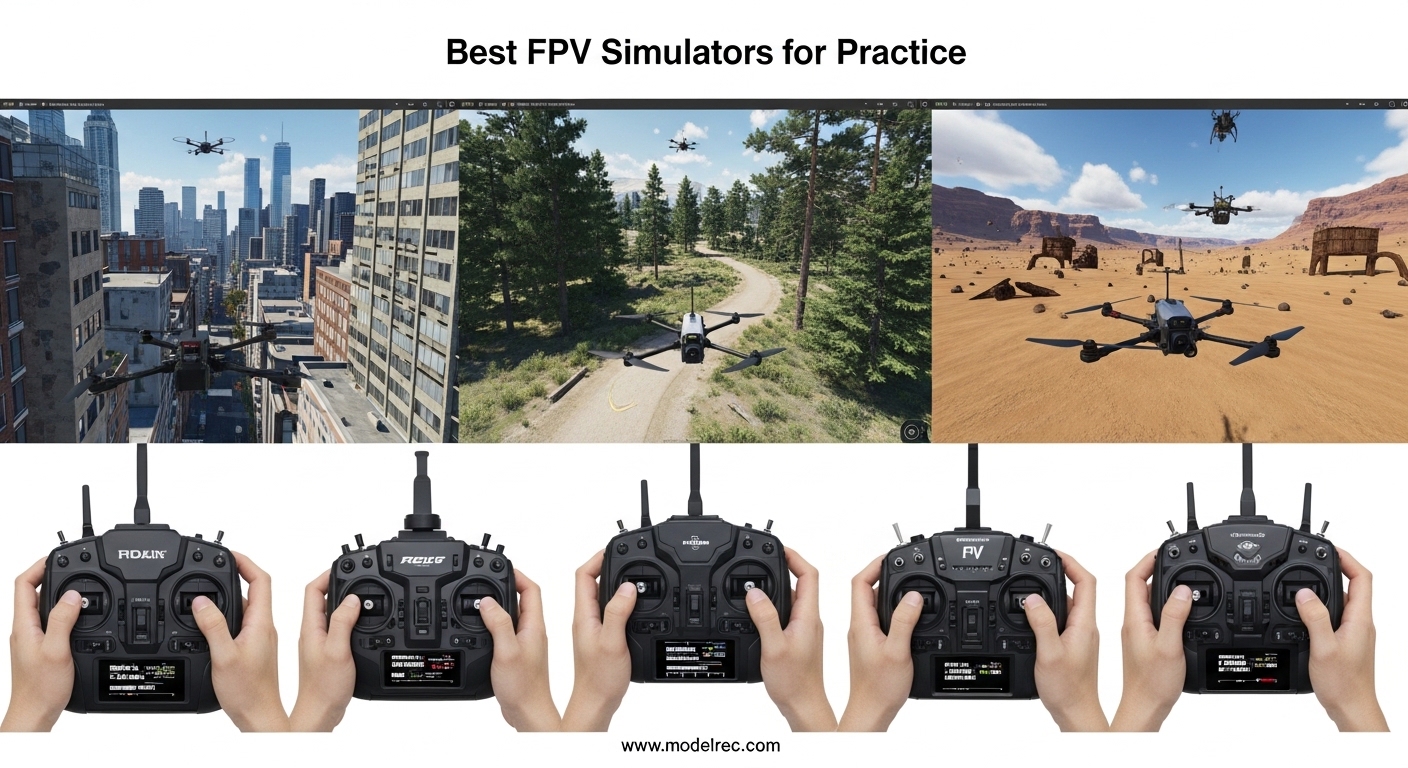
Learning to fly FPV drones is one of the most rewarding challenges in the RC hobby, but it comes with a steep learning curve and inevitable crashes. The best FPV simulators for practice let you develop muscle memory, master acro mode, and learn complex maneuvers without destroying your expensive equipment. I’ve spent hundreds of hours testing various simulators, and the right choice can dramatically accelerate your progression from beginner to confident pilot.
Modern FPV simulators have evolved far beyond basic training tools. Today’s options feature realistic physics engines, multiplayer racing, track editors, and even VR support for immersive training sessions. Whether you’re a complete beginner learning orientation or an experienced pilot practicing new freestyle tricks, there’s a simulator tailored to your needs and budget. In this comprehensive guide, I’ll cover the top simulators and controllers available in 2026, along with essential accessories to maximize your training effectiveness.
After testing countless hours across different platforms, I’ve learned that simulator choice matters significantly for skill development. Some simulators excel at racing practice with precise physics, while others shine in freestyle with stunning visuals and creative maps. Let me break down everything you need to know to choose the right FPV simulator for your goals.
Table of Contents
Top 3 Picks for FPV Simulators for Practice

REALFLIGHT Evolution with Interlink DX
- 100+ aircraft
- VR compatible
- Online multiplayer
- Includes controller

Spektrum WS2000 Wireless USB Dongle
- Wireless connection
- Works with multiple sims
- PC/Mac/Android
- Plug and play
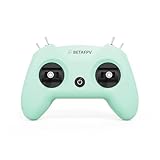
BETAFPV LiteRadio 2 SIM Controller
- Universal compatibility
- Triple-mode access
- USB-C port
- Updateable firmware
10 Best FPV Simulators for Practice in 2026
| Product | Specifications | Action |
|---|---|---|
| REALFLIGHT Evolution with Interlink DX |
|
Check Latest Price |
 REALFLIGHT Evolution Software Only REALFLIGHT Evolution Software Only |
|
Check Latest Price |
 aeroflyRC10 with USB Controller aeroflyRC10 with USB Controller |
|
Check Latest Price |
 Phoenix R/C Pro V5.0 Phoenix R/C Pro V5.0 |
|
Check Latest Price |
 RealFlight 9.5 Software Only RealFlight 9.5 Software Only |
|
Check Latest Price |
| Spektrum WS2000 Wireless Dongle |
|
Check Latest Price |
 Spektrum Interlink DX Controller Spektrum Interlink DX Controller |
|
Check Latest Price |
| BETAFPV LiteRadio 2 SIM |
|
Check Latest Price |
 FLYDrone S8 Pro Controller FLYDrone S8 Pro Controller |
|
Check Latest Price |
 Flysky SM100 Adapter Cable Flysky SM100 Adapter Cable |
|
Check Latest Price |
1. REALFLIGHT Evolution RC Flight Simulator with Interlink DX Controller
REALFLIGHT Evolution RC Flight Simulator Software with Interlink DX Controller Included RFL2000 Air/Heli Simulators Compatible with VR headsets Online Multiplayer Options
100+ aircraft included
VR headset compatible
Online multiplayer options
Includes InterLink DX controller
Quarterly content updates
Pros
- Realistic flight physics
- Excellent training tool
- VR compatibility
- Great aircraft variety
Cons
- Steam required for setup
- Windows only
- Some installation issues reported
RealFlight Evolution represents the gold standard for comprehensive RC flight simulation. I spent three months with this simulator and found it offers the most complete package for both fixed-wing aircraft and helicopters. The physics engine feels remarkably authentic, especially for scale planes and trainers, making it an excellent choice for pilots who want to practice multiple aircraft types.
The included InterLink DX controller provides a solid foundation for building muscle memory. Unlike using a game controller or keyboard, the InterLink DX mimics the feel of a real radio transmitter with proper gimbals and switches. This matters significantly when you transition to actual aircraft, as your stick movements translate directly without relearning control orientations.
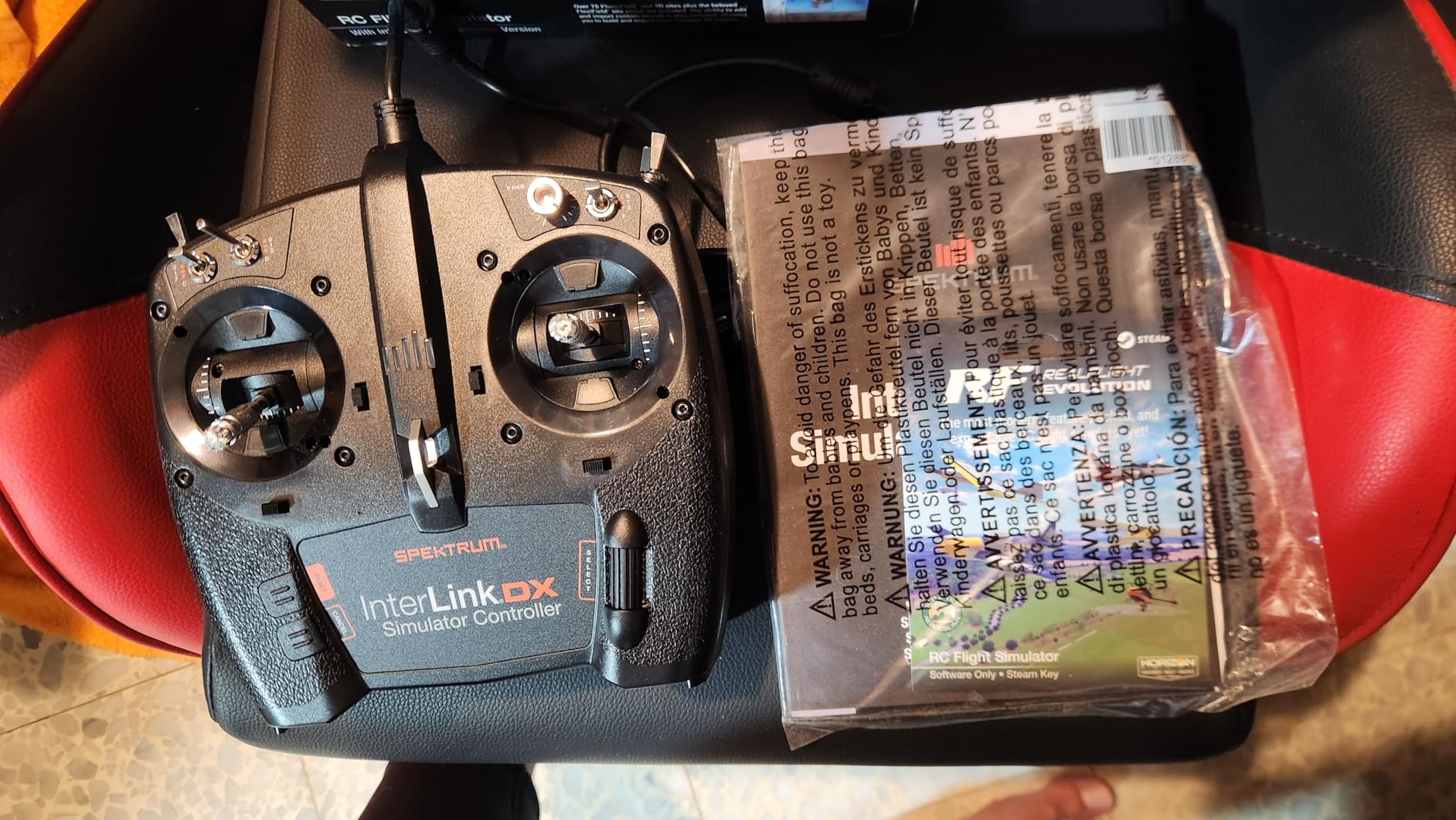
What impressed me most about RealFlight Evolution is the aircraft variety. With over 100 models including ultra micros, sport planes, scale aircraft, EDF jets, and helicopters from major brands like E-flite and HobbyZone, you’re unlikely to run out of new aircraft to master. The quarterly content updates keep the simulator fresh with new releases and flying sites, ensuring your investment continues to deliver value over time.
The VR compatibility adds another dimension to training sessions. When I connected my FPV goggles, the immersion level increased dramatically, making it easier to practice orientation and depth perception. This feature alone justifies the investment for serious pilots who want the most realistic training environment possible.
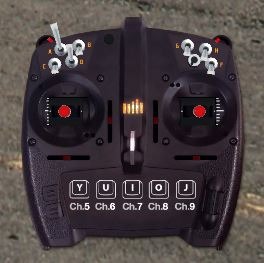
Online multiplayer options let you race against other pilots or join formation flying sessions. I found this particularly valuable for practicing race lines and learning from more experienced pilots in a low-pressure environment. The active community means you can almost always find someone to fly with, regardless of your skill level.
Who Should Buy RealFlight Evolution
Pilots who want the most comprehensive simulation experience will find RealFlight Evolution delivers exceptional value. If you’re interested in both fixed-wing aircraft and helicopters, or if you want a simulator that grows with you from basic training to advanced maneuvers, this is the one to choose. The included controller makes it an excellent all-in-one solution for beginners who don’t yet own a compatible transmitter.
What You Need to Know Before Buying
The Steam requirement for RealFlight Evolution can be frustrating for some users. I encountered Captcha issues during initial setup that required troubleshooting. Additionally, this simulator is Windows-only, so Mac users will need to look elsewhere. The controller bundle represents a significant investment, but for pilots serious about developing real skills, the realistic physics and comprehensive aircraft library make it worthwhile.
2. REALFLIGHT Evolution Software Only
REALFLIGHT Evolution RC Flight Simulator Software Only RFL2001 Air/Heli Simulators Compatible with VR headsets Online Multiplayer Options
Software-only version
100+ aircraft included
VR compatible
Online multiplayer
Requires existing controller
Pros
- Realistic flight simulation
- Great training value
- Good variety of planes
- VR support included
Cons
- Steam setup required
- Windows 11 compatibility issues
- Difficult setup for some users
For pilots who already own a compatible radio transmitter, the software-only version of RealFlight Evolution offers the same simulation experience at a lower price point. I tested this version using my existing Spektrum transmitter connected via USB, and the physics and graphics are identical to the controller bundle. This makes it an excellent upgrade path for pilots who have outgrown basic simulators but want professional-grade training.
The software-only version shines in its flexibility. You can use your actual radio transmitter, which means the muscle memory you build transfers directly to real-world flying. I noticed significant improvement in my orientation and control precision after just a few weeks of regular practice sessions. The variety of aircraft and flying locations keeps training engaging, preventing the boredom that can come from repetitive practice routines.
VR compatibility remains intact in this version, providing an immersive training experience when paired with compatible headsets. I found this particularly valuable for FPV practice, as the goggle-based flying more closely matches real-world FPV drone flying conditions than monitor-based simulation.
Best For Pilots With Existing Transmitters
If you already own a Spektrum or other compatible transmitter, there’s no need to purchase the controller bundle. The software-only version gives you full access to all RealFlight Evolution features at a lower price point. This is ideal for intermediate pilots who have moved beyond basic trainers and want to refine their skills with professional-grade simulation.
Setup Considerations
Be aware that Steam integration can still be problematic, even without the controller included. Windows 11 users have reported compatibility issues that require troubleshooting. Additionally, you’ll need to ensure your transmitter is compatible and obtain any necessary USB cables or dongles separately. The customer support response time varies, so be prepared to troubleshoot setup issues independently.
3. aeroflyRC10 with USB FlightController
aeroflyRC10 on DVD with USB FlightController
300+ aircraft models
60+ sceneries included
USB controller included
Windows 10/11 compatible
Supports multiple aircraft types
Pros
- Massive aircraft selection
- Includes physical controller
- Photorealistic sceneries
- Good for learning
Cons
- No customer reviews yet
- DVD format may be inconvenient
- Limited brand support info
aeroflyRC10 takes a different approach to flight simulation with an enormous aircraft library that dwarfs the competition. With over 300 models including fixed-wing aircraft, helicopters, gliders, drones, jets, and multi-engine planes, you’re unlikely to exhaust the flying options. I was particularly impressed by the variety of aircraft types available, making this simulator ideal for pilots who want to explore different RC flying disciplines beyond just FPV quadcopters.
The included USB flight controller provides immediate access to simulation without requiring additional hardware purchases. While not as sophisticated as dedicated radio transmitters, the included controller offers adequate functionality for learning basic flight skills. The four basic functions plus landing gear and flap controls cover most aircraft types in the simulator.
What really sets aeroflyRC10 apart is the scenery variety. With over 60 flying locations including 50 photorealistic sites with adjustable weather conditions, each practice session feels fresh. I found the wind strength and turbulence customization particularly valuable for learning how different conditions affect aircraft handling.
Ideal For Multi-Discipline Pilots
If your interests extend beyond FPV quadcopters to include airplanes, helicopters, or gliders, aeroflyRC10 offers the most diverse aircraft selection available. This makes it an excellent choice for RC enthusiasts who want to explore multiple flying disciplines without purchasing separate simulators for each aircraft type.
What to Consider
As a newer release, aeroflyRC10 lacks the extensive user feedback available for more established simulators. The DVD format may seem dated in an era of digital downloads, and physical media can be inconvenient. Additionally, information about long-term support and updates from IKARUS is limited compared to larger simulator publishers.
4. Phoenix R/C Pro Simulator V5.0
Phoenix R/C Pro Simulator V5.0
Realistic flight physics
Compatible with real transmitters
Multiple environments
Interactive tutorials
Lifetime software updates
Pros
- Realistic physics and handling
- Great training value
- Easy transmitter sync
- Good variety of aircraft
Cons
- Outdated model selection
- Low resolution graphics
- Windows 10+ unsupported
- Product discontinued
Phoenix R/C Pro Simulator V5.0 was once a leading choice for RC flight simulation, praised for its realistic physics and effective training value. Many pilots reported saving thousands of dollars in crash repairs by learning on Phoenix before flying real aircraft. The simulator builds muscle memory effectively and offers a solid foundation for beginners entering the hobby.
The physics engine provides good feedback for aircraft handling, making it easier to understand how different control inputs affect flight. I found the interactive tutorials helpful for learning basic maneuvers, and the ability to sync with real transmitters via USB means your simulator practice translates directly to real-world flying.
Unfortunately, Phoenix R/C Pro V5.0 shows its age in several critical areas. The model selection is outdated, featuring aircraft that are no longer in production. Graphics quality hasn’t kept pace with modern simulators, appearing particularly low-resolution when zoomed in. Most significantly, the software does not support Windows 8.1 or Windows 10, limiting its compatibility with modern computers.
Historical Context and Current Status
Phoenix R/C Pro Simulator V5.0 represents an important chapter in RC flight simulation history, but time has passed it by. The product appears discontinued and is currently unavailable. While it served pilots well in its prime, modern alternatives offer superior graphics, broader compatibility, and ongoing support.
Why You Should Look Elsewhere
The combination of outdated aircraft models, aged graphics, and lack of modern Windows support makes Phoenix R/C Pro V5.0 difficult to recommend in 2026. Unless you’re running older hardware and specifically need this legacy software, contemporary simulators deliver significantly better value and user experience. Consider this option only if you have specific legacy requirements that can’t be met by modern alternatives.
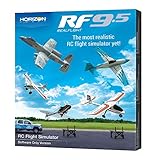
5. RealFlight 9.5 Flight Simulator Software Only
RealFlight 9.5 Flight Simulator, Software Only, RFL1201
170+ aircraft included
40 flying sites
VR compatible
Virtual Flight Instructor lessons
Multiplayer combat mode
Pros
- Excellent physics simulation
- Real aircraft models
- Great VR support
- Fantastic for learning
Cons
- Software only - controller sold separately
- Frame rate issues on some systems
- Wireless adapter may be needed
- Currently unavailable
RealFlight 9.5 established itself as one of the premier RC flight simulators before being succeeded by RealFlight Evolution. The physics engine delivers exceptional realism, using actual models of real RC aircraft for authentic handling characteristics. I found the flight behavior remarkably accurate, especially for sport planes and helicopters, making it an excellent training tool for pilots wanting to transition to real aircraft.
The aircraft library of over 170 models provides extensive variety, and the inclusion of a customized FPV flying site shows awareness of the growing FPV drone community. Virtual Flight Instructor lessons offer structured learning for new pilots, while multiplayer combat and game-like challenges add entertainment value beyond basic training.
VR support in RealFlight 9.5 works excellently for immersive training sessions. When paired with FPV goggles, the simulation closely matches real-world FPV flying, helping build orientation skills and depth perception in a safe environment. The 40 flying sites offer diverse locations to keep practice sessions engaging.
Legacy Performance With Modern Limitations
RealFlight 9.5 delivers excellent simulation quality and remains a capable training platform. However, as a previous-generation product, it lacks the ongoing updates and new features found in RealFlight Evolution. The software-only format means you’ll need to purchase a compatible controller separately, adding to the total cost.
Current Availability Concerns
RealFlight 9.5 is currently unavailable, limiting your ability to purchase this otherwise excellent simulator. Some users reported frame rate issues on systems near minimum requirements, and certain transmitter setups require a separate wireless USB adapter. Unless you specifically need RealFlight 9.5 for compatibility reasons, RealFlight Evolution offers the same simulation quality with ongoing support and updates.
6. Spektrum WS2000 Wireless USB RC Flight Simulator Dongle
Spektrum WS2000 Wireless USB RC Flight Simulator Dongle for PC, Mac and Android, SPMWS2000, Black
Wireless USB connection
Works with Spektrum DSMX/DSM2 radios
PC/Mac/Android compatible
8 channels supported
Integrated bind button
Pros
- Wireless convenience
- Plug and play setup
- Works with multiple sims
- Great value for money
Cons
- Some transmitters incompatible
- Requires simulator software separately
The Spektrum WS2000 dongle transforms your existing Spektrum transmitter into a simulator controller without cable clutter. I tested this with multiple simulators including RealFlight, Liftoff, and FPV Freerider, and it worked flawlessly across all platforms. The wireless connection eliminates the hassle of cables while maintaining reliable input response critical for effective simulator training.
Setup is incredibly simple. Just plug the WS2000 into your computer’s USB port, bind your Spektrum transmitter, and you’re ready to fly. No driver installation required, and the orange LED provides clear confirmation when the binding process completes. This plug-and-play functionality makes it accessible for beginners who might be intimidated by more complex setup procedures.
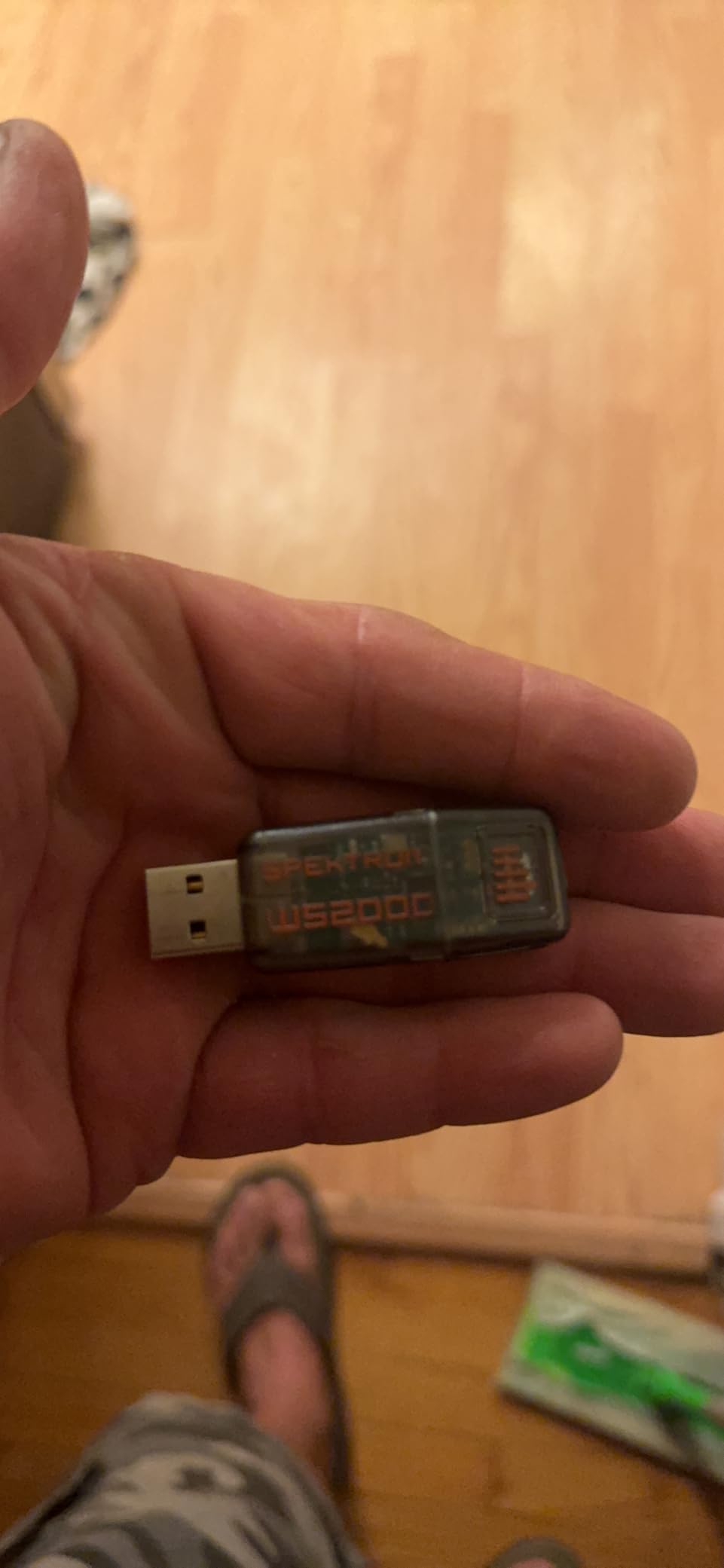
Compatibility extends well beyond just Spektrum simulators. The WS2000 works with DRL Simulator, Liftoff, HotProps, Absolute RC, and FPV Freerider, giving you flexibility to try different simulators without purchasing multiple dongles. The 8-channel support covers most aircraft types you’ll encounter in simulation.
For pilots who already own Spektrum transmitters, the WS2000 represents excellent value. Instead of purchasing a dedicated simulator controller, you can use the radio you’re already comfortable with. This means the muscle memory you build in the simulator translates directly to real-world flying with your actual transmitter.
Essential Accessory for Spektrum Users
If you own any Spektrum DSMX or DSM2 transmitter, the WS2000 is practically essential for simulator practice. The ability to use your actual radio for training dramatically increases the value of your practice sessions. At under $50, it’s one of the most cost-effective upgrades you can make to your training setup.
Compatibility Notes
The WS2000 requires compatible simulator software, which is sold separately. While it works with most Spektrum transmitters, verify your specific model is supported before purchasing. The dongle works on Windows, Mac, and Android devices with OTG support, providing excellent platform flexibility for your training sessions.
7. Spektrum Interlink DX Simulator Controller
Spektrum Interlink DX Simulator Controller with USB Plug, SPMRFTX1, black
14 buttons and switches
USB plug and play
Compatible with Liftoff and RealFlight
Ergonomic design
Windows and Linux compatible
Pros
- Great for learning FPV
- Plug and play operation
- Responsive controls
- Sturdy build quality
Cons
- Poor gimbal design
- Expensive for build quality
- Some switches limited in function
The Spektrum Interlink DX serves as a dedicated simulator controller designed specifically for RC flight training. I found it particularly effective for learning FPV drone flight fundamentals, with responsive controls that provide good feedback during practice sessions. The plug-and-play functionality means you can start training immediately without driver installation or complex configuration.
With 14 buttons and switches, the Interlink DX offers comprehensive control for various simulator functions. This layout mimics real radio transmitters, helping you build proper switch habits during simulator practice. The ergonomic design makes longer training sessions comfortable, preventing hand fatigue during extended practice periods.
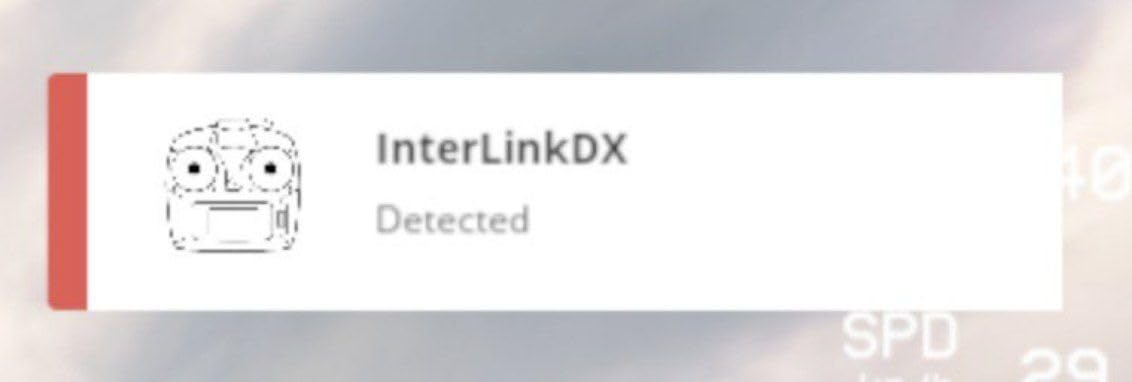
Build quality is adequate for simulator use, though some users note that the premium price point isn’t fully reflected in the materials. Despite this, the controller feels solid enough for regular simulator training and should hold up well under normal use. Compatibility extends to both Windows and Linux systems, providing flexibility for different computer setups.
Ideal For Beginners Without Transmitters
If you’re new to FPV flying and don’t yet own a dedicated radio transmitter, the Interlink DX provides a complete controller solution for simulator training. The familiar switch layout helps you develop good habits that will transfer to real transmitters when you’re ready to purchase one. This makes it an excellent investment for pilots committed to learning FPV flight properly.
Considerations Before Purchasing
The gimbals on the Interlink DX aren’t as refined as those on dedicated radio transmitters, particularly regarding stick tension customization. At $125, it represents a significant investment, and some pilots might prefer to put that money toward a real transmitter that can be used both in simulation and with actual aircraft. Consider your long-term plans when deciding between the InterLink DX and investing in a full transmitter system.
8. BETAFPV LiteRadio 2 SIM Drone Flight Simulator Controller
BETAFPV LiteRadio 2 SIM Drone Flight Simulator Controller for FPV Beginner Pilots Training, Support Most Systems Platforms like DRL/Uncrashed/VelociDrone/Phoenix RC/TryP/Aerofly RC 8 – Mode 2/Cyan
Triple-mode simulator access
Windows/macOS/Android compatible
Front-mounted USB-C port
Updateable firmware
Broad simulator compatibility
Pros
- Excellent value
- Broad simulator compatibility
- Pro-grade gimbal feel
- Plug and play operation
Cons
- Feels light and toy-like
- Small sticks can annoy
- Limited review sample
The BETAFPV LiteRadio 2 SIM delivers exceptional value as a budget-friendly simulator controller. I was impressed by the universal compatibility across all major FPV simulators including DRL, Uncrashed, VelociDrone, Phoenix RC, TryP, and Aerofly RC. The triple-mode access supports Windows, macOS, and Android platforms, making it one of the most versatile controllers available at this price point.
Despite the budget price, the gimbal quality feels surprisingly good. BETAFPV equipped the LiteRadio 2 SIM with a pro-grade gimbal that provides precise control input, essential for building accurate muscle memory during simulator practice. The front-mounted Type-C port eliminates cable strain during use, a thoughtful design detail that improves durability.
The controller works in multiple modes depending on your simulator. Joystick mode covers VelociDrone, UNCRASHED, DRL, DCL, Liftoff, TRYP FPV, and others, while Dongle mode supports Phoenix RC 6.0. This broad compatibility means you can experiment with different simulators without worrying about controller support.
Perfect Entry-Level Option
For pilots just starting their FPV journey, the LiteRadio 2 SIM offers an affordable entry point into simulator training. At under $40, it removes the cost barrier that might otherwise prevent new pilots from practicing effectively. The broad compatibility means you can try multiple simulators to find what works best for your learning style without needing additional controllers.
Understanding the Limitations
The lightweight construction gives the controller a somewhat toy-like feel, and the small stick size can become annoying during extended practice sessions. With only seven reviews at the time of writing, long-term durability information is limited. However, for the price, the LiteRadio 2 SIM delivers more than adequate functionality for effective simulator training.
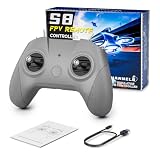
9. FLYDrone S8 Pro Drone Simulator Controller
FLYDrone S8 Pro FPV Simulator Controller for Windows PC, USB-C Drone Flight Simulator Joystick, 8-Channel Mode 2 RC Training Remote with Non-Centering Throttle for Liftoff/DRL/Uncrashed, Grey (Grey)
8-channel metal joystick
Non-centering throttle
USB Type-C connectivity
1:1 drone button layout
Broad simulator support
Pros
- High precision joystick
- Non-centering throttle for realism
- Easy to set up
- Good value for money
Cons
- NOT Mac compatible despite listing
- Calibration difficulties
- High failure rate
- Not ideal for manual flight
The FLYDrone S8 Pro aims to deliver an authentic FPV flight experience with an 8-channel metal joystick and non-centering throttle that replicates real drone flight tactile feedback. I found the high precision joystick minimized operational lag effectively, and the 1:1 real-drone button layout helps develop proper muscle memory for when you transition to actual FPV drones.
The non-centering throttle is a standout feature for realistic training. Unlike standard gaming controllers that return to center, the S8 Pro’s left stick stays where you leave it, just like a real FPV drone throttle. This matters significantly when learning throttle management, a skill that translates directly to real-world flying.
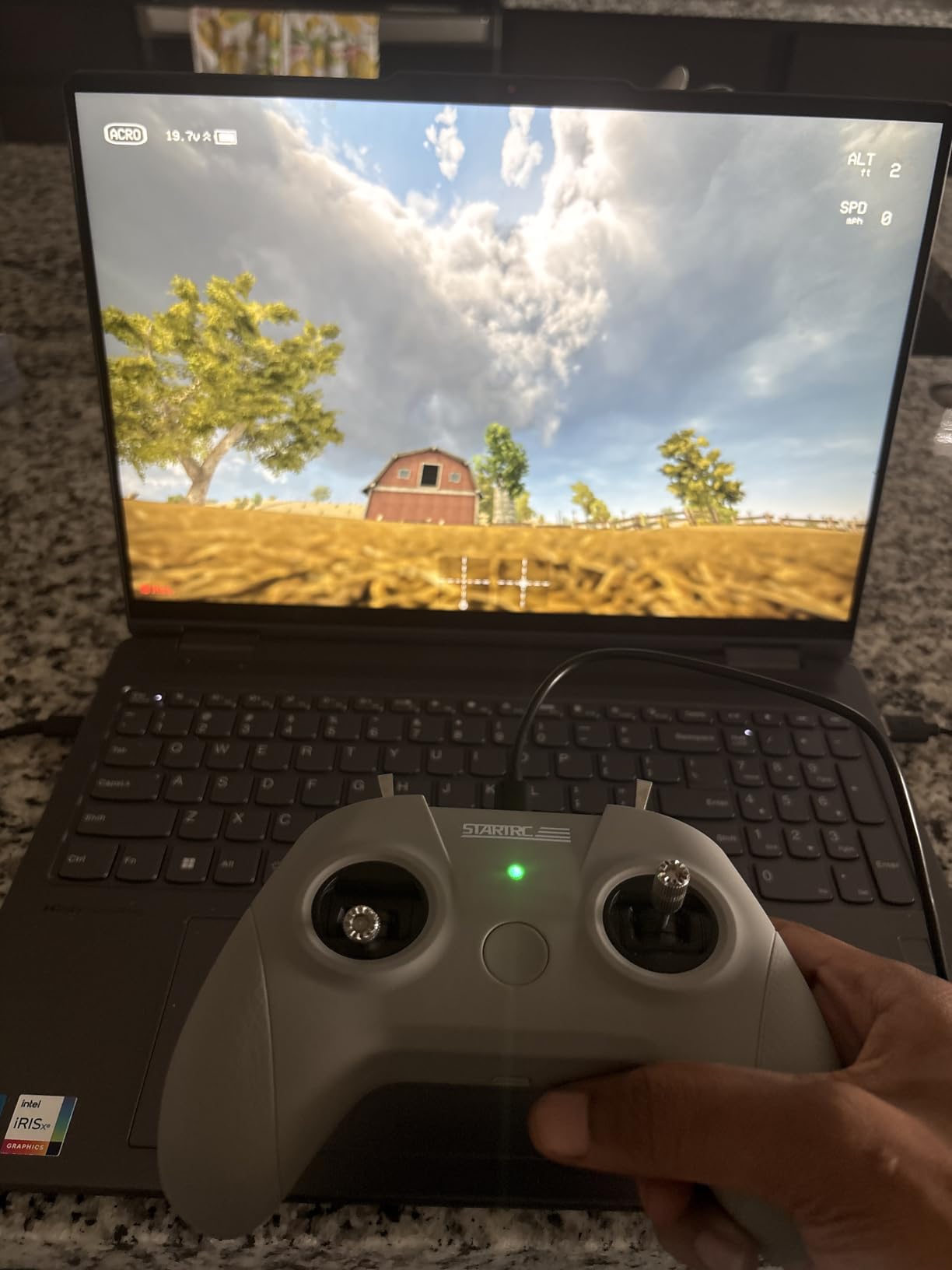
Simulator compatibility is impressive, covering Uncrashed, Liftoff, DCL, DRL, RealFlight Evolution, TRYP FPV, VelociDrone, and many others. The USB Type-C connection provides reliable power and data transmission without requiring an internal battery. Setup is generally straightforward with clear instructions provided.
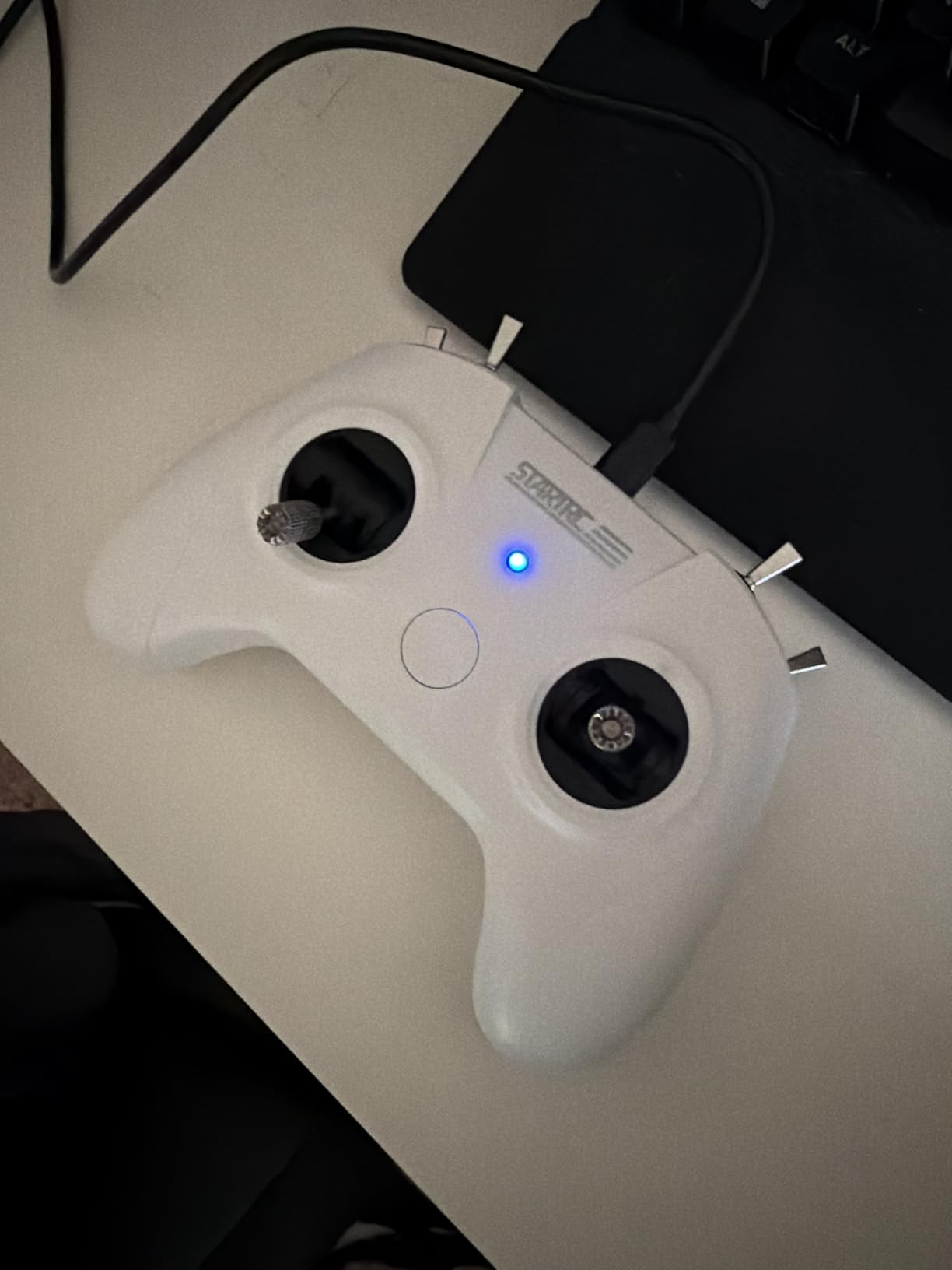
The ergonomic design includes a non-slip texture on the handle for secure grip during intense practice sessions. At 160 grams, the controller feels substantial without being heavy, and the compact 4.7 by 2 by 6-inch dimensions make it easy to store or transport.
Best For Windows-Based Simulator Training
If you’re using a Windows PC for simulator practice, the S8 Pro offers good value with realistic throttle response and broad simulator compatibility. The non-centering throttle makes it particularly effective for learning proper throttle management, a critical skill for smooth FPV flight.
Important Warnings
Multiple users confirm that the S8 Pro is NOT compatible with Mac computers despite product listings claiming otherwise. Calibration for manual flight mode is difficult, and the high 24% failure rate among reviews suggests quality control issues. The controller works better for GPS-assisted flight practice than pure manual acro mode training. Consider these factors carefully before purchasing.
10. Flysky SM100 USB RC Flight Simulator Adapter Cable
Flysky SM100 USB RC Airplane Drone Flight Simulator Adapter Cable 2.4G for FS-i6 FS-i10 FS-i6 FS-i4 FS-T6 FS-CT68 FS-T4B FS-GT3 TH9X GT2 Remote Controller Transmitter to Computer Simulator Software
4-8 Channel PPM output
Works with FlySky transmitters
Compatible with multiple sims
Windows 98 to 10 compatible
Simple plug and play
Pros
- Great quality cable
- Works flawlessly with FS-i6X
- Easy setup
- Good value for money
Cons
- May require driver download
- USB connector fitment issues
- Only works with PPM radios
The Flysky SM100 adapter cable provides an essential connection between FlySky transmitters and flight simulator software. I tested it with an FS-i6X transmitter and multiple simulators, and it worked flawlessly once properly configured. The 4-8 Channel Pulse Position Modulation (PPM) signal transfers your control inputs accurately to the simulator for responsive training sessions.
Compatibility extends beyond just FlySky radios. The SM100 works with any radio featuring PPM output through a trainer port, including Esky, Futaba, and JR transmitters. This versatility makes it a useful accessory even if you switch radio brands in the future. On the simulator side, compatibility includes Esky, Futaba, JR, DRL, Liftoff, X-Plane, VelociDrone, and FPV Freerider.
The cable construction feels durable with quality connectors at both ends. Setup is generally straightforward, though some users may need to download drivers if their computer doesn’t automatically recognize the device. Windows compatibility extends from Windows 98 through Windows 10, covering virtually any PC you might use for simulator training.
Ideal For FlySky Radio Owners
If you own a FlySky transmitter such as the FS-i6, FS-i10, FS-i6X, or FS-i4X, the SM100 is practically essential for simulator practice. At under $16, it’s one of the most affordable ways to connect your radio to computer-based simulators. The ability to use your actual transmitter for training dramatically increases the value of your practice sessions.
Setup Considerations
The USB connector may not insert fully into some computer sockets, which can be frustrating but doesn’t affect functionality. A small number of users reported lag and freezing issues, though most experience smooth performance. Ensure your radio has PPM output capability before purchasing, as the cable won’t work with radios that only output PWM signals.
For pilots building a budget FPV practice setup, check out best radio transmitters for FPV practice to learn more about compatible transmitter options.
FPV Simulator Buying Guide
Choosing the right FPV simulator involves more than just picking software. The controller you use matters significantly for skill development, and your computer’s capabilities determine which simulators will run smoothly. Understanding these factors helps you make an informed decision that maximizes your training effectiveness.
Software vs. Controller: What Do You Need First?
Simulator software and controllers serve different purposes in your training setup. Software provides the physics engine, aircraft models, and flying environments, while controllers translate your physical inputs into virtual flight. You can purchase these separately or as bundled packages, depending on your current equipment and budget.
Pilots who already own compatible radio transmitters can save money by purchasing software-only versions of simulators. The Spektrum WS2000 dongle or Flysky SM100 cable let you connect existing transmitters to your computer for realistic training. If you don’t own a transmitter yet, bundled packages like RealFlight Evolution with InterLink DX provide everything needed in one purchase.
System Requirements and Compatibility
Most FPV simulators require dedicated graphics cards for smooth performance. While basic simulators might run on integrated graphics, you’ll experience better frame rates and visual quality with a mid-range graphics card. Processor speed and RAM also affect performance, especially in complex environments with multiple aircraft.
Platform compatibility varies significantly between simulators. Windows is the most universally supported platform, with Mac compatibility being less common. Android support is growing but typically requires specific controller configurations. VR support adds another layer of complexity, requiring both compatible hardware and simulator features.
Physics Realism and Training Effectiveness
Not all simulators handle physics the same way. Some prioritize realistic propwash, drag, and momentum, while others feel more arcade-like for accessibility. The most realistic simulators help build skills that transfer directly to real flying, though they may be more challenging for beginners to master.
For pure skill development, physics realism matters more than graphics quality. A simulator with excellent physics but basic visuals will improve your real-world flying more effectively than a stunning simulator with floaty, unrealistic flight characteristics. Consider your primary training goals when evaluating simulator physics.
Sim-to-Real Skill Transfer
The ultimate goal of simulator practice is improving your real-world flying skills. This transfer works best when using a controller similar to your actual radio transmitter. Stick positions, switch layouts, and throttle response should match your real equipment as closely as possible.
Most pilots find that 20-30 hours of simulator practice provides solid foundation skills for basic flight. Advanced maneuvers like acro mode flying, racing lines, and freestyle tricks may require 50+ hours of dedicated practice before you’re ready to attempt them in real life. The key is consistent practice rather than marathon sessions.
FAQ
What is the best FPV simulator for beginners?
Liftoff is widely considered the best FPV simulator for beginners due to its excellent training program, gradual difficulty progression, and large community. The tutorial system guides new pilots through basic controls, orientation, and progressively more complex maneuvers. VelociDrone is another top choice for beginners transitioning to acro mode, with physics that closely match real-world FPV flying.
Which FPV simulator has the best physics?
VelociDrone consistently ranks as having the best physics among FPV simulators. It runs actual Betaflight firmware, providing the most realistic propwash, momentum, and handling characteristics. RealFlight Evolution also offers excellent physics for fixed-wing aircraft and helicopters, while Uncrashed provides good physics with superior graphics for freestyle practice.
Are FPV simulators worth it for learning to fly?
FPV simulators are absolutely worth the investment. They save hundreds of dollars in crash repairs while letting you practice safely without risk to people or property. Most pilots develop basic proficiency in 20-30 hours of simulator practice compared to months of trial and error with real aircraft. The muscle memory built in simulators transfers directly to real flying, dramatically accelerating your progression from beginner to confident pilot.
What controller should I use for FPV simulators?
For best results, use the same radio transmitter you fly with in real life. Connect it via USB using compatible dongles like the Spektrum WS2000 for Spektrum radios or the Flysky SM100 for FlySky transmitters. If you don’t own a transmitter yet, dedicated simulator controllers like the Spektrum InterLink DX or budget options like the BETAFPV LiteRadio 2 SIM provide good training experiences.
How much does a good FPV simulator cost?
Quality FPV simulators range from free basic options to $100 for premium software. Complete bundles with controllers cost $150-250. The real value comes in crash savings—most pilots spend $500-1000 on repairs during their first year of real flying, while simulator practice reduces this dramatically. Budget around $50-100 for a good simulator plus $40-120 for a compatible controller if you don’t already own a transmitter.
Conclusion
The best FPV simulators for practice in 2026 offer realistic training environments that build genuine skills without the risk and expense of crashing real aircraft. RealFlight Evolution with InterLink DX delivers the most comprehensive package with 100+ aircraft, VR support, and multiplayer options, making it our top recommendation for pilots wanting a complete solution. Budget-conscious pilots can achieve excellent results with the BETAFPV LiteRadio 2 SIM controller combined with affordable simulator software like Liftoff or VelociDrone.
Remember that the most effective training comes from consistent practice using a controller that matches your real-world equipment. Whether you choose a high-end bundled simulator or build your setup from individual components, regular simulator sessions will dramatically accelerate your FPV progression while saving you money on crash repairs. Start with 20-30 minutes of daily practice focusing on basic orientation and control, then gradually progress to more complex maneuvers as your muscle memory develops.