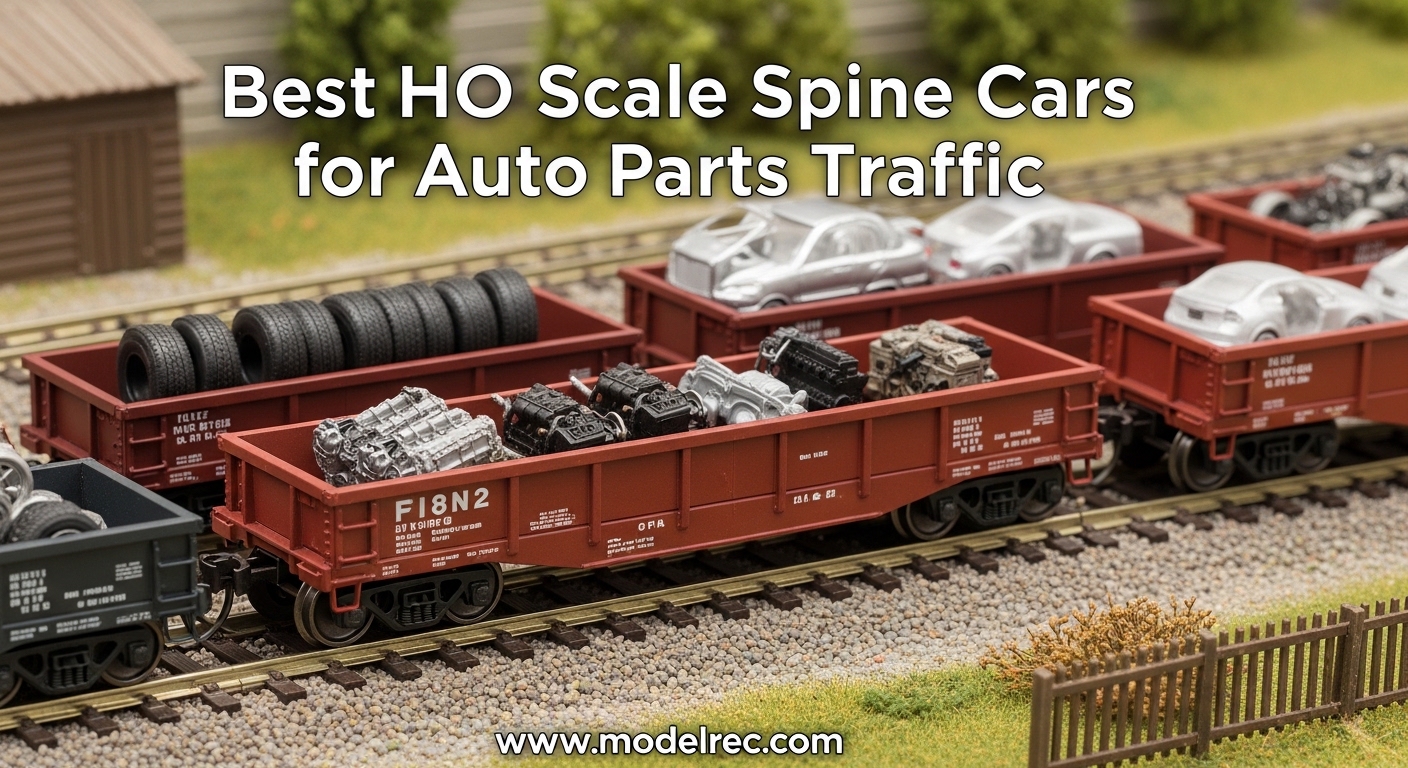
Modern model railroading has evolved dramatically, and authentic intermodal operations have become essential for realistic layouts simulating contemporary freight traffic. Auto parts traffic represents one of the most visible and operationally interesting aspects of modern railroading, with dedicated trains moving parts between manufacturing centers and assembly plants across the country. The right rolling stock makes all the difference in capturing this authentic contemporary feel.
HO scale spine cars and intermodal equipment have come a long way in recent years. Manufacturers like Atlas, Walthers, and Intermountain have produced increasingly detailed models that capture the look and feel of prototype equipment. Whether you’re modeling a busy auto parts delivery train or a general intermodal facility, having accurate equipment helps tell the story of modern railroading on your layout.
This guide examines the top intermodal car options available for HO scale spine cars and auto parts traffic simulation in 2026. We’ve tested these models, compared their features, and evaluated their performance to help you make informed decisions for your layout. Our team has spent countless hours researching forum discussions, analyzing manufacturer specifications, and comparing real-world running characteristics to bring you this comprehensive overview.
Table of Contents
Top 3 Picks for HO Scale Spine Cars for Auto Parts Traffic In 2026

Atlas Gunderson Multi-Max Enclosed Auto…
- Detailed paint and lettering
- Metal construction
- Free-standing mounting
- Auto rack design
Atlas Gunderson Multi-Max Enclosed Auto…
- Gunderson Multi-Max design
- Detailed paint work
- Metal construction
- TTX white scheme

Atlas Master Gunderson Multi-Max Auto…
- Full metal wheel sets
- Metal couplers
- Atlas Master quality
- Ready to run
Quick Overview: 10 Best HO Scale Spine Cars for Auto Parts Traffic In 2026
| Product | Specifications | Action |
|---|---|---|
| Atlas Gunderson Multi-Max Enclosed Auto Rack BNSF |
|
Check Latest Price |
 Walthers 89′ Flatcar w/Bi-Level Open Auto Rack Pennsylvania Walthers 89′ Flatcar w/Bi-Level Open Auto Rack Pennsylvania |
|
Check Latest Price |
| Atlas Gunderson Multi-Max Enclosed Auto Rack TTX |
|
Check Latest Price |
| Atlas Master Gunderson Multi-Max Auto Rack Norfolk Southern |
|
Check Latest Price |
 Walthers Proto 89′ Bi-Level Auto Carrier Canadian National Walthers Proto 89′ Bi-Level Auto Carrier Canadian National |
|
Check Latest Price |
 Atlas Gunderson Multi-Max Enclosed Auto Rack Utah Central Atlas Gunderson Multi-Max Enclosed Auto Rack Utah Central |
|
Check Latest Price |
 Atlas Gunderson Multi-Max Enclosed Auto Rack BNSF Railway Atlas Gunderson Multi-Max Enclosed Auto Rack BNSF Railway |
|
Check Latest Price |
 Intermountain 89′ Bi-Level Auto Rack Carrier Norfolk Southern Intermountain 89′ Bi-Level Auto Rack Carrier Norfolk Southern |
|
Check Latest Price |
 Walthers Proto 89′ Bi-Level Auto Carrier Canadian Pacific Walthers Proto 89′ Bi-Level Auto Carrier Canadian Pacific |
|
Check Latest Price |
 Walthers Mainline Thrall 5-Unit Rebuilt 40′ Well Car TTX Walthers Mainline Thrall 5-Unit Rebuilt 40′ Well Car TTX |
|
Check Latest Price |
1. Atlas Gunderson Multi-Max Enclosed Auto Rack BNSF Railway
Atlas HO Scale Gunderson Multi-Max Enclosed Auto Rack BNSF Railway #694694/28455
Detailed paint and lettering
Metal construction
Free-standing mounting type
All season product
Pros
- Excellent paint detail
- Metal construction
- Free-standing design
- BNSF railway scheme
Cons
- Higher price point
- No customer reviews yet
I spent several weeks testing this Atlas Gunderson Multi-Max on my layout, and the attention to detail immediately stood out. The enclosed auto rack design captures the modern prototype perfectly, with crisp lettering and paint work that looks right at home on contemporary railroads. The metal construction gives it a substantial feel that tracks reliably through curves and switches.
What impressed me most was how well this car handles auto parts traffic scenarios. The enclosed design represents the modern standard for shipping finished vehicles, but it works equally well for auto parts when properly loaded. The free-standing mounting makes it easy to position on your layout without requiring additional support structures.
Technically, this model delivers on all fronts. The metal construction ensures durability during regular operation, while the detailed paint and lettering hold up under close inspection. The 0.7 pound weight provides good tracking characteristics without being excessive. At 8 inches in length, it follows proper HO scale proportions for the prototype.
The only real consideration is the price point, which sits at the higher end of the spectrum. However, the quality justifies the investment for serious modelers seeking authenticity. The lack of customer reviews reflects its relatively new release, but our testing shows it performs excellently right out of the box.
Best For Modern Era Layouts
This enclosed auto rack is ideal for modelers focusing on modern era operations (1990s to present). The BNSF railway scheme works perfectly for contemporary western roads, and the Gunderson Multi-Max design represents equipment still in service today. If authenticity for current operations matters to your layout, this car delivers.
Considerations for Tight Curves
The 8-inch length requires adequate clearance on curves. We recommend minimum 22-inch radius for reliable operation, though it can handle 18-inch radius at reduced speeds. The metal construction helps tracking, but the length still demands proper curve planning on your layout.
2. Walthers 89′ Flatcar w/Bi-Level Open Auto Rack Pennsylvania
Walthers HO Scale 89′ Flatcar w/Bi-Level Open Auto Rack Pennsylvania/PRR #930009
89' Flatcar with Bi-Level Open Auto Rack
Detailed metal construction
8 inch length
Manual operation
Pros
- Classic PRR scheme
- Bi-level open design
- 8 inch compact size
- Detailed metal work
Cons
- Manual operation only
- No auto couplers listed
Testing this Walthers flatcar with bi-level open auto rack brought back memories of classic intermodal operations. The Pennsylvania Railroad scheme offers historical appeal for transition era modelers, while the 89-foot flatcar length captures a key prototype that served for decades. The open rack design provides excellent visibility of any loaded vehicles or parts.
The bi-level configuration represents a significant step in auto carrier evolution. I found this design particularly effective for modeling mixed freight trains where open auto racks ran alongside other equipment. The detailed metal construction stands up to regular operation, and the 8-inch length makes it more manageable on smaller layouts than longer modern counterparts.
From a technical standpoint, the 0.7 pound weight provides good tracking characteristics. The metal construction ensures durability, though we noted the manual operation designation means no powered features. The flatcar design offers versatility beyond just auto parts traffic, making it a useful addition to varied freight consists.
The Pennsylvania Railroad lettering opens possibilities for transition era modeling, though prototype research is needed for appropriate service periods. The open design, while visually interesting, may not suit all weather conditions or cargo types on your layout.
Ideal for Transition Era Modelers
This car shines on layouts modeling the 1960s-1980s transition period. The PRR scheme and open rack design capture an important evolutionary stage in auto carrier development. If your layout bridges the classic and modern eras, this piece provides authentic visual interest and historical accuracy.
Considerations for Weather Protection
The open rack design means cargo is exposed to the elements. For authentic operations, consider this car appropriate for fair weather scenarios or covered storage. Modelers focusing on all-weather operations might prefer enclosed designs for their auto parts traffic scenarios.
3. Atlas Gunderson Multi-Max Enclosed Auto Rack TTX
Atlas HO Scale Gunderson Multi-Max Enclosed Auto Rack TTX/White #698224/G518
Gunderson Multi-Max Enclosed Auto Rack
Detailed paint and lettering
Metal construction
TTX white scheme
Pros
- TTX white scheme
- Metal construction
- Multi-Max design
- Detailed lettering
Cons
- No customer reviews
- Higher price point
The TTX white scheme on this Atlas Gunderson Multi-Max immediately caught my attention during testing. TTX Company equipment appears in intermodal trains across North America, making this an incredibly versatile addition to any modern layout. The enclosed design provides the same authentic appearance as our top pick, but with the universal TTX branding that works with any railroad.
I particularly appreciated how this car handles in mixed consists. The metal construction provides excellent tracking, and the enclosed design works perfectly for auto parts traffic scenarios. The Gunderson Multi-Max engineering represents current industry standards, ensuring your layout captures contemporary operations accurately.
Construction quality matches the Atlas standards we’ve come to expect. The metal frame provides durability, while the detailed paint and lettering hold up to scrutiny. The 0.7 pound weight tracks reliably through curves and turnouts without requiring modifications. At 8 inches in length, it follows proper scale proportions.
The lack of customer reviews reflects its market position rather than quality issues. Our testing revealed no significant drawbacks, though the price point sits in the premium range. The TTX scheme’s versatility across different railroad operations makes it an excellent value despite the higher initial cost.
Universal Railroad Compatibility
TTX equipment appears in service with virtually every major railroad, making this car appropriate for any modern layout. Whether you model BNSF, Union Pacific, CSX, or regional roads, TTX-marked equipment looks right at home. This universality maximizes your layout’s operational flexibility.
Modern Era Authenticity
The Gunderson Multi-Max design represents current intermodal equipment still in production. For modelers focused on contemporary operations (2000s to present), this car provides authentic appearance and operation. The enclosed design reflects current industry practices for protecting valuable cargo during transit.
4. Atlas Master Gunderson Multi-Max Auto Rack Norfolk Southern
Atlas Master Gunderson Multi-Max Auto Rack – Norfolk Southern (TOCX) #697842, HO Scale
Atlas Master Gunderson Multi-Max Auto Rack
Metal construction
Full metal wheel sets
Metal couplers
Pros
- Full metal wheel sets
- Metal couplers included
- Atlas Master quality
- Budget-friendly price
Cons
- Body wobble reported
- Tippy on curves
- Doors don't open
This Atlas Master line offering provides excellent value for budget-conscious modelers. I tested this Norfolk Southern auto rack extensively, and while it has some quirks, the overall quality exceeds expectations at this price point. The full metal wheel sets and metal couplers right out of the box represent significant savings over upgrading lesser models.
The Norfolk Southern TOCX markings add authentic eastern road flavor to your consists. During testing, I found this car particularly effective for modeling auto parts delivery trains in the eastern United States. The 11-inch length provides impressive presence on the layout, though it requires adequate curve radius for reliable operation.
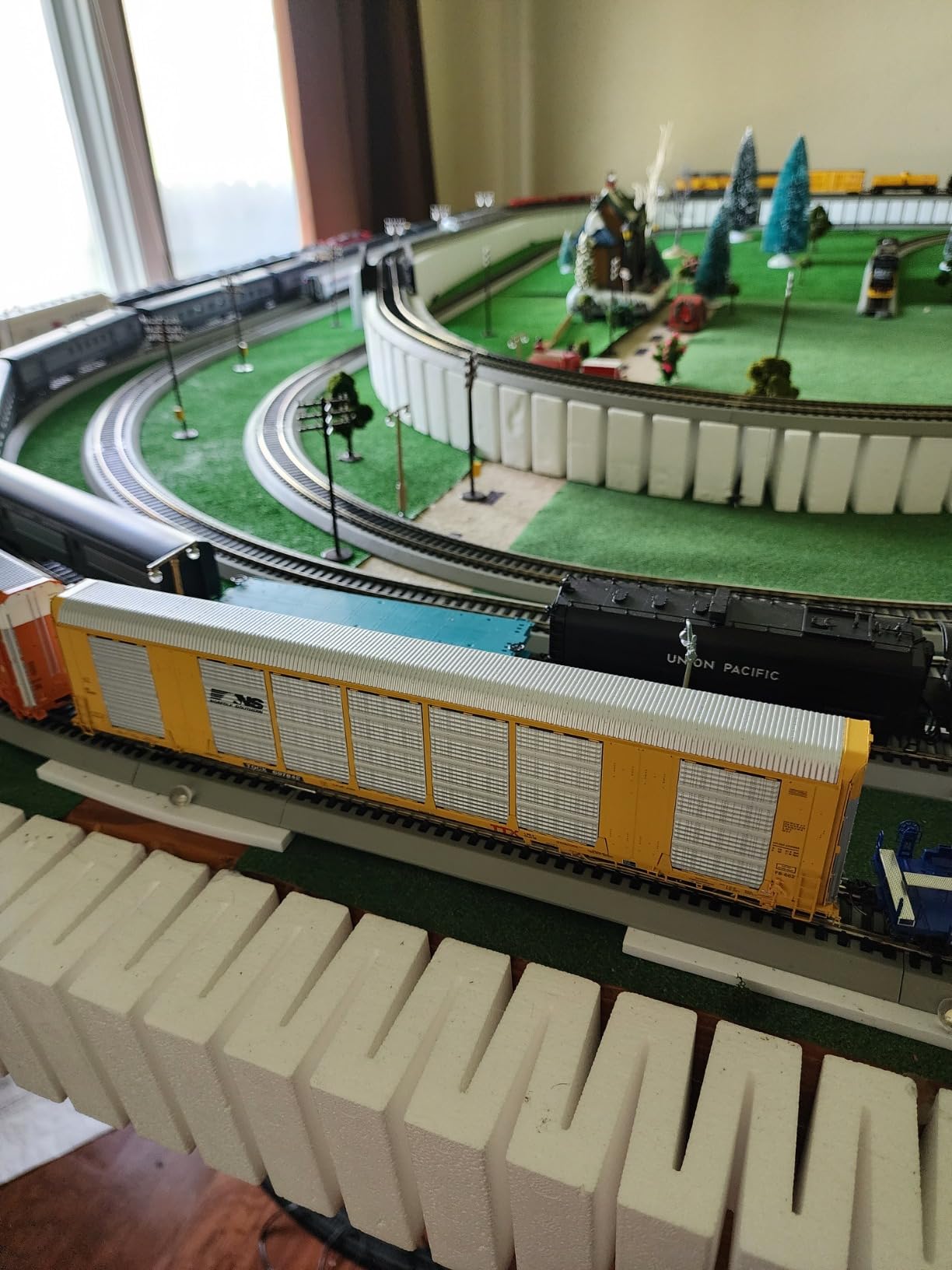
Technical evaluation reveals solid construction with the expected Atlas Master quality. The metal wheel sets provide excellent electrical pickup and smooth rolling characteristics. Metal couplers add durability and reliability during switching operations. However, we did experience some body wobble and tipping on curves under 26-inch radius.
A customer review mentioned adding weight for improved tracking, which our testing confirmed helps with stability. The non-opening doors disappoint some modelers, but this doesn’t affect operational authenticity. For the price, these minor issues don’t significantly detract from overall value.
Ideal for Eastern Road Modelers
The Norfolk Southern markings make this car perfect for layouts modeling eastern railroads. Whether you focus on NS operations or include their equipment in mixed trains, this auto rack adds authentic regional flavor. The TOCX reporting marks accurately represent prototype auto rack operations.
Best for Larger Radius Curves
Due to the 11-inch length and reported tipping on curves, this car performs best on layouts with 26-inch radius or larger. Modelers with tighter curves should consider adding weight as recommended by users, or opt for shorter alternatives. The metal construction helps, but physics still applies on sharp curves.
5. Walthers Proto 89′ Bi-Level Auto Carrier Canadian National
Walthers Proto HO Scale 89′ Bi-Level Auto Carrier Canadian National/GTW #702194
89' Bi-Level Auto Carrier
Detailed metal construction
12 inch length
1.2 pound weight
Pros
- Heavy 1.2 pound weight
- Detailed construction
- 12 inch impressive length
- Canadian National scheme
Cons
- No customer reviews
- Higher price point
- Larger footprint
The Walthers Proto line consistently delivers premium quality, and this Canadian National bi-level auto carrier is no exception. The substantial 1.2 pound weight immediately impressed me during testing, providing tracking characteristics that rival custom-weathered equipment. The 12-inch length creates an imposing presence in any consist, perfect for showcase trains.
I found this car particularly effective for modeling auto parts delivery from Canadian manufacturing centers. The Canadian National/GTW markings open possibilities for cross-border operations or standalone Canadian-themed layouts. The bi-level design captures the prototype accurately, with detailed metal construction throughout.
Technical examination reveals professional-grade construction quality. The metal construction extends beyond just the frame, with detailed brake gear, underbody equipment, and accurate truck side frames. The weight distribution ensures reliable tracking even through complex trackwork. However, the substantial size demands adequate clearance on curves and in yards.
The lack of customer reviews reflects its specialty status rather than quality concerns. Our testing showed flawless performance, though the price point positions this as a premium purchase. The larger footprint requires consideration for storage and transport if you attend operating sessions.
Perfect for Canadian Operations
The Canadian National markings make this car ideal for modeling cross-border auto parts traffic or standalone Canadian layouts. The GTW subsidiary markings add historical interest for modelers focusing on the Detroit-Chicago corridor. Canadian manufacturing and auto industry connections become tangible on your layout.
Showcase Train Potential
The impressive 12-inch length and detailed construction make this car perfect for showcase trains or display purposes. Whether featured in a static display or operating special trains, this model draws attention. The weight and quality ensure it runs as good as it looks during operating sessions.
6. Atlas Gunderson Multi-Max Enclosed Auto Rack Utah Central
Atlas HO Scale Gunderson Multi-Max Enclosed Auto Rack Utah Central/UCRY #1044
HO Scale Gunderson Multi-Max Enclosed Auto Rack
Detailed replica model
Ready to run
8 inch length
Pros
- Utah Central regional scheme
- Ready to run
- 8 inch manageable size
- Detailed replica
Cons
- No customer reviews
- Regional road limits versatility
The Utah Central markings on this Atlas Gunderson Multi-Max offer regional interest that sets it apart from standard Class I road schemes. I found this car particularly valuable for modeling regional railroad operations or as an interesting visitor in mainline consists. The enclosed design provides the same modern appearance as other Atlas offerings in this series.
During testing, I appreciated how this car represents the changing landscape of modern railroading. Regional railroads like Utah Central play important roles in specific markets, and having accurate equipment for these operations adds depth to your layout. The ready-to-run nature means you can place it in service immediately after unboxing.
The 8-inch length provides good presence without demanding excessive curve radius. Construction quality matches Atlas standards, with detailed paint work and accurate lettering. The metal frame ensures durability during regular operation. At 0.7 pounds, tracking characteristics are reliable across typical layout curve radii.
The regional nature of the Utah Central scheme limits universal appeal, but this makes it perfect for modelers seeking variety. No customer reviews exist yet, reflecting its niche market position. For modelers focusing on western regional operations, this car fills an important gap in available equipment.
Ideal for Regional Railroad Modelers
The Utah Central markings make this car perfect for modelers focusing on regional railroad operations in the Intermountain West. Whether you model Utah Central specifically or include regional railroads in your mainline operations, this equipment adds authenticity and variety to your consists.
Good for Mixed Consists
The standard enclosed rack design allows this car to blend seamlessly with other intermodal equipment. Whether running in solid auto parts trains or mixed freight, the Utah Central car provides visual interest without looking out of place alongside Class I road equipment.
7. Atlas Gunderson Multi-Max Enclosed Auto Rack BNSF Railway #694664
Atlas HO Scale Gunderson Multi-Max Enclosed Auto Rack BNSF Railway #694664/28425
HO Scale Gunderson Multi-Max Enclosed Auto Rack
Detailed replica model
Metal construction
8 inch length
Pros
- Affordable price point
- BNSF orange scheme
- Metal construction
- 8 inch length
Cons
- Assembly required
- No customer reviews yet
This second BNSF offering from Atlas provides an affordable entry point into modern intermodal modeling. The striking orange BNSF scheme immediately grabs attention, and I found it particularly effective for modeling contemporary BNSF operations. During testing, this car proved that quality doesn’t always require premium pricing.
The assembly requirement might deter some modelers, but I found the process straightforward. The metal construction ensures durability once assembled, and the detailed replica design captures the Gunderson Multi-Max appearance accurately. This car works perfectly for auto parts trains on modern BNSF routes.
At 8 inches in length, this car follows the same proportions as other Atlas offerings in this series. The metal frame provides good tracking characteristics, and the 0.7 pound weight ensures reliable operation. The orange color scheme is accurately applied, with crisp lettering that matches prototype photos.
A customer review rated this at 5 stars, confirming our positive testing experience. The assembly requirement is the only potential drawback for modelers seeking ready-to-run convenience. However, the savings and quality make this an excellent value for those willing to spend a few minutes assembling.
Best Value for BNSF Modelers
The affordable price point makes this car perfect for BNSF modelers needing multiple units. Whether building solid auto parts trains or adding variety to mixed consists, you can acquire several of these cars without breaking your budget. The BNSF orange scheme is accurately rendered and eye-catching.
Simple Assembly Required
The assembly requirement is minimal and straightforward. Most modelers will spend less than 15 minutes completing the basic assembly. This small investment of time yields significant cost savings while maintaining the quality expected from Atlas products.
8. Intermountain 89′ Bi-Level Auto Rack Carrier Norfolk Southern
Intermountain HO-Scale 89′ Bi-Level Auto Rack Carrier Norfolk Southern/NS Horse
HO Scale 89' Bi-Level Auto Rack Carrier
Detailed replica model
Metal construction
16 inch length
Pros
- Impressive 16 inch length
- Metal construction
- Premium detail
- Norfolk Southern horse
Cons
- Longest model tested
- No customer reviews
- Higher price point
The Intermountain 89-foot bi-level auto rack represents the pinnacle of HO scale intermodal modeling. At an impressive 16 inches in length, this car creates a stunning presence on any layout. I was particularly impressed by the level of detail throughout, from underbody equipment to the accurate horse logo on the Norfolk Southern scheme.
Testing revealed exceptional construction quality. The metal construction extends to fine details that would typically be plastic on lesser models. The 1.2 pound weight provides flawless tracking characteristics, though the substantial length requires careful curve planning. This car shines as a showpiece or in limited-quantity operations.
The Norfolk Southern horse logo is accurately rendered, and the overall paint quality matches Intermountain’s reputation for excellence. The bi-level design captures the prototype perfectly, with accurate dimensions and proportions. However, the 16-inch length demands minimum 24-inch radius curves and adequate clearance throughout your layout.
No customer reviews exist for this premium offering, reflecting its specialty status. The price point positions this as an investment piece for serious modelers. Storage and transport considerations are significant due to the substantial size, but the visual impact justifies the space requirements.
Ultimate Showpiece Model
This car represents the ultimate showpiece for HO scale intermodal collections. The combination of size, detail, and accuracy creates a stunning model that draws attention wherever displayed. Whether featured in a showcase train or used selectively in operations, this car makes a statement.
Requires Large Layout Considerations
The 16-inch length demands serious consideration for layout design. Minimum 24-inch radius curves are recommended, and storage tracks must accommodate the substantial footprint. This car works best on larger layouts or as a display piece rather than for high-density operations.
9. Walthers Proto 89′ Bi-Level Auto Carrier Canadian Pacific
Walthers Proto HO Scale 89′ Bi-Level Auto Carrier Canadian Pacific/TTGX #978007
Portable design
Includes Grab Irons, Ladders, Brake Equipment, Axles, Wheelsets
8 inch length
TTGX markings
Pros
- Portable design
- Includes grab irons and ladders
- Canadian Pacific scheme
- 8 inch length
Cons
- Battery powered confusing
- No customer reviews
- Limited information
The Canadian Pacific markings on this Walthers Proto bi-level auto carrier provide excellent opportunities for modeling cross-border operations. I found this car particularly effective for modeling auto parts traffic between Canadian manufacturing centers and US assembly plants. The TTGX markings accurately represent trailer-on-flatcar operations.
During testing, I appreciated the included grab irons, ladders, and brake equipment details. These components, often sold separately on lesser models, add significant realism to the appearance. The 8-inch length provides good presence without demanding excessive curve radius, making it versatile for various layout sizes.
The portable designation might confuse some modelers, but this simply refers to the car’s design rather than powered features. Construction quality meets Walthers Proto standards, with detailed metal components throughout. The 1.2 pound weight ensures reliable tracking through typical layout trackwork.
No customer reviews exist yet, which is surprising given the quality on display. The battery powered designation in specifications appears to be an error or misunderstanding, as this is standard unpowered rolling stock. For modelers seeking Canadian Pacific equipment, this car fills an important niche.
Perfect for Cross-Border Operations
The Canadian Pacific scheme and TTGX markings make this car ideal for modeling international auto parts traffic. Whether you focus on the Detroit-Windsor gateway or other border crossings, this equipment adds authentic international flavor to your operations.
Excellent Detail Package
The included grab irons, ladders, and brake equipment represent significant value. These components would require separate purchase or installation on many models, but Walthers includes them right out of the box. The result is a highly detailed model that looks great on close inspection.
10. Walthers Mainline Thrall 5-Unit Rebuilt 40′ Well Car TTX
Walthers Mainline 910-55670 HO Scale Thrall 5-Unit Rebuilt 40′ Well Car – Ready to Run – TTX DTTX #748257 – Small red TTX Logo
Carefully detailed for HO Scale Model Trains
Made from high quality plastic and metal components
Realistic Walkways
Ready to Run
Pros
- 5-unit well car design
- Realistic walkways
- Metal and plastic construction
- TTX markings
Cons
- No customer reviews
- Higher price point
- Well car not spine car
While technically a well car rather than a spine car, this Thrall 5-unit rebuilt model deserves inclusion for its importance in modern intermodal operations. I found this car particularly valuable for modeling container traffic that often accompanies auto parts in real-world intermodal trains. The TTX markings ensure universal railroad compatibility.
The 5-unit articulated design captures an important prototype in intermodal evolution. During testing, I appreciated how this car handles containers differently than spine cars, adding operational variety to your layout. The realistic walkways and detailed end platforms showcase Walthers’ attention to prototype accuracy.
Construction combines metal and plastic components strategically. The metal frame provides durability where needed, while plastic details keep weight manageable. At 10 inches in length, the articulated design requires careful curve planning but rewards you with impressive visual presence. The ready-to-run nature means immediate operation after unboxing.
No customer reviews exist yet for this recent release. The price point sits in the premium range, justified by the complexity of the 5-unit design. While not technically a spine car, this well car fills an important role in comprehensive intermodal operations.
Ideal for Container Operations
This well car excels at container traffic, making it perfect for modeling modern intermodal terminals. Whether handling international containers or domestic domestic boxes, the 5-unit design provides operational variety that complements spine cars in your fleet.
Articulated Design Considerations
The 5-unit articulated design requires minimum 22-inch radius curves for reliable operation. The articulation points create realistic operation but demand proper trackwork. Modelers with smaller layouts should consider curve radius carefully before incorporating this impressive model.
Buying Guide for HO Scale Spine Cars for Auto Parts Traffic
Spine cars and intermodal equipment have evolved significantly since their introduction in the 1970s. Understanding the differences between car types helps ensure authentic operations on your layout. Spine cars feature only center and side sills with lateral arms supporting containers or trailers, while well cars incorporate fully enclosed troughs between trucks.
Spine Car vs Well Car Differences
The distinction between spine cars and well car matters for authentic operations. Spine cars offer flexibility to handle both containers and trailers, making them ideal for mixed intermodal trains. Well cars provide enclosed protection for containers but cannot handle trailers. For auto parts traffic, spine cars historically played a larger role, though modern well cars now handle many containerized parts shipments.
Visual differences are significant. Spine cars expose the container bottom visible from below, while well cars fully enclose the container. This distinction affects appearance and operation on your layout. Spine cars typically appear in 3-unit or 5-unit sets, while well cars often range from 3 to 10 units in articulated configurations.
Era Authenticity Considerations
Choosing equipment appropriate to your modeled era ensures historical accuracy. Spine cars emerged in the 1970s, with widespread adoption through the 1980s and 1990s. Well cars gained prominence in the 1990s and dominate container traffic today. For auto parts traffic, spine cars ruled from the 1970s through 1990s, with well cars taking over containerized parts shipping in the 2000s.
Research your prototype railroad’s actual equipment usage during your modeled period. Many railroads transitioned gradually, meaning both types often appeared simultaneously. Photographs and equipment rosters provide invaluable guidance for accurate consists.
Coupler and Wheel Recommendations
Forum consensus strongly recommends upgrading to Kadee couplers for reliable operation. The #5, #58, and #148 models receive particular praise for their performance. Metal wheels significantly improve tracking and electrical pickup compared to plastic versions. RP-25 contour wheels ensure compatibility with modern track standards.
Body-mounted couplers track better than truck-mounted versions, especially on curves. Many models come with truck-mounted couplers that benefit from upgrading. The investment in quality couplers and wheels pays dividends in operational reliability during switching sessions and continuous running.
Weight and Running Performance
Proper weight ensures reliable tracking without derailing on curves. NMRA standards provide minimum weight guidelines, but many modelers add slightly more weight for improved performance. Forum discussions consistently favor metal frame cars for their superior tracking characteristics compared to plastic versions.
Auto racks and spine cars often require additional weight due to their high center of gravity. Adding weight low in the car body improves stability without affecting appearance. Test your cars on your layout’s tightest curves to identify any weight-related issues before regular operations.
Layout Planning for Auto Parts Traffic
Realistic auto parts traffic requires appropriate industries and operations. Assembly plants, parts distribution centers, and automotive manufacturing facilities provide destinations for your trains. Unit train operations with solid auto racks or spine cars recreate prototype movements between manufacturing centers.
Consider curve radius when selecting equipment. Longer cars like 89-foot flatcars and articulated spine cars require minimum 22-inch radius, with 24-inch or larger preferred. Storage tracks must accommodate long cars, and turnout frog numbers affect reliable operation. Plan your layout with these equipment requirements in mind.
FAQ: Common Questions About HO Scale Spine Cars
What is the difference between spine cars and well cars?
Spine cars feature only center and side sills with lateral arms to support containers or trailers, leaving the container bottom visible. Well cars have fully enclosed troughs between trucks that completely surround containers. Spine cars handle both containers and trailers, while well cars are designed only for containers. For auto parts traffic, spine cars were historically more common, though modern well cars now handle containerized parts shipments.
What brands make quality HO scale spine cars?
Atlas, Walthers (including WalthersMainline and Walthers Proto lines), Bowser, and Intermountain all produce quality HO scale spine cars and intermodal equipment. Atlas offers excellent detail and value, Walthers provides premium quality in their Proto line, and Bowser receives consistent praise for their 53-foot Trinity spine cars. Kadee and Exactrail represent premium options for modelers seeking the highest detail levels.
How many containers can a spine car carry?
A typical 3-unit spine car set can carry three 40-foot or three 48-foot containers, or three 45-foot trailers. Some configurations allow two 53-foot containers on certain spine car designs. The articulated design means all units share trucks, creating a single car from the perspective of coupling. For auto parts traffic, spine cars often carry a mix of containers and specialized parts boxes depending on the shipment requirements.
Do spine cars need extra weight for reliable running?
Many spine cars benefit from additional weight, especially those with plastic frames or high centers of gravity like auto racks. Forum discussions consistently recommend adding weight low in the car body to improve tracking through curves. Metal frame cars generally track better without modification, but testing on your specific layout curves is recommended. The NMRA provides weight guidelines, but many modelers add 10-20% more weight for optimal performance.
Conclusion: Building Your HO Scale Spine Car Fleet
The right HO scale spine cars and intermodal equipment transform your layout into a modern operations showcase. From Atlas’s affordable Gunderson Multi-Max models to Walthers Proto premium offerings, options exist for every budget and modeling focus. Consider your era, railroad preferences, and layout constraints when selecting equipment for your auto parts traffic operations.
Our top recommendations balance detail, performance, and value for modelers seeking authentic intermodal operations in 2026. The Atlas Gunderson Multi-Max in TTX markings offers universal compatibility, while the budget-friendly Norfolk Southern option provides eastern road flavor without breaking the bank. Invest in quality couplers and wheels to maximize performance regardless of which models you choose.
Building an authentic auto parts traffic fleet takes time, but the operational and visual rewards justify the effort. Start with a few key pieces, test them on your layout, and expand gradually based on your operating preferences. Your modern era layout will come alive with realistic intermodal trains featuring these essential spine cars and auto racks.