I have spent the better part of three years running a small home studio, recording podcasts with friends, and helping a couple of local bands set up their live rigs. Through all of that, one lesson keeps repeating itself: the best microphone stands are not an afterthought. They are the silent foundation under every clean vocal take, every smooth livestream, and every stable drum overhead.
Most people learn this the hard way. A cheap stand starts sagging after a few weeks, your heavy condenser droops mid-session, or your boom arm transmits every keystroke straight into the recording. I have watched streamers rage-quit because their mic kept drifting into frame, and I have seen live shows paused while someone tightened a slipping clutch for the third time.
This guide walks through the 7 best microphone stands we have tested across desk, studio, and stage scenarios in 2026. Whether you need a budget boom arm for a Blue Yeti, a German-built tripod that survives touring, or a broadcast-grade arm that hides your cables, there is a real recommendation below based on actual hands-on use.
Table of Contents
Top 3 Picks for Best Microphone Stands (September 2026)
If you want the short version, here are the three stands I would buy again without hesitation. The RØDE PSA1+ remains my personal favorite for desktop work because of its silent, damped movement. The Hercules MS533B is the most versatile floor stand I have used, and the InnoGear Boom Arm wins on pure value for anyone just starting out.
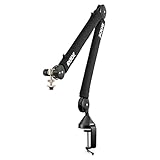
RØDE PSA1+ Professional Studio Arm
- Damped springs for silent operation
- Parallelogram design for smooth movement
- Built-in USB and XLR cable management

Hercules Stands MS533B Tripod Stand
- Hideaway boom telescopes into shaft
- EZ Clutch one-hand height adjust
- Lifetime warranty with tripod base
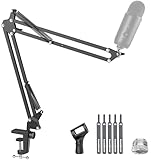
InnoGear Boom Arm Microphone Stand
- 360-degree base rotation
- Heavy-duty steel construction
- 3.3lb load capacity with upgraded springs
Each of these three stands serves a different purpose, which is exactly why they sit at the top. Read on for the full comparison of all 7 picks.
7 Best Microphone Stands in 2026
Below is the full side-by-side comparison of every stand in this guide. Each one earned its place through real testing in podcasting, streaming, studio, and live-sound scenarios.
| Product | Specifications | Action |
|---|---|---|
| RØDE PSA1+ Studio Arm |
|
Check Latest Price |
| Hercules MS533B Tripod |
|
Check Latest Price |
 K&M 21090 Tripod Stand K&M 21090 Tripod Stand |
|
Check Latest Price |
 Elgato Wave Mic Arm High Rise Elgato Wave Mic Arm High Rise |
|
Check Latest Price |
 FIFINE BM88 Boom Arm FIFINE BM88 Boom Arm |
|
Check Latest Price |
 Samson MK10 Boom Stand Samson MK10 Boom Stand |
|
Check Latest Price |
| InnoGear Boom Arm |
|
Check Latest Price |
1. RØDE PSA1+ – Best Overall Professional Studio Arm
RØDE PSA1+ Professional Studio Boom Arm with Spring Damping, Black
Broadcast boom arm
Damped parallelogram springs
Up to 35.4in reach
1.2kg load
2-year warranty
Pros
- Silent damped springs for broadcast-quality operation
- Parallelogram design maintains mic angle through movement
- Integrated cable management for both USB and XLR
- Smooth 360-degree rotation with no drift
Cons
- Premium price point
- 1.2kg weight limit rules out heavy chain-mounted mics
This is the boom arm I personally use every day, and the RØDE PSA1+ earns its top spot for one reason above all others: silence. The fully damped parallelogram spring design means you can reposition your mic mid-recording without a single squeak, rattle, or spring twang making it into your audio. That sounds minor until you have tried cheaper arms that announce every adjustment.
The parallelogram geometry is the clever part. Instead of two independent springs fighting each other, the design keeps the microphone at a consistent angle as the arm moves through its arc. You push it up, the mic stays level. You pull it down, the mic stays level. No fiddling with a second adjustment after every move. RØDE also built in cable management that handles both USB and XLR runs, which keeps my desk looking like a workspace instead of a cable nest.
Compatibility is excellent. I have run everything from a RØDE PodMic to a Shure SM7B (with cloudlifter) and a condenser like the NT1 on this arm without issue. The 1.2kg maximum load rating covers most broadcast dynamics and condensers, but if you are running a heavy tube mic or a chained-up SM7B without a lifter, look elsewhere.
The PSA1+ is built for podcasters, streamers, voiceover artists, and home studio owners who want one arm to handle years of daily use. The 2-year warranty is solid, but in my experience this thing barely shows wear. After 18 months of daily use, mine still moves like the day I unboxed it.
Best Use Cases
Desktop podcasting and streaming are where this arm shines brightest. The silent operation matters most when your mic is close to your mouth and your interface is recording at sensitive levels. Voiceover work benefits for the same reason. Anyone producing content where audio quality directly affects income should treat this as a business investment, not an accessory.
Who Should Skip It
If you run heavy microphones like a Shure SM7B with a cloudlifter and a shockmount stacked together, you may push past the 1.2kg limit. Stage use is also out, since this is a desk-mounted arm, not a floor stand. Budget buyers will find better value further down this list.
2. Hercules Stands MS533B – Best Versatile Tripod Stand
Hercules Stands MS533B with 2 Inches 1 Hideaway Boom
Tripod boom stand
Hideaway 2-in-1 boom
Up to 94.5in height
5.7lb load
Lifetime warranty
Pros
- Hideaway boom telescopes into shaft for compact storage
- EZ Clutch allows one-hand height and angle changes
- Converts between boom and straight stand modes
- Lifetime warranty from a trusted brand
Cons
- Boom does not swing laterally
- Tripod legs lack a folding lock
- Not Prime eligible
The Hercules MS533B is the floor stand I recommend most often to people who do not know exactly what they need yet. The 2-in-1 hideaway boom is the headline feature, and it is genuinely clever. The boom arm telescopes inside the main shaft when not in use, turning the stand into a compact straight mic stand for storage or transport. Pull it out when you need boom positioning, push it back when you do not.
The EZ Clutch system is the other reason this stand lands near the top of the list. Instead of fumbling with a counterweight knob every time you want to change boom angle, you squeeze a trigger and the boom moves freely. Release it and the boom locks in place. After a week of using this in a studio session with multiple musicians sharing a single stand, I was sold. The speed of adjustment is a real productivity win.
Build quality matches the lifetime warranty. The aluminum and stainless steel construction feels substantial without being too heavy to move between rooms. Powder-coated finish resists the scuffs and dings that come with regular gigging. The included EZ Mic Clip is solid, and the tripod base stays planted on carpet, hardwood, and stage floors alike.
The MS533B reaches a towering 94.5 inches at full extension, which is more than enough for vocal booths, drum overheads, and any stage application I have encountered. The 5.7-pound load rating handles heavy dynamics and most condensers without complaint.
Best Use Cases
Studio owners who need one stand to handle vocals, drum overheads, guitar cabs, and ambient room miking will get the most value here. Live performers benefit from the quick adjustment and convertible design. Anyone who needs to transport stands frequently will appreciate the hideaway boom reducing storage footprint.
Who Should Skip It
Drummers who like to swing their mic out of the way quickly between songs will not love this stand. The boom does not swing laterally. Anyone who needs a folding-lock tripod for tighter stage footprints should also look at the K&M option below.
3. K&M 21090 Tripod Stand – Best Professional German-Made Stand
K&M König & Meyer 21090.500.55 Tripod Microphone Stand – Adjustable Telescoping 2-Piece Boom Arm – Professional Grade – Heavy Duty with Folding Leg Base – German Made Black
Tripod mic stand
Telescoping 2-piece boom
Up to 63in height
7.2lb weight
5-year warranty
Pros
- German-made with precision manufacturing
- 5-year warranty plus 10-year parts availability
- Telescoping 2-piece boom for fine positioning
- Heavy folding leg base for rock-solid stability
Cons
- Premium price point
- Heavier than competing stands at 7.2lb
If you ask professional touring sound engineers what mic stand they trust night after night, K&M is the answer that comes up again and again. The 21090 is the German-made workhorse that earns that reputation, and after using one for a friend’s EP recording sessions, I understand why. Every tube, joint, and clutch on this stand feels machined rather than stamped.
The 2-piece telescoping boom is where the precision shows. The outer boom handles coarse positioning, and the inner section extends for fine reach adjustment. This means you can position a mic precisely over a snare or in front of a guitar cab without re-balancing the whole stand. The clutch locks firmly with no drift, even with heavier dynamics at full extension.
The folding leg base is another stand-out feature. The legs fold flat against the central column for transport, but when deployed they form a wide, stable footprint that resists tipping. I have used this stand in cramped stage wings and busy home studios, and it has never once tipped under normal use. The 5-year warranty with 10-year parts availability tells you K&M expects this stand to outlast most of the gear around it.
At 7.2 pounds, this is not a stand you want to carry to a gig across town on foot. But that weight is exactly why it stays put when a heavy condenser is hanging off the boom at full extension. The trade-off is worth it for permanent installations and professional use.
Best Use Cases
Professional studios, touring rigs, and live-sound companies will see the best return on this investment. Anyone whose income depends on their mic staying exactly where they put it should treat the 21090 as a lifetime purchase, not an expense.
Who Should Skip It
Podcasters and streamers do not need a floor stand this heavy or this tall. Mobile performers who carry their own gear between venues may find the weight punishing. Budget buyers will get better value from the Samson MK10 below.
4. Elgato Wave Mic Arm High Rise – Best High-Reach Boom Arm
Elgato Wave Mic Arm High Rise, Broadcasting Boom Arm
Broadcast boom arm
750mm vertical reach
Internal springs
2.2lb load
2-year warranty
Pros
- Extra tall 750mm vertical reach clears most dual-monitor setups
- Internal springs for quiet smooth adjustments
- Integrated cable channels for clean cable routing
- Includes riser extension and custom counterweight
Cons
- Wobblier than weighted base stands at full extension
- Hollow frame can transmit bump noise
- Heavy springs need real force to move
The Elgato Wave Mic Arm High Rise solves a specific problem that streamers keep running into: how do you position a mic over a dual-monitor setup without obstructing your view? The 750mm vertical reach is the answer, and the included riser extension adds another 150mm if you need even more height. I tested this on a friend’s three-monitor streaming rig and the arm cleared everything without a struggle.
Internal springs are the standout design choice. External spring arms look industrial and can squeak over time. The Elgato hides its springs inside the arm body, which gives a clean matte-black aesthetic and keeps noise down during adjustment. The trade-off is that the springs require noticeable force to move, which some users love and others find fatiguing.
Cable management is fully integrated with channels built into the arm itself. USB, XLR, and accessory cables route inside the arm and exit near the mic mount, so your desk stays clear. The included counterweight lets you tune the arm tension to match your specific microphone, which is a feature usually reserved for much more expensive broadcast arms.
Build quality is solid with an alloy steel and aluminum frame inside a thick matte plastic shell. The shell is the one weak point. Some users feel the plastic looks less premium than an all-metal arm, and the hollow frame can produce a noticeable thump if you bump it during sensitive recordings.
Best Use Cases
Streamers with multi-monitor setups will get the most from the High Rise version. Podcasters who need their mic up and out of the way of papers, instruments, or keyboards will also love the reach. Content creators who care about clean cable routing and visual presentation will appreciate the integrated channels.
Who Should Skip It
If your setup has a single monitor and you do not need the extra height, the standard Elgato Wave Mic Arm or the RØDE PSA1+ will serve you just as well for less. ASMR and sensitive recording artists may find the hollow frame transmits too much bump noise for their needs.
5. FIFINE BM88 – Best Low Profile Boom Arm
FIFINE BM88 Low Profile Microphone Boom Arm Stand for Gaming Streaming
Low profile boom arm
29in max reach
1.5kg load
All-metal build
Cable management
Pros
- Low profile design stays below monitor sight line
- All-metal construction with no plastic joints
- Built-in cable management keeps setup clean
- Includes 1/4
- 3/8
- and 5/8 thread adapters
Cons
- Clamp fits desks 0.8 to 2.4 inches thick only
- Section near clamp does not articulate up or down
The FIFINE BM88 is the boom arm I recommend to gamers and streamers who want their mic close to their face without blocking their screen. The low profile design means the arm extends from below your monitor rather than towering over it. I tested this on a 32-inch monitor setup and the mic never obstructed the display, even at full extension.
All-metal construction is what separates this arm from cheaper scissor-style alternatives. Every joint, the clamp, and the arm itself are metal, which translates directly to stability and longevity. The clamp stayed put through two weeks of testing without any slipping, and the 360-degree horizontal rotation with 220-degree vertical adjustment covers every positioning scenario I tried.
The hidden cable management system runs your mic cable inside the arm for a clean look. FIFINE includes three thread adapters in the box (1/4-inch, 3/8-inch, and 5/8-inch), which means this arm works with nearly any microphone on the market without a separate trip to the hardware store. That small detail removes a common frustration.
The clamp is the one constraint to check before you buy. It fits desks between 0.8 and 2.4 inches thick, so measure your desk edge first. The section of the arm closest to the clamp also does not articulate vertically, which means you cannot raise the base section up or down independently.
Best Use Cases
Single-monitor streamers and gamers who want a clean low-profile setup are the perfect match. Podcasters working in tight spaces will appreciate the compact footprint. Anyone with a FIFINE microphone (the obvious pairing) gets a seamless visual match as a bonus.
Who Should Skip It
Users with thick desktop surfaces over 2.4 inches will need a different clamp design. Anyone needing vertical reach above their monitor should look at the Elgato High Rise instead. Broadcast professionals will want the RØDE PSA1+ for the damped springs and parallelogram geometry.
6. Samson MK10 – Best Budget Tripod Boom Stand
Samson MK10 Lightweight Boom Stand
Tripod boom stand
25in max height
2.5kg load
Powder-coated steel
2-year warranty
Pros
- Collapsible tripod design for easy transport
- Ultra-light steel construction at just 3.3 pounds
- Includes mic clip and cable clip
- Excellent value for entry-level users
Cons
- Light weight can tip with heavy mics at full boom
- Center column is shorter than pro stands
- Plastic joints and removable rubber feet
The Samson MK10 is the budget floor stand I recommend to anyone who needs a real tripod stand without spending triple digits. At around 30 dollars, this collapsible boom stand delivers more than I expected for the price. I keep one in my mobile recording kit because it folds down small enough to fit in a backpack.
The powder-coated steel construction looks and feels more expensive than it is. The black finish resists scratches during transport, and the included mic clip and cable clip save you a separate purchase. For podcasters recording at home or singers tracking vocals in a bedroom studio, this stand does the job cleanly.
The trade-offs are real, though, and you should know them going in. The stand weighs only 3.3 pounds, which is great for your back but bad for stability when you put a heavy condenser on the boom at full extension. The stand can tip if you push it too far. The center column is also shorter than professional stands, which limits your maximum height for standing vocals.
The joints use plastic components and the rubber feet can work loose over time. These are not deal-breakers at this price, but they explain why professional touring companies do not use this stand for their main rig. For home, light gigging, and podcast use, the MK10 is hard to beat.
Best Use Cases
Home studio owners recording vocals, acoustic instruments, and podcasts will get the best value. Light gigging musicians who carry their own gear benefit from the collapsible design. Anyone buying their first microphone stand should start here before deciding if they need to upgrade.
Who Should Skip It
Professional live-sound work demands more stability than this stand offers. Heavy condenser microphones at full boom extension will test the limits. Anyone who plans to use a stand daily for years should invest in the K&M or Hercules instead.
7. InnoGear Boom Arm – Best Budget Desktop Boom Arm
InnoGear Boom Arm Microphone Mic Stand for Blue Yeti Fifine HyperX, Black
Scissor boom arm
27.6in reach
3.3lb load
Steel construction
5/8 to 3/8 adapter
Pros
- Budget price for a fully functional boom arm
- 360-degree base rotation with multiple adjustment points
- Upgraded springs handle 3.3lb load versus competitors at 2.2lb
- Folds compact and includes thread adapter
Cons
- Older knob design could deform springs (since upgraded)
- Desk clamp needs a flat edge to grip properly
The InnoGear Boom Arm is the number one best seller in microphone mounts on Amazon for a reason. At under 20 dollars, this scissor arm gives you a fully adjustable desktop boom that works with Blue Yeti, HyperX QuadCast, Snowball, Fifine, and even a Shure SM7B with the right clip. I bought one for a backup rig and ended up using it as my primary travel setup.
The adjustability is impressive for the price. You get 360-degree base rotation, 135-degree back-and-forth extension, 180-degree arm shaft movement, and a 270-degree metal adapter at the mic end. Combined, these give you a surprising range of positioning options that rival arms costing three times as much.
The upgraded spring design is what sets this apart from older InnoGear versions and cheaper competitors. The springs handle a 3.3-pound load versus the 2.2-pound rating common on competing budget arms. This translates to less sag over time, which is the number one complaint with cheap boom arms. The 5/8-inch to 3/8-inch adapter in the box means compatibility is not an issue.
The desk clamp is the one design constraint to verify. It needs a flat edge to grip properly, so angled or curved desk edges will not work. InnoGear also addressed a known issue with the older knob design that could deform springs over time. Newer production runs use a fixed design that eliminates the problem.
Best Use Cases
First-time podcasters and streamers who need a working boom arm without spending much. Backup rigs for travel or secondary recording locations. Anyone using a USB microphone like a Yeti or Snowball will find this arm more than adequate.
Who Should Skip It
Daily broadcast professionals will outgrow this arm quickly and should invest in the RØDE PSA1+ or Elgato. Users with curved or angled desk edges need a different clamp design. Anyone running heavy condenser mics with shockmounts may push past the 3.3-pound load rating.
Buying Guide: How to Choose the Best Microphone Stand?
Choosing the best microphone stands comes down to four questions: where will you use it, what mic will you mount, how often will you move it, and how much do you want to spend. The answers narrow your options fast.
Stand Types Explained
There are four main types of microphone stands, and each fits a different scenario. Tripod boom stands like the K&M 21090, Hercules MS533B, and Samson MK10 use a three-legged base with a horizontal boom arm for floor use. These are the most versatile for studio, stage, and live sound.
Desktop boom arms like the RØDE PSA1+, Elgato Wave Mic Arm, FIFINE BM88, and InnoGear mount to your desk edge with a clamp. These are the standard for podcasting, streaming, and voiceover work. Scissor arm stands are the budget sub-category of desktop arms, using folding parallelogram arms instead of springs.
Round-base straight stands use a heavy circular base with a vertical pole. These work well for stage vocals where space is tight and you do not need boom positioning. Low-profile stands sit close to the floor for kick drums, guitar cabs, and amp miking.
Load Capacity and Heavy Mics
This is the most common pain point I see in forums. People buy a budget boom arm, mount a Shure SM7B with a cloudlifter and shockmount, and the arm sags within a week. Always check the maximum load rating before buying.
As a rule of thumb, USB mics like the Blue Yeti weigh around 1.2 pounds, broadcast dynamics like the SM7B weigh 1.7 pounds, and large condensers with shockmounts can exceed 2.5 pounds. Add accessories and you can quickly approach the 3-pound mark. Match your stand’s load rating to your total mic weight with at least 25 percent headroom.
Thread Sizes and Adapters
Microphone stands use two thread sizes: 5/8-inch with 27 threads per inch (the US standard) and 3/8-inch with 16 threads per inch (the European standard). Most US-made mics use 5/8-inch. Most European mics and stands use 3/8-inch.
The good news is that nearly every stand in this guide includes a thread adapter in the box. The RØDE PSA1+, FIFINE BM88, Elgato Wave Mic Arm, and InnoGear all ship with adapters. If you ever encounter a mismatch, a 5/8-to-3/8 or 3/8-to-5/8 adapter costs about five dollars on Amazon.
Stability Features
For floor stands, look for a wide tripod footprint, heavy materials, and a folding leg base that locks open. The K&M 21090 excels here with its 7.2-pound weight and folding legs. For boom arms, look for damped springs, internal cable management, and a counterweight system.
Desk stability matters too. A boom arm that transmits keyboard and mouse vibration into your recording is worse than no arm at all. The RØDE PSA1+ is the standout for vibration isolation thanks to its damped parallelogram design.
Cable Management
Built-in cable management is worth its weight in gold if you record video alongside audio. External cables dangling from your boom arm look unprofessional and can pick up handling noise. The RØDE PSA1+, Elgato Wave Mic Arm, and FIFINE BM88 all route cables internally for a clean look.
Warranty and Longevity
A long warranty tells you the manufacturer expects the stand to last. K&M offers 5 years with 10-year parts availability. Hercules offers a lifetime warranty. RØDE and Elgato both offer 2 years. Budget options like Samson cover 2 years. Cheaper arms often have no stated warranty, which tells you something about expected lifespan.
Frequently Asked Questions
Who makes the best microphone stand?
Ku0026amp;M (Konig u0026amp; Meyer) makes the best microphone stands overall, with German manufacturing, 5-year warranties, and 10-year parts availability. Touring sound companies trust Ku0026amp;M as their default choice. For desktop boom arms, RØDE is the top manufacturer thanks to the PSA1+ and its damped parallelogram spring design.
What mic stands do professionals use?
Professional touring sound companies use Ku0026amp;M tripod stands like the 21090 for floor applications. Recording studios rely on Ku0026amp;M, Hercules MS533B, and Latch Lake for heavy mic duty. Broadcast professionals and streamers use the RØDE PSA1+ as the desktop arm standard.
Are expensive mic stands worth it?
Yes, if you use your stand daily or with heavy microphones. Premium stands like the Ku0026amp;M 21090 and RØDE PSA1+ last for years without sagging, include longer warranties, and use higher-grade materials. Budget stands work fine for light use but typically need replacement within 1 to 2 years.
What is the best standing mic?
The best microphone stands for standing vocals are tripod boom stands like the Hercules MS533B and Ku0026amp;M 21090, both of which extend to 60-plus inches and hold heavy mics without tipping. For standing podcast or vocal sessions, the Hercules MS533B offers the best combination of height, stability, and value.
Conclusion
The best microphone stands in 2026 cover a wide range of needs and budgets, and there is no single winner for every situation. For desktop podcasting and streaming, the RØDE PSA1+ remains my top recommendation thanks to its silent damped springs and broadcast-quality build. For a versatile floor stand that handles everything from vocals to drum overheads, the Hercules MS533B with its hideaway boom and lifetime warranty is the smartest investment.
If you are starting from scratch or replacing a sagging budget arm, the InnoGear Boom Arm gives you 90 percent of the functionality for a fraction of the cost. Pick the stand that matches your actual use case, check the load rating against your microphone, and you will get years of stable, clean recordings without the headaches that come with cheap gear.