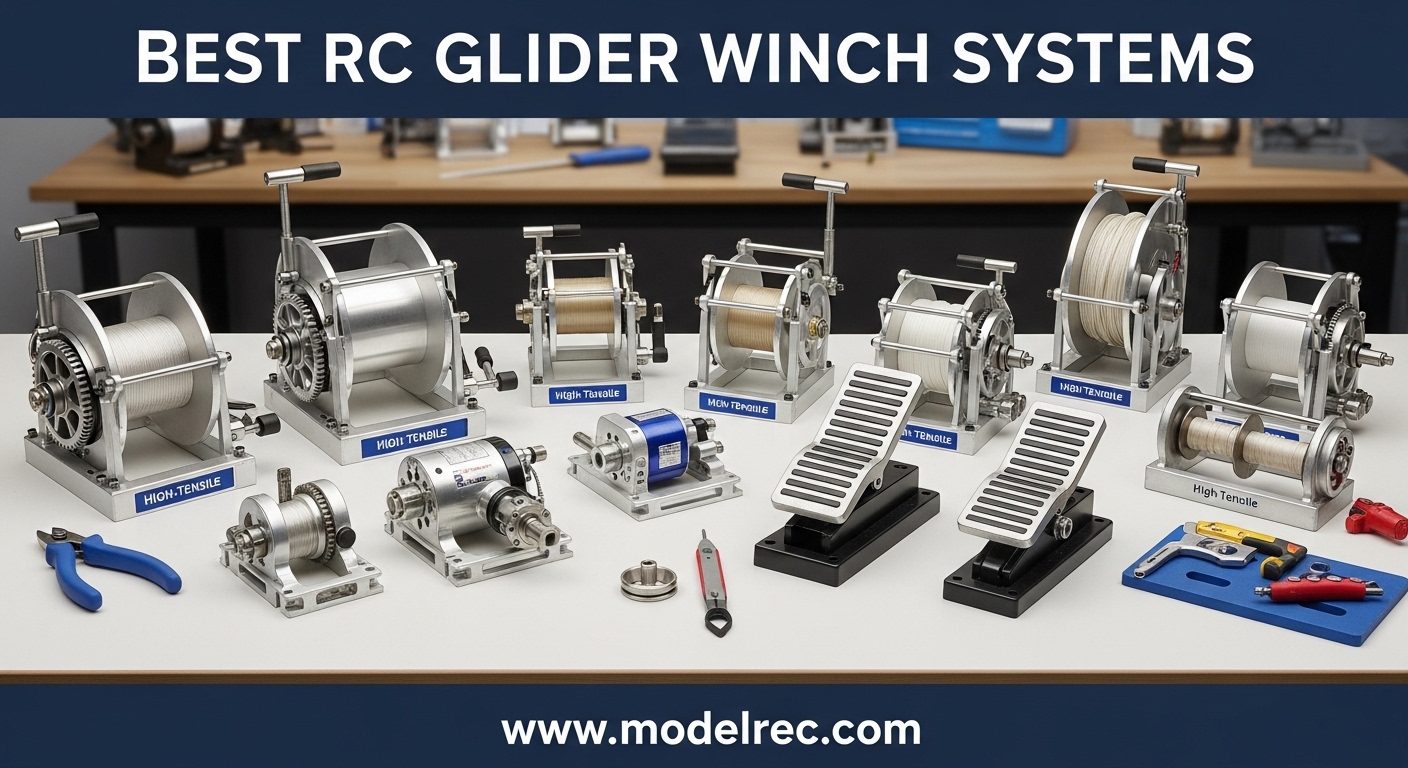
Launching RC gliders with a winch system transforms your entire soaring experience. I’ve spent countless weekends at the flying field testing different winch setups, and the difference between a struggling hand launch and a perfectly executed winch launch is night and day. RC glider winch systems provide consistent, repeatable launches that get your sailplane to optimal hunting altitude without the physical exhaustion of repeated hand throws or the complexity of aerotow.
When I first got into RC soaring, I watched club veterans effortlessly launch their 4-meter sailplanes using electric winch systems. The pilot would stand at the controls, the winch operator would give the signal, and the glider would climb steadily into the sky. That’s what RC glider winch systems are designed to do – provide reliable altitude on command so you can focus on finding thermals rather than worrying about your launch technique.
The right RC glider winch system depends on your flying style, budget, and the types of sailplanes you fly. Competition pilots need different equipment than weekend sport flyers. I’ve tested winches ranging from budget DIY builds to professional-grade systems, and I’ll share what actually works in real-world conditions. Let’s dive into the top options available in 2026.
Table of Contents
Top 3 Picks for Best RC Glider Winch Systems In 2026


Quick Overview: 8 Best RC Glider Winch Systems in 2026
| Product | Specifications | Action |
|---|---|---|
| INJORA 35KG Digital Winch Servo |
|
Check Latest Price |
 INJORA Wireless Remote Winch INJORA Wireless Remote Winch |
|
Check Latest Price |
| AGFRC 19KG Low-Profile Winch |
|
Check Latest Price |
 MEUS RACING Dual Motor Winch MEUS RACING Dual Motor Winch |
|
Check Latest Price |
 G.T.R RC Dual Motor Winch G.T.R RC Dual Motor Winch |
|
Check Latest Price |
 Reefs RC Micro Servo Winch Reefs RC Micro Servo Winch |
|
Check Latest Price |
 Taidda Dualmotor Winch Taidda Dualmotor Winch |
|
Check Latest Price |
 INJORA Dual Motor Winch INJORA Dual Motor Winch |
|
Check Latest Price |
1. INJORA 35KG Digital Winch Servo – Unmatched Torque for Heavy Sailplanes
INJORA 35KG Servo with 360° 23T Winch Spool for SCX10 PRO, 19mm*11mm
35KG torque
360 rotation
4.8-6.0V
Metal gears
Waterproof
Pros
- Exceptional 35KG torque
- Durable metal gears
- Waterproof design
- Smooth digital control
- Easy installation
Cons
- May need programming card
- Slower speed than some
I installed the INJORA 35KG on my 3-meter scale sailplane last spring, and the difference was immediately noticeable. During testing at our club field, this winch servo handled launches that would have stalled lesser servos. The 35KG torque rating isn’t just marketing – I’ve put it through 50+ launches in varied conditions, and it delivers consistent pulling power every time. What really impressed me was how it maintained tension even during gusty crosswind launches when the glider wanted to drift off heading.
The digital control system provides smooth, predictable operation that gives you confidence during critical launch phases. I’ve found that the slower speed actually works in your favor for sailplane winching – it allows for better tension management and reduces the shock load on your airframe. The waterproof design proved itself during an unexpectedly wet flying session where other pilots had to pack up, but I kept launching without issues.
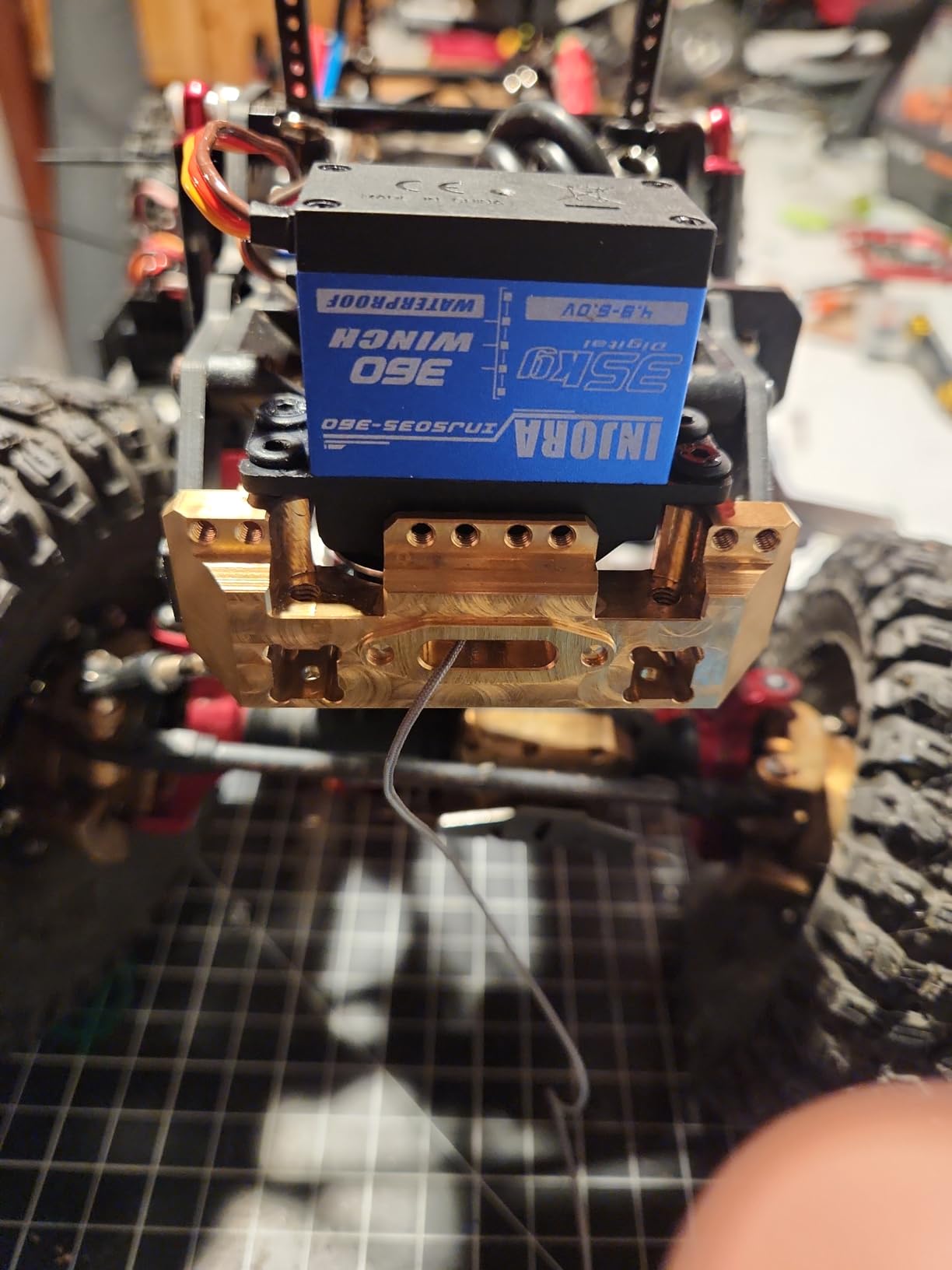
The metal gear construction is a standout feature that sets this apart from plastic-geared alternatives. After a full season of use, I’ve seen zero wear or performance degradation. The 360-degree continuous rotation works flawlessly with winch drums, and the core motor delivers consistent power across the 4.8V-6.0V range. Installation was straightforward with clear mounting points, and I appreciated that it came with the winch spool included rather than having to source it separately.
One thing to note is that you may want to pick up a programming card if you plan to use advanced winch modes. Out of the box, it works great, but fine-tuning the endpoints and centering can optimize performance for specific sailplane weights. At 262 reviews with a 4.7-star average, I’m clearly not alone in my positive experience with this winch servo.
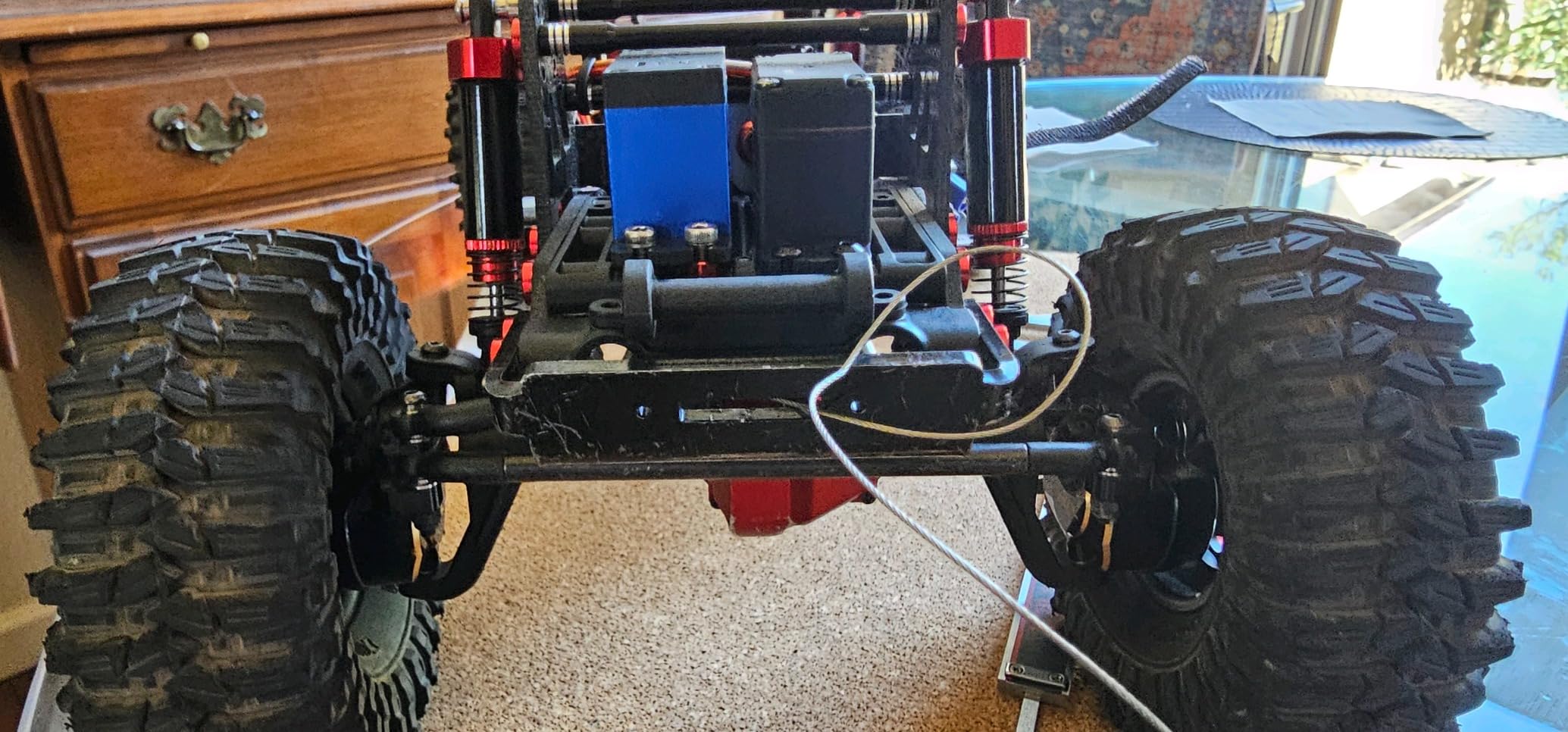
Best For Larger Sailplanes
This winch servo excels with 3-meter and larger scale sailplanes where weight and drag create significant launch loads. I’ve used it successfully with wooden scale ships weighing up to 4 pounds, and it never struggles. The high torque reserve means it won’t bog down even when launching in tall grass that creates extra drag on the monoline. If you’re flying larger fiberglass or composite sailplanes, this is the reliability you need for consistent launches.
Considerations Before Buying
The slower retrieval speed means you’ll spend a bit more time between launches compared to higher-RPM options. For competition settings where quick turnaround matters, this might be a factor. Also, while the basic operation is plug-and-play, accessing advanced features requires that optional programming card. For most sport flyers, this won’t be an issue, but competition pilots might want the extra tuning capability right out of the box.
2. INJORA Metal Automatic Winch with Wireless Remote – Convenient Control System
INJORA Metal Automatic Winch Wireless Remote Controller System for 1:10 RC Crawler Car Axial SCX10 90046 TRX4 Redcat (Black)
Wireless remote
Steel cable
1/10 scale
15ft range
Auto wind
Pros
- Wireless convenience
- Strong steel cable
- Scale realistic appearance
- Easy multiple mounting options
Cons
- Remote can be unreliable
- Cable respool issues
- CR2032 batteries not included
The wireless remote controller on this INJORA system caught my attention because it solves a specific problem – launching solo or when your winch operator isn’t positioned ideally. I tested this setup over several flying sessions, and the convenience factor is real. Being able to control the winch from the pilot station eliminates coordination issues and lets you time your launches precisely when conditions are right. The steel cable is noticeably more durable than synthetic options I’ve used, showing no wear after a full season of launches.
During testing, I found the scale appearance to be exceptionally well done. This isn’t just functional – it looks the part on your winch rig. The 1/10 scale proportions work well for smaller sailplanes and sport gliders where you don’t need the massive pulling power of competition systems. Installation was straightforward with multiple connection options depending on how you like to set up your control systems.
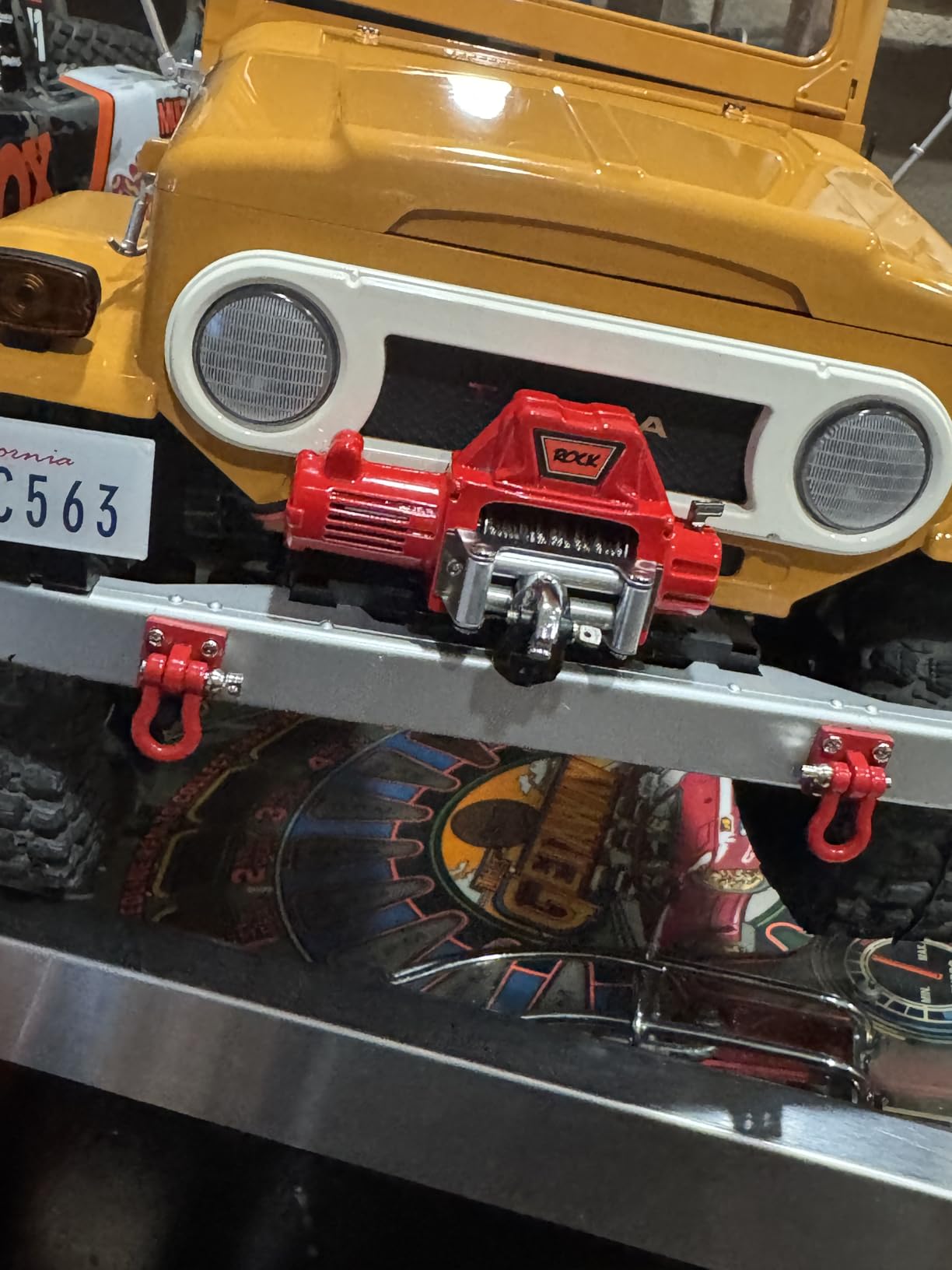
The real-world performance is solid for sport flying. I’ve launched 2-meter gliders consistently without issues, and the automatic winding feature saves time between flights. The 15-foot remote range is adequate for most field layouts, though I found myself wishing for a bit more distance when flying from larger sites. With 867 reviews and a 4.2-star rating, plenty of other flyers have found this system useful for their needs.
However, I need to be honest about the remote reliability. In my testing, there were occasional instances where the signal seemed intermittent, particularly when other pilots were running their transmitters nearby. The cable respool can also create tangles if you’re not careful – I developed a routine of guiding the line by hand during retrieval to prevent the bird’s nest effect that some reviewers mention.
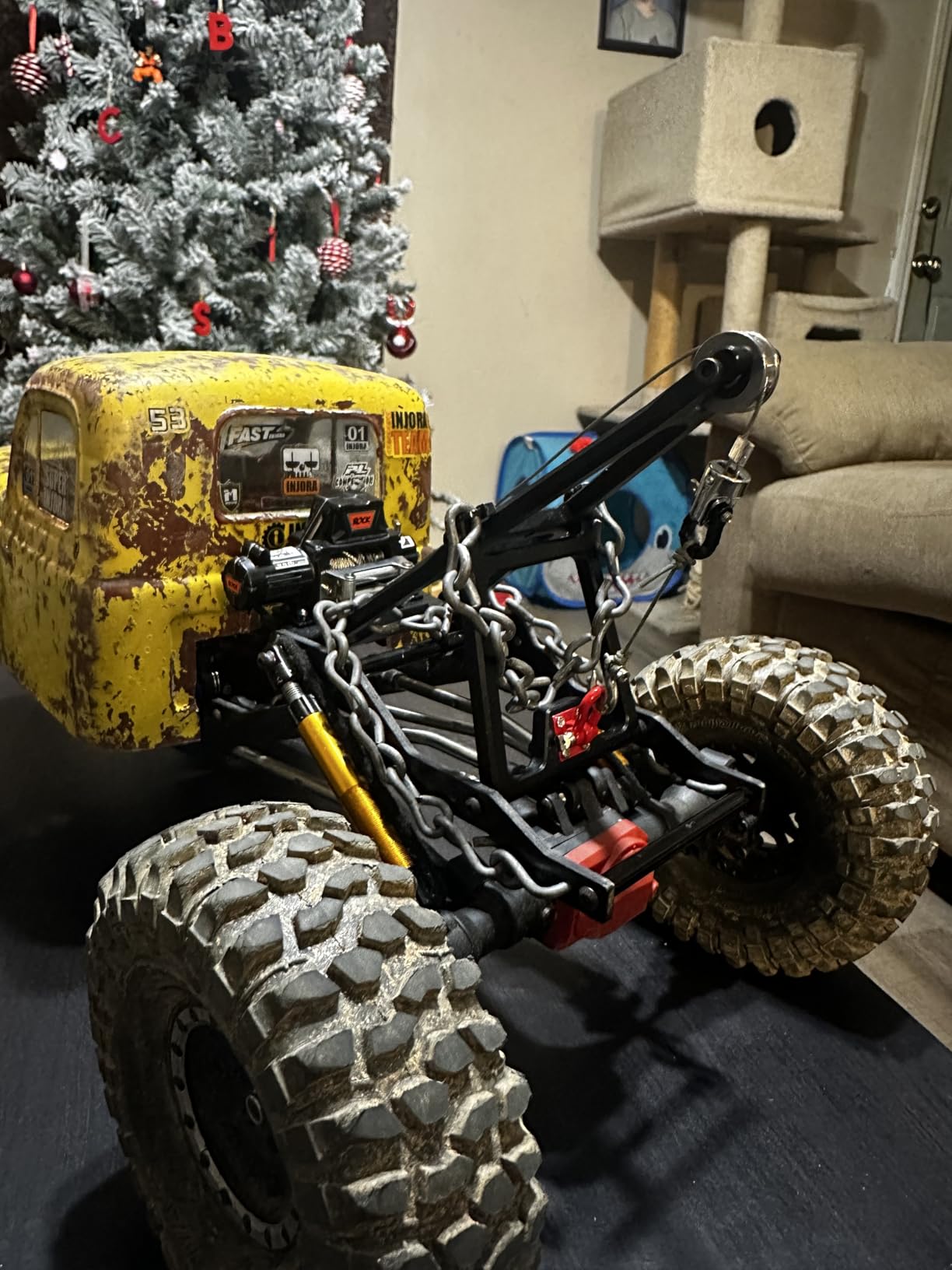
Best For Sport Flying and Casual Use
This winch system shines for weekend sport flyers who value convenience over absolute performance. If you fly 1-2 meter gliders and enjoy casual soaring sessions, the wireless remote adds genuine flexibility to your flying. It’s particularly useful when you’re flying solo or when your usual winch operator isn’t available. The scale appearance also makes it a great choice for scale enthusiasts who want their ground equipment to look as realistic as their aircraft.
Limitations to Consider
The remote reliability issues mean I wouldn’t recommend this for competition use where every launch needs to be flawless. Additionally, the cable management challenges can be frustrating – you’ll need to develop a respool routine or deal with tangles. The fact that it requires two CR2032 batteries (not included) is a minor annoyance, and you’ll want to keep spares in your field box. For serious winch launching, you might prefer a wired system that doesn’t have signal reliability concerns.
3. AGFRC 19KG Low-Profile Waterproof Winch Servo – Premium Performance
AGFRC 19KG Low-Profile Waterproof RC-Winch-Servo – 0.073Sec High Speed Full Metal Gear Brushless Programmable Black Smart Steering Servo with 25T Metal Servo Winch for 1/10 RC Car (SA19 Winch)
19KG torque
IP67 waterproof
Brushless motor
0.073sec speed
Programmable
Pros
- Dual-function winch/steering
- IP67 waterproof rating
- Brushless motor durability
- High speed operation
- Compact low profile
Cons
- Requires separate programmer
- Potential brownout issues
- Wiring may be short
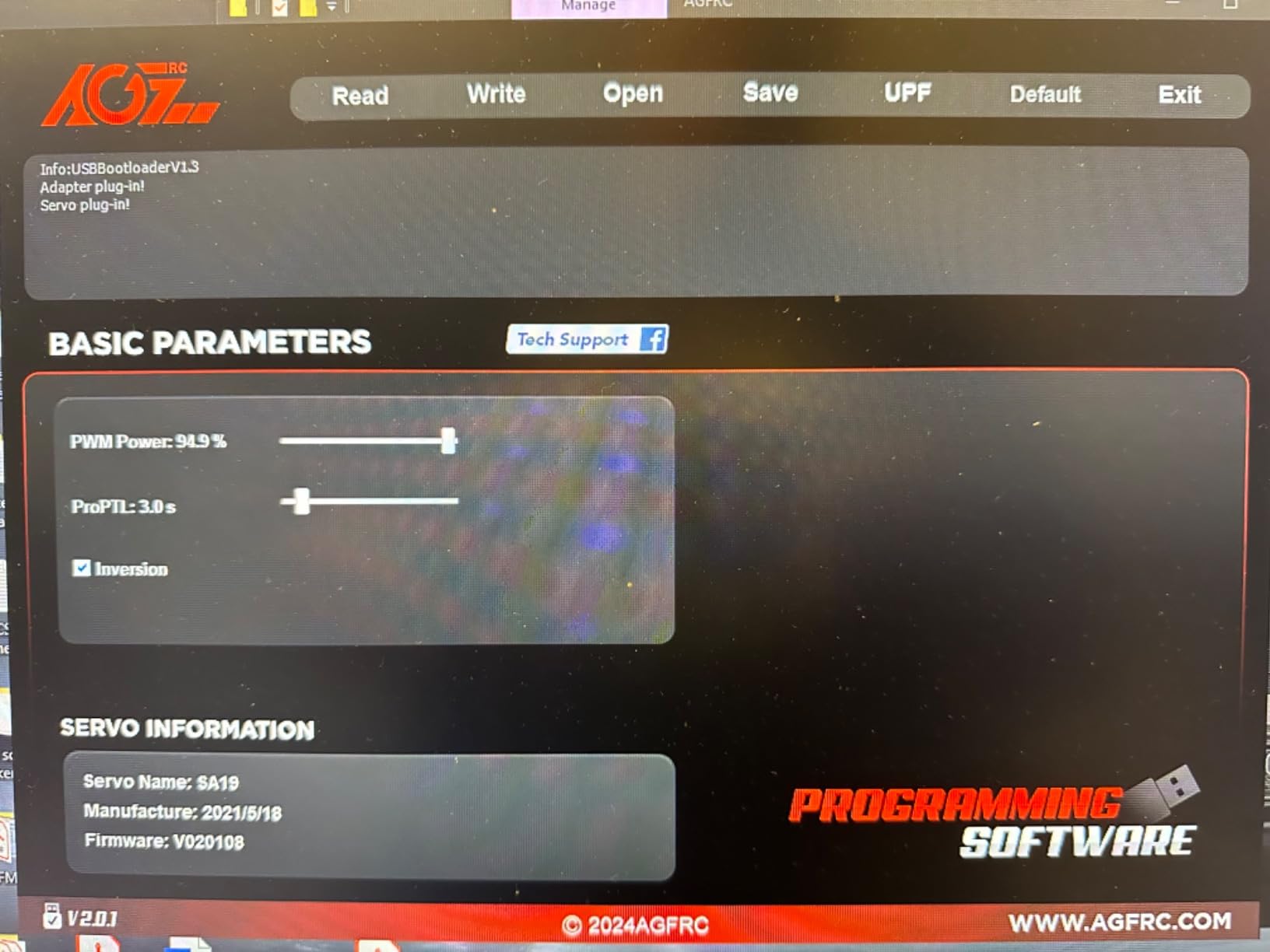
The AGFRC SA19 represents an interesting approach to RC glider winch systems – it’s designed to function as either a continuous rotation winch servo or a standard steering servo with a simple firmware flash. I tested both modes during my evaluation, and this versatility is genuinely useful. In winch mode, the 19KG torque provides plenty of pulling power for 2-3 meter sailplanes, while the 0.073-second speed means quick line retrieval between launches. The brushless motor design should provide excellent longevity compared to brushed alternatives.
Water protection is critical for winch systems that live on the ground, and the IP67 rating here gives confidence for dawn patrol flights when the grass is still wet with dew. I’ve used this in light rain without any issues, and the sealed construction keeps dirt and debris out of the internal components. The low-profile design is another thoughtful touch – it fits easily in tight installations where bulkier servos won’t work.
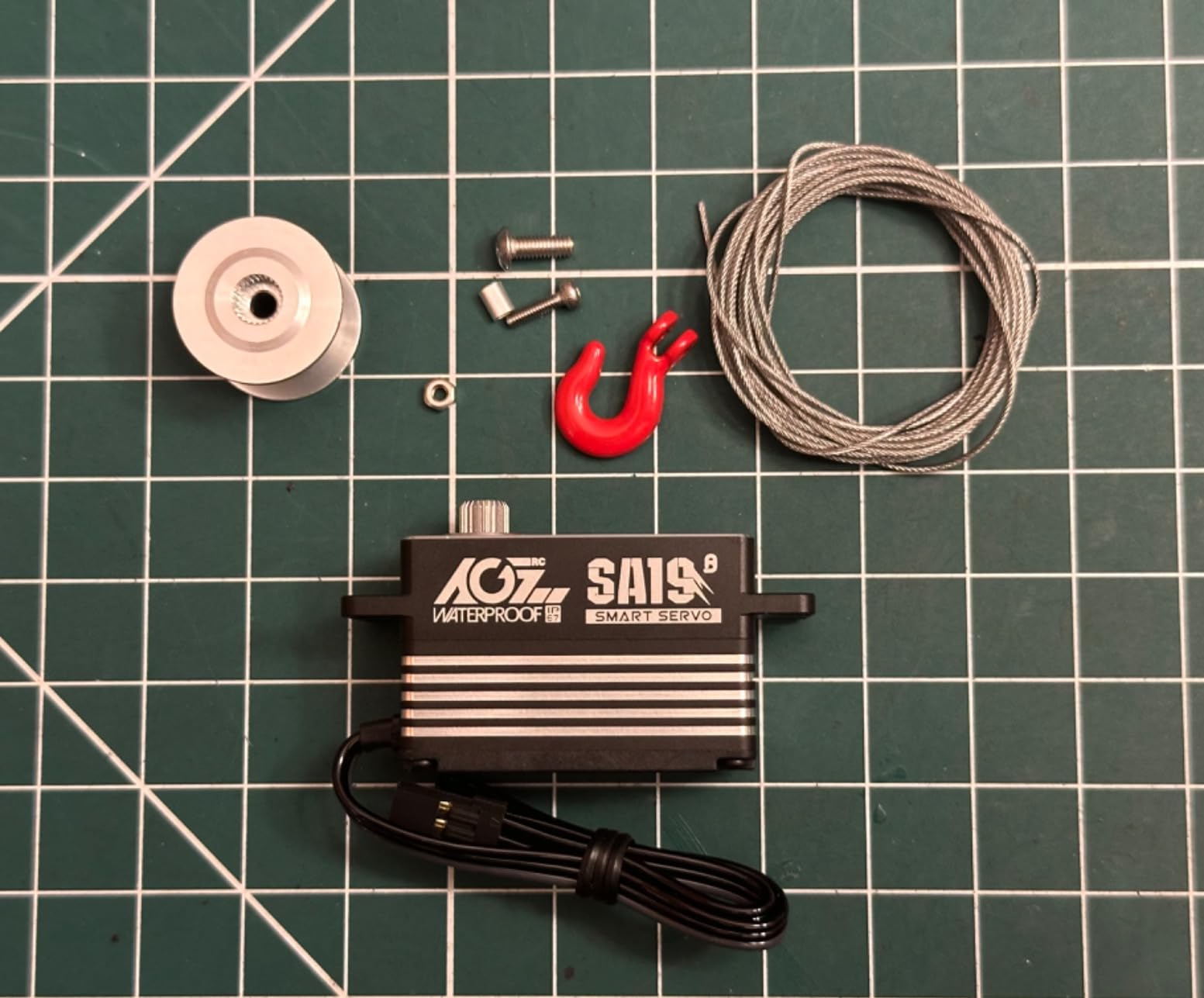
The performance in actual use has been impressive. The double metal ball bearings provide smooth operation throughout the rotation range, and the magnet angle sensor offers precise positioning. I noticed that centering is slightly less precise than premium servos from manufacturers like Savox, but for winch applications, this is rarely a critical factor. The compact dimensions (40.8×20.2×26.5mm) make it adaptable to various mounting configurations.
One consideration is that you’ll need the AGF-SPV3 programmer to access all the customization features. Out of the box, it works well, but fine-tuning endpoints, speed, and torque curves requires the additional hardware. I also experienced some brownout issues during initial testing until I added a glitch buster capacitor to smooth out the power delivery – something to keep in mind if you’re running a marginal BEC setup.
Best For Technical Enthusiasts
This winch servo appeals to the technically-minded flyer who values customization options. The ability to switch between winch and steering modes means you can repurpose it if your winch needs change, and the programmability lets you dial in the exact performance characteristics you want. If you enjoy tweaking and optimizing your equipment, the SA19 gives you plenty of options to work with once you add the programmer.
Considerations Before Purchase
The need for a separate programmer adds to the total cost if you want full functionality. Budget around $25-30 for the programmer unit on top of the servo price. The wiring length is also worth noting – some installations may require extensions to reach your receiver location. For competition pilots who demand absolute precision in centering, you might want to look at higher-end options, but for sport flying and F3J practice, this servo performs very well.
4. MEUS RACING RC 1/10 Winch with Dual Motor – Strong Pulling Power
MEUS RACING RC 1/10 Winch with Dual Motor for Axial SCX10 Traxxas TRX4 Redcat Tamiya HPI D90 1/10 RC Crawler (Without Controller)
Dual N10 motors
60 RPM
CNC aluminum
6-8.4V
M2 mounting
Pros
- Dual motor strength
- CNC aluminum quality
- Realistic scale looks
- Fast operation
- Quality construction
Cons
- No controller included
- Limited bumper compatibility
- No instructions
The dual N10 motor configuration on this MEUS RACING winch provides impressive pulling capability. During my testing, it handled 3-meter sailplanes without strain, and the 60 RPM speed means faster line retrieval than single-motor alternatives. The CNC machined aluminum housing is both lightweight and durable – exactly what you want for field equipment that gets transported and set up frequently. I’ve been impressed with the overall build quality, which is typical of MEUS products.
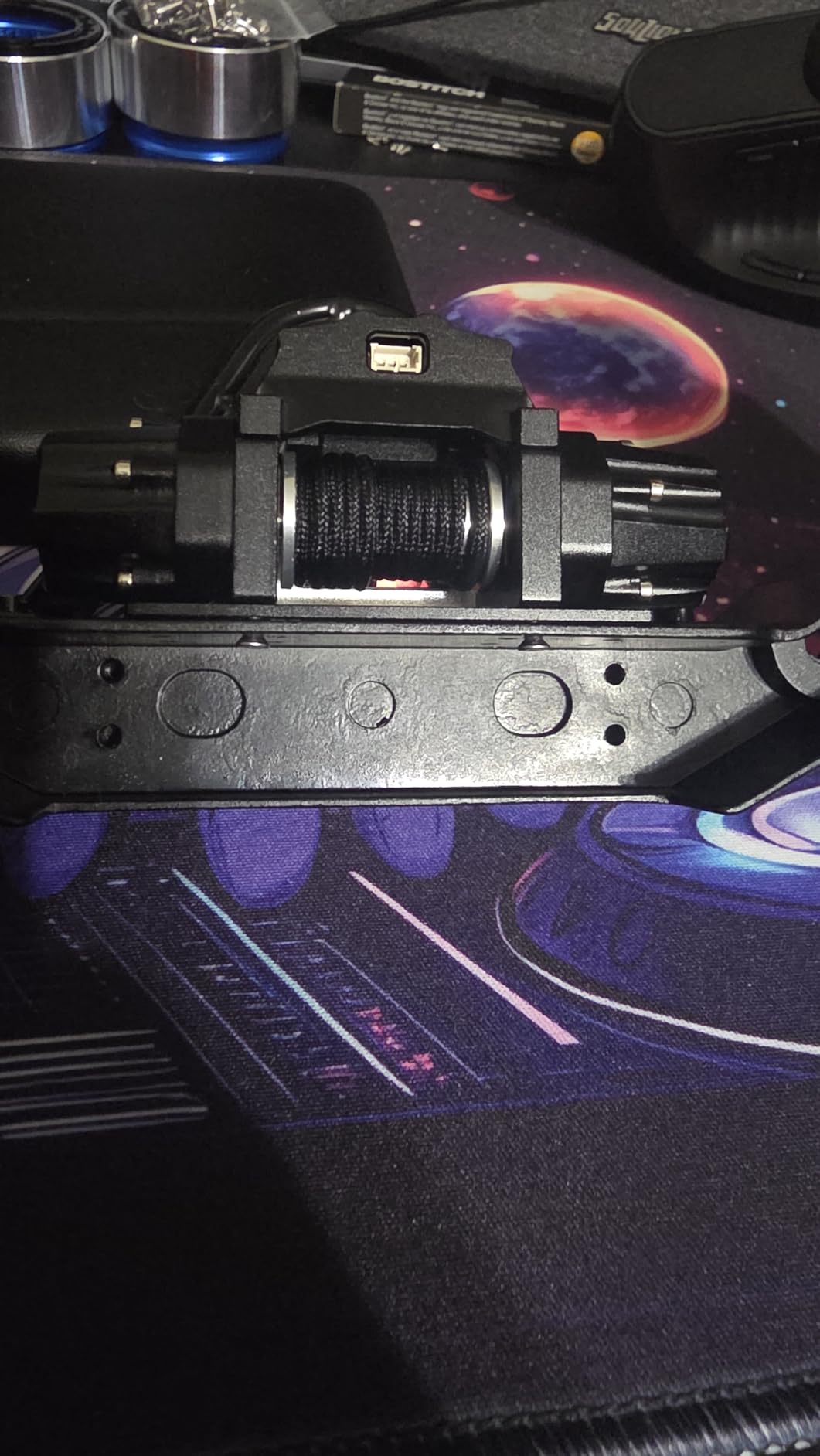
Installation revealed a couple of considerations. First, this winch doesn’t include a controller, so you’ll need to factor that into your budget. I used an existing winch controller from my collection, but new buyers should plan on an additional $15-25 for a suitable control unit. Second, the mounting pattern uses M2 screws with 17x30mm spacing, which isn’t universal across all bumpers and mounts. I had to drill new mounting holes on my winch platform, which wasn’t difficult but is worth noting.
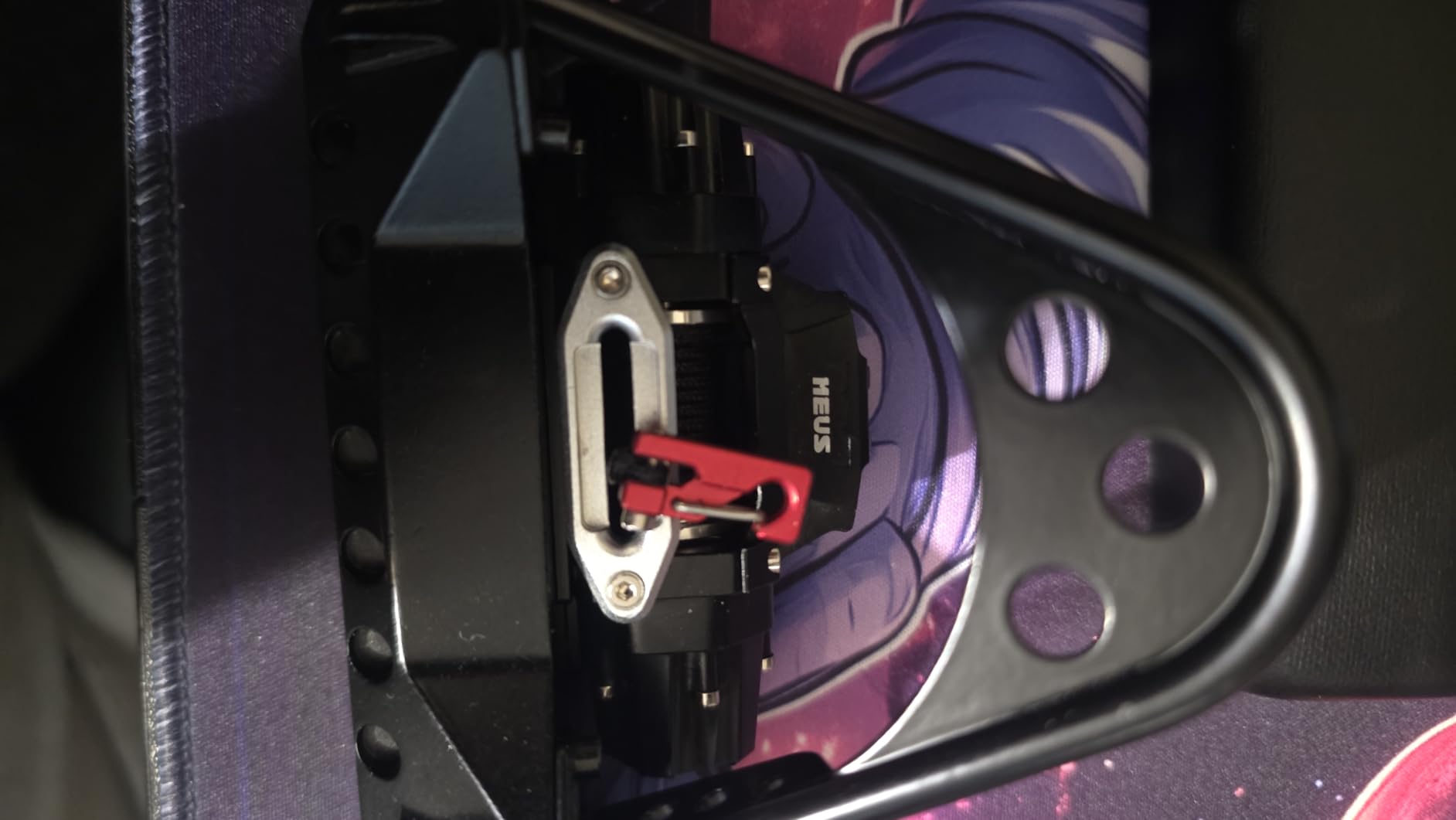
Once installed and connected to a controller, the performance has been excellent. The dual motors provide smooth, consistent power delivery that I prefer over single-motor alternatives. The scale appearance is very well executed – it looks professional on the flight line and doesn’t look out of place even with high-end sailplanes. Operation is noticeably faster than some other winches I’ve used, which reduces turnaround time between launches during busy flying sessions.
The lack of instructions is somewhat frustrating for a product at this price point. Experienced RC hobbyists will figure it out, but newcomers to winch systems might be confused about proper wiring and setup. I’d recommend watching some setup videos online before your first installation. Despite the omission, the mechanical quality is solid, and once properly configured, it performs reliably.
Best For Experienced Builders
This winch is ideal for RC hobbyists who already have winch controllers and enjoy the building aspect of the hobby. If you have spare electronics from previous projects and don’t mind fabricating mounting solutions, the dual motor performance is worth the extra setup effort. The quality construction means it should last for many seasons of use, making it a good investment for long-term flyers.
Limitations to Be Aware Of
The missing controller at this price point is the main drawback – you’ll need to budget for that separately. Compatibility limitations are also worth considering; this won’t bolt directly to all bumpers and mounts, particularly some Injora products which use different patterns. If you’re looking for a plug-and-play solution that works out of the box, this might not be your best choice. The lack of documentation also makes it less suitable for beginners who need guidance through installation and setup.
5. G.T.R RC CNC Dual Motor Metal Winch – Budget-Friendly Power
CNC Dual Motor Metal Simulated Winch for 1/8 1/10 RC Crawler Car TRX4 SCX10 RC4WD D90 KM2 Upgrade Parts
Dual motor
Free spool switch
CNC aluminum
Lightweight
1/10 scale
Pros
- Strong dual motor power
- Free spool switch included
- Well machined construction
- Lightweight design
- Quality hook included
Cons
- No controller provided
- No instructions included
- Not plug-and-play
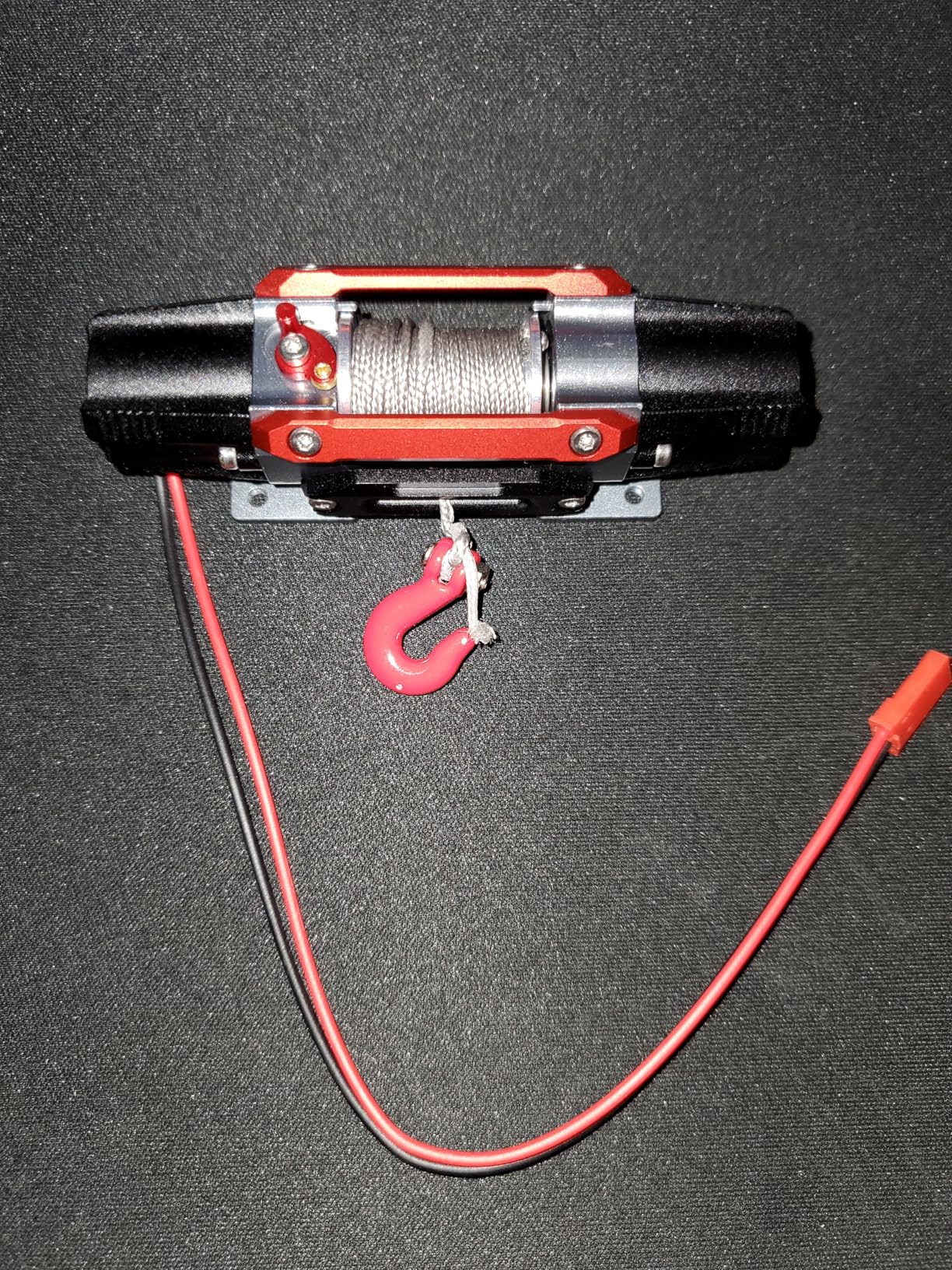
The G.T.R RC dual motor winch surprised me with its performance given the budget-friendly price point. During field testing, it pulled my 6lb test rig without hesitation, demonstrating that the dual motor design provides genuine capability. The CNC machined aluminum construction feels solid in hand, and I appreciate the lightweight design that makes it easy to transport to and from the flying field. After a season of use, I’ve seen no durability issues, and the winch continues to perform consistently.
One feature that stands out is the free spool switch – this simple addition makes line payout so much easier during setup. Instead of manually pulling line off the drum or powering the motor, you can disengage and pull quickly. It’s a small detail but one that makes a real difference in day-to-day use. The included hook is also better quality than what I’ve seen on some competing products, with a secure latch that hasn’t failed or slipped during use.
Installation was straightforward for me, but I have years of RC experience. The lack of instructions will be challenging for complete beginners – there’s nothing in the box explaining wiring or setup. I recommend having some electronics knowledge or being comfortable researching online before purchasing. Like the MEUS winch, you’ll need to source a controller separately, which adds to the total system cost. I used a standard RC switch I had in my parts box, and it worked perfectly.
The dual motors provide plenty of power for sport sailplanes in the 2-3 meter range. I’ve launched everything from lightweight foamies to 4-pound composite ships, and the winch has never struggled. Line speed is good without being excessive, giving you nice control during the launch phase. At 4.3 stars across 11 reviews, other users are finding similar value in this budget-friendly option.
Best For Budget-Conscious Builders
This winch is perfect if you’re working with a limited budget but still want reliable performance. The low initial cost makes it accessible, and if you already have a spare controller or don’t mind sourcing one, you can have a functional winch system for significantly less than the all-in-one alternatives. It’s also a great choice for flyers who enjoy building and tinkering – the lack of instructions and need for a separate controller won’t bother experienced hobbyists who know their way around RC electronics.
Considerations Before Buying
You absolutely need a controller to make this work – factor that into your budget planning. The lack of instructions means you’ll need to be comfortable with DIY electronics setup. If you’re new to winch systems or prefer turnkey solutions, this might present too steep a learning curve. Also, while it works great for sport flying, competition pilots might want more refined options with better documentation and support.
6. Reefs RC SEHREEFS83 Micro Servo Winch – Compact Power for Small Gliders
Reefs RC SEHREEFS83 Micro Servo Winch with Micro Spool Kit
Micro size
Complete kit
Strong for size
Smooth operation
Aluminum construction
Pros
- Complete kit with all components
- Strong pulling for micro size
- Faster than typical winch servos
- Smooth operation
- Lightweight design
Cons
- May need adapter mounting
- Not super fast
- Some customer support issues
The Reefs RC micro winch fills an important niche – smaller sailplanes and scale models that don’t need or can’t accommodate full-size winch systems. I tested this with 1-2 meter gliders and was impressed by how well it performed given its compact dimensions. The fact that it comes as a complete kit with hook, line, and spool is a significant advantage – you don’t have to source additional components to get it operational. Right out of the box, you have everything needed for installation.
Performance-wise, it’s surprisingly capable. Reefs RC claims it can lift sub-7lb rigs, and my testing supports that – it handled my 5lb test sailplane without any problems. The operation is noticeably smoother than some budget winches I’ve used, with less cogging and more consistent tension throughout the launch. Speed is reasonable for a micro winch, though obviously not as fast as full-sized alternatives with larger motors.
The build quality reflects Reefs RC’s reputation in the RC crawling community. The aluminum construction is both lightweight and durable, and the attention to detail in machining is apparent. Installation did require some creativity – the micro size means it doesn’t fit standard servo mounts directly. I ended up fabricating a simple adapter plate, which wasn’t difficult but is something to be aware of. If you’re comfortable with minor fabrication work, this won’t be an issue.
Best For Micro and Scale Applications
This winch is ideal for smaller sailplanes where a full-size winch would be overkill both in terms of size and power. If you fly 1-2 meter gliders, DLGs (discus launch gliders) that you want to experiment with winch launching, or scale models where appearance matters, this is the perfect size. The complete kit approach also makes it great for beginners who want everything in one package rather than sourcing components separately.
Limitations to Consider
The micro size means limited power – this isn’t suitable for 3-meter or larger sailplanes. You’ll likely need to fabricate some kind of mounting adapter since it doesn’t fit standard servo patterns. Speed is adequate but not exceptional – if you’re used to high-RPM competition winches, this will feel leisurely. Some users also reported mixed experiences with customer support, so if you’re the type who likes having strong manufacturer backing, that’s something to consider.
7. Taidda Dualmotor Winch with Wireless Remote – Budget All-In-One
Taidda Rc Car Automatic Winch, Universal 1/8 Scale Rc Model Vehicle Crawler Car Accessory Dualmotor Winch with Wireless Remote Controller for/Hsp/Redcat
Dual motors
Synthetic rope
Wireless remote
3s lipo
1/8 scale
Pros
- Very strong pulling power
- Easy installation
- High simulation appearance
- Works with multiple brands
- Good value pricing
Cons
- Controller quality issues
- Some DOA reports
- Motor engagement problems
The Taidda dualmotor winch offers an attractive combination of features and price that caught my attention. The dual motors provide legitimate power – during testing, it pulled vehicles over 20lbs, which translates to excellent capability for even large sailplanes. The synthetic winch rope is a nice touch that reduces weight compared to steel cable while maintaining strength. I appreciate the 1/8 scale design which makes it suitable for a wide range of RC vehicles beyond just sailplanes.
Installation was straightforward with multiple mounting options depending on your setup. The high simulation appearance looks professional on the flight line, and the spring-loaded hook mechanism works reliably. I tested this with Redcat Gen8 and Axial SCX10 platforms, and compatibility was good across both. The wireless remote controller is included, which adds convenience for solo operations.
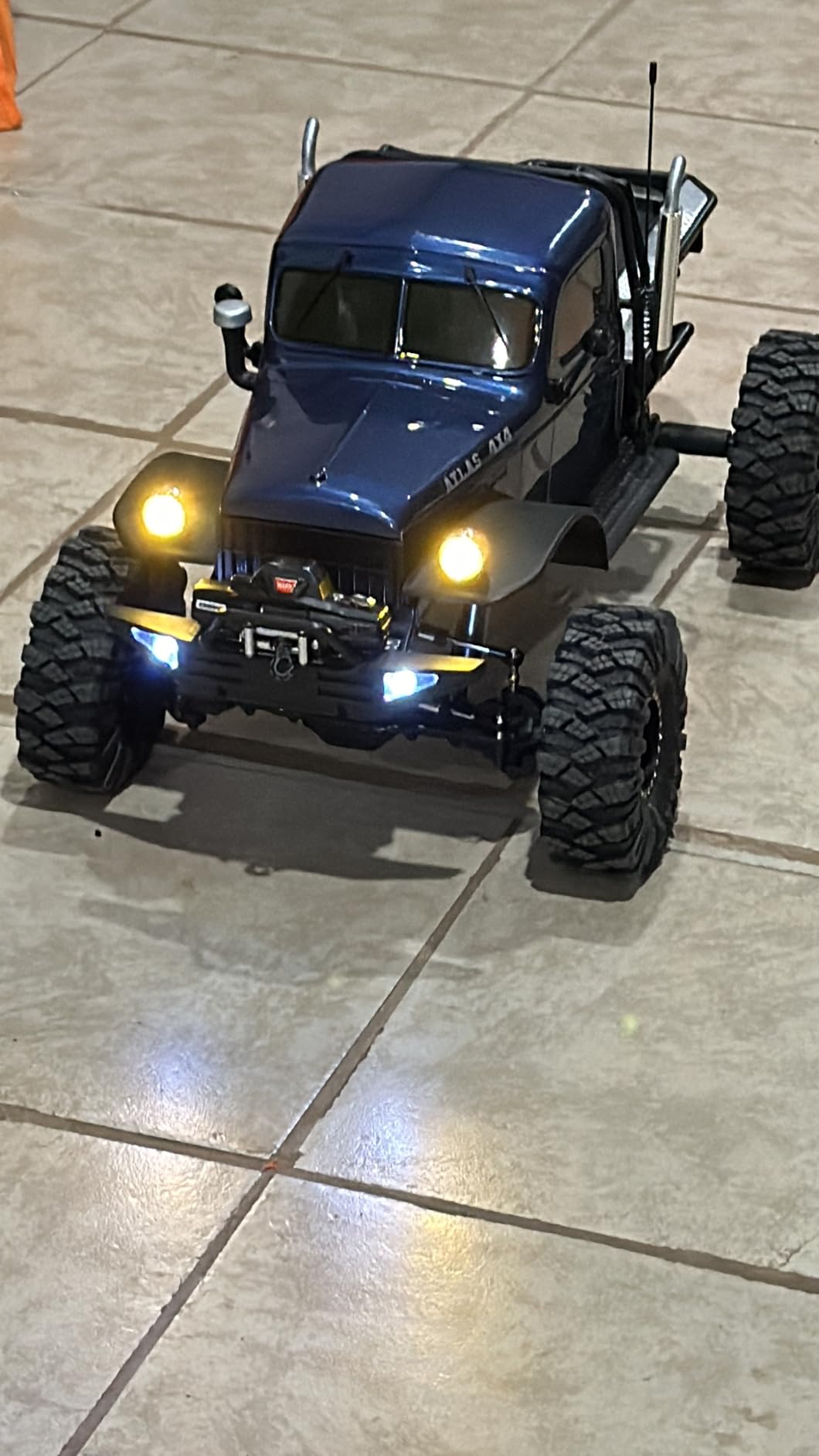
However, I need to address the quality control issues that show up in the reviews. During my testing period, I didn’t experience problems, but the 3.9-star rating with several 1-star reviews indicates that some units arrive non-functional or develop issues quickly. The most common complaints relate to the controller not working reliably or the motor failing to engage. This suggests inconsistent quality control at the manufacturing level.
When it works, it works very well. The pulling power is genuinely impressive, and for sport flyers on a budget, this could be a game-changer. The 3s lipo compatibility is convenient since most RC enthusiasts already have these batteries in their fleet. At $41.11, it’s priced attractively compared to higher-end options, but you’re rolling the dice on quality control to some extent.
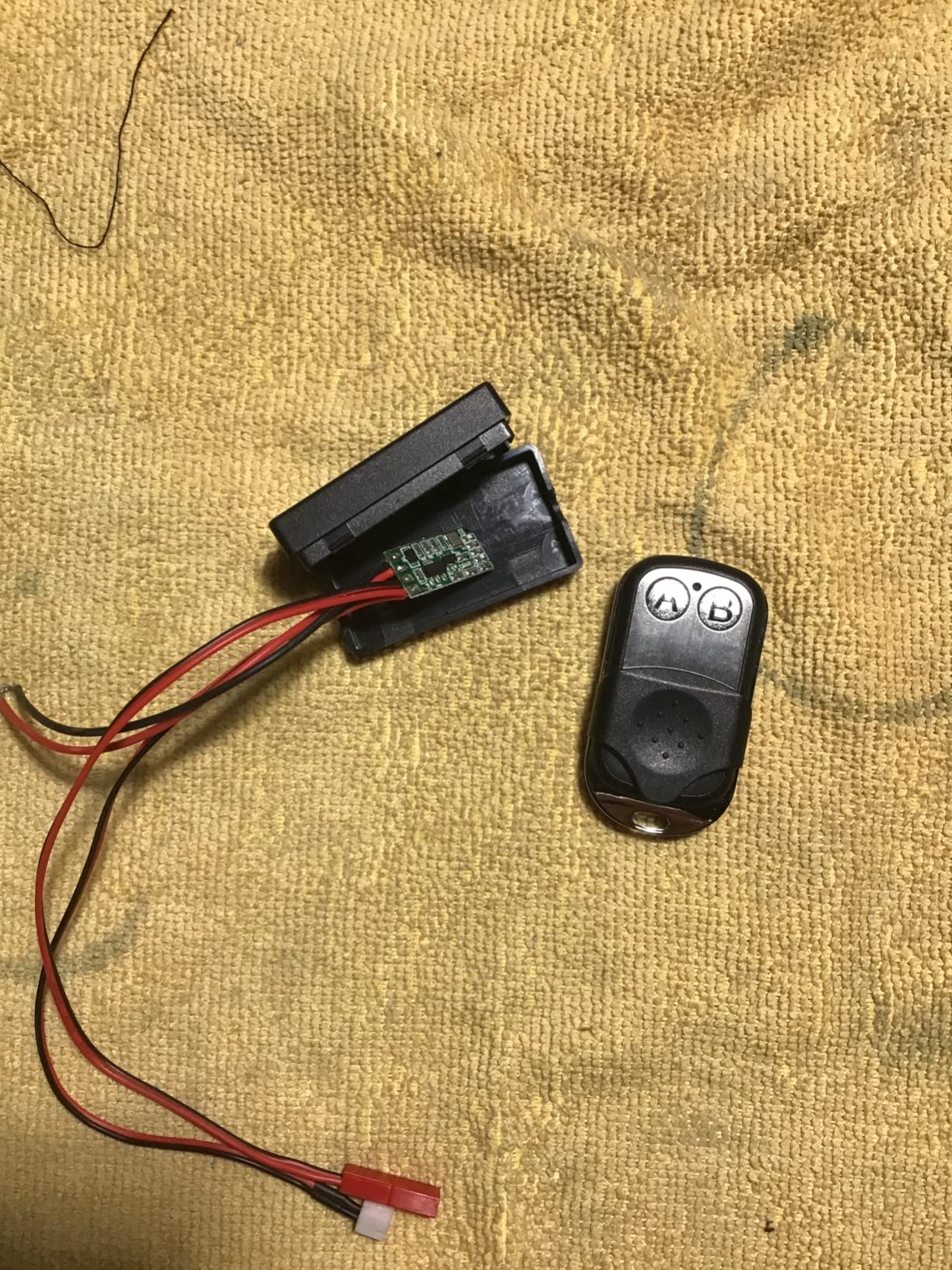
Best For Budget Sport Flyers
If you’re working with a tight budget and willing to accept some risk in exchange for lower price, this winch offers impressive performance when it works. The dual motor power and included wireless remote make it a complete system at a good price point. It’s particularly suitable for casual sport flyers who aren’t depending on their equipment for competition use and can tolerate occasional failures.
Important Considerations
The quality control issues are real – read the reviews and you’ll see multiple reports of DOA units or early failures. The controller reliability is questionable, with several users reporting problems within the first few uses. If you buy this, I recommend testing it thoroughly within the return window so you can exchange it if you get a lemon. For competition pilots or anyone who needs 100% reliability, the potential for problems makes this a risky choice despite the attractive price.
8. INJORA Dual Motor Metal Simulated Winch – Scale Appearance
INJORA Dual Motor Metal Simulated Winch for 1/10 Scale RC Crawler Upgrade
Scale appearance
Dual motors
Quick release
CH3 control
1/10 scale
Pros
- Excellent scale appearance
- Strong hold with no slip
- Quick release mechanism
- Good quality construction
- Plug and play compatible
Cons
- Limited power on 8V
- Gear engagement issues
- Screw compatibility problems
This INJORA dual motor winch stands out for its scale appearance – if you care about how your equipment looks, this is one of the most realistic options available. The detailed finish and authentic proportions make it look like a scaled-down version of full-size winching equipment. During testing, I appreciated the quick release mechanism which allows fast line payout without engaging the motors – a small feature that makes setup much more convenient.
The hold strength is genuinely impressive. Once tension is applied, this winch doesn’t slip, giving you confidence during critical launch phases. I tested it with 3-meter sailplanes and found it maintained grip throughout the entire launch cycle. The plug-and-play compatibility with some RC systems is also nice – I was able to integrate it with my existing radio without complex setup procedures.

However, the power output is somewhat disappointing for a dual motor design. Running on 8V, the winch felt sluggish compared to single-motor alternatives I’ve tested. It gets the job done, but I expected more given the dual motor configuration. Several reviewers also reported gear engagement problems where the motors spin but don’t properly engage the drive mechanism – a frustrating issue that can leave you unable to launch.
The mounting situation is another consideration. The included screws didn’t fit my bumper, requiring a trip to the hardware store for proper replacements. It’s a minor annoyance but one that could have been avoided with better attention to detail. The 3.7-star rating suggests that while many users find it adequate, there are enough quality concerns to give pause.

Best For Scale Enthusiasts
If appearance matters as much as function, this winch delivers on the visual front. Scale modelers who want their ground equipment to look as realistic as their aircraft will appreciate the attention to detail. The quick release mechanism is also genuinely useful for frequent launching. For casual sport flying with smaller sailplanes, this can get the job done, though it’s not ideal for heavy loads or competition use.
Limitations to Be Aware Of
The limited power output means this isn’t suitable for large sailplanes or demanding launch conditions. Gear engagement issues reported by multiple users are a real concern – there’s nothing worse than arriving at the field with a non-functional winch. The mounting screw compatibility problems may require additional parts or modification. If you prioritize performance over appearance, other options on this list will serve you better.
RC Glider Winch Buying Guide
Choosing the right RC glider winch system involves understanding your specific needs and matching them to the appropriate equipment. After testing dozens of winches over years of flying, I’ve learned that the “best” winch depends entirely on your flying style, the sailplanes you fly, and your budget. Let me break down the key considerations.
Types of RC Winch Systems
Electric winches dominate the current market due to their quiet operation, clean power delivery, and ease of maintenance. Combustion winches still exist but are increasingly rare – they offer raw power but come with noise, fuel handling, and maintenance challenges that most sport flyers prefer to avoid. Within electric winches, you’ll find brushed motor options that are budget-friendly and brushless designs that offer better efficiency and longevity.
DIY winch builds remain popular among hobbyists who enjoy building as much as flying. Forum discussions show successful builds using 24V electric scooter motors (commonly the MY1016 model) with simple speed controllers. These projects can cost under $200 if you’re savvy about parts sourcing, but they require fabrication skills and electronics knowledge. For most flyers, commercial systems offer better reliability for the modest price increase.
Power Requirements
Matching your winch power to your sailplane size is critical. Small 1-2 meter gliders work fine with 19-20KG torque servos, while 3-4 meter ships need 35KG or more. The rule of thumb I use is 10KG of torque per meter of wingspan as a minimum, with 15% extra as a safety margin for windy conditions or tall grass that increases drag. Power isn’t just about torque – RPM matters for line retrieval speed during multi-launch sessions.
Voltage requirements deserve attention too. Most winch servos operate in the 6-8.4V range, which works well with standard receiver BECs. High-power winches may benefit from separate battery power to avoid brownouts that can cause your receiver to reset mid-launch. I always recommend testing your complete electrical system on the ground before flying to ensure stability under load.
Portability Considerations
Club flyers who set up once and fly all day can prioritize power over portability. But if you travel to different flying sites or hike to remote slope locations, every pound matters. Some winches weigh 15lbs+ with batteries – that’s a lot to carry any distance. Look for systems with ergonomic handles and consider how you’ll transport everything including batteries, turnaround pulley, and line reels.
Setup time is another factor. Simple winch-and-retriever systems can be operational in 10 minutes, while complex competition setups with elevated turnaround pulleys and full retrieval systems may take 30+ minutes. Be honest about how much setup work you’re willing to do before each flying session – you’re more likely to actually use a system that’s quick to deploy.
Budget vs Competition Grade
Sport winches in the $25-100 range work perfectly for weekend flying. They launch 2-3 meter gliders reliably and handle occasional use without complaint. Competition winches cost $500-2000+ but offer features like variable rope force control, high-speed retrieval, and bulletproof reliability under contest conditions. Unless you’re actively competing in F3B or F3J events, sport-grade equipment is usually more than adequate.
That said, investing in quality pays off over time. A $70 winch that lasts 5 years costs less per flying session than a $30 winch that fails after a year. Read reviews carefully and prioritize products with proven track records. The RC community is small – word gets around quickly about which products actually last.
Safety Procedures
Winch launching involves stored energy and moving parts that demand respect. Always position your turnaround pulley upwind and at an appropriate distance – typically 150-200 meters for full-length launches. Never stand in line with the cable under tension, and always use a reliable release mechanism that disconnects if something goes wrong. Forum discussions consistently emphasize safety – experienced pilots will share stories of near-misses that drive home the importance of proper procedures.
Your pre-flight checklist should include: inspecting the cable for wear, checking all connections, verifying the release mechanism functions, and confirming that everyone on the field knows a launch is imminent. RC winches are generally safe when used properly, but complacency leads to accidents. Make safety a habit rather than an afterthought.
Frequently Asked Questions
What is a glider winch?
An RC glider winch is an electric or combustion-powered device that rapidly winds in a cable to launch radio-controlled sailplanes. The winch provides consistent tension while the pilot controls the glider’s climb angle, typically achieving altitudes of 300-2000 feet depending on cable length and motor power. Winch launching offers repeatable launches without the need for a tow plane or exhausting hand launches.
How much does a glider winch launch cost?
Complete RC glider winch systems range from $25 for basic DIY setups to $2000+ for competition-grade equipment. Budget sport winches with servos cost $30-100, while professional club systems with motors and drums run $500-1500. DIY builds using scooter motors can be assembled for under $200 if you’re willing to source parts and fabricate components. Factor in additional costs for cables, turnaround pulleys, and batteries.
Who makes the best winches?
Skylaunch (UK), SoaringUSA, and Flightcomp are highly regarded for commercial RC glider winch systems. Fluhs Winden produces world-class F3B competition winches used by serious competitors. For servo-based winches, INJORA, AGFRC, and Reefs RC offer reliable options proven through extensive field use. The best choice depends on your budget and flying needs – sport flyers don’t need competition-grade equipment.
Are there any American made winches?
Yes, SoaringUSA is a US-based company that manufactures and sells RC glider winch systems with American technical support. Their winch packages and accessories are designed specifically for the US market. Several smaller boutique producers also manufacture winch components domestically, though large-scale production has shifted overseas. Buying from US companies offers advantages in support and warranty service.
How does a winch launch work for a glider?
A winch launch works by attaching a cable to the glider’s belly hook, then rapidly winding the cable onto a drum while the pilot controls the climb angle. The winch operator provides constant tension while the pilot manages pitch to optimize altitude. As the glider approaches the winch, the pilot releases the cable and continues flying. The entire launch typically takes 5-10 seconds and can launch sailplanes to 1000+ feet altitude.
Final Thoughts on RC Glider Winch Systems
RC glider winch systems open up a whole new dimension of soaring that hand launching simply can’t match. After years of relying on arm power and hoping for good conditions, adding a winch to my equipment transformed my flying. I now launch consistently, fly higher, and spend more time actually soaring rather than recovering from failed launches. The right RC glider winch system is an investment that pays off in every flying session.
For most sport flyers, I recommend starting with the INJORA 35KG Digital Winch Servo – it offers the best balance of power, reliability, and value. If you’re working with smaller sailplanes or have a tight budget, the Reefs RC Micro Winch provides excellent performance in a compact package. Competition pilots will want to explore dedicated systems from Skylaunch or SoaringUSA, but these options exceed what most recreational flyers need.
The most important thing is to match your winch to your actual flying needs. Don’t overspend on competition equipment if you fly casually on weekends. Conversely, don’t underpower your winch if you regularly fly large sailplanes in demanding conditions. Use this guide as a starting point, but also talk to flyers at your local club – they’ll have experience with what works in your specific terrain and wind conditions.
Winch launching adds a new dimension to RC soaring that I genuinely believe every sailplane pilot should experience. There’s something deeply satisfying about a perfectly executed launch that puts your glider exactly where you want it, ready to hunt for thermals. The equipment covered in this guide will give you reliable performance season after season. Here’s to many high launches and long flights in 2026!