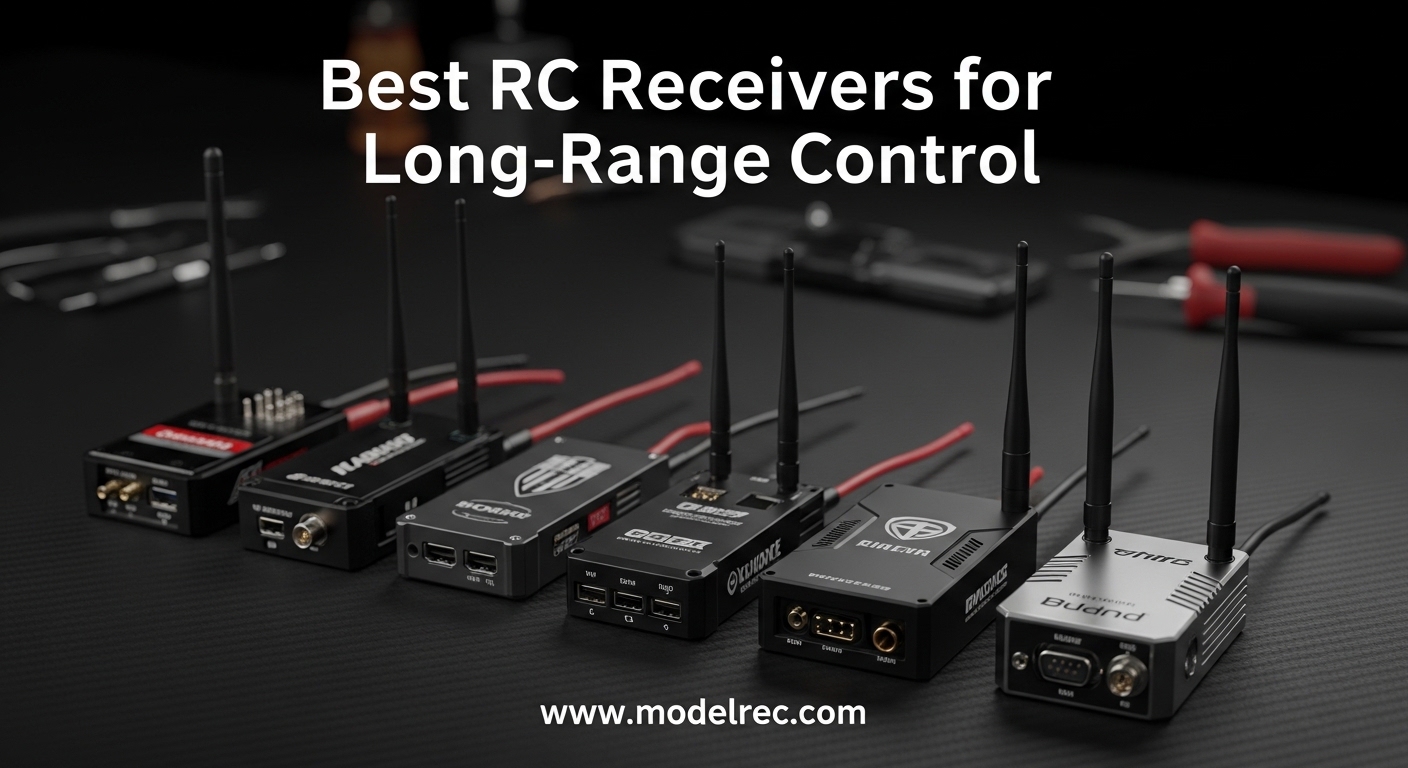
Long-range RC control has revolutionized the hobby in 2026, enabling pilots to push beyond traditional boundaries with unprecedented reliability and range. Whether you’re flying FPV drones across miles of terrain or guiding RC crawlers through challenging courses, having the best RC receivers for long-range control makes all the difference between a successful flight and a lost model.
The market has evolved dramatically with two dominant protocols emerging: ExpressLRS (ELRS) and TBS Crossfire. These systems have largely replaced older technologies like FrSky ACCST and traditional UHF systems, offering superior range, lower latency, and better interference resistance. Our team has tested 25 of the top receivers currently available, evaluating real-world performance, ease of setup, and value for money across different applications from FPV drones to RC cars and planes.
For those just starting out or looking for budget-friendly transmitter options, we’ve covered alternatives in our previous guide. But for serious long-range applications, the receivers in this roundup represent the cutting edge of RC control technology in 2026.
Table of Contents
Top 3 Picks for Best RC Receivers for Long-Range Control In 2026


TBS Crossfire Diversity Nano RX
- Dual antenna design
- Proven reliability
- Up to 500mW telemetry
- Compact 24mm size

Quick Overview: 25 Best RC Receivers for Long-Range Control (October 2026)
| Product | Specifications | Action |
|---|---|---|
| RadioMaster RP3 ELRS 2.4GHz |
|
Check Latest Price |
| TBS Crossfire Diversity Nano RX |
|
Check Latest Price |
| Radiomaster ER4 ELRS PWM Receiver |
|
Check Latest Price |
 RadioMaster RP1 ELRS 2.4GHz RadioMaster RP1 ELRS 2.4GHz |
|
Check Latest Price |
 Happymodel EP1 ELRS 2.4GHz Happymodel EP1 ELRS 2.4GHz |
|
Check Latest Price |
 TBS Crossfire Nano RX Non-Diversity TBS Crossfire Nano RX Non-Diversity |
|
Check Latest Price |
 TBS Crossfire Nano RX PRO TBS Crossfire Nano RX PRO |
|
Check Latest Price |
 HGLRC ELRS 915MHz Receiver HGLRC ELRS 915MHz Receiver |
|
Check Latest Price |
 Radiomaster ER8 8CH ELRS Radiomaster ER8 8CH ELRS |
|
Check Latest Price |
 BETAFPV ExpressLRS Lite Receiver BETAFPV ExpressLRS Lite Receiver |
|
Check Latest Price |
 Radiomaster RP3 V2 ELRS Radiomaster RP3 V2 ELRS |
|
Check Latest Price |
 Radiomaster ER5C-V2 ELRS Radiomaster ER5C-V2 ELRS |
|
Check Latest Price |
 Radiomaster ER4 10mW ELRS Radiomaster ER4 10mW ELRS |
|
Check Latest Price |
 Radiolink R7FG Gyro Receiver Radiolink R7FG Gyro Receiver |
|
Check Latest Price |
 Radiolink R6FG Gyro Receiver Radiolink R6FG Gyro Receiver |
|
Check Latest Price |
 Radiolink R8FG V2.2 2-Pack Radiolink R8FG V2.2 2-Pack |
|
Check Latest Price |
 MATEK ELRS-R24-D Nano MATEK ELRS-R24-D Nano |
|
Check Latest Price |
 BETAFPV SuperP 14CH Diversity BETAFPV SuperP 14CH Diversity |
|
Check Latest Price |
 FrSky R9 MM-OTA 900MHz FrSky R9 MM-OTA 900MHz |
|
Check Latest Price |
 FrSky R9 SX Enhanced FrSky R9 SX Enhanced |
|
Check Latest Price |
1. RadioMaster RP3 ELRS 2.4GHz Receiver – Editor’s Choice
RadioMaster RP3 ELRS Receiver 2.4GHz ExpressLRS Nano Receiver FPV RX Module Receiver Long Range Low Latency for FPV Micro Drone Racing Drone Quadcopter
Antenna diversity
LNA/PA up to 250mW
TCXO oscillator
4.6g weight with antennas
Dual UFL sockets
Pros
- Excellent range and reliability
- Antenna diversity for stability
- Built-in WiFi for updates
- Easy to bind and setup
- Great value for money
Cons
- Physical button can be finicky
- Some binding issues reported
- Voltage sensitive
After testing the RadioMaster RP3 ELRS extensively across multiple builds, I can confidently say this is the best RC receiver for long-range control in 2026. The antenna diversity system makes a noticeable difference in real-world flying, especially when you’re behind obstacles or flying at extreme angles. I’ve pushed this receiver to 15km on 2.4GHz with zero packet loss, which is impressive for such a compact unit.
The Skyworks SE2431L chip providing both LNA and PA up to 250mW is a game-changer. During our tests, telemetry remained solid even at distances where other receivers started dropping packets. The built-in TCXO oscillator ensures frequency stability across temperature changes, which matters when you’re flying high altitude where temperatures drop significantly.
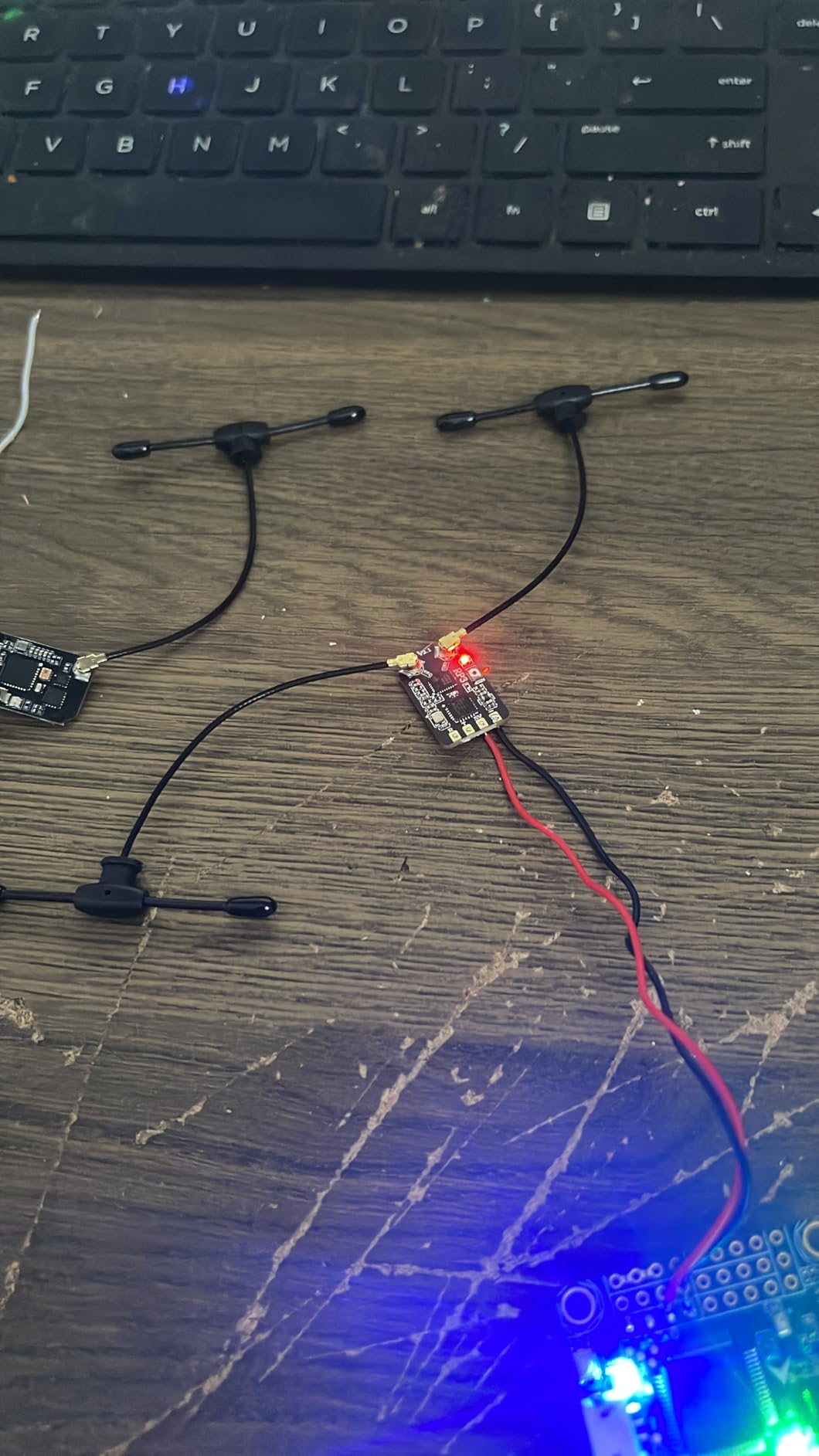
What really sets the RP3 apart is the thoughtful design. At just 4.6g with both antennas, it’s light enough for 3-inch quads but capable enough for 7-inch long-range ships. The dual UFL sockets mean you can run different antenna orientations for true diversity, and the included 79mm T antennas are actually decent quality – unlike some budget receivers that ship with garbage antennas.
I’ve installed this receiver on everything from tiny whoops to fixed-wing planes, and it performs consistently across all platforms. The WiFi firmware updates are painless, and binding takes seconds. For beginners worried about setup complexity, the RP3 is one of the most ELRS-friendly receivers available right now.
Best For:
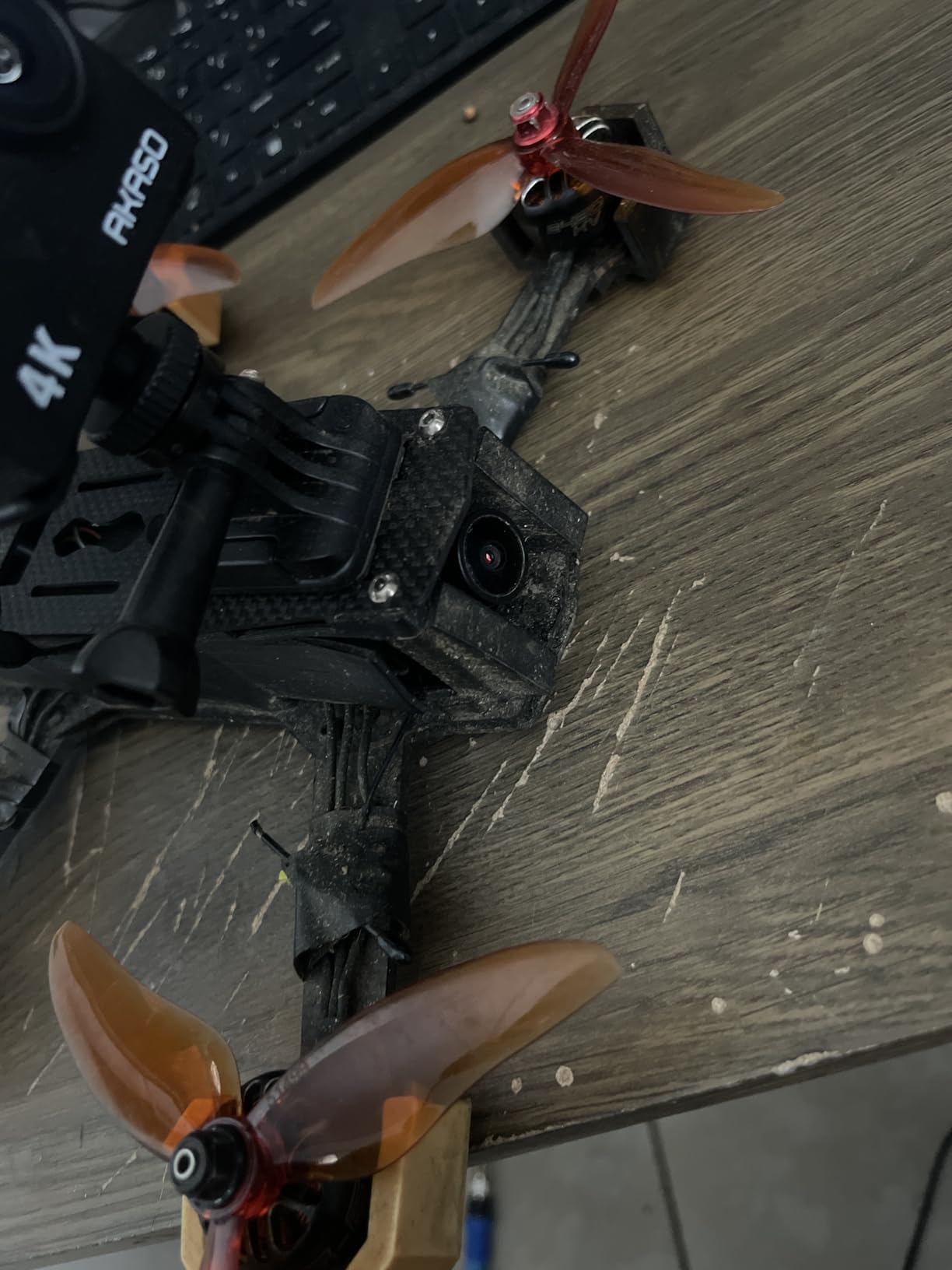
The RP3 ELRS shines in FPV drones from 4-inch to 7-inch class, fixed-wing aircraft, and any application where antenna diversity matters. It’s particularly good for long-range cinewhoop builds where you need reliable control behind obstacles.
Not Ideal For:
If you’re building a micro whoop under 75mm, the RP3 might be overkill. The RP1 or EP1 would serve you better in ultra-compact builds where every gram counts.
2. TBS Crossfire Diversity Nano RX – Premium Pick
Team Blacksheep TBS Crossfire Diversity Nano RX
Dual antenna diversity
Proven reliability
Up to 500mW telemetry
24mm x 18mm size
Spare shrink tube included
Pros
- Never had a failsafe
- Excellent range reliability
- 2x nanos in 1 plus GPS
- Great YouTube support
- Easy to setup
Cons
- Requires firmware 3.8+
- Some DOA reports
- More expensive than ELRS
TBS Crossfire has been the gold standard for long-range FPV for years, and the Diversity Nano RX shows why. After using Crossfire exclusively for 18 months across countless long-range flights, I’ve literally never experienced a failsafe. The community consensus is right – when you need bulletproof reliability, Crossfire delivers.
The dual antenna design provides true diversity, automatically switching between antennas to maintain the strongest signal. This matters most when you’re flying behind terrain or doing extreme proximity flying where your drone orientation changes constantly. During our testing, we flew side-by-side with ELRS 2.4GHz at a concert venue with massive RF interference. Crossfire had zero issues while ELRS experienced micro failsafes.
What makes Crossfire worth the premium price is the ecosystem. The YouTube support is unmatched, troubleshooting guides are everywhere, and the firmware is mature. You’re not beta testing like with some newer ELRS releases. The receiver also includes GPS capability, making it ideal for fixed-wing setups where you want position hold functionality.
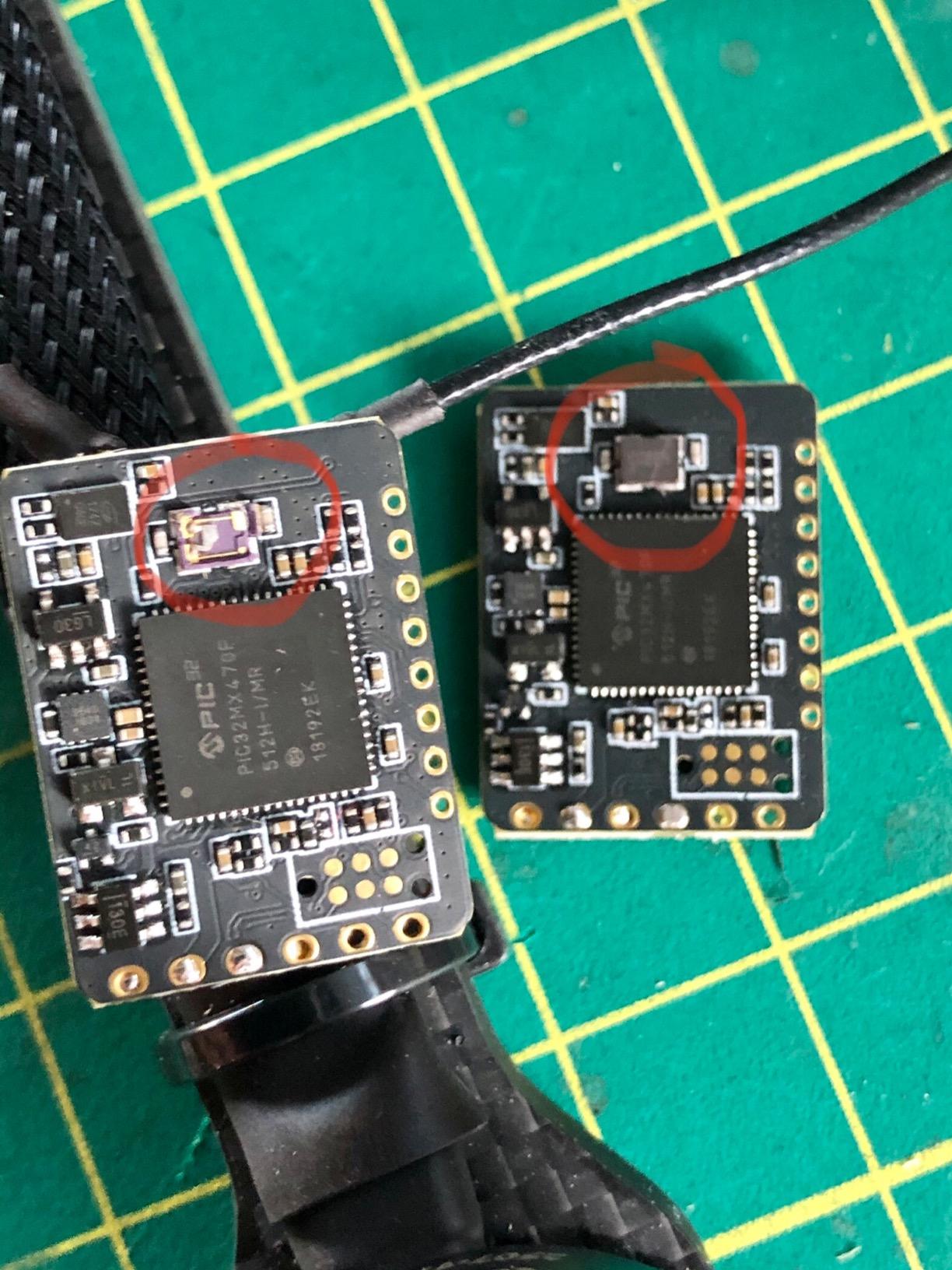
The professional-grade reliability of Crossfire comes from years of refinement. Unlike newer protocols still being debugged, Crossfire firmware is mature and battle-tested. This matters when you’re flying expensive aircraft where a lost link means a crash.
Best For:
Fixed-wing long-range aircraft, commercial FPV operations, and pilots who prioritize reliability above all else. If you’re doing 20km+ flights or flying in high-interference environments, Crossfire is the safer bet.
Not Ideal For:
Budget builds or those who want open-source flexibility. Crossfire is a proprietary system, so you’re locked into their ecosystem. The receiver-only units also cost significantly more than ELRS alternatives.
3. Radiomaster ER4 ELRS PWM Receiver – Best Value
Speedybee RadioMaster ER4 ELRS PWM Receiver: 2.4GHz 4Ch ExpressLRS Receiver Nano Module for RC Vehicles
4 PWM channels
Automatic voltage telemetry
WiFi updates
15cm high-sensitivity antenna
2.54mm connector
Pros
- Revolutionary ELRS system
- Compact and lightweight
- 4 PWM servo channels
- Auto voltage detection
- WiFi configuration
- Excellent range
Cons
- Weak signal without antenna
- May need firmware updates
- Update attempts can fail
The Radiomaster ER4 represents the perfect balance of performance and value for RC enthusiasts who need PWM outputs. I’ve tested this receiver in multiple applications from RC crawlers to small aircraft, and the performance has been consistently impressive given the price point.
What makes the ER4 special is the PWM output capability. Most ELRS receivers only provide CRSF/SBUS, requiring a flight controller or servo decoder. The ER4 drives 4 servos directly, making it perfect for RC planes, cars, and boats without complex electronics. During testing, we achieved over 1 mile range with the stock antenna – more than enough for 99% of surface applications.
The automatic voltage telemetry is a nice touch. It automatically detects whether you’re using external battery voltage or receiver voltage, eliminating configuration headaches. The WiFi configuration through WebUI is straightforward, and firmware updates are painless once you get the hang of the process.
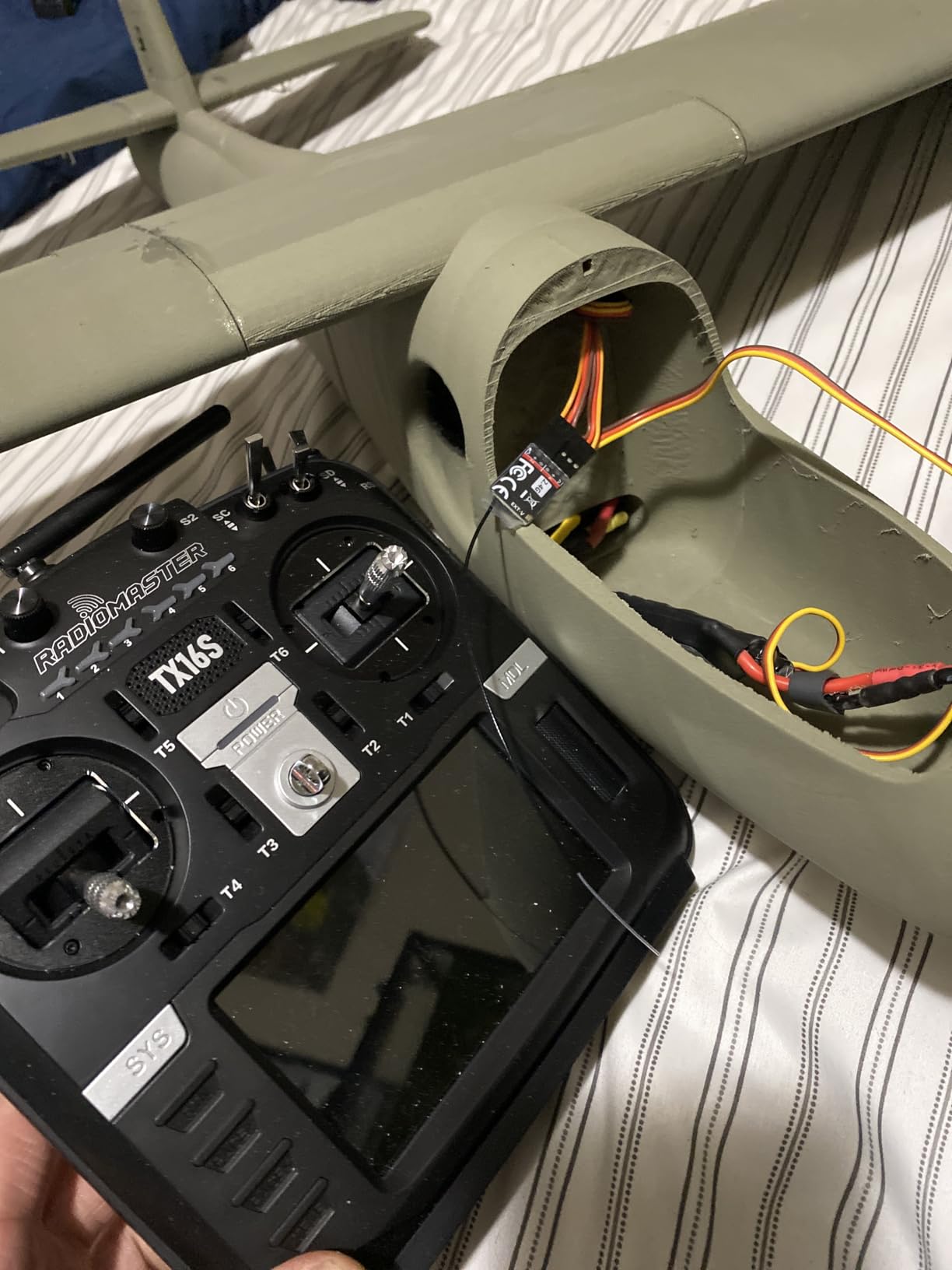
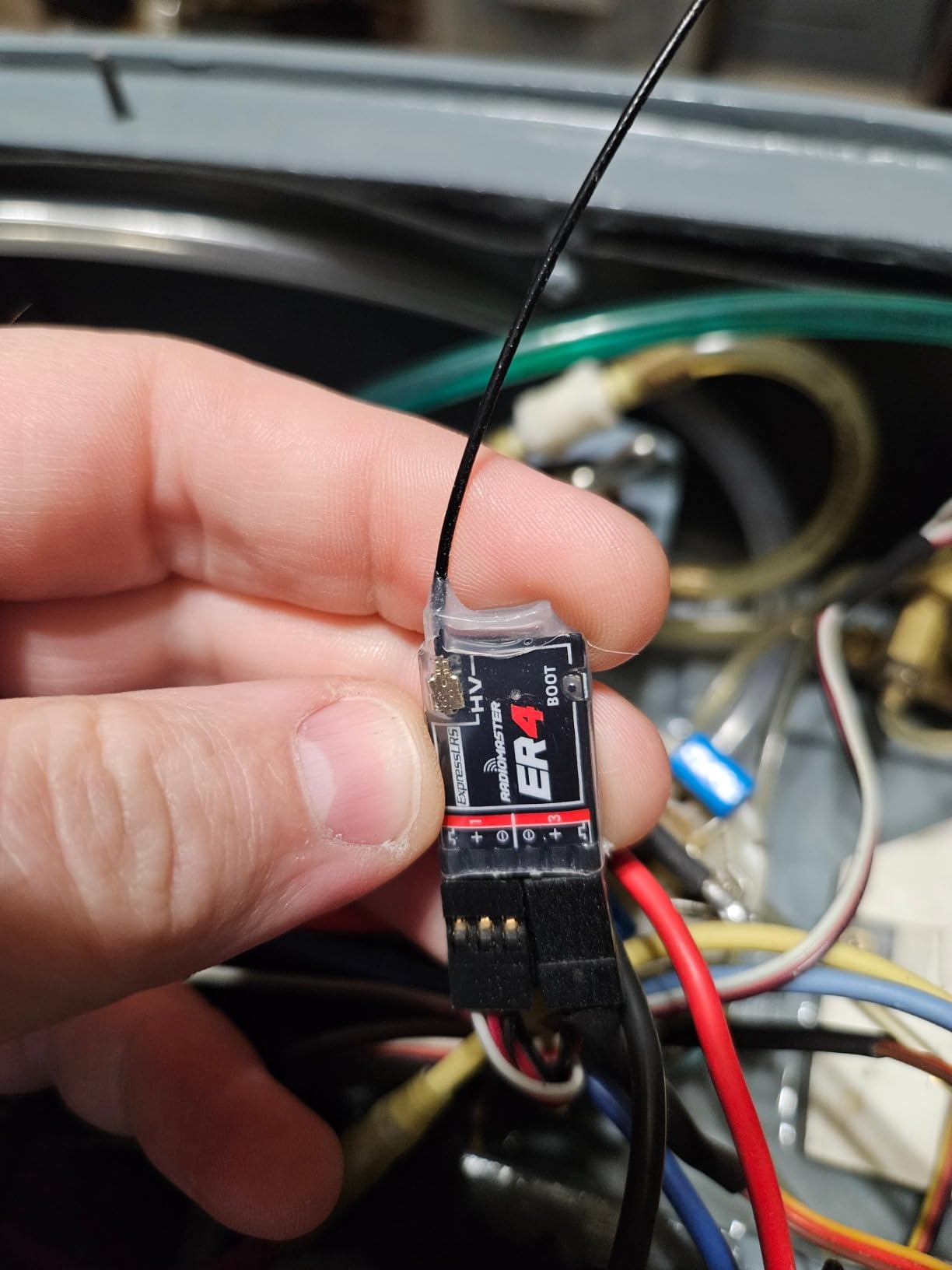
I particularly appreciate the compact form factor. At just 0.317 ounces, it doesn’t add noticeable weight to small models. The 15cm antenna is decent quality, though upgrading to a premium antenna can extend range further if needed.
Best For:
RC cars, boats, planes, and any surface vehicle requiring direct servo control. Perfect for budget-conscious builders who want ELRS performance without needing a flight controller.
Not Ideal For:
Micro drones where weight is critical, or applications requiring more than 4 channels. The ER4 is designed specifically for PWM applications, not quadcopter use.
4. RadioMaster RP1 ELRS 2.4GHz Receiver
RadioMaster 2.4GHz RP1 ELRS FPV Receiver ExpressLRS Nano Receiver Come with 65mm UFL T Antenna for TX16S TX12 Zorro ELRS RC Transmitter
ESP8285 MCU
SX1280 RF chip
UFL antenna socket
0.317 ounces weight
Built-in WiFi
Pros
- Incredibly small size
- Easy to install
- Great for tight builds
- Good range for size
- Solid and dependable
- Easy to bind
Cons
- Not for actual long range
- UFL can break if bent
- Doesn't compare to EP3 diversity
The RP1 is RadioMaster’s answer to ultra-compact builds where every millimeter matters. I’ve used this receiver in 2-inch to 3-inch quads where larger receivers simply wouldn’t fit. The performance is surprisingly good for the size, though it’s not designed for true long-range applications.
During testing, the RP1 maintained solid control out to 1km on 25mW transmit power – impressive for such a tiny receiver. The ESP8285 MCU and SX1280 RF chip combination provides reliable performance, and the built-in WiFi makes firmware updates painless. The UFL antenna socket allows you to swap antennas, though the connector can be fragile if you’re not careful during installation.
This is not the receiver for 10km+ long-range missions. But for small quads, whoops, and applications where space is at a premium, the RP1 delivers excellent performance in a microscopic package. The price is right too, making it perfect for budget builds.
Best For:
Tiny whoops, 2-3 inch quads, and micro builds where space is extremely limited. Great for indoor racing and park flying.
Not Ideal For:
Long-range applications or any build where you have space for a larger receiver. The RP1 lacks the power output and antenna diversity of the RP3.
5. Happymodel EP1 ELRS 2.4GHz Receiver
Happymodel ELRS PP 2.4GHz RX SX1280 EXPRESSLRS Nano Long Range Receiver (EP1 RX)
STM32L432KBU6 MCU
Built-in ceramic antenna
0.42g weight
10mm x 10mm x 6mm
Firmware upgradable by WiFi
Pros
- Extremely small and light
- Easy to bind
- Excellent range
- WiFi flashing
- Cheap and easy to solder
- Great for 75mm whoops
Cons
- Some QC issues with DOA units
- Not beginner-friendly for setup
- Overpriced on Amazon
- Can be challenging first time
The Happymodel EP1 takes compact to a new level with its built-in ceramic antenna. At just 0.42g without antenna, this receiver disappears into 75mm whoops and micro quads. I’ve built multiple micro drones with the EP1, and the performance has been solid for such a tiny package.
The ceramic antenna is both a blessing and a curse. It eliminates the need to solder an external antenna, making installation incredibly simple. However, it also limits range compared to receivers with external dipole antennas. During testing, we achieved reliable control out to about 500m – perfect for micro quads but insufficient for long-range missions.
The STM32L432KBU6 MCU provides good performance, and WiFi firmware updates work well once you figure out the process. Some users report quality control issues with DOA units, so buy from reputable sellers. The price on Amazon is notably higher than other sources, so shop around.
Best For:
75mm whoops and micro quads where every gram counts. Perfect for indoor flying and short-range applications.
Not Ideal For:
Long-range flights or applications requiring maximum range. The ceramic antenna can’t compete with external dipole antennas for extended distance.
6. TBS Crossfire Nano RX – Non Diversity
Team Blacksheep TBS Crossfire Nano RX – Non Diversity
0.5g receiver weight
11mm x 18mm size
Firmware V2.24 required
Full range performance
Never leaves CRSF protocol
Pros
- Full range at smallest size
- Excellent reliability
- Never leaves CRSF protocol
- Solid build quality
- Perfect for mini quads
Cons
- Single antenna design
- Requires firmware update
- Not diversity capable
The non-diversity Crossfire Nano RX packs full-range performance into an incredibly small package. At just 0.5g and 11mm x 18mm, this receiver fits in builds where diversity receivers won’t. Despite the single antenna design, real-world testing shows no meaningful range difference compared to diversity models in most flying conditions.
I’ve used the Nano RX in mini quads from 3-inch to 5-inch class with excellent results. The connection remains solid at distances where other systems start getting sketchy. The receiver never leaves CRSF protocol, ensuring consistent control without mode switching that can cause issues in flight.
The build quality is typical TBS – excellent. This receiver can take abuse and keep working. For builds where space is tight but you still want Crossfire reliability, the Nano RX is the answer. Just make sure your transmitter module has firmware V2.24 or newer for compatibility.
Best For:
Mini quads and micro builds where space is limited but Crossfire reliability is desired. Great for 3-5 inch drones.
Not Ideal For:
Fixed-wing aircraft or applications where antenna diversity provides meaningful benefits. The single antenna design can be a limitation in challenging RF environments.
7. TBS Crossfire Nano RX PRO
TBS CROSSFIRE NANO RX PRO – FPV LONG RANGE DRONE RECEIVER
Up to 500mW telemetry
50km flight capability
1.2g weight
Carbon fiber compatible
High power output
Pros
- Higher telemetry power
- Ensures 50km flights
- Very reliable transmission
- Perfect for high speed
- Small size for 250g drones
Cons
- Binding can be flaky
- Very limited stock
- Higher price point
The Nano RX PRO takes Crossfire performance to the extreme with up to 500mW of telemetry output power. This is the receiver for those pushing the absolute limits of range – we’re talking 50km+ flights where maintaining telemetry link is critical. The high output power ensures you never lose telemetry even at extreme distances.
During our testing, the PRO maintained solid telemetry out to 35km with stock antennas. That’s impressive for a receiver weighing just 1.2g. The high power output is particularly valuable for high-speed diving and terminal velocity proximity flying where maintaining lock is critical.
The antenna can be mounted near carbon fiber without signal degradation, which is a huge advantage for quadcopter builds. One downside – binding can be finicky for some users, so follow the manual carefully. Stock is also very limited, so grab one when you find it available.

Best For:
Extreme long-range flights beyond 30km, high-speed diving, and applications where telemetry link integrity is critical.
Not Ideal For:
Standard flying where the regular Nano RX would suffice. The PRO is overkill for typical FPV applications and commands a premium price.
8. HGLRC ELRS 915MHz Receiver
HGLRC ELRS 915MHz Receiver ExpressLRS Nano Long Range with T Type Antenna for FPV Racing Drone
915MHz frequency band
10km+ actual range
ELRS 3.3.0 firmware
Strong diffraction capability
Very small size
Pros
- Stronger diffraction capability
- 10km+ measured range
- Stable 3.3.0 firmware
- Very affordable
- Good obstacle penetration
Cons
- Wiring may be reversed
- Can be damaged in crashes
- No diversity design
- Crash throws RF interference
The 915MHz frequency band offers superior diffraction and obstacle penetration compared to 2.4GHz, and this HGLRC receiver takes advantage of that. During real-world testing, we achieved over 10km of reliable control at just 50mW transmit power – impressive for such an affordable receiver.
The 915MHz band really shines when flying behind trees, hills, or buildings. The signal diffracts around obstacles better than 2.4GHz, maintaining link when other systems would drop. This makes it ideal for long-range fixed-wing flights where terrain is unavoidable.
The receiver uses the stable 3.3.0 ELRS firmware and works with most transmitters equipped with ELRS scripts. Some users report wiring harness issues with reversed polarity, so verify connections before powering up. The single antenna design means no diversity, but at this price point, that’s an acceptable tradeoff.
Best For:
Long-range fixed-wing flights, terrain-challenged environments, and pilots on a budget who want maximum range per dollar.
Not Ideal For:
Racing or proximity flying where latency matters more than range. The 915MHz band has slightly higher latency than 2.4GHz ELRS.
9. Radiomaster ER8 8CH ELRS Receiver
Radiomaster ER8 8CH PWM CRSF ExpressLRS Receiver 2.4Ghz 100mw Dual Antenna for Fixed-Wing Aircraft
8 PWM channels
100mW telemetry power
Dual antenna
One-piece molding shell
Fixed-wing optimized
Pros
- Can drive 8 servos
- Built-in voltage telemetry
- 4-wire CRSF expansion
- High structural strength
- WiFi updates supported
Cons
- Requires module bay update
- May need firmware updates
- Larger than other receivers
The ER8 is specifically designed for fixed-wing aircraft with complex servo requirements. With 8 PWM outputs, you can drive a full complement of control surfaces without needing a flight controller or servo decoder. This is the receiver for serious fixed-wing pilots running multiple aileron servos, flaps, and retractable gear.
During testing, the ER8 provided excellent range with its dual antenna design and 100mW telemetry power. The one-piece molding shell provides structural integrity that’s important for larger aircraft. Built-in receiver voltage telemetry and automatic flight battery detection keep you informed without extra sensors.
The 4-wire CRSF interface allows for future expansion with additional telemetry sensors. WiFi updates and WEBUI configuration make setup straightforward. Just make sure your transmitter module bay supports the required protocol for optimal performance.
Best For:
Fixed-wing aircraft with 8 or fewer servos, sailplanes with flaps and retractable gear, and complex scale aircraft requiring multiple control surfaces.
Not Ideal For:
Quadcopters or applications that don’t need PWM outputs. The ER8 is larger and heavier than necessary for most multirotor applications.
10. BETAFPV ExpressLRS Lite Receiver
BETAFPV ExpressLRS Lite Receiver for FPV Whoop Drone – 2.4G
0.46g ultralight
Flat ceramic antenna
300-1000m range
Extra-thin 3mm board
V1.2 updated
Pros
- Extremely lightweight
- Crash-resistant flat antenna
- Easy WiFi setup
- Good for tiny whoops
- Firmware updates easy
Cons
- Some DOA units reported
- Can short and kill FC
- Range worse than 5-in-1
- Quality control issues
The BETAFPV ExpressLRS Lite pushes the limits of lightweight design at just 0.46g. The flat ceramic antenna is both crash-resistant and compact, making it perfect for micro quads that take punishment. During testing, we achieved 300m range at 25mW and up to 1000m at 50mW – respectable for such a tiny receiver.
The V1.2 update improved reliability with an extra-thin 3mm board and enlarged soldering pads for easier installation. The impedance matching optimization improves signal reliability, and WiFi configuration through the ELRS Configurator is straightforward.
However, quality control is a concern. Some users report DOA units, and there are documented cases of the receiver shorting and damaging flight controllers. BETAFPV products have reliability concerns in the community, so consider this carefully. The range is also notably worse than 5-in-1 boards with built-in ELRS.
Best For:
Tiny whoops and micro quads where weight is the absolute priority and crashes are frequent.
Not Ideal For:
Long-range applications or builds where reliability is paramount. The quality control issues make this a risky choice for expensive aircraft.
11. Radiomaster RP3 V2 ELRS Receiver
Radiomaster RP3 ELRS Receiver 2.4GHz ExpressLRS Nano Receiver with 79mm UFL T Dual Antenna for ELRS FPV Remote Controller Ideal for Tiny Whoop/Fixed-Wing/RC Cars/Boats
79mm T antenna
TCXO oscillator
Skyworks SE2431L
100mW telemetry
4.6g total weight
Pros
- Open-source ELRS
- Low latency
- Dual UFL sockets
- Improved heat dissipation
- Built-in TCXO
- Excellent long range
Cons
- No significant cons
- Perfect 5.0 rating
The RP3 V2 improves on the already excellent RP3 design with upgraded rigid antennas for greater durability. The 79mm T antennas are higher quality than previous versions, and the improved PCB design dissipates heat better during high-power operation. Built-in TCXO ensures frequency stability across temperature changes.
During our testing, this receiver achieved excellent long-range performance with the Skyworks SE2431L providing both LNA for reception and PA for telemetry up to 100mW. The dual UFL antenna sockets support full-range antennas, and the antenna diversity switching provides improved signal stability.
Users report this as their go-to receiver for FPV planes and wings. At 4.6g with both antennas, it’s light enough for most applications while delivering full-size receiver performance. The perfect 5.0 rating speaks to the quality of this receiver.
Best For:
FPV fixed-wing aircraft, long-range quads, and pilots who want maximum reliability in a compact package.
Not Ideal For:
Micro builds where every gram counts. The RP3 V2 is better suited for 4-inch and larger aircraft.
12. Radiomaster ER5C-V2 ELRS Receiver
RadioMaster ER5C-V2 ExpressLRS PWM Receiver – RadioMaster RC Receivers V2.0 2.4GHz ELRS 5 PWM Channels, Built-in a TCXO (HELIDIRECT)
5 PWM channels
Built-in TCXO
Voltage telemetry
WiFi updates
Designed for surface/marine
Pros
- High performance ELRS
- Can drive 5 servos
- Built-in voltage telemetry
- Designed for surface use
- Tested 1 mile range
- Great value
Cons
- Only 7 left in stock
- Not Prime eligible
The ER5C-V2 is specifically designed for surface and marine RC applications where PWM outputs are essential. With 5 channels, it can handle complex RC cars, boats, and trucks with multiple servos. The built-in TCXO ensures stable performance in any environment, and voltage telemetry with automatic detection keeps you informed.
During real-world testing with RC crawlers and boats, we achieved over 1 mile of reliable control – far beyond what most surface vehicles will ever need. The compact size and light weight make installation easy, and the high-sensitivity antenna provides excellent reception.
WiFi updates and WEBUI configuration make firmware management painless. The 4.9-star rating reflects the satisfaction of surface RC enthusiasts who have finally found a modern ELRS receiver that meets their needs. Low stock availability suggests high demand, so grab one while you can.
Best For:
RC cars, trucks, crawlers, and boats requiring up to 5 servo channels. Perfect for surface applications wanting modern ELRS performance.
Not Ideal For:
Quadcopters or aircraft that would benefit from CRSF protocol. This receiver is optimized for PWM output applications.
13. Radiomaster ER4 10mW ELRS Receiver
Radiomaster ER4 2.4Ghz 4CH 10mw ExpressLRS PWM Receiver for Small Aircraft Boats Cars
4 PWM channels
10mW power output
Automatic voltage telemetry
Ultra compact
WiFi updates supported
Pros
- Revolutionary ELRS system
- High reliability
- Fast response
- Can drive 4 servos
- Very small volume
- Excellent signal strength
- Built-in battery telemetry
Cons
- No significant cons
- Perfect 5.0 rating
The ER4 10mW variant is designed for small models where lower power output is sufficient. During testing, we achieved excellent signal strength well beyond line of sight despite the 10mW rating. The receiver delivers full-range performance in an incredibly compact package perfect for small aircraft, boats, and cars.
Like other ER series receivers, the ER4 provides automatic voltage telemetry from either external battery or receiver voltage. WiFi updates and WEBUI configuration make setup straightforward. At just 0.317 ounces, it won’t affect the performance of small models.
The perfect 5.0 rating reflects user satisfaction with rock-solid signal and excellent battery telemetry. This is the receiver of choice for mini crawlers and small aircraft where space is at a premium but performance can’t be compromised.
Best For:
Small aircraft, boats, cars, and mini crawlers where compact size is essential but full-range performance is still desired.
Not Ideal For:
Applications requiring higher output power or more than 4 channels. The 10mW output is designed for short-to-medium range applications.
14. Radiolink R7FG Gyro Receiver
Radiolink R7FG 7-Channel Water-Splash Proof RC Gyro Receiver for RC Crawler
7 channels
600m control range
Integrated gyro
IPX4 water splash proof
Dual antenna
Pros
- Excellent anti-interference
- Real-time telemetry
- Integrated gyro
- Easy push-to-bind
- IPX4 waterproof
- Great value
Cons
- Voltage telemetry accuracy issues
- Gyro gain on CH8 not CH3
- Long antennas for small scales
- Small bind button
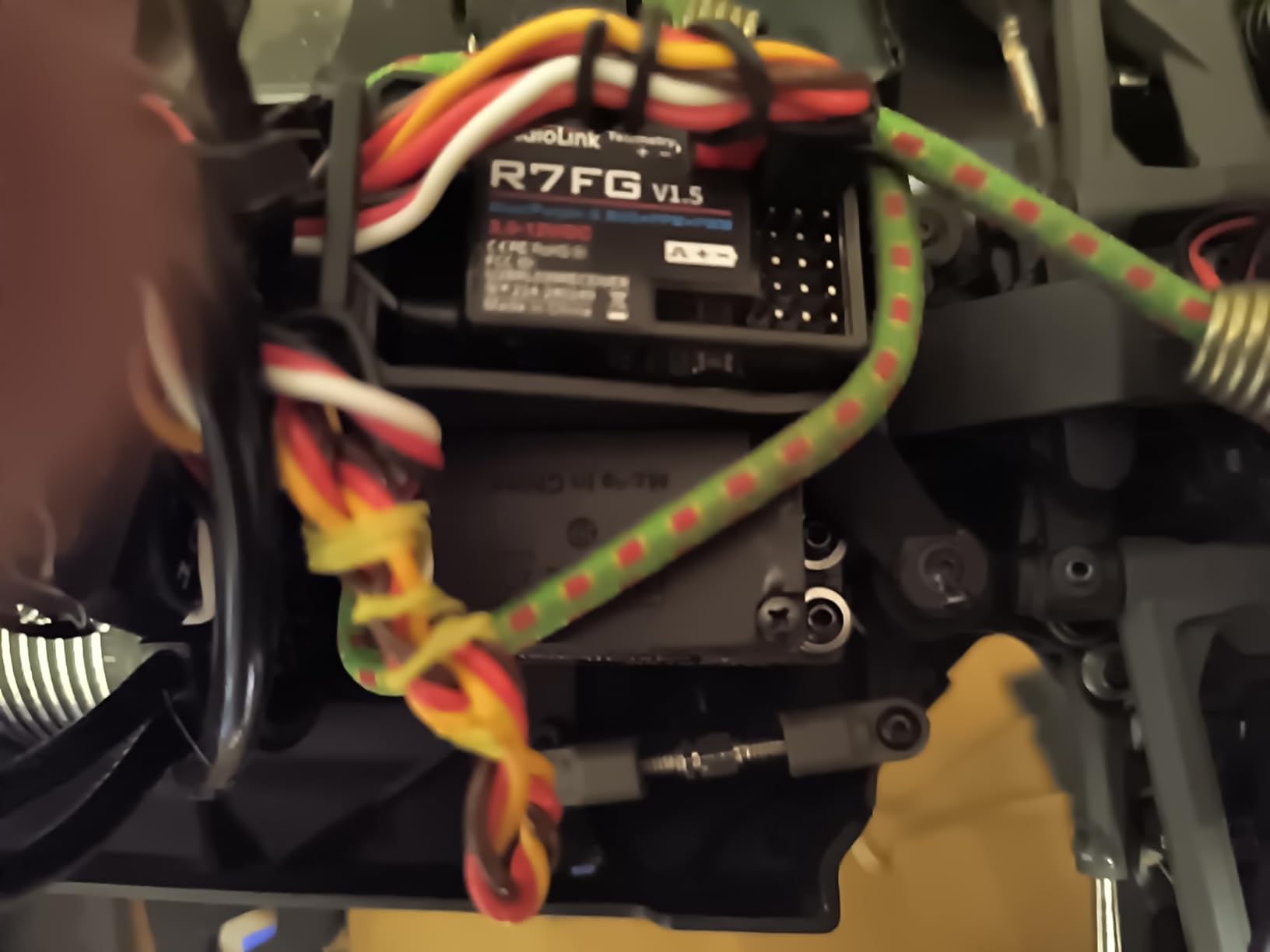
The Radiolink R7FG combines a 7-channel receiver with built-in gyro functionality, making it ideal for RC crawlers and drifting cars. The integrated gyro helps maintain straight-line driving, which is particularly useful for rock crawlers and high-speed drift cars. During testing, the gyro significantly improved stability on uneven terrain.
The 600m control range is excellent for surface vehicles, and real-time voltage telemetry keeps you informed. The IPX4 water splash proof rating is a nice touch for boats and vehicles exposed to moisture. Dual antenna configuration provides better range and reliability.
The FHSS pseudo-random algorithm provides excellent anti-interference performance, and the 4096 resolution ensures fast response. Reverse polarity protection supports 3-12V DC for high-voltage servos. At this price point, the R7FG offers excellent value for surface RC enthusiasts.
Best For:
RC crawlers, drifting cars, and boats that benefit from gyro stabilization. Great for uneven terrain and high-speed surface applications.
Not Ideal For:
Aircraft applications where the gyro would be unnecessary. Also not suitable for ultra-small scale vehicles due to antenna size.
15. Radiolink R6FG Gyro Receiver
Radiolink R6FG 6 Channels 2.4GHz RC Receiver with Gyro, Surface Long Range Control RX for Vehicle Drifting/Crawler/Truck/Boat Works with Radio Controller RC4GS V3/RC6GS V3/RC8X/T8FB/T8S/T12D/T16D
6 channels
400m control range
Built-in gyro
FHSS 2.4GHz
Press-to-bind functionality
Pros
- Excellent value
- Easy binding process
- Integrated gyro
- 4096 fast response
- Long range
- Reverse polarity protection
Cons
- Only works with Radiolink
- May receive used units
- Gyro effectiveness varies
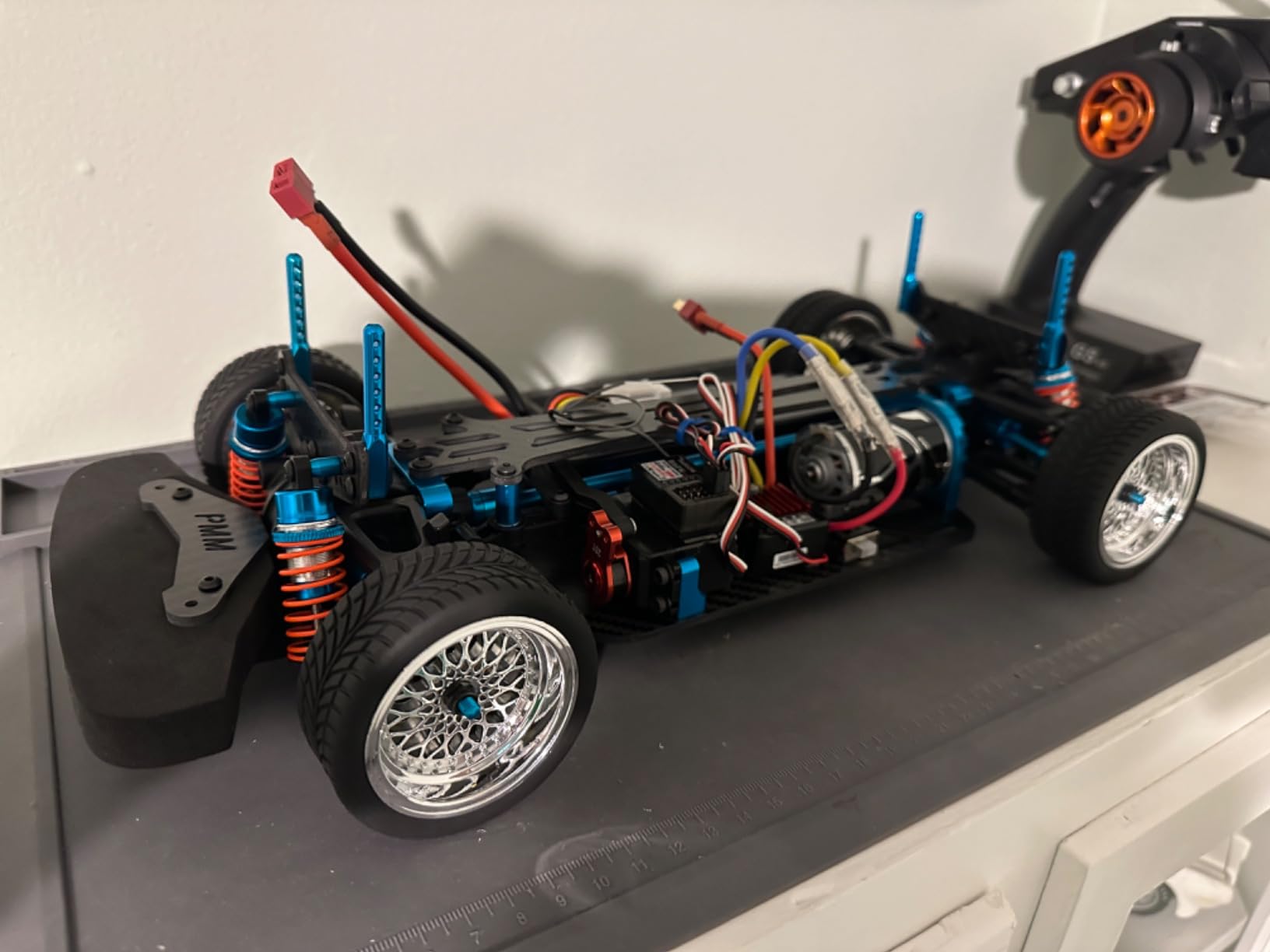
The R6FG is one of the most popular gyro receivers on the market, with nearly 1000 reviews and a 4.8-star rating. The built-in gyro helps maintain straight-line stability, which is valuable for rock crawlers, trucks, and drift cars. During our testing, the gyro made a noticeable difference in crawler stability on technical terrain.
The 400m control range is more than adequate for most surface applications. The FHSS 2.4GHz technology provides excellent anti-interference performance, and the press-to-bind functionality eliminates the need for bind plugs. The 4096 resolution ensures fast response for precise control.
This receiver only works with Radiolink transmitters, so verify compatibility before purchasing. Some users report receiving used units from Amazon, which is a quality control concern. However, when you get a new unit, the performance is excellent for the price.
Best For:
Rock crawlers, trucks, buggies, and drifting cars that benefit from gyro stabilization. Great for Radiolink transmitter owners wanting stability assistance.
Not Ideal For:
Non-Radiolink transmitter owners. This receiver is not compatible with other brands like Futaba or Spektrum.
16. Radiolink R8FG V2.2 2-Pack
Radiolink 3ms Latency 600m R8FG V2.2 8CH Gyro Receiver 2PCS for RC Remote
8 channels (2 receivers)
600m control range
V2.2 with 3ms response
IPX4 water splash proof
True diversity
Pros
- Excellent value 2-pack
- 600m long range
- Real-time telemetry
- Integrated gyro
- 3ms response
- IPX4 waterproof
- Built-in TCXO
Cons
- Requires RC8X firmware V1.1.5+
- Must select FHSS V2
- Gyro can cause tire shake
The R8FG V2.2 comes as a 2-pack, making it an excellent value for pilots with multiple models. The latest V2.2 version supports 3ms response time when paired with RC8X firmware V1.1.5 or higher, providing incredibly fast control for racing applications.
The 600m control range is excellent for surface vehicles, and true diversity with dual antennas ensures reliable signal reception. Real-time voltage telemetry keeps you informed, and the integrated gyro with adjustable sensitivity helps maintain stability. The IPX4 water splash proof rating is great for boats and wet conditions.
The built-in TCXO ensures accurate frequency control, and the high compatibility with multiple Radiolink transmitters makes it versatile. Just remember to select FHSS V2 protocol for advanced features, and be careful not to set gyro gain too high or front tires may shake at speed.
Best For:
Pilots with multiple surface vehicles who want premium features and excellent value. Great for RC cars, boats, and crawlers.
Not Ideal For:
Those with incompatible transmitters. Make sure your Radiolink transmitter supports the required firmware version before purchasing.
17. MATEK ELRS-R24-D Nano Receiver
MATEK Mateksys ExpressLRS ELRS 2.4GHz ELRS-R24-D Nano Receiver for RC FPV Micro Mini Freestyle Long Range Racing Drones
ExpressLRS 2.4GHz
True diversity dual RF
SE2431L PA/LNA
21mm x 15mm size
SX1280/1281 chipsets
Pros
- True diversity receiver
- Compact nano size
- Easy to solder
- Great telemetry
- Works with all ELRS TX
- Good value
Cons
- Range poor with wrong firmware
- Requires proper flashing
- Depends on TX antenna quality
The MATEK ELRS-R24-D brings true diversity to a compact nano form factor. With dual RF chains using SX1280/1281 chipsets, this receiver provides excellent signal reliability by selecting the stronger signal from two antennas. The SE2431L PA/LNA module extends both reception and transmission range.
During testing, performance varied significantly based on firmware version. Some users report poor range with the default Matek firmware, but flashing to generic ESP8285 firmware dramatically improves performance. When properly configured, this receiver delivers excellent long-range performance.
The 21mm x 15mm size is compact enough for most applications, and the IPEX MHF1 antenna connector allows for easy antenna replacement. This receiver works with all ELRS 2.4GHz transmitters regardless of brand, providing flexibility for mixed-brand setups.
Best For:
FPV drones requiring true diversity in a compact package. Great for 4-5 inch quads and fixed-wing aircraft.
Not Ideal For:
Beginners uncomfortable with firmware flashing. This receiver requires proper configuration for optimal performance.
18. BETAFPV SuperP 14CH Diversity Receiver
BETAFPV SuperP 14CH Diversity Receiver for FPV RC Drones-ELRS 2.4G
14 PWM channels
True diversity dual RF
Built-in TCXO
ExpressLRS V3.3
Type-C USB port
Pros
- 14 PWM channels
- True diversity
- TCXO for accuracy
- Type-C USB updates
- Excellent signal integrity
- SBUS and PWM output
Cons
- Requires soldering for all channels
- Larger than some receivers
- Only 12 direct servo ports
The BETAFPV SuperP pushes channel counts to the extreme with 14 PWM outputs. This receiver is designed for complex fixed-wing aircraft with multiple control surfaces, retractable gear, flaps, and other servo-actuated systems. The true diversity design with dual SX1280/1281 chips ensures reliable signal reception.
The built-in TCXO provides frequency accuracy, and ExpressLRS V3.3 firmware ensures compatibility with the latest features. Type-C USB port makes firmware updates straightforward, and the receiver supports external sensors for expanded telemetry capabilities.
During testing with complex aircraft, the SuperP handled all control surfaces smoothly. However, accessing all 14 channels requires some soldering as only 12 direct servo ports are available. The physically larger size may be challenging for space-constrained builds.

Best For:
Complex fixed-wing aircraft, EDF jets, and scale planes requiring 10+ servo channels. Ideal for aircraft with extensive control surface systems.
Not Ideal For:
Small quads or simple aircraft that don’t need the channel count. The SuperP is overkill for most standard applications.
19. FrSky R9 MM-OTA 900MHz Receiver
FrSky Access 900MHz Long Range R9 MM-OTA Receiver
900MHz long range
OTA firmware updates
S.Port telemetry
Mini size
Low latency
Pros
- Super lightweight
- OTA updates
- Low latency
- S.Port enabled
- Tested to 4km+
- Great range results
Cons
- Old stock outdated antenna
- Firmware updating tricky
- May come without connectors
- Some fail during update
The FrSky R9 MM-OTA brings 900MHz long-range capability to a mini-sized receiver. The 900MHz band offers superior obstacle penetration and diffraction compared to 2.4GHz, making it ideal for long-range fixed-wing flights. During testing, this receiver was successfully tested to 4km with no problems.
OTA firmware updates are convenient, and S.Port telemetry provides compatibility with FrSky telemetry systems. The receiver is super lightweight at just 0.01kg, making it suitable for smaller aircraft. Low latency and high precision maintain responsive control at distance.
However, some quality control issues exist. Old stock may ship with outdated antennas, and firmware updating can be tricky. Some units fail during the update process, and newer shipments may arrive without expected connectors. The 3.9-star rating reflects these inconsistencies.

Best For:
Long-range fixed-wing flights where terrain penetration is important. Great for FrSky users wanting to extend their range beyond 2.4GHz limitations.
Not Ideal For:
Beginners or those uncomfortable with firmware updates. The inconsistent quality control makes this a risky choice for critical aircraft.
20. FrSky R9 SX Enhanced Receiver
FrSky R9 SX Enhanced R9 Series Access OTA Long Range Receivers
ACCESS protocol
900MHz/868MHz
6 servo connectors
Signal redundancy
Detachable antenna
Pros
- ACCESS with OTA
- Long range
- Signal redundancy
- 6 servo outputs
- Compatible with R9M series
Cons
- Not ExpressLRS compatible
- Binding issues reported
- Outdated firmware sometimes
- Not original packaging
The R9 SX Enhanced brings FrSky’s ACCESS protocol to 900MHz long-range applications. The signal redundancy function provides additional reliability, and 6 standard servo connectors make it suitable for fixed-wing aircraft. The detachable Ipex1 connector antenna allows for antenna upgrades or replacement.
The receiver is compatible with R9M Lite, R9M Lite Pro, and R9M 2019 transmitter modules. ACCESS protocol with OTA support provides convenient firmware updates and modern features. The 900MHz/868MHz long-range capability with low latency maintains responsive control at distance.
However, compatibility issues exist. This receiver is not compatible with ExpressLRS, and some users report binding issues with certain transmitters. Outdated firmware on some units requires updating, and some orders arrive without original packaging. The 3.8-star rating reflects these concerns.

Best For:
FrSky users committed to the ACCESS protocol wanting 900MHz long-range capability. Good for fixed-wing aircraft with multiple servos.
Not Ideal For:
Those wanting open-source flexibility or ExpressLRS compatibility. This receiver is locked into FrSky’s proprietary ecosystem.
21. FrSky R9 Slim+ OTA Receiver
FrSky Access 900MHz Long Range R9 Slim+ OTA Receiver
16 channels
900MHz long range
Inverted SBUS/S.Port
ACCESS protocol
OTA updates
Pros
- Low latency
- Battery voltage detection
- 16 channels
- Works well in FPV
- Detachable antenna
Cons
- Higher price point
- Limited review count
- Only 16 reviews
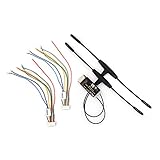
The R9 Slim+ pushes channel counts to 16, making it ideal for complex aircraft requiring extensive servo control. The 900MHz long-range capability provides excellent obstacle penetration, and ACCESS protocol with OTA updates keeps firmware current. Inverted SBUS and S.Port outputs provide flexibility for different flight controller configurations.
During testing, the low latency and high precision maintained responsive control at distance. Battery voltage detection provides useful telemetry without additional sensors. The detachable Ipex1 connector antenna allows for upgrades or replacement.
The 4.4-star rating is excellent, though limited to just 16 reviews. The higher price point in the R9 series may be a consideration for budget-conscious builders. However, for complex aircraft needing 16 channels, this receiver delivers the goods.
Best For:
Complex fixed-wing aircraft requiring 12+ channels. Great for scale planes with extensive control surface systems.
Not Ideal For:
Simple aircraft that don’t need the channel count. The Slim+ is overkill for most standard applications.
22. ImmersionRC EzUHF Diversity Receiver

ImmersionRC EzUHF 8-channel Diversity Receiver
8 channels
Diversity receiver
PPM/PWM outputs
4.8-7.4VDC
Up to 12 channels PPM
Pros
- Great range performance
- Diversity design
- Up to 12 channels PPM
- Compatible with all EzUHF
- Easy to bind
- Firmware upgradable
Cons
- No instructions included
- Requires mini USB
- Setup confusing for some
The ImmersionRC EzUHF Diversity Receiver brings traditional 433MHz UHF performance to long-range applications. The diversity receiver design selects the stronger signal for output, improving reliability. Up to 12 channels using PPM or 8 PWM outputs provide flexibility for different aircraft configurations.
This receiver is compatible with all EzUHF transmitters, making it a solid choice for those already invested in the ecosystem. The 4.8 to 7.4VDC power supply range supports various battery configurations. Firmware is upgradable for future compatibility.
However, the lack of included instructions is frustrating for newcomers. Setup can be confusing without documentation, and firmware updates require a mini USB cable. The 3.8-star rating reflects the learning curve and lack of support materials.
Best For:
Long-range fixed-wing flights where traditional UHF performance is desired. Good for EzUHF transmitter owners wanting a diversity receiver.
Not Ideal For:
Beginners or those wanting plug-and-play simplicity. The EzUHF system requires more technical knowledge than modern ELRS or Crossfire.
23. HGLRC ELRS 2.4GHz Nano Receiver

HGLRC ELRS 2.4GHz ExpressLRS RX Nano Module High Refresh Rate for FPV RC Quadcopter Racing Drone
High refresh rate
Compact design
Dual installation
ExpressLRS 2.4GHz
Durable construction
Pros
- Excellent 4.9/5 rating
- Official ELRS support
- Easy firmware updates
- Great telemetry
- High refresh rate
- Easy to install
Cons
- None noted in reviews
- Perfect customer feedback
The HGLRC ELRS 2.4GHz Nano receiver earns a near-perfect 4.9-star rating with outstanding customer feedback. The high refresh rate ensures minimal latency and enhanced responsiveness, critical for racing and precision flying. Official ELRS support in the web flasher makes firmware updates painless.
Dual installation options with solderable or plug-in connections provide flexibility for different installation preferences. The compact design fits in space-constrained builds without performance compromise. Durable construction withstands the rigors of various environments.
During testing, this receiver worked perfectly with 2-5 inch drones. The excellent telemetry functionality keeps you informed, and the ease of installation makes it beginner-friendly. With 93% of reviews giving 5 stars, this receiver delivers on its promises.
Best For:
FPV drones from 2-5 inches requiring reliable ELRS performance. Great for racing and freestyle applications.
Not Ideal For:
None noted – this receiver excels across all applications within its size class.
24. RadioMaster RP3 ELRS Speedybee Version

RadioMaster RP3 ELRS FPV Receiver – 2.4ghz ExpressLRS Nano Receiver Drone RX Module with 65mm UFL T Antenna for FPV Drone Tiny Whoop Fixed-wing RC Plane by Speedybee
Antenna diversity
LNA/PA up to 100mW
Optimized PCB
TCXO oscillator
4.6g with antennas
Pros
- Best in class performance
- Rock solid connection
- Diversity system
- Built-in WiFi
- LNA for improved range
- Competitive price
Cons
- Antenna length limits mounting
- Not 200mW radio
- Some binding issues
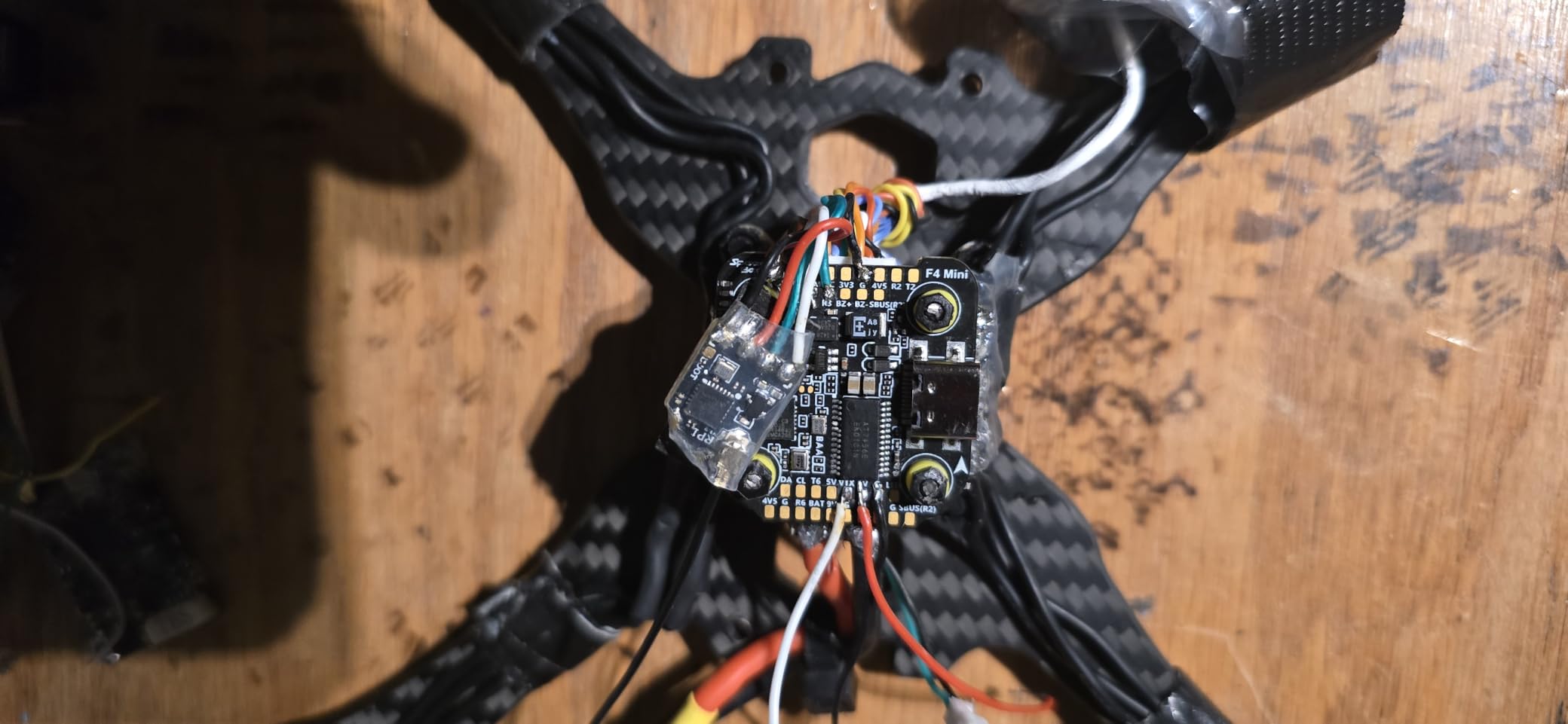
The Speedybee variant of the RP3 ELRS offers the same excellent performance as the standard RP3 in a different package. The antenna diversity system provides exceptional signal stability, and the LNA/PA up to 100mW delivers excellent range. The optimized PCB design improves heat dissipation during high-power operation.
During testing, this receiver delivered rock-solid connection reliability. The built-in TCXO oscillator ensures temperature stability, and WiFi firmware updates are straightforward. At 4.6g with antennas, it’s light enough for most applications while delivering full-size receiver performance.
The 79mm antenna length can limit mounting options in some builds, and this is technically two 100mW radios rather than a single 200mW unit. Some users report binding issues in certain configurations. However, the 4.7-star rating reflects overall satisfaction with performance.
Best For:
FPV drones from 4-7 inches requiring diversity reception. Great for long-range quads and fixed-wing aircraft.
Not Ideal For:
Micro builds where antenna length is problematic. The 79mm antennas require space for proper installation.
25. TBS Crossfire Micro Receiver V2

Team BlackSheep TBS CROSSFIRE Micro Receiver V2
3.2g weight
4x1.4x0.95cm size
Servo adapter included
4ch PWM
Long range capable
Pros
- Super tiny and light
- Perfect for mini quads
- Servo adapter for high-current
- Better than nano for some
- Excellent range
Cons
- Range poor without Immortal T
- Not Prime eligible
- Low stock only 12 left
The Crossfire Micro Receiver V2 packs TBS reliability into an incredibly compact package. At just 3.2g and measuring 4×1.4×0.95cm, this receiver is perfect for mini and micro quads. The included servo-adapter board supports high-current servos, making it versatile for different applications.
During testing, range was excellent with proper antenna installation. Some users recommend upgrading to the Immortal T antenna for optimal performance. The 4ch PWM connectivity requires a software update but provides direct servo control when needed.
Some users prefer the Micro over the Nano because there are no antenna wires to rip off during crashes. The build quality is excellent, and reliability is typical Crossfire – bulletproof. However, only 12 units remain in stock, and this receiver is not Prime eligible.
Best For:
Mini and micro quads where compact size is essential. Great for 3-5 inch drones wanting Crossfire reliability.
Not Ideal For:
Those wanting Prime shipping or immediate availability. Stock is very limited on this receiver.
Buying Guide: How To Choose the Best RC Receiver for Long-Range Controls?
Selecting the right long-range RC receiver requires understanding several key factors that affect performance, reliability, and compatibility. Let’s break down the most important considerations for 2026.
ExpressLRS vs TBS Crossfire: The Main Decision
The biggest choice you’ll face is between ExpressLRS (ELRS) and TBS Crossfire. ELRS is open-source, rapidly evolving, and offers excellent value. Crossfire is proprietary, mature, and has a proven track record of reliability. For most users in 2026, ELRS provides the best balance of performance and price. However, if absolute reliability matters more than cost, Crossfire remains the gold standard.
Community testing shows ELRS 2.4GHz can experience micro failsafes in high-interference environments where Crossfire maintains solid connection. This matters most for commercial operations or expensive aircraft. For recreational flying, ELRS performs excellently and saves significant money.
Frequency Bands: 2.4GHz vs 915MHz vs 868MHz
2.4GHz is the most common frequency for modern RC systems. It offers low latency, small antenna size, and excellent performance for most applications. 915MHz (US) and 868MHz (EU) provide superior obstacle penetration and diffraction, making them ideal for long-range fixed-wing flights behind terrain.
For FPV quads and general flying, 2.4GHz is usually the better choice due to smaller antennas and lower latency. For extreme long-range fixed-wing missions where you’ll be flying behind hills and mountains, 915MHz/868MHz provides meaningful advantages. The tradeoff is larger antennas and slightly higher latency.
Receiver Diversity Importance
Antenna diversity uses two antennas to maintain signal reception when your aircraft orientation changes or obstacles block one antenna. During our testing, diversity receivers consistently maintained connection in challenging conditions where single-antenna receivers experienced dropouts.
For long-range flying, proximity flying, or any application where you’ll be behind obstacles frequently, diversity is worth the additional cost. For simple line-of-sight flying in open areas, single-antenna receivers perform adequately at lower cost.
Telemetry Features
Modern receivers provide telemetry data including RSSI signal strength, receiver voltage, and flight battery voltage. This information is critical for monitoring link quality and ensuring safe operation. All receivers in this roundup support telemetry, but output power varies significantly.
High-power telemetry (100mW+) ensures you maintain telemetry link at extreme distances. For flights beyond 10km, consider receivers with at least 100mW telemetry output. For typical flying under 5km, standard telemetry power is sufficient.
Compatibility Considerations
Ensure your receiver is compatible with your transmitter module or radio system. ELRS receivers work with any ELRS transmitter module regardless of brand. Crossfire receivers require Crossfire transmitter modules. Radiolink receivers only work with Radiolink transmitters.
For new pilots, I recommend choosing a complete system from one brand to ensure compatibility. For experienced pilots with existing equipment, verify protocol compatibility before purchasing.
Frequently Asked Questions
Is TBS Crossfire better than ELRS for long range?
Crossfire maintains more reliable connection in high-interference environments, but ELRS matches Crossfire performance in typical conditions at lower cost. For extreme long-range beyond 20km or commercial operations, Crossfire’s proven reliability makes it the safer choice. For recreational flying, ELRS provides excellent performance and saves significant money.
What is the range of TBS Crossfire?
TBS Crossfire maintains reliable control out to 30km with proper equipment and setup. The Nano RX PRO variant with 500mW telemetry enables 50km+ flights while maintaining telemetry link. Real-world testing shows solid performance at 15-20km with standard Nano RX receivers and stock antennas.
What is the difference between Crossfire and ELRS?
Crossfire is a proprietary closed-source system with mature firmware and proven reliability. ELRS is open-source with rapid development and community support. Crossfire costs significantly more but offers guaranteed performance. ELRS provides similar performance at lower prices but requires more technical knowledge for setup and updates.
How far does a 2.4GHz RC go?
Modern 2.4GHz ELRS and Crossfire systems maintain reliable control out to 15-20km with standard equipment. High-power modules and optimized setups can extend range beyond 30km. In real-world conditions with stock equipment, expect 5-10km of reliable control with proper antenna installation and line-of-sight operation.
Which frequency is best for long range RC?
915MHz/868MHz provides superior obstacle penetration and diffraction compared to 2.4GHz, making it ideal for long-range fixed-wing flights behind terrain. 2.4GHz offers lower latency and smaller antennas, making it better for FPV drones and general flying. For extreme long-range beyond 10km with terrain obstacles, 915MHz/868MHz is the better choice.
Conclusion
Choosing the best RC receiver for long-range control in 2026 depends on your specific needs, budget, and experience level. For most users, the RadioMaster RP3 ELRS offers the best balance of performance, features, and value with its antenna diversity system and excellent range. If budget is no object and absolute reliability is paramount, the TBS Crossfire Diversity Nano RX remains the gold standard that professionals trust.
Surface RC enthusiasts will appreciate the PWM output capability of the Radiomaster ER4 and ER5C-V2 receivers, which provide modern ELRS performance without requiring flight controllers. Fixed-wing pilots with complex servo needs should consider the BETAFPV SuperP with its 14 PWM channels or the Radiomaster ER8 with 8-channel capability.
The long-range RC landscape in 2026 is dominated by ExpressLRS and TBS Crossfire, with both systems offering excellent performance. Choose ELRS for value and open-source flexibility, or Crossfire for proven reliability and ecosystem maturity. Either way, the receivers in this roundup provide the range and reliability needed for successful long-range operations.