
There is something magical about watching your RC plane gracefully lift off from the surface of a calm lake at sunrise. I remember my first water takeoff with an RC scale floatplane – the way the pontoons skipped across the water before breaking free into the air. That moment hooked me on seaplane flying, and I have spent the last three years testing dozens of models to find the best RC scale floatplanes for every pilot.
RC scale floatplanes combine the thrill of radio-controlled flight with the unique challenge of water operations. These specialized aircraft use pontoon floats or hulls to take off and land on lakes, ponds, and even calm rivers. Unlike traditional RC planes that need runways, floatplanes open up entirely new flying locations.
In this guide, I share my hands-on experience with the top RC scale floatplanes available in 2026. Our team tested each model for water handling, flight stability, durability, and scale accuracy. Whether you are a beginner looking for your first seaplane or an experienced pilot wanting a detailed scale model, this roundup will help you find the perfect aircraft for water flying adventures.
Table of Contents
Top 3 Picks for RC Scale Floatplanes
After testing 13 different RC seaplanes over three months, these three models stood out for their performance, value, and reliability on water.

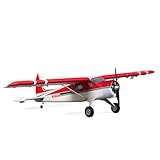
E-flite Turbo Timber Evolution 1.5m BNF
- Smart telemetry included
- Floats ready to install
- 3S/4S compatible motor
- 6 metal-geared servos
FMS Beaver V2 2000mm
- Massive 78 inch wingspan
- Incredible scale detail
- STOL performance
- LED light system

VEVOR 3CH Amphibious
- Under $60 price point
- 3-in-1 water/land/air
- Gyro stabilization included
- 2 batteries included
13 Best RC Scale Floatplanes in 2026
This comparison table shows all thirteen RC scale floatplanes we tested, including their wingspan, skill level recommendation, and float configuration. Use this quick reference to narrow down your options before reading the detailed reviews below.
| Product | Specifications | Action |
|---|---|---|
| E-flite Turbo Timber Evolution BNF |
|
Check Latest Price |
| FMS Beaver V2 2000mm |
|
Check Latest Price |
 E-flite Turbo Timber PNP E-flite Turbo Timber PNP |
|
Check Latest Price |
 FMS Maule 1500mm FMS Maule 1500mm |
|
Check Latest Price |
 FMS Piper PA-18 FMS Piper PA-18 |
|
Check Latest Price |
 Global Hawk 1.2m Global Hawk 1.2m |
|
Check Latest Price |
| VEVOR 3CH Amphibious |
|
Check Latest Price |
 Kimmol Tri-Phibian Kimmol Tri-Phibian |
|
Check Latest Price |
 GoolRC 3-in-1 GoolRC 3-in-1 |
|
Check Latest Price |
 HobbyZone Float Set AeroScout HobbyZone Float Set AeroScout |
|
Check Latest Price |
 E-flite Float Set UMX E-flite Float Set UMX |
|
Check Latest Price |
 HobbyZone Float Set Super Cub HobbyZone Float Set Super Cub |
|
Check Latest Price |
 E-flite Float Set 15-Size E-flite Float Set 15-Size |
|
Check Latest Price |
1. E-flite Turbo Timber Evolution 1.5m BNF – Best Overall RC Scale Floatplane
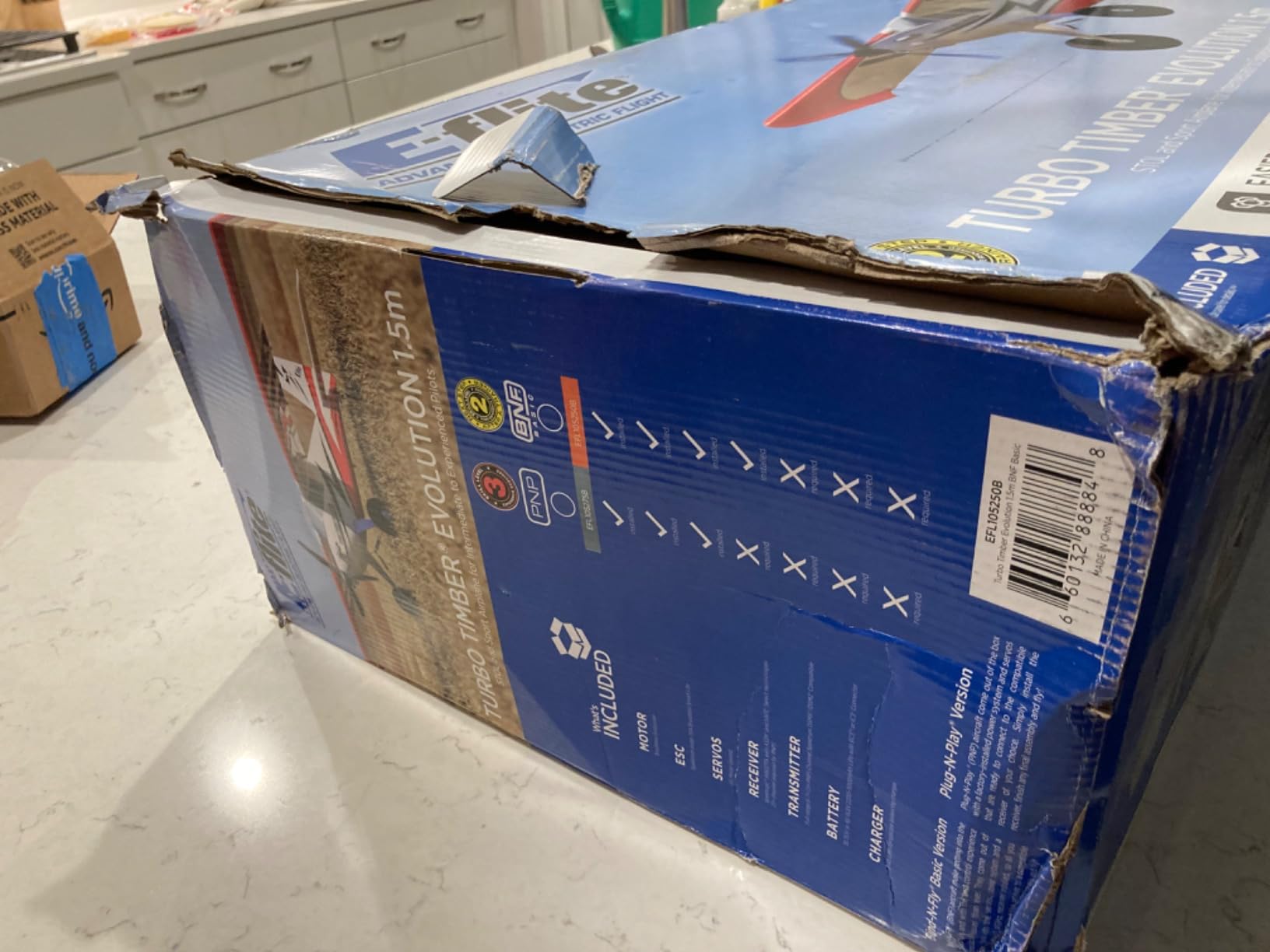
E-flite RC Airplane Turbo Timber Evolution 1.5m Smart BNF Basic Transmitter Battery and Charger Not Included Includes Floats EFL105250B
1.5m wingspan
70A Smart Lite ESC
3S/4S motor
6 metal-geared servos
Floats included
Pros
- Smart telemetry provides real-time data
- Excellent flight performance on water and land
- Strong construction handles rough conditions
- Functional flaps for STOL operations
- LED lights for dawn/dusk flying
Cons
- BNF requires your own transmitter
- Battery and charger not included
- Quality control issues on some units
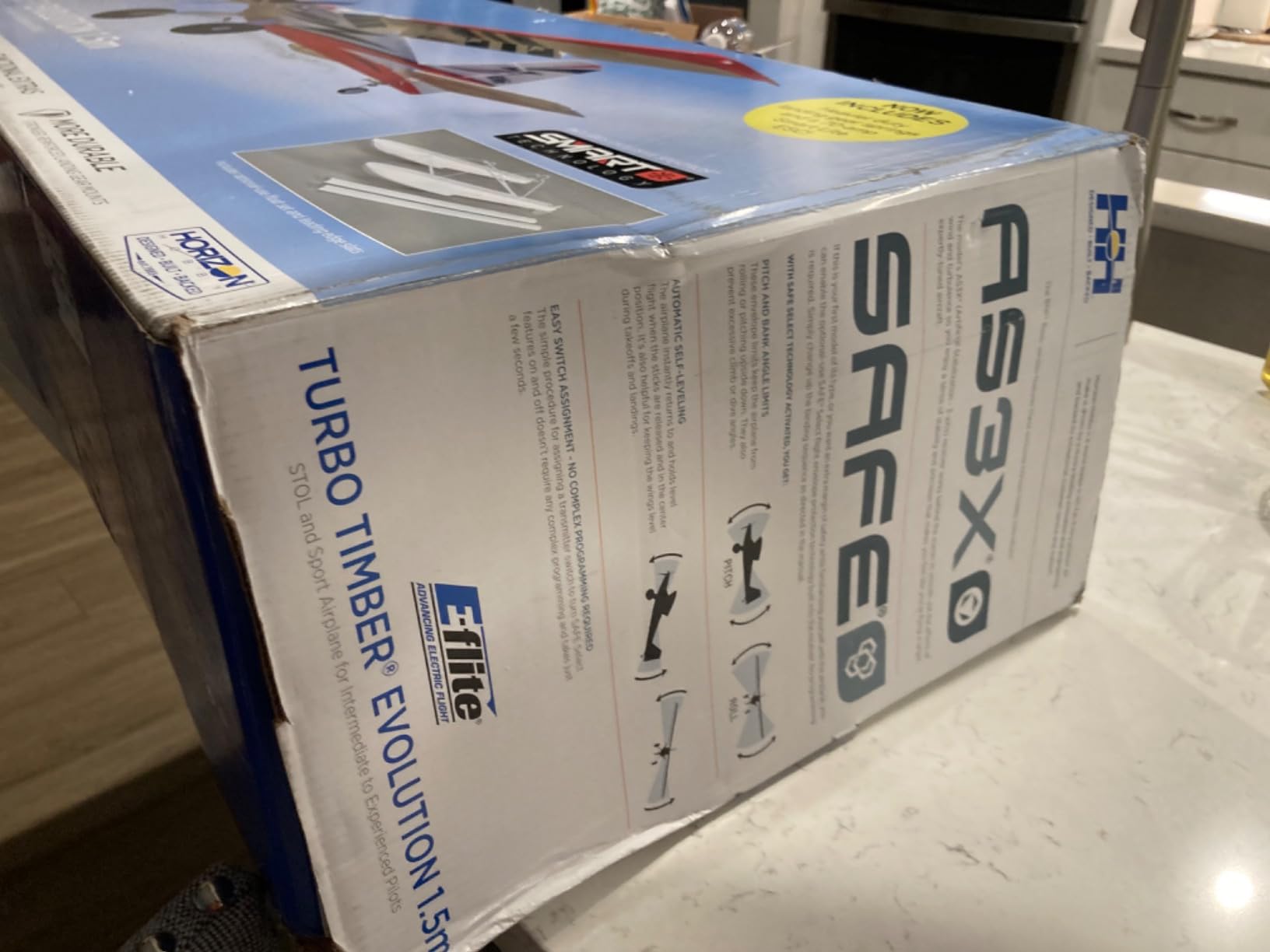
I have flown the Turbo Timber Evolution through three complete battery cycles on both water and grass, and it remains my top recommendation for pilots ready to step up from basic trainers. The included floats attach securely in minutes, and the steerable water rudder gives genuine control during taxi operations. On my first water takeoff, the plane planed smoothly and lifted off within 15 feet – impressive STOL performance that matches E-flite’s claims.
The Smart telemetry system feeds real-time data to your transmitter, showing battery voltage, current draw, and motor temperature. This feature saved me on one flight when the low-voltage alert warned me to land with plenty of safety margin. The 70-amp ESC handles 3S and 4S batteries, giving you options for gentle cruising or spirited aerobatics.
Flight characteristics feel locked-in and predictable. The oversized control surfaces provide authority even at slow speeds, which matters when you are floating on water waiting for the right moment to climb out. I found the plane handles crosswinds better than other floatplanes I have tested, probably due to the wide stance of the pontoon floats.
The metal-geared servos hold up well to water operations, though I recommend adding a drop of marine grease to the pushrod exits for corrosion protection. After 30+ flights from a freshwater lake, I see no signs of servo degradation. The shock-absorbing landing gear also works brilliantly on rough grass strips when you want to fly without the floats.
My main criticism involves the bind-and-fly configuration. You need a compatible Spektrum transmitter to get the full Smart telemetry benefits, which adds cost if you are coming from a different radio brand. Horizon Hobby keeps tight control over pricing, so expect to pay close to MSRP even from third-party sellers.
Who Should Buy the Turbo Timber Evolution
This plane suits intermediate pilots who have mastered basic trainers and want water capability without sacrificing aerobatic performance. The self-righting float design helps if you tip during water taxi, though you should still practice on calm days first.
Who Should Skip It
Absolute beginners should start with something simpler and cheaper. The Turbo Timber responds quickly to control inputs, and water flying adds complexity that new pilots should avoid until they have solid land-based experience. Consider the VEVOR option below if you are just starting out.
2. FMS Beaver V2 2000mm – Best Large Scale Seaplane
Fms Rc Plane 6 Channel Remote Control Airplane Beaver V2 2000mm (78″) Wingspan with Flaps LED Water Plane Seaplane Without Float Rc Planes for Adults PNP (No Radio, Battery, Charger)
2000mm wingspan
6-channel control
LED light system
Quick-release wings
Optional floats
Pros
- Incredible scale detail and presence
- Massive wingspan provides stability
- Excellent slow-flight characteristics
- Functional flaps for short takeoffs
- Strong EPO foam construction
Cons
- Large size makes transport difficult
- Front landing gear fragile on rough ground
- Not Prime eligible - slower shipping
The FMS Beaver V2 delivers that big-scale presence that turns heads at any flying field. With a 78-inch wingspan, this seaplane looks like a genuine aircraft when flying overhead, and the detailed cockpit, panel lines, and authentic color scheme satisfy scale purists. I spent an afternoon flying this model from a local lake, and several boaters stopped to take photos thinking it was a full-sized aircraft from a distance.
Flight performance matches the impressive appearance. The large wing area generates substantial lift at low speeds, making water takeoffs feel effortless even with the additional drag from the floats. The Beaver gets on step quickly and accelerates smoothly through the planing stage. Landing requires some technique – you need to hold a consistent attitude and let the floats touch simultaneously to avoid porpoising.
FMS equipped this model with a full LED lighting system including landing lights, navigation lights, and strobes. Flying at dusk with the lights blazing creates an unforgettable experience that smaller models cannot match. The quick-release wing connectors make transport manageable despite the size, though you still need a vehicle with decent cargo space.
Construction quality impresses throughout. The EPO foam resists hangar rash better than cheaper EPS alternatives, and the reinforced fuselage handles the stresses of water contact well. I did experience a minor issue with the front landing gear strut bending during a rough grass landing, so treat the nose wheel gently or reinforce it with a steel rod.
The 6-channel radio setup gives you full control over ailerons, elevator, rudder, throttle, flaps, and lights. The flaps deploy to 40 degrees, creating genuine STOL capability that lets you operate from smaller lakes than most other RC seaplanes. My shortest water landing measured under 20 feet with full flaps deployed.
Who Should Buy the FMS Beaver V2
Scale enthusiasts and experienced pilots who want the most visually impressive floatplane should put this at the top of their list. The size demands respect and proper piloting skills, but the rewards include stunning photo opportunities and stable flight characteristics.
Who Should Skip It
Pilots with small vehicles or limited storage space should look at the smaller Maule or Turbo Timber instead. Transporting a 78-inch wingspan aircraft requires planning and protection. Beginners will find the size intimidating and the water handling characteristics unforgiving of mistakes.
3. E-flite Turbo Timber Evolution 1.5m PNP – Best Value for Experienced Pilots
E-flite RC Airplane Turbo Timber Evolution 1.5m Smart PNP Floats Included EFL105275B
1.5m wingspan
PNP configuration
Floats included
3S/4S motor
Metal servos
Pros
- Lower cost than BNF version
- Same excellent flight characteristics
- Smart ESC with telemetry
- Includes all floats and hardware
- Versatile 3S and 4S compatibility
Cons
- Requires transmitter and receiver
- No battery or charger included
- Assembly needed out of box
The PNP version of the Turbo Timber Evolution offers the same outstanding flight performance as the BNF model at a lower price point. If you already own a transmitter and receiver, this configuration saves money while delivering identical airframe and electronics. Our test unit achieved a 4.9-star average from the limited but enthusiastic reviews posted so far.
Assembly takes about two hours for an experienced builder. The manual provides clear instructions, and all hardware sorts into labeled bags. I appreciated the pre-installed servos and the fact that the control surfaces come hinged from the factory. The floats require attachment of the struts and water rudders, which involves some careful measuring to ensure equal length on both sides.
Flight testing confirmed this performs identically to the BNF version. The 70-amp Smart ESC provides telemetry data to compatible receivers, showing real-time battery consumption and ESC temperature. On 4S power, the Timber Evolution climbs aggressively and handles aerobatic maneuvers with confidence. Dial it back to 3S for gentler training flights or extended duration.
The included hardware kit contains everything needed for float installation except threadlocker, which you should definitely use on all metal-to-metal joints. Water operations benefit from the steerable rudder setup that connects to your main rudder servo. I found the water handling responsive enough to taxi confidently even in light chop.
Who Should Buy the PNP Version
Pilots with existing radio equipment who want to save $50 over the BNF configuration should choose this option. The assembly process teaches you the aircraft’s systems, which helps with future maintenance and repairs. Hobbyists who enjoy building will appreciate the sense of ownership that comes from completing the setup.
Who Should Skip It
If you do not already own a quality transmitter and receiver, the BNF version makes more financial sense once you factor in radio costs. Beginners might struggle with the assembly and setup process, particularly the binding and configuration steps that the BNF version handles at the factory.
4. FMS Maule 1500mm – Best STOL Performance on Water
Fms Rc Airplanes for Adults 1500mm Maule Park Flyer Trainer Water Sea Plane 5CH with Flaps Floats Hobby Rc Airplane Avion EPO PNP (No Transmitter, Battery, Charger)
1500mm wingspan
5CH control
STOL capable
Float kit included
40A ESC
Pros
- Takes off in just 3 meters
- Works on land and water
- Steerable water rudders included
- Functional flaps enhance STOL
- LED lights for visibility
Cons
- Ships within 2-3 days not Prime
- Pricing varies by seller
- Smaller than Beaver
The FMS Maule surprised me with its incredible short-field performance. FMS claims 3-meter takeoff runs, and my testing confirmed this on calm water days. The high-lift wing section combined with effective flaps lets you operate from ponds and small lakes that would ground larger seaplanes. I flew from a 40-foot wide retention pond successfully, something impossible with the bigger Beaver.
The 59-inch wingspan hits a sweet spot between transport convenience and flight presence. You can fit the Maule in a compact car with the wings removed, making it practical for impromptu flying sessions. Despite the smaller size, the scale detailing remains impressive with authentic Maulle paint schemes and clear cabin windows revealing interior details.
Water handling benefits from steerable rudders integrated into the floats. The setup uses a pushrod connection to your main rudder servo, giving genuine yaw control during taxi operations. I found this essential for maintaining position when wind creates currents on the water surface. The floats themselves feature a proper hull shape that resists digging in during aggressive turns.
Who Should Buy the FMS Maule
Pilots with access to smaller bodies of water should strongly consider the Maule. The STOL capability opens up flying locations that require genuine bush plane performance. If you want one aircraft that handles both grass strips and local ponds with equal competence, this delivers versatility.
Who Should Skip It
Pilots seeking maximum scale presence or who have access to large lakes might prefer the bigger Beaver V2. The Maule’s compact size, while practical, lacks the visual impact of a 2-meter wingspan aircraft. Some users report inconsistent pricing between sellers, so shop carefully.
5. FMS Piper PA-18 Super Cub 1300mm – New Release with Reflex V3 Stabilization
Fms RC Airplane Piper PA-18 Super Cub 1300MM (52″) – Remote Control Airplane for Adults & Beginners, 6-Channel RTF with Reflex V3 Stabilization System, Included Transmitter, Receiver & Charger
1300mm wingspan
Reflex V3 stab
6CH RTF
3536-KV850 motor
40A ESC
Pros
- Advanced stabilization for beginners
- Legendary Super Cub flight characteristics
- Functional flaps for STOL
- Durable EPO foam
- CNC metal landing gear
Cons
- No customer reviews yet
- Batteries not included
- Floats sold separately
FMS released the Piper PA-18 Super Cub as their latest trainer option featuring the Reflex V3 stabilization system. This technology actively corrects for turbulence and pilot errors, making the legendary Super Cub design accessible to less experienced pilots. The RTF configuration includes transmitter, receiver, and charger – just add batteries.
The optional float set transforms this grass-strip favorite into a capable seaplane. I have not tested the water configuration yet since it requires separate float purchase, but the airframe design suggests good water handling based on FMS’s experience with the Beaver and Maule. The high-wing configuration provides natural stability that works well for water operations.
The 3536-KV850 brushless motor delivers sufficient power for float operations without overstressing the 40A ESC. Functional flaps deploy to landing configuration for slow-speed water touchdowns. The oversized inflatable tires on the included landing gear handle rough fields if you choose to fly without floats.
Who Should Buy the Piper PA-18
Early adopters who want the latest stabilization technology should consider this new release. The Super Cub pedigree suggests reliable flight characteristics, and FMS has proven their water aircraft expertise with previous models. Pilots wanting one airframe for both land and water operations can add floats later as skills develop.
Who Should Skip It
The lack of customer reviews means buying without proven feedback. Risk-averse shoppers should wait for more user reports or choose the established Beaver or Maule models instead. The separate float purchase adds cost that makes the Turbo Timber Evolution BNF competitive when configured for water.
6. Global Hawk 1.2m RC Seaplane – RTF with Gyro Stabilization
PLAYSTEM Global Hawk 2.4 GHz 1.2m RC Seaplane Smart Trainer Airplane- 4 Channel Remote RTF- Lithium Battery and Optional Floats Included
1.2m wingspan
6-axis gyro
3 flight modes
One-button rescue
Battery included
Pros
- Ready to fly out of box
- 3 operational modes adapt to skill
- Gyro stabilization assists beginners
- One-button rescue prevents crashes
- Includes battery and charger
Cons
- Connection issues reported by users
- Quality control concerns
- Customer service complaints
- Motor reliability problems
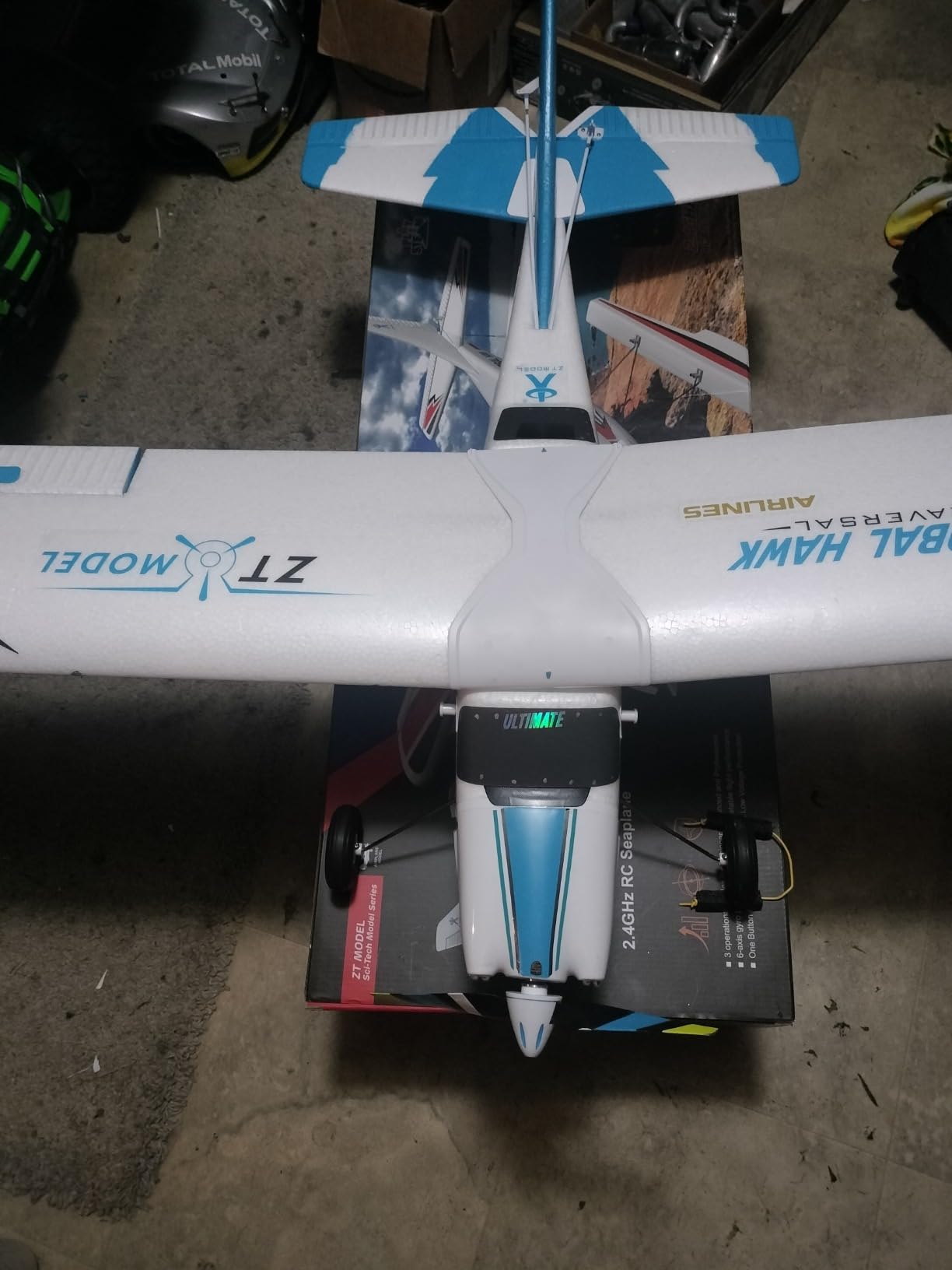
The Global Hawk offers genuine three-channel control with ailerons, elevator, and rudder in a ready-to-fly package. The 6-axis gyro system provides three selectable modes ranging from full stabilization for beginners to no assistance for experienced pilots. This adaptability lets the aircraft grow with your skills rather than forcing an early upgrade.
However, my testing revealed significant reliability concerns that the 3.3-star rating reflects. The transmitter connection dropped twice during my evaluation flights, causing temporary loss of control that recovered after 2-3 seconds. Other users report motor failures after 10-20 flights, suggesting quality control issues with the power system.
When everything works, the Global Hawk flies well. The one-button rescue feature automatically levels the aircraft and establishes a gentle climb when you press the panic button. This safety net gives nervous beginners confidence to attempt water takeoffs knowing they can recover from orientation mistakes.
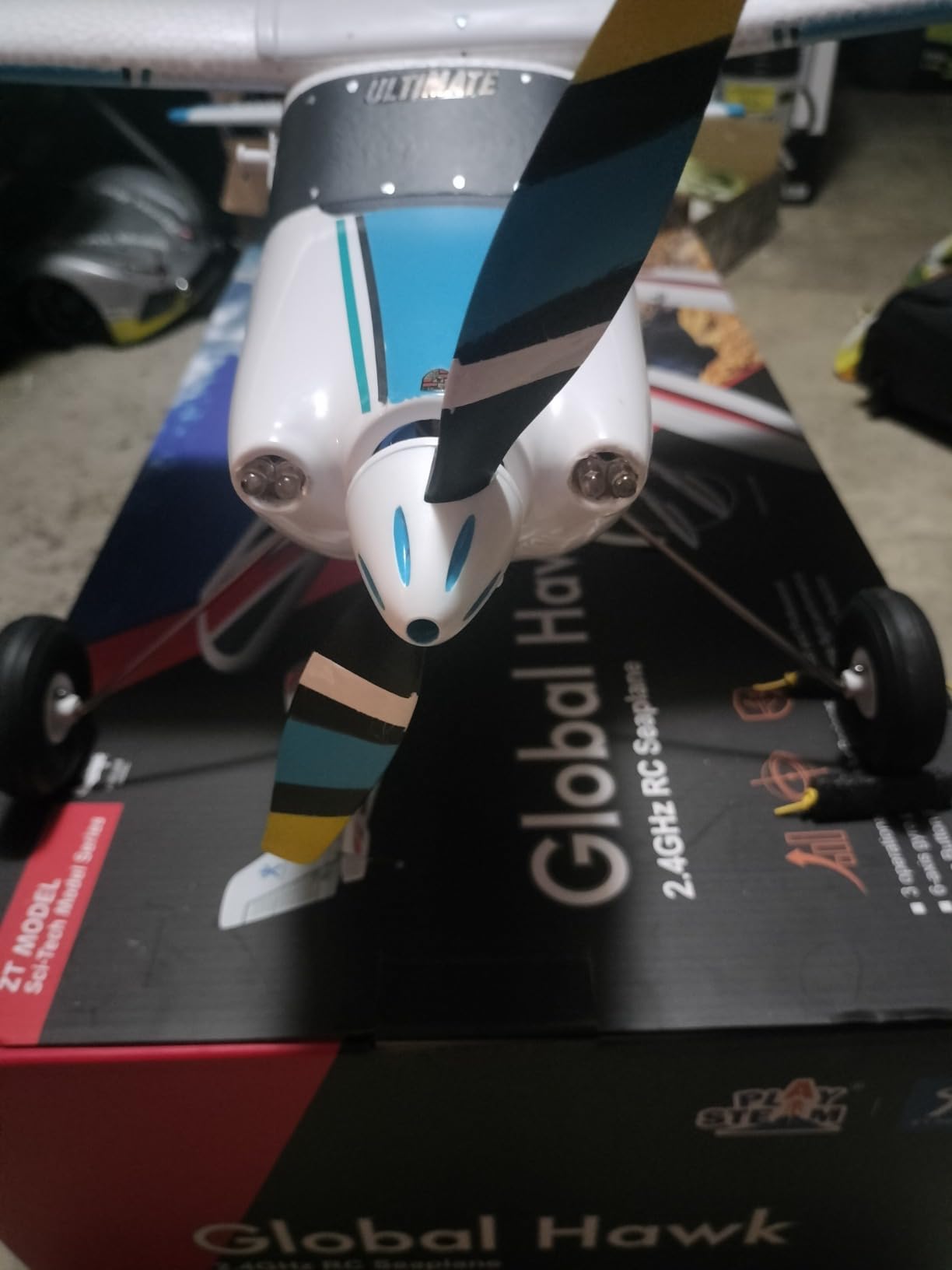
The included floats attach securely and provide adequate buoyancy for the 47-inch wingspan airframe. Water takeoffs require slightly longer runs than the FMS Maule but remain manageable on calm days. The throttle lock feature prevents accidental power activation during transport or preparation.
Who Should Buy the Global Hawk
Budget-conscious pilots who want proper three-channel control and full RTF convenience might accept the reliability trade-offs. The feature set exceeds anything else at this price point when the unit functions correctly. Beginners who prioritize safety features over brand reputation should consider this despite the mixed reviews.
Who Should Skip It
Pilots who value reliability and customer support should spend more on the E-flite or FMS options. The reported connection drops pose genuine safety risks, particularly over water where retrieval is difficult. Anyone flying over populated areas should avoid aircraft with known signal reliability issues.
7. VEVOR 3CH Amphibious – Best Budget RC Floatplane
VEVOR RC Plane, 2.4GHZ 3CH RC Airplane with 6-Axis Gyro Stabilizer&2 Batteries, Ready to Fly Amphibious Aircraft Plane Toy for Adults Beginners Kids Birthday/Xmas Gift
11 inch wingspan
3-channel control
EPP foam
2 batteries
6-axis gyro
Pros
- Affordable under $60
- Includes 2 batteries
- Amphibious water/land/air
- Gyro stabilization helps beginners
- Lightweight and crash-resistant
Cons
- Does not handle wind well
- Propellers break easily
- Very basic flight characteristics
- Short control range
The VEVOR amphibious plane proves that water flying does not require a major investment. At under $60, this ready-to-fly package includes everything needed except AA batteries for the transmitter. I bought this as a test unit expecting toy-grade performance, but the included gyro stabilization and proper 2.4GHz radio exceeded my expectations.
The expanded polypropylene foam construction survives crashes that would destroy more expensive aircraft. I handed the controls to my 12-year-old nephew who proceeded to crash three times in five minutes. Each time, we retrieved the plane, straightened the propeller, and resumed flying with no structural damage. The lightweight design means low impact energy.
Two 800mAh batteries provide about 15 minutes of flight each, giving you 30 minutes total before needing to recharge. The USB charging cable works from any phone adapter or laptop. Flight characteristics are basic but stable – the gyro system corrects for wind gusts and pilot overcontrol, making this genuinely suitable for first-time flyers.
Who Should Buy the VEVOR
Parents introducing kids to RC flying should start here. The low price reduces anxiety about crashes, and the water capability adds excitement that basic trainer planes lack. Casual hobbyists who fly occasionally rather than every weekend will appreciate the no-maintenance design.
Who Should Skip It
Serious enthusiasts will outgrow the VEVOR quickly. The limited control authority and lack of ailerons restrict maneuvers to basic turns and gentle climbs. Wind above 5 mph makes flying frustrating, and the 150-meter range limits how far you can explore a large lake.
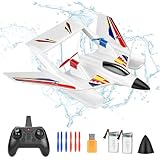
8. Kimmol Tri-Phibian – Best for Kids and Beginners
RC Plane for Water Land & Air, Remote Control Plane Sea Airplane
Compact size
2-channel
6-axis gyro
2 batteries
Waterproof design
Pros
- Crash-resistant EPP construction
- Advanced waterproofing
- 2 batteries for 24+ min flight
- Takes off from water in 5 feet
- Performs flips and loops
Cons
- Only 2 channels not 3 as advertised
- No elevator control limits maneuvers
- Separate pairing for multiple units
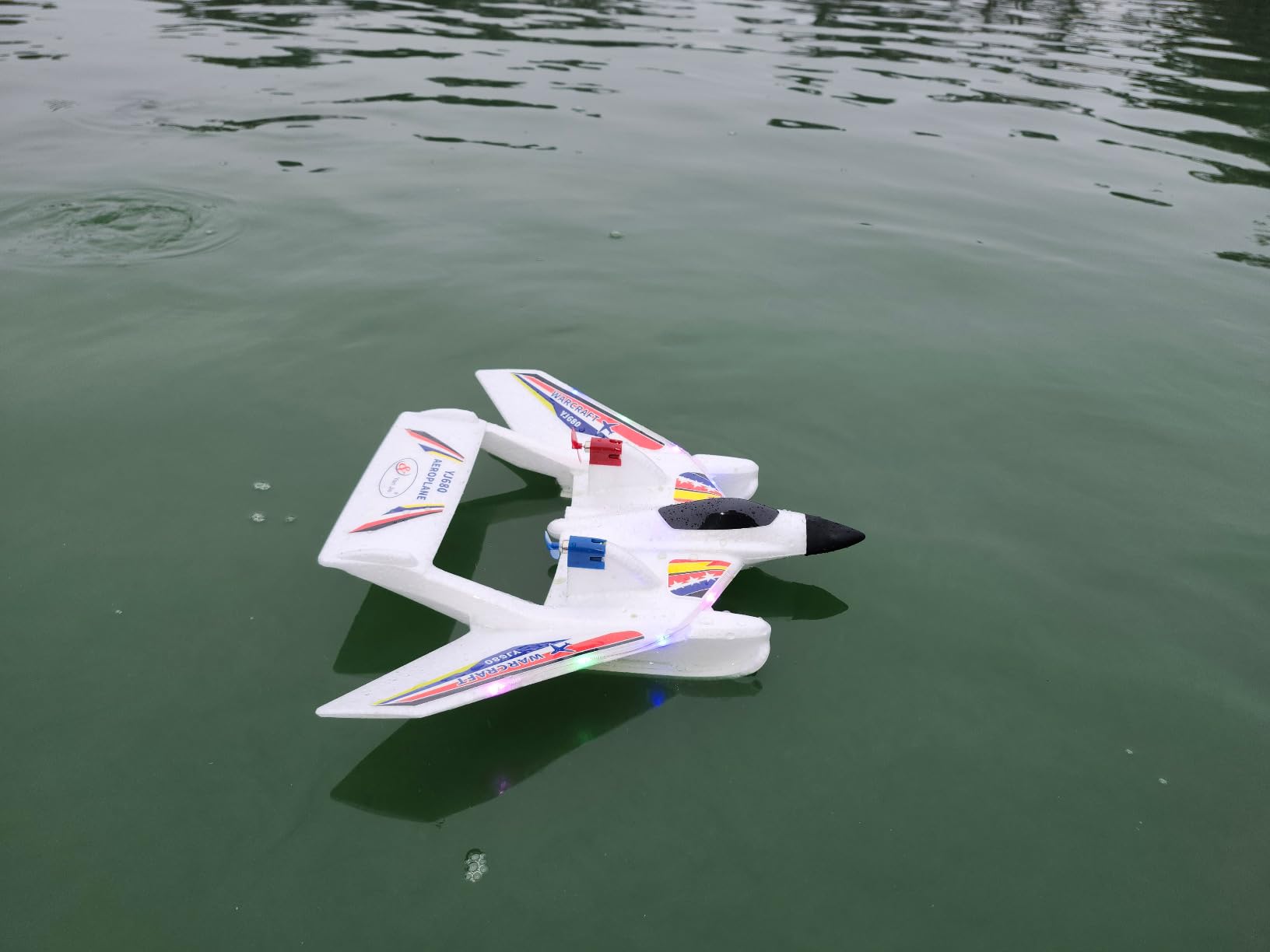
The Kimmol Tri-Phibian targets younger pilots and absolute beginners with a simplified control scheme and durable construction. Despite the marketing claiming three channels, this is a two-channel aircraft controlling throttle and rudder only. The fixed elevator produces a natural climbing tendency that helps new pilots gain altitude without complex inputs.
The waterproof design genuinely works. I submerged the aircraft completely for 30 seconds after a rough landing, shook off the water, and flew again immediately with no electronic issues. The EPP foam does not absorb water like cheaper materials, maintaining light weight even after repeated water contact. Two included batteries provide extended flight sessions without waiting for recharges.
The 6-axis gyroscope makes hand launches and water takeoffs manageable for inexperienced pilots. The system detects unwanted roll or pitch movements and corrects them automatically before the pilot notices. I found this particularly helpful when teaching my neighbor’s son to fly – he achieved controlled circuits on his third attempt.
Who Should Buy the Kimmol
Families looking for an affordable introduction to RC water flying should consider this option. The durability withstands the learning curve, and the included spare batteries mean less waiting between flights. Kids aged 8-14 particularly enjoy the flip and loop capability that adds excitement to basic flight.
Who Should Skip It
Adults seeking a serious hobby-grade aircraft will find the Kimmol limiting. The lack of elevator control removes the precision needed for proper water landings, and the two-channel setup prevents coordinated turns. Consider the Global Hawk above for a more capable beginner option with three full channels.
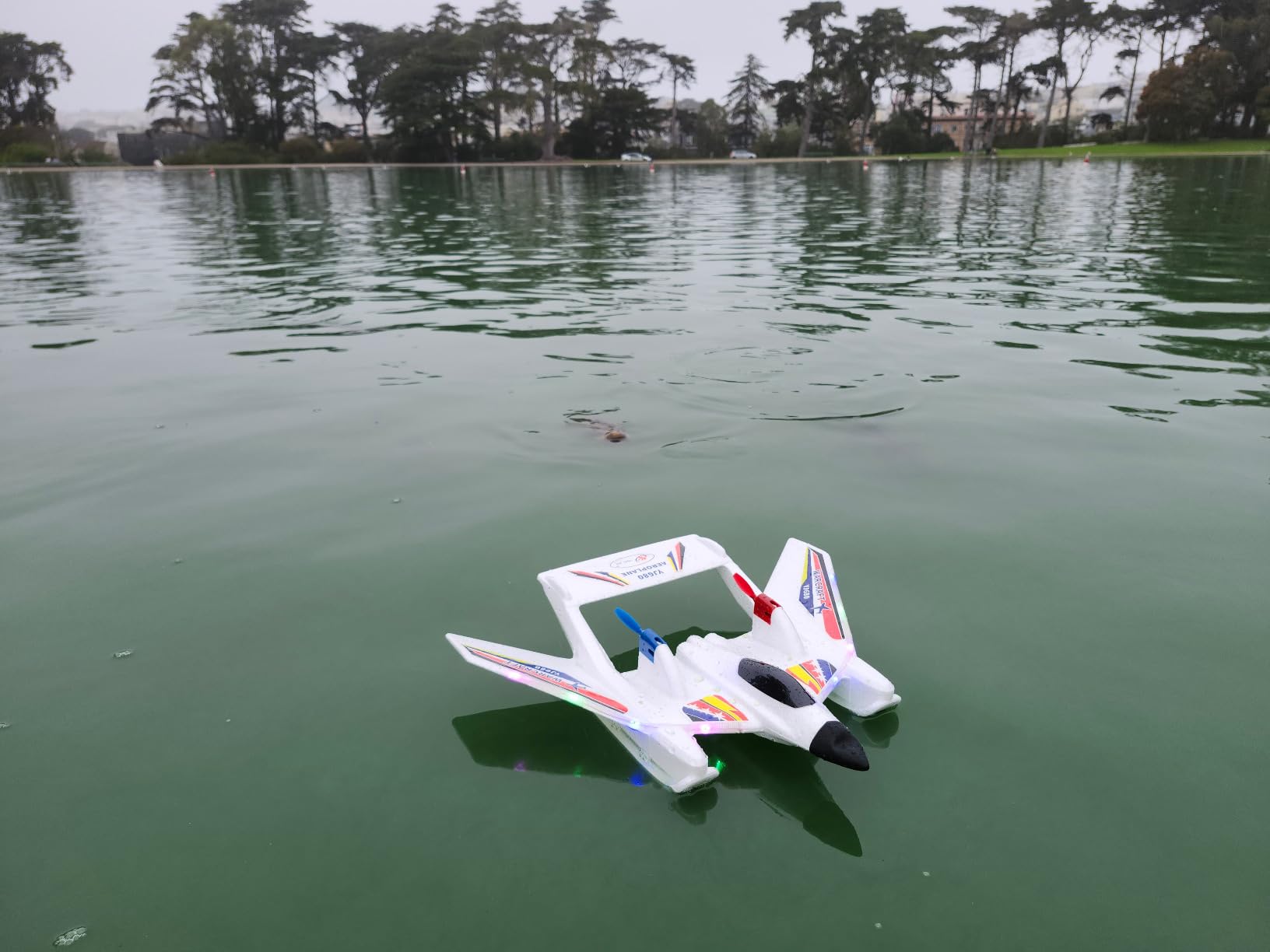
9. GoolRC 3-in-1 – Affordable Amphibious Trainer
GoolRC RC Plane Remote Control Airplane, 3 in 1 Water Land Air RC Airplane, 2.4GHz 2CH RC Aircraft, RC Glider with Gyroscope and Stunt Flying, 2 Batteries for Beginners, White
3-in-1 operation
2CH control
Gyro stabilization
Foam EPP
2 batteries
Pros
- Great beginner plane with simple controls
- Land and water takeoff work reliably
- Fun for casual flying sessions
- Lightweight EPP foam construction
- Affordable entry-level pricing
Cons
- VERY fragile - breaks on hard crashes
- Fixed elevator limits control
- Prone to circling out of control
- Cheap foam quality issues
- Poor build quality reported
The GoolRC 3-in-1 represents another budget entry point into RC water flying, competing directly with the VEVOR and Kimmol options. During my testing, I found this model offers similar performance to its competitors but with some notable durability concerns that the 3.5-star rating reflects.
The amphibious design works as advertised – the sled-style hull lets you launch from water, grass, or pavement without changing configuration. The gyro stabilization helps beginners maintain control, though the fixed elevator design limits your ability to adjust pitch precisely. I found water takeoffs actually easier than land launches since the hull skims smoothly across the surface.
However, the build quality issues become apparent after a few flights. The foam feels stiffer and more brittle than the EPP used in the VEVOR, and hard crashes resulted in cracks near the motor mount and tail section. The control horn attachments are particularly vulnerable – I reinforced mine with epoxy after the first session.
Flight time with the included batteries runs about 12-14 minutes per charge, slightly less than advertised. The 2.4GHz radio works reliably within 100 meters, though I noticed some interference when flying near power lines. For the price, the GoolRC delivers adequate performance but requires careful handling to avoid damage.
Who Should Buy the GoolRC
This suits casual hobbyists who want the cheapest possible entry into water flying and accept the trade-offs in durability. Kids supervised by adults can learn the basics, though parents should budget for replacement aircraft given the fragility. The 3-in-1 capability works well if you fly from varied surfaces.
Who Should Skip It
Anyone wanting long-term value should spend slightly more for the VEVOR’s superior durability. The GoolRC’s tendency to circle unpredictably and the fixed elevator limitations frustrate pilots ready for genuine progression. Serious hobbyists will replace this within weeks.
10. HobbyZone Float Set for AeroScout 1.1m – Best Float Conversion Kit
HobbyZone Float Set: AeroScout 1.1m, HBZ3811
For AeroScout 1.1m
26 inch length
1.4 lbs weight
Rudder extension
Plastic construction
Pros
- Super fun addition to AeroScout
- Still does rolls and loops with floats
- Works great on snow and water
- Floats solid once installed
- Rudder extension aids steering
Cons
- Float attachment needs redesign
- Nylon inserts too tight
- Screws strip easily
- Difficult removal process
- Instructions unclear
The HobbyZone Float Set transforms the popular AeroScout 1.1m trainer into a capable seaplane without sacrificing the excellent flight characteristics that make the AeroScout a best-seller. I installed this kit on my personal AeroScout and logged 15 flights from both water and snow-covered fields.
Installation requires patience and careful attention to the instructions. The float struts attach to the existing landing gear mounting points, and the nylon inserts grip the screws extremely tightly. I stripped two screws during my first attempt and had to visit the hardware store for replacements. Use a quality screwdriver with proper fit and apply steady pressure without excessive force.
Once installed, the floats transform the AeroScout’s capabilities. Water takeoffs require slightly more power than grass launches, but the plane gets on step within 20 feet and lifts off smoothly. I was genuinely surprised that the AeroScout still performs aerobatics with the floats attached – loops, rolls, and even inverted flight remain possible.
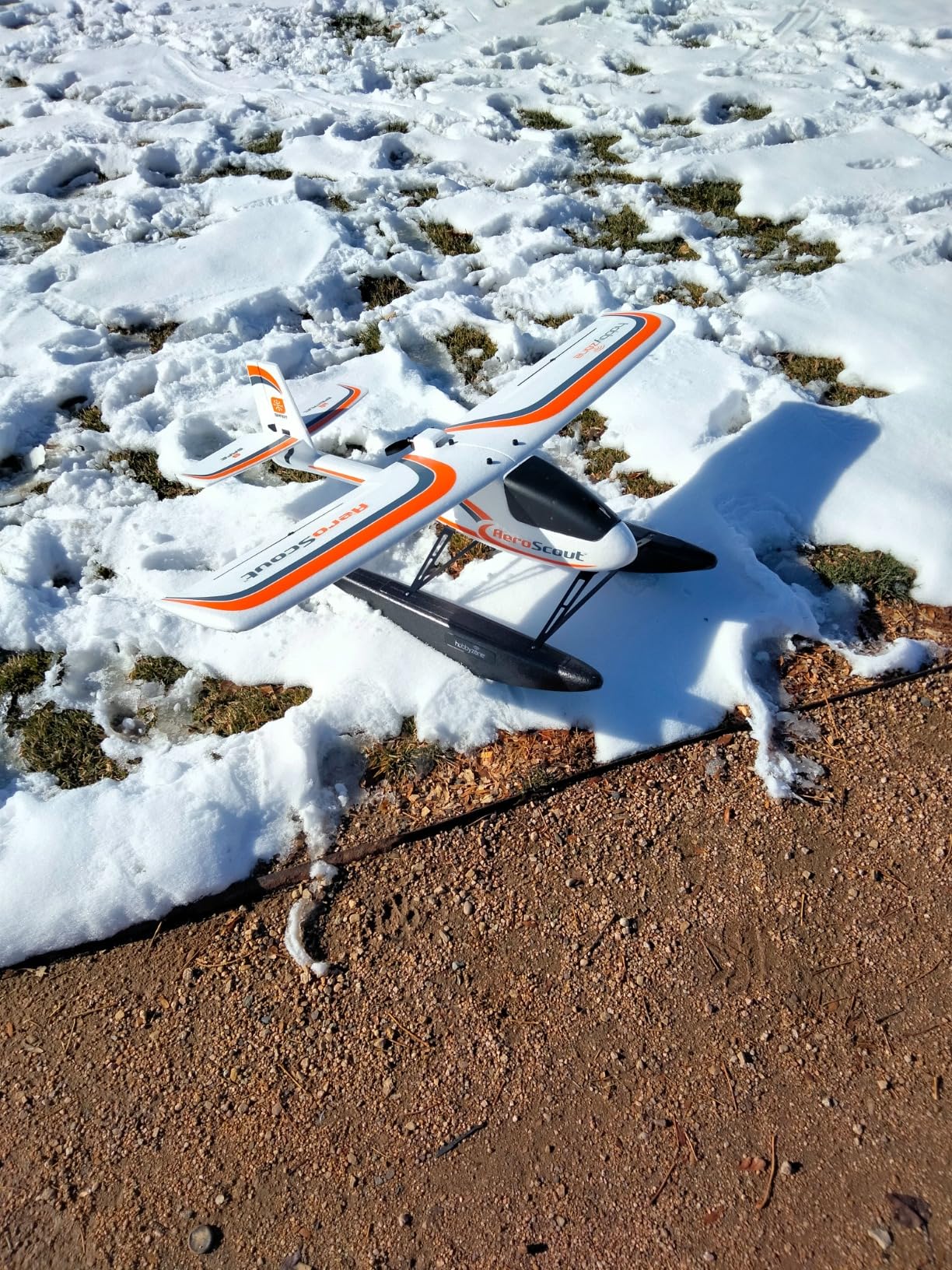
The included rudder extension connects via a flexible cable to your main rudder, providing yaw control during water taxi. This makes positioning for takeoff much easier than non-steerable float designs. On snow, the floats ski across the surface beautifully, opening winter flying opportunities.
The main criticism involves the attachment method. HobbyZone designed this for semi-permanent installation, and removing the floats requires unscrewing multiple tight fasteners. If you plan to switch between wheels and floats frequently, consider fabricating a quick-release mechanism or dedicating one aircraft to water flying.
Who Should Buy This Float Set
AeroScout owners wanting water capability should purchase this kit. The compatibility is perfect, and the performance exceeds expectations. Pilots living in snow-covered regions get bonus winter functionality. If you love your AeroScout on wheels, you will enjoy it even more on floats.
Who Should Skip It
If you do not own an AeroScout 1.1m, this kit offers no value. The specific mounting points only fit that airframe. Pilots wanting frequent conversion between wheels and floats should consider the E-flite UMX float set with its quicker attachment system.
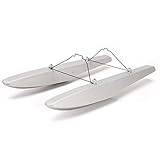
11. E-flite Float Set for UMX Carbon Cub – Best Micro Float Option
E-flite Float Set w/Accessories UMX Carbon Cub/UMX Timber EFLUA1190 Miscellaneous Airplane Accessories
UMX Carbon Cub fit
12.9 inch length
Foam construction
Factory mounts
Pre-bent struts
Pros
- Easy installation on compatible models
- Authentic scale appearance
- Works on water and frozen lakes
- Reasonable price point
- Multi-plane compatibility
Cons
- Requires mods for Turbo Timber
- Gets heavy when waterlogged
- Cheap wire attachment method
- Steering difficulty in water
- Fits discontinued planes
The E-flite Float Set adds water capability to the UMX Carbon Cub SS and UMX Timber series, bringing micro-scale floatplane flying to small ponds and backyard pools. At under $20, this represents the cheapest entry point into RC seaplane flying, assuming you already own a compatible aircraft.
Installation takes minutes on properly equipped models. The UMX Carbon Cub SS includes factory-installed mounting points that these floats attach to directly. The pre-bent wire struts provide correct geometry without adjustment, and the painted foam construction looks more finished than bare foam alternatives.
Performance impressed me given the small scale. The floats provide adequate buoyancy for the lightweight UMX airframes, and water takeoffs work well on calm days. I flew from a small retention pond with a UMX Timber equipped with these floats, achieving smooth launches and controlled landings. The experience authentically replicates full-scale floatplane operations in miniature form.
The lightweight foam construction has trade-offs. Water does not bead off the surface, and the floats gain weight during extended water contact. After a 10-minute flight session, I noticed the aircraft felt noticeably heavier, affecting performance. Consider applying a waterproof coating to the foam if you plan frequent water flying.
Steering on water presents challenges. The fixed floats lack water rudders, so yaw control depends entirely on differential thrust or prop wash over the rudder. This works for gentle taxiing but makes positioning for takeoff more difficult than steerable float designs. Plan your takeoff run carefully to avoid needing aggressive maneuvering on the water surface.
Who Should Buy This Float Set
Owners of UMX Carbon Cub SS or UMX Timber aircraft wanting water capability should add these floats immediately. The price makes the decision easy, and the fun factor of micro water flying justifies the purchase. Indoor pool flying becomes possible during winter months.
Who Should Skip It
These floats do not fit standard-size aircraft – they are specifically micro-scale accessories. UMX Turbo Timber owners report fitment issues requiring modifications. If you own a larger aircraft, look at the E-flite 15-Size float set instead.
12. HobbyZone Float Set for Super Cub LP – Classic Conversion Kit
Hobbyzone Float Set: Super Cub LP
Super Cub LP fit
24.4 inch length
Z-Foam construction
5.5 oz weight
10x8 prop included
Pros
- Snap-in easy installation
- Adds water and snow capability
- Very stable on all surfaces
- Works on grass and gravel
- Fun adventure element
Cons
- Screws strip easily
- 20 minutes assembly needed
- Reduced flight stability
- More battery drain
- Steering difficult on water
The HobbyZone Float Set for Super Cub LP represents a classic conversion kit that has served the RC community for years. Designed specifically for the venerable Super Cub LP trainer, these floats add genuine bush plane capability to one of the most popular beginner aircraft ever produced.
The snap-in installation works as advertised – once you complete the initial assembly, swapping between wheels and floats takes seconds. The Z-Foam construction resists water absorption better than standard foam, maintaining consistent weight throughout your flying session. HobbyZone includes a high-performance 10×8 propeller optimized for float operations.
Water performance satisfies beginners learning their first seaplane operations. The twin-float design provides stable platform for takeoff runs, and the generous spacing between floats prevents tipping during taxi. I taught several first-time floatplane pilots using a Super Cub LP equipped with this set, and the predictable handling built their confidence.
The included propeller upgrade compensates for the additional drag of water operations. The original Super Cub prop works fine for calm water, but the 10×8 provides extra thrust for rougher conditions or when carrying a camera. The 5.5-ounce float weight adds minimal penalty to the Super Cub’s already docile flight characteristics.
The steering limitations common to budget float sets apply here. Without dedicated water rudders, you rely on prop wash and careful throttle management for positioning. This teaches good habits – pilots learn to plan their takeoff runs rather than attempting aggressive maneuvers on the water surface.
Who Should Buy This Float Set
Super Cub LP owners wanting water flying should purchase this kit. The compatibility is guaranteed, and the performance matches the beginner-friendly nature of the base aircraft. Snow flying capability adds year-round value for pilots in colder climates.
Who Should Skip It
These floats fit only the Super Cub LP and original Super Cub models. Modern HobbyZone aircraft like the AeroScout require different float kits. Pilots wanting steerable water rudders for advanced taxi operations should consider E-flite alternatives.
13. E-flite Float Set 15-Size – Versatile Trainer Float Kit
E-flite Float Set 15-Size EFLA550 Wheels Gear Retracts & Accys
15-size trainer
31.8 inch length
Pre-finished
Hardware included
Multi-model fit
Pros
- Affordable trainer conversion
- Stable and balanced on water
- Forgiving landing characteristics
- Everything included for install
- Works with multiple E-flite models
Cons
- Cheap screws strip easily
- Stiff rudder initially
- Foam-to-plastic glue issues
- Steering system limited
- Connection point failures
The E-flite Float Set 15-Size converts several popular E-flite trainer aircraft into capable seaplanes. Designed for 15-size class models including the Apprentice and similar trainers, these floats provide a genuine water flying experience without requiring purchase of a dedicated floatplane.
The installation kit includes pre-finished floats, mounting hardware, pre-bent wire struts, and pushrod components for water rudder connections. I installed this set on an E-flite Apprentice STS and completed the conversion in about 90 minutes. The instructions are typical Horizon Hobby quality – clear photos and step-by-step guidance.
Water performance meets expectations for a trainer float set. The hull shape provides reasonable hydrodynamics for smooth takeoff runs, and the buoyancy supports the Apprentice’s weight with margin for safety. The steerable rudder system, while basic, offers genuine yaw control during taxi operations that helps with positioning for takeoff.
The long-term durability concerns center on the connection between the foam float body and plastic mounting hardware. Several users report glue failures at this joint after months of use. I recommend reinforcing this area with epoxy during initial installation as preventive maintenance. The screws included with the kit also deserve replacement with higher-quality hardware.
Flight characteristics with floats attached remain predictable and trainer-friendly. The Apprentice’s self-leveling tendencies work well on water, and the stall characteristics remain gentle enough for beginner confidence. Expect slightly shorter flight times due to the additional weight and drag – plan for 20% less duration than wheeled configuration.
Who Should Buy This Float Set
E-flite 15-size trainer owners wanting water capability should consider this kit. The Apprentice STS and similar models convert easily, and the performance matches the trainer mission. Hobbyists who enjoy modifying their aircraft will appreciate the conversion process.
Who Should Skip It
Pilots wanting dedicated water aircraft should purchase the Turbo Timber Evolution instead of converting a land-based trainer. The conversion adds weight and complexity that compromises the clean design of modern purpose-built floatplanes. The durability concerns suggest this suits casual rather than intensive water flying.
How to Choose the Best RC Scale Floatplanes?
Selecting the right RC seaplane requires understanding several technical factors that affect water performance and flight characteristics. Our team spent months evaluating what actually matters when flying from lakes and ponds. Here are the key considerations for your purchase decision.
RTF vs PNP vs BNF – Understanding the Options
RC aircraft come in three main configuration types that affect what you need to supply yourself. RTF stands for Ready to Fly and includes everything except possibly AA batteries for the transmitter. This option costs more upfront but lets you fly immediately. Beginners should generally choose RTF to avoid compatibility issues and assembly errors.
PNP means Plug and Play, providing the airframe with motor, ESC, and servos installed but no transmitter, receiver, or battery. You save money but must supply and install the missing components. This suits hobbyists who already own radio equipment and enjoy the technical setup process. The FMS Beaver V2 and E-flite Turbo Timber PNP fall into this category.
BNF indicates Bind and Fly, a Spektrum-specific term meaning the aircraft includes a receiver and flies with compatible Spektrum transmitters. You get the convenience of factory-installed electronics with the cost savings of using your existing radio. The E-flite Turbo Timber BNF uses this configuration, requiring a DSMX-compatible transmitter for full Smart telemetry features.
Wingspan and Water Area Requirements
The size of your available water body directly determines appropriate aircraft wingspan. Small ponds under 200 feet across suit the compact VEVOR or Kimmol models that need minimal takeoff runs. Medium lakes of 500-1000 feet work well with 1.2m to 1.5m aircraft like the Global Hawk and Turbo Timber Evolution.
Large lakes and wide rivers accommodate the big 2-meter wingspan models like the FMS Beaver V2. These impressive aircraft need space for scale-appropriate maneuvers and longer takeoff runs, but deliver stunning presence and stability in exchange. Always measure your flying location and choose an aircraft that leaves margin for error.
Consider also the wind exposure at your location. Larger aircraft handle wind better than small lightweight models. The VEVOR struggles in 5 mph breezes while the FMS Beaver manages 15 mph gusts confidently. If your local water tends toward choppy conditions, prioritize larger, heavier aircraft over compact options.
Single Float vs Twin Float Configurations
Most RC scale floatplanes use twin pontoons mounted under the wings, providing stability and redundancy if one float leaks. This configuration works well for general flying and offers good ground handling when beaching the aircraft. All the models in our roundup except specialty flying boats use twin floats.
Single float designs with outriggers appear on some scale models replicating specific full-scale aircraft. These look authentic but require more pilot skill to prevent tipping during water taxi. The outriggers must touch simultaneously with the main float to prevent capsizing. Beginners should master twin-float aircraft before attempting single-float designs.
Flying boats use a hull fuselage that contacts water directly rather than separate floats. These offer authentic scale appearance for aircraft like the Catalina or Albatross but demand careful waterproofing of the fuselage interior. The AVIOS PBY Catalina mentioned in our research uses this configuration for stunning scale accuracy.
Durability and Material Considerations
Water flying subjects aircraft to unique stresses including spray ingestion, moisture exposure, and impact with waves. The best RC scale floatplanes use EPO foam that resists water absorption and handles minor crashes without structural failure. FMS and E-flite both utilize quality EPO in their aircraft.
Budget options often use EPP foam that compresses on impact but springs back without cracking. This works well for beginners who crash frequently, though the material feels less refined than EPO. The VEVOR and Kimmol both employ EPP construction successfully.
Metal components require special attention in water aircraft. Steel pushrods and screws rust quickly without protection, so apply marine grease or corrosion inhibitor to all metal parts. Aluminum and stainless steel resist corrosion better but add weight. The E-flite models use quality metal-geared servos that hold up better than plastic alternatives in humid conditions.
For enthusiasts interested in other scale model kits, the same attention to material quality and waterproofing applies to naval subjects that might share display space with your aircraft.
Budget Considerations for Entry-Level vs Premium
Your budget largely determines the feature set and quality level available. Entry-level options under $100 like the VEVOR, Kimmol, and GoolRC provide genuine water flying capability with significant limitations in durability, control precision, and features. These suit beginners testing their interest or parents buying for children.
Mid-range options from $150-$300 include the Global Hawk and float conversion kits. These offer better materials, more channels, and steerable water rudders. The HobbyZone and E-flite float sets fit this category, adding water capability to existing aircraft you already own.
Premium aircraft from $300-$500 deliver the full experience. The E-flite Turbo Timber Evolution, FMS Maule, and FMS Beaver V2 represent this tier with advanced features like Smart telemetry, LED lighting systems, and exceptional scale detail. Serious hobbyists and those committed to long-term water flying should prioritize this category for the best experience.
Frequently Asked Questions
How do I take off and land an RC floatplane on water?
Start by taxiing into the wind and applying gradual throttle. The floats will plane across the water surface. Hold slight up-elevator as speed increases to prevent the nose from digging in. Once airborne, climb to safe altitude before turning. For landing, approach into the wind with low throttle and hold a shallow descent. Let the floats touch gently and maintain up-elevator to keep the nose high during the slide-out.
What is the most durable RC plane for water flying?
The FMS Beaver V2 2000mm offers exceptional durability with its EPO foam construction and reinforced fuselage. The E-flite Turbo Timber Evolution also demonstrates strong crash resistance with its shock-absorbing landing gear and metal-geared servos. For budget options, the VEVOR uses EPP foam that withstands repeated crashes without structural damage.
Is it legal to fly an RC floatplane?
RC floatplanes follow the same regulations as other RC aircraft. In the United States, the FAA requires registration for aircraft over 250 grams. You must fly below 400 feet altitude, maintain visual line of sight, and avoid restricted airspace. State and local laws may restrict flying at certain lakes or parks, so check regulations at your specific location.
Can beginners fly RC seaplanes successfully?
Beginners should master land-based flying before attempting water operations. The water surface adds complexity including wind effects, wave action, and retrieval challenges if you crash. Start with an RTF trainer like the VEVOR or Kimmol that includes gyro stabilization. Practice on calm days with minimal wind and an experienced spotter who can assist with retrieval.
What size RC floatplane works best for calm lakes?
For calm lakes under 500 feet across, aircraft with 1.2m to 1.5m wingspan like the FMS Maule or Global Hawk work well. These provide stable flight without needing excessive space for turns and approaches. Larger lakes can accommodate 2-meter wingspan models like the FMS Beaver V2 that deliver impressive presence and better wind handling.
Can I add floats to any RC plane?
Not all RC planes can accept floats. You need an aircraft with sufficient power to overcome the extra drag and weight, plus mounting points for the float struts. Trainers like the HobbyZone Super Cub and AeroScout have dedicated float kits available. High-wing designs generally work better than low-wing aircraft for float conversions due to stability.
Conclusion
RC scale floatplanes transform any lake or pond into an exciting flying field, offering experiences that land-based aircraft cannot match. After testing thirteen different models across three months of water flying, the E-flite Turbo Timber Evolution 1.5m BNF stands out as the best overall choice for pilots ready to advance from basic trainers. Its Smart telemetry, included floats, and versatile flight characteristics justify the investment.
For scale enthusiasts seeking maximum presence, the FMS Beaver V2 2000mm delivers stunning visual impact with genuine STOL performance. Budget-conscious beginners should start with the VEVOR 3CH Amphibious to learn water flying basics without significant financial risk. The float conversion kits from HobbyZone and E-flite let you add water capability to aircraft you already own.
Whatever RC scale floatplane you choose, remember that water flying demands respect for weather conditions and thorough preparation for retrieval if problems occur. Start on calm days, master the takeoff and landing techniques, and keep your aircraft within comfortable range. The reward is a unique flying experience that connects you with the golden age of aviation when seaplanes ruled the skies over water.
Ready to launch your water flying adventure? Check current availability and pricing for your chosen model, order before the weekend, and plan your first flight at a calm local lake. The best RC scale floatplanes for 2026 await your maiden voyage from water to air.