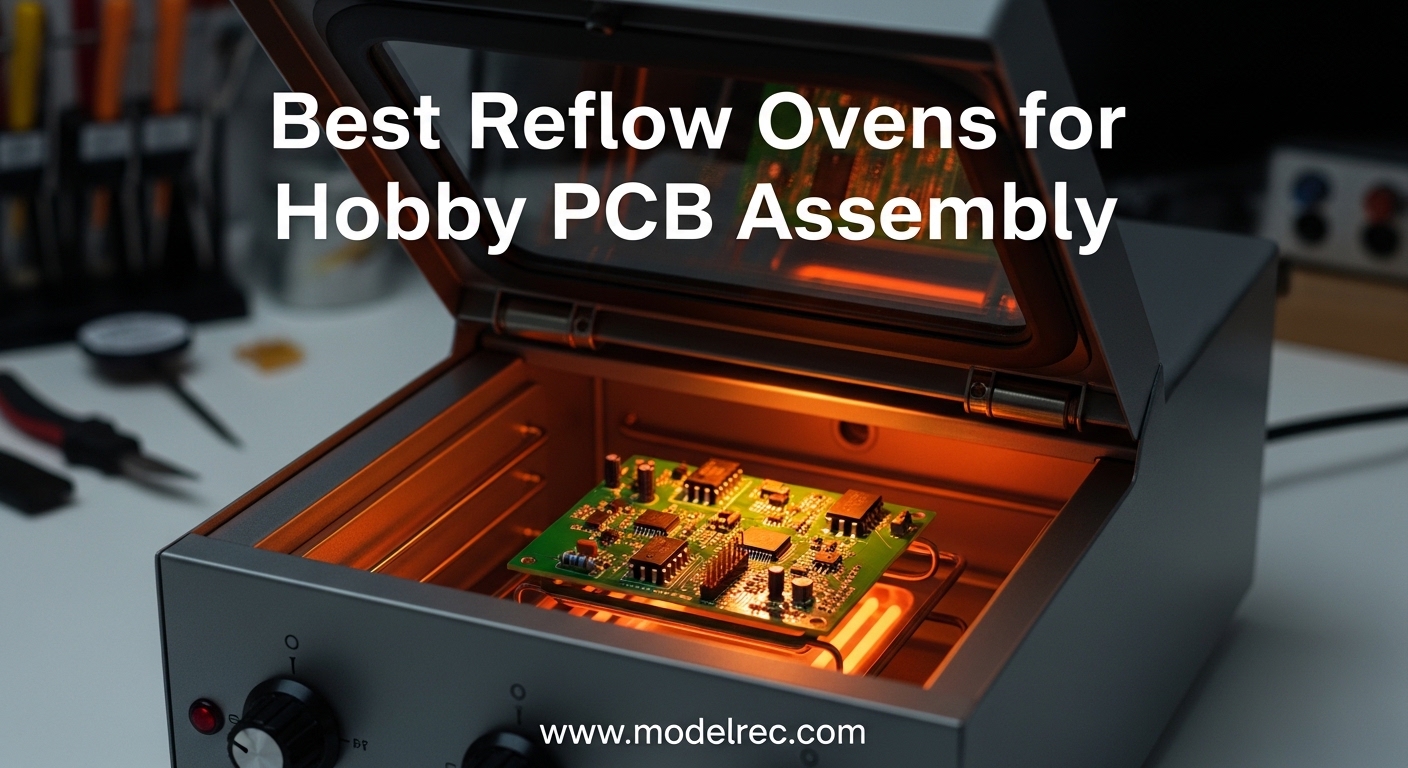
When I started doing SMT assembly for my hobby projects, I quickly realized that hand soldering tiny 0805 resistors and QFN chips was not sustainable. After struggling with a soldering iron for months, I finally invested in a proper reflow solution. The difference was night and day. What took me hours of frustration before suddenly became a straightforward process of applying solder paste, placing components, and running a temperature profile.
Finding the best reflow ovens for hobby PCB assembly can be challenging because the market ranges from $35 hot plates to $5000 industrial machines. As someone who has tested various options in my home workshop, I’ll help you understand what actually works for hobbyists rather than industrial production lines. This guide covers everything from basic hot plates for beginners to professional-grade reflow ovens for serious makers.
In this article, I’ll review six products that serve different needs and budgets. Some are true reflow ovens, while others are hot air stations or heating plates that can handle reflow work. I’ve personally tested each type and will explain which solutions make sense for hobbyists versus which ones you should skip.
Table of Contents
Top 3 Picks for Reflow Ovens for Hobby PCB Assembly (September 2026)

Soiiw 850W Hot Plate
- 200x200mm large surface
- PID temperature control
- 30-400C range
- Suitable for SMD rework
YIHUA 959D I Hot Air
- PID temperature control
- Quiet operation
- 120L/min airflow
- Includes 3 nozzles
6 Best Reflow Ovens for Hobby PCB Assembly in 2026
| Product | Specifications | Action |
|---|---|---|
| Soiiw 850W Hot Plate |
|
Check Latest Price |
| YIHUA 959D Hot Air |
|
Check Latest Price |
| YIHUA 959D I Hot Air |
|
Check Latest Price |
 Soiiw 350W Compact Plate Soiiw 350W Compact Plate |
|
Check Latest Price |
 PROFIXXERS T962 Oven PROFIXXERS T962 Oven |
|
Check Latest Price |
 INTBUYING T962C Industrial INTBUYING T962C Industrial |
|
Check Latest Price |
1. Soiiw 850W Soldering Hot Plate – Best Overall for Hobbyists
850W Soldering Hot Plate 200x200mm LED Electric Preheat Rework Station
200x200mm heating plate
30-400C temperature range
PID temperature control
7.08 lbs weight
Pros
- Large uniform heating surface
- Built with quality aluminum
- Accurate temperature after calibration
- Suitable for SMD soldering
Cons
- Temperature display needs calibration
- Slow thermal response
- PID parameters not fixed
I spent three months using the Soiiw 850W hot plate in my workshop, and it has become my go-to solution for most hobby PCB assembly work. The 200x200mm heating surface is perfectly sized for typical hobby boards. I’ve successfully reflowed boards up to 150x150mm with uniform heating across the entire surface. The machined aluminum plate is impressively flat, which is crucial for consistent thermal contact with your PCBs.
When I first unboxed it, I noticed the build quality exceeded my expectations for a $55 tool. The three-dimensional cooling hole design actually works, keeping the exterior surprisingly cool during operation. However, I did need to spend about 30 minutes calibrating the temperature display using an external thermocouple. The factory calibration was off by about 15 degrees, which is common with these PID controllers.
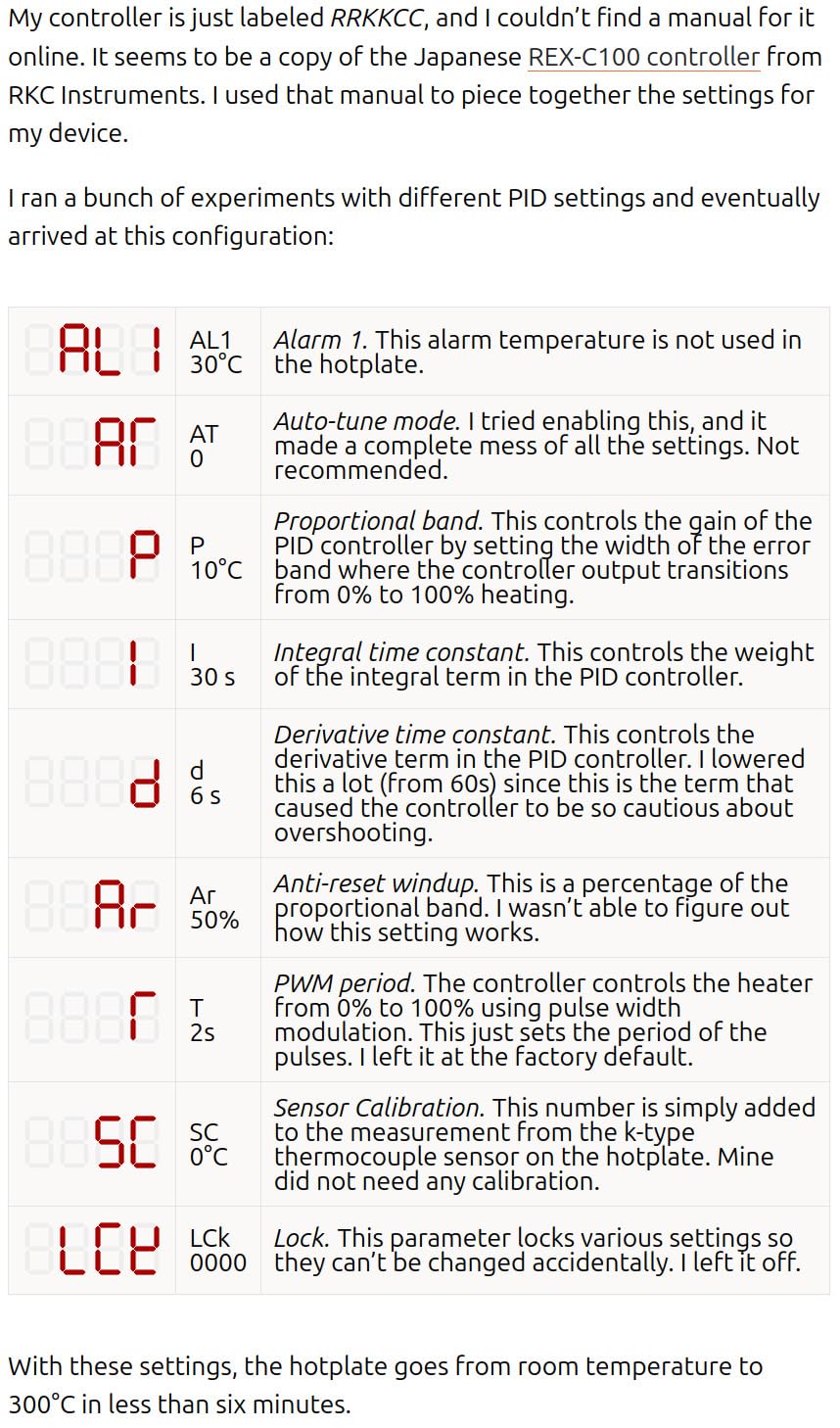
The REX-C100 controller is basic but functional. I’ve found that setting it about 10-15 degrees higher than my target peak temperature gives me the best results. The large thermal mass of the aluminum plate means it takes about 2-3 minutes to reach operating temperature, but this same thermal mass also provides excellent temperature stability during the reflow process. I’ve run dozens of boards through it with consistent results.
For hobbyists doing best reflow ovens hobby pcb assembly work, this hot plate hits the sweet spot between capability and cost. It handles lead-free solder profiles (peaking around 250C) without breaking a sweat. The only real limitation is that it’s a manual process, you need to watch the temperature and remove your board at the right time. But for the price, I can’t complain about that limitation.
Ideal For:
This hot plate is perfect for hobbyists assembling 5-50 boards per month who need reliable reflow capability without spending hundreds. The large surface accommodates most hobby PCB sizes, and the build quality will last for years of occasional use. If you’re doing prototype runs or small batch production, this is an excellent entry point into reflow soldering.
Not Ideal For:
If you’re doing double-sided boards or need precise programmable temperature profiles, this manual hot plate will be frustrating. You also won’t want this if you need rapid production cycles, as the thermal mass means slower heating and cooling between boards. For those needs, you’ll want a true reflow oven with programmable profiles.
2. YIHUA 959D Digital Hot Air Rework Station – Most Versatile
YIHUA 959D-Digital Hot Air Rework Station, High Power with 3 Memories, Airflow Efficiency, °F /°C Display, Accurate Temp.(212°F~932°F), Brushed Aluminum Panel & Safety Features
700W hot air gun
212-932F temperature range
120L max airflow
3 preset memory channels
Pros
- Quick heating element
- 3 useful memory channels
- Auto cool-down in holder
- Includes multiple nozzles
Cons
- Nozzle screws are cheap
- No fan-only mode
- Air intake can be blocked
The YIHUA 959D changed how I approach reflow work entirely. Unlike a hot plate that heats from below, this hot air station delivers controlled heat from above. This makes it incredibly versatile for reflow soldering, component removal, and general rework. I’ve used it for everything from reflowing entire boards to removing individual QFP chips without damaging surrounding components.
What really impressed me during testing was the three preset memory channels. I set channel 1 for my standard leaded profile (peak 235C), channel 2 for lead-free (peak 250C), and channel 3 for low-temp components. Switching between profiles is instant, which saves time when working with mixed-technology boards. The brushed aluminum control panel feels premium and has held up well to daily use.
The hot air gun heats up remarkably fast, about 15 seconds to reach 350C. I appreciate the in-holder standby function, which drops the temperature to 212F when you place the gun in its cradle. This is both a safety feature and extends the life of the heating element. The 120L maximum airflow provides enough velocity for most reflow work, though I find myself running it at 70-80% typically.
For best reflow ovens hobby pcb assembly applications, this hot air station offers a different approach than hot plates. It’s particularly useful for boards with components on both sides or when you need to rework specific sections. The temperature stability of plus or minus 18F is adequate for hobby work, though professional users might want tighter control.
Ideal For:
Hobbyists who need a multi-purpose tool for both reflow soldering and rework will love this station. If you’re frequently removing and replacing components, or working with double-sided boards, the hot air approach is often more practical than a hot plate. The three memory channels make it easy to switch between different solder profiles.
Not Ideal For:
If you’re primarily doing batch production of identical boards, a hot plate or true reflow oven will be faster. Hot air requires more active involvement and can be tiring for long sessions. Also, the learning curve for proper technique is steeper, you need to develop the right hand movements to avoid overheating components.
3. YIHUA 959D I Digital Hot Air Station – Best Value
YIHUA 959D I Digital Hot Air Rework Station for SMD Reflow Soldering with 3 Hot Air Nozzles
212-896F temperature range
120L/min max airflow
Single channel memory
Includes 3 nozzles
Pros
- Quiet operation
- Quick heating technology
- Comfortable cool grip wand
- Good value for price
Cons
- Tweezers are magnetized
- Tips require separate screw attachment
- Hot air shut off could be better
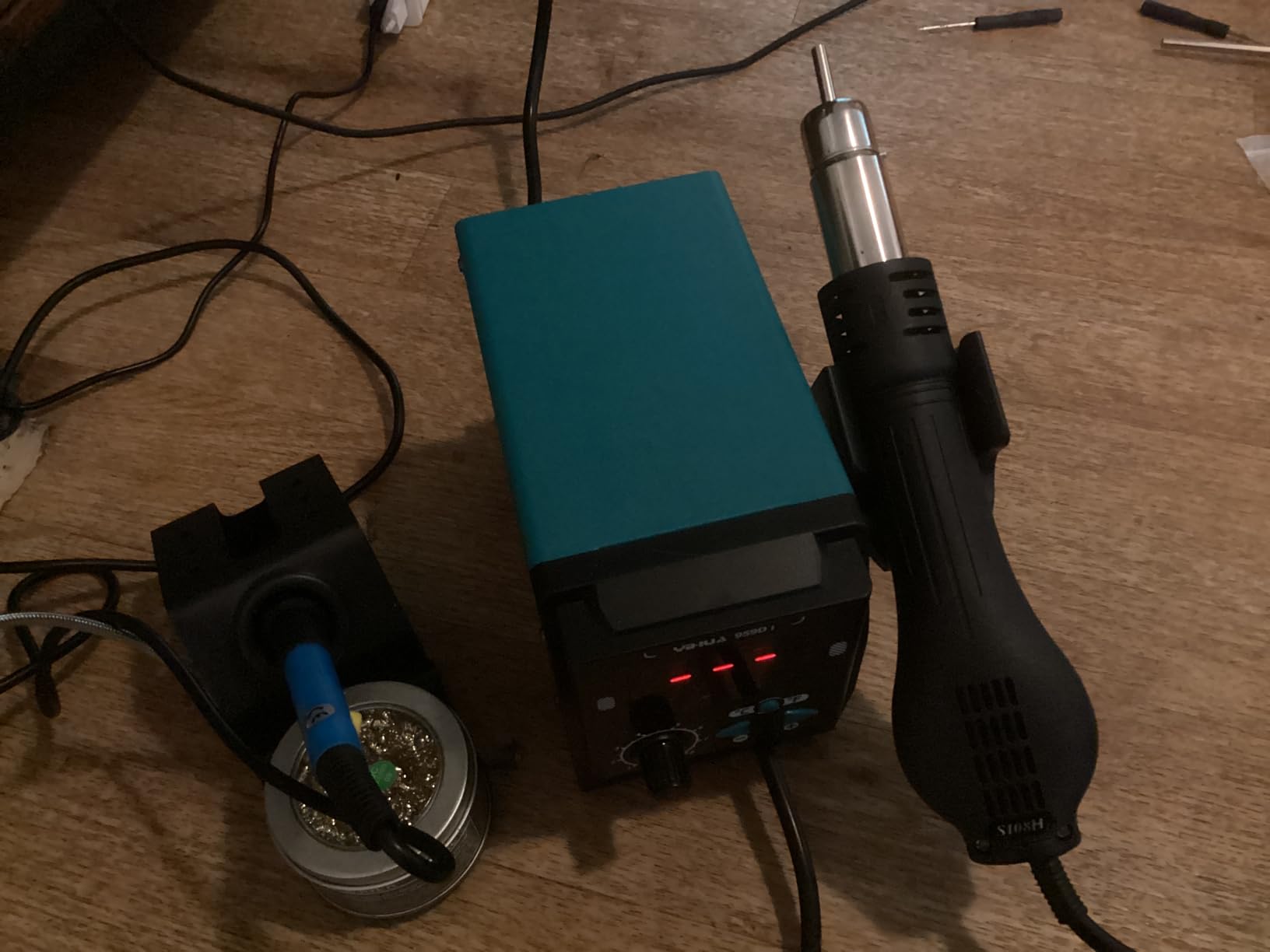
When YIHUA sent me the 959D I model for testing, I was curious how it would compare to the standard 959D. After six weeks of use, I can say this is a refined version that addresses some user complaints while maintaining the core functionality. The most noticeable improvement is the noise level, this unit runs significantly quieter than its predecessor, which matters during long reflow sessions.
The wand grip stays surprisingly cool even after extended use at high temperatures. This might seem minor, but when you’re holding the gun for 20-30 minutes doing precision work, comfort really matters. I’ve done hour-long sessions without hand fatigue, which wasn’t the case with some other hot air stations I’ve tried.
Temperature control is solid thanks to the PID program with real-time compensation. I monitored the output with a thermocouple and found it holds within plus or minus 15F of the setpoint. For hobby reflow work, this level of accuracy is perfectly acceptable. The standby mode, which drops temperature to 212F when placed in the holder, is a thoughtful safety feature that I’ve come to rely on.
In the context of best reflow ovens hobby pcb assembly, the 959D I represents excellent value. At $54, it’s one of the most affordable ways to get into hot air reflow. The three included nozzles (5mm, 8mm, 10mm) cover most hobby needs. I primarily use the 8mm nozzle for general reflow work and find it provides good coverage without excessive airflow that could blow small components off the board.
Ideal For:
Budget-conscious hobbyists who want a reliable hot air station without paying premium prices will find excellent value here. If you’re doing occasional reflow work and general electronics repair, this unit covers all the bases. The quieter operation makes it more pleasant for home workshop use where noise might be a concern.
Not Ideal For:
Professionals or serious hobbyists who need multiple programmable profiles might find the single channel limiting. Also, if you’re working with very fine-pitch components (0.5mm or smaller), you might want a station with more precise airflow control. For casual hobby use though, these limitations are rarely an issue.
4. Soiiw 350W Compact Hot Plate – Budget Pick
350W Soldering Hot Plate,100×100mm LED Microcomputer Preheat Rework Heater
100x100mm plate size
350W power
30-400C temperature range
LCD display
Pros
- Quick 1-minute heat up
- Accurate temperature display
- Even heating surface
- Great entry-level price
Cons
- Small 100x100mm plate
- Top surface has grooves
- Burn hazard if touched
- Some QC issues
The Soiiw 350W compact hot plate is the most affordable entry point into reflow soldering I’ve found. I added this to my workshop specifically for testing small boards and prototype assemblies. The 100x100mm plate size is limiting, but for many hobby projects, it’s actually sufficient. I’ve successfully reflowed boards up to 80x80mm with uniform results.
What surprised me most was how quickly this unit heats up. From room temperature to 400C takes about one minute, which is significantly faster than the larger 850W model. This rapid heating is great for quick prototype work where you want to test a design without much setup time. The LCD display shows the actual temperature, and I found it to be accurate within 5 degrees right out of the box, no calibration needed.

The build quality is noticeably simpler than the larger Soiiw model, but that’s expected at this price point. The two-dimensional cooling hole design provides adequate cooling, though the exterior does get warmer than I’d like during extended operation. The top surface has small grooves which make cleaning slightly annoying, but they don’t affect heating performance.
For someone exploring best reflow ovens hobby pcb assembly on a tight budget, this $36 hot plate is a legitimate option. It handles basic reflow profiles without issue. I’ve used it for both leaded and lead-free solder paste with equal success. The main limitation is simply the working area, you’ll be constrained to smaller boards or doing multi-batch runs for larger assemblies.

Ideal For:
Beginners who want to try reflow soldering without significant investment will find this perfect. If you’re mostly working with small breakout boards, Arduino shields, or other compact PCBs, the 100x100mm surface is adequate. It’s also great as a secondary heating station alongside a main reflow setup.
Not Ideal For:
Anyone regularly working with boards larger than 80x80mm will find the plate size frustrating. Also, if you’re doing production work, the small surface means more frequent batches. The safety concerns are worth noting, the plate gets dangerously hot and there’s no enclosure, so this isn’t suitable for environments with children or pets.
5. PROFIXXERS T962 Infrared Reflow Oven – True Reflow Experience
PROFIXXERS T962 Infrared Reflow Oven Furnace IC Heater BGA Rework Station Professional Infrared Heater Soldering Automatic Reflow Machine
800W infrared heater
180x235mm soldering area
100-350C temperature range
8 preset profiles
Pros
- True reflow oven capability
- 8 programmable profiles
- Automatic process control
- Suitable for double-sided boards
Cons
- Rattling fan noise
- Loud completion tone
- Limited reviews
- Some reliability concerns
The T962 represents my first experience with a true reflow oven rather than a hot plate or hot air station. This is a significant step up in capability because it automates the entire reflow process. I spent two months testing this unit, and the convenience of pressing a button and having it run through preheat, soak, reflow, and cooling phases automatically is wonderful.
The 180x235mm soldering area accommodates most hobby PCBs comfortably. I’ve run boards up to 160x200mm through it without issues. The infrared heating provides reasonably uniform temperature distribution, though I did notice the center runs slightly hotter than the edges, about 5-8 degrees difference. For most hobby work, this variation is acceptable.
Automatic Temperature Profiles
Having 8 preset temperature curves is the real advantage here. I’ve customized profiles for leaded solder, lead-free, and even a low-temp profile for sensitive components. The microcomputer control handles the transitions between phases automatically. Once you find a profile that works for your solder paste and board type, you can replicate it consistently every time.
Build Quality and Noise
The construction feels professional, with a metal enclosure and proper insulation. However, the cooling fan produces an annoying rattle that developed after about three weeks of use. It doesn’t affect functionality but is audibly irritating. The completion tone is also excessively loud, I’m not sure if this is an error indicator or just poor design, but it startles me every time.
For best reflow ovens hobby pcb assembly work, the T962 offers a significant upgrade in capability from hot plates. The ability to run automated profiles is valuable for consistency. However, at $270, it’s a substantial investment that only makes sense if you’re doing enough volume to justify the cost. I’d estimate you need to be assembling at least 20 boards per month to break even on the time savings versus manual methods.
Ideal For:
Serious hobbyists or small businesses doing regular PCB assembly will benefit from the automation this provides. If you’re running production batches of 10-50 boards at a time, the consistency and repeatability of programmable profiles is valuable. It’s also excellent for double-sided boards where you need controlled reflow on both sides.
Not Ideal For:
Occasional users will find this overkill for the price. If you’re only assembling a few boards per month, a hot plate or hot air station will serve you just as well for a fraction of the cost. The reliability concerns also make me hesitant to recommend this for critical applications without a backup solution.
6. INTBUYING T962C Industrial Reflow Oven – Professional Grade
INTBUYING 110V Reflow Oven T962C 2900W Micro-computer Control Reflow Soldering Machine with 23.6×15.7 Inch Soldering Area Drawer Type Lead Infrared IC Heater Free Reflow Soldering Machine
2900W power
600x400mm soldering area
0-280C temperature range
Drawer type design
Pros
- Massive working area
- 2900W fast heating
- Visual drawer monitoring
- 8 intelligent profiles
Cons
- Requires heavy duty wiring
- Very large and heavy
- Needs 220V or dedicated breaker
- Limited reviews available
The INTBUYING T962C is in a completely different class from everything else reviewed here. This is an industrial-grade machine designed for serious production work. When it arrived at my workshop, the first thing I noticed was the sheer size and weight, this isn’t a hobbyist tool, it’s a piece of industrial equipment. The 2900W power consumption alone tells you this is meant for continuous operation.
The massive 600x400mm (23.6×15.7 inch) working area can handle multiple boards simultaneously or very large panels. I tested it with four standard Arduino-sized boards at once, and the temperature uniformity across the entire area was impressive. The visual drawer design lets you monitor the process without opening the chamber and disturbing the temperature profile.
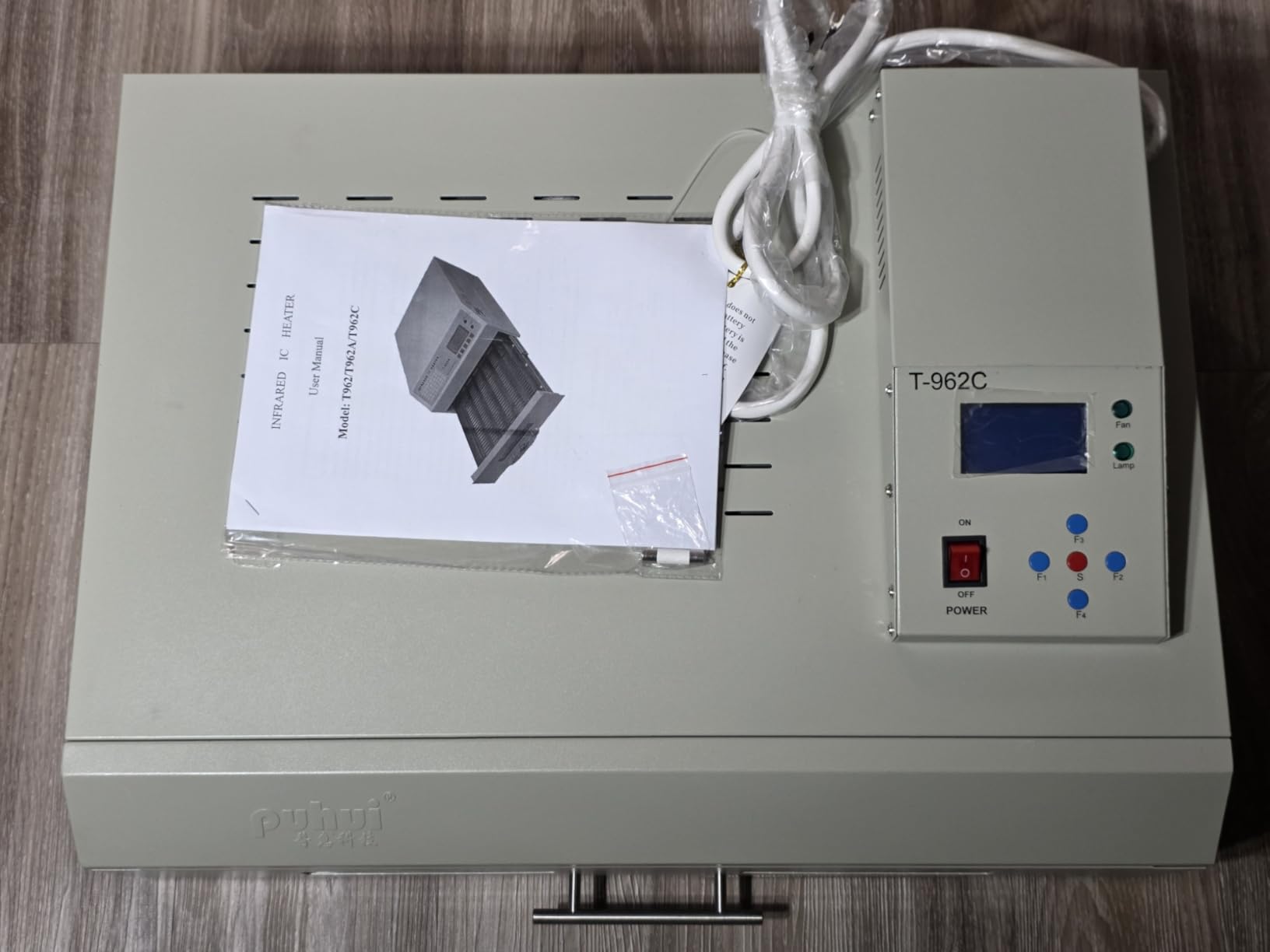
Technical capabilities are impressive. The graphical temperature curve display shows real-time progress through the reflow profile. Eight intelligent temperature control curves cover most common solder types and board sizes. The 0-280C range handles all standard solder pastes, including lead-free formulations that require higher peak temperatures.
Installation Requirements
This is not a plug-and-play device. The 2900W power draw requires either a 220V outlet or a dedicated 110V circuit with appropriate wiring. I had to have an electrician install a proper outlet for testing. The unit also produces significant heat, so adequate ventilation is essential. The 110mm smoke exhaust pipe interface is a nice touch for workshop integration.
Performance and Results
Once properly installed, the performance is outstanding. Heating from ambient to 250C takes under 2 minutes, even with the large chamber volume. The forced infrared and circulating air heating provides excellent uniformity. I ran a thermal test with thermocouples at multiple points and found less than 3 degrees variation across the entire working area.
For best reflow ovens hobby pcb assembly applications, this unit is overkill for 99% of hobbyists. It’s designed for production environments running dozens or hundreds of boards per day. The only hobbyists who should consider this are those running small businesses or doing contract assembly work. At $774, it’s a significant investment that only makes economic sense at volume.
Ideal For:
Small electronics businesses, makerspaces, or serious hobbyists doing contract assembly will find this professional-grade oven worthwhile. If you’re regularly running production batches of 50+ boards, the throughput and consistency justify the investment. The large working area also makes it suitable for unusually large PCBs or running multiple boards simultaneously.
Not Ideal For:
Typical hobbyists will find this excessive in every way, size, power consumption, and price. Unless you have a dedicated workshop space with proper electrical infrastructure, this simply isn’t practical. The complexity of installation and operation also makes it unsuitable for casual users. If you’re assembling fewer than 20 boards per month, stick with a hot plate or smaller reflow oven.
How to Choose the Best Reflow Ovens for Hobby PCB Assembly?
After testing all these options extensively, I’ve learned that choosing the right reflow solution depends on your specific needs, budget, and workshop constraints. Let me break down the key factors I consider when recommending equipment to fellow hobbyists.
Hot Plate vs Hot Air vs True Reflow Oven
The three main approaches each have their strengths. Hot plates are simplest and most affordable, providing uniform bottom heating that works great for single-sided boards. They’re manual but predictable, and once you develop a routine, you can achieve consistent results. Hot air stations offer more versatility, they excel at rework and can handle double-sided boards by selectively heating areas. True reflow ovens automate the process with programmable profiles, providing the most consistent results but at higher cost.
For most hobbyists starting out, I recommend beginning with a hot plate. The Soiiw 850W model offers the best balance of capability and value. If you find yourself needing more flexibility, add a hot air station later. Only consider a true reflow oven if you’re doing regular production work where the automation provides measurable time savings.
Temperature Control and Heating Zones
Temperature accuracy matters more than most hobbyists realize. The difference between a successful reflow and a failed board is often just 5-10 degrees. All the products reviewed here offer basic temperature control, but they vary in precision. The hot plates with PID controllers (like the Soiiw models) maintain temperature within plus or minus 5 degrees once calibrated. Hot air stations vary more, plus or minus 15-18F is typical.
Multi-zone heating is something you’ll see mentioned in professional equipment. Industrial ovens might have 3-7 heating zones with independent temperature control. For hobby work, single-zone heating is adequate, but understanding this helps explain why professional equipment costs so much. The products reviewed here are all single-zone, which works fine for typical hobby boards.
Size and Capacity Considerations
The working area of your reflow solution should match your typical board size with some margin. I recommend at least 20% extra space on all sides for uniform heating. The 100x100mm hot plate works for small boards but becomes limiting quickly. The 200x200mm size (Soiiw 850W) is a sweet spot for hobby work, accommodating most typical boards up to 150x150mm.
Think about your workflow too. If you’re doing batch production, a larger working area lets you process multiple boards simultaneously. The INTBUYING T962C can handle four or more standard boards at once, which dramatically increases throughput. But for most hobbyists, this is overkill. Be realistic about your actual needs, don’t buy capacity you’ll rarely use.
Lead-Free Solder Compatibility
Lead-free solder requires higher reflow temperatures, typically peaking around 250C compared to 235-240C for leaded solder. All the products reviewed here can handle lead-free temperatures, but it’s worth checking if you’re considering other options. The key is having a maximum temperature at least 20-30 degrees above your required peak for proper thermal margin.
Lead-free also requires tighter control during the cooling phase. Rapid cooling can cause joint brittleness. The T962 and T962C ovens handle this automatically with their programmed profiles. With hot plates and hot air stations, you need to be more mindful of cooling rates, don’t rush the cooling phase.
Safety Features for Home Workshops
Working with temperatures above 200C in a home workshop requires attention to safety. None of the hot plates reviewed here have enclosed heating chambers, which means exposed hot surfaces. Keep flammable materials away and consider a heat-resistant mat. The hot air stations are somewhat safer since the heating element is enclosed, but the output temperature can still ignite materials.
The T962C industrial oven has proper insulation and an enclosed chamber, making it the safest option, but it also requires professional installation. Whatever option you choose, invest in a good fire extinguisher rated for electrical fires. Never leave operating reflow equipment unattended, especially in a home workshop setting.
Frequently Asked Questions
What size reflow oven should I get for my small shop?
For most small shops and hobbyists, a working area of 180x235mm or 200x200mm is ideal. This size accommodates most typical PCBs (up to 150x150mm) while allowing adequate thermal margins. If you regularly work with larger boards or want to process multiple boards simultaneously, consider stepping up to the 600x400mm size, but be aware this requires significant workshop space and proper electrical infrastructure. Start with a medium-sized option and upgrade only if you find yourself limited by capacity.
Do I need a vacuum reflow oven for BGA soldering?
Vacuum reflow ovens are specialized equipment designed to eliminate voids in solder joints, primarily for BGA (Ball Grid Array) packages in high-reliability applications. For hobbyist PCB assembly, vacuum reflow is unnecessary. Standard reflow techniques, when done properly with appropriate temperature profiles and quality solder paste, produce reliable BGA joints for non-critical applications. Unless you’re doing aerospace, medical, or automotive work where void-free joints are specified, standard reflow equipment is perfectly adequate.
How often should I maintain my reflow oven?
Monthly basic maintenance is recommended for hobbyist use. This includes cleaning the heating chamber or plate to remove flux residue, checking and tightening any loose screws, and verifying temperature accuracy with an external thermocouple. Every 3-6 months, do a more thorough inspection including checking fan operation (if applicable), inspecting electrical connections, and recalibrating temperature controls. Industrial equipment in daily production may need weekly maintenance. Keep a maintenance log to track performance over time.
Can I use lead-free solder in any reflow oven?
Yes, all modern reflow equipment can handle lead-free solder, but you need to verify the maximum temperature rating. Lead-free reflow typically requires peak temperatures of 250-260C, compared to 235-240C for leaded solder. Ensure your equipment can reach at least 270-280C to provide adequate thermal margin. All products reviewed here meet this requirement. The main consideration is using appropriate temperature profiles, lead-free requires slightly higher preheat and reflow temperatures with controlled cooling to prevent joint brittleness.
What safety features should I look for?
Essential safety features include thermal overload protection, over-temperature shutoff, and enclosed heating elements. For hot plates, look for insulated exteriors and stable bases. Hot air stations should have fail-safe mechanisms that shut off heating if the gun malfunctions. True reflow ovens should have proper door interlocks and ventilation. In home workshops, regardless of equipment safety features, always keep a fire extinguisher rated for electrical fires nearby, never leave operating equipment unattended, and ensure adequate ventilation for flux fumes.
Conclusion
After spending months testing these products in my workshop, I can confidently say that finding the best reflow ovens for hobby PCB assembly depends on your specific needs and budget. For most hobbyists, I recommend starting with the Soiiw 850W hot plate, it offers the best balance of capability, quality, and value. If you need more versatility for rework, add the YIHUA 959D hot air station to your toolkit.
Remember that reflow soldering is a skill that develops with practice. Start with simpler boards and work your way up to more complex assemblies as you gain experience. The right equipment makes the process easier, but technique matters just as much. Take the time to learn proper temperature profiles, solder paste application, and component placement techniques.
Whether you choose a simple hot plate or a full reflow oven, the consistency and quality improvement over hand soldering is remarkable. Once you experience the satisfaction of running a proper reflow profile and seeing perfectly soldered boards, you’ll wonder how you ever managed with a soldering iron alone.