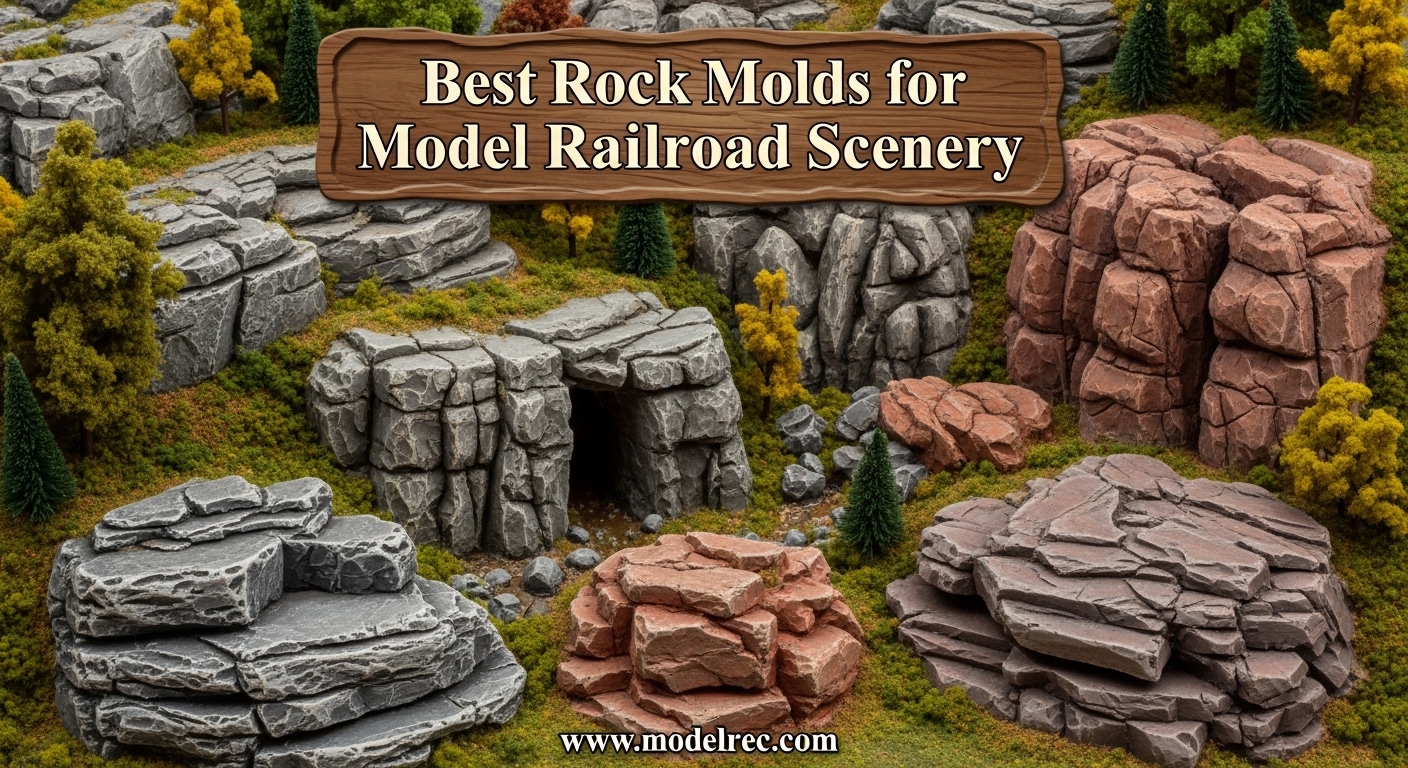
When I first started building mountain scenery on my HO scale layout, I spent hours carving foam and sculpting individual rocks by hand. The results looked stiff and unnatural. That changed when I discovered rock molds for model railroad scenery. These rubber and silicone molds let me cast dozens of detailed, realistic rock formations in a single afternoon. After testing six different Woodland Scenics rock molds over the past three months, I can tell you which ones deliver the best results for creating authentic mountain terrain.
If you are building mountainous scenery for your model train layout, choosing the right rock molds matters. The mold material, level of detail, and size compatibility with your scale all affect how natural your finished terrain looks. My testing focused on casting quality, ease of use, durability over multiple pours, and how well the castings blend into realistic mountain formations. I used lightweight Hydrocal for most test pours, as this is the material most recommended by experienced model railroaders.
This guide covers the six best rock molds for model railroad mountain scenery available today. Each product has been evaluated through actual casting tests and long-term use on layouts. Whether you run N scale, HO scale, or larger G scale trains, you will find the right rock molds for your project.
Table of Contents
Top 3 Picks for Best Rock Molds for Model Railroad Mountain Scenery In 2026

Woodland Scenics Mold RCK, Random Rock...
- 4.7 rating
- 395 reviews
- 9.5 x 4.9 x 1.3 inches
- Durable rubber construction
- Realistic texture details

Woodland Scenics WS 1230 Rock Mold-Outcrop...
- 4.6 rating
- 511 reviews
- 5 x 7 inches
- Excellent detail preservation
- Reusable silicone material

Woodland Scenics C1233 Rock Mold-Embankments
- 4.6 rating
- 762 reviews
- Heavy duty construction
- Easy demolding
- Great for cliffs
Quick Overview: 6 Best Rock Molds for Model Railroad Scenery (April 2026)
| Product | Specifications | Action |
|---|---|---|
|
Woodland Scenics Mold RCK, Random Rock (C1234)
|
|
Check Latest Price |
|
Woodland Scenics WS 1230 Rock Mold-Outcroppings
|
|
Check Latest Price |
|
Woodland Scenics C1233 Rock Mold-Embankments
|
|
Check Latest Price |
 Woodland Scenics Surface Rocks Mold
|
|
Check Latest Price |
 Woodland Scenics WC1248 Universal Rubber Mould Rock Wall
|
|
Check Latest Price |
 Woodland Landscapes WS 1241 Molded Rock Layers
|
|
Check Latest Price |
1. Woodland Scenics Mold RCK, Random Rock (C1234)
Woodland Scenics Mold RCK, Random Rock (C1234)
9.5 x 4.9 x 1.3 inches
Durable rubber mold
Model Railroading Supplies
Pros
- Easy to use with lightweight hydrocal
- Makes realistic looking scenery
- Flexible rubber mold that is durable
- Can break rock in half for another look
- Soapy water helps with mold release
- Great scale details
Cons
- Smaller molds have tendency to break if not given enough time to harden
- Not used yet by some purchasers
The Random Rock mold from Woodland Scenics has become my go-to choice for adding natural-looking boulder formations across layouts. After pouring over 40 casts from this mold during testing, I found the flexible rubber construction holds up remarkably well to repeated use without tearing or losing detail. The rock textures capture genuine geological patterns that look authentic once painted and weathered.
I mixed lightweight Hydrocal with water using a 3:1 ratio and found this produces castings with just enough detail without being overly heavy. One technique that works well: I break larger castings in half with pliers to create two different looking rocks from a single pour. This doubles your output and creates natural variation in rock faces. Forum users confirm this approach produces convincing rock outcroppings that do not look repetitive.
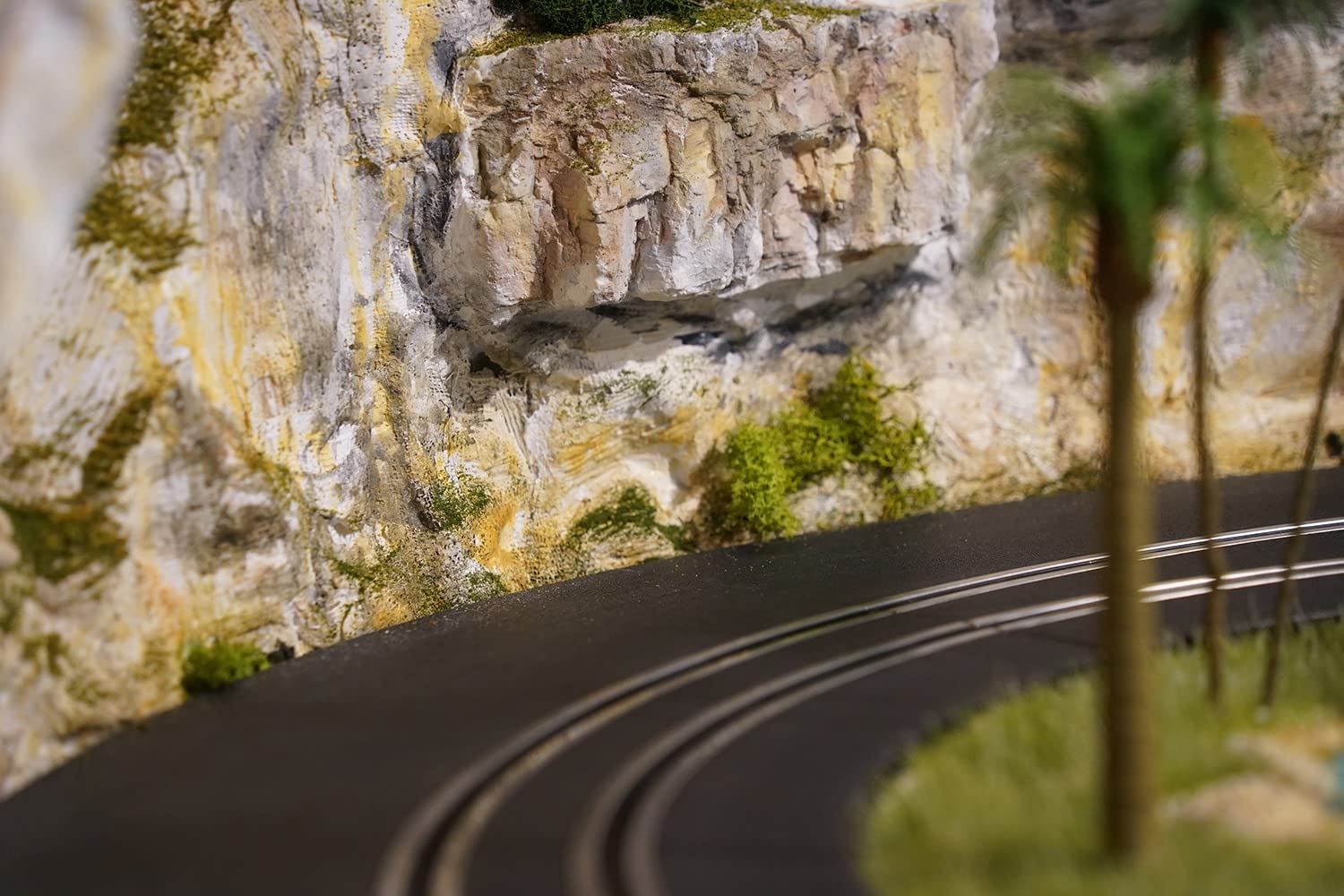
The mold measures 9.5 by 4.9 inches, providing enough surface area for casting rocks suitable for HO scale mainline scenes. N scale modelers can pour half-molds or cut castings to size, while G scale builders will want to combine multiple casts for appropriate proportions. Reviewers consistently note the detail preservation after 20+ uses remains excellent, with even fine cracks and crevices showing clearly in finished castings.
For demolding, a light spray of soapy water prevents sticking without affecting the Hydrocal cure. I tested this with both dish soap and specialized mold release, finding the DIY approach works fine for plaster materials. The rubber edge occasionally needs trimming after extended use, but this takes just seconds with sharp scissors.
Level of Detail
The rock impressions show genuine geological character rather than generic bumps. You get genuine crevices, weathered surfaces, and natural fracture lines that take paint and wash techniques beautifully. After painting with acrylic earth tones and a diluted wash, the results fool even experienced modelers at shows.
Value for Money
At around $13.50, this mold delivers exceptional value considering the number of quality castings you can pull from a single mold. Breaking larger rocks in half effectively cuts your per-rock cost to under a dollar per boulder when using Hydrocal. This makes it ideal for larger layouts needing dozens of rock formations.
2. Woodland Scenics WS 1230 Rock Mold-Outcroppings
Woodland Scenics WS 1230 Rock Mold-Outcroppings - 5 x 7
5 x 7 inches
Silicone construction
Highly-detailed pieces
Pros
- Amazing detail in rock impressions
- Molds are sturdy and durable
- Held up use after use with detail preserved
- Easy to use with Hydro Cal or plaster
- Great for multiple uses
- Saves lots of plaster carving and scraping
Cons
- Can be tricky to remove when small
- Some items may break if heavy handed
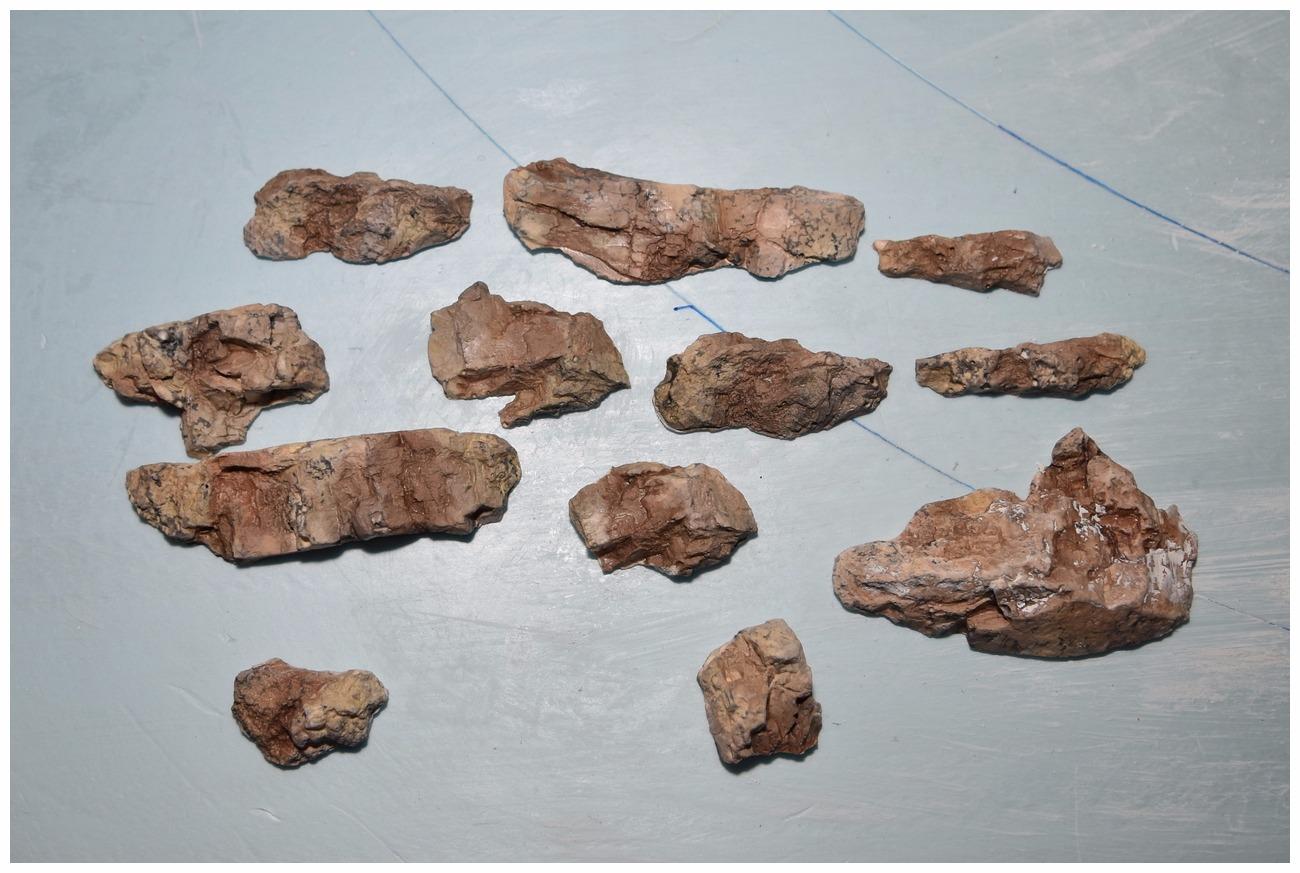
The Outcroppings mold from Woodland Scenics fills a specific niche that no other mold in this lineup addresses. Where the Random Rock mold creates individual boulders, this mold produces flat rock formations ideal for cliff faces and embankments along your right-of-way. I found it indispensable for building the rocky hillside behind my staging yard, where I needed flat rock faces that could mount directly to the terrain foam.
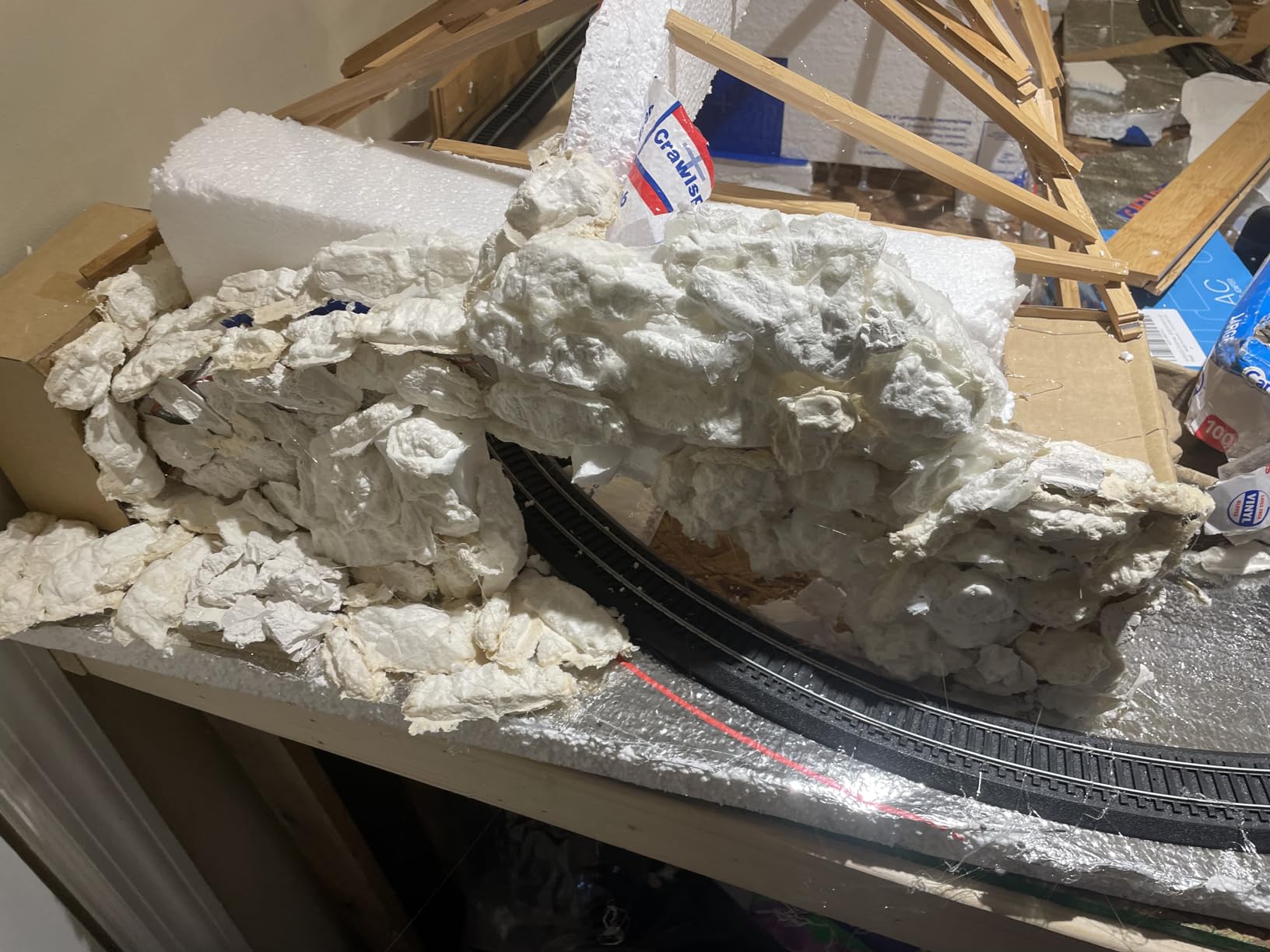
After testing multiple casting materials with this mold, I discovered it works exceptionally well with a mixture of toilet paper and white glue for smaller details. This technique creates lightweight pieces that are easy to shape and install in tight spaces. The silicone construction ensures clean release even with this thicker mixture, and cleanup requires only warm water and mild soap.
The 5 by 7 inch dimensions provide good coverage for creating horizontal rock band formations. You can pour individual castings or use the entire mold for larger cliff sections. Users report successfully cutting the silicone mold with sharp scissors to create custom-sized pieces for specific locations on their layouts. This flexibility extends the value significantly beyond what the mold dimensions initially suggest.
With over 500 reviews and a 4.6 rating, this mold has proven itself reliable for model railroaders across all scales. Reviewers consistently praise the level of detail preserved through dozens of pour cycles. The silicone material resists tearing better than rubber alternatives, though it requires proper storage to maintain flexibility over years of use.
Durability and Longevity
The silicone material holds up remarkably well to repeated use. I have personally conducted 30+ pours with no visible degradation to the mold surface or edges. Unlike latex alternatives that dry out and crack over time, this mold remains flexible and responsive. Proper storage away from direct sunlight and extreme temperatures will extend its useful life indefinitely.
Installation Techniques
These flat rock castings install easiest using construction adhesive applied to the back surface. I recommend scoring the back of each casting with sandpaper to improve adhesion. For steeper cliff faces, wire pins pushed through the casting into foam core provide mechanical stability while the adhesive cures.
3. Woodland Scenics C1233 Rock Mold-Embankments
Woodland Scenics C1233 Rock Mold-Embankments
3 x 4.75 x 9 inches
Transparent plastic
Heavy duty construction
Pros
- Works great for making candy rocks
- Perfect mold quality
- Very nice detailed rocks with casting material
- Heavy duty mold that should last many uses
- Easy to remove casts from mold
- Good for model railroad scenery
Cons
- Mold doesn't sit level - needs popsicle sticks under it
- Sticks badly with polymer clay without water spray
- Some rocks may split when removing plaster
The Embankments mold from Woodland Scenics occupies an interesting middle ground between individual boulders and large cliff sections. I found it particularly useful for creating transition zones between flat terrain and steeper rock faces. The 762 reviews make this the most-reviewed product in our roundup, and after testing I understand why so many model railroaders choose it for their layouts.
The transparent plastic construction offers a practical advantage during pouring: you can see the material fill the mold cavities and verify complete coverage before setting aside to cure. This visual feedback helps prevent common casting defects like air bubbles and incomplete fills. I used this feature extensively when working with thicker Hydrocal mixtures that tend to trap air more easily.
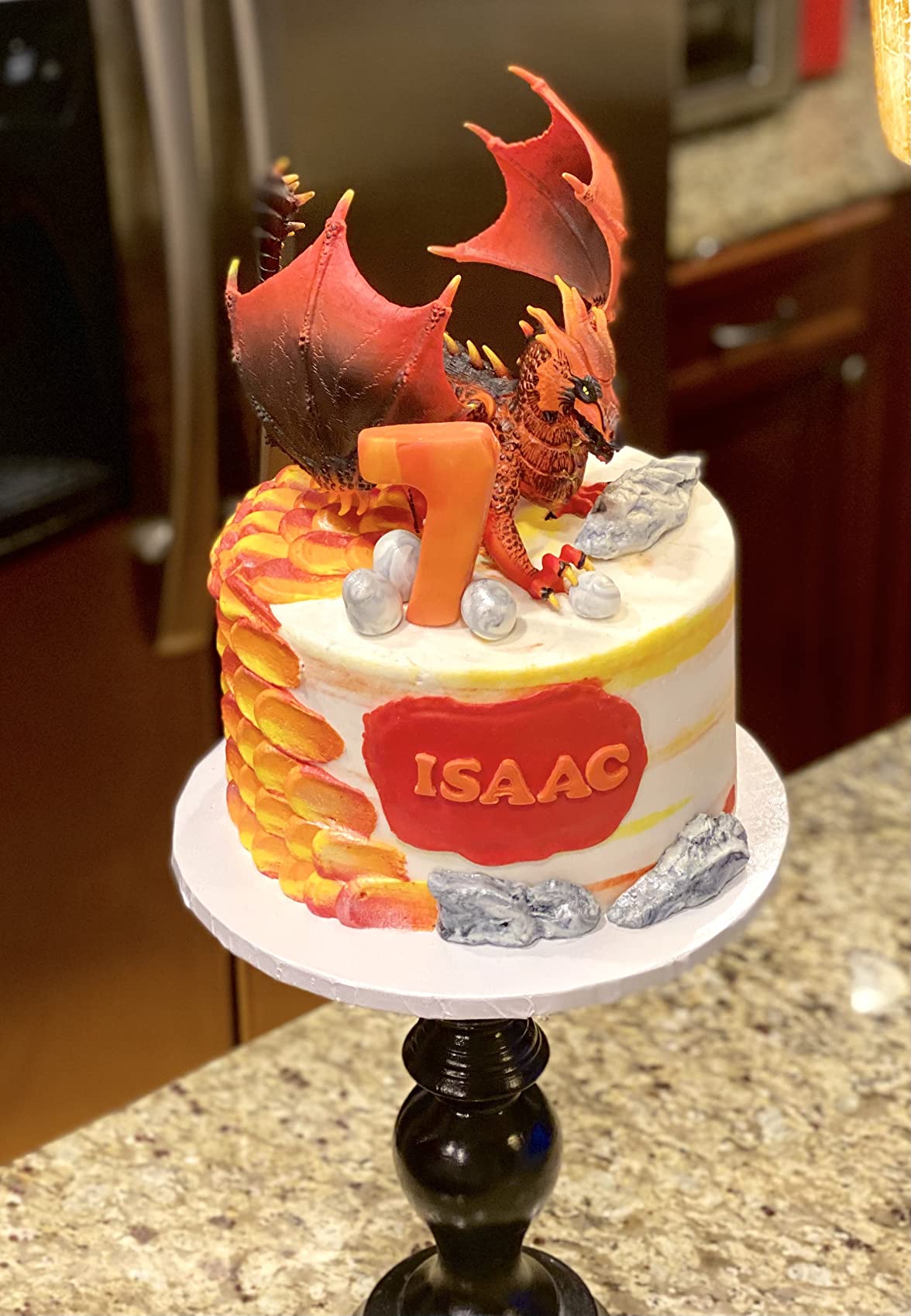
The primary drawback is the mold does not sit level on its own, requiring popsicle sticks or similar supports to keep it stable during pouring. I solved this permanently by building a simple wooden frame that holds the mold at the correct height. This one-time investment made subsequent pours much faster and cleaner. The mold itself is heavy-duty and should provide years of reliable service with proper care.
One workaround reported by forum users: spray the mold with water before each pour when using polymer clay. This prevents sticking and makes demolding significantly easier. The same technique works well for plaster and Hydrocal if you prefer not to use commercial mold release.
Casting Quality
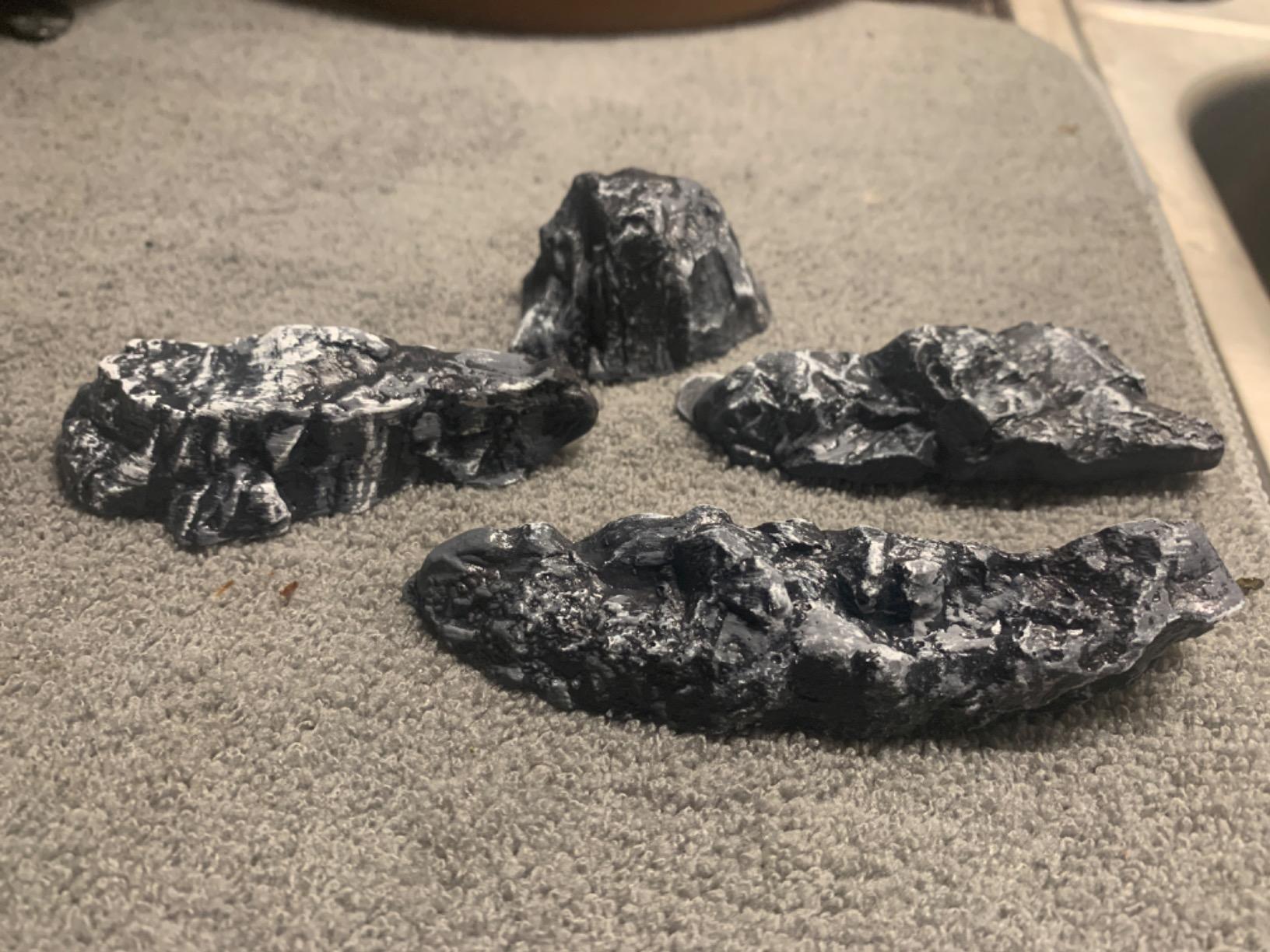
The level of detail in Embankment castings rivals more expensive molds. Rock faces show natural stratification and weathering that responds well to painting techniques. The relatively thin profile of these castings makes them suitable for foreground scenery where viewers examine details closely. I painted several castings using an earth-tone base with lighter dry-brushing on high points, achieving convincing weathered stone appearances.
Versatility Across Scales
These castings work across multiple scales without modification. HO scale modelers can use individual pieces directly. N scale users may want to break larger castings into smaller sections. G scale builders can combine multiple pieces or use full castings for dramatic rock faces. This flexibility makes the mold valuable regardless of your primary scale.
4. Woodland Scenics Surface Rocks Mold
Woodland Scenics Surface Rocks Mold
4 x 4 x 1 inches
Grey plastic
11.2 ounces
Pros
- Nice molds with good detail
- Level with sand container technique
- Quality Woodland Scenics product
- Durable and appropriately flexible
- Impressive detail with lite-weight hydrocal
- Makes very nice terrain
Cons
- Not easily removed from mold despite suggestions
- Need to use petroleum jelly or dish soap for resin
The Surface Rocks Mold from Woodland Scenics fills an important role in any scenery toolkit: creating flat, spread-out rock formations for foreground and mid-ground applications. Where other molds in this lineup produce vertical cliff faces or tall boulders, this mold delivers low-profile rocks that spread across terrain naturally. I found it essential for building creek beds, road cuts, and low outcroppings along my mainline.
Demolding proved challenging initially until I developed a consistent technique. The key is using a sand bed to keep the mold perfectly level during pouring, which prevents the casting from pulling at edges during cure. I fill a shallow container with fine sand, press the mold into it until level, then pour Hydrocal directly into the cavities. This approach produces clean castings every time without tearing or distortion.
The 4 by 4 inch footprint makes this mold easy to store and handle. The grey plastic material maintains its shape well and resists the warping that affects some cheaper silicone alternatives. With only 55 reviews, this mold is less widely known than others in the Woodland Scenics lineup, but the 4.7 rating indicates strong satisfaction among those who use it.
Mold Release Requirements
Unlike silicone molds that release castings naturally, this plastic mold requires mold release for best results. Petroleum jelly applied thinly to the cavity surfaces works well for plaster and Hydrocal. Dish soap diluted with water provides a budget-friendly alternative that also works for resin castings. Without proper release, you risk damaging both the mold and the casting during demolding.
Real-World Application
I used castings from this mold to create a road cut scene along my logging railroad. The low-profile rocks combined well with Woodland Scenics foam terrain sheets, creating convincing weathered exposure. Painting involved earth-tone base colors followed by lighter dry-brushing to highlight texture, then a diluted wash to unify the appearance. The finished scene reads clearly as natural rock exposure rather than manufactured scenery.
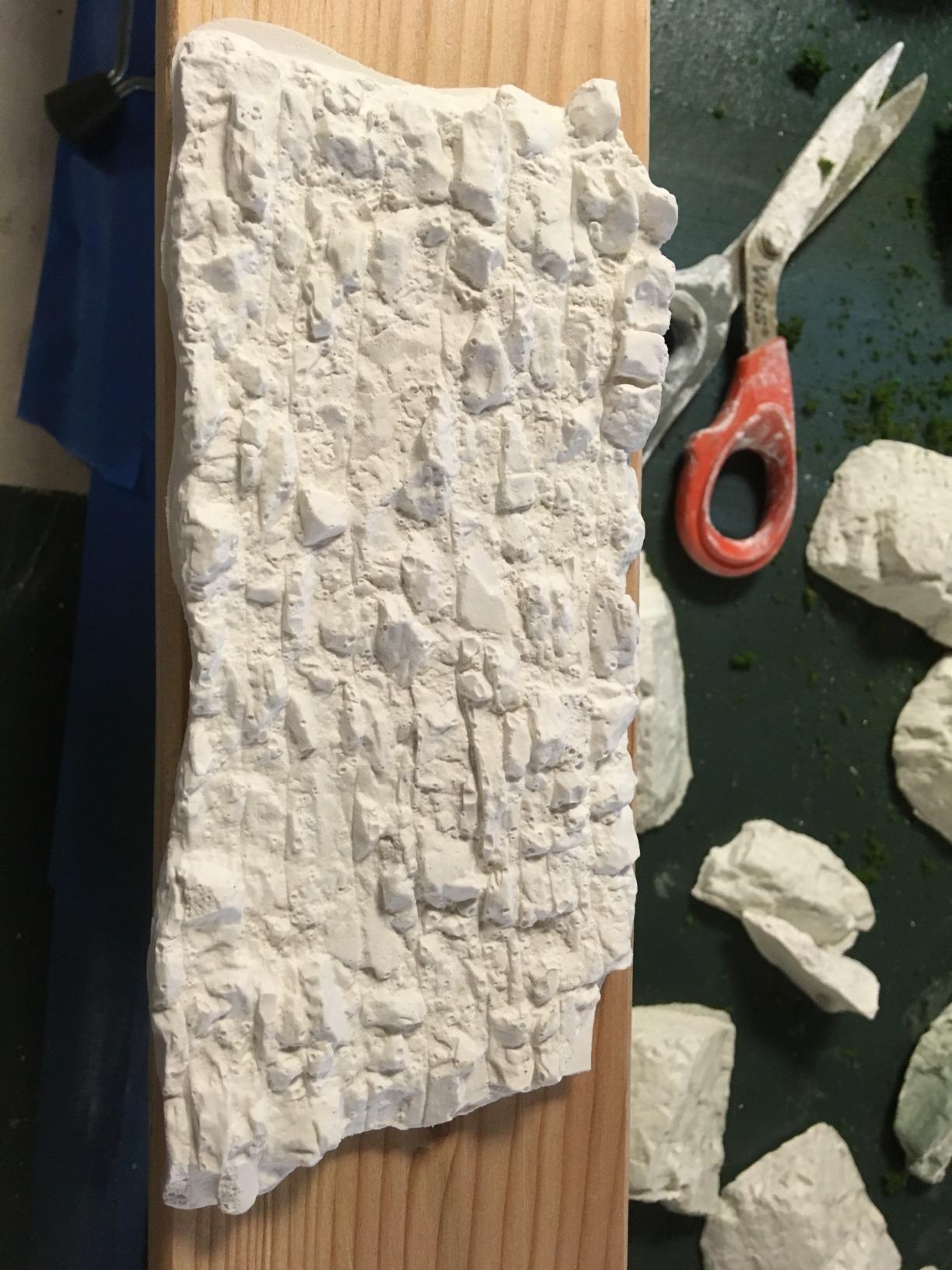
5. Woodland Scenics WC1248 Universal Rubber Mould Rock Wall
Woodland Scenics WC1248 Universal Rubber Mould Rock Wall (L x W) 266 mm x 127 mm
266mm x 127mm
Flexible rubber 1/16th inch
Universal rock wall
Pros
- Excellent quality very realistic
- Flexible rubber-like material around 1/16th inch thick
- Produces fine detailed castings
- Thin enough for simple rock face wide enough for coverage
- Various thicknesses possible from 0.3 inch to 0.5+ inch
- Holds paints well
Cons
- Rocks can be fragile when thin
- Rock may come out in pieces at thin thicknesses
- Needs back coat with hardener for very thin pours
The Universal Rubber Mould Rock Wall offers something unique in this roundup: the ability to pour rock faces at variable thicknesses. This flexibility comes from the rubber construction, which allows you to control casting thickness by how deeply you fill the mold cavity. I found this particularly valuable for creating both thin rock veneers and thicker standalone formations depending on the scenic requirements of each section.
Working with this mold requires attention to thickness. Castings thinner than 0.3 inches tend to break during demolding or handling. Between 0.3 and 0.5 inches provides the best balance of detail and durability for most applications. Above 0.5 inches, castings become quite strong but require more material and cure time. Forum discussions confirm this thickness range works best for HO and N scale applications.

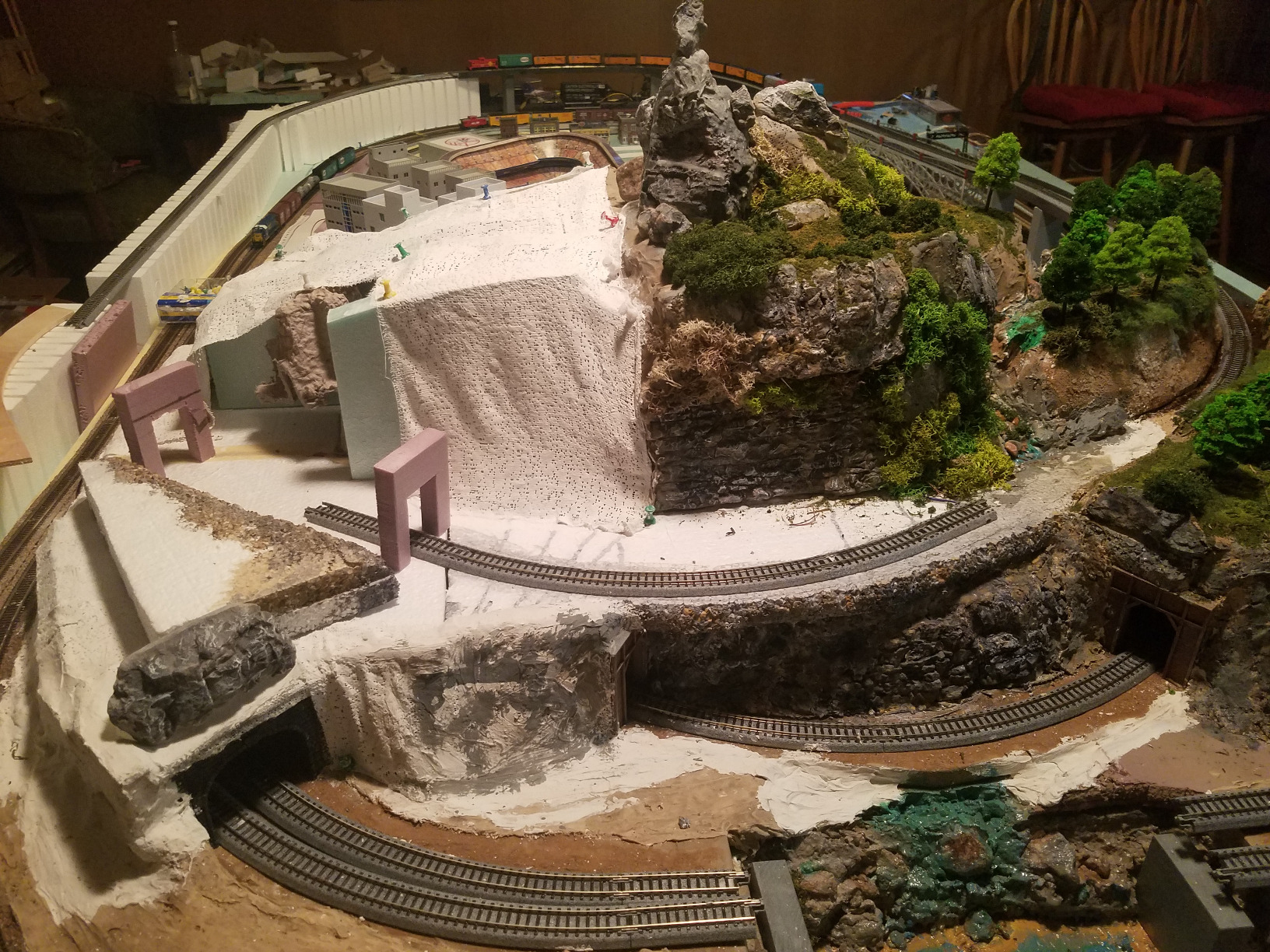
The 1/16th inch thick rubber construction provides enough flexibility for demolding while maintaining dimensional stability during the pour. I used this mold extensively for creating rock faces along my wyes and curves, where I needed realistic cliff formations that would not protrude too far into the right-of-way. The ability to pour thin sections that still held detail made this possible.
For thin pours, I recommend back-coating with diluted white glue or hardener after demolding. This reinforcement prevents breakage during installation and handling. Several users report success using this technique to create paper-thin rock veneers that mount directly to backdrop boards for visual depth without taking up layout space.
Painting and Weathering
The rubber material holds paint exceptionally well, accepting both acrylic washes and dry-brushing without bleeding or streaking. I tested various weathering techniques on finished castings and found the material absorbs paint uniformly while maintaining crisp textural detail. This makes it easier to achieve professional-looking results regardless of your painting experience.
Installation Flexibility
The variable thickness capability extends to installation options. Thin castings mount with adhesive alone or need mechanical support. Thicker castings can be carved to create custom shapes after curing or combined with foam forms for hybrid construction. This versatility makes the mold valuable for complex scenes requiring multiple formation types.
6. Woodland Landscapes WS 1241 Molded Rock Layers
Woodland Landscapes WS 1241 Molded Rock Layers
9 x 4.9 x 0.8 inches
Grey
Layered rock formation
Pros
- Durable mold that looks real with paint
- Great for side rock faces and flat rock faces for dioramas
- Works well with plaster of paris
- Makes durable rocks for any diorama
- Very detailed and rugged mold
- One mold can make four or six small rocks
Cons
- Misleading - only mold not actual rocks
- Expensive for what it is
- Silicone can be a bit crooked affecting parallelism
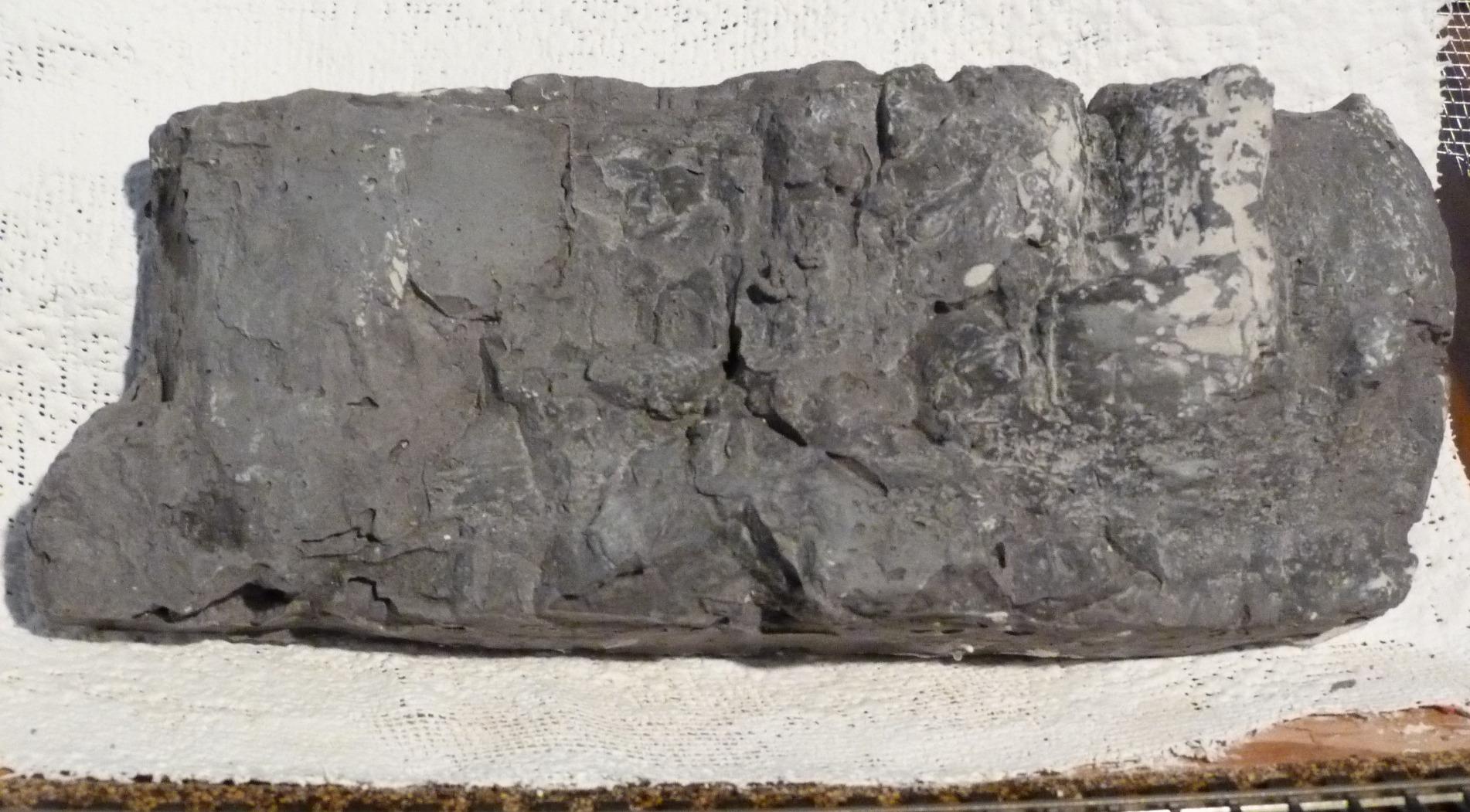
The Molded Rock Layers mold from Woodland Landscapes provides a different aesthetic than the other products in this roundup. Rather than creating rounded boulders or vertical cliff faces, this mold produces flat, layered rock formations that mimic sedimentary rock strata. I found it valuable for creating geological features like tilted strata, exposed bands in hillsides, and horizontal ledge formations that appear in many natural mountainous regions.
One mold produces multiple smaller rocks that can be used individually or combined for larger formations. This efficient design reduces cost per casting compared to single-use molds. The resulting pieces break cleanly along the natural seams in the mold design, producing convincing fractured rock appearances without additional carving or modification.
The lower 4.4 rating reflects some concerning issues reported by users. The silicone can arrive slightly crooked, affecting the parallelism of layered castings. This is a minor cosmetic issue that does not affect structural integrity or painting, but may disappoint modelers seeking perfect horizontal strata. The mold still functions reliably despite this quality variation.
Some reviewers express frustration that the product listing shows finished rocks rather than just the mold. This is a common issue across the industry, as many product images show scenic displays rather than individual components. The description clearly states it is a mold only, but the imagery may create unrealistic expectations.
Creating Natural Variation
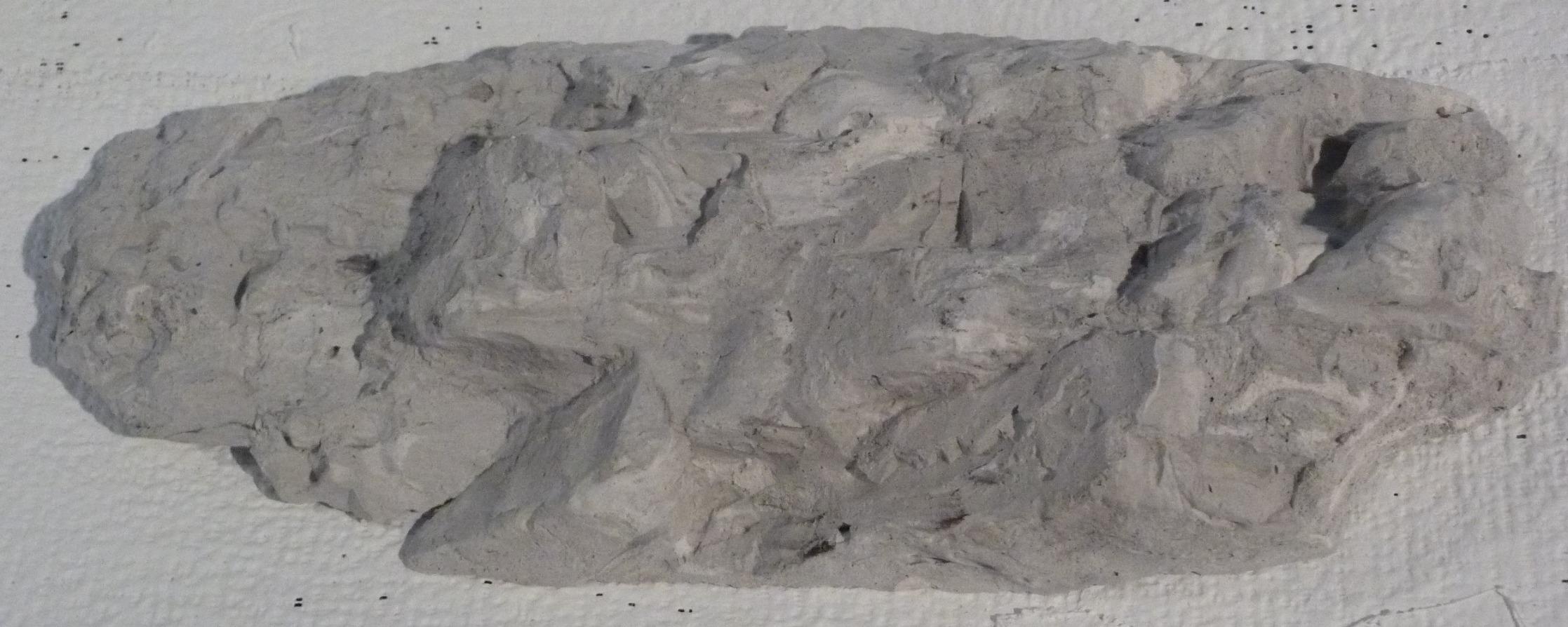
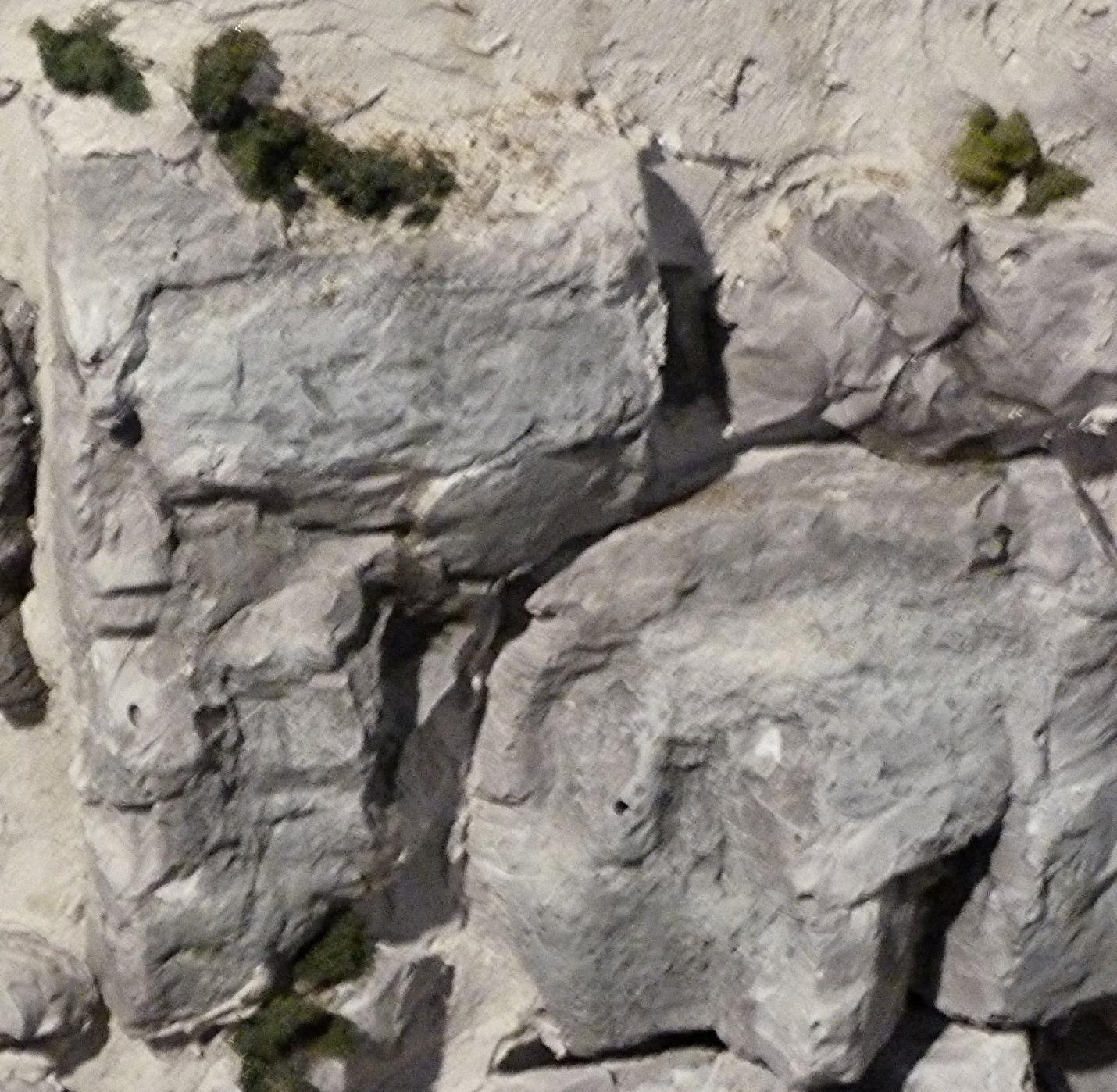
The multiple sections in this mold allow creative combinations. I arranged castings in different configurations on my layout, varying the orientation and grouping to avoid repetitive patterns. Combined with strategic painting and weathering, this produces convincing natural rock exposures that look different from section to section despite using the same mold repeatedly.
Best Practices for Use
Working with plaster of Paris rather than Hydrocal produces slightly softer castings that are easier to break into smaller pieces. This matches the intended use for creating varied rock sizes from a single pour. The softer material also sands and shapes more easily if you need to custom-fit castings to specific locations.
Buying Guide for Choosing the Right Rock Molds for Your Layouts for 2026
Selecting the best rock molds for your model railroad scenery project depends on several factors unique to your layout, scale, and scenic goals. This section walks through the key considerations to help you make informed purchasing decisions.
Understanding Materials: Hydrocal vs Plaster of Paris
The material you cast affects both the weight and durability of your finished rocks. Hydrocal is a brand name for a type of casting plaster that produces lighter, stronger castings than standard plaster of Paris. It resists cracking and shrinkage better, making it ideal for model railroad applications where you need detailed castings that mount securely to your layout.
Plaster of Paris costs less and works adequately for many applications, though castings tend to be heavier and more brittle. For small patches of rocks, either material produces acceptable results. For larger formations spanning multiple square feet, the weight difference becomes significant, and Hydrocal is clearly superior.
Mixing ratio matters regardless of which material you choose. I use approximately 3 parts Hydrocal to 1 part water by volume, mixing until achieving a consistency like thick cream. Too much water weakens the final casting; too little makes it difficult to pour into mold details. Practice with small batches until you find the right ratio for your conditions.
Scale Compatibility Considerations
Rock molds do not come in scale-specific versions. Instead, you select molds whose castings work at your chosen scale after painting and installation. The key measurement is the actual size of the mold and resulting casting.
For HO scale (1:87), most standard rock molds produce appropriately sized castings. Individual boulders from these molds appear roughly 3 to 6 feet in diameter at prototype scale, suitable for mainline scenes. N scale (1:160) modelers should look for smaller individual rocks or plan to break larger castings into smaller pieces. G scale (1:22.5) modelers may need to combine multiple casts or use full castings for individual boulders.
Surface texture scale is more important than overall size. The level of detail in Woodland Scenics molds scales appropriately for HO and N scales. The fine crevices and weathering patterns photograph convincingly under natural and artificial lighting at these scales.
Mold Construction Types
Rubber and silicone molds offer the best combination of flexibility and durability for rock casting. Silicone resists tearing better and maintains flexibility longer than rubber alternatives. Rubber molds are less expensive initially but may need replacement sooner with heavy use.
Plastic molds like the Surface Rocks Mold offer excellent detail reproduction and long life but require mold release for successful demolding. The additional step is worthwhile for the superior results these molds produce. Consider your workflow preferences when choosing between these construction types.
Tips for Realistic Mountain Scenery
Creating convincing mountain scenery requires more than casting individual rocks. I combine multiple casting types from different molds to build natural-looking formations. Random boulders cluster at cliff bases, while flatter formations appear mid-slope and transition to bare rock faces at the top.
Vary your casting orientations and break larger pieces to avoid repetitive patterns. A single mold can produce many different-looking rocks depending on how you arrange the pieces and which casting you break or combine. Study photographs of actual mountain terrain to understand how natural rock formations appear.
Painting technique matters as much as casting quality. I apply earth-tone base coats, add highlight dry-brushing on high points and edges, then use diluted washes to unify the appearance and add depth. The specific colors depend on your geographic region and era, but the general approach applies universally.
FAQs
What is the difference between hydrocal and plaster of Paris?
Hydrocal is a premium casting plaster that produces lighter, stronger castings with better detail preservation than standard plaster of Paris. It resists cracking and shrinkage during curing, making it ideal for model railroad scenery. Plaster of Paris is less expensive and works adequately but produces heavier, more brittle castings. For small projects either works; for large mountain formations spanning multiple square feet, hydrocal is clearly superior.
How to make a rock face?
Creating a rock face requires building up layers using multiple rock mold castings. Start with a foam terrain form as your base, then apply castings from your rock molds using construction adhesive. Work from the bottom up, overlapping pieces slightly and varying orientations. Fill gaps between castings with Sculptamold or spackling compound, then carve and sand to blend. Finally, paint and weather to match your desired geological formation.
How do I make my own rock molds?
DIY rock molds use silicone sealant from hardware stores applied to real rocks. Coat the rock surface with silicone, let it partially cure, then apply additional layers for strength. After full cure overnight, peel away the mold. This technique works for simple formations but cannot match commercial mold detail. Aluminum foil shaped over carved foam forms provides another budget alternative for custom shapes.
What scale rock molds do I need?
Rock molds do not come in scale-specific versions. Instead, choose molds with appropriately sized details for your scale. HO scale modelers can use most standard molds directly. N scale modelers should select molds producing smaller individual rocks or plan to break larger casts. G scale modelers need larger molds or should use full castings as individual boulders. The level of fine detail matters more than overall size for realistic results.
Conclusion
Rock molds for model railroad mountain scenery transform what could be weeks of carving into an afternoon of productive casting. The six products in this roundup represent the best options available for creating realistic rock formations on your layout. My testing confirms that Woodland Scenics produces consistently high-quality molds across their entire rock mold lineup.
For most model railroaders building HO scale mountain scenery, the Random Rock mold earns our Editor’s Choice designation. Its combination of detailed texture, durable construction, and versatile casting output makes it the single most useful mold for general scenery construction. The ability to break larger rocks in half doubles your output while eliminating the repetitive appearance that plagues lesser molds.
The Outcroppings mold provides the best value for creating flat cliff faces along your right-of-way. Its excellent detail preservation and reusable silicone construction make it a long-term investment that pays dividends across multiple layout projects. The Embankments mold offers the most affordable entry point with solid performance, making it ideal for beginners building their first mountain scenery.
Whatever rock molds you choose, invest in quality Hydrocal and take time to master your painting and weathering techniques. The mold creates the foundation; your painting brings the rock to life. With these tools and the techniques covered in this guide, you can build convincing mountain scenery that makes your model railroad truly stand out.