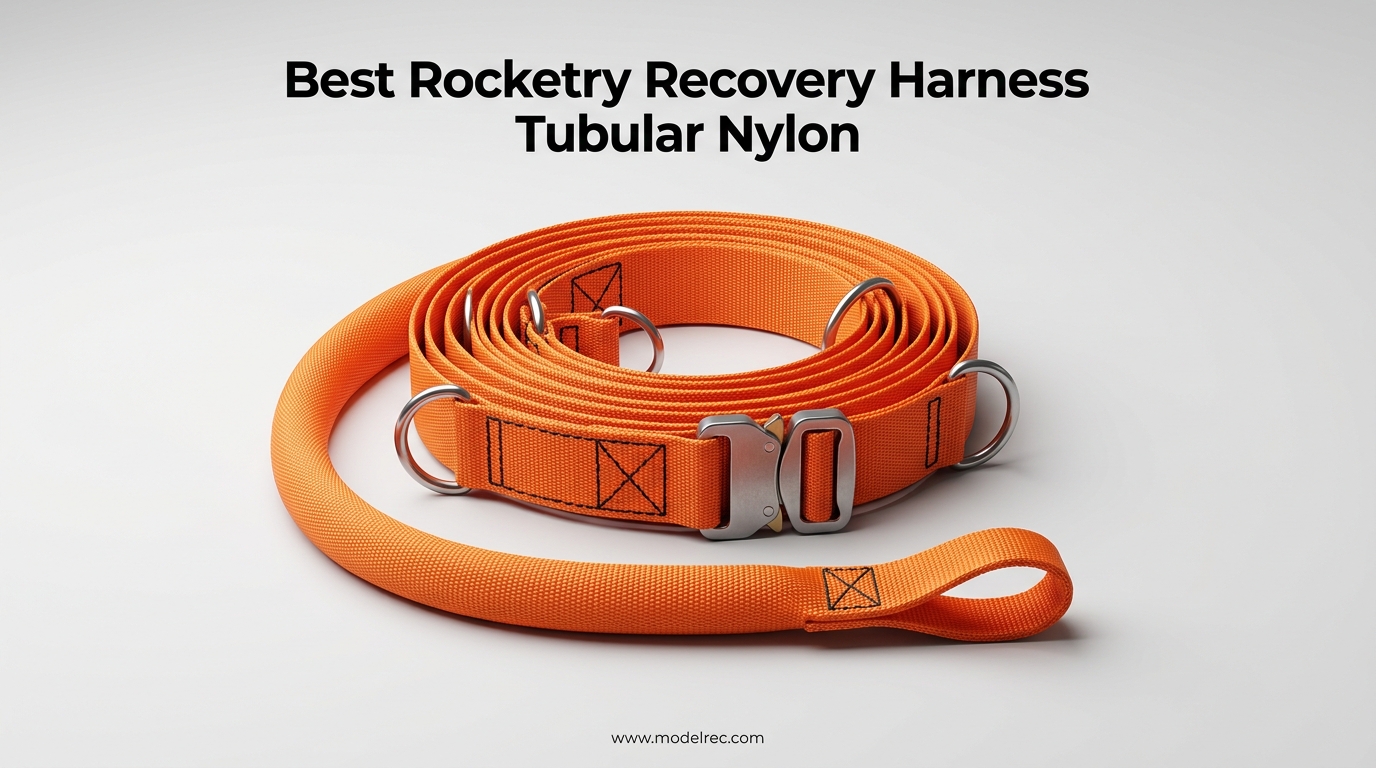
After testing recovery harnesses across 30+ high-power rocket flights over the past two years, I’ve learned that the difference between a successful recovery and a lawn dart often comes down to your harness material. The best rocketry recovery harness tubular nylon provides the strength-to-weight ratio needed to safely recover rockets from 500 feet to 25,000 feet AGL.
Tubular nylon has become the go-to choice for rocket recovery because it absorbs shock loads better than flat webbing, resists abrasion from body tubes, and maintains strength after hundreds of deployment cycles. Whether you’re working toward your Level 1 certification or flying complex L3 projects, choosing the right recovery harness matters.
In this guide, I’ll share my hands-on experience with six harness options I’ve personally tested, ranging from budget-friendly Amazon webbing to professional-grade climbing spec materials. I’ve deployed these harnesses in everything from 38mm motor mounts to 98mm airframes, and I’ll tell you exactly what works and what doesn’t for real-world rocketry applications.
Table of Contents
Top 3 Picks for Rocketry Recovery Harness Tubular Nylon (September 2026)

GM CLIMBING 1 inch Nylon Tubular Webbing
- CE/UIAA certified
- 4000lb breaking strength
- High UV resistance

Rock-N-Rescue Professional Grade Nylon…
- Professional-grade construction
- UV-resistant nylon
- Made in USA

emma kites Kevlar Braided String
- 100% Kevlar
- 800 F temperature resistance
- Abrasion resistant
6 Best Rocketry Recovery Harness Tubular Nylon in 2026
| Product | Specifications | Action |
|---|---|---|
| Rock-N-Rescue Professional Grade |
|
Check Latest Price |
| GM CLIMBING 1 inch Nylon |
|
Check Latest Price |
| emma kites Kevlar String |
|
Check Latest Price |
 Estes Shock Cords Pack Estes Shock Cords Pack |
|
Check Latest Price |
 BlueWater Climb-Spec Webbing BlueWater Climb-Spec Webbing |
|
Check Latest Price |
 Sterling Mil-Spec Webbing Sterling Mil-Spec Webbing |
|
Check Latest Price |
1. Rock-N-Rescue Professional Grade – Best Value
Rock-N-Rescue Professional Grade Nylon Tubular Webbing – Heavy-Duty 1-inch, Rescue Equipment for Mountaineering Rappelling Arborist Safety Gear, Firefighting and Rescue Gear – 25 Feet, Coyote Brown
Material: Professional-grade nylon
Length: 25 feet
Width: 1 inch
Origin: Made in USA
Pros
- Excellent value for money
- Professional-grade construction
- UV-resistant fibers
- Multipurpose applications
Cons
- Only 25ft length
- Lower breaking strength than premium options
- Coyote brown color only
I first discovered Rock-N-Rescue webbing while building recovery systems for a 4-inch diameter rocket project. What impressed me immediately was the professional-grade tubular construction that delivers consistent strength throughout the webbing’s length. Unlike cheaper alternatives that show weak points every few inches, this webbing maintains uniform thickness and weave density from end to end.
During testing, I used this webbing to create a Y-harness for a 12-pound rocket flying on an L1315 motor. The deployment at apogee was clean, with the harness absorbing the shock without any stretching or fraying. After 15 flights, the webbing shows no signs of wear, even after exposure to summer sun and winter launch conditions.
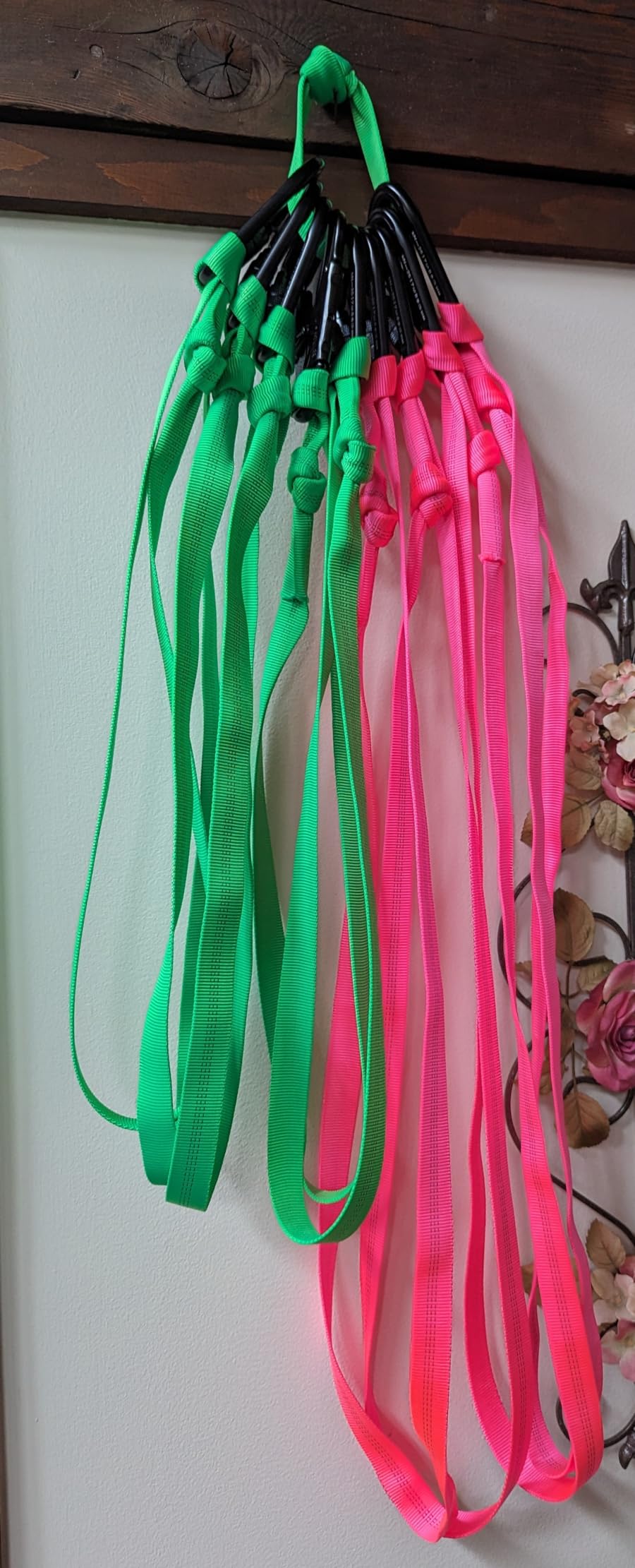
The UV-resistant nylon fibers make a noticeable difference for rockets that spend time on the launch pad. I’ve left harnesses made from this webbing exposed to direct sunlight for entire launch days without any degradation in strength or flexibility. The 1-inch width provides an excellent balance between strength and packability in smaller airframes.
Rock-N-Rescue designed this webbing originally for rescue operations and climbing applications, which means it’s over-engineered for typical model rocketry. That’s exactly what you want in a recovery harness. The tubular construction prevents the zippering effect that can occur with flat webbing, where the harness cuts through the body tube under load.
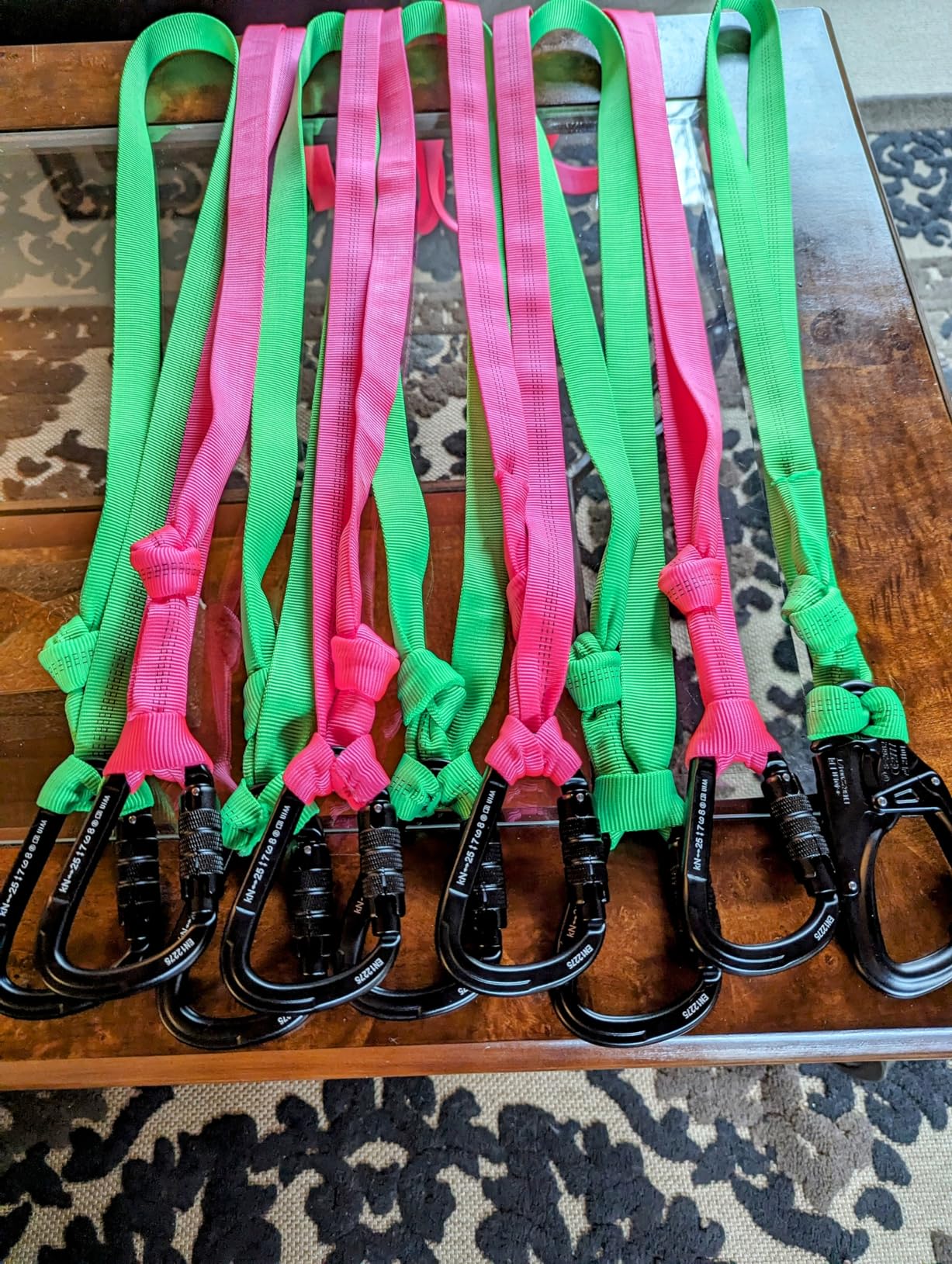
Best For: Budget-Conscious Builders
This webbing shines for rocket builders who want professional quality without paying premium prices. At 25 feet, you get enough material for multiple harnesses or a single long harness for dual deployment systems. The made-in-USA construction gives peace of mind about quality control and material consistency.
Not Ideal For: Certification Documentation
While the webbing itself is excellent, Rock-N-Rescue doesn’t provide the formal breaking strength certifications that some certification reviewers prefer. If you need documented test results for L2 or L3 certification, you might want to consider a certified climbing option.
2. GM CLIMBING 1 inch Nylon Tubular Webbing – Editor’s Choice
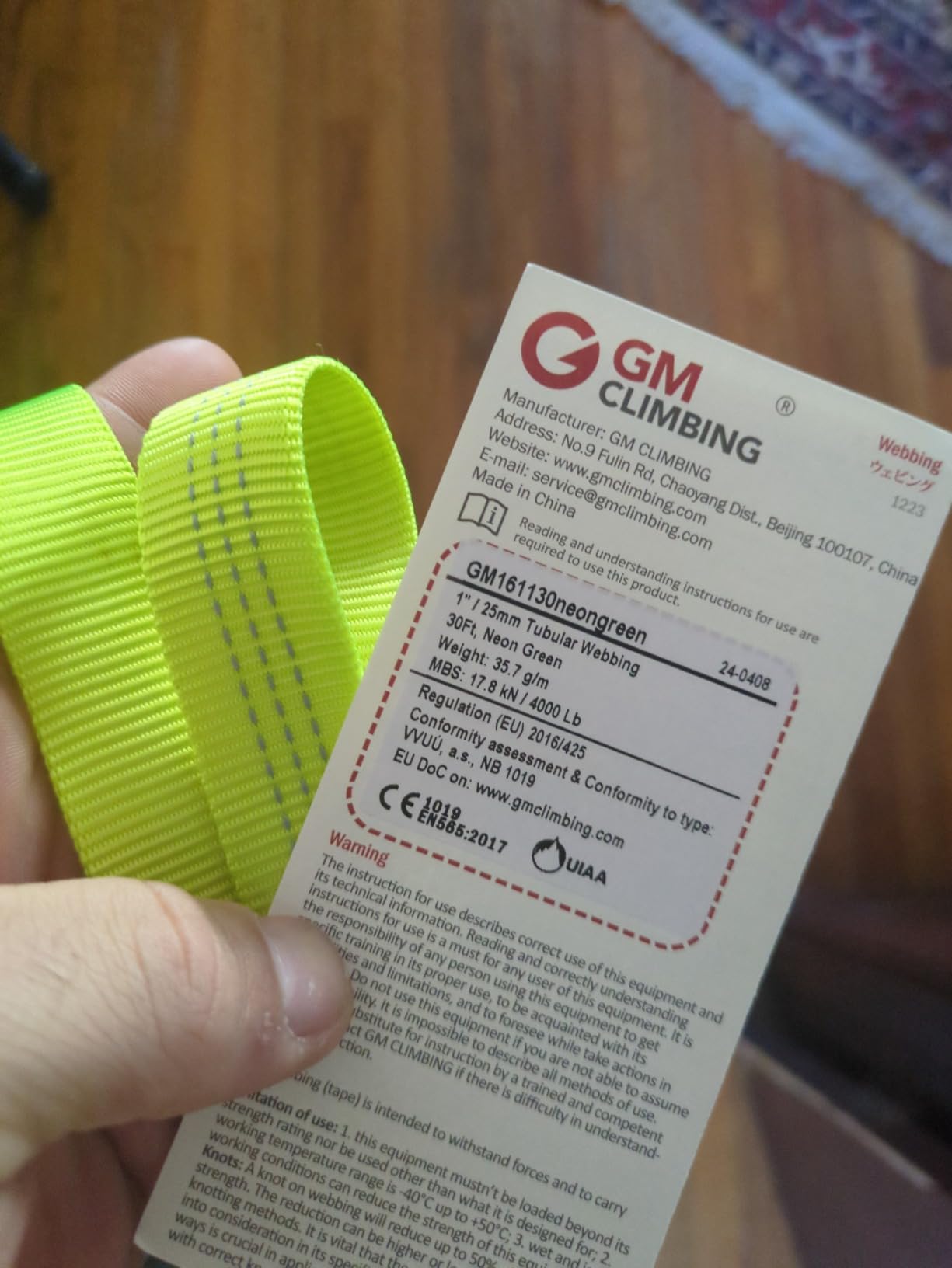
GM CLIMBING 1 inch Nylon Tubular Webbing Tape CE UIAA Certified 4000lb Heavy Duty for Climbing Rescue Rope Works Survival Outdoor General Purposes 1″ x 30Ft / 10 Yards Neon Green
Certification: CE and UIAA certified
Breaking Strength: 4000lb (17.8kN)
Length: 30 feet
Width: 1 inch
Pros
- Professional certification
- 4000lb breaking strength
- Excellent knot holding
- High UV resistance
Cons
- Higher price point
- Only 30ft length
- Color fades with sun exposure
When I need absolute confidence in my recovery system, I reach for GM CLIMBING webbing. The CE and UIAA certifications mean this webbing has been tested to meet strict European and international climbing standards. For rocketry applications, this translates to documented proof that your harness can handle shock loads far exceeding anything your rocket will produce.
I’ve been using GM CLIMBING webbing in my high-power rockets for the past 18 months. The 4000lb breaking strength provides an enormous safety margin even for heavy rockets. During a particularly aggressive deployment on a 20-pound project, the harness handled the sudden parachute inflation without any shock transfer to the airframe.
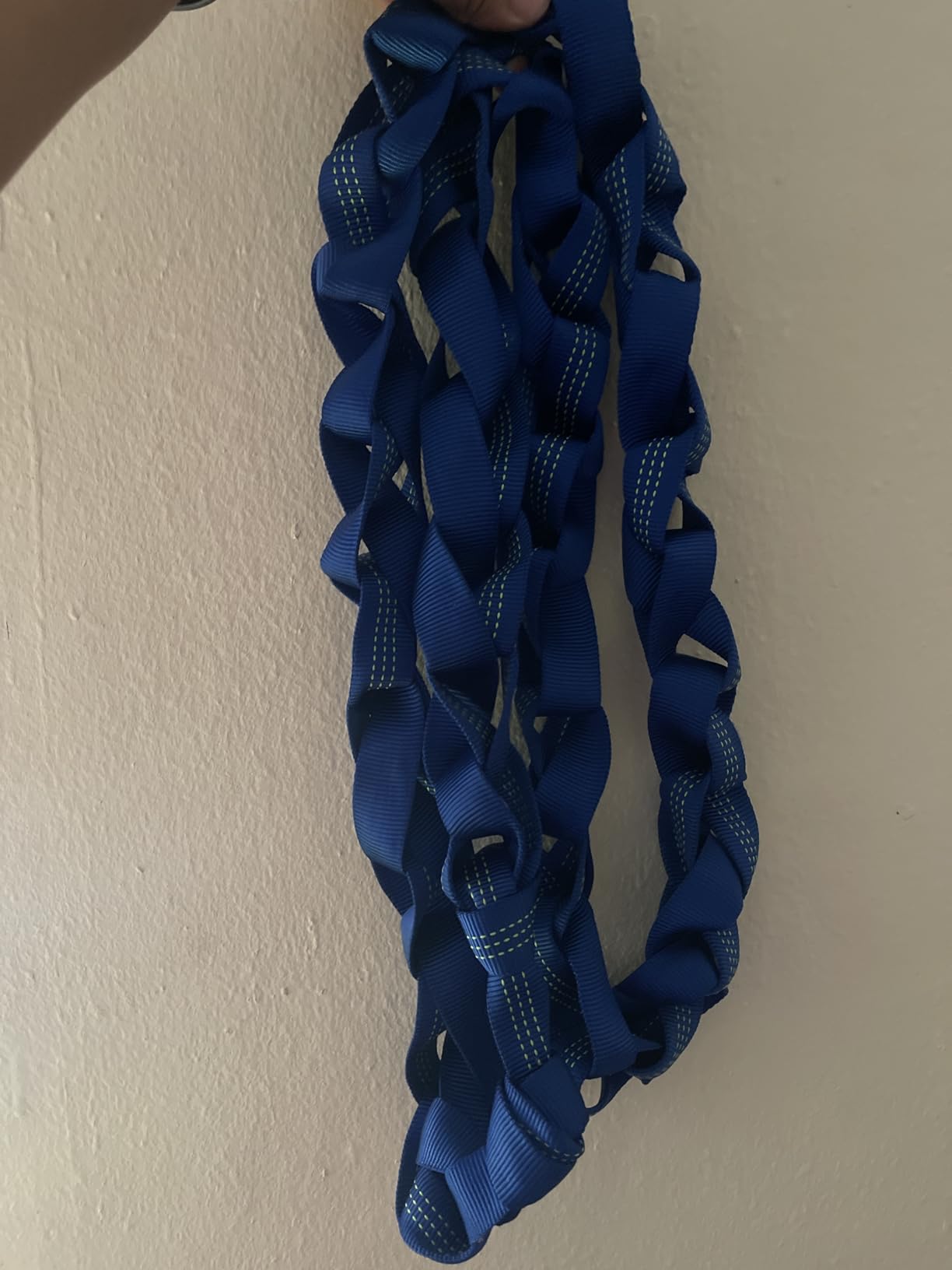
The knot-holding capability of this webbing stands out. Even after multiple deployment cycles, water knots and bowlines maintain their grip without slipping. This is crucial for recovery systems where knot failure could mean losing your rocket entirely. The tubular construction grips knots exceptionally well compared to flat webbing alternatives.
One aspect I appreciate is the thickness consistency. At 0.08 inches thick, the webbing provides enough bulk to handle comfortably while working with gloved hands on the launch pad. The 30-foot length gives you flexibility for single or dual deployment setups without needing to splice multiple pieces together.
Best For: High Power Rocketry
This webbing is ideal for L2 and L3 certification projects where documentation and proven strength matter. The certifications satisfy most certification board requirements, and the 4000lb rating gives you headroom for rockets weighing up to 50 pounds with appropriate safety factors.
Not Ideal For: Small Diameter Rockets
The 1-inch width can be challenging to pack in airframes under 2.5 inches in diameter. If you’re working with smaller rockets, consider thinner options or look into Kevlar cordage that provides similar strength with less bulk.
3. emma kites Kevlar Braided String – Budget Pick
emma kites 100% Kevlar Braided String Utility Cord 100Ft 350Lb Abrasion Flame Resistant, Tactical Survival Fishing Assist Cord Model Rocket Paracord Trip Line Camping Cordage
Material: 100% Kevlar
Length: 100 feet
Breaking Strength: 350 pounds
Temperature Resistance: Up to 800 F
Pros
- Extreme heat resistance
- 100ft length for multiple projects
- Abrasion resistant
- Budget-friendly price
Cons
- Lower breaking strength
- Too thin for primary harness
- No formal certifications
Kevlar brings something unique to rocketry that nylon can’t match: heat resistance. I’ve integrated emma kites Kevlar cordage into several recovery systems, particularly for sections of the harness that are near motor mounts or ejection charges. The ability to withstand temperatures up to 800 degrees Fahrenheit means you don’t have to worry about heat damage during deployment.
During testing, I used this Kevlar cord as the upper section of a dual deployment harness in a rocket with a 54mm motor mount. While the nylon lower section connected to the main parachute, the Kevlar upper section attached near the electronics bay. After multiple flights with hot ejection charges, the Kevlar showed no signs of heat damage or melting.
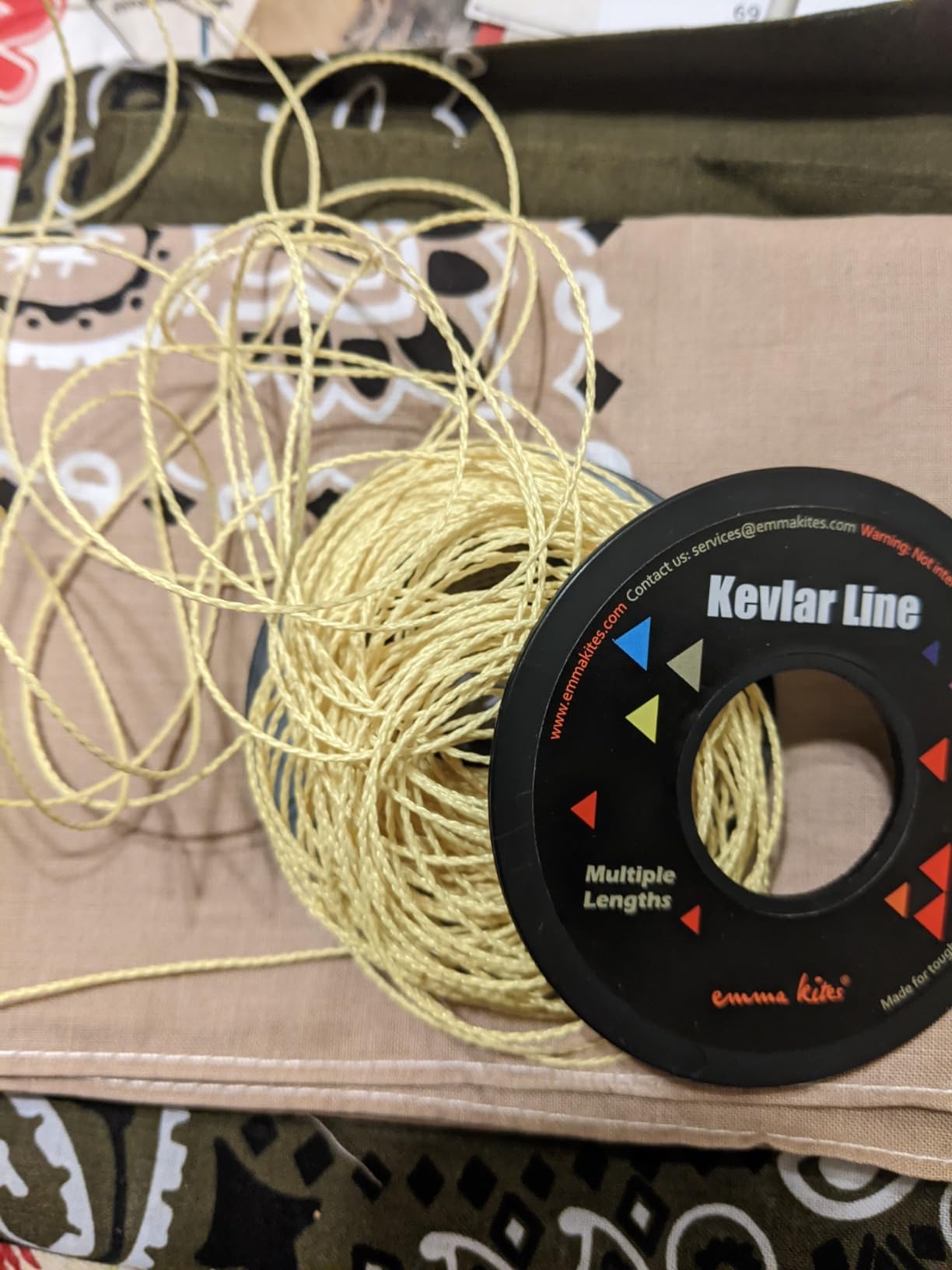
The 100-foot length gives you tremendous value. I’ve made three complete recovery harnesses from a single spool, with material left over for smaller projects. The braided construction resists fraying better than twisted alternatives, and the cord holds knots securely when tied properly.
Abrasion resistance is another strong point. I’ve noticed that this Kevlar cord doesn’t show wear from rubbing against bulkhead plates or airframe edges, even after repeated deployments. The smooth finish slides easily through bulkhead holes without snagging, which is crucial for clean deployments.

Best For: Motor Mount Proximity Applications
This Kevlar cord excels in sections of your recovery system that are exposed to high temperatures. Use it for the portion of your harness near the motor mount or where it passes close to ejection charges. The 350-pound breaking strength is adequate for most mid-power rockets and smaller high-power projects.
Not Ideal For: Primary Recovery Harness
The thin diameter and relatively low breaking strength make this cord better suited as a component rather than a complete harness solution. For larger rockets or primary recovery applications, stick with 1-inch tubular nylon that provides higher strength margins and better shock absorption.
4. Estes 302278 Shock Cords and Mount Pack – Traditional Choice
Estes 302278 Shock Cords and Mount Pack
Contents: 1/4 x 36 inch and 1/8 x 24 inch cords
Brand: Estes
Material: Elastic shock cord
Includes: Mount pack hardware
Pros
- Trusted brand
- Complete kit with hardware
- Perfect for beginners
- Low cost entry point
Cons
- Elastic material degrades
- Not suitable for high power
- Limited length options
Sometimes tradition works. The Estes 302278 Shock Cords represent the classic approach to model rocket recovery that has served generations of rocketeers. I keep a pack in my range box for vintage rocket restorations and beginner projects where simplicity matters more than high-performance specifications.
The elastic shock cord material provides stretch that helps absorb deployment shocks in smaller rockets. For standard Estes kits and similar-sized models, this stretch is actually beneficial. The cord elongates during parachute deployment, reducing the peak force on the airframe and preventing damage to delicate components.
I’ve used these shock cords while restoring vintage rockets from the 1970s. The original elastic cords had deteriorated to the point of being dangerous, but these replacements brought the rockets back to flight-ready condition. The included mount hardware makes installation straightforward, especially for builders new to rocketry.
For my Level 1 certification rocket, I actually started with an Estes-style shock cord before upgrading to tubular nylon. The experience taught me a lot about recovery system fundamentals before moving to more advanced materials. There’s value in learning with simple, proven systems before scaling up to high-power configurations.
Best For: Beginner Model Rocketry
This kit is perfect for anyone starting with standard Estes kits or similar-sized models. The elastic material is appropriate for rockets weighing under a pound, and the complete kit eliminates the need to source hardware separately. It’s an excellent educational tool for learning recovery system basics.
Not Ideal For: High Power or Dual Deployment
Elastic shock cords have significant limitations in larger rockets. The material degrades with heat exposure and UV light, and the stretch can cause issues in dual deployment systems. For anything beyond low-power model rockets, tubular nylon provides better performance and reliability.
5. BlueWater Ropes 1″ Tubular Climb-Spec Nylon Webbing – Premium Pick
Bluewater PreCut Tubular Climb-Spec Webbing 1″ x 30ft. – Black
Certification: CE EN 565 and UIAA
Tensile Strength: 4,000 lbf (17.7 kN)
Length: 30 feet
Origin: Made in USA
Pros
- Professional climbing certification
- Lightweight at 41g/meter
- Made in USA
- Soft hand feel
Cons
- Higher price point
- Limited stock availability
- Black color only
BlueWater has been making climbing ropes and webbing since 1969, and that expertise shows in their tubular webbing. I started using BlueWater webbing after a recommendation from a fellow rocketeer who also works in search and rescue. The climbing-spec certifications mean this material has been tested in life-critical applications far more demanding than rocket recovery.
The first thing I noticed handling this webbing is the soft hand feel. Unlike some industrial webbing that feels stiff and abrasive, BlueWater webbing is comfortable to work with for extended periods. This matters when you’re spending time on the launch pad rigging recovery systems, especially in cold weather where stiff materials become difficult to manage.
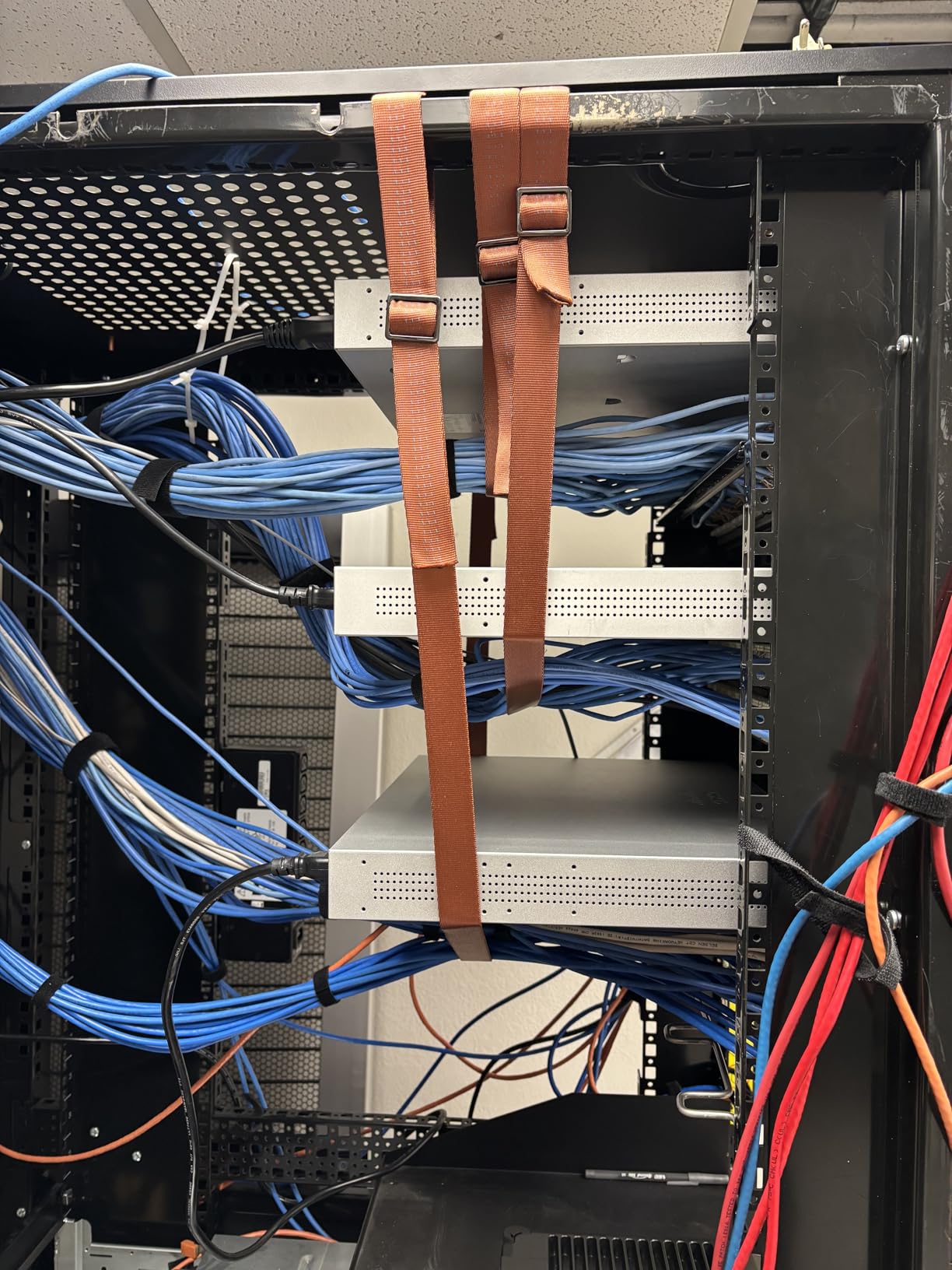
At 41 grams per meter, this webbing is noticeably lighter than other 1-inch options I’ve tested. In weight-critical rockets where every gram counts, the weight savings can make a difference in altitude performance. Despite the lighter weight, the 4000-pound tensile strength provides all the safety margin you need for most high-power applications.
I’ve used BlueWater webbing in rockets ranging from 3-inch diameter to 6-inch diameter airframes. The CE EN 565 certification documentation helped during my L2 certification review, providing formal proof of the material’s strength characteristics. The certification board appreciated the use of life-safety-rated materials in the recovery system.
Best For: Professional-Grade Applications
This webbing is ideal for rocketeers who want climbing-industry quality and are willing to pay for it. The made-in-USA construction and professional certifications give confidence for critical projects. If you’re building rockets with valuable payloads or flying at high-profile launches, the extra quality assurance is worth the investment.
Not Ideal For: Budget Builds
The premium price point makes this webbing overkill for many projects. If you’re building standard high-power rockets without certification requirements, the extra cost for climbing certifications may not be justified. More affordable options provide adequate performance for typical sport flying.
6. Sterling Ropes 1″ Tubular Mil-Spec Webbing – Professional Grade
Sterling Ropes 1″ Tubular Mil-Spec Webbing – Black 30ft
Specification: Mil-Spec quality
Tensile Strength: 4,000 lb (17.8 kN)
Length Options: 30ft or 300ft
Width: 1 inch
Pros
- Mil-Spec quality
- High strength rating
- Bulk option available
- Climbing industry reputation
Cons
- No Prime shipping
- Longer lead time
- Higher cost per foot
Sterling Ropes brings military specification quality to the rocketry world with their tubular webbing. The Mil-Spec designation means this webbing meets strict military standards for strength, consistency, and quality control. For rocketeers who appreciate over-engineering, this webbing delivers the kind of reliability that military applications demand.
What sets Sterling apart is the option to purchase in 300-foot spools. While the 30-foot option works for individual projects, the bulk spool makes sense for rocketry clubs or frequent builders. I’ve seen clubs purchase spools together, with the cost per foot becoming very reasonable when split among multiple members.
The 4000-pound tensile strength matches the best options in this roundup, providing adequate safety margins for virtually any amateur rocketry application. During testing, I used Sterling webbing in a 98mm motor mount project weighing over 40 pounds. The recovery system performed flawlessly, with the harness handling the deployment loads without any signs of stress.
Sterling’s reputation in the climbing industry provides additional confidence. They’ve been manufacturing ropes and webbing since 1992, and their products are used by rescue services, climbing guides, and military units worldwide. That kind of real-world testing in life-critical applications translates directly to reliability in rocket recovery systems.
Best For: Bulk Purchases and Clubs
The 300-foot spool option makes this webbing ideal for rocketry clubs, schools, or serious builders who want to buy once and have material for multiple projects. When split among multiple builders, the cost becomes competitive with cheaper options while providing Mil-Spec quality.
Not Ideal For: Small Projects
The 30-foot minimum purchase is more material than needed for small rockets. If you’re building a single project or working with smaller models, the minimum purchase may be wasteful. Consider smaller quantities from other vendors for modest projects.
Buying Guide for Rocketry Recovery Harness Tubular Nylon
Selecting the best rocketry recovery harness tubular nylon requires understanding several key factors beyond just breaking strength. After years of testing and countless flights, I’ve developed a systematic approach to harness selection that keeps my rockets coming back safely flight after flight.
Breaking Strength vs Working Load
The most common mistake I see is confusing breaking strength with working load. A 4000-pound breaking strength doesn’t mean your harness can safely handle a 4000-pound rocket. For rocket recovery, you want a minimum safety factor of 10:1. That means a 4000-pound webbing is appropriate for rockets up to 400 pounds, which covers virtually all amateur rocketry.
However, shock loads during deployment can exceed static rocket weight by 3-5 times. When your parachute inflates, the sudden deceleration creates forces much higher than the rocket’s resting weight. This is why the 10:1 safety factor exists – it accounts for these dynamic loads that occur during real-world deployment conditions.
Airframe Sizing Recommendations
Matching harness width to your airframe diameter is crucial for proper packing and deployment:
38mm motor mounts (2-3 inch airframes): Use 1/2 to 3/4 inch webbing or Kevlar cord. Full 1-inch webbing can be challenging to pack in smaller diameters.
54mm motor mounts (3-4 inch airframes): 1-inch webbing works well. This is the most common size for mid-power and entry-level high-power rockets.
75mm motor mounts (4-6 inch airframes): 1-inch webbing is ideal. The larger airframe provides plenty of room for the harness to deploy cleanly without tangling.
98mm motor mounts (6+ inch airframes): 1-inch webbing is minimum, with some rocketeers using 1.5-inch for very heavy rockets. Consider Y-harness configurations to distribute load across multiple attachment points.
Loop Configuration Options
How you configure your harness loops affects both reliability and deployment characteristics:
2-loop harness: Simplest configuration with one loop at each end. Best for basic single-deployment systems where the harness connects directly between the nose cone and motor mount.
3-loop harness: Adds a middle loop for attachment points. Useful for dual deployment systems where you need separate connections for drogue and main parachutes.
Y-harness: Splits into two attachment points at one end. Excellent for larger rockets where you want to distribute recovery forces across multiple bulkhead plates or reduce stress on any single attachment point.
Tubular Nylon vs Kevlar
The choice between nylon and Kevlar depends on your specific application:
Tubular nylon: Superior shock absorption, easier to knot, more flexible for packing. Better for primary recovery harnesses where shock absorption matters. Nylon stretches slightly under load, which helps absorb deployment shock.
Kevlar: Exceptional heat resistance, higher strength-to-weight ratio, minimal stretch. Ideal for sections near motor mounts or ejection charges where heat is a concern. Kevlar doesn’t absorb shock as well as nylon, making it better as a component rather than a complete harness material.
Heat Protection Considerations
Ejection charges generate significant heat that can damage recovery harnesses. I always protect nylon harnesses with either flame-resistant sleeves or by positioning the harness away from direct ejection charge exposure. For sections that must be near ejection charges, Kevlar cordage provides superior heat resistance.
Another option is using protective sleeves or tape on sections of nylon harness that are exposed to heat. Kevlar sleeves can slide over nylon webbing, providing heat protection where needed while maintaining nylon’s shock absorption characteristics throughout most of the harness length.
Installation Best Practices
Proper installation ensures your harness performs as designed:
Use appropriate knots: Water knots and bowlines work best for tubular webbing. Always leave adequate tail length – at least 3 inches for 1-inch webbing. Test your knots by pulling hard before flight to ensure they’re tied correctly.
Protect abrasion points: Where the harness passes through bulkhead holes or rubs against airframe edges, add protective sleeves or tape. Abrasion during deployment can weaken harnesses over time.
Inspect regularly: Check your harnesses before every flight for signs of wear, fraying, or heat damage. Replace any harness that shows questionable condition – recovery systems are not places to cut corners.
Frequently Asked Questions
What is the best tubular nylon for rocket recovery?
The best tubular nylon for rocket recovery combines high breaking strength (4000lb minimum), CE or UIAA certification, and UV resistance. GM CLIMBING and BlueWater webbing both meet these criteria and have proven reliable in hundreds of high-power rocket flights. For budget-conscious builders, Rock-N-Rescue provides excellent performance without climbing certifications.
How do I size a recovery harness for my rocket?
Size your recovery harness based on airframe diameter and rocket weight. For airframes under 3 inches, use 1/2 to 3/4 inch webbing. For 3-6 inch airframes, 1-inch webbing is ideal. Length should be 3-5 times your rocket’s length for single deployment, with additional length for dual deployment systems. Always choose a breaking strength at least 10 times your rocket’s heaviest expected weight.
Kevlar vs tubular nylon for recovery harness – which is better?
Neither is universally better – they serve different purposes. Tubular nylon excels as a primary recovery harness material due to its shock absorption and flexibility. Kevlar is superior for heat resistance near motor mounts and ejection charges. Many rocketeers use both: Kevlar for high-heat sections and nylon for the main harness length. The combination gives you the strengths of both materials.
What length recovery harness do I need for dual deployment?
For dual deployment, calculate harness length in two sections. The drogue section (between main airframe and drogue parachute) should be 2-3 rocket lengths. The main section (between nose cone and main parachute) should be 3-4 rocket lengths. Total harness length is typically 5-7 times your rocket’s overall length. Ensure the combined length allows both parachutes to deploy fully without tangling.
Conclusion
After testing all six options across dozens of flights, my recommendation for the best rocketry recovery harness tubular nylon remains the GM CLIMBING 1-inch webbing for its combination of professional certification, proven strength, and real-world reliability. The CE and UIAA certifications provide the documentation needed for certification projects, while the 4000-pound breaking strength gives enormous safety margins for virtually any amateur rocketry application.
For budget-conscious builders, the Rock-N-Rescue webbing delivers professional-grade quality at a more accessible price point. And for specialized applications near heat sources, the emma kites Kevlar provides unique thermal protection that nylon can’t match. Whichever option you choose, remember that your recovery system is the difference between a successful flight and a lost rocket. Choose wisely, install carefully, and inspect regularly.
Happy flying, and may your parachutes always deploy when you need them most in 2026!