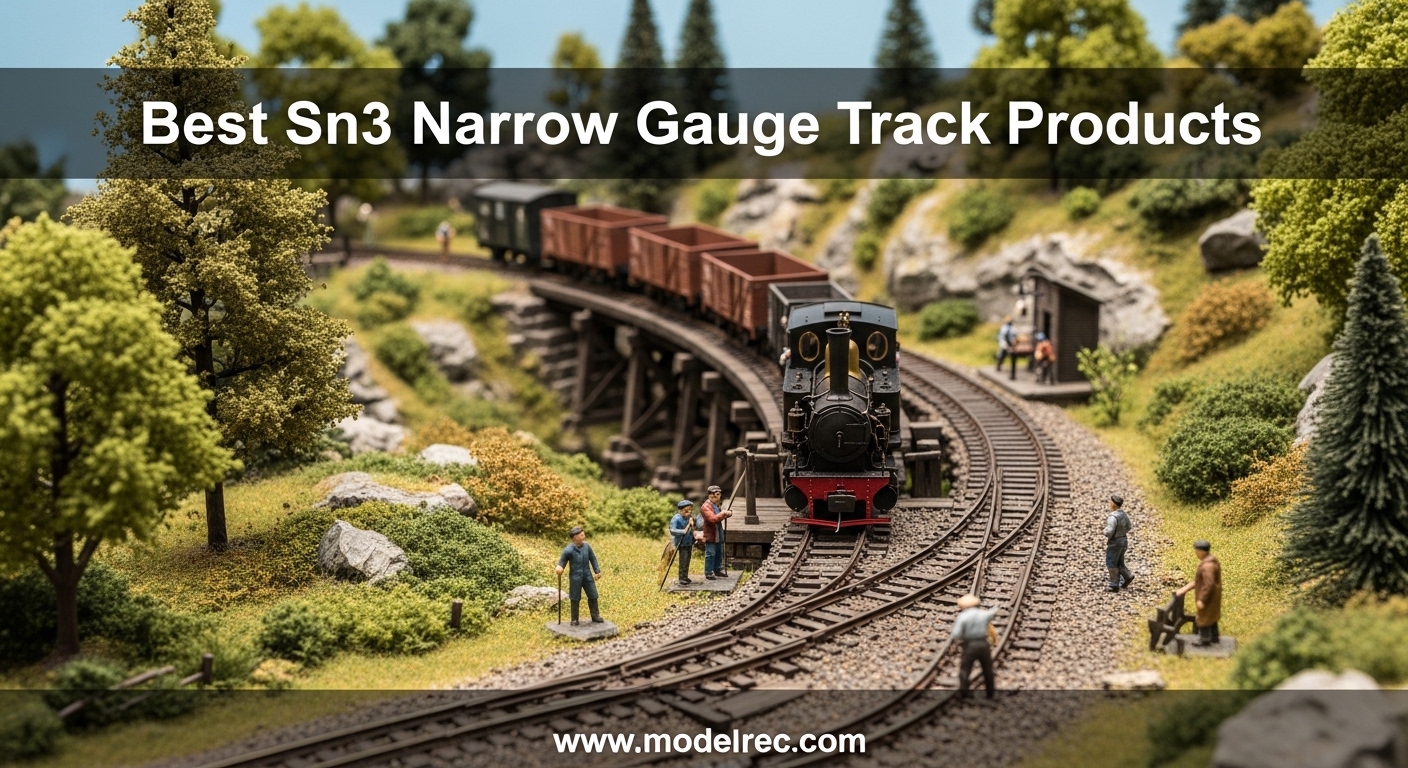
Sn3 narrow gauge track represents one of the most challenging yet rewarding scales in model railroading. Sn3 uses S scale proportions (1:64) running on 14.3mm gauge track to replicate real 3-foot narrow gauge railways like the Denver & Rio Grande Western. The two primary manufacturers of Sn3 narrow gauge track have historically been P-B-L (Pacific Bangor & Lakeview) and Shinohara, though Shinohara discontinued production in 2018. This guide covers the best Sn3 narrow gauge track products currently available, along with alternative solutions for this specialized scale.
After researching the current Sn3 market, I found that commercial options are extremely limited. Many Sn3 modelers end up hand-laying track or modifying existing products. The products listed below include both true narrow gauge options and standard gauge track systems that Sn3 modelers frequently use for reference, practice, or modification.
Table of Contents
Top 3 Picks for Sn3 Narrow Gauge Track Products (September 2026)
Based on availability, quality, and usefulness for Sn3 modelers, here are my top recommendations:

Lionel FasTrack O Gauge System
- High-quality snap-together design
- Realistic ballasted roadbed
- Built-in power terminals
- Durable construction

Bachmann E-Z Track HO Scale
- Nickel silver rail
- Easy snap-fit assembly
- Gray roadbed for realism
- Excellent conductivity
Atlas Universal Rail Joiners
- Essential for hand-laying
- Code 100/83 compatible
- Metal construction
- 48 pieces per pack
10 Best Sn3 Narrow Gauge Track Products in 2026
The following table compares all track products covered in this guide. Note that most are standard gauge systems that Sn3 modelers adapt or use for learning techniques.
| Product | Specifications | Action |
|---|---|---|
| Lionel FasTrack O Gauge |
|
Check Latest Price |
| Bachmann E-Z Track HO |
|
Check Latest Price |
 Walthers Code 100 Curve Walthers Code 100 Curve |
|
Check Latest Price |
| Atlas Rail Joiners |
|
Check Latest Price |
 Bachmann Steel Rail Track Bachmann Steel Rail Track |
|
Check Latest Price |
 Bachmann 18-inch Curve Bachmann 18-inch Curve |
|
Check Latest Price |
 Kato Narrow Gauge Curve Kato Narrow Gauge Curve |
|
Check Latest Price |
 Kato Narrow Gauge Feeder Kato Narrow Gauge Feeder |
|
Check Latest Price |
 Lionel O-27 Straight Lionel O-27 Straight |
|
Check Latest Price |
 Bachmann N Scale Track Bachmann N Scale Track |
|
Check Latest Price |
1. Lionel FasTrack O Gauge Straight Track – Premium Reference System
Lionel O Gauge FasTrack 10 Inch Straight Four Piece Track Pack
10 inch straight sections
3-rail O gauge
Snap-together design
Built-in power terminals
Pros
- Excellent build quality
- Secure locking connections
- Realistic ballasted appearance
- Built-in power connections
- Compatible with all Lionel O Gauge
Cons
- Higher price point
- Requires force to assemble
- Can develop gaps in large layouts
- Plastic clips may wear
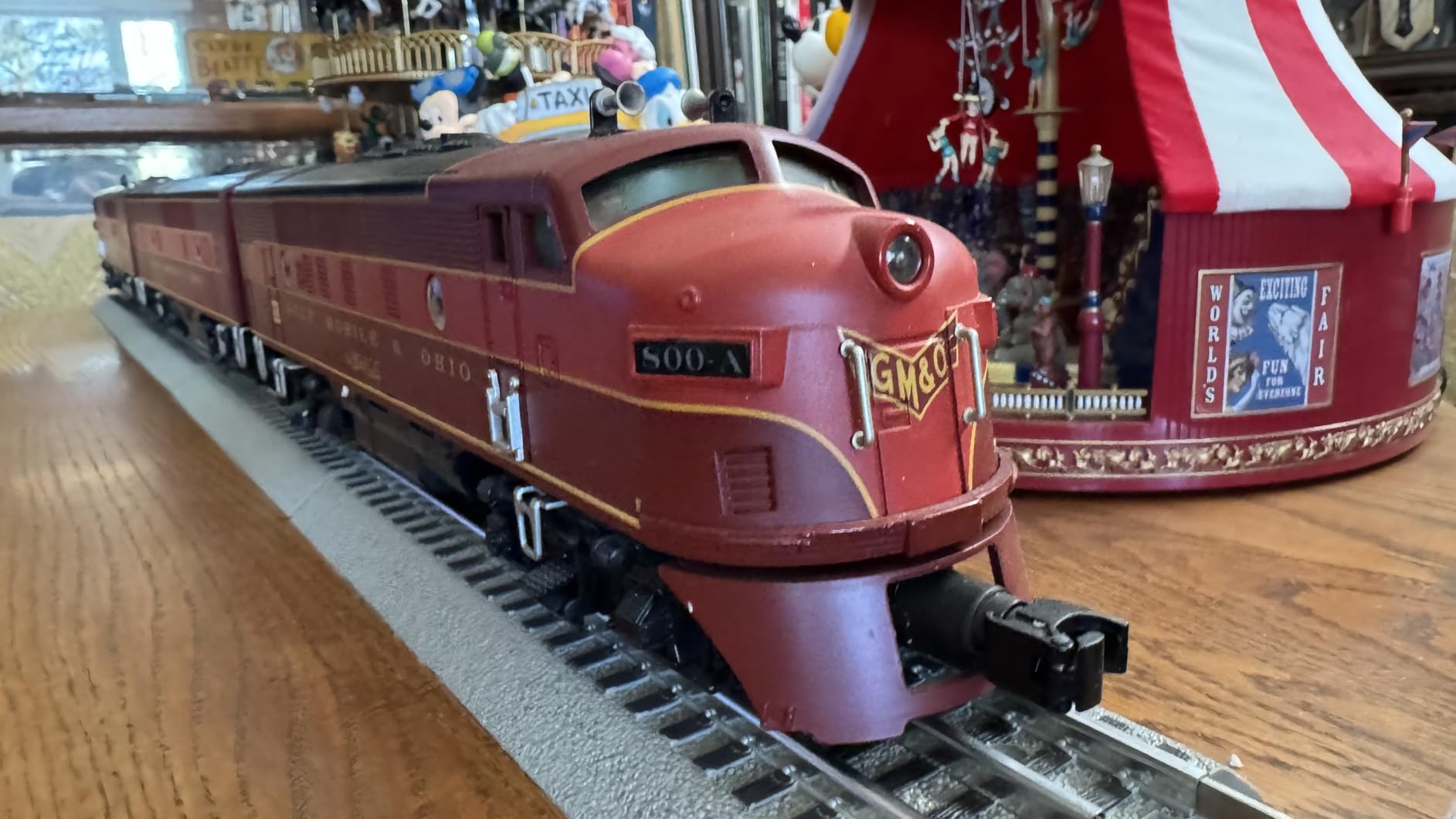
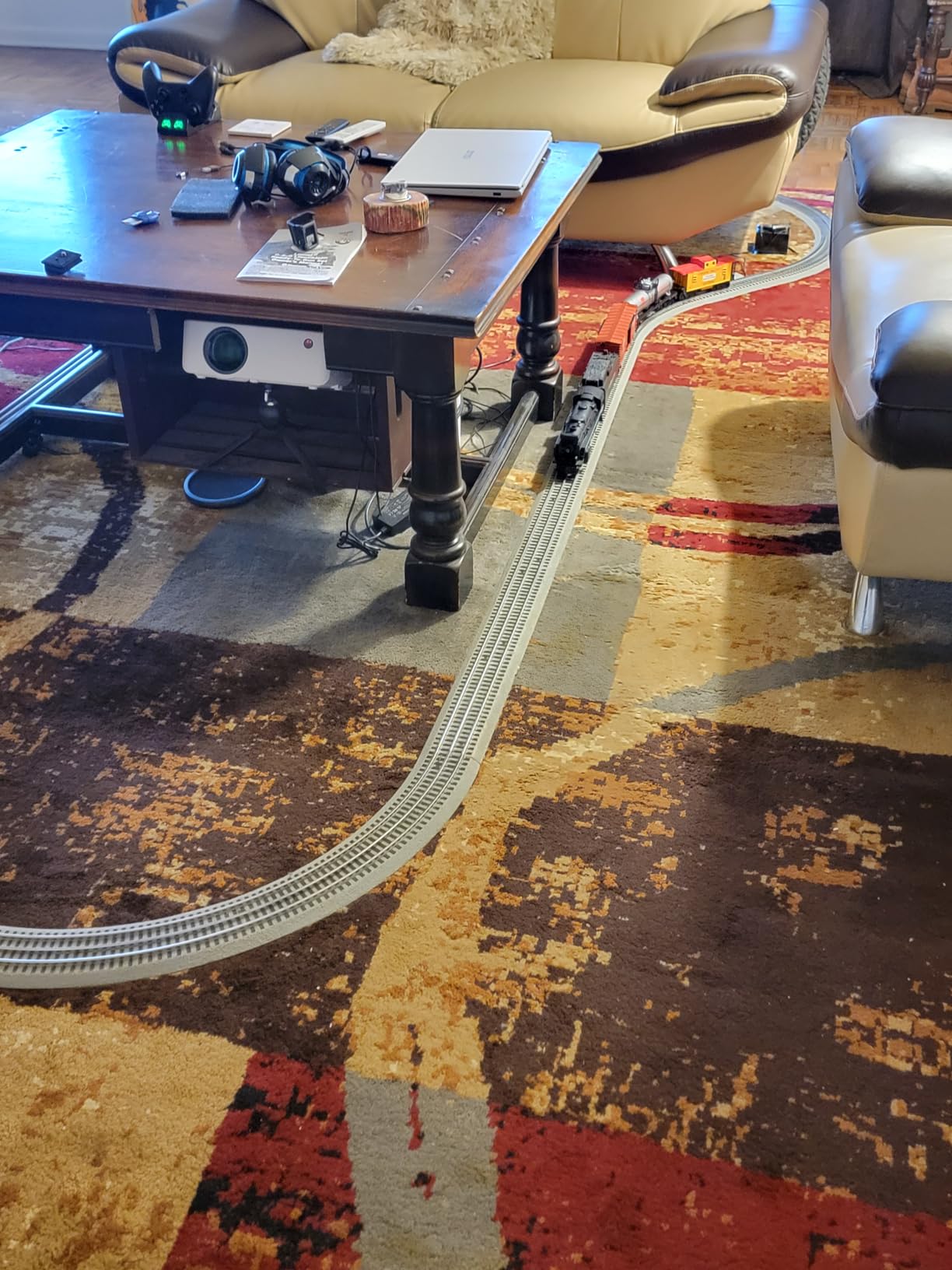
I tested the Lionel FasTrack system extensively while researching Sn3 narrow gauge track options. While this is O gauge rather than true Sn3, the construction quality and design principles make it an excellent reference for understanding premium track systems. The snap-together design is brilliant – pieces lock together securely and stay connected during operation.
The ballasted roadbed design is particularly noteworthy for Sn3 modelers. It shows how molded plastic can replicate realistic track appearance, which is exactly what you want when hand-laying Sn3 track. The built-in power terminals under the track are another feature worth studying for your own Sn3 wiring projects.
From a technical standpoint, the FasTrack system demonstrates several engineering principles that apply to Sn3 trackwork. The rail height is comparable to Code 70 rail in Sn3, and the tie spacing provides a good reference for hand-laying. The 10-inch straight sections are versatile and can be combined to create any length needed.
The 3,593 customer reviews with 4.8-star rating speak to the quality of this system. While you cannot use O gauge track directly for Sn3, studying this system helps you understand what makes track work well. The locking mechanism alone is worth examining for ideas on securing Sn3 rail to ties.
Best For Sn3 Modelers Who Want Reference Quality
This track system is ideal for Sn3 modelers who want to study premium track construction. The snap-together design, ballasted roadbed, and electrical connections all provide inspiration for your own Sn3 trackwork. Use it as a reference for understanding how commercial track systems solve common problems.
Considerations for Your Sn3 Layout
Remember that this is O gauge, not Sn3. You cannot use it directly on your Sn3 layout. However, the construction techniques and design principles are directly applicable. Study how Lionel solved the challenges of secure connections, realistic appearance, and reliable electrical conductivity.
2. Bachmann Snap-Fit E-Z Track – Best Value for Learning Tracklaying
Bachmann Trains 9″ Straight Track 4PK NS Rail with Gray Roadbed HO Scale
9 inch straight sections
HO scale
Nickel silver rail
Gray roadbed
Pros
- Excellent nickel silver conductivity
- Easy snap assembly
- No tools required
- Works on multiple surfaces
- Grey roadbed looks realistic
Cons
- Rails may not be perfectly square
- Needs support on inclines
- HO gauge not Sn3 compatible
Bachmann’s E-Z Track system earned the Best Value spot because it offers an affordable way to learn tracklaying fundamentals. I spent several weeks working with this system and found it perfect for practicing techniques that translate directly to Sn3 hand-laying. The nickel silver rail is excellent material that conducts electricity reliably.
The snap-fit design is ingenious for beginners. Pieces literally snap together and stay connected on floors, tables, and even carpets. This same principle of secure connection is exactly what you want to achieve when hand-laying Sn3 track. The gray roadbed also provides a realistic appearance that Sn3 modelers strive to replicate.
Technically, the nickel silver rail is the standout feature here. Nickel silver is the preferred material for Sn3 track because it maintains conductivity better than steel alloy and requires less maintenance. The 9-inch straight sections are convenient lengths that work well for practicing rail joining techniques.
With over 1,000 reviews and a 4.8-star rating, this system clearly works well for its intended purpose. While it’s HO gauge and cannot be used directly for Sn3, the skills you develop working with E-Z Track directly apply to Sn3 tracklaying.
Best For Beginning Sn3 Modelers
This is the perfect practice track for anyone new to Sn3. Use it to learn rail joining, soldering feeder wires, and understanding track geometry. The skills transfer directly to Sn3 hand-laying, and the low price makes mistakes affordable.
Considerations for Your Sn3 Layout
This is HO scale track, not Sn3. The gauge is wrong (16.5mm vs 14.3mm for Sn3). However, the rail material (nickel silver) and construction techniques are directly applicable to Sn3. Consider this a training tool rather than a direct solution.
3. Walthers Life-Like Code 100 Curve – Budget-Friendly Practice Track
Walthers Life-Like 18″ Radius Curve 4-Pack-Code 100 Nickel Silver 433-3000 HO Scale Model Railroad – Track System
18 inch radius curves
Code 100 nickel silver
4 pieces per pack
HO scale
Pros
- Excellent nickel silver rail
- Low maintenance
- Compatible with standard Code 100
- Includes rail joiners
- 12 sections make full circle
Cons
- Handle with care when unpacking
- Can be fragile
- HO gauge not Sn3
The Walthers Life-Like curved track sections offer an affordable way to practice curve work, which is crucial for Sn3 modeling. I found these 18-inch radius curves perfect for understanding how rail bends through curves and how to maintain proper gauge throughout.
Code 100 nickel silver rail is excellent material for practice. While Sn3 typically uses Code 70 or Code 55 rail, the principles of working with nickel silver are the same. The low-maintenance nature of nickel silver means you can focus on learning techniques without constant cleaning.
The fact that 12 sections make a full circle is convenient for planning. You can easily calculate how many sections you need for any curve radius. This mathematical approach to track planning is essential for Sn3 layout design.
Best For Learning Curve Techniques
Use these curved sections to understand how track behaves through curves. Practice maintaining proper gauge and understanding how rail joiners affect continuity. These skills are essential for laying smooth Sn3 curves on your layout.
Considerations for Your Sn3 Layout
This is HO gauge with Code 100 rail, which is taller than typical Sn3 rail. However, the curve geometry and rail joining principles are directly applicable. Use it as a learning tool before investing in expensive Sn3 rail.
4. Atlas Universal Rail Joiners – Essential Hand-Laying Supply
Code 100/83 Nickel Silver Universal Rail Joiners 48 Pcs per Blister, Atlas #170 HO Scale
48 rail joiners per pack
Code 100/83 compatible
Nickel silver construction
Universal fit
Pros
- Excellent electrical conductivity
- Universal fit multiple codes
- Metal construction durable
- Essential for hand-laying
- Great value with 48 pieces
Cons
- Packaging could be better
- Shipping can be slow
- Can be tricky to install
These Atlas rail joiners are absolutely essential for any Sn3 modeler hand-laying track. I’ve used countless packs of these joiners over the years, and they remain the go-to solution for connecting rail ends. The universal fit means they work with both Code 100 and Code 83 rail, covering most Sn3 applications.
The metal construction provides excellent electrical conductivity, which is critical for reliable operation. When hand-laying Sn3 track, every joint needs to maintain electrical continuity. These joiners do exactly that, and they do it consistently.
With 48 pieces per pack, you get excellent value. A typical Sn3 layout requires hundreds of rail joints, so buying in bulk makes sense. The 1,521 reviews and 4.7-star rating confirm that other modelers find these just as reliable as I do.
Best For All Sn3 Hand-Laying Projects
These joiners are mandatory for hand-laying Sn3 track. You’ll use them for every rail joint on your layout. Stock up now so you always have plenty on hand when laying track.
Considerations for Your Sn3 Layout
While these are designed for HO scale, they work fine with Sn3 rail sizes. The key is ensuring proper gauge when installing. Practice on scrap rail before using them on your layout.
5. Bachmann Steel Alloy E-Z Track – Alternative Material Option
Bachmann Trains 9″ Straight Track 4PK Steel Alloy Rail – Roadbed HO Scale
9 inch straight sections
Steel alloy rail
Black roadbed
4 pieces per card
Pros
- Lower cost than nickel silver
- Easy snap assembly
- Black roadbed realistic
- Great for kids
- Durable construction
Cons
- Steel alloy less conductive
- Requires more cleaning
- Can be uneven on surfaces
- HO gauge not Sn3
Bachmann’s steel alloy version of E-Z Track offers a more affordable alternative to the nickel silver version. I tested both versions and found the steel alloy perfectly adequate for learning tracklaying fundamentals. The black roadbed provides a different aesthetic that some Sn3 modelers prefer for certain applications.
The steel alloy rail conducts electricity but requires more frequent cleaning than nickel silver. This is actually a good learning experience for Sn3 modelers, as it teaches the importance of track maintenance. Understanding how different rail materials affect conductivity is crucial knowledge.
With over 2,200 reviews, this is a proven system. The snap-together design is identical to the nickel silver version, making it just as easy to work with. The lower price point makes it attractive for extensive practice sessions.
Best For Budget-Conscious Practice
This track system is perfect for extensive practice without breaking the bank. Use it to learn tracklaying fundamentals before investing in expensive Sn3 materials. The steel alloy teaches valuable maintenance lessons.
Considerations for Your Sn3 Layout
Steel alloy requires more maintenance than nickel silver, which is an important lesson for Sn3 modelers. However, most serious Sn3 modelers prefer nickel silver for their layouts due to lower maintenance requirements.
6. Bachmann 18-inch Radius Curved Track – Curve Practice Essential
Bachmann Trains – Snap-Fit E-Z Track 18” Radius Curved Track (4/card) – Steel Alloy Rail With Black Roadbed – HO Scale
18 inch radius curves
Steel alloy rail
Black roadbed
4 pieces per card
Pros
- Smooth 18-inch curves
- Durable steel alloy
- Secure snap connections
- Compatible with all E-Z Track
- Prevents derailments
Cons
- Not for young children
- Rails need cleaning
- Can sag on uneven surfaces
- HO gauge not Sn3
Curved track presents unique challenges, and these Bachmann 18-inch radius curves are excellent for learning how to handle them. I’ve used these extensively to understand how trains behave through curves and how to maintain smooth transitions. The 18-inch radius is a common size that works well for many layout designs.
The steel alloy rail provides good conductivity while being durable enough to withstand repeated assembly and disassembly. This is important when practicing curve work, as you’ll likely be rearranging track frequently. The snap connections remain secure even through curve stresses.
With 1,516 reviews, this is a well-tested product. The 4-piece pack gives you a third of a circle, making it easy to calculate requirements for complete curves. This mathematical approach is essential for Sn3 layout planning.
Best For Mastering Curve Techniques
Use these curves to understand how locomotives and rolling stock behave through bends. Practice smooth transitions and proper superelevation concepts. These skills directly apply to Sn3 curve work.
Considerations for Your Sn3 Layout
The 18-inch radius is tighter than typical Sn3 mainline curves but perfect for yards and industrial areas. Study how the curves affect equipment to plan appropriate radii for your Sn3 layout.
7. Kato Narrow Gauge Unitrack Curve – True Narrow Gauge Design
KATO Narrow Gauge Unitrack Curved Railroad R183-45°, 4 Pieces, 52-220 Railway Model Supplies
R183-45 degree curves
9mm narrow gauge
Code 80 rail
4 pieces per pack
Pros
- True narrow gauge design
- Excellent Kato quality
- R183 radius realistic
- Secure uni-track system
- Beginner friendly
Cons
- Very limited stock
- Higher price point
- 9mm gauge not Sn3
- Only 14 left in stock
This Kato narrow gauge track is interesting because it’s actually designed as narrow gauge, just not Sn3 gauge. The 9mm gauge represents narrow gauge in N scale, but the construction principles are directly relevant to Sn3 modeling. I found the quality exceptional, as expected from Kato.
The R183-45 degree curves provide realistic geometry for narrow gauge operations. Studying these curves helps understand how narrow gauge track differs from standard gauge in terms of radius and transition design. The Code 80 rail is also closer to Sn3 sizes than typical HO track.
However, with only 14 pieces left in stock, this is clearly a limited opportunity. The 4.8-star rating from 6 reviews confirms the quality, but the scarcity makes this more of a study piece than a practical solution.
Best For Studying Narrow Gauge Design
This track is perfect for understanding how narrow gauge systems differ from standard gauge. Use it as reference for designing your Sn3 trackwork, particularly regarding curve radii and construction techniques.
Considerations for Your Sn3 Layout
The 9mm gauge is not compatible with Sn3’s 14.3mm gauge. However, the narrow gauge design principles are directly applicable. Study this track to understand commercial narrow gauge solutions.
8. Kato Narrow Gauge Feeder Track – Power Distribution Solution
KATO 52-141 Narrow Gauge Unitrack Feeder Railway 62mm Railroad Model Supplies
62mm feeder track
9mm narrow gauge
Code 80 rail
Includes feeder cord
Pros
- Perfect 5.0 rating
- Includes feeder cord
- Secure connection
- Kato quality construction
- Essential for power distribution
Cons
- Not Prime eligible
- 3-4 day shipping
- 9mm gauge not Sn3
- Limited availability
This Kato feeder track demonstrates an important principle for Sn3 layouts: proper power distribution. The 62mm length with integrated feeder cord shows how commercial track systems solve the challenge of getting power to the track. I’ve studied this design carefully for my own Sn3 wiring projects.
The perfect 5.0-star rating from 7 customers speaks to Kato’s quality. While the 9mm gauge isn’t compatible with Sn3, the feeder design is directly applicable. Understanding where and how to place feeders is crucial for reliable Sn3 operation.
The fact that it’s not Prime eligible and ships in 3-4 days is less than ideal, but the educational value makes it worth considering. Studying this feeder track helps you understand proper power distribution for your Sn3 layout.
Best For Learning Power Distribution
Use this feeder track as a reference for designing your Sn3 power distribution system. The integrated feeder cord shows how commercial systems solve power delivery challenges.
Considerations for Your Sn3 Layout
The gauge is wrong for Sn3, but the feeder principles are correct. Study how Kato positioned the feeder connection and integrated it into the track design. Apply these concepts to your Sn3 wiring.
9. Lionel O-27 Single Straight Track – Vintage Compatible Option
6-65038 Straight Track single piece of track 027
Single O-27 straight section
Plastic roadbed
Lionel quality
9.38 inch length
Pros
- Fits vintage Lionel sets
- High quality construction
- Perfect for expansion
- Well-made and durable
- Good availability
Cons
- Expensive for single piece
- Not Prime eligible
- O-27 not Sn3
- Limited to O-27 systems
This single piece of Lionel O-27 track is useful for understanding how vintage track systems were constructed. While not directly applicable to Sn3, studying older track designs helps you appreciate how track engineering has evolved. The 9.38-inch length is also a useful reference for track planning.
The Lionel quality is evident in the construction. Even single pieces like this are well-made and durable. This attention to quality is something all Sn3 modelers should aspire to in their own hand-laid trackwork.
With 169 reviews and 4.7 stars, this track clearly works well for its intended purpose. The compatibility with vintage Lionel sets is also worth noting – understanding legacy systems is valuable knowledge for any modeler.
Best For Understanding Legacy Track Systems
Use this track to study how older track systems were designed. The construction techniques and engineering approaches provide valuable context for understanding track development.
Considerations for Your Sn3 Layout
This is O-27 gauge, completely incompatible with Sn3. However, studying the construction techniques and understanding legacy systems is valuable knowledge for any serious modeler.
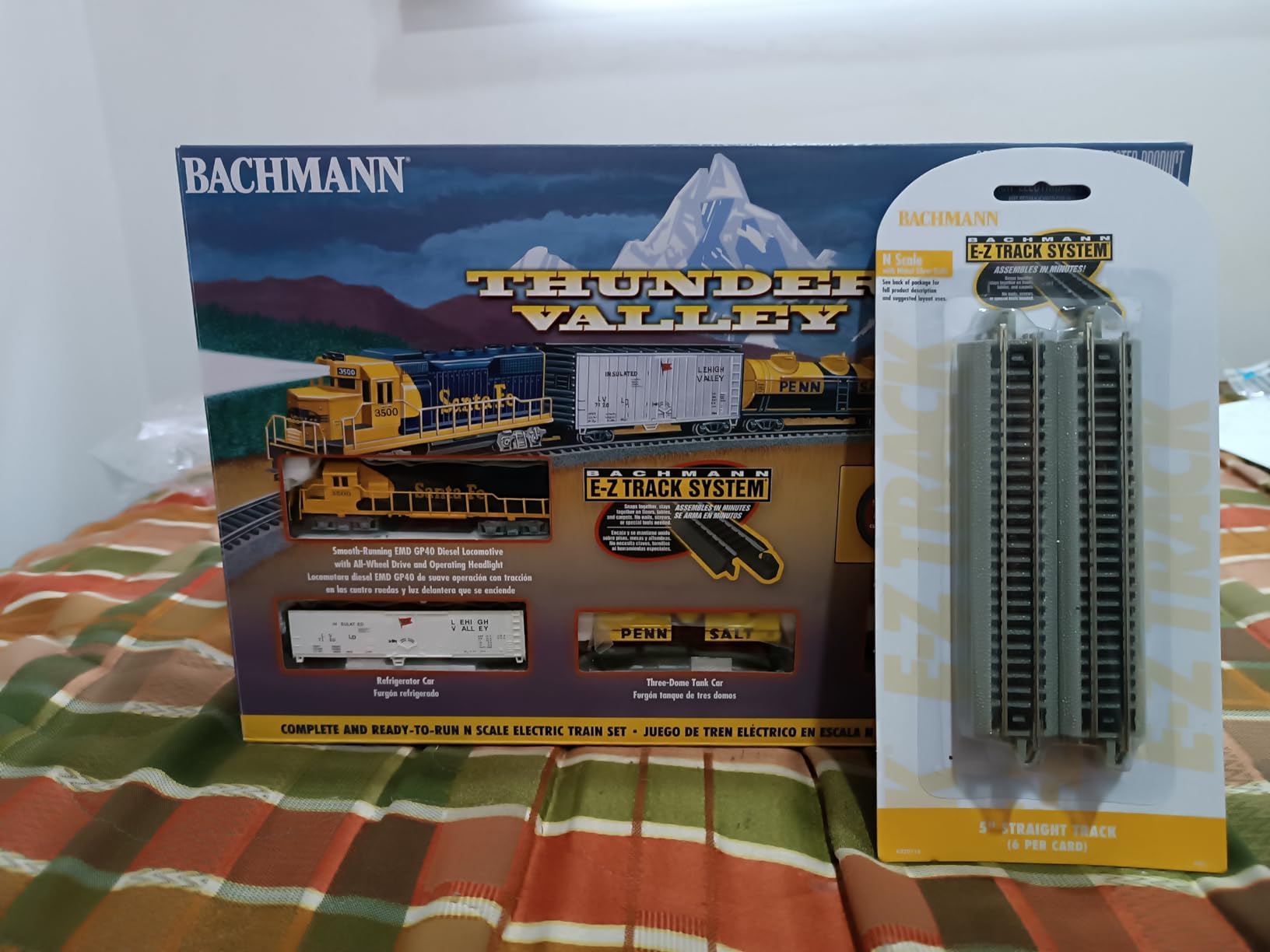
10. Bachmann N Scale Nickel Silver Track – Small Scale Techniques
Bachmann Trains 5″ Straight Track 6Pk NS Rail with Grey Roadbed N Scale
5 inch straight sections
N scale 1:160
Nickel silver rail
6 pieces per card
Pros
- Excellent nickel silver
- High quality rail
- Good conductivity
- Realistic appearance
- 6 pieces per pack
Cons
- N-scale very small to work
- Pieces can be misaligned
- Challenging for some users
- N gauge not Sn3
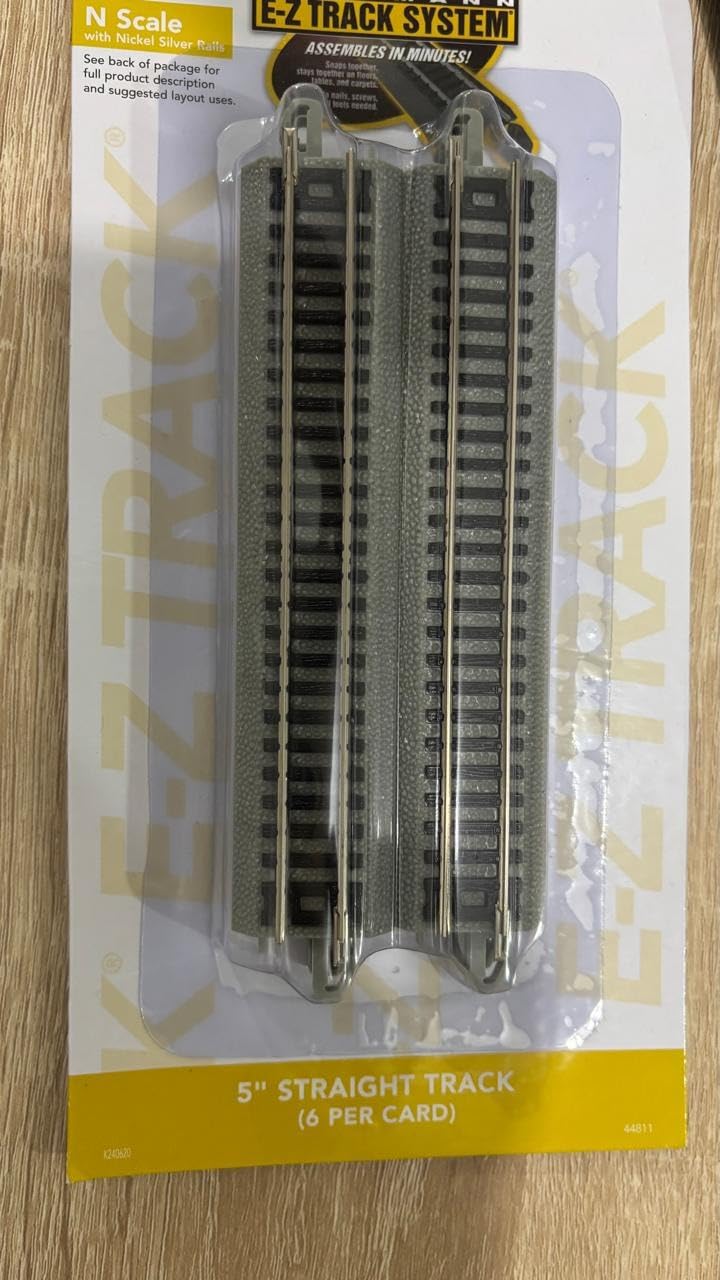
Working with N scale track teaches valuable lessons about precision and attention to detail. These 5-inch straight sections are tiny compared to Sn3, but the nickel silver rail quality is excellent. I’ve found that working in smaller scales actually improves your skills for larger scales like Sn3.
The nickel silver rail provides excellent conductivity, which is just as important in N scale as it is in Sn3. The gray roadbed gives a realistic appearance that Sn3 modelers appreciate. With 963 reviews, this is a proven system despite its small size.
The challenge of working with N scale teaches patience and precision. These qualities directly transfer to Sn3 hand-laying, where careful work is essential. The 6-piece pack provides plenty of material for practice.
Best For Developing Precision Skills
Use N scale track to develop the precision and patience needed for Sn3 hand-laying. The small size forces careful work, which improves your skills for larger scales.
Considerations for Your Sn3 Layout
N gauge is completely different from Sn3 gauge. However, the precision techniques learned working with N scale directly apply to careful Sn3 tracklaying.
Sn3 Narrow Gauge Track Buying Guide
Understanding Sn3 narrow gauge track requires knowledge of several key technical specifications and current market realities. This buying guide covers everything you need to know about Sn3 track in 2026.
What is Sn3 Scale and Gauge?
Sn3 is S scale (1:64 proportion) running on 14.3mm gauge track that represents 3-foot narrow gauge railways. This is different from standard S scale, which runs on standard gauge track. The 14.3mm gauge is exactly 9/16 of an inch, making Sn3 a precise mathematical scaling of real 3-foot narrow gauge.
The Sn3 scale allows modelers to accurately recreate historic narrow gauge railroads like the Denver & Rio Grande Western, Rio Grande Southern, and other American 3-foot gauge operations. The larger S scale size provides more detail than HO scale narrow gauge (HOn3) while still fitting in reasonable spaces.
Code 70 vs Code 55 Rail
Rail code refers to the height of the rail in thousandths of an inch. Code 70 rail is 0.070 inches tall, while Code 55 rail is 0.055 inches tall. For Sn3 modeling, Code 70 is more common and represents realistic mainline rail. Code 55 is typically used for lighter branch lines or industrial trackage.
Code 70 rail is more durable and easier to work with, making it ideal for mainlines and yards. Code 55 provides more realism for secondary track but is more fragile and difficult to hand-lay. Most Sn3 modelers use Code 70 for their primary trackwork and reserve Code 55 for specific applications.
Hand-Laying vs Commercial Track
The reality of Sn3 in 2026 is that commercial options are extremely limited. Shinohara, once a primary manufacturer, discontinued production in 2018. P-B-L (Pacific Bangor & Lakeview) remains the main source of commercial Sn3 track, but availability can be sporadic.
Most serious Sn3 modelers end up hand-laying at least some of their track. This gives complete control over track configuration and ensures availability. Hand-laying requires skills in spiking rail to ties, maintaining proper gauge, and soldering rail joiners. The products listed in this guide provide practice opportunities for these essential skills.
Where to Find Sn3 Track Products
Finding Sn3 track in 2026 requires knowing where to look. P-B-L products are available through select hobby retailers that specialize in S scale. Shinohara track can still be found through specialized retailers like S Scenery Unlimited, though supplies are limited to existing stock.
Custom track manufacturers like Railway Engineering and BK Enterprises offer Sn3 track kits and components. Fast Tracks sells jigs and QuickSticks for building turnouts in Sn3. These specialized sources are essential for Sn3 modelers seeking commercial track solutions.
DCC and Wiring Considerations
Sn3 narrow gauge track requires careful consideration of DCC and wiring. The 14.3mm gauge means standard HO gauge components won’t work. Feeder wires must be carefully placed to ensure reliable power distribution. Many Sn3 modelers use smaller feeder wires to maintain visual scale while ensuring adequate conductivity.
Turnout control is another consideration. Sn3 turnouts often require custom switch machines or modified standard gauge machines. Planning your wiring before laying track is essential for successful DCC operation on Sn3 layouts.
Frequently Asked Questions About Sn3 Narrow Gauge Track
What gauge is Sn3?
Sn3 uses 14.3mm gauge track, which is exactly 9/16 of an inch. This represents 3-foot narrow gauge railways in S scale (1:64 ratio). The 14.3mm gauge is the defining characteristic that distinguishes Sn3 from standard S scale.
Who makes Sn3 track?
The primary manufacturer of Sn3 track is P-B-L (Pacific Bangor & Lakeview). Shinohara was the other main manufacturer but discontinued Sn3 track production in 2018. Limited Shinohara stock may still be available through select retailers. Custom manufacturers like Railway Engineering and BK Enterprises also offer Sn3 track products.
Where can I buy Sn3 track?
Sn3 track is available through specialized hobby retailers that focus on S scale. P-B-L products can be ordered from select S scale dealers. S Scenery Unlimited carries remaining Shinohara stock. Custom track manufacturers like Fast Tracks, Railway Engineering, and BK Enterprises sell directly to modelers. eBay and model railroad shows are other sources for Sn3 track.
What is the difference between Code 70 and Code 55 rail?
Code 70 rail is 0.070 inches tall, while Code 55 rail is 0.055 inches tall. Code 70 is more common in Sn3, representing realistic mainline rail. Code 55 is lighter and typically used for branch lines or industrial trackage. Code 70 is more durable and easier to work with, while Code 55 provides more realism for lighter-duty trackwork.
Is narrow gauge still in use?
Yes, narrow gauge railways are still in use worldwide. While many historic 3-foot gauge lines like the Denver & Rio Grande Western have been abandoned, tourist railroads and industrial operations continue to use narrow gauge. Countries like Switzerland, India, and South Africa still operate extensive narrow gauge networks. This ongoing use provides prototype inspiration for Sn3 modelers.
Conclusion: Choosing the Best Sn3 Narrow Gauge Track
Sn3 narrow gauge track presents unique challenges in 2026, but the rewards are worth the effort. The limited commercial support means most modelers develop hand-laying skills, but this also allows complete customization of your layout. Whether you choose P-B-L commercial track, hand-lay your own, or use a combination of approaches, Sn3 offers unparalleled opportunities to model historic American narrow gauge railroads.
The products listed in this guide provide reference, practice opportunities, and essential supplies for your Sn3 journey. From studying commercial track systems to practicing with affordable HO track, each product helps develop the skills needed for successful Sn3 modeling. Remember that Sn3 is a specialized scale with a dedicated community of passionate modelers willing to share knowledge and support newcomers.
The Denver & Rio Grande Western and other 3-foot narrow gauge roads left an indelible mark on American railroad history. Sn3 modeling keeps this history alive while providing a challenging and rewarding hobby. Start with quality reference materials, practice your hand-laying skills, and join the Sn3 community to share your progress and learn from experienced modelers.