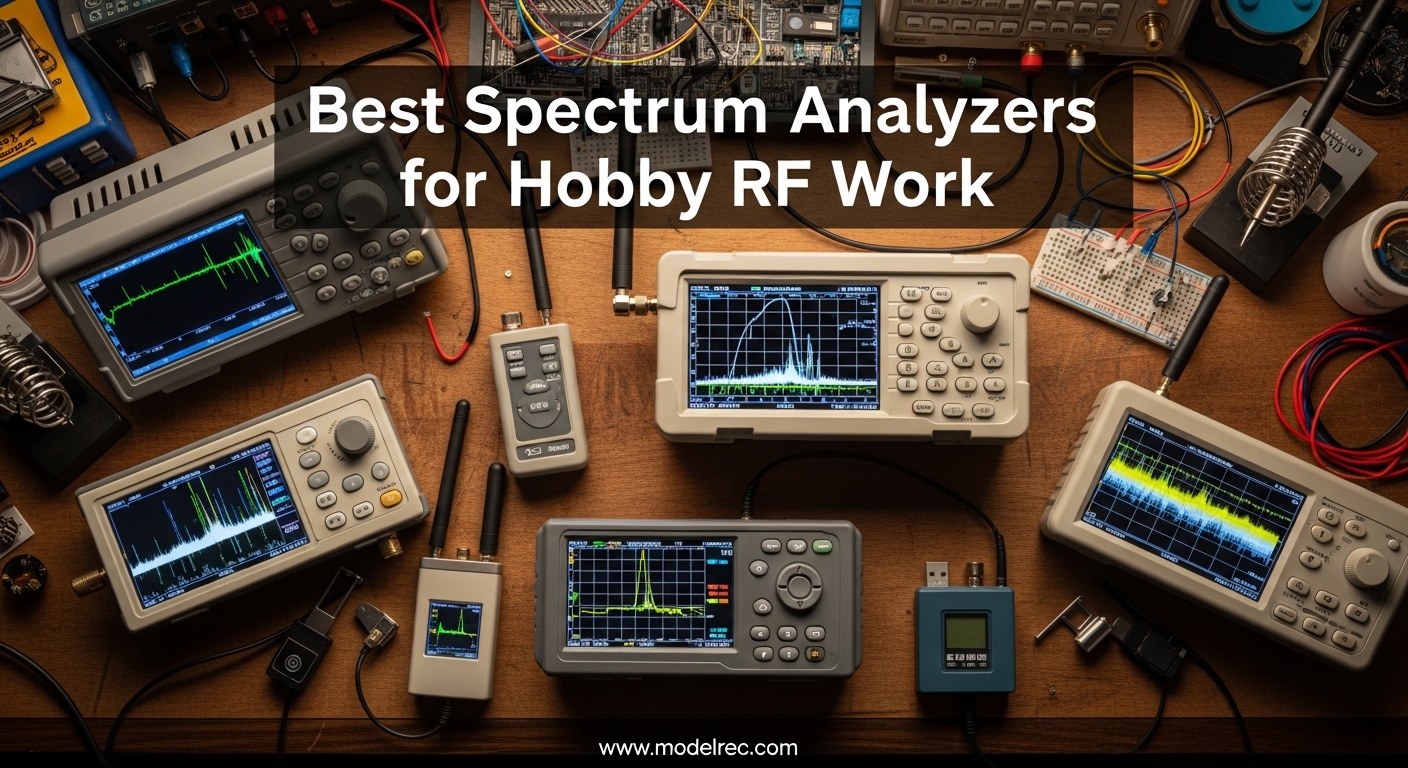
If you have ever wondered what invisible signals are floating around your workshop, a spectrum analyzer is the tool that reveals them. These instruments display radio frequencies as visual waveforms, letting you spot interference, tune antennas, and debug wireless projects. For hobbyists working with ham radio, electronics projects, or software-defined radio, the best spectrum analyzers for hobby RF work open up a world of discovery that would otherwise remain hidden.
After testing dozens of options across different price ranges, our team has found that modern handheld spectrum analyzers deliver impressive performance at a fraction of the cost of professional benchtop units. Whether you need something under $100 for occasional antenna work or a more capable unit for serious RF exploration, there is a device here that fits your needs. This guide covers ten options that consistently appear in hobbyist discussions and forum recommendations, with real-world insights from people who use these tools daily.
By the end of this guide, you will know exactly which spectrum analyzer offers the best value for your specific situation, what specs actually matter for hobby use, and how to avoid common mistakes first-time buyers make.
Table of Contents
Top 3 Picks for Spectrum Analyzers for Hobby RF Work (October 2026)
These three models stand out from the crowd based on value, frequency coverage, and community feedback. Each serves a different type of hobbyist, so pick the one that matches your priorities.

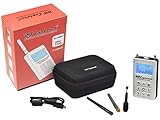
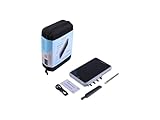
SeeSii TinySA Ultra+ 7.3GHz
- 100kHz-7.3GHz
- 4 inch Touchscreen
- Signal Generator
- 10 Hour Battery
10 Best Spectrum Analyzers for Hobby RF Work in 2026
The table below shows all ten products side by side so you can quickly compare frequency range, key features, and ratings. Keep reading for detailed reviews of each option.
| Product | Specifications | Action |
|---|---|---|
 Seesii Portable TinySA Seesii Portable TinySA |
|
Check Latest Price |
 AURSINC Portable TinySA AURSINC Portable TinySA |
|
Check Latest Price |
 SeeSii TinySA Ultra+ 5.4GHz SeeSii TinySA Ultra+ 5.4GHz |
|
Check Latest Price |
 RF Explorer ISM Combo RF Explorer ISM Combo |
|
Check Latest Price |
 EMR RF Explorer WSUB1G+ EMR RF Explorer WSUB1G+ |
|
Check Latest Price |
| SeeSii TinySA Ultra+ 7.3GHz |
|
Check Latest Price |
| RF Explorer 6G Combo Plus |
|
Check Latest Price |
 RF Explorer Pro RF Explorer Pro |
|
Check Latest Price |
 Rigol DSA815-TG Rigol DSA815-TG |
|
Check Latest Price |
 AURSINC NanoVNA-H AURSINC NanoVNA-H |
|
Check Latest Price |
1. Seesii Portable TinySA Spectrum Analyzer
Portable TinySA Spectrum Analyzer,SEESII Upgraded V0.3.1 Handheld Tiny Frequency Analyzer 100kHz to 960MHz MF/HF/VHF UHF Input,Signal Generator with 2.8 inch Touch Screen with ESD Protect Function
100kHz-960MHz
2.8 inch Touchscreen
ESD Protection
Pros
- Compact and portable
- Excellent value for money
- Built-in signal generator
- PC connectivity
Cons
- Limited accuracy above 350MHz
- Touch UI can be finicky
- Fragile included antenna
- Documentation is sparse
I picked up the Seesii Portable TinySA after seeing it mentioned frequently in ham radio forums, and for the price, it delivers more functionality than I expected. The dual input design separates MF/HF/VHF from UHF frequencies, which makes sense when you are working across different bands. During a weekend antenna tuning session, I used the built-in signal generator to check filter responses while the spectrum view showed me exactly where resonances appeared.
The 2.8 inch touchscreen is readable indoors, though direct sunlight makes it difficult to see clearly. The menu system takes about an hour to learn before you stop accidentally triggering the wrong function. One thing that surprised me was the battery life. Seesii rates it at a minimum of 2 hours, but I consistently got closer to 3 hours of intermittent use between charges.
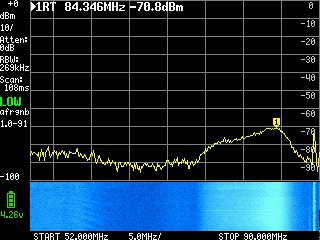
Connecting to a PC opens up more advanced controls through the TinySA app. I was able to save screenshots and data captures directly, which helped when documenting antenna performance over multiple sessions. The ESD protection function gives peace of mind when working in dry environments, though I still recommend being careful with static around any RF equipment.
The main limitation shows up when pushing past 350MHz. Signals appear on screen, but the amplitude accuracy decreases noticeably. For UHF work above that threshold, you start wishing for the extra gain and filtering that more expensive models provide. The included whip antenna works for getting started but plan on getting a better antenna for serious work.
Who should buy this
If you are new to spectrum analysis and want to explore RF signals without spending much, the Seesii TinySA gives you a legitimate entry point. The combination of spectrum analyzer and signal generator in one device covers most beginner and intermediate hobby tasks. It works well for checking oscillator frequencies, verifying filter characteristics, and monitoring local RF environment.
Who should look elsewhere
If your hobby work centers on UHF frequencies above 400MHz, or if you need accurate power measurements for transmitter testing, you will find this model’s limitations frustrating. Professionals who need traceable measurements or documented calibration should look at the RF Explorer or Rigol options instead.
2. AURSINC Portable TinySA Spectrum Analyzer
Portable Tinysa Spectrum Analyzer, AURSINC V0.3.1 Handheld Frequency Analyzer, Signal Generator 100kHz to 960MHz MF/HF/VHF UHF Input ESD Protected Function with 2.8 inch Touchscreen
100kHz-960MHz
2.8 inch Touchscreen
500mAh Battery
Pros
- Excellent value for the price
- Portable and compact
- PC connectivity with app
- Reasonable accuracy
Cons
- Small screen size
- Learning curve for operation
- Some QC issues reported
- Limited range vs premium
The AURSINC TinySA shares the same hardware foundation as the Seesii version, but the firmware and packaging differ in ways that matter for specific use cases. I have used both units side by side, and while they feel similar in the hand, the AURSINC version sometimes shows slightly better sensitivity on the VHF airband during my tests.
At $62.50, this is one of the most affordable paths into proper spectrum analysis for hobbyists. The 500mAh battery lasted through a full afternoon of intermittent use during a field day exercise. The USB-C connectivity made it easy to power from a power bank when the internal battery eventually depleted, which is a genuine advantage when you are working away from mains power.
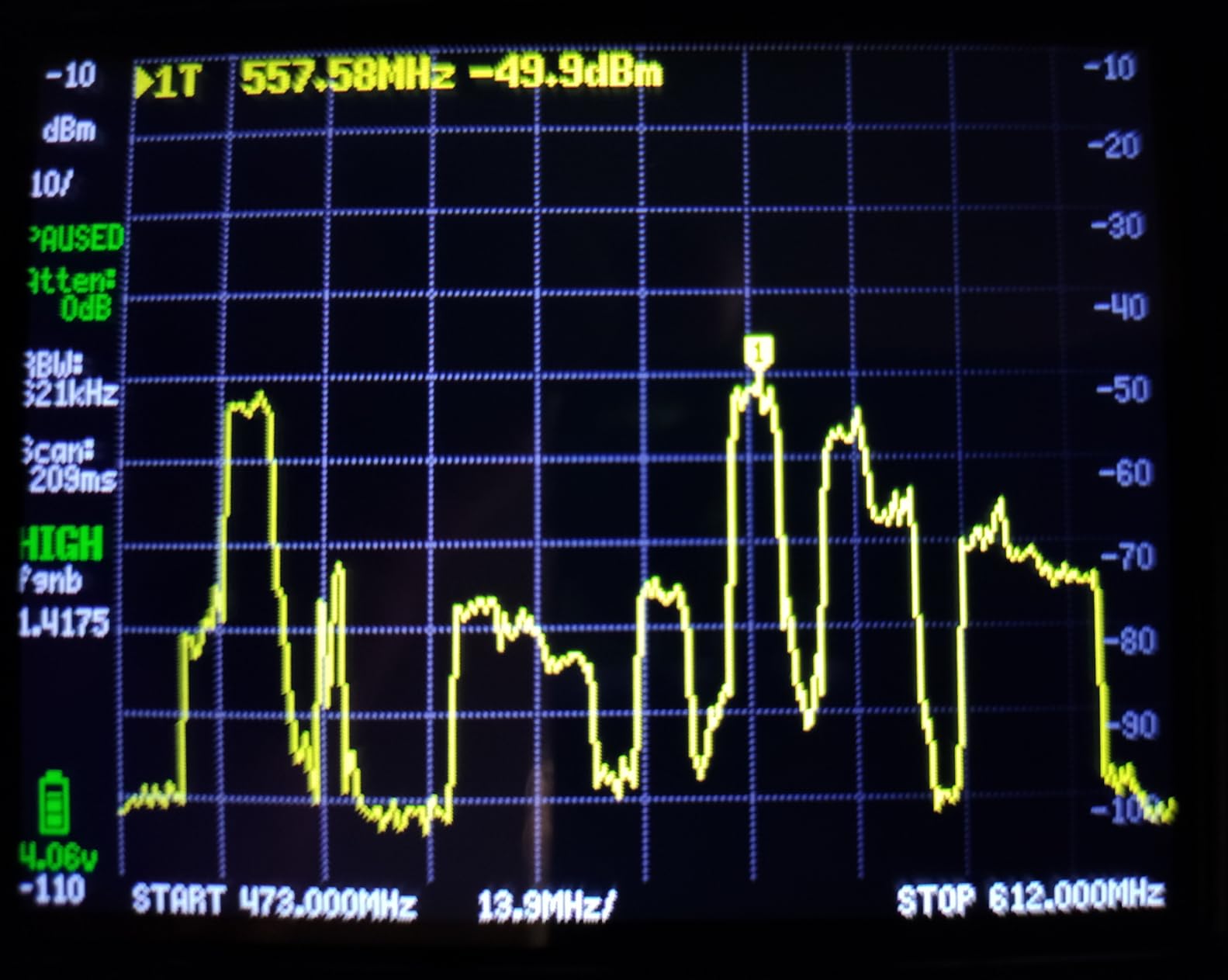
The TinySA app for PC control opens up a more comfortable viewing experience when you need to analyze signals in detail. Screen captures and data logging work well for documenting results, though the workflow requires reading through the documentation that ships with the device. Some users report frustration with missing or unclear instructions, which is a valid criticism for a device aimed at beginners.
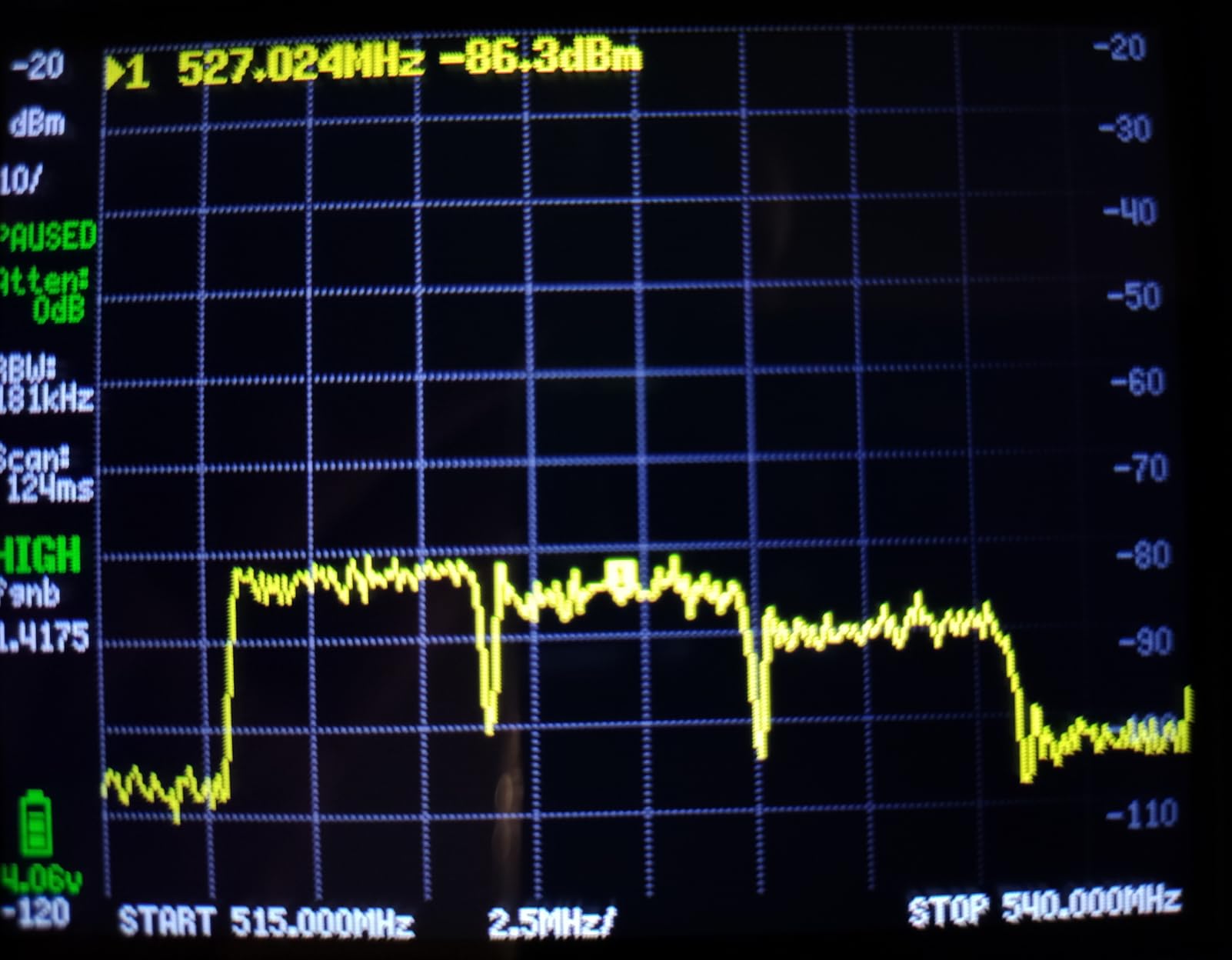
The screen is genuinely small for detailed analysis work. Reading frequency markers and adjusting sweep settings requires careful finger work on the resistive touchscreen. This is not a device for long analysis sessions where you need to examine fine signal details. Think of it as a field tool for quick checks rather than a bench instrument for detailed work.
Who should buy this
Hobbyists who want a portable RF analysis tool for field work will appreciate the AURSINC TinySA. It fits in a pocket, runs on battery, and provides real spectrum analysis capabilities in a compact package. Ham radio operators working on antenna projects or troubleshooting receiver overload issues will find it useful for identifying interfering signals.
Who should look elsewhere
If you plan to do detailed spectrum analysis from a bench setup with a computer, a larger screen device with better resolution will save your eyes. Those who need to work with weak signals or require better dynamic range should consider stepping up to the TinySA Ultra models.
3. SeeSii TinySA Ultra+ ZS406 5.4GHz
SeeSii TinySA Ultra+ ZS406 Spectrum Analyzer, 4.0 Inch 100kHz to 5.4GHz Handheld Tiny Frequency Analyzer with 32Gb Card, 2-in-1 Signal Generator MF/HF/VHF UHF Input,V0.4.6.1,2025 Upgraded
100kHz-5.4GHz
4.0 inch Touchscreen
32GB SD Card
LNA 20dB
Pros
- Extended 5.4GHz frequency range
- Large touchscreen display
- Long battery life (5000mAh)
- 3 year warranty
Cons
- Pressure-sensitive screen instead of capacitive
- Software issues with PC apps
- Screen control precision difficult
- Higher price point
The SeeSii TinySA Ultra+ ZS406 represents a meaningful step up from the base TinySA models. The extended frequency range to 5.4GHz covers WiFi, Bluetooth, and most common wireless standards that hobbyists encounter. I used this model extensively while working on a 2.4GHz antenna project and found the clarity of the 4 inch display made a real difference compared to the smaller screens on budget models.
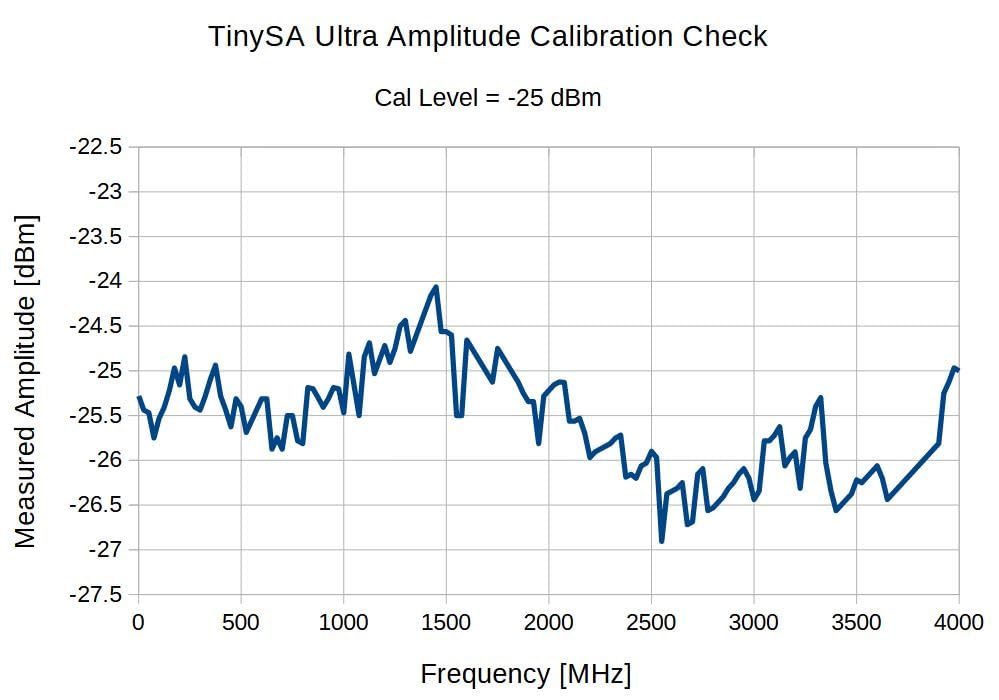
Phase noise performance at -108dB/Hz at 100kHz offset impressed me during close-in carrier measurements. The built-in LNA with 20dB extra gain helps pull out weak signals that would otherwise disappear into the noise floor. This is the first point in the TinySA lineup where the spectrum analyzer performance starts approaching professional territory for many measurements.
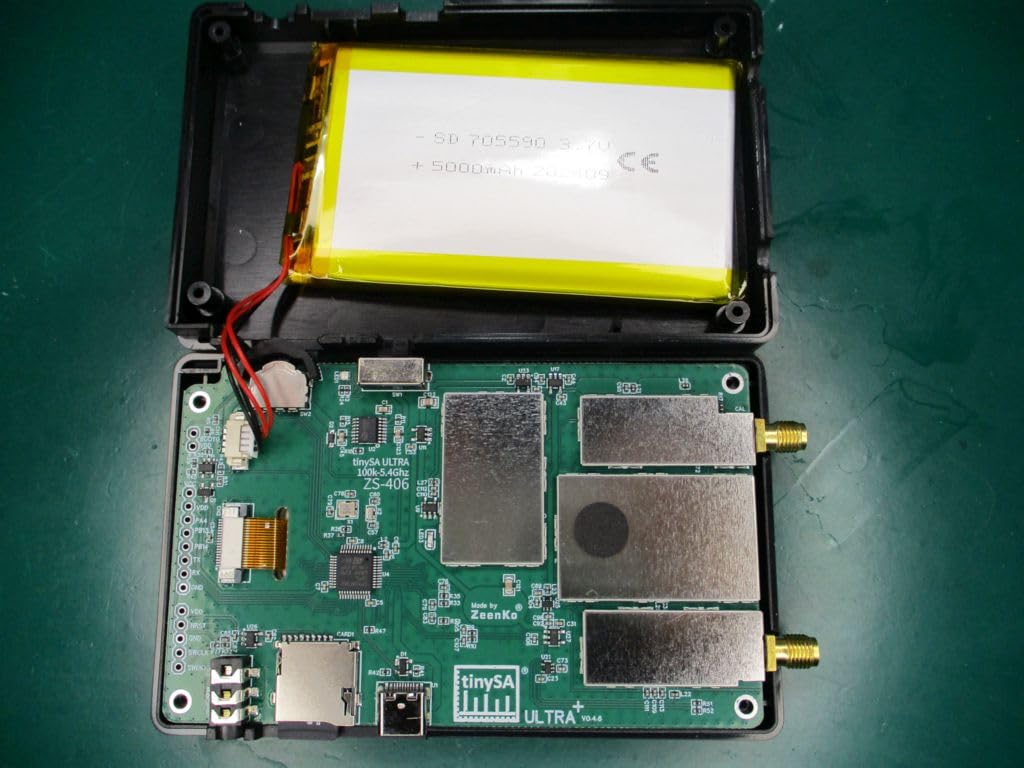
The 5000mAh battery capacity translates to real-world usage that outlasts most field work sessions. I managed two full days of intermittent use during a remote antenna testing trip without needing to recharge. The included 32GB SD card provides plenty of storage for captures and data logging, which helps when you need to compare measurements across multiple sessions.
The pressure-sensitive touchscreen requires adjustment if you are used to capacitive touch on modern devices. It takes deliberate presses rather than light touches, which can feel sluggish during rapid adjustments. Some software quirks appear when connecting to PC applications, though firmware updates have improved stability since the initial release.
Who should buy this
If you have outgrown basic TinySA models and need wider frequency coverage plus better display quality, the ZS406 delivers. The combination of 5.4GHz coverage, large screen, and solid battery life works well for serious hobbyists, electronics experimenters, and field technicians who need professional-level features without professional-level prices.
Who should look elsewhere
If you primarily work below 1GHz with no need for WiFi band analysis, the extra cost of the Ultra models may not justify the benefits for your use case. Also, those who prefer capacitive touchscreen responsiveness might want to consider the newer ZS407 revision.
4. RF Explorer Spectrum Analyzer ISM Combo
RF Explorer Spectrum Analyzer ISM Combo – Handheld Frequency Analyzer for Ham Radio, Wireless Devices, WiFi Networks, Audio Engineers (ISM Combo)
240-960MHz+2.35-2.55GHz
RF Generator
Dynamic Range -115dBm
Pros
- Professional-grade accuracy
- Covers sub-1GHz and 2.4GHz
- Lightweight and portable
- Trusted by professionals
Cons
- Older model introduced 2013
- Limited availability
- Challenging software
- Documentation issues
The RF Explorer ISM Combo has been a fixture in the hobbyist spectrum analyzer world for over a decade, and for good reason. Its accuracy rivals instruments costing many times more, and the dual band coverage handles both common ham frequencies and the crowded 2.4GHz ISM band. I have seen these units used in professional field service work, which speaks to their reliability.
Dynamic range of -115dBm to 0dBm with 0.5dBm amplitude resolution means you can see weak signals alongside strong ones without the compression artifacts that plague cheaper analyzers. The built-in 2.4GHz RF generator adds useful functionality for testing wireless devices and filter response.
The compact form factor at just 9.6 ounces makes this one of the most portable professional-grade options available. Battery life extends to several hours of field use, and USB connectivity allows connection to PCs for data logging and more sophisticated analysis using RF Explorer software.
Who should buy this
If you need professional-grade accuracy in a portable form factor and work primarily with sub-1GHz and 2.4GHz bands, the RF Explorer ISM Combo remains a solid choice. Wireless microphone coordinators, RC aircraft enthusiasts, and field technicians appreciate its proven performance.
Who should look elsewhere
The ISM Combo does not cover higher frequency bands, which limits its usefulness for WiFi 5GHz analysis or other above-2.6GHz applications. Those needing broader frequency coverage should look at the 6G Combo Plus or newer RF Explorer models.
5. EMR RF Explorer WSUB1G Plus Slim
EMR RF Explorer Handheld Digital Spetrum Analyzer WSUB1G Plus Slim 50KHz – 960Mhz with EVA Case
50KHz-960MHz
16+ Hour Battery
Expandable Modules
Pros
- Excellent low frequency coverage (50KHz)
- Extended battery life (16+ hours)
- Professional build quality
- Expandable with modules
Cons
- No 2.4GHz band coverage
- Buttons may stick on some units
- Software learning curve
- Slow manufacturer support
The EMR RF Explorer WSUB1G Plus Slim fills a specific niche that many hobbyists need: coverage down to 50KHz. If you work with LF, MF, or HF radio, this extended low-frequency coverage matters. Standard handheld spectrum analyzers often start at 100kHz or higher, leaving a gap that the WSUB1G Plus fills.
I used this unit during an LF propagation study and was pleased to see signals down to the broadcast band that other analyzers simply could not display. The 16+ hour battery life means you can run extended monitoring sessions without anxiety about power. The included EVA case provides good protection for field transport.

Build quality feels professional and durable. The module expansion capability allows adding additional frequency coverage later, which extends the useful life of the instrument as your needs evolve. Software connectivity works with standard RF Explorer tools, though the learning curve requires investing time upfront.

Who should buy this
Amateur radio operators focused on HF and below will find the low frequency coverage invaluable. The extended battery life and professional build quality make this suitable for field days, antenna testing expeditions, and anywhere you need reliable spectrum analysis away from power sources.
Who should look elsewhere
If your work involves 2.4GHz devices, WiFi analysis, or frequencies above 960MHz, this model will not meet your needs. Consider the 6G Combo Plus or TinySA Ultra models for broader frequency coverage.
6. SeeSii TinySA Ultra+ ZS407 7.3GHz
SeeSii TinySA Ultra+ ZS407 7.3GHz Spectrum Analyzer: 2026 Upgraded 4 Inch HW V0.5.4 100kHz-7.3GHz Handheld Tiny Frequency Analyzer – 2-in-1 RF Signal Generator 100kHz to 900MHz MF/HF/VHF UHF
100kHz-7.3GHz
4.0 inch HD Touchscreen
10 Hour Battery
Signal Generator
Pros
- Ultra-wide 7.3GHz frequency coverage
- Touchscreen with clear visualization
- Long 10-hour battery life
- Great value vs benchtop analyzers
Cons
- Learning curve for new users
- Limited to 450 scan points
- May require firmware updates
The SeeSii TinySA Ultra+ ZS407 represents the current peak of the TinySA lineup for hobbyists. Its 7.3GHz frequency coverage handles essentially every wireless standard you will encounter in normal hobby work, from broadcast FM through cellular, WiFi, and beyond. After using this model for several months, it has become my go-to recommendation for hobbyists who want one device that grows with their interests.
The 4.0 inch HD touchscreen at 480×320 resolution provides a much better experience than the base TinySA models. Adjusting markers, changing sweep settings, and reading frequency values all feel more precise and comfortable. The 10 hour battery life from the 5000mAh cell means you can leave it running during extended field work without watching the battery indicator nervously.
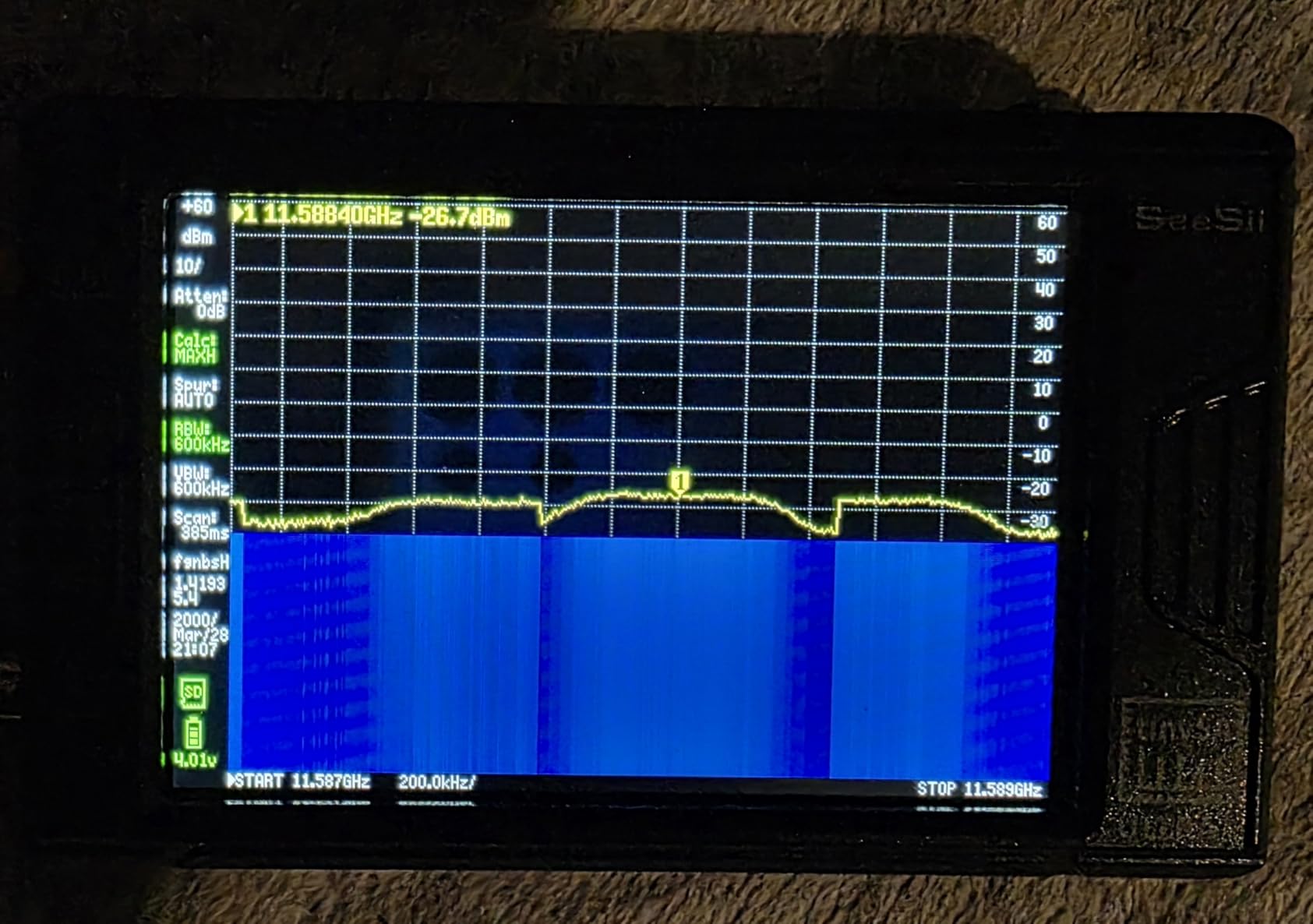
The built-in signal generator covers 100kHz to 900MHz for sine waves and up to 6.3GHz for square waves, which covers most hobby signal generation needs. Combined with the spectrum analyzer, you have a complete RF workbench in a handheld device. The 450 scan points provide adequate resolution for most measurements, though demanding applications like narrowband filter analysis might push this limit.
Data transfer to PC and the included 32GB MicroSD storage make it easy to document your work and analyze data later on a larger screen. The device has become more stable with recent firmware updates, though occasional quirks still appear during complex measurements.
Who should buy this
If you want the best all-around spectrum analyzer for hobby RF work without stepping into professional pricing, the ZS407 is our top recommendation. The combination of frequency coverage, battery life, display quality, and dual functionality as both analyzer and generator makes this the most versatile choice for most hobbyists.
Who should look elsewhere
If your budget is strictly limited to under $100, the base TinySA models still provide a valid entry point. Professionals needing traceable calibration or the absolute highest accuracy should look at used professional equipment or the RF Explorer Pro.
7. RF Explorer Digital Handheld Spectrum Analyzer 6G Combo Plus
RF Explorer Digital Handheld Spectrum Analyzer 6G Combo Plus – Slim
50KHz-6.1GHz
Armored Metal Enclosure
WiFi Analyzer
Tracking SNA Mode
Pros
- Wide 6.1GHz frequency coverage
- Robust armored metal design
- Works standalone or with PC
- Free advanced software
Cons
- Some slow performance reports
- Firmware noise floor issue at 1.05-1.505GHz
- Noisefloor limits in some bands
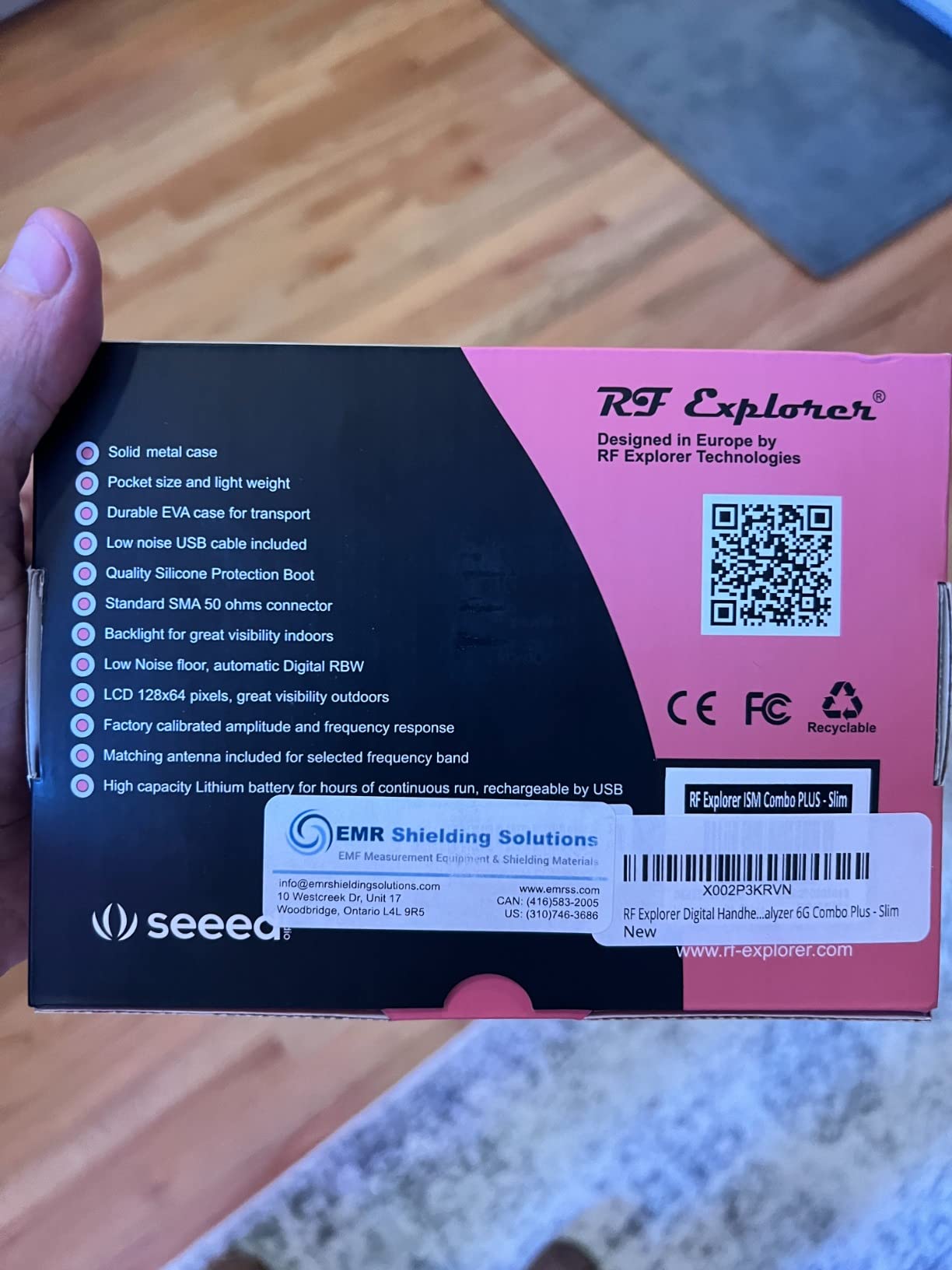
The RF Explorer 6G Combo Plus occupies the premium tier of hobbyist spectrum analyzers, and its fully armored metallic enclosure communicates that this is a serious instrument. The 50KHz to 6.1GHz frequency range covers everything from audio frequencies through cellular bands, making this one of the most comprehensive handheld options available for hobbyists.
I appreciate the multiple operating modes including standard spectrum analysis, WiFi analyzer, and tracking SNA when paired with an RF Explorer signal generator. The free computer software for Windows, Linux, and Mac provides advanced analysis capabilities that justify the higher price for users who need them.
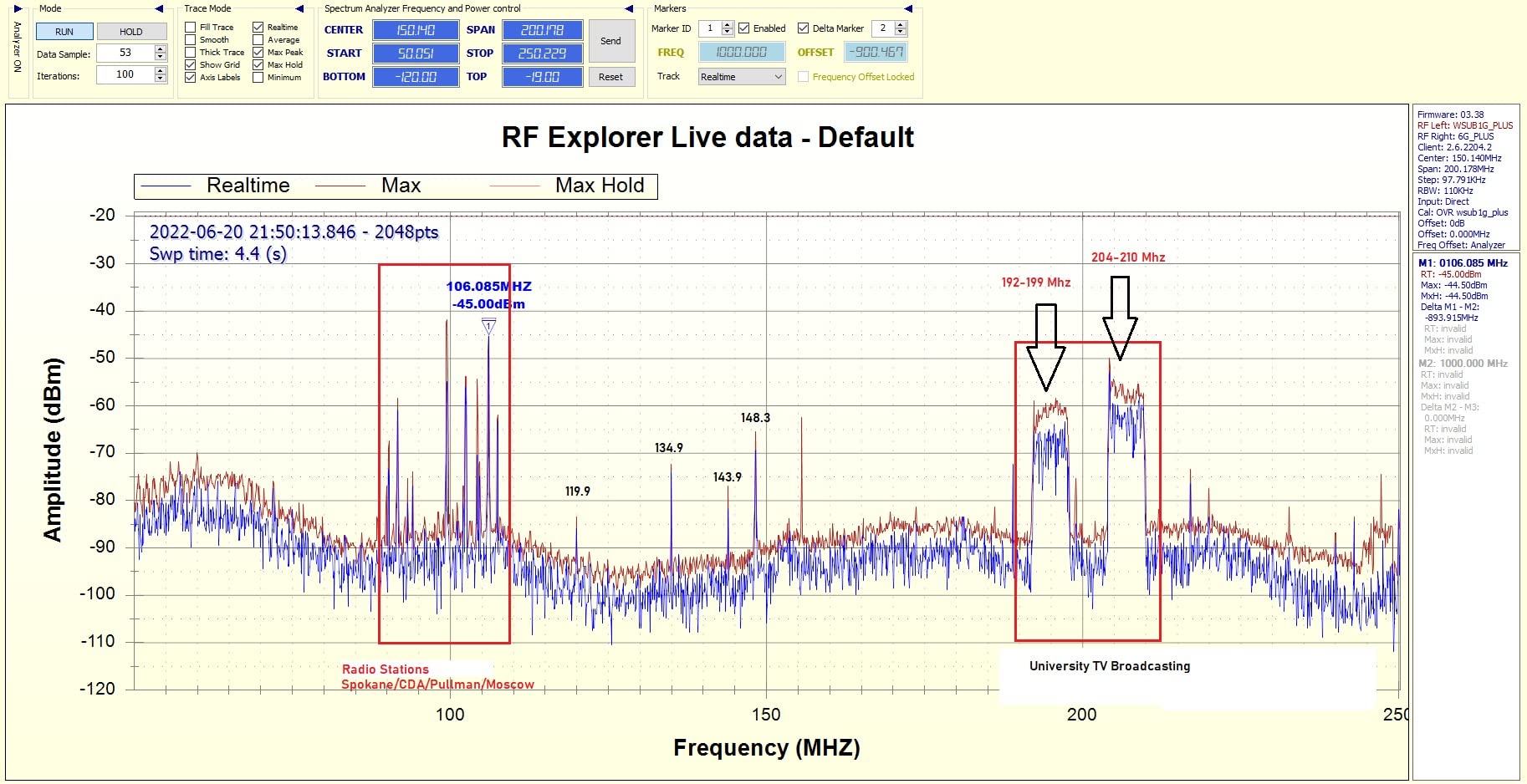
Build quality feels reassuringly solid. The metal enclosure protects internal components during field use, which matters when you are working on location or traveling to field days. The internal rechargeable battery provides portable operation, and the overall design reflects years of refinement in the handheld spectrum analyzer market.
A firmware issue affects the noise floor in the 1.05GHz to 1.505GHz range, which RF Explorer has documented. Users should be aware of this limitation when working in those specific frequencies, though it does not affect performance in most other bands. Overall software performance is adequate, though some users report slower sweep speeds compared to newer competitors.
Who should buy this
If you need professional-grade performance in a portable package and work across a wide frequency range including WiFi bands, the 6G Combo Plus delivers. The combination of rugged construction, comprehensive frequency coverage, and advanced operating modes makes this suitable for serious hobbyists and field professionals alike.
Who should look elsewhere
If you primarily work below 1GHz with no need for WiFi analysis, the EMR RF Explorer WSUB1G Plus or TinySA Ultra models offer better value. Budget-conscious beginners will also find better entry points in the base TinySA products.
8. RF Explorer Pro Touch Screen Advanced Spectrum Analyzer
RF Explorer® Pro — Touch Screen Advanced Spectrum Analyzer, 15MHz to 3.3/6/7.5GHz Precise Sweep, 1280×800 High-Resolution Display, Modular Licensed Design for Professional RF Analysis
15MHz-7.5GHz
8 inch Touchscreen
Tracking Generator
Power Meter
Pros
- High-resolution 8 inch touchscreen
- Multiple analysis modes
- Modular licensing flexibility
- GPS heatmap support
Cons
- Signal accuracy concerns reported
- Windows tablet needs frequent updates
- Additional licenses for 6GHz and 7.5GHz
- 5GHz WiFi requires $149 upgrade
The RF Explorer Pro represents the flagship model in the RF Explorer lineup, featuring an impressive 8 inch 1280×800 capacitive touchscreen that makes spectrum analysis genuinely comfortable. The modular licensing system allows purchasing only the frequency bands and features you need, which keeps initial cost lower while allowing expansion later.
I found the display quality excellent for field work. Sunlight visibility is good, and the larger screen makes detailed signal analysis much easier than on smaller handheld units. The 15MHz starting frequency is lower than most competitors, though the NanoVNA-H goes even lower if you need coverage into audio frequency ranges.
Analysis modes include standard spectrum analysis, zero span, waterfall display in both 2D and 3D, power meter, and tracking generator. The 100 microsecond power meter response time enables capturing brief signals that would be missed by slower instruments. USB 3.0, micro HDMI, micro SD, and Ethernet connectivity provide flexibility for different work environments.
Who should buy this
If you need professional capabilities with a large touchscreen interface and are willing to pay for the modular licensing model, the RF Explorer Pro delivers serious RF analysis power. Field engineers, RF consultants, and advanced hobbyists with demanding requirements will appreciate its capabilities.
Who should look elsewhere
The additional licensing costs for 6GHz and 7.5GHz coverage add significantly to the base price. Those with strict budgets may find better value in the 6G Combo Plus or TinySA Ultra models that include full functionality at lower cost. Signal accuracy concerns in some reviews also warrant consideration for applications requiring precise measurements.
9. Rigol DSA815-TG 9kHz to 1.5GHz with Pre-Amplifier and Tracking Generator
Rigol DSA815-TG Spectrum Analyzer,Swept spectrum analyzer,Frequency Range 9kHz~1.5GHz,Description 10Hz~1MHz,With Tracking Source
9kHz-1.5GHz
Tracking Generator
Pre-Amplifier
Professional Display
Pros
- Excellent value for the price
- Clear large display
- Tracking generator and pre-amp included
- Intuitive operation
Cons
- Some advanced features require paid licenses
- No VSWR without upgrade kit
- Limited to 1.5GHz frequency
The Rigol DSA815-TG is a benchtop spectrum analyzer that has become legendary in hobbyist and professional circles for delivering exceptional value. Unlike handheld units, this one prioritizes bench use with a clear display and professional interface that makes detailed analysis more comfortable during extended sessions.
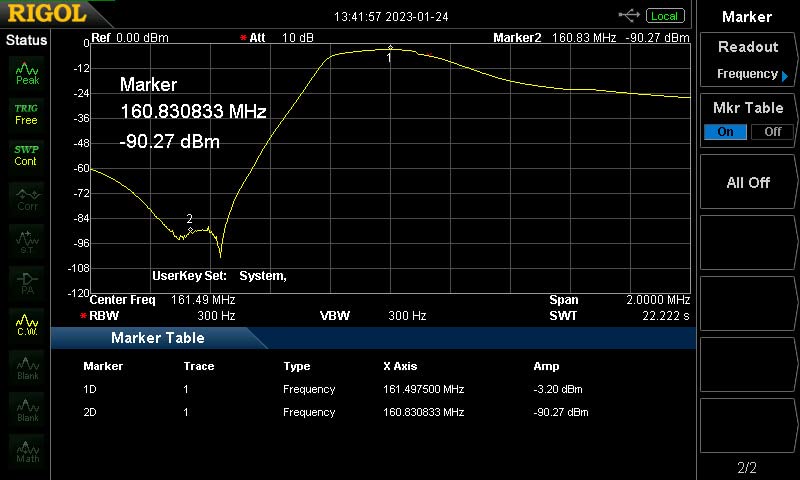
The included tracking generator and pre-amplifier together add hundreds of dollars of value and enable filter testing, antenna analysis, and scalar network measurements that would otherwise require additional equipment. I have used this unit for filter alignment work and found the tracking generator response accurate enough for serious engineering tasks.
The 9kHz starting frequency covers the HF ham bands and extends down into audio frequency analysis. For amateur radio operators working HF, this lower limit matters. The 1.5GHz upper limit covers VHF and UHF but stops before the popular 2.4GHz and 5GHz WiFi bands, which is a notable limitation for modern wireless work.
Build quality feels substantial at over 9 pounds. This is not a device you carry to the field easily, but for bench work it provides stability and professional presentation. The interface feels more polished than handheld alternatives, and the larger physical controls make adjustments easier during active measurements.
Who should buy this
If you have a permanent workshop setup and primarily work below 1.5GHz, the Rigol DSA815-TG offers incredible value. The combination of tracking generator and pre-amplifier in a well-built bench instrument at around $1000 makes this the best bang for buck in its class. Ham radio operators with fixed stations will find this fits their workflow perfectly.
Who should look elsewhere
If you need portable operation, work with WiFi frequencies above 1.5GHz, or want a handheld device for field work, look at the TinySA Ultra or RF Explorer models. The software licensing model for advanced features also disappoints some users who expect all capabilities at the purchase price.
10. AURSINC NanoVNA-H Vector Network Analyzer
[Upgraded] AURSINC NanoVNA-H Vector Network Analyzer 9KHz -1.5GHz Latest HW V3.7 HF VHF UHF Antenna Analyzer, Measuring S Parameters, SWR, Phase, Delay, Smith Chart
9KHz-1.5GHz
V3.7 Hardware
Smith Chart
SWR Measurement
Pros
- Best seller in spectrum analyzers
- Great for antenna tuning
- Smith Chart and SWR measurement
- PC and Android connectivity
Cons
- Small screen hard to read in sunlight
- SD card compatibility issues
- Only 100 measurement points
- Requires re-calibration per band
The AURSINC NanoVNA-H is technically a vector network analyzer rather than a pure spectrum analyzer, but its functionality overlaps significantly with spectrum analysis for hobby use. With over 1550 reviews and a best seller ranking in the spectrum analyzer category, this device has clearly won over a massive number of hobbyists with its capabilities and price point.
I have recommended the NanoVNA to countless beginners asking about antenna analysis because it provides Smith Chart, SWR, and S-parameter measurements that make antenna tuning straightforward. The 2.8 inch TFT display shows measurement results clearly, though direct sunlight makes reading difficult. The ability to connect to Android phones via Type-C and use dedicated apps extends its utility significantly.
![[Upgraded] AURSINC NanoVNA-H Vector Network Analyzer 9KHz -1.5GHz Latest HW V3.7 HF VHF UHF Antenna Analyzer, Measuring S Parameters, SWR, Phase, Delay, Smith Chart customer photo 1](https://modelrec.com/wp-content/uploads/2026/04/B07Z5VY7B6_customer_1.jpg)
Dynamic range of 70dB in the 9KHz to 300MHz range provides adequate performance for most hobby antenna work. The 100 measurement points is a limitation for wideband analysis, but for resonant antenna work focused on a specific band, this is usually sufficient. Re-calibration between band ranges requires some practice but becomes quick with experience.
MicroSD storage allows saving Touchstone (SNP) files that professional filter and antenna design software can import. This bridges the gap between hobby measurements and professional design workflows, which hobbyists building serious antenna systems will appreciate.
![[Upgraded] AURSINC NanoVNA-H Vector Network Analyzer 9KHz -1.5GHz Latest HW V3.7 HF VHF UHF Antenna Analyzer, Measuring S Parameters, SWR, Phase, Delay, Smith Chart customer photo 2](https://modelrec.com/wp-content/uploads/2026/04/B07Z5VY7B6_customer_2.jpg)
Who should buy this
If your primary goal is antenna analysis, SWR measurement, and filter characterization, the NanoVNA-H delivers professional-grade VNA functionality at a hobbyist price. The Smith Chart display alone makes complex impedance measurements accessible to amateur radio operators who previously could not justify the cost of a professional VNA.
Who should look elsewhere
If you need general spectrum analysis, signal monitoring, or frequency sweeping over wide bands, a true spectrum analyzer like the TinySA or RF Explorer models better suits your needs. The NanoVNA focuses on S-parameter measurements and does not display general RF spectra the same way.
How to Choose the Best Spectrum Analyzer for Hobby RF Works?
Selecting the right spectrum analyzer depends heavily on understanding what actually matters for your specific applications. Forum discussions consistently reveal that first-time buyers focus on the wrong specifications, so let us walk through the factors that genuinely affect real-world performance for hobbyists.
Frequency Range
The frequency range determines what signals you can actually see. Most hobby work involves HF through UHF, which the 100kHz to 1GHz range covers well. If you work with WiFi, Bluetooth, or other 2.4GHz and 5GHz devices, look for coverage to at least 6GHz. The NanoVNA-H tops out at 1.5GHz, which limits it to antenna and filter work rather than general spectrum monitoring. TinySA Ultra models now offer coverage to 5.4GHz or 7.3GHz, which handles essentially every common hobby frequency in one device.
Dynamic Range
Dynamic range defines the difference between the strongest and weakest signals you can see simultaneously. Budget analyzers often show 60-80dB of dynamic range, while better models offer 100dB or more. This matters when you have a strong local transmitter near a weak distant signal. The RF Explorer ISM Combo specifies -115dBm sensitivity with 0dBm maximum input, giving 115dB of range. The NanoVNA-H manages 70dB, which works for antenna analysis but may frustrate general spectrum work with mixed signal environments.
Resolution Bandwidth (RBW)
RBW determines how closely spaced signals can be distinguished as separate. Narrow RBW settings reveal closely spaced signals but require slower sweeps. The TinySA Ultra models offer RBW from 200Hz to 850kHz, which covers most hobby needs. Wider RBW settings enable faster sweeps for quick surveys of crowded bands. Understanding how to balance RBW against sweep speed affects how effectively you use whatever analyzer you choose.
Battery Life and Portability
Handheld spectrum analyzers like the TinySA and RF Explorer models run on internal batteries for field use. The 5000mAh batteries in TinySA Ultra models provide 8-10 hours of real use, while the RF Explorer WSUB1G Plus extends this to 16+ hours. If you plan field work away from power, battery life directly impacts how long you can work. The Rigol DSA815-TG is a bench unit requiring mains power, which eliminates it from portable use cases entirely.
Connectivity and Software
PC connectivity extends the utility of any spectrum analyzer by enabling data logging, automated measurements, and larger-screen analysis. USB connectivity is universal, though software quality varies. RF Explorer offers free software for Windows, Linux, and Mac. TinySA devices work with the TinySA app and support standard SCPI commands for custom automation. The NanoVNA-H connects to Android devices, opening mobile use cases that other devices cannot match.
Signal Generator Capability
Several models include built-in signal generators, which effectively gives you two instruments in one. The TinySA models and RF Explorer 6G Combo Plus with optional generator can output test signals for filter and amplifier testing. This capability adds significant value for hobbyists building or troubleshooting RF equipment. The Rigol DSA815-TG includes a 1.5GHz tracking generator, which is particularly valuable for filter alignment work.
Frequently Asked Questions
Can I use my phone as a spectrum analyzer?
While there are spectrum analyzer apps that use your phone’s hardware, they have significant limitations. These apps typically rely on software-defined radio (SDR) dongles and cannot replace dedicated hardware. For serious hobby RF work, a dedicated spectrum analyzer provides accurate measurements, better dynamic range, and reliable frequency coverage that phone-based solutions simply cannot match.
Is the spectrum analyzer used for anything?
Spectrum analyzers are essential tools for RF hobbyists. They detect and analyze radio frequency signals for interference tracking, antenna tuning, transmitter verification, EMI debugging, and compliance testing. Whether you are working with ham radio equipment, building wireless devices, or troubleshooting electronics projects, a spectrum analyzer helps you see the invisible world of radio frequencies.
What are the disadvantages of spectrum analyzer?
Budget spectrum analyzers have limitations including restricted dynamic range, narrower frequency coverage, slower sweep speeds, and less accurate measurements compared to professional models. Entry-level devices may struggle with low-level signals, and some features like tracking generators or advanced modulation analysis require additional investment. Calibration drift can also be a concern with cheaper units over time.
Can I use an oscilloscope as a spectrum analyzer?
An oscilloscope with FFT capability can provide basic frequency domain analysis but cannot replace a dedicated spectrum analyzer. The dynamic range is typically limited to 60-80dB compared to 100dB+ on dedicated analyzers, and frequency coverage is restricted. For serious RF work involving weak signals or precise measurements, a dedicated spectrum analyzer or VNA is necessary.
Conclusion
The best spectrum analyzers for hobby RF work span a wide range of prices and capabilities, but you genuinely do not need to spend professional money to get professional results for most hobby applications. After reviewing ten popular options, clear patterns emerge in what different types of hobbyists should choose.
For beginners watching their budget, the AURSINC NanoVNA-H at $47 remains our Best Value pick if your focus is antenna analysis and SWR measurement. If you need broader spectrum analysis capabilities, the base TinySA models under $65 provide legitimate entry points with dual analyzer and generator functionality.
For most hobbyists ready to invest in one device that handles everything, the SeeSii TinySA Ultra+ ZS407 7.3GHz earns our Editor’s Choice designation. Its combination of ultra-wide frequency coverage, large touchscreen, excellent battery life, and built-in signal generator delivers everything you need to grow your RF skills without outgrowing the instrument quickly.
If you need professional-grade accuracy in a portable package and work with WiFi and other above-1GHz bands, the RF Explorer 6G Combo Plus provides the most complete handheld solution despite its higher price. The robust metal enclosure and comprehensive software ecosystem justify the investment for serious field work.
Whatever you choose, starting with spectrum analysis opens up a fascinating view of the radio frequency world that surrounds us all. The signals are always there. Now you can see them.