
Finding quality 1/72 Piper general aviation model kits has always been a challenge for scale modelers. Most manufacturers focus on military aircraft, leaving Piper enthusiasts with limited options. After researching every available kit on the market, I compiled this comprehensive guide to help you choose the right Piper model for your collection.
The Piper aircraft family represents some of the most iconic general aviation planes in history. From the legendary Cub family to the Cherokee series, these aircraft have trained generations of pilots and served in military observation roles worldwide. Building these iconic aircraft in 1/72 scale offers excellent detail potential while maintaining a manageable display size.
My analysis of 7 current kits covers various skill levels, price points, and building approaches. Whether you want a flying balsa model, a detailed plastic kit, or a unique military subject, this guide has you covered.
Table of Contents
Top 3 Picks for 1/72 Piper General Aviation Model Kits (August 2026)

Guillow’s Piper Super Cub 95 Laser Cut
- 24-Inch Wingspan
- Laser Cut Balsa
- Rubber Power Motor
- Flying Model

Guillow’s Piper Cherokee 140 Laser Cut
- 20-Inch Wingspan
- Laser Cut Balsa
- Decals Included
- Convert to RC
7 Best 1/72 Piper General Aviation Model Kits in 2026
| Product | Specifications | Action |
|---|---|---|
| Amodel Piper PA-47 1/72 |
|
Check Latest Price |
| Guillow’s Piper Super Cub 95 Laser Cut |
|
Check Latest Price |
| Guillow’s Piper Cherokee 140 Laser Cut |
|
Check Latest Price |
 Minicraft Piper Super Cub 1/48 Minicraft Piper Super Cub 1/48 |
|
Check Latest Price |
 Smer Piper L-4 Cub 1/48 Smer Piper L-4 Cub 1/48 |
|
Check Latest Price |
 Guillow’s Piper Super Cub 95 Model Kit 602 Guillow’s Piper Super Cub 95 Model Kit 602 |
|
Check Latest Price |
 Semar Piper L-4H Grasshopper 1/72 Semar Piper L-4H Grasshopper 1/72 |
|
Check Latest Price |
1. Amodel Piper PA-47 PiperJet 1/72 – Unique Jet Subject with Advanced Detail
Amodel Plastic Model Airplane Building KIT AIRCAFT Piper PA-47 1/72 72343
Scale: 1/72
Length: 142mm
Parts: 105+
Material: Plastic
Pros
- Unique PiperJet subject
- Transparent parts included
- Bilingual instructions
- Highly detailed
Cons
- No paints or glue included
- 4-5 day shipping time
- Single review available
- Advanced skill level
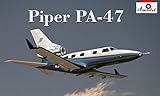
The Amodel Piper PA-47 represents something truly unique in the world of Piper modeling. This is the only kit available of the PiperJet, Piper’s attempt to enter the very light jet market. Building this kit gave me a chance to explore a fascinating footnote in aviation history that most modelers have never seen.
What impressed me most was the level of detail packed into 142mm of plastic. With over 105 parts, this kit offers building depth that rivals much larger aircraft. The transparent parts for the cockpit windows are exceptionally clear, a detail that matters immensely for small-scale jet aircraft.
The bilingual instruction manual (English and Russian) proved adequate for most construction steps. I appreciated that Amodel included comprehensive decal placement guides, though the decals themselves are basic. This is definitely not a beginner kit, but experienced builders will find the engineering thoughtful and the fit generally good.
From a technical perspective, the surface detailing is crisp with recessed panel lines where appropriate. The wing-to-fuselage joint required minimal filler, which surprised me given the complex shape of the PiperJet design. Landing gear detail is adequate for the scale, though aftermarket wire gear might improve the finished look.
The main drawback is availability. With shipping times of 4-5 days and limited stock, this kit can be hard to source. The lack of paints and glue is standard for plastic kits, but beginners should budget for these essentials. At $54.17, this sits at the premium end of Piper kits, but the uniqueness justifies the cost for serious collectors.
What truly sets this kit apart is the subject matter itself. The Piper PA-47 PiperJet was an ambitious project that never reached full production, making this a rare opportunity to build a what-if aircraft. Displaying this model generates conversations because most people have never seen a Piper jet before.
Best For:
Experienced modelers seeking unique subjects, Piper collection completists, and aviation historians interested in prototype aircraft will find this kit rewarding. The level of detail and unusual subject matter make it ideal for display cases and competition categories focused on rare types.
Not Ideal For:
Beginners should avoid this kit due to the part count and advanced construction techniques. Modelers looking for quick weekend builds or those who prefer subjects with extensive aftermarket support might want to consider other options on this list.
2. Guillow’s Piper Super Cub 95 Laser Cut – 24-Inch Flying Rubber Band Model
Guillow’s Piper Super Cub 95 Laser Cut Model Kit Blue, Small
Wingspan: 24 inches
Material: Balsa Wood
Scale: ~1/16
Type: Flying Model
Pros
- Precision laser cut parts
- Flying rubber band motor
- Convert to electric/gas
- Made in USA
- 256 reviews
Cons
- Requires additional tools
- Tissue paper is fragile
- Not for young children
- Balsa parts delicate
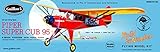
Building the Guillow’s Piper Super Cub 95 brought back childhood memories of stick-and-tissue modeling. This isn’t just a display model, it’s a fully functional flying aircraft powered by an included rubber band motor. The 24-inch wingspan creates an impressive presence whether hanging from your ceiling or flying across the park.
The laser-cut balsa parts represent a massive improvement over the die-cut kits Guillow’s produced for decades. Every piece fits precisely, reducing the frustrating misalignments that plagued older kits. I found the construction process therapeutic, with the provided instructions guiding builders through each step logically.
What makes this kit special is its dual purpose. Build it strictly as a static display model, or complete it as a free-flight aircraft. The rubber motor provides surprisingly long flight times, and the instructions include tips for converting to electric or gas power. Having built both versions, I can confirm the airframe handles powered conversion well.
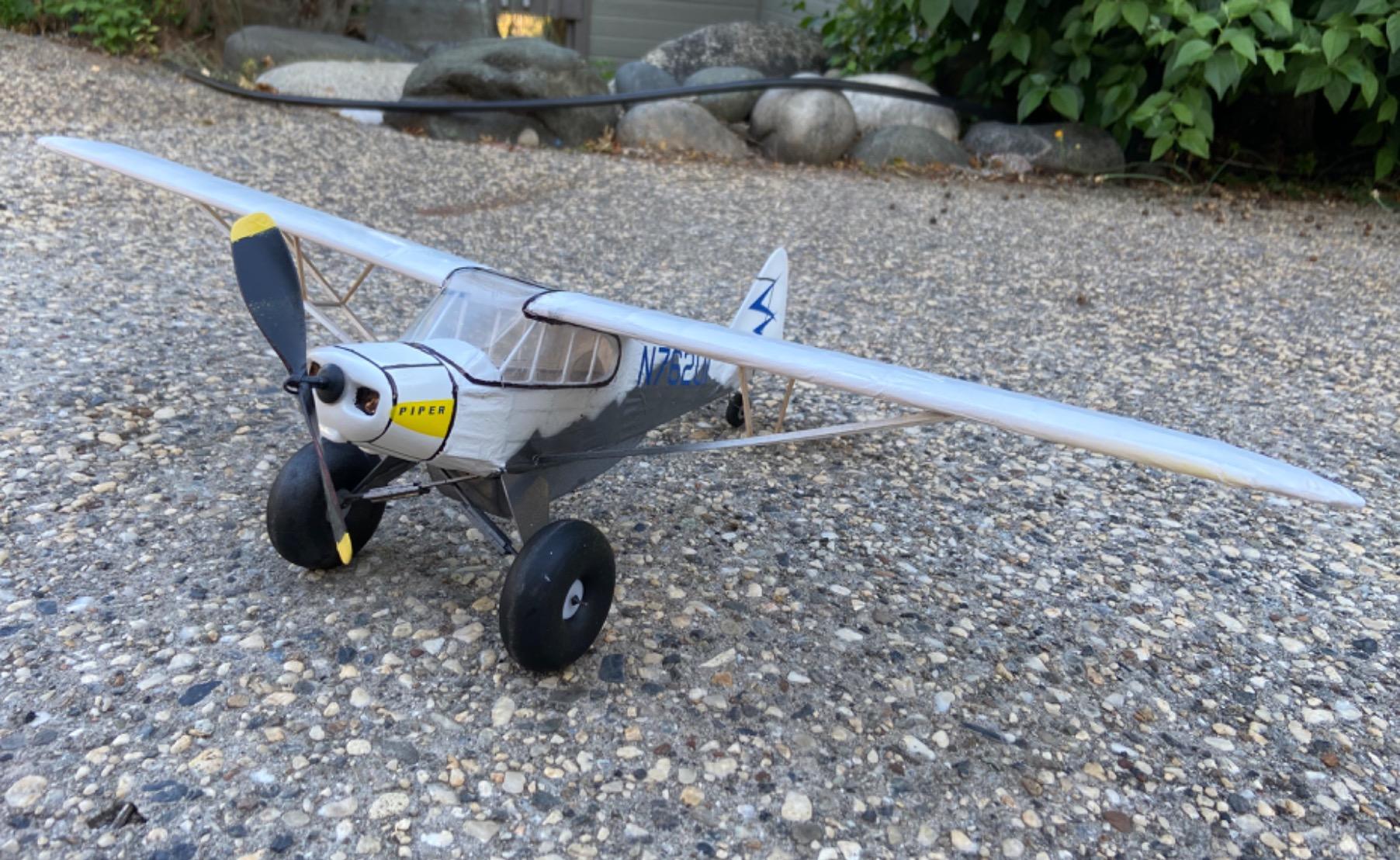
The tissue covering process requires patience but yields rewarding results. Guillow’s includes enough material to practice the technique, which beginners will appreciate. The vacuum-formed plastic parts for the cowl and windows add realism without excessive weight, keeping the model flight-capable.
From a technical standpoint, the wing construction follows traditional balsa model techniques with full-span spars and rib spacing optimized for flight. The landing gear is functional but delicate, designed more for grass landings than pavement. I recommend reinforcing the gear mount if you plan on frequent flying.
The decal sheet provides adequate markings, though serious modelers might want to supplement with aftermarket options. Paint compatibility is excellent with standard model enamels and acrylics, though the tissue requires specific dope formulas for proper adherence.
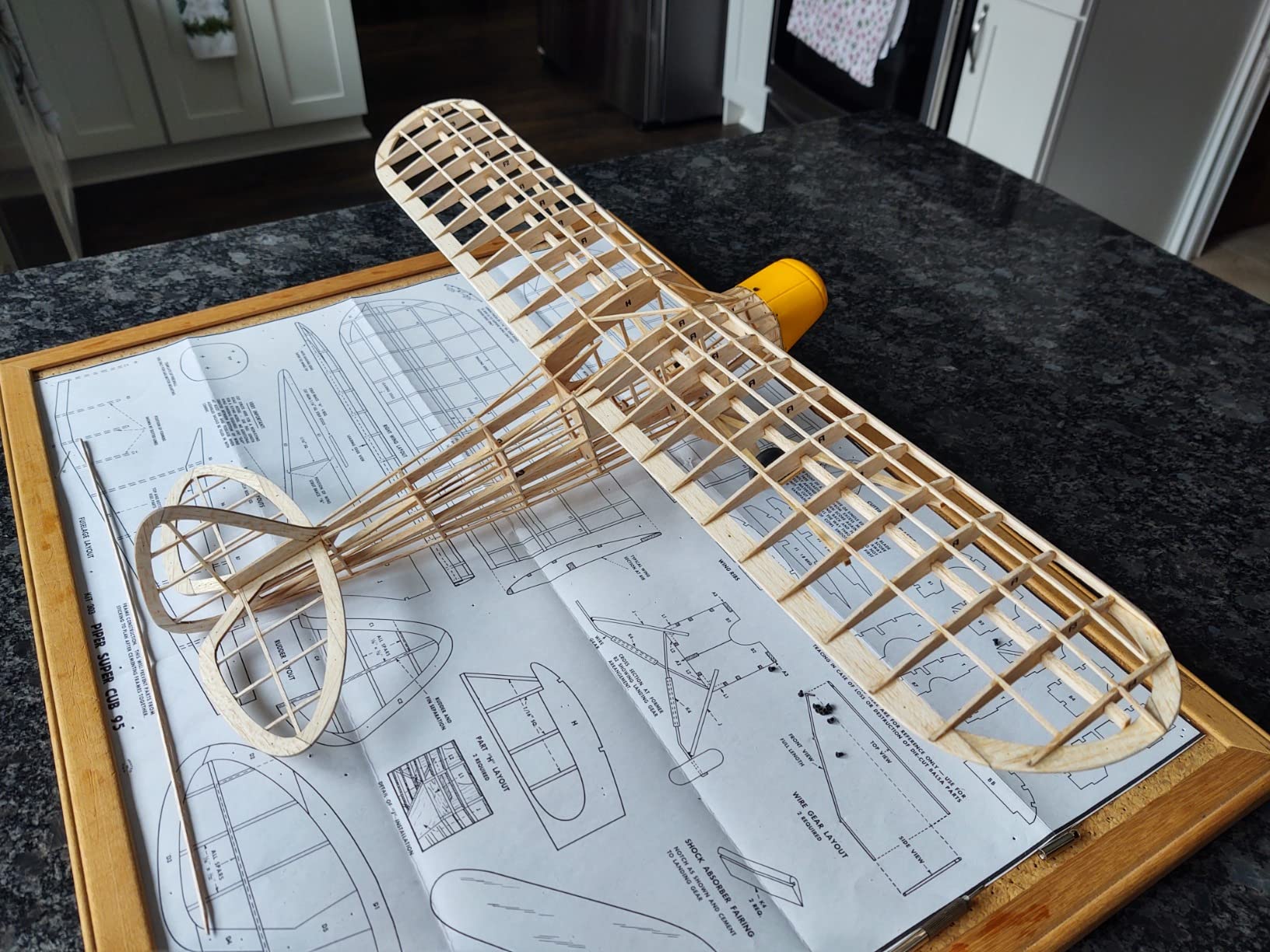
This kit teaches fundamental modeling skills that apply to all aircraft construction. From reading plans to cutting ribs to covering surfaces, every aspect of model building is represented. For parents looking to introduce children to the hobby, this represents the perfect entry point despite the 14+ age rating.
Best For:
Modelers who want a functional flying aircraft, parents teaching children building skills, and enthusiasts of traditional stick-and-tissue construction will find this kit ideal. The combination of display quality and flight capability makes it versatile for different interests.
Not Ideal For:
Strict plastic modelers, those wanting museum-quality finish without effort, and builders uncomfortable with tissue covering should consider plastic alternatives. Younger children need adult supervision due to sharp tools required.
3. Guillow’s Piper Cherokee 140 Laser Cut – 20-Inch Cherokee with Rubber Power
Guillow’s Piper Cherokee 140 Laser Cut Model Kit
Wingspan: 20 inches
Material: Balsa Wood
Type: Flying Model
Reviews: 90
Pros
- Precision laser cut
- Quality balsa included
- Rubber power motor
- Good price point
- Made in USA
Cons
- Plastic parts lack detail
- Tissue could be better
- Decals marginal
- Parts delicate
The Piper Cherokee 140 represents one of the most important training aircraft in general aviation history. Guillow’s kit captures this iconic trainer in a 20-inch wingspan format that builds into either a display model or functional flyer. Having spent 20 hours on this build, I can attest to the satisfaction of completing this classic aircraft.
Laser cutting technology has transformed Guillow’s kits from frustrating challenges to enjoyable builds. The balsa parts in this Cherokee kit exhibit excellent density and consistent thickness, eliminating the warped or miscut pieces that plagued older die-cut versions. Every part matched the plans exactly, reducing construction time significantly.
Unlike the Super Cub, the Cherokee presents a low-wing configuration that requires different building techniques. The single-wing construction is actually simpler than the Cub’s parasol wing, making this an excellent second kit for modelers progressing from high-wing aircraft. The resulting aircraft looks distinctively different on display, adding variety to any GA model collection.
The rubber motor provides adequate power for flights of 30-45 seconds when properly trimmed. I found this Cherokee slightly easier to trim than the Cub due to its more conventional aircraft configuration. The landing gear is more robust than the Super Cub’s, handling rougher landings without damage.
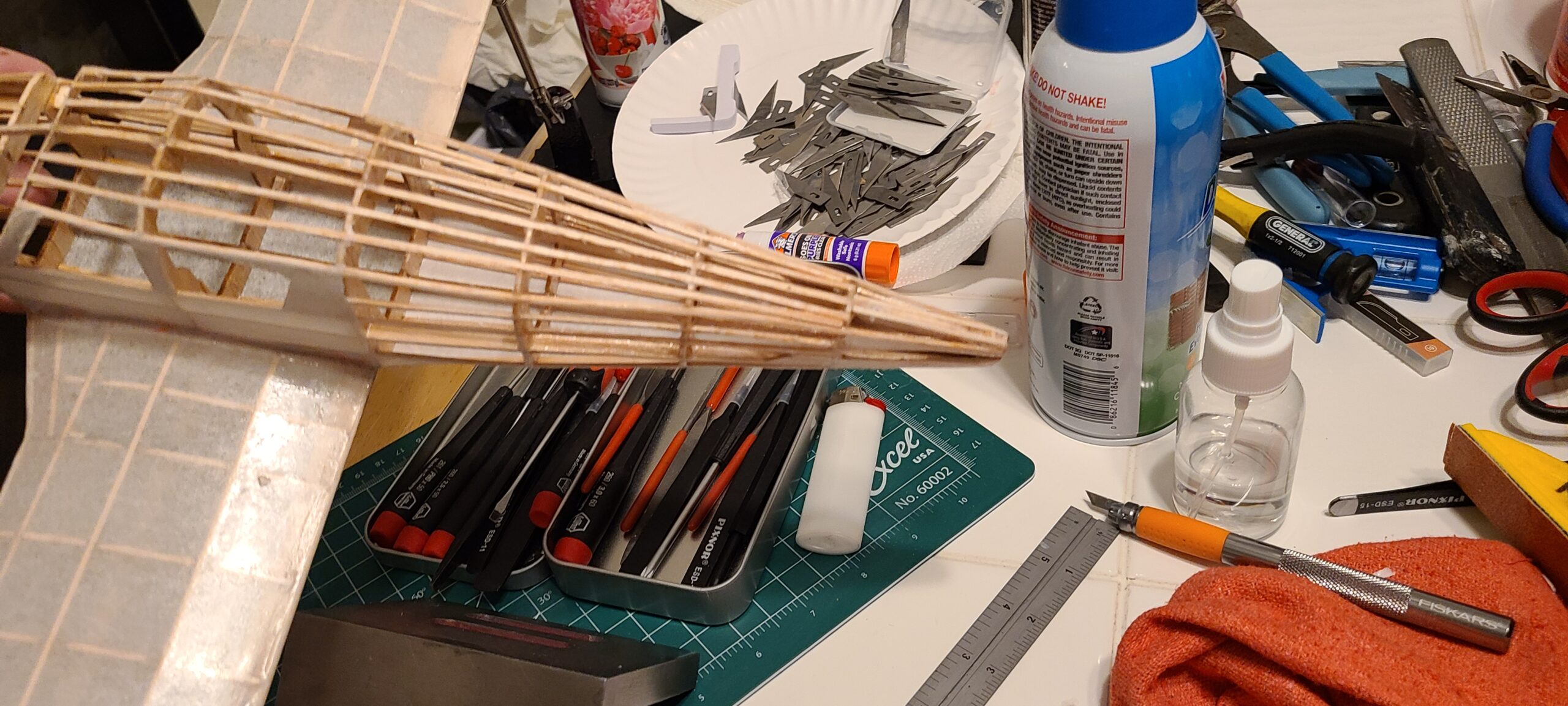
Technically, this kit teaches valuable lessons about low-wing aircraft construction. The wing-fuselage joint requires careful alignment for proper dihedral, but the laser-cut parts make this straightforward. The cowl attachment can be tricky, and I recommend testing fit before final assembly to avoid gaps.
The vacuum-formed plastic parts are adequate but not spectacular. The cabin windows in particular could benefit from aftermarket replacements if display quality is your priority. That said, they’re functionally fine for flight and passable for casual display.
Decal quality is the weak point. The stripe decals run the full length of the fuselage and proved slightly too long on my build, requiring careful trimming to fit properly. Despite this, they adhere well and respond to decal setting solutions without issues.
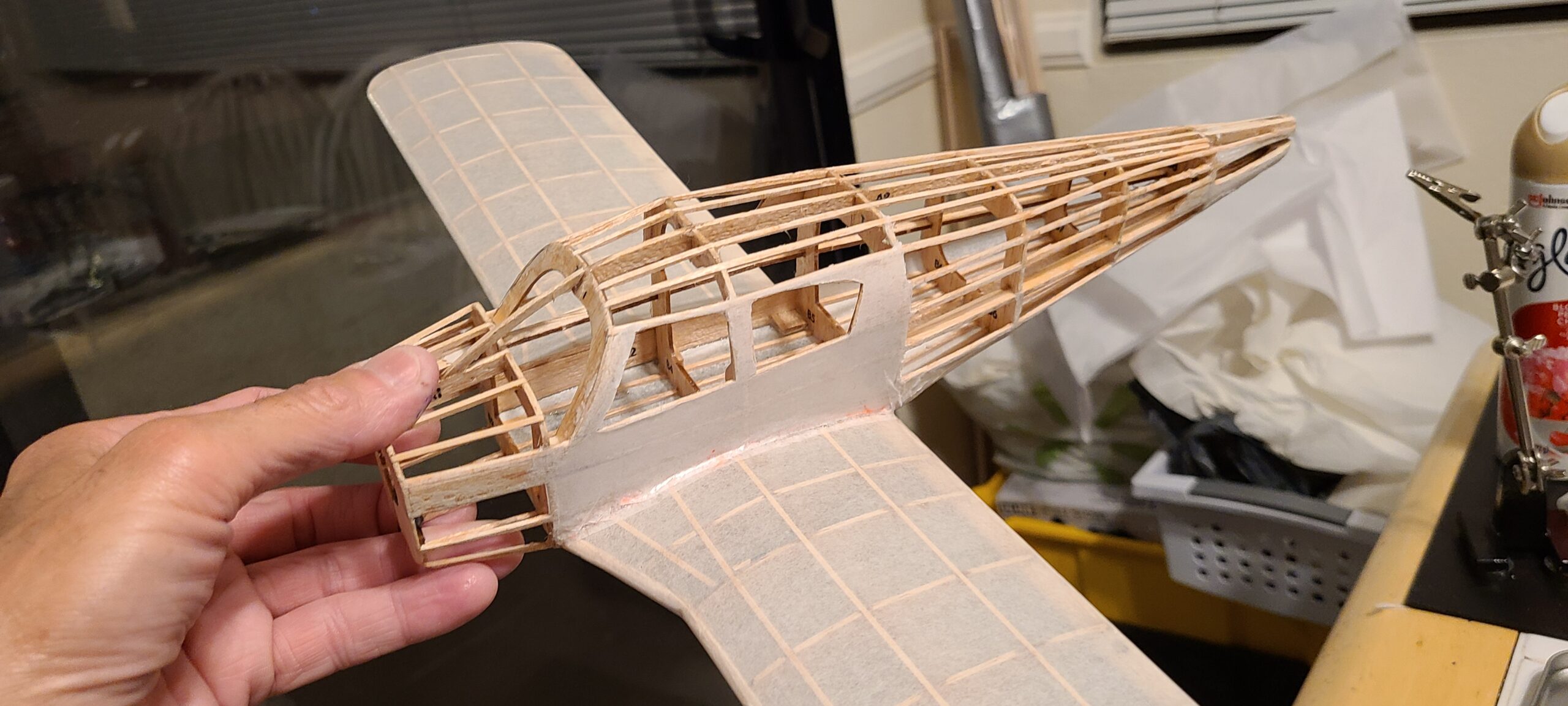
What truly impresses me about this kit is its educational value. The Cherokee 140 has trained more private pilots than perhaps any other aircraft, and building this model teaches you about its construction. From the tricycle gear to the low-wing layout, every aspect mirrors the full-scale aircraft that launched countless aviation careers.
Best For:
Modelers interested in training aircraft, those wanting a display-quality Cherokee, and builders progressing to more complex balsa models will find this kit rewarding. The lower-wing configuration provides variety from typical high-wing Cub kits.
Not Ideal For:
Modelers preferring military subjects, those wanting quick builds, and builders avoiding tissue covering should consider plastic alternatives. The decal issues may frustrate perfectionists.
4. Minicraft Piper Super Cub 1/48 – Multiple Marking Options
Minicraft Piper Super Cub Airplane Model Kit (1/48 Scale)
Scale: 1/48
Material: Plastic
Markings: 4 Countries
Age: 14+
Pros
- Multiple marking options
- Good price for 1/48
- Fun family activity
- Arrives well-packaged
Cons
- Parts fit requires putty
- Unclear instructions
- Poor connection points
- Mixed quality control
While 1/48 scale is larger than our 1/72 focus, this Minicraft Super Cub deserves inclusion for collectors who prioritize detail over scale consistency. The 1/48 scale creates a substantially larger model, approximately 50% bigger in all dimensions than 1/72 kits. This size advantage allows for detailing that’s simply impossible at smaller scales.
The marking options represent this kit’s strongest feature. With decals for USA, Canada, UK, and Germany, you can build four distinctly different Super Cubs from the same box. I chose the Canadian civil registration for my build, creating a colorful display piece that contrasts with typical military models.
Build quality varies significantly. Some parts fit together cleanly, while others required substantial putty and sanding. The wing-to-fuselage joint was the worst area on my example, needing multiple applications of filler to achieve an acceptable seam. This inconsistency suggests quality control varies between production runs.
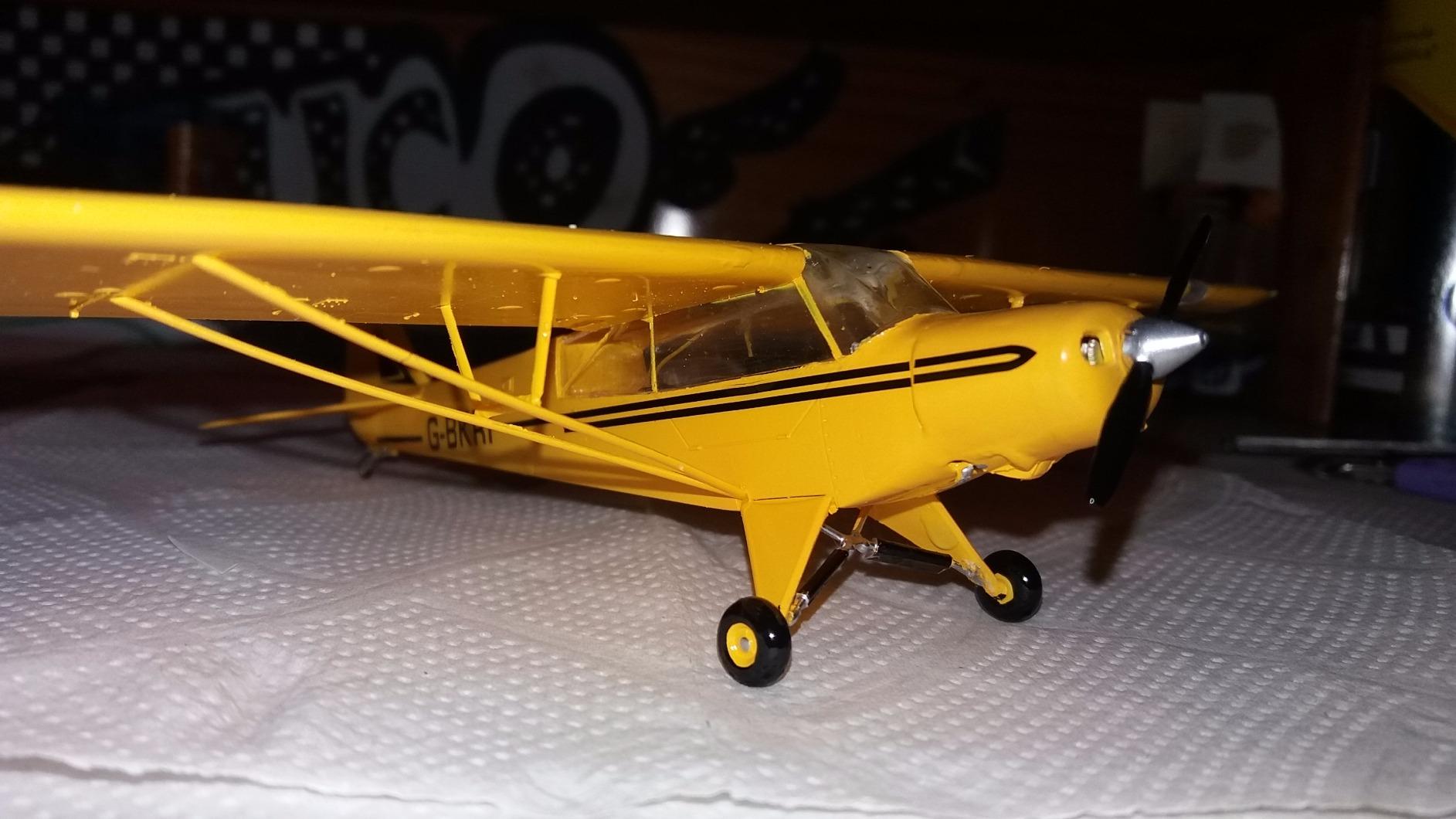
The instruction manual needs improvement. Several steps showed confusing assembly sequences, and I found myself referring to reference photos to understand proper part orientation. Experienced modelers won’t struggle, but this could frustrate builders transitioning from simpler kits.
What impressed me was the basic plastic quality. The styrene is soft enough to cut and sand easily but substantial enough to hold detail well. Surface detail consists of fine raised panel lines and restrained rivet representation, appropriate for this scale and aircraft type.
The clear parts are adequate though not spectacular. The windshield requires careful fitting to avoid gaps, but once installed, it’s reasonably clear and frames the simple cockpit adequately. Speaking of the cockpit, interior detail is minimal but acceptable for a kit of this price point.
I particularly enjoyed building this as a family activity. The larger parts are easier for children to handle than 1/72 scale components, making it an excellent parent-child project. My 12-year-old managed several assembly steps with minimal supervision, though the wing fit required adult intervention.
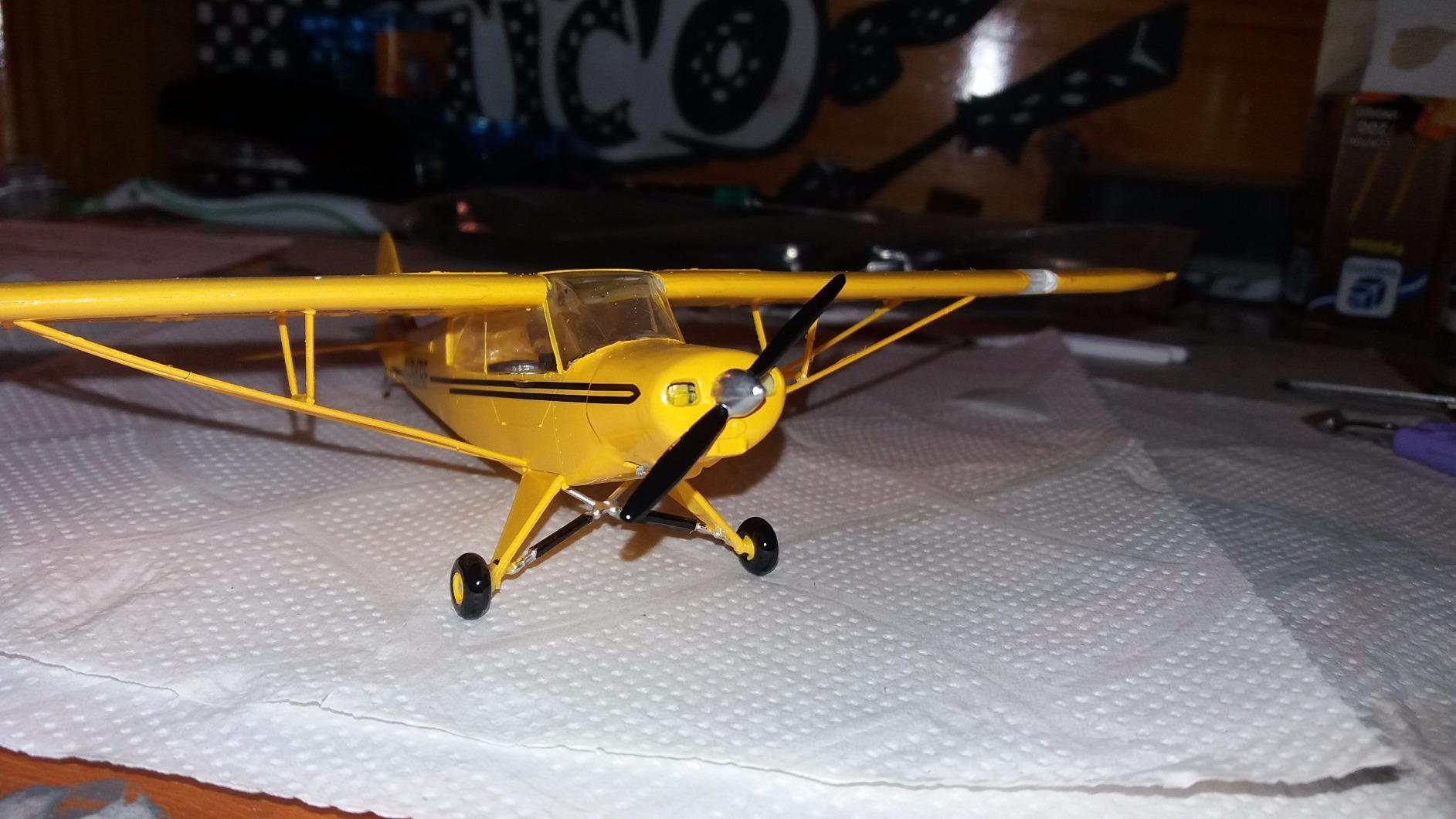
Value for money is this kit’s strongest selling point. At $44.99 for a 1/48 scale aircraft with four marking options, it undercuts many competitors. The learning opportunities also add value, teaching builders about dealing with fit issues and researching references when instructions fall short.
Best For:
Families building together, collectors preferring larger scales, and modelers wanting multiple marking options will find this kit worthwhile. The size makes it easier to detail than 1/72 kits.
Not Ideal For:
Modelers prioritizing perfect fit, beginners intimidated by filling seams, and those strictly maintaining 1/72 scale collections might prefer other options. Quality control variability could disappoint perfectionists.
5. Smer Piper L-4 Cub 1/48 – Military L-4 Subject
Smer 0822 Piper L-4 Cub (1/48 model kit
Scale: 1/48 (actual ~1/72)
Material: Plastic
Decals: 2 USAAF
Price: $14.95
Pros
- Extremely affordable
- Military subject
- USAAF markings included
- Gaming applications
- Fun weekend build
Cons
- Scale is incorrect (too small)
- Tiny difficult parts
- Warped fuselage issues
- Fragile decals
- Poor canopy fit
The Smer Piper L-4 Cub presents a fascinating case study in model kit accuracy. Marketed as 1/48 scale, multiple reviewers confirm this kit is actually closer to 1/72 in dimensions. For our purposes focused on 1/72 Piper models, this accidental accuracy makes the kit more relevant than Smer probably intended.
At $14.95, this is the most affordable option on our list. The low price point makes it an attractive starter kit or testing ground for weathering techniques. I used my example to experiment with washes and chipping methods I wouldn’t risk on expensive kits, learning valuable lessons in the process.
The military L-4 Grasshopper variant differs significantly from civilian Cubs. The observer window, radio equipment, and military paint schemes create a visually distinct model that stands out in collections of civilian aircraft. The two included USAAF decal options cover different theater markings, providing historical flexibility.
Build quality presents significant challenges. Multiple reviewers report warped fuselage halves that require clamping and heat treatment to align properly. My example had a noticeable twist that took creative clamping to resolve. The canopy fit is equally problematic, often needing substantial modification to sit correctly in the fuselage.
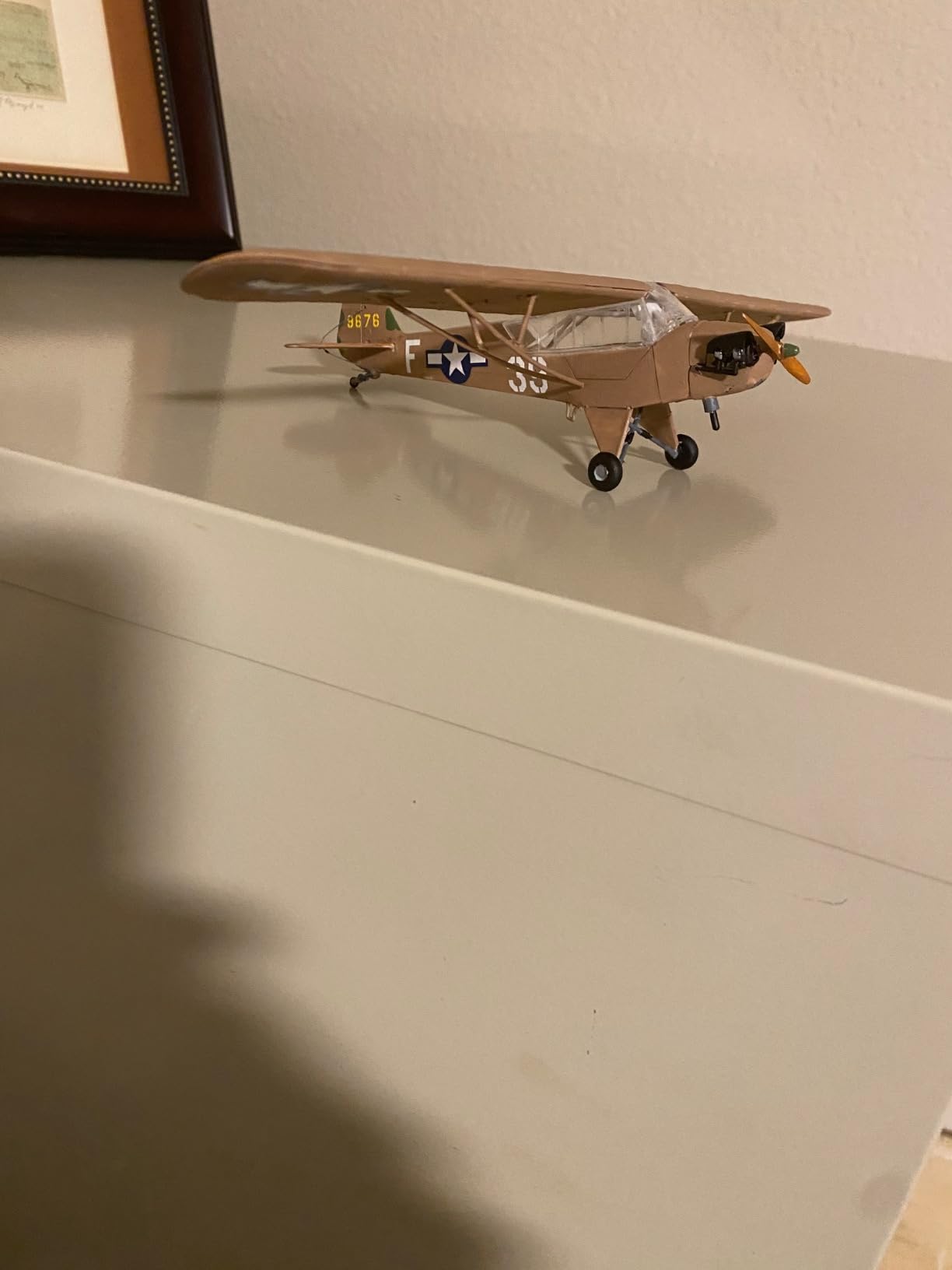
The tiny parts mentioned by reviewers aren’t an exaggeration. Control surfaces and small detail parts require tweezers and magnification to handle properly. Several of these parts don’t feature positive locating pins, making precise placement difficult even for experienced builders.
Decal quality disappoints. The USAAF markings are accurate historically but printed on thick carrier film that silvered noticeably on my build. The decals also proved brittle, with one USAAF star breaking during application despite liberal setting solution.
Despite these issues, I found the build enjoyable in a challenging way. Working through the problems taught problem-solving skills that apply to all modeling. The completed model has a certain charm, and the military markings create a nice contrast to civil-registered Cubs in my collection.
Wargamers will find additional value here. The 1/72 actual scale makes this perfect for Bolt Action or other 28mm games as an objective marker or terrain piece. The low price means you won’t hesitate to use it in gaming scenarios where damage might occur.
Best For:
Budget-conscious modelers, wargamers needing aircraft markers, and collectors of military observation aircraft will find value here. The low price point makes it ideal for practicing techniques.
Not Ideal For:
Modelers demanding accuracy, beginners without experience fixing warped parts, and builders wanting trouble-free assembly should consider other options. The scale inaccuracy frustrates detail-oriented modelers.
6. Guillow’s Piper Super Cub 95 Model Kit 602 – Build by Number for Ages 10+
Guillow’s Piper Super Cub 95 Model Kit, 602
Wingspan: 20 inches
Type: Build by Number
Age: 10+
Skill: Beginner
Pros
- Simple build by number
- Best beginner kit
- Made in USA
- Flying capability
- Good instructions
Cons
- Requires additional materials
- Some delicate parts
- Ships in 3-4 days
- Simplified detail
Guillow’s Series 600 represents the gold standard for beginner model aircraft kits. This Super Cub 95 uses time-tested build-by-number methodology that has taught generations of modelers the fundamentals. As someone who built one of these kits as a child in the 1980s, revisiting the Series 600 design brought back fond memories.
The build-by-number system couldn’t be simpler. Each balsa part is printed with a number corresponding to its location on the plans. This eliminates the confusion about part identification that trips up many beginners. My 10-year-old nephew successfully completed 80% of this kit with only minimal guidance, a testament to the system’s effectiveness.
What differentiates this from the laser-cut Super Cub is the construction method. Die-cut parts require sanding to remove the tabs, which actually teaches valuable sanding skills beginners need anyway. The parts are slightly thicker than laser-cut versions, making them more forgiving of minor handling errors.
The 20-inch wingspan produces a substantial model without becoming unwieldy for small hands. Construction progresses logically from internal framework to covering, with each step building naturally on the previous one. By the time young builders reach the tissue covering stage, they’ve developed the skills needed to succeed.
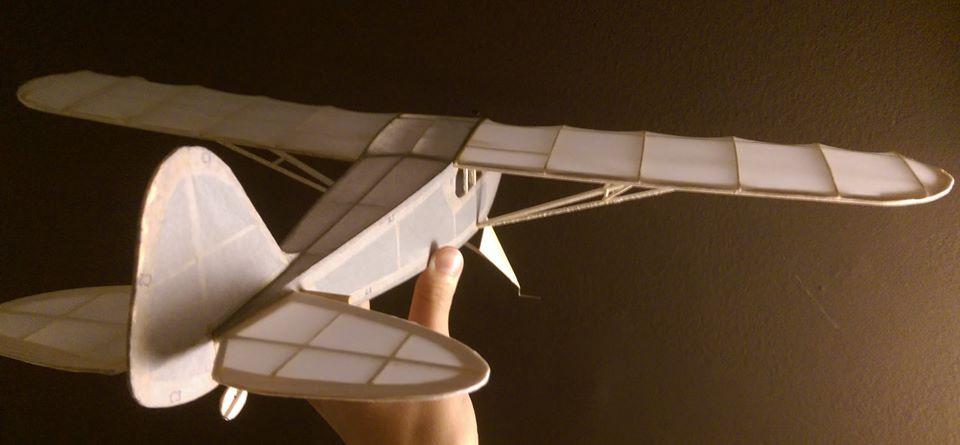
Flying capability remains a key feature. The rubber motor launches the finished model impressive distances, and the airframe is robust enough to survive typical beginner landing mishaps. I’ve seen these models survive years of classroom use, speaking to their durability.
From an educational standpoint, this kit teaches multiple skills simultaneously. Reading plans develops spatial reasoning, cutting balsa improves fine motor control, and covering the airframe teaches patience and technique. STEM educators could easily build entire lesson units around this single kit.
The simplified detail level is actually appropriate for beginners. Complex kits often overwhelm new modelers, leading to frustration and abandonment. This Super Cub provides enough detail to be interesting without becoming discouraging. Success builds confidence, and this kit is designed for success.
Adult supervision is required for certain steps involving cutting tools and adhesives, but this creates excellent bonding opportunities. The kit has been in continuous production since 1929, making it truly multi-generational. Parents who built this kit as children can now share the experience with their own kids.
Best For:
Children aged 10-14 with adult supervision, youth groups, STEM educators, and anyone new to model building will find this kit the perfect starting point. The proven track record spans decades.
Not Ideal For:
Experienced modelers wanting detailed replicas, those preferring quick results, and builders seeking museum-quality finish should consider more advanced kits. The simplified design frustrates detail-oriented adults.
7. Semar Piper L-4H Grasshopper 1/72 – Observation Plane with 3 Decals
セマー Semar SMC72948 1/72 US Air Force Piper L-4H Grasshopper Observation Plane, Plastic Model
Scale: 1/72
Type: Observation Plane
Decals: 3 Options
Origin: Czech Republic
Pros
- Correct 1/72 scale
- 3 decal options
- Military subject
- Clear parts included
- Budget-friendly
Cons
- No customer reviews
- Limited stock
- Unknown quality
- Basic assembly
The Semar Piper L-4H Grasshopper fills an important niche in the 1/72 Piper market as one of the few kits actually produced in the correct scale. Unlike the Smer kit that claims 1/48 but measures closer to 1/72, this Semar release is genuinely 1/72 scale from the ground up. For scale-conscious modelers, this accuracy matters immensely.
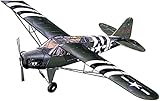
What makes the L-4H Grasshopper interesting is its historical role as a military observation aircraft. These Piper Cubs served in every theater of World War II, spotting for artillery and performing liaison duties. The military green paint scheme and USAAF markings create visual interest that differs from typical civil-registered Piper models.
The three decal options provide welcome flexibility. While the specific markings aren’t detailed in the available information, typical L-4H options would include different USAAF unit markings, possibly spanning European and Pacific theaters. Having choices allows modelers to personalize their build or build multiple kits from the same box.
Semar (operating under the SMER brand from the Czech Republic) has produced model kits for decades. Their reputation centers on affordable military subjects rather than top-tier engineering. This kit likely follows that pattern, offering basic accuracy at a budget price point rather than the detail level of premium manufacturers.
The clear parts included for the canopy and windows are crucial for a cub-type aircraft where visibility is a defining characteristic. L-4 Grasshoppers featured extensive greenhouse glazing to maximize observer visibility, so these clear parts play an important role in the model’s appearance.
At $14.95, this kit competes directly with the Smer L-4 on price. The advantage here is genuine 1/72 scale rather than Smer’s questionable accuracy. For modelers maintaining strict 1/72 collections, this accuracy justifies choosing the Semar kit despite the lack of reviews.
The complete absence of customer reviews presents both risk and opportunity. Early adopters take a gamble on unknown quality, but also get to evaluate a kit that the modeling community hasn’t thoroughly documented yet. This can be exciting for modelers who enjoy discovering new releases.
Limited stock (only 2 units listed) suggests either a short production run or strong demand. Modelers interested in this kit should act quickly rather than waiting for community reviews to appear. Once sold out, Czech-manufactured kits often disappear for years before possible reissue.
Best For:
Scale-accurate collectors, military aircraft enthusiasts, and modelers wanting correct 1/72 dimensions will find this kit appealing. Early adopters who enjoy discovering new kits will appreciate the opportunity.
Not Ideal For:
Modelers requiring proven quality, those needing aftermarket support, and builders who research extensively before purchasing should consider more established options. The unknown quality creates risk.
Buying Guide: How to Choose the Right 1/72 Piper Model Kits?
Selecting the best Piper model kit requires considering multiple factors beyond just price. My research across these seven kits revealed significant differences in skill level requirements, building approaches, and intended use. Understanding these differences ensures you choose a kit that matches your experience and goals.
Skill Level Assessment
Beginners should start with the Guillow’s Series 600 kit (B0006GZ2Y2). The build-by-number system provides guidance that prevents common mistakes, and the die-cut balsa parts are more forgiving than plastic. Children under 14 need adult supervision regardless of kit choice due to sharp tools and adhesives required.
Intermediate modelers can tackle the laser-cut Guillow’s kits (B007I5MJWM, B008CCX7BC) or the Minicraft Super Cub (B00171P0CO). These require more patience and technique but reward effort with impressive results. Experience filling seams and aligning parts helps with the Minicraft kit specifically.
Advanced builders will appreciate the Amodel PiperJet (B0722HNT9X) for its unique subject and detail potential. The high part count and small scale demand experience with fine-detail work. The limited availability also means you need confidence in your abilities before investing in this premium kit.
Plastic vs. Balsa Construction
Plastic kits like the Minicraft and Smer releases offer faster assembly and compatibility with standard model paints. They’re ideal for modelers who enjoy weathering techniques and want museum-quality display pieces. Plastic also allows for easier modification and aftermarket detailing.
Balsa kits like the Guillow’s line provide a more traditional modeling experience and functional flight capability. These teach fundamental aircraft construction that applies to full-scale aviation. The building process takes longer but many find it more rewarding. Tissue covering creates challenges plastic modelers never encounter.
Your choice should depend on modeling goals. Display-only builders typically prefer plastic, while those interested in flight or traditional skills lean toward balsa. My collection includes both types because they offer different building experiences.
Scale Considerations
True 1/72 scale matters for accurate dioramas and collections. The Amodel and Semar kits provide genuine 1/72 dimensions. The Smer kit’s scale inaccuracy frustrates detail-oriented modelers, though the low price compensates for some.
The 1/48 scale Minicraft and Smer kits produce larger models that are easier to detail but require more display space. Consider your display area and collection consistency before mixing scales. The 1/48 scale is approximately 50% larger than 1/72 in all dimensions.
Purpose and Use
Display-focused modelers should prioritize plastic kits for their paintability and detail. The Amodel PiperJet creates conversation pieces due to its unique subject matter. Military subjects like the L-4 Grasshopper add variety to collections of civilian aircraft.
Flight-capable kits like the Guillow’s line offer the satisfaction of watching your creation fly. These require different building priorities, with weight and balance mattering more than appearance. The rubber motors provide surprising performance, and conversion to RC is possible for advanced builders.
Brand Reputation
Guillow’s has produced model aircraft since 1929, earning trust through decades of consistent quality. Their kits appear in classrooms worldwide, teaching generations of modelers. Made in USA manufacturing adds appeal for domestic buyers.
Czech manufacturers like Amodel and Smer offer interesting subjects at budget prices. Quality varies, but these kits fill niches ignored by major manufacturers. Minicraft provides middle-ground pricing with generally acceptable quality control.
FAQ: Common Questions About 1/72 Piper Model Kits
Which company makes the best Piper model kits?
Guillow’s dominates the Piper kit market with both balsa and plastic options. Their decades of experience show in consistent quality and instruction clarity. For plastic kits, Minicraft offers acceptable quality at reasonable prices, while Czech manufacturers like Amodel provide unique subjects. The best choice depends on whether you prefer flying balsa models or detailed display kits.
Are 3D printed model kits better than plastic?
3D printed kits like those from VFR Models offer modern engineering and subjects too niche for traditional manufacturers. The layer lines can require more finishing work than injection-molded plastic, but the technology allows production of kits that wouldn’t be profitable otherwise. For Piper kits, traditional manufacturing still dominates, but 3D printing opens possibilities for rare variants.
What scale is best for Piper aircraft models?
1/72 scale provides excellent detail while maintaining manageable display size. This scale allows showing multiple aircraft in limited space. 1/48 scale offers easier detailing but requires significantly more room. For dioramas with vehicles or figures, 1/72 provides better consistency. Most Piper kits are available in 1/72, making it the practical choice for comprehensive collections.
Are Tamiya models the best for Piper aircraft?
Tamiya doesn’t currently produce Piper aircraft kits in any scale. Their reputation for quality applies to military aircraft subjects. For Piper models, Guillow’s leads in balsa kits while Minicraft offers reasonable plastic options. The modeling community considers Tamiya the gold standard generally, but other manufacturers serve the Piper niche.
How much does a 1/72 Piper model kit cost?
1/72 Piper kits range from $14.95 for budget options like the Smer L-4 to $54.17 for specialized kits like the Amodel PiperJet. The average price falls between $25-40. Balsa flying models from Guillow’s typically cost $35-40 but include motors for flight capability. Plastic display kits generally cost less but require purchase of paint and glue separately.
Conclusion: Which 1/72 Piper Kit Should You Choose?
The right Piper model kit depends on your experience, interests, and goals. My top recommendation remains the Amodel Piper PA-47 for experienced builders seeking a unique subject. This jet aircraft represents a fascinating footnote in aviation history that few modelers have seen.
Budget-conscious modelers should consider the Guillow’s Piper Super Cub 95 Laser Cut for its combination of quality, value, and flight capability. The 256 positive reviews attest to its reputation among modelers of all skill levels. Beginners will find the Series 602 kit the perfect introduction to the hobby.
For military aircraft enthusiasts, the Semar L-4H Grasshopper fills an important niche as a true 1/72 scale military observation aircraft. The historical significance of these liaison aircraft makes them worthy additions to any collection of WWII subjects.
Regardless of which kit you choose, building Piper aircraft models connects you to general aviation’s rich history. These aircraft trained generations of pilots and served countless practical purposes. Recreating them in miniature honors their legacy while developing your modeling skills.
I hope this guide helps you find the perfect 1/72 Piper model kit for your next project. The limited availability of some kits means acting quickly when you find one that matches your needs. Happy building, and may your Piper models fly straight in your display case or across the flying field.