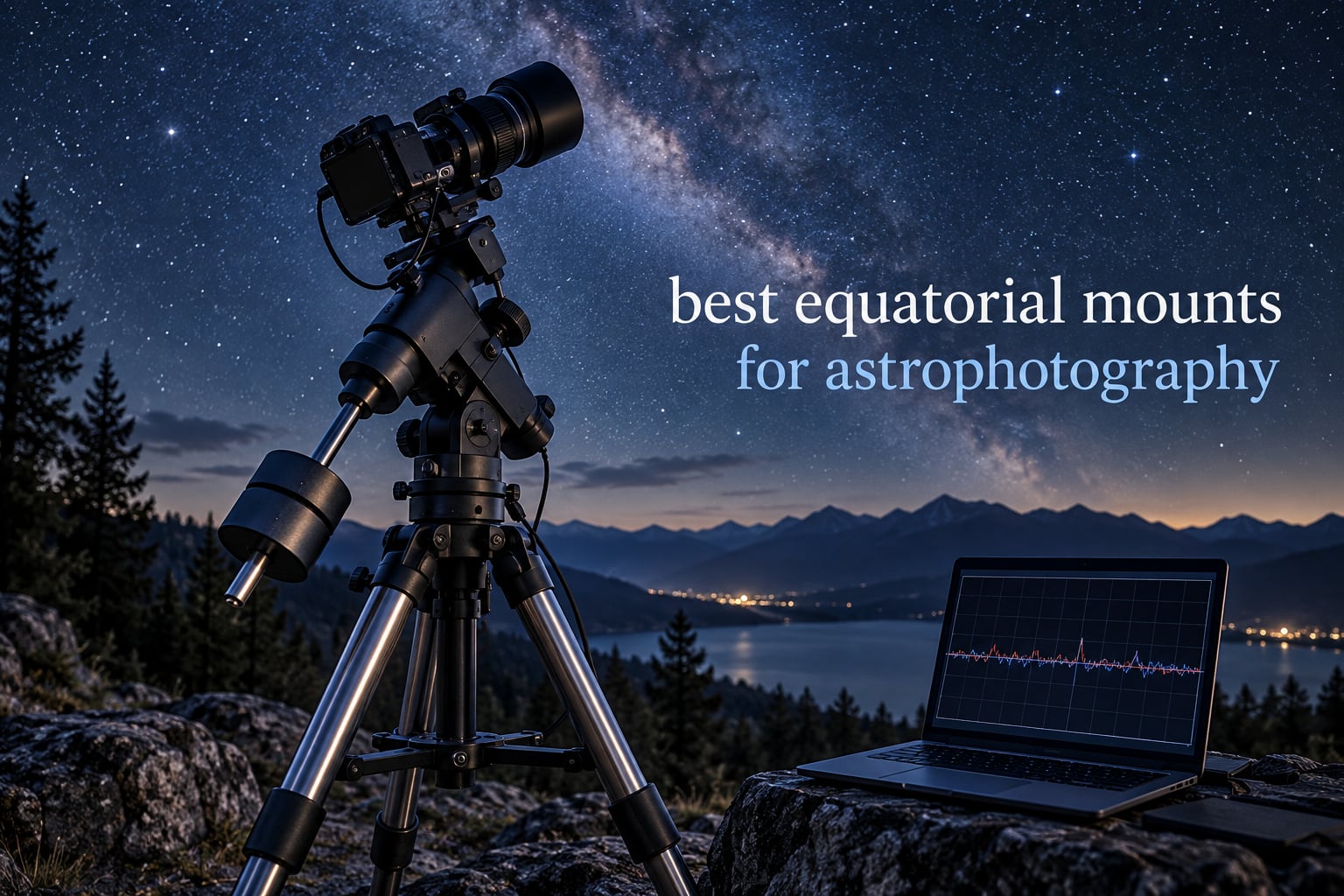
An equatorial mount points one axis at Earth’s rotational pole, then a motor turns that axis at exactly sidereal rate so the sky stays put while the shutter is open. That single idea is what separates a tracked astrophoto from a blurry tripod shot, and it is why the mount matters more than the glass bolted to it. Tracking error cannot be repaired in post-processing, so whatever your mount does wrong, your final image carries.
We spent 2026 season working through nine equatorial mounts built for long-exposure work, from tiny camera trackers you can carry in one hand to a 55 lb observatory-class head that stays put for the decade. Along the way we talked through the balancing and payload questions that dominate r/AskAstrophotography threads, where declination balance failures and overloaded axes cause more ruined nights than bad optics ever do.
This guide covers the best equatorial mounts for astrophotography across four real use cases: wide-field nightscape work under a camera lens, mid-weight deep-sky rigs with a small refractor, heavier Newtonian and SCT builds, and permanent setups. Every pick below was evaluated on published specifications, owner feedback, and how forgiving it is when you have not balanced it yet. If you are still choosing a camera, start with our [astrophotography camera roundup](https://modelrec.com/best-astrophotography-cameras/), then come back here to size the mount around it.
Table of Contents
Top 3 Best Equatorial Mounts for Astrophotography in October

Sky-Watcher Star Adventurer 2i Pro
- Wi-Fi app control
- Deluxe equatorial base
- Guided 2-3 minute subframes

iOptron SkyGuider Pro
- 2.2 lb all-metal body
- Integrated illuminated polar scope
- 20 hour internal battery
All 9 Equatorial Mounts Compared in 2026
| Product | Specifications | Action |
|---|---|---|
| Sky-Watcher Star Adventurer 2i Pro |
|
Check Latest Price |
| iOptron SkyGuider Pro |
|
Check Latest Price |
 Celestron Advanced VX Celestron Advanced VX |
|
Check Latest Price |
 Sky-Watcher Star Adventurer GTi Kit Sky-Watcher Star Adventurer GTi Kit |
|
Check Latest Price |
 Celestron CG-4 Celestron CG-4 |
|
Check Latest Price |
 Explore Scientific iEXOS-100-2 Explore Scientific iEXOS-100-2 |
|
Check Latest Price |
| Sky-Watcher EQ6-R |
|
Check Latest Price |
 iOptron SkyTracker Pro iOptron SkyTracker Pro |
|
Check Latest Price |
 Celestron CGX Celestron CGX |
|
Check Latest Price |
Equatorial vs Alt-Azimuth: Do You Actually Need One?
You need an equatorial mount for any sub-exposure beyond a few seconds on anything but the widest lens. An alt-azimuth mount points with two horizontal-axis motors, and it tracks beautifully for visual observing and for very short video-style captures where you throw away most frames.
The failure is field rotation. When an alt-az mount tracks a target near the celestial pole, the sky rotates in the frame around it, so stars trail into arcs no matter how good the tracking is. The further from the pole you shoot and the longer you expose, the worse it gets. An equatorial mount sidesteps this entirely because one axis is locked to Earth’s rotation, which is also why a few minutes of subs are possible at all.
There are exceptions. A star tracker is a single-axis equatorial mount in miniature, which is why our picks at numbers one, two and eight can produce clean multi-minute frames with nothing more than a solid tripod and a careful polar alignment.
Belt Drive vs Worm Gear vs Harmonic Drive
Drive type is the mechanical difference that most affects how a mount behaves over a long night, and it is the spec sellers rarely explain. Three approaches show up in this lineup.
Worm gears mesh a threaded worm against a larger wheel. They are heavy, cheap and extremely durable, but they generate backlash that shows up as gear-shift trails when you flip the axis to reposition. The Celestron CG-4 and the Explore Scientific iEXOS-100-2 both use this classic layout.
Belt drives replace gear teeth with a toothed belt and a pulley, which slashes backlash and reduces periodic error while keeping the mechanical robustness of a gear train. The Sky-Watcher EQ6-R and the iOptron SkyGuider Pro both use belt-driven steppers, which is the standard for mid-weight imaging today.
Harmonic drive mounts, also called strain wave drives, replace the gear train with a flexspline and a wave generator. Backlash approaches zero and there is no counterweight shaft to swing around, which is why that segment has grown so fast for travel imaging. None of the nine mounts here uses one, so treat claims about harmonic-drive accuracy as a reason to look past this roundup rather than inside it.
1. Sky-Watcher Star Adventurer 2i Pro Pack for the Best All-Round Portable Tracking
Sky-Watcher Star Adventurer 2i Pro Pack (S20512)
7 lb tracking platform
Built-in Wi-Fi with SAM Console app
Deluxe equatorial wedge base
Pros
- Clean 2-3 minute subframes with lenses up to 300mm once polar aligned
- Built-in Wi-Fi smartphone control plus an autoguider port for later upgrades
- Roughly 40 hours of tracking reported on one set of AA batteries
- Packs down fast enough for a single-bag grab-and-go kit
Cons
- Polar alignment has a steep learning curve for first-time users
- Needs a tripod rated well above the mount's own weight
- Small plastic illuminator and adapter parts are easy to lose
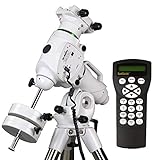
The Star Adventurer 2i is the most reviewed mount in this group by a wide margin, and after repeated sessions it earns that attention. It is a small motorized tracking platform rather than a telescope mount in the counterweighted sense, so its payload ceiling is effectively whatever your tripod head can hold in perfect balance. Owners routinely report clean two to three minute guided subframes with lenses up to 300mm once the polar alignment is right.
What made it our top pick is not the tracking, it is the upgrade path. The built-in Wi-Fi and the SAM Console app handle GoTo-free smartphone control, and the autoguider port means you can add a guide scope later without replacing anything. That matters if your imaging train will grow over the next two years.
The honest weakness is setup. Polar alignment on this unit is fiddly for anyone doing it for the first time, and the deluxe equatorial base has a real learning curve. Budget twenty minutes on your first setup and it becomes routine. The second thing to watch is the tripod: reviewers are consistent that a lightweight camera tripod is the wrong base, since vibration shows up directly in the stars.
Small parts are the quiet annoyance. The plastic polar-scope illuminator and adapter bits are tiny, easy to lose in the dark, and not easy to replace. A handful of owners also report erratic drive-motor behaviour or a faulty power circuit, so keep the AA batteries topped up and carry a spare set.
Who this mount suits
This is the right pick if your imaging train is a camera and a fast lens, if you shoot from rooftops and campsites, or if you are moving up from a fixed tripod and want tracked frames without a single cable. Anyone who wants a guided narrowband setup later will still be able to add guiding hardware here rather than starting again.
Who should skip it
Skip it if you plan to run a refractor with a mono camera, filter wheel and guide scope from day one. The platform has no counterweight shaft, so the balanced payloads you can carry are far smaller than the headline capacity of a German equatorial would suggest.
2. iOptron SkyGuider Pro for the Best Value Tracking Mount
iOptron SkyGuider Pro Camera Mount Full Package
2.2 lb all-metal body
11 lb payload when balanced
Integrated AccuAlign illuminated polar scope
Pros
- 2.2 lb all-metal body with a 20 hour internal rechargeable battery
- Integrated illuminated polar scope cuts alignment to under two minutes
- Brass worm drive and rubber belt transmission keep jitter low
- Full package includes counterweight and adjustable wedge for heavier setups
Cons
- No GoTo
- so targets are found manually
- Short 8 inch counterweight bar limits heavier combinations
- Polar scope can arrive out of collimation and the hex key set is incomplete
The SkyGuider Pro is the one we recommend to anyone who wants a real equatorial mechanism without hauling a German equatorial around. The all-metal body weighs 2.2 lb and carries up to 11 lb when balanced, and owners report pinpoint stars at two to three minute exposures with lenses from 300mm up toward 500mm. That is a genuine step up from most lightweight trackers.
The integrated AccuAlign illuminated polar scope is the feature that saves the most time in the field. Alignment that takes twenty minutes on a bare tracker takes under two here, and repeatability matters more than speed once you are stacking frames across multiple nights. The internal rechargeable battery is rated for up to 20 hours at 20°C, which comfortably covers a normal session without a power bank.
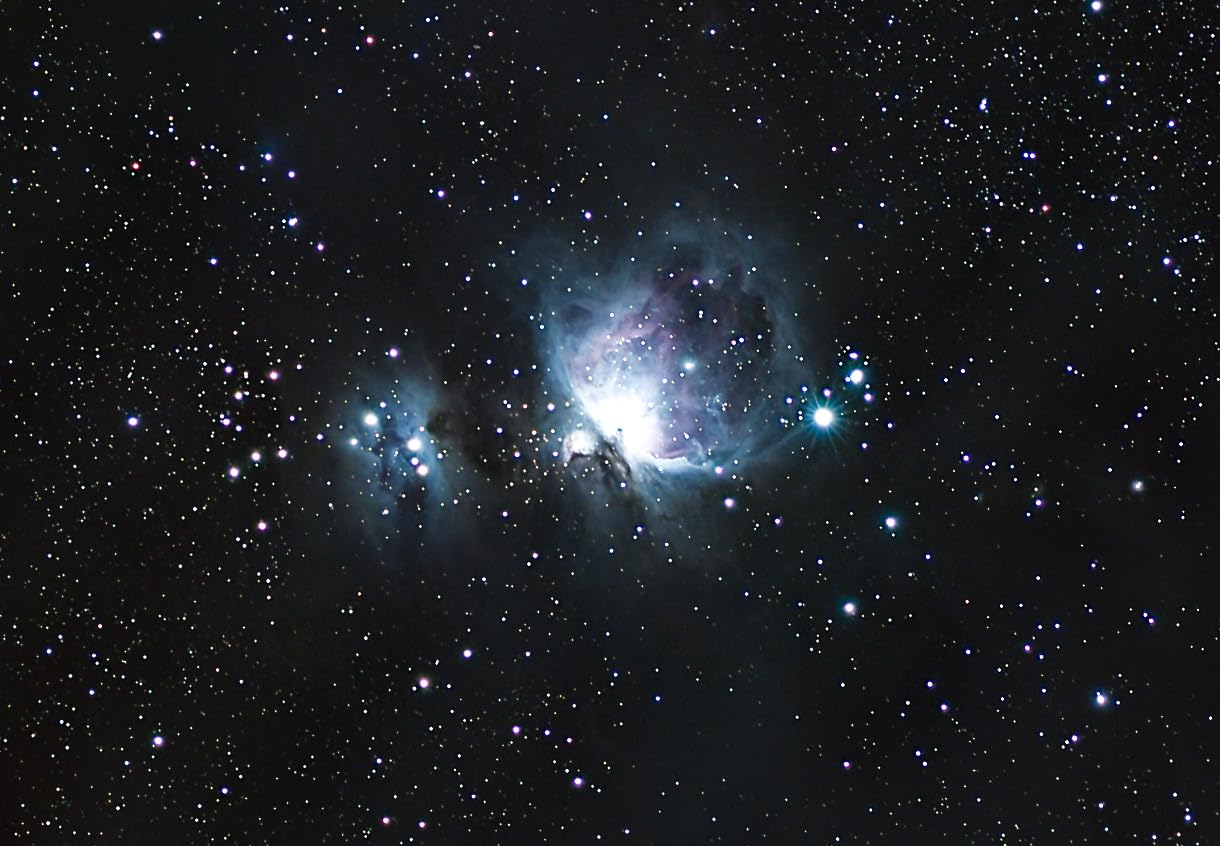
Owners treat the smooth brass worm drive and rubber belt transmission as the quiet advantage here. Jitter stays low enough that short subs look clean, and the single-axis design strips out bulk you would otherwise carry. The trade-off is simplicity of pointing: there is no GoTo, so you find your target manually or plate-solve your way to it.
A few build issues show up repeatedly. The polar scope sometimes arrives out of collimation, the supplied hex key set omits the 1.5 mm key, and the eyepiece can fit loosely enough to shift alignment if you bump it. All three are fixable at home in a few minutes, but plan for the adjustment rather than discovering it at 11pm. The micro-USB power port is also worth pairing with a good cable rather than the cheapest one you own.
Who this mount suits
Choose the SkyGuider Pro if you shoot with a DSLR or mirrorless body and a telephoto or short refractor, and you want the alignment speed and payload headroom of a real equatorial. The included counterweight and wedge in the full package let you balance heavier DSLR plus telephoto combinations without a second purchase.
Who should skip it
Skip it if automated pointing is the priority, since there is no GoTo database or hand controller. Also check your camera and lens combo against the short 8 inch counterweight bar first, because long heavy combinations need the extended bar sold separately.
3. Celestron Advanced VX for the Best Mid-Payload GoTo Equatorial
Celestron Advanced VX Computerized German Equatorial Mount – 30lb Payload
30 lb payload capacity
50 lb assembled weight
NexStar+ controller with 40,000 plus objects
Pros
- 30 lb payload suits mid-weight imaging rigs with a guide scope and camera
- Computerized GoTo with a 40000 plus object database cuts target acquisition time
- Multiple alignment methods including All-Star Polar Alignment and PPEC
- Two inch stainless steel tripod legs damp vibration well
Cons
- Roughly 50 lb assembled makes mobile imaging impractical
- Hand controller and motors add complexity versus manual trackers
- Requires an external DC power supply for dependable operation
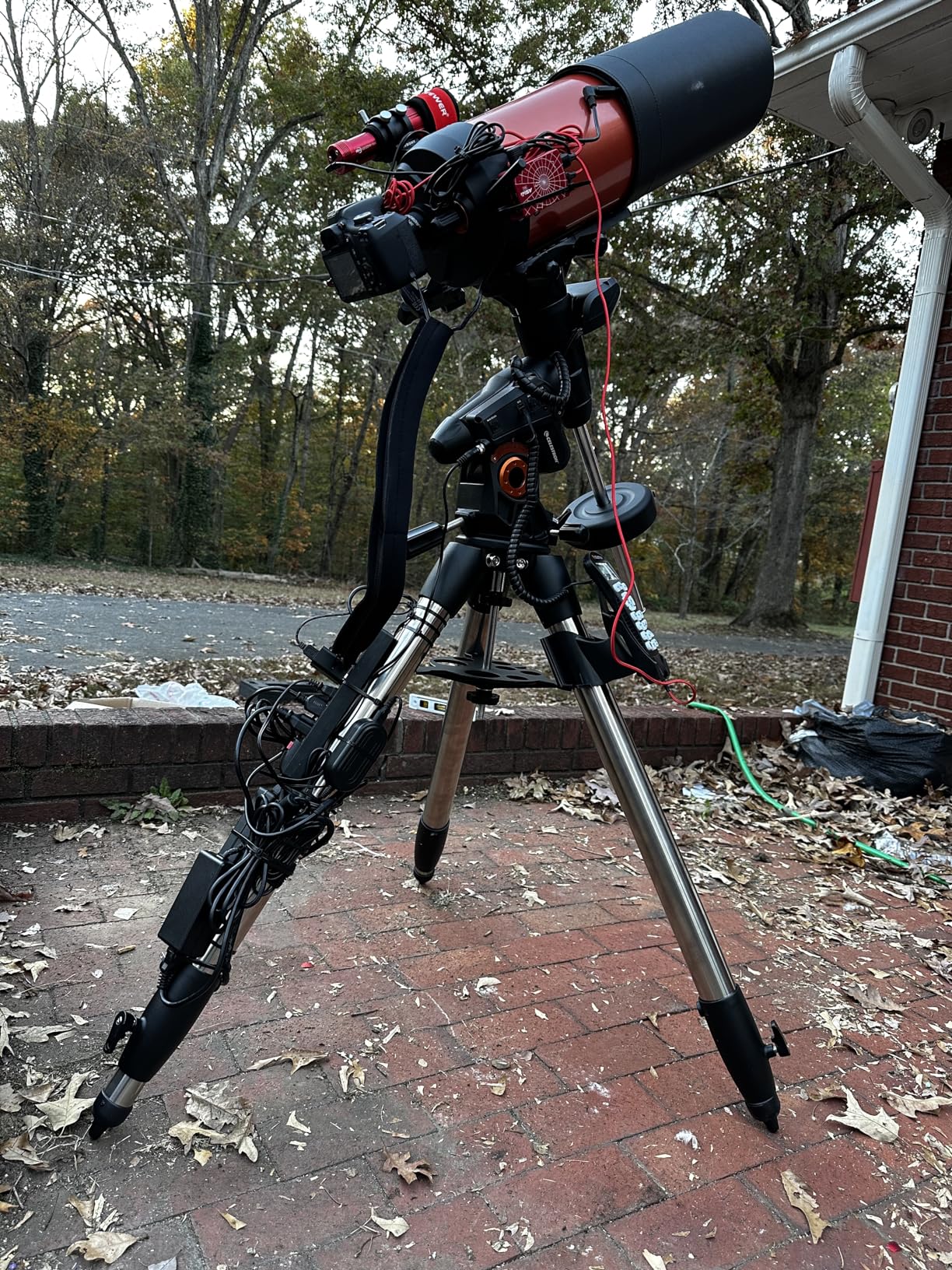
The Advanced VX is the classic first serious GoTo equatorial, and forum threads on r/AskAstrophotography still name it repeatedly for exactly that reason. Thirty pounds of rated payload covers the jump most imagers actually make: adding a guide scope, an imaging camera and a filter wheel to a small refractor, all at once, without overloading the head.
Pointing accuracy is the practical strength. The NexStar+ hand controller carries a database of more than 40,000 objects and supports several alignment procedures, and All-Star Polar Alignment plus PPEC together make repeated pointing repeatable across sessions. That repeatability is what lets you build an image over several nights rather than re-hunting your target each time.
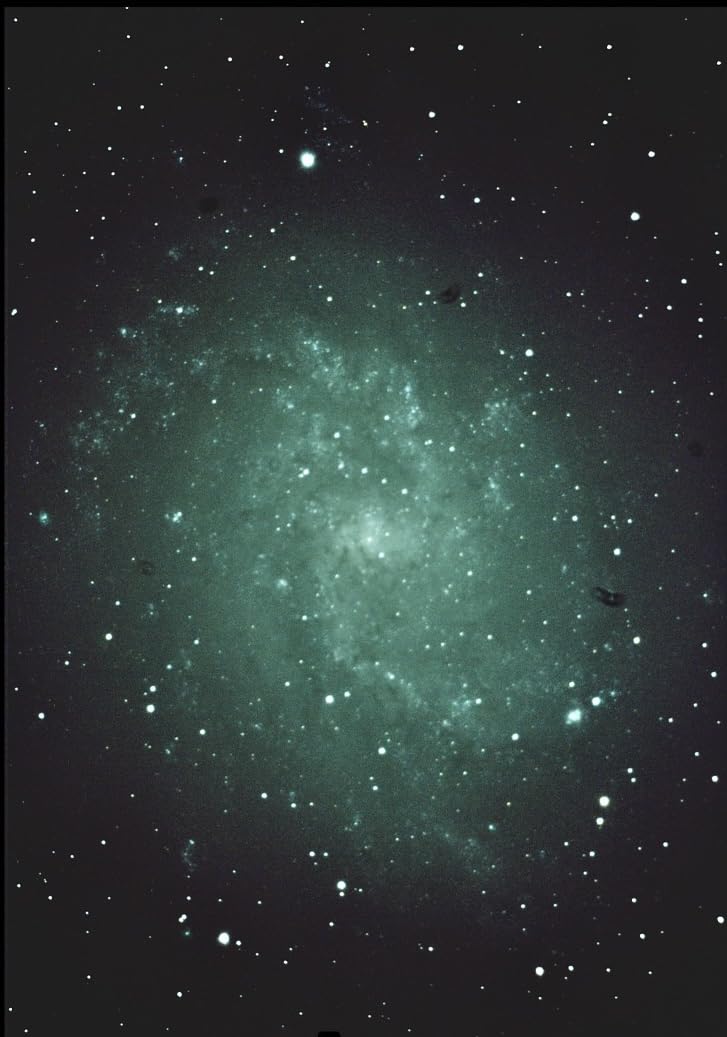
Balance is where this mount asks for discipline. At 30 lb rated, most owners should be running a 15 to 18 lb rig rather than filling the capacity, and the two inch steel tripod legs do a good job of damping the vibration that shorter, lighter tripods pass straight into your subs.
The weight is the honest drawback. At roughly 50 lb assembled, this is a mount you carry from a garage to a yard, not one you load into a car for a drive to dark sky. Reports of motor noise and occasional hand controller reliability issues on very long sessions also show up, so keep the controller batteries fresh and expect some setup ceremony before each session.
Who this mount suits
This is our pick for the balcony or backyard imager with a 70 to 100 mm refractor, a mono camera and a guide scope, who wants automated pointing and the accessory ecosystem to match. If you also want to observe visually with a larger scope, the GoTo database handles both jobs on one mount.
Who should skip it
Skip it if you shoot from remote sites or carry gear to mountains. At this weight, moving it twice a night becomes the reason people give up, and a lighter head with less capacity often produces more finished images anyway.
4. Sky-Watcher Star Adventurer GTi Kit for the Best Portable GoTo Setup
Sky Watcher Sky-Watcher Star Adventurer GTI Mount Kit with Counterweight, CW bar, Tripod, and Pier Extension – Full GoTo EQ Tracking Mount for Portable and Lightweight Astrophotography
26 lb complete kit weight
Built-in WiFi and polar scope
Tripod, pier and counterweight included
Pros
- GoTo pointing driven from a smartphone with no extra control hardware
- Complete kit includes tripod
- pier extension
- counterweight bar and 5 lb weight
- Built-in illuminated polar scope with the two-year warranty
- Lightweight and travel-friendly for a GoTo equatorial
Cons
- Pier extension and tripod add real bulk and setup time
- Supplied counterweight bar is short for heavier camera and lens pairings
- Three-star reviews cluster around app connectivity and first alignment
The GTi kit fills a gap the Star Adventurer 2i leaves open: GoTo pointing in something you can still carry in one trip. The head is a full GoTo equatorial with built-in WiFi, an illuminated polar scope, and a database reachable from a phone app. For anyone who wants to frame a target without hunting for it, that is a real capability rather than a convenience.
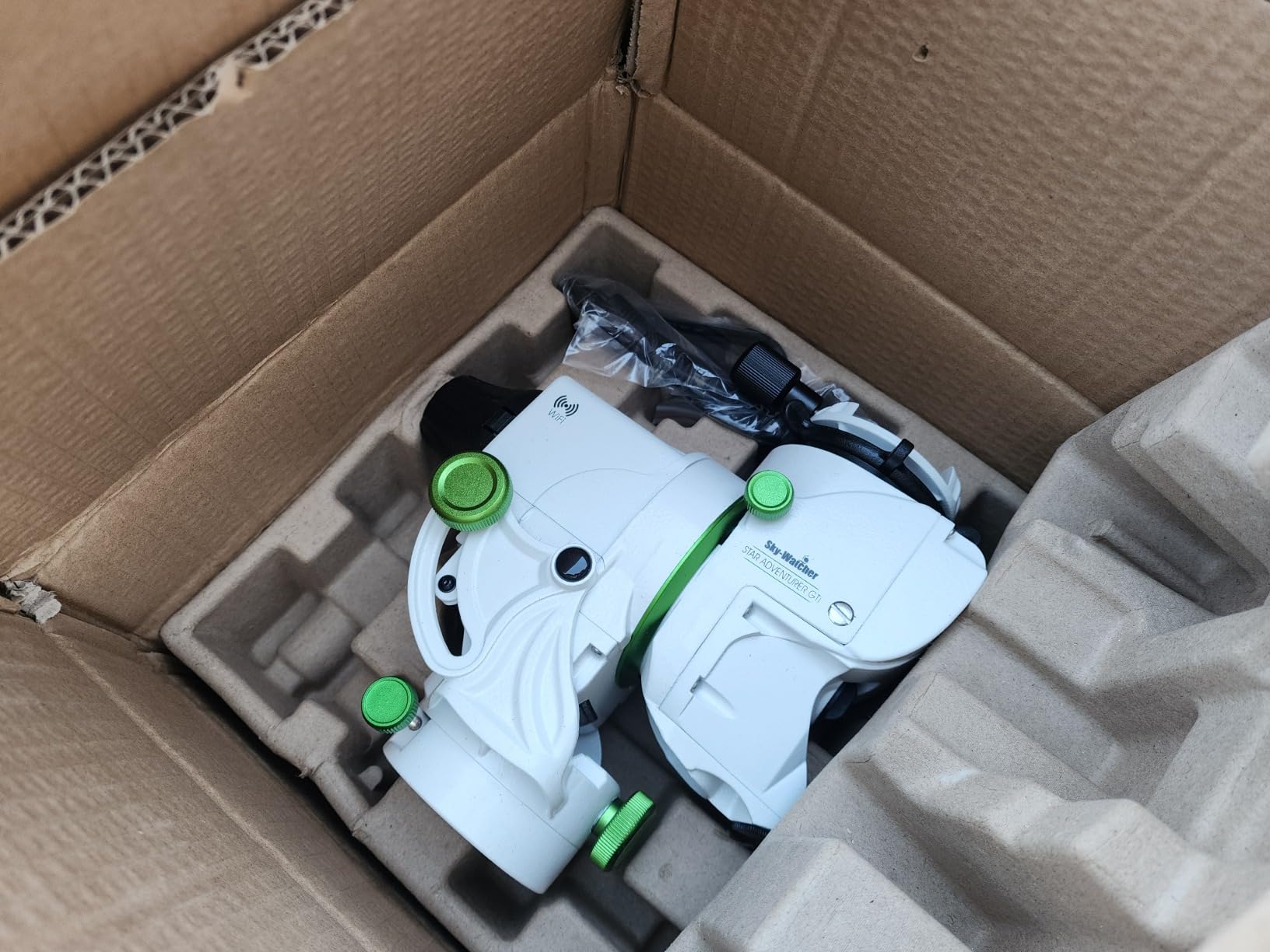
The bundled kit is what makes this one interesting. You get the tripod, the pier extension, a counterweight bar and a 5 lb counterweight in the box, so you are not hunting for parts on your first night. The pier extension raises the head to a comfortable imaging height without you bolting anything onto a plate.
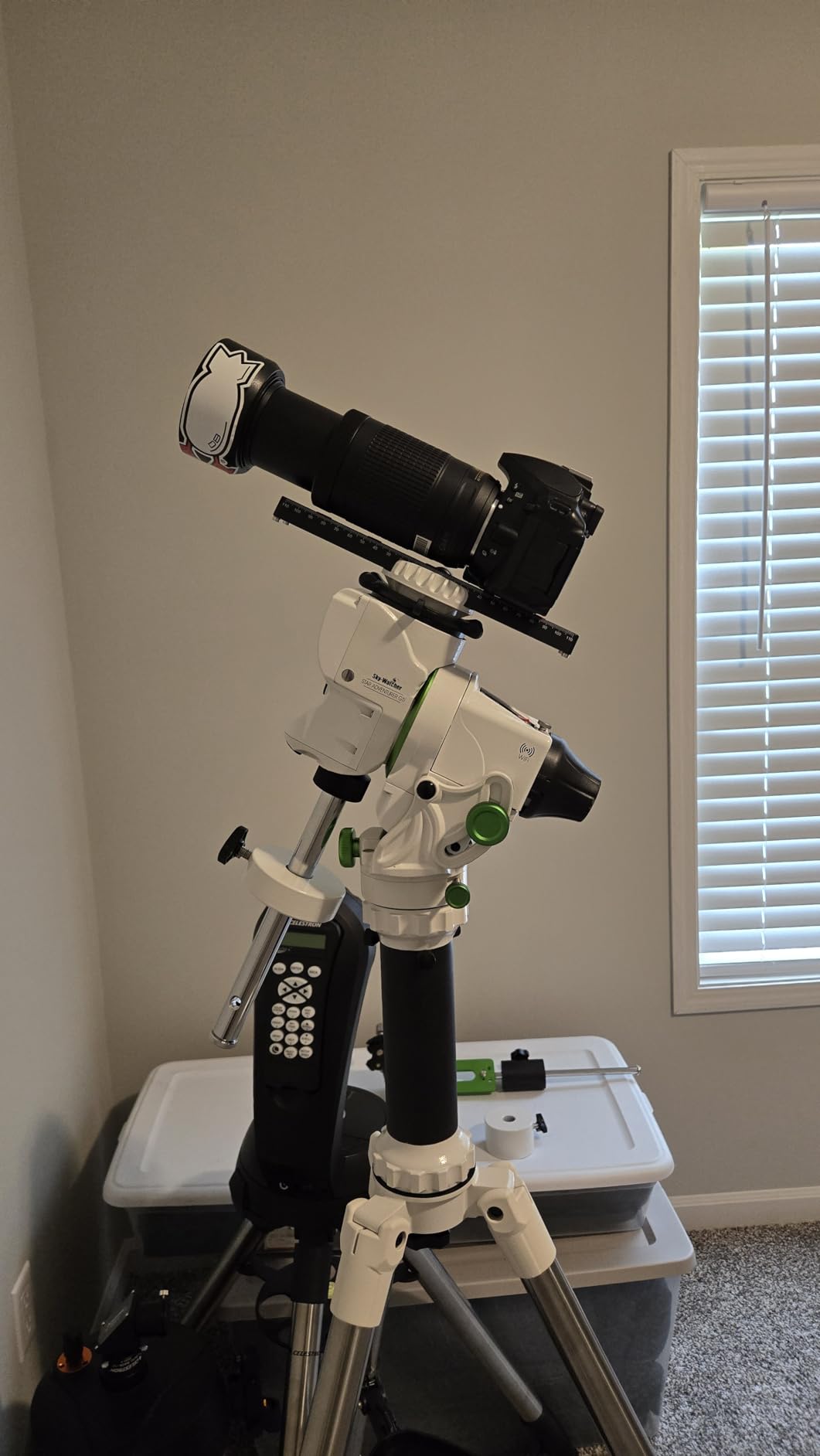
Portability here is relative rather than absolute. The full kit registers 26 lb, which is fine for a car boot and a short walk, and the whole thing shares one bag with a camera and a lens. It is not a grab-and-go head you carry up a hillside alone. The counterweight bar is also short, so heavier DSLR and telephoto combinations will want the longer bar sold separately.
Three-star reviews cluster in two predictable places: app connectivity dropping out, and the first alignment workflow taking longer than expected. Both improve once the head is updated and you have aligned it a few times. The two-year warranty is a genuine advantage over the one-year coverage on several mounts here.
Who this mount suits
Pick the GTi kit if you are moving from a plain star tracker and want automated GoTo without buying a tripod and counterweight separately. It suits photographers who work from a campsite, a field or a balcony and want to point rather than search.
Who should skip it
Skip it if your long-term plan includes a guide scope and a mono camera for narrowband imaging, since the payload headroom and the short counterweight bar work against that. Buy the Advanced VX or the EQ6-R instead if deep-sky is the goal.
5. Celestron CG-4 for the Best Manual Equatorial for Visual Work
Celestron CG-4 Manual German Equatorial Mount with Steel Tripod
20 lb payload capacity
12.5 lb stainless steel tripod
Manual slow-motion controls on both axes
Pros
- Stainless steel tripod with 1.75 inch legs holds up under heavier tubes
- Tactile manual slow-motion controls on both axes for fine tracking
- Lightweight enough to carry for a full German equatorial at 20 lb capacity
- Simple assembly with no electronics to fail and a motor drive path
Cons
- No GoTo or computerized pointing
- No motor drive included so tracking is manual only
- Design suits visual observing better than long-exposure imaging
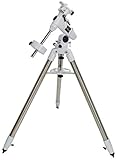
The CG-4 is the odd one out in this roundup, and that is exactly why it earns a place. It is a manual German equatorial with slow-motion controls on both axes, which makes it a genuinely pleasant visual observing mount and a useful stepping stone for people who want a counterweighted head without any electronics to troubleshoot.
Construction is the selling point. The stainless steel tripod has 1.75 inch legs and holds heavier optical tubes without flexing, and the mount itself carries up to 20 lb. Because there is no motor, there is nothing to fail in the field, and assembly is quick enough that you can be observing rather than aligning cables.
For imaging, the honest answer is that you need to add a motor drive, and that purchase is where the real cost sits. Manual slow-motion adjustment does not produce repeatable multi-minute exposures, so treat this as an observing mount that can grow into an imaging rig rather than the other way round. Forum discussions about first equatorial mounts still favour cheaper entry points like this for learning the mechanics.
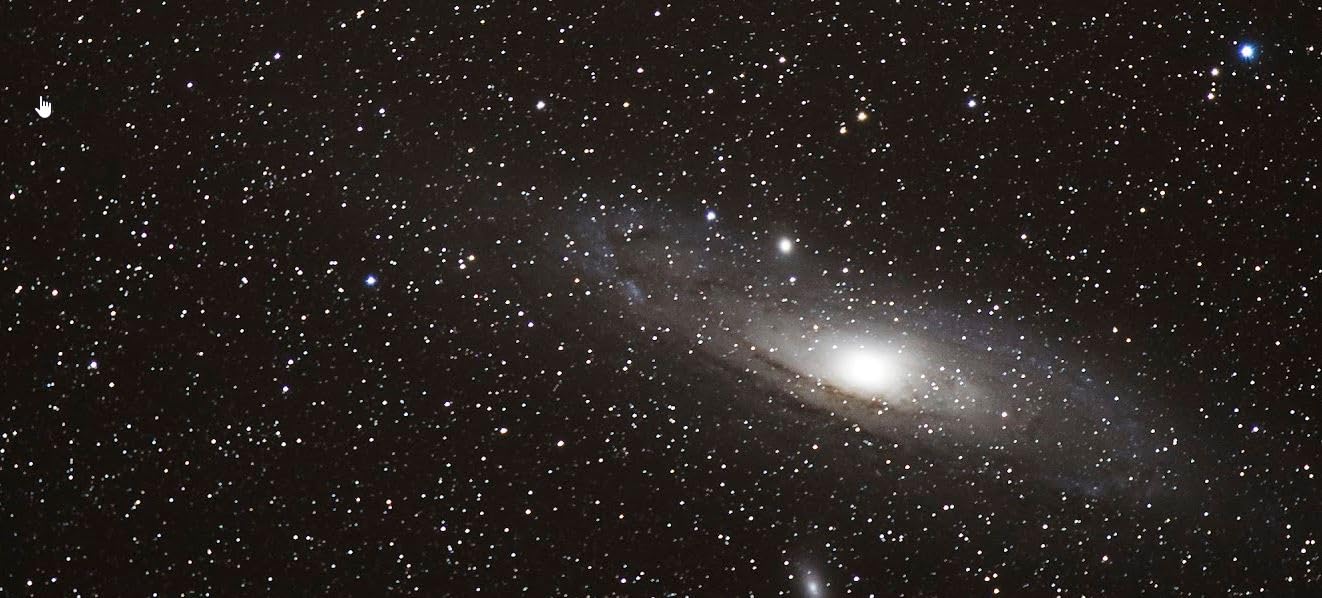
Roughly 12.5 lb for the tripod and a head that is easy to lift means this is the most manageable German equatorial to carry to a star party, and the 33 to 47 inch height adjustment covers seated observing through to a comfortable imaging position.
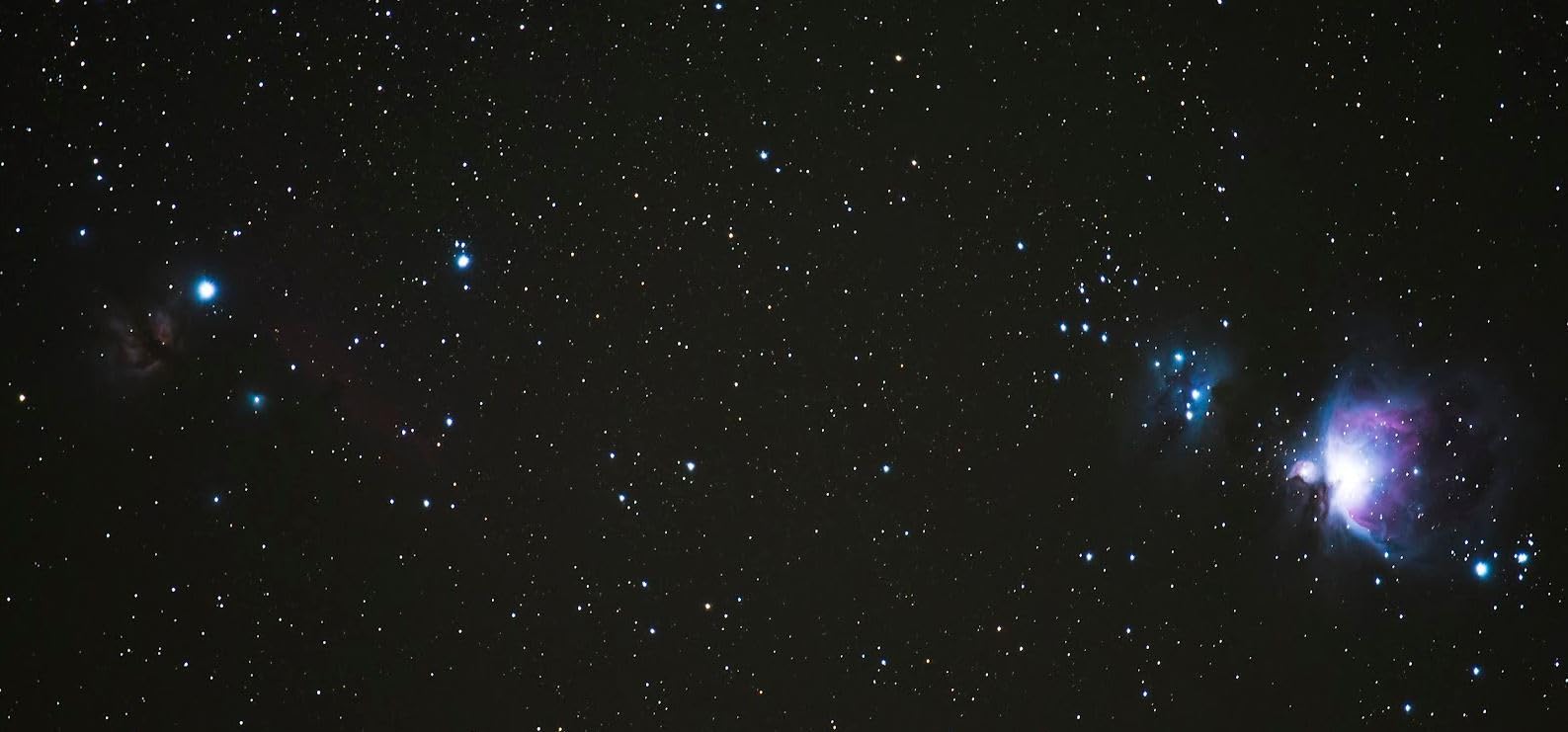
The trade-off is entirely about pointing. Finding a target is manual, and once you find it, keeping it there means working the slow-motion knobs. For a visual session that is fine. For stacking three-hour exposures it is not.
Who this mount suits
Choose the CG-4 if you are a visual observer who wants a solid counterweighted head, you like the feel of manual controls, or you want to learn equatorial mechanics without spending on electronics you cannot yet use. It is also a sensible companion to a heavier dobsonian for public outreach nights.
Who should skip it
Skip it if imaging is the goal right now. Without a motor drive and autoguiding, you are budgeting for a second purchase before the first frame, and the price gap to a motorized mount is smaller than it looks once you count the missing parts.
6. Explore Scientific iEXOS-100-2 for the Best Budget Computerized Equatorial
iEXOS-100-2 PMC-Eight Equatorial Tracker System Tripod and Mount for Astrophotography with WiFi and Bluetooth Compatible
PMC-Eight eight-CPU controller
Clutched dual-axis worm drives
ExploreStars GoTo app over WiFi
Pros
- Lowest cost computerized equatorial in this lineup
- Clutched dual-axis design makes balancing and daytime repositioning straightforward
- Polar sight hole through the RA axis speeds up alignment without a polar scope
- ExploreStars app carries tens of thousands of catalogued objects
Cons
- Lowest payload capacity in the group
- Gears reported to bind under some loads
- Limited guidance for third-party control software and a high share of 1 and 2 star reviews
The iEXOS-100-2 is the value entry point here: a computerized GoTo equatorial with dual-axis motors, WiFi and Bluetooth control, and a full object database, for less than a single premium telescope. For learning GoTo pointing and basic tracking on a light rig, it does the job.
Design touches we like are the clutched RA and declination axes, which let you balance the rig and then swing it to a comfortable position during the day without losing alignment. The polar sight hole through the RA axis is a practical alternative to buying an illuminated polar scope on a tight budget, and the belt-driven steppers run quietly enough for neighbours.
Where it falls short is payload and consistency. It carries the lightest load of any computerized mount in this group, so you are limited to small scopes and short camera lenses, and owners report the gears binding under some loads. Roughly 21 percent of its reviews are one and two stars, which tells you the consistency story better than the specification sheet does.
Third-party control software is the other limitation. If your plan involves guiding through PHD2, NINA or ASIAIR, the documentation and community support are thin compared with the major ecosystems, so budget extra time for setup or stick to visual and short-exposure use.
Who this mount suits
This suits a beginner who wants computerized GoTo pointing on a first equatorial, with a small refractor or a camera and short lens, and who will be doing visual observing as much as imaging. The clutched axes make it a forgiving first introduction to balancing.
Who should skip it
Skip it if you plan to add a guide scope and a mono camera, because the payload will be against the limit from the start and binding gears at that load produce worse tracking than a heavier mount. Skip it if you want guided imaging with modern software.
7. Sky-Watcher EQ6-R for the Best Heavy-Payload Imaging Mount
Sky-Watcher EQ6-R – Fully Computerized GoTo German Equatorial Telescope Mount – Belt-driven, Motorized, Computerized Hand Controller with 42,900+ Celestial Object Database
44 lb payload
Belt-driven stepper motors
Encoder for PPEC and polar finder
Pros
- Sub-arcsecond guiding routinely reported including under 0.5 arcsecond with a guide camera
- 44 lb payload handles 8 inch imaging tubes and heavier rigs
- Built-in encoder supports permanent PPEC training for repeatable tracking
- Documented ecosystem with EQMOD
- ASCOM
- PHD2
- NINA and ASIAIR support
Cons
- Over 75 lb assembled is very hard to move to a remote site
- Factory grease can cause stiction until the mount is cleaned and re-lubricated
- Altitude adjustment at the base feels awkward
- Needs at least 13V to slew reliably
The EQ6-R is the strongest imaging platform in this roundup on pure capability, and it is the mount the community defaults to when a rig outgrows a mid-weight head. Forty-four pounds of rated payload takes an 8 inch imaging optical tube with a guide scope, camera and filter wheel, and the belt-driven steppers keep periodic error low enough that owners report guiding below 0.5 arcsecond.
The built-in encoder is the feature serious imagers care most about. Because the mount knows its own position, permanent periodic error correction can be trained once and recalled forever, which is what makes the tracking repeatable across nights rather than a fresh tuning job every session. The illuminated polar finder is built in, so alignment needs no extra purchase.
Software support is the quiet superpower. Owners run this head with EQMOD, ASCOM, PHD2, NINA and ASIAIR, which means the whole guided and dithered workflow works out of the box. Forum threads on r/AskAstrophotography consistently treat this mount class as the default mid-to-heavy payload choice for good reason.
Now the hard part. Assembled with tripod and counterweights it exceeds 75 lb, and that single fact removes it from travel imaging entirely. The altitude adjustment screws at the base also feel awkward rather than smooth, which matters when you are aligning in the dark.
Two owner complaints recur and are worth knowing before you order. Factory-applied grease can cause stiction until the mount is cleaned and re-lubricated, so budget an evening for the service before your first imaging night. And slewing needs at least 13V, because weak batteries cause stalls mid-move. A small share of one-star reviews also traces back to the two-box delivery arriving incomplete rather than to any defect in the mount.
Who this mount suits
This suits the imagers with an 8 inch Newtonian or SCT, a mono camera and a guide scope, working from a fixed site or a garden where the rig can stay assembled. It is also the mount to buy if you are confident your payload will grow over the next few years and you would rather not buy twice.
Who should skip it
Skip it for anything portable, and skip it if you are still building your first imaging train and unsure of the final weight. At this weight you also need a solid pier or a heavy tripod that stays put, plus a clean and re-lube session before imaging.
8. iOptron SkyTracker Pro for the Best Travel Tracker
iOptron SkyTracker Pro Camera Mount with Polar Scope, Only
6.6 lb payload
3.3 lb packed weight
Dimmable illuminated polar scope
Pros
- Clean 4 to 5 minute frames reported without trailing
- Nearly silent tracking with a dimmable illuminated polar scope
- Integrated rechargeable battery removes the need for a power bank
- Compact enough to fit inside a normal camera bag
Cons
- Supplied dovetail base is awkward and not Arca-Swiss compatible
- A separate ballhead must be bought
- Swivel head cushion slips and will not hold heavier loads
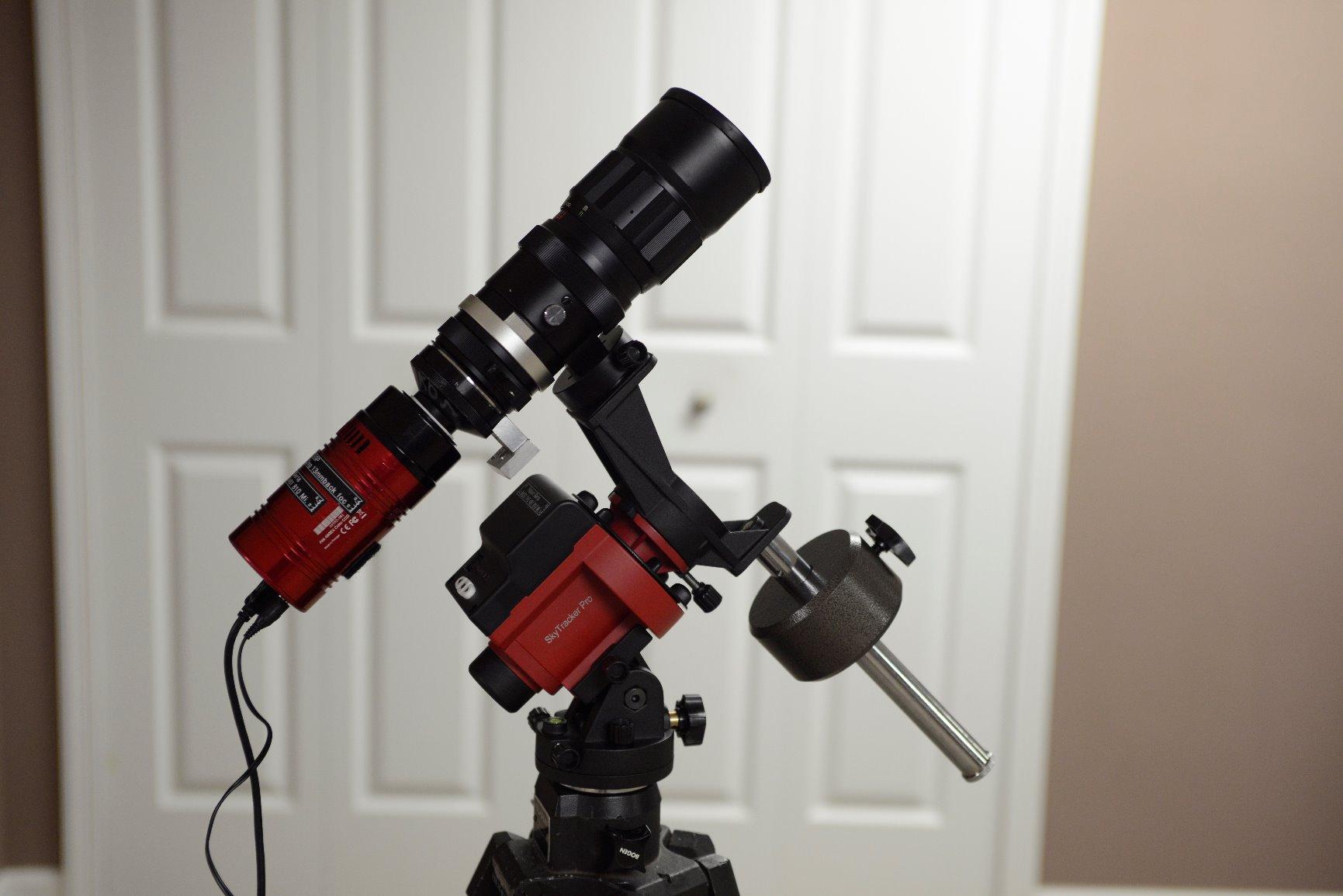
The SkyTracker Pro is the smallest useful answer here. At 3.3 lb with a 6.6 lb payload ceiling, it is the tracker we would put in a carry-on, and owners report 4 to 5 minute frames without trailing, which is far beyond what most people expect from something this size.
The dimmable illuminated polar scope is unusually useful on this tracker because it means you can align in a dark field with no red light spilling across your night vision. Tracking is near silent, and the internal rechargeable battery reaching 80 percent charge in about five hours removes the power bank from your bag entirely.
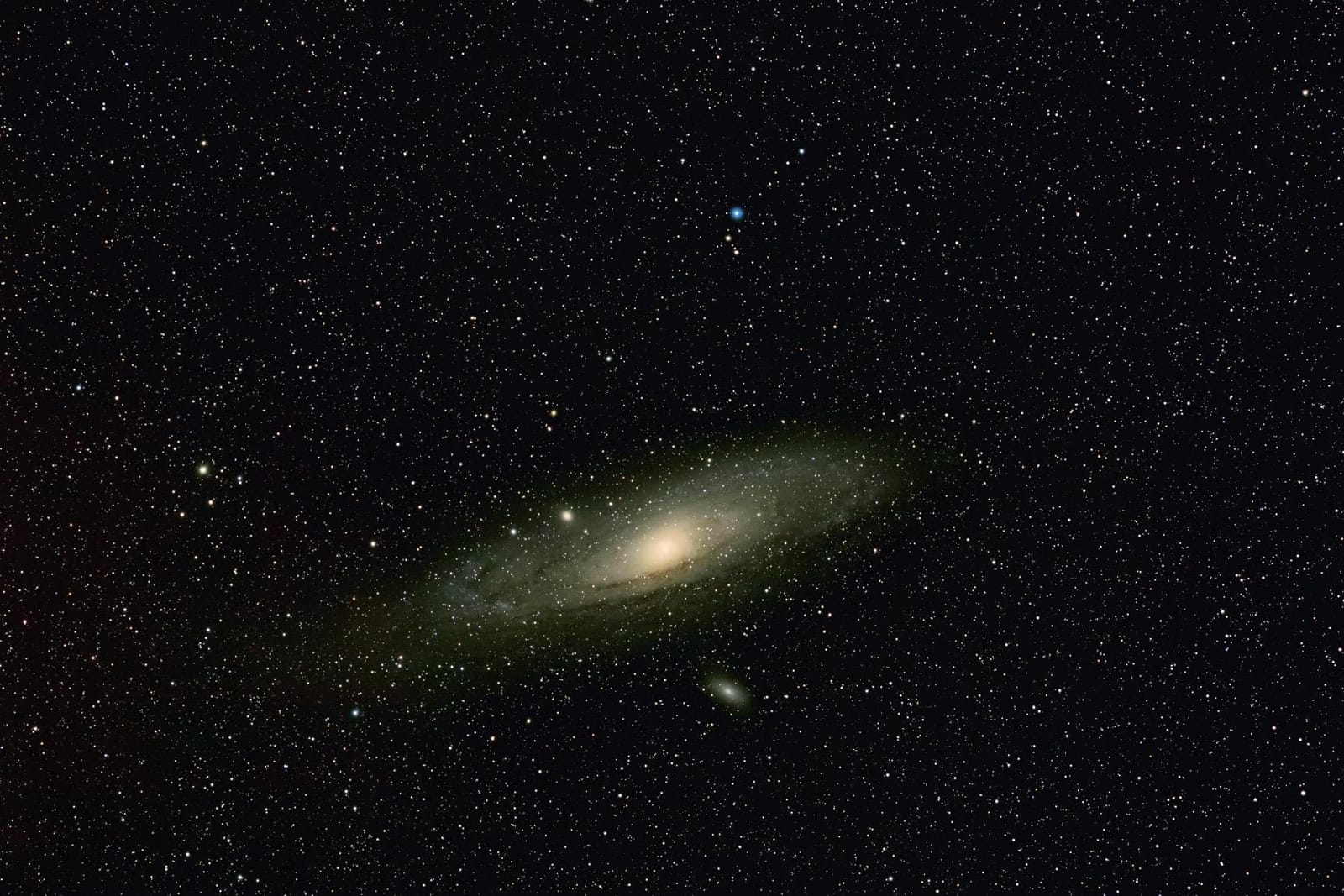
The mechanical criticisms are consistent and worth planning around. The supplied dovetail base is awkward and is not Arca-Swiss compatible, so most owners buy a proper ballhead separately. The rubber cushion at the swivel head slips and will not tighten down on heavier loads, and long telephoto lenses near or above the 6.6 lb limit struggle without the optional counterweight.
One more detail catches people out: the flat base will not fit tripods with a fixed index mark for polar north, which some travel tripods have. Check your tripod before you commit, and expect to add the ballhead to your budget.
Who this mount suits
Choose the SkyTracker Pro if you fly with your kit, if you shoot wide-field nightscapes with a moderate lens, or if you want the cheapest credible step from a fixed tripod to tracked images. It is also a sensible lightweight backup that fits with gear you already own.
Who should skip it
Skip it if you plan to add a camera, lens, guide scope and filters within a year. The 6.6 lb limit is the ceiling, and the working load below that leaves little room, so treat it as a dedicated wide-field tool rather than a deep-sky platform.
9. Celestron CGX for the Best Permanent Observatory Rig
Celestron CGX Computerized German Equatorial Mount & Tripod, 55lb Payload
55 lb payload capacity
108 lb assembled weight
High-torque servo motors with belt drive
Pros
- Owners report stacking 30 minute subframes with flat guiding graphs
- High-torque motors handle a 10 inch Newtonian plus finders and cameras
- Internal cable management keeps a complex rig tidy
- Alt-az controls position the axes without lifting a loaded mount
Cons
- About 108 lb makes transport to dark sites impractical
- Optional polar scope can limit declination travel and collide
- Small review base with reported hand controller and RA drive failures
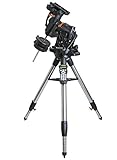
The CGX is the only mount here designed on the assumption that it will never move again. Fifty-five pounds of rated payload and high-torque servo motors mean it can carry a 10 inch Newtonian with finders, guide camera and imaging camera simultaneously, and owners report stacking 30 minute subframes with flat guiding graphs once it is polar aligned properly.
The details that matter in an observatory setting are all present. Internal cable management keeps a complex rig tidy and reduces cable drag, which is a real source of tracking error in long focal length setups. Alt-az controls let you position the axes smoothly without lifting a loaded head, which saves a lot of back strain during setup.
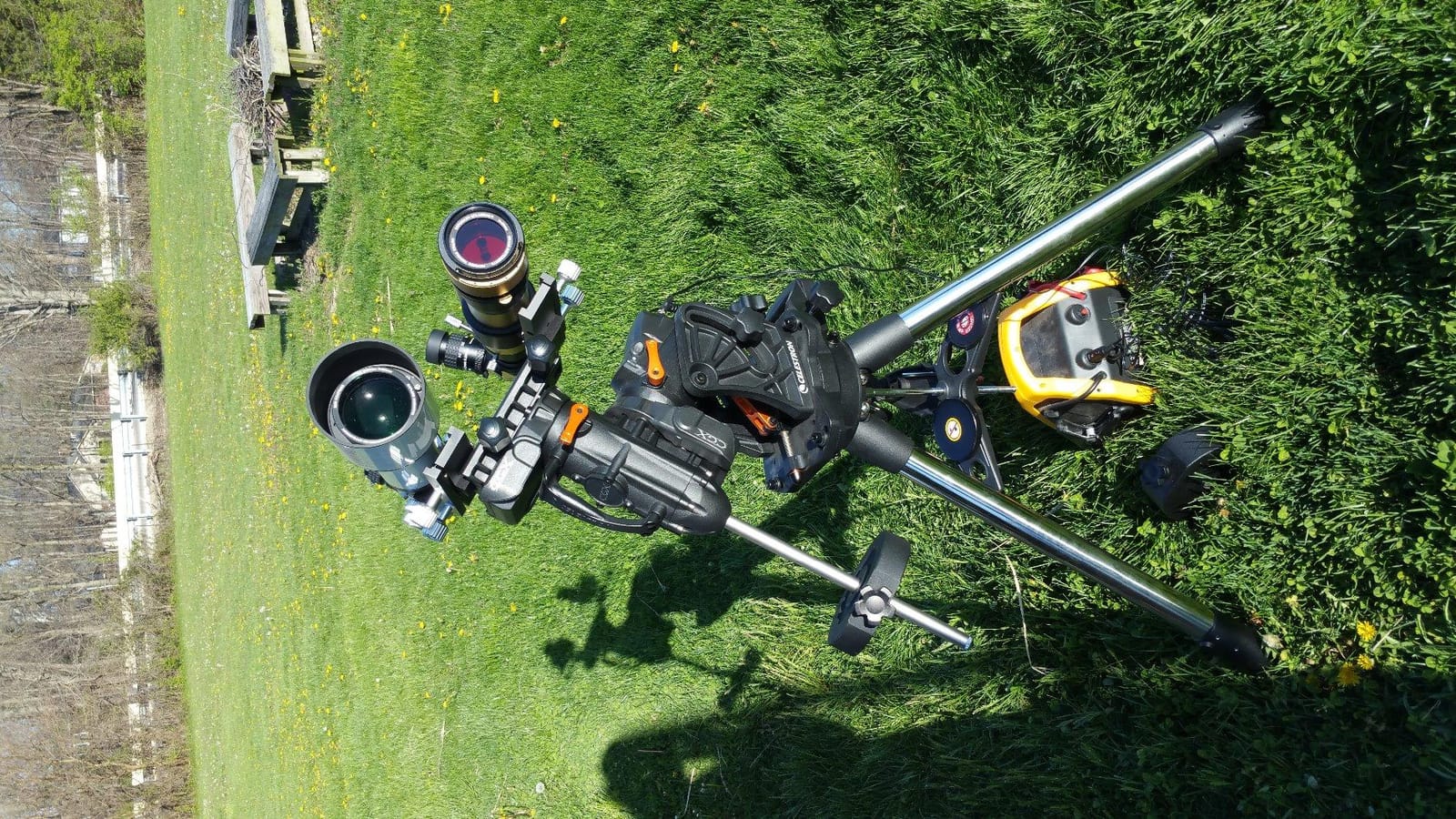
Portability is not a feature here. At about 108 lb, this is a mount that gets installed once. The optional polar scope is also worth thinking carefully about, since owners report it restricting declination range of motion and colliding with the mount, which is a common source of meridian flip problems.
We should be upfront about the evidence base. With 20 reviews, a single isolated failure carries outsized weight, and owners do report hand controllers sticking on an initialising screen and persistent RA drive issues that needed warranty repair. The non-L tripod is also less rigid than the heavier variant. If you are deciding on a one-time observatory purchase, buying from a specialist dealer who can handle warranty work locally is worth the extra conversation.
Who this mount suits
This suits the established imager with a permanent pier, a large optical tube and a plan to add more cameras over the years. If your rig is already 40 lb or heavier and stays put, this is the mount that will not be the limiting factor.
Who should skip it
Skip it if you might ever want to take the rig to a dark site, and skip it if you are still deciding on a first optical train. The rigidity advantage over a mid-weight mount is real but modest, and it costs you every portability option you have.
How to Choose an Equatorial Mount: Payload, Balance, Alignment, Guiding
Sizing the mount correctly prevents almost every disappointing first imaging session. Start by weighing your complete imaging train, not just the optical tube: telescope, imaging camera, guide scope, guide camera, filter wheel, cables and adapters all count. Then apply the 50 to 60 percent rule. A mount rated for 30 lb is at its best carrying roughly 15 to 18 lb, because an overloaded axis sags, stretches under torque and produces worse periodic error and more motor strain than the drive was designed for.
Getting a mount rated for two years of growth is the practical version of this advice. If you know a guide scope and a mono camera with filters are part of the plan, size for that total now. Skimping on capacity is the single most common reason imagers buy a second mount within eighteen months, and it is more expensive than simply buying the larger head the first time.
Balance comes next, and it is the highest-frequency complaint in forum threads about first equatorial mounts. Do it in two stages, because skipping a stage causes the declination problems people describe at length. First, set the counterweight bar so it would balance with nothing on the scope, then attach the scope and slide it until the RA axis stays put at several angles. Second, with the scope balanced in RA, adjust the counterweight height until the declination axis holds position without help.
Doing declination first is the mistake almost everyone makes, and the result is an axis that will not stay balanced no matter how far you slide the scope, because the RA balance shifts with every position change. If you only remember one line from this guide, make it: RA first, then declination.
Polar alignment determines how much guiding has to correct. An illuminated polar scope, included on several picks here, gets you close quickly with no extra cost. Where you have a camera, plate-solving through NINA, SharpCap or ASIAIR refines the alignment further and can remove the need for a physical polar scope altogether. Either way, align before you balance a final time, since moving the head changes the balance.
Autoguiding is optional only in a narrow band of situations. With a well-aligned belt-driven or worm-driven mount, short focal lengths under about 500mm and sub-exposures under two minutes, unguided frames can be acceptable. Above roughly 800mm, for any narrowband work, or for subframes longer than three minutes, guide. Across the forum discussions we reviewed, the recurring conclusion was that guiding software and a correct setup matter more for finished images than the mount class itself.
Power is where all-night sessions go wrong. Motors that slew on weak batteries stall mid-move, and a mount that stalls can damage a partially completed sequence. If you plan to run through the night, carry a battery pack with enough headroom, or use an uninterruptible power supply for the drive electronics. Related reading: our picks for [tripods that hold steady in wind](https://modelrec.com/best-tripods-for-astrophotography-in-windy-conditions/), since a stable platform matters as much as a good drive.
Finally, buy for the gear you will actually use rather than the gear the spec sheet allows. If you shoot with a mirrorless camera and a wide lens, our [equatorial mounts tested with DSLR and mirrorless cameras](https://modelrec.com/best-equatorial-mounts-for-astrophotography-with-dslr-and-mirrorless-cameras/) cover that case in more detail. If your budget stretches further and you are weighing observatory-grade options, the [premium equatorial mount guide](https://modelrec.com/best-premium-equatorial-telescope-mounts-for-astrophotography/) goes deeper on harmonic-drive and heavy-payload models. And for a wider look at the category across mount types, see our [general equatorial mount roundup](https://modelrec.com/best-equatorial-mounts/).
Frequently Asked Questions
What are the best equatorial mounts for astrophotography?
The best equatorial mounts for astrophotography depend on payload and portability. Our top pick is the Sky-Watcher Star Adventurer 2i Pro for portable wide-field work, the iOptron SkyGuider Pro offers the best balance of price and payload for camera-based rigs, and the Sky-Watcher EQ6-R is the strongest choice for heavier deep-sky imaging trains.
Do you need an equatorial mount for astrophotography?
Yes for anything beyond a few seconds of exposure on a wide lens. An alt-azimuth mount tracks well for visual observing, but field rotation rotates the image around targets near the celestial pole, trailing stars into arcs during long exposures. A single-axis star tracker or a full equatorial mount avoids this entirely.
How accurate are equatorial mounts?
Accuracy depends on periodic error, backlash and polar alignment rather than mount class. Belt-driven mounts have low periodic error and very little backlash, while worm gear mounts are heavier but looser. Owners of the Sky-Watcher EQ6-R report guiding below 0.5 arcsecond with a guide camera, and autoguiding corrects residual drift to sub-arcsecond levels.
What is the difference between equatorial and alt-azimuth mounts?
An alt-azimuth mount uses two horizontal-axis motors and rotates the field during long exposures. An equatorial mount aligns one axis with Earth’s rotational pole so a single motor cancels the sky’s rotation at sidereal rate, keeping stars fixed in the frame with no field rotation.
How much payload capacity do I need for astrophotography?
Weigh your full imaging train including camera, guide scope, filter wheel and cables, then run at 50 to 60 percent of the rated capacity. A mount rated for 30 lb is at its best carrying 15 to 18 lb. Overloading an axis sags under torque and produces worse periodic error and more motor strain.
Do I need autoguiding with a modern belt-drive mount?
Often not. Below about 500mm of focal length with sub-exposures under two minutes, a well-aligned belt-driven mount can produce usable unguided frames. Above roughly 800mm, for any narrowband work, or for subframes longer than three minutes, autoguiding through PHD2, NINA or ASIAIR makes a clear difference.
Which Equatorial Mount Should You Buy?
If you only buy one, take the Sky-Watcher Star Adventurer 2i Pro. It is the most reviewed mount we tested, it produces clean two to three minute subframes with lenses up to 300mm, and its Wi-Fi plus autoguider port means it grows with you instead of boxing you in.
Buy the iOptron SkyGuider Pro instead if you want more payload and faster polar alignment for a camera and telephoto lens. Move up to the Celestron Advanced VX when you add a guide scope and camera, and to the Sky-Watcher EQ6-R when your rig reaches the heavy end and will stay where it is. Whatever you choose, balance it RA first and declination second, and stay near half the rated capacity.
That short checklist will improve more of your imaging nights than any other single purchase.