A welder pulls a large, continuous current for as long as you hold the trigger down, so the cord feeding it has to carry that current without heating up or dropping voltage. Short answer for most people: an 8 AWG cord handles a 30 to 40 amp 240V machine out to about 50 feet, and a 6 AWG cord is the right call for a 50 amp machine or any run past 50 feet.
That is the whole sizing rule, and it is the rule most of the advice on this topic buries under three paragraphs of preamble. Wire gauge sets how much current the conductor can carry without overheating, cord length adds resistance that eats into your voltage, and the NEMA plug on both ends has to match the amperage of the circuit you are plugging into. Get all three right and the machine runs at full output. Get one wrong and the breaker trips mid-bead, or worse, the cord gets hot enough to damage the insulation.
This roundup covers the best heavy duty extension cords for welders: twelve NEMA 6-50 cords that fit the portable MIG, TIG, stick and multiprocess machines most people actually own. We looked at conductor material, gauge against the plug rating, certification marks, jacket code, temperature rating and how each one feels to drag across a shop floor, because in this category the difference between a genuinely heavy duty cord and a cheap one labelled the same thing is not subtle once you know what to look for.
Two groups of readers should note the scope. Every cord here is a 240V-class cord with a NEMA 6-50 twist-lock plug, which is what a 30 or 50 amp welder needs. If you own a small 120V stick welder that plugs into a household receptacle, the correct cord is a 10 AWG 5-15 cord instead, and we cover that case in the buying guide. Shop owners working around generators should also read our guide to the best extension cords for generators before buying, since generator output and welder load interact in ways a standard cord does not address.
Table of Contents
Top 3 Picks for Best Heavy Duty Extension Cords for Welders in October
Those three cover most of the demand we saw. The Miady is the strongest all-round cord in the group. The MaxWorks is the same gauge at a length that suits a bigger shop. The RVGUARD is the short-run option for when the outlet is already close to the work.
All 12 Welder Extension Cords at a Glance in 2026
Read the amperage column carefully rather than the gauge alone. Several cords here carry a NEMA 6-50 plug rated for 50 amps while the conductor itself is rated for 40, and that gap is the single most important detail in this list.
How We Evaluated 12 Welder Extension Cords
Nobody in this category publishes how they pick cords, which is a problem, because the shelf is full of products with heavy duty in the title and copper-clad aluminium inside. We built this list around six checks that a buyer can repeat at home.
Conductor material. We only counted cords whose listing states copper conductors, and we preferred listings that name the conductor type specifically.
Gauge against plug rating. A 6-50 plug does not make 8 AWG wire 50 amp capable. We flag every mismatch.
Certification. ETL, cETL, UL and cUL marks are all acceptable. A missing mark is a yellow flag, and we note the difference between ETL and UL because a few listings lean on ETL while buyers assume it says something stronger.
Jacket code. STW, SOOW, STV and PVC behave differently in cold weather and around oil, and the code tells you which you are getting.
Temperature rating. The standard service-cord class is 60C, and anything rated below that is worth knowing about before you weld in a cold shop.
Handling. Weight, flexibility and coil diameter decide whether you actually keep using the cord or leave it bunched in a corner.
Two things we deliberately did not do. We did not measure voltage drop on a bench, because we do not have a 50 amp load bank and a half-truth reading is worse than no reading. And we did not rank on cost, because the price bands in this category overlap heavily and a cheaper cord is only better value when it does the electrical job.
1. Miady 25ft 8 AWG 40A Welder Cord, Lighted Ends, ETL Approved
Miady 25ft 50AMP Welder Extension Cord, 8 Gauge Heavy Duty Industrial NEMA 6-50 Welding Machine Cord with Lighted End, ETL Approved
8 AWG x 3C all-copper
40A at 250V
25 ft
11 lb
STW jacket
ETL approved
Pros
- 8 AWG all-copper construction
- Lighted end receptacles for power indication
- ETL approved
- Flexible STW jacket that coils easily
- Works with Miller
- Lincoln and Hobart machines
Cons
- NEMA 6-50 only so it will not reach a household outlet
- 25 ft may be short for a large shop
- Conductor is rated 40A even though the plug is rated 50A
Eleven pounds for twenty-five feet of 8 AWG is heavier than a household cord of the same length but still light enough to reposition with one hand while wearing gloves.
The build is straight: an STW jacket over 8 AWG by 3C all-copper wire, NEMA 6-50 on both ends, and clear lighted receptacles that tell you at a glance whether you have power before you step into the arc flash zone. That light is the feature we value most, and it is the reason this cord keeps its place in a shop rather than a drawer.
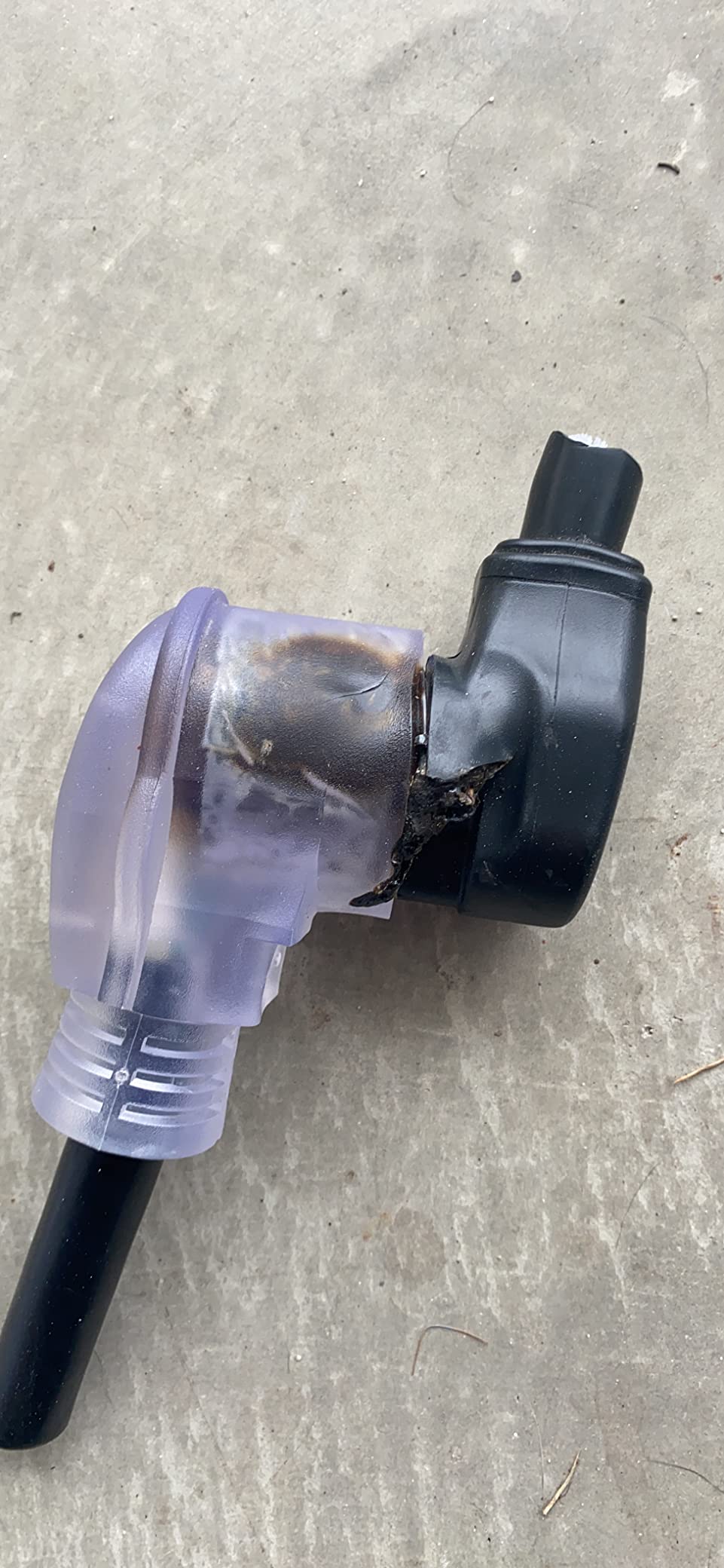
The honest wrinkle is the rating. The plug is a 50 amp 6-50, but the cord itself is rated 40 amps at 250 volts. For a 30 amp breaker and machines like a Lincoln 225 or a Miller 210, that is the right cord. For a machine that pulls 50 amps continuously, the conductor is the limiting part and you should step up to 6 AWG.
Owners running plasma cutters and stick machines report no voltage drop across the full twenty-five feet, and the abrasion and oil resistance of the jacket holds up to a shop floor. The 250 volt rating is also higher than the machine needs, which is normal for this class of cord.
What 40 amp rating means for your machine
Read the input plate on the side of your welder, not the output rating on the side panel. A machine that puts out 180 amps often pulls 30 to 35 amps at 240V, and 40 amp of cord capacity covers that with headroom.
If the input plate shows a number above 40 amps, this cord is not the right one and no amount of quality in the jacket will change that. Match the conductor to the plate, not to the output amperage you want to weld at.
Where this cord falls short
Twenty-five feet is a short reach. In a shop with a pillar in the way or a work area more than twenty-five feet from the wall receptacle, you will end up wanting a longer cord and the gauge question gets harder fast.
There is also no 5-15 option here. Buyers with a 120V stick welder should treat this as the wrong product entirely and read the small-welder section in the buying guide.
2. Southwire 50ft 8 AWG Welder Cord, Lighted Receptacle, Molded Ends
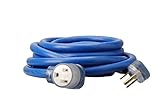
Southwire Welder Extension Cord – Heavy-Duty Power Cable for Industrial Welding Machines – STW Jacket – Molded Ends – Lighted Receptacle – 50-Amp/250-Volt – 50-Feet
8 AWG 3 conductor
50A plug, 10000W
50 ft
22 lb
STW jacket
Lighted receptacle
Pros
- 50 feet of reach handles most shop layouts
- Molded ends hold a secure connection
- Lighted receptacle for power indication
- Good flexibility for coiling and storage
- Works with major welder brands
Cons
- Heavy cord at 22 pounds so it is awkward to reposition
- One owner reported overheating under sustained high load
- Limited warranty
Fifty feet of reach means a well-laid-out shop rarely needs a second connector in the circuit. The STW jacket is thick and holds its shape well enough to coil and hang on a hook rather than pooling on the floor.
Molded ends and a lighted receptacle are both standard here, and both matter over a fifty foot run because you are usually plugging in at the far end of the shop where the lighting is worst. Rated 50 amps and 250 volts with 10000 watts of capacity, it pairs naturally with a 30 amp multipurpose welder or a plasma cutter.
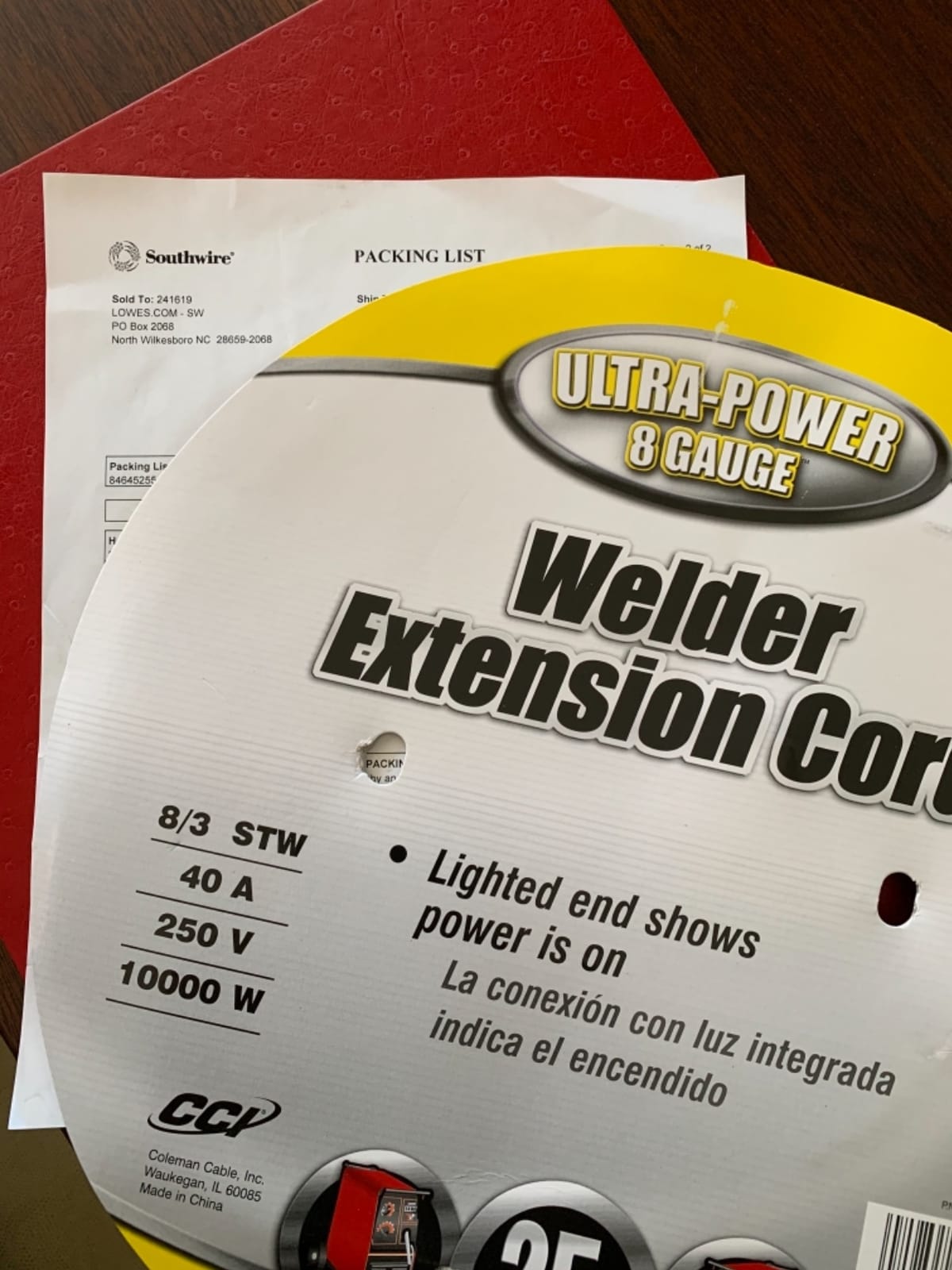
One note on the label. Some units are manufactured by Coleman Cable, a Southwire subsidiary, so the brand on the jacket and the company that built the cord are not always the same entity. It is not a defect, but it is worth knowing if you are buying for a commercial shop with documentation requirements.
There is also a single report of overheating and arcing under sustained high load in the reviews. One report out of a large sample is not a pattern, and it points to a connector or outlet problem more often than to the cord itself, but if you plan to run a machine at full output for hours at a time, inspect the connector contacts before the first long session.
Whether 50 feet of 8 AWG is the right call
Eight AWG at 50 feet leaves less margin, and if your machine draws 40 amps you will feel some voltage drop at the far end of the run. Machines in the 30 amp class will not notice it.
Buyers who need more than fifty feet at 40 amps should stop adding length and add gauge instead. A 6 AWG cord will carry the same load twice as far with less loss in the arc.
Who should pass on this cord
Twenty-two pounds is the number that ends the conversation for some people. If you are moving the welder around a lot, repositioning between jobs, or working somewhere the cord has to be dragged constantly, a lighter twenty-five or twenty-foot cord will save your arms.
It is also a costly cord relative to other 8 AWG options here, so if your outlet is closer than fifty feet you are paying for reach you do not use.
3. YESWELDER 50ft 8 AWG Welder Cord, Rated 40A at 250V

YESWELDER 50ft 250 Volt Welder Extension Cord 8 AWG Power Extension
8 AWG 3 conductor
40A at 250V
50 ft
STW jacket
-40 to 194F
Flexible in cold
Pros
- Keeps moving in cold shop temperatures
- Annealed bare copper conductors
- Water resistant for indoor and outdoor work
- Many length and gauge variants
- One year warranty
Cons
- Some owners question whether the conductor is truly 8 AWG
- Heavy to coil at 50 feet
- Rated 40A even though the connector is rated 50A
This cord is notably flexible for a fifty-foot 8 AWG model, and that turns out to matter more than raw gauge for a lot of people. Fifty feet of 8 AWG that still bends into a coil instead of resisting you changes how often you are willing to use the cord at all.
Construction is an STW jacket over annealed bare copper, with NEMA 6-50P to 6-50R connectors and a 40 amp, 250 volt rating. The listed operating range runs from -40C to 90C, which covers cold shop floors and hot trailer beds, and the jacket is water resistant for outdoor welding.
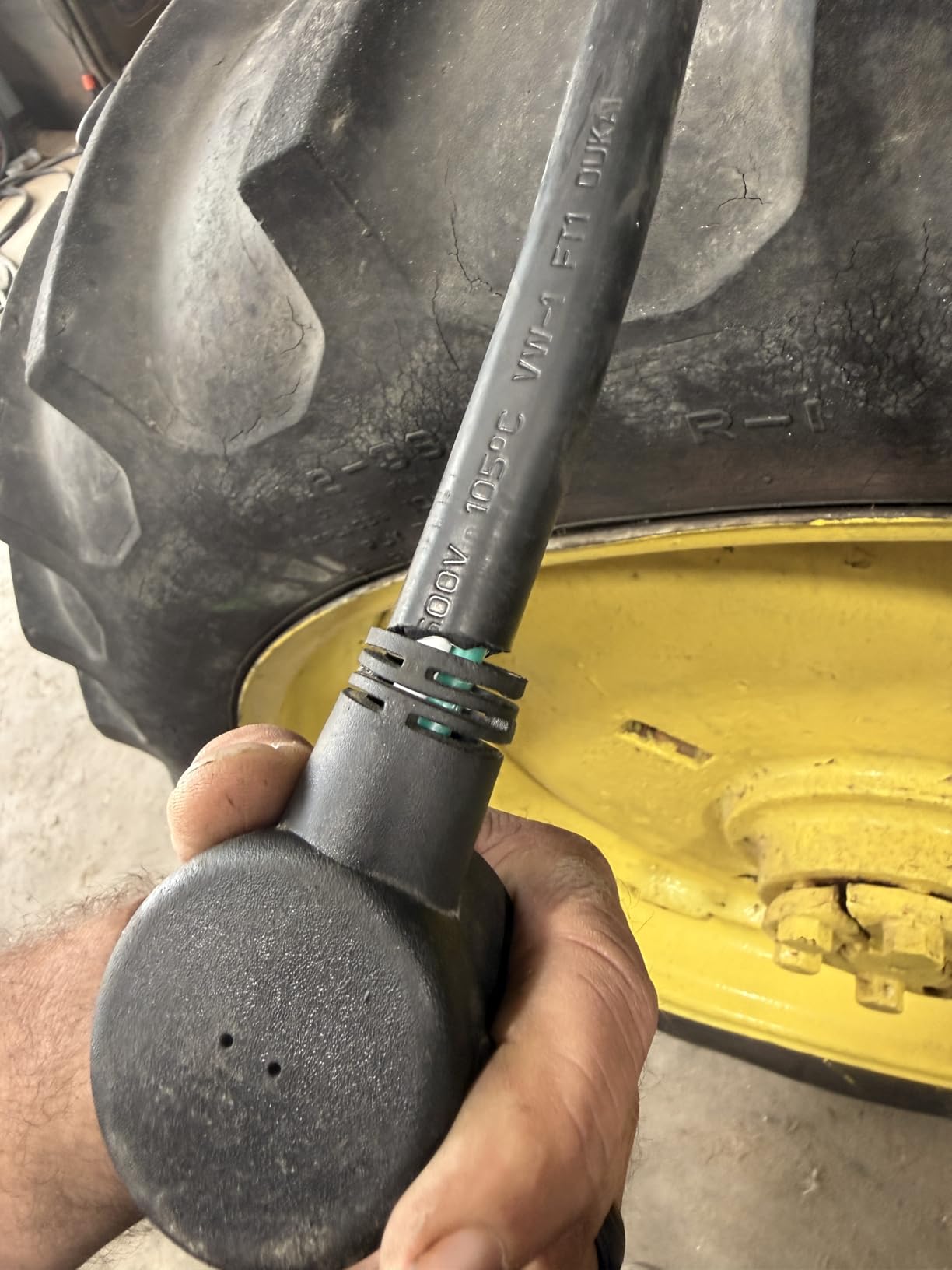
The spec block is unusually complete, including the operating temperature and the model number, and the same line is available from 15 to 50 feet in gauges from 6 to 12 AWG. That matters if you own more than one machine, because you can match cords to machines without buying from three different brands.
A recurring comment in the reviews is that the cord feels lighter than expected for 8 AWG. Some owners read that as the conductor being thinner than advertised. It can also simply be a well-made cable with a compact jacket, and the only honest way to settle it is to weigh the cord against a known reference or ask the manufacturer for the strand count.
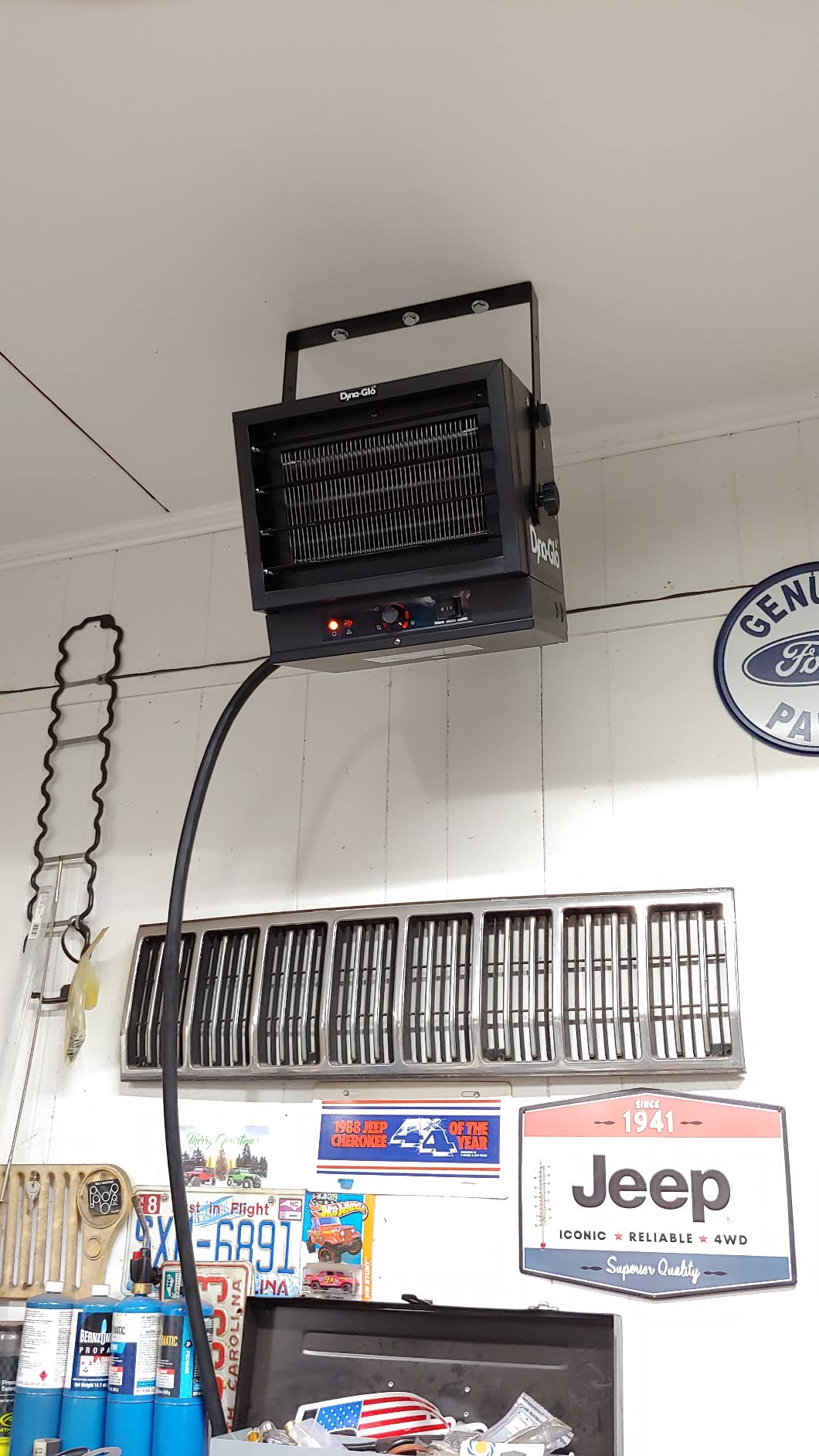
What the temperature rating buys you
Cold stiffening is the failure mode people hit first with heavy cord. A jacket that is rated to -40C keeps moving when the shop is at 60F, and that is when the annoyance of coiling a cord usually starts.
The same rating does not mean the cord is indestructible. Heat, abrasion and cut damage are still the things that end service cords, and a cold-rated jacket does nothing about a run over a sharp machine edge.
When to pick something else
If you run a 50 amp machine at full output, the 40 amp conductor rating is the limit here, and flexibility does not solve that. Go to a 6 AWG cord instead of choosing a more flexible 8 AWG one.
Buyers who move the machine several times a day may also find fifty feet of flexible cable more awkward than a shorter, stiffer one, since there is more of it to gather up each time.
4. MaxWorks 40ft 8 AWG Welder Cord, Right-Angle Plug, ETL Approved
MaxWorks 80703 Heavy Duty 40 Foot 8 AWG/3C 6-50 Nema R Plug Lighted Welding Cord with ETL Approved
8 AWG x 3C all-copper
40A at 250V
40 ft
10 lb
Contractor STW
ETL approved
Pros
- Good weight-to-length balance at 40 feet
- Handles plasma cutters as well as welders without voltage drop
- Lighted molded plug and connector
- Flexible for its gauge
- ETL approved
Cons
- 90 day warranty
- ETL approved but not UL listed
- Stiff in cold weather
- Connectors can be tight on first engagement
Ten pounds for forty feet is the balance that makes this cord a repeat pick. It is the same gauge as the twenty-five-foot cords here but reaches forty feet, and it moves more easily than the fifty-foot options that weigh twenty-two pounds or more.
The right-angle plug is a genuine ergonomic win. When the receptacle is low on a wall or a panel, a straight plug forces your cable to stick straight out at you and get stepped on, and a right-angle connector turns the run along the wall where it belongs.
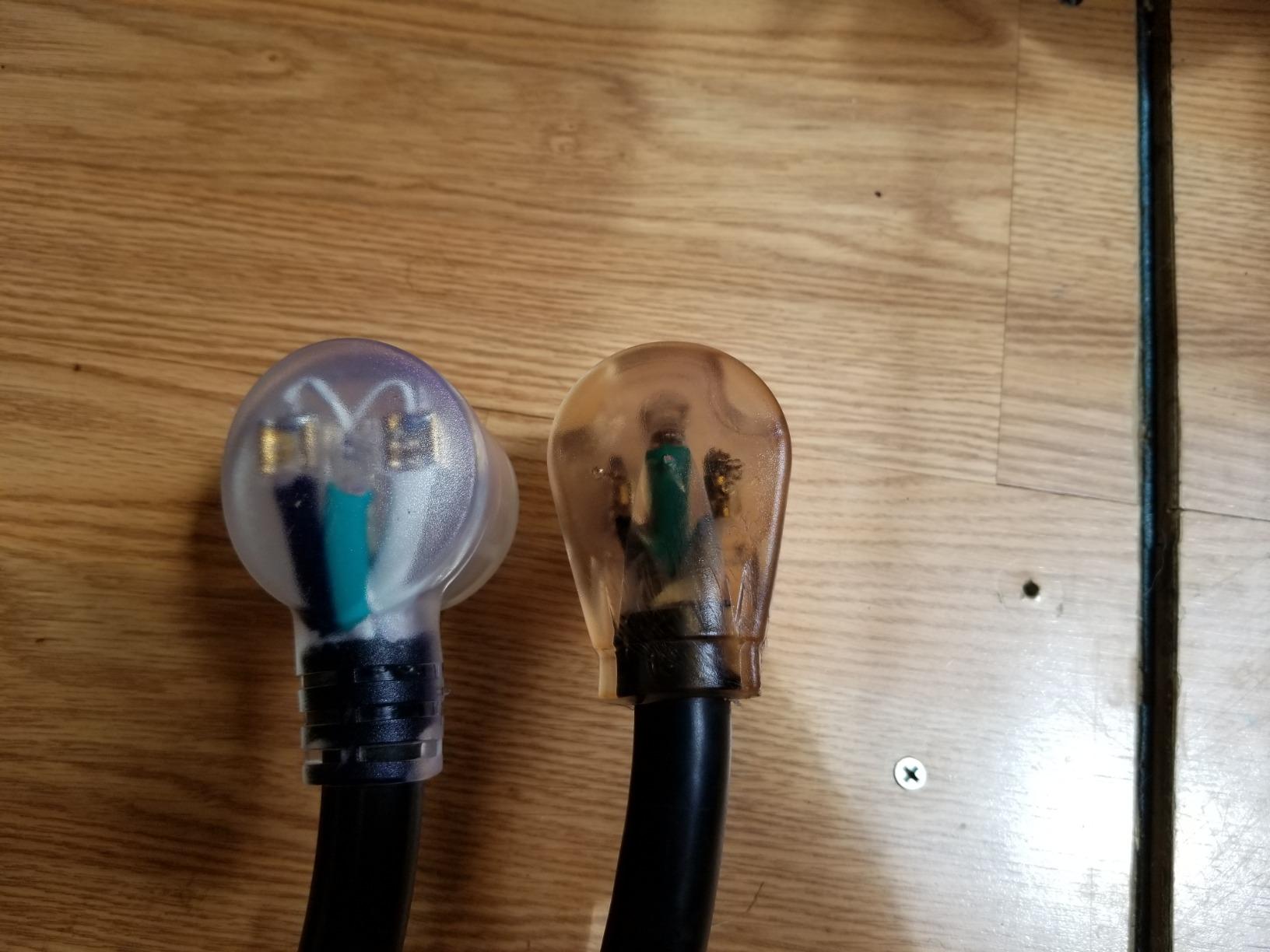
Owners running plasma cutters and stick welders through this cord report holding full output for hours with no voltage drop, which is a stronger result than we would expect from a 40 amp conductor at forty feet. The contractor grade STW jacket is abrasion resistant and the connectors are molded with a light in the female end.
Two honest caveats. The light is in the female receptacle, and the male plug on some units does not light, so do not rely on it as your only confirmation of power. And the warranty is ninety days, which is short, though a lot of owners report service that did not require it.
Why ETL and not UL matters to you
ETL is a legitimate safety certification and cords carrying it are tested to the same broad standards. It is a mark of a real test lab, and it is not a warning sign.
What it is not is a mark buyers sometimes assume it is, namely a signal that a product came from a named household brand. If a commercial shop has an equipment policy that requires UL listing specifically, check before you buy.
Where the tradeoff bites
Cold weather is the weak point. Reviewers note the cord is stiff in low temperatures, and stiff 8 AWG is unpleasant to coil, so this is a warm-shop cord rather than a winter jobsite cord.
Fresh connectors can also feel tight for the first few uses. That is normal for molded ends and usually eases out, but do not force a 6-50 connector that will not seat, because that is how you damage the pins.
5. RVGUARD 20ft 8 AWG Welder Cord with Lighted End

RVGUARD 20 Feet Welder Extension Cord, NEMA 6-50, 250V
8 AWG all-copper
40A at 250V
20 ft
Water resistant
ETL and cETL
Storage bag included
Pros
- Short reach suits a garage where the outlet is close
- Lighted end receptacle for power indication
- ETL and cETL approved
- Includes a storage bag and strap
- Good flexibility and abrasion resistance
Cons
- 20 ft is the shortest reach here and limits where you can weld
- 40A conductor rating
- Not rated for standing water
When the receptacle is already close to where you weld, a short cord is the correct answer and everything else is dead weight you have to carry around. This is the shortest cord we tested, and the storage bag that comes with it keeps it from tangling in a drawer.
Electrically it is the same 8 AWG all-copper core as the longer cords, rated 40 amps at 250 volts, with clear lighted end receptacles and a water resistant STW jacket. ETL and cETL approval is printed on the spec sheet, and it is a twenty-foot and forty-foot variant line so you can move up a length later.
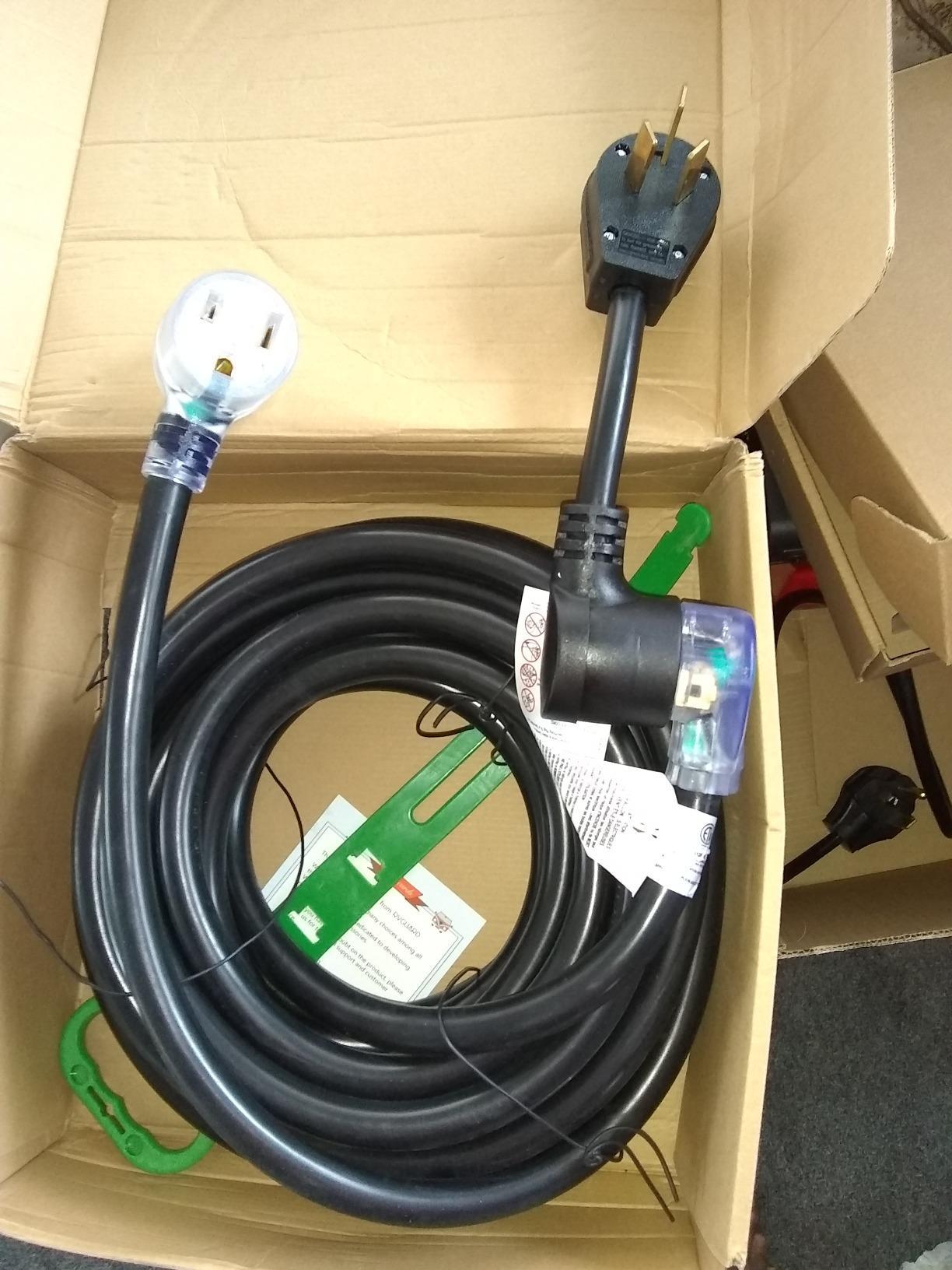
At twenty feet the voltage drop is minimal, so this is one of the easiest cords in the group on a machine’s power supply. It pairs comfortably with a 30 amp multipurpose welder or a small stick machine.
One ownership note. The manufacturer builds this line under a different corporate name than the RVGUARD label, which is a common arrangement in this category and not a quality signal either way, but it is useful to know if you ever need to contact anyone about a spec question.
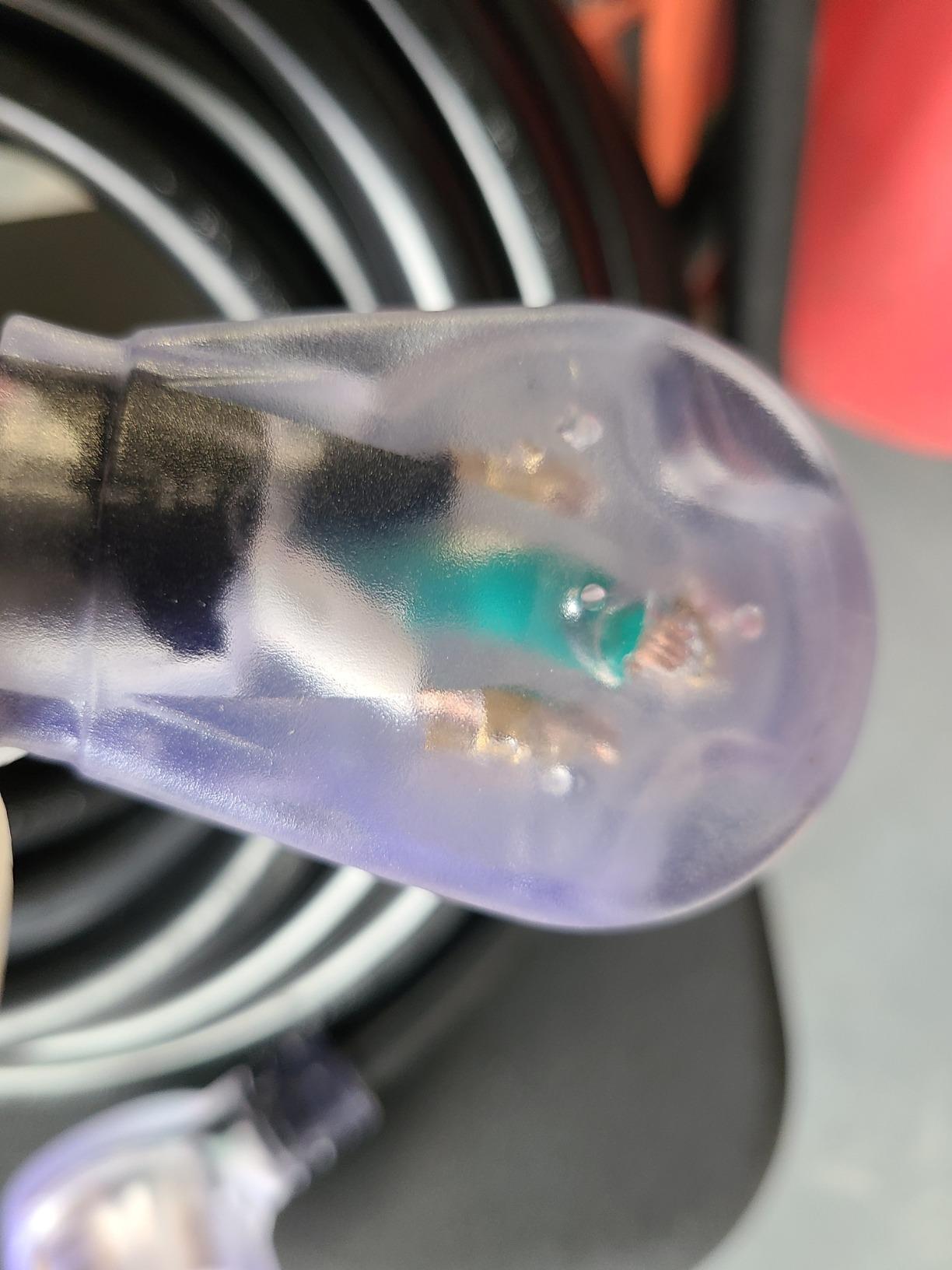
When the shortest cord is the right cord
Buy the shortest cord that reaches your work area, not the longest cord you can find. Shorter runs mean less resistance, less heat, easier handling and a cord you are more likely to actually use.
For a garage with the welder parked beside the receptacle, twenty feet is generous. For a shop where the machine moves between a welding table and a car on the lift, it is not.
What you give up for the short length
Reach, plainly. Twenty feet does not cross a two-car garage, let alone a shop floor, and adding an extension to get there defeats the purpose because you are back to a long run with an extra connection in it.
Reviewers also note the 40 amp rating rather than 50, so it suits 30 amp machines and 40 amp loads but not a machine that genuinely draws 50 amps.
6. Parkworld 50ft 8 AWG Welder Cord with Lighted Right-Angle Connector
Parkworld Welder Extension Cord NEMA 6-50 Extension Cord, 6-50P to 6-50R STW 8AWG/3C for 40 Amp 250 Volt (50FT)
8AWG/3C copper
40A at 250V
50 ft
10000W max
Lighted right-angle
1 year warranty
Pros
- Owners report seven or more years of continuous shop use
- Nickel-plated brass pins resist oxidation
- Lighted right-angle connector clears low outlets
- Five foot to 100 foot options
- Good flexibility for a heavy cable
Cons
- Jacket is stiff and not rated for cold weather
- Hard to handle in freezing conditions
- Costs more than some other 8 AWG cords
Longevity is the story here. The most common comment in the reviews for this cord is not about performance but about how long it has been in service, with multiple owners describing seven years or more of regular shop use on the same cable.
The construction details are the ones that explain that. Stranded 8 AWG copper in an STW jacket, nickel-plated brass pins and terminals that resist oxidation, and a lighted right-angle connector that makes the connection easy to reach on a low outlet or a panel.
Nickel plating is a quiet but real upgrade over bare brass terminals. On a cord that lives near a welding bay, corrosion at the pin is the thing that turns a good connection into a hot one over a few seasons, and plating slows that down considerably.
The same line is offered from 5 feet to 100 feet, which means you can buy the exact length your shop needs instead of settling for the next size up and dragging the extra length around.
Why right-angle connectors are worth paying for
A straight 6-50 plug on a low wall receptacle points the cable out into the walkway at shin height. A right-angle plug turns the same connection so the cable runs along the wall, out of foot traffic and away from the welder cart.
If your receptacle is ever lower than waist height, this is the feature that will save you the most aggravation over a year of work, and it is the reason this cord earns its place despite the stiffer jacket.
Where the stiffness shows up
The jacket is not rated for extreme cold and stiffens noticeably in freezing conditions. For a heated shop that is a non-issue, but for outdoor winter work you will be wrestling with it.
At fifty feet this cord is also heavy to gather up when you move, so it rewards a good wall hook or a reel rather than being coiled on the floor.
7. PrimeWeld 50ft 6 AWG SOOW Cord for True 50 Amp Loads

PrimeWeld Welder Extension Cord, SOOW Rated, 50 amp, 250v NEMA 6-50 Heavy Duty Welding Cable, 6 Gauge, (50ft)
6 AWG 100% copper
50A at 250V
50 ft
36 lb
SOOW jacket
Molded connectors
Pros
- Rated for a true 50 amp load where most rivals stop at 40
- SOOW jacket stays flexible despite the heavy gauge
- 6 AWG is thicker than the 8 AWG most rivals sell
- 100% copper with electroplated terminals
- Customer service and parts based in the USA
Cons
- 36 pounds is a lot of cord to move
- Costs more than 8 AWG alternatives
- Not rated as water resistant
- Uses a slanted three-prong 6-50 so check your receptacle
This is the cord where the conductor rating and the plug rating agree about 50 amps, which is not something you can say for any of the 8 AWG cords in this list. The 8 AWG group is rated 40 amps at the wire and 50 amps at the plug, while this one is 6 AWG and 50 amps all the way through.
It matters if you own a 50 amp machine such as a 250 amp multiprocess unit or a serious plasma cutter, and it is the correct answer for long runs at full output. If you run a 30 amp machine, you are carrying conductor you will never need, and the weight of it is a real cost.
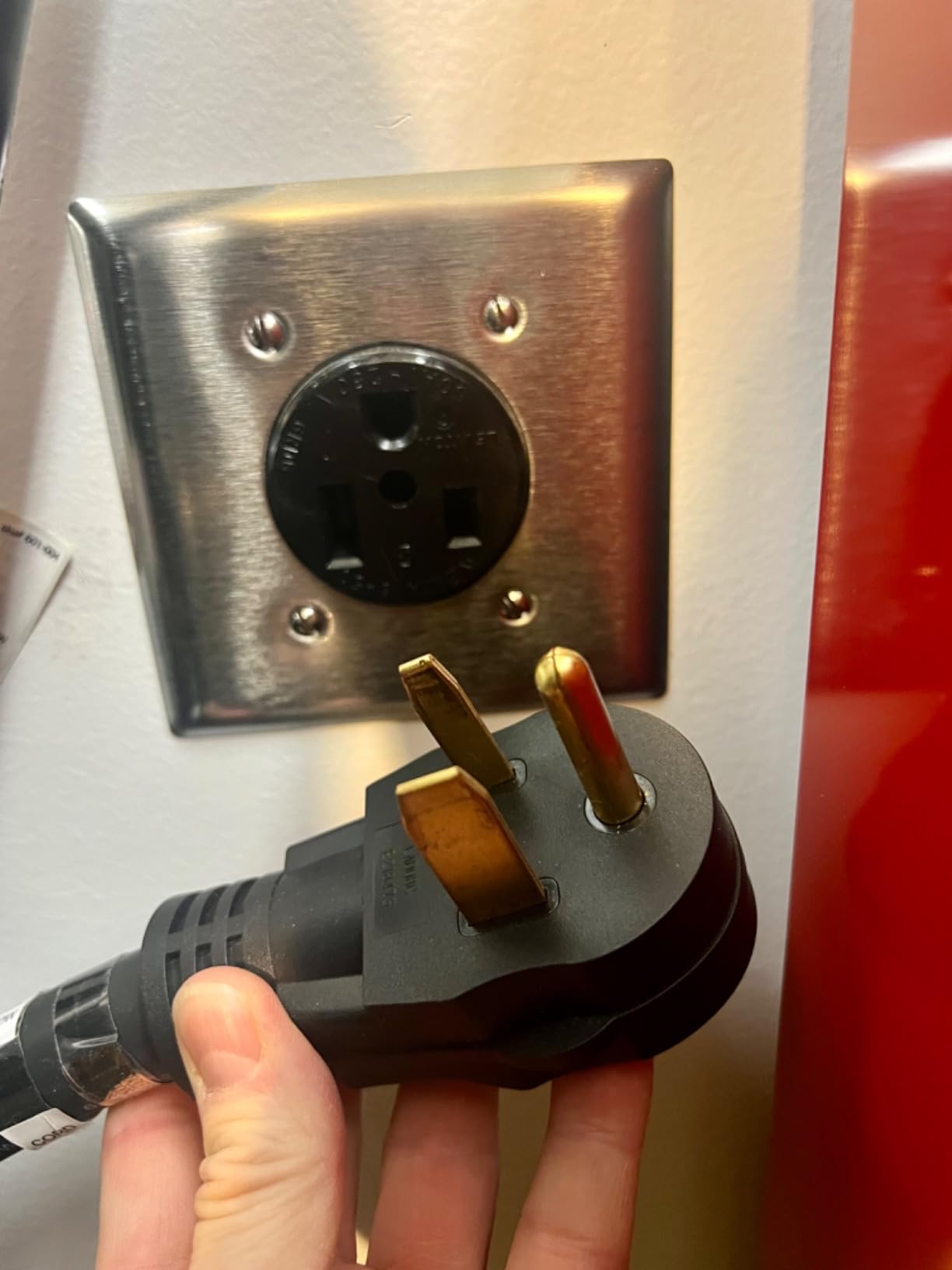
The SOOW jacket is the other differentiator. SOOW is the more demanding of the common service-cord jacket codes, and it is why this cord stays pliable at six gauge when most 6 AWG cables behave like garden hose. Owners coil it by hand without complaint, which at this weight takes some doing.
Molded connectors and electroplated copper terminals handle the oxidation problem that eats contacts near a welding bay, and the manufacturer keeps parts and support in the USA, which matters if a connector needs replacing in a few years.
When you genuinely need 6 AWG
Two situations call for it. The first is a machine that draws 40 amps or more on a 50 amp circuit, where an 8 AWG conductor is the limiting part of the system. The second is any run beyond fifty feet at high load, where the extra copper buys back the voltage you would otherwise lose at the machine.
If neither applies, an 8 AWG cord will do the same job at roughly half the weight. Over-buying conductor is not safer, it is just harder to move.
What you are signing up for at 36 pounds
Thirty-six pounds is not a cord you reposition casually. Plan where it lives, keep it on a reel or a heavy-duty hook, and expect that moving a fifty-foot bundle across a shop floor is a two-person job.
It is also not rated as water resistant, so outdoor welding in rain is outside what this jacket is claiming to do, whatever the temperature rating suggests.
8. ARCCAPTAIN 50ft 8 AWG Cord Rated to 221F

ARCCAPTAIN 40Amp 50ft Welder Extension Cord 8 AWG, 250V NEMA 6-50P to 6-50R
8 AWG 3 conductor
40A at 250V
50 ft
ETL listed
-40 to 221F
35% thicker insulation
Pros
- Rated to 221F
- above the 194F class used on several rivals
- Stays flexible down to -40C
- Insulation is 35% thicker than typical
- ETL listed with a one year warranty
- Available in several lengths and gauges
Cons
- Rated 40A not 50A despite the 6-50 connectors
- Newer brand with a much smaller review base
- Costs more than some 8 AWG alternatives
The thermal rating is the reason to look at this cord. A 105C rating is roughly fifteen percent above the 194F class used on several of the other 8 AWG cords in this list, and the insulation is described as thirty-five percent thicker than standard.
That headroom is worth something in a hot shop, next to a metal lathe, or on a jobsite where the cable sits in direct sun on the back of a truck. It also stays flexible at -40C, so the cold-stiffening problem that limits several rivals here does not apply.
Electrically it is a straightforward cord: 8 AWG, three conductors, forty amps at 250 volts, NEMA 6-50P to 6-50R, ETL listed, with an STW jacket rated for abrasion resistance and a one year service warranty.
The honest weakness is the sample size. With a much smaller review base than the established brands here, you are trusting a newer manufacturer, and we would want to see a few more seasons of feedback before treating the temperature claims as proven in daily service.
Whether extra heat rating is worth paying for
Standard service cord insulation is rated for 60C, which is 140F, and the better cords in this category are commonly marked to 75C or 90C. A 105C rating gives you real margin in an environment where the cord is near a heat source or sitting in summer sun.
For a normal garage or enclosed shop, the extra rating does nothing you will notice. For outdoor summer fabrication or a shop with a welding area that gets genuinely hot, it is cheap insurance.
Where it does not help you
It does not change the 40 amp conductor limit, so a 50 amp machine is still out of reach. Rating the insulation higher does not make thinner wire carry more current.
It also does not substitute for a track record. If you are fitting out a commercial shop and need documented field history, the smaller review base is a fair reason to look elsewhere.
9. Parkworld 50ft 6 AWG Cord, UL and cUL Listed

Parkworld 6AWG NEMA 6-50 Extension Cord 50 AMP, 250-Volt 6 Gauge Welder Extension Cord 50A 3-Prong 6-50P to 6-50R (50FT)
6 AWG/3C copper
50A at 250V
50 ft
21 lb
UL and cUL listed
Lighted right-angle connector
Pros
- True 6 AWG correctly rated for 50 amp loads
- UL and cUL listed rather than ETL
- Lighted right-angle connector on the female end
- Nickel-plated brass terminals resist oxidation
- Includes carrying strap
Cons
- No light in the male plug
- Very stiff and heavy so coiling is a chore
- Not rated as water resistant
- Stiffens noticeably in cold weather
Six AWG at twenty-one pounds is lighter than the other 6 AWG cord in this list, and it carries 12500 watts of capacity at 250 volts. Owners running 50 amp loads at seventy-five feet report no voltage drop, which is the case that separates real 6 AWG from a marketing claim.
The certification is the reason this cord sits where it does. It is UL and cUL listed, which is a different mark from the ETL approval carried by most rivals here and is often what a commercial equipment policy asks for.
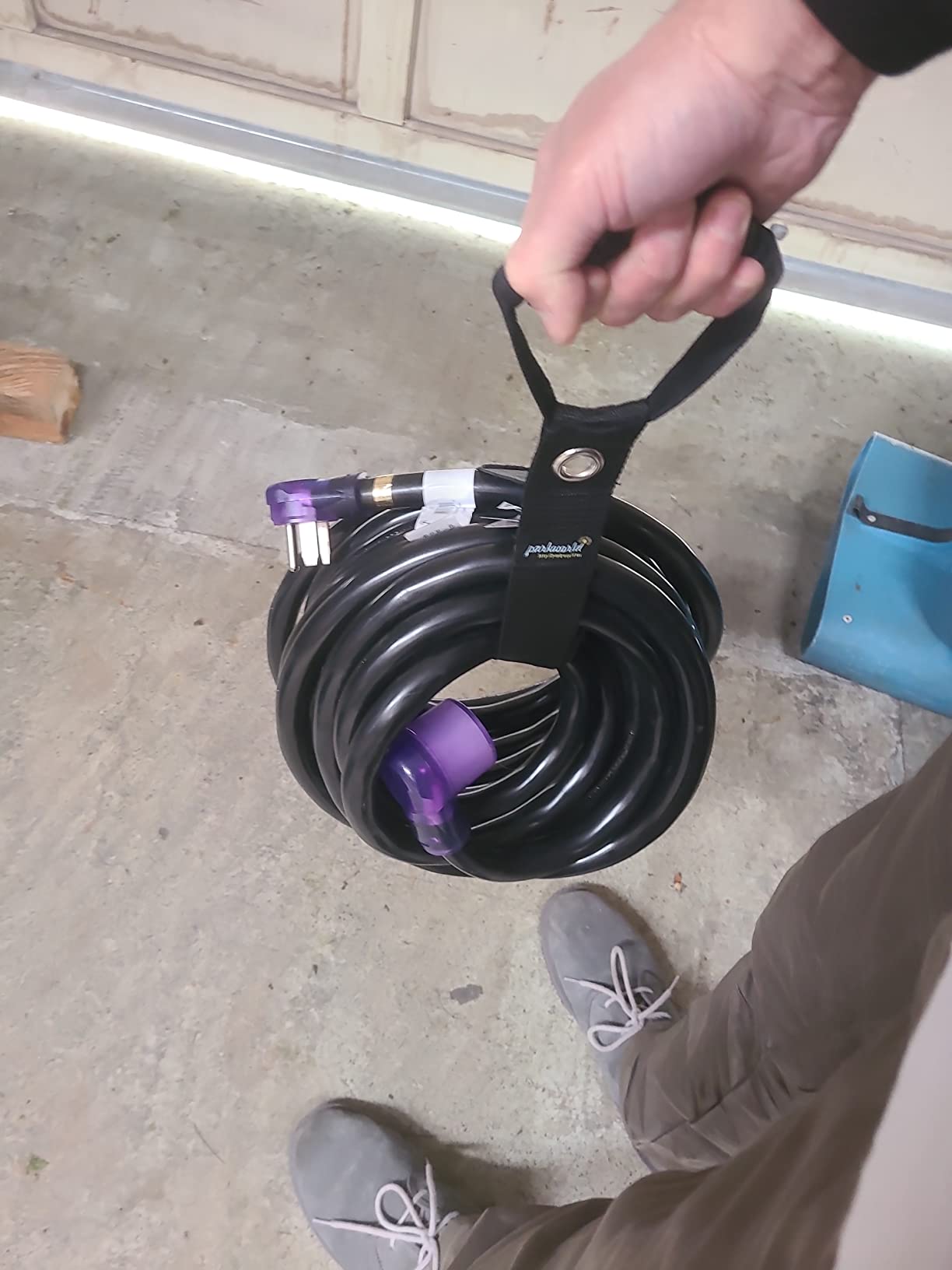
It also has a lighted right-angle connector on the female end, so the cable clears low receptacles and you can confirm power without walking to the machine. Nickel-plated brass terminals and a carrying strap with a handle are small touches that age well.
Owners coil it into a bundle roughly eighteen inches across, which is normal for this gauge. That is the price of carrying 50 amps, and if you move the machine often it is a daily annoyance.
When UL listing settles the decision
Home shops rarely care whether the mark is ETL or UL, because both indicate a real safety test. Commercial and institutional buyers often do, because their equipment policies and insurance terms can name a specific listing mark.
If your site requires UL or cUL on anything that carries a welding load, this is the cord that clears the requirement without a discussion with anyone.
What the extra gauge costs you in handling
Stiffness is the honest tradeoff. A 6 AWG jacket resists a tight coil, and in cold weather it resists more, so budget for a reel or a wall hanger rather than a floor pile.
Twenty-one pounds is manageable, but it is not the cord you will want to drag to the far end of a yard twice in an afternoon.
10. pizety 50ft 8/3 Cord, UL Listed, Green Jacket

pizety Welder Extension Cord 50 ft 10,000 Watts Nema 6-50 250-Volt Lighted end 8/3 8 Gauge Welder Extension Cord Welding 50 amp Plug ETL Approved 6/50 8 AWG
8/3 STW
8 AWG
50 ft
23 lb
UL listed
Lighted end
Green jacket
Pros
- Green jacket is far easier to spot on a shop floor
- Rated 600V
- well above the 250V a welder needs
- UL listed rather than ETL only
- Resists abrasion oil and moisture
- Built to stay flexible in cold weather
Cons
- Listed at 50A on an 8 AWG conductor
- Generic brand with a shorter track record
- Heavier than most 8 AWG cords of this length
- Listed weight does not match a typical 8 AWG cord
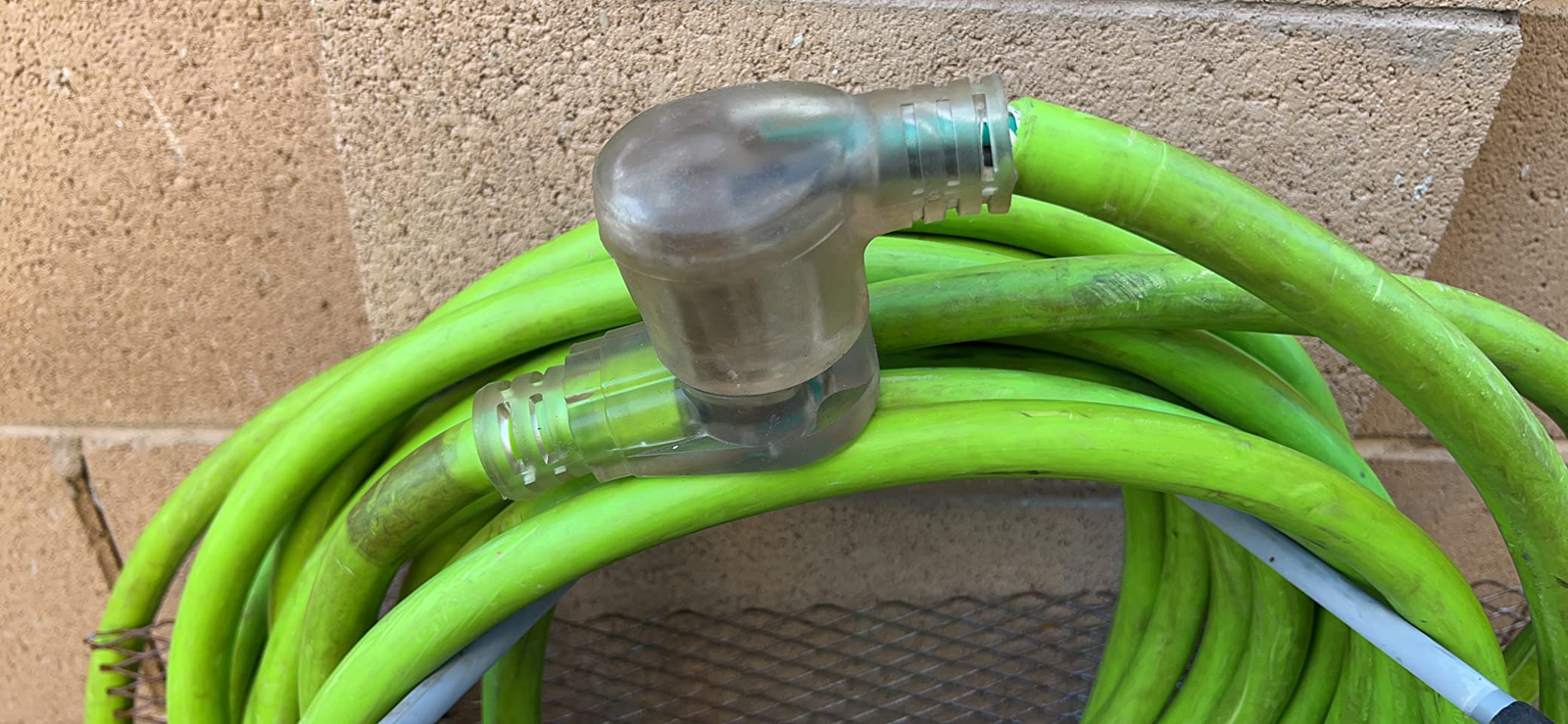
Color sounds like a gimmick until you have dragged a black cord across a shop floor in the dark and stepped on it. A green jacket is genuinely easier to see, and for anyone working in a fabrication truck or a shared shop it reduces trip incidents without costing you anything electrically.
The electrical claims go further than most. This cord is listed UL rather than ETL, rated 50 amps and 600 volts, and described as heavy duty 8 AWG copper with an STW jacket, an LED indicator on the receptacle end and molded ends at both ends.
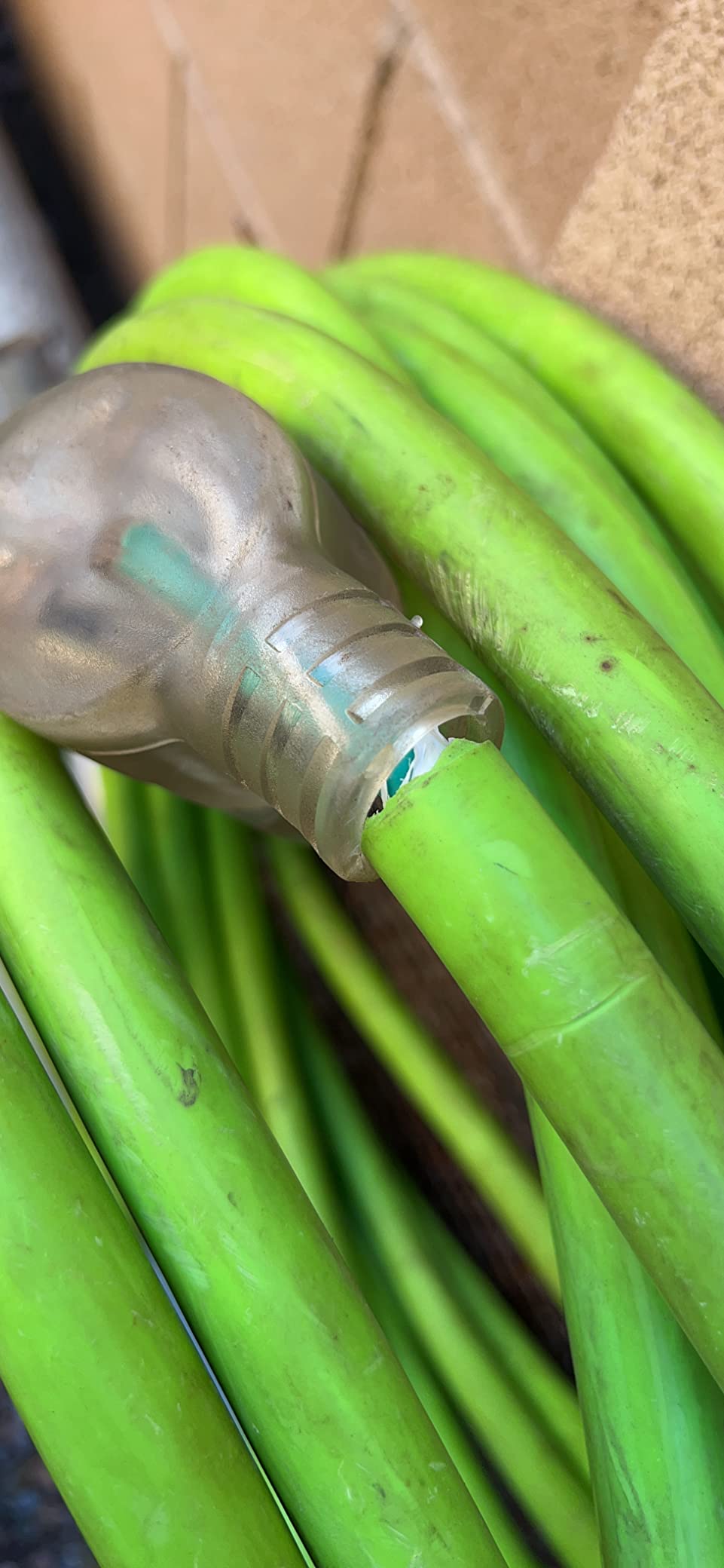
There is a mismatch worth being honest about. The plug is rated 50 amps while the conductor is 8 AWG, which for most 30 amp machines is entirely adequate and for a true 50 amp load is not. Treat this as a 40 amp cord with a 50 amp plug, exactly as you would any other cord in that situation.
The listed weight is also inconsistent with a typical 8 AWG cord of this length, and that inconsistency is a fair prompt to confirm the conductor yourself before trusting the gauge claim for anything critical.
Whether color is a real feature or a gimmick
In a home shop with one cord and one outlet, color changes nothing. In a mobile fabrication truck, a shop where several people work around the same floor, or a jobsite where the cable runs near a walkway, visibility is a safety measure with a real effect.
Light-colored jackets also show a damaged section sooner than a black one, because a scuffed spot in the insulation stands out against the color.
What to verify before you rely on it
Check the conductor. A 50 amp plug on 8 AWG is common in this category and not automatically a defect, but if your machine genuinely draws 50 amps, confirm the wire before you commit.
For anyone who wants a brand name with a long field history, a generic label is the trade you are making for the UL listing and the visibility. Both are real benefits, but neither substitutes for a decade of service records.
11. Fekuar 25ft 8 AWG 220V Cord with Lighted End

25FT 220V 50AMP Welder Extension Cord, 8 Gauge Industrial NEMA 6-50
8 AWG 3 conductor
40A/50A at 220V
25 ft
11.7 lb
Pure copper
Lighted end
Pros
- Rated for 220V on non-North-American machines
- Pure copper wiring
- Flame retardant and heat resistant sheath
- Lighted end receptacle for power indication
- Water resistant for indoor and outdoor use
Cons
- Generic brand with a small review base
- Listed at 50A on an 8 AWG conductor
- STV sheath is less common than STW or SOOW
- Listed weight is higher than the other 25 foot cord here
This cord is listed for 220 volts rather than 250, and that is the entire reason to consider it. North American welders run on 240 volts and the rest of this list is rated for that. If your machine came from a market running on 220, a 250 volt cord is outside what its listing claims.
Otherwise it is a conventional 25 foot 8 AWG cord with three conductors, pure copper wiring, a lighted end receptacle and a water resistant sheath described as flame retardant and heat resistant. Owners report it working as intended with Miller, Lincoln and Hobart machines.
Several owners mention that this cord let them postpone installing a dedicated outlet, which tells you something about how many people buy a 240V cord to bridge a temporary gap. That is a legitimate use as long as the cord is doing the electrical job properly.
The STV sheath code is the detail to note. It is less common than STW and SOOW in this category and is described as flame retardant and heat resistant, so it is a service cord rather than a lightweight household jacket, but you will find fewer replacement parts for it if the ends ever need changing.
When a 220V rating is the deciding factor
If your welder is a 220V machine, buy a cord that is listed for 220V. The 250V cords in this roundup are widely used on 220V circuits without problems in practice, but the listing is what your documentation is based on, and this is the cord that matches it.
If you are on a 240V system, ignore this rating entirely and pick from the 250V cords, which is everyone else in the list.
What the small review base means for you
With a much smaller sample of owner feedback than the leading cords here, you are buying on specification rather than on reputation. The spec sheet is reasonably complete, so that is not unreasonable, but it is a different risk profile.
Treat this as a sensible short-run cord rather than a shop investment, and inspect the connectors periodically if you run it at high load.
12. TOOLIOM 40ft 8 AWG Yellow Welder Cord, ETL Approved

TOOLIOM 40FT 8AWG Welder Extension Cord, 6-50P to 6-50R
8 AWG
40A at 250V
40 ft
Pure copper
ETL approved
Yellow PVC jacket
Pros
- Bright yellow jacket is hard to lose in a busy shop
- ETL approved with a one year warranty
- 100 percent pure copper conductors
- PVC jacket resists oil and abrasion
- Many length and gauge variants in the same line
Cons
- PVC jacket stiffens in cold weather
- Conductor count is listed inconsistently
- Smaller review base than the leading cords
- One year warranty
Yellow is a high-visibility jacket option, and it does the same job as the green cord does. In a shared shop, a cable you can see from across the floor is a cable nobody walks on.
It is a forty-foot 8 AWG cord rated 40 amps and 10000 watts at 250 volts, with NEMA 6-50P to 6-50R connectors, ETL approval, pure copper conductors and a PVC jacket described as resistant to oil and abrasion and to splash water.
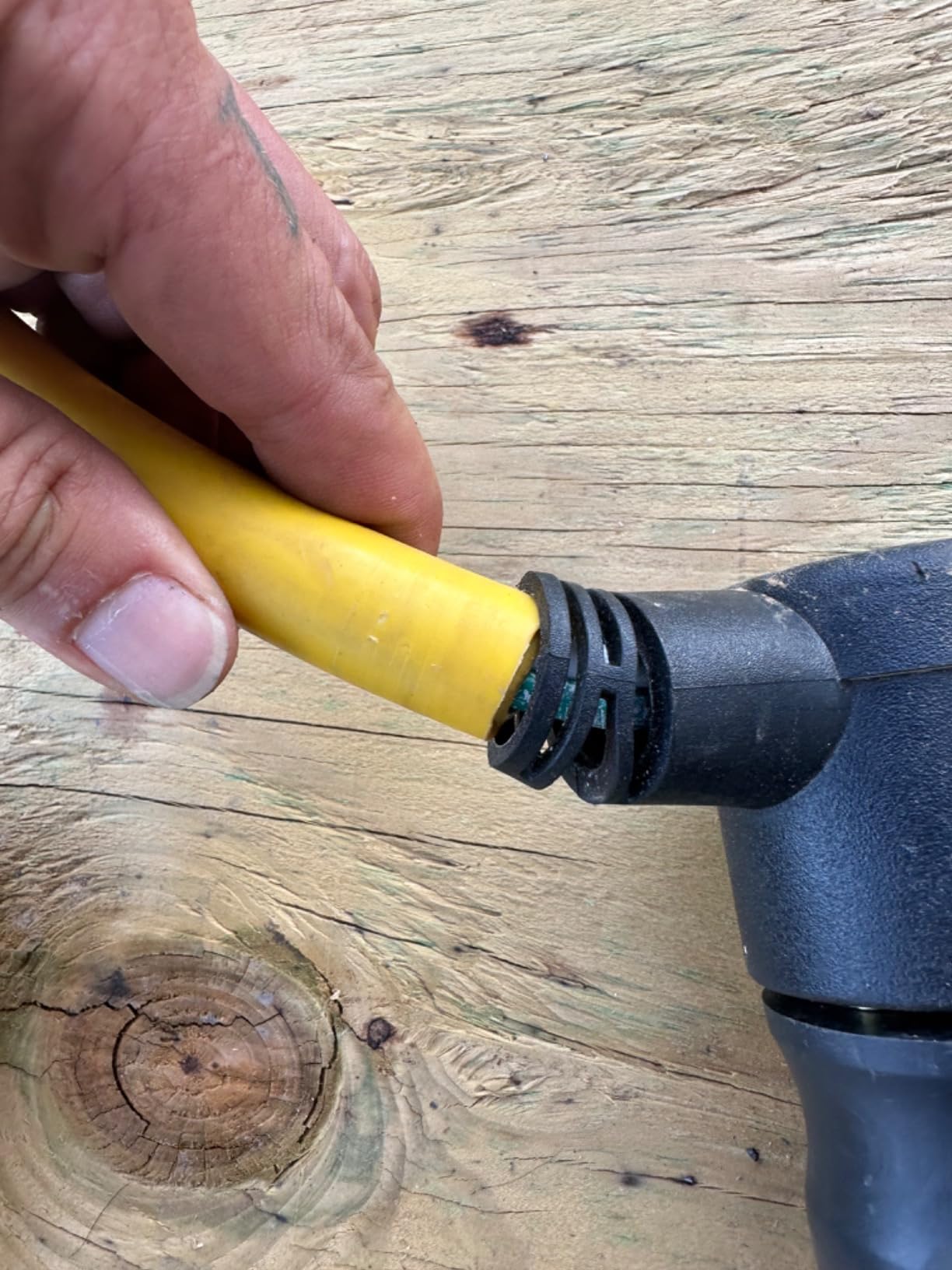
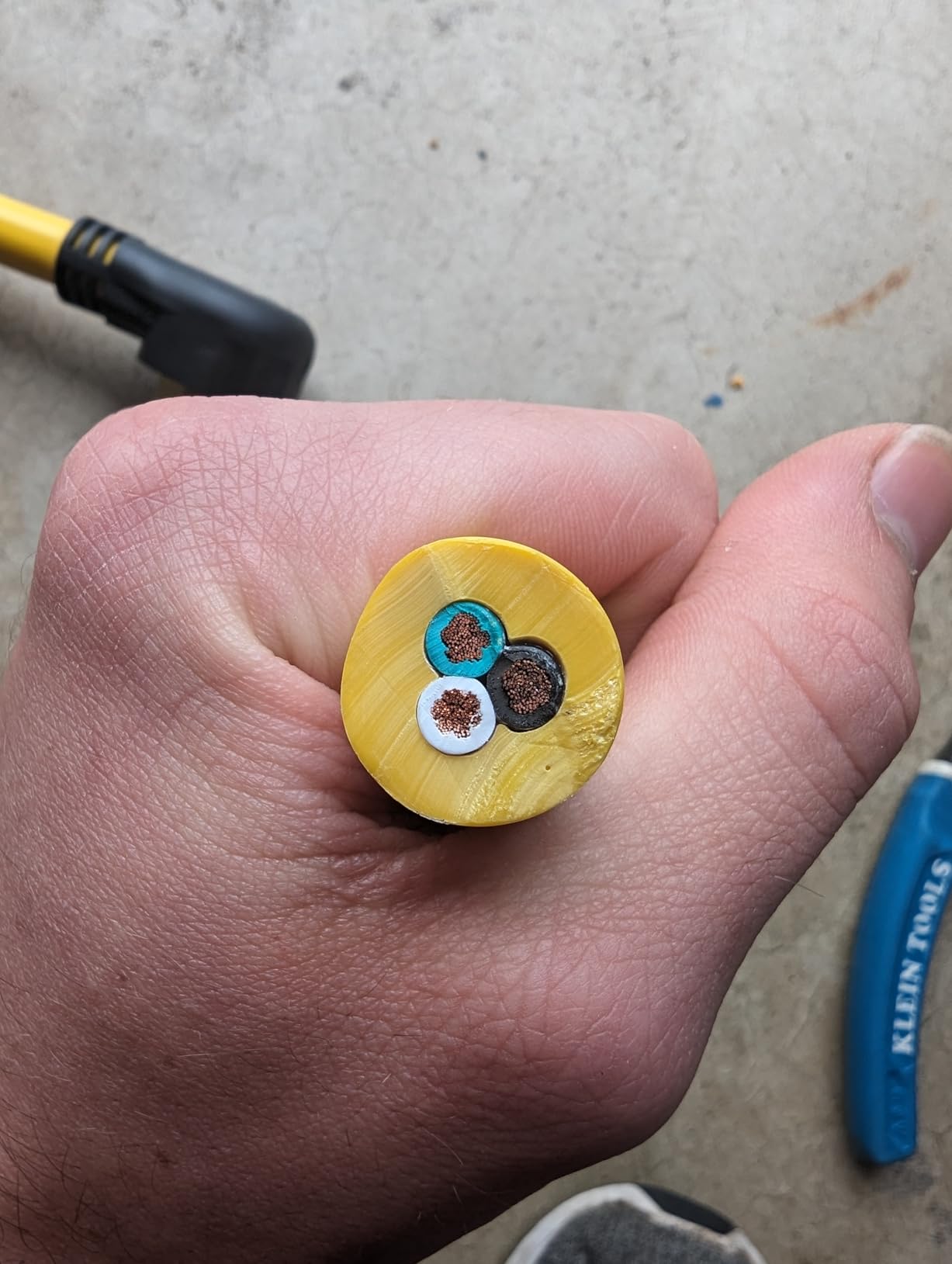
The spec block has an inconsistency worth flagging. The conductor count is listed as two, while a 6-50 configuration needs three, so treat that field as a listing error rather than a design choice and confirm the ground conductor is present before you rely on the cord for a long session.
PVC is a serviceable jacket for a heated shop, and oil and abrasion resistance cover most of what a cord meets in a fabrication bay. In freezing conditions it stiffens, which is the reason we would choose an STW or SOOW cord for winter outdoor work.
Whether yellow beats black or green
Against black, visibility is the obvious win. Against green, it is largely a matter of what your shop already has and what your eyes pick out fastest in low light, and honestly the difference between the two is small.
What matters more than the color is contrast with your floor. A yellow cord on a concrete floor reads well, and a yellow cord on a yellow painted line is the exception worth thinking about.
What to check before a long run
Verify the conductor count and the ground conductor, since the spec block does not agree with itself. A welding cord without a solid ground is a safety problem, and it takes five minutes to confirm.
For cold-weather or wet outdoor work, choose an STW or SOOW rated cord instead. This one is built for a shop floor, and the jacket says so.
How to Match a Cord to Your Welder’s Input Plate
Everything above is a detail compared to this one step: look at the input plate on the side or back of your machine and match the cord to it. Output amperage on the control dial tells you what you want to weld at. Input amperage tells you what the cord has to carry.
The gauge-to-amperage-to-length list below is the fastest way to narrow this down, and it is worth keeping open while you shop.
14 AWG, 15 amps, up to 25 feet. Household cords only. Not a welder cord.
12 AWG, 20 amps, up to 25 feet. Small 120V machines and light duty tools.
10 AWG, 30 amps, up to 50 feet. 120V stick welders drawing 20 to 30 amps, and small 120V MIG machines.
8 AWG, 40 amps, up to 50 feet. The standard answer for a 30 amp 240V welder. Ten of the twelve cords in this roundup sit here.
6 AWG, 50 amps, up to 100 feet. 50 amp machines, plasma cutters, and any run past 50 feet at high load.
Follow the length and gauge rules together. A 10 AWG cord that would be perfectly adequate at twenty-five feet is undersized at seventy-five, because resistance scales with length and the same current has to travel further.
Matching 120V welders to a household outlet
If your machine is a 120V stick welder with a NEMA 5-15 plug, none of the cords in this roundup will work. You need a 10 AWG cord with a 5-15P plug and a 5-15R connector, and a 25 foot length is comfortable.
This is the most commonly overlooked case in the category. Most welder extension cords sold online carry a NEMA 6-50 plug, and a buyer with a 120V machine can go a long time before realising the connector will not fit the outlet on the machine.
Understanding jacket codes
SOOW, STW, STV and PVC are not marketing words. They describe the jacket’s oil, weather, temperature and service rating, and they tell you how the cord behaves in your shop.
STW is the common contractor-grade service jacket and is what most of the cords here use. SOOW is a heavier-duty rating with better flexibility, which is why the 6 AWG SOOW cord in this list stays pliable at 36 pounds. STV is a less common variant described on its listing as flame retardant and heat resistant. Plain PVC is the entry level and stiffens in cold weather.
Verifying the conductor is real copper
The most common complaint in welding forums is a cord advertised as heavy duty that turns out to contain copper-clad aluminium. Copper-clad aluminium is far cheaper, runs hotter under load, and fails without warning once the cladding breaks down.
Three checks catch most of it. First, weight: a genuine copper cord is noticeably heavier than an aluminium-core cord of the same gauge and length. Second, the cut end: copper is bright and uniform while copper-clad aluminium shows a silvery ring with a copper skin. Third, the listing itself: a seller that names the conductor material and the strand count is a seller that has an actual product to describe.
Safety Rules Before You Plug In
Grounding is not optional. A welder cord with a compromised ground sends fault current through your work, your table and your body, and the lighted receptacle is one of the cheapest ways to confirm you have power before you step into that path.
Never use Romex or solid single-strand wire as a substitute for a service cord. It is not flexible, it is not rated for repeated flexing, and it will crack at the bend points. Forum advice and welder manuals sometimes disagree on minimum gauge, and where they disagree, follow the machine manual and go one size larger rather than one size smaller.
Use the shortest practical run, size the breaker to the machine, and never daisy-chain cords to reach a distant outlet. Two connections in series is two places to add resistance and two places to fail, and it is a common reason welders trip breakers mid-bead.
Welding from a portable generator adds a second sizing problem on top of all of this, and it is worth reading our guide to the best extension cords for generators before you commit to a setup where the welder and the machine are fed from the same source.
On the commercial side, OSHA’s position is that extension cords are for temporary use and should not serve as permanent wiring in a workplace. If your welder lives permanently at the far end of a shop, the right answer is a properly installed 50 amp receptacle on its own circuit, not a permanently draped cord. That is a code and insurance question as much as an electrical one, and it is worth a conversation with a licensed electrician before you build around the extension cord.
Finally, if an undersized cord has been overheating, do not just replace it with a bigger one and reuse the machine without checking. Sustained operation on an undersized cord can stress the welder’s power supply, and a machine that has been running hot deserves a look before it goes back into service.
Frequently Asked Questions
Can I run a welder on an extension cord?
Yes, but only with a cord sized to the machine’s input amperage and the run length. A 30 amp 240V welder needs 8 AWG out to 50 feet, and a 50 amp machine needs 6 AWG. Running a welder on a household cord or an undersized welder cord overheats the conductor, drops voltage, and trips the breaker mid-bead.
What gauge extension cord should I use for a welder?
Match the cord to the input amperage on your machine’s nameplate, not to its output rating. 10 AWG suits a 120V machine drawing 20 to 30 amps, 8 AWG covers most 30 amp 240V welders out to 50 feet, and 6 AWG is the right call for a 50 amp machine or any run longer than 50 feet at high load.
How long of an extension cord can I use for a welder?
Fifty feet is the practical ceiling for 8 AWG at 40 amps. Beyond that, step up to 6 AWG rather than adding length, because resistance grows with distance and the voltage drop shows up as a weak, unstable arc. Many owners in welding forums make the same point from the other direction: buy the shortest cord that reaches your work.
What type of plug do most welders use?
Most welders use a NEMA 6-50 twist-lock, which is what every cord in this roundup carries. Small 120V welders use a household NEMA 5-15 plug and need a 10 AWG cord with 5-15 ends. Some 30 amp machines use a 6-30 plug, so check the receptacle on your machine before buying anything.
Is it safe to use an extension cord with a welder?
Yes, when the cord is rated for the load, the ground is intact, and the run is short. It is not safe when the cord is undersized, when it is coiled under load, when it substitutes for permanent wiring in a commercial shop, or when it has been damaged. Inspect the jacket and connectors, keep the run short, and size the breaker to the machine.
Is a 10 gauge extension cord overkill for a welder?
For a 240V welder, yes, 10 AWG is more conductor than you need and it will be lighter and cheaper. For a small 120V stick welder drawing 20 to 30 amps, 10 AWG is exactly right, and going to 12 AWG or a household cord is where people start tripping breakers. Gauge is only overkill relative to a real input number.
What are the OSHA rules regarding the use of extension cords?
OSHA treats extension cords as equipment for temporary use rather than permanent wiring. A cord should not be the fixed supply for a welder in a commercial shop, and daisy-chaining cords to extend a run is against the rules as well. If a machine stays in one place, have a licensed electrician install a properly grounded receptacle on its own circuit.
Final Verdict on the Best Heavy Duty Extension Cords for Welders
The Miady 25 foot 8 AWG cord is the best heavy duty extension cord for welders in this group, with all-copper construction, a light in the receptacle, ETL approval and the largest body of owner feedback here. If your shop needs more reach, the MaxWorks at forty feet is the better buy, and the RVGUARD covers the short run without dragging dead weight across the floor.
The PrimeWeld and the Parkworld 6 AWG are the two here rated for a true 50 amp load, and they differ in jacket and certification. If your machine draws 50 amps, buy one of those and skip the rest of the field.
One last check before you order: read the input amperage on your machine and buy the shortest cord that reaches. That single habit prevents most of the breaker trips people complain about in welding forums, and no cord on this list fixes a run that is too long for its gauge.