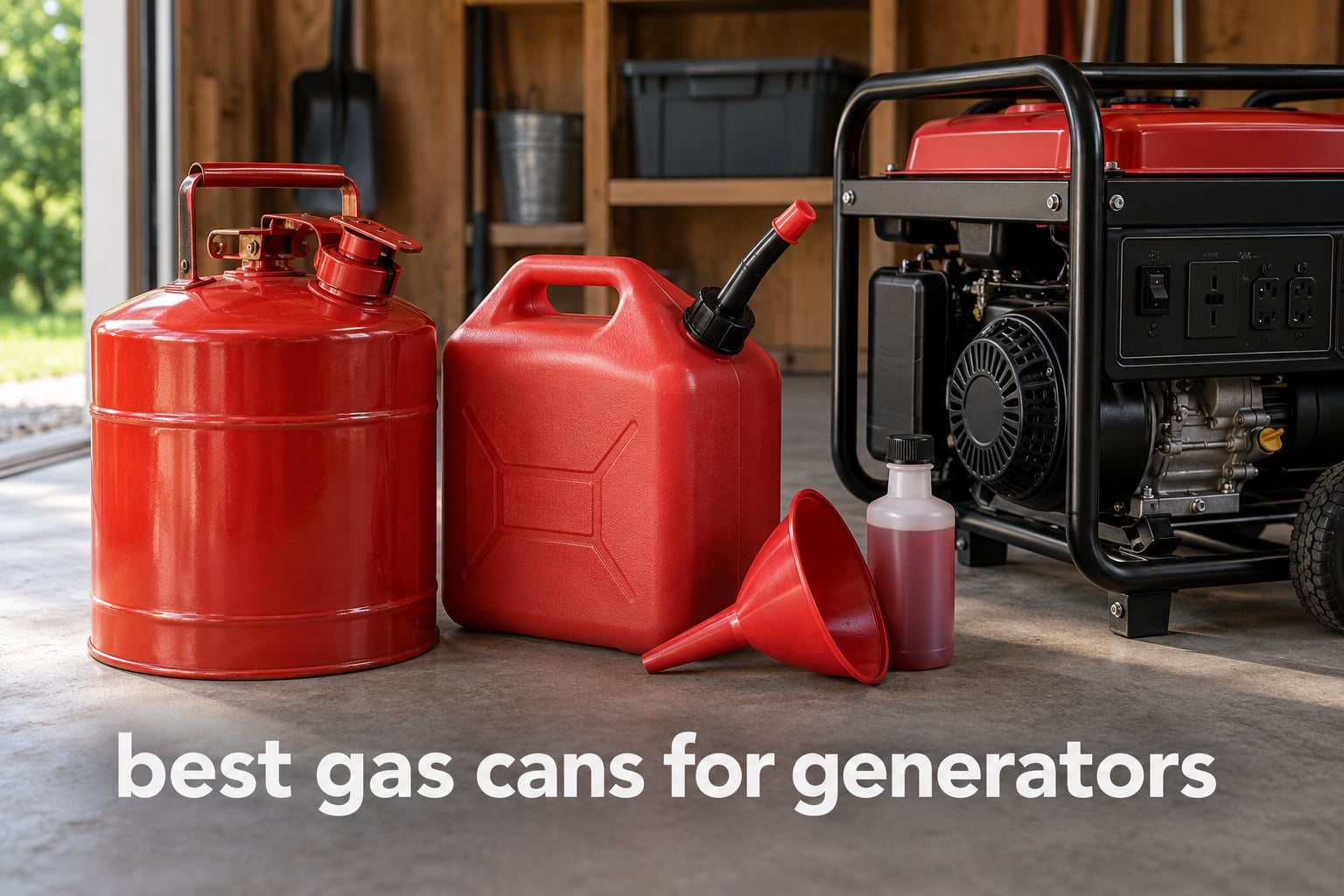
If you own a portable generator, the can you pour from matters more than most buyers expect. The right container decides whether a refuel is clean or messy, whether the fuel you stored last winter still burns, and whether you can lift it at 6 a.m. in the dark without straining your back. Our team pulled specs, review histories and owner feedback on ten containers so you can match one to the size of machine you actually own.
What surprises people is how little the can shape has to do with the generator itself and how much it has to do with the fuel logistics around it. A full five-gallon can of gasoline weighs about 40 pounds, so a can that pours without tipping saves your arms and your jacket. Metal bodies keep fuel fresher than plastic. And compliance labels decide whether you can legally park a can in a work trailer or a rented shop at all.
In this guide to the best gas cans for generators in 2026, we break the roundup into three tiers: five-gallon hand cans for topping off a single machine, metal cans for fuel you intend to store for months, and wheeled caddies when you want to stop walking to the pump. We also cover the two questions the search results never answer plainly: how many hours a can of fuel actually runs your machine, and where the can should sit relative to a running generator.
If you also handle used oil, our picks for the best oil catch cans cover the other half of a tidy garage fuel system.
Table of Contents
Top 3 Picks for Best Gas Cans for Generators in October
Our three favorites cover the three ways people actually store generator fuel: a steel can that keeps fuel stable through the off-season, a controlled-pour steel can for filling a tight tank neck, and a light plastic can for frequent top-ups.

Eagle 5 Gallon Type I Red Safety Can
- 24-gauge galvanized steel
- Self-closing gasketed spout cap
- F-15 funnel included
- FM UL and ULC approved

Justrite Type II Safety Can
- Safe-Squeeze trigger
- 9-inch metal pour hose
- Stainless steel flame arrester
- FM UL and TUV certified

Scepter 5 Gal SmartControl Gas Can
- Variable-flow spout
- Spout extender and integrated vent
- Funnel included
- 2.5 pounds empty
All 10 Gas Cans for Generators at a Glance (2026)
Every pick below appears here with its capacity, spout system and compliance credentials so you can rule options in or out fast.
| Product | Specifications | Action |
|---|---|---|
| Eagle 5 Gallon Type I Red Safety Can |
|
Check Latest Price |
| Justrite Type II Safety Can |
|
Check Latest Price |
 Justrite Type I Safety Can Justrite Type I Safety Can |
|
Check Latest Price |
| Scepter 5 Gal SmartControl Gas Can |
|
Check Latest Price |
 SureCan 5 Gallon Type II Container SureCan 5 Gallon Type II Container |
|
Check Latest Price |
 VP Racing 5.5 Gallon Square Motorsport Jug VP Racing 5.5 Gallon Square Motorsport Jug |
|
Check Latest Price |
 Scepter Duramax 14 Gallon Gas Caddy Scepter Duramax 14 Gallon Gas Caddy |
|
Check Latest Price |
 PAMBEE 15 Gallon Fuel Caddy PAMBEE 15 Gallon Fuel Caddy |
|
Check Latest Price |
 Wavian NATO 20 Litre Jerry Can Wavian NATO 20 Litre Jerry Can |
|
Check Latest Price |
 TUFFIOM 35 Gallon Fuel Caddy TUFFIOM 35 Gallon Fuel Caddy |
|
Check Latest Price |
1. Eagle 5 Gallon Type I Red Safety Gas Can – the best overall generator fuel can
Eagle 5 Gallon Type I Red Safety Gas Can for Gasoline
5 gal
24-gauge galvanized steel
5.3 lb empty
F-15 funnel included
OSHA and NFPA 30
Pros
- Highest rated can in our test group
- Self-closing gasketed cap that vents automatically
- Galvanized steel resists rust and dents
- Includes an F-15 funnel for filling
Cons
- Single opening means filling and pouring share one spout
- Heavier than a plastic can of the same size
- Fixed handle gives less pouring leverage
This is the can we keep coming back to. It carries the highest rating in the group, sits in the top rank of its retail category, and has accumulated more owner feedback than any other pick here. For most households with a portable generator, it solves the whole problem in one object: fill, store, carry, pour.
The body is 24-gauge hot-dipped galvanized steel with a baked-on powder-coat finish, and the seams are double interlock no-weld so the bottom edge will not split when you set it down on concrete. The fixed handle and 5.3-pound empty weight are the trade-off against plastic, and the manufacturer covers workmanship for one year.
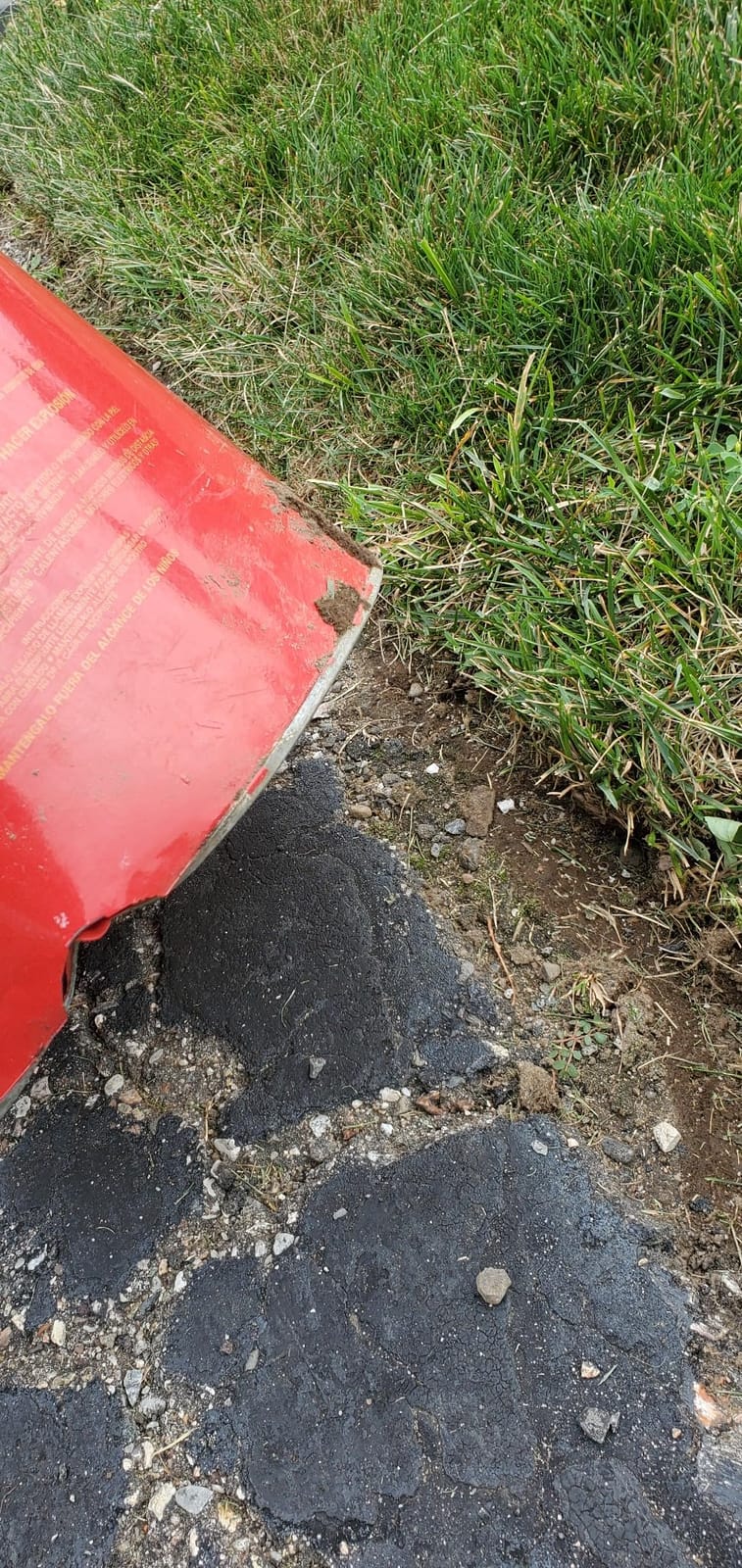
The spout is the reason this can holds its rating. The gasketed cap closes on its own and the cap assembly opens automatically to vent internal vapors, so the pour does not stall every few seconds the way cheaper cans do. A non-sparking flame arrestor sits inside the neck, and the can meets OSHA Standard 1910.106 plus NFPA code 30 with FM, UL and ULC approval. That certification is the one to check first if your generator lives in a work trailer or a rented bay.
Owner feedback repeatedly highlights the tight seal in transit. Buyers say a full can stays put and stays dry in a truck bed, and the included F-15 funnel makes filling at the pump a one-hand job. The recurring note is weight: a full can is roughly 40 pounds, and several owners suggest smaller sizes for users who refill often.
When this can makes sense for your generator
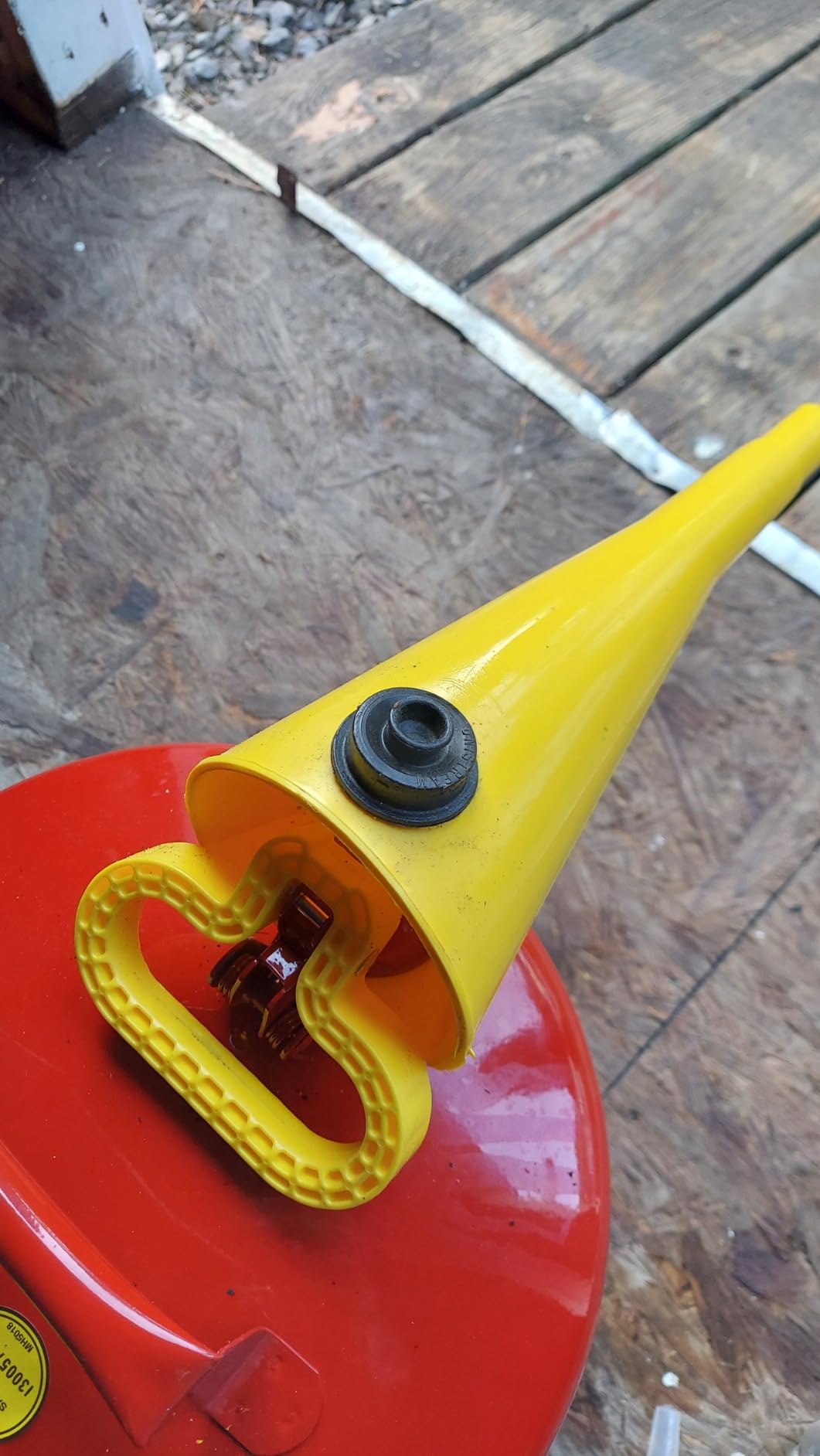
This is the right pick if your generator has a conventional tank neck you can reach with a straight spout and you plan to keep fuel over a season. Metal construction is the deciding factor here, because gasoline stored in steel holds its quality longer than the same fuel in plastic. If your machine has a recessed filler neck on the side, keep reading before you commit.
It also suits anyone who needs a compliant container on paper. FM, UL and ULC approval plus OSHA and NFPA 30 compliance covers workplace and rental-storage rules that an uncertified plastic jug will not.
Where it disappoints
The single-opening Type I layout is the core weakness. You fill and pour through the same hole, so a slow or partially clogged spout affects both jobs, and there is no second opening to vent through while the cap is closed.
Pouring control is limited too. The fixed handle does not let you change grip mid-pour the way a Type II lever does, so top-ups take a little more care. If you want to fill a narrow neck without a funnel, look at the Justrite Type II instead.
2. Justrite Type II Safety Can – the best controlled pour into a generator tank
Justrite Type II Gasoline Safety Can, Red Galvanized Steel, FM Approved
5 gal
alloy steel
8.7 lb empty
9 inch metal pour hose
Safe-Squeeze trigger
Pros
- Glug-free controlled dispensing
- Hose reaches narrow generator openings
- Chemical-resistant powder-coat finish
- FM UL and TUV certified
Cons
- Heaviest listed empty weight among the steel hand cans
- Lever design needs practice
- Premium price for the category
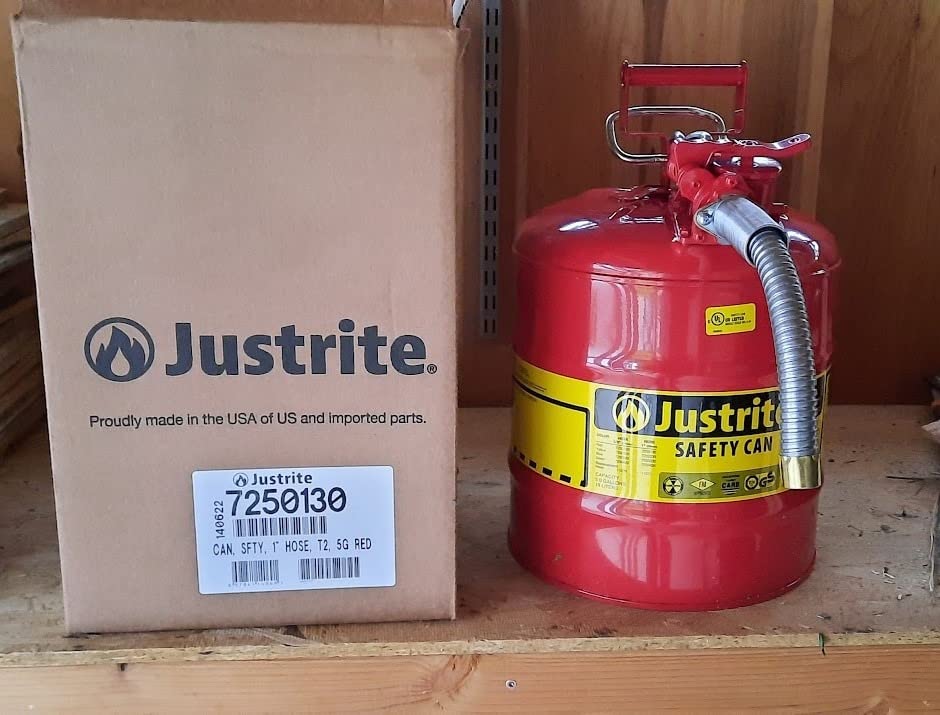
Most generator fuel complaints are really complaints about the pour, and this can is the fix. The Safe-Squeeze trigger feeds fuel through a flexible nine-inch metal hose, which means you can drop a steady stream into a recessed filler neck without angling a five-gallon can at an awkward pitch. Reviewers call out exactly this when they describe filling tight equipment openings.
Type II means two openings: one to fill, one to pour. That separation is what lets the manifold deliver glug-free flow, and it is why this can holds a 4.6 rating across more than 3,700 reviews. The lift lever also doubles as a faster refill handle, which matters when the can is heavy.
Construction is galvanized steel with a chemical-resistant powder coat, pressure-tested, with a stainless steel flame arrester and a self-closing leak-tight lid. Certifications run to FM Approved, UL and ULC Listed, and TÜV Certified, the broadest stack on any hand can we tested. At 11.7 by 10.9 inches, it is also the most compact five-gallon footprint in the group.
The tradeoff is honest: 8.7 pounds empty is the heaviest of the five-gallon cans here, and the lever-and-trigger mechanism asks for a short learning period. A minority of reviews report that flow can still run slow once you understand the trigger. If you will fill often and lift high, the plastic options are kinder on your back.
When this can makes sense for your generator
Pick this one when your generator has a recessed or awkward filler neck, or when you run equipment where a hose-style pour keeps fuel off a hot surface. The nine-inch hose is the reason owners with mowers, sprayers and small engines rate it highly.
It is also the choice for shops and job sites that need documented certification. FM, UL, ULC and TÜV markings cover the compliance checks most workplace safety programs ask about.
Where it disappoints
Empty weight is the main complaint. At 8.7 pounds you are carrying roughly 48 pounds of fuel and hardware, and several reviewers point out that the lever takes practice to open and close without a surge of flow.
It is also the most expensive five-gallon can in the roundup. If the budget matters more than pour control, the Scepter and the Eagle cover the same ground for noticeably less.
3. Justrite Type I Safety Can – the best steel can for a tight seal
Justrite Type I Gasoline Safety Can, Red Galvanized Steel, Made in the USA
5 gal
24-gauge galvanized steel
7 lb empty
counterbalanced handle
FM UL and TUV listed
Pros
- Holds a tight seal when jostled in transit
- Metal body preserves fuel longer than plastic
- Deep stainless mesh accepts a full nozzle
- Integrated bottom lip aids balance
Cons
- Funnel sold separately on this configuration
- Full weight is awkward to hold with a funnel upright
- Thinner steel than some buyers expect
Owner reviews for this can center on one word: seal. Buyers report zero leakage even after the can rides loose in a vehicle, and many say they replaced their plastic cans with it for that reason alone. The spring-loaded filler cap does the heavy lifting, clamping down hard enough that fuel stays put.
It is a Type I single-opening can, so it shares the Eagle’s layout, but the counterbalanced swinging handle changes how it feels in the hand. You keep the same grip while pouring, and the integrated bottom lip lets the can set down level instead of tipping on its rim, which is why owners on hard surfaces report fewer dents.
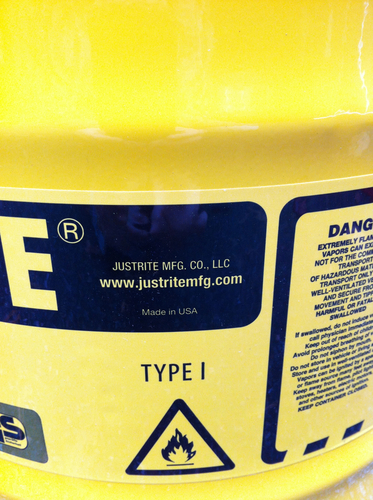
The body is 24-gauge galvanized steel with a chemical-resistant powder coat, leak-tested, with a stainless steel flame arrester mesh deep enough to accept full nozzle insertion. The lid also has automatic positive-pressure relief so pressure does not force fuel past the gasket. Like the Eagle, it is made in the USA and carries FM, UL, ULC and TÜV certification.
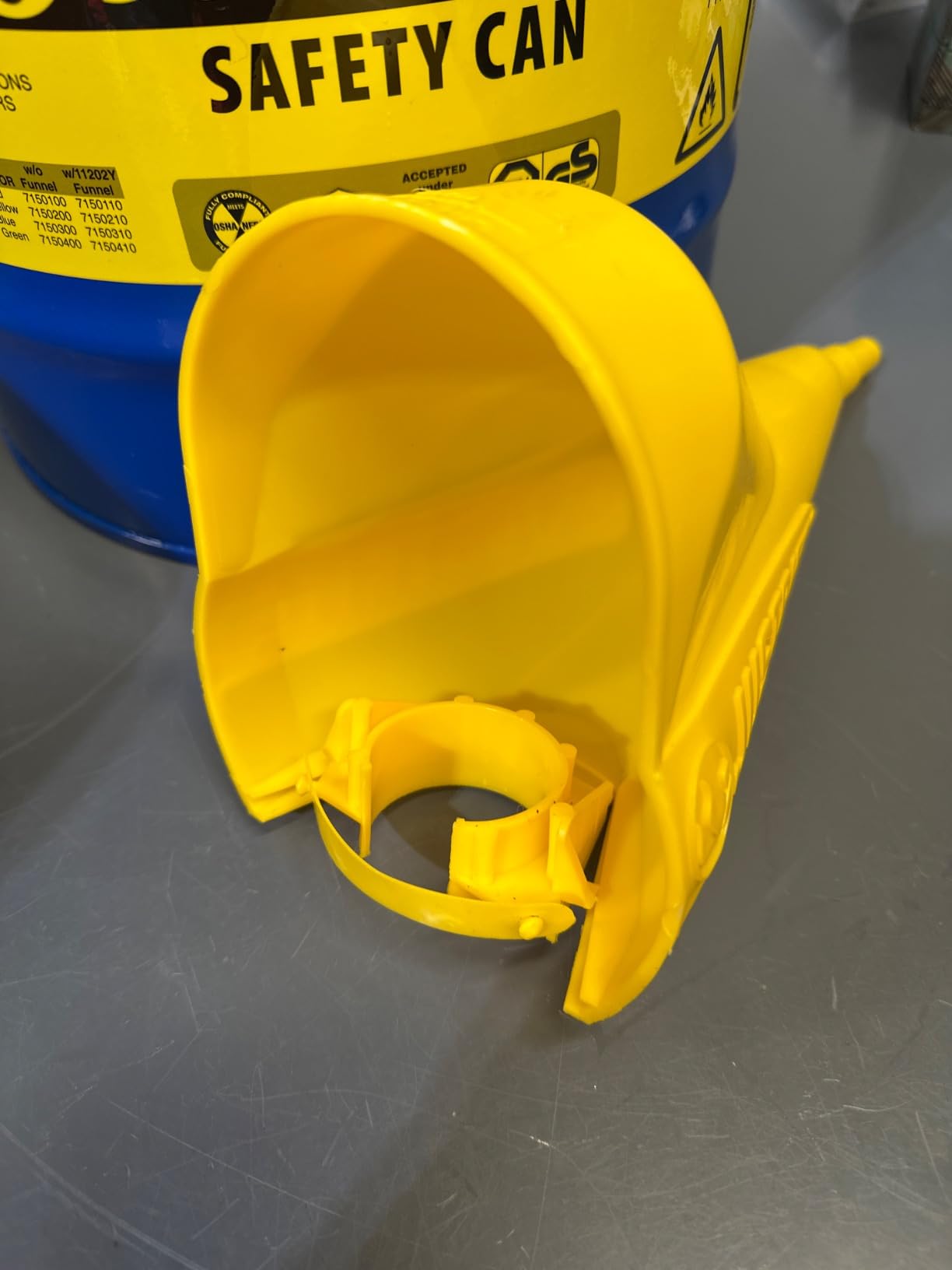
At 7 pounds empty it sits between the Eagle and the Type II Justrite in weight, and its 4.6 rating across 2,194 reviews sits right alongside them. The funnel is a separate purchase on this configuration, and some buyers expected heavier-gauge steel at this price. Budget for a funnel before your first pump trip.
When this can makes sense for your generator
This is the pick for anyone storing fuel through an off-season, or hauling cans in a truck bed to a job site. Owners who rotate fuel between vehicles and machines often standardize on it because the seal holds under jostling.
Choose it over the Eagle if you pour with one hand often, because the swinging handle keeps your grip through the pour and the bottom lip controls the set-down.
Where it disappoints
The missing funnel is the practical gap. Buying a full can and a separate funnel means managing two objects at the pump, and a funnel tipped at the wrong angle can drip.
Steel gauge is also a fair complaint. Several reviewers expected a heavier can at this level of spend, and the Type I layout still means one opening for both jobs. If dispensing control matters more than seal tightness, the SureCan does the same job with a trigger.
4. Scepter 5 Gal SmartControl Gas Can – the best value for everyday refills
Scepter 5 Gal Gas Can, Spill Proof SmartControl Spout, Spout Extender, Red
5 gal / 18 L
plastic
2.5 lb empty
SmartControl spout
funnel included
Pros
- Light carry weight for a full-size can
- Variable flow reduces drips and glugs
- Fills up to 3 gallons per minute
- Funnel included
Cons
- Plastic holds fuel less well over long storage
- Spout extender adds height
- Flow speed depends on squeeze pressure
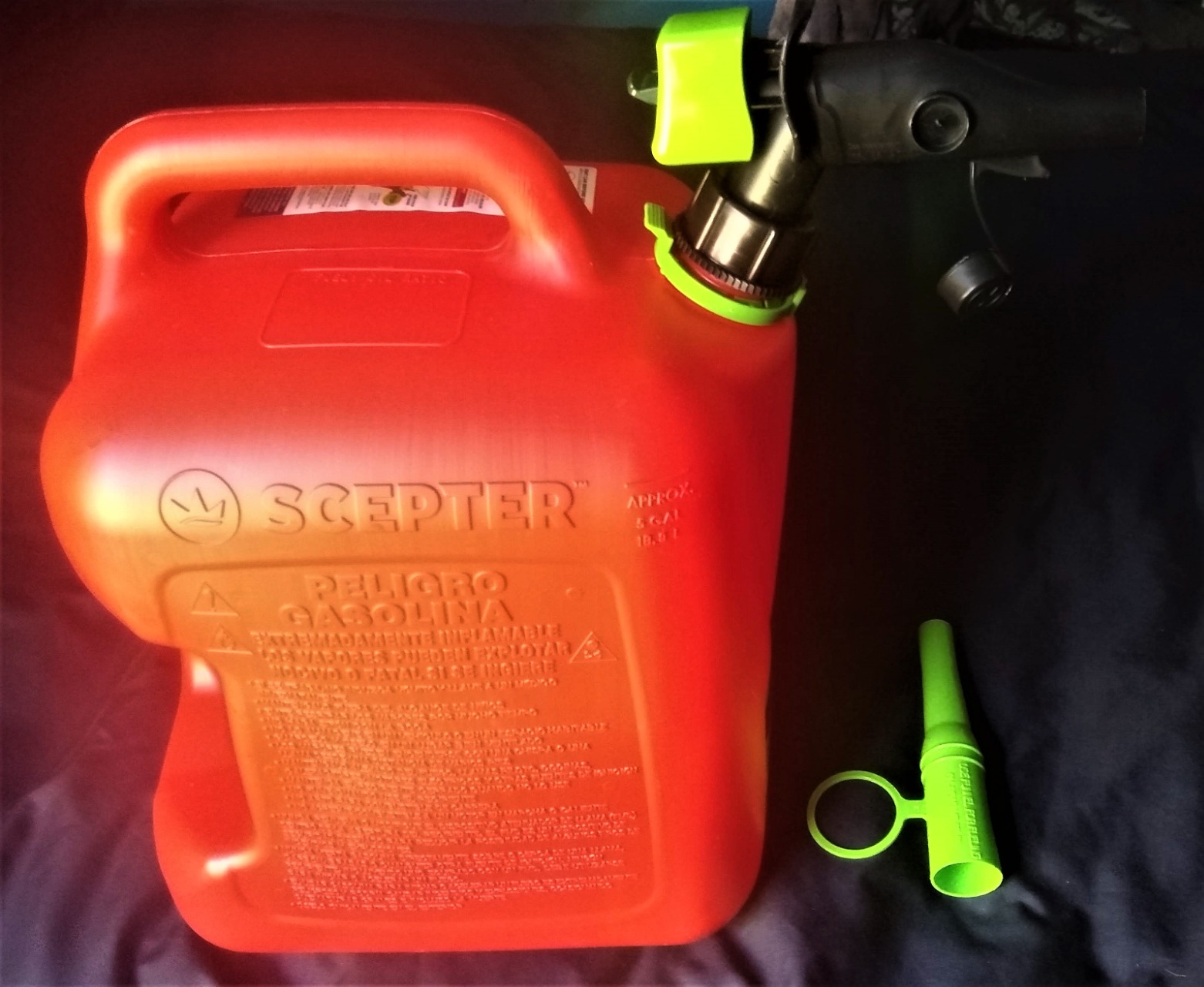
This is the everyday workhorse. At a listed 2.5 pounds empty it is far lighter to carry than the steel cans here, which matters when you are carrying fuel across a yard or up a step to a running machine. The SmartControl spout meters flow by squeeze, so a slow top-up and a fast top-up use the same can.
Fill speed is its quiet advantage. The integrated air vent in the spout plus the included funnel produce flow up to 3 gallons per minute, which means a refill at the pump takes minutes rather than a coffee break. Owners also like that the spout can be aimed into a narrow generator filler without removing a funnel.
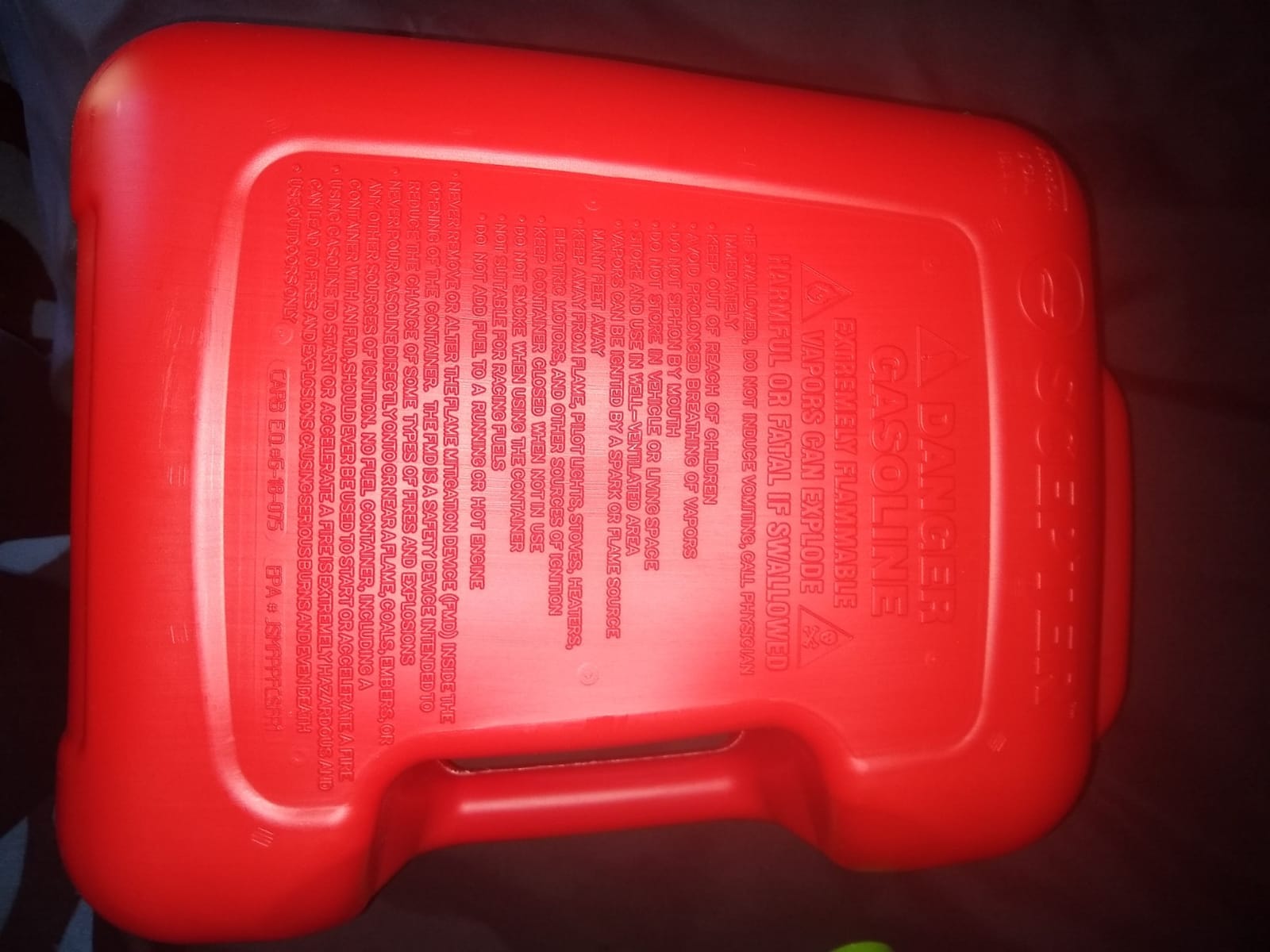
Compliance is real here: the can is EPA and CARB compliant and child safety compliant to ASTM F852, with a flame mitigation device built into the spout and a five-layer wall construction intended to limit vapor leaks. Scepter backs it with a two-year manufacturer warranty. For a mid-range can, that specification sheet is unusually complete.
The rating of 4.3 across 3,515 reviews trails the steel cans, and the reason is consistent: plastic is not as good at holding fuel for a full season. The spout extender also makes the can taller and less stable to stack, and flow speed depends on how firmly you squeeze.
When this can makes sense for your generator
Buy this if you refill your generator often, if anyone in the house is likely to try to carry a full can, or if your fuel budget is the deciding factor. The included funnel removes a purchase, and the weight difference versus steel is felt immediately.
It is also the sensible pick for a can that lives in a truck bed and gets used every week, rather than fuel you intend to store for months.
Where it disappoints
Long-term storage is the weak point. If you plan to buy fuel before a storm season and leave it untouched, a steel can protects the fuel better. Plastic also scuffs and can degrade with UV exposure over years in direct sun.
The squeeze spout takes practice, and owners report that flow stops if they do not hold the vent path open. The included funnel partly solves the venting problem and we recommend using it.
5. SureCan 5 Gallon Type II Container – the best spill-controlled pour
SureCan 5 Gallon Type II Storage Container – Rotating Spout, Self-Venting Design & Spill-Controlled Dispensing – Durable Multi-Purpose Utility Can (Red, SUR5SFG2)
5 gal
thick-wall plastic
4 lb empty
rotating spout with thumb trigger
3-year warranty
Pros
- Pours without tipping the can
- Self-venting design steadies flow
- Double O-ring spout seal
- Thick-wall body
- Replacement O-rings available
Cons
- Spring-loaded fill cap can pop off while fueling
- Fill cap has no retention lock
- Some reports of plastic debris inside a new can
The defining feature is that you pour with a thumb instead of your shoulder. The spout rotates downward and a trigger dispenses, so the can stays upright on the ground while fuel runs into a generator tank. Owners say that single change eliminated the spills they had accepted as normal.
It is a self-venting Type II design, which keeps flow steady and cuts splashing at the filler neck. The double O-ring spout seal adds a second line of leak protection, and Scepter-style replacement O-rings are available from the manufacturer, which matters because rubber seals are the part that wears out first.

Specs are 5 gallons, 640 fluid ounces, 13.1 by 15.61 inches at 4 pounds empty, with a 3-year limited warranty, the longest warranty in the roundup. The body is thick-wall plastic rather than thin utility plastic, and the build is made in the USA. The 4.6 rating reflects how well the dispensing system works.
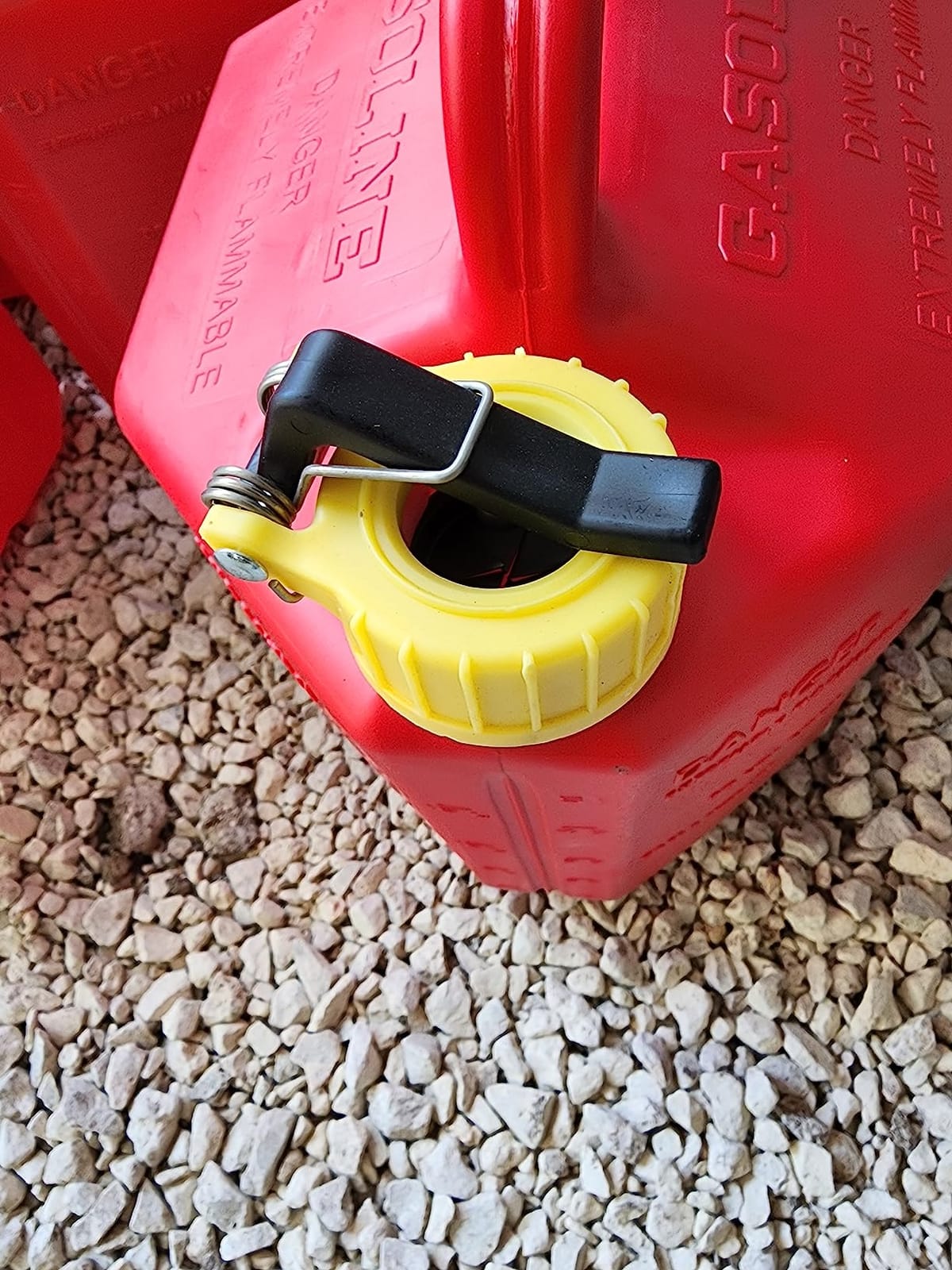
The most repeated complaint is the spring-loaded top fill lid, which can pop off while you are fueling and is difficult to disengage. It also lacks a retention lock, so it can loosen if knocked. A smaller group reports finding plastic debris inside a new can, so check inside before the first fill.
When this can makes sense for your generator
This is the pick for anyone who has ever poured gasoline down their leg. Because the can stays upright and the trigger shuts off on demand, it is the safest option for refueling a machine that is already warm, and for filling a filler neck in a tight corner.
It suits RV and camper owners too, where a tipped can over a slide-out is a genuinely bad outcome. The three-year warranty adds confidence for daily use.
Where it disappoints
The fill cap is a real annoyance at the pump. Owners describe it springing open mid-fill, which is the one moment you least want a loose gasoline container, and the lack of a retention lock means it can work loose in transit.
At 4 pounds empty plus a full load, it is heavier than the Scepter plastic can. If weight is the priority and spills are not a concern for your setup, the Scepter is the lighter option.
6. VP Racing 5.5 Gallon Square Motorsport Jug – the best jug for non-fuel liquids
VP Racing 35221-CA, 5.5 Gal. Square Patriotic Motorsport Jug w/ 14 Inch Deluxe Filler Hose Close-Trimmed Cap and Neck for Tighter Seal
5.5 gal
HDPE plastic
5 lb empty
14 inch filler hose
non-fuel use only
Pros
- 14 inch hose with threads and crimps that do not leak
- Thicker HDPE walls than typical jugs
- Square profile fits tight racks
- Extra-wide bottom grip
Cons
- Manufacturer states NOT for fuel use
- Included hose has no port on this cap
- 21 inch height is awkward to store
We want to be direct about this one: the manufacturer lists this jug for non-fuel and non-kerosene products only, which means it is not a legal gasoline container. We keep it in the roundup because it earns its place in a fuel-adjacent garage, holding used oil, coolant, non-potable water or animal attractant without any of the compliance questions.
What it does well is build quality for liquids. The walls are thicker than a conventional jug, the high-stress corners are reinforced with even-density plastic, and the maker states it uses 30 percent more material than standard motorsport jugs. At 5 pounds empty, it does not feel like a lightweight plastic jug.
Sealing is the standout feature. The close-trimmed cap and neck create a tight seal that resists spilling, and the 14-inch deluxe filler hose has well-finished threads and crimps that owners report do not leak. The square 10-by-21-inch profile is another quiet advantage, because it fits shelving and racks that round jerry cans will not.
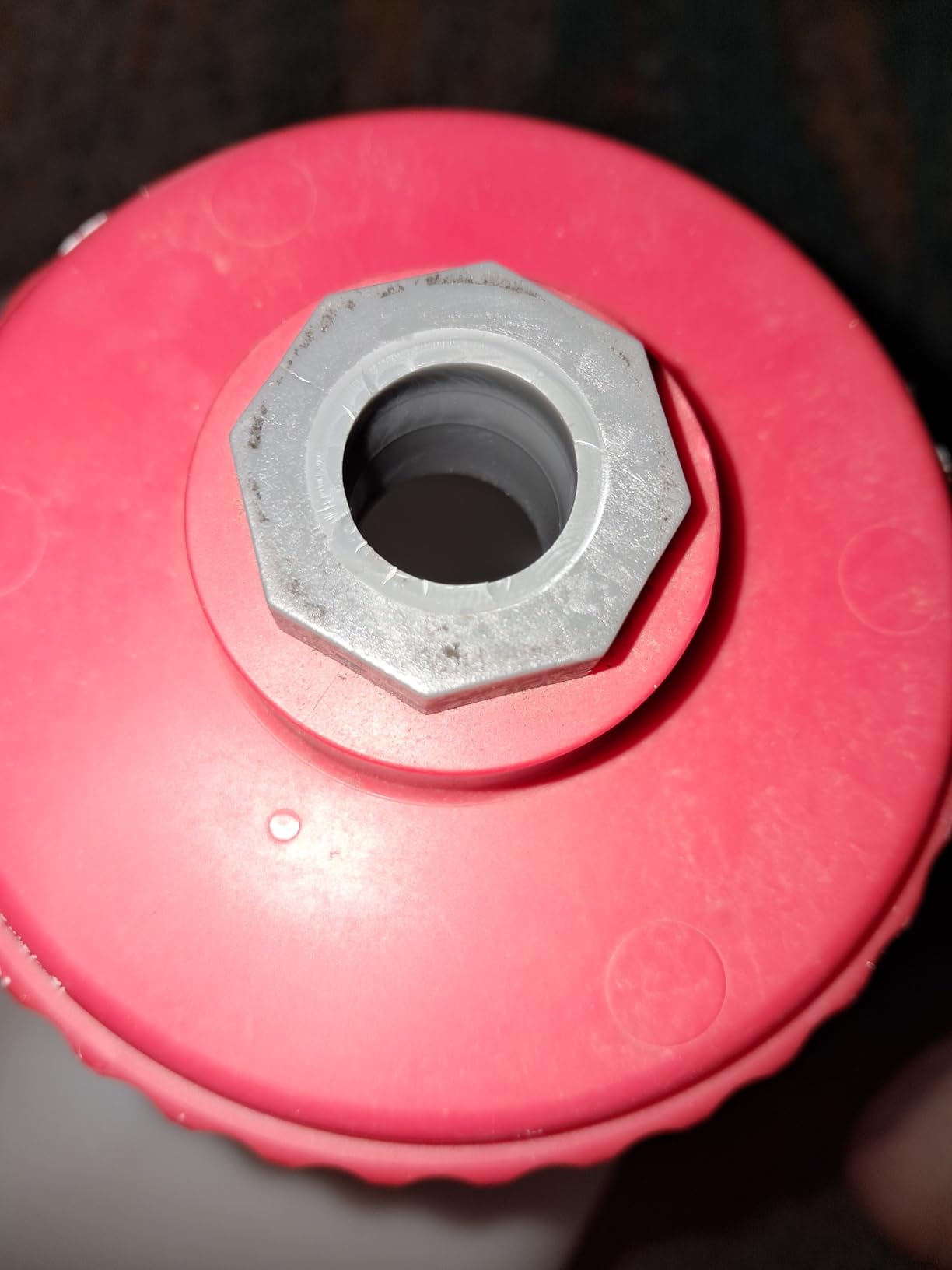
The problem is the cap configuration. The included hose has no threaded port on the cap shipped with this variant and cannot be attached as shipped, and confusion over the NOT FOR FUEL label is the single most reported issue in the reviews. For gasoline, use a certified can from this list instead.

When this jug makes sense
Reach for it when you are moving non-potable water, recyclable automotive fluids, animal feed or attractants around a property, and you want one container that will not crack in cold weather. The square footprint and wide bottom grip make it easy to move when full.
It also serves as a decanting jug: owners pour fuel from a certified can into a smaller container like this one so they never handle a twenty-liter volume next to a hot machine.
Where it disappoints
It cannot legally hold gasoline, and any product advice that says otherwise is wrong. That alone disqualifies it as a generator fuel can no matter how good the build is.
The unattached hose and the 21-inch height are the practical complaints. A tall jug in a vehicle rack is awkward, and the hose is useless without a compatible cap.
7. Scepter Duramax 14 Gallon Gas Caddy – the best bulk fuel caddy
Scepter Duramax Flo ’N Go 14 Gallon Gas Caddy, 53 Liter Fuel Tank, Red
14 gal / 53 L
HDPE on wheels
19 lb empty
10 foot hose
gravity and pump modes
Pros
- Fewer trips to the pump for several machines
- Dual gravity and pump modes
- Tank is air and liquid tight
- 6 inch wheels and top handle
- 1-year warranty with pump service
Cons
- Roughly 130 pounds when full
- Plastic wheels can bind on rough ground
- Hose kinks at the tank connection
- Pump handle has no lock-open
Fourteen gallons is the point of this caddy. If you run a generator plus a mower, a snow blower or a boat, you make far fewer pump runs and you stop lifting 40-pound cans. It is the highest-volume seller in this roundup, with more than 7,600 reviews behind it, so the failure modes below are well documented.
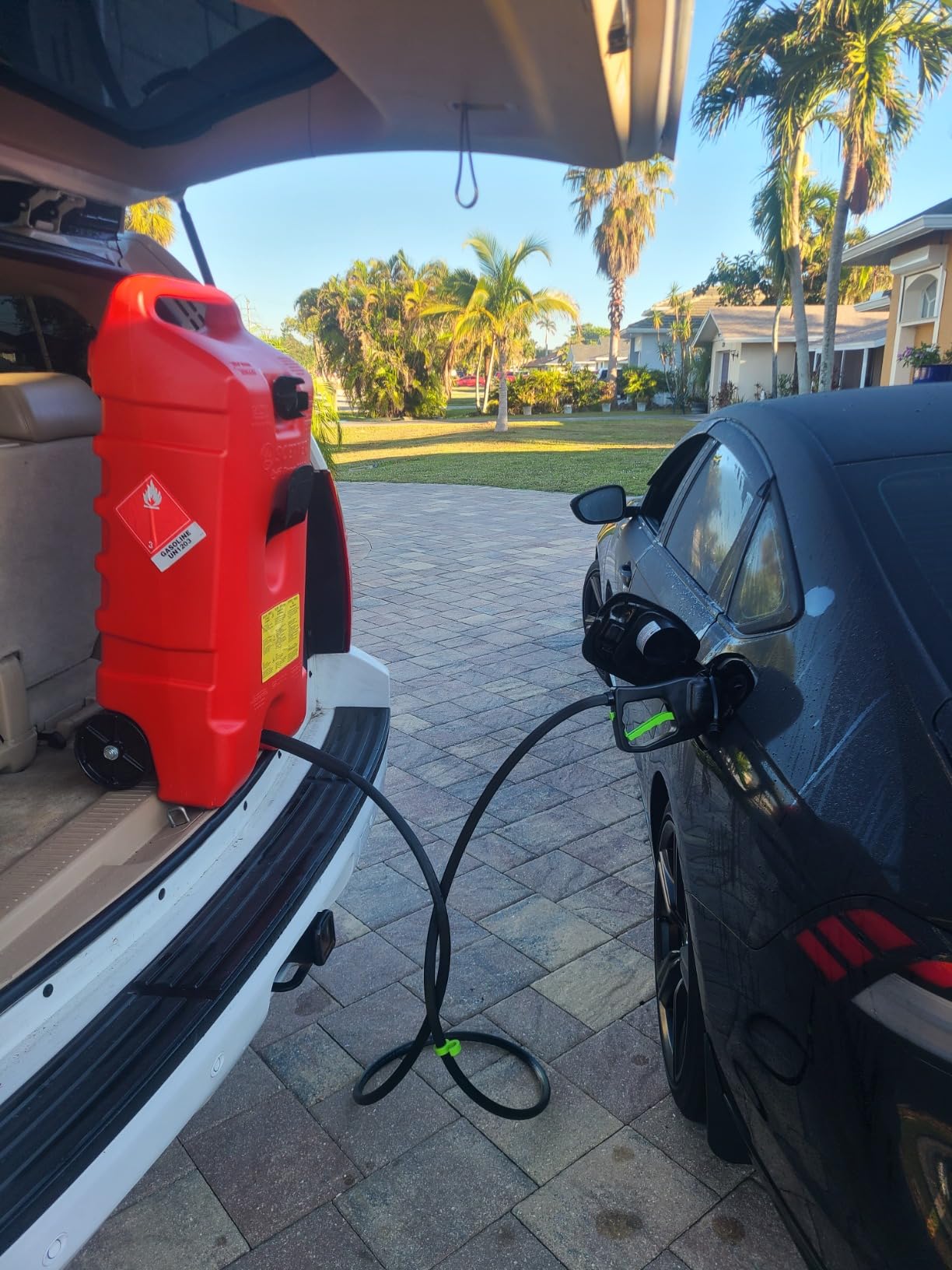
It offers two fueling modes. Gravity flow works when the caddy sits higher than the tank you are filling, and a manual pump with a gas-station-style handle handles the case where the fill level is at or below it. Siphon mode runs at 2.0 gallons per minute, which is slow but steady.
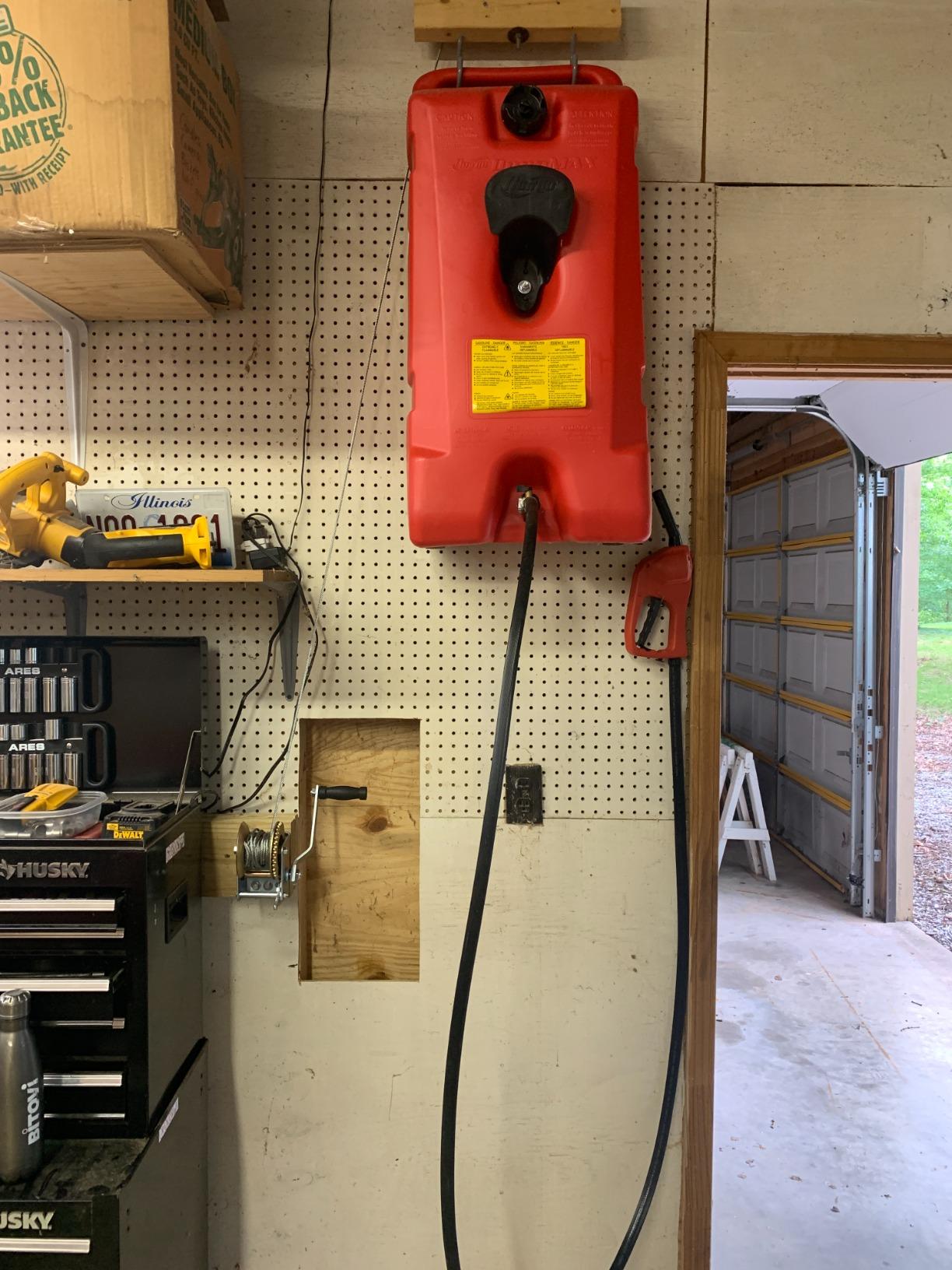
The hardware is solid in the places that matter. A 10-foot automotive-grade rubber hose, an anti-kinking sleeve at the connection, a brass shut-off valve for quick hose removal, a bolt-on hose hanger and a child safety lock. The high-density polyethylene tank resists corrosion and denting, and owners report the tank holds its shape without deformation or fuel odor over time.
The complaints are consistent too: the 6-inch plastic wheels bind on uneven surfaces, the hose kinks at the tank and slows gravity flow, and the pump handle has no lock-open and tends to leak at the bulb after repeated use. A couple of gallons stay in the tank and hose no matter how carefully you drain them. Scepter’s warranty service is repeatedly praised even when the hardware disappoints.
When this caddy makes sense
Buy it if you refill multiple machines per session or want a stationary fuel depot near a shed. Store it on level ground where gravity mode handles most transfers, and park it above the machine’s tank line.
It also suits anyone who refuels in the dark. The wheeled design beats carrying a full can across a yard, and the top handle plus grip points make loading easier for most users.
Where it disappoints
Filled, it weighs roughly 130 pounds. That is fine when it rolls and a problem the moment you need to lift it over a truck bed rail or up into a loft.
Manual pumping takes two hands and real effort, and the pump-and-hose assembly is the part most likely to need service. If you only ever fill one generator, this is far more capacity than you need.
8. PAMBEE 15 Gallon Fuel Caddy – the best caddy that handles gasoline and diesel
15 Gallon Fuel Caddy, Portable Gas Can Fuel Tank with Manual Siphon Pump & 10FT Hose, Wheeled Fuel Container for Gasoline Diesel Storage, Car, ATV, Boat, Lawn Mower, Generator, Red
15 gal / 57 L
HDPE plastic
23.1 lb empty
10 foot hose
two brass valves
Pros
- Covers multiple fill-ups of one generator
- Covers gasoline and diesel
- Twin brass shut-off valves
- Top handle and 6 inch wheels
Cons
- About 140 pounds when full and 34 inches tall
- Siphon speed depends on pumping effort
- Small plastic wheels are rough on gravel
If your property runs on more than one fuel type, this is the caddy that covers both. The manufacturer lists gasoline and diesel, and at 15 gallons it holds enough for several fill-ups of a single generator plus a mower or a snow blower, which is the common case for anyone prepping for winter.
The two brass shut-off valves are the detail that separates it from cheaper caddies. One sits at the tank and one at the hose, so you can disconnect the hose cleanly without draining the line, which is the difference between a tidy shed and a fuel smell that never goes away.
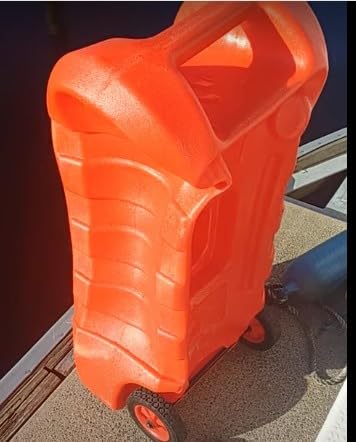
It supports both gravity and siphon modes, with the manual siphon pump rated up to 3 gallons per minute depending on how hard you pump. A 10-foot automotive-grade rubber hose plus a hose holder means the caddy can reach equipment parked away from a wall, and the spec is listed as EPA. Top handle and 6-inch wheels handle uneven ground better than fixed feet.
Review volume is modest at 383 reviews, and the feedback skews positive on capacity and portability. The practical notes: the filled weight is substantial, the height demands real floor space, and the small plastic wheels are rough on gravel.
When this caddy makes sense
This is the right pick for a property with a generator and a diesel machine, or for anyone who wants a single container that can do both. The dual valves make hose changes clean enough to do in a garage without a spill tray.
It also works well in a truck bed or a shop, which the manufacturer lists as intended locations. Budget the floor space: 16 by 34 inches is a large footprint.
Where it disappoints
Filled, it is about 140 pounds, and the 34-inch height means it will not fit under a bench or in a low cabinet. Storage is a real consideration with caddies this size.
Siphon speed is a function of your arm. If you want a fast top-up, the gravity mode in a caddy like this one is the faster path, and that requires the tank to sit higher than the machine.
9. Wavian NATO 20 Litre Jerry Can – the best can for long-term fuel storage
Wavian USA Authentic NATO Jerry Can and Spout System – Rust-Proof, EPA & CARB Compliant, Red, 20 Litre, Metal Gas Can 5 Gallon
20 L / 5 gal
0.9 mm cold-rolled steel
13.5W x 18.5H inch
lever-lock lid
EPA and CARB
Pros
- Steel body repeatedly passes leak tests
- Lever-lock lid and pin are fume tight
- Three-position NATO carry handle
- Stacks neatly
- Interior anti-corrosion coating
Cons
- Supplied plastic-tipped nozzle is the weak point
- Pour adapter is hard to insert
- Nozzle storage clip ships loose
- About 40 pounds full and awkward to tip
This is the can for fuel you intend to keep. It is built to NATO specification from 0.9 mm cold-rolled steel with an anti-corrosive coating and a rust-resistant interior coating, and the recessed continuously welded seams let the can sit flat and stack. Owner reports describe it passing water leak tests and surviving off-road abuse. It is the only certified metal can in the group with a locking lid and pin, which matters for fuel you leave unattended.
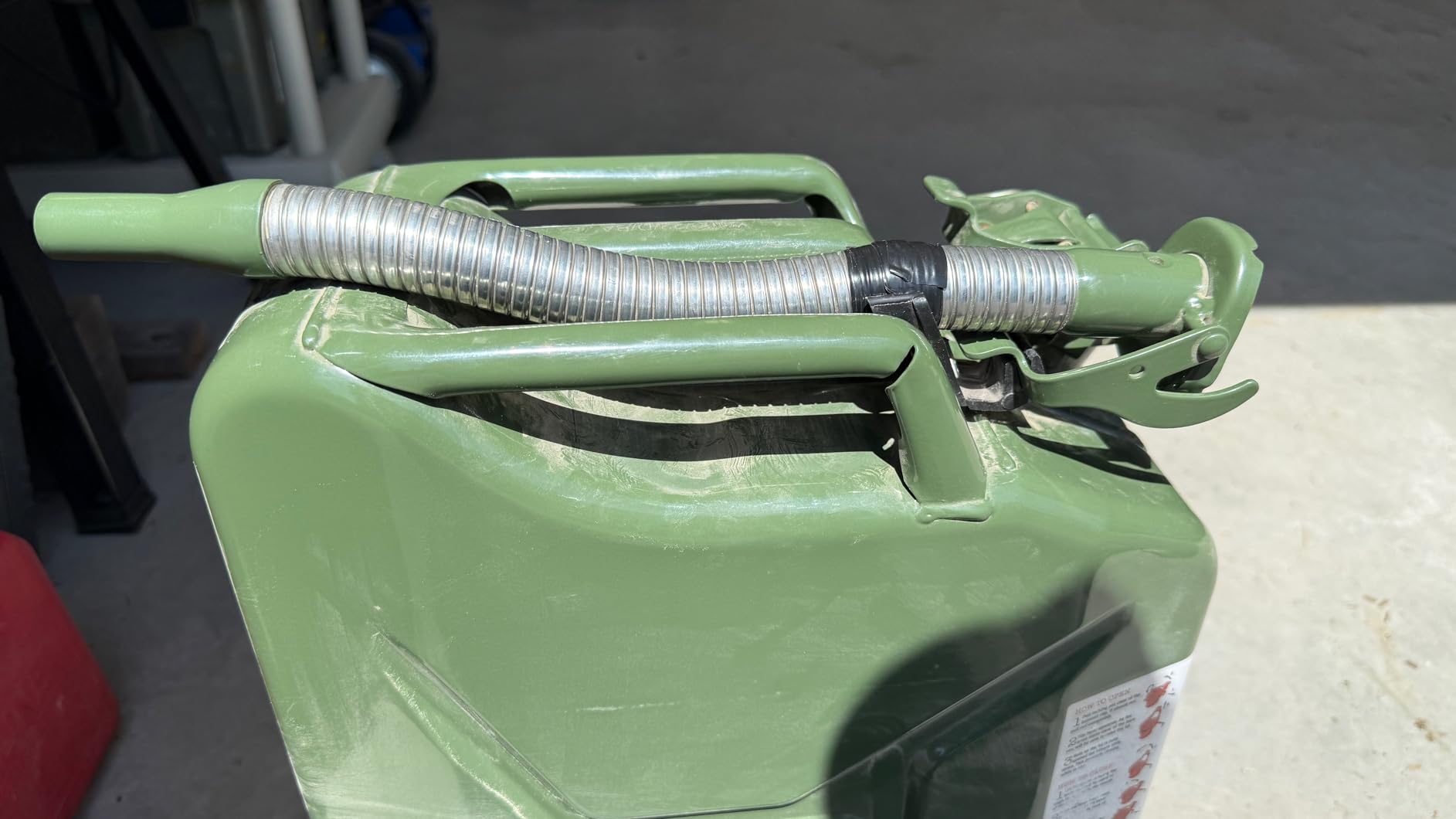
The lid is the reason we include it in a generator roundup. A lever-lock lid with a rubber gasket and a safety pin is genuinely air and fume tight, and reviewers say it kept fuel in and fumes out even when the can was stored on its side in a hot vehicle. That is the configuration most people do not test but most people do anyway.
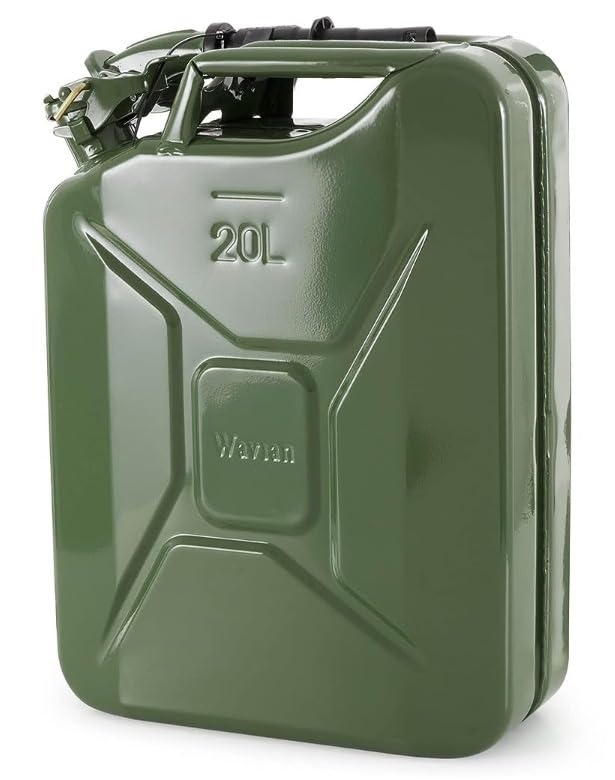
Compliance is documented: EPA EO number G-26-143 and EPA number SGVYPMETALJC-001-R01, making it legal across North America. The three-position NATO handle lets two people share a full load, or one person carry a full can from the center handle, which is a meaningful difference at roughly 40 pounds per can.
The weak point is the included plastic-tipped nozzle. Reviews report pinhole leaks, tips that break or jam, and a small plastic pour adapter that is very difficult to insert without modification. Several owners replaced it with a standard flexible NATO spout and rate the can highly again. The storage clip also ships loose, and cans can arrive dented from handling.
When this can makes sense for your generator
Choose it when fuel sits in your shed for months between uses. Steel plus an anti-corrosion interior plus a fume-tight lock is the combination that keeps stored gasoline in condition the longest.
It also suits anyone with a truck bed, a boat deck or a trailer that carries fuel on its side, and the stacking footprint beats plastic cans for a tight storage shelf.
Where it disappoints
The nozzle is the component to plan around. Budget to swap the plastic-tipped spout for a proper flexible NATO spout, and test the adapter fit before you rely on it at a pump in the dark.
Customer support on replacement nozzles has been inconsistent for some buyers, and the can is awkward to hold at an angle while full. If fast controlled pouring matters most, a Type II can with a hose is easier.
10. TUFFIOM 35 Gallon Fuel Caddy – the best maximum-capacity fuel depot
TUFFIOM 35 Gallon Fuel Gas Caddy w/Wheels & Manual Siphon Pump, Portable Diesel Fuel Transfer Storage Tank w/11.9ft Hose, Gasoline Can Container for ATV Car Mowers Tractor Boat Motorcycle
35 gal
steel frame
41 kg empty
11.9 foot hose
reversible rotary pump
Pros
- Largest capacity tested for bulk storage
- Reversible pump returns hose fuel to the tank
- Anti-static grounding clamp
- Level gauge and wide fill neck
- Four-wheel base rolls over gravel
Cons
- Supplied hose hardened and cracked after use
- Fine-thread fittings need adapters
- Soft aluminum pump rotor seizes on debris
- Tall 55 inch frame and heavy empty weight
Thirty-five gallons is a fuel depot, not a can. If you heat with oil, run a tractor and a boat, or simply want one pump visit to cover a season, this is the largest capacity we tested and the only unit here with a grounding clamp and a vent and oil level gauge.
The reversible rotary hand pump is genuinely useful. Instead of leaving fuel stranded in the hose, you can reverse it and draw the line back into the tank, which saves waste and keeps the hose from holding a static charge of gasoline between uses.
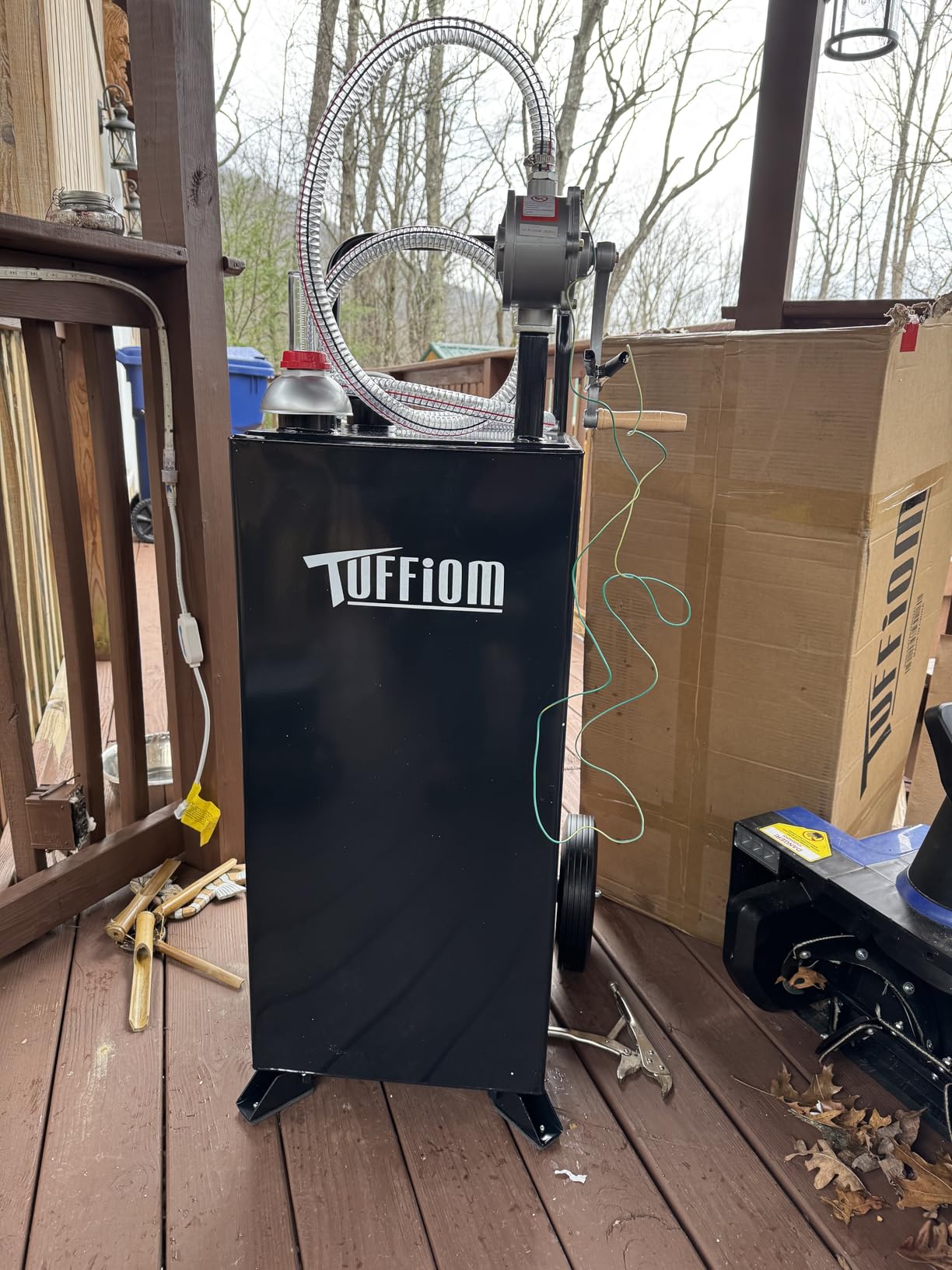
Construction is an alloy steel frame with two heavy-duty 10-inch wheels plus two swivel casters, a wide-diameter fill neck for fast, spill-free filling, an anti-static grounding clamp for safety at the pump, and a fine-thread outlet fitting set. The frame measures 16 by 55 inches and the unit weighs about 41 kg before fuel, so it is a permanent fixture rather than a portable one.
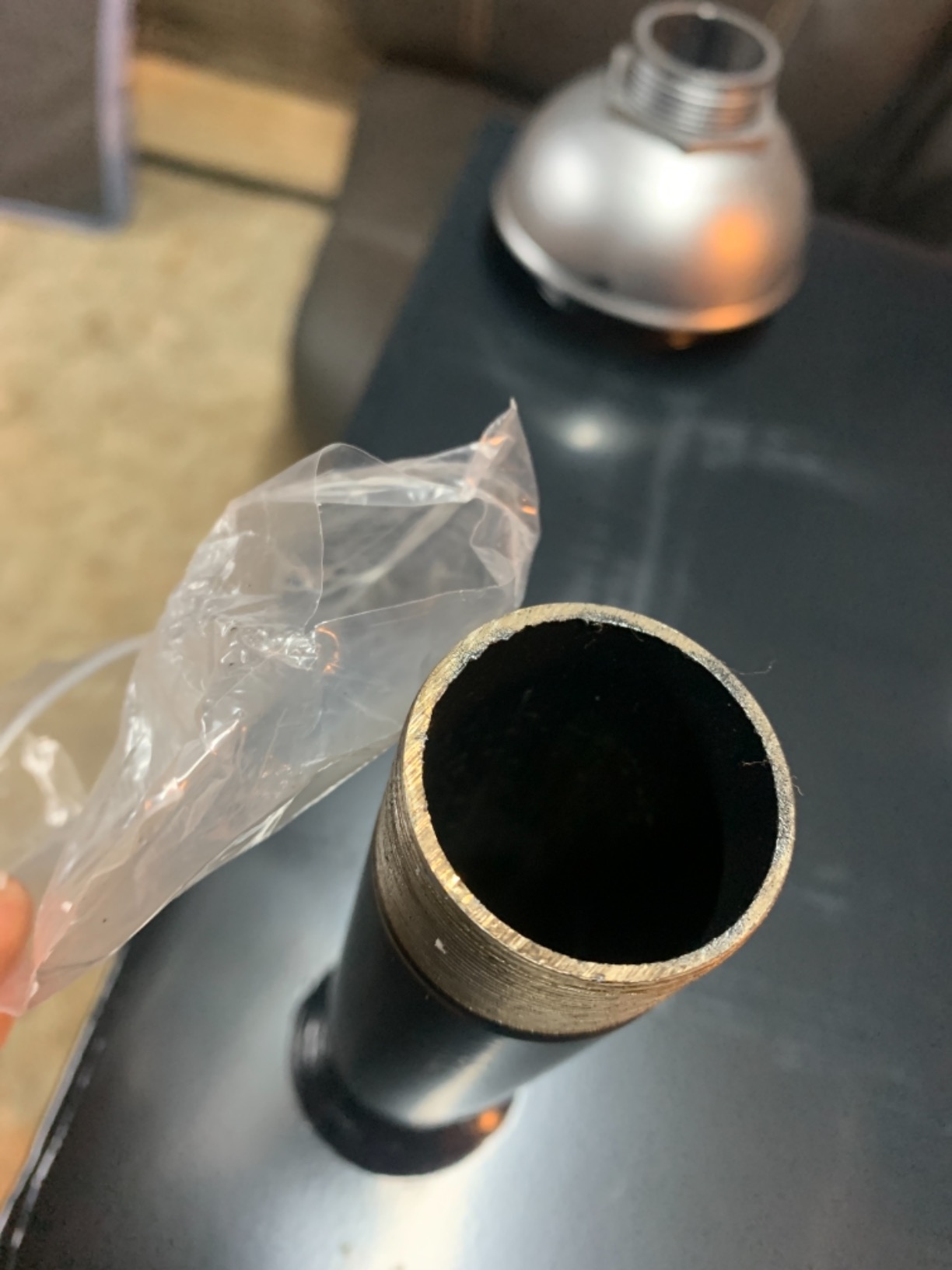
The two persistent problems are hardware. The supplied 11.9-foot hose hardens and cracks after use, particularly with diesel residue, and needs replacing. The soft-aluminum pump rotor galls easily and several buyers report factory debris inside the tank seizing the pump on first use, so flush it before you rely on it. Buyers who swap in a cast-iron pump and a fuel-rated hose report the caddy works well.
When this caddy makes sense
Pick it for bulk storage on a farm, at a marina or on a property with several fuel-burning machines, where the pump fee and the walk are the real costs. Four wheels, including two swivel casters, handle gravel and rough concrete better than the two-wheel caddies.
The grounding clamp and the level gauge both improve safety at a pump or a farm tank where static and overflows are genuine risks.
Where it disappoints
At 55 inches tall and about 90 pounds empty, it is awkward to store and maneuver, and it will not fit a garage shelf. Plan a permanent corner for it.
It is also the most expensive item in the roundup and the least forgiving of neglect. If you are not prepared to flush the tank and replace a hose, one of the smaller caddies will cost less in frustration.
How to Choose a Gas Can for a Generator
What kind of gas can you use in a generator?
Any compliant gasoline container works, and the generator itself does not care which brand you use. What matters is that the can is approved for flammable liquids, holds clean gasoline, and has a spout narrow enough to reach your filler neck without a funnel. In practice that means a 2.5 or 5 gallon can for most portable generators, a steel can for fuel you will store, and a caddy if you fill more than one machine.
How much fuel your generator actually burns
Runtime comes from a simple division: the gallons in your can divided by the generator’s fuel consumption rate. Find the burn rate on the machine’s spec plate or in the manual, usually expressed as gallons per hour, then multiply.
Two habits make that number work for you. First, match can capacity to the machine’s own tank, so one full can fills the tank without a half-can of stale fuel sitting in the bottom. Second, prefer two smaller cans over one large can if you will not use the full volume quickly, because fuel that sits untouched ages faster than fuel that gets used.
Owner discussion in generator forums keeps circling the same trade-off: a single 5-gallon can means fewer trips, while multiple 2.5-gallon cans mean you only ever hold fuel you will actually burn. Our take is that a full 5-gallon can of gasoline is about 40 pounds, so the number of cans you can comfortably carry matters as much as the math.
Type I vs Type II safety cans
Type I cans have a single opening used for both filling and pouring. They are simple, rugged and typically the least expensive, which is why the Eagle and the Justrite Type I are longtime favorites. Type II cans add a second opening, one for filling and one for pouring, which gives them better venting and more controlled flow through levers, triggers or hoses.
For generator use the practical difference is the pour. A Type II can with a hose, such as the Justrite Type II, can reach a recessed filler neck without tipping the can. A Type I works fine on a standard top-mounted neck. Neither is better in the abstract; the better one is the one that matches your machine’s opening.
Metal vs plastic cans for generator fuel
Metal wins on long-term storage and durability. Galvanized steel does not off-gas into gasoline, resists dents, and carries the OSHA, NFPA 30, FM and UL certifications that workplace rules ask about. Plastic wins on weight and cost: a plastic five-gallon can weighs around 2.5 pounds empty against 5.3 pounds for steel, which changes how you feel after three trips from the shed.
Forum owners describe metal as the choice for seasonal storage precisely because it does not degrade or leach over long periods. If your fuel will sit untouched for months, pay the weight. If you will burn through it in a season, the light plastic can is the sensible buy.
What OSHA, CARB and EPA approval actually covers
These labels are not interchangeable. OSHA Standard 1910.106 governs safety cans in workplaces, which is why industrial models like the Justrite cans carry it. CARB covers emissions and vapor control in California, and EPA rules since 2009 banned self-venting portable containers, which is the root of the slow-pour complaints everywhere else. FM and UL approval are independent safety certifications.
Buying a can with all of those markings removes every argument at a job site or a rental facility. The Eagle, both Justrite cans and the Wavian jerry can carry multiple certifications, and the Scepter plastic can is listed as EPA and CARB compliant.
Fuel shelf life, stabilizer dosage and rotation
Untreated gasoline loses usable quality in a few months, and adding stabilizer at filling time extends that considerably. Follow the dosage printed on the product rather than guessing, since over-dosing is its own problem. A practical rule is one dose per can at the pump, not a splash in the bottom of an empty can.
Rotation matters more than people expect. Label each can with a fill date and burn the oldest first. A simple schedule works: one can in active use for a machine you run weekly, a second can marked for the next month, and any older can burned down before a new one is filled. If you never burn the oldest fuel, it will not last, regardless of the can.
Where to store generator fuel safely
Store cans upright, in approved containers, on a stable surface, and away from ignition sources, heat and direct sun. A detached shed or a garage with a fire-rated door is better than a bedroom closet, and a concrete pad or a containment tray keeps a spill from reaching bare ground.
Keep cans away from the generator itself. Hot exhaust and a hot engine are not storage conditions, and a can that sits in the sun all summer degrades faster than one in shade. Store full rather than half-full, because a full can has less air and vapor space, and never store a can inside the house near a furnace or water heater.
Refueling a running generator without spilling
Turn the engine off and let it cool before refueling, then refuel outdoors on level ground. Shutting down first removes the ignition source and the hot surfaces, and it is the reason we keep coming back to cans that pour without tipping in the first place.
If you must top up between long run cycles, use a trigger-style can so you control the shutoff, keep the hose clear of the exhaust, and set the can upright on bare ground rather than balancing it on the frame. Decanting into a small jug first is a common suggestion among owners and it means you never handle a 40-pound volume over a hot machine.
E10 ethanol and your can’s seals
Most pump gas today is E10, and ethanol absorbs water and attacks rubber components over time. Can makers build their spout seals for that reality, which is one reason to keep factory spout seals and to replace them on schedule rather than stretching old rubber.
For generator use, the practical advice is to buy the same grade of fuel for both the can and the machine, treat fuel that has been stored for months, and never mix a can that has been sitting with fresh fuel hoping to hide stale gasoline. If your machine is older, check the manual on ethanol tolerance before you commit to long-term E10 storage.
While you are organizing liquid storage, our guide to the best ammo cans covers the dry-storage side of a tidy garage, and the roundups on oil catch cans handle the fluids your generator work generates.
Frequently Asked Questions
What kind of gas can you use in a generator?
Any approved gasoline container works, usually a 2.5 or 5 gallon can. What matters is that the can is certified for flammable liquids and has a spout that reaches your generator’s filler neck. A steel can suits fuel you will store for months; a light plastic can suits frequent refills; a wheeled caddy suits filling more than one machine.
Who makes the best gas cans?
For generator fuel, Eagle builds the strongest all-round steel can, Justrite makes the best controlled-pour models with FM, UL and TUV certification, and Scepter covers the plastic and bulk caddy categories. Our testing favors the Eagle 5 Gallon Type I as the best overall pick for most households.
How long can gas sit in a generator unused?
Untreated gasoline starts losing usable quality within a few months, especially in warm conditions. Adding stabilizer at the pump according to the label directions extends that window substantially, and rotating fuel so you always burn the oldest can first keeps stored supply fresh. Steel containers also slow degradation compared with plastic.
What is the best way to store gas for a generator?
Store cans upright in approved containers, on a stable surface, outdoors or in a fire-rated space, away from ignition sources, heat and direct sun. A concrete pad or containment tray catches spills. Keep cans away from the generator itself, store them full rather than partly full, and never keep gasoline near a furnace or water heater.
What type of gas is best for a portable generator?
Use the grade printed on the generator’s fuel cap or in the manual, and buy the same grade for every can that feeds that machine so you never mix octane ratings by accident. Most modern portable generators run fine on regular E10 unleaded, but check the manual for ethanol tolerance, especially on older models.
Should I use a metal or plastic gas can for my generator?
Choose metal for fuel you will store for months or transport on its side, because galvanized steel preserves fuel quality and resists dents. Choose plastic for frequent refills, because a plastic can weighs about 2.5 pounds empty against 5.3 pounds for steel, which matters when you are carrying fuel to a running machine.
Bottom Line: Our Generator Fuel Can Winners for 2026
The best gas cans for generators in 2026 come down to how long your fuel sits and how often you refill. The Eagle 5 Gallon Type I is our editor’s choice and the best overall pick: highest rating in the group, galvanized steel that protects stored fuel, a self-closing cap, and the certifications a job site or rental garage will ask about. Buy it once and it covers most generators for years.
Match it to your situation instead. Refill a running machine often and you want the light 2.5-pound Scepter or the upright-pouring SureCan. Fuel a recessed filler neck and the Justrite Type II hose is worth the extra weight. Store fuel through the off-season and the Wavian NATO can keeps it in condition longest. Run several machines and the Scepter 14-gallon caddy cuts your trips to the pump.
Whichever you pick, add stabilizer at the pump, label the fill date, burn the oldest can first, and store it upright and away from heat.