Professional artists reach for a short list of brands rather than a long one. Prismacolor Premier wins on blending and range, Faber-Castell Polychromos wins on lightfast pigment and durability, Caran d’Ache Luminance wins on smoothness, and Derwent Lightfast wins when a piece has to stay unfaded for decades. The criterion that separates them is not price or colour count, it is how the pigment behaves under pressure and over time.
That single question, what the core actually does under pressure, is what we tested across ten sets over six weeks of studio work. We layered each set into the same cold-press sheet, burned it into the same toned paper, sharpened every pencil until it snapped or held a point, and logged what survived. Two of the ten never made it into a finished piece. The rest, in order, are below.
Every set here is professional grade. There are no student-tier pencils, no colouring-book bundles and no novelty tins padded with duplicate hues. If you want a broader look at pencil sets for general use, our tested colored pencil roundup covers those tiers separately.
We updated this guide for 2026 and every rating and review count below is copied straight from the current listing data, so nothing here is a secondhand estimate.
Table of Contents
Top 3 Best Professional Picks for Artist-Grade Colored Pencils in 2026


The Prismacolor is the pick we hand to a professional who needs a usable palette on day one. The Polychromos tin is the one we keep for gallery-bound work where pigment permanence is documented. The Inktense tin earns its place for artists who move between dry drawing and wash.
All 10 Best Colored Pencil Sets for Professional Artists in October
| Product | Specifications | Action |
|---|---|---|
| Prismacolor Premier 150 |
|
Check Latest Price |
| Faber-Castell Polychromos 120 |
|
Check Latest Price |
| Derwent Inktense 100 |
|
Check Latest Price |
 Lyra Rembrandt Polycolor 36 Lyra Rembrandt Polycolor 36 |
|
Check Latest Price |
 Derwent Lightfast 100 Derwent Lightfast 100 |
|
Check Latest Price |
 Caran d’Ache Luminance 40 Caran d’Ache Luminance 40 |
|
Check Latest Price |
 Caran d’Ache Pablo 120 Caran d’Ache Pablo 120 |
|
Check Latest Price |
 Caran d’Ache Supracolor II 40 Caran d’Ache Supracolor II 40 |
|
Check Latest Price |
 Albrecht Durer Aqua 120 Albrecht Durer Aqua 120 |
|
Check Latest Price |
 Derwent Drawing Pencils 24 Derwent Drawing Pencils 24 |
|
Check Latest Price |
Read the colour count column with care. A 120-count tin and a 36-count tin can deliver very different working palettes, because several premium ranges spend a large share of their count on earth tones, greys and near-duplicate shades rather than on usable hues.
1. Prismacolor Premier 150 – Editor’s Choice for Blending and Range
Prismacolor Premier Colored Pencils, Soft Core, Assorted Colors, 150 Count – Durable, Vibrant, Ultra-Smooth, Adult Coloring, Drawing, Sketching, Arts & Crafts
Soft oil-based core
150 assorted colours
Thick robust leads
2.9 lb set
Pros
- 150 assorted colours in one tin
- Soft thick cores built for shading and shadows
- Lightfast saturated pigments
- Ultra-smooth even laydown
- Pre-sharpened with a storage case
Cons
- Soft leads need frequent sharpening
- Wooden casing can splinter at the sharpened tip
- Plastic case is bulky and does not protect tips
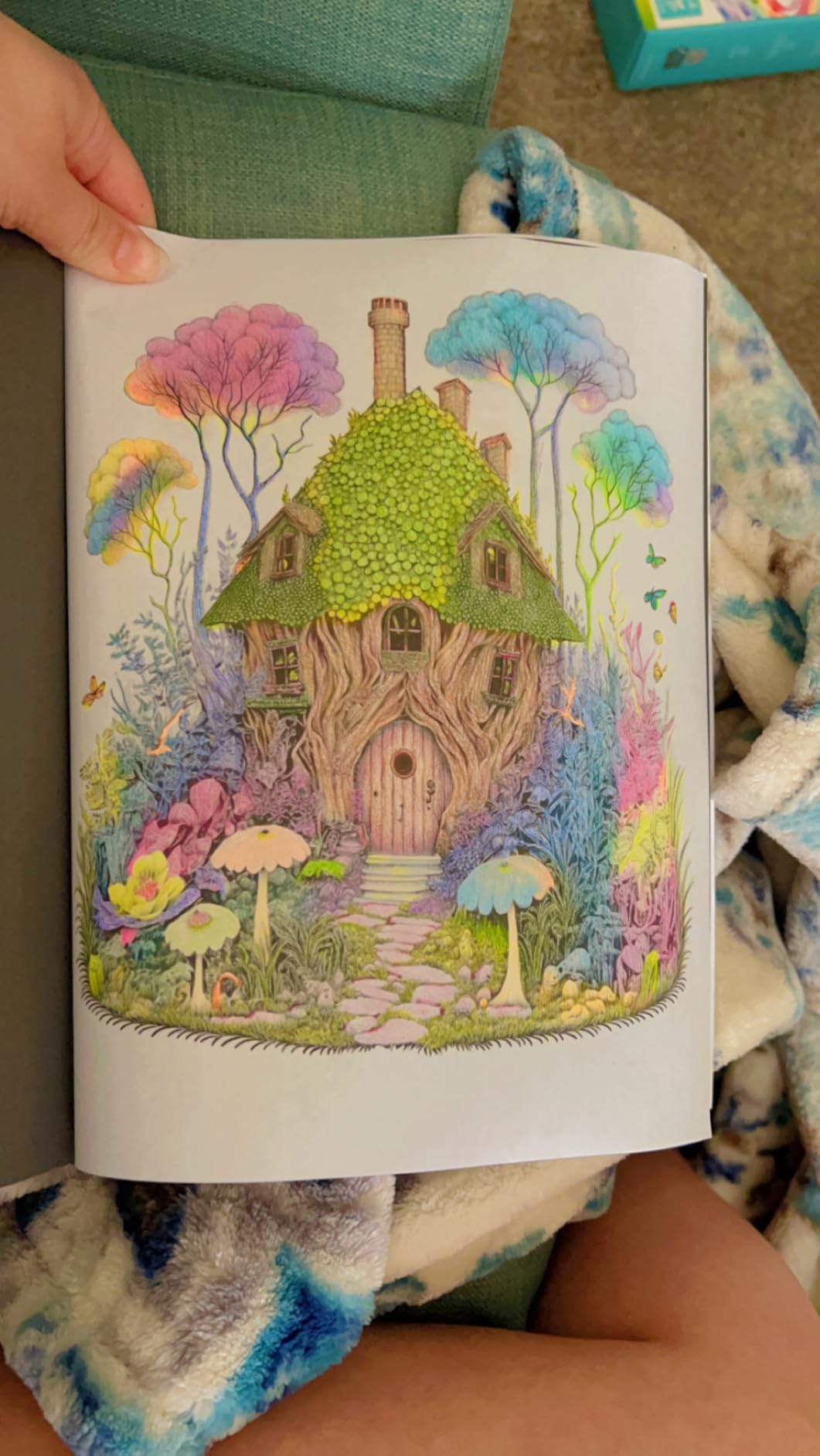
I spent the longest stretch of the test on this tin. Prismacolor Premier is the set I keep within arm’s reach on the drawing board, and the reason is simple: it makes colour with almost no resistance. A light pass gives a tint, a firm pass gives an opaque layer, and the gap between them is wide enough to build real form without practising pressure control for an hour first.
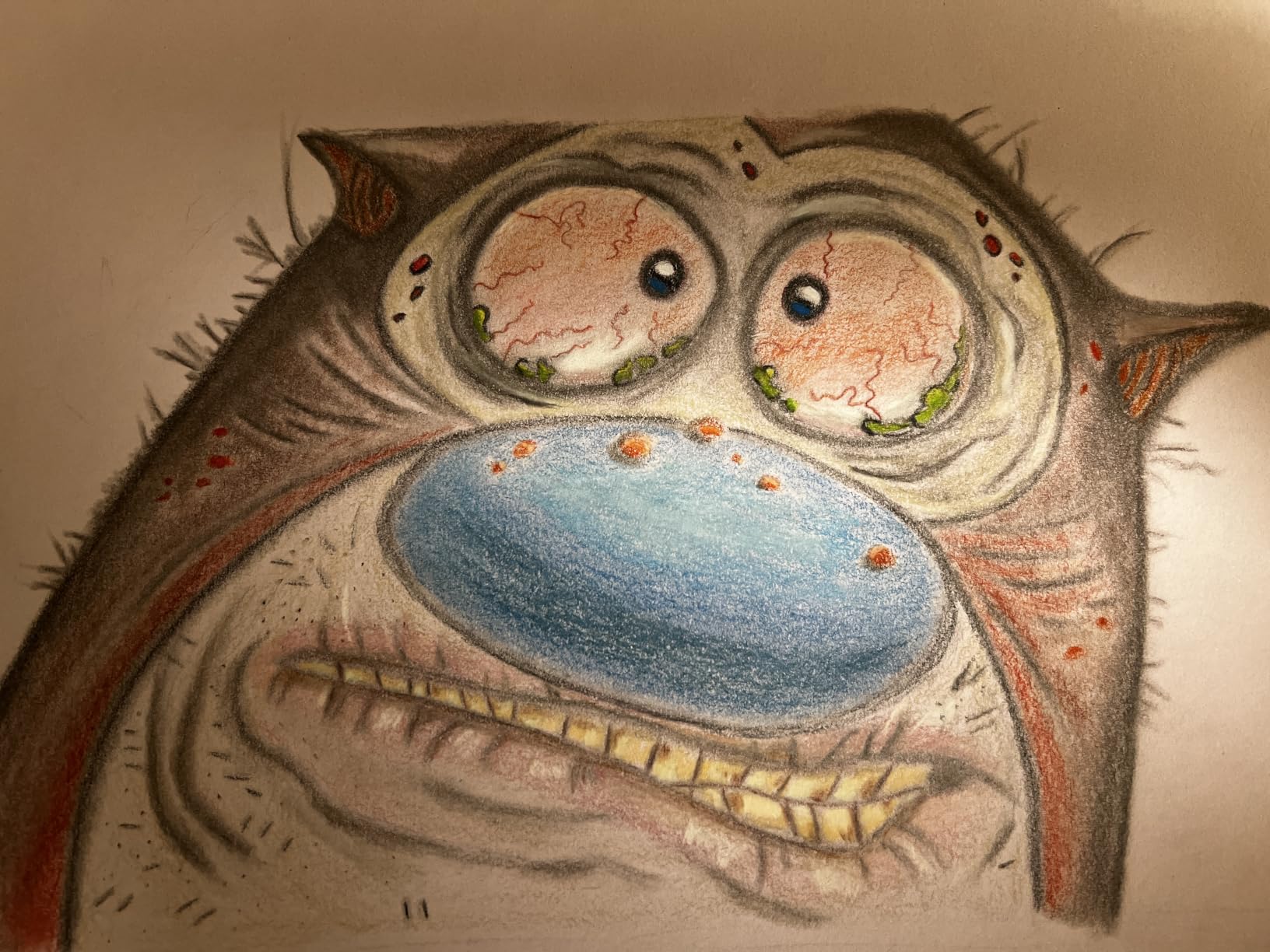
The 150-count version is the one professionals end up with, and the reason is coverage rather than collection. Ninety percent of reviewers gave five stars, with another seven at four, and the repeated theme is range. On portrait work I found the skin tone ramps unusually complete, which is the hardest thing to fake when you only own a partial set.
What the praise does not cover is durability. These are soft leads, and soft means they blunt fast. During a heavy layered piece I was sharpening every few minutes, and the 2.9 pound weight of the set plus the bulky plastic case made it the least portable option in the lineup.
The tips also splinter more than the firmer oil-based sets, particularly near the end of a pencil’s life. That is the honest trade: you get the softest, most forgiving laydown of the ten sets here, and you pay for it in sharpening time.
Why professionals reach for the 150-count tin
Nobody buys 150 colours for 150 colours. They buy it because it removes the stop-and-swap moment in the middle of a session, which is where most coloured pencil work actually dies.
The 150 count also lets you commit to a large family of neutrals and earth tones, which no small set provides in enough range to shade a whole background without repeating the same pencil.
Where it will disappoint you
If your work is mostly fine line and tiny detail, these are the wrong pencils. A soft lead cannot hold a needle point for more than a few strokes, and the constant re-sharpening will show up in your hands before it shows up in your work.
If you ship or commute with your pencils, the plastic case does very little for tip protection. Buy a separate tin if you travel.
2. Faber-Castell Polychromos 120 – Most Versatile for Lightfast Pigment
Faber-Castell Polychromos Artists’ Color Pencils – Tin of 120 Colors – Premium Quality Artist Pencils
Oil-based cores
3.8 mm SV-bonded leads
120 colours
Water resistant
Pros
- 120 assorted colours in a sturdy metal tin
- Buttery smooth oil-based laydown
- 3.8 mm SV-bonded leads resist breakage
- Water resistant
- Pigment fade resistance
Cons
- Hardness grade H is firmer than softer oil-based sets
- Some colours need a solvent to smooth out
- The full tin is bulky to carry
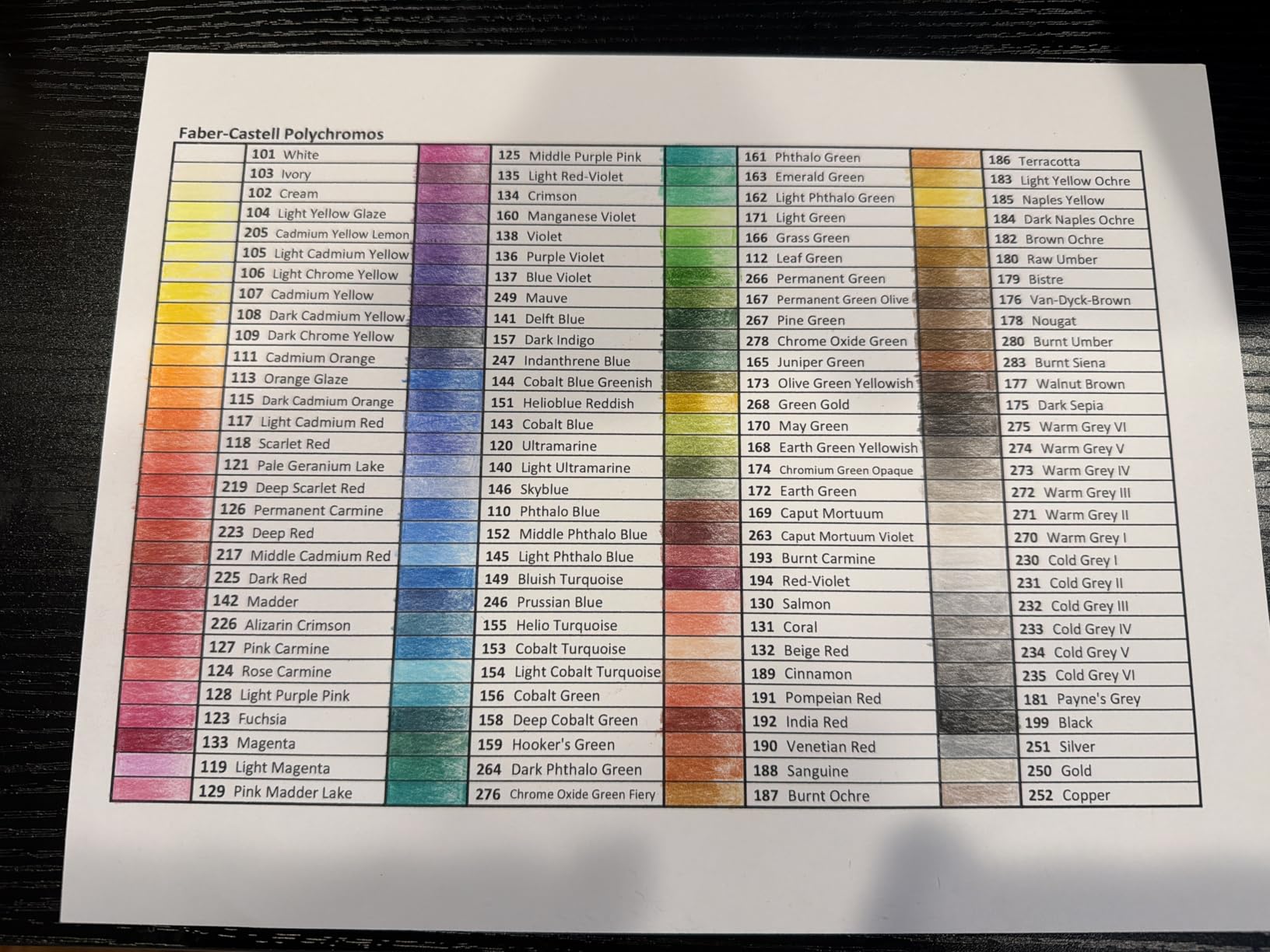
Polychromos is the reference set in my studio, and the number that decides it for me is the core diameter. A 3.8 mm lead does not snap when you press hard, and SV bonding means the core is locked to the casing rather than glued loosely inside it.
The pigment is where this set separates itself from the waxier options. Reviewers consistently describe the colour as fade resistant, which matters for anyone whose drawings are meant to survive a wall, a gallery or a client’s attic rather than a desk drawer.
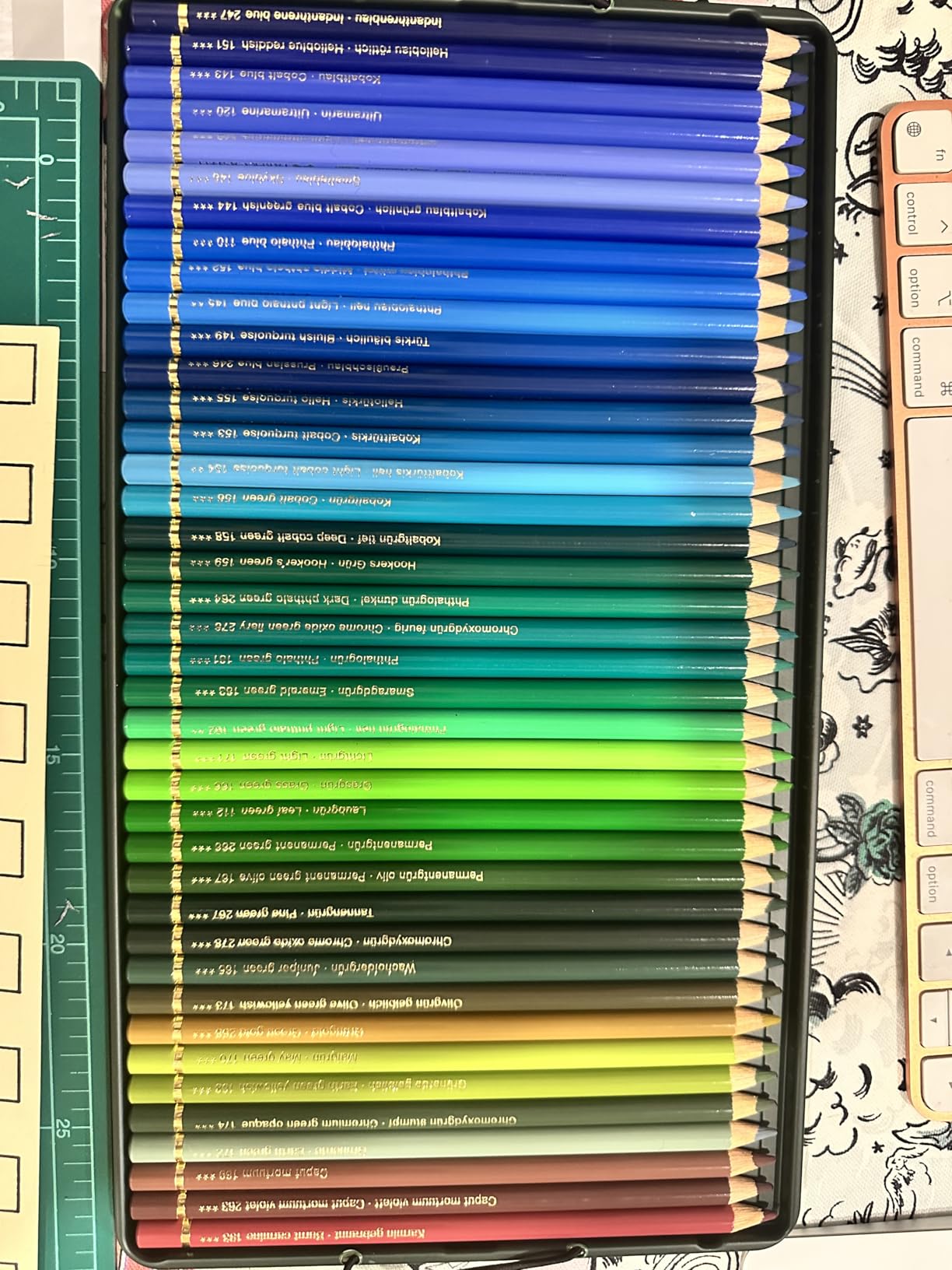
The hardness grade is H, which makes it firmer than Caran d’Ache Pablo or Luminance. That is a feature for line work and a mild annoyance for pure blending. A few colours also lay down with a slightly grainy texture unless you add a blending pencil or a solvent to the surface.
At 0.7 kg in a hinged metal tin, it is a serious object. I keep it at the desk and take a smaller set on the road.
What makes these the safest professional buy
Documented fade resistance plus break-resistant leads covers the two failure modes that ruin professional work: colour that shifts over time, and a snapped lead in the middle of a commission.
The water resistance is a quieter bonus. It survives a dropped water brush or a damp finger, which soft wax cores do not.
What you give up compared with Prismacolor
Softness. Polychromos needs more pressure and more passes to build the same depth of colour, so a heavily layered piece takes longer.
If blending is your main technique, the creamy oil laydown is good but not effortless. Wax-based cores still win that comparison.
3. Derwent Inktense 100 – Best for Mixed Media and Wash Effects
Derwent Inktense Pencils Art Set, 100 Permanent Watercolor Pencils Set in Tin, Premium Colored Pencils for Adults, Water-Soluble Indelible Pencil Collection, 4mm Core, Professional Quality (2306130)
Water-soluble core
4 mm pigmented lead
100 colours
Three-layer tin
Pros
- Highly pigmented 4 mm core with strong laydown
- Washable into ink-like effects
- Colour becomes permanent once dry
- Layerable without disturbing colour underneath
- Usable dry for detail work
Cons
- Needs a water brush and suitable paper
- Corrections are hard once dry
- Less suited to very fine detail than harder cores
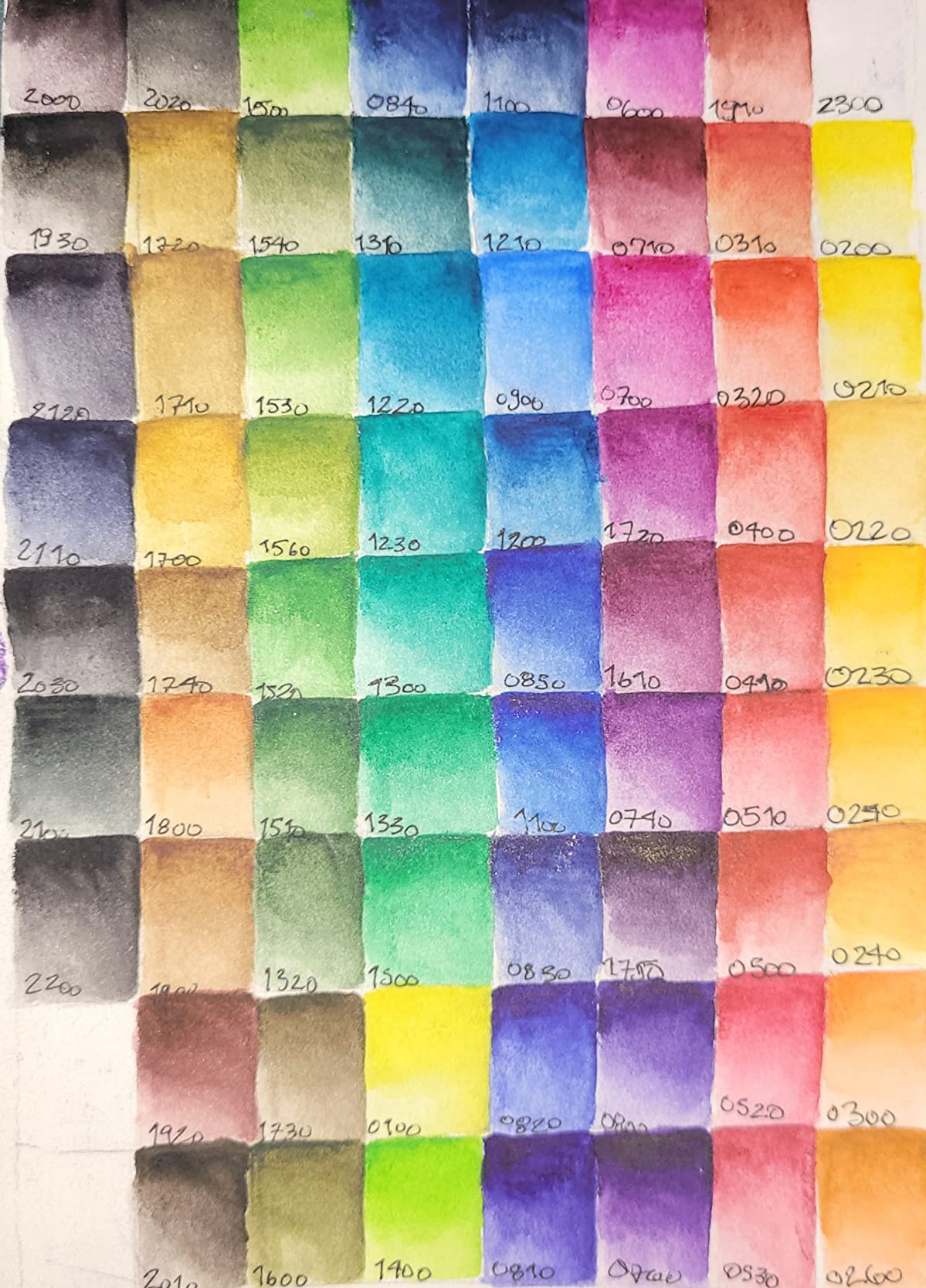
Inktense is the specialist in this list and the reason it earns a slot. Used dry it behaves like a strong drawing pencil. Add water with a brush and the same stroke turns into an ink-like wash that moves across the paper. Almost nothing else in the roundup does both.
Reviewers put the practical advice plainly: pair it with a water brush and heavier paper. On a sheet that cannot take moisture the effect falls apart, and that dependency is worth knowing before you commit.
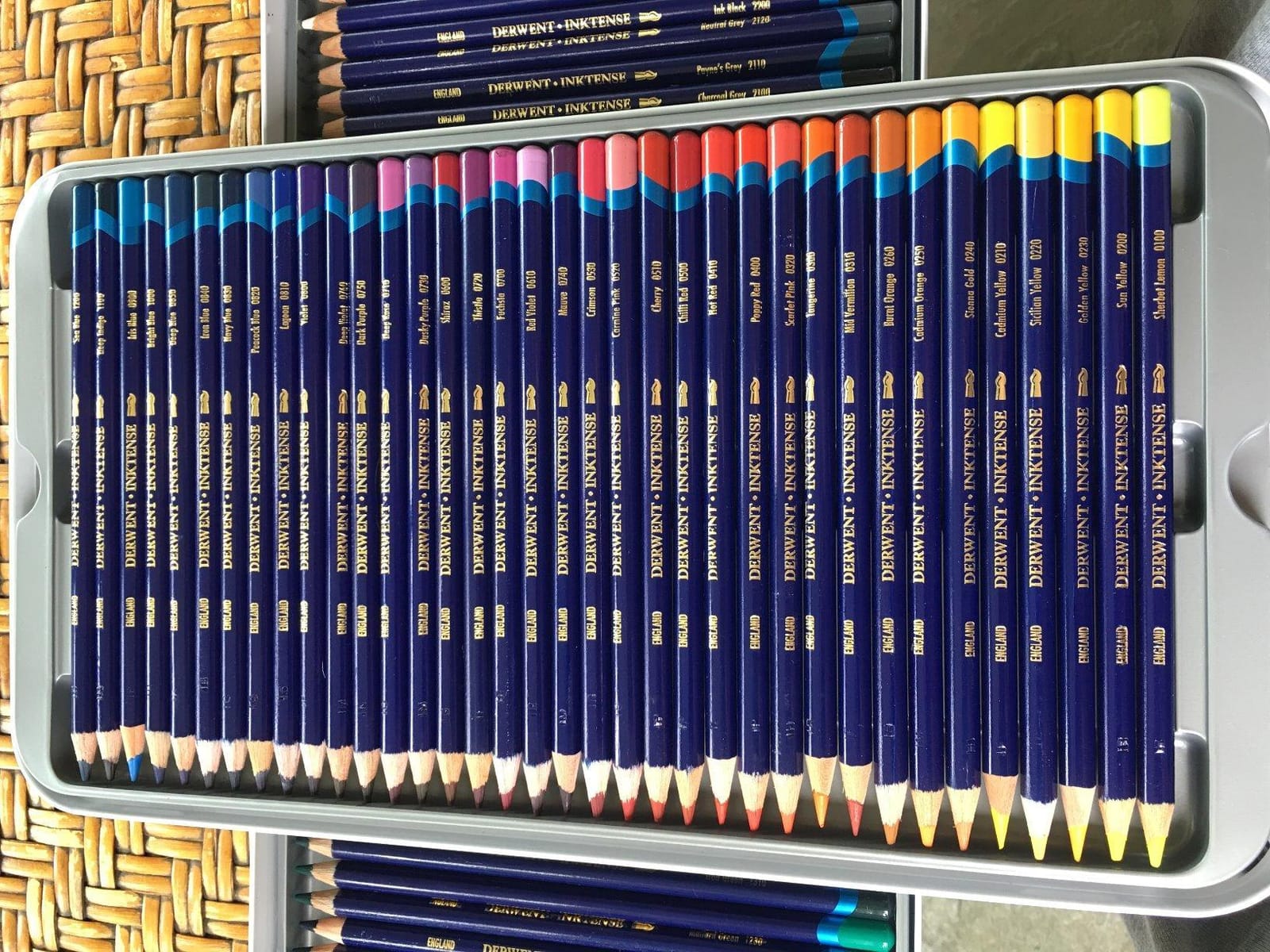
Four millimetre cores give a saturated, confident mark and layer without disturbing the colour underneath, which is unusual for a water-soluble pencil. The 87 percent five-star share reflects that.
The catch is permanence. Once dry, the colour is locked in, so a wash you dislike is a wash you live with or scrub. Plan the water pass before you make it.
Where this set genuinely earns its place
Illustrators working across dry and wet stages get two tools from one tin. The transition from pencil line to brush-activated wash happens on the same surface without a change of medium.
The layerability matters too, since each pass sits on top rather than reactivating everything below it.
Where it will hold you back
Fine detail work. A firm 4 mm core built for coverage is wrong for hairlines, and the softness that makes it blend well is not there.
If your process depends on correcting mistakes with water, choose a set built to be reworked instead.
4. Lyra Rembrandt Polycolor 36 – Best Value for Working Artists
Lyra Rembrandt Polycolor Colored Pencils – 36 Professional Colored Pencils for Artists and Students – Vibrant Smooth Colored Pencils for Drawing Coloring Sketching Portraiture and More
4 mm oil-based lead
Lacquered cedar barrels
36 colours
500 g
Pros
- Vibrant 4 mm oil-based lead in lacquered cedar
- Creamy soft saturated laydown
- Highly lightfast pigments
- Wide value range from palest tint to deep tone
- Suited to paper and other surfaces
Cons
- Soft lead needs constant sharpening
- Colour names do not always match the swatch
- Palette skews muted rather than bright
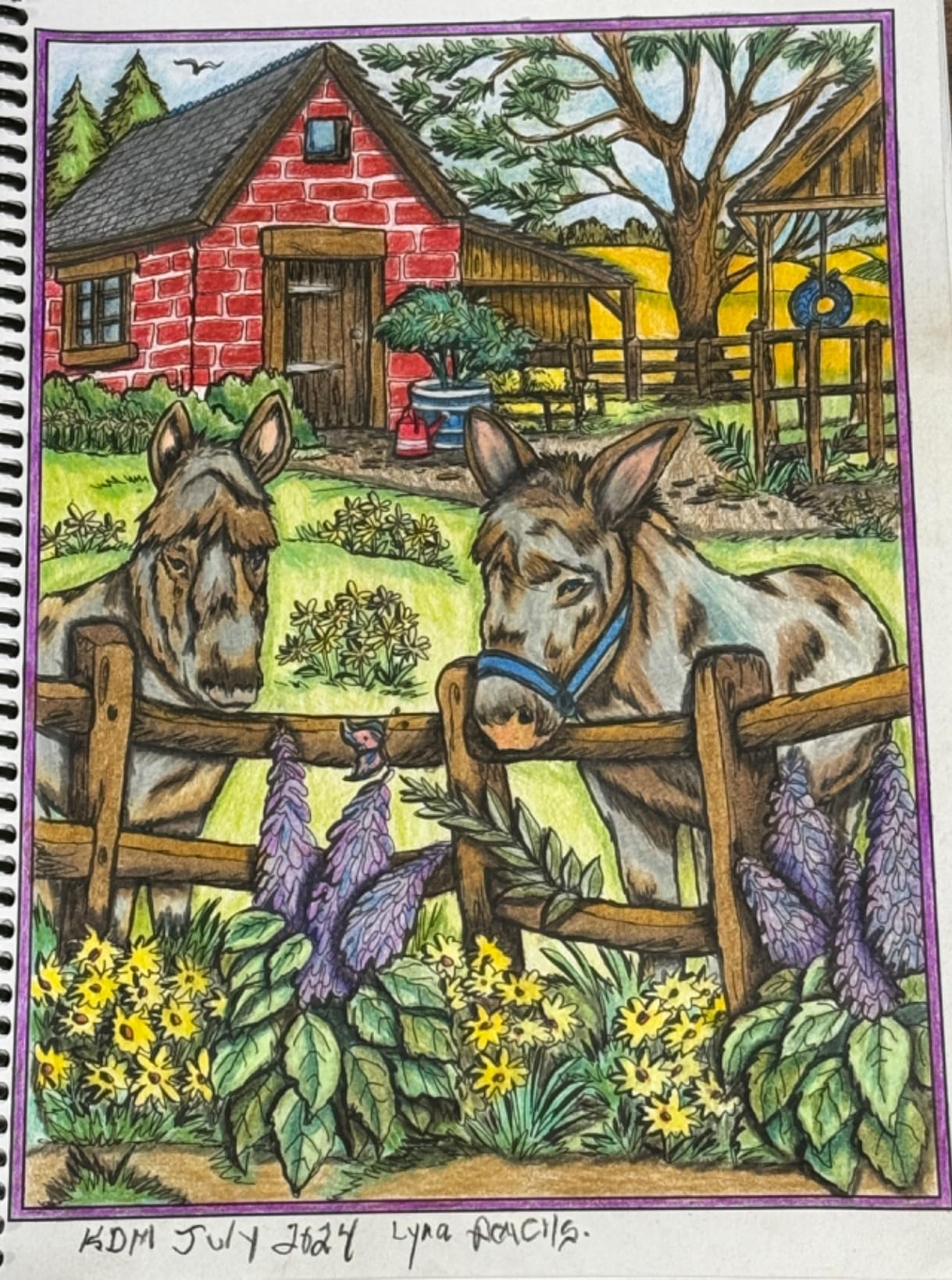
For a professional who already owns a premium set, Polycolor is a credible second box rather than a compromise. The 4 mm oil-based lead in lacquered cedar gives a creamy, saturated laydown that blends cleanly, and reviewers who own Prismacolor and Polychromos rate it as a capable alternative.
Two things shape how you use it. The palette is painterly and muted rather than high-chroma, which suits restrained work and undercuts anything needing a screaming accent colour. And part of the 36 is grey and neutral tones rather than distinct hues.
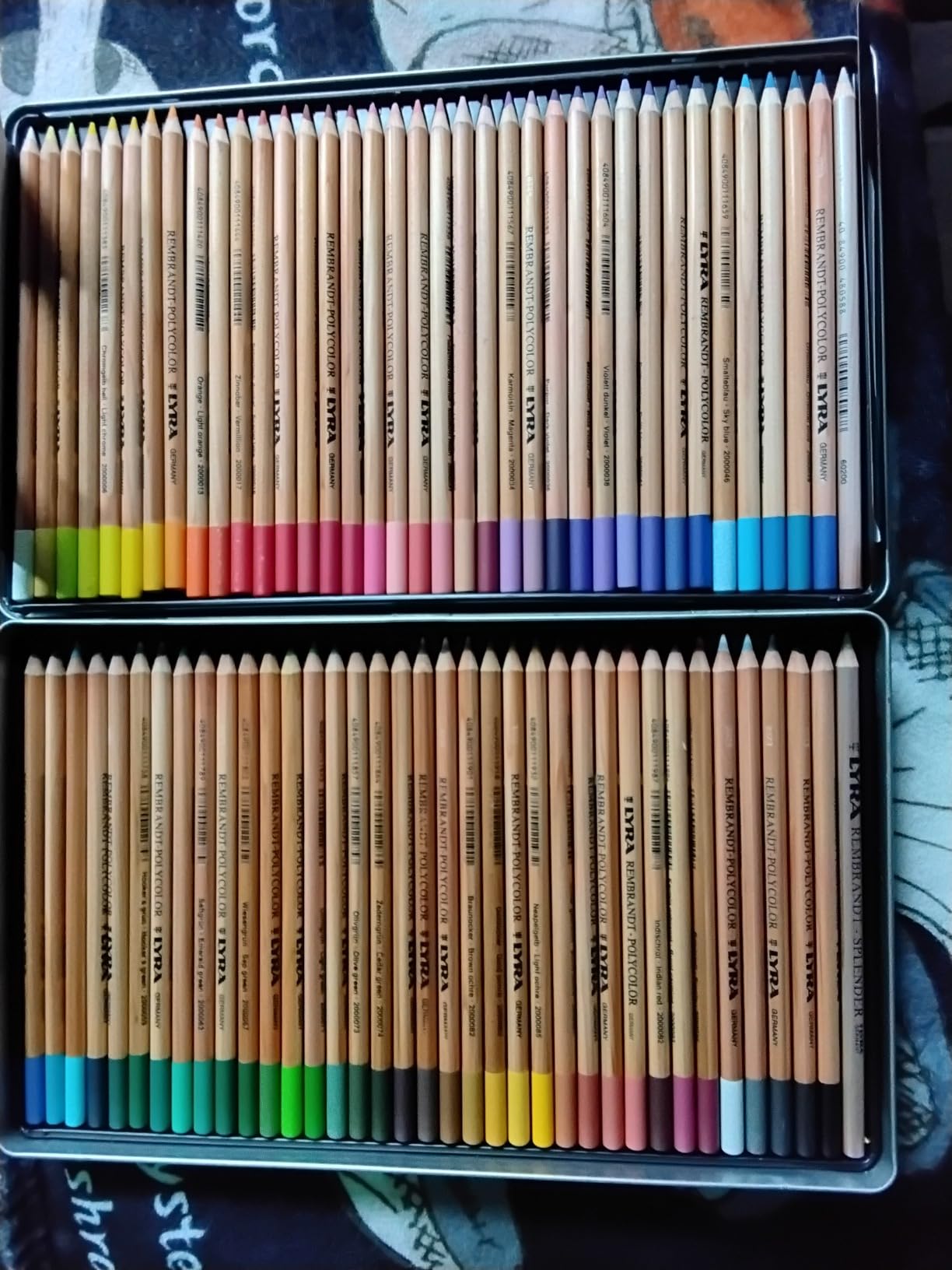
Lightfastness is a genuine strength here, so pieces made with it will hold their colour. The slim, light barrels at 500 g are the most comfortable in the lineup for long sessions, and they work on cardboard and wood as well as paper.
The recurring complaint is practical. Colour names do not always match what comes out of the barrel, so swatch before you commit a sheet. Single-colour replacements are also harder to source for this range than for the big brands.
Why a professional would buy this set
It is the least expensive way in this list to get an oil-based core with lightfast pigment and a cedar casing that holds up to sharpening.
The wide value range from palest tint to deep tone means backgrounds and shading work are covered without hunting for extra pencils.
Where the set falls short
Bright, high-chroma hues are not what this palette is built for. Artists working in poster colour or neon-adjacent subjects will keep looking.
Duplicates appear in the set according to some reviewers, so swatch the whole tin on the first day rather than discovering a repeat mid-piece.
5. Derwent Lightfast 100 – Best for Work That Must Stay Unfaded
Derwent Lightfast Colored Pencils 100 Tin, Set of 100, 4mm Wide Core, 100% Lightfast, No Fade for 100 Yrs, Oil-based, Premium Core, Creamy, Ideal for Drawing, Coloring, Professional Quality (2306017)
ASTM D6901 and Blue Wool rated
4 mm oil core
100 colours
Sharpener included
Pros
- 100 percent lightfast to ASTM D6901 and Blue Wool ISO 105
- Buttery oil core blends to a painting quality
- Thick 4 mm core holds a point
- Highly opaque so it covers dark paper
- Sharpener included
Cons
- Several colours are close duplicates
- Barrel colour does not match the pigment laid down
- Struggles with smooth light gradients
This is the set to buy when the work is for sale, a commission, or a gallery. The core is rated to ASTM D6901 and Blue Wool Scale ISO 105 and is formulated to resist colour change for up to a hundred years under museum conditions. That is documented permanence, not a marketing claim.
Artists who sell their work dominate the reviews, and for them that testing is the deciding advantage over cheaper wax-based sets. The oil core blends to a paint-like finish, and the 4 mm core is thick enough to hold a point through a long drawing.
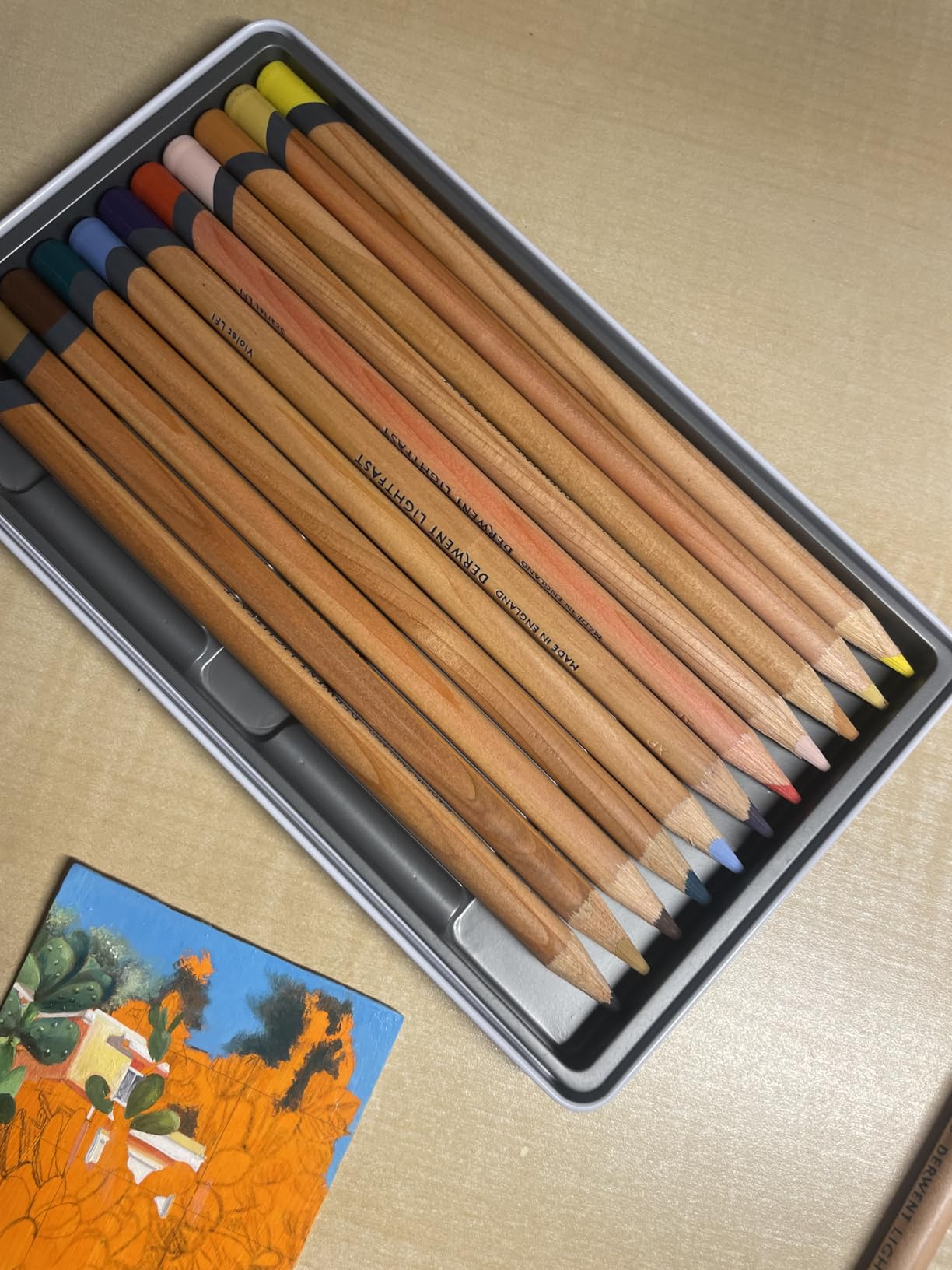
Opacity is the other reason to own it. On black or toned paper the dark colours sit over lighter shades cleanly and define negative space, which most translucent pencils cannot do.
The colour range is the broadest fully lightfast spectrum in the Derwent line, including purples and pinks that other ranges dilute. Some reviewers report a tin arriving dented with a pencil missing or duplicated, so check the case on arrival.
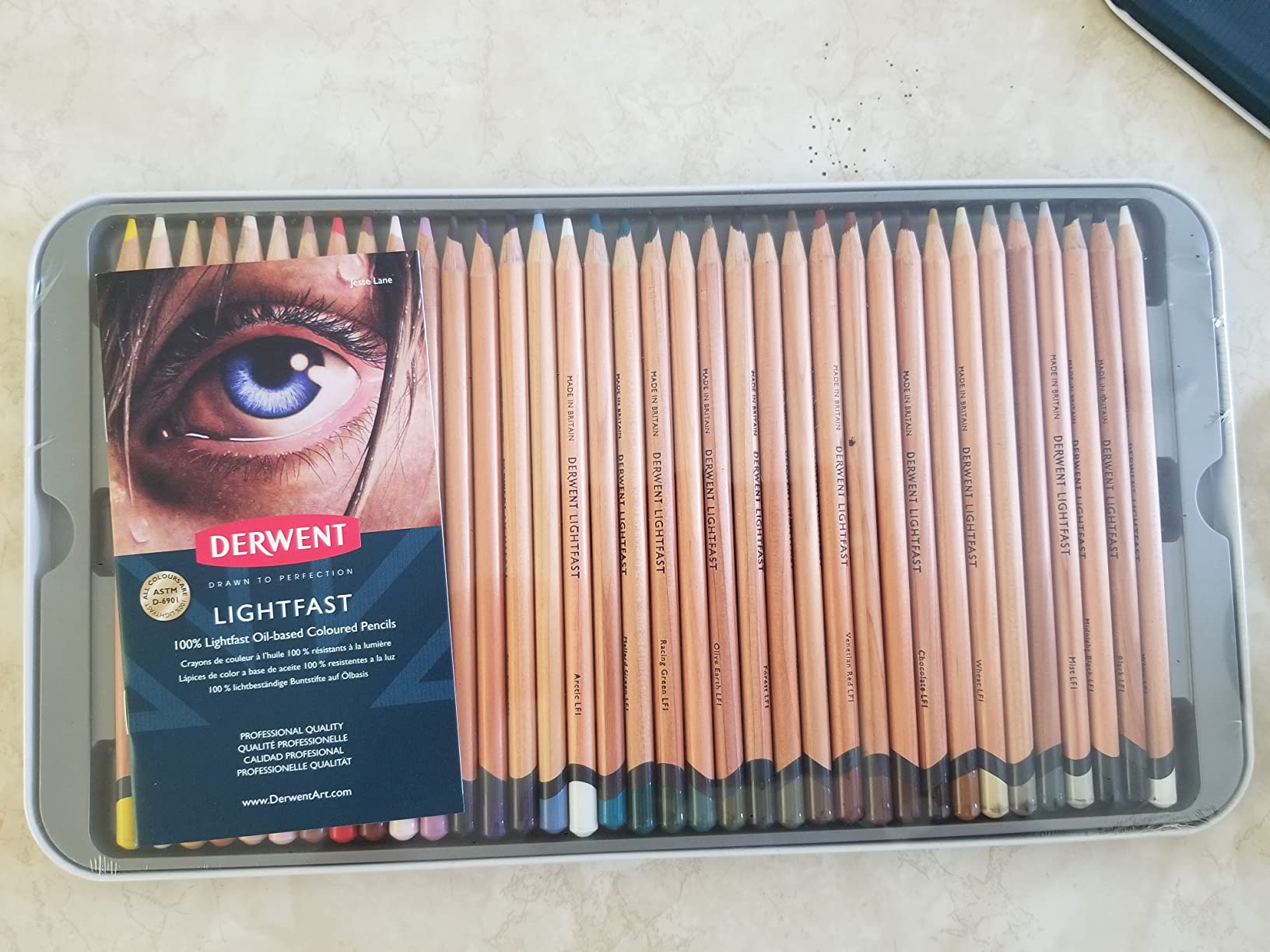
What the lightfastness rating actually protects you from
Lightfast pigment stops the finished piece from shifting under daylight and UV exposure. For work being sold or exhibited, that is the difference between a drawing that looks the same in ten years and one that does not.
Absence of published testing is itself a warning. If a brand will not commit to a rating, assume the pigment is not built for permanence.
Where these pencils are difficult
Several colours are near-duplicates of each other, which eats into the useful count. Barrel colour also fails to predict the pigment reliably, so swatching is not optional.
Smooth, light gradients are the hardest thing to build here. Plan for layered texture rather than an airbrushed fade.
6. Caran d’Ache Luminance 40 – Best for Smooth Blending
Caran D’ache Luminance Colored Pencil Set of 40 (6901.740)
Oil-based cores
3.8 mm cedar leads
40 colours
2H to 9B hardness range
Pros
- Pigments chosen for purity and UV resistance
- Smooth creamy laydown that blends and layers
- 3.8 mm lead in cedar casing holds a point
- Hardness range from 2H to 9B in one set
- Swiss-made production
Cons
- Not water resistant
- Shorter barrels need frequent sharpening
- Laydown is relatively transparent
Luminance is the benchmark for how smooth a coloured pencil can feel. The oil-based core lays down without tooth catching, and the pigments are selected for purity and UV resistance, which is why the 4.8 rating holds across a set that is smaller than most rivals.
What stands out most in practice is the hardness range inside one set, from 2H through to 9B. That lets you plan a drawing by core grade rather than hunting for a pencil that behaves differently from the one before it.
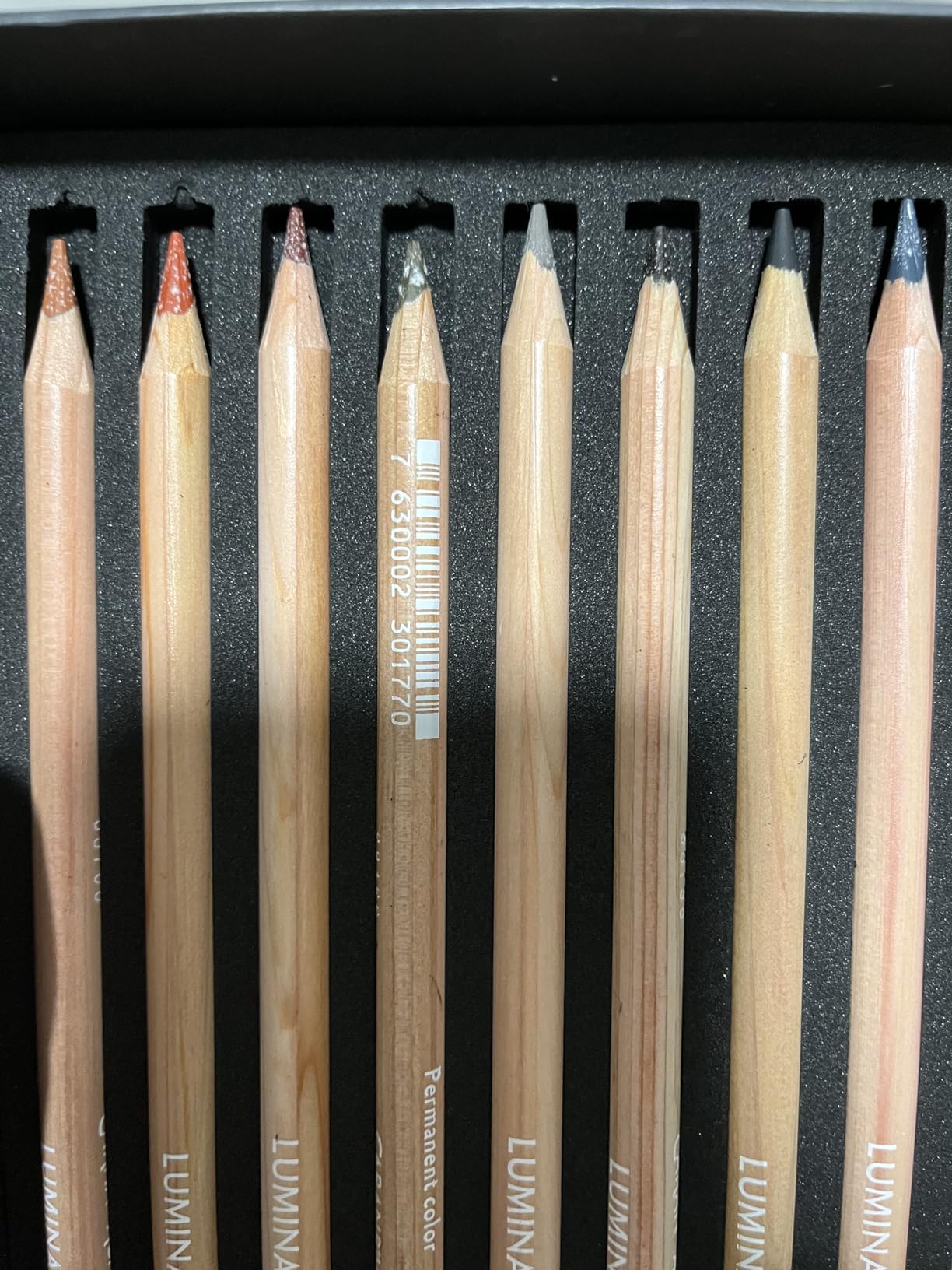
The honest limitation is coverage. The laydown is comparatively transparent, so full opacity needs many careful layers, and the 40-count assortment is small for the tier. Swiss-made production is consistent from pencil to pencil.
None of the cores are water resistant. Keep them away from wet media, and expect a damp finger to mark the page.
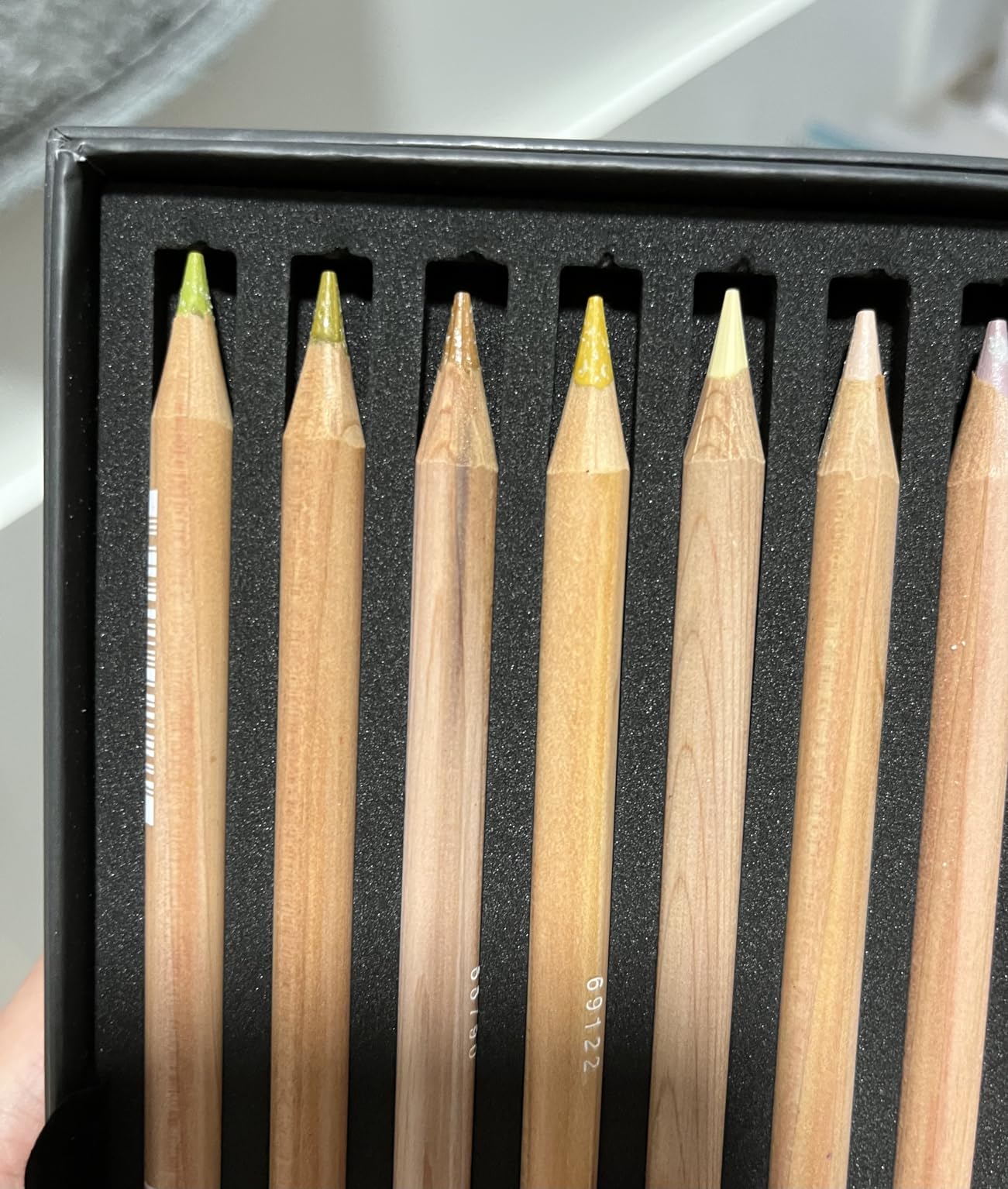
What Luminance is built for
Transitions. When a piece depends on skin tone gradients or soft atmospheric depth, a transparent, smooth core builds those shifts without the grain that harder pencils leave behind.
The 3.8 mm cedar lead holds its point longer than a soft wax core, so you sharpen less than the weight of the laydown would suggest.
What to know before you buy
A 40-count set from a premium brand feels small fast, and topping it up one colour at a time costs more per pencil than buying a larger tin did.
Coverage-heavy work will disappoint you. If you need to cover a background in one pass, Pablo is the better Caran d’Ache range for that.
7. Caran d’Ache Pablo 120 – Best for Covering Large Areas
Caran d’Ache Pablo Colored Pencil Set Of 120 Metal Box (666.420)
Oil-based hexagonal pencils
3.7 mm leads
120 colours
Water resistant core
Pros
- Creamy soft oil-based laydown that is water resistant
- Exceptional covering power over large areas
- Superb lightfastness for lasting work
- 120 colours in a metal box
- Hexagonal barrel gives a secure grip
Cons
- Soft core needs frequent sharpening
- Blending takes more effort than waxier ranges
- The 120-piece metal box is heavy and bulky
Pablo solves the problem Luminance creates. Where Luminance builds opacity through layers, Pablo covers. Reviewers single out the covering power over large areas as the reason to reach for it, and on background work that difference shows up immediately.
The soft, creamy, water-resistant oil core means a drop of water will not lift it, and the lightfastness is strong enough for work you intend to keep. Three point seven millimetre leads sit in a hexagonal barrel that gives a secure grip for controlled shading.
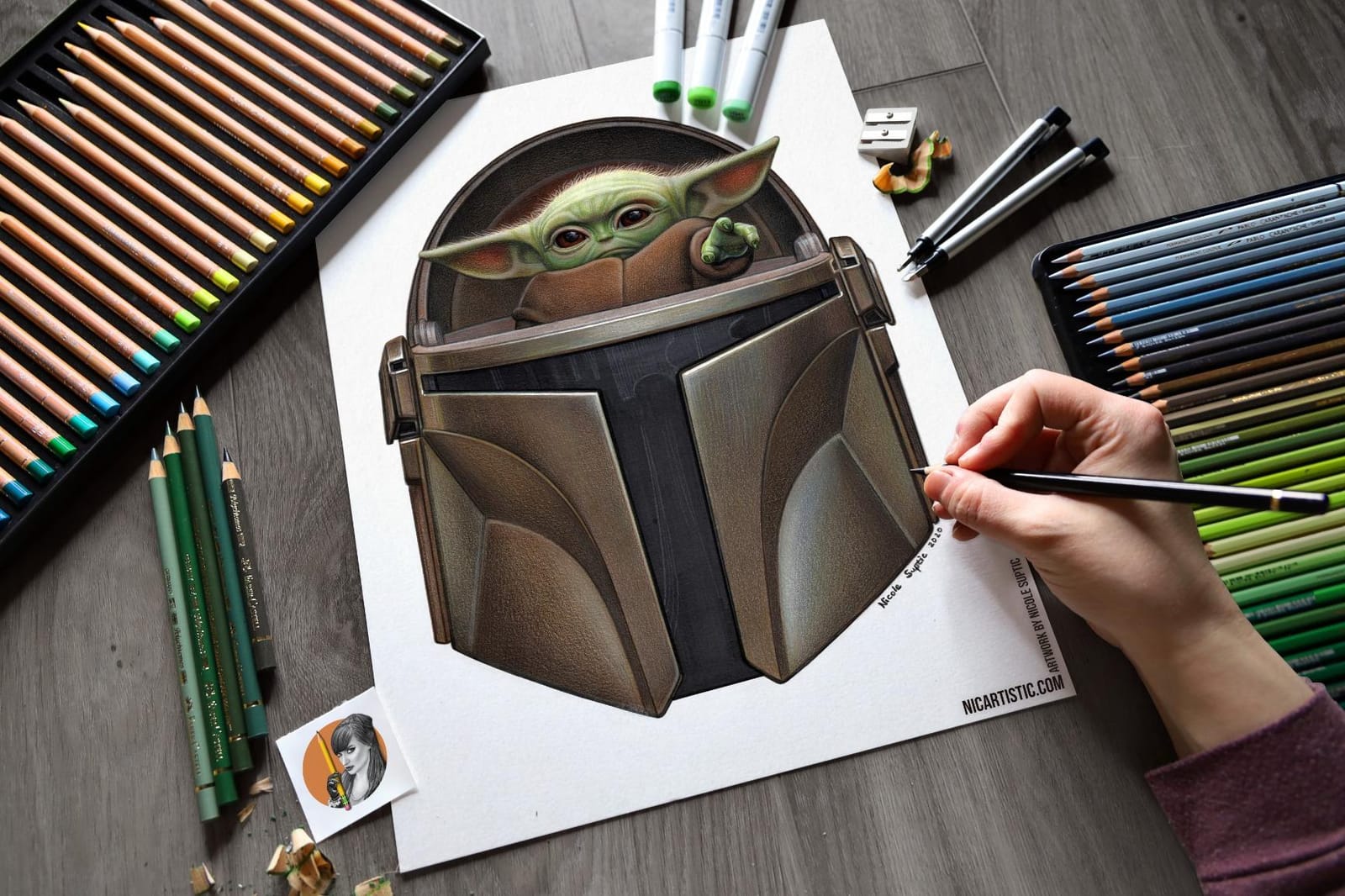
Because the core is soft, long sessions mean constant sharpening. It also feels waxier than the other oil-based sets here, so blending takes more deliberate pressure and more passes than Prismacolor.
At 600 g in a metal box, the 120-piece set is a heavy object to carry. That is the other review complaint that appears again and again.
Why cover power changes the workflow
Large areas covered in one confident layer save the time a translucent core spends building density. For skies, backgrounds and base coats, that is a measurable difference across a finished piece.
Water resistance means a light wash over the top will not disturb it, which is a real advantage in mixed media work.
Where it is the wrong choice
Fine, crisp detail. A soft core that needs regular sharpening will not hold a needle point, so use a firmer set for the detail pass.
Blending is harder here than with a wax-based pencil. If smooth transitions matter more than coverage, stay with Luminance.
8. Caran d’Ache Supracolor II 40 – Best for Wet Media Beginners
Caran D’ache Supracolor Metal Box Set Of 40 (3888.340)
Water-soluble cores
3.8 mm hexagonal pencils
40 colours
Metal box
Pros
- Water-soluble and usable wet or dry
- Rich pigmentation and strong covering power
- Minimal granulation and ghosting
- Colours dissolve into transparent predictable washes
- Swiss-made tin fits a travel kit
Cons
- Leads must be sharpened often
- Dry blending with the white only tints
- Dried washes are hard to rework
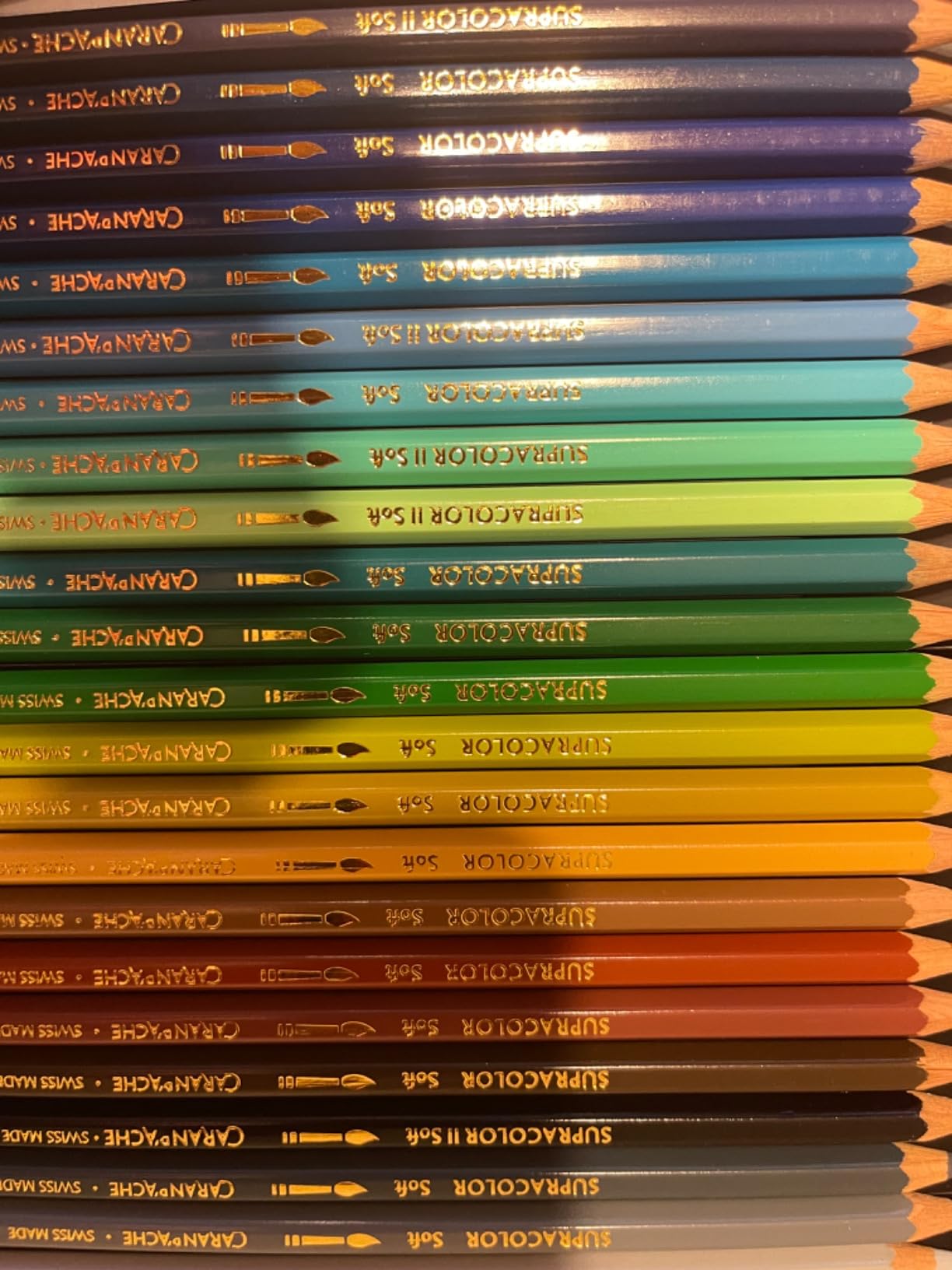
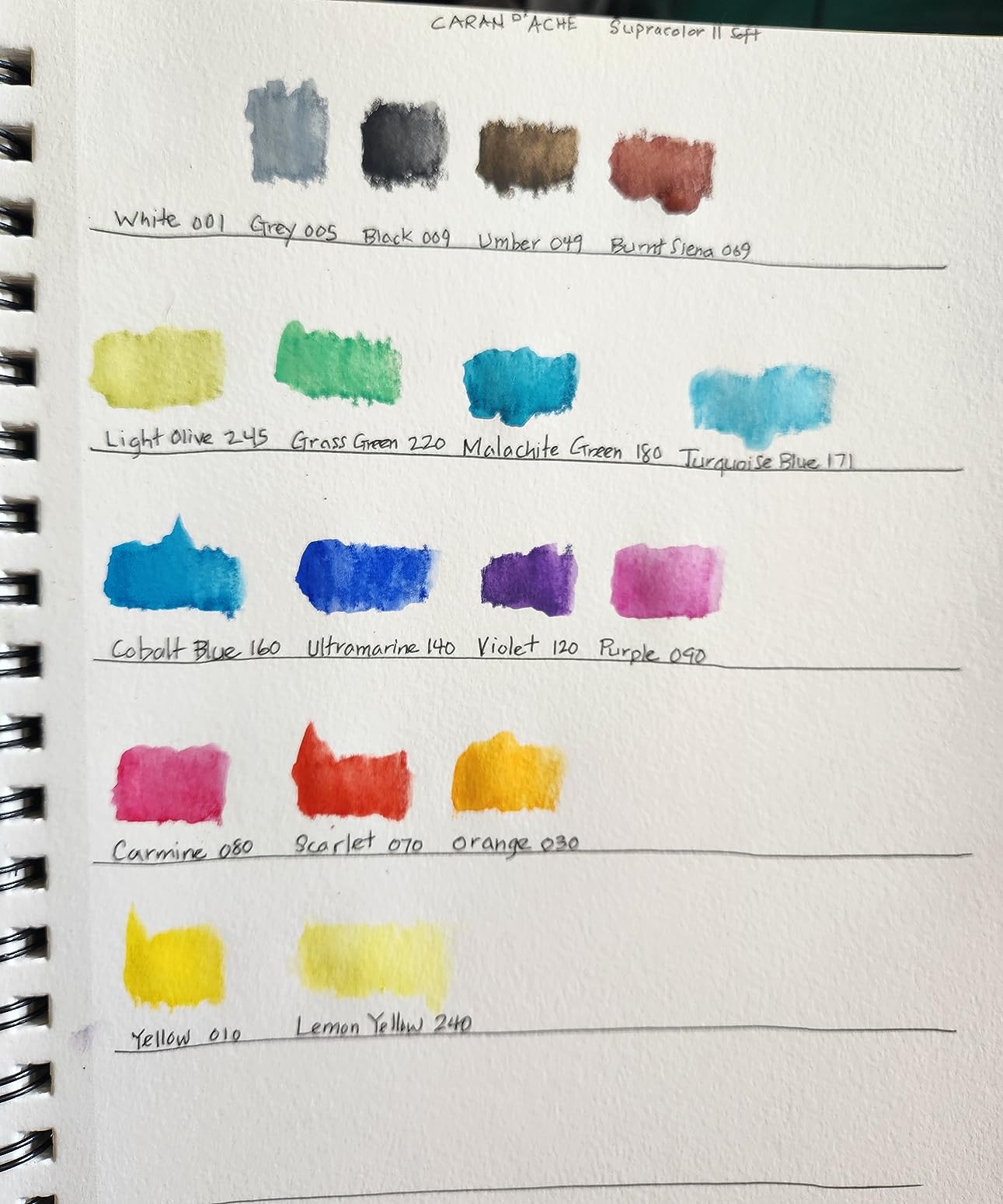
Supracolor II is the watercolour pencil range in this list, and reviewers testing it directly found minimal granulation, virtually no ghosting and transparent washes that stay predictable. That is a cleaner wet result than most, and it comes from rich pigment with strong covering power.
The colour system matches other Caran d’Ache ranges, so a professional can buy forty wet pencils and still coordinate them with an oil-based set already on the desk.
The catch is speed. Washes set fast, so you have to blend while the colour is moving, and once a wash has dried it resists rework without leaving a damp patch. Some colours also stain and cannot be fully lifted.
Dry use is limited too. Layered marks stay crisp, and the white pencil tints rather than smoothing, so this is not a dry blending tool.
Who this set is genuinely for
Illustrators and designers who need a wash effect without carrying a full watercolour palette. Forty shades cover a working range rather than a spectrum.
If you need a portable wet setup, the Swiss metal tin fits inside a sketchbook or a travel kit, and our sketchbook roundup covers surfaces that hold up to it.
What to watch for
Constant sharpening, because the leads do not hold a fine point for long. Budget time for it before you start a detailed piece.
If you need to revisit a dried area, choose a set designed for it. This pigment has already set.
9. Albrecht Durer Aqua 120 – Best for Leads That Survive Sharpening
Faber-Castell Albrecht Dürer® Artists’ Watercolor Pencils – Tin of 120
3.3 mm SV-bonded leads
120 colours
Water-soluble core
Hinged tin
Pros
- Pigments dissolve completely when brushed with water
- 3.3 mm leads SV-bonded to resist breakage
- Smooth laydown from highly pigmented cores
- 120 shades in one hinged tin
Cons
- Needs a separate water brush to activate pigment
- Wooden barrel rather than refillable or mechanical
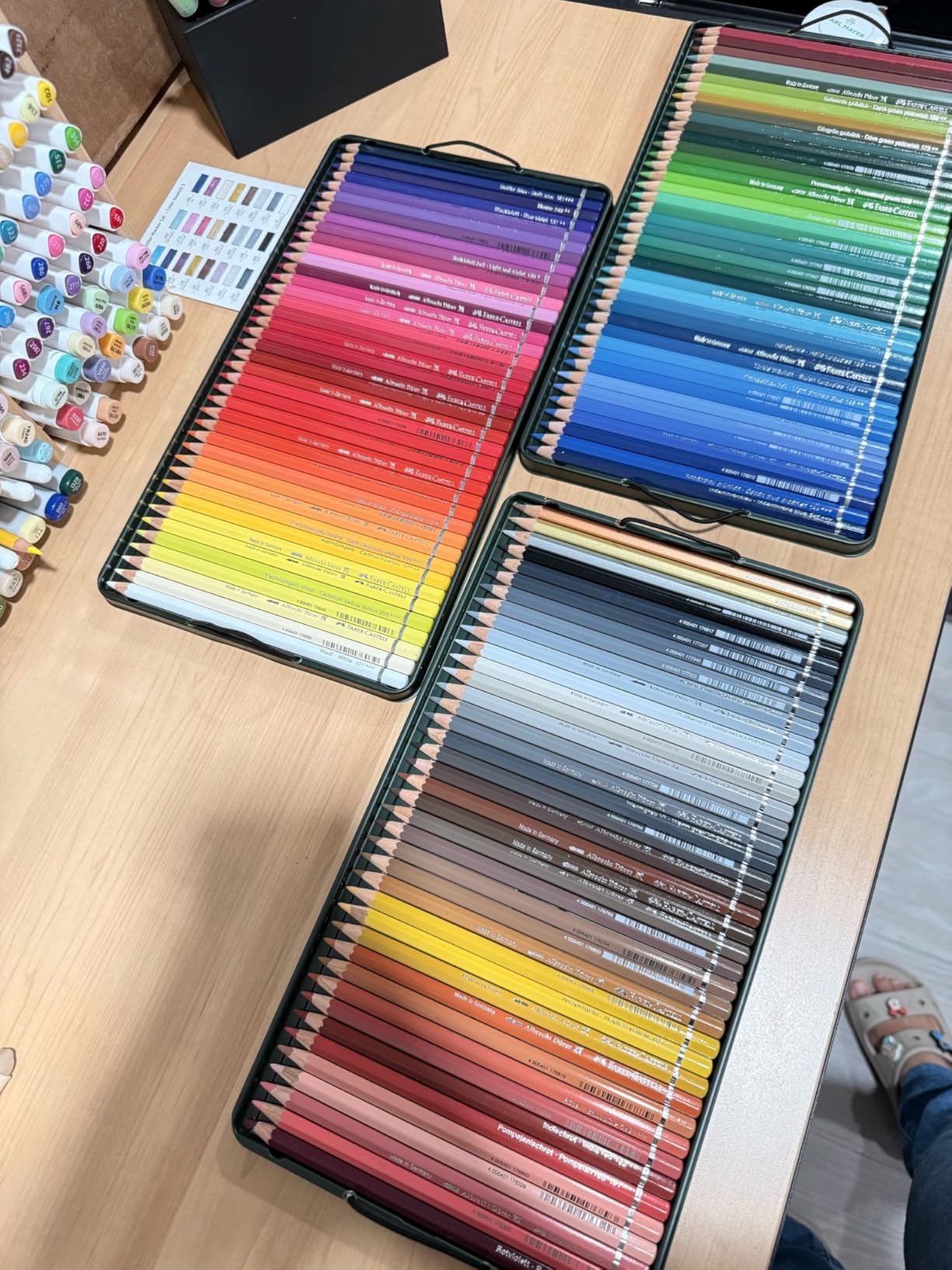
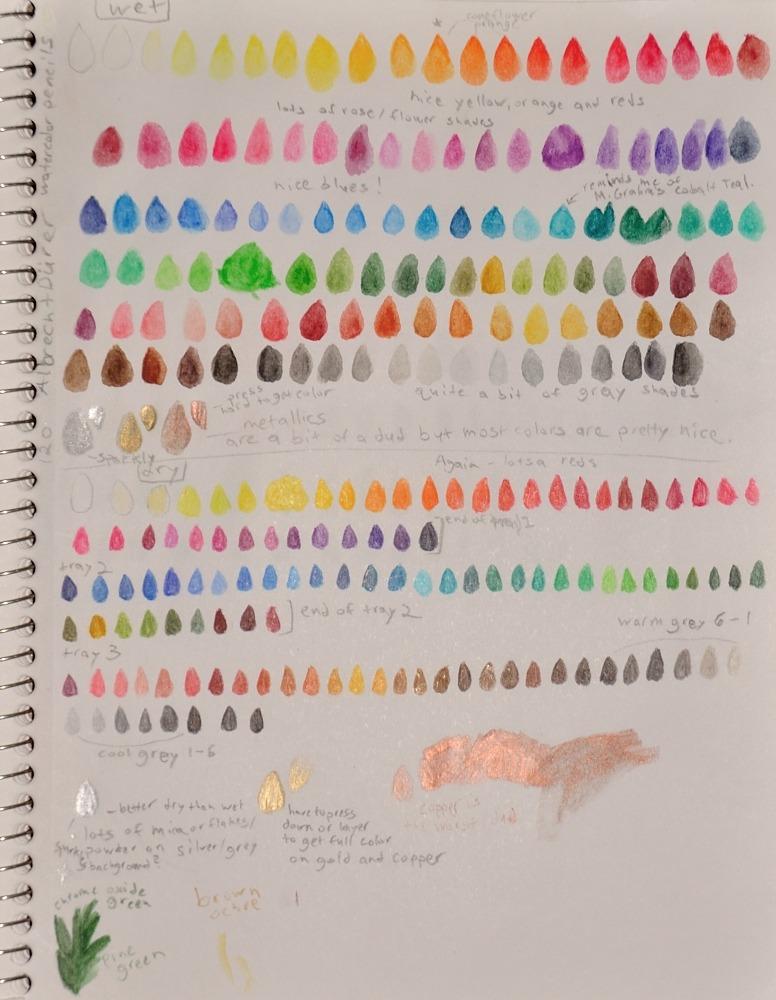
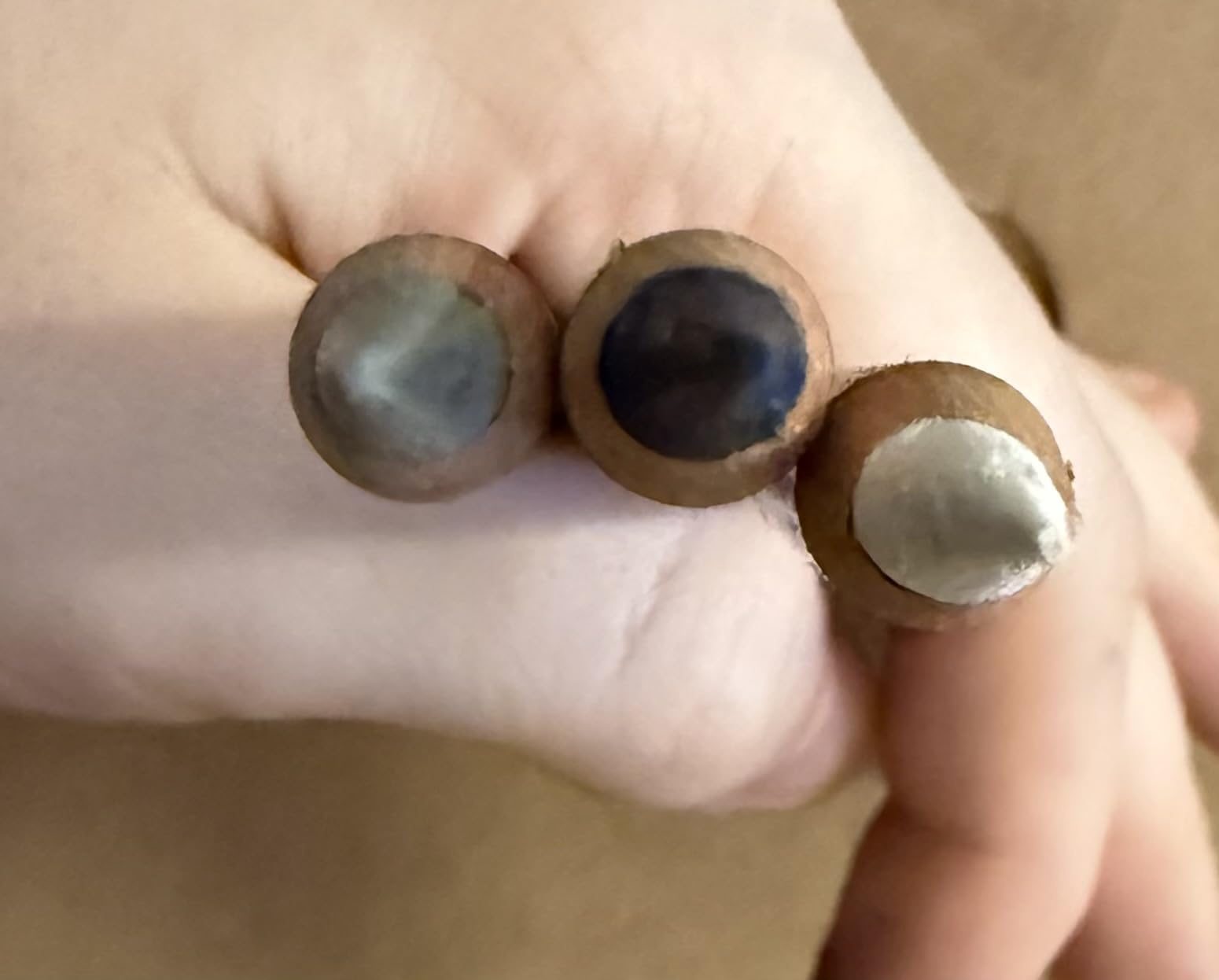
Breakage is the complaint we heard most often across artist communities, and this set is built directly against it. The leads are 3.3 mm and SV-bonded, which means the core is bonded to the wood rather than sitting inside it, so it resists snapping under pressure or in the sharpener.
Ninety-three percent of reviews are five star, and the praise concentrates on pigment load, smooth laydown and lead durability. A hundred and twenty shades in a hinged tin give a broad tonal range without a second purchase.
The pigment dissolves completely when brushed with water, so it produces true watercolour effects rather than a tinted pencil line that dilutes unevenly. That is the reason to buy this range over a dry drawing set.
You need a separate water brush to activate it, and the barrel is plain wood with no refill or mechanical option. If you break the tip, there is no spare core to fit.
What SV bonding changes in daily use
Leads that are bonded to the casing survive a sharpening session that would chip a loosely glued core. For anyone who sharpens hard or draws daily at length, that is the difference between a pencil that lasts and one that does not.
Water-soluble pigment with complete dissolution also mixes more evenly than a pencil that only partially releases colour, so your wash transitions come out cleaner.
What you give up for that durability
Nothing is refillable. Wooden barrel only, so a snapped tip ends that pencil.
The thinner 3.3 mm core carries less pigment per stroke than a 4 mm core, so coverage-heavy backgrounds take longer than they would with Pablo.
10. Derwent Drawing Pencils 24 – Best for Tonal and Earth-Tone Studies
Derwent Colored Drawing Pencils, Metal Tin, 24 Count (0700672)
5 mm round leads in 8 mm barrels
24 shades
Metal tin
Pre-sharpened
Pros
- Soft creamy 5 mm round leads lay down smoothly
- Works for broad sweeps and fine detail
- Rich velvety finish on paper
- Pre-sharpened with medium and wide drill points
- Traditional sepia tones in a metal tin
Cons
- 24-count tin covers fewer shades than larger sets
- 5 mm leads wear down faster than thinner cores
This is the smallest set in the roundup and the only one built around traditional earth and sepia tones rather than a modern spectrum. If you draw outdoors, study natural forms or work from life in muted colour, twenty-four well-chosen shades are genuinely workable.
The leads are creamy and round at 5 mm inside an 8 mm barrel. Colours lay down quickly from a wide sweep to a thin application and finish rich and velvety, with eighty-five percent of reviews at five stars.
The obvious limit is count. Twenty-four shades is a fraction of what the other sets offer, and you will be topping up elsewhere if you need a wide hue range.
Five millimetre leads also wear down faster than thinner cores, so detail work costs more sharpening than it would with a 3.3 mm set.
What makes this set worth owning anyway
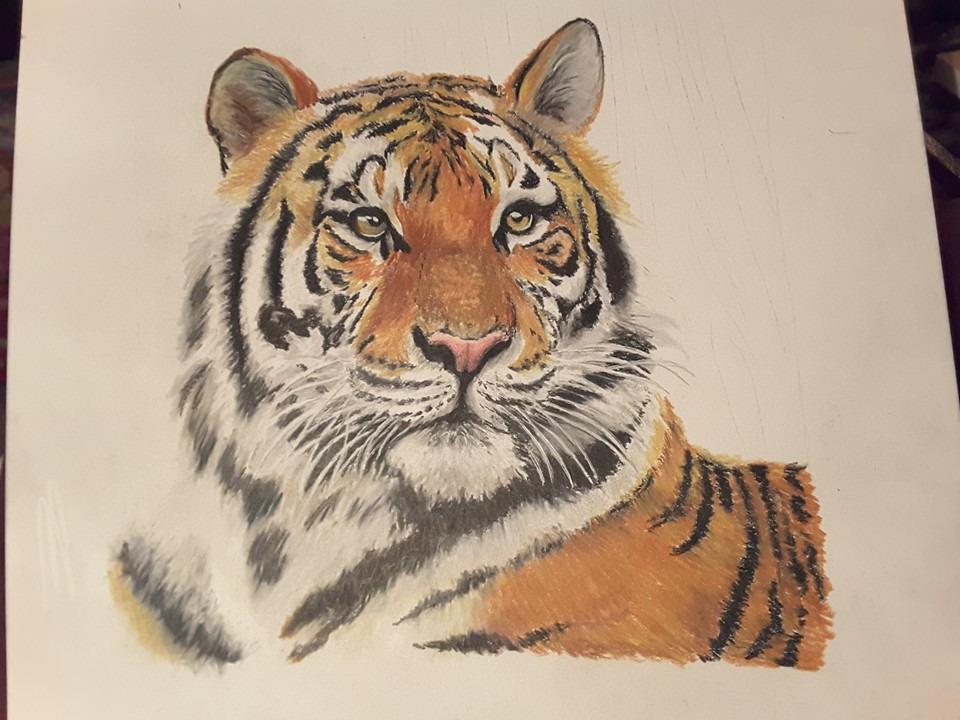
The earth and sepia family here is difficult to match. Reviewers regularly recommend the set for outdoor scenes and nature studies, where natural colour is more useful than a full chromatic range.
Because the leads are broad and soft, one pencil covers both a big shape and a small transition, which is rare in professional sets.
Where it falls short
Bright hues. Nothing here gives you a clean, saturated modern colour outside the earth family, so this is a companion set rather than a full palette.
For pure detail work the 5 mm core blunts too quickly. Pair it with a thinner set if fine line matters to your work.
Which Brand Should You Buy? Head-to-Head
Most of the search traffic around this topic is brand matchups, so here are the four comparisons that come up constantly. Each one has a different answer depending on what your work needs, not on which brand is better in the abstract.
Prismacolor Premier vs Faber-Castell Polychromos
Prismacolor Premier for blending and speed, Faber-Castell Polychromos for permanence and durability. Premier lays down softly with almost no resistance and gives you 150 colours to choose from; Polychromos gives you a firmer, break-resistant 3.8 mm lead with fade-resistant pigment and water resistance. A professional who draws often and quickly tends to pick Premier, and one whose work is sold, exhibited or archived tends to pick Polychromos.
Caran d’Ache Luminance vs Caran d’Ache Pablo
Luminance for smooth transitions, Pablo for coverage. Luminance lays down transparently and blends beautifully but needs layers to build opacity; Pablo covers large areas in a single pass with a water-resistant soft core. They are complementary rather than competing, which is why many artists keep both.
Prismacolor Premier vs Derwent Lightfast
Derwent Lightfast for anything you intend to keep, Prismacolor Premier for everything else. Lightfast is tested to ASTM D6901 and Blue Wool ISO 105 and formulated to resist colour change for up to a hundred years under museum conditions, and it is opaque enough to cover dark paper. Premier has the softer core and the larger palette. If lightfastness is a published rating rather than a claim, Lightfast wins.
Are Faber-Castell Polychromos worth it?
For a professional, yes, on the strength of the lead rather than the colour. A 3.8 mm SV-bonded core holds its point, resists breakage in the sharpener and survives water, and the fade-resistant pigment protects finished work. For someone testing whether they like coloured pencil at all, a smaller tin answers the same question at a lower commitment.
Brand tier ladder for building a collection over time
Working artists rarely need one brand, and the forum consensus among colour pencil users is that mixing brands by task beats collecting a single massive set. A common and effective combination is a soft wax-based core such as Prismacolor Premier or Caran d’Ache Pablo for broad coverage and underpainting, then an oil-based set such as Polychromos for the fine detail pass on top.
The second part of the ladder is the one most people skip. Start with one set, learn which twenty colours you actually reach for, and buy those remaining shades individually instead of replacing the whole tin. Artists also mix brands deliberately because some pencils blend well with ones they already own rather than fighting them.
How to Choose Artist-Grade Colored Pencils
Artist-grade is not a marketing tier you can verify from a package. It describes a formulation choice: a high concentration of pigment with minimal filler and binder, so the pencil deposits colour instead of wax.
Wax-based vs oil-based cores
Wax-based cores are softer, lay down faster, blend more easily and take layering well, which is why they dominate portrait and general studio work. They are also more fragile, need more sharpening and can develop wax bloom, a milky film that appears on the surface over time and that artists consistently dislike. Oil-based cores are firmer, hold a point longer, resist water and usually publish lightfastness data. They take more pressure to build the same depth of colour.
Neither is better. They are different tools, and most professional drawings use both at different stages.
Understanding lightfastness ratings
Lightfastness describes how a pigment holds its colour under light and ultraviolet exposure. It is graded on the Blue Wool Scale from 1 to 8, where 8 is the most permanent, and tested to standards such as ASTM D6901 and ISO 105. Lightfastness is not the same as permanence, which also covers chemical stability and the binder itself.
For professional work, the practical filter is simple: does the brand publish a rating at all? Absence of published data is treated as a warning sign by the artist community, because an untested pigment is an untested pigment.
Core diameter, hardness and pressure control
Diameter decides how much work one stroke covers. The range in this roundup runs from 3.3 mm on Albrecht Durer Aqua to 5 mm on the Derwent drawing pencils, with 3.7, 3.8 and 4 mm covering most of the professional sets. Thicker cores cover faster and blend more easily; thinner cores hold a detail point longer.
Hardness is graded within a set as well as across brands. Faber-Castell Polychromos lists an H grade, Caran d’Ache Luminance spans 2H to 9B, and the soft-core sets such as Prismacolor Premier are graded simply as soft. A wider hardness range inside one set lets you plan value structure before you start.
Set size and the open-stock question
Colour count is a proxy for flexibility, not quality. Several premium sets spend a large share of their count on greys, earths and near-duplicate shades, so a forty-piece set can deliver fewer usable hues than a larger budget tin.
The most common purchase regret among new artists is a small premium starter set that runs out of usable colours quickly, forcing expensive top-ups. The opposite error is buying 150 colours and using twenty. Our advice is to start with a mid-size set, track which pencils you actually reach for over a month of work, then buy those specific colours individually. If you also draw on the go, our related paint set guide covers a similar portable-versus-studio decision.
Paper pairing changes how a pencil performs
The same pencil behaves differently on different surfaces, and this is where most purchasing mistakes hide. On smooth hot-press paper a soft core skids and cannot build texture. On rough cold-press it catches and holds a grainy layer. Bristol vellum gives a controlled surface for layering and burnishing. Toned and black paper reward opaque pencils, which is why Derwent Lightfast and Pablo cover well there. Sanded UART paper grips soft cores hard and gives the smoothest burnish of any surface.
Match the surface to the technique. Layering and burnishing want tooth. Washes and blending want a heavier sheet that will not buckle.
Care, sharpening and preventing breakage
Sharpening is the most repeated complaint across artist forums, and most snapped leads come from a dull sharpener rather than a weak pencil. A dedicated sharpener with a cut-away hole for the barrel reduces pressure on the core. Sharpen little and often instead of taking long cuts, keep pencils in a tin with dividers so they do not knock together, and use a pencil extender to recover the last few centimetres of a soft lead.
For wax bloom, the fix is to work the surface with a blending pencil or burnisher and handle finished pieces carefully. Light spray fixative controls bloom but can alter surface sheen, so test on a scrap sheet first.
Spotting genuine artist-grade pencils
Check three things before you trust a listing. The core should be thick relative to the barrel, usually 3 mm or more, because thin cores indicate filler rather than pigment. The colour on the barrel should match the swatch, and mismatch is a signal of a different batch or a different product entirely. And the price should reflect a professional formulation, since artist-grade pigment is the expensive part of the pencil.
Buying artist-grade pencils from third-party marketplaces carries a real risk of knockoff stock with diluted pigment. If a listing looks dramatically cheaper than the brand’s own, treat the pigment claims as unverified.
Frequently Asked Questions
What brand of colored pencils do professional artists use?
Most professional artists use one of four brands: Prismacolor Premier for soft blending and a wide palette, Faber-Castell Polychromos for fade-resistant pigment and break-resistant leads, Caran d’Ache Luminance or Pablo for smooth oil-based laydown, and Derwent Lightfast for work that must stay unfaded. Working artists often combine two, using a soft core for broad coverage and an oil-based set for the detail pass.
What is the best colored pencil set for artist quality?
The best set for artist quality is the Faber-Castell Polychromos 120, because it combines 3.8 mm SV-bonded break-resistant leads with fade-resistant pigment and water resistance in one hinged tin. Prismacolor Premier 150 is the better choice when blending speed and palette range matter more than documented permanence.
Are Faber-Castell Polychromos better than Prismacolor?
Neither is better overall. Prismacolor Premier has the softer core, the larger palette and faster blending. Faber-Castell Polychromos has a firmer, more durable lead, water resistance and pigment selected to resist fading, which makes it the safer choice for work that is sold or exhibited.
Are Caran d’Ache colored pencils good?
Yes. Caran d’Ache is the Swiss benchmark for coloured pencils. Luminance is praised for smooth blending and purity-selected pigments, Pablo for covering power over large areas, and Supracolor II for clean water-soluble washes with minimal ghosting. The trade-off in Luminance is a transparent laydown that needs many layers for full opacity.
How do I stop colored pencils breaking when sharpening?
Use a dedicated sharpener with a cut-away hole so you do not force the barrel into the blade, sharpen little and often instead of taking long cuts, and keep pencils separated in a tin with dividers. Leads such as the 3.8 mm SV-bonded cores in Polychromos and the 3.3 mm cores in Albrecht Durer Aqua are bonded to the casing and resist breakage far better than loosely glued cores.
What paper is best for colored pencil drawing?
Cold-press paper suits most professional coloured pencil work because the tooth grips soft wax cores for layering and burnishing. Bristol vellum gives a controlled, smoother surface for detail. Toned and black paper reward opaque oil-based pencils such as Derwent Lightfast and Caran d’Ache Pablo. Sanded UART paper holds the smoothest burnish, while washes and wet media need heavier paper that will not buckle.
Final Verdict
For most professional artists, the Prismacolor Premier 150 is the best colored pencil set to start from, because it puts a usable palette in your hand immediately and blends faster than anything else we tested. Buy the Faber-Castell Polychromos 120 alongside it when the work is for sale or on display, since its fade-resistant pigment and break-resistant leads are the ones you can trust long term.
Add a water-soluble set only if your process crosses into washes, and pick Caran d’Ache Luminance over Pablo when smooth transitions matter more than covering large areas. Whatever you choose, buy the surface as carefully as the pencils, because the same lead behaves completely differently on cold-press, toned and sanded paper.
This guide was tested and updated for 2026. Every rating and review count shown here is taken from the current listing data at the time of writing.