For mild steel TIG work, ER70S-6 in 1/16 inch diameter is the default filler rod, and ER70S-2 in 1/16 inch is the clean-metal alternative. Pick the ER70S-6 when the joint is thin, rusty or badly fit-up; pick the ER70S-2 when you want a quieter arc, a wider puddle and a bead that matches the base metal colour.
That is the short version. The long version is that the best tig filler rod kits for mild steel are less about brand than about three variables you can read off the label: the AWS classification, the rod diameter and the cut length. Get those right and almost any reputable ER70S-6 or ER70S-2 tube will lay a sound bead. Get them wrong and no brand name rescues the weld.
We compared ten TIG filler rod kits sold for mild steel, weighing the classification, diameter, cut length, package size, review history and the specific complaints buyers actually report. Nine of the ten are single-alloy ER70S-6 or ER70S-2 carbon steel rods, which tells you something useful: the market has already settled the alloy question, and the real choice is about how the rod is cut, packed and labelled.
Below you will find each kit broken down, plus a buying guide that explains how to read an AWS classification, match rod diameter to material thickness, and decide between 16 inch and 36 inch sticks.
Table of Contents
Top 3 Picks for Best TIG Filler Rod Kits for Mild Steel in 2026

Hot Max 24188 ER70S-6 1/16 inch
- ER70S-6 classification
- 1/16 inch diameter
- 1 lb pack
- Fluid arc on mild steel

Weldcote Metals ER70S-2 36 inch
- ER70S-2 clean metal
- 1/16 inch x 36 inch
- 1 lb pack
- Highest rated ER70S-2
These three cover the three situations most home shops hit first: a general-purpose 1/16 inch rod with the deepest review history, a clean-metal ER70S-2 for anyone who wants the -2 chemistry, and a 3/32 inch rod for thicker plate where a 1/16 inch would burn off too fast.
All 10 TIG Filler Rod Kits for Mild Steel Compared in October
Every kit in the table is a solid, single-alloy carbon steel rod for GTAW. The columns that actually change your experience are diameter, cut length and package weight.
1. Hot Max 24188 ER70S-6 1/16 inch 1 lb Pack – Best All-Rounder
Hot Max 24188 1/16-Inch ER70S-6 Mild Steel TIG Filler Rod, 1#
ER70S-6 mild steel rod
1/16 inch diameter
1 lb pack
Item weight 1.1 lb
Pros
- Formulated for most types of mild steel
- Highly fluid welding behaviour
- 1/16 inch suits fine gauge work
- 1 lb pack is easy to store
- Deepest review history in the group
Cons
- Only sold in a 1 lb pack
- Limited published specification detail beyond diameter and material
This is the rod we hand to anyone who asks for one tube to start with. It is ER70S-6, the classification the automotive and fabrication shops default to for mild steel, and the 1/16 inch diameter covers sheet metal through light structural plate. The listed item weight is 1.1 pounds, so it is a genuine single-pound pack rather than a marketing name.
Across 1110 ratings it holds a 4.7 average, and the review pattern is consistent: smooth, fluid arc, reliable feed, good results on mild steel. The only recurring negative is the same one you would expect from a product with more reviews than anything else here, a small share of three-star and lower ratings describing occasional bead or feed inconsistency.
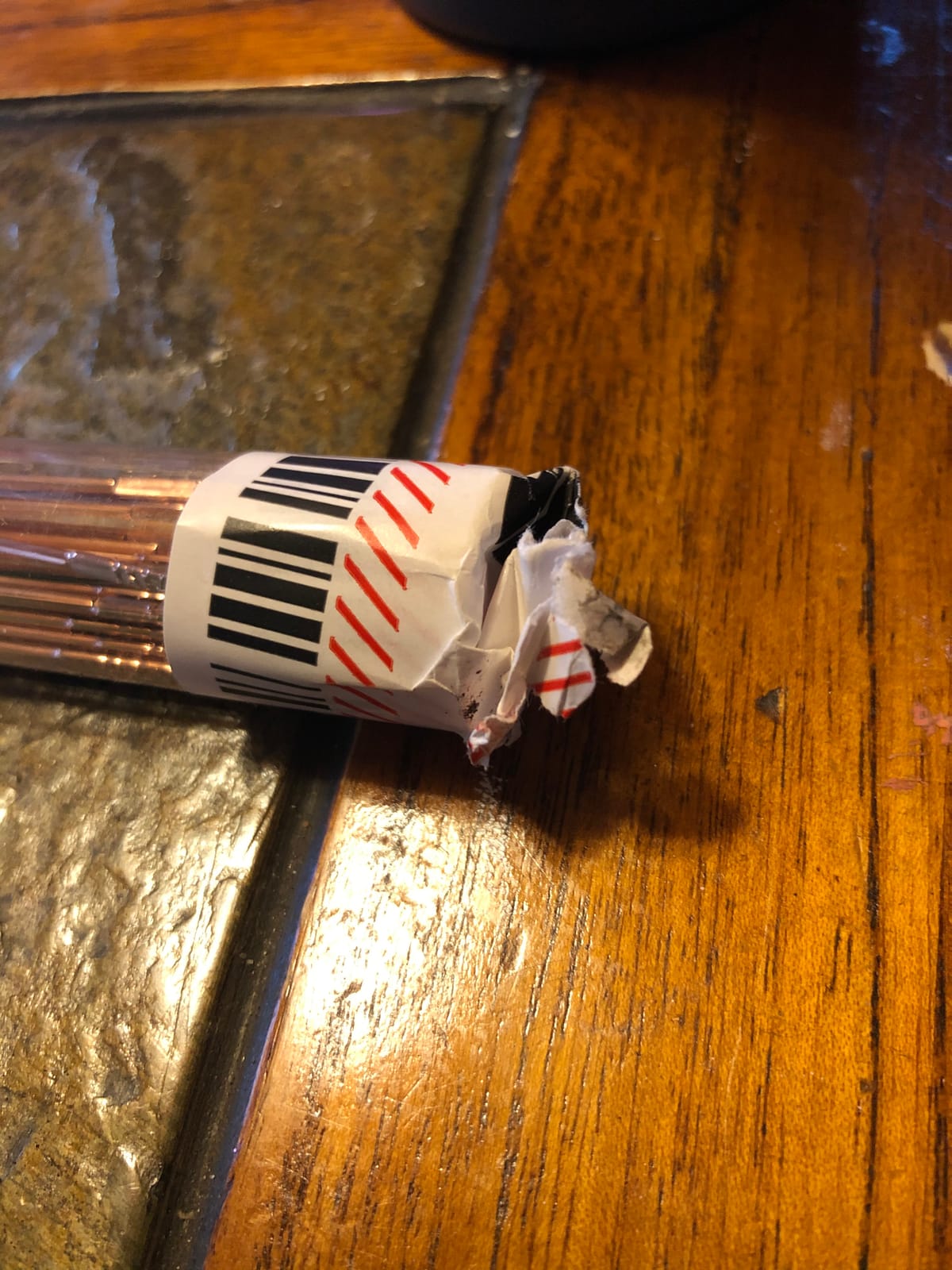
What we like is that the fluid behaviour of the rod means the puddle wets out and flows without you chasing it, which is exactly what makes 1/16 inch forgiving for a beginner. What we would like to see is more published detail, the listing gives you the diameter and material type and stops there, so if you need a chemistry data sheet you are relying on the ER70S-6 designation alone.
The single-pound format is the one real limitation. One tube disappears quickly once you are building brackets or exhaust pieces, and you will be reordering more often than with a five or ten pound box. If you know you will burn through more than that, look at the bulk options further down rather than buying this one repeatedly.
When this rod is the right call
Buy it when you are welding thin-gauge mild steel, patching rusty or poorly cleaned plate, or you simply want a reliable first tube while you learn to feed by hand. The fluid arc means you can concentrate on torch angle and travel speed rather than fighting the puddle.
When to pick something else
Move up to a 3/32 inch rod if you are welding 3/16 inch and heavier plate, where 1/16 inch will melt into the pool before you can lay a bead. Move to the 10 pound box if your project list is longer than a weekend, and consider an ER70S-2 if appearance on clean metal matters more than tolerance of scale.
2. YESWELDER ER70S-6 1/16 x 16 inch 5 lb Box – Best for Steady Shop Volume

YESWELDER TIG Welding Rod Mild Steel ER70S-6 1/16″x16″ 5LB
ER70S-6 copper coated rod
1/16 x 16 inch
5 lb box
Pros
- Smooth bead with little cleanup under argon
- Copper coated carbon steel rod
- 16 inch length suits handheld feeding
- 5 lb box for heavier workloads
- Also offered in 3/32 and 1/8 inch
Cons
- Some buyers report a cardboard box instead of the advertised plastic container
- 16 inch rods are shorter than 36 inch lengths
This is the five-pound workhorse of the group. The classification is ER70S-6, and the manufacturer states the manganese and silicon deoxidizer content is what permits higher welding currents under 100 percent argon with a smoother bead and minimal post-weld cleanup. In practice that means you can push the amperage up on heavier plate without fighting spatter.
Reviewers consistently compare the cost favourably against a local welding supply shop, and the listing ranks high in TIG welding equipment for good reason. The model number is clean and traceable, which matters if you ever want to buy the same rod again in another diameter.
The sticking point is packaging. A number of buyers report the outer carton arriving in place of the upgraded plastic container described in the listing, and a smaller group would rather have 36 inch sticks. Neither complaint is about weld quality, but both are about convenience and storage.
What this rod does well for a home shop
It suits anyone doing farm implement work, tank and truck body repair, or general shop fabrication where fit-up is poor and the plate is not pristine. The 16 inch cut length is genuinely convenient for hand feeding, because a 36 inch stick is awkward to manipulate in a tight workshop.
Where the alternatives are stronger
If appearance on clean finished metal is the priority, an ER70S-2 will give you a quieter arc and a wider puddle. If you are welding continuously, the 36 inch options save you from constantly restarting the rod. If storage matters, expect to decant this box into a proper sealed container yourself.
3. Blue Demon ER70S-2 0.035 inch 1 lb Tube – Best Over Rust and Mill Scale

Blue Demon ER70S2 X .035 X 1LB Tube Premium Carbon Steel Tig Welding Rod
ER70S-2 carbon steel rod
0.035 inch diameter
1 lb tube
DCEN
Pros
- Triple deoxidized for rust and mill scale
- No flux required
- Clean bright rod surface
- Recognised brand with consistent quality control
- Cut length form is convenient to store
Cons
- Plastic tube can crack in transit
- 1 lb format means frequent reordering
The ER70S-2 is the rod you reach for when the base metal is dirty. This one is triple deoxidized, and Blue Demon positions it specifically for welding over rust and mill scale, which is the whole point of the -2 classification. No flux is required, which removes one variable when you are setting up on a Saturday afternoon in a home garage.
It rates 4.7 across 480 reviews with 84 percent five-star ratings, and the interesting part of the review pattern is how little difference buyers see between it and ER70S-6 on ordinary shop work. Most people who tried both simply settled on one. The listed power source is DCEN, which is what you want for TIG on mild steel.
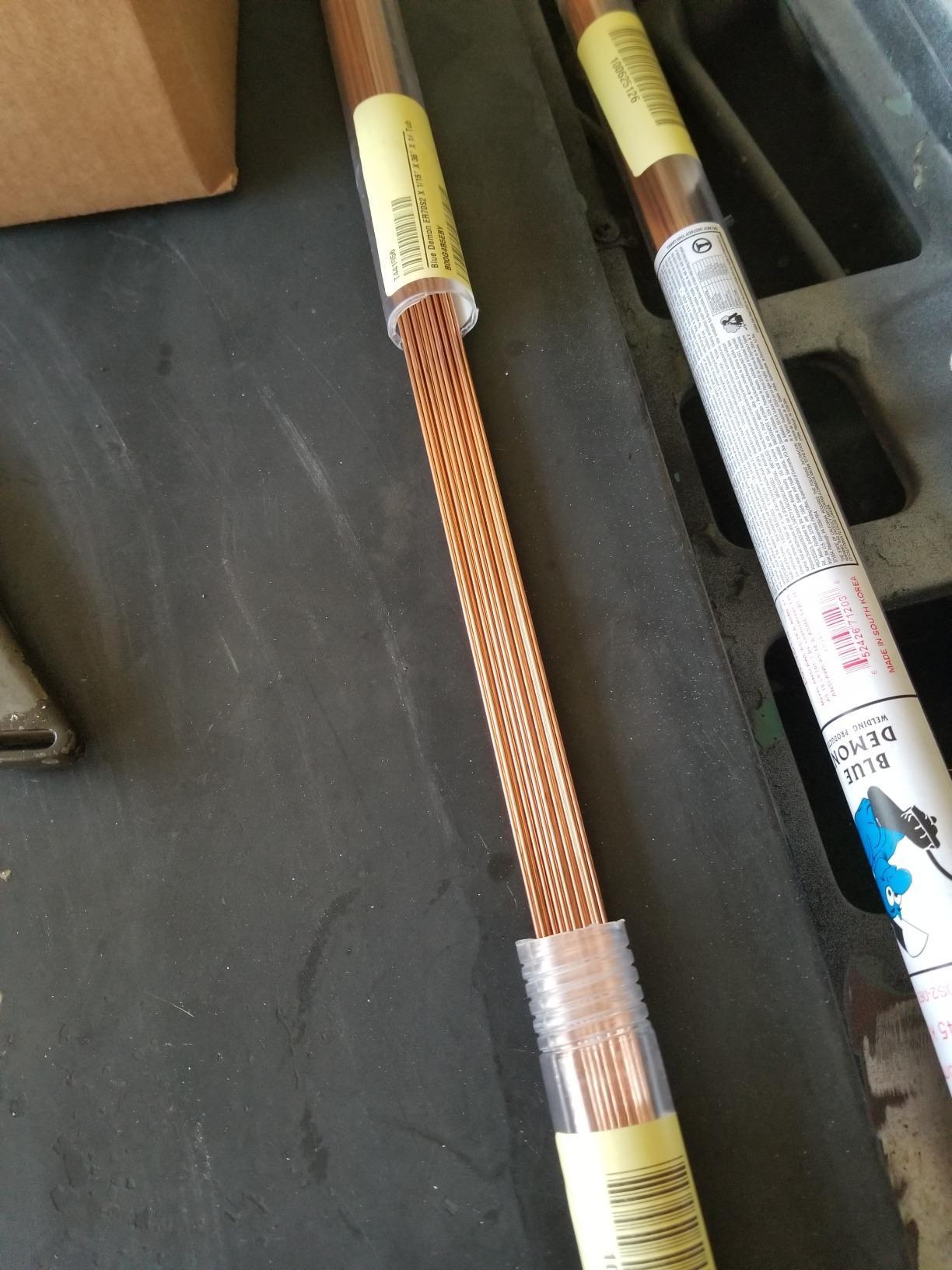
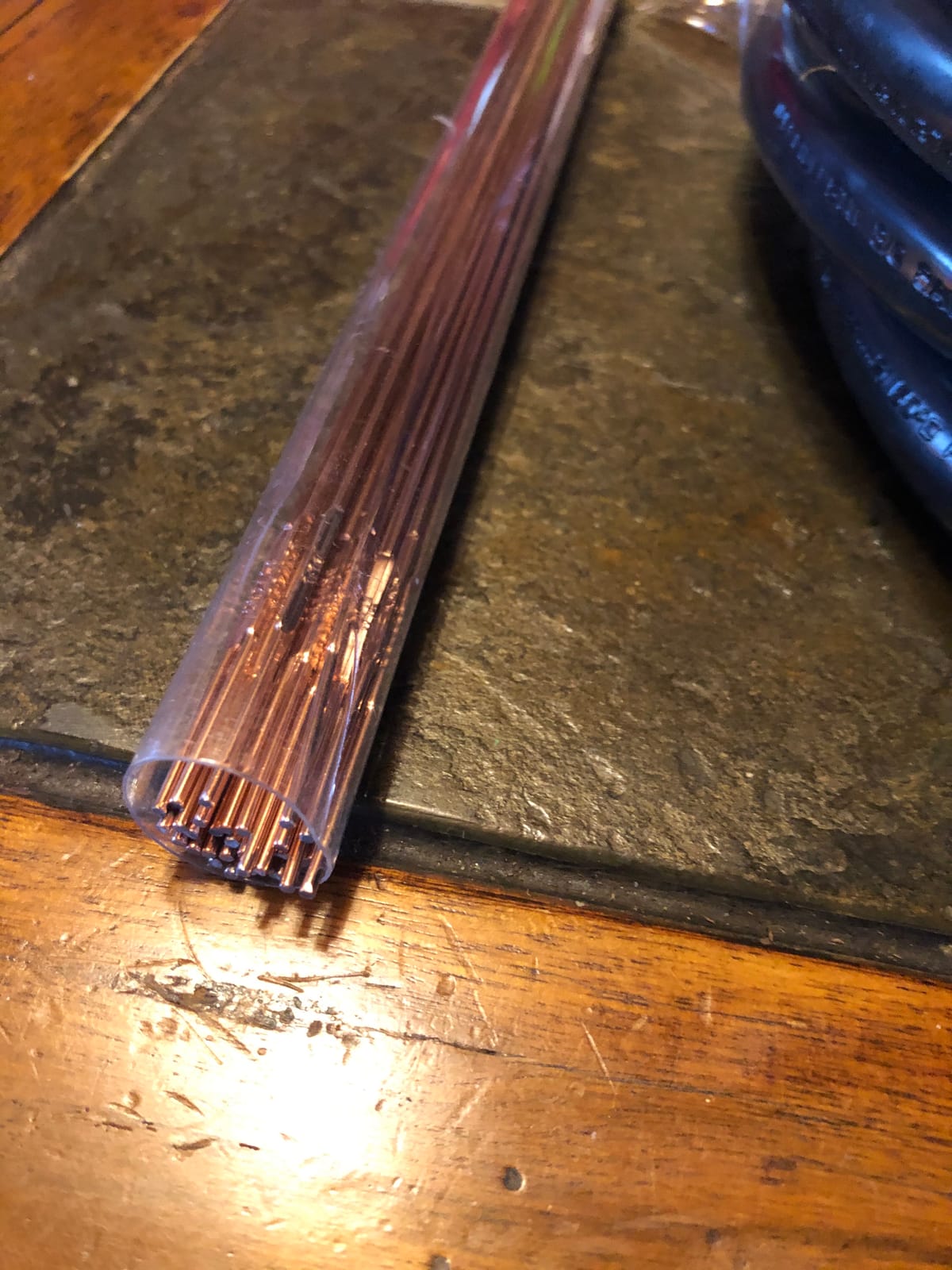
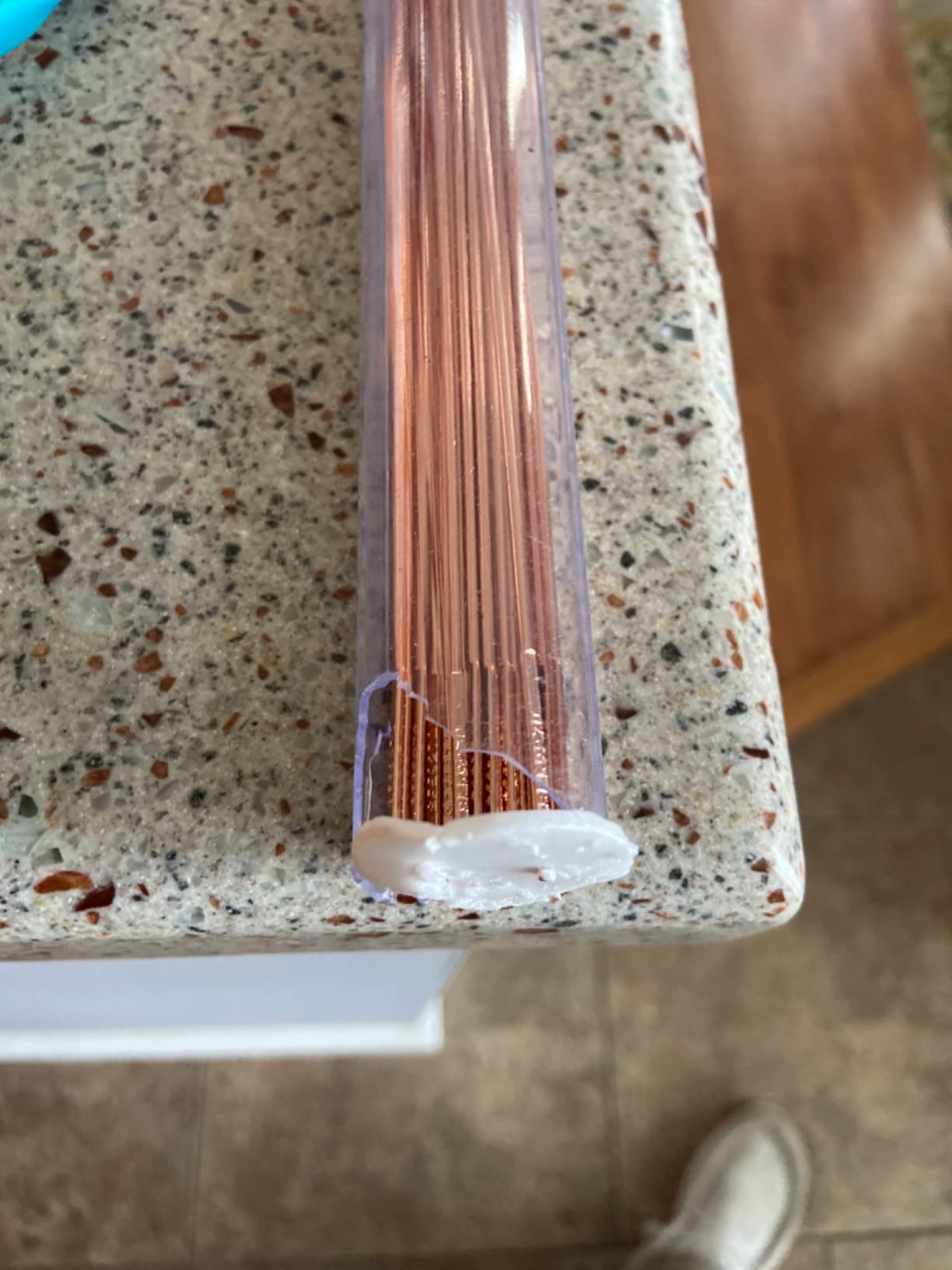
The tube form is genuinely nice for storage, cut lengths stay tidy and you can see at a glance how much you have left. That benefit is undermined by the most common complaint, which is that the plastic tube itself sometimes arrives cracked from shipping, and once it cracks you need somewhere else to keep the rod dry.
Balance that against the fact that the -2 chemistry widens the puddle, so a slightly slower travel speed than you would use on ER70S-6 usually gives the cleanest result. Users who switch between the two rods typically learn to make that speed adjustment within a couple of welds.
Where the -2 chemistry pays off
It pays off on cleaned-up steel that still carries a little scale, on repair work where you have not ground the joint back to bright metal, and on anything where you want a fast, forgiving puddle. A Miller Welding Forums thread put it plainly: most popular are ER70S-6 and ER70S-2, and the -2 is preferred by people who want the best deoxidizing filler and clean metal.
Where ER70S-6 wins instead
ER70S-6 tends to be the easier rod to feed on very thin material because the pool stays more fluid, and it is usually sold in larger bulk boxes for high-volume work. If you weld a lot of 20 gauge and thinner, test both before committing, because the difference in handling is more noticeable than the difference in the finished bead.
4. Weldcote Metals ER70S-2 1/16 x 36 inch 1 lb – Best Value for Clean Metal
Weldcote Metals ER70S-2 1/16″ X 36″ Tig Welding Rod 1 Lb.
ER70S-2 TIG rod
1/16 inch x 36 inch
1 lb pack
Bronze colour
Pros
- Clean rods producing sound welds
- 36 inch lengths mean no cutting or joining
- Clear plastic sleeve keeps rods tidy
- Big improvement over stick electrode filler
- 4.8 average across 368 reviews
Cons
- Some rods need wiping with acetone before use
- Only a 1 lb pack in this listing
This is the highest-rated rod in the roundup at 4.8, and it is the one we would hand to someone who is moving from stick welding to TIG and wants a visible result immediately. Beginner TIG users report results improving dramatically compared with feeding a stripped 7018 electrode into the pool, and that makes sense, because this is a clean, consistent, factory-cut rod rather than a consumable with coating residue on it.
The 36 inch cut length is the practical headline. At that length you are not stopping every 16 inches to find a fresh rod end, which is the single most common complaint about shorter sticks. The listed item diameter is 0.06 inches, matching 1/16 inch, and the material is alloy steel with a bronze colour typical of an ER70S-2 copper-bearing rod.
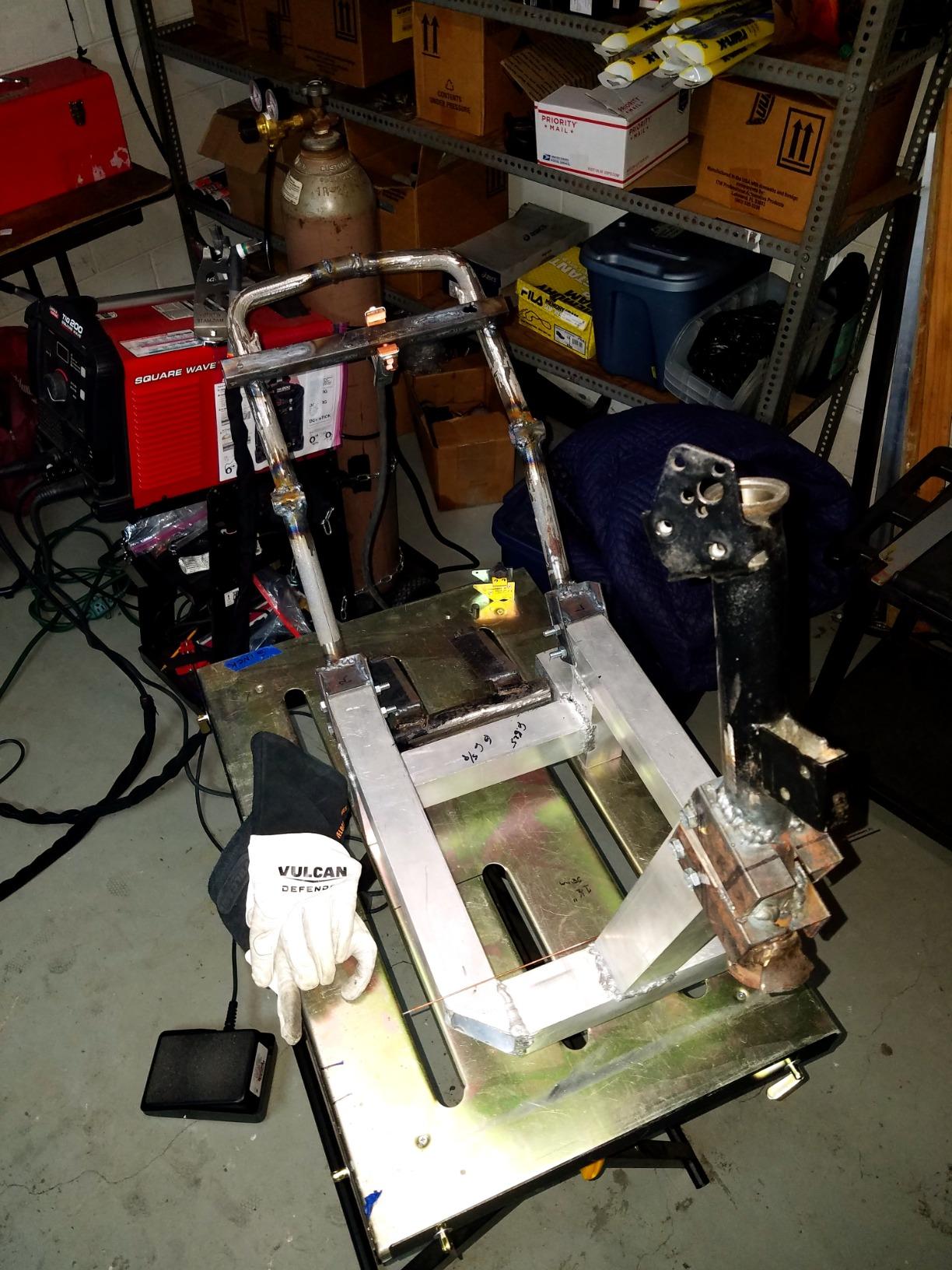
One recurring note in the reviews is worth taking seriously: wipe the rods with acetone before use. It is a thirty-second step that removes handling oils before they end up in the pool, and it costs nothing. The other limitation is package size, since this listing is a single pound only.
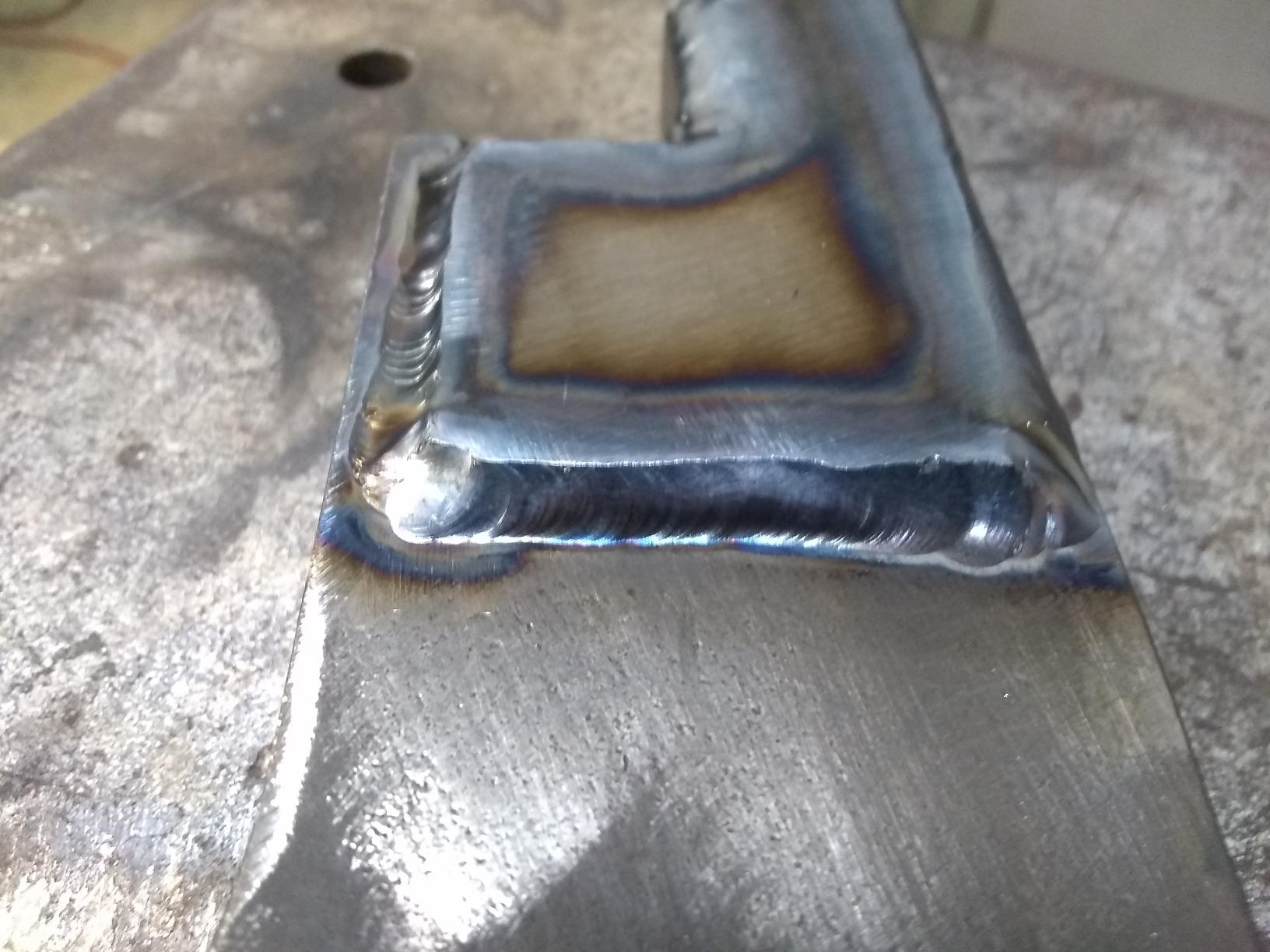
Why 36 inch rods suit steady work
If you are welding all day, a 36 inch rod means fewer restarts, less stub waste and a smoother rhythm between puddle and filler. If you are doing one-off repairs in a confined space, a 16 inch stick is easier to manipulate, so read the cut length before you buy rather than after.
What to watch when you open the tube
Check that the rods are straight and the sleeve is intact, then keep the remainder in a dry, sealed container. Straightness matters more than most buyers realise, because a kinked rod does not feed smoothly by hand and you will spend the whole weld fighting it instead of the puddle.
5. TOOLIOM ER70S-6 3/32 inch 5 lb Pack – Top Rated for Thicker Plate

TOOLIOM ER70S-6 Copper-Coated Mild Steel TIG Welding Rod, 3/32″, 5LB
ER70S-6 copper coated rod
3/32 inch x 16 inch
5 lb with case
Pros
- Stable arc with low spatter at higher currents
- Copper coated rod feeds smoothly
- Includes a plastic storage case
- 5 lb is a practical shop size
- 87 percent five-star ratings
Cons
- No customer review text was returned for this listing
- Only 16 inch rod length in this configuration
When the plate gets past 1/8 inch, the 3/32 inch rod stops being a preference and starts being a requirement. A 1/16 inch rod at 3/16 inch plate burns into the pool faster than you can feed it, which is the most common reason beginners think their filler is faulty when it is simply undersized. This pack is built for that range.
TOOLIOM states the rod is suitable for high welding currents with a stable arc and less spatter, and lists 3/32 inch at 2.4 millimetres by 16 inch length in a five-pound pack with a plastic case. The included case is a real practical advantage, because it keeps the remainder dry and identifiable between jobs.
It holds a 4.8 average from 343 reviews with 87 percent five-star ratings. One caveat we want to flag honestly: no customer review text was returned for this listing, so our read on the sentiment is drawn from the rating distribution and the stated features rather than from detailed buyer comments.
When 3/32 inch is the right diameter
Reach for it on 3/16 inch and 1/4 inch mild steel, on heavier brackets and frame tabs, and any time you are laying multiple passes where you want the filler to contribute to the deposit rather than just survive the pool. It also feeds well on a wire feed rig if you have one.
Where 1/16 inch is the safer buy
If most of your work is thin-gauge, the 1/16 inch options are more controllable and give you more time to build the puddle. This rod also only comes in 16 inch sticks in this configuration, so if you prefer the long 36 inch feed, look at a bulk 1/16 inch box instead.
6. HYW Products ER70S-6 1/16 x 36 inch 10 lb Box – Premium Pick in Bulk

ER70S-6 0.045″ – 1/16″ – 3/32″ – 1/8″ X 36″ Tig Welding Wire rod 10 lb (1/16″)
ER70S-6 carbon steel rod
1/16 inch x 36 inch
10 lb pack
Pros
- Excellent bead quality from beginners and pros
- 36 inch length suits continuous work
- 10 lb pack is strong value per pound
- Well packed with an end cap
- Consistent with other ER70S-6 rods
Cons
- Silica gel desiccant can arrive pulverized from shipping
- Only 1/16 inch in this listing with other sizes sold separately
This is the box to buy once you have decided TIG is going to be in your shop. Ten pounds of 1/16 inch ER70S-6 at 36 inch length removes the single most irritating recurring task in home TIG, which is running out of rod mid-project. The product dimensions are listed at 37 by 3 by 3 inches, which is a compact tube for the weight it holds.
Reviewers repeatedly make the same comparison, that the quality matches or beats what they were paying at a local welding supply shop for a fraction of the cost. WeldingWeb threads on buying filler rod in bulk come back to the same point, that 10 pound boxes work out well per pound for anyone who welds regularly.
Two practical notes. This specific listing is 1/16 inch only, so 0.045, 3/32 and 1/8 inch are separate purchases. And a few buyers found the silica gel desiccant packet pulverized from shipping impacts, which produces harmless dust but means you should check the tube end before you put rod back into storage.
Who this pack size is right for
Anyone welding regularly, or anyone who has already burned through a one-pound tube and re-ordered once. The per-pound math works in your favour, and you get the 36 inch length as a bonus, which is the length experienced users tend to settle on.
Who should buy smaller first
If you are still deciding whether TIG is for you, a single-pound tube at a known brand is the cheaper experiment. Do not commit ten pounds of one diameter before you are sure you are running that amperage range regularly, because a rod sized wrong for your machine and your plate will just sit on a shelf.
7. ARCCAPTAIN ER70S-6 1/16 x 16 inch 5 lb – Best for General Fabrication
ARCCAPTAIN Mild Steel TIG Welding Rod ER70S-6, 1/16″ X 16″, 5LB
ER70S-6 mild steel rod
1/16 x 16 inch
5 lb box
100 percent argon
Pros
- Stable arc with minimal spatter
- Fast deposition rate
- Well formed weld beads
- 5 lb pack balances shop use and storage
- 88 percent five-star ratings
Cons
- Shorter review history than established brands
- Only 16 inch rod length in this configuration
ARCCAPTAIN specifies the alloying scheme openly, carbon, manganese and silicon, and states that the manganese and silicon act as deoxidizers improving mechanical properties, crack resistance, toughness and strength. That is the standard ER70S-6 story told more clearly than most listings tell it, and it is useful when you are trying to understand what you are buying rather than just clicking a button.
At 4.8 stars from 100 reviews with 88 percent five-star ratings, the sentiment is very positive: stable arcs, minimal spatter, well formed welds on low-carbon and low-alloy steel. The listing itself is comparatively recent, which is the reason for the shorter review history rather than any quality signal.
Shielding gas is called out as 100 percent argon, which is the correct and expected choice for GTAW on mild steel. Applications listed include machinery, automobiles, bridges, building structures and pipelines, so the five-pound pack is sized for a working shop rather than a single weekend job.
Where this kit fits in a working shop
It suits structural and general fabrication at 1/16 inch, particularly where you want a fast deposition rate on repetitive passes. The stated thickness of 1.6 millimetres and assembled diameter of 0.06 inches both line up with a genuine 1/16 inch rod.
What to weigh before committing
A shorter review history means less long-term consistency data, so if you are welding something you cannot redo, buy a one-pound tube from a longer-established brand first. Storage is also simpler here, since 16 inch rods stand easily in a jar and stay easy to identify by diameter.
8. Blulu ER70S-6 3/32 x 16 inch 2 lb Pack – Budget Pick

Blulu Tig Filler Rod Er70s-6 Mild Steel Tig Welding Rod, 3/32″ x 16″
ER70S-6 mild steel rod
3/32 x 16 inch
2 lb pack
Pros
- Lowest cost per pound in this roundup
- Smooth bead with little cleanup
- Light 2 lb pack suits hobby work
- Correct 3/32 x 16 inch sizing
- Ar/CO2 or 100 percent CO2 compatible
Cons
- Smallest pack size at 2 lb
- Lowest average rating in the group at 4.6 stars
Blulu is the cheapest way into 3/32 inch ER70S-6 in this list, and for practice coupons, scrap steel and occasional hobby work that is a perfectly reasonable place to start. At 4.6 stars from 129 reviews it is the lowest-rated option here, though 79 percent five-star ratings still makes it a solidly positive product rather than a doubtful one.
Buyers like the correct 3/32 inch by 16 inch sizing, which fits a wide range of machines, and the smooth bead that needs minimal cleanup afterwards. The listing states the rod welds with argon and CO2 mixed gas or 100 percent CO2, so it is more flexible on shielding gas than the rods that insist on pure argon.

The rating distribution is the thing to read carefully here. Three percent one-star and three percent two-star is a small slice, and the complaints concentrate on heavier or more demanding welds rather than on thin-gauge hobby work. If your project list stays under 1/8 inch, you are unlikely to meet those cases.
Best uses for a budget rod
Scrap practice, coupons, tack welding, garage fixes and any job where a grind-out-and-redo costs you nothing but time. It is also a reasonable way to find out whether you prefer 3/32 inch before spending five or ten pounds on it.
When to pay more
Step up to a longer-established brand for anything structural, anything that gets heated after welding, and any job where a porosity defect would be costly. The two-pound pack also runs out quickly, so a single saving on a large project can be erased by two re-orders.
9. Blue Demon ER70S-6 3/32 x 36 inch 1 lb Tube – Best for Poor Fit-Up
Blue Demon ER70S6 X 3/32″ X 1LB Tube Carbon Steel TIG rod
ER70S-6 carbon steel rod
3/32 inch x 36 inch
1 lb tube
Pros
- 92 percent five-star ratings
- Long-standing quality control record
- Suited to poor fit-up shop work
- 36 inch length minimises cutting
- Tubed packaging keeps rod organised
Cons
- Only a 1 lb tube so heavy users rebuy often
- Listed weight value appears to be a data error
Two reasons this one stands out. First, the 92 percent five-star share is the strongest rating distribution in the group, and the review pattern is unusually consistent, with buyers saying they have never had a quality control issue with Blue Demon consumables. Second, the manufacturer positions it for general shop applications with poor fit-up, steel castings and forging salvage, and home projects.
That is exactly the ER70S-6 use case. When the two pieces of steel do not meet cleanly, you need a rod with a fluid pool that bridges the gap and wets into both sides, which is the manganese and silicon deoxidizer system doing its job. It is 3/32 inch at 36 inch length, so you also get the longer feed without the bulk pack.
One honest note on the listing data: the stated item weight reads 0.27 grams, which is plainly a data error rather than a description of the contents. The product is a one-pound tube of 3/32 inch rod at 36 inch length, and the stated nominal wall thickness of 0.035 inches is consistent with that.
Why fit-up matters more than brand
If your joint has a gap, a fluid ER70S-6 rod will fill it far more reliably than a stiff one. Clean the edges, keep the gap under about a sixteenth, and this rod will bridge and wet out in a way that saves you from grinding out a cold lap.
What to consider before you buy
A one-pound tube goes quickly on anything beyond a small repair, and you will be back before the project ends. If you like the brand, buy the 36 inch 10 pound box instead and skip the repackaging entirely.
10. PGN ER70S-6 3/32 x 16 inch 5 lb – Best for Car Body Work at Low Amps

PGN ER70S-6 Mild Steel 3/32″ x 16″ TIG Welding Rod 5 lb
ER70S-6 copper coated rod
3/32 x 16 inch
5 lb pack
Pros
- Works well on thin gauge car body at low amps
- Copper coated rods feed and lay clean beads
- 5 lb pack priced well below local shops
- 16 inch length suits panel work
- Rod transfers cleanly once decanted
Cons
- Cardboard and plastic bag packaging lets some rods arrive oxidised
- Weak outer packaging on a 5 lb pack
- 4.6 star average
PGN is the option that keeps coming up for automotive panel work, and the reviews explain why: buyers report it performing well on thin-gauge and car body work at low amperage. The stated melt temperature is 2700 degrees Fahrenheit, and the manganese and silicon deoxidizers are credited with permitting higher currents and a bead that is less sensitive to cracking.
At 4.6 stars from 118 reviews with 79 percent five-star ratings, the weld performance itself is consistently praised. Pricing against a local welding supply shop is the other recurring theme, and 16 inch rods are actively preferred by some users for panel work where a 36 inch stick is simply too long to handle.
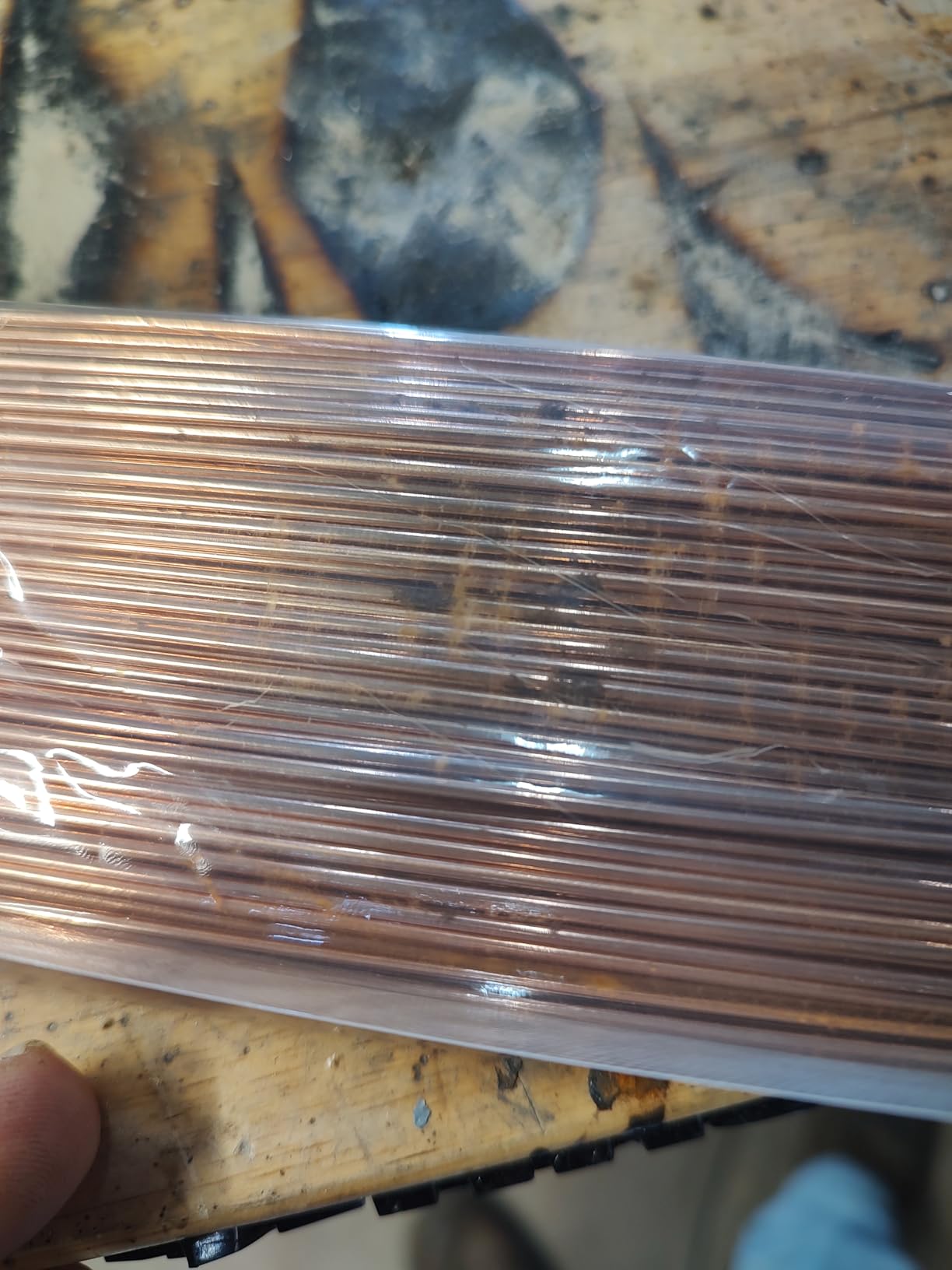
The weak point is packaging. It ships in a cardboard box and plastic bag rather than a moisture-excluding plastic case, and some buyers report rods arriving partially oxidised as a result. Weak outer packaging on a five-pound weight has also led to reports of boxes arriving opened or with contents missing. The moment you get it, transfer the rods into a sealed container.
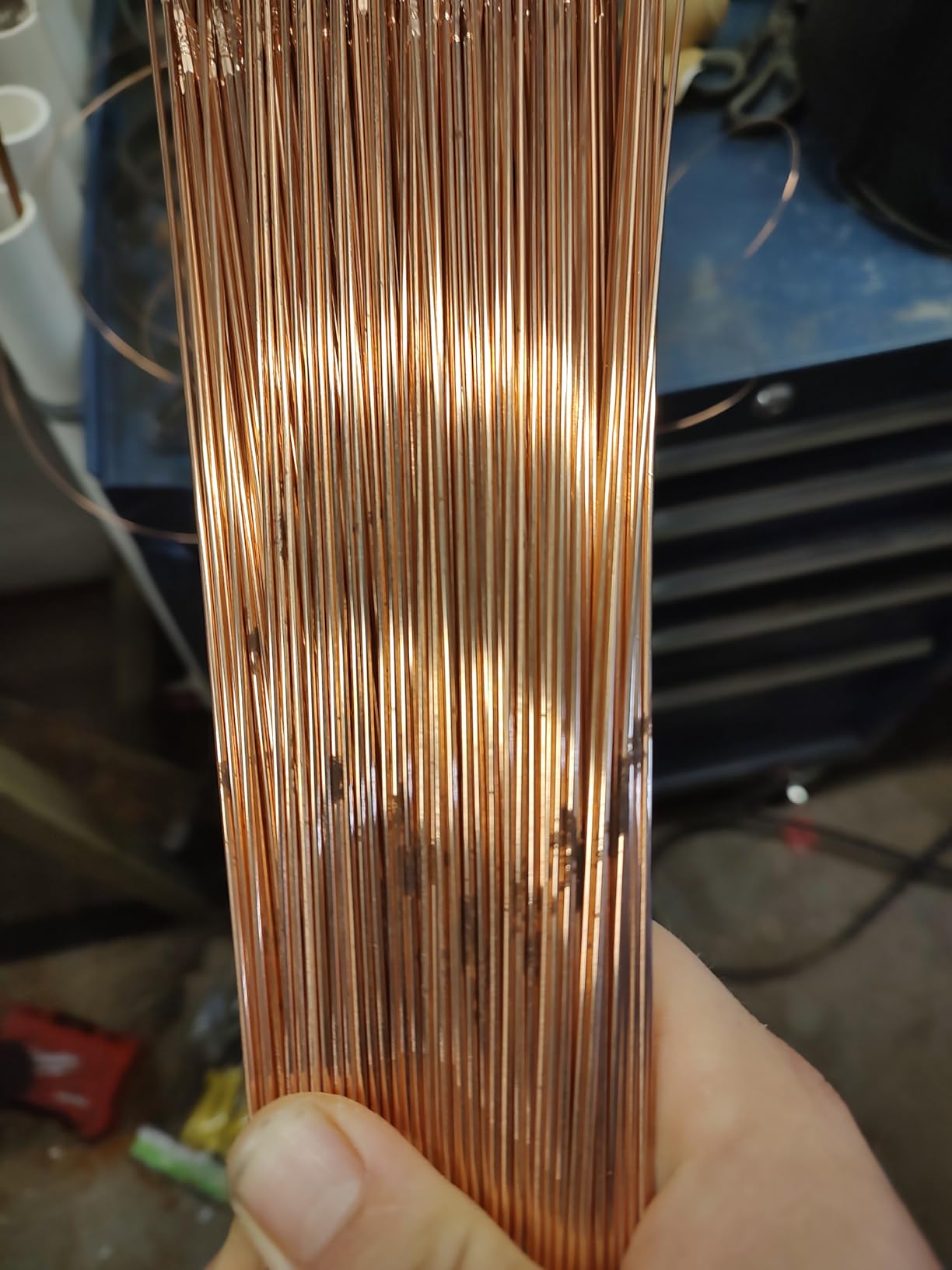
Beyond the packaging, the classification and diameter are exactly right for the job, and the copper coating is the colour you would expect on an ER70S-6. For panel work at low amps, this is a sensible pick provided you store it properly from day one.
Why car body work suits this rod
Panel steel is thin, gaps are common and the weld has to stay cosmetic as well as strong. A 3/32 inch rod at 16 inch length gives you a manageable feed on 18 to 20 gauge material, and the short sticks are easy to control in the confined space of a car floor pan.
Where the packaging trade-off bites
Oxidised rod is the enemy of a clean cosmetic bead, so do not leave this pack in the box. Decant it into a sealed plastic container with a desiccant, label the container with the full classification and diameter, and you will get the same behaviour the positive reviews describe.
How to Choose a TIG Filler Rod Kit for Mild Steel
Every kit above is ER70S-6 or ER70S-2 carbon steel rod, so the decision comes down to five things: the classification, the diameter, the cut length, the package size, and how the rod is packaged and labelled.
Read the AWS classification first
The code on the tube tells you almost everything. ER means electrode or rod. The 70 is the tensile strength class in thousands of pounds per square inch, so ER70S is a 70,000 psi filler. The S means single-pass solid filler metal. The final digit describes the deoxidizer system, and this is where most confusion lives.
Buyers widely believe the last digit is a quality score, and it is not. A -6 does not mean better than a -2. The 2, 3 and 6 designations describe chemistry, and both rods meet the same strength class. If you find a listing that ranks the digits, discount it.
ER70S-6 uses higher manganese and silicon levels, which produces a more fluid pool, better wetting and a bead that holds its shape well. ER70S-2 is a triple deoxidized rod that is specifically intended for welding over rust, mill scale and poorly prepared surfaces, and it gives a wider, quieter puddle with a bead closer to the base metal colour. ER70S-3 is the all-position stick electrode classification, not a TIG rod.
For most mild steel work, either one is correct. A r/Gunbuilds thread captures the consensus neatly, one user saying they use ER70S-2 exclusively at 1/16 inch, with the diameter preference being a matter of personal style. If you are unsure, buy a one-pound tube of each and weld two identical coupons.
Match rod diameter to material thickness
The working rule is that rod diameter should roughly match material thickness. Below that, the puddle is hard to control. Above it, the rod melts before you can place it and you get an oversized bead with poor fusion at the edges.
20 to 16 gauge, roughly 1/32 to 1/16 inch: use 1/16 inch rod, run it at the low end of your machine’s DCEN range, and keep your amperage below roughly 100 amps for steady feeding.
3/16 inch plate: 1/16 inch still works for a fillet or a single pass, but 3/32 inch is the more comfortable choice. This is the most common PAA question in this category, and the answer is usually 3/32 inch.
1/4 inch and heavier: 1/8 inch rod, and expect multiple passes with your amperage scaled to thickness.
A common approximation is one amp per 0.001 inch of material thickness, adjusted for the alloy and your machine. The so-called rule of 33 states that 33 amps is roughly the right current for 0.033 inch material using 1/32 inch rod. Treat it as a starting point and adjust to the puddle, not the dial.
Decide between 16 inch and 36 inch cut lengths
This is the most repeated question in home TIG forums and the one no competitor page answers. The 36 inch rod means fewer restarts and less stub waste, and it is what most experienced users settle on. The 16 inch rod is easier to manipulate by hand in a confined space and is easier to store in a jar.
A r/tigwelding thread captures the beginner path, straight-line puddles on 12 to 16 gauge mild steel, which is exactly the 1/16 inch, 16 inch stick combination most of the 16 inch packs in this roundup suit. A r/Gunbuilds user framed the other side, some people laywire feed 1/8 inch while others use 1/16 inch exclusively. Both are defensible. The variable is how much room you have to move your hand, not the rod itself.
If you are undecided, the practical answer is to start with 16 inch rods because they are easier to handle while you learn feed control, then move to 36 inch once your hand speed is consistent.
Get the package size right
Package sizing is the single most confusing part of buying filler rod online, because listings sometimes sell by weight while the photographs show short sticks. The four formats you will see are the one-pound tube, a two-pound pack, a five-pound box, and a ten-pound box.
The economics are straightforward. Buyers on WeldingWeb note that 10 pound boxes work out cheaply per pound, and that is correct, but per-pound cost only matters if you actually burn the rod. One 1/16 inch rod consumed on a small repair versus a full ten-pound box for a year of work are entirely different purchases.
Rule of thumb: a one-pound tube is a test purchase, a five-pound box is a serious hobbyist or light shop amount, and ten pounds is for people welding most weeks. If you are uncommitted, buy the one-pound tube first at a known brand, and once you have burned through it without complaints, move up a size.
Check the packaging and the label
The most common physical complaint across these reviews is packaging rather than welding performance. Cracked plastic tubes, cardboard-only boxes and pulverised desiccant packets all show up, and the practical lesson is the same: buy a rigid plastic case if one is offered, and always decant into a sealed container with a desiccant if one is not.
Label partial tubes with the full classification, diameter and length. Unlabeled partial tubes that look identical get used by default on an important job, which is a habit that has ruined more work than any bad rod. If you inherit an unlabeled rod, test it on a scrap coupon: if it balls up, it is not ER70S-2. If the bead wets out and flows readily with little spatter, it is likely ER70S-6.
For reference on the wider shop context, our picks on body filler hardener kits follow the same principle, that a labelled, correctly sized product saves more time than a bargain that does not perform.
What a kit should actually contain
Almost every product in this roundup is rod only, which is a deliberate choice. A useful TIG kit adds a tungsten electrode in a diameter matched to your amperage, spare collets, a ceramic nozzle, and a cap cup plus a gas flowmeter for shielding control. Buying those separately lets you pick the tungsten you need, since a 3/32 inch lanthanate electrode covers far more of the amperage range than the 3/32 inch pure tungsten most kits include.
Beginner complaint patterns around bundled kits are consistent, the filler rod included is the part that feeds poorly and gets replaced immediately. If you buy a bundle, check the rod classification and diameter on the listing before you assume it is ER70S-6 at 1/16 inch.
A short safety and compliance note
TIG fume contains zinc, manganese and iron oxide, and arc light damages eyes permanently in a fraction of a second, so the auto-darkening helmet and fume extraction come before any rod choice. Run extraction at the source rather than relying on a fan in the corner.
None of this constitutes a qualified welding procedure. For pressure work, exhaust components, structural certification or anything code-governed, work to a written WPS and use filler with lot traceability from a manufacturer that publishes technical data sheets. This roundup is selection support, not procedure approval.
Frequently Asked Questions
What TIG rod do you use for steel?
ER70S-6 in 1/16 inch diameter is the default TIG filler rod for mild steel, because the manganese and silicon deoxidizers give a fluid pool, good wetting and low spatter under 100 percent argon. ER70S-2 is the clean-metal alternative, and is a better choice when welding over rust, mill scale or poorly prepared joints because it is triple deoxidized. ER70S-3 is a stick electrode classification, not a TIG rod.
Is ER70S-6 the same as ER70S-2?
No. Both are AWS A5.18 solid filler classifications in the same 70 ksi strength class, so the last digit is a chemistry code and not a quality score. ER70S-6 carries higher manganese and silicon for a more fluid, faster-wetting pool, while ER70S-2 is triple deoxidized and specified for welding over rust, mill scale and poor fit-up.
Should I buy 16 inch or 36 inch TIG filler rods?
Buy 36 inch rods if you weld regularly, because you avoid restarting the rod and lose less to stub waste. Buy 16 inch rods while you are learning hand feed control or working in a confined space, since they are far easier to manipulate. The cut length has no effect on weld quality, only on handling convenience.
What is the recommended amp range for a 1/16 inch TIG rod?
For 1/16 inch ER70S-6 or ER70S-2 on mild steel, most welders run roughly 60 to 120 amps DCEN, with the low end for thin gauge and the high end for 3/16 inch plate. A common starting approximation is one amp per 0.001 inch of material thickness. Above about 140 amps the rod tends to vaporise and crater the pool, so increase amperage only as the plate thickens.
Can I use 7018 stick electrode as TIG filler?
You can feed a 7018 electrode into a TIG puddle, but it is not good practice. The coating leaves flux residue in the pool, and the rod burns away unevenly instead of melting cleanly into the bead. ER70S-6 or ER70S-2 is the correct filler for GTAW on mild steel, and beginners who switched report a dramatic improvement in bead quality.
Final Verdict
The best tig filler rod kits for mild steel are decided by diameter, cut length and package size, not by brand prestige. The Hot Max 24188 ER70S-6 in 1/16 inch is our overall pick, with the deepest review history in the group and an arc most beginners can control; the Weldcote ER70S-2 36 inch is the cleaner-looking, longer-feed alternative; and the HYW 10 pound box is the value choice once you are welding most weeks.
Whichever you choose, buy a small pack first, decant it into a sealed container, and label the container with the full classification. Our other workshop picks cover the hot rod model kits and 32 Ford builds if the next project is a body rather than a bracket. This guide was updated for 2026.