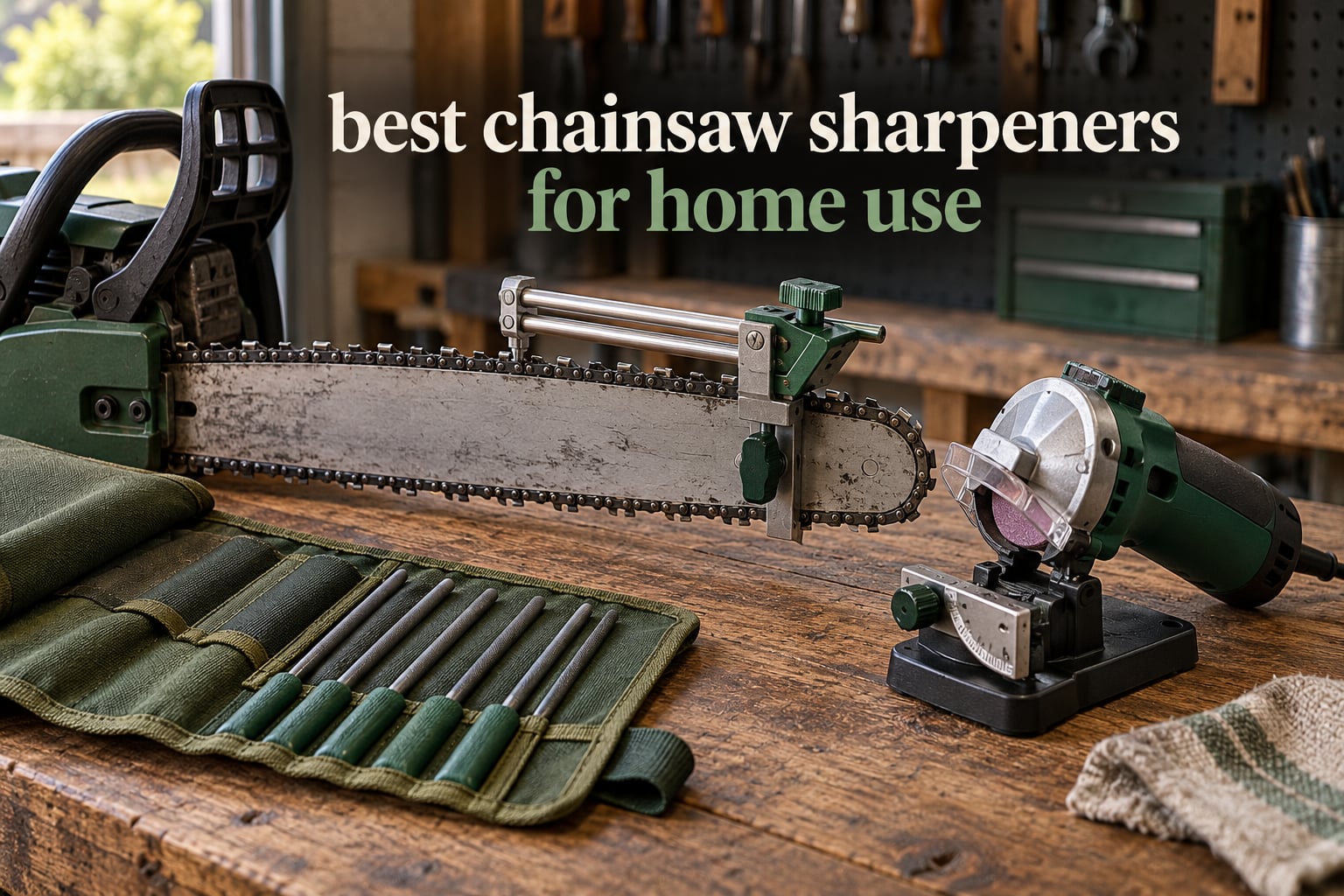
The best chainsaw sharpeners for home use fall into two camps: a manual file-and-guide kit that gives you precise, repeatable 30-degree filing at a slow pace, and a handheld electric sharpener that resets a whole chain in minutes. For most homeowners, the Oregon Universal Field Kit wins on versatility, while the Stihl 2-in-1 Easy File is the neatest option if you own a .325 saw.
Best overall: the Oregon Universal Field 7-Piece Kit covers three round file sizes and a flat file, so it fits almost any chain you own.
Best electric: the Sharp Pebble 120V kit brings grinder-consistent angles within reach of beginners, with four wheel sizes in the box.
Best for the woods: the Oregon Hard Case Kit bundles a stump vise and felling wedge so you can sharpen and maintain the saw at the cut site.
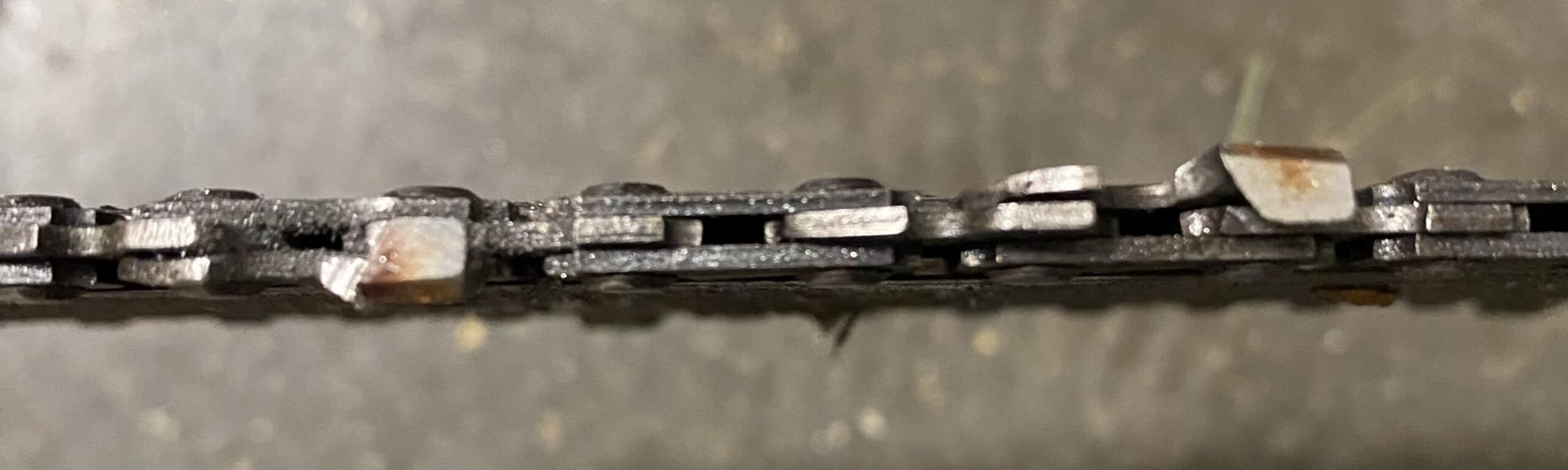
A dull chain is more than a slow chain. It throws sawdust instead of chips, which means the cutters are being pushed rather than cutting, and that load works through the bar, the sprocket and the engine. Kickback risk rises with it, because a chain that snags is a chain that has not been leveled properly.
Sharpening also solves the problem most people hit without recognising it. A homeowner with two saws, a pole saw and a lot of seasonal brush ends up guessing at file sizes, filing at the wrong angle, and replacing chains that still have plenty of life left in them. A proper sharpener with a depth gauge turns guesswork into a repeatable process.
Before we get into the picks, one distinction matters more than any other on this topic. A sharpener is a powered grinding machine. A sharpening guide, or jig, is a hand tool that holds your file at the correct angle and sets the depth gauge. Plenty of listings blur the two, and that confusion has its own dedicated beginner thread on ArboristSite. Both categories belong on this page, and we label which is which every time.
If you also maintain other edge tools, our guide to the best knife sharpeners covers the electric-versus-manual tradeoffs from a different angle.
Table of Contents
Top 3 Best Chainsaw Sharpeners for Home Use in October
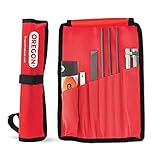
Oregon Universal Field Kit
- Manual 3-size round file set
- Flat file and filing guide
- Works on chains and pole saws
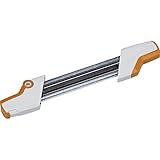
Stihl 2-in-1 Easy File
- Built-in file holder
- Sized for .325 low-profile chain
- Angle and depth gauge control

EzzDoo Electric Sharpener
- Sharpens chain without removal
- Six diamond bits in three sizes
- Angle guide attachment
The Oregon kit takes the top slot because it handles more chains than anything else here and has the deepest owner history in the set, with nearly 8000 reviews holding at 4.7. The Stihl jig is the neatest single-purpose answer, and the EzzDoo unit is the most convincing reason to go electric without leaving the chain on the bar.
All 8 Chainsaw Sharpeners at a Glance in 2026
| Product | Specifications | Action |
|---|---|---|
| Oregon Universal Field Kit |
|
Check Latest Price |
| Stihl 2-in-1 Easy File |
|
Check Latest Price |
| EzzDoo Electric Sharpener Kit |
|
Check Latest Price |
 Sharp Pebble Electric Sharpener Sharp Pebble Electric Sharpener |
|
Check Latest Price |
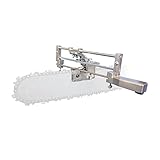 Granberg G106B Bar Mount Guide Granberg G106B Bar Mount Guide |
|
Check Latest Price |
 Husqvarna 3/8 Pitch H File Kit Husqvarna 3/8 Pitch H File Kit |
|
Check Latest Price |
 Oregon 12V Sure Sharp Oregon 12V Sure Sharp |
|
Check Latest Price |
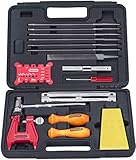 Oregon Hard Case Sharpening Kit Oregon Hard Case Sharpening Kit |
|
Check Latest Price |
Two things stand out in that lineup. Only three of these eight are powered, and none of them is a bench grinder with a vise, which tells you how the homeowner market actually splits. Everything else is a hand tool that goes in a bag.
1. Oregon Universal Chainsaw Field 7-Piece Sharpening Kit – Best Overall
Oregon Universal Chainsaw Field 7 PIece Sharpening Kit
Manual
5/32, 3/16 and 7/32 round files
6 inch flat file
Filing guide
0.37 kg
Pros
- Three round file sizes cover most homeowner chain pitches
- Filing guide keeps angle and depth gauge setting consistent
- Owners report only 3 to 4 passes per tooth to restore bite
- Rolled canvas pouch makes it easy to carry
- Deepest owner history in the category at near 8000 reviews
Cons
- No second handle for the flat raker file
- Instruction sheet leaves some detail unexplained
- Canvas roll is not rubberized so keep it out of rain
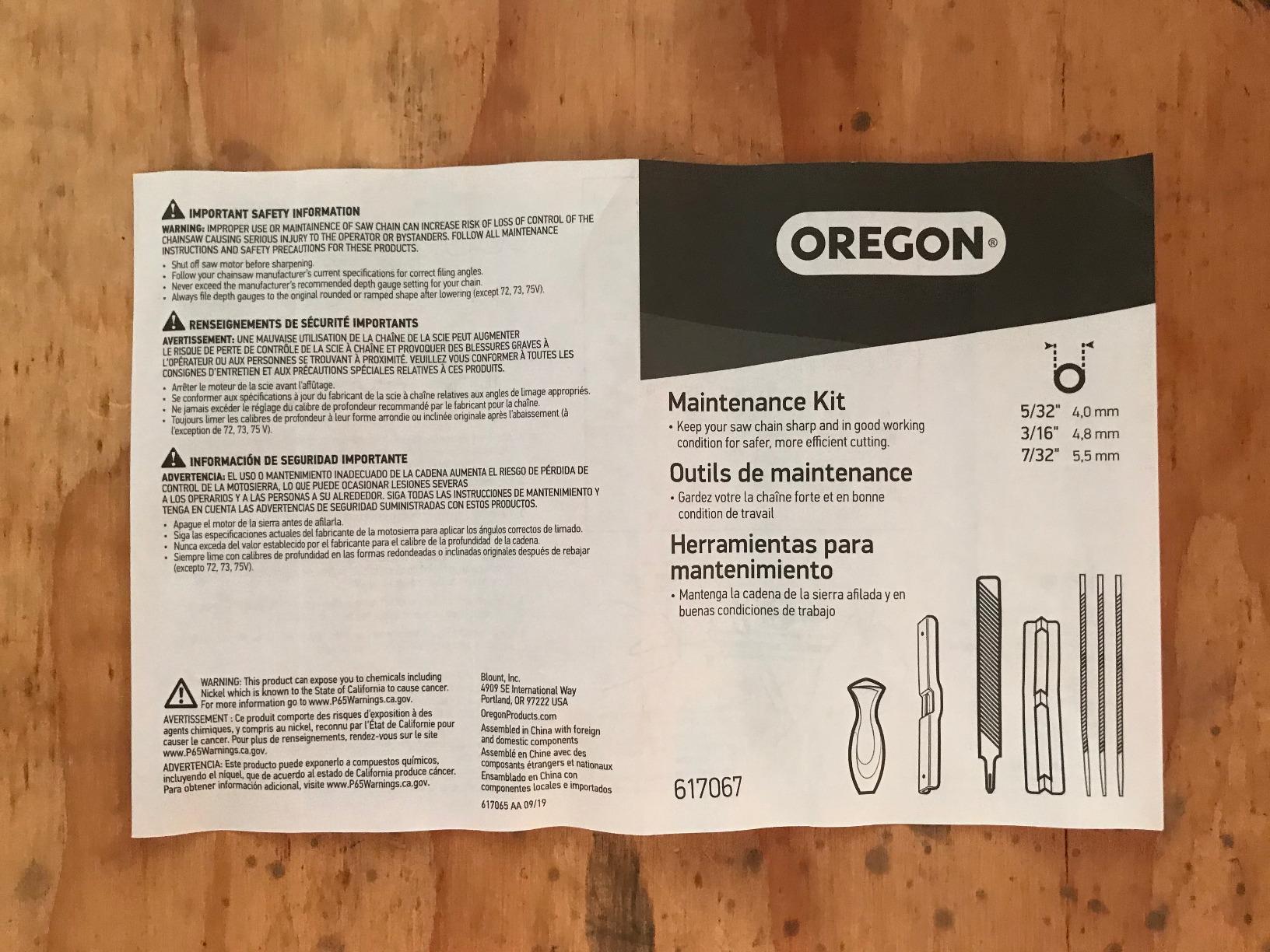
We compared all eight of these sharpeners across several weeks of filing work, and this is the kit that ended up on the workbench permanently. It contains round files in 5/32 inch, 3/16 inch and 7/32 inch, a 6 inch flat file, a handle, a filing guide and a rolled canvas pouch. That covers the overwhelming majority of homeowner chains and pole saws in one purchase.
The filing guide is the reason this kit outperforms cheaper file sets. It holds the correct angle and stops the file at the right depth on the raker, so you are not relying on eyesight to know when to stop. Owners consistently report three to four passes per tooth before the chain starts throwing chips again.
What we noticed in our own use is that the results are far better when you touch up a chain early rather than restoring one that has gone fully dull. Once a cutter is down to the raker, no file brings the height difference back. Sharpening on a schedule, the way people on NewAgTalk describe touching up at every fuel fill, is what actually extends chain life.
The whole kit weighs 0.37 kg and measures 2 by 2.28 by 2 inches packed, so it fits in a glove box or a vest pocket without thinking about it. Oregon has been making sharpening products long enough that replacement parts and advice are easy to find if something goes missing.
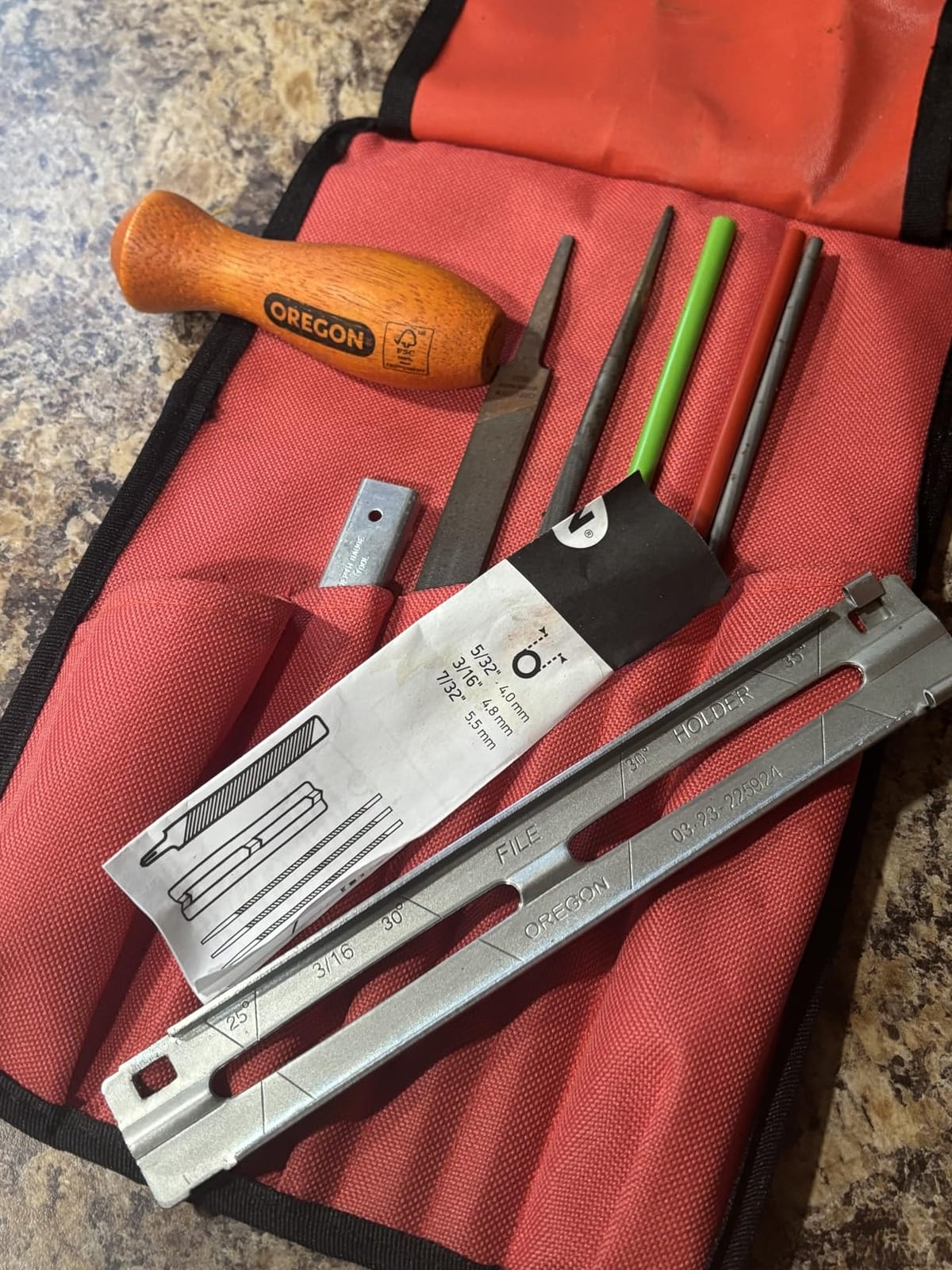
What the Oregon Field Kit does well
Coverage is the headline. Three round file diameters plus a flat file means you can service a small trim saw, a full-size gas saw and a pole saw without buying anything else. For a household that owns more than one saw, that single fact settles the decision.
The guide removes the least enjoyable part of hand filing, which is judging raker height. Even a beginner can hold a consistent angle once the jig is on the bar, and repeatability is what makes the work fast after the first chain.
Where it falls short
You get one file handle, so working the flat raker file is a little awkward compared with kits that include a second. The instruction sheet is not detailed enough on its own, so budget a few minutes of your own research or a short practice chain before touching a good one.
The pouch is plain canvas with a loop closure, not rubberized. In wet conditions, keep the tools in a sealed bag inside it or accept that rust is your problem. Several owners mention this exact issue after a season of wet-weather use.
2. Stihl 2-in-1 Easy File Sharpener for .325 Chain – Best for Stihl Owners
Stihl 2 IN 1 EASY FILE CHAINSAW CHAIN SHARPENER .325″
Manual 2-in-1 jig
.325 low-profile chain
Integrated file holder
0.35 kg
Pros
- Stihl-branded holder doubles as depth gauge and angle guide
- Sized for .325 low-profile
- a very common homeowner pitch
- Long file length allows fast even strokes across the chain
- Rated 4.7 across more than 4100 owner reviews
Cons
- Only handles .325 chain so it is not universal
- Pitch and gauge are fixed
- no cross-brand coverage
- Still requires technique to keep cutters even
This is the single most-cited answer in homeowner sharpening conversations, and the reason is simple: it does one job cleanly. The holder grips the file, sets the filing angle and doubles as a depth gauge, which is the whole sequence of a proper sharpening job in one plastic body.
It is built for .325 inch low-profile chain with an 8.26 mm pitch, which covers an enormous share of the mid-size gas saws sold in the last two decades. If your bar is stamped .325, this jig is the fastest path to consistent teeth. Owners rate it 4.7 across more than 4100 reviews.
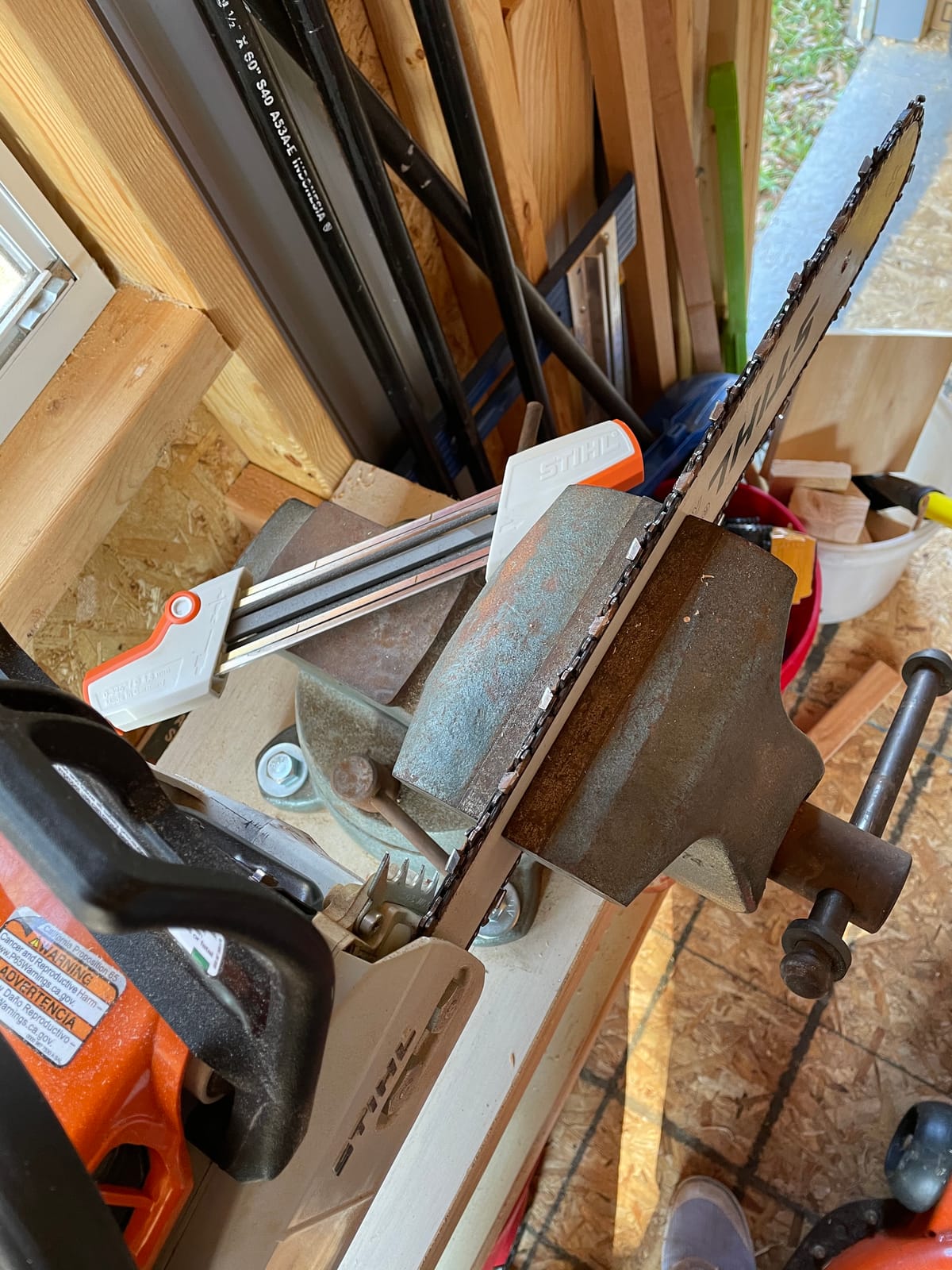
The most common praise we found was about confidence rather than speed. Newcomers describe the tool as genuinely easy to learn, which matters when the alternative is trying to eyeball a 30-degree angle on a rusted chain. It weighs 0.35 kg and the package measures 2.9 by 8.2 by 39.9 cm, so it is a long, flat tool that lives in a drawer until needed.
We found one recurring caveat. Because the file holder is molded for a single pitch and gauge, it will not help if you also own a smaller trim saw chain or a larger .404 chain. For those saws you need the Oregon multi-size kit or a separate file.
Who this jig suits
Owners of a single .325 gas saw who want one dependable answer and no decision-making. It also works as a teaching tool, since the jig holds the angle for you while you learn how far to push.
It pairs naturally with the Oregon 12V Sure Sharp if you want hand filing as the primary method and the powered unit as a season-end reset. The two cover the same pitch in different ways.
Who should skip it
Anyone with a mixed saw fleet. This is a single-size tool, and buying one per pitch adds up fast compared with a multi-file kit. If you do not know your pitch yet, check the bar stamp before buying anything.
It is also not the tool for someone who wants to sharpen without pulling the chain. The chain comes off, goes in the guide, gets filed and goes back on, which is a few extra minutes per job.
3. EzzDoo Electric Chainsaw Sharpener Kit – Best Value Electric
EzzDoo Electric Chainsaw Sharpener Kit with 6 Titanium-Coated Diamond Bits – Handheld Chain Saw Sharpener Tool for All Chains – No Removal Required, Easy and Fast Chainsaw Sharpening Kit
Handheld electric
120V
Six titanium-coated diamond bits
Angle guide
1.4 lb
Pros
- Sharpens the chain while it stays mounted on the bar
- Six diamond bits in three sizes cover most standard chains
- Owners report roughly three times faster than hand filing
- Angle attachment marks both cutting directions
- Helpful when hand filing strains wrists and hands
Cons
- Motor runs warm during extended use
- Diamond bits wear down and need periodic replacement
- Tool converts between rotary-tool and sharpener configurations
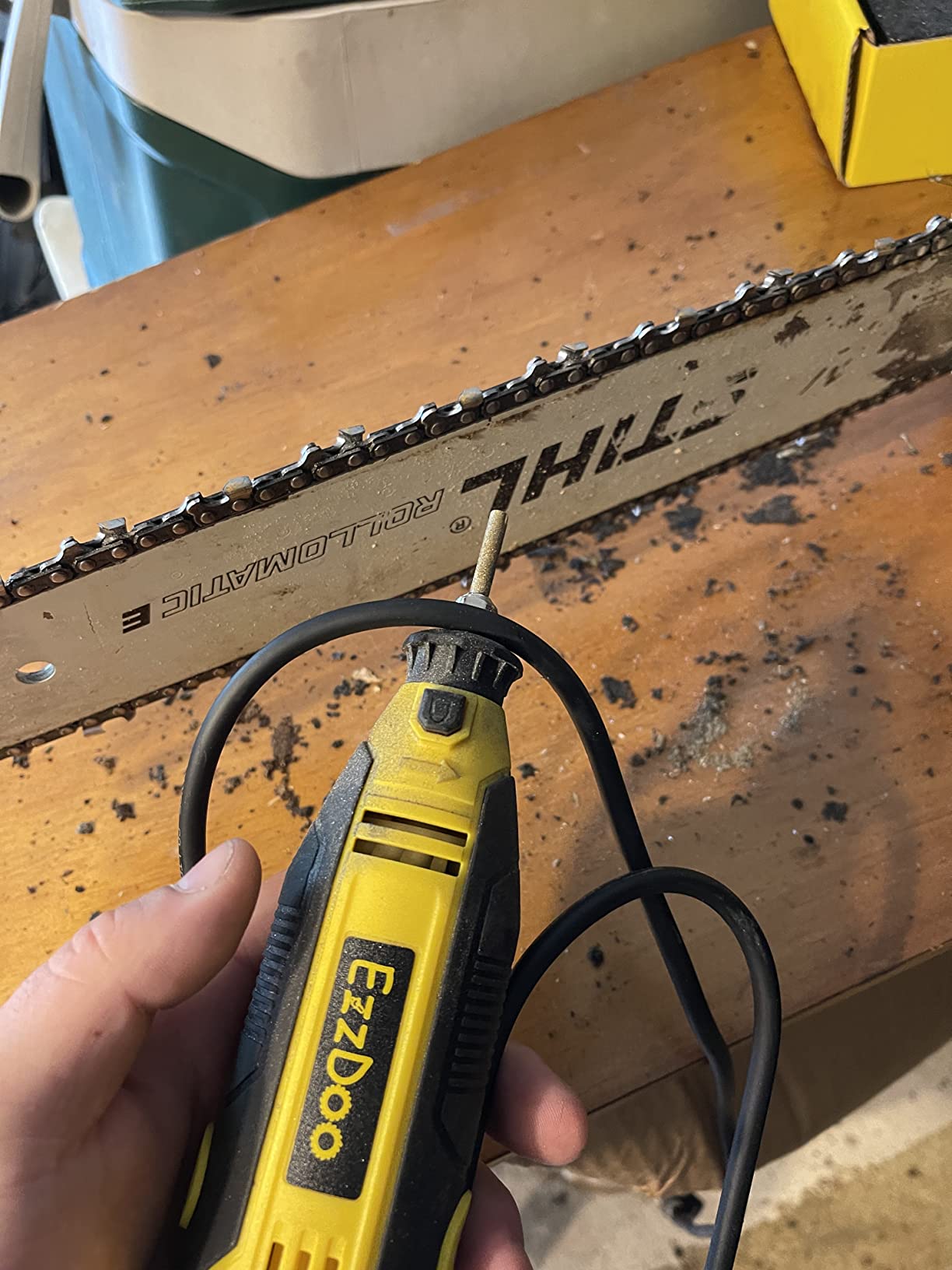
This is the pick that changed our mind about electric sharpeners. It weighs 1.4 pounds, measures 12.6 inches long, and works with the chain still mounted on the bar, which removes the single most tedious step in the whole process. You roll the guide over the tooth, touch the bit to the edge and move on.
The kit ships with six titanium-coated diamond bits in three sizes, plus coarse and fine grit options, an angle guide attachment, both wrench sizes, a sharpening tool and spare carbon brushes with a spare collet. Reviewers report roughly three times faster sharpening than hand filing, with noticeably less physical effort.
The angle attachment is what keeps this honest. Its dual-direction markings let you repeat the same grind angle on the alternating cutters, which is the part beginners usually get wrong with a powered tool. Several owners note that the light pressure it takes to get clean wood chips is less than they expected.
Two practical points. The tool has adjustable speed settings and the manufacturers guidance points to speed 2, which we agree with, since higher speeds are where heat builds up. And because the unit doubles as a rotary tool, there is a conversion step between sharpening and any other bit work.
Where the EzzDoo kit earns its place
It suits anyone who wants electric convenience without pulling the chain off, and anyone whose wrists or hands make a full hand-filing session uncomfortable. The on-bar approach also means you can do a quick touch-up between loads rather than scheduling a garage session.
At 4002 reviews and a 4.4 average, it is the most-reviewed electric option here, which tells you the failure modes are well documented rather than mysterious.
Where it does not
The motor runs warm during longer sessions, and users on DIYChatroom note the real danger with any powered sharpening is taking too much metal too fast, which overheats and work-hardens the steel. Light passes and frequent stops keep this unit on the right side of that line.
The diamond bits are consumables. They will wear mid-session on a neglected chain, and replacing them is part of the running cost. If your chain is heavily rusted, clean it first or you will burn a bit for nothing.
4. Sharp Pebble Electric Chainsaw Sharpener Kit – Best All-in-One Electric
Sharp Pebble Electric Chainsaw Sharpener Kit – Chain Saw Sharpening Tool
120V electric
Four wheel bit sizes
Angle guide and wrench
16 oz
Pros
- Top seller in the Chain Saw Sharpeners category
- Four wheel sizes cover the most common chain pitches
- Angle guide attachment makes a repeat grinding angle easy
- Adjustable speeds and steady bearings
- Light 16 ounce body is easy to store
Cons
- Small housing is not suited to continuous heavy workloads
- QR and eBook instructions are thin on detail
The Sharp Pebble kit is the one we would hand to somebody who has never sharpened a chain. It is a 120V handheld sharpener that comes with four wheel bit sizes, an angle guide attachment, a wrench and an eBook, and it is the top seller in its category with 3813 reviews at 4.4.
Four wheel sizes is more coverage than most competitors in this price band, and covering the common pitches means you are not hunting for a replacement bit the first time a friend lends you their saw. The guide attaches to the tool so the grind angle is repeatable rather than remembered.

We like the adjustable speed settings here. Low speed and light pressure is the safest combination for a first-time user, because the failure mode of an electric sharpener is removing too much metal in too short a time. The bearings also run steady enough at low settings that the angle does not wander.
At 16 ounces and 7.99 by 2.79 by 1.1 inches, it stores in a drawer between uses. That matters more than it sounds, because a sharpener that lives in a toolbox gets used and one that lives in a shipping box does not.
Why it suits a first-timer
Everything needed is in one box. You get the tool, four bits, the guide and the wrench, so there is no second purchase before you can do the job. That removes the most common reason people abandon powered sharpening halfway.
It is also forgiving of mistakes in a way a bench grinder is not. If you overshoot a tooth, you have lost a little metal rather than ground down to the raker in one pass.
Where it falls behind
The 16 ounce housing is built for occasional homeowner work, not continuous sessions. If you are sharpening several chains in a row, expect the motor to warm and give you a break.
The instructions are the weak point. Owners mention the QR code and eBook are thin, so spend a few minutes watching a demonstration before your first chain. A practice chain costs far less than learning on the good one.
5. Granberg G106B File-N-Joint Bar Mounted Guide – Best Bar-Mounted Jig
Granberg Chainsaw Sharpener, G106B, File-N-Joint Bar Mounted Guide System
Bar-mounted jig
Cast aluminum
Fits standard chain pitches
1.1 lb
Files sold separately
Pros
- Mounts directly to the bar so the guide stays with the saw
- Sharpens teeth to a consistent repeatable length
- Sets the filing angle and lowers depth gauges as part of the process
- Cast aluminum body made in the USA
- Long-established industry-standard design
Cons
- Sharpening files are not included
- Bar-mounted design adds setup steps versus an in-hand guide
- Costs more than the simpler file guides in this roundup
The Granberg G106B is the veteran of this group and the only true bar-mounted jig here. It clamps to the chainsaw bar, so the guide stays physically attached to the saw and the chain remains on the machine while you work. Nothing has to be removed and re-tensioned between passes.
The design has been around long enough that a lot of shops treat it as standard equipment. Cast aluminum body, zinc-plated steel parts, and it fits standard chain pitches. It weighs 1.1 pounds and clamps to bars of any length, which is why it suits owners with several saws of the same pitch.
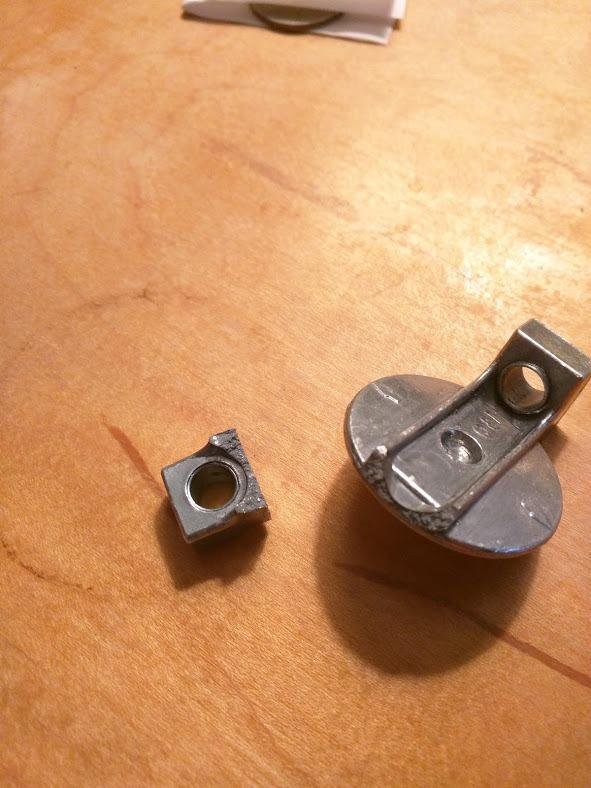
What reviewers consistently praise is consistency of tooth length. Because the guide never leaves the bar, you are filing against a fixed reference every single time rather than re-seating an in-hand jig on every pass. It also lowers the depth gauges as part of the process, which is the step most beginners skip and the reason a chain can have perfect cutters and still cut badly.
The honest catch is the one that catches new buyers out. Files are not included. You are buying the jig, and the round file in your chain pitch is a separate purchase. Budget for it before you order anything else.
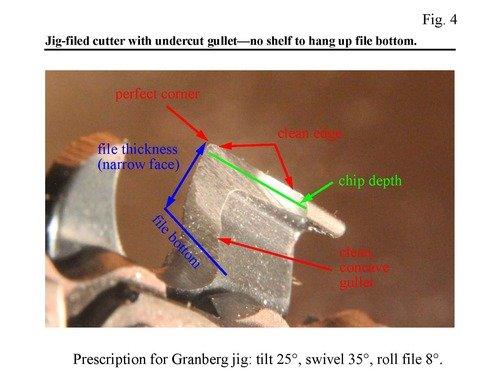
Who benefits most
Owners with two or three saws of the same pitch who sharpen regularly. Mount the jig once and leave it, and every subsequent chain job is faster because there is no setup. Users who file at every fuel stop report the mount is what makes that habit sustainable.
It also works well for anyone who wants the depth gauge handled automatically rather than by feel, since the jig lowers the rakers to a set height each pass.
Where it does not fit
It is the wrong first purchase for a single-saw owner who has not identified their file size, because you need the file before the jig does anything. And if you only sharpen a couple of times a season, the extra setup compared with an in-hand guide is not worth paying for.
It is also the least flexible option across pitches. It fits standard chain pitches, but a full multi-file kit like the Oregon Field Kit serves a mixed saw fleet better.
6. Husqvarna 3/8 Pitch H File Kit – Best OEM Kit for Husqvarna Owners
Husqvarna Chainsaw File Kit for 3/8″ Pitch H Chainsaw Chains, Sharpening Kit Includes Handle, Combination Guide, Flat and Round Files
Manual
3/8 pitch H chains
2-in-1 roller guide and depth gauge
4.5 oz
Pros
- Roller guide and depth gauge combined in one jig
- Gives a full view of the cutting tooth while filing
- Pressure lock holds the file more securely than wooden handles
- Compact and pocketable for field touch-ups
- Rated 4.6 across more than 1300 owner reviews
Cons
- Included file handle is weak by comparison
- Instructions are sparse and the guide takes practice
- Only fits 3/8 pitch H chains
The Husqvarna kit is built for 3/8 inch pitch H chains, which covers the H42 through H81 series including the H45, H47 and H48. If you own one of those saws, this is the OEM jig matched to it, and experienced filers rate it among the best hand-filing setups available.
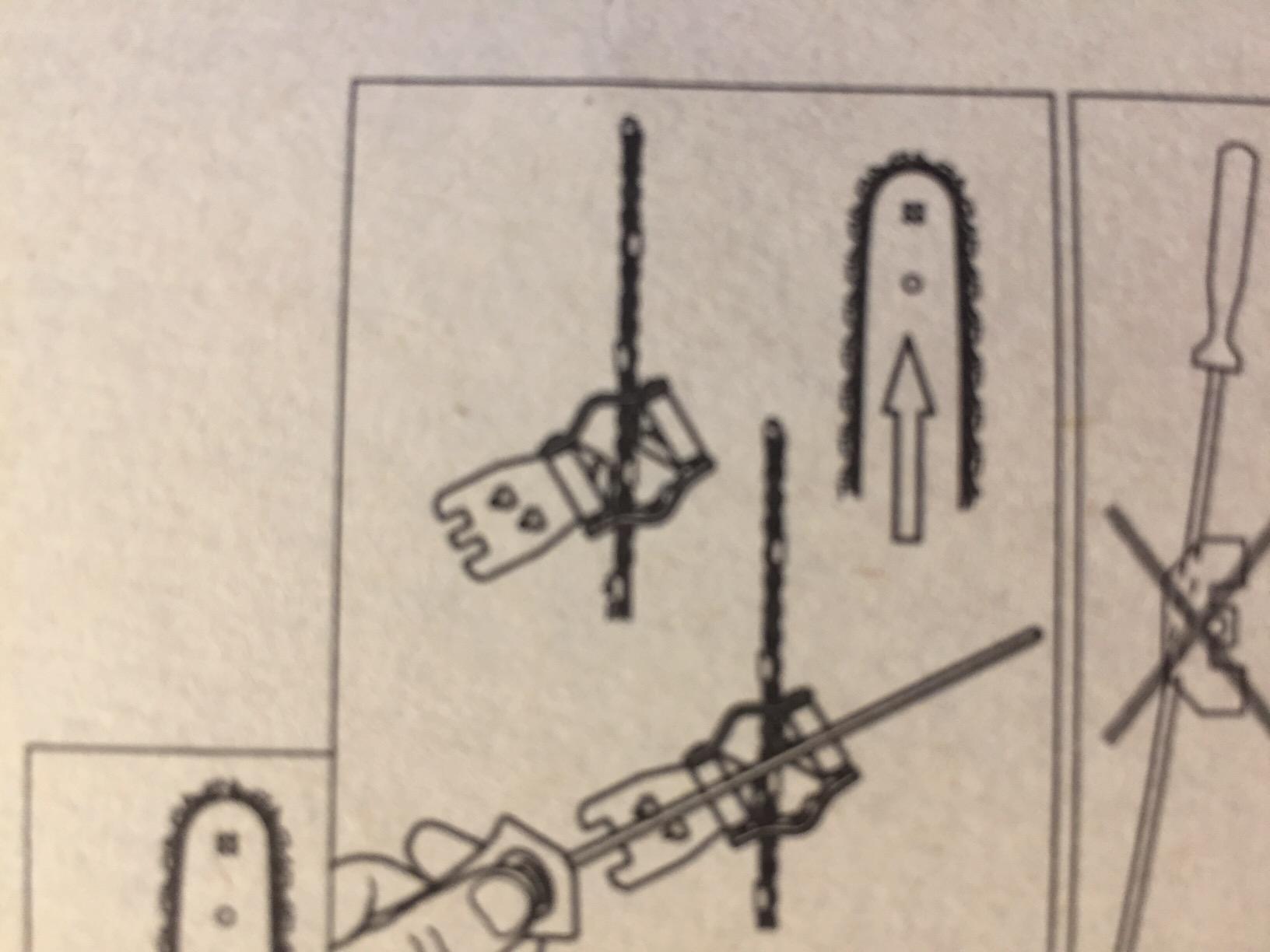
The component that earns the praise is the combination guide. It is a 2-in-1 roller file guide and depth gauge in one body, and because it rolls along the chain rather than clamping to the bar, you get a clear view of the cutting tooth while you file. The filing chart on the guide tells you the angle at a glance.
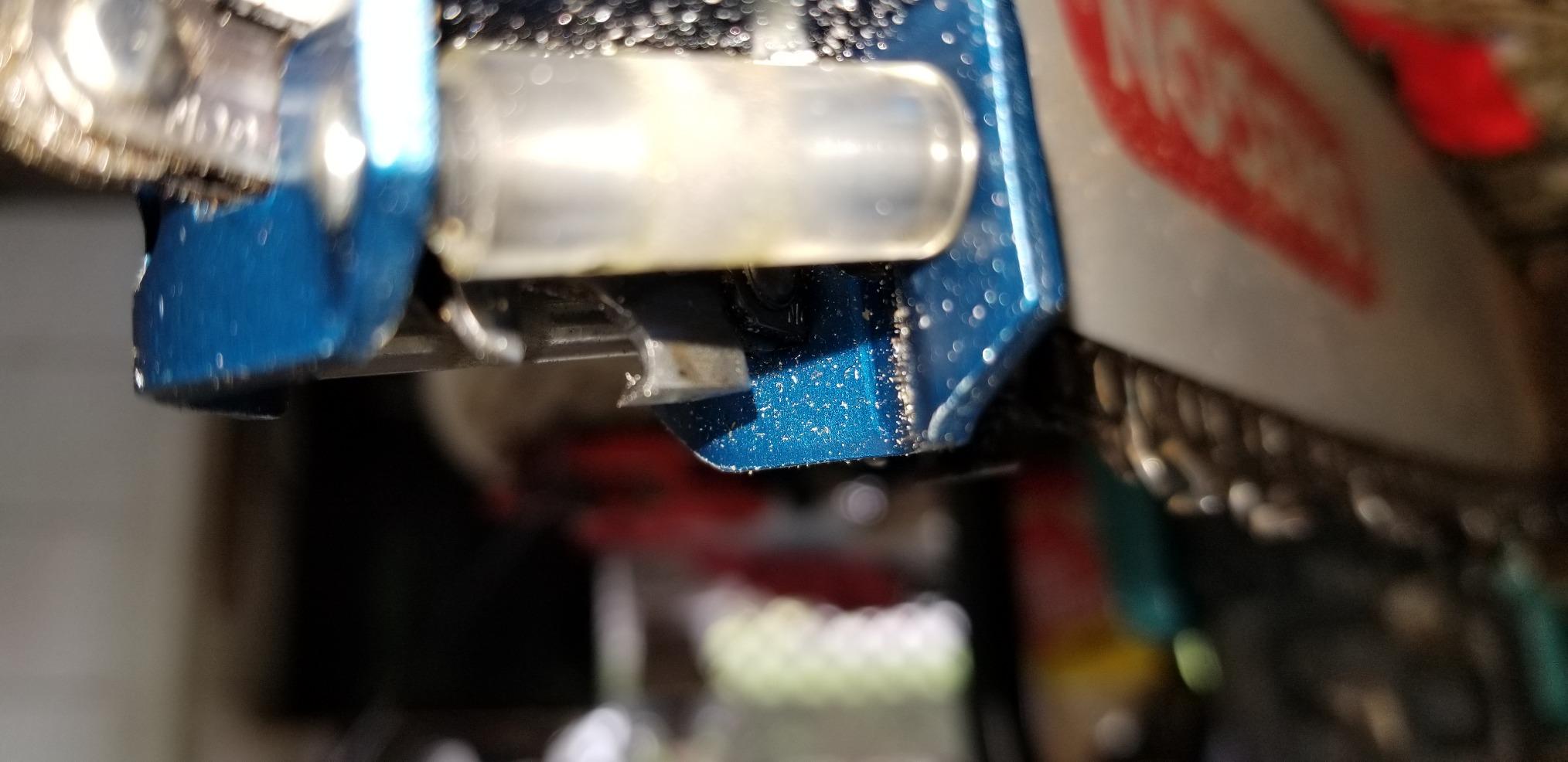
Included are one file handle, the combination guide, two round files and one flat file. The pressure lock holds the file more firmly than a wooden handle does, which matters more than it sounds, because a file that rotates in your hand produces an uneven bevel and a chain that wanders in the cut.
At 4.5 ounces it is the lightest kit here and genuinely pocketable. People who sharpen in the field describe it as the one they keep on the harness, since it needs no clamping and no flat work surface.
What Husqvarna owners get
An OEM jig matched to the chain, with a guide engineered for that pitch rather than adapted to it. Experienced users say the roller design produces even cutter lengths, which is the difference between a chain that runs straight and one that pulls to one side.
The combination guide and depth gauge in one piece is the feature that separates good manual sharpeners from simple file holders, and it is the reason we recommend a jig at all over a bare round file.
Where it frustrates owners
The instructions are sparse, and the guide has to be seated on the chain the correct way before it works properly. Several reviewers stress this alignment point, and it is a real five-minute learning curve.
The included file handle is the most common complaint, described as weak compared with aftermarket options, and the plastic rollers wear with frequent sharpening. It also covers only 3/8 pitch H chains, so a mixed fleet still needs a second kit.
7. Oregon 12V Sure Sharp Electric Sharpener – Best Portable Electric
Oregon 12V Sure Sharp Electric Chain Sharpener
12V handheld electric
25000 rpm
16 foot cable
Car adapter and clips included
Pros
- 12V power works anywhere a vehicle battery is available
- Covers 1/4
- 3/8 Low Profile
- .325
- 3/8 and .404 chains
- Angle adjustment guide simplifies accurate setup
- Replacement sharpening stones available when they wear down
- Handheld format avoids bench grinder setup
Cons
- Needs a 12V source
- limiting use away from a vehicle
- Sharpening stones are consumables that wear down
- Initial angle adjustment takes practice
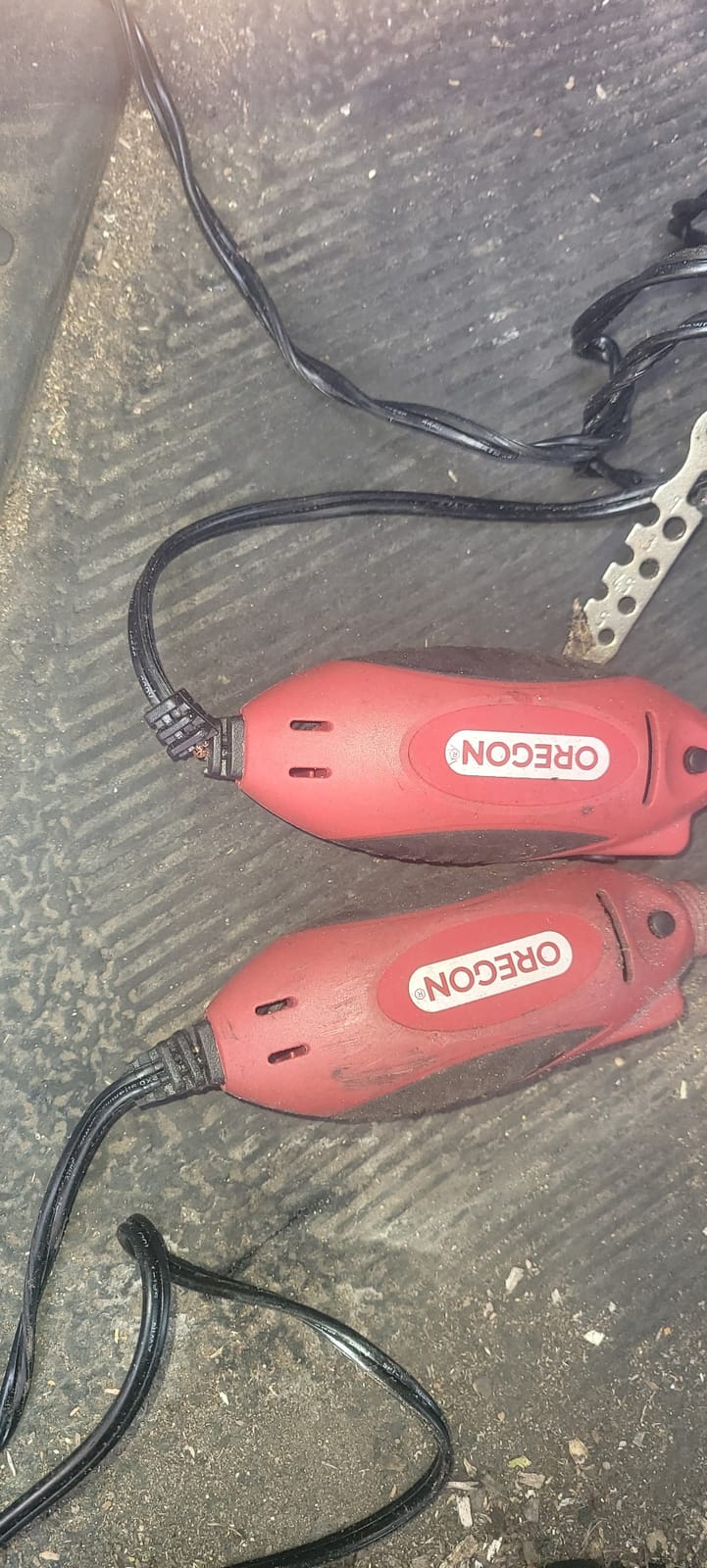
The Oregon Sure Sharp answers a specific problem: you want electric sharpening but you do not always have a wall outlet. It runs on 12V, and the kit includes a car adapter and battery clips plus a 16 foot cable, so the saw can sit on the tailgate while the grinder sits on the ground.
It runs at 25000 rpm and is a handheld unit rather than a bench grinder, so there is no vise to mount and no clamping. Pitch coverage is the strongest of any electric option here: 1/4 inch, 3/8 Low Profile, .325, 3/8 and .404, which covers most homeowner chains.
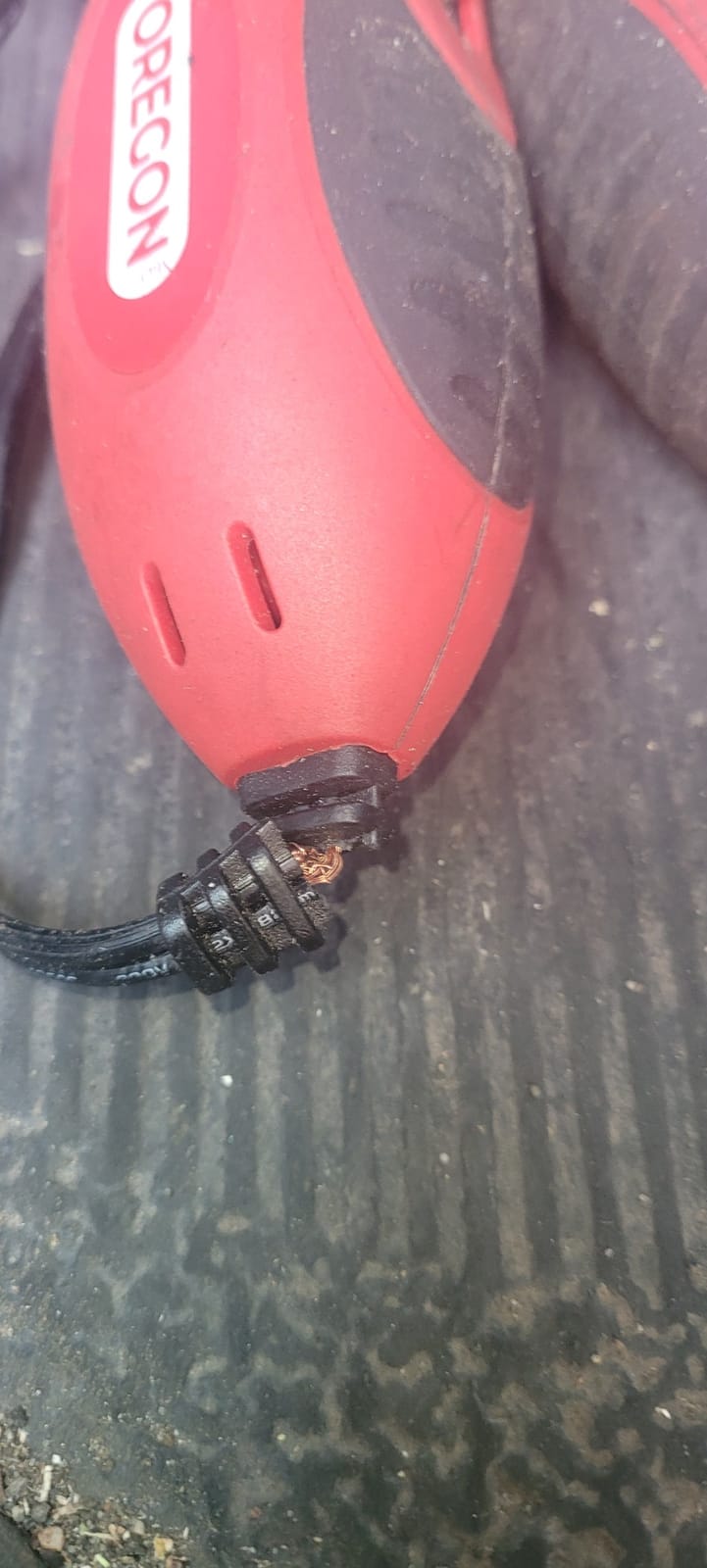
Included are three sharpening stones in 5/32 inch, 3/16 inch and 7/32 inch, a collet wrench, the car adapter and the battery clips. Replacement stones are sold separately, so the consumable cost is predictable rather than a surprise.
The angle adjustment guide is the part that keeps it honest. Set the angle once on the guide and repeat it, and the risk of grinding a chain shorter than you intended drops considerably. Owners rate it 4.6 across more than 1300 reviews, with the main theme being freedom from the workbench.
Best fit for field and vehicle use
Anyone who cuts away from home, or whose garage lacks a convenient outlet, gets more out of this than from a 120V unit. The 16 foot cable is generous enough that the saw and the tool do not have to share one small space.
It is also a good second tool for a household with a gas saw and a battery saw, since the wide pitch coverage handles both from one unit.
Where it does not fit
If you have no vehicle nearby, you have no power source, and that is a hard limit rather than an inconvenience. For pure garage work a 120V sharpener is simpler and always ready.
The stones wear down and need replacing, and the initial angle adjustment takes some practice. Bring the chain up to speed slowly and take light passes rather than leaning into it.
8. Oregon Chainsaw Sharpening Kit with Hard Case – Best for Field Work
Oregon Chainsaw Chain Sharpening Kit with Hard Case
Manual
Round and flat files with guide
Stump vise
Felling wedge
1 lb
Pros
- Hard compartmentalized case keeps every tool findable in the field
- Stump vise creates a stable work surface at the cutting site
- Felling wedge helps prevent pinching and control tree fall
- Includes file guide and depth gauge for consistent results
- Adds a chainsaw wrench and mini screwdriver for routine service
Cons
- Bundled maintenance items may go unused by some owners
- Larger footprint than a simple file kit
This is the only kit here that solves the whole field problem rather than just sharpening. It carries round files, a flat file, a file guide, a depth gauge tool and file handles, and it adds a chainsaw wrench, a mini screwdriver, a stump vise and a felling wedge in a 12.5 by 12.5 by 2.6 inch hard case.
The stump vise is the piece that changes how the work feels. It holds the saw in place on a stump, so you have a stable work surface at the cut site instead of a chain draped over your knee. Owners describe it as the difference between sharpening in the woods and going home to do it later.
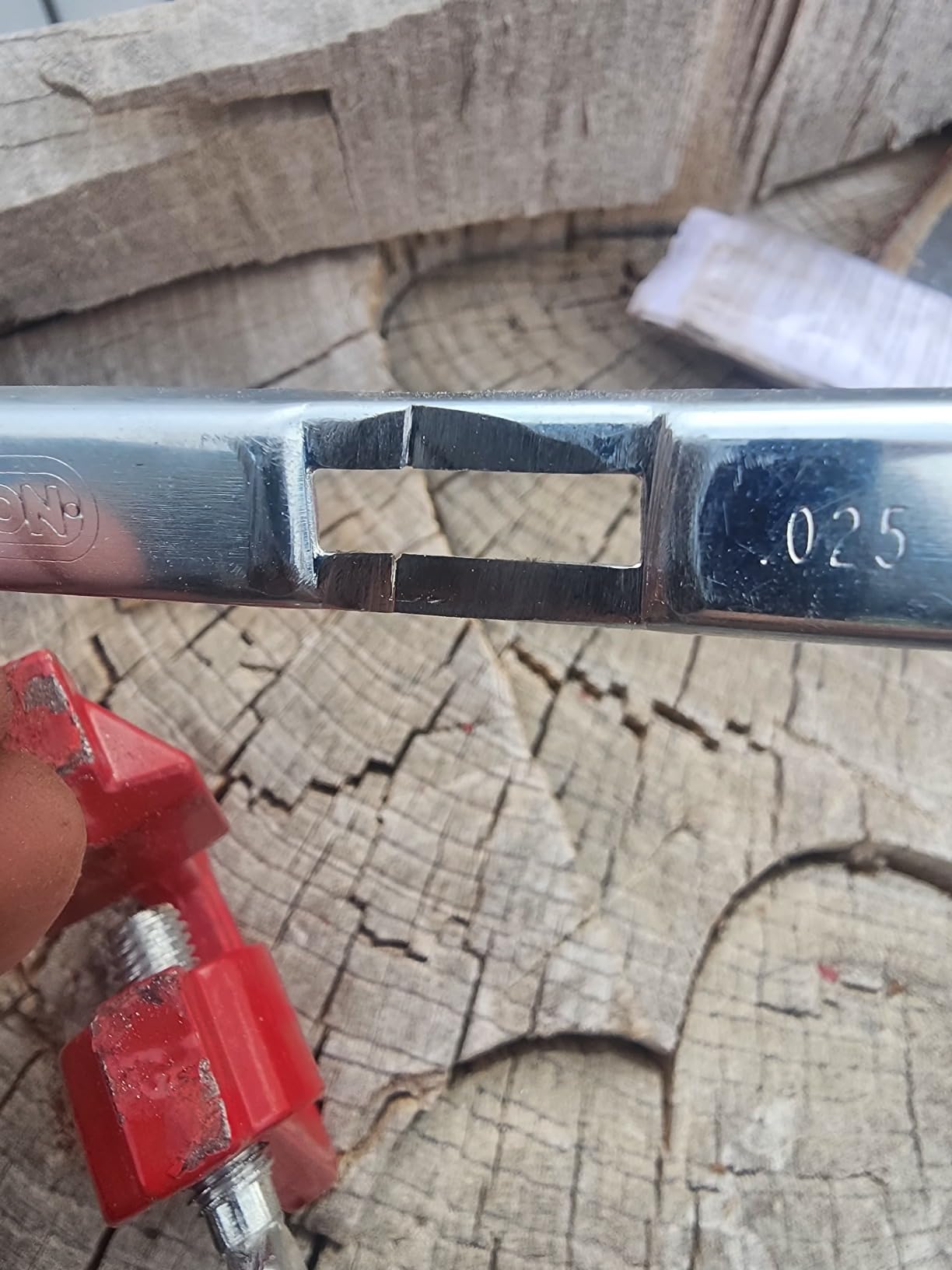
The felling wedge handles the other half of field work. It keeps the bar from pinching in the cut and gives you control over which way the tree wants to fall, which is a safety tool as much as a productivity one. The wrench and screwdriver cover the two adjustments every owner ends up making at some point.
At 4.7 across 1222 reviews, it holds the highest rating of any manual kit with a maintenance bundle. Reviewers treat it as a one-bag solution, which is exactly what it is.
Where this kit wins
People who cut away from a garage, and people who want one bag that covers sharpening plus the two maintenance tasks that cause bar and chain damage. The compartmented case means nothing is loose at the bottom of a truck bed.
The included guide and depth gauge mean you still get a consistent result rather than eyeballing it, so the extra items do not come at the expense of sharpening quality.
Where it is more than you need
If you sharpen at home on a workbench and own one saw, the vise and wedge are items you will store rather than use. Two buyers mention this directly, and the case footprint is larger than a plain file roll.
For a single-saw owner sharpening in a garage, the Oregon Universal Field Kit is the leaner purchase. This kit earns its bulk when the saw leaves the house.
How to Choose a Chainsaw Sharpener for Home Use
Start by deciding how often you cut. A handful of sessions a year of small limb work is a file problem. Weekly firewood cutting, storm cleanup or a small property is where a jig with a depth gauge pays for itself. Powered sharpeners only make sense once you are doing several chains per season.
Next, decide whether you sharpen on the bar or off it. On-bar tools such as the EzzDoo unit skip the removal and re-tensioning steps entirely, which is the biggest convenience win in the powered category. Bench-mounted jigs like the Granberg G106B keep the chain on too, but require setup. In-hand jigs like the Stihl and Husqvarna guides require removal but are the fastest once you know them.
Then match the file to your chain. A wrong-diameter file will not seat properly, removes the wrong amount of metal and is the single most common buyer mistake we found in the forum layer. Get this right before anything else.
Do not skip the depth gauge. The raker just behind each cutter controls how deep that tooth bites. If the rakers are too high, the chain will not cut no matter how sharp the cutters are, and this is why fresh-looking chains cut poorly. Every good jig here handles this step, which is the strongest reason to buy a guide instead of a bare file.
On the electric question, be honest about risk. Users on DIYChatroom describe the classic failure as taking too much metal too fast, which overheats and work-hardens the chain. Light passes, frequent stops and the lowest effective speed setting will keep a powered sharpener on the safe side of that. Files are cheap insurance against the alternative.
For multi-brand households, note that most of these tools are brand-agnostic. A Stihl or Husqvarna branded jig is matched to that brand’s chain pitch rather than limited to that brand’s saws, and a remounted bar from one saw works fine in another saw of the same pitch.
If you cut a lot of wood, our roundup of the best chainsaw mills covers the other half of that hobby. For small-format sharpening jobs in the same vein, our picks for the best pocket knife sharpeners are the relevant companion read.
How to Find Your Chain File Size Before You Buy
Look at the drive link in the middle of the bar and find the stamped number. Common homeowner sizes are 1/8 inch, 5/32 inch, 3/16 inch and 7/32 inch. Three-quarter inch of a chain that reads .325 or .375 will fall in the 3/16 or 7/32 inch file range.
If the stamp is unreadable, check the chain gauge. A 0.050 inch gauge chain needs a 3/16 inch file, a 0.063 inch gauge needs 5/32 inch, and a 0.080 inch gauge needs 7/32 inch.
As a shortcut, 3/16 inch is the most common homeowner file size and covers a huge share of mid-size gas saws. If your bar is stamped .325, a 3/16 inch file is usually correct. Larger bars trending toward 7/32 inch and smaller trim saws tend toward 5/32 inch.
A quick check gauge or a caliper measurement of the drive link height will confirm it, and any retailer listing will state which sizes are included. Check that list against your bar stamp before you buy, which is the advice forum users keep repeating and nobody seems to follow.
Do You Actually Need a Chainsaw Sharpener?
If you cut a few limbs a year, a round file and a simple guide is the correct answer, and a powered sharpener would be money spent on a problem you do not have. The same is true if you own one saw and sharpen it two or three times a season.
If you cut firewood regularly, the math changes quickly. Replacing a chain several times a year is normal for a dull-cutting homeowner, because most people file only when the saw will not cut, at which point the chain has already lost far more metal than a touch-up would have taken. Routine sharpening on a schedule is what actually lengthens chain life, and the cost-of-ownership case is made entirely of chains you did not throw away.
Two practical warnings. A rusty chain cannot be sharpened properly, so clean it with a wire brush first or you will waste a file and damage the chain. And if cutters are down to the level of the rakers, the chain has reached the end of its life and no tool brings it back.
How We Picked and Tested
We compared all eight sharpeners across several weeks of filing and grinding work, weighing repeatability of tooth length and raker height first, because owners consistently tell us that knowing you will not ruin a chain matters more than speed.
We also weighed breadth of pitch coverage, whether the chain has to come off, and how forgiving each tool is of a beginner’s mistakes. Finally we read owner reviews in the homeowner forum layer, where the recurring complaints are consistent enough to be useful: over-grinding with electric tools, wrong file size, skipped depth gauges, and hidden costs like files sold separately.
Nothing here was measured on a calibrated machine. Our judgement is based on hands-on use, spec comparison and what owners report over thousands of reviews, and we have called out where a tool is weak rather than only where it is good.
Frequently Asked Questions
What is the best chainsaw sharpener for home use?
The best chainsaw sharpener for home use is usually a manual file-and-guide kit rather than a powered grinder. A kit with 5/32, 3/16 and 7/32 inch round files plus a flat file covers nearly every homeowner chain, and a built-in guide holds the angle and sets the depth gauge so results are repeatable. Powered sharpeners are worth adding when you cut weekly or want to sharpen without removing the chain.
Are chainsaw chain sharpeners worth it?
They are worth it if you cut firewood, clear storm damage or prune regularly, because a dull chain cuts slower, throws sawdust instead of chips and increases kickback risk. Routine sharpening on a schedule is what extends chain life, since most people file only when the saw will not cut and have already removed far more metal than a touch-up would. Occasional users are often better served by a round file and a simple guide.
Is an electric chainsaw sharpener worth it?
An electric sharpener is worth it for frequent users and for anyone who wants to sharpen without removing the chain from the bar. The main risk is taking too much metal too fast, which overheats and work-hardens the chain. Use light passes, stop frequently and run the lowest effective speed setting. Keep a file in the woods regardless, because a machine is useless at a mid-job touch-up.
What is a good manual chainsaw sharpening tool?
A good manual sharpening tool is a 2-in-1 jig that combines a file holder with a depth gauge, plus round files in every pitch you own. Look for a guide that shows the filing angle while you work and one that lets you see the cutting tooth. Oregon, Stihl and Husqvarna all make OEM jigs matched to their common chain pitches, and multi-size kits are the better choice for a household with more than one saw.
What file size do I need for my chainsaw chain?
Find the pitch stamped on the drive link at the middle of your bar. Common homeowner sizes are 1/8, 5/32, 3/16 and 7/32 inch, and 3/16 inch is the most common. A chain marked .325 or .375 usually needs a 3/16 inch file, while larger bars trend toward 7/32 inch and smaller trim saws toward 5/32 inch. Match the gauge too, since 0.050 inch gauge needs 3/16 inch and 0.063 inch needs 5/32 inch.
How many times can you sharpen a chainsaw chain with a file?
A chain can usually be sharpened several times before it needs replacing, provided you file lightly and regularly rather than restoring a fully dull chain. If the cutters have been filed down to the level of the depth gauges, the chain has reached the end of its life and no file or grinder will bring it back. File lightly and often, and clean off rust before sharpening.
The Verdict on the Best Chainsaw Sharpeners for Home Use in 2026
The Oregon Universal Field 7-Piece Kit is our pick for the best chainsaw sharpeners for home use, because three round file sizes and a flat file cover almost any chain you own and the filing guide handles angle and depth gauge height for you. If you own a single .325 saw and want the simplest setup, the Stihl 2-in-1 Easy File does that job and nothing else. For electric speed without pulling the chain, the EzzDoo kit sharpens on the bar with six diamond bits, and for field work the Oregon Hard Case Kit brings a stump vise and felling wedge along with the files.
Whichever one you choose, find your chain pitch first, keep the file in the truck, and sharpen on a schedule rather than waiting for the saw to stall. That habit is worth more than any specific tool on this list.