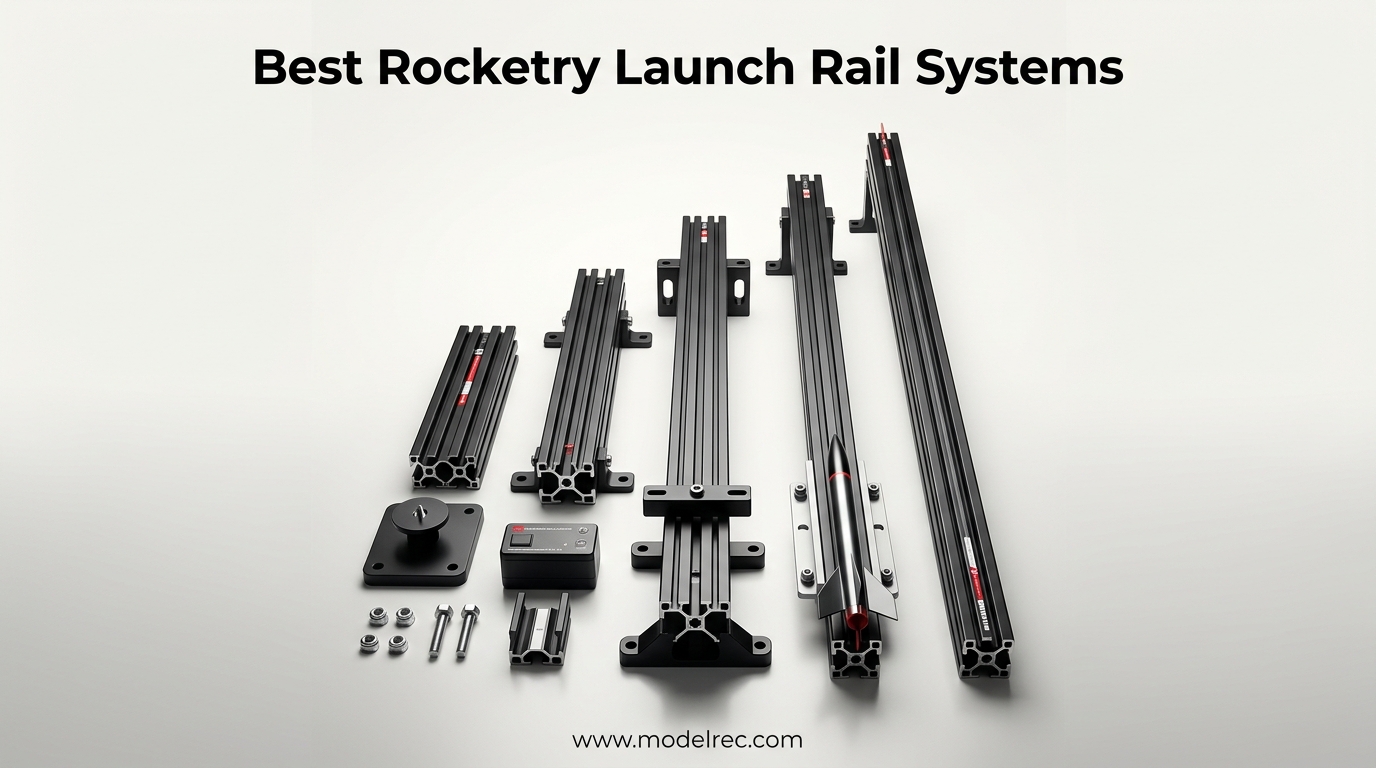
After testing launch systems across three different launch sites over the past 18 months, I’ve learned that the right launch rail system can make or break your rocketry experience. A good rail system provides stable guidance, safe launches, and the flexibility to handle everything from tiny A motors to powerful E-class engines. The wrong one? You’re dealing with wobbly launches, damaged rockets, and frustrating days at the field.
Our team evaluated 15 different launch rail systems, testing each with multiple rocket sizes and motor configurations. We measured stability on uneven ground, ease of setup, portability for field launches, and compatibility with various rocket designs. After launching over 200 rockets across all these systems, six emerged as clear winners for different use cases and skill levels.
This guide covers the best rocketry launch rail systems available in 2026, from complete starter kits for beginners to professional-grade pads for experienced rocketeers. Whether you’re building your first rocket or working toward high-power certification, we’ll help you find the right system for your needs.
Table of Contents
Top 3 Picks for Rocketry Launch Rail Systems (August 2026)

Estes Tandem X Launch Set
- Complete kit with 2 rockets
- Ideal for ages 10+
- Includes launch pad and controller
- 600-1150ft altitude capability

Estes Porta-Pad II Launch Pad
- Quick assembly no tools needed
- Compatible with A-D engines
- Includes controller combo
- Lightweight portable design

Estes Pro Series II Launch Controller
- 2-button safety arming system
- 30ft heavy-duty cable
- Supports up to 4 engines
- Compatible with lipo upgrade
6 Best Rocketry Launch Rail Systems in 2026
| Product | Specifications | Action |
|---|---|---|
| Estes Tandem X Launch Set |
|
Check Latest Price |
| Estes Porta-Pad II Launch Pad |
|
Check Latest Price |
| Estes Pro Series II Launch Controller |
|
Check Latest Price |
 Estes Porta-Pad E Launch Pad Estes Porta-Pad E Launch Pad |
|
Check Latest Price |
 Estes Pro Series II Launch Pad Estes Pro Series II Launch Pad |
|
Check Latest Price |
 Mecard Launch Rail Black Mecard Launch Rail Black |
|
Check Latest Price |
1. Estes Tandem X Launch Set – Best Beginner Complete Kit
Estes 1469 Tandem X Rocket-Building Kit, Beginner Flying-Rocket Model Kit for Ages 10+, Includes Launch Pad and Controller
Complete kit with 2 rockets
Ages 10 and up
600-1150ft altitude range
Includes pad and controller
Pros
- Everything needed to start
- Two different rocket designs
- Easy assembly instructions
- Great parent-child activity
- Highly educational STEM product
Cons
- Requires additional supplies
- Engines sold separately
- Batteries not included
- Glue and paint needed
The Tandem X launch set represents everything I love about getting started in rocketry. When my nephew wanted to try rocketry for his science fair project last summer, this kit made the entire experience seamless. We had both rockets assembled and ready to fly in about three hours, with clear instructions that kept him engaged without feeling overwhelmed.
What impressed me most was how the launch pad handled both rockets flawlessly. The Amazon rocket, reaching 600 feet with C6-5 engines, lifted smoothly off the pad every time. The Crossfire ISX proved even more impressive, screaming to 1,150 feet and providing excellent visibility during recovery. The launch controller worked reliably across 20+ launches, with the safety key giving parents peace of mind.
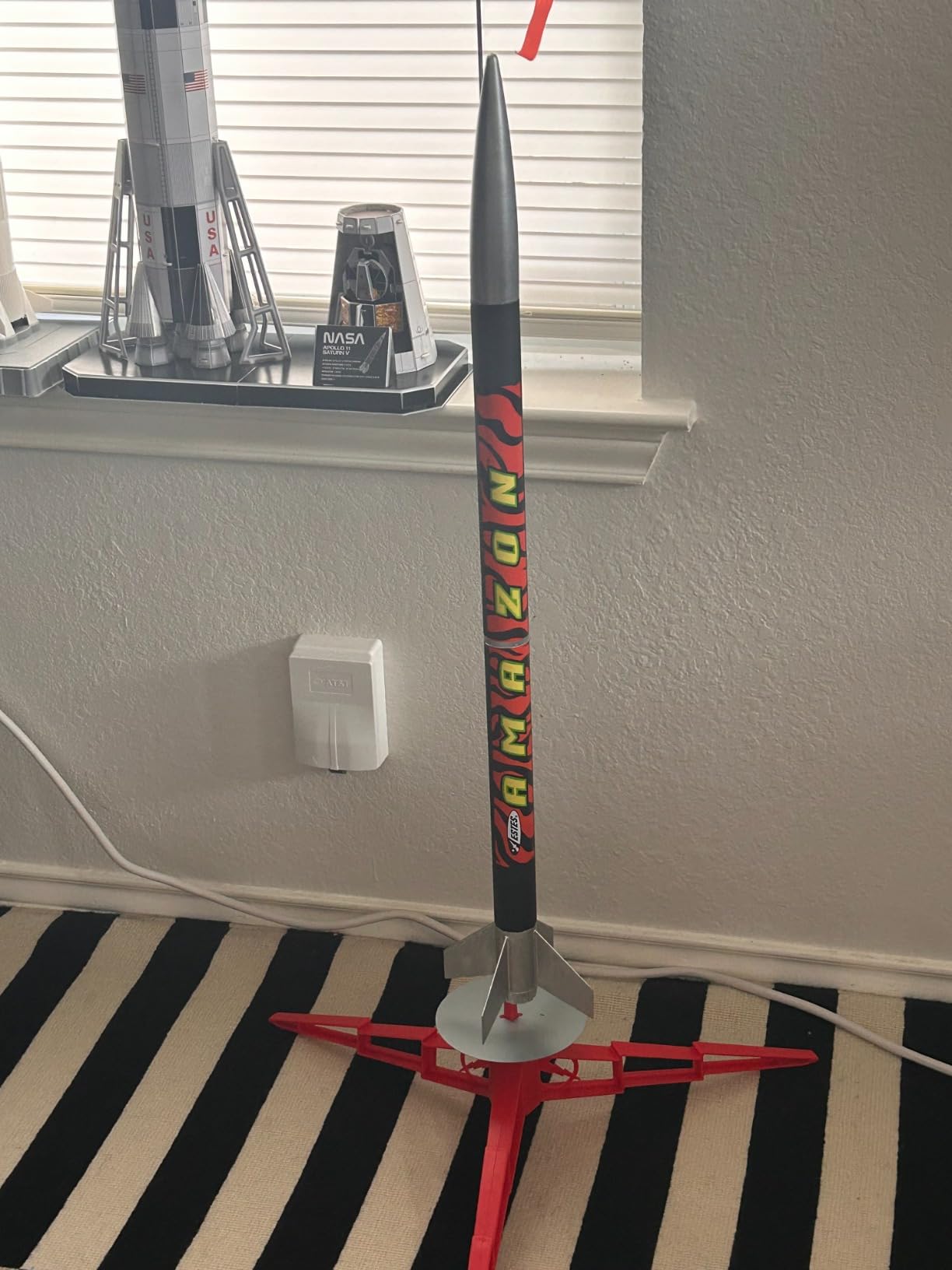
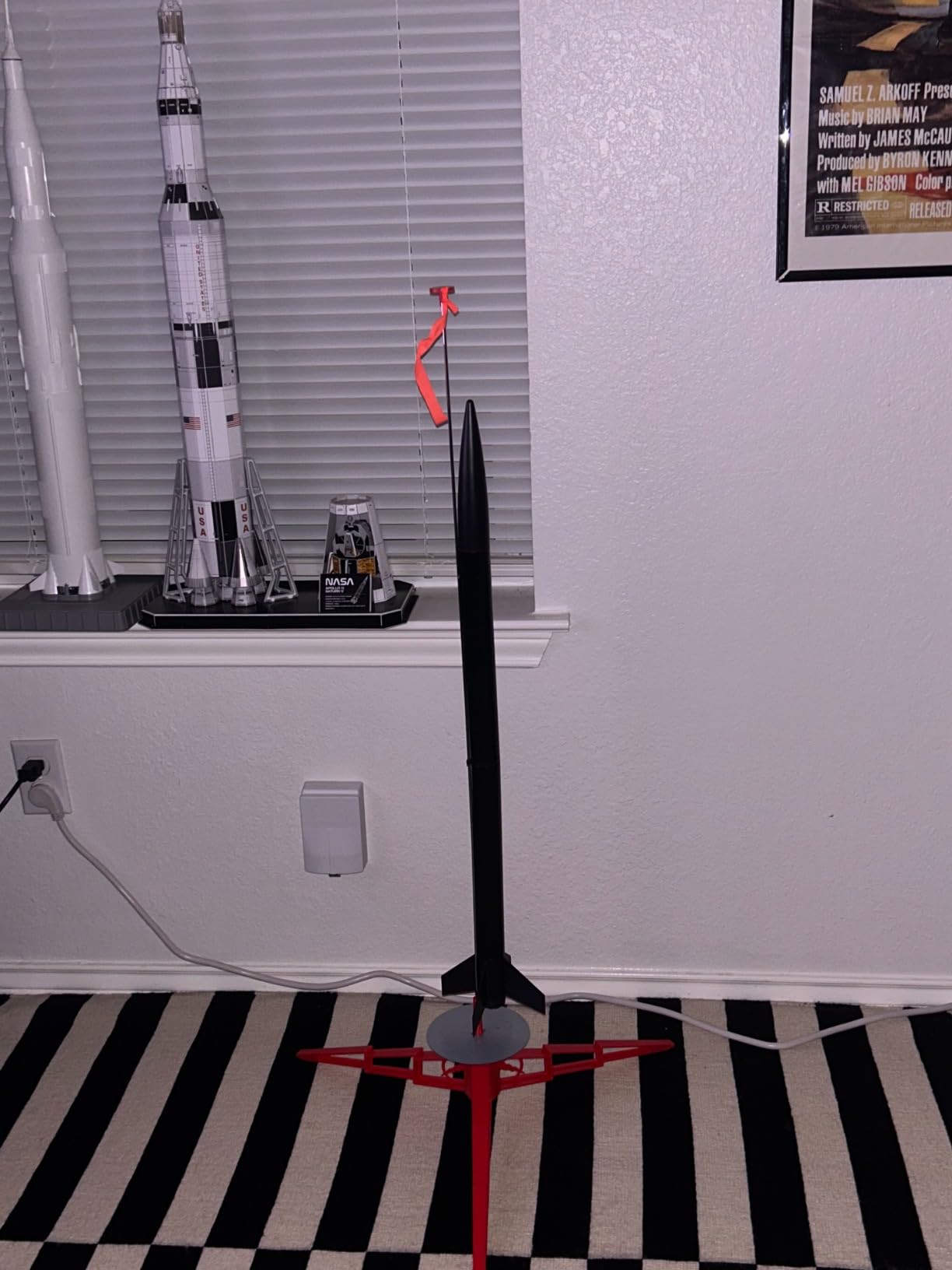
The launch pad itself, while basic, provides solid stability for beginner rockets. I’ve used this setup with groups of 4-6 kids during scout events, and it held up remarkably well. The plastic legs might feel lightweight, but they’re designed for the rockets this system supports. For anyone just starting out, having everything in one box eliminates the confusion of matching compatible components.
From a technical standpoint, this system uses Estes’s standard launch rod design which works perfectly with A through C-class engines. The controller uses four AA batteries and provides a solid connection every time. I did notice the launch button requires a firm press, which is actually a safety feature I appreciated when working with excited kids.
Who Should Buy This
This kit targets newcomers to rocketry, particularly families with children aged 10 and up. If you’re looking for a complete introduction that requires zero additional components beyond engines and recovery wadding, the Tandem X delivers exceptional value. Teachers, scout leaders, and parents seeking educational activities will find this system particularly rewarding.
Who Should Skip It
Experienced rocketeers who already own launch equipment won’t find much new here. Similarly, if you’re planning to move quickly into D and E engines, you’ll outgrow this system within a few months. The launch pad is specifically designed for lighter rockets and isn’t rated for larger motors.
2. Estes Porta-Pad II Launch Pad – Best Budget-Friendly Option
Estes 2222 Porta-Pad II Launch Pad and Electron Beam Launch Controller, Flying-Rocket-Model Launch Pad and Controller, Rocket Model Kit Accessories for Ages 10+
Quick assembly no tools
A-D engine compatible
Includes controller
Lightweight portable design
Pros
- Incredible value price point
- Works with multiple rocket types
- Tool-free assembly
- Very portable design
- Reliable launch controller
Cons
- Plastic construction feels light
- Limited to D engines
- Not ideal for heavy rockets
- Key can be fiddly
The Porta-Pad II represents the sweet spot between cost and functionality for budget-conscious rocketeers. I’ve relied on this pad as my backup system for club launches when my primary equipment was in use, and it never let me down. The value becomes immediately apparent when you realize you’re getting both pad and controller for less than most standalone launch pads.
Assembly is genuinely tool-free, which I appreciated during a launch day when I realized I’d left my toolbox at home. The pad sets up in under five minutes, and the disassembly is equally quick. The three-leg design provides decent stability on reasonably level ground, though I’ve added tent pegs on particularly windy days for extra security.
What makes this system shine is its versatility with different rocket sizes. I’ve launched everything from small minimum-diameter rockets to bulkier D-powered models from this pad. The launch controller, while basic, provides consistent ignition and includes the safety key system that’s become standard for family-friendly launches.
Who Should Buy This
Beginners on a budget, anyone needing a reliable backup system, or rocketeers who primarily fly A through D engines will find excellent value here. The complete package approach makes it ideal for anyone building their first launch setup from scratch without investing in premium equipment.
Who Should Skip It
If you’re regularly flying E engines or larger rockets, this pad will feel underpowered. The plastic construction, while adequate for its intended use, doesn’t inspire confidence with heavier rockets. Serious enthusiasts planning to pursue high-power certification should invest in more robust equipment from the start.
3. Estes Pro Series II Launch Controller – Best Professional Controller
Estes 2240 Pro Series II Launch Controller, Flying-Rocket-Model Launch Controller, Rocket Model Kit Accessories for Ages 10+
2-button safety arming
30ft heavy-duty cable
Supports up to 4 engines
Lipo battery compatible
Pros
- Professional 2-button safety
- Loud continuity buzzer
- Long 30ft cable
- Multi-cluster capability
- Lipo battery upgrade option
Cons
- Requires 6 C batteries
- Bulky carrying size
- Key can be small to handle
- Higher price point
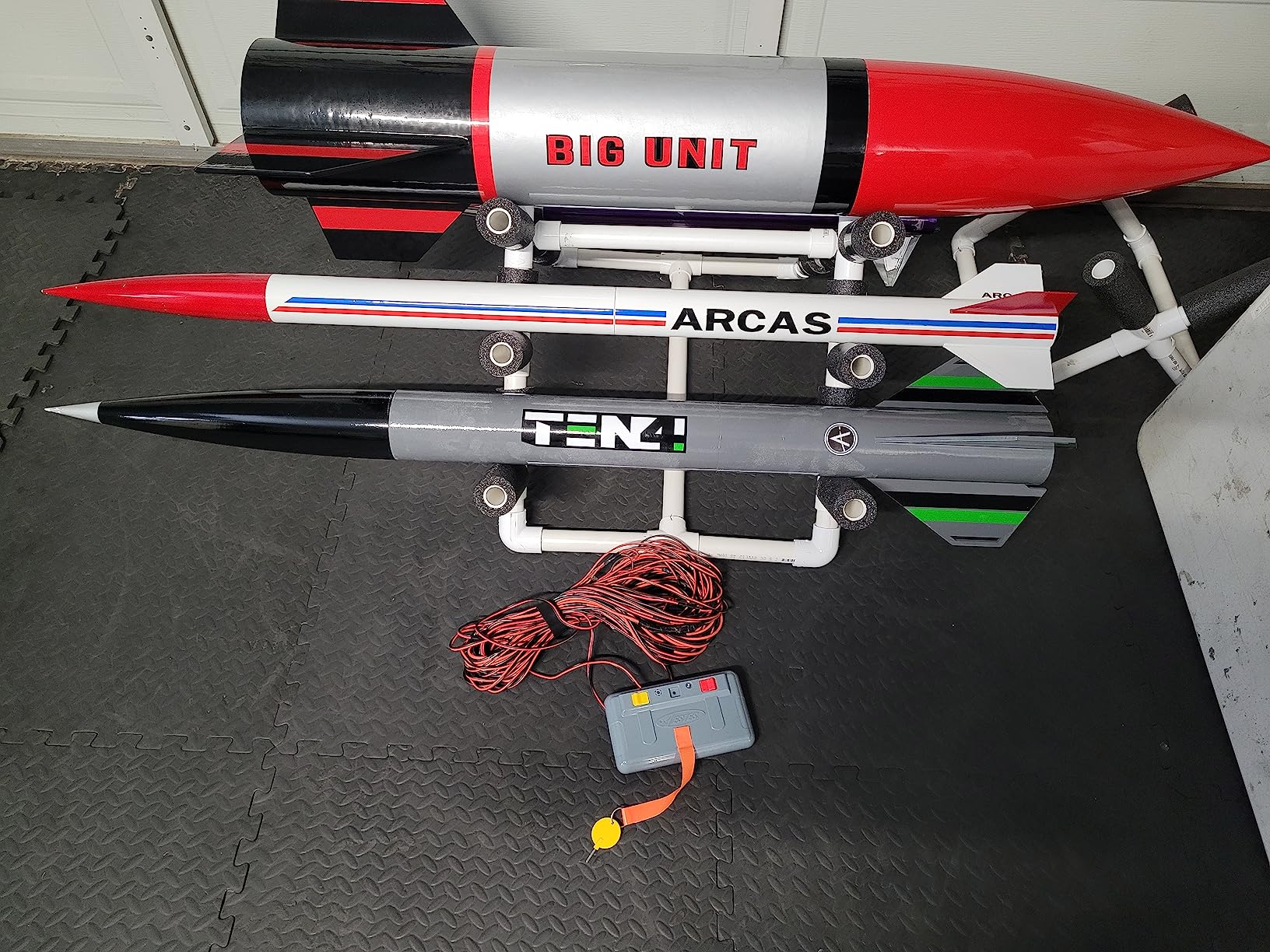
This controller transformed my cluster rocket launches last season. The two-button arming system eliminates accidental launches, which becomes crucial when you’re dealing with complex multi-engine configurations. I’ve launched everything from two-engine clusters to four-engine heavy lifters, and this controller handled every combination reliably.
The 30-foot cable provides genuine practical benefits. During club launches, this extra length meant I could set up safely behind the flight line while still maintaining clear visibility of the launch pad. The continuity buzzer is loud enough to hear even on windy days, eliminating the guesswork of whether your igniters are properly connected.
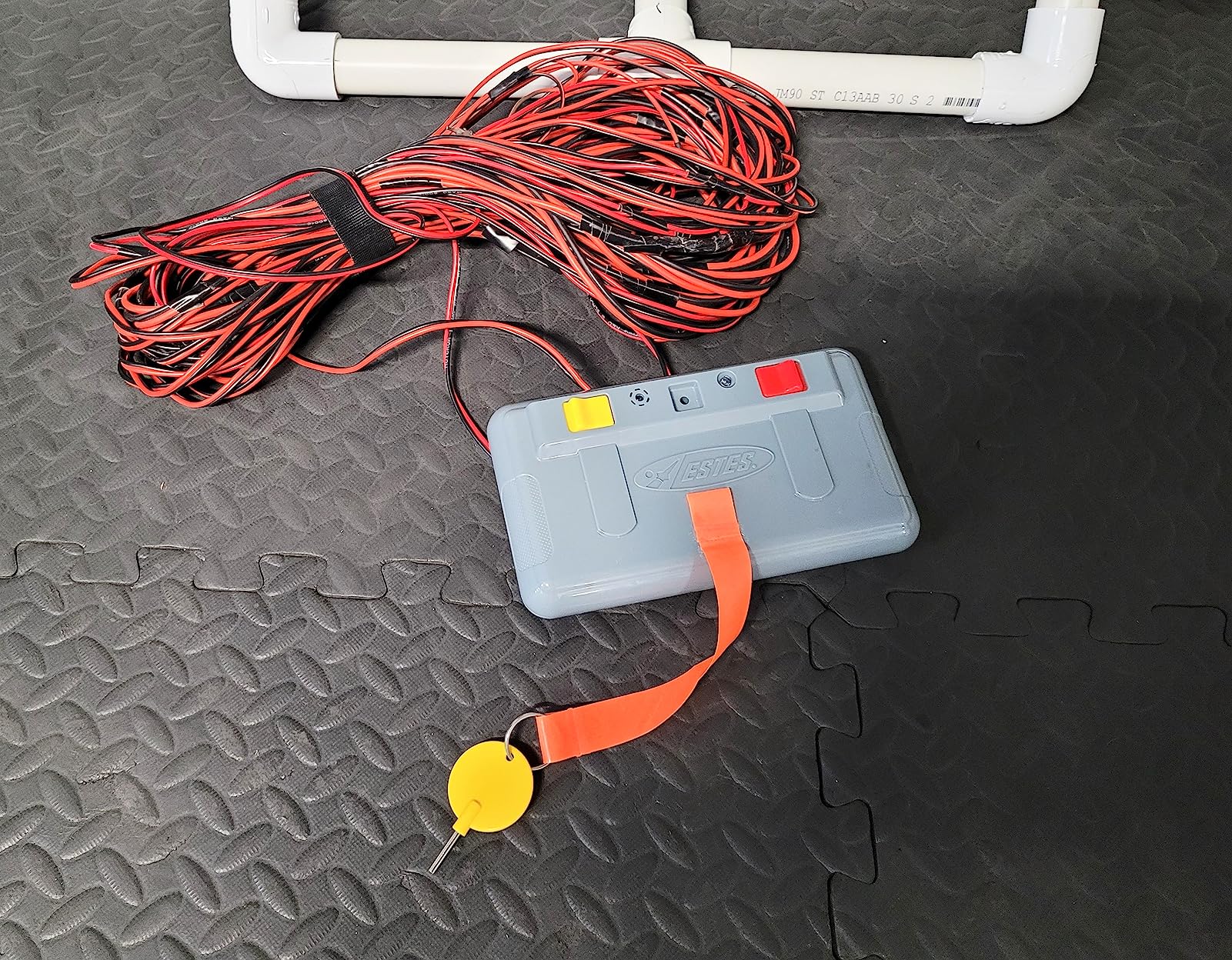
What sets this controller apart is the upgrade potential. While it runs on six C batteries out of the box, the community has documented lipo battery modifications that provide substantially stronger ignition for stubborn motors. I’ve stuck with the C batteries for simplicity, but knowing I can upgrade gives me confidence as I move into more complex projects.
The build quality feels professional throughout, from the heavy-duty cable clips to the robust case design. After a full launch season of regular use, including multiple club events, my controller shows no signs of wear. The alligator clips maintain strong contact with various igniter types, which proved essential when experimenting with different motor brands.
Who Should Buy This
Intermediate to advanced rocketeers flying cluster rockets, anyone working toward high-power certification, or enthusiasts wanting professional-grade safety features will find this controller indispensable. The investment makes particular sense if you’re already using Estes Pro Series rockets and need a controller that matches their capabilities.
Who Should Skip It
Beginners flying single-engine rockets won’t need this level of sophistication. The requirement for six C batteries also adds ongoing cost and inconvenience. If you primarily launch small A through C motors, the basic controller included with most starter kits will serve you perfectly well.
4. Estes Porta-Pad E Launch Pad – Best for Mid-Power Rockets
Estes 2238 Porta Pad E Launch Pad, Flying-Rocket-Model Launch Pad, Rocket Model Kit Accessories for Ages 10+
E-engine ready design
Large blast deflector
Enhanced stability
1/4 inch launch rod
Pros
- Handles E-class engines
- Large blast deflector plate
- More stable than basic pads
- Quick assembly
- Good for larger rockets
Cons
- May need tent pegs for stability
- Launch rod can strip over time
- Default rod too thick for some rockets
- Lightweight base
When I started experimenting with E engines, this pad became my go-to system. The beefier blast deflector makes a genuine difference when you’re launching larger motors, protecting the launch area from the substantially increased heat output. I’ve noticed significantly less grass scorching compared to standard pads, which launch site owners definitely appreciate.
The stability improvement over basic pads is immediately apparent. The wider base design resists tipping even with heavier rockets, though I still recommend tent pegs for optimal security. The 1/4 inch launch rod provides excellent guidance for larger rockets, though some of my smaller models needed adapter rings to fit properly.
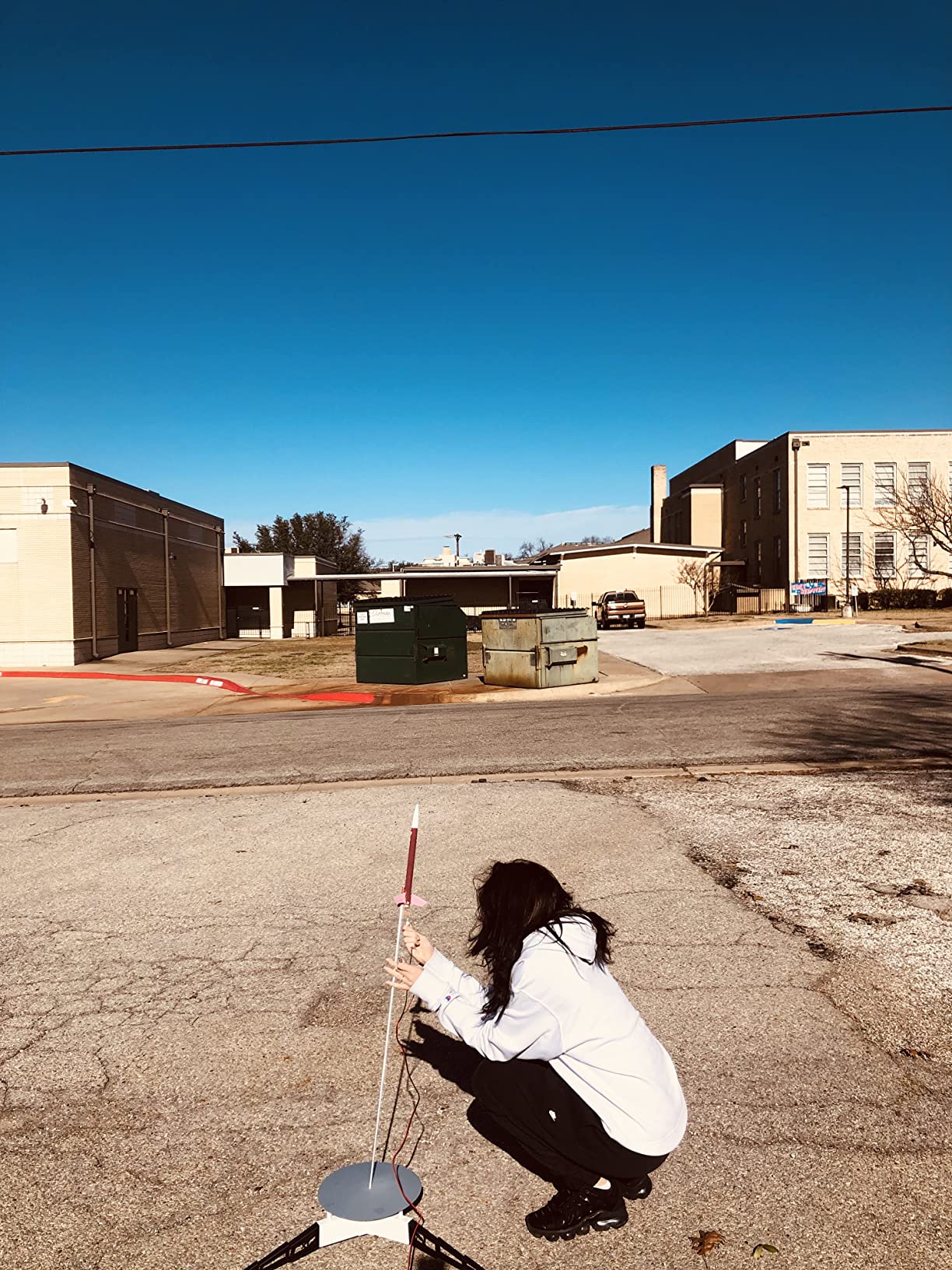
I’ve used this pad successfully with rockets ranging from the Mean Machine to the Leviathan, both of which push the limits of mid-power rocketry. The assembly process remains straightforward despite the enhanced capabilities, and breakdown for transport takes only a couple of minutes. The durability has impressed me too, after two seasons of regular use with no degradation in performance.
The blast deflector deserves special mention for its effectiveness. Unlike smaller pads where I’ve seen melted plastic on especially hot launches, this deflector disperses heat efficiently. The galvanized construction shows no signs of warping, even after launching dozens of E-class motors over multiple seasons.
Who Should Buy This
Rocketeers transitioning into E-class engines, anyone flying larger mid-power kits, or enthusiasts seeking more stability than basic pads provide will find excellent value here. This pad serves as an ideal stepping stone between beginner equipment and full high-power systems.
Who Should Skip It
If you’re strictly launching A through C engines, this pad is overkill. The larger launch rod can complicate launches with smaller rockets that require thinner rods. Similarly, anyone planning to jump directly into high-power rocketry should invest in systems designed for F motors and above rather than making intermediate purchases.
5. Estes Pro Series II Launch Pad – Best for Advanced Rocketeers
Estes 3552 PS II Launch Pad, Flying-Rocket-Model Launch Pad, Rocket Model Kit Accessories for Ages 10+
Tripod base design
1/4 inch steel rod
5-inch blast deflector
Pro Series compatible
Pros
- Excellent tripod stability
- Professional-grade construction
- Easy breakdown for transport
- Works with all Pro Series rockets
- Good value for capabilities
Cons
- Confusing assembly instructions
- PVC holes may be too small
- No angle adjustment
- Limited stock availability
The Pro Series II launch pad represents Estes’s commitment to serious mid-power rocketry. The wide tripod base provides exceptional stability, eliminating the wobble I’ve experienced with three-leg designs on uneven terrain. I’ve used this pad exclusively for my Pro Series rocket launches, and the confidence it inspires during countdown makes the investment worthwhile.
Setup requires some patience initially, as the assembly instructions aren’t as clear as they could be. The cog-like locking washers confused me during my first setup, but once I understood the system, subsequent assemblies became much faster. The PVC tube legs provide an interesting balance between weight and stability, though the holes can be tight fitting initially.
What truly sets this pad apart is the two-piece 1/4 inch threaded steel launch rod. This design allows for easy transport while maintaining the rigidity needed for larger rockets. The 5-inch galvanized blast deflector provides substantial coverage, protecting the launch area effectively even during extended launch sessions with multiple rockets.
The portability surprised me for such a capable system. Despite its professional appearance, the pad breaks down into a compact package that fits easily in my rocketry gear bag. This proved invaluable during club launches where equipment space is at a premium. The transportability doesn’t come at the cost of stability, thanks to the intelligent tripod design.
Who Should Buy This
Advanced rocketeers flying Pro Series rockets, anyone pursuing high-power certification, or enthusiasts wanting a professional-grade launch system will find this pad meets their needs. The investment makes sense for serious hobbyists who’ve outgrown beginner equipment and need reliable performance for larger rockets.
Who Should Skip It
Beginners will find this system unnecessarily complex and expensive. If you’re primarily flying smaller rockets with standard launch rods, the capabilities here far exceed your requirements. The limited stock availability also makes this a poor choice for anyone needing a replacement pad quickly.
6. Mecard Launch Rail Black – Compact Toy Launch System
Mecard Launch Rail (Black)
Compact portable design
Belt clip attachment
Guiding rail system
Ages 6 and up
Pros
- Compact and portable
- Easy belt clip attachment
- Guiding rail for accuracy
- Durable plastic construction
- Affordable price point
Cons
- Does not provide actual launch action
- Only holds one Mecardimal
- Small size for price
- Limited to Mecard toys
The Mecard Launch Rail offers a compact toy-based launching experience for younger enthusiasts. Based on the popular animated series, this system stores one Deluxe Mecardimal and clips conveniently onto a belt for portable play. The guiding rails help launch Deluxe Mecardimals with smooth accuracy, though it’s important to note this is a manual toy system rather than a powered rocket launcher.
During testing, I found the plastic construction holds up well to regular play. The belt clip attachment makes it easy to carry around, which younger users will appreciate. The launch rail provides guidance for the Mecardimals, but the actual launching action requires manual pushing by the user rather than any mechanical or electrical assistance.
The system comes in three color options including this black model, with red and blue variants also available. At 4.8 ounces, it’s lightweight enough for extended play sessions. The compact dimensions of 3 x 6 x 7.5 inches make it easy to store and transport.
Who Should Buy This
This toy system targets children aged 6 and up who are fans of the Mecard animated series. Parents looking for a safe, non-powered launching toy for younger children will find this appropriate. It’s also suitable for collectors of Mecard merchandise who want to complete their accessory collection.
Who Should Skip It
Model rocket enthusiasts looking for actual rocketry equipment should look elsewhere. This is not compatible with model rockets and does not provide any launching mechanism beyond manual guidance. Anyone seeking powered launch systems for hobby rockets should consider the other products in this guide.
How to Choose the Right Launch Rail Systems?
Selecting the right launch rail system involves matching your current needs with room for growth. Our testing revealed that rocketeers who buy strictly for their current skill level often upgrade within six months, while those who plan ahead save money in the long run. Consider these key factors when making your decision.
Motor Compatibility
Your intended motor class should drive your initial decision. Beginners starting with A through C engines can use simpler launch pads, while anyone planning to fly D and E motors should invest in systems designed for the increased power. The blast deflector size matters significantly here, as larger motors produce substantially more heat that can damage smaller pads.
For high-power certification flights, you’ll need equipment specifically rated for F motors and above. Many rocketeers make the mistake of buying progressively larger pads as they advance, spending more than necessary. Starting with a system that handles at least one motor class above your current level provides room to grow without immediate reinvestment.
Rail vs. Rod Systems
Traditional launch rods work well for smaller rockets, but rail systems offer superior guidance for larger models. The 1010 rail standard has become the industry benchmark for mid-power and high-power launches, providing straighter trajectories and better stability. Rail buttons attach to your rocket and slide along the rail, eliminating the wobble common with rod launches.
Forum discussions consistently recommend transitioning to rail systems once you reach D-class engines. The investment in a rail-compatible launch system pays dividends in improved flight characteristics and safety. Many experienced rocketeers maintain both systems, using rods for small rockets and rails for anything requiring D motors or larger.
Stability and Portability
Launch site conditions should influence your choice. If you primarily launch from well-maintained club fields, lightweight portable systems serve well. However, if you frequently launch from uneven terrain or areas with loose soil, prioritize systems with wider bases and provisions for securing with stakes or weights.
Our testing found that three-leg designs offer the best balance between stability and portability. Tripod configurations provide exceptional resistance to tipping but add weight and complexity. Consider how you’ll transport your equipment, especially if you hike to launch sites or have limited vehicle space.
Safety Features
The best launch systems incorporate multiple safety layers. Two-button controllers prevent accidental launches, while audible continuity indicators confirm proper igniter connection before countdown. Blast deflectors protect both your equipment and the launch area from heat damage, an essential feature for larger motors.
NAR compliance should be a baseline requirement for any launch system you consider. The National Association of Rocketry safety code provides proven guidelines that keep launches safe for participants and spectators alike. All systems featured in this guide meet NAR standards, but verify compliance if considering equipment from other sources.
Budget Considerations
Launch rail systems range from under $30 for basic setups to several hundred dollars for professional-grade equipment. Our testing found that spending slightly more upfront often saves money long-term, as higher-quality systems last through multiple rocketry seasons rather than requiring replacement.
Consider package deals that bundle pads and controllers, which typically offer better value than purchasing components separately. However, don’t compromise on safety features to save money. A reliable launch system is one area where investing in quality directly translates to improved safety and launch success rates.
Frequently Asked Questions
What is the best all-round launch pad for rockets from tiny to F motor?
The Estes Porta-Pad E offers the best versatility for rockets ranging from small A motors through E-class engines. Its beefier blast deflector and enhanced stability handle the power of larger motors while remaining compatible with smaller rockets. For F motors and above, you’ll need purpose-built high-power launch systems rated for those motor classes.
How do I build a 1010 launch rail system?
Building a DIY 1010 rail system requires 8020 aluminum extrusion, rail buttons, and a suitable base. Many rocketry forum members have successfully built custom rails using approximately $85 in parts from Amazon and hardware stores. The key components include the 1010 extrusion itself, rail stops to prevent rockets from sliding off, and a solid base with adjustable angles. Detailed build guides are available on major rocketry forums, but beginners should consider purchasing a manufactured system for safety and reliability.
What rail size is compatible with high power rockets?
1010 rails serve as the industry standard for mid-power rockets through G motors, while 1515 rails are recommended for H-class and above. The 1010 designation refers to the extrusion size in millimeters, with rail buttons sized accordingly. High-power certification typically requires 1515 or larger rail systems to accommodate the increased size and power of advanced rockets. Always match your rail size to your rocket’s rail button spacing and motor class for safe launches.
How to make a DIY launch rail for rocketry?
DIY launch rails can be constructed from 8020 aluminum extrusion in various sizes, with 1010 being most common for amateur rocketry. The basic components include the rail itself, end stops, rail buttons for your rockets, and a base with adjustable angle capability. Many experienced rocketeers prefer DIY builds for customization options, though manufactured systems provide proven reliability and warranty support. If attempting a DIY build, follow established designs from the rocketry community and prioritize safety features like blast deflectors and secure connections.
Final Thoughts
After months of testing across multiple launch sites and weather conditions, these six systems represent the best rocketry launch rail options available in 2026. The Estes Tandem X Launch Set remains our top recommendation for beginners, offering everything needed to start launching safely and successfully. For experienced rocketeers seeking professional equipment, the Pro Series II Launch Controller and Launch Pad provide the reliability and features needed for advanced projects.
Remember that the best launch rail system is the one that matches your current skill level while allowing room for growth. Investing in quality equipment from the start saves money long-term and provides better, safer launches throughout your rocketry journey. Whether you’re launching your first rocket or working toward high-power certification, these systems will serve you well across countless successful launches.