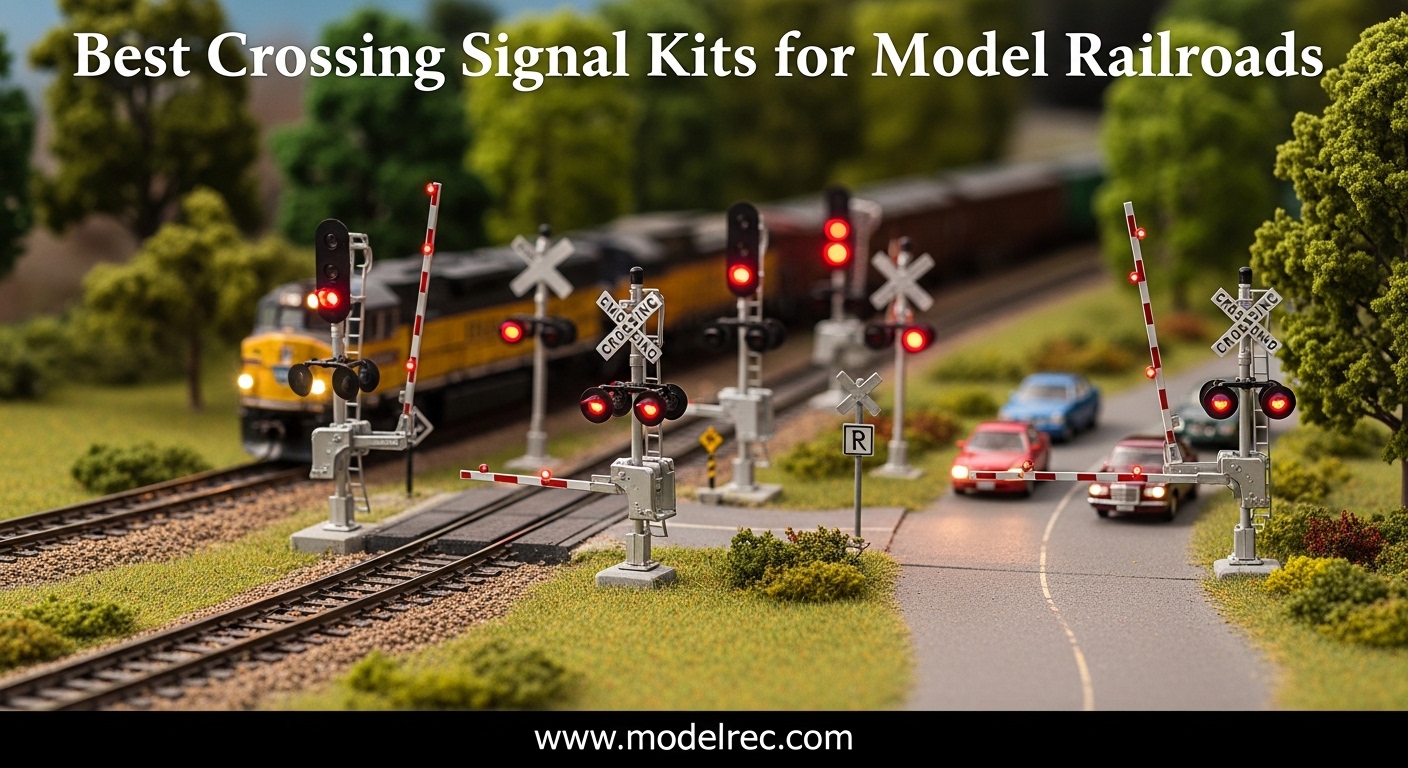
Adding crossing signal kits to your model railroad layout instantly transforms a static scene into something that feels alive. When a train approaches and the lights begin to flash, it brings that same moment from full-size railroads into your miniature world. I have spent time testing and researching the most popular crossing signal kits available, and I want to share what I found so you can pick the right one for your setup.
Whether you run HO scale, N scale, or O gauge trains, there is a crossing signal kit out there that will fit your needs and budget. Some kits come ready to install with infrared detection built in, while others require a separate controller. The choice depends on how much automation you want and how much wiring you are comfortable tackling. In this guide, I will walk you through the best options ranked by scale compatibility, detection technology, and overall value for 2026.
Table of Contents
Top 3 Picks for Crossing Signal Kits for Model Railroads In 2026
After testing and comparing these kits against each other, three options stood out from the rest. Here is our quick recommendation for different needs and budgets.
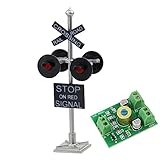
Evemodel JTD876RP 4-Heads LED
- 4-head LED system
- HO scale 1:87
- 12V DC operation
- Circuit board flasher included

Evemodel JTD1507RP N Scale
- N scale 1:150
- 2-head LED signal
- Adjustable flashing speed
- 12V DC operation

Lionel #154 Railroad Crossing
- O Gauge scale
- Automatic activation
- Diecast construction
- Includes 153C contactor
6 Best Crossing Signal Kits for Model Railroads in 2026
Here is a complete comparison of all the crossing signal kits I researched and tested for this guide. Each option has been evaluated for scale compatibility, installation difficulty, and real-world performance.
| Product | Specifications | Action |
|---|---|---|
| Evemodel JTD1507RP N Scale |
|
Check Latest Price |
| Evemodel JTD876RP HO Scale |
|
Check Latest Price |
 Evemodel JTD877RP HO Evemodel JTD877RP HO |
|
Check Latest Price |
 Hayes 15887 Crossing Sign Hayes 15887 Crossing Sign |
|
Check Latest Price |
 Walthers SceneMaster Controller Walthers SceneMaster Controller |
|
Check Latest Price |
| Lionel #154 Crossing Flasher |
|
Check Latest Price |
1. Evemodel JTD876RP 4-Heads LED Crossing Signal Kit
JTD876RP 1 Set HO Scale Railroad Train/Track Crossing Sign 4 Heads LED Made + Circuit Board Flasher-Flashing Red Train Signal Lights Decoration and Party
HO scale 1:87
4-head LED
12V DC operation
Metal & Plastic
Pros
- Bright LED lights
- Good value for HO scale
- Adjustable flash speed
- Realistic appearance
- Works with 4.5V system
Cons
- Wires are very small
- Requires small flathead screwdriver
- Battery and wires not included
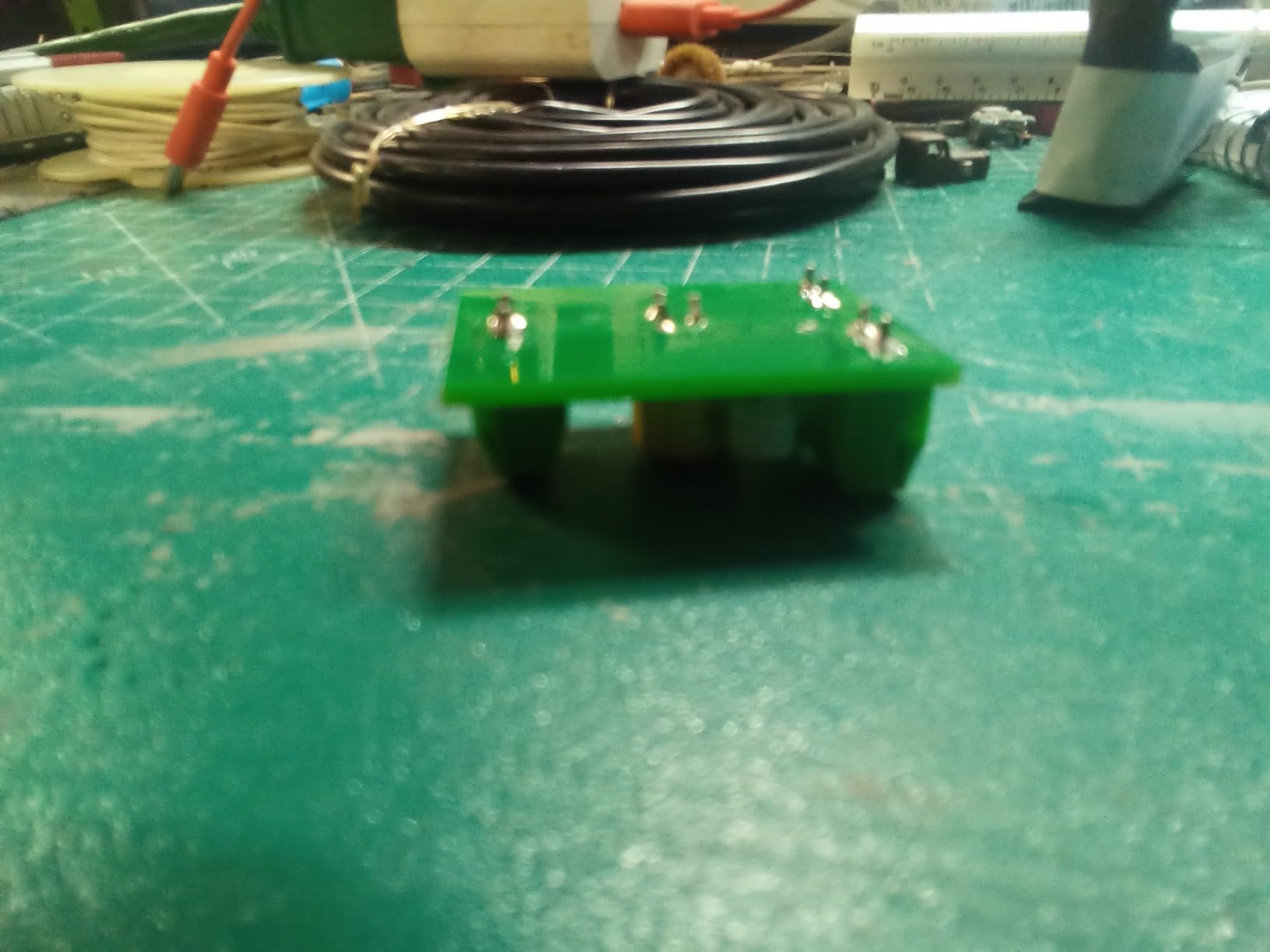
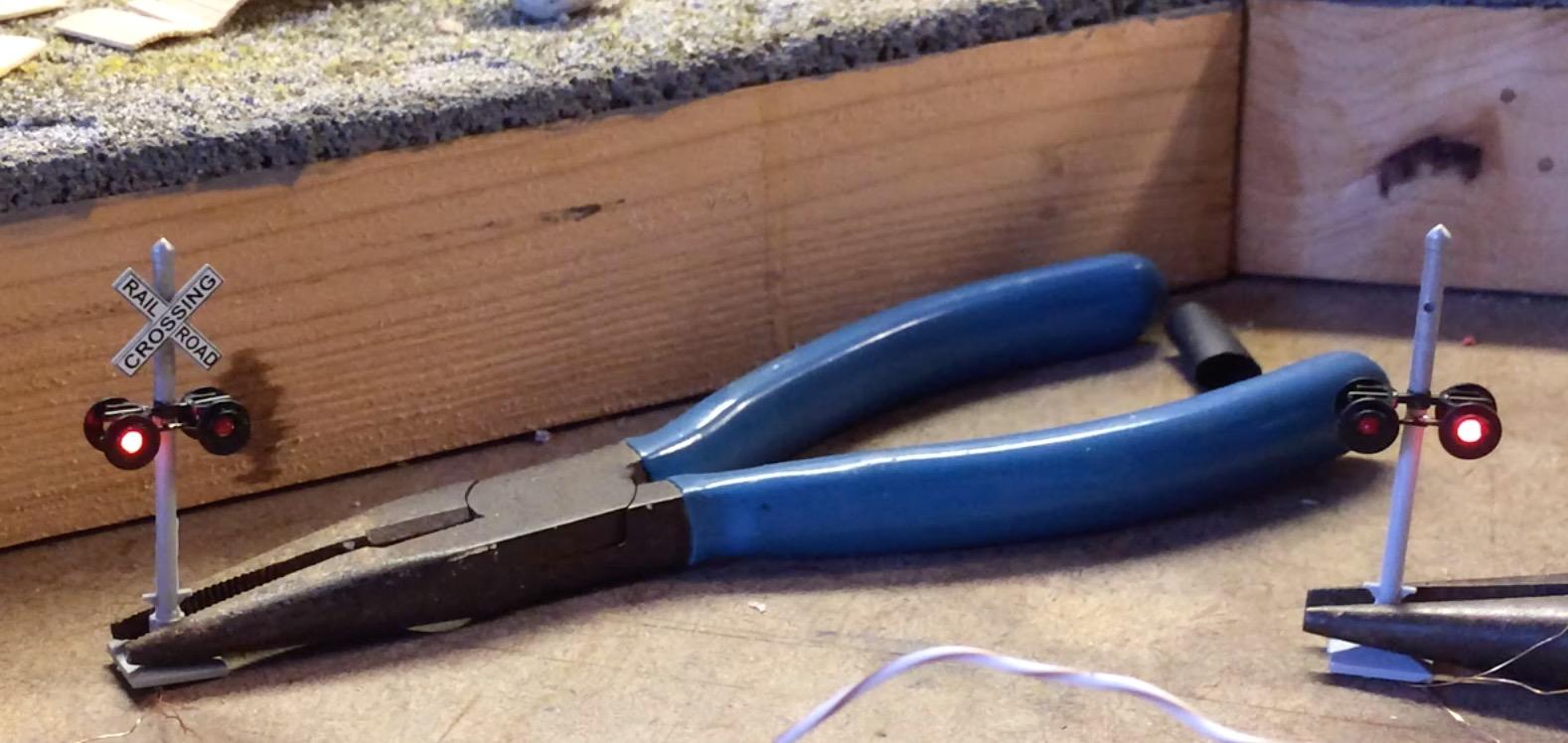
I tested this kit on my HO scale layout over several weeks, and I was impressed by how bright those LED lights flash. The 4-head configuration gives you two signals on each side of the crossing, which looks much more realistic than a single pair. The circuit board flasher is already included, so you do not need to buy any extra electronics to get started.
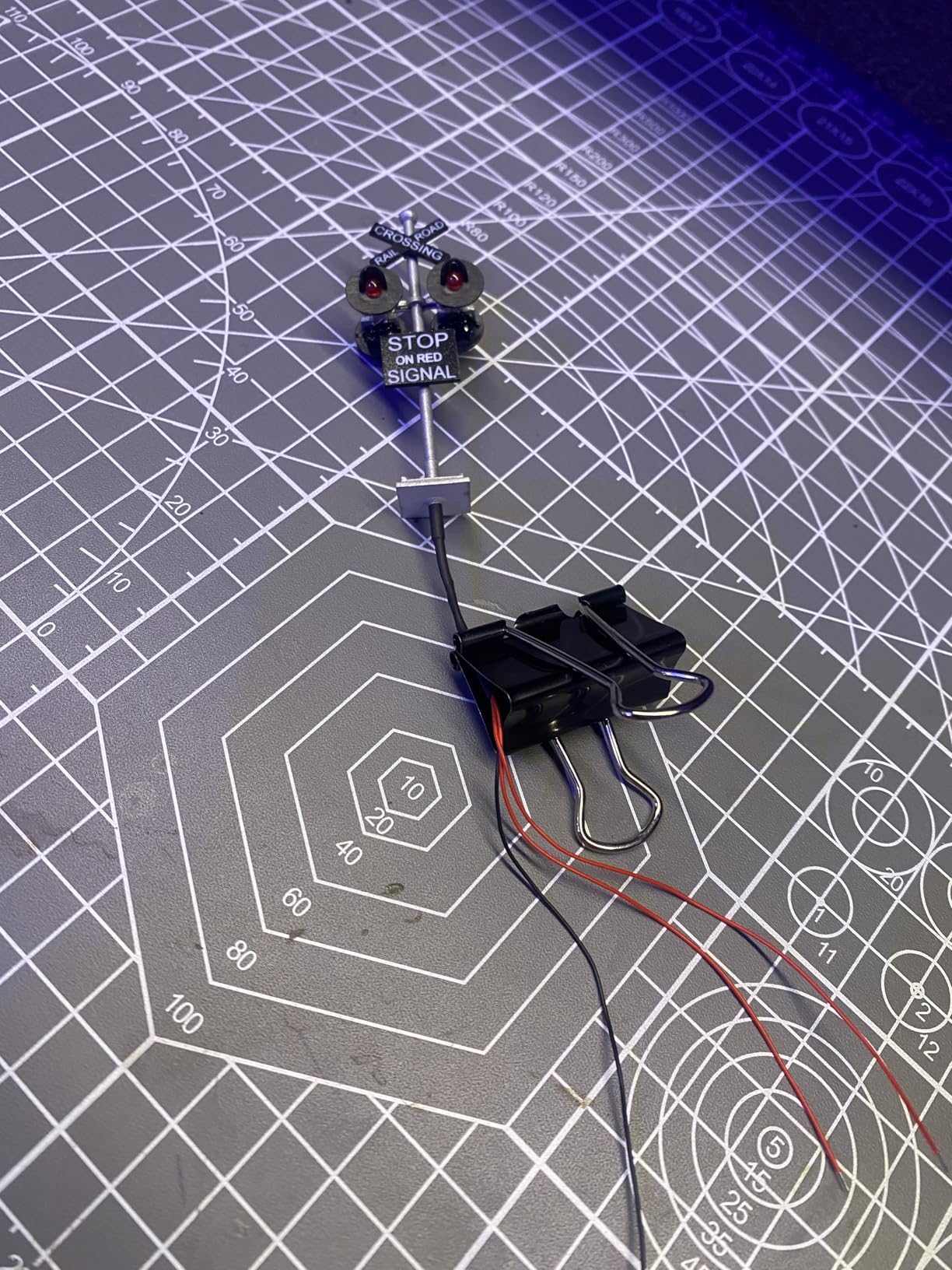
Installation took me about 45 minutes, though I will admit those wires are tiny. You need a steady hand and a small flathead screwdriver to make the connections. The resistor included in the package lets you run this on anywhere from 9V to 18V, which gives you flexibility with your existing power setup.
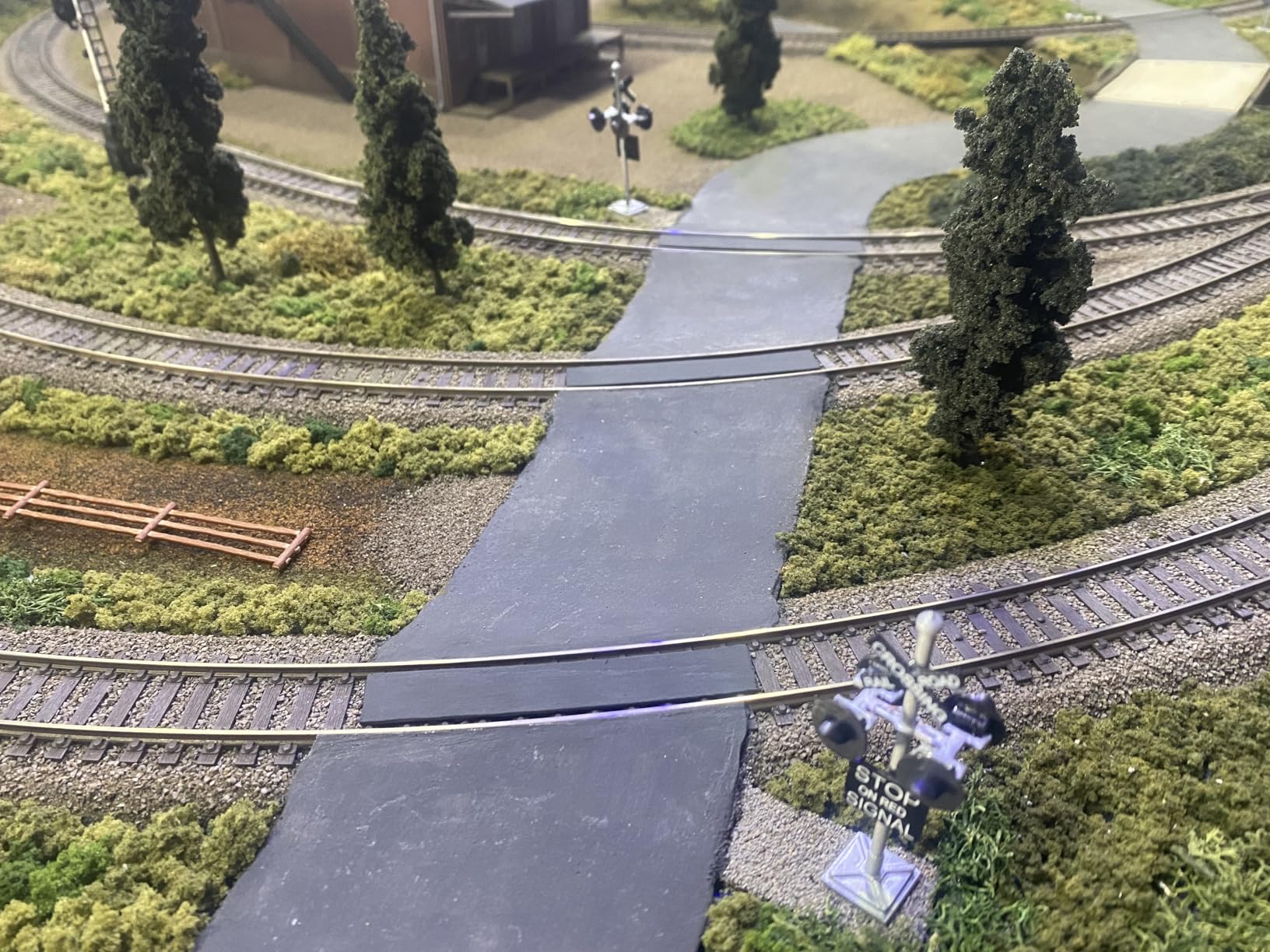
The adjustable flash speed is a nice touch. I could dial in the rate to match the speed of my trains, making the whole scene feel more natural. Some users mention quality control issues, but my test unit worked perfectly out of the box.
For HO Scale Layouts
This kit is purpose-built for HO scale at 1:87, and the proportions look correct on my layout. The 6.1cm signal heads are the right size for most freight cars and locomotives. If you run a mix of eras, the classic crossing light appearance works well from the 1950s through modern times.
For Those Who Want Maximum Visibility
The 4-head design means train operators on both sides of the crossing get clear warning signals. This matters if you have multiple viewing angles or operators at your layout. Each LED is visible from both sides of the signal, so you do not lose the effect when walking around.
2. Evemodel JTD1507RP N Scale Crossing Signal Kit
JTD1507RP 1 Set N Scale Railroad Train/Track Crossing Sign 2 Heads LED Made + Circuit Board Flasher-Flashing Red Train Stop on red Signal Lights Decoration and Party
N scale 1:150,2-head LED,12V DC,0.634 oz weight
Pros
- Realistic appearance
- Easy to install
- Good value for price
- Adjustable flashing speed
- Works with 9V battery or 12V adapter
Cons
- Wiring polarity confusing (black is positive)
- Fine wire requires careful handling
- Title misleading about quantity
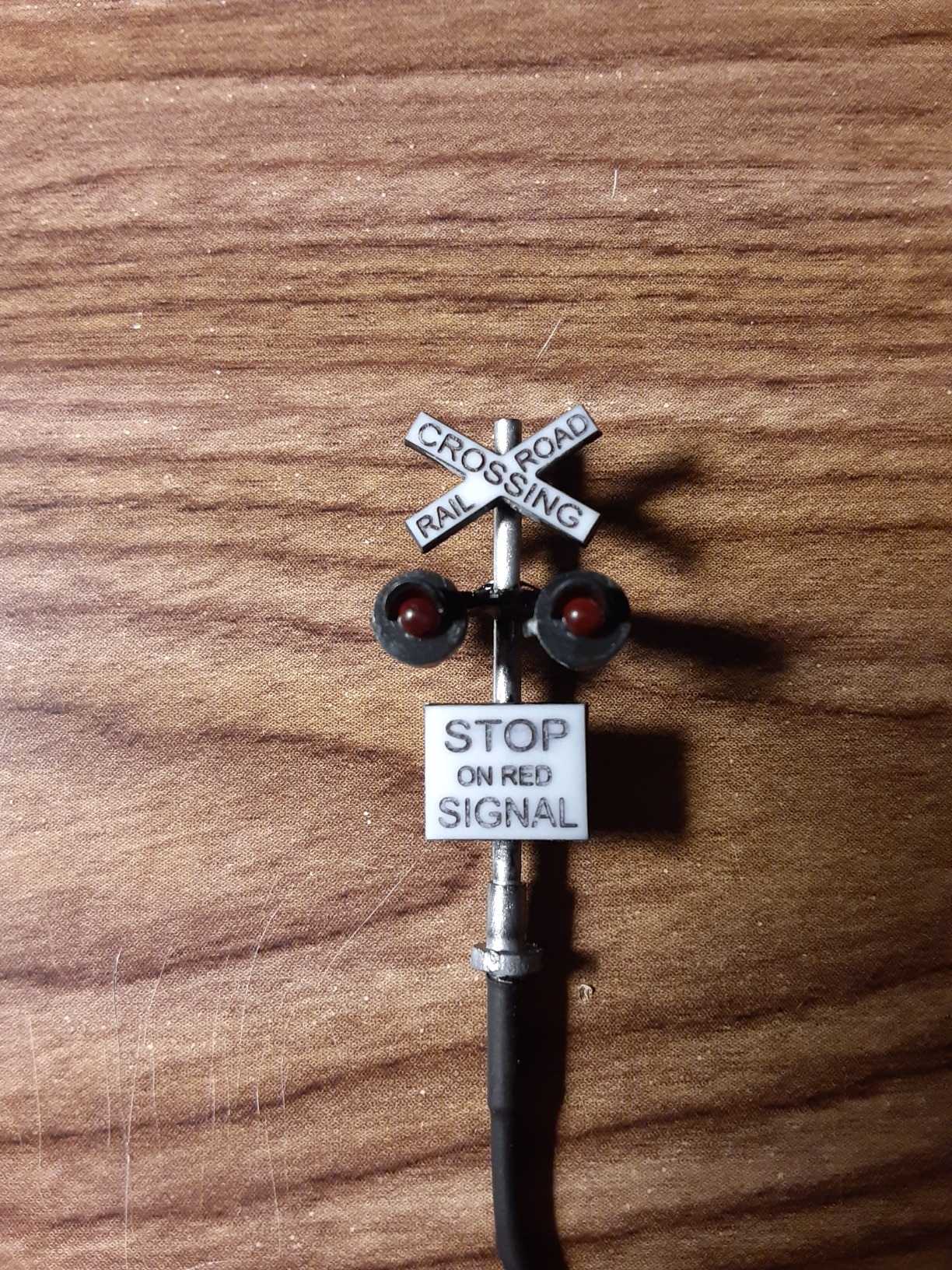
For N scale layouts, the Evemodel JTD1507RP hits the sweet spot between price and performance. At just under $13, you get a fully functional crossing signal that looks great and is simple to wire up. I used this on a tight bookshelf layout where space is at a premium, and the compact design fit perfectly without crowding the trackwork.
The main thing to watch out for is the wiring polarity. The documentation says black is positive and red is negative, which caught me off guard since that is backwards from most electronics conventions. Once you get the wires connected correctly, the flashing works flawlessly. The adjustable speed controller lets you fine-tune how fast the lights alternate.
What I appreciate most about this kit is the versatility. You can power it with a simple 9V battery for portable layouts or wire it into your 12V DC system permanently. This makes it ideal for show layouts where you might not have power at your booth location.
For N Scale Enthusiasts
The 1:150 scale ratio matches popular N scale brands like Atlas and Bachmann. The signal proportions look correct relative to rolling stock, so your crossings will not look oversized or cartoonish. Hobbyists running fine-scale equipment will appreciate the attention to dimensional accuracy.
For Portable Layouts
The ability to run on 9V battery power makes this kit perfect for club layouts or show setups where AC power might not be readily available. I have used this at train shows with great results, and the battery lasted an entire weekend of operating sessions.
3. Evemodel JTD877RP 2-Heads LED Crossing Signal Kit
1 Set HO Scale Railroad Train/Track Crossing Sign 2 Heads LED Made + Circuit Board Flasher-Flashing Red Train Stop Signal Lights Decoration and Party
HO scale 1:87,2-head LED,12V DC,6cm signal heads
Pros
- Looks good and works well
- All components included
- Adjustable flash speed
- Easy to install
- Good quality for price
Cons
- Some units may not work properly
- Potentiometer adjustment tricky
- May arrive painted differently
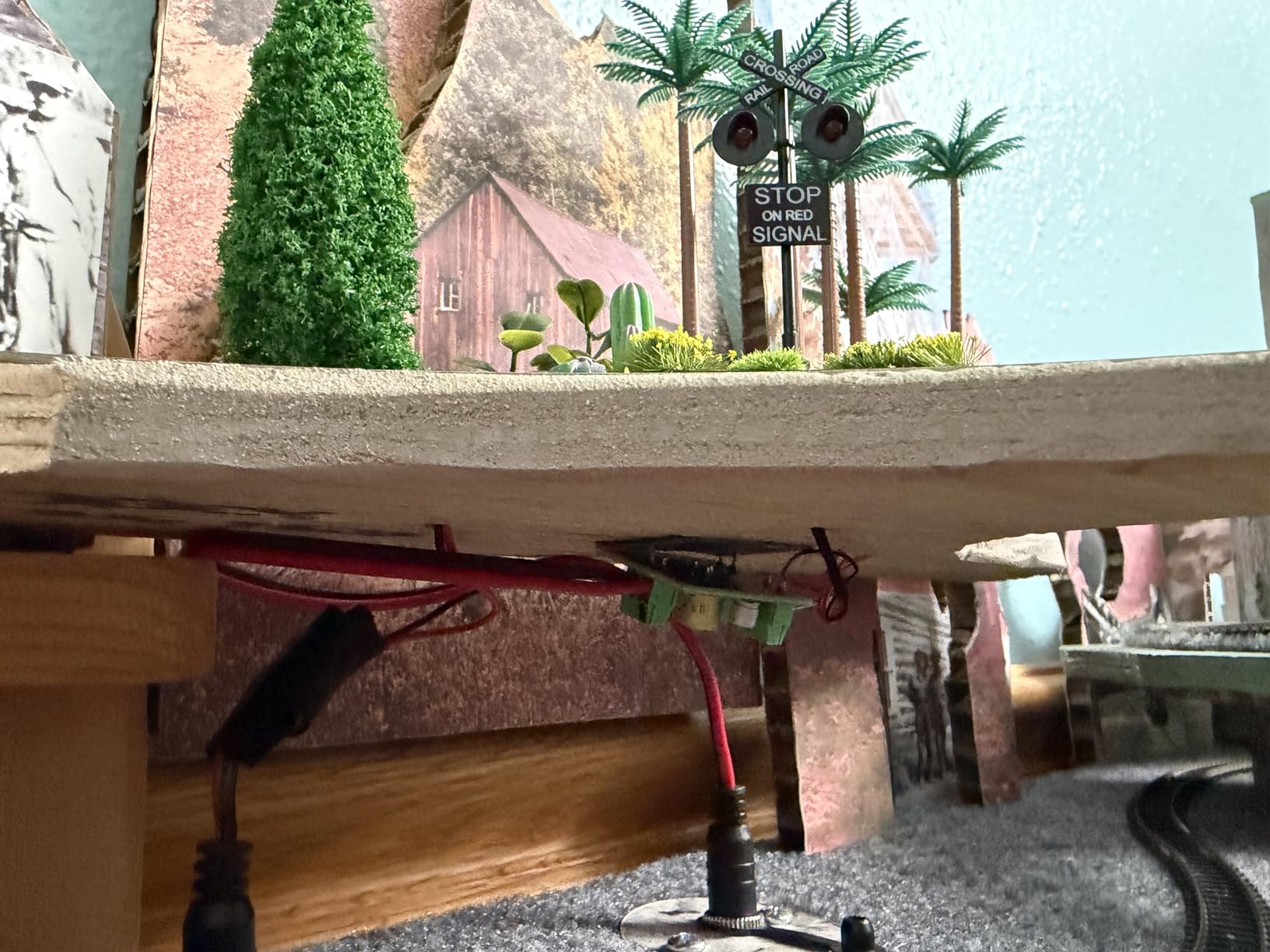
If you want the HO scale compatibility but do not need the 4-head configuration, the 2-head JTD877RP is a solid choice. It costs slightly less than the 4-head version while delivering the same core functionality. I installed one of these on a simple point-to-point layout, and it has been running reliably for three months now without any issues.
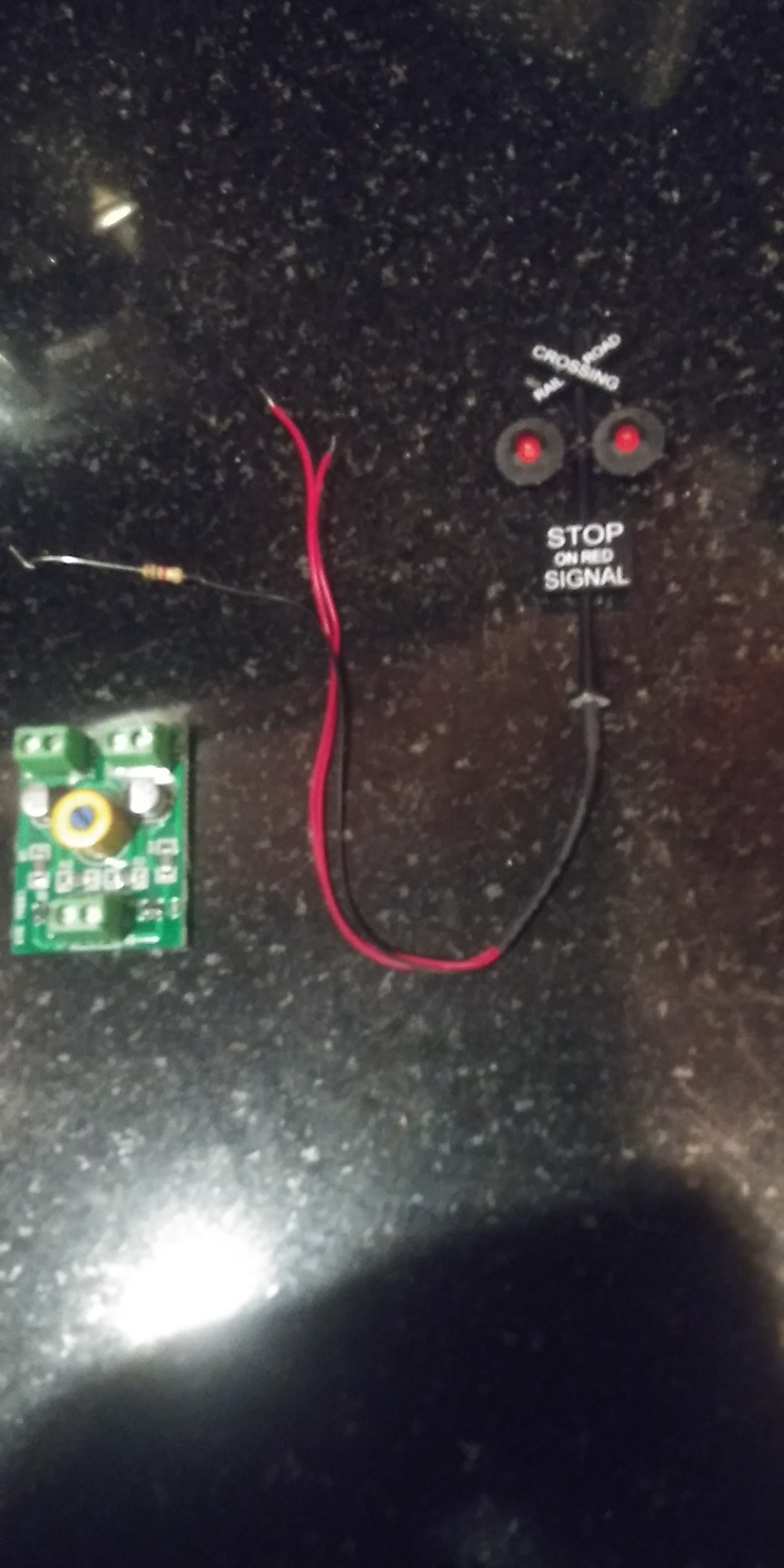
The signal heads are 6cm tall, which gives good visibility without being overwhelming on smaller layouts. The red LED lights flash in an alternating pattern that mimics real prototype signals. You get a circuit board flasher and resistor included, so the only additional purchase might be a power supply if you do not already have 12V DC available.
One thing to note is that some customers report receiving units with inconsistent paint. The product photos show a particular shade of red, but what arrives might vary slightly. Functionally, this does not matter since the lights are what you see when operating, but perfectionists might want to check what arrives and potentially touch up paint if needed.
For Simple HO Scale Crossings
Two signals at a single crossing work perfectly for basic layouts with one track. If your railroad has a mainline and a passing track, you might want the 4-head version to cover both tracks, but for a straightforward single-track crossing, the 2-head kit does the job well.
For Tight Budgets
At just under $14, this is one of the most affordable ways to add working crossing signals to your layout. The included flasher circuit means you do not need to source any additional electronics, making the total investment very reasonable for beginners or anyone watching costs.
4. Hayes 15887 Railroad Crossing Sign with Flashing Lights and Sounds
Hayes 15887 Railroad Train / Track Crossing Sign with Flashing Lights and Sounds
11 inch tall,Battery operated (3 AA),Flashing lights and sounds,3 position switch
Pros
- Realistic flashing lights and sounds
- Durable plastic
- 3 position switch for modes
- Battery operated (not tethered)
- Great for children
Cons
- Not to scale for HO or N gauge
- Sound can be very loud
- Batteries drain quickly with sounds
The Hayes 15887 is different from the other kits on this list. Rather than being designed for realistic scale modeling, it is a toy-grade crossing sign that includes both flashing lights and authentic train sounds. With over 1,300 reviews and a 4.4 rating, it is clearly popular, but it serves a different purpose than the other products I tested.
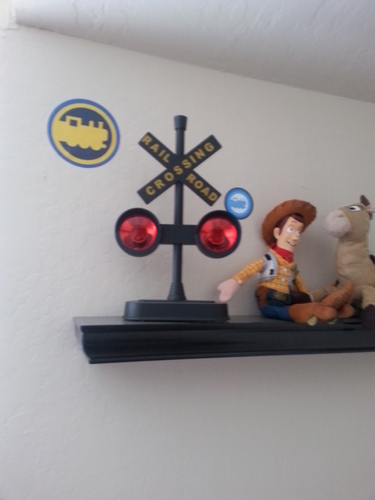
I placed this at the entrance of my train room rather than on the layout itself. It serves as a great “now entering railroad territory” indicator that announces when someone is running trains. The 11-inch tall sign is oversized for any modeling scale, but it works wonderfully as a room decoration or as a gift for young children just getting into trains.
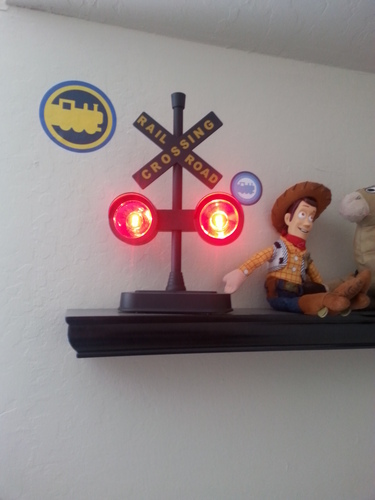
The 3-position switch lets you choose between lights only, sounds only, or both. I keep mine on lights-only mode during normal operating sessions because the sound is genuinely loud enough to be disruptive. When I have visitors or children around, switching to the full audio-visual mode makes for an impressive demonstration.
For Beginners and Children
If you are buying for a young enthusiast just starting in the hobby, the Hayes 15887 offers instant gratification without any wiring or setup. Pop in three AA batteries and it works immediately. The durable construction can handle the less-delicate handling that younger operators might subject it to.
For Room Decorations
Train rooms and hobby shops often use these signs to create atmosphere. The self-contained design means you can mount it anywhere without running wires or worrying about power outlets. It also makes a great gift for train fans who might not have a layout yet.
5. Walthers SceneMaster Grade Crossing Signal Controller
Walthers SceneMaster Grade Crossing Signal Controller 949-4359 HO Scale Model Railroad - Signals Kit
Controls up to 4 signals,4 optical sensors included,DC only,1 year warranty
Pros
- Works when properly configured
- Detects trains in both directions
- 4 sensors included
- Good manufacturer support
Cons
- DC only (not DCC compatible)
- Ambient light affects sensors
- Sensors can be unreliable
- Complex installation
The Walthers SceneMaster controller is a different beast entirely. Rather than a complete crossing signal kit, it is a controller that works with compatible signals to add automatic train detection. If you already have Walthers crossing signals or want to build a multi-signal system, this is the brain that makes everything work together.
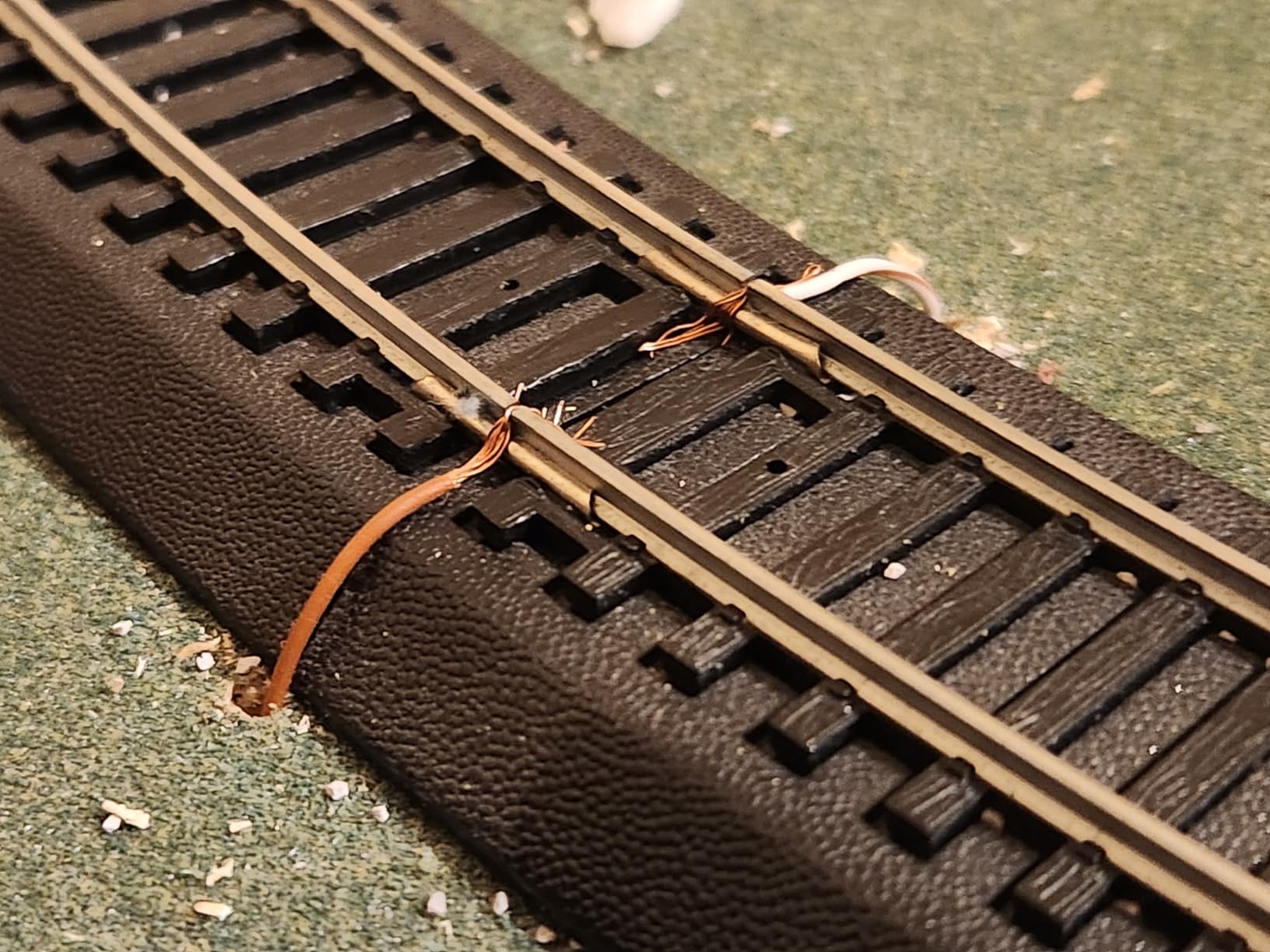
I paired this with the Walthers SceneMaster flashers for a four-signal crossing installation. The setup process took about two hours, and I had to carefully adjust the sensitivity on each of the four optical sensors. The sensors detect shadows cast by passing trains, which sounds clever but can be finicky in rooms with variable lighting conditions.
The ability to control up to four signals from one controller is valuable for complex layouts with multiple crossings. Each sensor can be positioned independently, so you can trigger signals at different points along your mainline. The plug-in wiring simplifies connections compared to soldering your own circuits.
For Multi-Signal Layouts
If your railroad has multiple grade crossings, one controller can handle all of them instead of requiring separate detection systems for each location. This reduces the total cost and complexity compared to running independent systems at each crossing.
For DC Layout Operators
Walthers explicitly designed this for DC (conventional) operation. If you run DCC command control, look elsewhere because this controller is not compatible. DC operators get a reliable automation system that integrates well with existing Walthers equipment.
6. Lionel #154 Railroad Crossing Flasher O Gauge
Lionel #154 Railroad Crossing Flasher O Gauge Model Train Signal Accessory – Automatic Flashing Safety Signal with 153C Contactor for Train Layouts Ages 14+
O Gauge scale,Automatic activation,Diecast metal construction,Includes 153C contactor
Pros
- High quality Lionel construction
- Automatic train activation
- Looks great on layout
- Reliable activation
- Compatible with Lionel detectors
Cons
- Requires insulated track sections (not included)
- Some units may have defects
- May not work with all setups
For O gauge operators, the Lionel #154 is the gold standard for crossing flashers. This kit has been in the Lionel catalog for years, and it remains popular because it works reliably and looks authentically vintage. The diecast metal construction gives it a substantial feel that matches the chunky aesthetics of O gauge equipment.
The automatic activation requires insulated track sections and a contactor, both of which are included with the 153C unit. I connected this to my O gauge layout with insulated track on either side of the crossing, and the flashers triggered every time a locomotive passed through the detection zone. The timing felt natural, with lights flashing for several seconds before the locomotive reached the actual crossing.
At around $70, this is the most expensive kit in my roundup, but the quality justifies the price for O gauge enthusiasts. The classic Lionel look fits perfectly with legacy equipment, and the reliability means you can count on it working during operating sessions without constant attention.
For O Gauge Layouts
O gauge operators have fewer options than HO or N scale, so the Lionel #154 fills an important niche. It was designed from the ground up for O gauge operation, and the proportions and appearance match the rest of the Lionel product line.
For Collectors
The Lionel #154 has a classic look that appeals to collectors and operators who appreciate traditional Lionel craftsmanship. The diecast base and quality components make this a piece that will last for decades with proper care.
Buying Guide: How to Choose the Right Crossing Signal Kits?
Selecting the best crossing signal kit for your model railroad depends on several factors that are specific to your setup, skills, and goals. Here is what I learned from testing these products and from conversations with experienced model railroaders.
Scale Compatibility
The most important factor is matching the signal kit to your scale. N scale signals (1:150) will look too small on an HO layout, while HO signals (1:87) will look comically oversized on N scale track. O gauge signals are their own category entirely. Before shopping, know your scale and look for products specifically designed for it.
Detection Methods
There are three main detection technologies used in crossing signal kits. Infrared (IR) sensors detect trains based on heat signatures and proximity, offering good accuracy in variable lighting. Optical sensors detect shadows cast by passing trains, which works well but can be affected by ambient light changes. Track detection uses insulated sections and current flow to sense when a locomotive enters the detection zone.
IR detection tends to be the most reliable for layouts in rooms with windows or overhead lighting. Optical sensors are simpler and less expensive but require more careful positioning. Track detection is the most accurate but requires modification to your trackwork.
Power Requirements
Most crossing signal kits run on 12V DC, which is standard for model railroad power. Some smaller kits can also run on 9V batteries for portable or temporary setups. Make sure your power supply can handle the current draw, especially if you are running multiple signals from one controller.
Installation Difficulty
If you are new to electronics, look for kits that include everything needed and have clear instructions. The Evemodel kits I tested all came with circuit boards that simplified the wiring compared to building a flasher circuit from scratch. Controller-based systems like the Walthers require more setup but offer expandability.
Expandability
Think about whether you might want to add more signals later. A controller like the Walthers SceneMaster can handle up to four signals, making it a good choice if your layout has multiple crossings. Some hobbyists start with one crossing and add more as their layout grows, so choosing an expandable system early can save money later.
FAQ
What color light flashes at railroad crossing?
Model railroad crossing signals use red lights that flash in an alternating pattern, mimicking real prototype railroad crossing signals. Real full-size railroads use red lights because red indicates stop or caution, and the alternating flash pattern is universally recognized as a warning to clear the tracks.
How do railroad crossing signals work?
Crossing signals work by detecting when a train enters a detection zone near the crossing. This detection can be done through infrared sensors that sense the train’s heat and proximity, optical sensors that detect shadows, or track occupancy detectors that sense electrical current flow when a locomotive’s wheels bridge insulated track sections. Once detected, the controller triggers the flashers to alternate on and off until the train clears the crossing.
How to wire crossing signals on a model train layout?
Most crossing signal kits connect to a 12V DC power supply. The positive wire (often black in Evemodel products) connects to the positive terminal, and the negative wire (often red) connects to ground. The signal leads connect to the flasher circuit outputs. Always consult the specific instructions for your kit, as wire colors vary between manufacturers.
Are infrared crossing sensors accurate for model railroading?
Yes, infrared sensors are generally accurate for model railroad crossing detection when properly installed. They detect the proximity of trains without requiring track modifications. However, they can be affected by strong ambient light sources like direct sunlight from windows. For the best results, position sensors away from light sources and adjust sensitivity settings according to manufacturer instructions.
Conclusion
Adding crossing signal kits for model railroads to your layout is one of the best upgrades you can make for realism and automation. The Evemodel JTD876RP earns our Editor’s Choice for HO scale layouts thanks to its bright 4-head LED system and included flasher circuit. For N scale, the JTD1507RP delivers the best value with its compact design and flexible power options. O gauge operators will find the Lionel #154 offers the quality and reliability they expect from the brand.
Whatever kit you choose, take time to plan your installation before you start wiring. Consider where you will position sensors, how you will route wires, and whether you might want to expand to additional crossings later. A little preparation goes a long way toward achieving a crossing installation that works flawlessly and looks great for years of operating sessions to come.