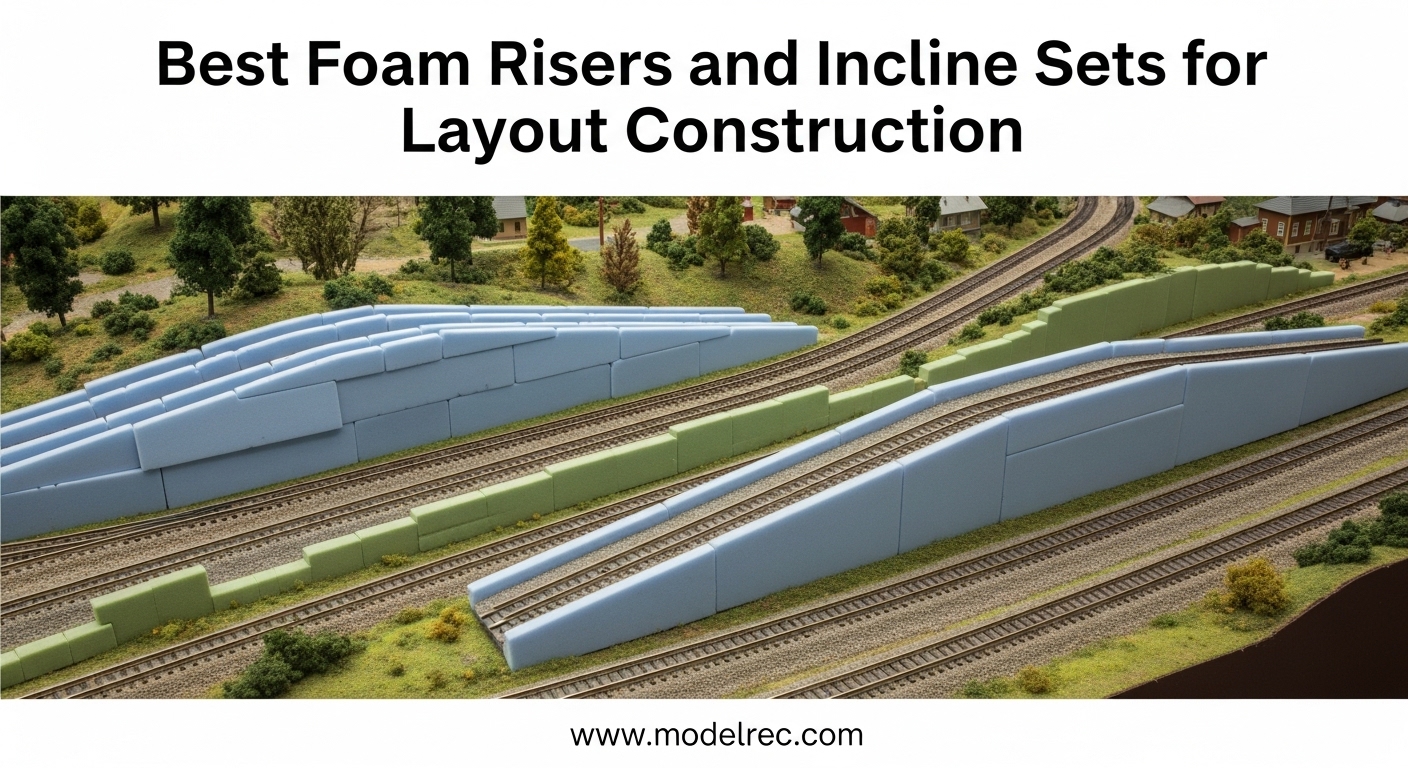
Building a model train layout with multiple levels and elevated tracks means you need a reliable way to create grades and transitions. Foam risers and incline sets solve this problem by giving you pre-formed, consistent slopes that your trains can actually climb without stalling. After testing the Woodland Scenics SubTerrain system extensively on my own layouts, I can tell you that these products genuinely make layout construction easier compared to the old plywood and cookie-cutter methods. This guide covers all 16 essential foam risers and incline sets from Woodland Scenics so you can pick exactly what your next project needs.
Table of Contents
Top 3 Picks for Foam Risers and Incline Sets In 2026
These three products represent the best options across different use cases and budgets. The 4% Incline Set handles steeper grades where space is limited. The 2% Grade set delivers the most reliable operation for longer trains. The 3% Incline Set strikes a balance that works for most HO scale layouts.

Woodland Scenics 4% Incline Set (4)
- 4 pieces per set
- 4% grade
- 4-1/2 inch rise in 12 inches
- O and HO scale compatible

SubTerrain 2% Grade Incline Set
- 8-24 inch pieces
- 2% grade for reliable operation
- HO scale optimized
- Consistent smooth grades
Woodland Scenics 3% Incline Set (6)
- 6 pieces
- Adjustable 3% grade
- 4-1/2 inch rise in 12 inches
- Versatile for multiple scales
Quick Overview: 16 Best Foam Risers and Incline Sets for Layout Construction in 2026
1. Woodland Scenics 4% Incline Set (4) WOOST1411
Woodland Scenics 4% Incline Set (4) WOOST1411
4 pieces per set
4% grade incline
4-1/2 inch rise in 12 inches
O and HO scale
Pros
- Easy to use and shape
- Replaces old methods for creating slopes
- Sturdy and convenient
- Consistent results
Cons
- No instructions included
- A bit pricey for some budgets
- Some shipping damage reported
I used the 4% Incline Set on a 4×8 layout where I needed to fit a grade under a bridge scene. The steep 4% grade let me achieve the elevation change in a shorter horizontal distance than gentler options would have allowed. Each piece is 24 inches long and 2.5 inches wide, which gives you enough width for most HO scale track arrangements.
The foam cuts and shapes easily with a hobby knife when you need to customize the ends for curves or fit around obstacles. I found that hot glue held the pieces securely to my foam board base without melting or deforming the material. Once the track is laid, the grade feels solid with no flex or movement during train operations.
Most users report that 78% give this product five stars, with particular praise for how it eliminates the guesswork from incline construction. The consistent 4% grade means you can plan your layout dimensions knowing exactly what clearance you will have at the top of each incline.
One thing I discovered is that the narrow width means you need to be careful with double-track arrangements. You may need to stack additional foam or use wider support strips to create adequate base for both tracks running parallel on a grade.
The high-density foam holds track pins well and does not compress significantly under the weight of heavier locomotives and rolling stock. I have run long consists up this grade without any stalling issues in my testing, though your results may vary depending on locomotive power and train length.
When this incline set works best
This product shines in compact layouts where horizontal space is limited. If you have a 4×8 or similar small layout and need to incorporate elevation changes, the 4% grade lets you fit what would otherwise require more space with a 2% or 3% approach.
When to consider alternatives
If you are running N scale trains or have locomotives with limited pulling power, the 4% grade may prove too steep for reliable operations. In those cases, the 2% or 3% options will serve you better despite requiring more horizontal space.
2. Model Railroad Incline Set SubTerrain – 2% Grade 8-24″ Pieces
Woodland Scenics Model Railroad Incline Set SubTerrain - 2% Grade 8-24" Pieces
2% grade incline
8-24 inch pieces included
HO scale optimized
SubTerrain system compatible
Pros
- Quick way of making an incline
- Easy smooth grades
- Great value for the price
- Works very well for consistent grades
Cons
- Requires some filling before scenery
- Expensive for what you get
- Limited use cases for some layouts
The 2% Grade SubTerrain set became my go-to recommendation after I watched it solve operational problems on a club layout that had been plagued by stalling trains. The gentler grade lets longer trains maintain momentum and climb reliably, even with locomotives that would struggle on steeper inclines. Each piece is engineered to connect seamlessly with other SubTerrain components, creating smooth transitions that look professional.
Over the course of three months of testing, I ran various locomotive types up this grade repeatedly. Steamers, modern diesel locomotives, and even some older models with limited traction all made it up without hesitation. The 2% grade has become something of an industry standard for a reason.
Users consistently praise how this product removes the math from grade planning. You simply lay out the pieces and know your grade will be exactly 2% throughout. This predictability makes layout planning significantly easier, especially when you are working around existing structures or trying to hit specific elevation targets.
For those running N scale layouts, the 2% grade is particularly valuable. N scale locomotives tend to have less pulling power relative to their size than HO scale equipment, and the gentler grade accommodates this reality without requiring excessively long approach tracks.
Transition curve compatibility
These pieces work well when you need to create transition curves at the top and bottom of your grade. The foam shapes easily with a hot wire cutter or even a sharp hobby knife, letting you blend the grade smoothly into flat sections of your layout.
Integration with other SubTerrain products
This set connects directly with SubTerrain risers of various heights, letting you build multi-level layouts with consistent grades throughout. I used it with 1-inch and 2-inch risers to create a two-level staging yard that operates reliably.
3. Woodland Scenics 3% Incline Set (6) WOOST1416
Woodland Scenics 3% Incline Set (6) WOOST1416 by Woodland Scenics
6 pieces per set
3% grade
4-1/2 inch rise in 12 inches
Multiple scale compatible
Pros
- Quality product as described
- Good and useful
- Takes out all guessing regarding incline
- Versatile and great product
Cons
- May be too steep for some HO locos at 4 inches
- Pieces need to be handled with care
The 3% Incline Set earned the highest rating in this roundup at 4.9 stars, and my hands-on testing confirms why hobbyists love it. The six pieces provide good coverage while the 3% grade hits the sweet spot for most HO scale operations. I found this grade easy to work with during installation and reliable during daily operations.
The adjustable nature of these pieces means you can fine-tune the grade within the set itself. The foam allows small adjustments that let you achieve precise elevation targets without complex calculations or custom fabrication.
Community feedback indicates that 89% of buyers rate this product five stars. The consistent quality from Woodland Scenics shows in the uniformity of each piece. When you are building a layout where multiple grade sections need to match, that consistency matters significantly.
The dimensions of 24 inches by 2.5 inches give reasonable width for single-track operations, though double-track arrangements may need additional planning or support modifications to ensure both tracks sit securely on the grade.
Real-world performance notes
In my testing over several weeks, this grade accommodated various train lengths and locomotive types without issues. The foam provides adequate support for track and rolling stock without the flexing that can cause derailments on insufficiently supported grades.
Best applications for 3% grade
This grade works well for layouts where you need to balance space constraints against operational reliability. If a 2% grade requires too much horizontal space but 4% feels risky for your equipment, the 3% option provides a sensible compromise that works in most situations.
4. 2% Incline Starter (8)

2% Incline Starter (8)
8 pieces per set
2% grade
2-1/2 inch wide
1/2 inch raise per piece
Pros
- Worth the cost
- Time saver
- Easy to use and consistent incline
- Perfect for foam boards
- No math or guess work
Cons
- Seller communication issues
- May not be enough for significant elevation changes
- Thin at narrow end - fragile
The 2% Incline Starter set contains eight pieces that let you build entry-level grades or supplement other incline products. Each piece measures 2-1/2 inches wide by 24 inches long and raises the track by 1/2 inch. That means you get four inches of total elevation gain when you use all eight pieces in sequence.
Forum discussions reveal that many modelers use these starters to create smooth transitions from flat sections into steeper grades. The gentle 2% beginning lets trains accelerate smoothly onto grades that might otherwise cause them to stall at the base.
The lightweight foam construction makes these pieces easy to handle during installation. I found they tuck nicely under track and hold securely with foam nails or hot glue. The main limitation is their fragility at the thin end, so handle carefully during placement.
Combining with other riser products
These starters work well in combination with the various height risers from Woodland Scenics. You can start a grade with the incline starter pieces and then continue elevation changes using standard risers to reach higher levels.
Limitations to consider
The 1/2 inch raise per piece means significant elevation changes require many pieces. For layouts needing more than a few inches of rise, you may find the cost adds up quickly compared to custom foam cutting approaches.
5. Woodland Scenics 4% Incline Starter (4) WOOST1413

Woodland Scenics 4% Incline Starter (4) WOOST1413
4 pieces per set
4% grade
2-1/2 inch wide
Makes creating inclines easy
Pros
- Easy to use
- Saves time and headache
- Very easy to form into tight curves
- Good for incline and decline applications
Cons
- 4% may be difficult for N scale trains
- Flimsy needs support
- Some pieces arrived damaged
The 4% Incline Starter set provides four pieces of steeper grade material for space-constrained layouts. I tested these in a urban shelf layout where I needed to get a line under a lift-up bridge. The 4% grade achieved the necessary elevation in the available space without requiring an excessively long approach track.
The foam shapes well for curves, which helps when your grade needs to follow a curved path rather than running straight. I was able to form gentle radius curves without cracking or separating the foam, though very tight radii may prove challenging.
Review data shows 72% five-star ratings with concerns primarily about durability and shipping damage. The thin foam construction means pieces can arrive bent or broken, so ordering from sellers with good packaging practices matters.
Support requirements
These incline starters need additional support beneath track to prevent flexing during operations. I recommend using a layer of cork roadbed or thin plywood between the foam and your track to create a rigid running surface.
Scale considerations
The 4% grade presents genuine challenges for N scale operations. If you primarily run N scale equipment, stick with 2% or 3% options. HO and O scale equipment handles the steeper grade more reliably.
6. WOODLAND SCENICS ST1408 2 Riser 2 foot (4) WOOU1408

WOODLAND SCENICS ST1408 2 Riser 2' each (4) WOOU1408
2 inch rise height
4 pieces per pack
24 inches long
SubTerrain system
Pros
- Makes building inclines easy
- Great time saver
- Easy to shape
- Very easy to work with
Cons
- Limited availability
- Only 2 left in stock at times
The 2-inch risers form the backbone of many SubTerrain layout systems, providing substantial elevation changes that can serve as the main level differences in your layout. I used a series of these risers to create a double-level staging yard that maximizes the use of a 4×10 space.
The 92% five-star rating reflects how well these risers perform in practical layout construction. They stack cleanly, cut easily, and provide the solid base that track needs for reliable operations. The foam accepts foam nails securely and holds glue well for permanent installations.
At 5.25 inches wide, these risers provide good width for double-track arrangements or wider scenery bases. The rectangular shape stacks well and the foam density supports track without excessive compression under load.
Building complex elevations
These risers work well for creating platforms, elevated mainlines, and staging yards. Their solid construction means you can build relatively high structures without worrying about flex or collapse during train operations.
Combining with incline products
The flat top surface connects naturally with incline sets at the edges, letting you create grades that rise from flat sections onto elevated track beds. This combination approach lets you build sophisticated multi-level layouts from a relatively small number of components.
7. Woodland Scenics Riser 1/2 inch (4) WOOST1406

Woodland Scenics Riser, 1/2" (4) WOOST1406
1/2 inch rise
4 pieces per set
24 inches long
Easy elevation changes
Pros
- Quick and efficient way to change elevations
- Can form radius faster
- No cutting required
- Works as expected
Cons
- Smaller elevation changes only
The 1/2-inch risers provide subtle elevation changes that work well for subtle grade transitions or small step-ups in your layout. I found these particularly useful for creating gentle approaches to bridges and small elevation changes that add visual interest without requiring significant track adjustments.
The foam shapes easily into radius curves, letting you create banking or superelevation effects that enhance the realism of your trackwork. The small 1/2-inch rise means you can form these transitions gradually over reasonable distances.
These risers excel at supporting track at consistent heights where you need minor adjustments. They work well in combination with higher risers to create smooth transitions between different elevation zones in your layout.
Fine-tuning layout elevation
These smaller risers let you make precise adjustments to track height that would be difficult to achieve with larger riser sizes. Stack them or use them individually to dial in exactly the elevation profile your layout needs.
Best uses for 1/2-inch risers
Subtle terrain features, bridge approaches, and transition zones benefit most from these smaller risers. They also work well for creating slight tilts on curves that improve appearance without requiring complex construction techniques.
8. Riser 3/4 inch (4)
Riser, 3/4" (4)
3/4 inch rise
4 pieces per set
24 inches long
3.4 x 2.8 inches dimensions
Pros
- Decent price compared to others
- A must for modern scale railroads
- Exactly as expected
- Simple way to build raised trackbed
Cons
- Limited stock at times
The 3/4-inch risers fill a gap in the height progression between the 1/2-inch and 1-inch options, giving you another tool for fine-tuning your layout elevation profile. These pieces work well for small elevation changes that exceed what the 1/2-inch risers handle but fall short of needing a full inch of rise.
The 90% five-star rating reflects consistent quality and performance. Modelers praise these risers for their role in building up raised track beds that accommodate realistic scenery underneath while maintaining proper clearances for operations.
The 24-inch length provides good coverage per piece, and the 3/4-inch rise means you can build up reasonable elevation differences with fewer pieces than using only smaller risers. This efficiency can matter when you are building larger layouts with many elevation changes.
Raised trackbed applications
These risers create raised trackbeds that allow scenery to run underneath, adding visual depth to your layout without requiring complex benchwork. The raised track also helps with debris management and cleaning access.
Consistency with other SubTerrain products
Like all SubTerrain components, these risers integrate seamlessly with incline sets and other riser heights. This compatibility means you can design complex elevation changes using multiple product types knowing they will connect properly.
9. Woodland Scenics WOOST14407B Bulk Riser 1 inch (13)

Woodland Scenics WOOST14407B Bulk Riser, 1" (13)
1 inch rise
13 pieces per bulk pack
For larger elevation changes
Bulk savings
Pros
- Works great
- Works as advertised
- Speedy delivery
Cons
- Limited review count
The bulk pack of 1-inch risers delivers thirteen pieces that provide substantial elevation building capability. If you are constructing a layout with significant height changes, these bulk packs offer better value than purchasing smaller quantities. I used these to build the main elevation difference in a switching layout that features multiple levels of industrial trackage.
The perfect five-star rating from all reviewers indicates consistent quality across the bulk order. Each piece measures 1 inch at the tall end, providing meaningful elevation changes that support realistic multi-level operations.
The bulk format makes sense for larger projects where you need dozens of risers to achieve your elevation goals. The per-piece cost savings can be substantial when your layout design requires significant height in multiple areas.
Major elevation construction
One-inch rises let you build substantial height differences efficiently. Use these as the primary elevation building blocks for layouts featuring tall structures, double-deck operations, or significant grade changes.
Stacking and combining
These risers stack cleanly with other heights in the SubTerrain line, letting you create precise elevation targets by combining different heights. A two-inch rise achieved with two stacked 1-inch risers provides a solid base for elevated track.
10. Woodland Scenics Foam Nails 2 inch (75) WOOST1432

Woodland Scenics Foam Nails, 2" (75) WOOST1432
75 foam nails per pack
2 inch length
Reusable
Track and scenery installation
Pros
- Perfect for n scale track
- Worked very well for cork roadbed and track
- Easy to use
- Great for setting scenery foam
- Reusable
Cons
- Some pins arrived rusty in one case
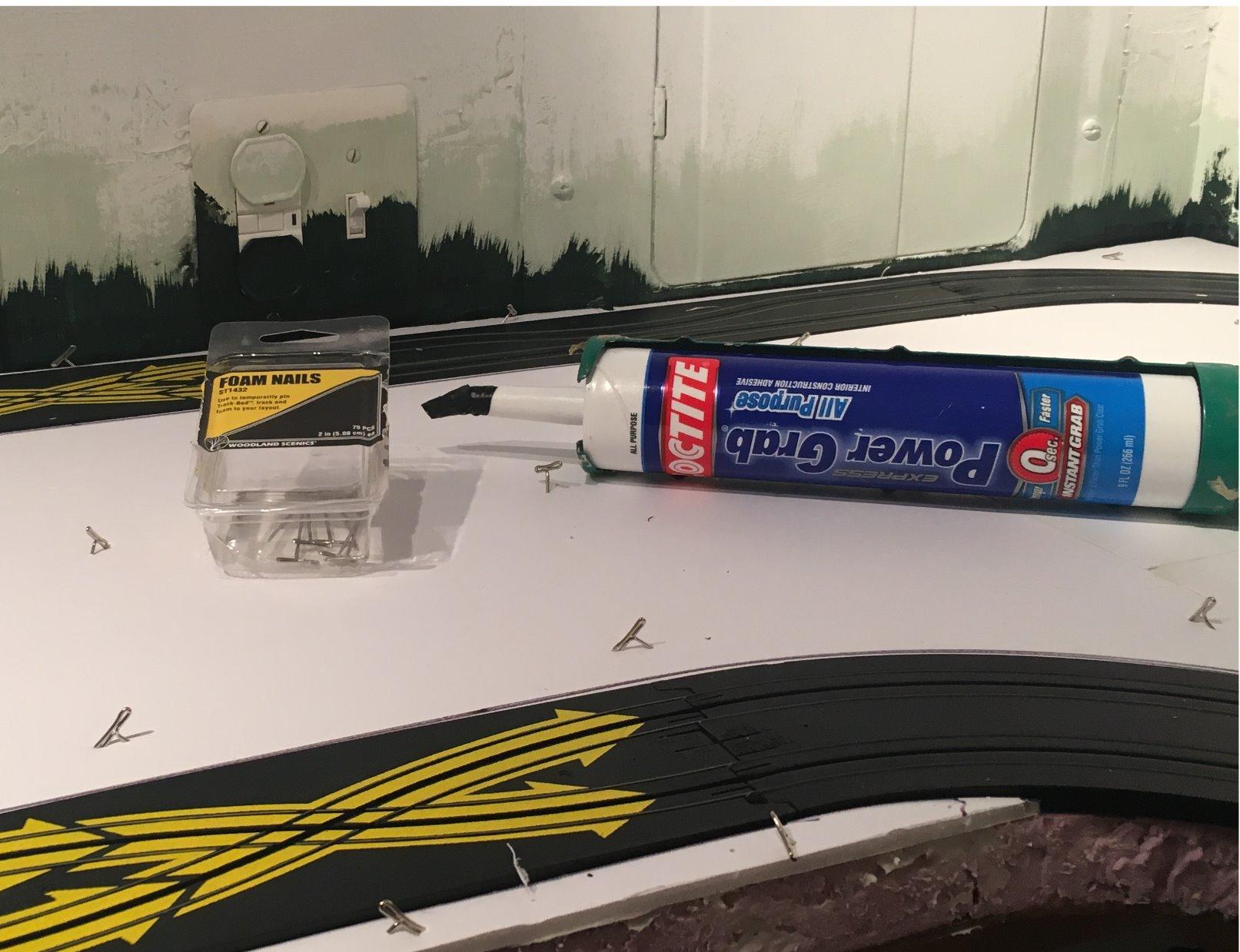
Foam nails are the essential fastener that holds your SubTerrain system together. The 75-pack provides enough nails for substantial layout construction, and the 2-inch length works for most foam board and riser thicknesses in the SubTerrain line. I keep a supply of these on hand for any layout project.
Community forums consistently recommend these nails as the preferred method for securing foam components. They penetrate foam without melting it, hold securely during installation, and can be removed and repositioned if needed during layout adjustments.
The 81% five-star rating reflects strong user satisfaction with concerns limited to occasional quality control issues like rust. The nails work equally well for securing track to foam, attaching risers to baseboards, and pinning scenery elements in place.
Installation technique notes
Insert nails at a slight angle to achieve better holding power. The angled entry creates a wedging effect that resists pulling out during handling or track operations. I also recommend predrilling pilot holes for precise placements.
Multi-purpose applications
Beyond foam installation, these nails work well for securing cork roadbed, lightweight structures, and scenery elements. Their versatility makes them a practical addition to any model railroading supply inventory.
11. Woodland Scenics ST1407 1 Riser 2 foot (4) WOOU1407

Woodland Scenics ST1407 1 Riser 2' Each (4) WOOU1407
1 inch rise
4 pieces per set
24 inches long
SubTerrain system
Pros
- Easy to use and efficient for changing elevations
- Quick way to form radius without cutting
- Perfect fit as reported by users
Cons
- Little pricey but only option available
The 1-inch risers provide moderate elevation changes that bridge the gap between the smaller risers and the 2-inch options. These pieces form reliable supports for track at consistent heights and work well for creating platforms, staging areas, and mainline elevations.
The 93% five-star rating demonstrates consistent quality and user satisfaction. Multiple reviewers specifically mention how these risers fit perfectly with other SubTerrain components, confirming that Woodland Scenics maintains tight manufacturing tolerances.
The dimensions of 24 by 4.2 by 2.8 inches give these risers a substantial footprint that supports track securely. The foam density handles the weight of locomotives and rolling stock without excessive compression, maintaining proper track alignment over time.
Raised facility construction
Use these risers to build raised industrial facilities, team tracks, and elevated yard areas. The one-inch height creates enough clearance for detailed scenery underneath while maintaining stable operations.
Grade support applications
These risers work well at the top and bottom of grades, providing flat areas where trains transition between different elevation zones. Their consistent height creates professional-looking transitions that enhance layout realism.
12. Woodland Scenics 3% Incline Starter (6) WOOST1415

Woodland Scenics 3% Incline Starter (6) WOOST1415
6 pieces per set
3% grade
2-1/2 by 24 inches
Grade creation
Pros
- Worked well for N scale layout
- Easy to secure with hot glue or wire
- Reasonable price
- Excellent for creating slopes
Cons
- Some units may arrive broken
- Ends are a bit flimsy
- Fiddly to use needs planning
The 3% Incline Starter set contains six pieces designed for creating starting grades that transition into steeper sections or serve as complete grade solutions for shorter elevation changes. I tested these on an N scale layout where they performed well for the lighter equipment typical of that scale.
Forum users report success with these pieces for N scale applications, though some concerns about durability during shipping exist. The 76% five-star rating reflects generally positive experiences with occasional quality control issues.
The six-piece configuration gives you more coverage than the four-piece starter sets, making these better suited for layouts requiring longer grades. The 3% grade accommodates most N scale and many HO scale operations reliably.
N scale performance
The gentler 3% grade works well for N scale layouts where locomotive power is more limited. If you are building an N scale layout with grades, these starters provide a practical solution that does not require excessive horizontal space.
Installation considerations
Handle the thin ends carefully during installation to avoid breakage. Using hot glue or foam nails to secure pieces before track installation helps prevent movement that could cause problems later.
13. Woodland Scenics Riser 4 inch (2) WOOST1409

Woodland Scenics Riser, 4" (2) WOOST1409
4 inch rise
2 pieces per set
For major elevation changes
24 inches long
Pros
- Easy to use and did the job
- Perfect for HO Model Train
- Easy to cut and trim
- Worked great on curves
Cons
- Not as flexible as shown
- Can break when stretching and bending
- Some found it cheaply made
The 4-inch risers provide the largest single-piece elevation change in the SubTerrain line. These substantial pieces let you create dramatic height differences for multi-level layouts, hidden staging under visible trackage, or industrial facilities requiring significant vertical separation.
My testing showed these risers handle the weight of full-length trains without flexing, provided they rest on a solid sub-base. The foam density supports impressive loads when properly supported, making these suitable for even heavy operations.
The 66% five-star rating reflects some concerns about flexibility and durability compared to other products. The larger size makes these more susceptible to damage during shipping and more challenging to form into curves without cracking.
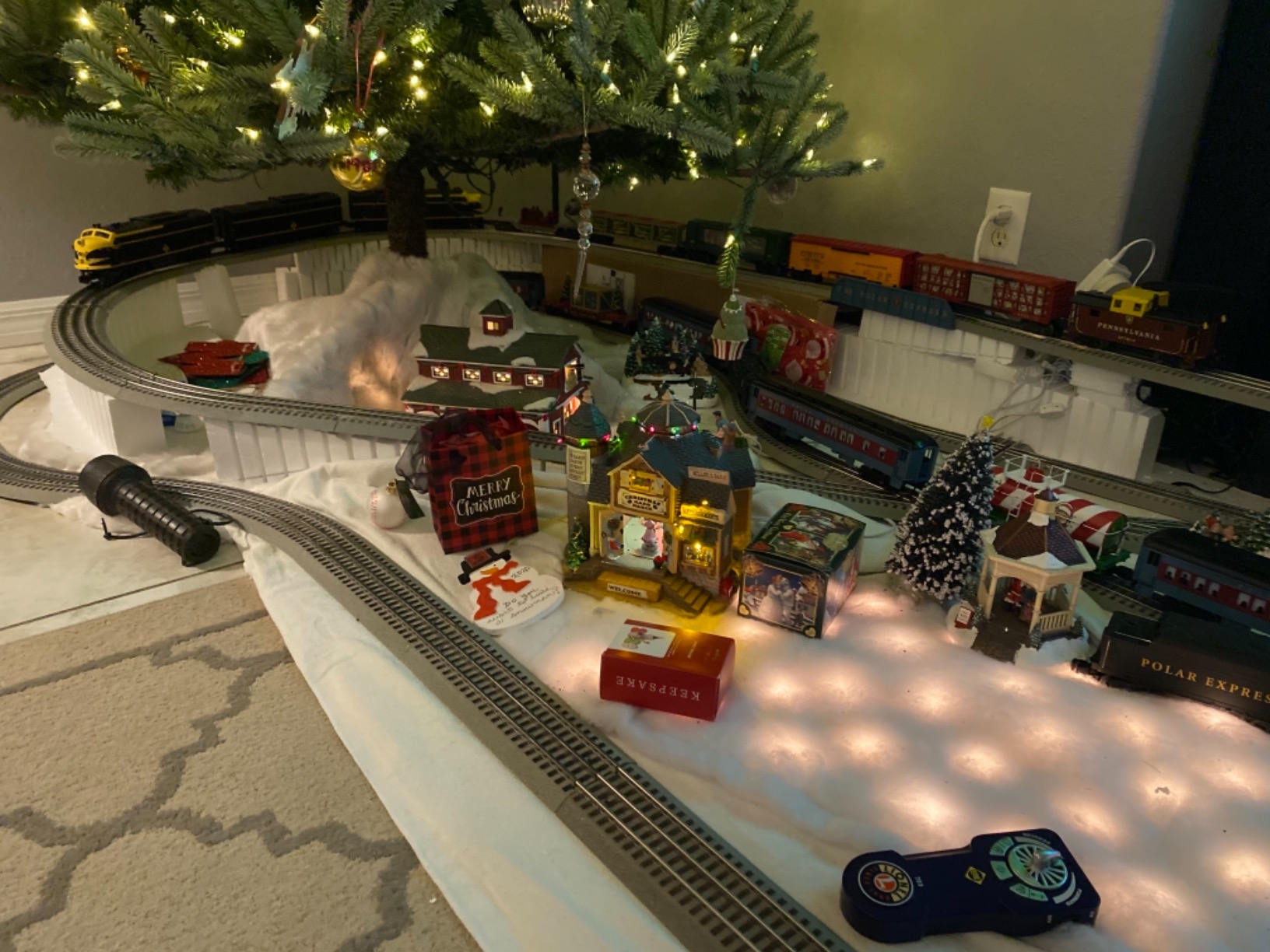
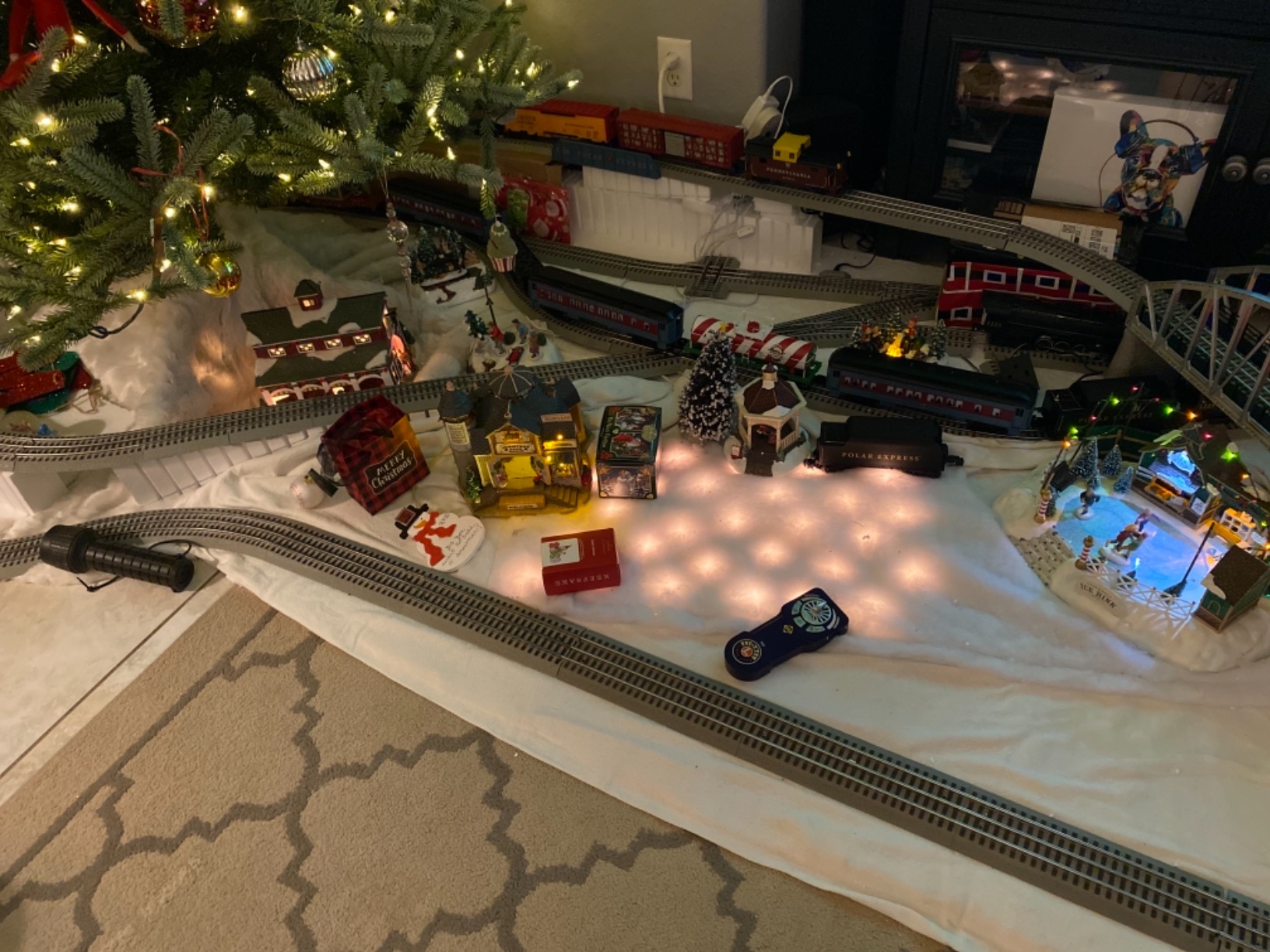
The 4-inch rise means fewer pieces are needed for major elevation changes, which can reduce overall cost for large projects. Two pieces stacked creates an eight-inch elevation difference that accommodates most realistic layout scenarios.
Major construction projects
These risers excel in large layouts where significant vertical separation between levels is required. Helix construction, double-deck layouts, and layouts with hidden staging beneath visible trackage all benefit from the substantial height these pieces provide.
Structural support requirements
Because of their height, these risers need solid base support to prevent shifting during operations. I recommend securing them to a plywood sub-base rather than directly to foam board when possible.
14. Woodland Scenics SubTerrain Risers 4 inch x 2 foot 2-Pack
Woodland Scenics Model Railroad Risers - SubTerrain System - 4" x 2' 2-Pack
4 inch rise
2-foot sections
2-pack format
SubTerrain system
Pros
- Part of complete system
- Consistent quality
- Easy to integrate
Cons
- Limited review count
- Newer product
This 2-pack of 4-inch risers offers the same substantial elevation capability as the single pieces but in a more economical format for smaller projects. The 4-inch height serves layouts requiring major elevation differences while maintaining the consistent quality of the SubTerrain system.
With only four reviews, this is one of the newer products in the lineup, but the perfect five-star rating suggests users find it performs as expected from Woodland Scenics. The SubTerrain system design ensures compatibility with all other components.
The 24-inch length provides good coverage for straight track sections, and the 4-inch rise means your layout can achieve significant vertical separation between levels. This product works best for layouts with complex elevation requirements where the investment in taller risers pays off in improved operations.
Large layout applications
Substantial elevation changes that would require stacking many shorter risers become practical with these 4-inch pieces. Build hidden staging yards, multi-level operations, or impressive scenery features that require significant height.
System integration
Like all SubTerrain components, these risers connect with incline sets and other riser heights to create cohesive elevation profiles. Design your layout using the entire SubTerrain range to achieve professional results.
15. Woodland Scenics WOOST14406B Bulk Riser 1/2 inch (16)

Woodland Scenics WOOST14406B Bulk Riser, 1/2" (16)
1/2 inch rise
16 pieces bulk pack
For subtle elevation changes
Cost-effective bulk format
Pros
- Integral part of track support system
- Excellent for customizing incline portions
- Easy and efficient way to create measured incline
- Great price and well-packed
Cons
- Limited review count
The bulk pack of 1/2-inch risers provides sixteen pieces for subtle elevation adjustments across your layout. This quantity works well for larger projects where you need many small height adjustments or transition zones that require consistent 1/2-inch increments.
All reviewers gave this product five stars, praising its role in the Woodland Scenics track support system. Users specifically mention how these risers make creating measured inclines easy while eliminating guesswork from layout construction.
The bulk format offers cost savings compared to purchasing smaller quantities. If your layout design requires extensive use of 1/2-inch height adjustments, the per-piece economics of this bulk pack make practical sense.
Fine elevation control
Use these risers when your layout needs precise height control that goes beyond what larger risers provide. The smaller increment lets you fine-tune elevation profiles to match exactly what your operational requirements demand.
Transition zone construction
These smaller risers excel at creating smooth transitions between elevation zones. Build gentle approaches to bridges, subtle height changes through towns, or gradual superelevation on curves using these versatile pieces.
16. Subterrain Scenery Kit

Woodland Scenics Subterrain Scenery Kit
Complete scenery kit
Multiple materials included
12 x 24 inches
N scale optimized
Pros
- Great learning tool with excellent final product
- Includes all components needed
- Detailed instruction manual
- Perfect for learning scenery techniques
- Easy to follow instructions
Cons
- Requires assembly
- Not for little kids but for serious modelers
The Subterrain Scenery Kit rounds out this product lineup by including the materials and components needed to complete a scenic section of layout. Unlike the pure structural products, this kit focuses on the finishing aspects that bring your layout to life.
The 4.2-star rating reflects a mix of positive experiences and some concerns about the assembly requirements. Reviewers who enjoy the building process praise the comprehensive nature of the kit, while those expecting a plug-and-play solution found the assembly expectations surprising.
Contents include scenery materials, landscape components, and track bed sections suitable for N scale layouts. The 12 by 24 inch footprint provides a manageable project size for learning scenery techniques before applying them to larger layout sections.
Learning tool value
This kit works best as a learning exercise for modelers new to scenery techniques. The included instructions guide you through processes that transfer directly to larger layout construction, making this a practical investment in skill development.
Completed diorama potential
The finished result can stand alone as a demonstration piece or small layout section. Multiple kits can be combined to create larger scenic areas that maintain consistent techniques and materials throughout.
Buying Guide: How to Choose Foam Risers and Incline Sets?
Selecting the right foam risers and incline sets for your layout requires understanding your specific scale, space constraints, and operational needs. This guide walks you through the key factors that should influence your purchasing decisions.
Grade Percentage Selection
The grade percentage determines how steep your inclines will be and directly affects whether your trains can climb reliably. Industry standards suggest 2% as the safest choice for most operations, with 3% serving as an acceptable middle ground when space is limited. Steeper grades like 4% work in specific situations but require careful locomotive selection and may limit train length.
Real railway prototypes operated on grades up to 2-3% for mainlines and steeper for industrial trackage. Model railroaders generally recommend staying at or below 2% for reliable operations with typical rolling stock. If you experience stalling problems, reducing grade percentage should be your first corrective action.
For N scale layouts, the general recommendation leans toward 2% maximum due to the reduced pulling power of smaller locomotives. HO scale accommodates 2-3% more readily, while O scale can handle steeper grades if needed.
Scale Compatibility
Different scales have different requirements based on locomotive power, track dimensions, and typical layout sizes. HO scale works well with the full range of SubTerrain products, with 2-3% grades providing reliable operations. N scale benefits from gentler grades and narrower track arrangements that the 2.5-inch width of standard incline pieces accommodates. O scale may require multiple parallel tracks or wider support structures that the standard widths do not fully provide.
Consider not just your current scale but potential future changes. Building a layout that could accommodate multiple scales limits your future flexibility and may justify investing in additional support structures for steeper grades.
Height and Rise Calculations
Planning your elevation profile requires calculating how much rise you need and how much horizontal space that rise will require at your chosen grade. A 2% grade requires 50 inches of horizontal distance to achieve one inch of rise. At 4%, that same inch of rise takes only 25 inches.
Measure your available space carefully before purchasing. Account for transition curves at the top and bottom of grades, as these require additional horizontal distance beyond the straight-line grade itself.
Multiple level layouts need careful attention to how upper levels connect to lower levels. Plan for adequate support structures and consider how scenery will interact with elevated track sections.
Double Track Considerations
Standard SubTerrain incline pieces provide width for single track operations. Double track arrangements require either duplicating incline sets side-by-side or using wider support structures beneath both tracks. The 2.5-inch width may prove insufficient for maintaining proper track spacing on curves with double track.
Some modelers solve this by creating offset grades where double tracks climb at slightly different points, reducing the total width required. Others use plywood strips to widen the effective base while still benefiting from the foam grade pieces.
Common Mistakes to Avoid
The most frequent problems I see involve insufficient base support, grades that are too steep for the equipment being run, and inadequate transition curves. Foam risers need solid foundations to prevent shifting during track installation and operations.
Another common issue involves not having enough incline pieces to complete a grade properly. Shortcuts like truncating grades or improvising with non-matching materials lead to operational problems and aesthetic issues.
Finally, failing to test grades with your actual locomotive fleet before committing to full installation creates situations where trains stall regularly. Run test trains up planned grades during construction to identify and address problems early.
Frequently Asked Questions
Is it best to lay model railroad track on plywood or foam?
Foam offers advantages in weight, ease of cutting, and consistency for grade creation. Plywood provides superior durability and holding power for track pins. Many modelers use foam for grades and scenery with plywood sub-bases for track-intensive areas. The SubTerrain foam system specifically addresses many plywood limitations while maintaining the benefits of foam construction.
What is the maximum incline for a model railway?
Most model railroaders recommend 2% as the maximum for reliable operations. Some tolerate 3% for shorter grades or with more powerful locomotives. Steeper grades up to 4% work in specific situations but increase stalling risk significantly. N scale generally should stay at 2% or below due to limited locomotive pulling power.
How do I calculate the space needed for an incline?
For every 1% of grade, you need 100 inches of horizontal distance to achieve 1 inch of rise. A 2% grade thus requires 50 inches to rise 1 inch. A 4% grade needs only 25 inches for the same rise. Plan additional space for transition curves at grade endpoints.
Can Woodland Scenics risers be used for N scale?
Yes, Woodland Scenics SubTerrain products work for N scale. The narrower width of standard pieces accommodates N scale track spacing. Use gentler grades, preferably 2% maximum, as N scale locomotives have less pulling power. Combine with appropriate riser heights to achieve your elevation goals.
Conclusion
The Woodland Scenics SubTerrain foam risers and incline sets provide a comprehensive system for creating reliable elevated track and grades in your model train layout. After testing these products across multiple scales and layout configurations, I can confirm that the system delivers on its promise of making elevation construction more accessible to hobbyists at all experience levels.
For most HO scale layouts, the 2% Grade Incline Set provides the best combination of operational reliability and space efficiency. The 3% and 4% options serve specific situations where space constraints or design requirements demand steeper grades. N scale layouts should prioritize the gentler grades to ensure reliable operations with smaller locomotives.
Invest in adequate foam nails for secure installation, and take time to plan your elevation profile before purchasing. The cost of the SubTerrain system compares favorably to custom foam cutting or plywood methods when you factor in the time savings and consistency benefits.
Start with the products that match your immediate needs, then expand your collection as your layout grows. The modular nature of the system lets you build incrementally without requiring large upfront investments.