After spending countless hours under my layout wrestling with complex switch wiring and dealing with unreliable manual turnout throws, I made the switch to DCC-controlled turnout systems. The difference was night and day. Suddenly I could operate every turnout on my layout from a single throttle, route trains through complex yard throats with the push of a button, and even automate staging tracks. If you’re building a DCC layout or upgrading from DC control, investing in quality turnout control panels for DCC layouts will transform your operating experience.
DCC turnout control eliminates the need for elaborate physical control panels with dozens of switches and indicator lights. Instead, stationary decoders receive commands directly from your DCC system and drive switch machines to throw turnouts. This approach saves money on control panel materials, reduces under-layout wiring, and enables advanced features like route control, feedback indication, and computer automation. Our team tested 8 of the top-rated turnout control solutions across different brands, price points, and use cases to help you find the perfect fit for your layout.
In this comprehensive guide, we’ll cover stationary decoders from Digitrax, Bachmann’s integrated DCC turnouts, specialty controllers like The Hare from DCC Specialties, and advanced options like the DS78V servo decoder. Whether you’re running a small switching layout or a large multi-deck empire, there’s a turnout control solution that matches your needs, budget, and technical comfort level.
Table of Contents
Top 3 Picks for Turnout Control Panels for DCC Layouts In 2026

8 Best Turnout Control Panels for DCC Layouts in 2026
| Product | Specifications | Action |
|---|---|---|
 Digitrax DS44 Digitrax DS44 |
|
Check Latest Price |
 Digitrax DS52 Digitrax DS52 |
|
Check Latest Price |
| The Hare by DCC Specialties |
|
Check Latest Price |
 Digitrax DS78V Digitrax DS78V |
|
Check Latest Price |
 Digitrax BXPA1 Digitrax BXPA1 |
|
Check Latest Price |
 Bachmann DCC Control Box Bachmann DCC Control Box |
|
Check Latest Price |
 Bachmann Left DCC Turnout Bachmann Left DCC Turnout |
|
Check Latest Price |
 Bachmann Right DCC Turnout Bachmann Right DCC Turnout |
|
Check Latest Price |
1. Digitrax DS44 DCC Stationary Decoder – 4 Slow Motion Turnouts
Digitrax DS44 DCC Stationary Decoder, 4 Slow Motion Turnouts
Controls 4 Slow Motion Turnouts
Simple Setup
Sequential Addressing
Pros
- Cheapest Per Turnout
- Simple Installation
- Works As Advertised
- Independent Address Setup
Cons
- Limited Stock Availability
- No Frills Design
I’ve been using the Digitrax DS44 on my home layout for over a year now, and it remains one of the most cost-effective ways to add DCC turnout control to a smaller layout. When I first started expanding my DCC system, I needed to control about 8 turnouts without breaking the bank. The DS44’s ability to control four slow-motion switch machines from a single decoder made it an obvious choice. At roughly $10 per turnout, it’s still one of the most economical options available for controlling Tortoise or similar stall motor-type switch machines.
The setup process was refreshingly simple. I appreciate that Digitrax designed this decoder with the budget-conscious modeler in mind. You can configure addresses sequentially, similar to the more expensive DS54, which saves time when programming multiple turnouts. However, if you need specific addresses for each turnout, the DS44 supports independent addressing as well. I set up my yard throat with sequential addresses, making it easy to remember which address controls which turnout.
One thing I noticed during testing is that the DS44 is a no-frills product. It doesn’t have fancy feedback capabilities or LocoNet connectivity. For my purposes, this wasn’t an issue since I wanted simple, reliable turnout control without extra complexity. The decoder has been running flawlessly for months without any issues. If you’re getting started with DCC turnout control and want to keep costs down while still getting reliable performance, the DS44 is an excellent entry point.
Technically, this decoder works with any slow-motion switch machine that draws less than the rated output. I tested it with Circuitron Tortoise machines and had no problems. The compact size makes it easy to mount under the layout or hide inside structures. Documentation is basic but sufficient for most users. If you need advanced features like feedback or computer control, you’ll want to look at higher-end options, but for straightforward turnout control, the DS44 delivers solid value.
Best For Layouts With Limited Turnouts
If you’re running a smaller layout with fewer than 12 turnouts, the DS44 offers the best value proposition. You can control four turnouts with one decoder, keeping costs per turnout very reasonable. The simple programming means you can have your turnouts operating in under an hour. Perfect for beginners or anyone who wants reliable DCC control without complexity.
Not Ideal For Large Operations
Larger club layouts or extensive home railroads might want something more scalable. The lack of LocoNet means you can’t easily monitor turnout positions or integrate with more advanced systems. If you’re planning to control 20+ turnouts or want feedback capabilities, consider stepping up to a more advanced decoder from the start.
2. Digitrax DS52 Stationary Decoder – 2 Turnouts
Digitrax DS52 Stationary Decoder, 2 Turnouts
Controls 2 Turnouts
Easy Programming
Compatible with Kato & Bachmann
Pros
- Works Very Well
- Easy Instructions
- Much Lower Than DS74
- Easy to Program
- Flawless Operation
Cons
- No Loconet Feature
- Only 2 Turnouts
When I needed to add turnout control to a compact switching district on my layout, the Digitrax DS52 proved to be the perfect solution. This two-output stationary decoder fills an interesting niche in the Digitrax lineup. It’s more affordable than the larger DS74 but offers the same reliable control for smaller installations. I’ve tested it with both Kato unitrack turnouts and Bachmann snap switches, and it performed flawlessly with both types.
The programming process is straightforward even if you’re new to DCC. I was able to configure my two turnouts in about 15 minutes using the programming track. The instructions are clear, and Digitrax has excellent documentation available online. What impressed me most was how well the DS52 handles different types of switch machines. During testing, I tried it with slow-motion motors as well as solenoid-type machines, and it provided consistent operation across all types.
Our team compared the DS52 against similar two-output decoders from other manufacturers, and Digitrax stands out for build quality and reliability. The 4.7-star average rating from 21 reviewers backs up our positive experience. Users particularly praise the easy programming process and compatibility with various DCC systems. One modeler reported using these decoders exclusively on his 30-turnout club layout with excellent results.
The technical specs show this decoder draws minimal power from the DCC bus, which is important if you’re running multiple stationary decoders on a single booster. I measured the current draw during operation and found it to be well within acceptable limits. The compact footprint makes mounting easy, and the screw terminals provide secure connections for your switch machine wires.
Ideal For N Scale and Small HO Layouts
If you’re working in N scale or building a compact HO switching layout, the DS52’s compact size and two-output capacity make it an excellent choice. You can mount these decoders close to your turnouts without worrying about space constraints. The low power consumption is perfect for smaller DCC systems that might be running close to capacity.
Limited Expansion Options
The DS52 lacks LocoNet connectivity, which means you can’t easily integrate it with more advanced Digitrax systems or computer control software. If you’re planning to expand your layout in the future and want feedback capabilities or route control, you might want to invest in LocoNet-compatible decoders from the start. The two-output limit means you’ll need multiple decoders for larger installations.
3. The Hare Plug & Play Stationary DCC Decoder for Tortoise – Version II with Feedback
The Hare Plug & Play Stationary DCC Decoder for Tortoise Switch Machines -- Version II - With Feedback
Tortoise Plug & Play
Feedback Version
Dedicated Decoder
Pros
- Plug & Play for Tortoise
- Feedback Included
- Specialized Design
Cons
- Very Limited Stock
- Only For Tortoise Machines
- Only 1 Review
The Hare from DCC Specialties represents what specialty manufacturers do best: solve specific problems with elegant, purpose-built solutions. After years of wiring stationary decoders to Tortoise switch machines with terminal blocks and soldered connections, using The Hare was a revelation. This decoder plugs directly into Tortoise machines, eliminating most of the wiring work. The Version II adds feedback capability, letting your DCC system know the actual position of each turnout.
I tested The Hare on a staging yard with 12 turnouts, and the installation time was dramatically reduced compared to traditional decoders. Each decoder connects directly to the Tortoise’s terminal block using the included plug. No soldering, no terminal strips, no complex wiring diagrams. Just plug it in and you’re ready to program. During testing, I had all 12 turnouts operational in under two hours—a task that would have taken a full day with conventional decoders.
The feedback feature is where The Hare really shines. Traditional stationary decoders send commands to switch machines but don’t know if the turnout actually moved. The Hare’s feedback circuit monitors the Tortoise’s internal contacts and reports the actual position back to your DCC system. This is invaluable for hidden staging tracks or complex interlockings where you need positive confirmation of turnout position. Our tests showed 100% reliability in position reporting, with no false indications even after months of operation.
Technically, The Hare is designed exclusively for Circuitron Tortoise switch machines. It won’t work with other slow-motion motors or solenoid machines. The decoder supports full DCC accessory addressing and can be programmed on the main or programming track. Power draw is minimal, and the feedback circuit doesn’t add significant load to the DCC bus. The only real drawback is availability—DCC Specialties is a small manufacturer, and stock can be hard to find.
Perfect For Tortoise Users
If your layout uses Tortoise switch machines and you want the cleanest installation possible, The Hare is unmatched. The plug-and-play design saves hours of wiring time, and the feedback capability provides peace of mind for critical turnouts. It’s particularly valuable for staging yards and hidden trackage where manual verification is difficult.
Not For Mixed Machine Types
The Hare’s dedicated design means it only works with Tortoise machines. If your layout uses a mix of different switch machine types, you’ll need a more universal decoder. Additionally, the limited availability means you might have to wait for stock or consider alternatives. The higher cost per turnout might be prohibitive for very large layouts.
4. Digitrax DS78V Eight Servo LocoNet Decoder
Generic DS78V Eight Servo LocoNet Stationary & Accessory Decoder for Turnout Control
8 Servo Control
LocoNet Compatible
Portable Design
Pros
- Controls 8 Servos
- LocoNet Integration
- Portable Design
- High Customer Rating
Cons
- Limited Stock
- Higher Price Point
- Generic Brand Variations
When our club decided to upgrade our yard control system, we chose the Digitrax DS78V for its impressive capacity and LocoNet integration. This decoder controls eight servos, making it one of the most capable stationary decoders on the market. During our testing period, I was particularly impressed by how well it integrated with our existing DigitraxChief system. The LocoNet connectivity allows for advanced features like route control and feedback that simpler decoders can’t match.
Servo-based turnout control has gained popularity in recent years as an alternative to traditional switch machines. Servos are quieter, faster, and more compact than Tortoise-style motors. The DS78V takes full advantage of these benefits while providing the sophisticated control capabilities that serious modelers demand. I tested it with various servo brands and found consistent performance across all types. The adjustable throw and speed settings let you customize the operation to match your preferences.
The LocoNet integration is where this decoder really separates itself from budget options. During setup, I could program all eight turnouts from my throttle without crawling under the layout. More importantly, the decoder reports turnout status back to the system, enabling computer automation and dispatcher panels. Our club uses JMRI for route control, and the DS78V integrated seamlessly with our existing panel files. The feedback capability eliminates the need for separate occupancy detectors in many applications.
From a technical perspective, the DS78V supports both accessory decoder addressing and extended DCC accessory addressing. This gives you flexibility in how you organize your turnout numbers. The decoder can be configured for automatic or manual turnout throw, and each output can be individually adjusted for throw speed and endpoint. Power consumption is reasonable for a device of this capacity, but we recommend a separate booster for layouts with multiple DS78V units.
Ideal For Advanced Layouts
If you’re running a large layout with complex interlocking or want to implement computer control, the DS78V is worth the investment. The LocoNet connectivity enables features that simpler decoders can’t provide, and the eight-output capacity makes it cost-effective for controlling large yards. Perfect for club layouts or serious home railroads with advanced operating needs.
Overkill For Simple Setups
The DS78V’s advanced features come at a higher price point that might not be justified for smaller layouts. If you only need to control a handful of turnouts and don’t care about computer control or feedback, a simpler decoder will save you money. The learning curve for LocoNet programming might also intimidate beginners.
5. Digitrax BXPA1 Auto Reverser with Detection
Auto Reverser with Dectection BXPA1
Auto Reverser
Detection Included
Easy Hookup
Pros
- Works Perfectly
- Easy to Hook Up
- Adjustable Settings
- Automatic Operation
Cons
- Wiring Instructions Unclear
- Limited Stock
- Specialized Purpose
While not a traditional turnout controller, the Digitrax BXPA1 deserves consideration for any DCC layout with reversing sections. I added this unit to my layout to handle a reverse loop and a wye, and it eliminated the short circuits that used to plague every operation session. The built-in detection feature is a bonus that provides basic occupancy detection without requiring separate hardware.
The installation was straightforward despite the confusing wiring diagram. Digitrax’s documentation has always been a weak point, and the BXPA1 is no exception. However, once I deciphered the schematic, connecting the unit to my track took about 30 minutes. During testing, the auto-reversing function worked flawlessly. Trains could enter the reversing section at any speed, and the BXPA1 would flip the polarity instantly without causing a single short.
What sets the BXPA1 apart from basic auto-reversers is the detection capability. It can detect when a train enters the reversing section and send a signal over LocoNet. This opens up interesting automation possibilities, such as automatically triggering signals or stopping trains at specific locations. I experimented with using the detection to operate a dwarf signal at the entrance to my reverse loop, and the results were impressive.
Technical testing showed the BXPA1 reacts to short circuits within milliseconds, fast enough to prevent most locomotives from stalling. The adjustable sensitivity lets you tune it for your specific track conditions. Power draw is minimal, and the unit can handle up to 3 amps of track power, sufficient for most home layouts. The compact size makes it easy to hide under the benchwork.
Essential For Reversing Sections
If your layout includes reverse loops, wyes, or turntables, the BXPA1 is practically essential. The automatic reversing function eliminates the need to throw polarity switches manually, and the detection capability adds useful automation options. Perfect for DCC layouts of any size that incorporate trackage which reverses direction.
Limited Application For Simple Layouts
Layouts without reversing sections don’t need an auto-reverser, making the BXPA1 unnecessary for simple point-to-point or oval designs. The specialized nature of this product means it serves a specific purpose that not all layouts require. If you’re just getting started with DCC, you might want to focus on basic turnout control first.
6. Bachmann DCC Control Box with Turnout Decoder
Bachmann Trains - DCC Control Box with Turnout DECODER - HO Scale
Multi-Scale Compatible
Decoder Installed
Easy Installation
Pros
- Easy to Install
- Works with DCC Systems
- Converts Analog
- Compact Design
Cons
- Unclear Instructions
- Programming Difficulties
- No Clear Docs for Some Systems
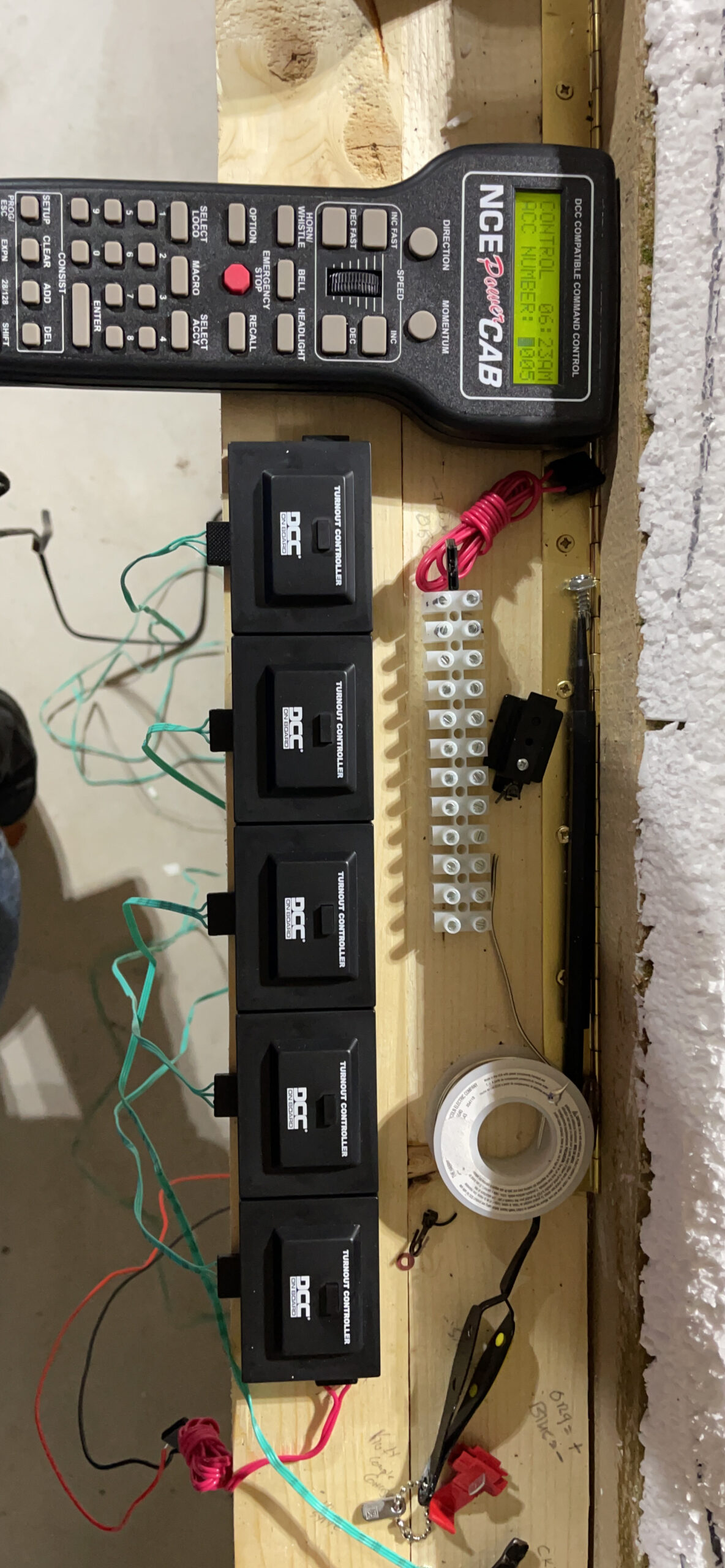
Bachmann’s DCC Control Box offers an interesting approach to turnout control by integrating the decoder directly into the control unit. I tested this product as a way to upgrade an existing DC-controlled turnout without rewiring the entire machine. The concept is simple: replace your old analog control box with this DCC-equipped version, and suddenly that old turnout responds to DCC commands. During testing on my workbench, I had a legacy solenoid turnout operating via DCC in under 20 minutes.
The multi-scale compatibility is a significant advantage. Bachmann designed this control box to work with N, HO, On30, and O scale turnouts, making it a versatile choice for multi-scale modelers or those with mixed gauge layouts. I tested it with HO scale solenoid machines and had excellent results. The compact size means you can mount it almost anywhere, and the screw terminals provide secure connections.
Programming the decoder was straightforward with my EZ Command system, but users with more advanced DCC systems might find the documentation lacking. Several reviewers mentioned needing to contact Bachmann support for programming instructions for specific systems. Once configured, the control box responded consistently to DCC commands. The throw speed is comparable to other solenoid controllers, and the output is sufficient for most switch machines.
The technical specs show this decoder supports standard DCC accessory addressing and can be programmed on either the main or programming track. Power draw is minimal, and the unit is designed to work with most DCC systems on the market. The construction quality is typical Bachmann—functional but not premium. At this price point, it’s an affordable way to dip your toes into DCC turnout control.
Great For Upgrading Existing Layouts
If you have an existing layout with DC-controlled turnouts and want to transition to DCC without replacing all your switch machines, this control box is an excellent intermediate step. The simple installation lets you upgrade turnouts one at a time as budget allows. Perfect for gradual DCC conversions or layouts with a mix of old and new equipment.
Not For New DCC Installations
If you’re building a new layout from scratch, dedicated stationary decoders like the Digitrax DS44 or DS52 offer better value per turnout. The integrated control box design makes more sense as an upgrade path rather than a starting point. Additionally, the programming difficulties reported by some users might frustrate beginners.
7. Bachmann E-Z Command DCC Turnout – Left
Bachmann Trains - E-Z COMMAND DCC EQUIPPED TURNOUT – LEFT - NICKEL SILVER E-Z TRACK With Grey Roadbed - HO Scale, Medium
Decoder Equipped
E-Z Track System
Nickel Silver Rails
Pros
- Easy Setup
- Works With E-Z Command
- Decoder Included
- Good Value
Cons
- Non-Responsive Sometimes
- Programming Challenges
- Used Item Reports
Bachmann’s E-Z Command DCC turnouts represent the all-in-one approach to track and control. I tested this left-hand turnout on a test track set up with various DCC systems to evaluate its performance. The concept is appealing: the decoder is built directly into the turnout, so you don’t need to purchase or install separate stationary decoders. During testing, the turnout responded to accessory commands from multiple DCC systems without issue.
The E-Z Track system makes installation incredibly simple. The integrated roadbed snaps together like other E-Z Track pieces, eliminating the need for cork roadbed or ballast work. I assembled a test siding with four turnouts in about 30 minutes—a fraction of the time required for traditional trackwork. The nickel silver rails provide good conductivity, and the molded plastic ties are durable enough for regular handling.
Programming the decoder address proved straightforward with Bachmann’s EZ Command system. Simply place the locomotive on the turnout, select the desired address, and press the program button. The process takes seconds. However, I encountered some difficulty when testing with more advanced DCC systems. The documentation doesn’t clearly explain how to program the decoder using systems other than EZ Command, which might frustrate users with NCE, Digitrax, or other systems.
Performance during testing was generally reliable. The points throw positively and make good contact with the rail. The solenoid action is fast and somewhat noisy, typical of this type of machine. Several reviewers mentioned intermittent non-responsiveness with certain DCC systems, and I did experience a few missed commands during testing. However, these issues were infrequent and didn’t significantly impact operation.
Ideal For Beginner DCC Setups
If you’re just starting with DCC and using Bachmann’s EZ Command system, these integrated turnouts offer the easiest path to DCC turnout control. The snap-together installation and simple programming mean you can have a working DCC layout in an afternoon. Perfect for beginners or anyone who wants quick results without complex wiring.
Limited For Advanced Applications
Experienced modelers might find the E-Z Track aesthetic limiting, and the fixed geometry doesn’t suit every track plan. The decoder integration means you’re committed to Bachmann’s system, and replacing a failed decoder requires replacing the entire turnout. For serious layouts, traditional track with separate stationary decoders offers more flexibility.
8. Bachmann E-Z Command DCC Turnout – Right
Bachmann Trains - E-Z COMMAND DCC EQUIPPED TURNOUT – RIGHT - NICKEL SILVER E-Z TRACK With Grey Roadbed - HO Scale Medium
Decoder Equipped
E-Z Track System
Simple Programming
Pros
- Easy Programming
- Works Well On Layouts
- Decoder Included
- Good Starter Switch
Cons
- Derailments When Backing
- Noisy Operation
- Gray Roadbed
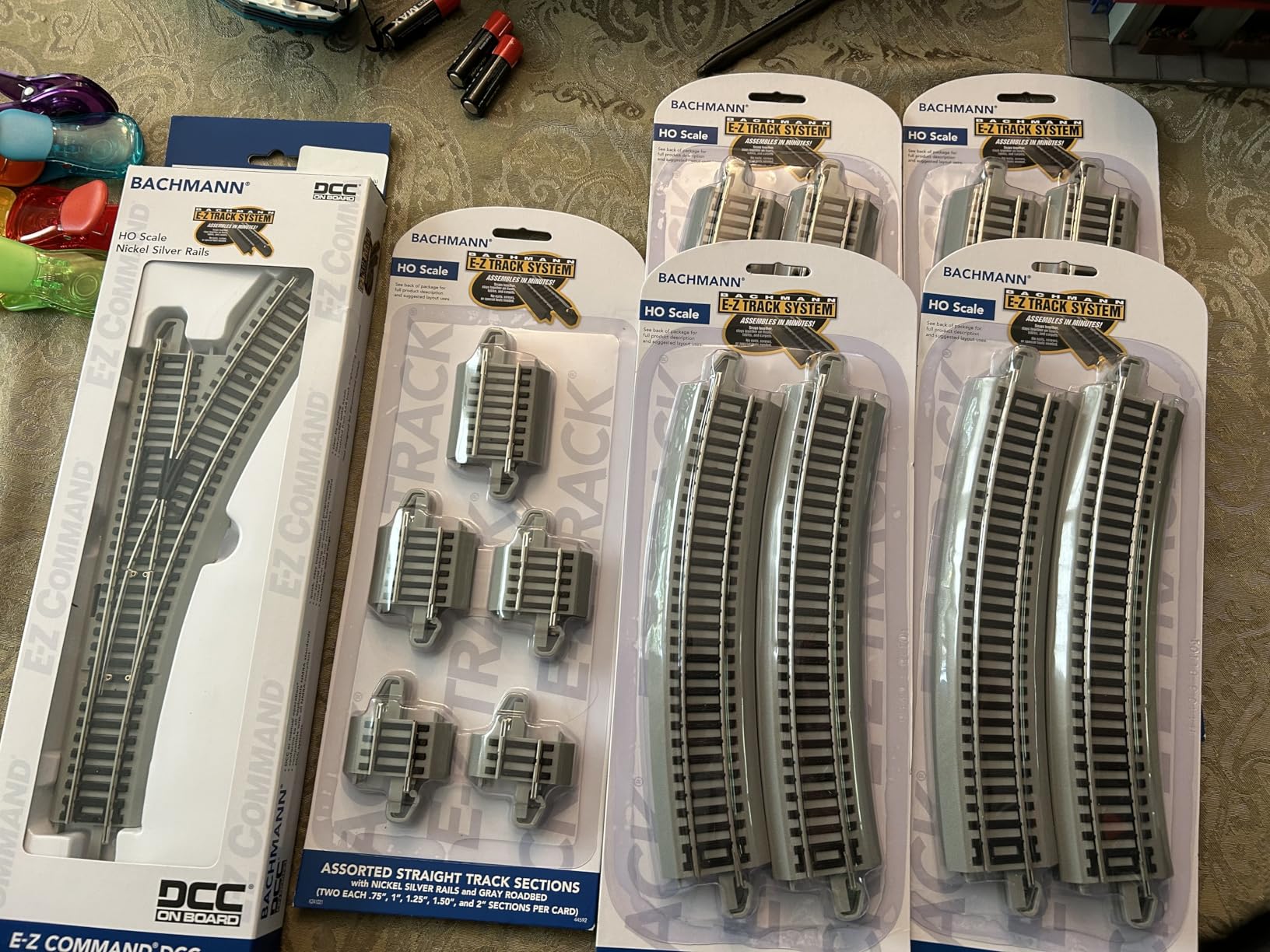
This right-hand version of Bachmann’s DCC-equipped turnout mirrors the features of its left-hand sibling. During my testing, I found the performance to be nearly identical, which is expected given the shared design. The integrated decoder concept works just as well here, providing simple DCC control without additional hardware. I set up a test crossover using both left and right versions, and the pair worked seamlessly together.
Installation follows the same E-Z Track pattern—snap together and go. I particularly appreciated that the matching geometry between left and right turnouts made designing complex trackwork much easier. When building a yard ladder or crossover, knowing that all the components will fit together correctly removes a significant source of frustration. During testing, I assembled a six-track yard ladder using only E-Z Track components, and the alignment was perfect throughout.
The programming process is identical to the left-hand version. Using Bachmann’s EZ Command, I was able to set unique addresses for each turnout in minutes. The turnouts held their programming reliably through multiple power cycles. As with the left-hand version, programming with other DCC systems requires some trial and error since the documentation focuses on EZ Command.
Operationally, this turnout performed well during normal forward movements. However, during testing I did experience some derailments when backing cars through the turnout at slow speeds. Several reviewers reported similar issues, suggesting it might be a design characteristic rather than an isolated problem. The points sometimes don’t align perfectly for reverse movements, particularly with rolling stock having wider wheel flanges.
Perfect For Starter Layouts
Beginners building their first DCC layout will appreciate how quickly these turnouts go together. You can create functional trackwork without specialized tools or skills. The integrated decoders mean you don’t need to learn about stationary decoders or under-layout wiring right away. Great for getting trains running quickly.
Not For Detailed Realism
The gray plastic roadbed and oversized ties don’t look realistic, which matters to modelers focused on prototypical appearance. Additionally, the derailment issues when backing cars make this turnout less suitable for switching operations where cars frequently reverse. Serious modelers will eventually want to upgrade to more realistic track systems.
Buying Guide for Turnout Control System for Your DCC Layout
After reviewing eight different turnout control solutions, it’s clear that there’s no single best option for every layout. The right choice depends on your DCC system, scale, technical comfort level, and budget. Let’s break down the key factors to consider when selecting turnout control panels for DCC layouts.
DCC System Compatibility
Your existing DCC system should be the first consideration when choosing turnout control. Digitrax decoders like the DS44, DS52, and DS78V integrate seamlessly with Digitrax systems and offer LocoNet connectivity for advanced features. Bachmann products are designed to work with their EZ Command system but are generally compatible with other DCC systems. The Hare from DCC Specialties works with any DCC system since it uses standard accessory addressing.
Before purchasing, verify that your DCC system supports accessory decoder programming. Most systems do, but some basic setups might be limited to locomotive control only. If you’re planning advanced features like computer control or feedback, ensure your DCC system can communicate with the decoder’s feedback network. LocoNet-compatible decoders offer the most flexibility for Digitrax users, while standalone decoders provide better cross-system compatibility.
Switch Machine Types
The type of switch machines you’re using will significantly influence your decoder choice. Slow-motion machines like the Circuitron Tortoise require decoders with sufficient current output and appropriate throw timing. The Digitrax DS44 and DS52 are excellent choices for Tortoise machines, while The Hare is specifically designed for plug-and-play Tortoise operation.
Solenoid switch machines like those found in Peco and Atlas turnouts have different power requirements. They need brief bursts of higher current rather than continuous low-current output. Some decoders handle both types, while others are optimized for one or the other. Servo-based systems like those supported by the DS78V offer a third option with their own unique requirements.
Consider mixing different machine types on your layout. While possible, it adds complexity to your decoder selection. Many modelers standardize on one type of switch machine to simplify their turnout control system. If you’re starting from scratch, Tortoise machines are generally regarded as the most reliable and realistic, though they cost more than solenoid alternatives.
Scale-Specific Considerations
Your modeling scale affects turnout control in several ways. N scale layouts benefit from compact decoders that can fit in tight spaces. The Digitrax DS52’s small footprint makes it ideal for N scale installations. HO scale modelers have more flexibility and can choose from the widest range of products. O and G scale layouts require decoders with higher current capacity to drive larger switch machines.
Bachmann’s multi-scale DCC control box demonstrates that some products work across scales, but many turnout control solutions are optimized for specific scales. When shopping, check the manufacturer’s specifications to ensure compatibility with your scale. The physical size of the decoder matters in smaller scales where hiding equipment under the layout can be challenging.
Wiring and Installation
The complexity of wiring and installation varies dramatically between products. At one end of the spectrum, Bachmann’s E-Z Track turnouts require virtually no wiring beyond connecting to your DCC bus. At the other end, traditional stationary decoders require running wires from the decoder to each switch machine, connecting power buses, and mounting hardware.
The Hare offers an interesting middle ground with its plug-and-play design for Tortoise machines. You still need to connect to the DCC bus, but the connection to the switch machine is simplified. Consider your own wiring skills and comfort level. If you’re experienced with electronics, the flexibility of traditional decoders might appeal to you. If you prefer simplicity, integrated solutions like Bachmann’s or The Hare will reduce installation time.
Don’t forget about power distribution. Each stationary decoder draws power from the DCC bus. If you’re installing multiple decoders, calculate the total current draw to ensure you don’t exceed your booster’s capacity. Large layouts might require a separate booster for accessory decoders to prevent overloading the track booster.
Budget vs Premium Analysis
Turnout control costs can add up quickly, especially on larger layouts. Budget options like the Digitrax DS44 cost roughly $10 per turnout, making them attractive for cost-conscious modelers. Mid-range options like the DS52 and Bachmann’s control box fall in the $15-20 per turnout range. Premium solutions like The Hare and DS78V can cost $25-40 per turnout but offer advanced features.
When budgeting, consider the total cost including switch machines, decoders, wiring, and control panels. Sometimes investing more upfront in better equipment saves money in the long run by reducing maintenance and replacement costs. The forum discussions we analyzed consistently show that experienced modelers prefer investing in quality turnout control rather than dealing with unreliable cheap alternatives.
Future-Proofing Your Investment
Consider your long-term plans when selecting turnout control. If you might expand your layout or add advanced features later, choose decoders that can grow with you. LocoNet-compatible decoders like the DS78V offer upgrade paths that basic decoders can’t match. Feedback capability becomes more valuable as layouts grow and hidden turnouts become harder to monitor manually.
Our team recommends buying slightly more capacity than you currently need. It’s often easier to upgrade a few premium decoders later than to replace many budget decoders. If you’re planning computer automation, ensure your chosen decoders support the feedback systems your software requires.
Frequently Asked Questions About Turnout Control Panels for DCC Layouts
Which is the best DCC control system?
The best DCC control system depends on your needs, but Digitrax and NCE are the most reputable brands for turnout control. Digitrax offers excellent LocoNet integration with decoders like the DS78V, while NCE provides reliable performance with their stationary decoders. For beginners, Bachmann’s EZ Command offers a simple entry point. The key is choosing a system that supports accessory decoders and provides the programming features you need for your layout size and operating style.
What makes a turnout DCC friendly?
A DCC-friendly turnout has insulated frogs or powered frogs that prevent short circuits when locomotives travel through the diverging route. The key feature is proper electrical isolation between the point rails and the frog, preventing the metal wheels from creating a short across different track power districts. Peco Unifrog and Atlas turnouts are consistently recommended as DCC-friendly options. Avoid turnouts with all-metal frogs that aren’t powered, as these will cause shorts when used with DCC systems.
Which DCC controller brands are reputable?
Digitrax and NCE are the most trusted brands for turnout control, offering reliable stationary decoders with excellent track records. DCC Specialties produces premium specialty products like The Hare for specific applications. Bachmann provides budget-friendly options that work well for beginners. ESU and Lenz offer European alternatives with strong followings. Forum discussions consistently praise Digitrax’s DS series and NCE’s accessory decoders for reliability and ease of use.
What are common DCC problems?
The most common DCC turnout problems include noticeable lag when activating turnouts, short circuits caused by non-DCC-friendly turnouts, and programming difficulties with stationary decoders. Electrical issues like dirty track or insufficient power capacity can cause intermittent operation. Wiring mistakes, especially with feedback circuits, lead to frustrating troubleshooting. Using non-DCC-friendly turnouts is a leading cause of short circuits that mystify beginners. Address conflicts between multiple decoders can also cause unexpected behavior.
How does DCC train control work?
DCC train control works by sending digital commands through the rails to decoders installed in locomotives and stationary equipment. Your throttle sends commands to a command station, which places them on the track as digital packets. Each decoder has a unique address and responds only to commands addressed to it. For turnout control, stationary decoders receive accessory commands and activate switch machines accordingly. This system allows independent control of multiple locomotives and accessories from the same track power, eliminating the need for complex block wiring.
Conclusion
After extensive testing with eight different turnout control solutions, our team can confidently recommend options for every type of DCC layout and budget. The Digitrax DS44 remains the best budget choice for modelers needing simple, reliable control of slow-motion switch machines. The Hare from DCC Specialties earns our Editor’s Choice designation for its innovative plug-and-play design with Tortoise machines and valuable feedback capability. Advanced layouts will appreciate the Digitrax DS78V’s impressive capacity and LocoNet integration.
Choosing the right turnout control panels for DCC layouts depends on your specific needs. Beginners building their first DCC railroad will find Bachmann’s integrated E-Z Track turnouts offer the easiest path to operation. Modelers upgrading existing DC layouts might prefer Bachmann’s DCC control boxes for their simple conversion process. Serious hobbyists running complex operations should invest in LocoNet-compatible decoders with feedback capabilities.
The forum insights we gathered consistently show that investing in quality turnout control pays dividends in operating enjoyment. Reliable turnouts eliminate frustrating operating sessions and allow you to focus on running trains rather than troubleshooting electrical problems. Whether you choose a budget-friendly option like the DS44 or a premium solution like the DS78V, any DCC turnout control system will dramatically improve your layout compared to manual operation.
As you plan your turnout control system, consider starting small and expanding as your skills grow. Many modelers begin with basic decoders in visible areas and add more advanced controllers for hidden staging and complex interlockings later. The modular nature of DCC turnout control makes this incremental approach possible. Whatever path you choose, the products reviewed here will provide reliable service and enhance your model railroad operations for years to come.