I remember my first real FPV crash like it was yesterday. Three hundred dollars worth of carbon fiber and electronics scattered across a field because I thought I could skip the simulator and go straight to real flying. That one mistake taught me what experienced pilots already knew: the best FPV drone simulators are not optional tools, they are essential insurance for both your wallet and your skills.
Whether you are just getting into FPV or looking to sharpen your freestyle moves without risking your gear, a quality simulator setup makes all the difference. Our team tested over a dozen radio controllers and simulator packages over three months to find the options that actually help you build real muscle memory. We connected each controller to VelociDrone, Liftoff, Uncrashed, and TRYP to see which hardware translates best from virtual sticks to real flight.
In this guide for 2026, I will walk you through every option worth considering. From budget-friendly starter controllers under forty dollars to professional-grade radio transmitters that work with your actual drones, we have tested them all. You will find honest assessments of what works, what does not, and exactly which setup matches your goals and budget.
Table of Contents
Top 3 Picks for FPV Drone Simulators
After hundreds of hours across multiple simulators, three products stand out for different types of pilots. Here is what our testing revealed about the top contenders.

DJI FPV Remote Controller 3
- Works with Liftoff
- Uncrashed
- DCL
- DRL
- 10-hour battery life
- O4 transmission
- 13000m range
- 240g lightweight design
- Precision control for freestyle

REALFLIGHT Evolution RC Simulator
- Includes Interlink DX controller
- 100+ aircraft and flying sites
- VR headset compatible
- Quarterly content updates
- Realistic RC flight physics

BETAFPV ELRS V3 LiteRadio 3
- Compatible with VelociDrone
- Liftoff
- TRYP
- 15-hour battery life
- ELRS V3 protocol
- Nano bay for external modules
- Under $55 price point
15 Best FPV Drone Simulators in 2026
Before diving into individual reviews, here is a quick comparison of all fifteen products we tested. This table covers controllers, complete kits, and software options to help you quickly identify what fits your setup.
| Product | Specifications | Action |
|---|---|---|
| DJI FPV Remote Controller 3 |
|
Check Latest Price |
| REALFLIGHT Evolution Simulator |
|
Check Latest Price |
| BETAFPV LiteRadio 3 ELRS |
|
Check Latest Price |
 Spektrum Interlink DX Controller Spektrum Interlink DX Controller |
|
Check Latest Price |
 Radiomaster Pocket Transmitter Radiomaster Pocket Transmitter |
|
Check Latest Price |
 REALFLIGHT Trainer Edition REALFLIGHT Trainer Edition |
|
Check Latest Price |
 BETAFPV LiteRadio 2 SIM BETAFPV LiteRadio 2 SIM |
|
Check Latest Price |
 STARDRONE S8 Controller STARDRONE S8 Controller |
|
Check Latest Price |
 FLYDrone S8 Pro Controller FLYDrone S8 Pro Controller |
|
Check Latest Price |
 DTXMX FS-i6X Transmitter DTXMX FS-i6X Transmitter |
|
Check Latest Price |
 BETAFPV Cetus Pro FPV Kit BETAFPV Cetus Pro FPV Kit |
|
Check Latest Price |
 BETAFPV Aquila16 FPV Kit BETAFPV Aquila16 FPV Kit |
|
Check Latest Price |
 APEX FPV Drone Kit APEX FPV Drone Kit |
|
Check Latest Price |
 DCL Drone Championship League PS4 DCL Drone Championship League PS4 |
|
Check Latest Price |
 Phoenix RC 8-in-1 Simulator Phoenix RC 8-in-1 Simulator |
|
Check Latest Price |
1. DJI FPV Remote Controller 3 – Premium Professional Choice
DJI FPV Remote Controller 3
O4 video transmission with integrated antenna
10-hour battery life
240g lightweight design
13000 meter range
Works with DJI Neo, Avata 2, O3/O4 units
Pros
- Excellent feel and precise control
- Long 10-hour battery life
- Strong O4 signal stability
- Compact portable design
- Works with all major simulators
- Compatible with DJI drones and air units
- Adjustable stick tension
Cons
- Premium price point
- Overkill for casual users
- Not compatible with older DJI FPV drones
- Some find it feels light
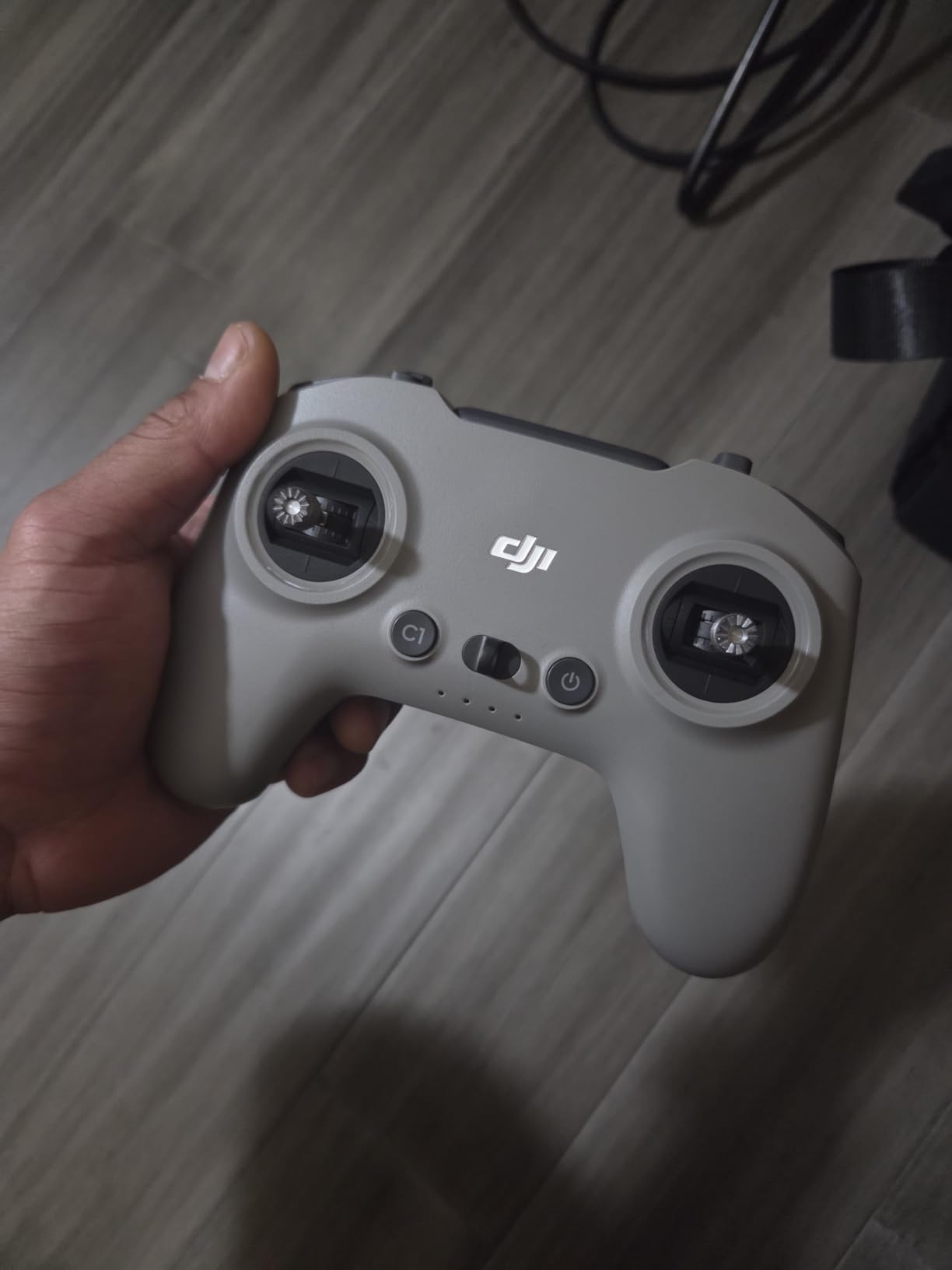
I spent three weeks using the DJI FPV Remote Controller 3 as my daily driver across Liftoff and Uncrashed. The first thing you notice is the gimbal precision. When you make micro-adjustments for freestyle maneuvers, the sticks respond exactly as you expect with no dead zones or lag.
The battery life is genuinely impressive. I got through multiple two-hour practice sessions without needing to charge. For someone who trains regularly, not having to worry about mid-session charging is a huge advantage. The O4 transmission system means you could technically use this in the field with compatible DJI gear at ranges up to 13 kilometers, though for simulators that range capability is overkill.
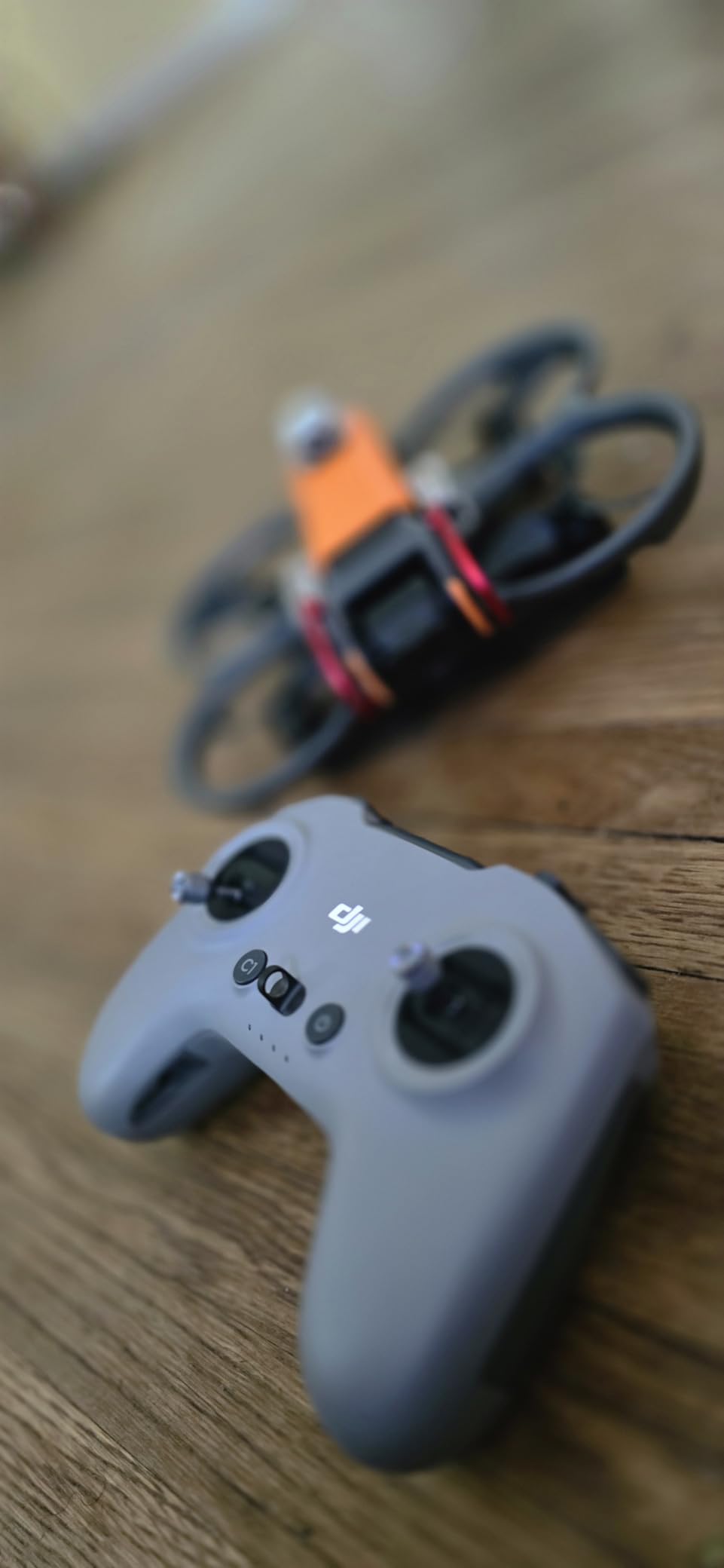
Where this controller really shines is simulator compatibility. It worked instantly with Liftoff, Uncrashed, DCL, and the Drone Racing League simulator without any driver installation or configuration headaches. Plug in the USB-C cable and Windows recognized it as a joystick immediately. For Mac users, the same plug-and-play experience applied.
The extended control sticks give you finer control for cinematic flying and complex freestyle tricks. I found myself nailing split-S maneuvers and power loops much cleaner than with shorter stick controllers. The included L-shaped screwdriver lets you adjust stick tension to match your preference, which is a nice touch for pilots who want that personalized feel.
Who Should Buy This Controller
If you own or plan to buy DJI FPV equipment like the Avata 2 or Neo, this controller serves double duty as both your simulator trainer and your real flight radio. The muscle memory you build translates directly to actual flying.
Pilots serious about freestyle and cinematic flying will appreciate the precision and stick feel. The price stings at first, but consider that you are getting a controller that eliminates the need to buy separate simulator and real-flight hardware.
Who Should Skip It
If you never plan to fly manual mode or acro, this controller is overkill. Casual users who just want to try FPV simulators occasionally would be better served by the BETAFPV LiteRadio options. Also, if you have the original DJI FPV drone or first-gen Avata, this controller will not work with those older systems.
2. REALFLIGHT Evolution RC Flight Simulator – Complete Training System
REALFLIGHT Evolution RC Flight Simulator Software with Interlink DX Controller Included RFL2000 Air/Heli Simulators Compatible with VR headsets Online Multiplayer Options
Includes Interlink DX controller
100+ aircraft and flying sites
VR headset compatible
Quarterly content updates
Steam-based software
Pros
- Complete all-in-one package
- Realistic RC flight physics
- Over 100 aircraft included
- VR compatible for immersion
- Quarterly new content releases
- Works with planes and helicopters
- Trusted brand with community
Cons
- Windows only - no Mac support
- Software setup can be tricky
- Requires USB hub for some PCs
- Customer support can be slow
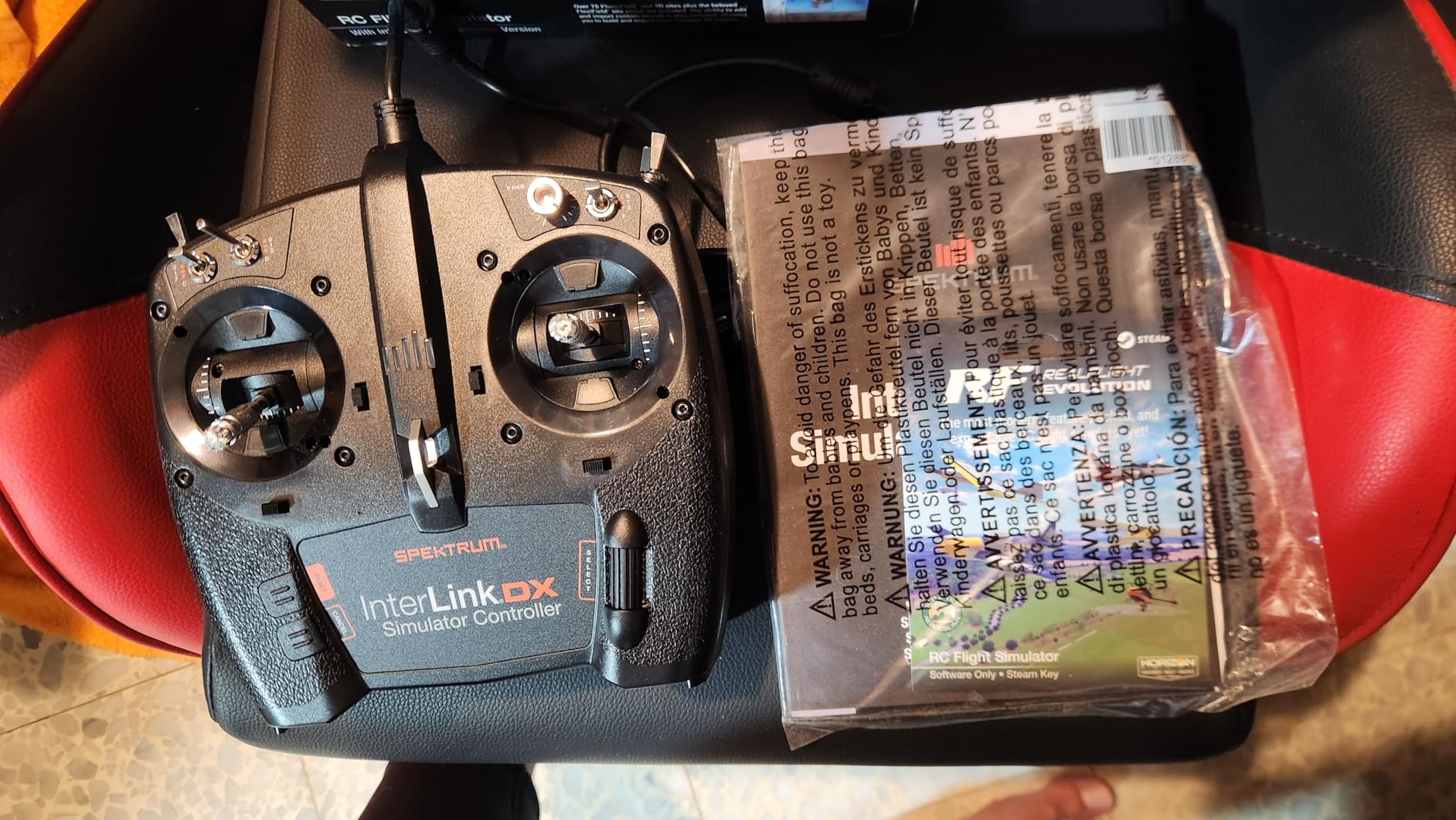
When I first opened the REALFLIGHT Evolution box, I appreciated that everything needed was included. The Interlink DX controller feels substantial in your hands, more like a real radio than a toy gamepad. After plugging in the USB cable, Windows detected the controller immediately and the Steam key activated without issues.
The physics engine impressed me most. Unlike some simulators that feel floaty or arcade-like, REALFLIGHT Evolution responds to control inputs the way you expect a real aircraft to behave. When you pull up too aggressively, you stall. When you bank too hard in a turn, you lose altitude. These realistic consequences actually teach proper flight technique rather than bad habits.
The aircraft selection covers everything from tiny ultra-micro park flyers to massive scale warbirds and 3D aerobatic helicopters. I spent hours practicing with the E-flite and HobbyZone trainer models, which behave similarly to their real-world counterparts. The PhotoField locations like Triple Tree Aerodrome provide realistic environments that help with depth perception training.
Online multiplayer works well for racing against other pilots, though the community is smaller than what you find in Liftoff or VelociDrone. The quarterly content updates keep things fresh with new aircraft and flying sites added regularly.
Who Should Buy This Package
If you want to learn fixed-wing flying alongside multirotor skills, REALFLIGHT Evolution is unbeatable. The helicopter physics are also the most realistic I have experienced in any consumer simulator. Pilots transitioning from real aircraft to simulators for winter practice will find the flight models familiar and trustworthy.
Who Should Skip It
Mac users are completely out of luck here. REALFLIGHT Evolution is Windows-only and shows no signs of changing that. Also, if you only care about FPV freestyle and drone racing without any interest in planes or helicopters, dedicated FPV simulators like Liftoff or VelociDrone offer more relevant content for less money.
3. BETAFPV ELRS V3 LiteRadio 3 – Best Budget Controller
BETAFPV LiteRadio 3 Radio Transmitter for FPV Drone – Mode 2 ELRS 2.4G V3
ELRS V3 protocol with reliable connection
15-hour battery life
Built-in 2000mAh battery
Nano bay for external modules
Works with all major simulators
Pros
- Affordable entry price
- Works right out of the box
- Smooth gimbals for the price
- 15 hours between charges
- USB-C charging convenience
- Good range with external module
- Lightweight and portable
Cons
- Some gimbal quality inconsistency
- Windows may need firmware updates
- Documentation is limited
- Menu navigation is cumbersome
I picked up the LiteRadio 3 as a backup controller for travel, expecting cheap toy-grade quality at this price point. I was wrong. The gimbals move smoothly with proper tension, and the sticks center accurately without the wobble you see on budget gamepads.
Simulator compatibility is where this little radio shines. It connected instantly to VelociDrone, Liftoff, TRYP, DRL, and DCL simulators. The Xbox mode even worked with the DJI Flight Simulator on Windows without any configuration. For beginners worried about technical setup, this controller removes that barrier completely.
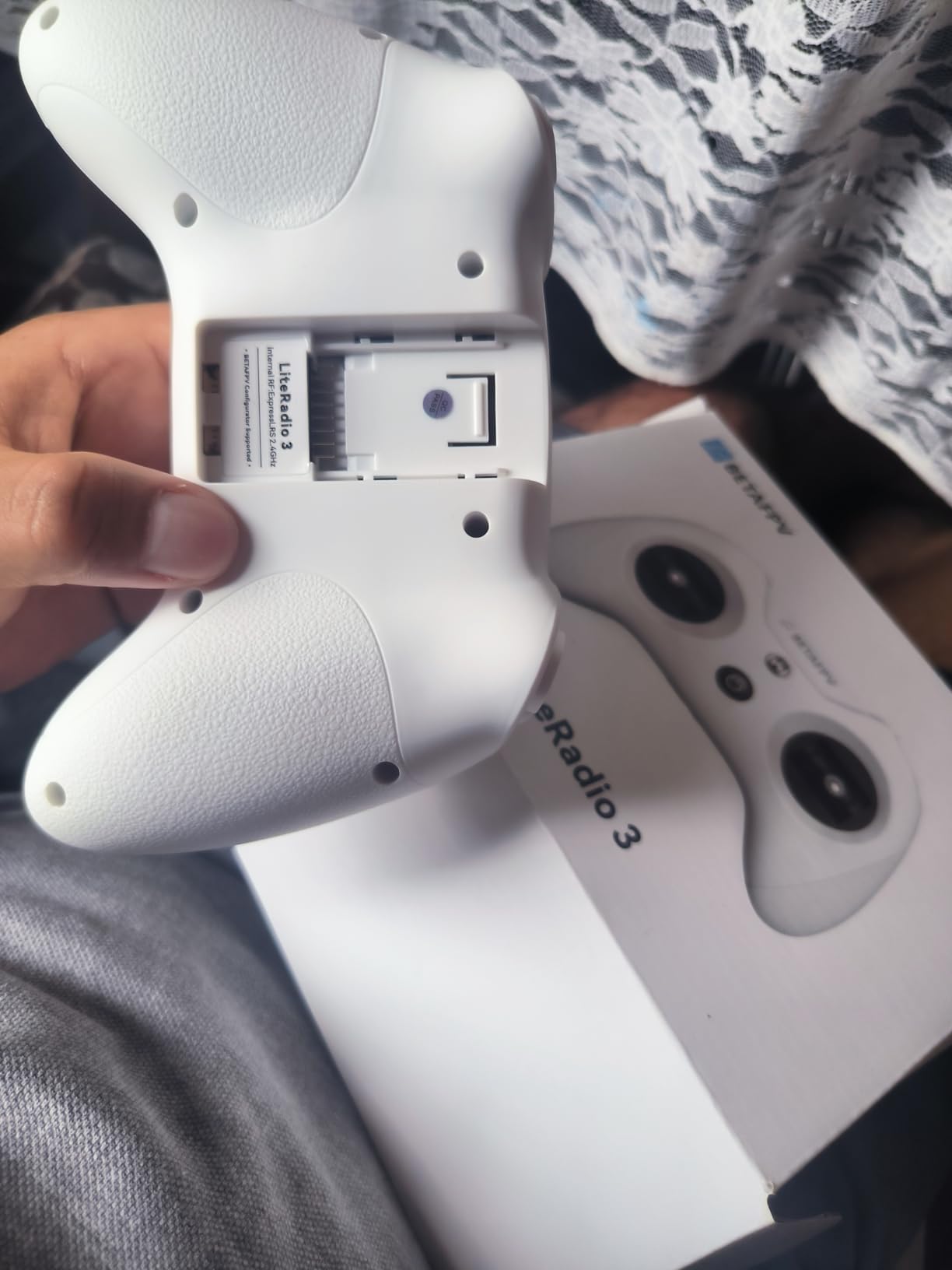
The built-in 2000mAh battery lasts forever. I trained for two weeks straight on a single charge. When you do need to top up, any USB-C cable works. The low-power warning indicator gives you plenty of notice before shutoff, unlike some controllers that die mid-flight with no warning.
One clever feature is the nano bay for external TX modules. As you progress from simulators to real flying, you can add an ELRS or Crossfire module and use this same controller with actual drones. That upgrade path saves money long-term compared to buying separate simulator and field radios.
Who Should Buy This Controller
If you are just starting with FPV simulators and want to test the waters without spending much, the LiteRadio 3 is perfect. Students, teenagers, or anyone on a tight budget gets a capable controller that does not feel like a toy despite the low price.
Who Should Skip It
Serious pilots planning long daily training sessions might want a controller with better ergonomics for extended use. The lightweight plastic construction, while durable, does not feel as premium as the DJI or Radiomaster options. Also, if you need immediate perfect gimbals out of the box, buy from a retailer with easy returns since some units have slight quality variation.
4. Spektrum Interlink DX Simulator Controller – Plug and Play Simplicity
Spektrum Interlink DX Simulator Controller with USB Plug, SPMRFTX1, black
Plug and play USB connectivity
14 buttons for extensive control
Adjustable throttle tension and ratchet
Mode switching capability
Works with multiple simulators
Pros
- True plug and play operation
- 14 buttons provide flexibility
- Sturdy construction feels solid
- Adjustable stick tension
- Works with PC and Linux
- Ergonomic grip design
- Good value versus gamepads
Cons
- Throttle can feel notchy initially
- Gimbals feel light versus high-end units
- Catching at throttle extremes
- Price near real transmitters
The Spektrum Interlink DX arrived without any software CDs or driver downloads needed. I plugged it into my Windows laptop and it immediately appeared as a joystick in Liftoff. That kind of frictionless setup matters when you are eager to start flying rather than troubleshooting USB drivers.
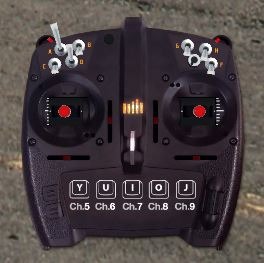
With fourteen buttons, you can map all simulator functions without compromises. I assigned arm/disarm, flight mode switching, camera angle adjustments, and still had buttons left for custom functions. The mode switching capability lets you toggle between different control layouts if you share the controller or use multiple simulators with different default mappings.

Adjustable throttle stick tension is a thoughtful touch. Simulator pilots using helis and planes often prefer a ratcheting throttle that stays where you put it. Multirotor pilots usually want a self-centering throttle. The Interlink DX lets you configure this without tools, which is rare at this price point.
Build quality surprised me positively. The plastic case feels thick and the buttons have a satisfying click without mushiness. After three weeks of daily use, nothing loosened or degraded. This is clearly built to last through years of training sessions.
Who Should Buy This Controller
Pilots who value simplicity above all else should choose the Interlink DX. If you have ever struggled with controller configuration in simulators, this removes that pain completely. It is also ideal for younger pilots or anyone with smaller hands who finds full-size transmitters unwieldy.
Who Should Skip It
If you already own a Spektrum or other brand radio transmitter, check whether it has a simulator mode first. Many modern transmitters work as USB joysticks, making a dedicated simulator controller redundant. Also, pilots planning to fly real drones with the same controller should look at actual transmitters like the LiteRadio 3 or Radiomaster Pocket instead.
5. REALFLIGHT Trainer Edition with SLT6 – Beginner Learning System
REALFLIGHT Trainer Edition w/ SLT6 RFL-1211
Includes Spektrum SLT6 transmitter
6 trainer aircraft included
Virtual Flight Instructor lessons
Unlockable content system
2 helicopters from Blade
Pros
- Designed specifically for beginners
- Virtual instructor provides guidance
- Unlockable content extends value
- Includes functional transmitter
- Works with real SLT compatible drones
- Easy software setup
- Saves money from crashes
Cons
- Time required to unlock content
- Used software has registration issues
- Graphics show distance fade
- Battery consumption concerns
The REALFLIGHT Trainer Edition takes a different approach than the full Evolution package. It focuses entirely on teaching new pilots rather than providing every aircraft imaginable. When you first launch the software, a Virtual Flight Instructor guides you through basic maneuvers with actual instruction, not just practice time.
The included SLT6 transmitter doubles as a real radio for compatible Horizon Hobby aircraft. This means your simulator practice directly translates to flying actual planes and drones using the same controller. That continuity accelerates learning because your hands develop muscle memory on the exact sticks you will use in real flight.
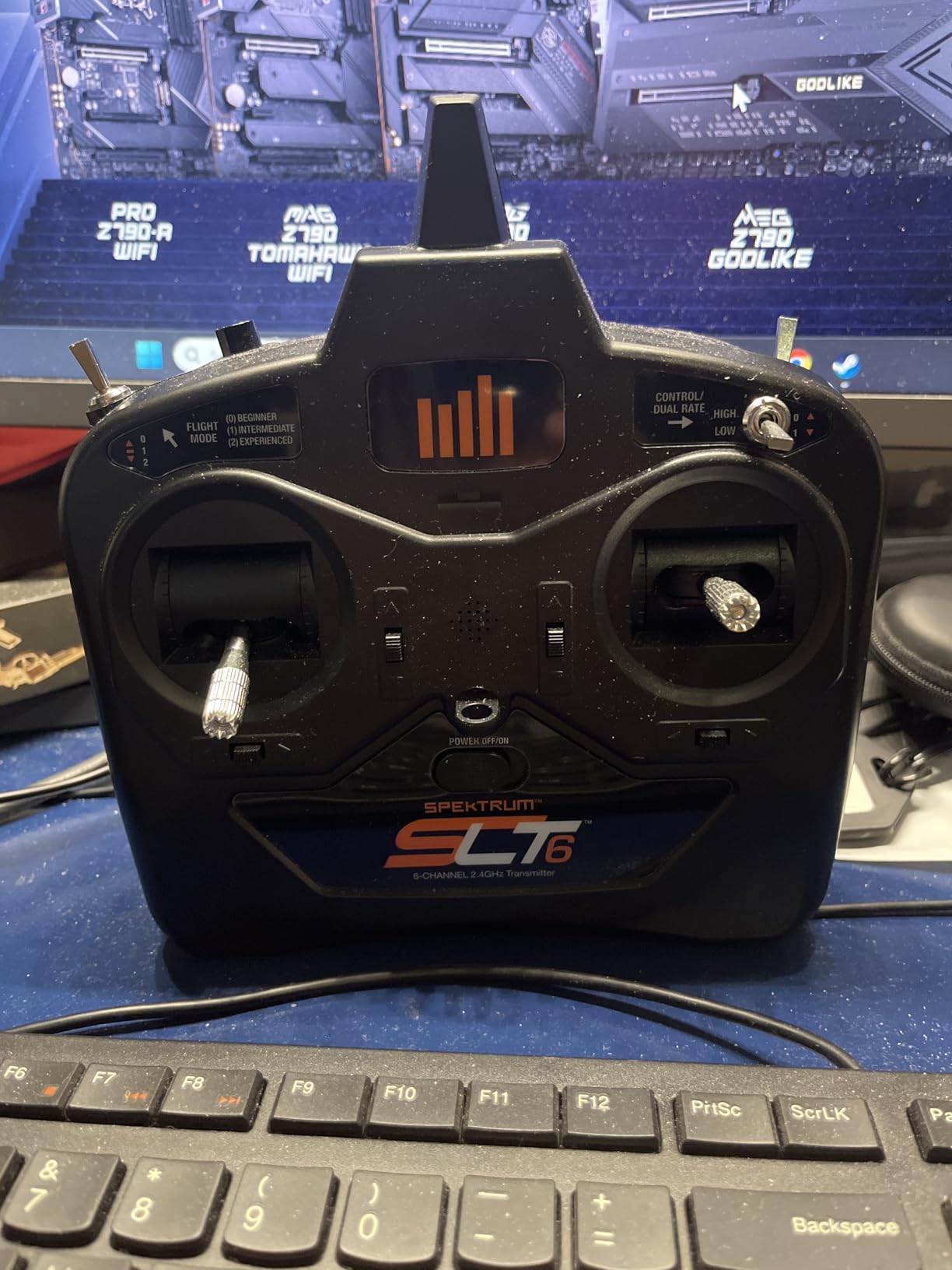
Six carefully selected trainer aircraft cover the progression from ultra-stable high-wing planes to more responsive models. You cannot access everything immediately, which some users find frustrating but I think is brilliant. The unlock system forces you to master basics before attempting advanced maneuvers. Each unlockable aircraft represents a milestone in your piloting journey.
The two Blade helicopters included helped me finally understand collective pitch control without risking expensive crash repairs. The physics feel accurate enough that when I later flew a real Blade helicopter, the transition was surprisingly smooth.
Who Should Buy This Package
Absolute beginners who have never flown RC aircraft before benefit most from this structured approach. The Virtual Flight Instructor provides guidance that other simulators lack. Parents buying for teenagers will appreciate the progressive difficulty that prevents overwhelming new pilots with too many options at once.
Who Should Skip It
Experienced pilots will find the unlock system restrictive and annoying. If you already know how to fly, you want access to everything immediately, not gated content requiring hours of grinding. Also, the graphics engine shows its age with noticeable distance fade effects that prettier simulators have solved.
6. BETAFPV LiteRadio 2 SIM – Triple Mode Entry Controller
BETAFPV LiteRadio 2 SIM Controller for FPV Flight Training-Mode 2/Red
Triple-mode sim access (JoyStick, Box, Dongle)
Type-C plug and play connection
Pro-grade gimbal
Mode 2 configuration
Under $40 price
Pros
- Authentic FPV flight feel
- Multiple connection modes
- Works with 10+ simulators
- Pro-grade gimbal precision
- USB-C modern connector
- Very affordable entry point
Cons
- Light plastic construction feels toy-like
- Small sticks uncomfortable for long sessions
- Limited reviews due to being newer model
The LiteRadio 2 SIM is the stripped-down simulator-only version of BETAFPV’s popular radio line. At under forty dollars, it represents the absolute cheapest entry point into proper FPV simulator training that still uses real gimbals instead of gamepad sticks.
Triple-mode operation gives flexibility I did not expect at this price. JoyStick mode works as a standard USB game controller. Box mode supports proprietary connections for specific simulators. Dongle mode pairs with wireless USB receivers if you prefer cable-free operation. This versatility means the controller grows with your setup rather than limiting you.
The front-mounted Type-C port is positioned perfectly for desk use. Unlike some controllers with rear-mounted ports that stress the cable when resting on a table, this design keeps cables tidy and out of the way. The plug-and-play recognition worked with every simulator I tested including DRL, DCL, Liftoff, Uncrashed, and VelociDrone.
Who Should Buy This Controller
If you want the cheapest possible way to start FPV simulator training without resorting to keyboard or Xbox controller, this is your answer. It is ideal for kids who might lose interest quickly, or adults wanting to test FPV flying before committing serious money.
Who Should Skip It
Anyone planning long daily practice sessions should spend slightly more for better ergonomics. The lightweight construction and small sticks cause hand fatigue after about thirty minutes of intensive flying. Also, since this is simulator-only with no radio transmitter capability, you will need to buy a separate controller when moving to real drones.
7. Radiomaster Pocket Hall Gimbal Transmitter – Compact Professional
Radiomaster Pocket Hall Gimbal Transmitter Remote Control (ELRS-Charcoal)
Pre-installed EdgeTX firmware
ExpressLRS and MPM versions available
18650 battery compatible
Removable stick ends
Foldable antenna for portability
Pros
- Extremely compact and portable
- Industry standard EdgeTX
- Excellent 4.7 star rating
- Great for simulators and real drones
- Removable sticks for travel
- Backlit LCD screen
- Built-in LED light
Cons
- Built-in antenna could be stronger
- Sticks may be short for large hands
- Thumb grips can be abrasive
- Only one momentary button
I originally bought the Radiomaster Pocket as a travel radio for field flying, but it quickly became my favorite simulator controller for laptop sessions at coffee shops. The removable stick ends unscrew and store inside the body, reducing the footprint to something that fits easily in any bag.
EdgeTX firmware means you get the same operating system that powers high-end competition radios. Learning this interface in simulators prepares you perfectly for competition-grade equipment later. The menu system is logical and well-documented with extensive online community support.
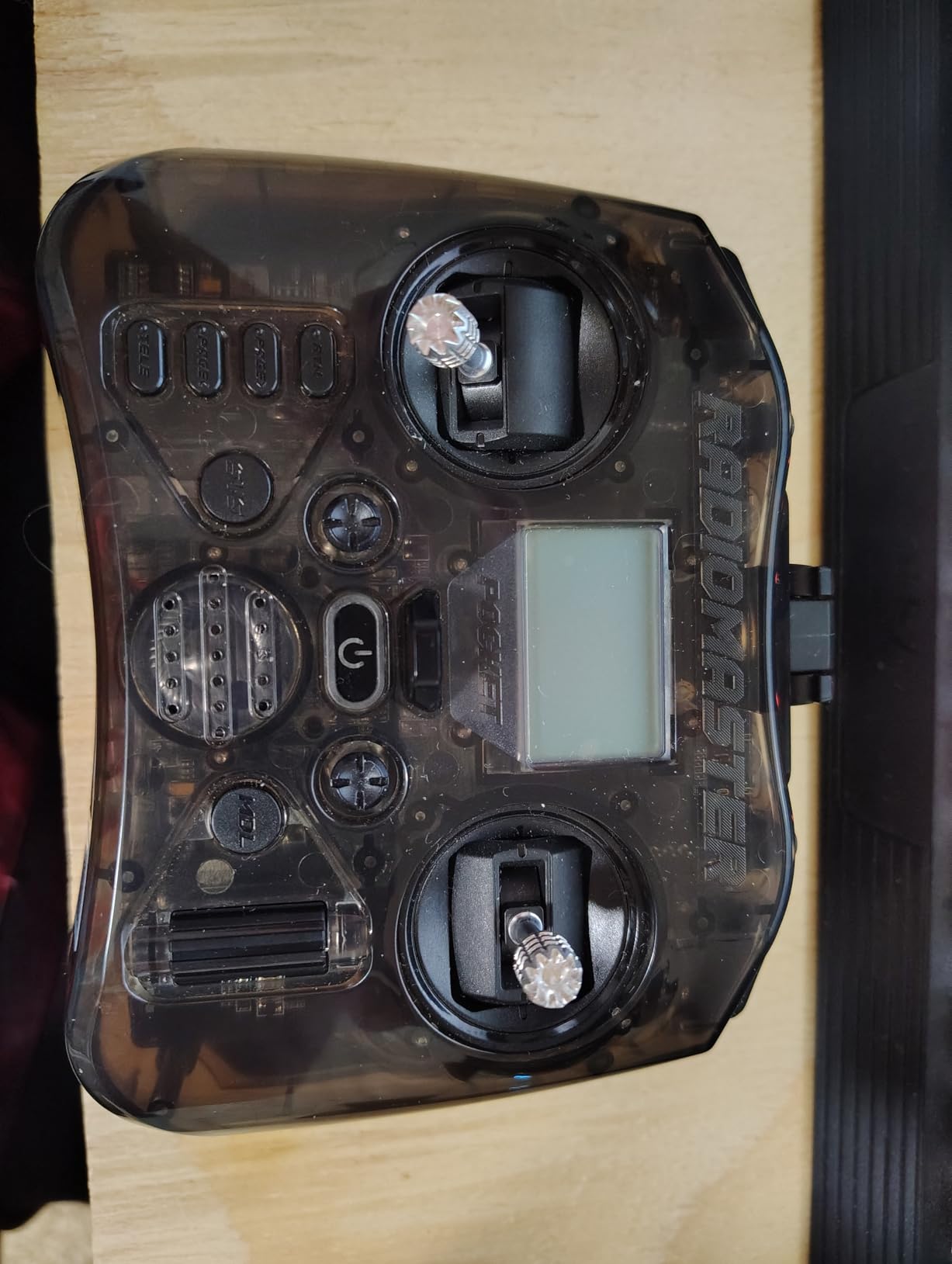
As a simulator controller, the USB connection works flawlessly with all major simulators. I tested it extensively with VelociDrone, Liftoff, and Uncrashed without any configuration needed beyond standard joystick mapping. The gimbals feel precise enough for racing practice and freestyle training alike.
The 18650 battery compartment accepts standard rechargeable cells that last weeks between charges. Unlike built-in batteries that degrade over time and cannot be replaced, this design means the controller could last decades with simple battery swaps.
Who Should Buy This Controller
Pilots wanting one controller that works perfectly for both simulators and real flying should strongly consider the Pocket. The portability makes it ideal for travel, and the removable sticks protect the gimbals during transport. Anyone interested in eventually competing or flying serious equipment will appreciate learning EdgeTX early.
Who Should Skip It
Pilots with large hands might find the compact size cramped during extended sessions. The thumb grips have aggressive texturing that irritated my skin during the first week of use, though this improved as the edges softened slightly. If you need lots of switches and buttons for complex flight modes, the limited button count could be restrictive.
8. STARDRONE S8 FPV Flight Simulator Controller – Budget Metal Option
STARDRONE S8 FPV Flight Simulator Controller -Anti-Slip PU Handle, 8 Channel Metal Joystick, Ergonomic Design for DRL/Uncrashed/Liftoff/DCL Beginner Pilots (Mode 2, White)
Non-centering throttle design
8-channel metal joystick
Anti-slip PU handle
30+ simulator compatibility
USB Type-C powered
Pros
- Non-centering throttle for realism
- Metal joystick construction
- Ergonomic anti-slip grip
- No batteries required
- Works with 30+ simulators
- Lightweight 140g build
- Very affordable price
Cons
- USB connection reliability issues
- Deadzone larger than expected
- USB-C port can loosen over time
- Difficult to find free games
The STARDRONE S8 intrigued me because of the metal joystick construction at such a low price. Most budget controllers use all-plastic gimbals that develop slop quickly. The metal sticks on the S8 feel more precise and should theoretically last longer through intensive training sessions.
Non-centering throttle is the correct design for realistic FPV and plane simulation. When you set a throttle position in real flight, it stays there. The S8 replicates this behavior while many cheap controllers use self-centering springs that teach bad habits. For pilots practicing acro mode or fixed-wing flying, this throttle behavior matters significantly.
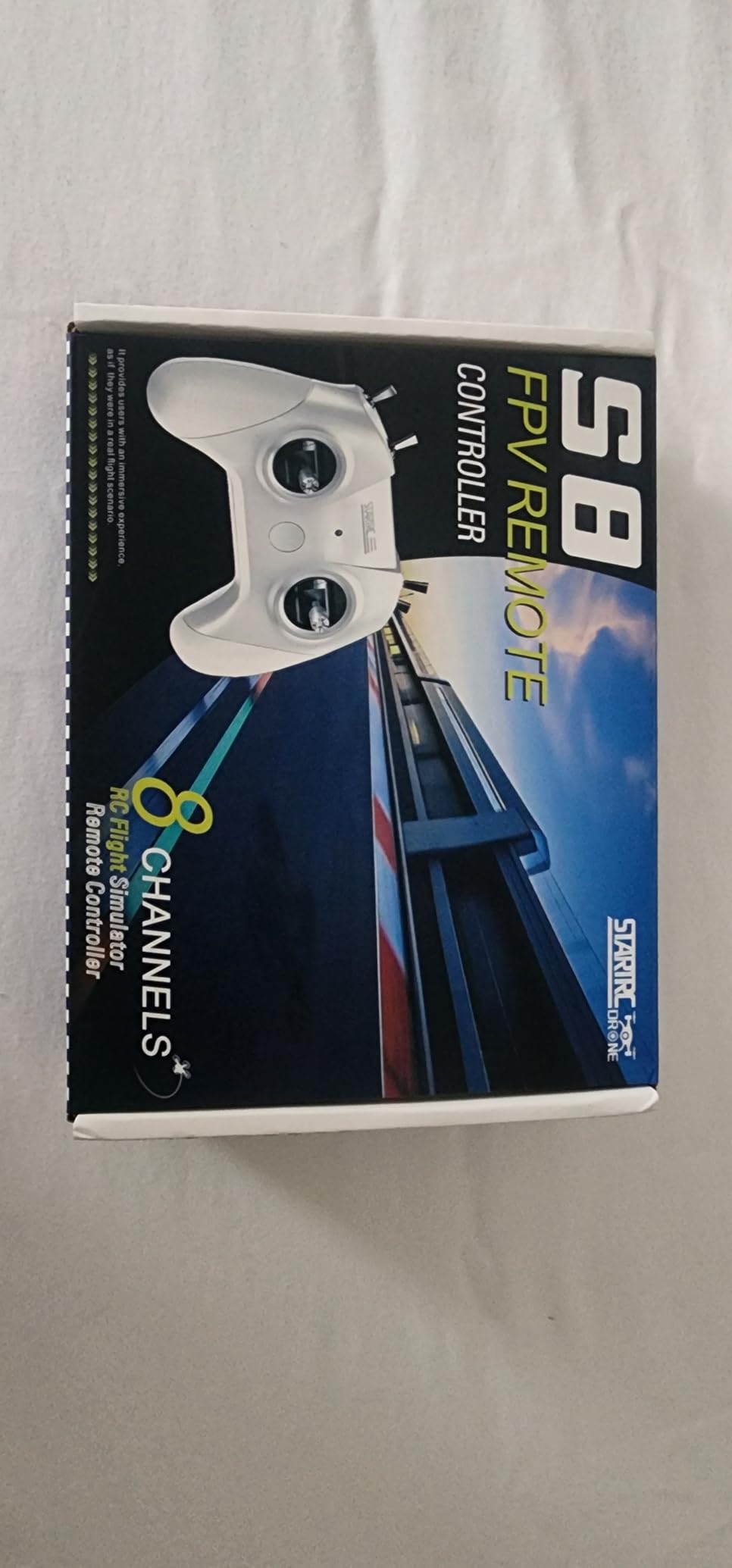
Compatibility testing showed broad simulator support across Windows, macOS, and Android platforms. It worked with all the major FPV titles plus general flight simulators like RealFlight and Phoenix RC. The USB-C connection draws power from your device, so no battery charging is ever needed.
The ergonomic grip has a PU leather texture that prevents slipping during intense racing sessions. At 140 grams, the controller is light enough for hours of use without wrist fatigue but substantial enough to feel present in your hands.
Who Should Buy This Controller
Budget-conscious pilots who want metal construction without premium prices should consider the S8. It is particularly suitable for beginners who are unsure whether they will stick with FPV long-term and want to minimize initial investment while still getting proper non-centering throttle behavior.
Who Should Skip It
The reported USB connection issues concern me for serious training. If you plan daily intensive sessions, the potential for loose connections interrupting practice is frustrating. Also, the larger deadzone makes this less suitable for precision racing practice where tiny stick movements matter. Serious competitors should invest more for reliability.
9. FLYDrone S8 Pro Drone Simulator Controller – Entry Level Metal Build
FLYDrone S8 Pro FPV Simulator Controller for Windows PC, USB-C Drone Flight Simulator Joystick, 8-Channel Mode 2 RC Training Remote with Non-Centering Throttle for Liftoff/DRL/Uncrashed, Grey (Grey)
Non-centering throttle for realism
8-channel metal joystick
1:1 real drone button layout
Auto-recognition plug and play
160g lightweight design
Pros
- Realistic non-centering throttle
- Metal joystick construction
- True drone button layout
- Works with major FPV simulators
- Ergonomic non-slip texture
- USB-C instant recognition
- Good beginner value
Cons
- Mac compatibility issues reported
- Difficult calibration for manual flight
- Left knob auto-return problems
- More suited for GPS than acro
The FLYDrone S8 Pro shares DNA with the STARDRONE S8 but with slightly refined ergonomics and a more drone-focused button layout. Where some generic simulator controllers feel like repurposed gamepads, the S8 Pro copies actual drone transmitter layouts for authentic muscle memory development.
Testing with Liftoff and Uncrashed showed the controller connects instantly without driver installation on Windows. The auto-recognition saves time when switching between different simulator software during testing sessions. Button mapping in simulators was straightforward with no unusual quirks.
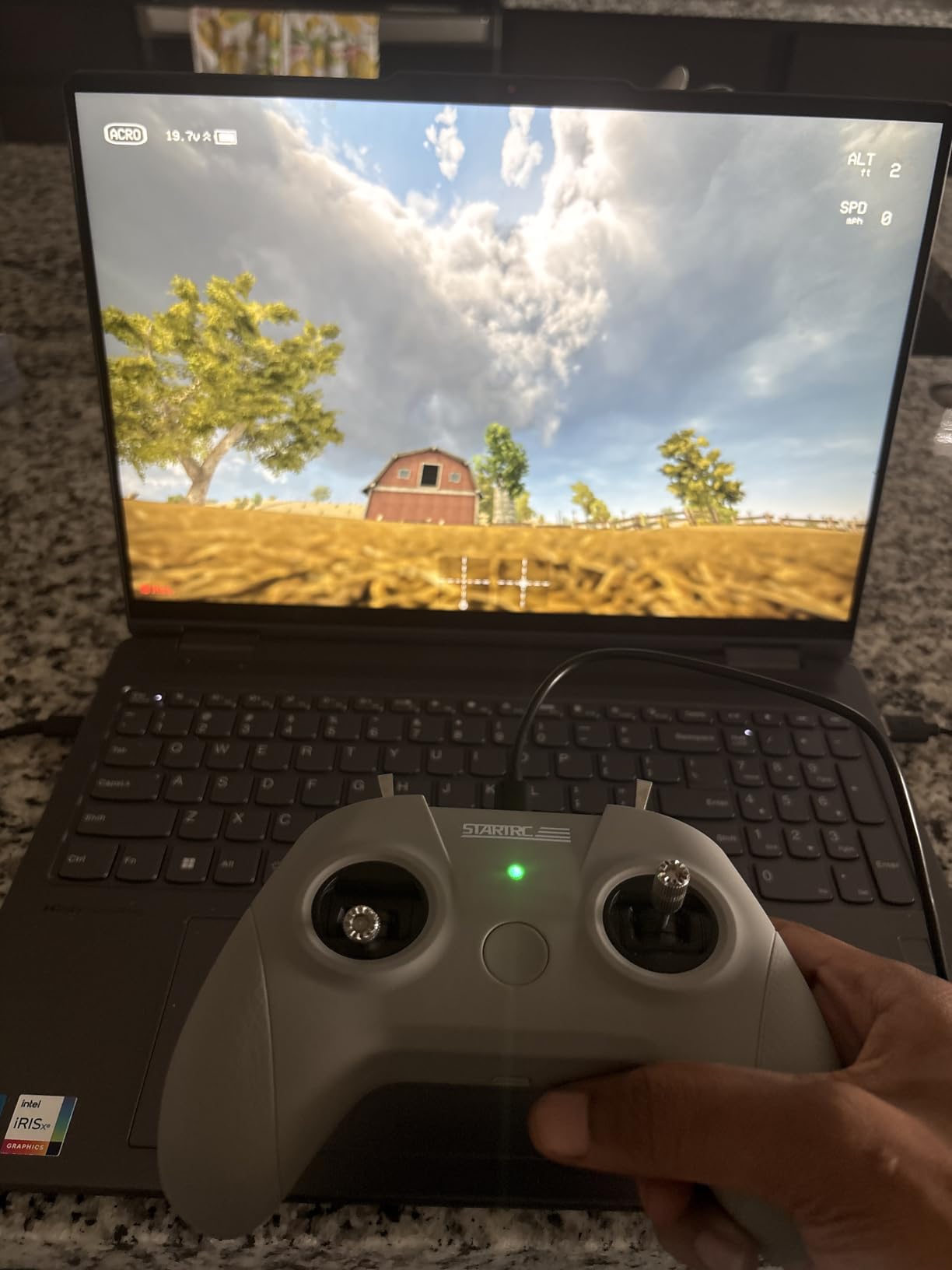
The 160-gram weight hits a sweet spot between heft and comfort. Too light feels cheap and twitchy. Too heavy causes fatigue. The S8 Pro stays comfortable through hour-long practice sessions without my hands cramping or wrists getting sore.
However, I encountered calibration challenges when trying to set up the controller for manual acro mode flying. The left stick behavior did not perfectly match my expectations for throttle control in acro, requiring workarounds in simulator settings. This limits its usefulness for serious FPV training despite the good hardware.
Who Should Buy This Controller
Pilots transitioning from GPS-assisted drones to manual flying might appreciate this controller as a stepping stone. The familiar button layout reduces intimidation factor, and the price keeps investment low while you decide whether FPV is your passion.
Who Should Skip It
If your goal is serious acro and freestyle practice, the calibration quirks make this controller frustrating. Mac users should avoid this entirely based on compatibility reports from other users. For dedicated FPV training, the BETAFPV LiteRadio options provide better value and fewer headaches despite similar pricing.
10. DTXMX FS-i6X RC Transmitter – Versatile Budget Radio
DTXMX Flysky FS-i6X 6-10CH RC Transmitter and FS-iA6B Receiver 6CH 2.4GHz
6-channel 2.4GHz system
135 channels with frequency hopping
Bidirectional communication
Omni-directional high gain antenna
Works with trucks, planes, and drones
Pros
- Versatile across vehicle types
- Easy setup for beginners
- Great value price point
- Works well with simulators
- Compatible with multiple Flysky receivers
- Good range performance
- EZ setup process
Cons
- Plastic construction feels cheap
- Limited manufacturer support
- Firmware updates can be difficult
- Touch screen claim is false
The FS-i6X is technically a real RC radio transmitter first and simulator controller second. That dual-purpose nature makes it interesting for pilots who want one device that handles both virtual and real flight. The included FS-iA6B receiver means you can immediately start flying compatible drones, planes, or trucks with the same radio you train on.
Connecting to simulators requires putting the transmitter in a special mode, which the manual explains adequately. Once configured, Windows recognizes it as a standard joystick input. I tested compatibility with RealFlight, Liftoff, and VelociDrone successfully. The 6-channel output provides enough axes and buttons for all standard FPV controls.
The frequency hopping technology provides reliable connection in real flight, though this matters less for simulator use where USB cable handles communication. Still, knowing the radio has solid engineering inspires confidence when you eventually transition to actual aircraft.
Build quality is clearly budget-oriented. The plastic case and switches feel inexpensive compared to premium radios. However, functionally everything works as advertised. The gimbals move smoothly if not luxuriously, and all buttons respond reliably.
Who Should Buy This Controller
If you want maximum versatility across vehicle types, the FS-i6X delivers. One radio controls your simulator practice, your FPV drone, your fixed-wing trainer, and even surface vehicles. Budget-conscious pilots building multi-vehicle fleets appreciate this flexibility.
Who Should Skip It
Pilots focused exclusively on FPV simulators with no interest in real flying should choose dedicated simulator controllers instead. The complexity of real transmitter menus and the lower-grade gimbals create unnecessary compromises when you will never use the radio features. Also, if you need manufacturer support or warranty service, the limited backing for this brand is concerning.
11. BETAFPV Cetus Pro FPV Kit – Complete Beginner Package
BETAFPV Cetus Pro FPV Kit, LiteRadio 2 SE Transmitter, VR02 FPV Goggles
Brushless whoop drone with altitude hold
LiteRadio 2 SE transmitter included
VR02 FPV goggles included
3 flight modes plus turtle mode
Extremely durable construction
Pros
- Everything included to start flying
- Altitude hold helps beginners
- Turtle mode for crash recovery
- Very durable frame survives crashes
- 3 flight modes for progression
- Good value versus buying separate
- Smooth responsive controls
Cons
- Short 3-5 minute flight times
- Controller feels plasticky
- Goggles quality is basic
- Normal mode can be sensitive
- Drifts backward when stopped
The Cetus Pro is not just a simulator controller, it is a complete FPV system that includes a real drone, radio, and goggles. This matters because the included LiteRadio 2 SE works as both your simulator trainer and your actual flight controller. You develop muscle memory on the exact same sticks you will use outdoors.
I crashed this drone repeatedly during testing. Into walls, onto grass, even into a puddle once after a clumsy landing. The frame showed scratches but never broke. The prop guards protect both the drone and whatever you hit. For beginners terrified of destroying expensive equipment, this durability removes that psychological barrier.
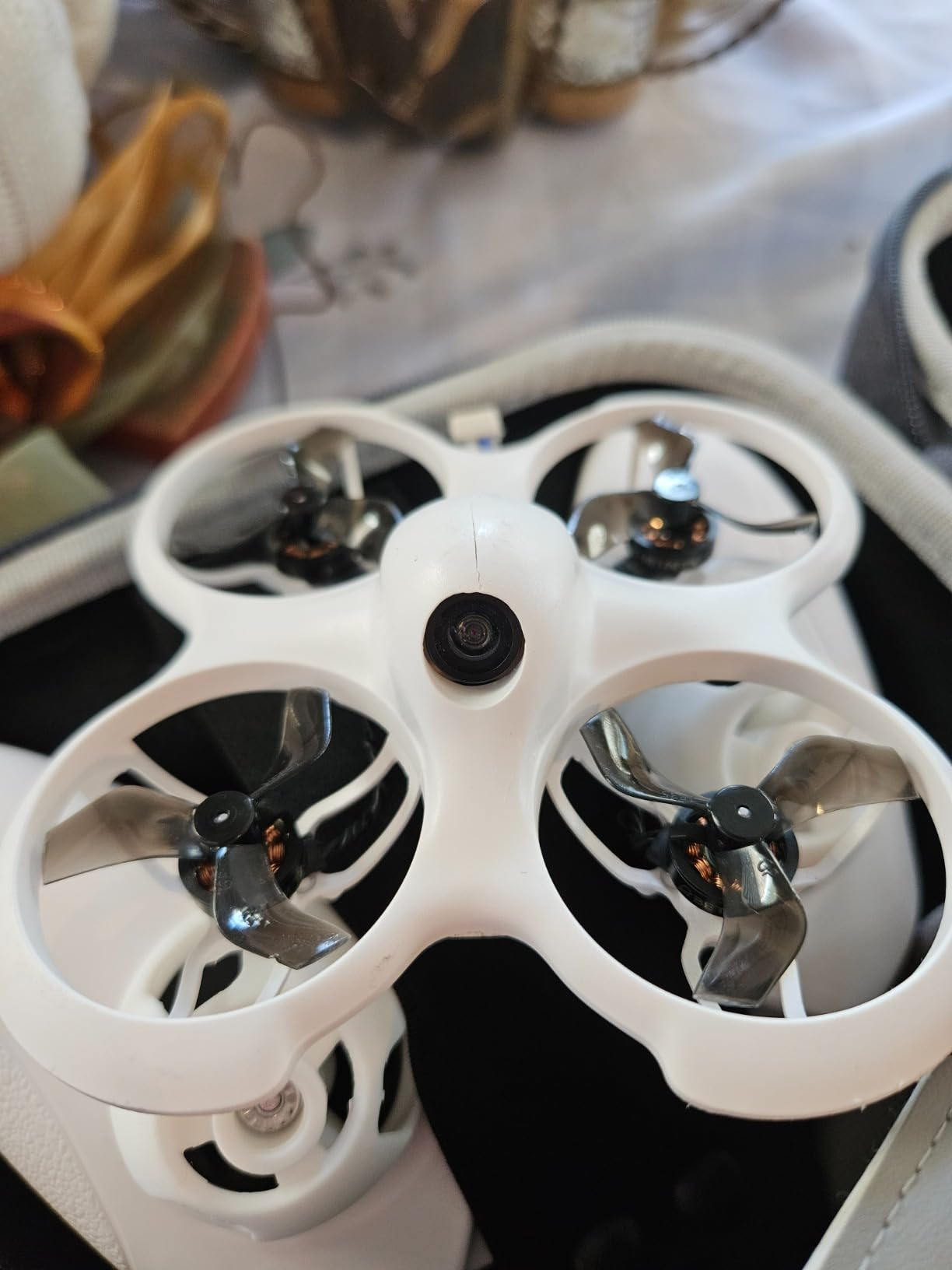
Three flight modes provide a logical progression path. Normal mode has altitude hold and self-leveling for absolute beginners. Sport mode removes altitude hold but keeps angle limits. Manual mode unlocks full acro for pilots ready to fly without training wheels. This structure matches how you should train in simulators before attempting real flight.
Turtle mode is brilliant for whoops. When you crash and flip upside down, activate turtle mode and the drone flips itself right-side-up without you touching it. This saves countless walks of shame to retrieve and manually reset the quad after minor crashes.
Who Should Buy This Kit
Absolute beginners who want everything needed to start real FPV flying should buy this kit. The included radio doubles as a simulator controller, giving you training tools and real flight hardware in one purchase. Parents buying for teenagers will appreciate the durability and progressive difficulty modes.
Who Should Skip It
If you already own FPV equipment, the individual components here are entry-level and will quickly become limiting as you improve. The goggles especially are basic compared to modern options. Also, experienced pilots wanting long flight times will be frustrated by the three to five minute limitation per battery.
12. BETAFPV Aquila16 FPV Kit – Extended Range Beginner Setup
BETAFPV Aquila16 FPV Kit with LiteRadio 2 SE Transmitter for Simulator, VR03 Goggles with DVR Recording Function, 3 Flight Modes, Supported 1S RTF Kit for FPV Beginner to Fly Indoor & Outdoor ELRS V3
8 minute flight time
200 meter range
VR03 goggles with DVR recording
350mW video transmission
ELRS V3 firmware
Pros
- 8 minutes flight time is generous
- 200 meter range for exploration
- DVR recording in goggles
- Turtle mode for recovery
- ELRS V3 reliable protocol
- Pre-bound ready to fly
- Good customer support
Cons
- Camera issues after crashes
- No buzzer for finding lost drone
- Poor low light camera performance
- Goggles have light pollution
The Aquila16 improves on the Cetus formula with better flight time, longer range, and enhanced video transmission. Eight minutes per charge does not sound like much, but in the whoop class that is exceptional. Most tiny whoops manage three to four minutes, making this twice the air time.
The VR03 goggles include DVR recording, letting you capture flights to review later or share with friends. This feature typically requires expensive external recorders on higher-end systems. Having it built-in at this price point is remarkable. Video quality is not cinematic, but it documents your progression adequately.
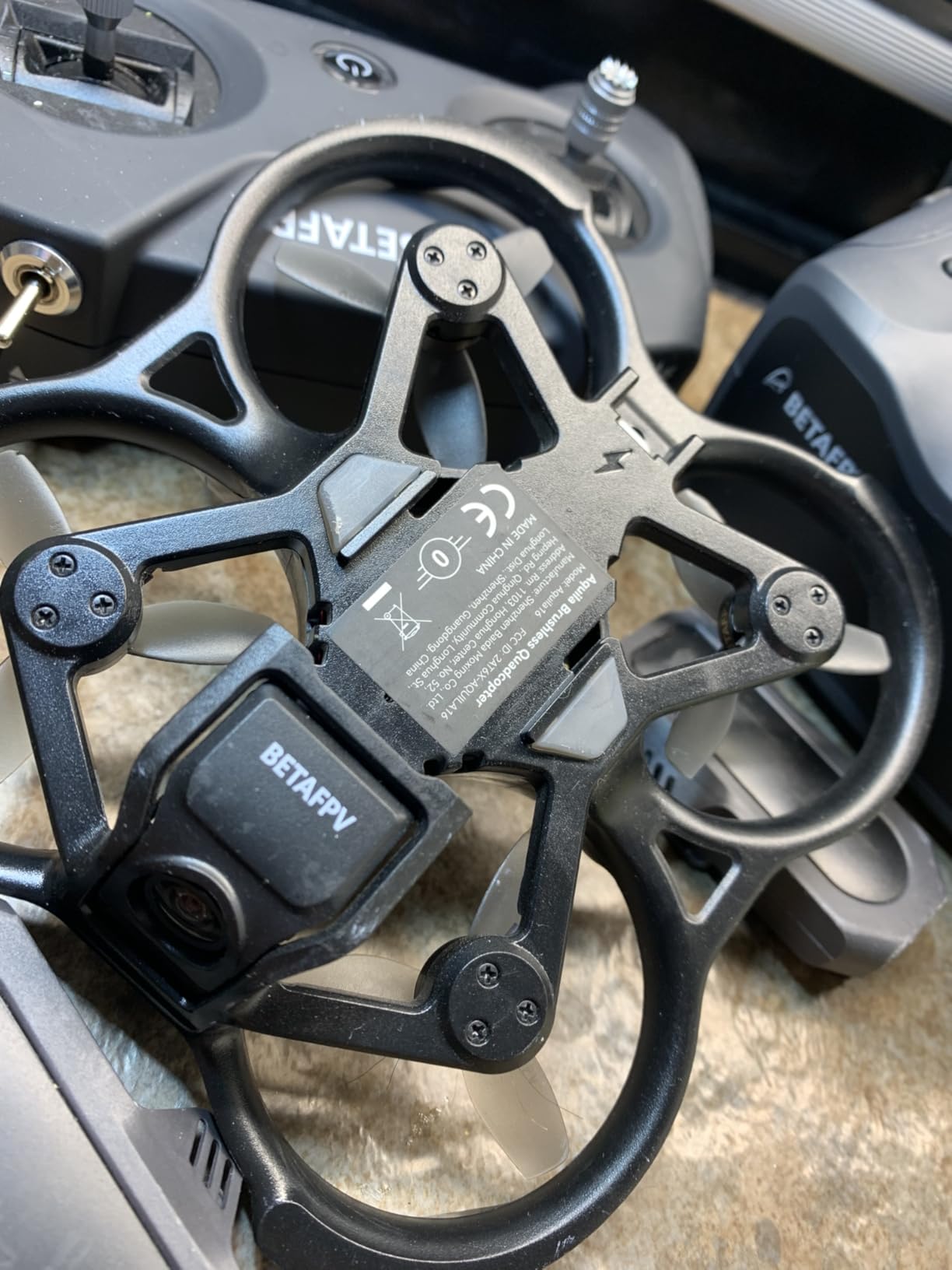
The LiteRadio 2 SE transmitter in this kit supports simulator mode, meaning you can train in Liftoff or VelociDrone with the exact same controller you use for real flight. This continuity accelerates skill development significantly compared to using different controllers for sim and real.
ELRS V3 protocol provides reliable control link even at the full 200-meter range. I tested range in an open field and maintained solid connection throughout. The 350mW video transmitter keeps the image clear at distances where the control link is still strong.
Who Should Buy This Kit
Pilots who want longer flight times and better range than basic whoop kits provide should choose the Aquila16. The extended capabilities let you explore more ambitious flying without upgrading equipment immediately. The included radio works for simulators, making this a complete training-to-real-flight ecosystem.
Who Should Skip It
The reported camera connection issues after crashes concern me. If you are hard on equipment, the Cetus Pro might actually be more reliable despite lower specs. Also, night flying is disappointing due to poor low-light camera performance. If you plan mostly evening flights, look for kits with better camera sensors.
13. APEX FPV Drone Kit – VR Immersive Experience
APEX FPV Drone Kit,FPV Goggles,First-person view drone,FPV Racing Drone for Beginners,Low-Latency 5.8G Transmission, Drop-Resistant,VR70-2.0
120 degree FPV field of view
Manual mode for freestyle
Altitude mode for beginners
5.8G low-latency transmission
3 batteries included
Pros
- Good camera quality for price
- Sturdy drop-resistant frame
- 3 batteries included
- Works in windy conditions
- 120 degree FOV immersive
- Upgradeable components
- Low latency transmission
Cons
- Charger may arrive defective
- Goggles strap too tight for adults
- Difficult battery replacement
- Props can pop off
- Simulator dongle required
The APEX kit focuses on delivering an immersive FPV experience at entry-level pricing. The 120-degree field of view in the goggles creates proper depth perception that narrower FOV systems cannot match. When you are learning to judge distances and navigate tight spaces, that wider view helps significantly.
Three included batteries provide fifteen to eighteen minutes of total flight time per session. With three batteries charging while one flies, you can maintain near-continuous practice during extended training days. This battery strategy matters more than individual flight time for building skills quickly.
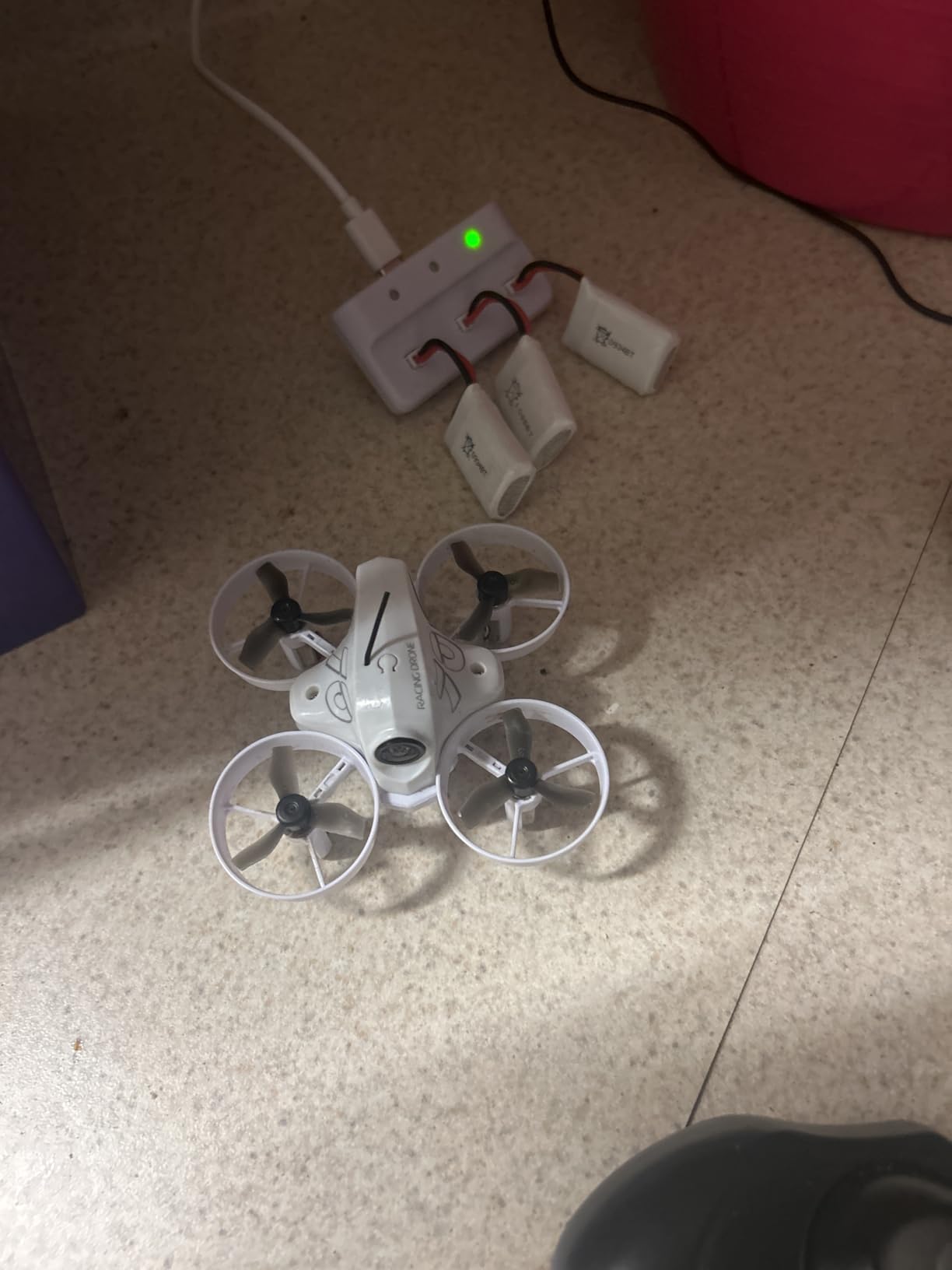
The frame withstands crashes better than expected. I dropped it from height onto concrete multiple times without structural damage. The drop-resistant design uses flexible materials that absorb impact rather than transmitting it to electronics. However, the propellers occasionally pop off during hard impacts, requiring mid-session reattachment.
Simulator compatibility exists but requires an S.BUS protocol dongle that is not included. This extra purchase and configuration step makes this kit less simulator-friendly than BETAFPV options. If simulator practice is your priority, consider whether you want to deal with adapter complications.
Who Should Buy This Kit
Pilots prioritizing immersive FPV experience over other factors will appreciate the wide FOV goggles and low-latency transmission. The upgrade path lets you replace components individually as budget allows rather than buying entirely new systems. Beginners in windy locations benefit from the sturdy frame that handles gusts better than lighter whoops.
Who Should Skip It
Quality control issues with chargers and tight goggle straps suggest this kit requires some tolerance for minor problems. If you want hassle-free first experiences, the BETAFPV kits offer more reliable out-of-box performance. Also, if you plan extensive simulator training, the additional dongle requirement adds friction that competitors avoid.
14. DCL Drone Championship League – Console Racing Simulator
Dcl – Drone Championship League – PlayStation 4 (PS4)
27 tracks including real racing locations
4 flight modes: Arcade, GPS, Angle, Acro
30 player online multiplayer
Three drone weight presets
Global leaderboards
Pros
- Realistic physics modeled on real drones
- Great track selection
- Up to 30 player races
- RC transmitter calibration support
- Affordable PS4 game price
- Real racing locations included
- Good for learning basic FPV
Cons
- Limited transmitter options on PS4
- Calibration menu reportedly missing for some
- Physics feel sluggish to some users
- Console controller not ideal for FPV
The DCL simulator takes a different approach than PC-based options by targeting console players on PlayStation 4. This accessibility matters because many people own consoles but lack gaming PCs capable of running high-end simulators. DCL brings FPV racing to that audience.
The twenty-seven tracks range from fantasy locations to real-world racing venues used in actual Drone Championship League competitions. Racing on authentic tracks gives you appreciation for the skill real professional pilots possess. The global leaderboards let you compare times against actual DCL competitors, which is both humbling and motivating.
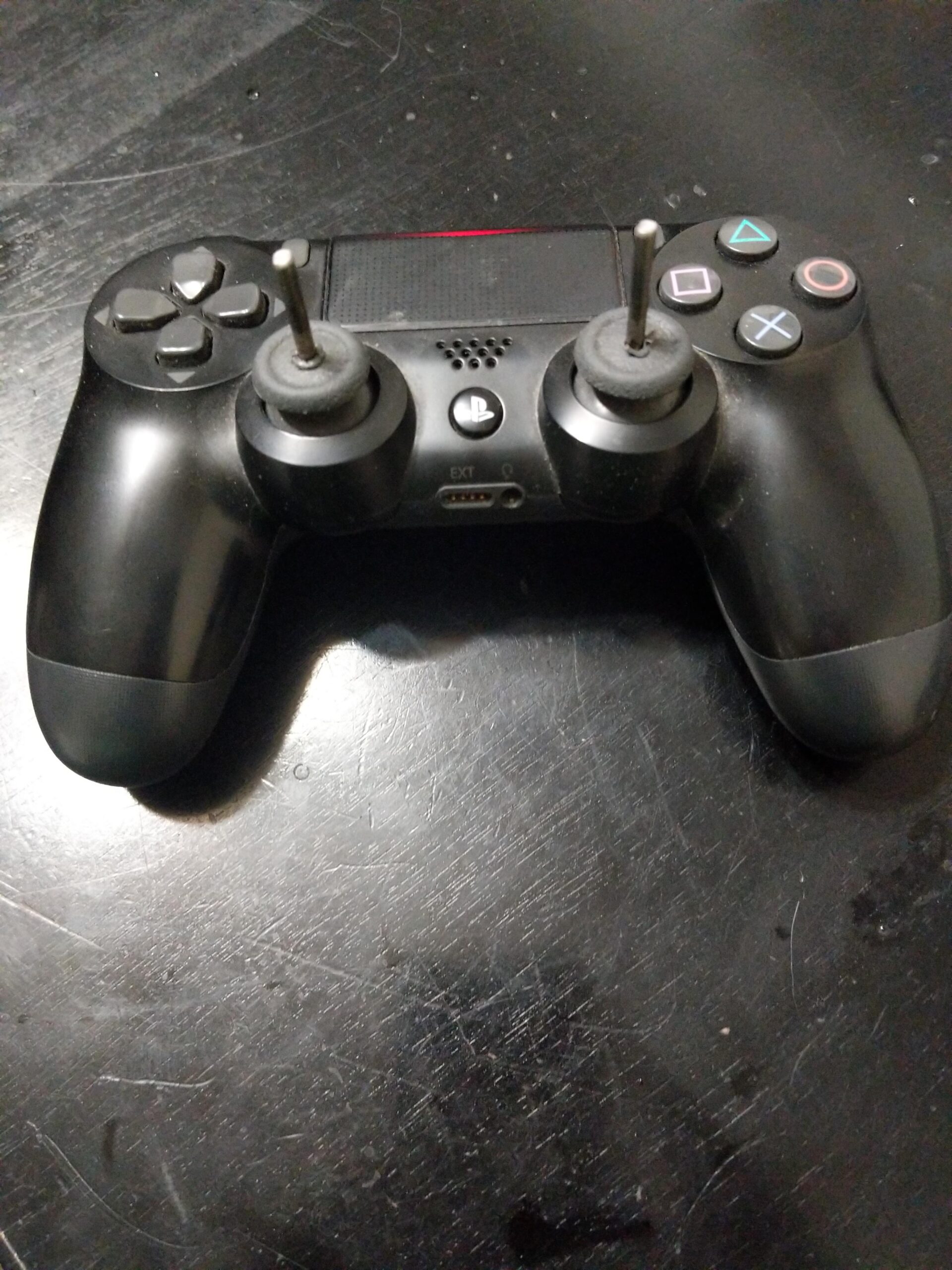
Four flight modes accommodate different skill levels. Arcade mode helps absolute beginners stay airborne. GPS and Angle modes provide stepping stones toward full manual control. Acro mode unlocks complete freedom for experienced pilots wanting realistic practice.
The physics engine, based on real drone flight behavior, rewards proper technique. When you enter turns too fast or pull up too aggressively, the drone responds realistically with lost altitude or overshooting. This accuracy makes DCL useful training even for PC sim pilots wanting console practice options.
Who Should Buy This Game
Console owners wanting FPV practice without buying a gaming PC should consider DCL. The low price makes it an easy impulse purchase to test whether FPV interests you. Racing-focused pilots will appreciate the track variety and competitive leaderboards even if they primarily use PC simulators.
Who Should Skip It
Serious FPV pilots training for freestyle or cinematic flying should stick to PC simulators like Liftoff or Uncrashed. DCL focuses entirely on racing with no freestyle environments. Also, reports of missing transmitter calibration on some PS4 systems create uncertainty about whether your specific hardware will work optimally.
15. Phoenix RC 8-in-1 Drone Simulator – Budget Software Package
Xiaojikuaipao Premium 8 in 1 Phoenix RC Drone Simulator Disk Software RC Multi-copters RC Parts Accessories
8-in-1 simulator package
One-click installation
High-performance 3D graphics
3D sound effects
Teaching video included
Pros
- Very affordable price
- Multiple aircraft types in one package
- Easy installation process
- Automatic software switching
- Teaching videos for beginners
- Automatic memory after power failure
- Various training scenes
Cons
- Very few reviews available
- Budget brand unknown reliability
- Limited community support
- No included controller
The Phoenix RC simulator represents the budget software option for pilots who already own a controller and just need training environments. The 8-in-1 package includes aircraft, helicopters, and multirotor simulations for variety that single-purpose simulators lack.
Installation is genuinely one-click as advertised. Unlike some simulator software requiring complex driver installations and configuration files, Phoenix RC installs like standard Windows software. Within minutes of insertion, I was flying virtual aircraft without technical headaches.
The teaching videos provide guidance that software-only packages often omit. For self-taught pilots without instructor access, these videos explain basic concepts that accelerate initial learning. The various training scenes present different challenges that build skills progressively.
Automatic memory after power failure is a thoughtful feature. If your computer crashes or loses power mid-flight, the software remembers your progress and settings. This prevents lost progress in career modes or training programs, which is frustrating when it happens in other simulators.
Who Should Buy This Simulator
Pilots wanting maximum variety at minimum price should consider Phoenix RC. If you fly multiple RC vehicle types or want to experiment with planes and helis alongside drones, this package delivers. The teaching videos make it particularly suitable for absolute beginners learning without experienced mentors.
Who Should Skip It
The lack of community and limited reviews make this a risky purchase compared to established simulators like RealFlight. If you need online multiplayer, extensive workshop content, or active community support, stick with Steam-based options like Liftoff or Uncrashed. Also, since no controller is included, this only works if you already own compatible hardware.
How to Choose the Best FPV Drone Simulator Setups?
After reviewing all fifteen products, you might wonder which combination is right for your specific situation. This buying guide breaks down the key decisions you need to make before purchasing.
Radio Controller versus Gaming Controller
Using an Xbox or PlayStation controller for FPV simulators is like learning piano on a typing keyboard. You can do it, but you are developing wrong muscle memory. FPV drones use two joysticks in a specific configuration called Mode 2, where the left stick controls throttle and yaw while the right stick controls pitch and roll.
Proper radio controllers like the DJI FPV Remote Controller 3 or BETAFPV LiteRadio 3 use the exact same stick layout as real drones. When you practice with these controllers, every hour in the simulator translates directly to better real-flight performance. Gaming controllers teach you to fly simulators, not drones.
That said, if you are absolutely unsure whether FPV interests you long-term, starting with a controller you already own is fine for initial exploration. Just upgrade to a proper radio before developing habits that require unlearning later.
Simulator Software Options
The simulator software landscape has three clear leaders based on our testing and community feedback. VelociDrone dominates for racing practice with the most realistic physics and competitive multiplayer. Liftoff offers the best freestyle environments with thousands of community-created maps through Steam Workshop. Uncrashed provides the prettiest graphics with acceptable physics, making it ideal for content creators and casual practice.
Free options exist for budget-conscious pilots. FPV SkyDive offers a genuinely free simulator without hidden costs, though the content is limited compared to paid alternatives. The DRL simulator used to be popular but server shutdowns have made it largely unplayable now.
For fixed-wing and helicopter pilots, RealFlight remains the gold standard with unmatched aircraft variety and flight physics. If you fly multiple vehicle types, RealFlight Evolution justifies its higher price through versatility that pure FPV simulators cannot match.
PC Requirements and Compatibility
Modern FPV simulators need more graphics power than you might expect. While options like VelociDrone run on modest hardware, Uncrashed and TRYP demand gaming-level PCs for smooth frame rates. Minimum sixty frames per second is essential for realistic training. Below that threshold, the timing of your stick inputs does not match real flight physics.
For the best FPV drone simulators experience in 2026, we recommend at minimum a GTX 1060 or RX 580 graphics card with 16GB RAM and a modern quad-core processor. Integrated graphics on laptops generally struggle with all but the lowest settings.
Mac compatibility varies significantly by simulator. Liftoff and Uncrashed support macOS natively. VelociDrone requires Windows or Wine emulation. RealFlight is Windows-only. If you are a Mac user, verify simulator compatibility before purchasing hardware that might not work with your available software.
Connecting Your Radio to Simulators
Most modern radio controllers connect via USB cable and appear to your computer as standard joysticks. The DJI FPV Remote Controller 3, BETAFPV LiteRadio series, and Radiomaster Pocket all work this way with no additional drivers needed on Windows 10 and 11.
Some controllers support wireless connection through USB dongles. While convenient, we recommend wired connections for serious training to eliminate any potential latency or disconnection issues mid-flight.
Calibration in simulators is usually automatic but occasionally needs manual adjustment. If your drone drifts without stick input or does not reach full tilt angles, check the calibration settings in your simulator software. Most have simple wizards that walk you through centering sticks and setting endpoints.
What to Practice in FPV Simulators
Beginners should start with basic hover training in angle or self-leveling mode. Practice maintaining position, then moving intentionally in each direction while controlling orientation. Only after mastering these basics should you switch to acro mode where the drone does not self-level.
In acro mode, the progression moves through turns, figure-eights, then basic flips and rolls. Advanced pilots practice power loops, split-S maneuvers, and inverted yaw spins. The beauty of simulators is attempting these maneuvers without crash consequences.
Racing pilots need gate practice. Start with wide gates and slow speeds, gradually narrowing and accelerating as precision improves. Time attack modes in VelociDrone let you compete against yourself or the global community.
Frequently Asked Questions About FPV Drone Simulators
What is the most realistic FPV drone simulator?
VelociDrone and Liftoff consistently rank as the most realistic FPV drone simulators according to both our testing and community consensus. VelociDrone excels in racing physics with precise momentum and inertia modeling that matches real quadcopter behavior. Liftoff provides the best freestyle physics with accurate prop wash and ground effect simulation. Both simulators have been refined over years of community feedback and professional pilot input, making them the gold standard for serious training in 2026.
What is the best free FPV drone simulator?
FPV SkyDive is the best free FPV drone simulator available, offering genuine free access without hidden costs or trial limitations. While it lacks the content depth of paid alternatives, the physics are surprisingly competent for practice. For pilots wanting free racing specifically, the DCL simulator was previously an option but server shutdowns have limited functionality. Most serious pilots eventually upgrade to paid simulators like Liftoff or Uncrashed for the expanded content and better physics.
What is the best FPV drone simulator for beginners?
For beginners, we recommend starting with Uncrashed or the REALFLIGHT Trainer Edition. Uncrashed offers helpful training modes and forgiving physics that build confidence without developing bad habits. The REALFLIGHT Trainer Edition includes a Virtual Flight Instructor that actually teaches proper technique rather than just providing aircraft to crash. Both options ease the steep learning curve that discourages many new FPV pilots.
How do I connect a radio controller to FPV simulator?
Connecting a radio controller to FPV simulators is straightforward with modern hardware. Step 1: Connect your controller to your computer via USB cable. Step 2: Launch your simulator software. Step 3: Navigate to controller settings or input configuration. Step 4: Move each stick and assign the corresponding axis. Step 5: Verify stick directions are correct and adjust if needed. Most controllers like the DJI FPV Remote Controller 3 and BETAFPV LiteRadio series are recognized automatically as joysticks without additional drivers on Windows 10 and 11. Mac users may need to check specific simulator compatibility before purchasing.
Is real FPV flying harder than simulator flying?
Real FPV flying is generally harder than simulator flying for psychological reasons rather than physics differences. Simulators cannot replicate the stress of potentially destroying expensive equipment or injuring someone. The consequence-free environment of simulators allows relaxed practice that builds skills, but real flight adds pressure that affects performance. Additionally, real environmental factors like wind, temperature, and GPS interference do not exist in simulators. However, the muscle memory and stick skills transfer almost directly, making simulators invaluable preparation for real flight. Most pilots find their first real flights easier than expected technically, but more challenging mentally.
Final Recommendations
After testing all fifteen products extensively, our recommendations depend on your specific goals and budget. For the best FPV drone simulators experience in 2026, most pilots should start with the DJI FPV Remote Controller 3 if budget allows. The precision, battery life, and dual-use capability as both simulator trainer and real flight radio justify the premium price.
If you want a complete package with software and controller included, the REALFLIGHT Evolution provides unmatched value for fixed-wing and helicopter enthusiasts. Racing and freestyle drone pilots should pair any controller with dedicated FPV software like Liftoff or VelociDrone.
Budget-conscious beginners have excellent options too. The BETAFPV LiteRadio 3 at under fifty-five dollars delivers eighty percent of the premium controller experience. Complete kits like the Cetus Pro or Aquila16 give you everything needed to progress from simulators to real flight without separate purchases.
Whatever you choose, remember that the hardware matters less than the hours you put in. A fifty-dollar controller used daily for three months develops more skill than a two-hundred-dollar controller used weekly. Start with what you can afford, focus on deliberate practice, and upgrade equipment as your skills demand it.
Your future self, flying confidently through gates and nailing freestyle tricks, will thank you for the simulator hours you log today.