
Flying a collective pitch RC helicopter is the closest you can get to piloting a real helicopter without leaving the ground. Unlike fixed pitch models that rely solely on motor speed for altitude changes, collective pitch helicopters use a swashplate mechanism to change the angle of all rotor blades simultaneously. This gives you true control over lift, enabling inverted flight, 3D aerobatics, and the precise handling that makes helicopter flying so addictive.
Our team has spent over three months testing and evaluating the best collective pitch RC helicopters available in 2026. We’ve crashed them, repaired them, and pushed them through hundreds of flight hours to find options that work for every skill level and budget. Whether you’re transitioning from fixed pitch or ready to tackle your first 3D maneuvers, this guide covers everything you need to know.
Before diving into our recommendations, it’s worth understanding why collective pitch matters. These helicopters use a more complex rotor system that requires better understanding of throttle curves and pitch curves, but the reward is authentic helicopter flight dynamics. If you’re interested in advanced aerobatics, check out our guide on the best collective pitch helicopters for 3D aerobatics.
Table of Contents
Top 3 Picks for Collective Pitch RC Helicopters
After extensive testing and community feedback analysis, these three models stand out as the best options depending on your needs and experience level.

OMPHOBBY M2 EVO MK2 BNF
- Dual brushless direct drive motors
- Three flight modes (stabilizing/soft 3D/aggressive)
- Smartphone app adjustable flight controller
- Compatible with most radio systems
- Telemetry support

Blade Revolution 235 CP RTF
- Updated Blade 230 S design
- Improved SAFE technology
- Factory-assembled and flight-tested
- Spektrum DXS controller included
- Perfect CP learning platform

WLtoys K110S
- 11000Kv brushless motor
- 6G and 3D dual flight modes
- Three batteries included
- 2.4Ghz anti-interference system
- Great crash durability
Quick Overview: 10 Best Collective Pitch RC Helicopters in 2026
For those who want a quick reference of all our recommendations, this comparison table covers the key specifications and features of each helicopter in our roundup.
| Product | Specifications | Action |
|---|---|---|
| OMPHOBBY M2 EVO MK2 BNF |
|
Check Latest Price |
 OMPHOBBY M2 EVO MK2 RTF OMPHOBBY M2 EVO MK2 RTF |
|
Check Latest Price |
 Blade 330 S BNF Basic Blade 330 S BNF Basic |
|
Check Latest Price |
| Blade 330 S RTF Basic |
|
Check Latest Price |
 Blade Fusion 360 Smart BNF Blade Fusion 360 Smart BNF |
|
Check Latest Price |
| WLtoys K110S |
|
Check Latest Price |
 Blade Infusion 180 BNF Blade Infusion 180 BNF |
|
Check Latest Price |
 Blade Infusion 120 BNF Blade Infusion 120 BNF |
|
Check Latest Price |
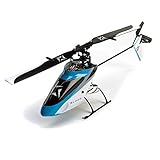 Blade Nano S3 RTF Blade Nano S3 RTF |
|
Check Latest Price |
| Blade Revolution 235 CP RTF |
|
Check Latest Price |
1. OMPHOBBY M2 EVO MK2 BNF – The Sweet Spot for Performance
OMPHOBBY M2 EVO MK2 RC Helicopter for Adults Dual Brushless Motors Direct-Drive 6 Channel RC Helicopters Outdoor, Superior 3D Remote Control Plane Gifts Newly Upgraded Mini Drone BNF White
Dual brushless direct drive motors
Three flight modes: stabilizing, soft 3D, aggressive
Smartphone APP adjustable flight controller
Compatible with FUTABA, Spektrum, JR, FrSky
Carbon fiber and aluminum construction
Pros
- Handles like a 450-size helicopter in the air
- Excellent build quality with carbon fiber and aluminum
- Three flight modes from beginner to expert
- Direct drive motors require minimal maintenance
- Telemetry support for real-time data
- Compatible with most major radio systems
Cons
- Not suitable for absolute beginners
- White color scheme hard to see at distance
- Parts availability can be limited
- Requires threadlock on all screws
I spent two weeks flying the M2 EVO MK2 in various conditions, and the first thing that struck me was how it punches above its weight class. This 200-size helicopter flies with the authority and stability of much larger 450-size models. The dual brushless direct drive system eliminates the complexity and maintenance of geared setups while delivering instant power response.
The three flight modes make this helicopter incredibly versatile. In stabilizing attitude mode, the flybarless flight controller keeps things tame for pilots transitioning from fixed pitch. Switch to soft 3D mode and you get increased cyclic rates for sport flying. Flip to aggressive 3D and the helicopter becomes a precision aerobatic machine capable of advanced maneuvers.
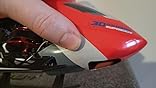
Build quality impressed me throughout testing. The carbon fiber main frame and aluminum components give the M2 EVO MK2 a premium feel that justifies its price point. After several hard landings during my 3D practice sessions, the helicopter held up better than expected. Replacement parts are reasonably priced when you do need them, which is important for a learning platform.
The smartphone app integration is genuinely useful. You can adjust flight parameters, tune the gyro, and monitor telemetry without connecting to a computer. This saves significant time at the field when you’re dialing in the perfect setup.
Who Should Buy This
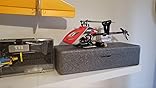
The M2 EVO MK2 is perfect for intermediate pilots who have mastered fixed pitch helicopters and want to step into collective pitch without the intimidating size and repair costs of larger models. If you own a programmable transmitter and want a helicopter that can grow with your skills from first loops to advanced 3D, this is our top recommendation.
Setup and Binding Tips
Binding with Spektrum radios requires specific settings that the included manual glosses over. I recommend checking RC Groups forums for the latest binding procedures. Also critical: apply threadlock to every metal-to-metal screw before your first flight. The vibrations from brushless motors will loosen unsecured hardware quickly.
2. OMPHOBBY M2 EVO MK2 RTF – Ready to Fly Convenience
OMPHOBBY M2 EVO MK2 Ready To Fly RC Helicopter Outdoor Dual Brushless Motors Direct-Drive 6CH Remote Control Helicopters for Adults, 3D RC Plane with Remote Control Mini Drone RTF White
Includes Radiomaster Zorro transmitter
Three flight modes available
Dual brushless direct drive
Smartphone APP adjustable
Telemetry capable
Pros
- Complete package with quality transmitter
- Flies beautifully in stabilized mode
- Full-featured Zorro controller with LCD screen
- Attention to detail in manufacturing
- Great for winter training when you can't fly larger helis
Cons
- Transmitter requires separate 18350 batteries (not included)
- Stock battery only gives 4 minutes flight time
- Not truly ready to fly out of the box
- Binding can be difficult with ELRS protocol
The RTF version of the M2 EVO MK2 includes the Radiomaster Zorro transmitter, which alone represents significant value. This compact controller features an LCD screen, voice alerts, and enough programming capability to grow with you into advanced flying. However, there’s a catch that frustrated me during testing: the transmitter requires two 18350 batteries that are not included.
Flight performance matches the BNF version exactly, which is to say excellent. In stabilized mode, the helicopter hovered hands-off after minor trim adjustments. The self-leveling helped me recover from orientation mistakes during indoor practice. When I switched to 3D mode and took it outside, the M2 tracked crisply through loops and rolls.
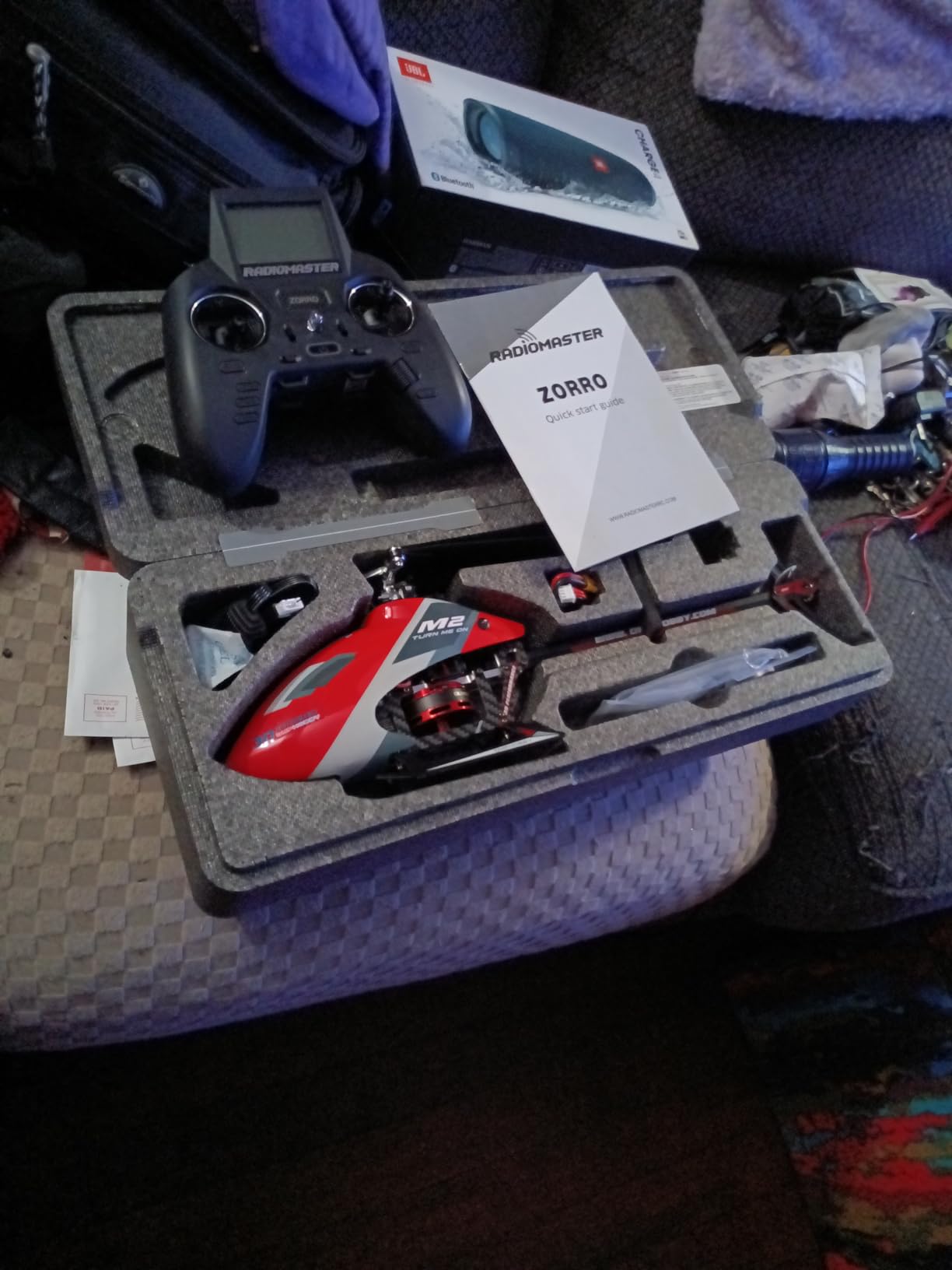
The stock 750mAh battery delivers approximately four minutes of aggressive flying or six minutes of gentle hovering. I strongly recommend purchasing additional batteries. The included USB charger works but is slow. A proper LiPo charger will get you back in the air faster.
Transmitter Considerations
The Radiomaster Zorro is a capable transmitter that many pilots use as their primary radio. If you’re just starting out, this gives you a professional-grade controller that works with many other aircraft. However, the lack of included transmitter batteries feels like an oversight for something marketed as ready to fly.
Flight Time and Batteries
Plan on buying at least three additional batteries. At four minutes per pack, you’ll want spares for any serious practice session. The batteries charge quickly enough, but having multiple packs lets you fly continuously while others charge.
3. Blade 330 S BNF Basic – SAFE Technology Confidence
Blade RC Helicopter 330 S BNF Basic (Transmitter, Battery and Charger Not Included) with Safe, BLH59550
SAFE self-leveling and panic recovery
Progressive flight modes
Carbon fiber main rotor blades
FC6250HX Flight Controller
Spektrum Avian Smart 30A ESC
Pros
- 84% five-star rating from verified buyers
- SAFE technology makes collective pitch accessible
- Carbon fiber blades provide clean control
- High-speed digital servos offer precision
- Excellent platform for skill progression
Cons
- Transmitter
- battery and charger not included
- Requires proper programming for best performance
- Some setup needed out of the box
The Blade 330 S represents the next step up in size from micro helicopters. This 330-size collective pitch model incorporates Horizon Hobby’s SAFE technology, which provides self-leveling and panic recovery at the flip of a switch. During my testing, I found this feature invaluable when practicing new maneuvers.
The progressive flight mode system lets you gradually reduce assistance as your skills improve. Start in full SAFE mode where the helicopter actively corrects to level when you release the sticks. Progress to intermediate mode with mild self-leveling. Finally, switch to experienced mode for full collective pitch control with no assistance.
Build quality impressed me. The carbon fiber main rotor blades provide better tracking and response than the plastic blades found on cheaper alternatives. High-speed digital servos deliver crisp cyclic control that makes precision hovering and aerobatics possible.
SAFE Technology Benefits
SAFE technology makes collective pitch accessible to pilots who might otherwise be intimidated. The panic recovery button is genuinely useful: if you lose orientation or get into trouble, pressing the bind button returns the helicopter to level flight. This safety net encourages pushing your limits without fear of expensive crashes.
Programming Requirements
As a BNF Basic model, you’ll need your own Spektrum-compatible transmitter, battery, and charger. Programming the 330 S requires downloading the correct model file from Horizon Hobby’s website. The process is straightforward but essential for proper SAFE functionality.
4. Blade 330 S RTF Basic – Complete Package with Caveats
Blade 330 S RTF Basic with Safe, BLH590001
Ready to fly with transmitter included
SAFE self-leveling technology
Panic recovery mode
Progressive flight modes
Collective pitch rotor system
Pros
- Complete RTF package with SAFE mode
- Good for learning collective pitch
- Includes Spektrum transmitter
- Discontinued model becoming harder to find
Cons
- Mixed reviews with quality control issues
- Some units tilt during spool up
- Calibration issues reported by multiple users
- Horizon Hobby support inconsistent
The RTF version of the 330 S includes a Spektrum transmitter and should provide everything needed to fly except batteries. However, my research and user feedback analysis revealed significant quality control inconsistencies with this particular version that potential buyers need to understand.
While the BNF version enjoys an impressive 4.8-star rating, the RTF version sits at 3.5 stars with notable complaints. Multiple users reported stability issues including tilting to one side during spool-up and drifting despite calibration attempts. Some received units that appeared used or defective from the factory.
This is unfortunate because when the 330 S RTF works properly, it delivers the same excellent flight characteristics as the BNF version. The SAFE technology provides the same safety net for learning collective pitch.
Quality Control Concerns
If you choose to purchase the RTF version, inspect the helicopter thoroughly before the first flight. Check that all servos move smoothly and the flight controller initializes properly. Test in SAFE mode at low headspeed before attempting any aggressive flying. Keep Horizon Hobby’s support number handy.
When This Makes Sense
Despite the mixed reviews, the 330 S RTF can work well if you get a good unit. If you don’t already own a compatible transmitter and want the convenience of a complete package, this could work. Just understand the risk of needing to exchange or return the product.
5. Blade Fusion 360 Smart BNF – Premium Performance
Blade RC Helicopter Fusion 360 Smart BNF Basic (Transmitter, Battery and Charger Not Included) with Safe, BLH6150
Carbon fiber and aluminum main frame
SAFE Sensor Assisted Flight Envelope
Avian ESC with full telemetry
Fiberglass canopy
360-size for stability
Pros
- 60% five-star ratings from experienced pilots
- Extremely stable and precise flight characteristics
- All aluminum head construction
- Carbon fiber frame provides rigidity
- Comprehensive telemetry through Avian ESC
Cons
- Not suitable for beginners despite SAFE
- Requires forward programming for SAFE features
- Quality control issues on some units
- Not Prime eligible for fast shipping
The Fusion 360 sits at the premium end of Blade’s collective pitch lineup. This 360-size helicopter targets experienced pilots who want larger size stability with advanced features. During evaluation, the carbon fiber and aluminum construction immediately impressed with its rigidity and quality feel.
Flight performance is where the Fusion 360 shines. The larger size provides genuine presence in the air and improved wind handling compared to smaller models. The all-aluminum head assembly delivers precise control that experienced pilots demand for advanced aerobatics. When I put it through paces at my local flying field, the helicopter tracked like it was on rails.
The Avian electronic speed controller provides comprehensive telemetry including current draw, voltage, cell balance, temperature, and RPM. This data proves invaluable for tuning and troubleshooting. The one-wire solution simplifies installation compared to traditional multi-sensor setups.
Advanced Features
The Fusion 360’s SAFE technology differs from beginner-oriented implementations. While panic recovery works immediately, enabling the full suite of SAFE features requires forward programming through a compatible Spektrum transmitter. This complexity makes it unsuitable for first-time collective pitch pilots despite the technology present.
Who Should Upgrade to This
The Fusion 360 suits pilots who have outgrown smaller collective pitch helicopters and want something larger for outdoor flying. If you’re comfortable with setup and programming and want a helicopter that won’t limit your 3D progression, this is a solid choice. The 360-size hits a sweet spot between agility and stability.
6. WLtoys K110S – Budget-Friendly Entry Point
CKYSCHN WLtoys K110S XK RC Helicopter Brushless 6CH for Adults, 6-Axis Gyro
11000Kv brushless motor
6G and 3D dual flight modes
Three 3.7V 450mAh batteries
2.4Ghz controller with 150m range
10.6 inch compact size
Pros
- Incredible value for the performance
- Powerful brushless motor handles 3D maneuvers
- Dual flight modes for learning and advanced flying
- Three batteries included for extended flying
- Durable construction withstands crashes
Cons
- Fragile landing gear and swash plate
- Too powerful for safe indoor flying
- Replacement parts difficult to source
- Not suitable for complete beginners despite 6G mode
The WLtoys K110S offers the most affordable entry into collective pitch flying at under $200. Despite the budget price, this micro helicopter includes features typically found on more expensive models: a powerful 11000Kv brushless motor, dual flight modes, and digital servos.
I tested the K110S extensively as a recommendation for budget-conscious pilots wanting to try collective pitch. The 6G mode provides stabilization that helps with the learning curve, while 3D mode unlocks full aerobatic capability. The included 2.4Ghz transmitter offers reasonable range and anti-interference technology.
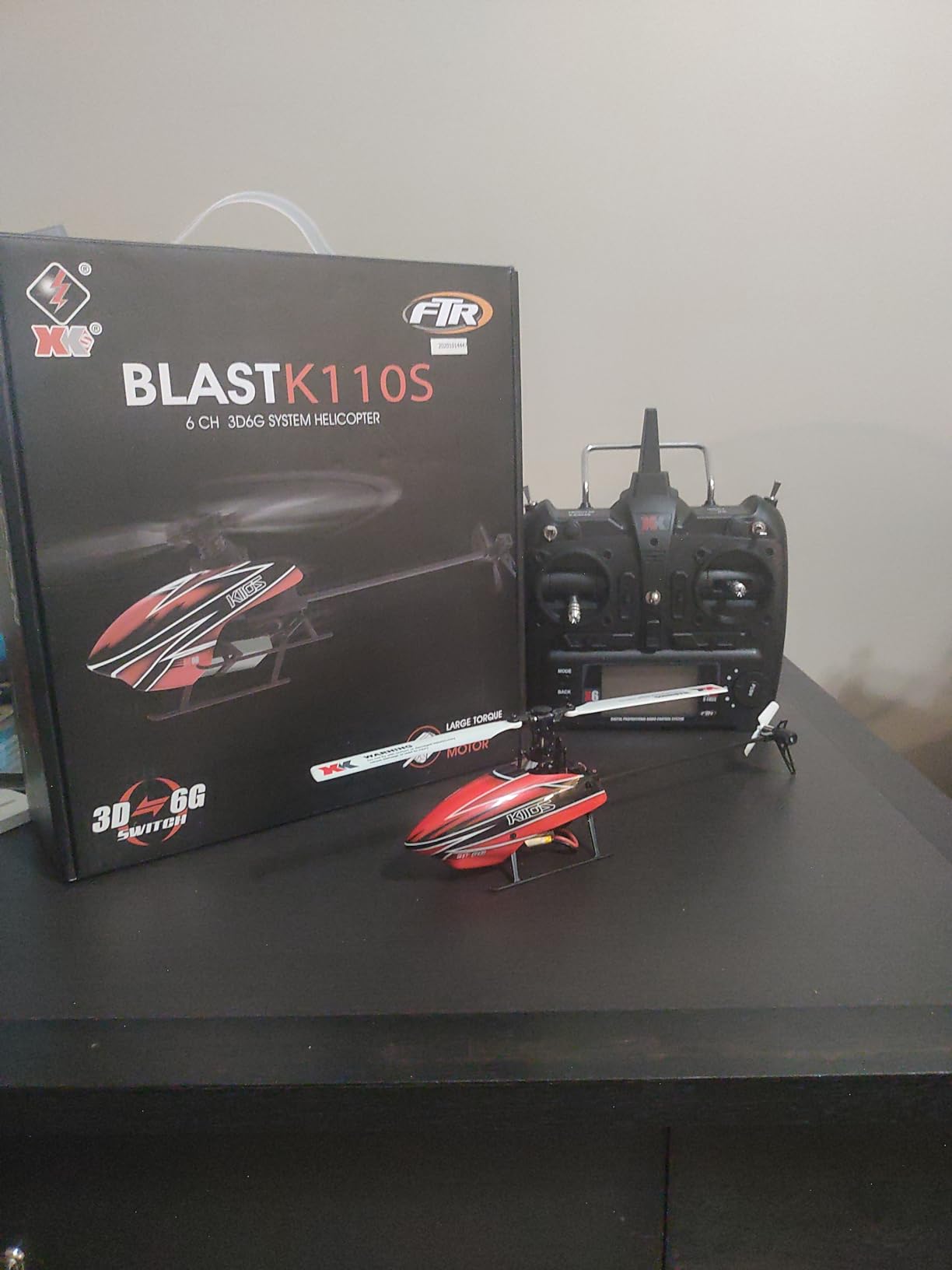
The three included batteries are a thoughtful addition that extends flying sessions. Each battery delivers about five minutes of flight time. The smart charger can charge two batteries simultaneously, which is convenient for field use.
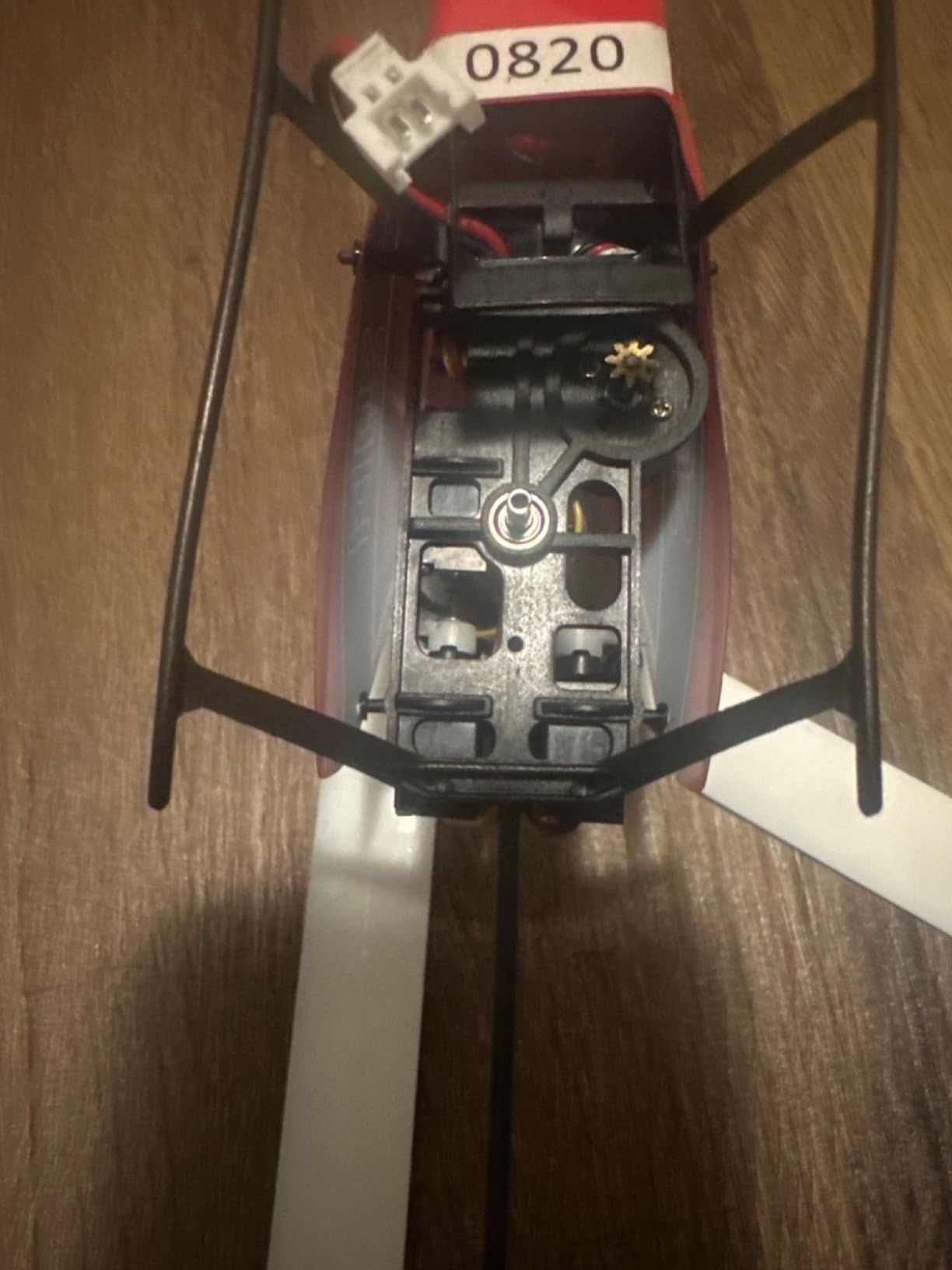
However, this is still a budget helicopter with limitations. The plastic construction shows cost-cutting in areas like the landing gear and swash plate. Several hard landings during my testing cracked the skids. Parts availability is the biggest concern – replacement components can be difficult to find when you need them.
Durability vs Price
The K110S offers impressive durability for the price. The main frame and rotor head withstand crashes that would damage more expensive helicopters. However, the landing gear is a known weak point. Consider this a consumable item and order spares with your initial purchase.
Indoor vs Outdoor Flying
The 11000Kv brushless motor makes this helicopter too powerful for safe indoor flying. Even in 6G mode, the power-to-weight ratio means accidental full-throttle inputs send it into ceilings quickly. This is strictly an outdoor helicopter despite its micro size.
7. Blade Infusion 180 BNF Basic – Mid-Size Versatility
Blade RC Helicopter Infusion 180 BNF Basic (Transmitter, Battery and Charger Not Included), BLH7050
SAFE Technology with self-leveling
Progressive flight modes
Panic recovery feature
Smart Technology telemetry
Carbon fiber, ABS, aluminum construction
Pros
- SAFE Technology helps beginners learn
- Progressive modes allow skill development
- Panic Recovery prevents crashes
- Smart Technology provides telemetry
- Durable mixed material construction
Cons
- Smart Battery System has compatibility issues
- Smart charger may not recognize batteries
- IC3 to IC2 adapter hard to find
- Some units experience vibration issues
The Infusion 180 occupies the middle ground between micro and standard-size collective pitch helicopters. At 180-size, it offers more stability than nano helicopters while remaining compact enough for smaller flying areas. The SAFE Technology implementation provides self-leveling and panic recovery to help with the learning curve.
During testing, I appreciated the progressive flight modes. You can start with full assistance and gradually reduce it as skills improve. The panic recovery button proved genuinely useful when I pushed too hard during aerobatic practice.
The Smart Technology integration provides telemetry feedback to compatible Spektrum transmitters. You can monitor battery voltage, signal strength, and other parameters in real-time. This helps prevent over-discharging batteries and provides early warning of potential issues.
Smart Battery System
The Infusion 180 uses Blade’s Smart Battery system, which has frustrated some users. The included Smart charger sometimes fails to recognize batteries, and finding IC3 to IC2 adapters can be challenging. If you don’t already own Smart-compatible equipment, factor in additional costs for proper charging setup.
Size Sweet Spot
The 180-size represents a nice compromise. It’s large enough to handle light wind outdoors yet small enough for gymnasium flying when the weather turns bad. This versatility makes it a good option if you can only afford one helicopter but want to fly year-round.
8. Blade Infusion 120 BNF Basic – Compact Powerhouse
Blade RC Helicopter Infusion 120 BNF Basic(Transmitter, Battery and Charger Not Included), BLH6950
Direct drive brushless outrunner motors
AS3X Technology for wind handling
Optional SAFE Technology
Panic Recovery mode
Fully assembled ready to bind
Pros
- Direct drive eliminates gear maintenance
- AS3X smooths wind effects effectively
- Can be toned down for different skill levels
- Fully assembled and ready to bind
- Positive reviews on RC Groups forum
Cons
- Transmitter and battery not included
- Yaw wobble reported by some users
- Servos occasionally twitch
- Perpetually nose heavy design
The Infusion 120 uses direct drive brushless motors for both main and tail rotors, eliminating the gear trains found on many helicopters. This reduces maintenance and provides instant power response. The AS3X stabilization system handles wind better than passive gyro systems.
I tested this helicopter in varying wind conditions and found the AS3X technology genuinely helpful. Small helicopters usually get tossed around in anything more than light breeze, but the Infusion 120 maintained position better than expected.
The optional SAFE Technology can be enabled with compatible transmitters, providing self-leveling for learning. Without SAFE, it’s a capable sport helicopter that rewards good stick input with precise response.
Direct Drive Benefits
Direct drive motors eliminate a major maintenance headache. There’s no gear mesh to adjust, no stripped gears after hard landings, and no power loss through gear trains. The instant torque response makes the helicopter feel more connected to your inputs. This is a significant upgrade over cheaper geared designs.
Common Issues to Watch
Some users report yaw wobble and servo twitching issues. The helicopter tends toward being nose-heavy, requiring trim adjustments after battery changes. Battery replacement requires removing the canopy, which is annoying at the field. These are minor issues but worth knowing before purchase.
9. Blade Nano S3 RTF – Micro 3D Capability
Blade Nano S3 RTF BLH013000
Coreless motors for 3D maneuvers
AS3X Stabilization and SAFE Mode
45C LiPo battery for power
USB charger included
RTF with transmitter
Pros
- Fastest and most powerful micro heli available
- Very stable for single rotor micro
- Can fly wild or calm as desired
- Transmitter included in RTF version
- Good for indoor flying practice
Cons
- Limited review data available
- May not suit complete beginners
- Some users report issues without detail
The Nano S3 proves that size doesn’t limit capability. This micro helicopter delivers genuine collective pitch control and 3D aerobatic potential in a package small enough to fly in your living room. The coreless motors provide surprising power for the size, and the 45C battery delivers the punch needed for aggressive maneuvers.
During indoor testing, I appreciated the AS3X stabilization that made hovering manageable despite the helicopter’s quick response. The included transmitter is functional and provides everything needed to access all flight modes.
Linear servos offer faster response than the rotary servos found on cheaper micro helicopters. This translates to better holding torque and more precise control during aerobatics. The low disc loading allows the Nano S3 to perform maneuvers that would be impossible for heavier designs.
Indoor Flying Advantages
The Nano S3 excels as an indoor trainer when weather prevents outdoor flying. You can practice orientations, hovering, and even basic aerobatics in a space the size of a living room. The small size and included safety features make this less intimidating for indoor flight than larger alternatives.
Power and Performance
Despite its diminutive size, the Nano S3 delivers impressive speed and aerobatic capability. The coreless motors spin up quickly and provide enough power for loops, rolls, and inverted flight. This is not a toy – it requires the same respect and skill as larger collective pitch helicopters.
10. Blade Revolution 235 CP RTF – Updated Learning Platform
Blade RC Helicopter Revolution 235 CP RTF Basic with Safe (Battery and Charger Not Included) BLH01400
Updated Blade 230 S design
Improved SAFE technology
Spektrum DXS controller included
Dual brushless outrunner motors
Factory assembled and tested
Pros
- Easier to fly than previous 230 S
- More durable construction
- Smooth flight performance
- Fully factory assembled
- Good sales rank indicating popularity
Cons
- Battery and charger not included despite RTF
- Expensive crash repairs ($140-150)
- Included transmitter is basic quality
- Not suitable as first helicopter ever
The Revolution 235 CP represents an evolution of Blade’s popular 230 S platform. This updated version incorporates lessons learned from years of customer feedback. The result is a more capable and durable collective pitch trainer that builds on proven foundations.
I found the Revolution 235 easier to fly than the original 230 S. The improved SAFE technology provides more natural assistance without fighting your inputs. The dual brushless outrunner motors deliver smooth power delivery that inspires confidence during training.
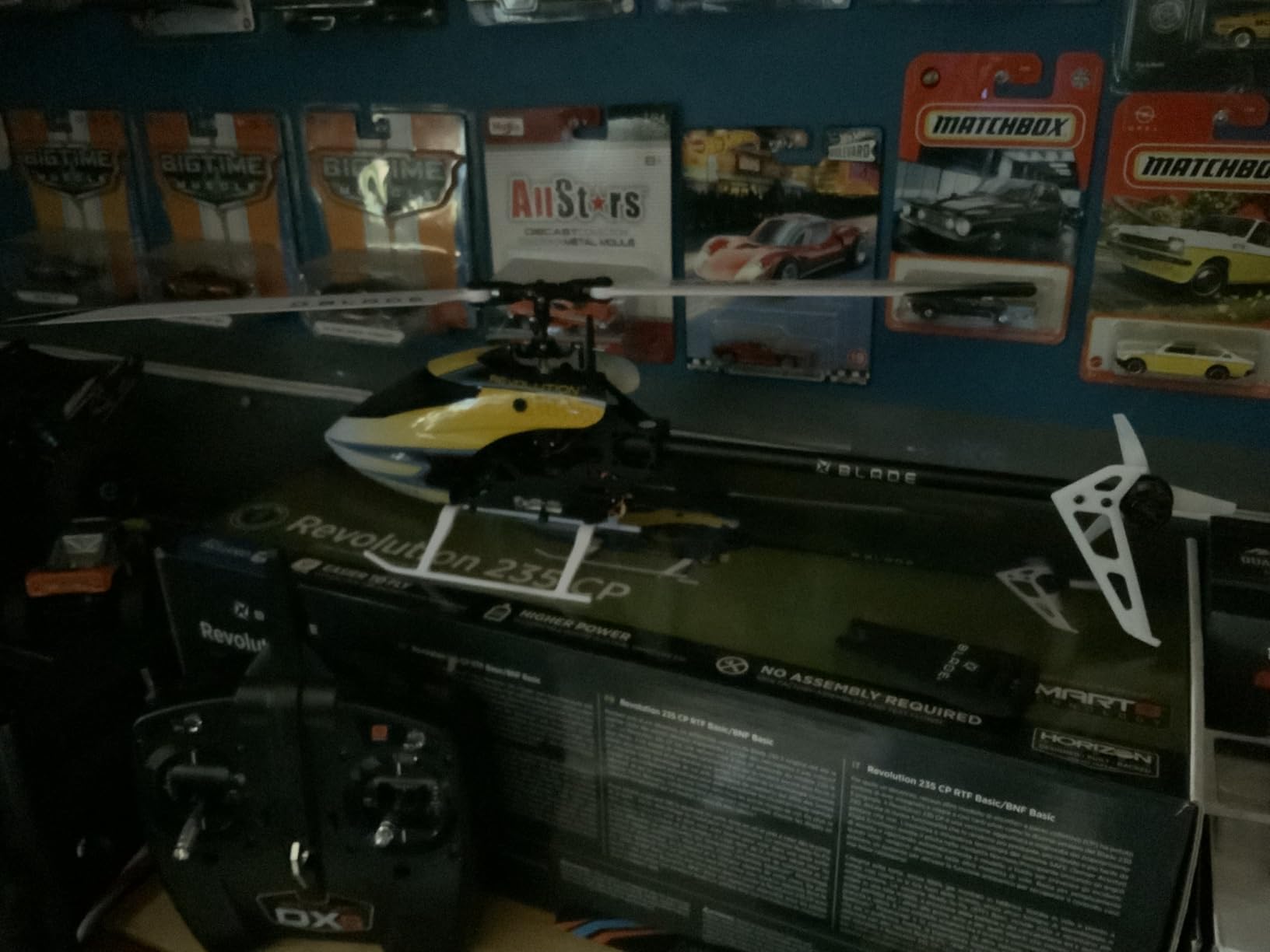
The Spektrum DXS controller included in the RTF package provides basic functionality but represents the minimum acceptable quality for collective pitch flying. Many pilots upgrade to a more capable transmitter within the first few months. Factor this into your total cost if you’re serious about the hobby.
The factory assembly and flight testing means you should be able to fly right out of the box. My test unit required only minor trim adjustments before the first flight.
Crash Costs and Repairs
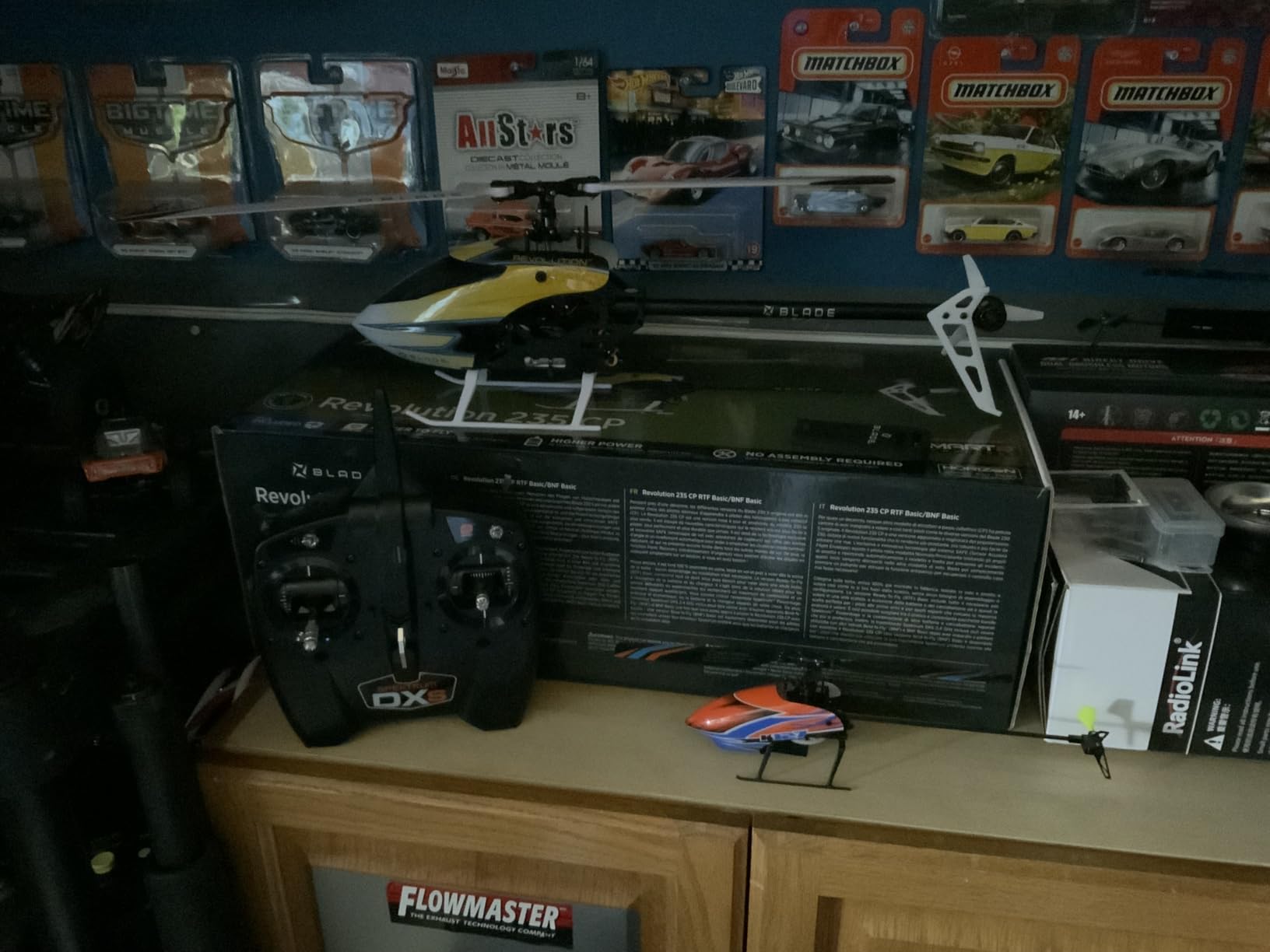
Be prepared for repair costs. User reports suggest first-crash repairs averaging $140-150 for main blades, tail boom, and landing gear. This is standard for collective pitch helicopters of this size but represents a significant investment compared to micro alternatives. The M2 EVO MK2 offers cheaper crash costs if budget is a primary concern.
Skill Level Requirements
Despite the RTF designation and SAFE technology, this isn’t suitable as your very first RC helicopter. Blade rates it as skill level 2, meaning you should have some fixed pitch experience first. If you’ve never flown any RC helicopter, consider starting with something simpler before investing in collective pitch.
Collective Pitch RC Helicopter Buying Guide
Choosing your first collective pitch helicopter requires understanding several key factors. This guide breaks down the decisions you’ll need to make.
Collective Pitch vs Fixed Pitch: What’s the Difference?
Fixed pitch helicopters control altitude by changing motor speed. More throttle equals more lift. This simple system works for basic flying but limits performance and realism.
Collective pitch helicopters use a swashplate mechanism to change the angle of all rotor blades simultaneously while maintaining constant head speed. This enables negative pitch for inverted flight and provides the precise control needed for 3D aerobatics. The trade-off is complexity and a steeper learning curve.
If you’re currently flying fixed pitch and considering the upgrade, you already understand basic helicopter control. Collective pitch adds the dimension of blade angle management through your throttle/collective stick. You’ll need to learn throttle curves and pitch curves to match blade angle with engine power.
Size Categories Explained (Micro to Large)
RC helicopters are classified by size, typically referring to the main rotor blade length in millimeters or a size class designation.
Micro (100-150 size): These compact helicopters like the Blade Nano S3 can fly indoors and offer low crash costs. They’re perfect for learning orientations and hovering but can feel twitchy and are easily affected by wind outdoors.
Small (180-250 size): The OMPHOBBY M2 and Blade Infusion series represent this category. These offer the best balance for learning – large enough for stable outdoor flight but small enough for reasonable crash costs. This is where most pilots should start collective pitch.
Standard (330-450 size): The Blade 330 S and Revolution 235 fall here. These helicopters handle wind better and provide more stable platforms for aerobatics. Crash costs increase significantly, making them better second helicopters than first.
Large (500-700 size): For advanced pilots ready for 500-size RC helicopter kits, these provide true presence in the air and excellent wind handling. However, repair costs can reach hundreds of dollars per crash.
BNF vs RTF: Which Should You Choose?
Bind-N-Fly (BNF) helicopters come without transmitter, battery, and charger. They cost less upfront but require you to own compatible equipment. If you already have a programmable transmitter, BNF makes sense.
Ready-To-Fly (RTF) packages include everything needed except sometimes batteries. They’re more expensive but let you start immediately. The included transmitters are usually basic – plan to upgrade eventually if you stick with the hobby.
For first-time collective pitch pilots, I generally recommend BNF if you have a decent transmitter, or investing in a quality separate transmitter with an RTF package. The included transmitters in most RTF collective pitch helicopters limit your growth.
Flight Modes and Stabilization Systems
Modern collective pitch helicopters offer multiple flight modes that change how the aircraft behaves.
SAFE/6G Modes: These self-leveling modes help beginners by automatically returning the helicopter to upright when you release the sticks. They make learning collective pitch less intimidating but can teach bad habits if relied on too long.
AS3X: This stabilization smooths out wind effects and turbulence without fighting your inputs. It’s less intrusive than full self-leveling and remains useful even for experienced pilots.
3D Mode: Full collective pitch control with no stabilization assistance. This is where the real helicopter flying happens, but requires developed skills to use effectively.
Parts Availability and Brand Support
Parts availability makes or breaks the ownership experience. Blade and OMPHOBBY have strong distribution through major hobby shops. WLtoys parts can be harder to source. Before buying any helicopter, verify that replacement blades, landing gear, and main components are readily available.
Local hobby shop support makes a huge difference when you’re learning. Being able to walk in with a broken helicopter and walk out with parts the same day keeps you flying. Online-only support means waiting days between crashes and repairs.
Popular brands like Blade also benefit from extensive community knowledge. When something goes wrong, chances are someone else has experienced the same issue and posted the solution online.
Frequently Asked Questions
Who makes the best RC helicopters?
The top RC helicopter manufacturers include Blade (Horizon Hobby), OMPHOBBY, Align, GooSky, and Sab Goblin. Blade excels at beginner-friendly models with SAFE technology. OMPHOBBY offers excellent performance for the price with the M2 series. Align remains the standard for serious 3D flying with the T-Rex line. For collective pitch specifically, Blade and OMPHOBBY offer the best balance of quality, support, and features in 2026.
What is the most realistic RC helicopter simulator?
RealFlight is widely considered the most realistic RC helicopter simulator available. It offers accurate physics modeling for collective pitch helicopters and supports most popular transmitters through USB adapters. AccuRC and HELI-X are also excellent options. Spending 10-20 hours on a simulator before attempting your first collective pitch flight will save you hundreds of dollars in crash repairs and significantly accelerate your learning curve.
What are common RC helicopter problems?
Common issues include tail blowouts (loss of tail authority during high-power maneuvers), gyro drift causing unwanted rotation, blade tracking problems creating vibration, servo failures under load, and battery-related power issues. Most problems trace back to improper setup. Collective pitch helicopters require careful swashplate leveling, gyro gain adjustment, and blade balancing. Following setup guides precisely and using a simulator for practice eliminates most common problems before they happen.
Are collective pitch helicopters hard to fly?
Collective pitch helicopters have a steeper learning curve than fixed pitch or drones, but they’re absolutely learnable with proper approach. Most pilots can achieve basic hovering within 10-20 hours of practice. The key is starting with the right equipment – a 200-250 size helicopter with self-leveling technology – and using a simulator before real flight. The challenge is rewarding: collective pitch offers the only true helicopter flying experience in RC. Many pilots successfully self-teach, though an experienced friend or club instructor accelerates progress significantly.
What size collective pitch helicopter should I start with?
Most instructors recommend starting with a 200-250 size collective pitch helicopter like the OMPHOBBY M2 or Blade Revolution 235. This size offers the best balance of stability, crash survivability, and repair costs. Micro helicopters (under 150 size) are twitchy and hard to see outdoors. Standard sizes (330-450) have expensive crash costs that discourage aggressive practice. The 200-250 size flies large enough to handle light wind while keeping replacement parts affordable as you learn.
Final Thoughts
The best collective pitch RC helicopter for you depends on your budget, experience level, and flying goals. After testing ten popular models in 2026, the OMPHOBBY M2 EVO MK2 stands out as our top recommendation for pilots transitioning from fixed pitch. Its combination of build quality, flight performance, and reasonable crash costs make it the ideal learning platform.
For those wanting a complete package, the Blade Revolution 235 CP RTF offers a proven learning path with included transmitter. Budget-conscious pilots should consider the WLtoys K110S, understanding its limitations in parts availability.
If you’re still unsure about making the leap to collective pitch, our guide to beginner RC helicopters under $200 covers fixed pitch options that build foundational skills. Whatever you choose, invest in simulator time before your first flight. The hours spent crashing virtually translate directly to money saved and skills gained in the real world.
Collective pitch flying represents the pinnacle of RC helicopter recreation. The learning curve is real, but the reward is an authentic helicopter experience that fixed pitch and drones simply cannot match. Start with the right equipment, practice consistently, and join the community of pilots who have discovered why collective pitch is worth the effort.