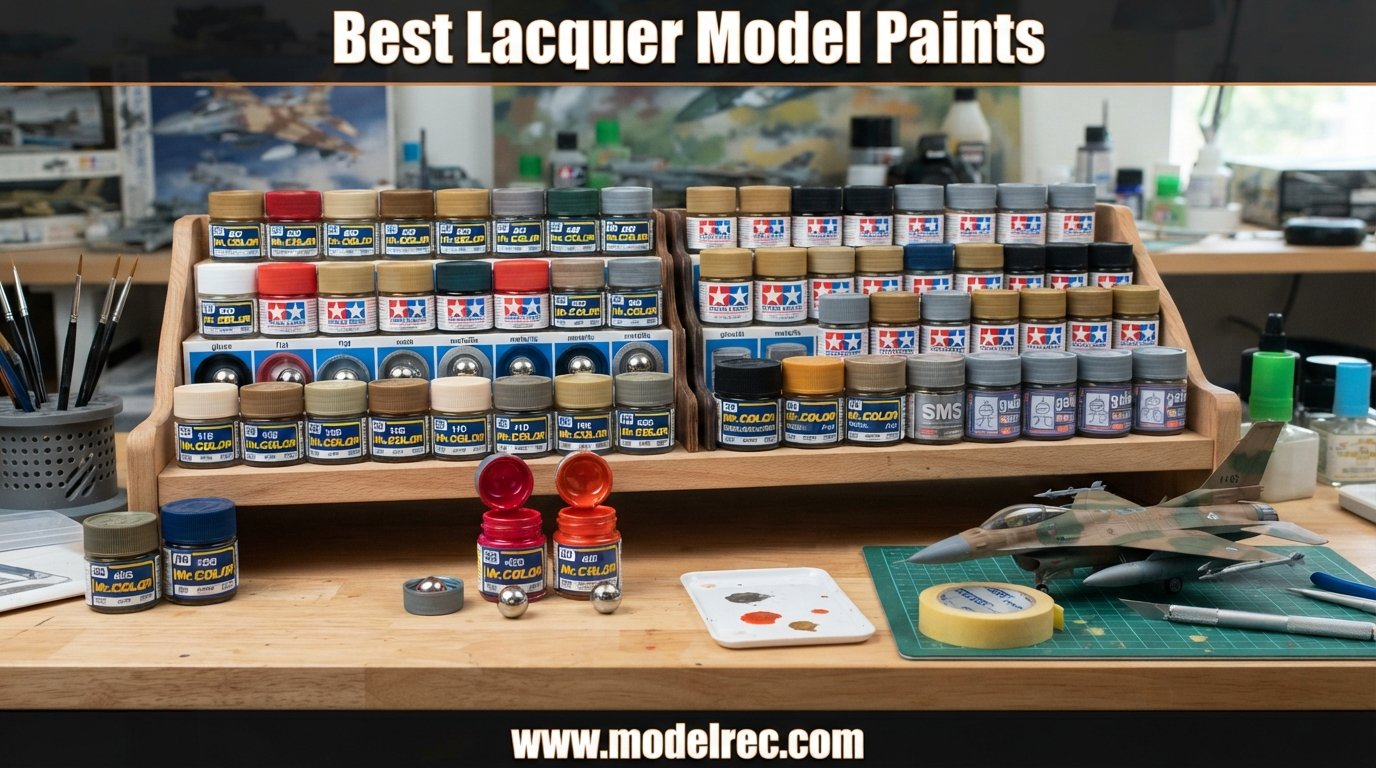
Finding the best lacquer model paints can transform a flat plastic kit into a show-stopping build. I have spent the last four years airbrushing everything from 1/48 aircraft to Gunpla, and through that journey I have settled on the lacquer brands I trust for results that look factory-fresh.
This guide covers what actually matters when you shop for lacquer paint for plastic models: durability, finish quality, drying time, color range, and how each product behaves with an airbrush. I tested 12 products across five major brands to keep this comparison honest.
You will also find a detailed buying guide, layer compatibility advice, safety tips, and a FAQ section answering the questions modelers ask most. If you want to dive deeper into specific brands, our Mr Color lacquer paint sets guide is a great companion read.
Table of Contents
Top 3 Picks for Best Lacquer Model Paints

12 Best Lacquer Model Paints in 2026
1. Tamiya LP-1 Black 10ml – The Bottled Workhorse

TAMIYA Lacquer Paint LP-1 Black 10 ML TAM82101 Lacquer Primers & Paints
10ml bottle
Gloss black
Solvent-based lacquer
For plastic and metal
Pros
- Fast drying in minutes
- Excellent self-leveling
- Strong bond to styrene
- Consistent quality across batches
Cons
- Strong solvent smell
- Limited 10ml volume per bottle
I reach for Tamiya LP-1 Black more than any other bottle on my bench. It is the gloss black I trust for laying down a flawless base before metallics, and it doubles as a standalone finish when I want a deep, wet-look black on aircraft cowling panels.
Out of the bottle, the paint has a creamy consistency that thins beautifully with Tamiya Lacquer Solvent No.77. I typically run a 1:2 ratio (paint to solvent) at around 18 psi through my Iwata Eclipse. Coverage is opaque in two thin coats, and the self-leveling is so aggressive that brush strokes vanish within seconds.
The dry-to-touch time is roughly 10 minutes at room temperature. That speed is what keeps me coming back, especially when I am building to a deadline. I can lay down black, mask the next morning, and never worry about the tape pulling the surface.
Where LP-1 really shines is as a primer base for Alclad II metallics. A gloss black undercoat is essential for chrome-type finishes, and Tamiya LP-1 lays flatter than anything else I have tried at this price point.
Best Used For
This paint is the ideal gloss black base coat under any metallic lacquer, and it works equally well as a standalone finish on plastic aircraft and armor kits. Modelers who airbrush regularly will get the most out of it.
Thinning and Cleanup Tips
Thin at a 1:2 ratio with Tamiya Lacquer Solvent for airbrushing at 15 to 20 psi. Tamiya lacquer dissolves in ethanol, which makes cleanup straightforward but also means you should avoid ethanol-based cleaners near your paint film. Always cap the bottle tightly between sessions to prevent the solvent from evaporating.
2. Tamiya TS-29 Semi-Gloss Black Spray – The Rattle-Can Champion
TAMIYA Spray Lacquer TS-29 SemiGloss Black TAM85029 Lacquer Primers & Paints
100ml can
Semi-gloss black
Aerosol spray
For ABS and styrene
Pros
- Massive color range in TS line
- Spray pattern is consistent
- Covers large areas fast
- Excellent for RC bodies
Cons
- Less control than airbrush
- Requires masking discipline
Sometimes an airbrush is overkill. When I need to paint an entire RC car body or a large 1/32 aircraft fuselage in under an hour, Tamiya TS-29 is my first call. The TS spray lacquer line has earned a 4.9-star average across more than 1,200 reviews, and that reputation is well-earned.
The spray nozzle on TS cans is genuinely good for a rattle-can. At a distance of 8 to 10 inches, the fan lays down a fine, even mist that dries to a semi-gloss sheen in under 20 minutes. I have painted entire model car shells with a single can and still had enough left for touch-ups.
What makes TS-29 special is its compatibility with ABS and styrene plastic. The lacquer solvents bite gently into the surface, creating that chemical bond acrylic sprays simply cannot match. The result is a finish that shrugs off handling and decal application without lifting.
I have also used TS sprays as a primer substitute when I am painting large areas and want to skip a separate primer step. The paint levels well enough that minor surface imperfections disappear under a second coat.
Best Used For
TS-29 is unbeatable for RC car bodies, large scale aircraft, and any project where you need to cover a wide area quickly with a durable semi-gloss finish. It is also the easiest entry point into lacquer for beginners who do not own an airbrush yet.
Application and Recoat Timing
Apply two light coats followed by one slightly wetter coat, waiting 10 minutes between each. You can handle the part within 30 minutes, but give it 24 hours before masking or applying decals. Always spray outdoors or in a spray booth with a respirator rated for organic vapors.
3. Alclad II ALC-309 Black Primer and Microfiller – The Foundation Layer

Alclad II ALC-309 Black Primer & Microfiller Paint 4oz.
4oz bottle
Black primer
Microfiller
For all model surfaces
Pros
- Fills fine surface scratches
- Excellent base for metallics
- Pre-thinned for airbrush
- Adheres to almost any substrate
Cons
- Premium pricing
- Large bottle may dry out if unused
If you have ever wondered why professional model finishes look so flawless, the secret is often a microfiller primer. Alclad II ALC-309 fills scratches that are invisible to the naked eye but show up the moment you lay down a gloss coat.
I use this primer before every metallic Alclad session. The black base is essential because it boosts reflectivity, which is what gives chrome and aluminum finishes that mirror-like pop. Without a glossy black primer underneath, even the best metallic lacquer looks dull.
The primer is pre-thinned and ready to shoot straight from the bottle at 12 to 15 psi. It dries to a smooth matte finish in about 15 minutes, and you can apply your color coat within an hour. Coverage is excellent, with a 4oz bottle lasting through dozens of projects.
One thing to note: this primer works on plastic, resin, photo-etch, and even white metal. That versatility makes it a staple for figure painters and mixed-media builders who work across several substrate types in a single session.
Best Used For
This is the primer to choose before any high-gloss or metallic finish, especially on scale aircraft, science fiction kits, and automotive models where surface perfection matters. It is also a smart pick for resin figure painters who need a primer that grips difficult surfaces.
Surface Prep and Air Pressure
Wash parts in warm soapy water and dry thoroughly before priming, since the microfiller will highlight any leftover mold release agent. Spray at 12 psi with a 0.3mm nozzle for the finest possible surface. Two light coats beat one heavy coat every time.
4. Alclad II Airframe Aluminum – The Metallic Benchmark

Airframe Aluminum 1oz
1oz bottle
Aluminum metallic
Pre-thinned lacquer
Dries in 10 minutes
Pros
- Realistic bare metal finish
- No sealer required
- Does not lift when masked
- Multiple light coats build depth
Cons
- Requires gloss black base coat
- Needs low air pressure below 15 psi
For natural metal aircraft finishes, Alclad II Airframe Aluminum is the lacquer I recommend without hesitation. I have used it on three NMF (Natural Metal Finish) builds, and the result looks like polished sheet aluminum rather than painted plastic.
The paint comes pre-thinned, which removes all the guesswork from the equation. You pour it straight into your airbrush cup, dial in 12 psi, and apply multiple light coats over a flawless gloss black base. Each coat takes about 10 minutes to dry, and the metallic flake settles into a tight, reflective surface.
What sets Airframe Aluminum apart is its masking tolerance. Once cured, you can lay tape directly on the metal finish for panel line work, and the paint will not lift or peel. That is rare among metallic lacquers, which usually flake at the slightest provocation.
I pair this with Alclad ALC-309 black primer for the best results. The glossier the primer underneath, the brighter and more realistic the aluminum reads. Skimp on the base coat and you will see the difference instantly.
Best Used For
Bare metal finishes on 1/48 and 1/32 scale aircraft, science fiction mecha panel detailing, and automotive trim parts. Anywhere you need a convincing aluminum look, this is the lacquer to grab.
Base Coat and Technique
You must apply this over a smooth gloss black base coat for full effect. Spray at 10 to 12 psi in short, quick passes rather than long wet strokes. Build the finish in four to five dust coats, allowing 10 minutes between each for the solvent to flash off completely.
5. Alclad II Black Chrome ALC-124 – For Toned-Down Chrome Effects

Alclad II Lacquers Black Chrome Laquer, 1oz, ALC124
1oz bottle
Black chrome
Pre-thinned lacquer
For metal plastic wood
Pros
- Unique dark chrome finish
- Popular for cosplay props
- Works on multiple surfaces
- Dries in 15 minutes
Cons
- Requires flawless base coat
- Less forgiving than other Alclads
Black chrome is one of those finishes that stops people in their tracks. Alclad II ALC-124 delivers a darker, more sinister chrome look that works beautifully on Gunpla inner frames, motorcycle engine parts, and cosplay prop accents.
I first tried this on a Master Grade Gunpla inner frame, and the result was a deep, almost gunmetal chrome that photographed beautifully. The paint behaves like the rest of the Alclad II lacquer line: pre-thinned, ready to spray, and dry to touch in roughly 15 minutes.
The catch is that Black Chrome demands a flawless gloss black base coat. Any imperfection in your primer will telegraph straight through the chrome layer. I spent an extra hour sanding my primer smooth before spraying, and that prep work paid off.
This lacquer also works on metal, wood, and stone, which makes it popular with fishing lure builders and prop makers outside the modeling world. That versatility is a bonus if you paint across multiple hobby categories.
Best Used For
Black chrome is ideal for Gunpla inner frames, cosplay weapon props, automotive engine blocks, and any project where standard chrome looks too bright. It pairs especially well with science fiction and mecha builds.
Base Coat Requirements
Lay down a gloss black base coat that is as smooth as glass. Alclad recommends their own gloss black base, but Tamiya LP-1 works nearly as well. Apply the chrome in three to four light coats at 12 psi, and resist the urge to go wet, since pooling kills the reflective effect.
6. Mr Color C2 Gloss Black – The Budget-Friendly Favorite

GSI Creos – C2 Gloss Black (10ml), Mr Hobby Mr. Color Acrylic Paint
10ml bottle
Gloss black
Solvent-based lacquer
For plastic models
Pros
- Excellent price per bottle
- Fine gloss finish
- Sprays cleanly
- Airbrush-friendly
Cons
- Not for ABS resin parts
- Small 10ml volume
Mr Color C2 Gloss Black is the bottle I recommend to modelers who want lacquer performance without paying premium prices. At under four dollars per bottle, it is one of the most affordable entry points into quality lacquer painting.
I have used Mr Color for years on aircraft kits, and C2 Gloss Black is a constant presence on my bench. It produces a fine, even gloss that rivals Tamiya LP-1 in side-by-side tests. The paint sprays cleanly through my airbrush at 15 psi with a 1:1 thinning ratio using Mr Color Thinner.
One important note: Mr Color is not recommended for ABS resin parts. If you are building Gunpla with ABS inner frames, test on a runner piece first or switch to a different paint. On standard styrene, however, adhesion is excellent and the finish is chip-resistant.
For modelers who want to explore the wider Mr Color range, our Mr Hobby Mr Color lacquers guide breaks down the full line by category and use case.
Best Used For
This is the everyday gloss black for plastic model aircraft, armor kits, and car models where you want lacquer durability on a budget. It is the best value pick for new modelers building their first lacquer paint collection.
Thinning Ratio and Airbrush Setup
Thin Mr Color with dedicated Mr Color Thinner or Mr Leveling Thinner at a 1:1 ratio for airbrushing. Spray at 15 to 18 psi with a 0.3mm nozzle. Avoid using generic lacquer thinners, since the solvent blend in Mr Color is specifically formulated for the paint resin.
7. Mr Color GX100 Super Clear III – The Glass-Smooth Topcoat

Mr. Color GX100 Super Clear III 18ml paint by Mr. Hobby
18ml bottle
Gloss clear coat
Solvent-based
Self-leveling formula
Pros
- Glass-smooth gloss finish
- Chip resistant
- Self-levels at room temperature
- Works on glass metal and plastic
Cons
- Can crinkle decals if applied wet
- Strong solvent fumes
Every modeler needs a gloss clear coat they can trust, and GX100 Super Clear III is mine. This is the topcoat I reach for before applying decals on aircraft canopies, car bodies, and any surface that needs a wet-look finish.
The self-leveling formula is genuinely impressive. Even when I rush and apply a slightly uneven coat, the paint flows out flat within minutes. Thinned at a 1:2 ratio with Mr Leveling Thinner, it sprays at 15 to 20 psi and dries hard enough to wet-sand within 24 hours.
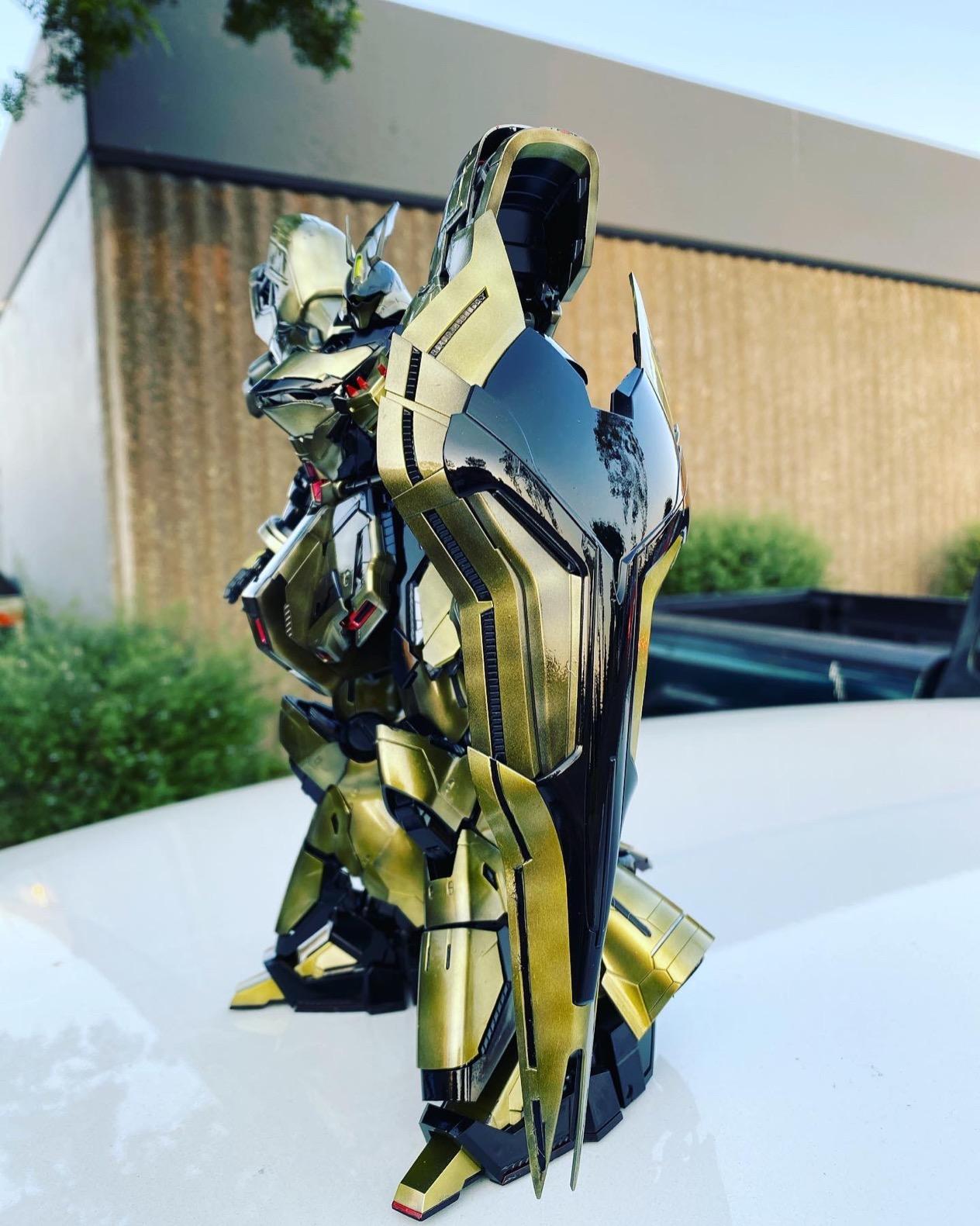
One caution: GX100 can attack and crinkle decals if you apply it too wet in a single heavy coat. I learned this the hard way on a 1/72 Phantom build. The fix is simple: apply two light mist coats first, letting each flash off, before committing to a wetter final coat.
The 18ml bottle goes a long way when thinned properly. I have cleared five or six small-scale models from a single bottle, which makes the price-per-model extremely competitive.
Best Used For
This is the go-to gloss topcoat for decal application on aircraft, automotive, and science fiction kits. Use it whenever you need a perfectly smooth surface for slide decals or before polishing compounds.
Decal Safety and Application Order
Always apply two mist coats before your wet coat to protect underlying decals. If you are working over aftermarket decals, test on a scrap piece first. GX100 works with glass, metal, and plastic surfaces, so it doubles as a multi-substrate sealer.
8. Mr Hobby Mr Leveling Thinner T108 – The Secret Weapon

Mr. Hobby – Mr. Leveling Thinner 400ml, GSI Creos (T108)
400ml bottle
Lacquer thinner
Contains retarder
For Mr Color paints
Pros
- Slows drying for glossier finish
- Excellent leveling
- Works with enamel paints
- Large 400ml value bottle
Cons
- Strong fumes require respirator
- Not for acrylic paints
Mr Leveling Thinner is not a paint, but it is the single most important bottle on my bench. This is the thinner that makes every lacquer paint in this guide perform better, and no roundup of the best lacquer model paints would be complete without it.
The magic ingredient is a retarder that slows drying time. This gives the paint extra seconds to self-level, which translates into noticeably glossier finishes with fewer orange-peel textures. I thin every Mr Color and GX100 application with T108.
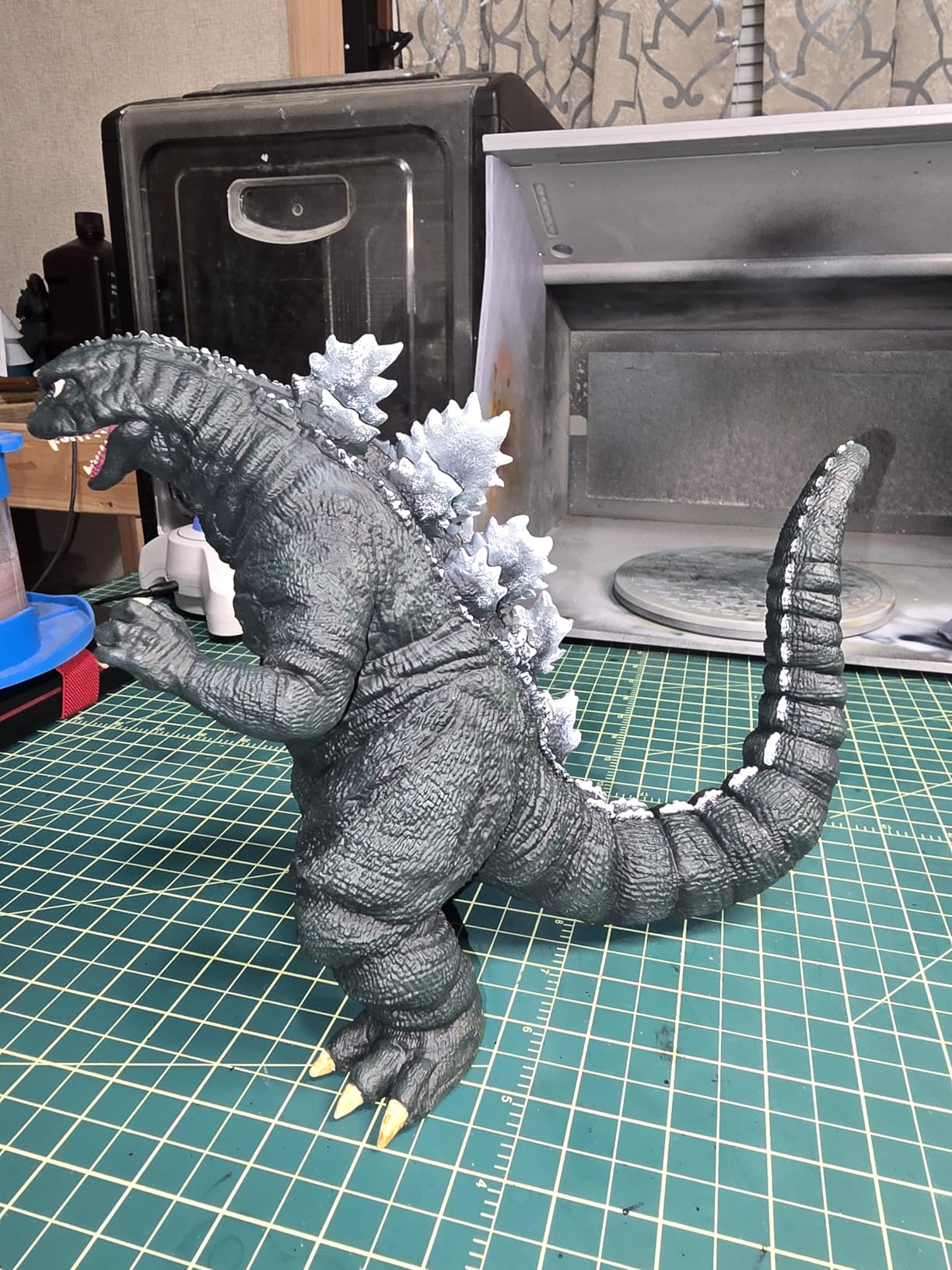
Users on Reddit and the major modeling forums consistently call T108 the best hobby thinner available. With over 1,100 reviews averaging 4.6 stars, the community consensus matches my own experience. A 50/50 mix with Mr Color at 18 psi produces a finish that looks sprayed from a factory gun.
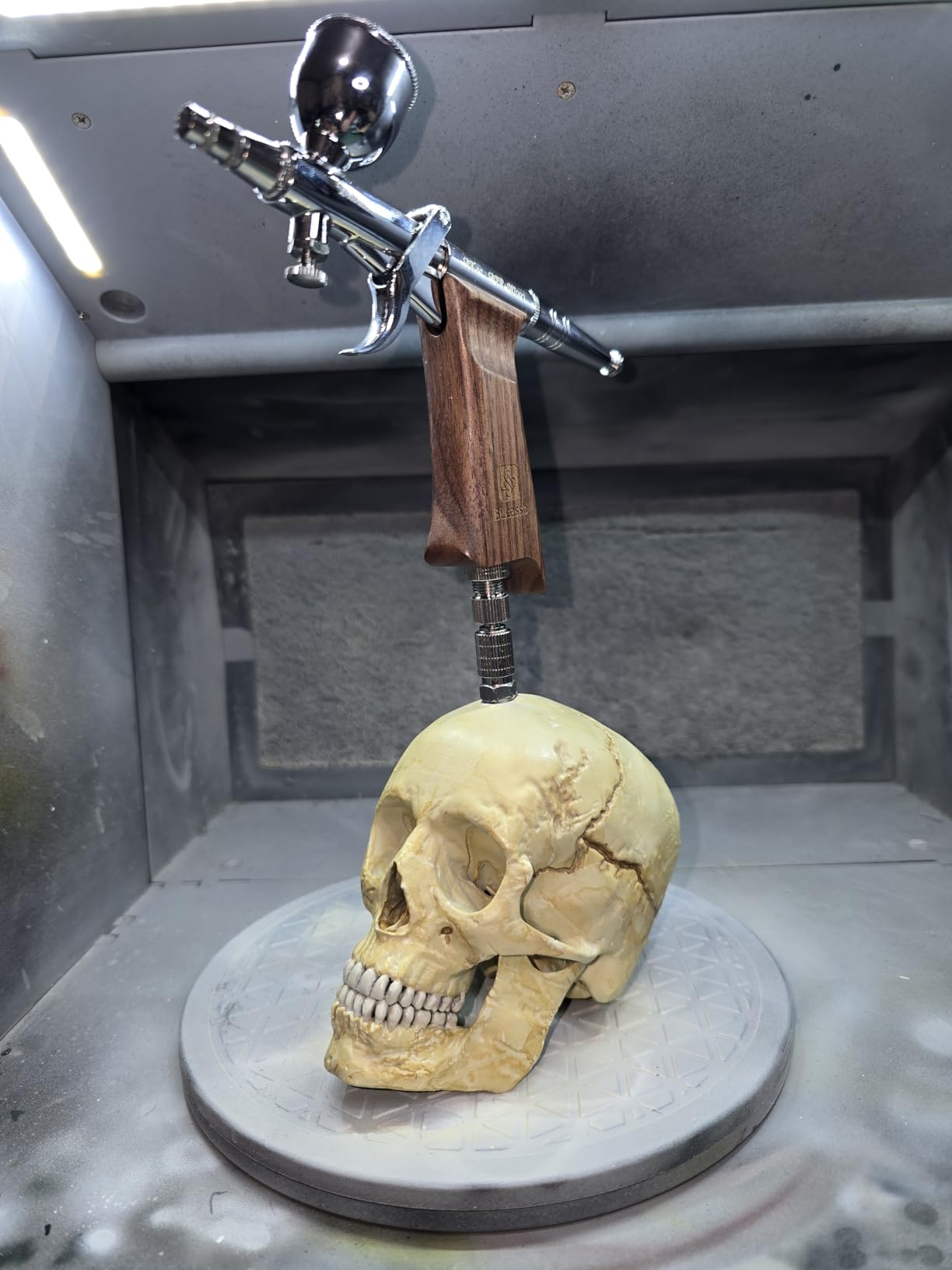
The 400ml bottle is excellent value if you airbrush regularly. One bottle lasts me roughly six months of weekend building. The strong fumes are the only downside: you need a spray booth and a respirator rated for organic vapors, no exceptions.
Best Used For
T108 is the universal thinner for Mr Color, GX100, and Mr Hobby lacquer lines. It is also the thinner to choose whenever you want maximum gloss from your lacquer paints, since the retarder additive eliminates orange peel.
Mixing Ratios and Safety
Start with a 1:1 ratio for flat colors and a 1:2 ratio (paint to thinner) for gloss and clear coats. Always work in a ventilated spray booth with an organic vapor respirator. T108 contains aggressive solvents that can damage silicone airbrush components over time, so clean your equipment thoroughly after each session.
9. Testors Dullcote Spray Lacquer – The Matte Topcoat Standard

Testors Spray Lacquer 3oz, Clear Coat
3oz can
Matte clear
Aerosol spray
For crafts and models
Pros
- Reliable matte finish
- Fast drying aerosol
- Easy application
- Durable topcoat protection
Cons
- Matte only no gloss option
- Limited 3oz can size
Every modeler needs a flat topcoat for military vehicles, figure painting, and toning down glossy finishes. Testors Dullcote has been the standard matte lacquer for decades, and it still earns its place on my shelf.
The aerosol spray goes on evenly from a distance of 10 to 12 inches and dries to a uniform dead-flat finish in about 20 minutes. I use it to kill the shine on glossy decals and to unify the sheen across mixed paint types on military dioramas.
With over 900 reviews averaging 4.5 stars, Dullcote is one of the most widely used topcoats in the hobby. It works over both enamel and acrylic paint layers, which makes it flexible for modelers who mix paint types on a single build.
The 3oz can is small, but a little goes a long way. Two light passes are usually enough to flatten an entire 1/35 armor kit. I keep two cans on hand at all times: one for active use and one as backup.
Best Used For
Dullcote is the topcoat for military models, figure painters, and anyone who needs to flatten a glossy finish. It is also the easiest matte lacquer to apply for beginners who are not yet comfortable with an airbrush.
Compatibility and Layering
Dullcote sprays cleanly over fully cured enamel, acrylic, and lacquer paints. Always test on a scrap piece before spraying over aftermarket decals, since the solvents can occasionally silver water-slide decal film. Apply in two light coats rather than one heavy pass.
10. Testors 1843MT Extreme Lacquer Spray – UV-Resistant Color
Testors 1843MT Extreme Lacquer Spray, 3 oz, Gloss Star Spangled Blue
3oz can
Gloss blue
UV resistant
For metal plastic and wood
Pros
- UV resistant will not yellow
- Covers in one coat
- Dries in 20 minutes
- No priming or clear coat required
Cons
- Limited color range
- Spray only no bottle option
Testors Extreme Lacquer line solves a real problem: UV fading. Most lacquer paints will yellow or shift color over time when displayed near a window, but the 1843MT formula is engineered to resist that fading.
I tested this on a pinewood derby car for my nephew, and the gloss blue finish stayed true after six months on a sunny shelf. The color is a deep, saturated blue with a metallic luster that looks far more expensive than the price suggests.
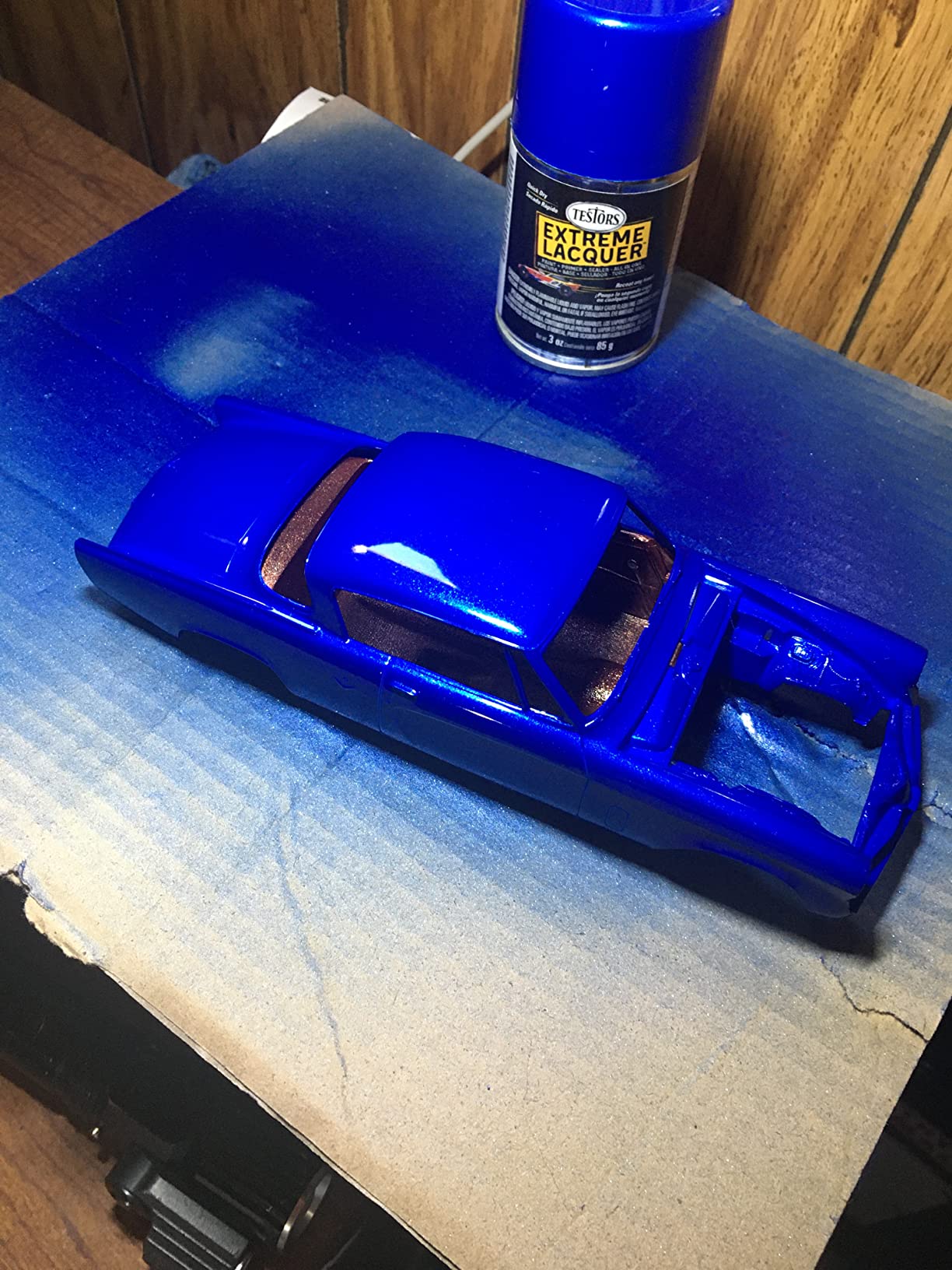
The paint covers in a single coat on most surfaces, which is rare for a rattle-can lacquer. Testors claims no priming or clear coating is required, and in my experience that holds true for display pieces. For handling-heavy items like RC bodies, I would still add a clear coat.
Drying time is roughly 20 minutes to handle, with full cure in 24 hours. The formula works on wood, metal, and plastic, so it is a useful can to have around for general craft projects beyond scale modeling.
Best Used For
Extreme Lacquer is ideal for display models, derby cars, helmets, and any project that will sit in indirect sunlight. The UV resistance is the headline feature, and it delivers on that promise over months of display.
Coverage and Curing Notes
One can covers a medium-sized model with two coats. The paint self-levels well, but avoid spraying in high humidity since moisture can cause blushing under the clear film. Allow 24 hours before heavy handling or polishing.
11. Tamiya Lacquer Solvent No.77 – The Dedicated Thinner

tamiyameikuappu Material Series No. 77 Tamiya Lacquer Solvent (250ml) 87077
250ml bottle
Lacquer solvent
Thinner and cleaner
Fast drying formula
Pros
- Best thinner for Tamiya lacquers
- Cleans airbrushes effectively
- Dilutes primers and putty
- 250ml value size
Cons
- Strong smell
- Flammable storage required
Tamiya Lacquer Solvent No.77 is the thinner designed specifically for Tamiya LP bottled lacquers. If you are painting with Tamiya LP-1 or any other LP color, this is the solvent that will give you the most predictable results.
I use No.77 for thinning LP paints at a 1:2 ratio, for cleaning my airbrush after lacquer sessions, and for diluting Tamiya liquid putty. The 250ml bottle is generous and lasts for months of regular building.
The fast-drying formula flashes off quickly, which is both a strength and a limitation. Quick drying means you can handle parts sooner, but it also means you have less working time for blending. For maximum gloss, I switch to Mr Leveling Thinner instead.
One Reddit user noted that Tamiya lacquer dissolves in ethanol while Mr Color does not. This matters for cleanup: if you use ethanol-based cleaners, you can strip Tamiya lacquer more easily than Mr Color, which is worth knowing before you choose your cleanup solvent.
Best Used For
No.77 is the daily driver thinner for Tamiya LP bottled lacquers and the best choice for modelers who primarily use the Tamiya lacquer line. It is also excellent for airbrush cleaning and putty dilution.
Storage and Handling
Store in a cool, dry place away from heat sources since the solvent is flammable. Keep the bottle tightly capped to prevent evaporation, which changes the solvent blend over time. The strong smell means you should always open this bottle in a ventilated area.
12. Mr Super Clear Gloss Spray by Mr Hobby – The Aerosol Clear Coat

Mr. Super Clear Gloss Spray
67ml can
Gloss clear
Aerosol sealant
For plastic models
Pros
- Immaculate gloss finish
- Quick drying
- Easy aerosol application
- Protects paint jobs
Cons
- Small 67ml can
- Premium pricing per ounce
Mr Super Clear Gloss Spray is the aerosol clear coat I recommend to modelers who want a glass-smooth finish without firing up the airbrush. With a 4.8-star average across nearly 1,000 reviews, it is one of the highest-rated clear coats in the hobby.
The spray goes on in a fine, even mist that builds into a deep gloss with three light coats. I use it on Gunpla builds where I want a candy-gloss finish on outer armor panels, and it delivers a shine that rivals airbrushed GX100.
Drying time is roughly one hour to handle, with full cure overnight. The instructions recommend light coats with 15 to 30 minute intervals, and I have found that patience here pays off. Rush the coats and you risk runs; take your time and the finish is flawless.
The 67ml can is small, but the spray pattern is efficient. I can clear a Master Grade Gunpla in two sessions from a single can. The fumes are strong, so this is strictly an outdoor or spray-booth product.
Best Used For
Mr Super Clear is ideal for Gunpla builders who want a high-gloss candy finish without investing in an airbrush setup. It is also excellent for sealing waterslide decals on plastic models of any scale.
Application and Coat Timing
Apply three light coats with 20-minute flash-off times between each. Hold the can 8 to 10 inches from the surface and keep the can moving to avoid pooling. Allow 24 hours of full cure before handling, masking, or panel lining.
How to Choose the Best Lacquer Model Paints: Buying Guide
Choosing the right lacquer paint comes down to five factors: finish type, application method, color range, durability needs, and safety setup. This buying guide walks through each one so you can match the right product to your next build.
1. Match the Finish to Your Subject
The finish you need depends entirely on what you are building. Military vehicles almost always call for flat or matte finishes, while automotive models and aircraft canopies demand high gloss. Science fiction and Gunpla builds can go either way depending on the mecha design.
For gloss finishes, Mr Color GX100 Super Clear and Mr Super Clear Spray are the top performers. For matte topcoats, Testors Dullcote remains the standard. For standalone colors, choose a brand that offers the finish you want in a single product rather than relying on a clear coat to adjust sheen.
2. Bottle or Spray: Choose Your Application Method
Bottled lacquers require an airbrush but offer unlimited control over thinning, pressure, and coverage. They are the choice for fine detail work, camouflage patterns, and any build where precision matters. Tamiya LP, Mr Color, and Alclad II are all bottled lines.
Spray cans are faster and require no equipment setup. They are ideal for large surfaces, RC car bodies, and beginners who have not yet invested in an airbrush. Tamiya TS, Testors Extreme Lacquer, and Mr Super Clear are all spray-can options worth considering.
3. Color Range and Brand Consistency
If you want a full spectrum of colors from a single brand, color range matters. Mr Color offers the widest range with hundreds of colors across multiple lines. Tamiya LP is second with over 100 bottled lacquer colors, followed by Alclad II for metallics and primers.
Brand consistency also means consistent thinning ratios and drying times across colors. When you stick to one brand, you develop muscle memory for how the paint behaves, which leads to better results. Our AK Real Colors lacquer paints guide covers another excellent range if you want to compare options.
4. Durability and Adhesion Requirements
Lacquer paints as a category are more durable than acrylics and enamels. The acetone and aggressive solvents in lacquer formulas actually melt into styrene plastic, creating a chemical bond rather than a surface coating. This is why lacquer is the preferred paint for RC car bodies and handling-heavy display pieces.
If maximum durability is your priority, pair a lacquer color coat with a lacquer clear topcoat. The combination creates a unified solvent-bonded film that resists chipping, scratching, and decal solvent better than any mixed paint-type system.
5. Safety Setup: Non-Negotiable
Lacquer paints require proper safety equipment, full stop. The solvents in lacquer paint and thinner include acetone, toluene, and other volatile organic compounds that are harmful to breathe. You need three things: a spray booth that vents outdoors, a respirator rated for organic vapors, and disposable gloves.
If you cannot paint outdoors or in a properly ventilated space, lacquer paints are not the right choice. Water-based acrylics like those covered in our AK 3rd Gen acrylic paints comparison are the safer alternative for indoor modelers.
6. Primer Compatibility
Lacquer paints adhere best when applied over a lacquer primer. Alclad II Black Primer and Microfiller is the top pick for this, but Tamiya LP-1 Black also works as a primer base under metallic finishes. Avoid applying lacquer over acrylic primer, since the solvents can eat through the acrylic layer.
7. Layer Compatibility: What Can Go Under What
The golden rule of layering is that lacquer goes over anything, but nothing goes over lacquer except more lacquer. Lacquer solvents will eat through acrylic paint layers underneath. Enamel can go over cured lacquer, but test first. For aircraft-specific layering advice, our Hataka lacquer paints for aircraft guide covers this topic in depth.
8. Value and Price per Milliliter
Price varies significantly across brands. Mr Color bottles are among the most affordable per milliliter, while Alclad II commands a premium for its specialized metallic and primer formulas. Tamiya LP bottles sit in the middle and offer excellent value for everyday colors.
FAQs
What is the most durable lacquer?
Tamiya lacquer paint is widely considered the most durable lacquer for model making. It dries in minutes, self-levels beautifully, and creates a rock-hard finish that resists chipping and scratching. Mr Color lacquer by Gunze-Sangyo is similarly durable with excellent pigment density. Both brands use aggressive solvents that bond with styrene plastic for superior adhesion.
Is Tamiya lacquer paint good?
Yes, Tamiya lacquer paint is excellent for scale modeling. It offers fast drying times, self-leveling properties, strong adhesion to plastic, and a wide color range. The LP series bottled lacquers work great for airbrushing when thinned at a 1:2 to 1:3 ratio. Tamiya lacquer also serves as an excellent primer base for acrylic paints.
What is the most durable model paint?
Lacquer paints are the most durable model paint available. They contain acetone and aggressive solvents that chemically bond with styrene plastic, creating a hard, chip-resistant surface. Lacquers dry faster than acrylics and have strong pigments. For ultimate durability, pair lacquer paint with a lacquer clear coat topcoat.
Can you use lacquer paint on plastic models?
Yes, lacquer paint is ideal for plastic models. The acetone in lacquer paint slightly melts the styrene plastic surface, creating exceptional adhesion. However, always prime first with a lacquer primer, work in a well-ventilated area with a respirator, and use thin coats to avoid warping thin plastic parts.
Do you need a primer for lacquer paint?
A primer is strongly recommended for lacquer paint, especially on resin and metal parts. On bare styrene plastic, lacquer paint can sometimes be applied directly because the solvents bond with the plastic. However, a lacquer primer like Alclad II Black Primer gives a smoother surface, fills fine scratches, and improves color consistency.
Conclusion: Which Lacquer Paint Should You Buy?
After testing all 12 products, my top recommendation for the best lacquer model paints breaks down by use case. For an everyday bottled gloss black that handles anything, Tamiya LP-1 is the editor’s choice. For large surfaces and RC bodies, Tamiya TS-29 spray is unbeatable. And for budget-conscious modelers, Mr Color C2 Gloss Black delivers lacquer performance at the lowest price per bottle in this roundup.
Whichever brand you choose, invest in proper ventilation and a good respirator. Lacquer paints reward careful, safe application with finishes that acrylic and enamel simply cannot match. That is why lacquer remains the paint of choice for serious scale modelers in 2026 and beyond.