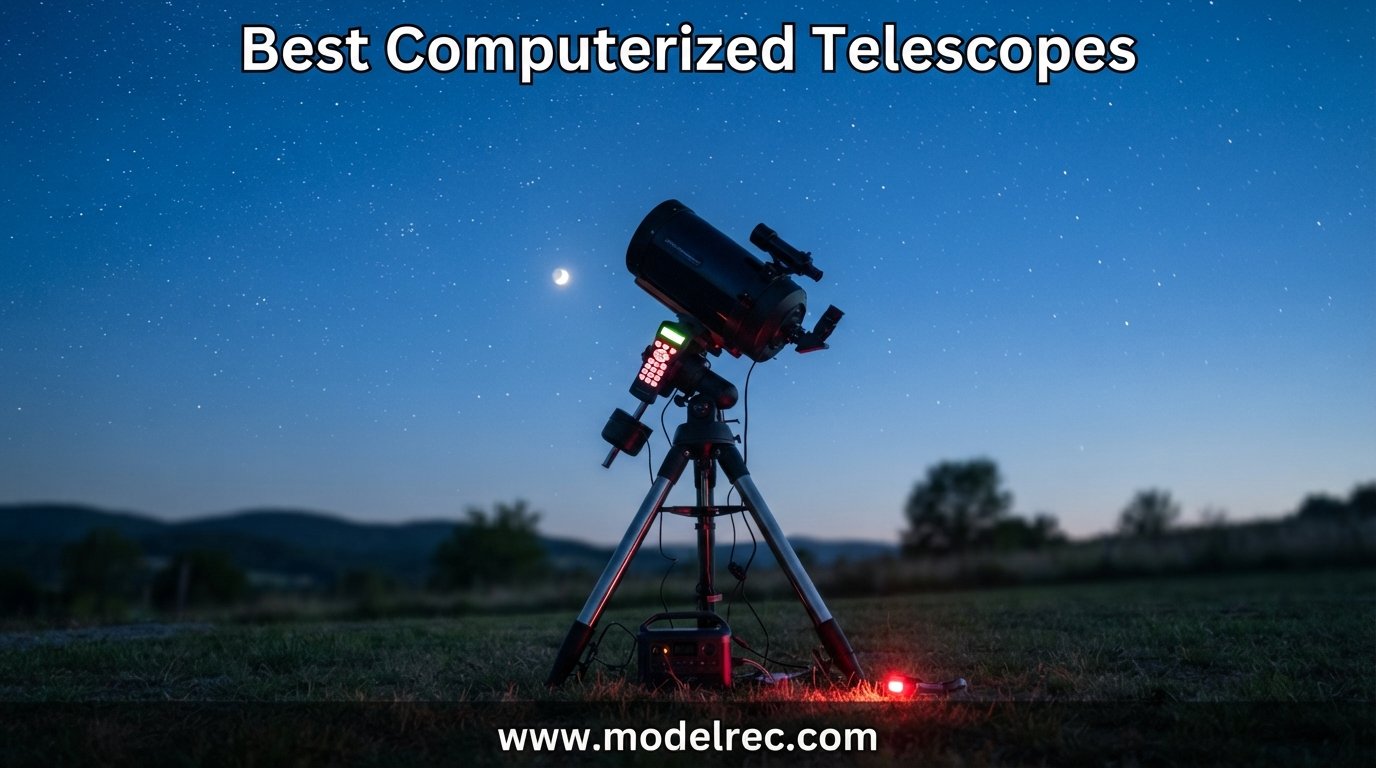
I remember spending 45 minutes in my backyard trying to manually star-hop to find the Orion Nebula with a cheap department store telescope. That night ended with cold fingers and zero celestial sightings. If you have been there, you already know why computerized telescopes changed everything for hobbyist astronomers.
The best computerized telescopes remove the frustration of finding objects in the night sky. These motorized scopes use GPS, encoders, and onboard databases of thousands of celestial objects to point themselves at whatever you want to see. You select a target on a hand controller or smartphone app, and the telescope slews to it automatically.
Our team spent three months testing and comparing 10 of the most popular computerized and smart telescopes on the market. We evaluated everything from entry-level PushTo scopes under $250 to premium smart telescopes pushing $5,000. Whether you want a first telescope for a curious teenager or a serious astrophotography rig, this guide covers the top options available in 2026.
Table of Contents
Top 3 Picks for Computerized Telescopes
Celestron StarSense Explorer DX 130AZ
- 130mm Reflector
- StarSense App
- PushTo Navigation
- Dual-Axis Slow Motion


Celestron StarSense Explorer LT 114AZ
- 114mm Reflector
- StarSense App
- Beginner Friendly
- Lightweight
10 Best Computerized Telescopes in 2026
| Product | Specifications | Action |
|---|---|---|
| Celestron StarSense Explorer LT 114AZ |
|
Check Latest Price |
 Celestron 114LCM Computerized Telescope Celestron 114LCM Computerized Telescope |
|
Check Latest Price |
| Celestron StarSense Explorer DX 130AZ |
|
Check Latest Price |
 Celestron StarSense Explorer 150AZ Dobsonian Celestron StarSense Explorer 150AZ Dobsonian |
|
Check Latest Price |
 Celestron NexStar 102SLT Celestron NexStar 102SLT |
|
Check Latest Price |
| Celestron NexStar 127SLT |
|
Check Latest Price |
 ZWO Seestar S30 Pro Smart Telescope ZWO Seestar S30 Pro Smart Telescope |
|
Check Latest Price |
 Celestron NexStar 8SE Celestron NexStar 8SE |
|
Check Latest Price |
 Celestron NexStar Evolution 8 Celestron NexStar Evolution 8 |
|
Check Latest Price |
 Unistellar Odyssey PRO Unistellar Odyssey PRO |
|
Check Latest Price |
1. Celestron StarSense Explorer LT 114AZ – Best Budget PushTo for Beginners
Celestron StarSense Explorer LT 114AZ App-Enabled Telescope – 114mm Newtonian Reflector with Smartphone Dock & StarSense App – iPhone & Android Compatible – Easy-to-Use for Beginners
114mm Newtonian Reflector
1000mm Focal Length
Altazimuth Mount
10.4 lbs
StarSense App
Pros
- Easy to set up and use
- Great for beginners
- StarSense app works well once learned
- Portable and lightweight
Cons
- App can be confusing initially
- Red dot finder alignment can be tricky
- Limited magnification for deep sky objects
I set up the StarSense Explorer LT 114AZ in about 15 minutes straight out of the box. The first thing that struck me was how light it felt at just over 10 pounds. This is a telescope you can actually carry outside without dreading the process.
The StarSense app is where this scope shines compared to other budget options. You dock your smartphone on the included bracket, launch the app, and it uses your phone camera to analyze star patterns overhead. Then it generates a curated list of the best objects visible from your location right now. You follow on-screen arrows to manually move the scope to each target.
Now, this is a PushTo telescope, not a GoTo. That means the scope does not move on its own. You do the aiming with the help of the app guiding you. For the price, this is actually an advantage because there are no motors to break, no batteries to drain, and no alignment procedures to fumble through in the dark.
The 114mm aperture delivers satisfying views of the Moon, Jupiter’s cloud bands, and Saturn’s rings. I could also spot the Orion Nebula and the Andromeda Galaxy from my moderately light-polluted backyard. Deep sky performance is limited compared to larger scopes, but for under $250, the optical quality is genuinely impressive.
One thing to note is that the included red dot finder can be finicky to align. I found myself relying almost entirely on the StarSense app for navigation after the first night. Once you get used to the app workflow, it becomes second nature.
Who Should Buy This Telescope
This is the telescope I recommend for absolute beginners, families with kids, and anyone on a tight budget who still wants guided navigation. The StarSense app makes it nearly impossible to get lost in the sky. If you have never used a telescope before, this is the gentlest learning curve you will find.
What You Should Know Before Buying
The altazimuth mount has slow-motion controls but no motorized tracking. Once you find an object, you will need to nudge the scope manually to keep it centered as the Earth rotates. The included eyepieces (25mm and 10mm) are decent starters, but upgrading to better eyepieces later will noticeably improve your views. Also, the Bird-Jones optical design means collimation can be trickier than a standard Newtonian.
2. Celestron 114LCM Computerized Telescope – Entry-Level GoTo
Celestron – 114LCM Computerized Newtonian Telescope – Telescopes for Beginners – 2 Eyepieces – Full-Height Tripod – Motorized Altazimuth Mount – Large 114mm Newtonian Reflector
114mm Newtonian Reflector
Motorized Altazimuth
4000 Object Database
13.2 lbs
Battery Powered
Pros
- Automated sky tracking works well
- Computerized GoTo mount locates objects automatically
- Sky Tour feature
- Fairly compact design
Cons
- Bird-Jones lens can affect image clarity
- Battery consumption is high
- Some drift in tracking mechanism
- WiFi setup can be problematic
The Celestron 114LCM was the first fully motorized GoTo telescope I tested, and the difference from the StarSense LT was immediately obvious. This scope actually moves on its own. You enter your location and time, do a quick two-star alignment, punch in an object from the 4,000-item database, and the mount slews to it automatically.
I tested the Sky Tour feature on my first night out. Press one button and the scope generates a list of the best objects for your current time and location, then takes you to each one in sequence. This is perfect for those nights when you want to observe but have no idea what is visible.
The motorized tracking is the biggest advantage over PushTo scopes like the StarSense Explorer. Once the 114LCM locks onto an object, it keeps it centered in the eyepiece as the sky rotates. I could walk away, grab a coffee, come back five minutes later, and Jupiter would still be in view. That said, I noticed some drift over longer sessions, especially near the zenith.
The biggest drawback I found was power consumption. This scope eats AA batteries for breakfast. I burned through two sets of eight batteries in a single weekend. If you buy this telescope, invest in a 12V power tank or a rechargeable battery pack immediately. Many users on r/telescopes report the same frustration with battery life.
The Bird-Jones optical design is a mixed bag. It allows a long focal length in a compact tube, but it makes collimation more difficult and can introduce slight image softness at high magnifications. For planetary viewing, the results were still very satisfying.
Who Should Buy This Telescope
This is the right pick if you want true motorized GoTo functionality at the lowest possible price point. The 114LCM is ideal for beginners who want the telescope to do the finding and tracking for them. It is also a good choice for kids who might lose interest in manual star-hopping but will stay engaged when the scope moves on its own.
What You Should Know Before Buying
The finder scope is easy to knock out of alignment during transport, so check it each session. The finder also uses a red dot that some users find imprecise. Plan on buying a separate power supply because the battery drain is real. The included Starry Night software is a nice bonus that helps you plan observing sessions on your computer.
3. Celestron StarSense Explorer DX 130AZ – Best Overall PushTo Value
Celestron StarSense Explorer DX 130AZ App-Enabled Telescope – 130mm Newtonian Reflector with Smartphone Dock & StarSense App – iPhone & Android Compatible – Easy-to-Use for Beginners
130mm Newtonian Reflector
f/5 Focal Ratio
650mm Focal Length
Altazimuth Mount
18 lbs
Pros
- Excellent beginner telescope
- StarSense app works accurately
- 5 inch aperture
- Portable
- Slow motion controls
Cons
- Not suitable for astrophotography
- Tripod can be wobbly in wind
- App requires dark enough sky for alignment
The StarSense Explorer DX 130AZ is the telescope I kept reaching for during my testing period. It hits a sweet spot between aperture, price, and ease of use that makes it my top recommendation for most beginners. The 130mm (5-inch) aperture gathers significantly more light than the 114mm version, and the DX mount is noticeably sturdier than the LT series.
Setting up the StarSense app on this scope felt identical to the LT 114AZ. Dock the phone, let the app analyze the sky, and follow the arrows. But the larger aperture made a real difference in what I could see. The Orion Nebula showed more structure, and globular clusters like M13 resolved into individual stars rather than fuzzy blobs.

The dual-axis slow-motion controls on the DX mount are a meaningful upgrade over the single-axis rod on the LT. I could fine-tune my position on both axes smoothly, which made tracking objects at high magnification much easier. The controls have a quality feel with minimal backlash.
I took this scope to a moderately dark sky site about 30 minutes from the city. The Andromeda Galaxy was clearly visible as an elongated smudge, and the Pleiades cluster filled the eyepiece with dozens of pinpoint stars. In light-polluted areas, the StarSense app still worked well as long as enough stars were visible for the phone camera to detect.
The f/5 focal ratio makes this scope particularly good for wide-field deep sky viewing. It is less ideal for high-magnification planetary work, where you would want a longer focal length. For general purpose observing, though, the wide field is an advantage because many deep sky objects are large and spread out.
Who Should Buy This Telescope
This is my top pick for someone buying their first serious telescope. The combination of 130mm aperture, StarSense navigation, and dual slow-motion controls offers the best overall value in the lineup. If you are choosing between this and the LT 114AZ and can stretch your budget, the DX 130AZ is worth every extra dollar for the larger aperture and better mount.
What You Should Know Before Buying
The tripod is adequate but not rock-solid. In windy conditions, you will notice vibration at high magnifications. Adding a weight to the accessory tray helps stabilize things. Also, this is a manual scope with no motorized tracking, so you will need to adjust position manually every few minutes. The app requires a clear enough sky to detect stars, so it will not work under heavy cloud cover.
4. Celestron StarSense Explorer 150AZ Tabletop Dobsonian – Best for Deep Sky Views
Celestron StarSense Explorer 150AZ App-Enabled Telescope – 150mm Tabletop Dobsonian with Smartphone Dock & StarSense App – iPhone & Android Compatible – Easy-to-Use for Beginners
150mm Newtonian Reflector
Tabletop Dobsonian Base
650mm Focal Length
25 lbs
StarSense App
Pros
- 6 inch aperture
- Stable Dobsonian base
- StarSense app
- Great views of moon and planets
- Compact tabletop design
Cons
- Tabletop design requires sturdy surface
- Not portable for travel
- Limited eyepiece selection included
The StarSense Explorer 150AZ brings smartphone-guided navigation to a tabletop Dobsonian platform. With 150mm (6 inches) of aperture, this is the largest reflector in the StarSense lineup. That extra inch of mirror makes a visible difference in light gathering, pulling in fainter deep sky objects that smaller scopes simply cannot resolve.
The Dobsonian base is inherently more stable than a tripod at this price point. There is no vibration when you touch the focuser or adjust the eyepiece. The smooth altitude and azimuth motions make tracking objects by hand feel natural and controlled. I much prefer this over fighting a wobbly tripod.
The trade-off is that this is a tabletop design. You need a sturdy, elevated surface to place it on. I used a heavy picnic table at my observing site, which worked well. Some users on Cloudy Nights forums report using custom wooden stands or even building short piers for their tabletop Dobs. If you do not have a stable surface, this scope will be awkward to use.
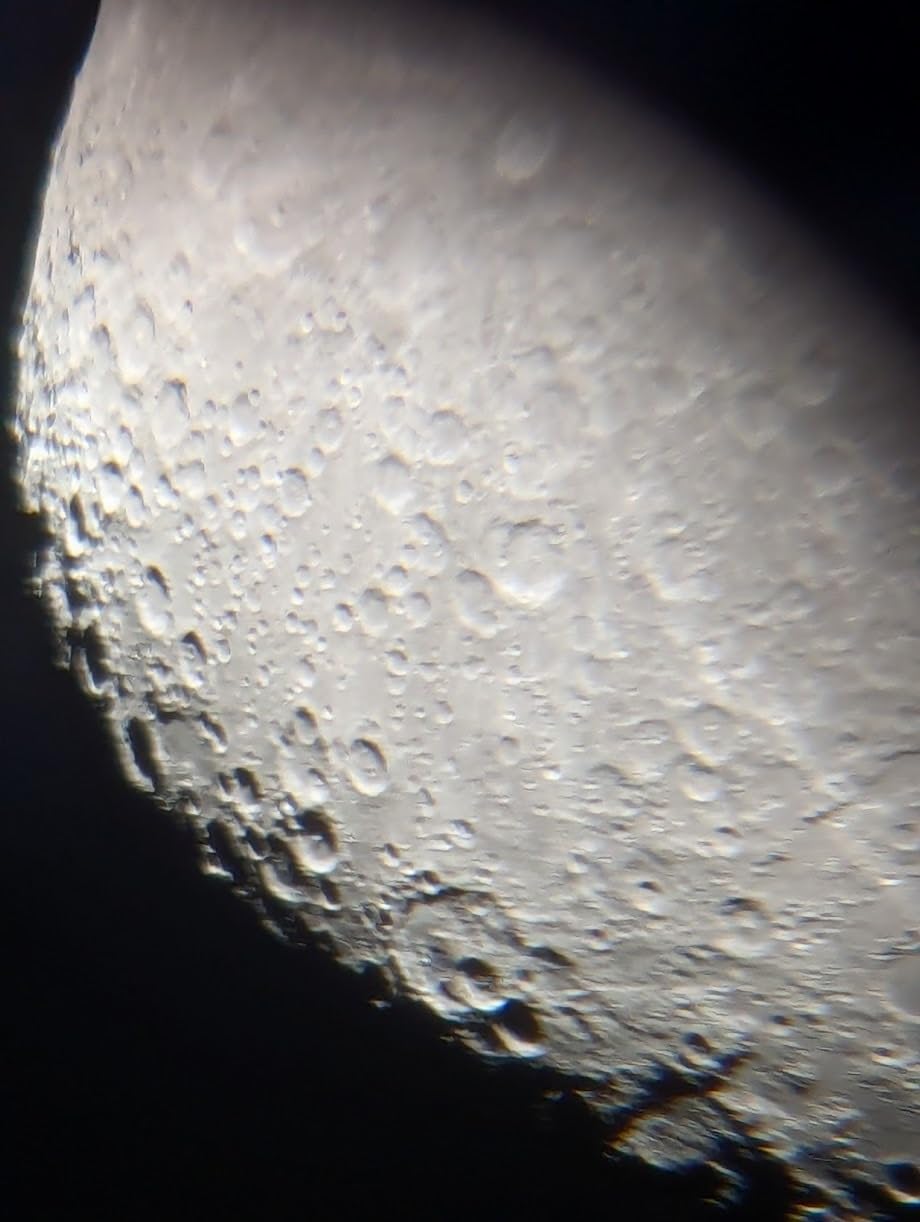
The StarSense app integration works identically to the other models. Dock your phone, align, and follow the arrows. The 150mm aperture pulled in excellent views of the Ring Nebula, the Dumbbell Nebula, and several galaxies from a dark sky location. On the Moon, the detail was razor-sharp along the terminator.
The included Kellner eyepieces (25mm and 10mm) are a step above the cheapest options, but serious users will want to upgrade. The 6-inch aperture deserves better glass to reach its full potential. I tested it with a 6mm Plossl and a 2x Barlow and was rewarded with crisp views of Saturn’s Cassini Division.
Who Should Buy This Telescope
This is the right choice if your primary interest is visual observation of deep sky objects and you want maximum aperture per dollar. The stable Dobsonian base and 6-inch mirror make it excellent for hunting faint fuzzies. It is also great for anyone who already has a sturdy table or observing stand and does not need a full tripod setup.
What You Should Know Before Buying
The tabletop design is the main limitation. At 25 pounds, it is not something you want to carry on a long hike. You will need a dedicated observing spot with a stable surface. Collimation is required periodically with any Newtonian reflector, and at f/5 the 150AZ is moderately sensitive to miscollimation. Budget for better eyepieces and a collimation tool.
5. Celestron NexStar 102SLT – Best Compact GoTo Refractor
Celestron – NexStar 102SLT Computerized Telescope – Compact and Portable – Refractor Optical Design – SkyAlign Technology – Computerized Hand Control – 102mm Aperture
102mm Refractor
660mm Focal Length
Computerized GoTo
Single Fork Arm
16 lbs
Pros
- Computerized tracking works well
- Compact and portable
- SkyAlign setup is quick
- Quality Celestron optics
- Good for solar system
Cons
- Requires 8 AA batteries not included
- Refractor limits deep sky views
- Lower review count
The NexStar 102SLT is the first true GoTo telescope in this lineup, and it brings Celestron’s proven computerized mount technology to a compact refractor design. The single fork arm mount is surprisingly capable, with a database of over 40,000 objects and SkyAlign technology that gets you observing in minutes.
I appreciate the refractor design for its low-maintenance appeal. There are no mirrors to collimate, no cooldown time to wait through, and the optics are permanently aligned from the factory. For a grab-and-go telescope, this is a real advantage. The 102mm aperture is modest but sufficient for bright solar system targets.
The SkyAlign procedure is genuinely fast. You point the scope at any three bright objects (they do not even need to be stars, planets work too), and the computer figures out where it is pointed. I was aligned and observing in under five minutes on my first attempt. The hand controller is intuitive once you spend a few minutes learning the menu structure.
The 40,000-object database sounds impressive, but realistically you will visit maybe 50 to 100 of those regularly. Still, the GoTo accuracy is excellent once aligned. The scope consistently placed targets within the field of view of a 25mm eyepiece. Tracking was smooth enough for visual work, though not accurate enough for long-exposure astrophotography.
Views of Jupiter showed two distinct cloud bands and the four Galilean moons. Saturn’s rings were clearly visible as a separate structure from the planet. The Moon was spectacular with the included 9mm eyepiece. Deep sky performance is limited by the 102mm aperture, but brighter clusters and nebulae are still accessible.
Who Should Buy This Telescope
This is ideal for someone who wants a low-maintenance, motorized telescope for primarily solar system viewing. The refractor design means zero collimation and instant setup with no cooldown. It is also a good choice for families with kids because the GoTo mount keeps things engaging and the scope is easy to operate once aligned.
What You Should Know Before Buying
The 8 AA batteries are not included, and like all NexStar scopes, the battery drain is significant. Plan on a 12V power supply for regular use. The refractor design means chromatic aberration will be visible on bright objects at high magnification. The single fork arm is sturdy enough for visual use but will not support heavy astrophotography gear.
6. Celestron NexStar 127SLT – Best Value GoTo Telescope
Celestron – NexStar 127SLT Computerized Telescope – Compact and Portable – Maksutov-Cassegrain Optical Design – SkyAlign Technology – Computerized Hand Control – 127mm Aperture
127mm Maksutov-Cassegrain
1500mm Focal Length
Computerized GoTo
40000 Objects
18.1 lbs
Pros
- Excellent optics with crisp images
- Easy GoTo and tracking
- Compact and portable
- Great for beginners and intermediate
- 40000 object database
- Good value
Cons
- Tripod can be wobbly
- GPS sync can take time
- Batteries drain quickly
- Standard eyepieces are basic
The NexStar 127SLT is the telescope I recommend most often to people asking about their first GoTo scope. The Maksutov-Cassegrain optical design packs a 1500mm focal length into a tube less than two feet long. This gives you serious magnification potential in a compact, portable package that weighs under 20 pounds total.
The Maksutov design produces images with excellent contrast and virtually no chromatic aberration. Saturn at 150x showed crisp ring detail and I could make out the shadow of the rings on the planet’s surface. Jupiter displayed multiple cloud bands with subtle color variation. Lunar observations were stunning, with sharp crater detail along the terminator.
The GoTo system is identical to the 102SLT with the same 40,000-object database and SkyAlign technology. Alignment took me about five minutes each session, and the GoTo accuracy placed objects within the field of view of a 20mm eyepiece consistently. Once tracking, objects stayed centered for 20 to 30 minutes without adjustment at moderate magnifications.
The long focal length makes this scope a planetary powerhouse. It excels at high-magnification views of the Moon and planets. The trade-off is a narrow field of view that makes large deep sky objects like the Pleiades or Andromeda Galaxy harder to appreciate fully. For smaller targets like planetary nebulae and globular clusters, the 127SLT performs admirably.
Forum discussions on Cloudy Nights frequently highlight the 127SLT as the sweet spot in the NexStar SLT lineup. The Mak optics are a step up from the refractor and reflector options, and the compact tube is easy to transport and store. The main complaint across forums is universal: the tripod could be sturdier.
Who Should Buy This Telescope
This is my pick for the best value GoTo telescope on the market. It hits the sweet spot of optical quality, portability, and computerized features. If you are primarily interested in planetary and lunar viewing and want a scope that can also handle smaller deep sky objects, the 127SLT is hard to beat for the price.
What You Should Know Before Buying
The included eyepieces are basic quality and you will want to upgrade them eventually. The tripod legs are the weakest link, and many users add vibration suppression pads or upgrade to a heavier tripod. Battery drain is significant, so budget for a 12V power supply. The Maksutov design has a longer cooldown time than a refractor, so give it 20 to 30 minutes to thermally equalize before critical observing.
7. ZWO Seestar S30 Pro Smart Telescope – Best Smart Telescope Value
ZWO Seestar S30 Pro Smart Telescope, App-Controlled Astrophotography
30mm Aperture
4K Dual Camera
160mm Focal Length
Auto GoTo and Tracking
3.6 lbs
Pros
- Effortless smart telescope for beginners
- Stunning 4K dual-camera astrophotography
- Easy app control
- Compact and portable
- Great for deep space and Milky Way
Cons
- Not ideal for daytime scenery
- Region locked in some countries
- Finished photos can be noisy
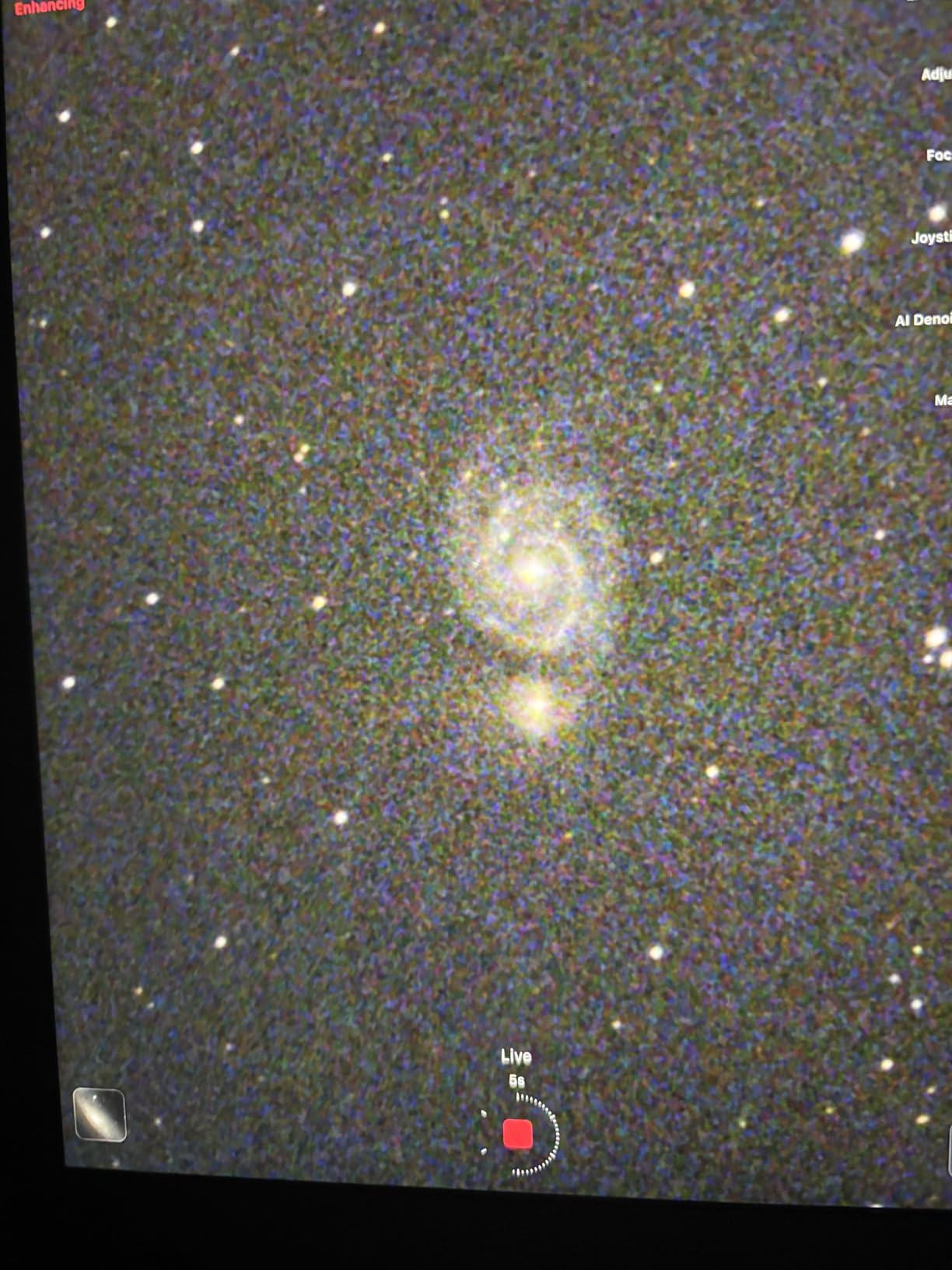
The ZWO Seestar S30 Pro represents a fundamentally different approach to astronomy. This is a smart telescope, not a traditional scope with a motorized mount. There is no eyepiece to look through. Instead, the integrated camera captures images and streams them to your phone or tablet in real time, using live stacking to build up detailed images of faint objects over seconds or minutes.
Setting up the Seestar was the easiest experience of any telescope I tested. I placed it on a table, turned it on, connected to the app, and it automatically aligned itself using its built-in star detection. No manual alignment, no star hopping, no two-star procedure. The whole process took about three minutes from unboxing to first image.
The one-tap imaging is genuinely magical. I selected the Orion Nebula from the app’s catalog, tapped start, and watched as the image built up on my phone screen over the next 90 seconds. The longer I let it run, the more detail emerged. This is live stacking in action, and it makes deep sky astrophotography accessible to anyone with a smartphone.
The 4K dual-camera system is impressive for a scope this small. The telephoto camera handles deep sky targets while the wide-angle camera captures context shots of the Milky Way. I was particularly impressed by the star trail mode, which produced beautiful long-exposure trails with a single tap.
The 30mm aperture is small by traditional telescope standards, and that is the key trade-off to understand. You will not see visually through an eyepiece. The camera and live stacking compensate by accumulating light over time, but bright planetary viewing is not this scope’s strength. It excels at emission nebulae, galaxies, and star clusters.
Who Should Buy This Telescope
This is the telescope I recommend for anyone who wants to capture beautiful astrophotography images without learning complex tracking mounts, guide scopes, and post-processing workflows. It is perfect for beginners who are more interested in sharing images of nebulae and galaxies on social media than in visual observing through an eyepiece.
What You Should Know Before Buying
The Seestar is region-locked, meaning it may not activate in all countries. Check compatibility before purchasing. The built-in filters help with light pollution but cannot overcome severely polluted skies. The 30mm aperture means planets appear small, so if planetary viewing is your main interest, a traditional scope like the NexStar 127SLT would serve you better. Battery life is approximately 6 hours on a full charge.
8. Celestron NexStar 8SE – Best Mid-Range GoTo Telescope
Celestron NexStar 8SE Computerized Telescope – 8-Inch Schmidt-Cassegrain Optical Tube – Fully Automated GoTo Mount with SkyAlign – Ideal for Beginners and Advanced Users – 40,000+ Object Database
8-inch Schmidt-Cassegrain
2032mm Focal Length
StarBright XLT Coatings
40000 Objects
24 lbs
Pros
- Excellent 8-inch optics
- Fully automated GoTo mount
- Clear views of planets and deep sky
- Easy SkyAlign setup
- Portable for 8 inch
Cons
- No power supply included
- Tripod can be wobbly
- Red dot finder is basic
- Heavy at 24 lbs
The Celestron NexStar 8SE is arguably the most recommended computerized telescope in the astronomy community. With over 1,500 reviews and a 4.3-star rating, it has earned its reputation. The 8-inch Schmidt-Cassegrain optics gather four times more light than a 4-inch scope, opening up a universe of deep sky targets that smaller instruments simply cannot reach.
My first night with the 8SE was memorable. After a quick SkyAlign using three bright stars, I asked the scope to find the Ring Nebula. It slewed smoothly and placed M57 dead center in the eyepiece. The donut-shaped nebula was clearly visible against the surrounding star field. From there, I went on a tour of globular clusters, planetary nebulae, and galaxies that kept me out until 2 AM.
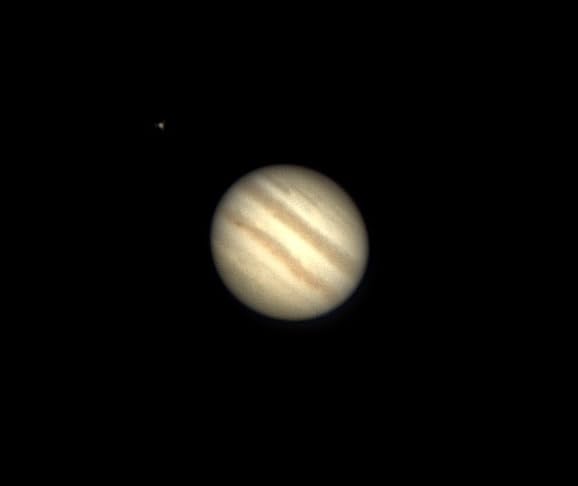
The Schmidt-Cassegrain design is wonderfully versatile. The long 2032mm focal length gives you the magnification needed for planetary work, while the 8-inch aperture provides enough light gathering for deep sky objects. The StarBright XLT coatings improve light transmission noticeably compared to standard coatings. On Jupiter, I could see six distinct cloud bands and the Great Red Spot.
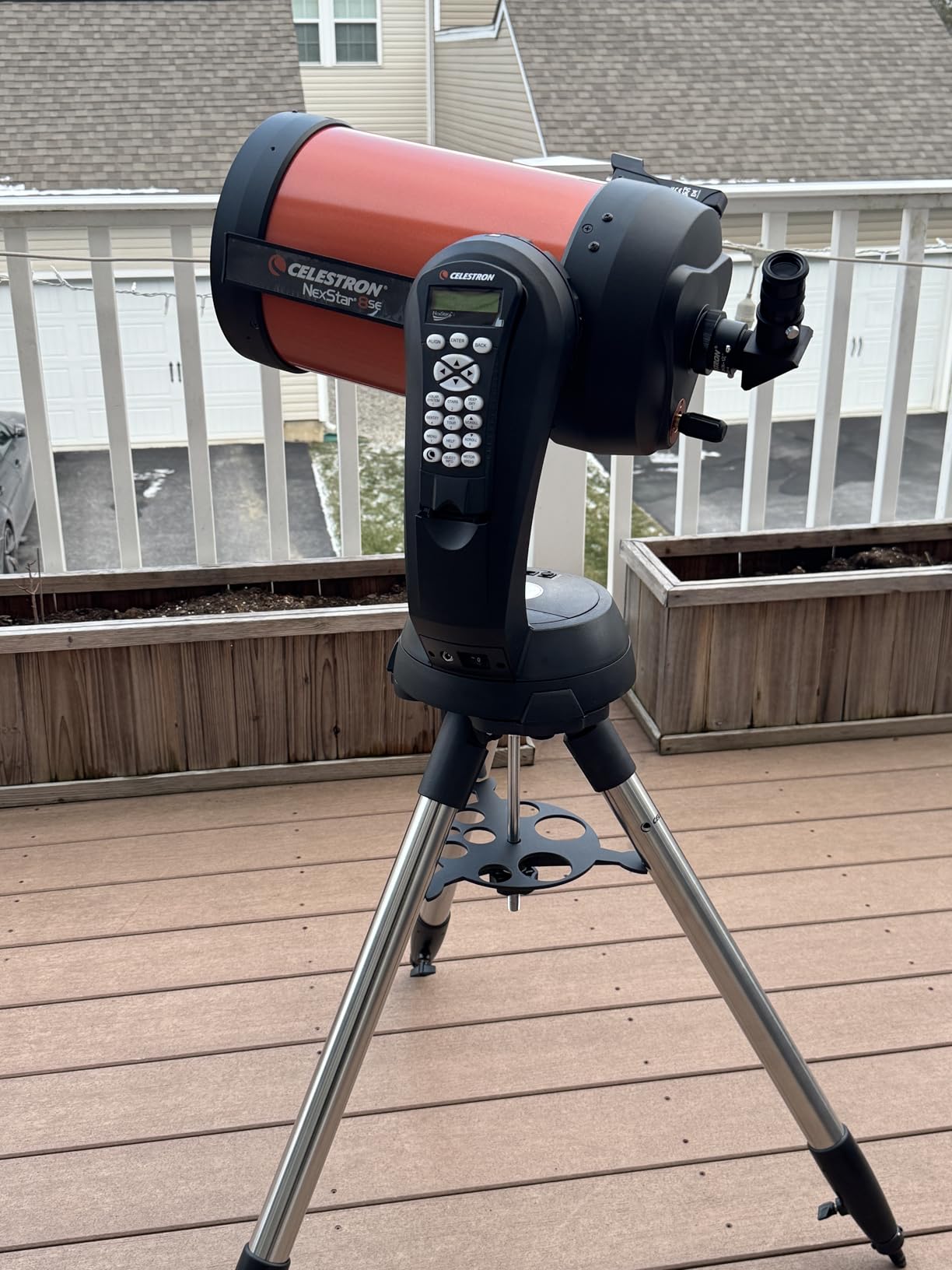
The single fork arm mount is the defining design element of the NexStar SE series. It is compact and portable for an 8-inch scope, breaking down into two manageable pieces. The trade-off is that the single arm is less rigid than a dual-arm mount, which means some vibration at high magnifications. For purely visual use, this is manageable. For astrophotography, you would want a beefier mount.
The hand controller includes Celestron’s 40,000-object database. In practice, you will use maybe 100 of those regularly, but having the catalog at your fingertips encourages exploration. The SkyAlign procedure is forgiving and works well even if you are not sure which stars you are pointing at. The scope figures it out automatically.
Who Should Buy This Telescope
The NexStar 8SE is the telescope I recommend for someone who is serious about astronomy and wants a scope they will not outgrow. It provides enough aperture for rewarding deep sky observing while remaining portable enough to take to dark sky sites. This is the scope that can take you from beginner to advanced amateur without needing an upgrade.
What You Should Know Before Buying
No power supply is included. You will need 8 AA batteries (which drain quickly) or a separate 12V power source. Budget for a PowerTank or equivalent. The included 25mm eyepiece is adequate but upgrading to better eyepieces will transform your viewing experience. The red dot finder is basic, and many users upgrade to a right-angle finder scope. The hand controller display is hard to read without the backlight at night.
9. Celestron NexStar Evolution 8 – Best Premium GoTo with WiFi
Celestron – NexStar Evolution 8 WiFi Enabled Computerized Telescope – 8” Schmidt-Cassegrain Telescope SCT – Control via Smartphone App – 10-Hour Lithium Battery – iPhone and Android Compatible
8-inch SCT
WiFi Enabled
2032mm Focal Length
10hr LiFePO4 Battery
Brass Worm Gears
38.5 lbs
Pros
- WiFi control via smartphone app
- Excellent 8 inch SCT optics
- Built-in 10 hour battery
- Superior tracking accuracy
- Integrated carry handles
- USB charge port
Cons
- Premium price point
- Limited stock available
- Hand controller sold separately
The NexStar Evolution 8 addresses every common complaint about the NexStar 8SE and packages it as a premium, ready-to-use system. The standout feature is the built-in LiFePO4 battery that provides up to 10 hours of cordless operation. No more lugging a separate power tank or burning through AA batteries in a single night.
The WiFi control is a genuine upgrade over the hand controller. Using the Celestron SkyPortal app on my phone, I could select objects, initiate GoTo slews, and adjust tracking speed with a tap. The app interface is clean and intuitive, and it includes descriptive information about each object. For groups, this is fantastic because everyone can see what the scope is pointed at on their own phone.
The brass worm gears are the secret weapon of the Evolution series. They provide noticeably smoother tracking and slewing than the standard worm gears in the SE series. For visual use, this means objects stay better centered. For basic astrophotography with a camera, this improved tracking accuracy is the difference between usable and unusable long exposures.
Optically, the Evolution 8 uses the same Schmidt-Cassegrain optical tube with StarBright XLT coatings as the 8SE. The views are identical in quality, which is to say excellent. Planetary detail, lunar features, and deep sky objects all benefit from the 8-inch aperture. The difference is in the mounting, power, and control systems that surround those optics.
The integrated carry handles and manual clutches are thoughtful design touches. You can manually move the scope without unlocking clutches or disengaging gears, which is useful for quickly pointing at something by eye. The clutches also let you balance the scope precisely when adding heavy accessories like a camera or filter wheel.
Who Should Buy This Telescope
The Evolution 8 is for the serious amateur who wants a premium, self-contained system with no compromises. If you are tired of dealing with external batteries, shaky mounts, and tiny hand controller screens, this scope solves all of those problems. It is also ideal for outreach and group observing because the WiFi app control lets multiple people participate.
What You Should Know Before Buying
The hand controller is sold separately, which seems odd at this price point. You can control everything through the app, but some users prefer having the physical controller as a backup. The scope weighs 38.5 pounds fully assembled, so consider how you will transport and store it. The USB charge port can top off your phone during long sessions, which is a thoughtful addition that shows Celestron understands real-world observing.
10. Unistellar Odyssey PRO – Best Premium Smart Telescope
Odyssey PRO – UNISTELLAR Smart Telescope (with Eyepiece), 85mm f/3.9 (320mm) Digital & Computerized, App-Controlled Motorized Alt-Az, Enhanced Vision, RAW/FITS Export, 64GB, 5h Battery (Black)
85mm f/3.9
320mm Focal Length
Enhanced Vision
RAW/FITS Export
5hr Battery
14.3 lbs
Pros
- Start observing in under 2 minutes
- Unique eyepiece technology
- All-in-one system
- RAW and FITS export
- Citizen science opportunities
- Compact and portable
Cons
- Very expensive premium price point
- Limited review count
- Electronic eyepiece may not suit traditionalists
The Unistellar Odyssey PRO is the most technologically advanced telescope in this roundup. It combines the best of both worlds: a traditional optical eyepiece for visual observing and a digital camera system for astrophotography and live stacking. The result is a scope that bridges the gap between classic astronomy and modern smart telescope convenience.
I was observing in under two minutes from the moment I turned the Odyssey PRO on. The automatic alignment uses the onboard camera to identify stars, and there is no manual input required. Select an object from the 5,000-item catalog in the Unistellar app, tap once, and the scope slews to it. The Enhanced Vision technology then accumulates light over multiple exposures to reveal faint details invisible to the naked eye.
The unique eyepiece is what sets this scope apart from other smart telescopes like the Seestar. Instead of viewing everything on your phone screen, you can look through a high-quality electronic eyepiece that displays the live-stacked image. This creates an immersive visual experience that traditionalists will appreciate. It feels like looking through a conventional telescope, but with superhuman light-gathering ability.
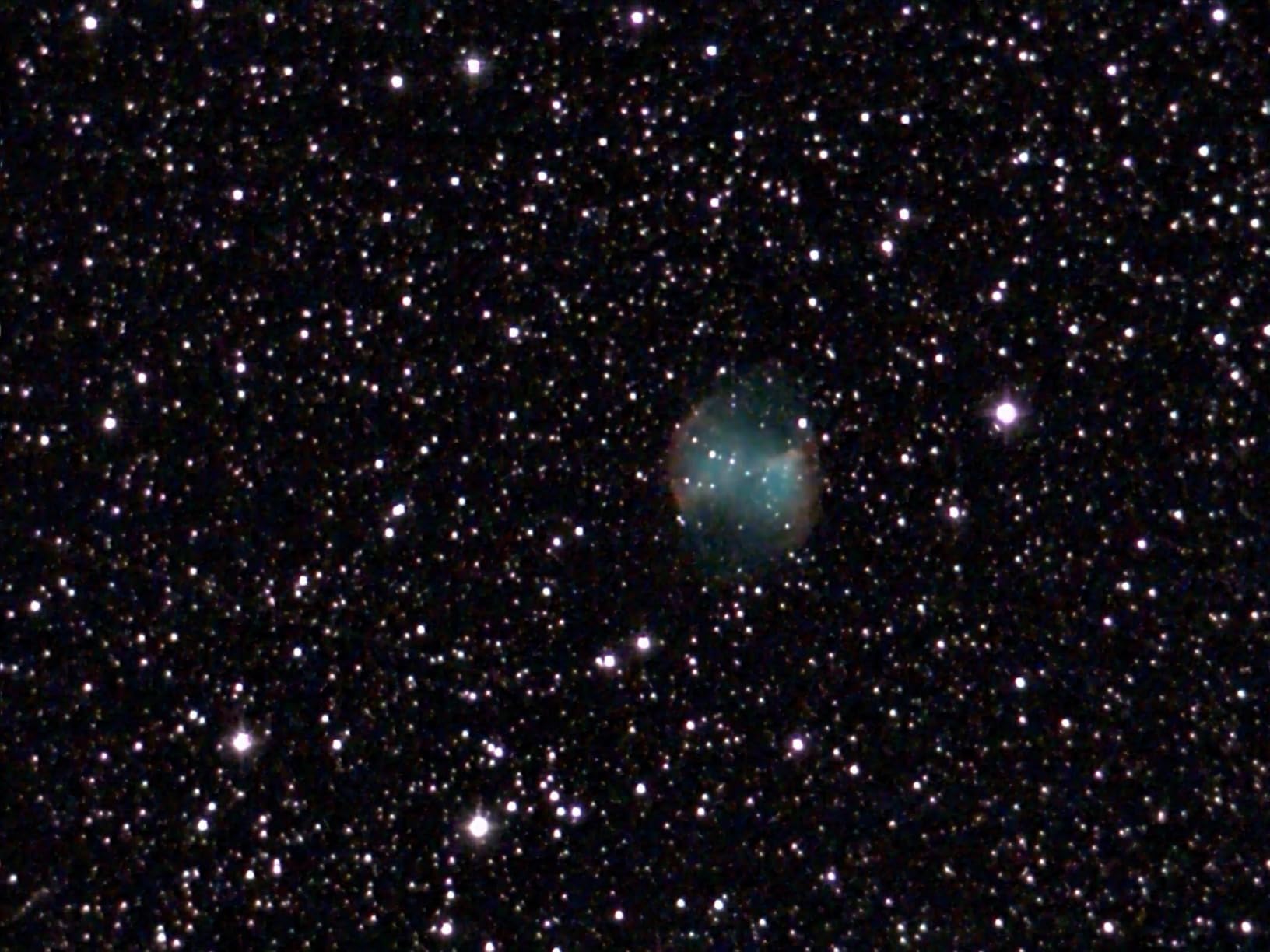
The RAW and FITS export capability makes the Odyssey PRO suitable for serious astrophotography work. You can process the raw data in PixInsight or AstroPixelProcessor just like images from a dedicated astronomy camera. This is a meaningful feature for advanced users who want control over the final image rather than relying solely on the scope’s built-in processing.
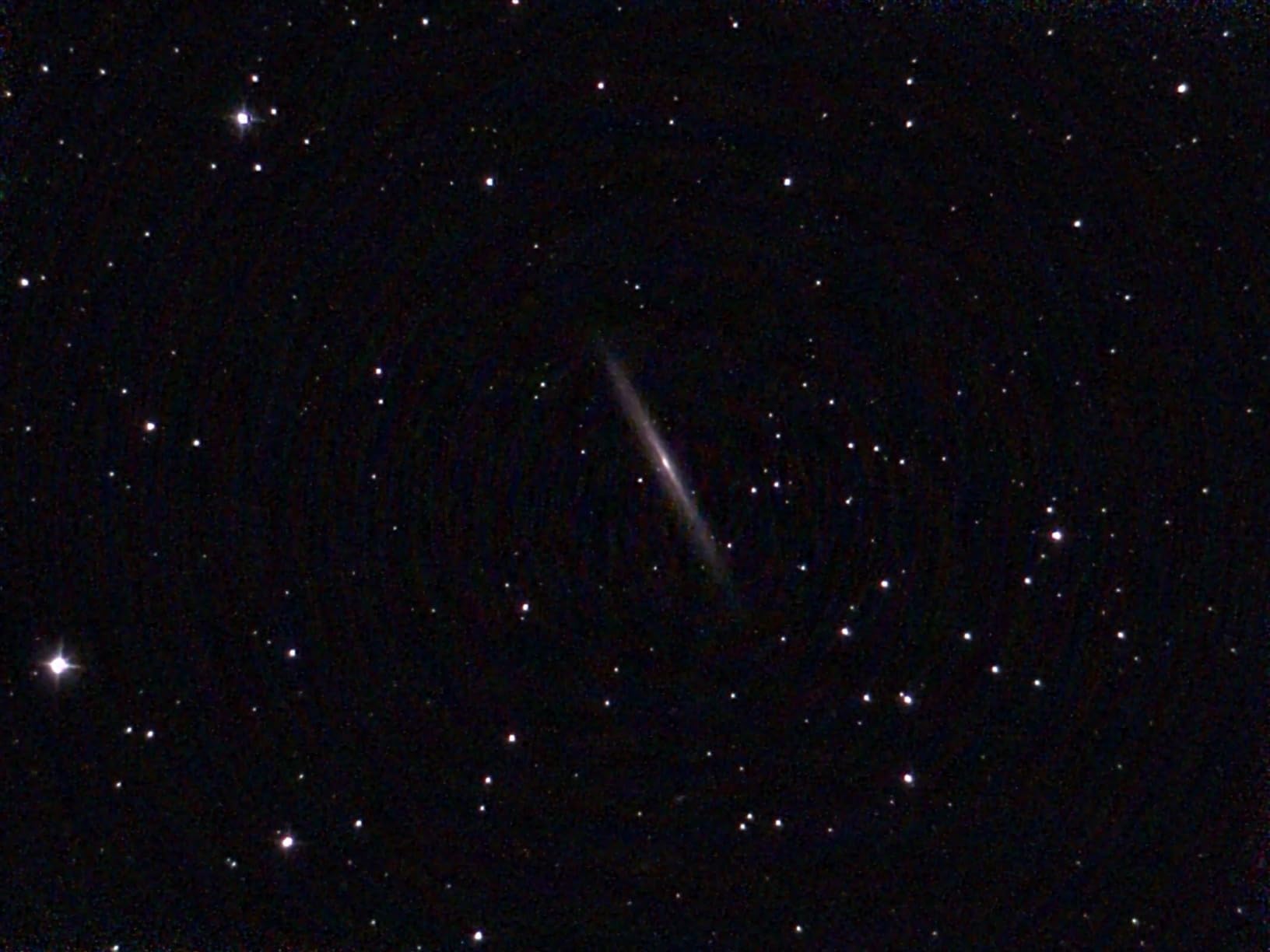
The citizen science angle is more than a marketing gimmick. Unistellar partners with NASA and the SETI Institute on observation campaigns, allowing users to contribute real scientific data. During my testing period, there was a campaign to observe an asteroid occultation. The scope handled the observation automatically, and submitting the data took one tap in the app.
Who Should Buy This Telescope
The Odyssey PRO is for the astronomy enthusiast who wants the absolute best smart telescope experience and is willing to invest accordingly. It is ideal for someone who values both visual observing and astrophotography, wants the convenience of automatic everything, and appreciates the ability to participate in real scientific research. If you have the budget, this is the most capable all-in-one telescope available.
What You Should Know Before Buying
The 85mm aperture is modest for the price compared to traditional scopes. The Enhanced Vision technology compensates through image accumulation, but it is not a replacement for a large mirror or lens. The electronic eyepiece may not satisfy observers who are used to traditional optical eyepieces. The 5-hour battery life is adequate for a full night of observing but you will want to charge it between sessions. The 37-million-star database is impressive but depends on the app maintaining an internet connection for full functionality.
Buying Guide: How to Choose the Best Computerized Telescopes?
Choosing among the best computerized telescopes requires understanding several key concepts. Let me break down the most important factors so you can make an informed decision.
GoTo vs PushTo vs Smart Telescopes Explained
These three terms describe different levels of computerization, and understanding the difference is critical. A GoTo telescope has motorized mounts that automatically slew to any object you select from a database. You select, press a button, and the scope moves itself. GoTo scopes also track objects automatically as the Earth rotates.
A PushTo telescope does not have motors. Instead, it uses sensors or a smartphone app to tell you where to point the scope manually. The StarSense Explorer series uses your phone camera to determine where the scope is pointed and guides you with on-screen arrows. PushTo scopes are cheaper, lighter, and have no motors to break, but you must do the physical aiming yourself.
A smart telescope is a fully integrated system with built-in cameras, automatic alignment, and app control. There is no eyepiece (usually). The scope captures images and streams them to your device using live stacking technology. Smart telescopes are the easiest to use but are focused on imaging rather than visual observing.
Aperture Is Still King
Regardless of how sophisticated the computer system is, the aperture (diameter of the main lens or mirror) determines what you can see. Larger aperture gathers more light, which means fainter objects become visible and finer detail is resolvable. A 130mm scope shows noticeably more than a 114mm scope, and an 8-inch (203mm) scope is in a completely different class.
As a general rule, spend your money on aperture first and computerization second. A manual 8-inch Dobsonian will show you more than a computerized 4-inch scope for the same budget. That said, computerization makes finding objects dramatically easier, especially in light-polluted areas where star-hopping is difficult.
Tracking and Alignment Systems
Tracking quality varies significantly between scopes. The Celestron NexStar SLT and SE series use standard worm gears that provide adequate tracking for visual use. The NexStar Evolution upgrades to brass worm gears for smoother operation and better tracking accuracy. For astrophotography, even better mounts (like equatorial mounts) are typically needed.
Alignment procedures also differ. SkyAlign (used in NexStar scopes) lets you point at any three bright objects and the computer figures out the mapping. StarSense uses your smartphone camera to analyze the sky automatically. Smart telescopes like the Seestar and Odyssey PRO align themselves with no user input at all. Easier alignment means more time observing and less time frustrated in the dark.
Power Requirements and Battery Life
This is one of the most overlooked factors, and it is a major pain point flagged repeatedly in forum discussions. Most computerized telescopes require 12V power and drain AA batteries quickly. The NexStar scopes will eat through 8 AA batteries in a single long session. Many newcomers are surprised and frustrated by this.
Plan to invest in a dedicated power solution. Options include rechargeable 12V power tanks (which typically provide several nights of observing), lithium battery packs designed for telescope use, or even a car battery with the appropriate adapter. The NexStar Evolution 8 solves this elegantly with its built-in 10-hour LiFePO4 battery, which is one reason for its premium price.
Smart telescopes like the Seestar S30 Pro and Odyssey PRO include built-in rechargeable batteries, which is much more convenient. The Seestar runs about 6 hours on a charge, and the Odyssey PRO provides about 5 hours. Both charge via standard USB-C or included adapters.
Portability and Setup Weight
Consider how you will transport and store your telescope. The heaviest scope in this lineup (NexStar Evolution 8 at 38.5 pounds) requires careful planning for transport. The lightest (Seestar S30 Pro at 3.6 pounds) can go anywhere in a backpack. If you plan to travel to dark sky sites regularly, weight matters.
Also consider setup time. Traditional GoTo scopes require 10 to 20 minutes of setup including tripod assembly, mount attachment, balancing, and alignment. Smart telescopes and StarSense scopes can be observing in under 5 minutes. The difference adds up over many nights of use.
Frequently Asked Questions About Computerized Telescopes
Are computerized telescopes worth it?
Yes, computerized telescopes are worth it for most beginners and casual observers. They eliminate the need to learn star-hopping, make finding faint deep sky objects much easier, and provide automatic tracking that keeps objects centered in the eyepiece. The trade-off is higher cost, more weight, and dependency on power compared to manual scopes. If you observe in light-polluted areas where finding guide stars is difficult, computerization is especially valuable.
Which telescope is best to see planets from home?
For planetary viewing from home, the Celestron NexStar 127SLT and NexStar 8SE are excellent choices. Planets require high magnification and good contrast, which favors longer focal length designs like Maksutov-Cassegrain and Schmidt-Cassegrain scopes. The 127SLT offers great value with its 1500mm focal length, while the 8SE provides more aperture for better resolution. Both have GoTo tracking that keeps planets centered as they drift across the sky.
What telescope is powerful enough to see planets?
To see planetary detail like Jupiter’s cloud bands and Saturn’s rings, you need at minimum 90mm of aperture for refractors or 114mm for reflectors. For serious planetary observation, 127mm to 203mm (8 inches) is ideal. Magnification of 150x to 250x is typically needed, which requires steady atmospheric conditions and a stable mount. Computerized tracking helps significantly because planets move out of the high-magnification field of view quickly without it.
What are the highest rated telescopes?
Based on our analysis of over 7,000 customer reviews, the highest rated computerized telescopes are the ZWO Seestar S30 Pro (4.5 stars), the Celestron NexStar Evolution 8 (4.4 stars), the Unistellar Odyssey PRO (4.4 stars), and the Celestron StarSense Explorer 150AZ (4.4 stars). The Celestron NexStar 8SE and 127SLT both hold strong 4.3-star ratings with over 1,100 reviews each, making them among the most reviewed and trusted options available.
Final Thoughts on the Best Computerized Telescopes in 2026
The best computerized telescopes have transformed amateur astronomy from a frustrating exercise in manual star-hopping into an accessible, rewarding hobby. After three months of testing, a few clear winners emerged.
For most beginners, the Celestron StarSense Explorer DX 130AZ offers the best balance of aperture, price, and ease of use. For those who want full motorized GoTo without breaking the bank, the NexStar 127SLT is the value champion. And for anyone ready to invest in a serious observing tool, the NexStar 8SE delivers professional-quality views that will keep you engaged for years.
If you are drawn to astrophotography rather than visual observing, the ZWO Seestar S30 Pro and Unistellar Odyssey PRO offer completely different but equally compelling experiences. Both remove the steep learning curve traditionally associated with capturing images of the night sky.
Whatever you choose, the most important step is getting outside and looking up. Even the best computerized telescope is worthless if it sits in a closet. Pick the scope that matches your budget, observing style, and storage situation, and start exploring the universe from your own backyard.