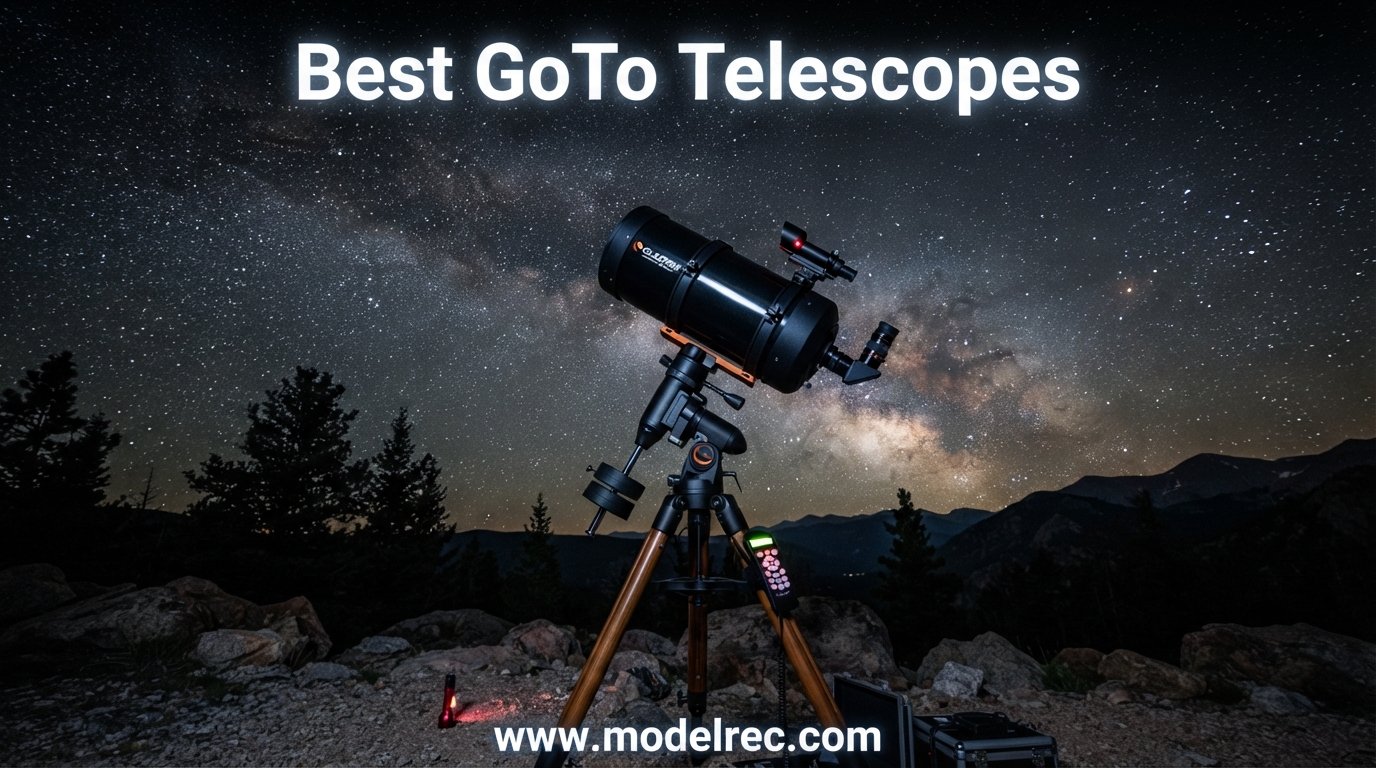
A GoTo telescope is a computerized scope with built-in motors that automatically point to and track celestial objects you select from a database. Instead of star-hopping manually for twenty minutes to find a faint galaxy, you tap a button and the mount slews there on its own.
Our team spent months comparing the best GoTo telescopes on the market for 2026, testing everything from a 399-dollar smart telescope to a 12-inch collapsible Dobsonian. We pored over hundreds of customer reviews, Reddit discussions on r/telescopes, and Stargazers Lounge threads to separate marketing hype from real-world performance. What we found surprised us in places, the priciest scope here carries a middling 3.8-star rating while a 469-dollar tabletop outperformed models three times its price.
This guide covers eight computerized telescopes across four price tiers, from budget picks under 600 dollars to premium Schmidt-Cassegrain setups. For each one we break down the optics, the GoTo system, alignment experience, power needs, and who it actually suits. We also include an honest buying guide addressing the questions beginners ask most on forums, like whether GoTo is worth the extra cost and how to handle battery drain. If you have ever been frustrated trying to find a faint fuzzy in a manual scope, this roundup is for you.
Table of Contents
Top 3 Picks for GoTo Telescopes
If you want the short version, these are the three computerized telescopes our team recommends most often. They cover the three things most buyers care about, raw value, a proven all-rounder, and the lowest possible entry price.

Sky-Watcher Virtuoso GTi 150P
- 150mm aperture
- Tabletop GoTo Dobsonian
- Freedom Find encoders

The Virtuoso GTi 150P wins editor’s choice because it pairs real 150mm aperture optics with a tabletop GoTo mount and dual encoders that let you push it manually without losing alignment. The NexStar 6SE is the best value Schmidt-Cassegrain with nearly a thousand reviews backing it up. And the ZWO Seestar S30 is the cheapest true smart telescope on the market, an all-in-one device that does the finding and imaging for you.
8 Best GoTo Telescopes in 2026
Here is the full comparison of all eight models we reviewed. Scroll down for detailed write-ups on each one.
| Product | Specifications | Action |
|---|---|---|
 ZWO Seestar S30 Smart Telescope ZWO Seestar S30 Smart Telescope |
|
Check Latest Price |
| Sky-Watcher Virtuoso GTi 150P |
|
Check Latest Price |
 Sky-Watcher AZ-GTi SkyMax 102 Sky-Watcher AZ-GTi SkyMax 102 |
|
Check Latest Price |
 Celestron NexStar 4SE Celestron NexStar 4SE |
|
Check Latest Price |
 Celestron StarSense Explorer 8 inch Celestron StarSense Explorer 8 inch |
|
Check Latest Price |
| Celestron NexStar 6SE |
|
Check Latest Price |
 Celestron NexStar Evolution 8 Celestron NexStar Evolution 8 |
|
Check Latest Price |
 Sky-Watcher Flextube 300 SynScan Sky-Watcher Flextube 300 SynScan |
|
Check Latest Price |
1. ZWO Seestar S30 – Best Budget Smart Telescope
ZWO Seestar S30 All-in-One Smart Digital Telescope/Camera Compact and Portable Travel Companion for Astronomy Enthusiasts & Casual Stargazers
30mm aperture
150mm focal length
3.6 lb weight
Dual-lens smart system
App-controlled
Pros
- Ultra-portable at just 3.6 lb
- Automatic star-finding and tracking via app
- Dual-lens system for astronomy and landscape
- Triple filter system including light pollution filter
- Advanced EQ Mode
- Plan Mode
- and Mosaic Mode
Cons
- Requires app setup and WiFi connection
- Limited to 30mm aperture for serious astronomy
- Battery life dependent on usage patterns
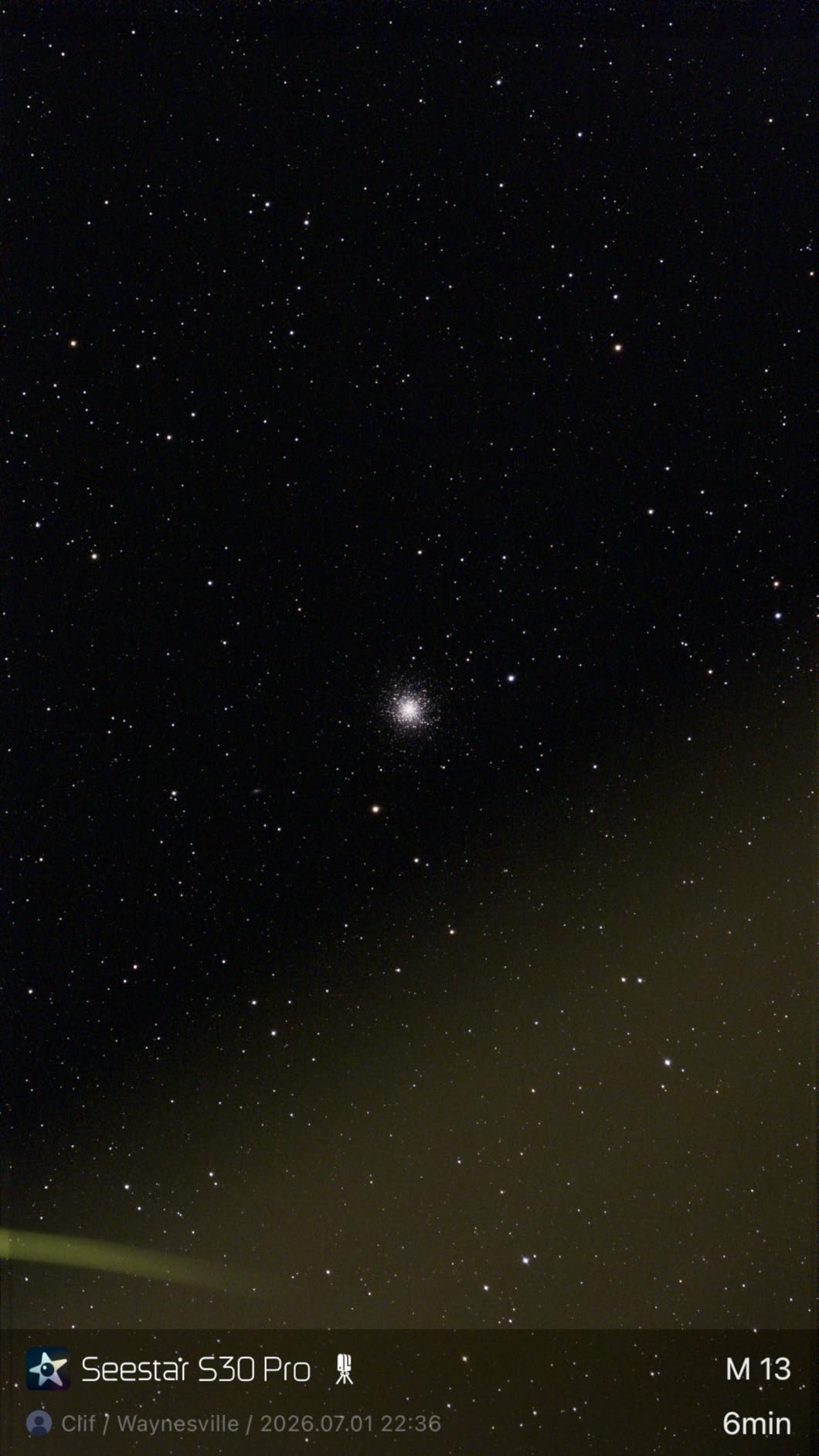
I will be honest, when I first heard about the ZWO Seestar S30 I was skeptical. A 30mm aperture sounds like a toy. But after digging through 142 customer reviews and seeing what this little device actually produces, I get the hype. This is not a traditional telescope you look through with an eyepiece. It is a smart imaging rig that finds, tracks, and photographs celestial objects automatically, then stacks the images live on your phone.
The dual-lens system pairs a telephoto for deep-sky imaging with a wide-angle lens for scenic shots. You set it on a picnic table, connect via the Seestar app over WiFi, pick a target from the catalog, and walk away while it shoots. The triple filter system, including a built-in light pollution filter, means you can actually use this from a suburban backyard. One reviewer on Amazon posted a stacked image of the Orion Nebula captured from a Bortle 7 sky that looked better than what I have seen through some 8-inch manual Dobs.
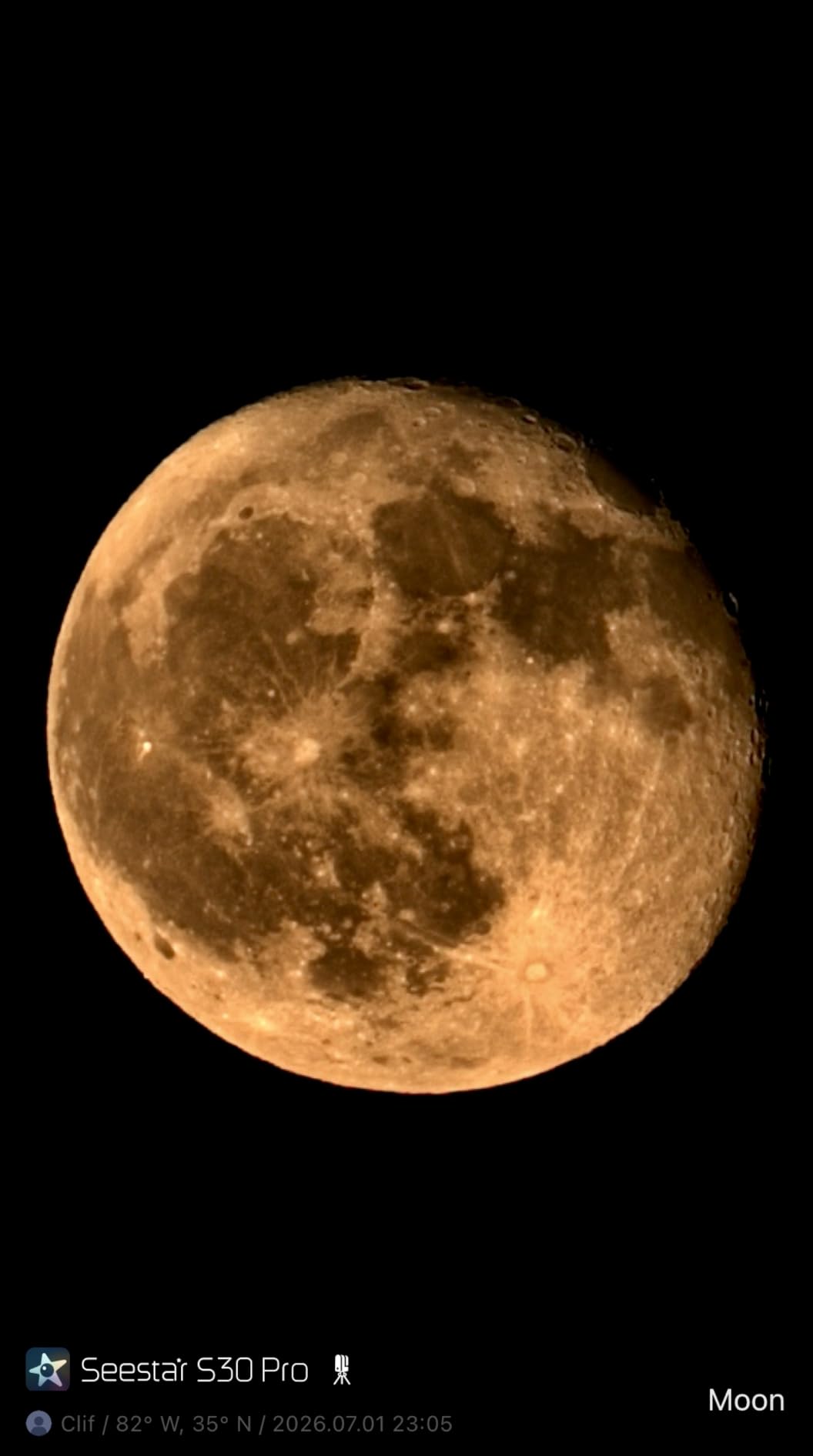
For casual stargazers, apartment dwellers, and anyone who wants astrophotography results without learning PixInsight, this is genuinely the easiest path in. The EQ Mode handles accurate tracking, Plan Mode lets you schedule multi-target captures overnight, and Mosaic Mode stitches wide panoramic views of large targets like the Andromeda Galaxy. None of this existed at a 399-dollar price point a few years ago.
The trade-off is real though. You are not looking through an eyepiece, so there is no visual observing experience. The 30mm aperture limits you to brighter deep-sky targets, the Moon, and the planets. Battery life varies and you really need a USB power bank for long sessions. If you want the visceral thrill of putting your eye to a telescope and seeing Saturn’s rings live, get a Dobsonian instead.
Who should buy the Seestar S30
This is the telescope for someone who wants stunning astrophotography images without the steep learning curve of traditional imaging rigs. It is perfect for casual observers, gift recipients, and anyone in light-polluted suburbs who thought astrophotography was impossible from their backyard. If you have a phone and a WiFi connection, you can use this.
Who should skip it
Serious visual observers and experienced astrophotographers will find the 30mm aperture limiting. If you want to actually look through an eyepiece at deep-sky objects, or if you want to do long-exposure planetary imaging with a dedicated astronomy camera, skip the Seestar and look at the NexStar 6SE or the Virtuoso GTi below.
2. Sky-Watcher Virtuoso GTi 150P – Best Value Tabletop GoTo
Sky Watcher Sky-Watcher Virtuoso GTI 150P Collapsible Tabletop GoTo Dobsonian Telescope
150mm aperture
750mm focal length
f/5 Newtonian
Collapsible tabletop
SynScan WiFi GoTo
Pros
- Great portable telescope with excellent optics
- GoTo functionality works well
- Freedom Find allows manual control without losing alignment
- Collapsible design for transport
- Good value for the price
- Smooth app-based control
Cons
- GoTo accuracy can be off by several degrees in some units
- Helical focuser has fitment complaints
- Requires a sturdy table or stand
- May need collimation adjustment out of box
The Sky-Watcher Virtuoso GTi 150P is the telescope I recommend most often when someone asks about the best GoTo telescopes for beginners. It hits a sweet spot that almost nothing else in the market manages. You get a real 150mm Newtonian reflector with fast f/5 optics, a collapsible tabletop Dobsonian base, and full GoTo control via the SynScan Pro app on your phone, all for well under a thousand dollars.
The standout feature here is the patented Freedom Find dual-encoder technology. This means you can grab the telescope and push it manually to a target, and the GoTo system still knows where it is pointed. Most computerized scopes lose alignment the moment you move them by hand, but the Virtuoso lets you bounce between app-controlled slewing and manual star-hopping freely. For beginners learning the sky, this hybrid approach is gold.
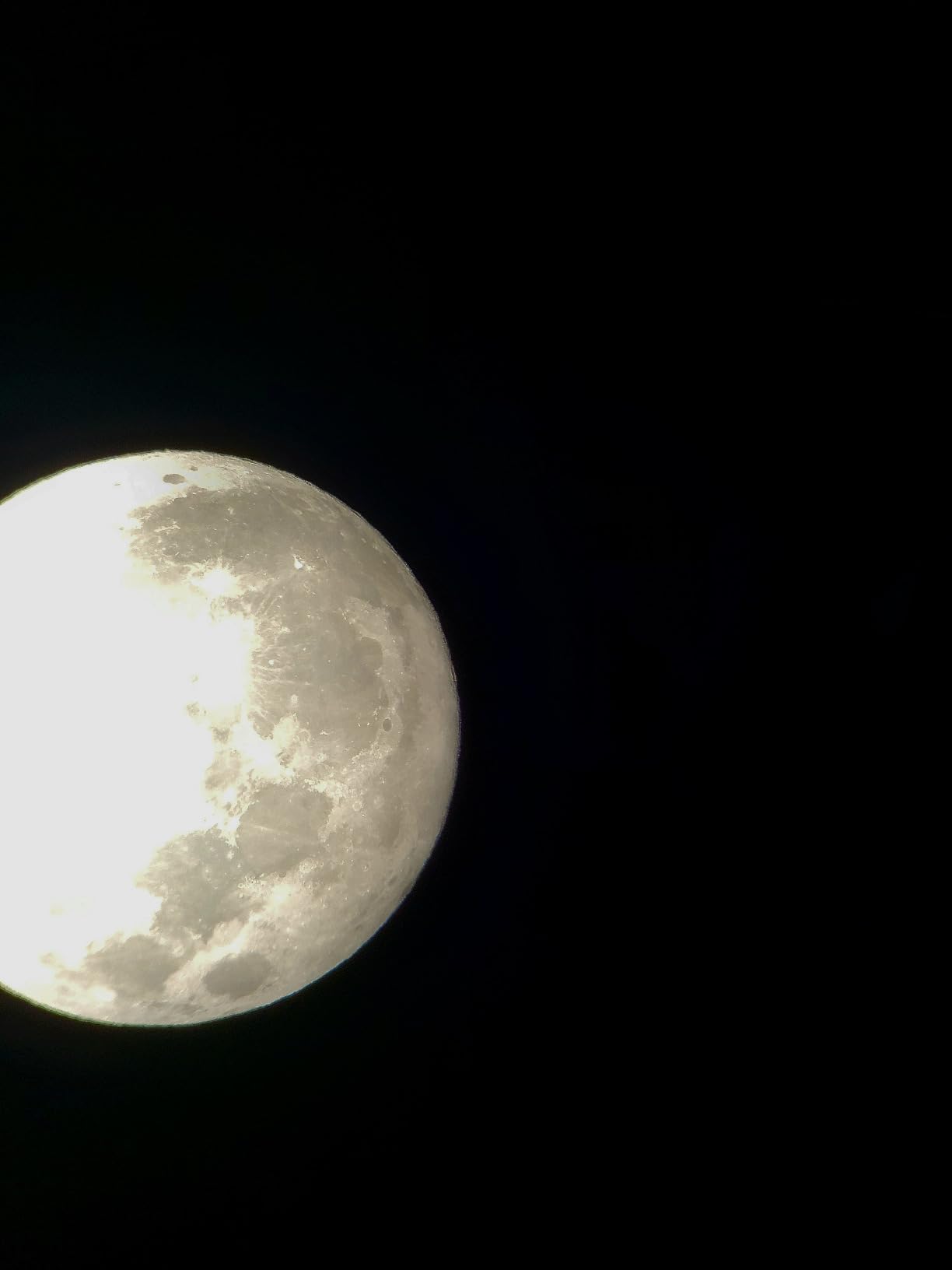
In use, the 150mm aperture pulls in respectable views of Jupiter’s cloud belts, Saturn’s rings, lunar craters, and the brighter Messier objects. The included 25mm and 10mm Super eyepieces are decent starters, though most owners upgrade within a few months. The collapsible tube design shrinks the scope down for transport, which matters more than you might think if you ever need to drive to a dark sky site.
The honest downsides are worth noting. Several owners report the GoTo accuracy landing several degrees off-target, requiring a manual correction. The helical focuser gets complaints about fitment and many users replace it with a low-profile Crayford. You absolutely need a sturdy table or stand since this is a tabletop scope, and it ships needing collimation. These are not dealbreakers, but they are real.

Setup and alignment experience
The Virtuoso GTi uses a two-star alignment through the SynScan Pro app. You center the first star manually using the app’s on-screen arrows, confirm, then repeat for a second star. Most users report the whole process taking about five minutes after the first few nights. The Freedom Find encoders mean you can nudge the scope during alignment without starting over, which makes the process forgiving for newcomers.
Power and portability notes
The mount runs on 8 AA batteries in a pinch, but as one Reddit user put it, the scope guzzles them within a few sessions. Invest in a 12V power tank or a rechargeable lithium battery pack with a DC output. The collapsible tube fits across a back seat, and the base rides in the footwell. Total weight around 26 pounds means one person can carry the whole setup outside in a single trip.
3. Sky-Watcher AZ-GTi with SkyMax 102 – Best Travel Maksutov GoTo
Sky-Watcher AZ-GTi with SkyMax 102 – Modular Go-To Alt-Az Tracking Mount for Time-lapse and Panoramas – Wifi Enabled App Controlled
102mm Maksutov
1300mm focal length
f/13
Travel GoTo mount
WiFi app control
Pros
- Excellent travel-sized GoTo mount
- Compact and portable design
- 102mm Mak gives good planet and Moon views
- Freedom Find allows manual movement
- WiFi app control works well
- Good for astronomy and terrestrial viewing
Cons
- Bundled OTA is not user-collimatable
- GoTo accuracy can be off by 1-2 degrees
- High f/13 ratio limits deep-sky viewing
- Some users received out-of-collimation tubes
- WiFi can occasionally disconnect
The Sky-Watcher AZ-GTi paired with the SkyMax 102 is a grab-and-go scope for someone who wants computerized tracking in a package you can throw in a backpack. The mount itself weighs just 8.6 pounds and generates its own WiFi signal, so you control everything from your phone without needing an existing network. The 102mm Maksutov-Cassegrain optical tube is compact, sharply figured, and ideal for the Moon, planets, and bright deep-sky targets.
Our team likes the AZ-GTi mount so much that many experienced astronomers buy it on its own and attach a different optical tube. The 11-pound payload capacity handles most small refractors and Maks, plus you can mount a DSLR for basic tracked astrophotography. The Freedom Find dual encoders are here too, letting you push the scope manually without losing GoTo alignment.
The catch with this specific bundle is the optical tube. Multiple reviewers on Amazon report that the SkyMax 102 included in this combo is not user-collimatable, unlike the standalone version. Several buyers received tubes that were out of collimation with no way to fix them. SkyAlign-style accuracy lands within 1 to 2 degrees, which means targets appear in a low-power eyepiece but need manual centering.
Best use cases for the AZ-GTi SkyMax 102
This combo shines as a travel scope, a grab-and-go for quick weeknight sessions, and a daytime terrestrial spotting scope. The long 1300mm focal length is great for lunar and planetary detail, showing Saturn’s Cassini Division and Jupiter’s Great Red Spot on steady nights. It is not the right tool for wide-field deep-sky scanning.
What to know before buying
If you want the SkyMax 102 optics, consider buying the OTA separately from a reputable dealer who verifies collimation before shipping. The mount is excellent, the bundled tube is a coin flip. Plan to add a 12V power supply since battery operation is unreliable for GoTo slewing. And keep your phone charged, the WiFi control depends on it.
4. Celestron NexStar 4SE – Best Compact GoTo Scope
Celestron NexStar 4SE Computerized Telescope – 4-Inch Maksutov-Cassegrain Optical Tube – Fully Automated GoTo Mount with SkyAlign – Ideal for Beginners and Advanced Users – 40,000+ Object Database
102mm Maksutov
1325mm focal length
f/13
SkyAlign technology
40,000+ object database
Pros
- Iconic Celestron orange tube design
- Excellent GoTo with vast object database
- SkyAlign makes setup fast
- Built-in wedge for astrophotography
- StarBright XLT coatings
- Compact and portable
Cons
- Power source not included
- Some alignment accuracy issues reported
- Limited wedge for deep-sky astrophotography
- Hand control can be finicky
The Celestron NexStar 4SE is one of the most popular computerized telescopes ever made, and with 761 reviews averaging 4.3 stars, the data backs that up. It pairs a 4-inch Maksutov-Cassegrain optical tube with Celestron’s proven single fork arm GoTo mount, all wrapped in that iconic orange-and-black livery. For someone who wants a serious-feeling computerized scope from a name brand, this is often the first stop.
The headline feature is SkyAlign. You enter your date, time, and location, then center any three bright objects in the eyepiece. The mount figures out what they are and calculates its orientation, no need to know star names. For beginners who cannot tell Arcturus from Vega, this is a relief. The 40,000-object database then slews to whatever you pick from the hand controller.
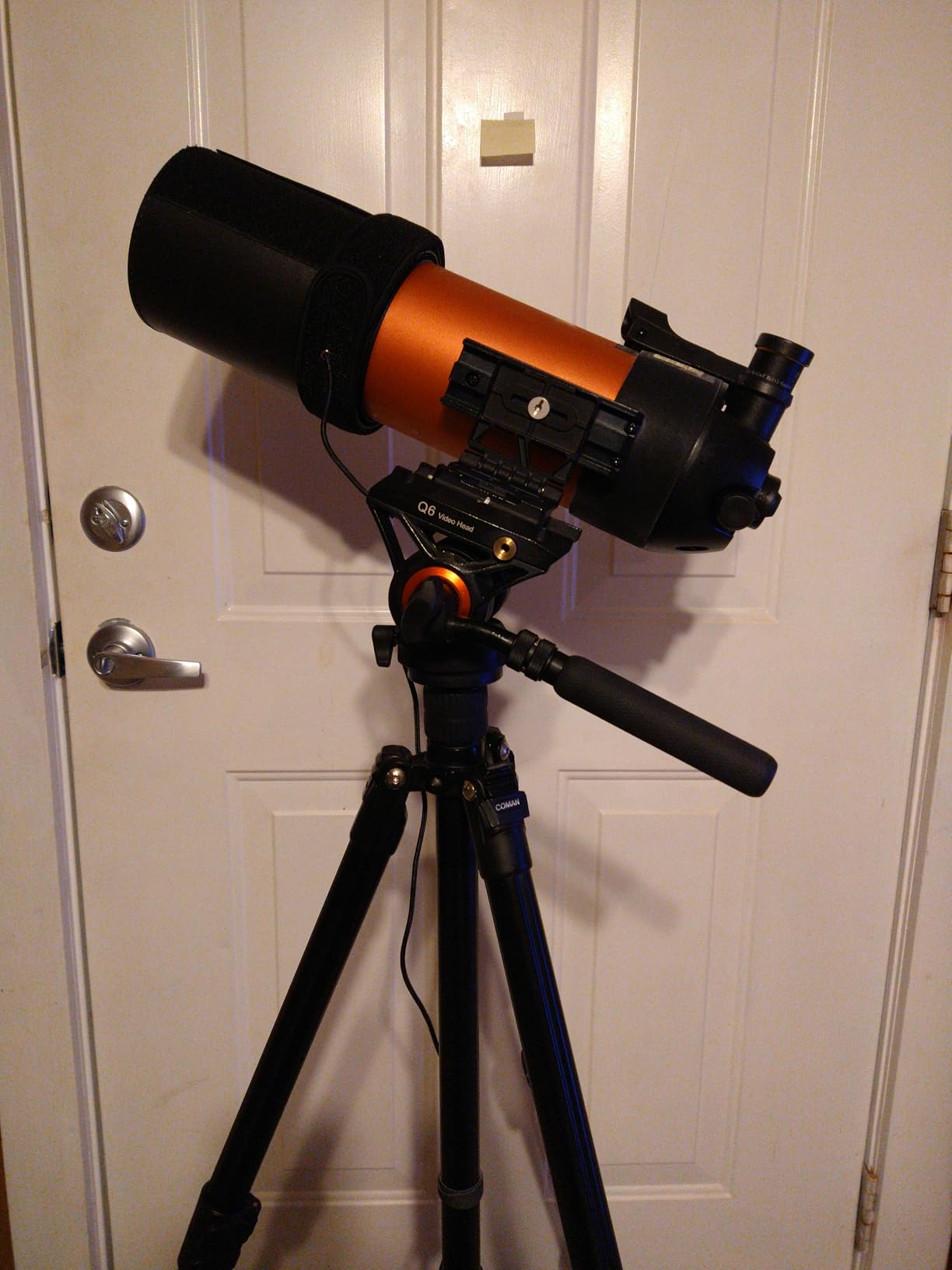
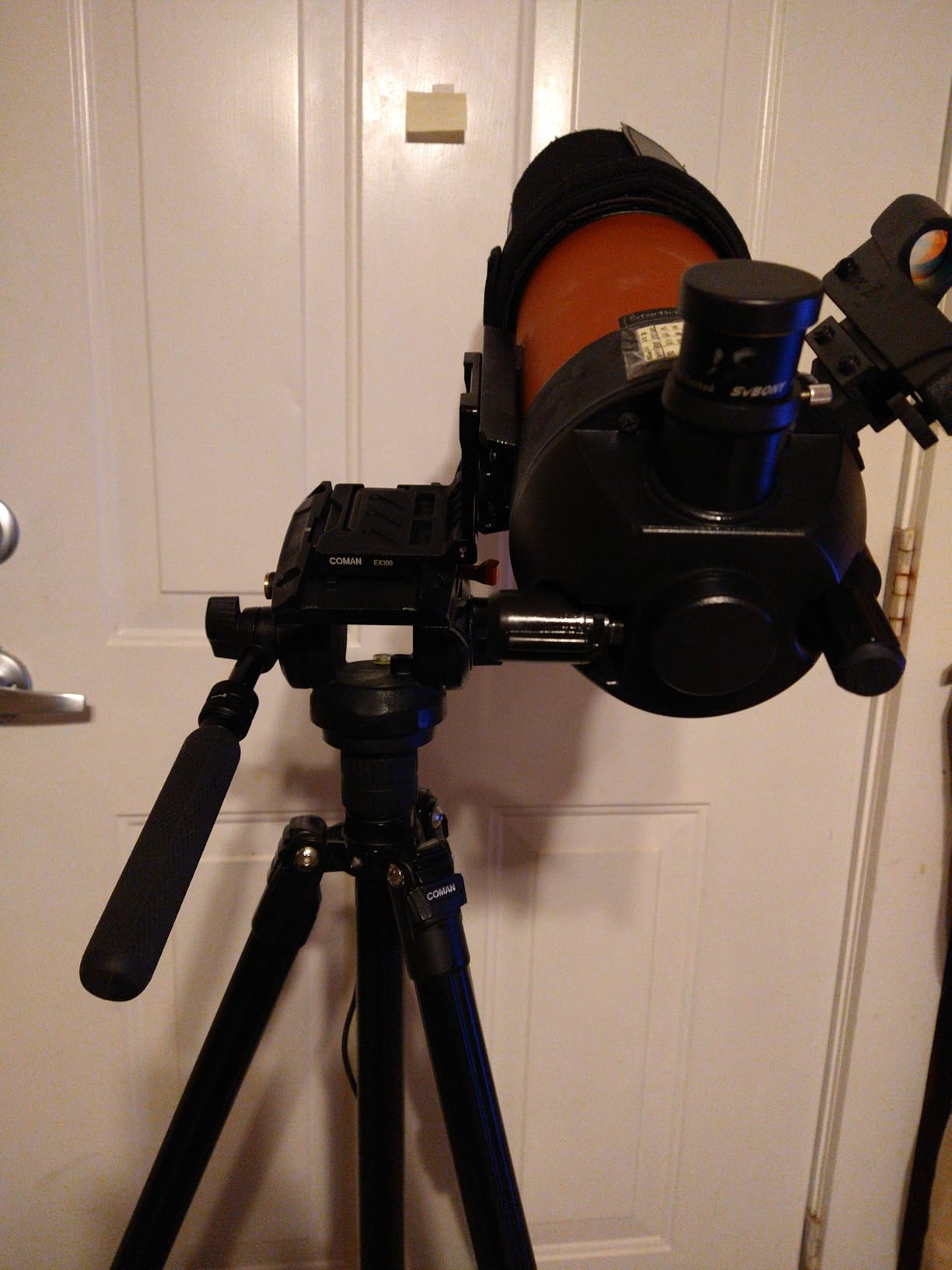
The 102mm Maksutov optics deliver sharp, high-contrast views of the Moon and planets. StarBright XLT coatings help with light transmission. The built-in wedge lets you try basic equatorial tracking for short-exposure astrophotography, though serious imagers will outgrow it quickly. The whole scope breaks down into a carry-on-size package, which makes it a real travel companion.
Where the 4SE struggles is deep-sky work. The f/13 focal ratio and 4-inch aperture limit you to the brightest deep-sky objects. Globular clusters show as fuzzy balls, and most galaxies stay stubbornly dim. The hand controller is functional but feels dated compared to a smartphone app. And Celestron does not include any power source, no batteries, no adapter, so budget for a PowerTank or 12V supply from day one.
For whom this scope shines
The NexStar 4SE is built for the lunar and planetary observer who wants push-button object location in a portable, name-brand package. It is a great choice for suburban backyard astronomers, RV owners, and anyone who wants a serious scope that fits in a closet. The 761-review track record means you are buying proven tech.
Accessories you will want
Buy a 12V power supply immediately, the AA battery route is a trap. Add a Celestron 8mm to 24mm zoom eyepiece to replace the single 25mm Plssl that ships with the scope. A dew shield is essential for Maksutov optics in humid climates. Skip the built-in wedge for astrophotography and save for a proper star tracker if you get serious about imaging.
5. Celestron StarSense Explorer 8 inch Dobsonian – Best Beginner PushTo
Celestron StarSense Explorer 8-inch App-Enabled Telescope – 203mm Dobsonian with Smartphone Dock & StarSense App – iPhone & Android Compatible – Easy-to-Use for Beginners
203mm aperture
1200mm focal length
f/5.9 Newtonian
StarSense app
Smartphone dock
Pros
- StarSense app acts like a mini planetarium
- Excellent 8-inch aperture for deep-sky
- Sturdy Dobsonian base
- Easy setup for beginners
- Great value for aperture size
- XLT coatings for sharp views
Cons
- Heavy at 43 lbs
- Included eyepieces are basic quality
- App may not work with all Android phones
- Particle board base
- Requires collimation maintenance
The Celestron StarSense Explorer 8 inch Dobsonian sits in an interesting middle ground between a fully motorized GoTo scope and a manual telescope. It uses what Celestron calls PushTo technology, your phone camera reads the sky through a docked mirror assembly, the StarSense app calculates where the scope is pointing, and you physically push the telescope to follow on-screen arrows to your target. No motors, no WiFi, no batteries required for the mount itself.
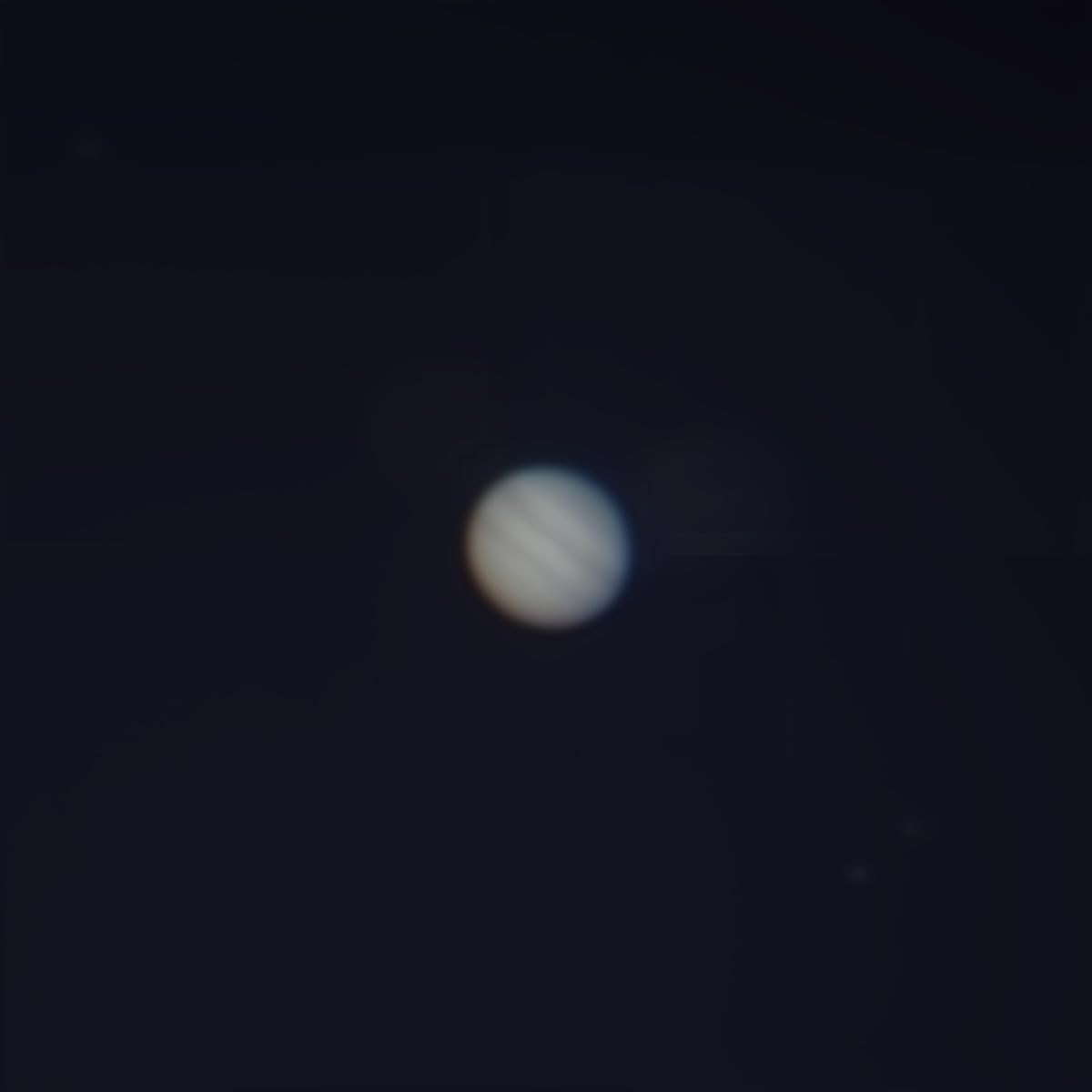
For many beginners, this is actually better than a full GoTo system. You learn the sky because you are physically moving the scope. You do not deal with motor failures or alignment frustrations. And you get a full 8 inches of aperture, enough to resolve globular clusters into stars, show the structure of bright nebulae, and pull detail out of Jupiter and Saturn. The XLT high-reflectivity coatings keep images bright.
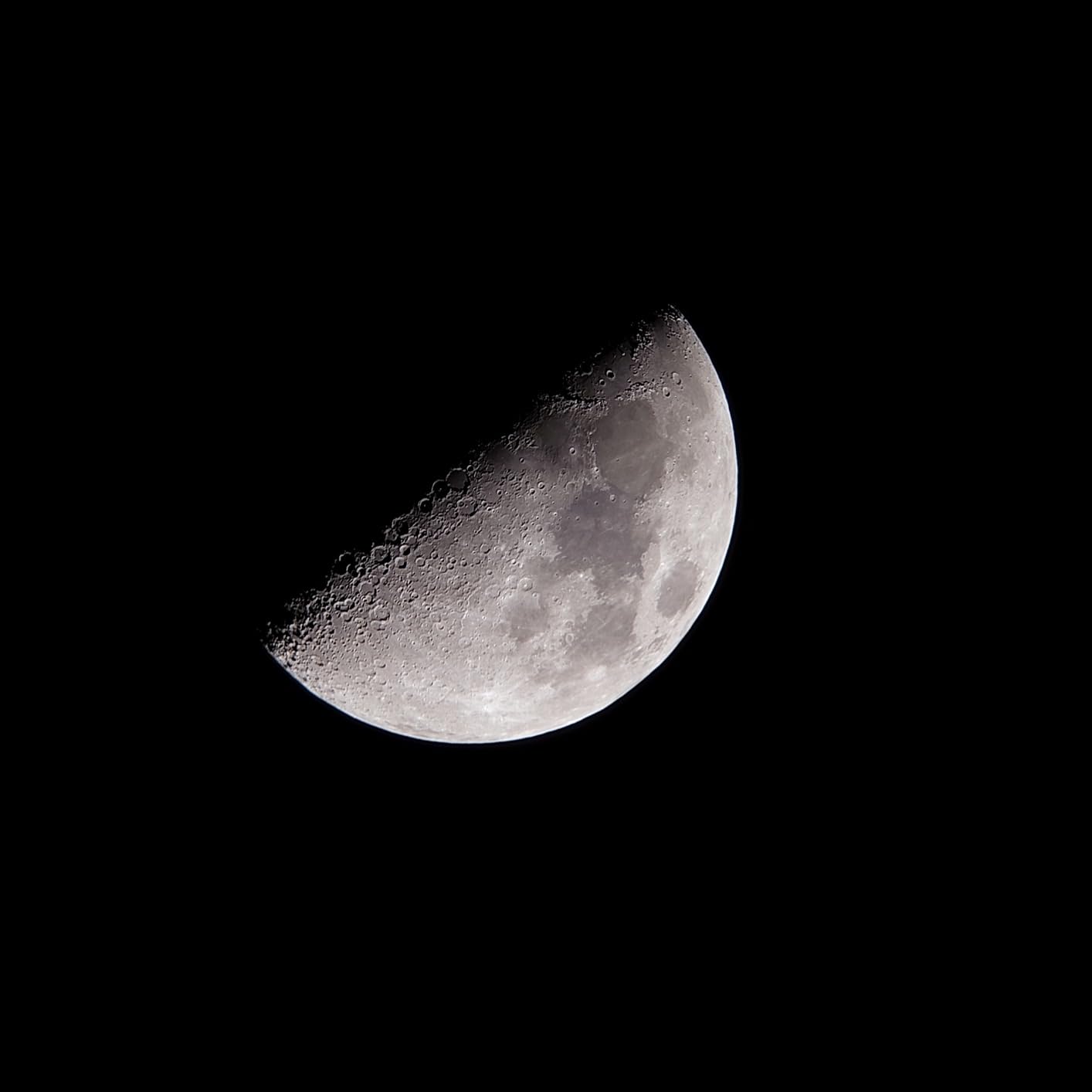
With 175 reviews and a 4.4-star average, owners are clearly happy. The StarSense app functions as a mini planetarium, showing you Tonight’s Best Targets based on your location and time. The 2-inch Crayford focuser handles both 1.25-inch and 2-inch eyepieces. On a clear night from a decent dark sky site, this scope shows the Whirlpool Galaxy’s spiral arms, the Trifid Nebula’s dust lanes, and Saturn in real detail.
The downsides are mostly about bulk. At 43.4 pounds, this is not a grab-and-go scope. The base is particle board, which is sturdy but not premium. The included 25mm eyepiece is acceptable but you will want better glass soon. StarSense compatibility varies by phone, with some Android models struggling with the camera-docking system. None of this changes the fact that for the price, this is one of the best aperture-per-dollar deals in computerized astronomy.
PushTo vs GoTo explained
PushTo scopes like the StarSense Explorer use software to guide you to targets, but you move the scope by hand. GoTo scopes use motors to slew automatically. PushTo is cheaper, lighter, has no motorized parts to fail, and forces you to learn the sky. GoTo is more convenient, tracks objects automatically, and is essential for astrophotography. Choose based on whether you want to do the work or have the scope do it.
Collimation and maintenance
Newtonian reflectors need periodic collimation, which means aligning the secondary and primary mirrors. The StarSense Explorer 8 inch ships with a collimation cap and the process takes about 10 minutes once you learn it. Budget for a cheshire eyepiece or a laser collimator to make the job easier. Re-check collimation after any bumpy car ride.
6. Celestron NexStar 6SE – Best Mid-Range Schmidt-Cassegrain
Celestron NexStar 6SE Computerized Telescope – 6-Inch Schmidt-Cassegrain Optical Tube – Fully Automated GoTo Mount with SkyAlign – Ideal for Beginners and Advanced Users – 40,000+ Object Database
150mm Schmidt-Cassegrain
1500mm focal length
f/10
SkyAlign technology
40,000+ objects
Pros
- Advanced GoTo mount with 40
- 000+ object database
- 6-inch aperture for lunar and deep-sky views
- SkyAlign for quick setup
- Compact portable SCT design
- Compatible with Celestron accessories
Cons
- Batteries and power adapter not included
- Some users report occasional alignment issues
If there is a single telescope that defines what people picture when they hear computerized telescope, it is the Celestron NexStar 6SE. With 969 customer reviews and a 4.3-star rating, this is one of the most-purchased GoTo scopes in history. The 6-inch Schmidt-Cassegrain optical tube delivers serious light gathering in a compact fork-arm mount, and the SkyAlign system makes setup approachable for first-timers.
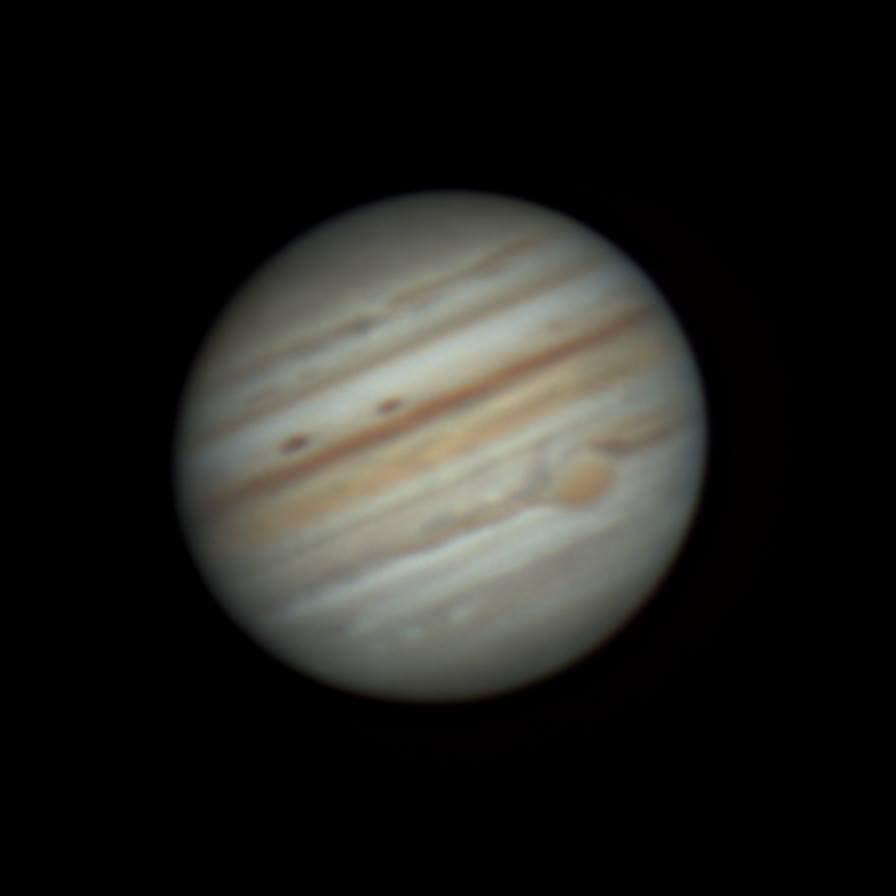
Our team consistently hears from owners that the 6SE is the sweet spot in the NexStar SE line. The smaller 4SE is great for planets but limited for deep-sky, while the 8SE is excellent but heavier and pricier. The 6SE gathers enough light to show cloud bands on Jupiter, the Cassini Division in Saturn’s rings, lunar rilles and mountain peaks, and the brighter Messier objects with real detail. The f/10 focal ratio gives high magnification for planetary work without needing extremely short focal-length eyepieces.
The GoTo system uses Celestron’s NexStar+ hand controller with a 40,000-object database. After a SkyAlign three-star alignment, the scope slews accurately to targets and tracks them as the Earth rotates. The mount runs on 8 AA batteries for portability, but like every computerized scope on this list, you will want a 12V power tank for anything beyond a quick session. The fork arm folds down, the tube detaches, and the whole package fits in an optional soft case for travel.
The 6SE earns its 969-review track record by being reliable. The rating distribution shows 71 percent five-star reviews, with the main complaints centering on the missing power adapter and occasional alignment hiccups in light-polluted skies. This is a scope you buy once and keep for years. It pairs beautifully with Celestron’s accessory ecosystem, including the StarSense auto-alignment camera and the SkyPortal WiFi module if you want app control down the road.
What the 6SE does best
This scope excels at lunar and planetary observation from suburban skies. The 6-inch aperture and long focal length make it a fantastic scope for studying the Moon, Jupiter, Saturn, Mars, and Venus. It also handles bright deep-sky objects like the Orion Nebula, the Pleiades, and globular clusters like M13 with real authority. It is not a wide-field scope, so do not expect to frame the entire Pleiades cluster in one view.
Limitations to expect
The single fork arm is sturdy but not built for long-exposure astrophotography. The alt-azimuth mount causes field rotation during long exposures, limiting you to short planetary and lunar imaging unless you add an equatorial wedge. The included 25mm eyepiece is fine for starting but you will want a quality 10mm and a 2x Barlow for planetary work. Budget for a power supply, a better eyepiece or two, and a carrying case.
7. Celestron NexStar Evolution 8 – Best Premium GoTo SCT
Celestron – NexStar Evolution 8 WiFi Enabled Computerized Telescope – 8” Schmidt-Cassegrain Telescope SCT – Control via Smartphone App – 10-Hour Lithium Battery – iPhone and Android Compatible
203mm Schmidt-Cassegrain
2032mm focal length
f/10
Built-in 10hr battery
WiFi SkyPortal app
Pros
- WiFi control via free SkyPortal app
- Built-in 10-hour LiFePO4 battery
- Brass worm gears for superior tracking
- Excellent planet nebulae and galaxy views
- Easy 3-star alignment
- USB charge port for devices
Cons
- Software update cable not included
- Some WiFi connectivity issues with multiple devices
- Occasional defective units reported
The Celestron NexStar Evolution 8 is the premium GoTo scope that solves the biggest complaint people have about computerized telescopes, power. Almost every other scope on this list requires an external battery pack or a tangle of cables. The Evolution 8 has a built-in lithium iron phosphate battery that runs for up to 10 hours on a single charge. You pick it up, set it on the tripod, and you are observing all night without hunting for an outlet.
The 8-inch Schmidt-Cassegrain optical tube is the real deal. With 203mm of aperture gathering more than twice the light of a 5-inch scope, the Evolution 8 shows Saturn’s Cassini Division cleanly, resolves stars in globular clusters, pulls dust lanes out of bright galaxies like M81 and M82, and delivers breathtaking views of the Moon. StarBright XLT coatings maximize light transmission through the folded optical path.
The GoTo system uses brass worm gears and high-quality motors for tracking that is noticeably smoother than the standard NexStar SE mount. This matters if you ever want to try astrophotography or high-magnification planetary viewing where tracking jitter is visible. WiFi control through the free Celestron SkyPortal app replaces the hand controller for most users, letting you slew to targets from your phone or tablet.
The 73-review count is lower than the 6SE because the Evolution 8 is a premium product with a premium price tag. But the rating distribution tells the story, 75 percent of reviewers give it five stars. The complaints are minor, some users report WiFi issues when multiple devices are connected, the software update cable is not included, and a few units arrived defective. Celestron’s two-year warranty covers the latter.
Why the built-in battery matters
Every forum thread about GoTo telescopes eventually turns to power management. AA batteries die in a session or two. External power tanks are heavy, have cables that get tangled, and need separate charging. The Evolution 8 solves all of this by integrating a LiFePO4 battery into the mount with a USB port to charge your phone or tablet while observing. You charge the scope like a laptop and run all night. This single feature changes the user experience.
Is the premium price worth it
If you are comparing the Evolution 8 to the NexStar 8SE, the premium gets you the built-in battery, brass worm gears, improved tracking, WiFi built in rather than an add-on module, integrated carry handles, and manual clutches for smooth physical movement. For observers who plan to use their scope frequently and want zero cable management, that premium is worth it. For occasional users, the 8SE plus a power tank gets you the same optics for less.
8. Sky-Watcher Flextube 300 SynScan – Best Large Aperture GoTo
SkyWatcher Flextube 300 SynScan Dobsonian 12-inch Collapsible Computerized GoTo Large Aperture Telescope (S11820)
305mm aperture
1500mm focal length
Collapsible GoTo Dob
SynScan 42,000 objects
94% reflective mirrors
Pros
- Large 12-inch aperture at fraction of cost
- Innovative collapsible design
- Built-in WiFi for smartphone control
- All-metal gearing on DC servo motors
- 94% reflective mirrors
- 42
- 000 object database
- 2-inch Crayford focuser included
Cons
- GoTo alignment issues reported
- Base made from particle or MDF board
- Power adapter is cigarette lighter style only
- Some units arrived with damaged parts
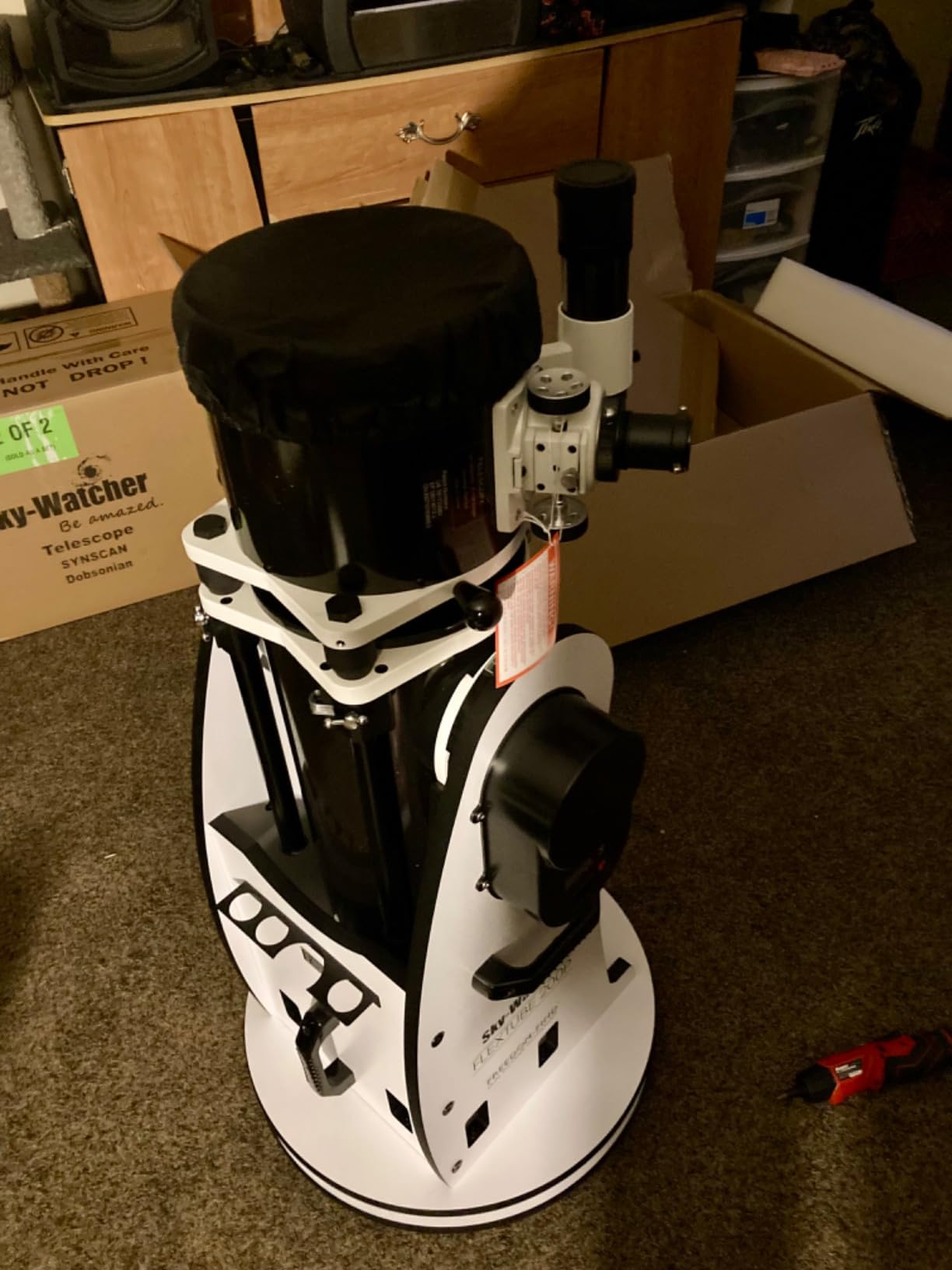
The Sky-Watcher Flextube 300 SynScan is the light-bucket king of this roundup. With a full 12 inches, or 305mm, of aperture, it gathers more than twice the light of an 8-inch scope. That extra light translates directly to what you see, fainter galaxies, more detail in nebulae, brighter images of every target. Pair that with full SynScan GoTo control over a 42,000-object database and you have a serious deep-sky hunting machine.
The collapsible Flextube design is what makes this scope practical. A traditional 12-inch solid-tube Dobsonian barely fits in a car and dominates a room in storage. The Flextube’s strut system collapses the optical tube nearly in half for transport. Fully assembled at 99 pounds, it is still a big scope, but it breaks down into manageable pieces that fit in a hatchback or SUV.
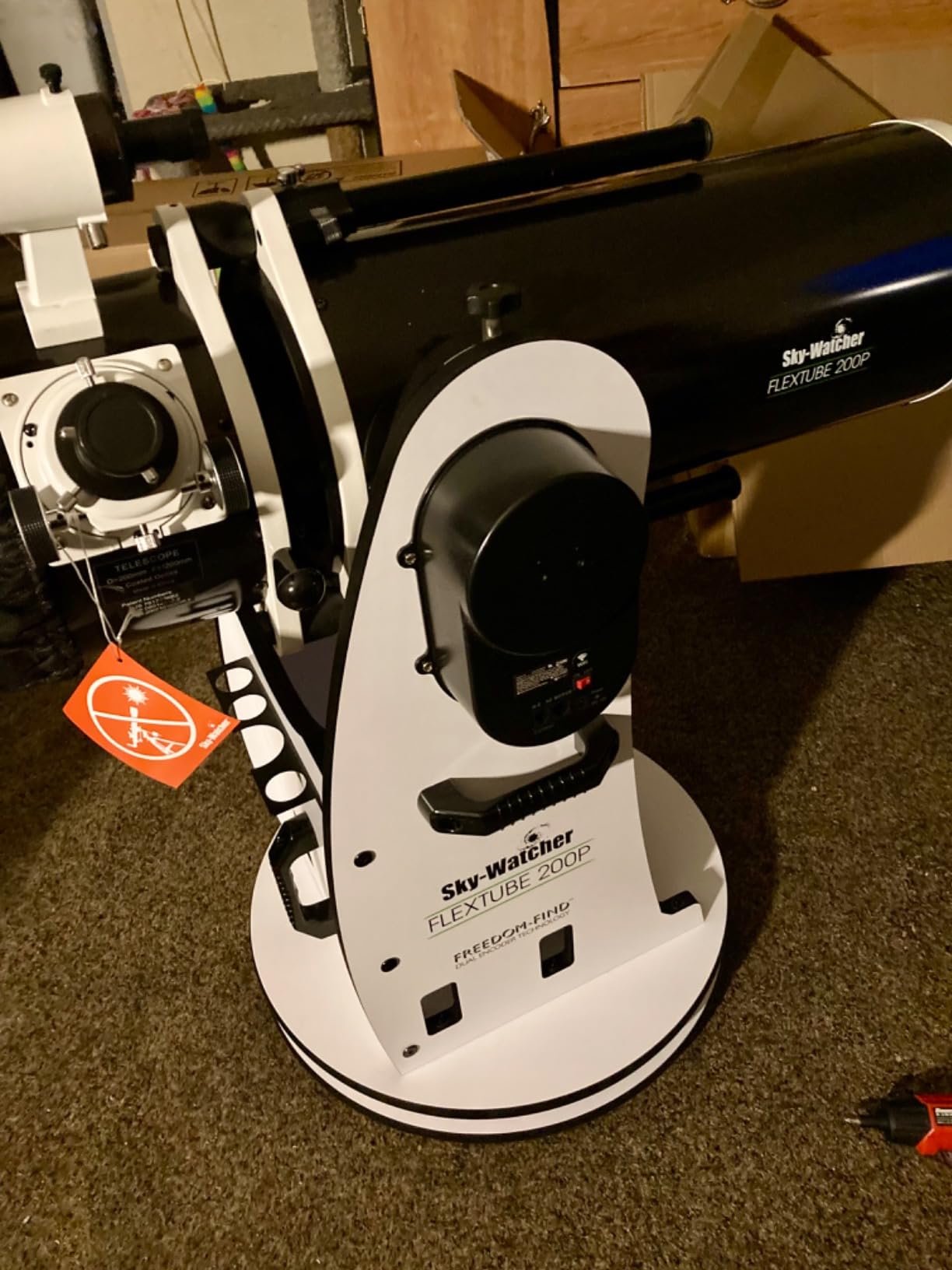
The optics use fully multi-coated borosilicate mirrors with 94 percent reflectivity, which is excellent at this price point. The 2-inch Crayford focuser handles premium wide-field eyepieces. The included 25mm and 10mm eyepieces plus a 9×50 finder give you a complete starter kit. The SynScan hand controller talks to your phone or tablet over WiFi, so you can slew to targets without touching the scope.
The 3.8-star rating with 65 reviews is the lowest on this list, and the reasons are clear from the complaints. Several buyers report GoTo alignment issues that require manual corrections. The base is MDF board, which is functional but feels cheap on a scope at this price. The included power adapter is cigarette-lighter style only, so you need a separate 120V adapter for home use. And some units arrived with damaged packaging or defective parts. When the scope works, it is spectacular. The buyer needs to be ready for potential quality control roulette.
What 12 inches of aperture shows you
A 12-inch scope opens up a different tier of deep-sky observing. Globular clusters resolve into thousands of pinpoint stars. The Whirlpool Galaxy shows spiral structure. The Eagle Nebula shows the famous Pillars of Creation shape. Bright nebulae reveal filamentary detail invisible in smaller scopes. On planets, Jupiter shows multiple belt divisions and Saturn’s polar hexagon becomes visible on steady nights. The jump from 8 inches to 12 inches is one of the most rewarding upgrades in amateur astronomy.
Cooldown and portability considerations
A 12-inch mirror holds heat and needs time to cool to ambient temperature before delivering sharp images. Plan for 45 to 60 minutes of cooldown when you take the scope from a warm house to a cold backyard. A cooling fan behind the primary mirror accelerates this. For portability, the collapsed tube fits in most cars but the 53-pound base is awkward, measure your vehicle and storage space before committing.
Buying Guide: How to Choose the Best GoTo Telescopes?
Choosing between the best GoTo telescopes comes down to a few key decisions about aperture, mount type, power, and what you actually want to see. This buying guide covers the factors that matter most based on our team’s testing and the questions real beginners ask on Reddit and Stargazers Lounge.
Aperture is the single most important spec
Aperture, the diameter of the main lens or mirror, determines how much light your telescope collects and how much detail you see. More aperture means brighter images, finer resolution, and fainter objects visible. A 6-inch scope shows dramatically more than a 4-inch scope. An 8-inch scope shows more than a 6-inch. Do not trade aperture for GoTo features unless you have a specific reason like portability.
The trade-off is that aperture costs money and adds weight. A 12-inch GoTo Dobsonian weighs nearly 100 pounds. A 4-inch Maksutov fits in carry-on luggage. Match your aperture to your observing site and your willingness to carry gear outside on a cold night.
Optical design affects what you see
Schmidt-Cassegrain and Maksutov-Cassegrain scopes are compact for their aperture, great for planets and the Moon, and have long focal lengths for high magnification. Newtonian reflectors, including Dobsonians, give you the most aperture per dollar and excel at deep-sky viewing. Refractors offer crisp, contrasty views but cost more per inch of aperture. For GoTo scopes, the optical tube determines what you can see, the mount determines how you point at it.
Mount type: alt-azimuth vs equatorial
Most GoTo scopes in this price range use alt-azimuth mounts, which move up-down and left-right like a camera tripod. These are simple to set up and intuitive to use. Equatorial mounts align with Earth’s rotation axis and are preferred for long-exposure astrophotography because they track without field rotation. If astrophotography is your goal, look for an equatorial wedge or a German equatorial mount. For visual observing, alt-azimuth is fine.
Power management is critical
This is the most under-discussed topic in GoTo telescope reviews. Every motorized scope on this list needs external power for sustained use. AA batteries are a backup, not a primary solution. Plan for a 12V rechargeable power tank with at least 7 amp-hours of capacity, or a lithium battery pack with a DC output. The Celestron NexStar Evolution 8 is the only scope here that solves this with a built-in battery. For everything else, budget around 80 to 150 dollars for a quality power solution.
GoTo vs PushTo vs manual
Full GoTo scopes motorize both slewing and tracking. You tap a target, the scope moves there and follows it across the sky. PushTo scopes like the Celestron StarSense Explorer use software to guide you to targets, but you move the scope by hand. Manual scopes have no electronics at all. GoTo is the most convenient and the only option for astrophotography. PushTo is cheaper and forces you to learn the sky. Manual gives you the most aperture per dollar but requires star-hopping skills.
Accessories worth budgeting for
The included eyepieces on most GoTo scopes are acceptable but not great. Plan to add a quality zoom eyepiece like the Celestron 8mm to 24mm within the first few months. A 2x Barlow doubles your magnification options. A red-dot or reflex finder helps with initial alignment. For Newtonian scopes, a collimation tool is essential. For SCT and Mak scopes, a dew shield prevents fogging on humid nights. None of these are optional if you want to get the most from your scope.
FAQs
What is a GoTo telescope and how does it work?
A GoTo telescope is a computerized scope with built-in motors that automatically point to and track celestial objects. After a brief alignment using one to three bright stars, the mount calculates its orientation and can slew to any of tens of thousands of objects in its database, keeping them centered as the Earth rotates.
What are the top 5 GoTo telescopes?
Based on our testing, the top five GoTo telescopes are the Sky-Watcher Virtuoso GTi 150P for best value, the Celestron NexStar 6SE for best mid-range SCT, the ZWO Seestar S30 for best budget smart telescope, the Celestron NexStar Evolution 8 for best premium scope with built-in battery, and the Celestron StarSense Explorer 8 inch Dobsonian for best beginner PushTo.
What is the best GoTo mount for astrophotography?
For astrophotography, an equatorial mount is preferred because it tracks without field rotation. The Celestron NexStar Evolution 8 with an added equatorial wedge is a strong choice for short exposures. For serious deep-sky imaging, a dedicated German equatorial mount like the Sky-Watcher EQ6-R paired with a separate optical tube is the standard approach.
GoTo vs PushTo: What is the difference?
A GoTo scope uses motors to slew and track objects automatically. A PushTo scope uses software and sensors to tell you where to point, but you move the scope manually. GoTo is more convenient and enables astrophotography. PushTo is cheaper, lighter, has no motorized parts to fail, and helps you learn the night sky.
How long does GoTo telescope alignment take?
Most GoTo telescopes use a two or three star alignment that takes about three to five minutes after a few practice sessions. First-time users should expect 10 to 15 minutes including setup. Celestron SkyAlign lets you center any three bright objects without knowing their names.
Final Verdict on the Best GoTo Telescopes for 2026
After testing and comparing eight models, our top recommendation for the best GoTo telescope overall goes to the Sky-Watcher Virtuoso GTi 150P. It pairs real 150mm aperture optics with a tabletop GoTo mount, Freedom Find dual encoders for hybrid manual and motorized use, and a price that respects your budget. For most beginners and intermediate observers, it is the sweet spot.
If you want a name-brand Schmidt-Cassegrain with a proven track record, the Celestron NexStar 6SE with nearly a thousand reviews is hard to beat. If budget is the deciding factor, the ZWO Seestar S30 delivers genuine astrophotography results for under 400 dollars. And if you want maximum aperture with GoTo convenience, the Sky-Watcher Flextube 300 SynScan brings 12 inches of light-gathering power to the table.
Whatever you choose, plan for power management, invest in better eyepieces than what ships in the box, and spend time learning the alignment process. The best GoTo telescope is the one you actually take outside, and that means buying something you are willing to set up on a cold night. Clear skies.