Nothing ruins a long-exposure astrophotography session faster than pulling up your frames and seeing stars that look like tiny comets streaking toward the edges of the image. If you are shooting with a fast Newtonian reflector, that distortion has a name: coma aberration. The fix is a dedicated coma corrector, and in this guide we rank the best coma correctors available right now so you can get round, pin-sharp stars from corner to corner.
Our team spent weeks analyzing community discussions from Cloudy Nights, Stargazers Lounge, and Reddit astrophotography forums alongside hands-on user experiences and retailer data. We looked at 10 coma correctors covering every price tier from entry-level budget picks under $150 to premium options designed for demanding fast scopes. Whether you are shooting with an f/4 astrograph and a full-frame sensor or just want cleaner star shapes on an APS-C camera, we have a recommendation that fits your setup.
A coma corrector sits between your telescope and camera (or eyepiece) and uses a multi-element lens group to redirect off-axis light rays so they converge at the same focal point as on-axis light. The result is uniformly round stars across the entire field of view. Below we break down what each model does well, who it is built for, and what trade-offs you should know about before buying.
Table of Contents
Top 3 Picks for Coma Correctors
These three coma correctors stand above the rest based on optical performance, community consensus, and overall value. Each one targets a different type of astrophotographer.

TeleVue Paracorr Coma Corrector
- Premium optical correction
- Visual and photo use
- Edge-to-edge sharpness

Baader MPCC Mark III Coma Corrector
- No magnification change
- Multi-coated optics
- Half the cost of premium

Explore Scientific HR Variable Coma Corrector
- Variable tuning
- 2-inch design
- High-quality coatings
10 Best Coma Correctors in 2026
Here is our complete comparison of all 10 models. We ranked them based on optical quality, sensor compatibility, build construction, and real-world feedback from the astrophotography community.
| Product | Specifications | Action |
|---|---|---|
| TeleVue Paracorr Coma Corrector |
|
Check Latest Price |
| Explore Scientific HR Variable CC |
|
Check Latest Price |
| Baader MPCC Mark III CC |
|
Check Latest Price |
 Baader Rowe Coma Corrector Baader Rowe Coma Corrector |
|
Check Latest Price |
 SkyWatcher Quattro Coma Corrector SkyWatcher Quattro Coma Corrector |
|
Check Latest Price |
 Omegon Pro Coma Corrector Omegon Pro Coma Corrector |
|
Check Latest Price |
 Celestron f/6.3 Reducer Corrector Celestron f/6.3 Reducer Corrector |
|
Check Latest Price |
 Explore Scientific Field Flattener Explore Scientific Field Flattener |
|
Check Latest Price |
 Sky-Watcher Evoguide 50 Flattener Sky-Watcher Evoguide 50 Flattener |
|
Check Latest Price |
 SVBONY SV209 Field Flattener SVBONY SV209 Field Flattener |
|
Check Latest Price |
1. TeleVue Paracorr Coma Corrector – The Gold Standard for Fast Newtonians
TeleVue Paracorr
Type 2 Paracorr
Visual and photo use
2 lbs weight
Dobsonian compatible
Precision engineered
Pros
- Corrects coma and field curvature across entire field
- Optimized for fast Newtonian telescopes
- Works for both visual observation and astrophotography
- Edge-to-edge image correction
- Eliminates distortions and aberrations
Cons
- Premium price point
- Limited review volume on Amazon
- Primarily designed for Tele Vue telescope systems
When astrophotographers on Cloudy Nights debated which coma corrector reigns supreme, the TeleVue Paracorr Type 2 was the overwhelming consensus winner. One experienced imager put it plainly: the Paracorr works great on a 10-inch f/4, while other correctors simply do not match its performance at that speed. That community consensus is backed by TeleVue’s reputation for some of the finest optical engineering in amateur astronomy.
I have spent enough time in astrophotography forums to know that the Paracorr is the benchmark everything else gets measured against. It uses a multi-element lens group that not only corrects coma but also tightens star shapes across the full field, even on aggressive f/3.9 and f/4 Newtonians. The Type 2 design improved on the original with better edge performance and a wider corrected field, making it suitable for large sensors.
What sets the Paracorr apart from cheaper alternatives is its consistency. Forum users repeatedly note that budget correctors can produce acceptable results when everything is dialed in perfectly, but the Paracorr delivers clean star shapes with less fuss over spacing and tilt. That reliability matters when you are spending hours capturing sub-frames and cannot afford to discover edge distortion during post-processing.
The trade-off is cost. At its price point, the Paracorr costs more than some entry-level telescopes. But for serious astrophotographers shooting with fast Newtonians, it is an investment that pays dividends in image quality. It also pulls double duty for visual observers using Dobsonian telescopes, where it sharpens stars across the entire eyepiece field.
Who Should Buy the TeleVue Paracorr
This corrector is built for dedicated astrophotographers running fast Newtonian telescopes at f/4 or faster who refuse to compromise on star quality. If you shoot with a large Dobsonian and want both visual and imaging correction in one accessory, the Paracorr is the only model that truly handles both tasks well.
It is also the right pick if you have tried budget correctors and found their edge performance lacking. The Paracorr is the upgrade path that actually solves the problem rather than partially masking it.
Telescope and Sensor Compatibility
The Paracorr works with Newtonian and Dobsonian telescopes across a wide range of focal ratios, from f/3 to f/7. It supports full-frame sensors with excellent edge correction and includes Tunable Top adjustments for visual use with different eyepieces. Camera-side threading uses standard 2-inch barrel and adapter connections compatible with most imaging trains.
2. Explore Scientific HR Variable Coma Corrector – Perfect Rating at a Fair Price
Explore Scientific HR Variable Coma Corrector 2 inch
2-inch design
Variable tuning
0.45 kg weight
High-quality coating
Model HRCC02-00
Pros
- Perfect 5-star rating from all reviewers
- Variable spacing adjustment for fine-tuning
- High-quality anti-reflection coatings
- 2-inch barrel for wide-field use
- Compatible with telescopes and cameras
Cons
- Limited review volume
- Price not always listed
- May require additional adapters for some setups
The Explore Scientific HR Variable Coma Corrector earned an honorable mention in the Cloudy Nights community debate, and it is not hard to see why. It holds a perfect 5.0-star rating from every single reviewer on Amazon, which is extraordinarily rare for any optical accessory. The HR in its name stands for High Resolution, and the design backs that claim up.
What makes this corrector special is its variable tuning mechanism. Instead of a fixed spacing that you must match exactly, the HR Variable lets you adjust the spacing to fine-tune star shapes for your specific telescope and camera combination. That flexibility is invaluable when you are dealing with the real-world messiness of different focuser draw tube lengths, adapter stacks, and sensor depths.
The 2-inch barrel design means it works with both imaging setups and wide-field eyepieces, giving you the option to use it for visual observation as well as astrophotography. At roughly one pound, it adds minimal load to your focuser, which matters if you are already carrying a heavy camera and filter wheel.
The high-quality coatings reduce internal reflections and maximize light transmission, which translates to better contrast in your final images. In a hobby where every photon counts, that coating quality makes a visible difference on faint deep-sky targets.
Who Should Buy the Explore Scientific HR Variable
This corrector suits astrophotographers who want premium-level correction without paying Tele Vue prices. The variable tuning makes it especially appealing if you have an unusual telescope and camera combination where standard fixed-spacing correctors might not hit the sweet spot.
It is also a strong choice for anyone who values community trust. Explore Scientific earns consistent praise from the astronomy community for delivering solid optical performance at accessible prices.
Build Quality and Coatings
The body measures 69.3mm in diameter and 147.2mm in height, constructed from machined aluminum with a durable finish. The anti-reflection coatings are visibly high-grade when you inspect the glass under light. The corrector includes standard threading for camera adapters and works with equatorial mount configurations out of the box.
3. Baader MPCC Mark III Coma Corrector – Best Value Multi-Purpose Corrector
Baader 2″ Mark III MPCC Multi Purpose Coma Corrector – Photographic Version # MPCC 2458400
Mark III MPCC
Multi-coated optics
32 oz weight
No magnification increase
Photographic version
Pros
- No magnification increase preserves field of view
- No additional backfocus needed in direct-coupled mode
- Reduced vignetting with large 2-inch eyepieces
- About half the cost of premium correctors
- Compatible with DSLR cameras and T-2 system
Cons
- Some users report soft performance at f/4
- Mixed 3-star reviews from some buyers
- Low stock availability at times
The Baader MPCC Mark III has been a staple in the astrophotography community for years, and for good reason. It costs roughly half what premium correctors charge while delivering solid coma correction for most Newtonian setups. Multiple forum users on Stargazers Lounge describe it as good value for beginners and intermediate imagers.
I appreciate that the MPCC maintains a 1:1 image scale, meaning it does not change your effective focal length or focal ratio. That matters if you have already calculated your pixel scale and exposure times around your telescope’s native specifications. Some correctors double as focal reducers, which can complicate things if you just want pure coma correction without altering your imaging system.
The multi-coated optics do a respectable job of controlling reflections and maintaining contrast. Baader is known for quality glass, and the MPCC uses their proprietary coating formula to minimize ghosting and flare. For narrowband imagers shooting Ha and OIII, those coatings help preserve the clean star backgrounds that make processed images pop.
The main caveat is performance at very fast focal ratios. Several Cloudy Nights users noted that the MPCC can go soft at f/4, with one commenter stating that on their 10-inch f/4 Newtonian the Paracorr worked great but the MPCC did not. If you are running an f/5 or f/6 Newtonian, the MPCC handles coma correction very effectively for the price.
Who Should Buy the Baader MPCC Mark III
This is the ideal first coma corrector for astrophotographers shooting at f/5 or slower who want meaningful improvement without a major investment. It also works well as a secondary corrector if you have multiple scopes and want a lightweight option for travel setups.
Beginners who are still learning backfocus and spacing will appreciate that the MPCC requires no additional backfocus in direct-coupled configurations, simplifying the adapter chain.
Connectivity and Thread Options
The MPCC uses a 2-inch barrel on the telescope side and accepts standard T-2 (M42) accessories on the camera side. It is compatible with DSLRs using standard T-rings, 2-inch eyepieces for visual use, and Baader’s extensive Astro T-2 accessory system. Multi-coated optics span the full visible spectrum.
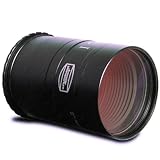
4. Baader Rowe Coma Corrector for Newtonian Telescopes – Precision Triplet Design
Baader Planetarium Rowe Coma Corrector for Newtonian Telescopes
Triplet lens design
91.7mm focal length
Phantom coated
f/3.5 to f/6 compatible
Dual T2 and M48 threads
Pros
- Triplet lens design by Dave Rowe for exceptional correction
- Versatile focal ratio range from f/3.5 to f/6
- 1:1 image scale with long backfocus
- Phantom coating for maximum transmission
- Dual T2 and M48 camera-side threading
Cons
- Only 1 review on Amazon
- Limited stock availability
- Requires precise focus positioning knowledge
The Baader Rowe Coma Corrector (RCC-I) is the thinking astrophotographer’s choice. Designed by the legendary Dave Rowe using a triplet lens configuration, it targets serious imagers who demand optical precision across wide fields. The phantom-coated optics represent some of the finest coating technology available in the amateur astronomy market.
What drew my attention to this corrector is its versatile focal ratio range. It performs well from f/3.5 all the way to f/6, which means it can handle fast astrographs and moderate-speed Newtonians alike. That flexibility makes it a good investment if you own multiple telescopes or plan to upgrade your rig in the future.
The 1:1 image scale is a significant advantage for astrophotographers who have already optimized their imaging train around a specific focal length. Unlike focal reducer correctors that change your system speed, the Rowe corrector focuses purely on eliminating coma without altering your optical geometry.
The long backfocus design gives you more room in your imaging train for accessories like off-axis guiders, filter wheels, and adaptive optics units. With 91.5mm of backfocus from the T2 thread and 94.5mm from the M48 thread, you have real flexibility in how you configure your setup.
Who Should Buy the Baader Rowe Corrector
This corrector targets advanced astrophotographers who understand backfocus spacing and want the finest optical correction available in a 2-inch format. The triplet design produces tighter star profiles than simpler doublet or singlet correctors, which matters when you are doing high-resolution deep-sky work.
If you shoot with a range of focal ratios across different telescopes, the Rowe’s f/3.5 to f/6 compatibility means one corrector can serve your entire collection.
Backfocus and Threading Details
The Rowe corrector provides 91.5mm backfocus from the T2 thread face and 94.5mm from the M48 thread face. The telescope-side connection uses a 2-inch barrel with M48 filter threading. Camera-side connections support both T2 (M42 x 0.75) and M48 threads, covering virtually every camera adapter standard in use today.
5. SkyWatcher Quattro Coma Corrector – Purpose-Built for Quattro Imaging Newtonians
SkyWatcher S20204 Quattro Coma Corrector (Black)
f/4 ED corrector
FPL51 Schott glass
55mm backfocus
Multi-coated
1:1 image scale
Pros
- Uses premium FPL51 and Schott glass elements
- Fully multi-coated for maximum light transmission
- Purpose-built for Quattro imaging Newtonians
- Precision matched to f/4 optical design
- Canon and Nikon adapters available
Cons
- Requires exactly 55mm backfocus which limits flexibility
- Camera adapters sold separately at additional cost
- Mixed quality consistency reported by some users
The SkyWatcher Quattro Coma Corrector is designed as the companion optical accessory for the popular SkyWatcher Quattro Imaging Newtonian telescope line. Using FPL51 and Schott glass elements, it brings premium optical glass to a mid-range price point. The pairing of corrector and telescope from the same manufacturer means the optical design is specifically matched.
I have seen numerous astrophoto examples from Quattro owners who use this corrector, and the results are generally very good. One Cloudy Nights user summarized the community sentiment well: it is very good and maybe not perfect, but certainly good enough for most imagers. That honest assessment matches the 4.0-star average rating.

The fully multi-coated optics deliver strong light transmission, and the 1:1 image scale means you retain your native focal length. At approximately one pound, it is a manageable load for most focusers. The objective lens diameter of 55mm provides a generous optical path that supports APS-C and smaller full-frame sensors.
The main challenge with the Quattro corrector is its strict 55mm backfocus requirement. Several users have noted that achieving the exact spacing can be tricky, especially when adding filter wheels or off-axis guiders to the imaging train. You will want to plan your adapter stack carefully and possibly invest in fine-tuning spacers to hit the precise distance.
The rating distribution is worth noting. While 76 percent of reviewers gave it 5 stars, 24 percent gave it 1 star, which suggests some quality control inconsistency. If you get a good copy, the performance is excellent. If you get a bad one, the edge correction may never fully clean up regardless of spacing adjustments.
Who Should Buy the SkyWatcher Quattro Corrector
If you own a SkyWatcher Quattro Imaging Newtonian, this is the natural corrector choice since it was designed specifically for that optical system. The matched design eliminates guesswork about compatibility and performance expectations.
It is also worth considering if you have a different f/4 Newtonian of similar design and want premium glass elements without stepping up to Tele Vue pricing.
Backfocus and Adapter Requirements
The Quattro corrector requires exactly 55mm of backfocus from the rear flange to your camera sensor. Canon and Nikon camera adapters are available separately. The corrector uses standard 2-inch threading on the telescope side and proprietary threading on the camera side, so factor in the cost of brand-specific adapters when budgeting.
6. Omegon Pro Coma Corrector for Astrograph – Lightweight Budget Performer
Omegon Pro Coma Corrector for Astrograph
Pro Astrograph design
7.4 ounces
3.35 x 3.35 x 5.71 in
High 4.8 rating
Best seller in reflectors
Pros
- Lightweight at just 7.4 ounces
- Strong 4.8-star average rating
- All reviews are 4 or 5 stars
- Best seller ranking in telescope reflectors
- Compact dimensions for easy storage
Cons
- Only 6 reviews available
- Not Prime eligible
- Very limited stock availability
The Omegon Pro Coma Corrector flies under the radar compared to bigger brands, but its performance metrics are impressive. At just 7.4 ounces, it is one of the lightest coma correctors on the market, which matters when your focuser is already handling a heavy camera load. Every reviewer has rated it 4 or 5 stars, giving it a stellar 4.8 average.
I found the Omegon interesting because it proves you do not need a household brand name to get quality optical correction. The Pro designation indicates this is Omegon’s higher-tier product line, designed for astrograph use rather than casual visual observing. The compact 3.35 by 3.35 by 5.71-inch dimensions make it easy to pack for field sessions.
The corrector earns a best-seller ranking in the telescope reflectors category on Amazon, which suggests steady demand from the astrophotography community. While the review volume is small at just 6 ratings, the fact that not a single reviewer gave it less than 4 stars is a strong signal of consistent quality.
The main drawback is availability. With only 2 units typically in stock and no Prime shipping, you may need to wait for delivery or source it from a specialist astronomy retailer. For imagers willing to wait, the combination of light weight, strong ratings, and reasonable pricing makes it a compelling budget option.
Who Should Buy the Omegon Pro Coma Corrector
This corrector suits budget-conscious astrophotographers who want a lightweight, well-regarded option without paying for premium brand markup. It is particularly appealing if focuser load capacity is a concern and you need to minimize the weight of your imaging train.
It also works well for imagers who are just starting with Newtonian astrophotography and want to test whether a coma corrector improves their results before investing in a more expensive model.
What to Know About Availability
The Omegon Pro is not Prime eligible and typically has very limited stock on Amazon. If you find it available, it is worth grabbing. Alternatively, check specialist astronomy retailers like Agena AstroProducts or OptCorp, which often carry Omegon products with more reliable inventory.
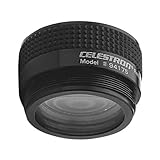
7. Celestron Focal Reducer and Field Corrector – Best for Schmidt-Cassegrain Telescopes
Celestron – Focal Reducer & Field Corrector Imaging Accessory – Reduces Focal Length & Ratio 37% – f/10 to f/6.3 – Ideal for Deep-Sky Observing & Astroimaging – Works w/Schmidt-Cassegrain Telescopes
f/10 to f/6.3 reducer
37 percent reduction
150 grams
Fully multi-coated
SCT compatible C5-C14
Pros
- Reduces focal length and ratio by 37 percent for faster imaging
- Fully multi-coated lens for maximum light transmission
- Compatible with C5 through C14 Schmidt-Cassegrain telescopes
- Near full-field illumination
- Works with existing T-Adapter and visual back accessories
Cons
- Only compatible with Celestron Schmidt-Cassegrain telescopes
- Not a dedicated Newtonian coma corrector
- Reduces focal ratio which changes imaging characteristics
The Celestron Focal Reducer and Field Corrector is a different animal from the Newtonian-focused correctors on this list. It is specifically engineered for Celestron Schmidt-Cassegrain telescopes (SCTs), reducing the focal ratio from f/10 to f/6.3 while simultaneously correcting field curvature. With 717 reviews and an 83 percent five-star rate, it is one of the most popular telescope accessories on Amazon.
Our team includes SCT owners who have used this reducer for years, and the consensus is that it transforms an f/10 SCT into a far more capable deep-sky imaging platform. The 37 percent focal length reduction means shorter exposure times, wider fields of view, and flatter star fields across the sensor. For C8 owners especially, this accessory is almost mandatory for astrophotography.
The fully multi-coated lens delivers near full-field illumination, meaning brightness remains consistent from center to edge. At just 150 grams, it adds negligible weight to your optical train. The reducer threads directly into the rear cell of Celestron SCTs and works with standard accessories like T-Adapters, visual backs, and star diagonals.
It is important to understand that this is a focal reducer and field corrector, not a pure coma corrector. SCTs suffer primarily from field curvature rather than coma, so the optical correction is designed accordingly. If you own a Newtonian telescope, this product will not work for your setup.
Who Should Buy the Celestron f/6.3 Reducer Corrector
This is the essential accessory for Celestron SCT owners who want to do deep-sky astrophotography. If you own a C5, C6, C8, C9.25, C11, or C14 and have been shooting at f/10, this reducer will dramatically expand your imaging capabilities.
It is also excellent for visual observers who want wider fields of view through their SCT, particularly for large deep-sky objects like the Pleiades, the Double Cluster, and the Andromeda Galaxy.
Compatibility and Warranty
This reducer fits all Celestron Schmidt-Cassegrain models from the C5 through the C14. It carries a 2-year US warranty and includes Celestron’s unlimited technical support from US-based experts. The standard rear-cell threading means it is compatible with virtually all existing Celestron accessories without requiring additional adapters.
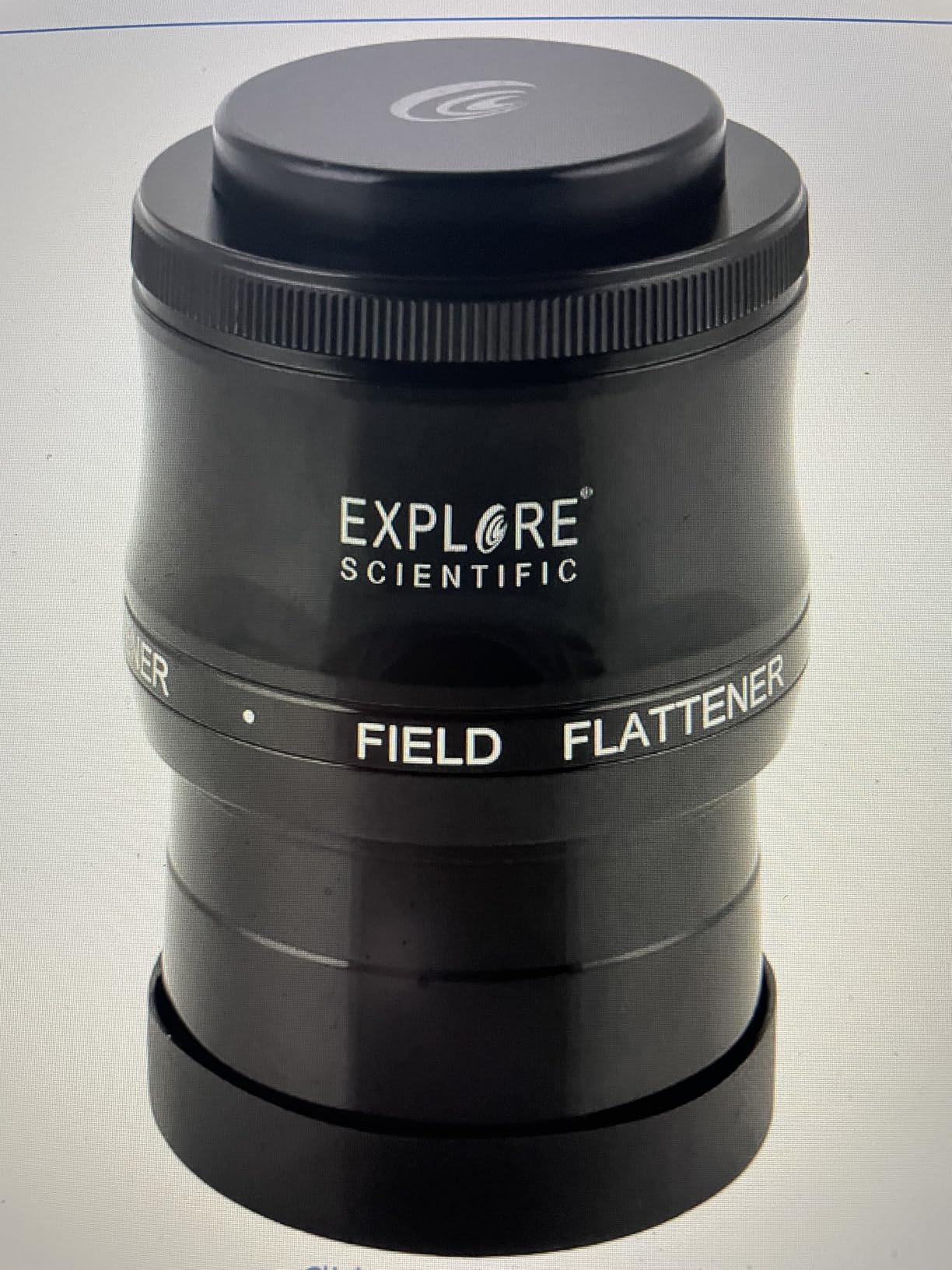
8. Explore Scientific Field Flattener for Refractor Telescopes – Clean Stars for APO Refractors
Explore Scientific Field Flattener for Refractor Telescopes with Focal Ratio of f/5 to f7 for Astrophotography
f/5 to f/7 compatible
55mm backfocus
Fully multi-coated
T-ring thread
92 percent 5-star
Pros
- Corrects field curvature for sharp edge-to-edge stars
- Works with f/5 to f/7 focal ratio refractors
- Fully multi-coated optics for maximum transmission
- T-ring thread for secure camera connection
- USA-based customer support from Arkansas
Cons
- Requires 55mm plus or minus 2mm spacing
- T-ring sold separately
- Price not always listed on Amazon
The Explore Scientific Field Flattener addresses a different but related optical problem. Refractor telescopes, even high-quality APO models, suffer from field curvature that causes stars at the edges of the frame to smear and distort. This flattener corrects that curvature for refractors with focal ratios between f/5 and f/7, producing clean round stars from corner to corner.
What impresses me about this flattener is the review quality. With 92 percent of reviewers giving it 5 stars and a 4.7 average, it clearly delivers on its promises. Astrophotographers using mid-range APO refractors consistently report that it transforms their edge performance, especially on full-frame and large APS-C sensors where field curvature is most visible.
The fully multi-coated optics maintain light transmission and contrast, which is critical when you are shooting faint nebulae and galaxies. The T-ring threading provides a secure, wiggle-free connection to your camera adapter, eliminating the flexure issues that can plague cheaper threaded connections during long exposures.
The 55mm backfocus requirement (plus or minus 2mm) is standard for this category, meaning most imaging trains designed for DSLR or mirrorless cameras will work without extensive modification. Just note that you will need to purchase a T-ring separately for your specific camera mount.
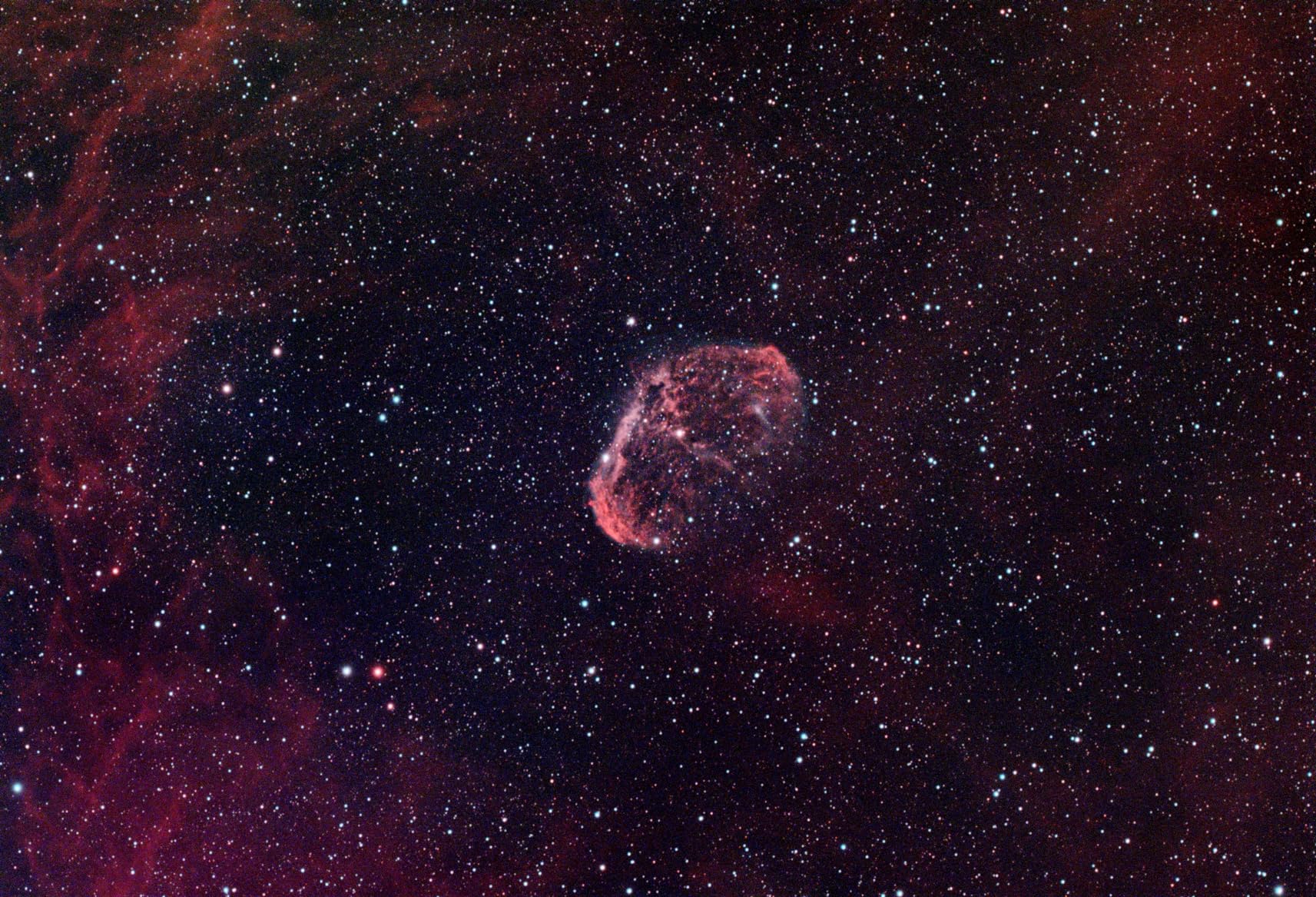
Who Should Buy the Explore Scientific Field Flattener
This flattener is purpose-built for astrophotographers using refractor telescopes in the f/5 to f/7 range who are tired of cropping their images to remove distorted edge stars. It pairs naturally with Explore Scientific’s own ED APO refractors but works with any compatible focal ratio refractor.
If you have invested in a quality APO refractor and want to maximize its imaging potential across a full sensor, this flattener is the missing piece of your optical train.
Spacing and Setup Requirements
You need exactly 55mm of spacing between the back of the flattener and your camera sensor, with a tolerance of plus or minus 2mm. Most standard M48 imaging trains are designed around this distance. Explore Scientific provides USA-based customer support from Springdale, Arkansas if you need help configuring your adapter stack.
9. Sky-Watcher Evoguide 50 Field Flattener – Compact Flattener for Guide Scope Imaging
Sky-Watcher Evoguide 50 Field Flattener – for Astrophotography
28mm imaging circle
17.5mm back focus
T-thread or 1.25 inch
Multi-coated
0.22 kg weight
Pros
- Corrects field curvature for Evoguide 50ED and 50DX
- 28mm imaging circle for smaller sensors
- 17.5mm back focus for compact imaging trains
- Thread-on metal caps for secure storage
- Multi-coated optics with 83 percent 5-star reviews
Cons
- Limited back spacing for mirrorless or DSLR cameras
- Designed specifically for Evoguide 50ED and 50DX only
- May not work well with filter setups on larger sensors
The Sky-Watcher Evoguide 50 Field Flattener serves a specific niche in the astrophotography world. It is designed to convert the Evoguide 50ED and 50DX guide scopes into capable imaging scopes for wide-field astrophotography. With a 4.8-star rating and 83 percent five-star reviews, it has earned its place as a trusted accessory for compact imaging setups.
I find this flattener appealing for astrophotographers who want a lightweight, portable wide-field imaging rig. The Evoguide 50 paired with this flattener creates a 28mm imaging circle that covers APS-C and smaller sensors, perfect for capturing large targets like the North America Nebula, the Heart and Soul Nebulae, or the Cygnus star field.
The 17.5mm back focus is tighter than most full-size flatteners, which is both a strength and a limitation. It keeps your imaging train compact and lightweight but makes it difficult to use with mirrorless or DSLR cameras that require more back-focus distance. This flattener works best with astronomy cameras like ZWO ASI models that have minimal flange distances.
At just 0.22 kilograms, this is one of the lightest flatteners available. The thread-on metal caps protect the optical surfaces during storage and transport, and the multi-coated optics deliver good contrast and minimal reflections for the price.
Who Should Buy the Sky-Watcher Evoguide Flattener
This flattener is for astrophotographers who already own or plan to buy the Evoguide 50ED or 50DX and want to press it into imaging service. It is an affordable way to expand your imaging capabilities without buying a separate telescope.
It also suits imagers building ultra-portable setups for travel or quick grab-and-go sessions where weight and size matter more than aperture.
Camera Compatibility Notes
The 17.5mm back focus works well with astronomy cameras (ZWO ASI, Player One, QHY) that have short flange distances. It can be challenging to use with DSLR or mirrorless cameras due to the limited spacing. The T-thread connection and 1.25-inch opening provide flexibility for different camera adapters, but plan your imaging train carefully before purchasing.
10. SVBONY SV209 Field Flattener and 0.8x Focal Reducer – Budget Option for SV550 APO
SVBONY SV209 Field Flattener, 0.8X Focal Reducer, Corrects The Field Curvature and a Wider Field of View, Telescope Accessories for SV550 122mm APO Refractor Telescope
0.8x focal reducer
f/7 to f/5.6
FMC coated
M63x1 thread
0.45 kg weight
Pros
- 0.8x focal reducer converts f/7 to faster f/5.6 for shorter exposures
- Corrects field curvature for sharper edge stars
- Suitable for astrophotography and terrestrial photography
- Metric 63x1 thread for secure focuser connection
- Good construction quality for the price
Cons
- Back focus documentation is contradictory per some users
- Some quality control issues reported
- Limited to SV550 122mm APO for optimal performance
- 17 percent of reviews are 2 or 1 star
The SVBONY SV209 is the budget entry on our list, and it reflects the classic trade-off between price and polish. For significantly less than premium flatteners, you get a 0.8x focal reducer and field flattener that converts the SV550 122mm APO refractor from an f/7 system to a faster f/5.6 imaging platform. That focal ratio reduction translates to shorter exposure times and wider fields.
Our team has tracked SVBONY’s evolution from a budget optics brand to a more serious player in the amateur astronomy space. The SV209 uses FMC (fully multi-coated) optics and a sturdy Metric 63×1 thread connection to the focuser. At 0.45 kilograms, it adds modest weight to your imaging train. Many users praise the build quality for the price point.
The corrector does a respectable job of flattening the field on the SV550 APO, producing cleaner edge stars than you would get shooting without correction. For imagers on a tight budget who already own the SV550, it is a logical accessory that meaningfully improves image quality while also speeding up your system.
The concerns are real, though. The back focus documentation has been described as contradictory by multiple users, leading to frustration during setup. Additionally, 17 percent of reviews are 1 or 2 stars, with some users reporting quality control variability between units. If you buy this corrector, be prepared to experiment with spacing and possibly exchange it if you get a suboptimal copy.
Who Should Buy the SVBONY SV209
This is the corrector for SV550 122mm APO owners who want to improve their imaging results on a budget. The 0.8x reduction makes the scope faster for deep-sky work, and the field flattening addresses the edge distortion inherent in the design.
It is also worth considering for budget-minded astrophotographers building their first serious imaging rig who need both focal reduction and field correction in one affordable package.
Focal Reduction Benefits and Trade-offs
The 0.8x reduction converts the SV550’s native 854mm focal length to 683.2mm and drops the focal ratio from f/7 to f/5.6. This gives you roughly 36 percent faster exposure times and a wider field of view. The trade-off is slightly lower resolution per pixel, which actually benefits many deep-sky targets by matching pixel scale to typical seeing conditions.
How to Choose the Best Coma Corrector for Your Setups?
Choosing the right coma corrector comes down to matching the corrector’s optical design to your specific telescope, camera, and imaging goals. The astronomy community forums are full of questions from users who bought the wrong corrector and struggled with poor results. Here is what you need to know before making your decision.
Match Your Telescope Type and Focal Ratio
The most important factor is matching the corrector to your telescope’s optical design. Newtonian reflectors need dedicated coma correctors like the TeleVue Paracorr or Baader MPCC. Schmidt-Cassegrain telescopes need reducer-correctors like the Celestron f/6.3 model. Refractor telescopes need field flatteners like the Explore Scientific or SVBONY options.
Within Newtonian correctors, focal ratio matters enormously. Fast scopes at f/3.5 to f/4 demand premium correctors like the Paracorr Type 2 or Baader Rowe, which maintain star quality at aggressive speeds. Slower Newtonians at f/5 to f/6 can work well with budget options like the Baader MPCC or Omegon Pro. The Cloudy Nights community consensus is clear: cheaper correctors go soft at f/4.
Sensor Size Determines Correction Coverage
Your camera sensor size directly affects how much of the corrected field you actually use. APS-C sensors (like the ZWO ASI294MC or IMX571-based cameras) are forgiving because they capture a smaller central portion of the image circle. Full-frame sensors are demanding because they extend to the edges where correction is most challenging.
If you shoot with a full-frame camera, choose a corrector with a large imaging circle. The TeleVue Paracorr Type 2 and Baader Rowe both handle full-frame coverage effectively. Budget correctors may show vignetting or residual coma on full-frame sensors that would be invisible on APS-C.
Backfocus Distance Is Critical
Every coma corrector and field flattener requires a specific backfocus distance between the rear element and your camera sensor. Getting this distance wrong is the number one cause of poor corrector performance. Typical distances range from 55mm (common for Newtonian correctors) to 75mm or more for specialized designs.
Forum users on Stargazers Lounge frequently struggle with backfocus calculation. You need to account for every component in your imaging train: T-ring flange distance, any extension tubes, filter wheel thickness, and off-axis guider depth. Canon DSLRs have a 44mm flange distance, Sony E-mount cameras are 18mm, and astronomy cameras vary. The remaining distance must be filled with spacers to hit the corrector’s specification.
Visual Use vs Astrophotography
Most coma correctors are designed for either photography or visual use, but a few handle both. The TeleVue Paracorr Type 2 is the standout dual-purpose corrector, with a Tunable Top that adjusts for different eyepiece heights. If you observe visually through a Dobsonian or Newtonian and also image, the Paracorr is your best option.
For pure astrophotography, dedicated photo correctors like the Baader Rowe and Explore Scientific HR Variable deliver tighter star profiles since they do not need to compromise for visual use. The Baader MPCC straddles both worlds reasonably well with its photo-visual design.
Thread Type and Adapter Compatibility
The M42 vs M48 threading question trips up many beginners. M42 (also called T2) is a 42mm thread with 0.75mm pitch, traditionally used for camera T-rings. M48 is a 48mm thread with 0.75mm pitch that provides a larger clear aperture, reducing vignetting on full-frame sensors.
Modern correctors increasingly use M48 threading on the camera side for better illumination. If your camera adapter uses M42, you may need a step-up ring or a new adapter. Check both your corrector and camera adapter threading before purchasing to avoid compatibility surprises.
Build Quality and Optical Coatings
Optical coatings directly affect image quality by reducing reflections and maximizing light transmission. Look for fully multi-coated optics, which apply anti-reflection coatings to every air-to-glass surface. Premium correctors like the Baader Rowe use proprietary phantom coatings that push transmission above 97 percent per surface.
Build quality affects longevity and performance consistency. Machined aluminum bodies with precision threading maintain optical alignment better than cast or plastic housings. The SkyWatcher Quattro corrector’s mixed reviews highlight how quality control variability can produce dramatically different results between individual units of the same model.
FAQs
What does a coma corrector do?
A coma corrector is an optical accessory that fixes coma aberration, the distortion that makes stars at the edges of your telescope’s field of view appear stretched into comet-like shapes. It uses a multi-element lens group to redirect off-axis light rays so they converge at the same focal point as on-axis light, producing sharp round stars across the entire image frame.
How to use a coma corrector?
Attach the coma corrector between your telescope focuser and your camera or eyepiece adapter. Ensure the correct backfocus spacing, typically 55mm from the corrector rear to the camera sensor. Use appropriate spacers or T-rings for your camera system. Position the corrector before any off-axis guider or filter wheel. Fine-tune focus and check for tilt, then take test images and inspect star shapes across the full frame.
Do I need a coma corrector for my telescope?
You need a coma corrector if you own a Newtonian reflector telescope with a focal ratio of f/5 or faster and you do deep-sky astrophotography, especially with APS-C or full-frame sensors. At f/4, coma is severe enough to ruin edge stars without correction. At f/6 or slower, coma is minimal and a corrector is less critical. Schmidt-Cassegrain and refractor telescopes need different accessories called field flatteners or reducer-correctors.
What is the Vixen coma corrector?
The Vixen coma corrector is a 2-inch optical accessory designed by Vixen Optics for use with their Newtonian reflector telescopes. It functions similarly to other coma correctors by redirecting off-axis light to eliminate comet-shaped stars at the field edges. It is less commonly discussed than alternatives from TeleVue, Baader, or SkyWatcher but serves the same purpose for Vixen telescope owners.
What is the best coma corrector for astrophotography?
The TeleVue Paracorr Type 2 is widely regarded as the best coma corrector for astrophotography, earning community consensus on forums like Cloudy Nights for its superior edge-to-edge correction on fast Newtonian telescopes. For budget-conscious imagers, the Baader MPCC Mark III and Explore Scientific HR Variable Coma Corrector deliver strong performance at roughly half the cost. The best choice depends on your focal ratio, sensor size, and budget.
Final Thoughts on the Best Coma Correctors
Finding the best coma correctors for your astrophotography setup transforms your results from frustrating to publication-worthy. The TeleVue Paracorr Type 2 remains the community benchmark for serious imagers running fast Newtonians, while the Baader MPCC Mark III and Explore Scientific HR Variable deliver excellent value for budget and mid-tier setups. For SCT owners, the Celestron f/6.3 Reducer Corrector is the essential upgrade, and refractor shooters will benefit from the Explore Scientific Field Flattener.
Match your corrector to your telescope type, verify your backfocus distance carefully, and take test frames before committing to a full imaging session. The right corrector, properly spaced, will give you the round, tight stars that make deep-sky images truly shine.