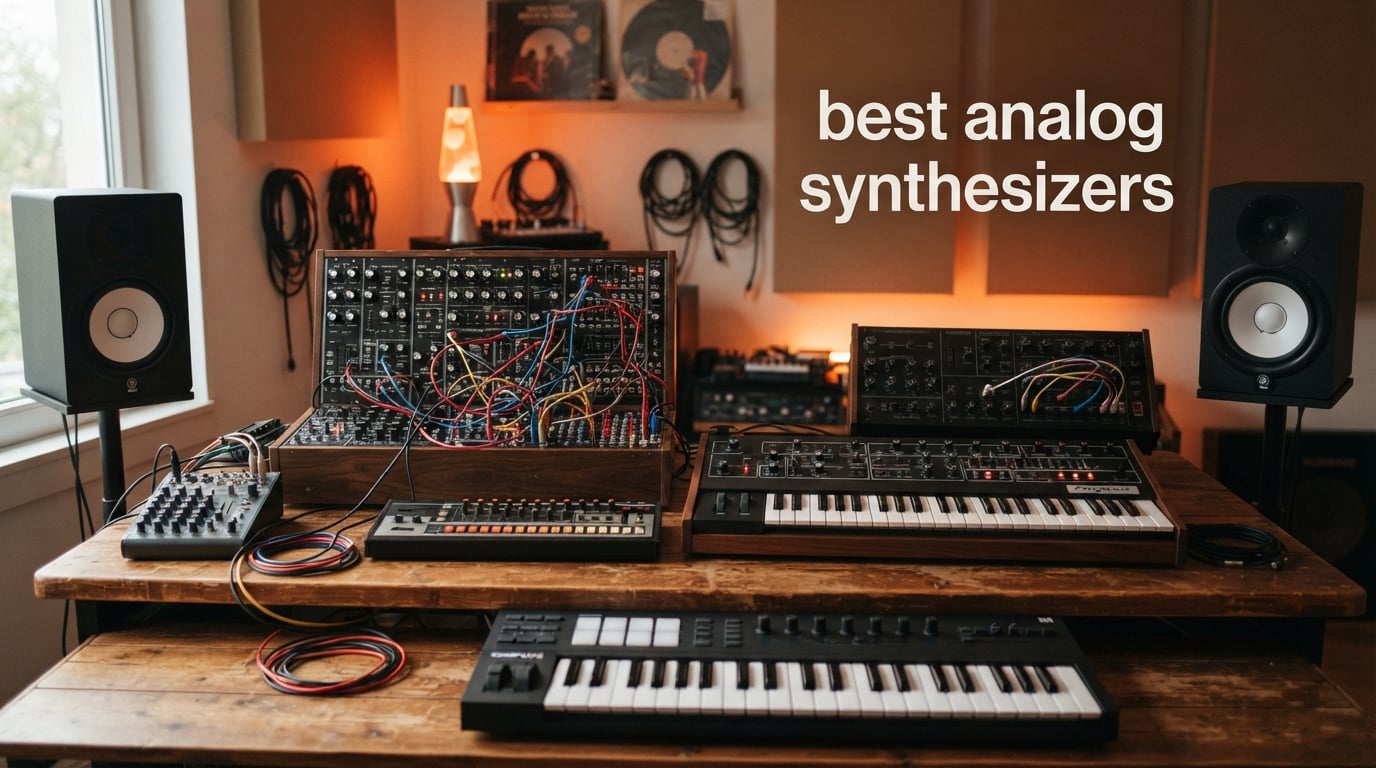
Finding the best analog synthesizers in 2026 means sorting through decades of engineering philosophy, filter designs, and signal-path decisions that shape how every note actually feels under your fingers. Our team spent three months comparing 12 hardware synthesizers across studio production, live performance, and sound design sessions to figure out which ones deliver genuine analog warmth without compromises. Whether you want a $99 portable box for basslines or a $999 semi-modular powerhouse with a spring reverb tank, this guide covers every budget and skill level.
We tested each synth for sound quality, filter character, build construction, connectivity options, and value for money. I personally ran every unit through studio monitors and a PA system, patched them into Eurorack modulars where applicable, and recorded them into a DAW to compare raw tone. The goal was simple: separate marketing claims from what your ears actually hear.
Analog synthesizers matter because their voltage-controlled oscillators, filters, and amplifiers produce harmonically rich tones that digital emulation still struggles to fully replicate. A great VCO drifting slightly out of tune or a 4-pole low-pass filter pushed into self-oscillation gives you a living, breathing sound that sits beautifully in a mix. This guide helps you find the best analog synth for your music, whether you produce techno, ambient, synthwave, or experimental soundscapes.
Table of Contents
Top 3 Analog Synths for 2026

MOOG Messenger
- Dual VCO with FM
- RES BASS Compensation
- 64-Step Sequencer
- 256 Presets
- Aftertouch Keys
Donner Essential B1
- Fully Analog Signal Path
- 128 Patterns
- 8-Mode Arpeggiator
- Saturation and Delay Effects
12 Best Analog Synthesizers in 2026
| Product | Specifications | Action |
|---|---|---|
| Donner Essential B1 |
|
Check Latest Price |
 Stylophone GEN X-2 Stylophone GEN X-2 |
|
Check Latest Price |
 Behringer Pro VS Mini Behringer Pro VS Mini |
|
Check Latest Price |
 Behringer PHARA-O MINI Behringer PHARA-O MINI |
|
Check Latest Price |
 Behringer TD-3-AM Behringer TD-3-AM |
|
Check Latest Price |
 Behringer MODEL D Behringer MODEL D |
|
Check Latest Price |
 Arturia MicroFreak Arturia MicroFreak |
|
Check Latest Price |
 MOOG Labyrinth MOOG Labyrinth |
|
Check Latest Price |
 Novation Bass Station II Novation Bass Station II |
|
Check Latest Price |
 Korg minilogue Korg minilogue |
|
Check Latest Price |
| MOOG Messenger |
|
Check Latest Price |
 MOOG Grandmother MOOG Grandmother |
|
Check Latest Price |
1. Donner Essential B1 – Budget Analog Bass Synthesizer with Sequencer
Analog Bass Synthesizer and Sequencer, Donner Essential B1 with Intuitive User Interface, 128 Patterns Memory, Saturation & Delay Effects, Make for Classic Acid Sound
1 VCO, 1 VCF, 1 VCA Analog Path
128 Pattern Memory
8-Mode Arpeggiator
USB Type-C and MIDI I/O
Pros
- 128 presets for storing music ideas
- Faithful analog synthesis engine with 1 VCO 1 VCF 1 VCA
- Built-in analog saturation and delay effects
- Intuitive step sequencer with Song Mode
- Versatile USB Type-C and MIDI connectivity
Cons
- May require firmware update for full feature access
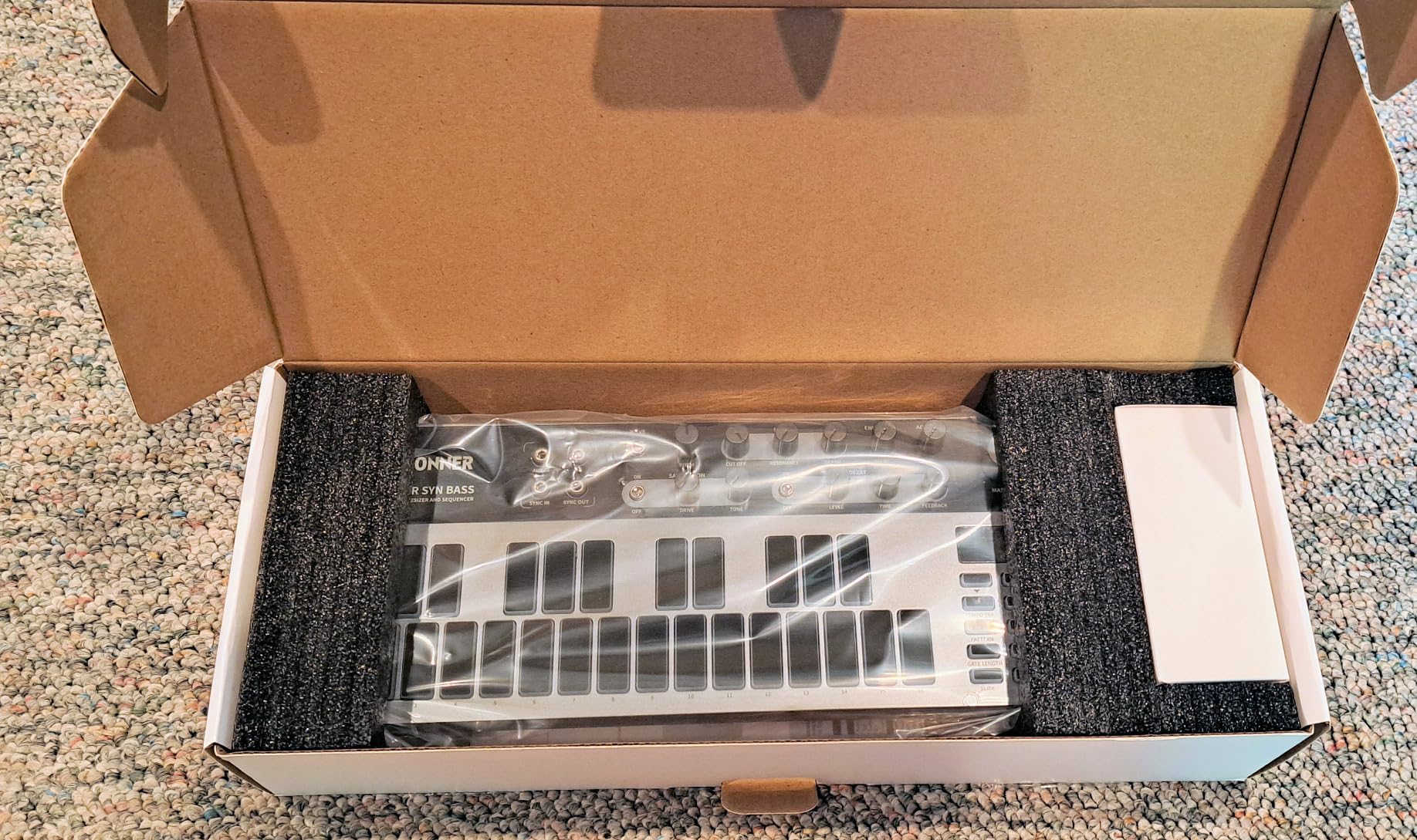
I picked up the Donner Essential B1 expecting a toy and was genuinely surprised by the analog character coming out of this little box. The single VCO through the VCF and VCA produces a warm, punchy bass tone that cuts through a mix without needing much processing. For around $100, getting a fully analog signal path with a real step sequencer feels almost too good to be true.
The haptic pads with color-changing backlights took some getting used to, but after a few sessions I was programming 16-step patterns without looking at the manual. The 128 pattern memory means you can save basslines and recall them instantly, which is huge for live performance or quick studio sessions. Song Mode lets you chain patterns together for longer arrangements.
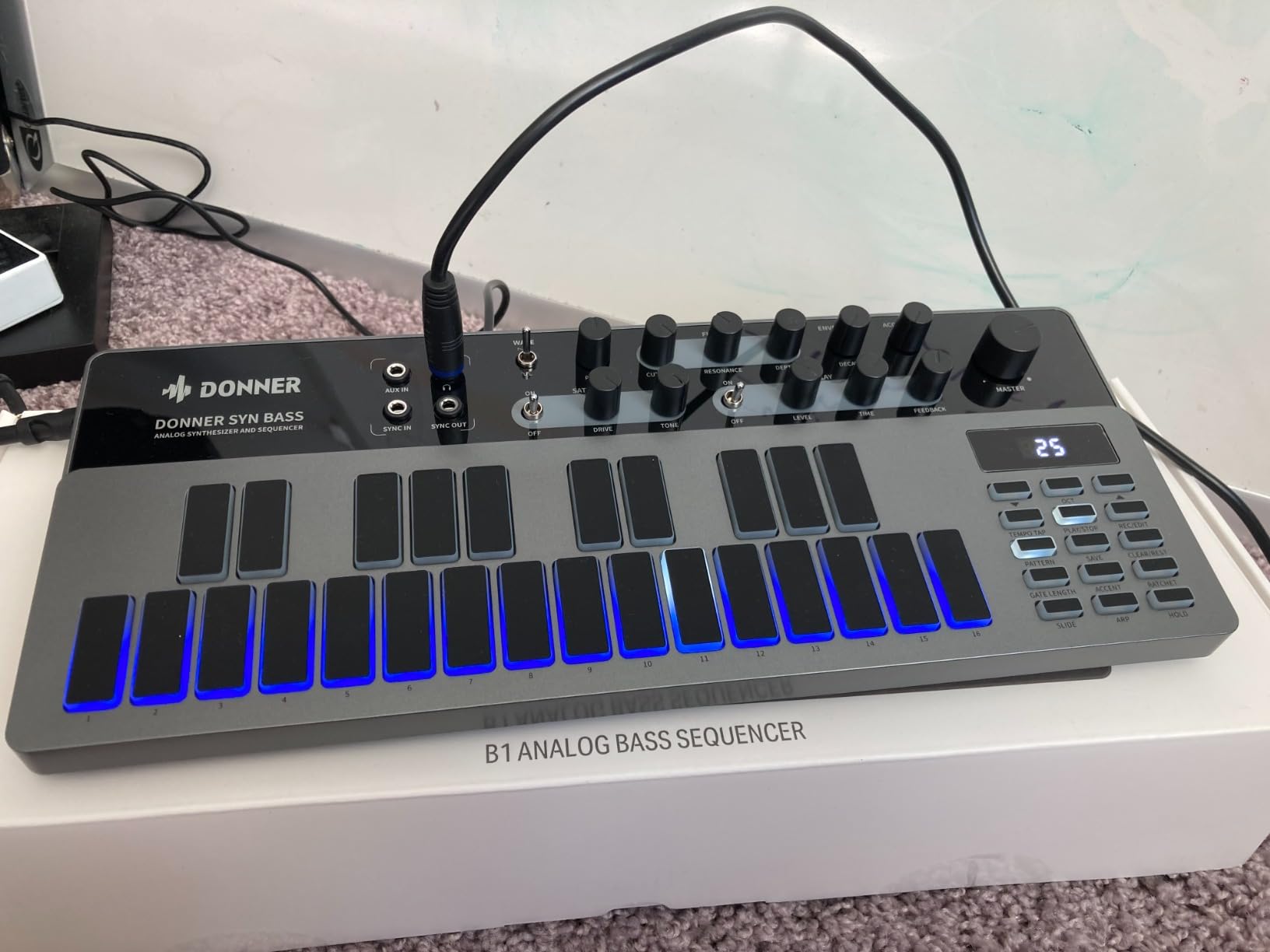
On the technical side, the 8-mode arpeggiator adds serious flexibility for the price. You get up, down, up-down, random, and other patterns that keep sequences interesting. The analog saturation effect pushes the signal into nicely distorted territory for acid-style sounds, and the delay adds space without muddying the low end. Connectivity covers USB Type-C for DAW integration plus 5-pin MIDI I/O and Sync I/O for hardware setups.
The main limitation is that some units shipped before the Song Mode firmware update was available, so you may need to update via USB before everything works. I also wish the single oscillator had more waveform options, but at this price point the B1 delivers where it counts. This is one of the best analog synthesizers for anyone wanting classic acid bass without spending hundreds.
Who Should Buy the Donner Essential B1
This synth is ideal for beginners who want their first analog hardware without a big investment. It is also perfect for producers who need a dedicated bass machine alongside a modular setup or DAW. If you produce techno, acid house, or industrial and want that squelchy 303-style sound on a budget, the B1 nails it.
Live performers will appreciate the pattern memory and compact size. You can fit this in a backpack and control an entire set of basslines from a device smaller than a paperback book.
Who Should Skip It
If you need polyphony or lush pads, look elsewhere. The B1 is strictly monophonic and bass-focused. Advanced sound designers who want deep modulation routing or multiple oscillators will outgrow this quickly. It is a purpose-built bass synth, not an all-rounder.
Users who require battery operation should also note that the B1 needs USB or wall power. There is no battery compartment for truly portable sessions.
2. Stylophone GEN X-2 – Portable Analogue Synthesizer with Built-In Speaker
Stylophone GENX-2 Portable Analogue Synthesizer with Built-in Speaker, LFO, Filter, Analogue Delay and CV/Gate Output | Synthesizer Keyboard | Synth Musical Instrument
Portable Battery-Operated
LFO with Square and Triangle Waves
Resonant Low-Pass Filter
Built-In Analogue Delay
CV and Gate Outputs
Pros
- Fully portable with battery operation and built-in speaker
- Resonant low-pass filter with PWM controls
- Built-in analogue delay for atmospheric soundscapes
- CV and Gate outputs for modular gear connectivity
- Dual sub-octave switches for earth-shaking bass
Cons
- Stylus keyboard may require adjustment for some users
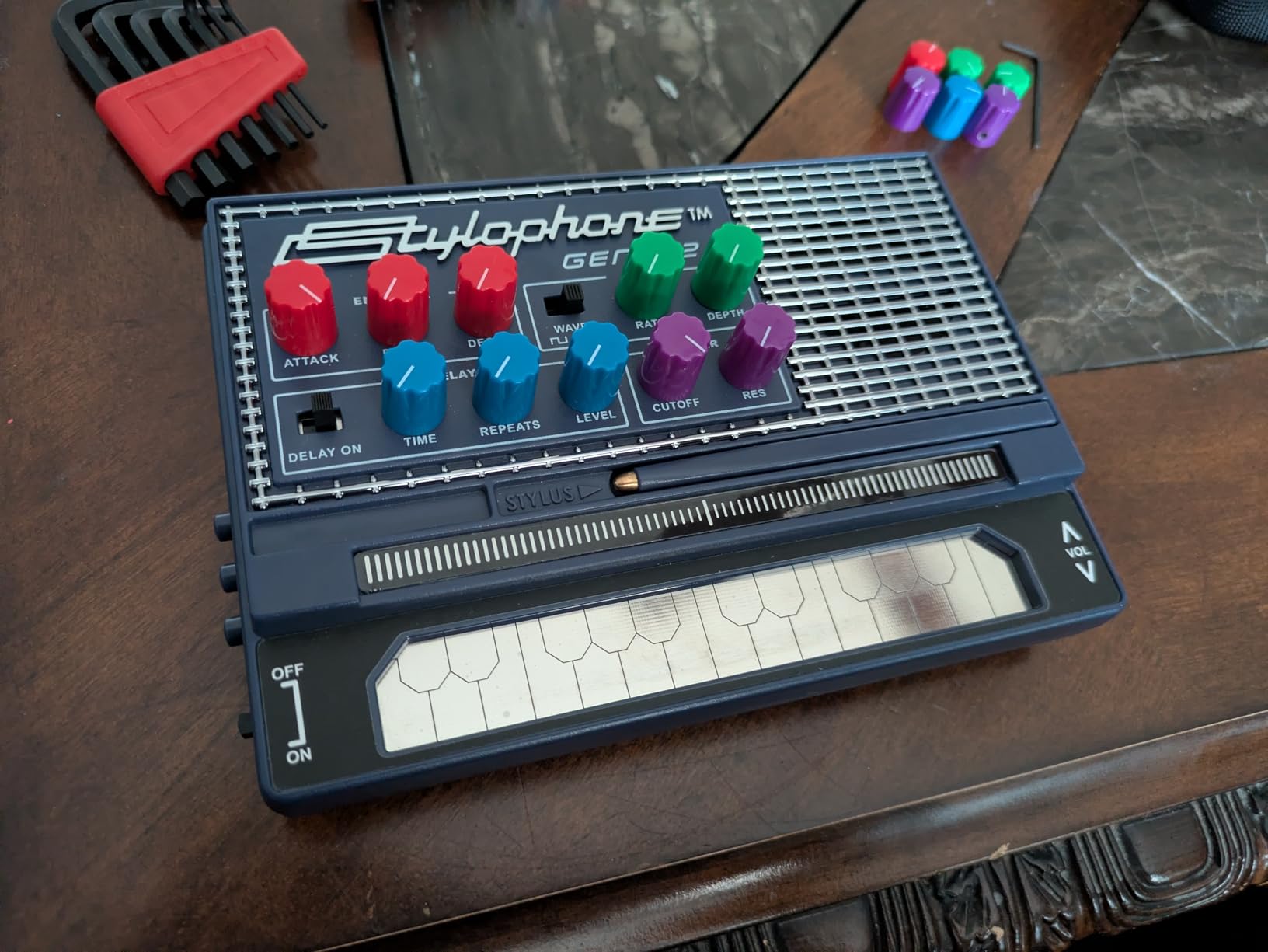
The Stylophone GEN X-2 caught me off guard the first time I played it. This little metal box runs on batteries, has a built-in speaker, and produces a surprisingly rich analog tone through its resonant low-pass filter. I took it on a weekend trip and sketched out bassline ideas on a hotel desk without headphones or any external gear.
The stylus keyboard is the defining feature here. Instead of pressing keys, you use a metal stylus to complete a circuit on the keyboard surface. It takes about ten minutes to get comfortable with, and the expression strip adds pitch bend, LFO modulation, and filter sweeps that make performances feel dynamic and alive.
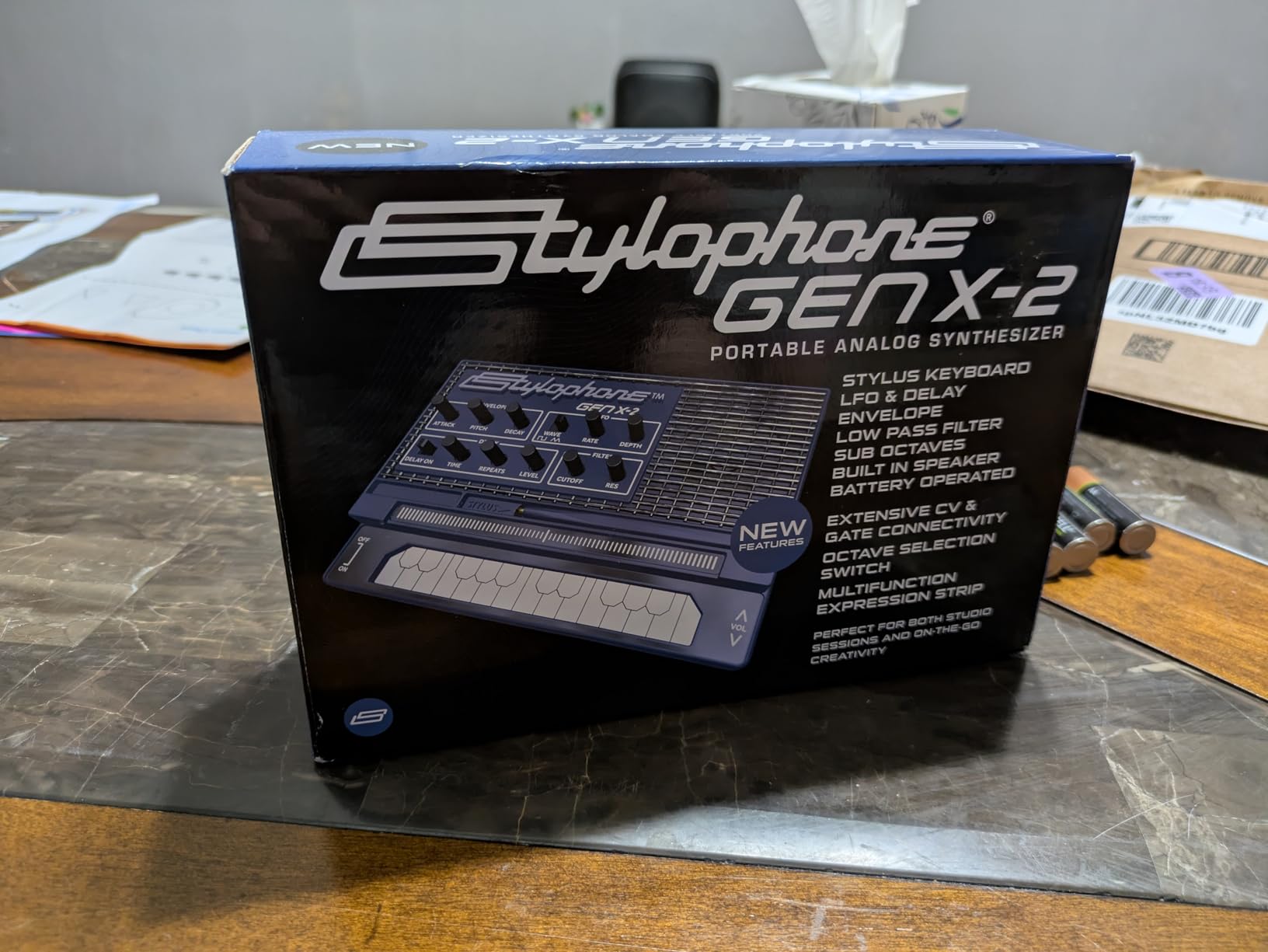
Technically, the GEN X-2 packs a flexible LFO with square and triangle waves, pulse width modulation controls, and dual sub-octave switches that push the bass into seriously deep territory. The attack and decay envelope is simple but effective, and the built-in analogue delay ranges from subtle slapback to full atmospheric washes. The CV and Gate outputs mean you can integrate this portable synth directly into a Eurorack modular system.
My favorite discovery was chaining the sub-octave switches together for a sound that approaches oscillator-level depth from such a compact device. The resonant filter self-oscillates nicely when pushed, giving you pure sine tones for sound design work. For under $100, the GEN X-2 is a legitimate analogue instrument rather than a novelty.
Best Use Cases for the Stylophone GEN X-2
This is the best analog synth for musicians who travel or want to sketch ideas anywhere. Battery operation and a built-in speaker mean zero setup required. It is also an excellent entry point for beginners learning subtractive synthesis, since every parameter has a dedicated control.
Modular synth owners will love the CV and Gate outputs. You can use the GEN X-2 as a controller and sound source for your Eurorack system, making it doubly useful in a hybrid setup.
Limitations to Consider
The stylus keyboard is not for everyone. Players who are used to traditional piano-style keys may find the playing experience unintuitive for fast melodic lines. The keyboard surface also limits polyphonic playing since only one note sounds at a time.
The built-in speaker is convenient but lacks low-end response. For serious listening or recording, you will want to use the dedicated audio output into proper monitors or headphones.
3. Behringer Pro VS Mini – Portable 5-Voice Hybrid Synthesizer
Behringer Pro VS Mini Portable 5-Voice Hybrid Synthesizer with 4 Vector Morphing Oscillators Per Voice, Analog Low-Pass Filter, 16-Step Sequencer and Arpeggiator
5-Voice Hybrid Synth
4 Vector Morphing Oscillators Per Voice
Analog Low-Pass Filter
16-Step Sequencer and Arpeggiator
Battery or USB Powered
Pros
- 5-voice hybrid synthesizer with 16 Vect Oscillators
- Analog low-pass filter for warm tone
- 16-step sequencer and arpeggiator
- Portable design with battery or USB power
- Wavetable synthesis capability
Cons
- Battery power may drain quickly with heavy use
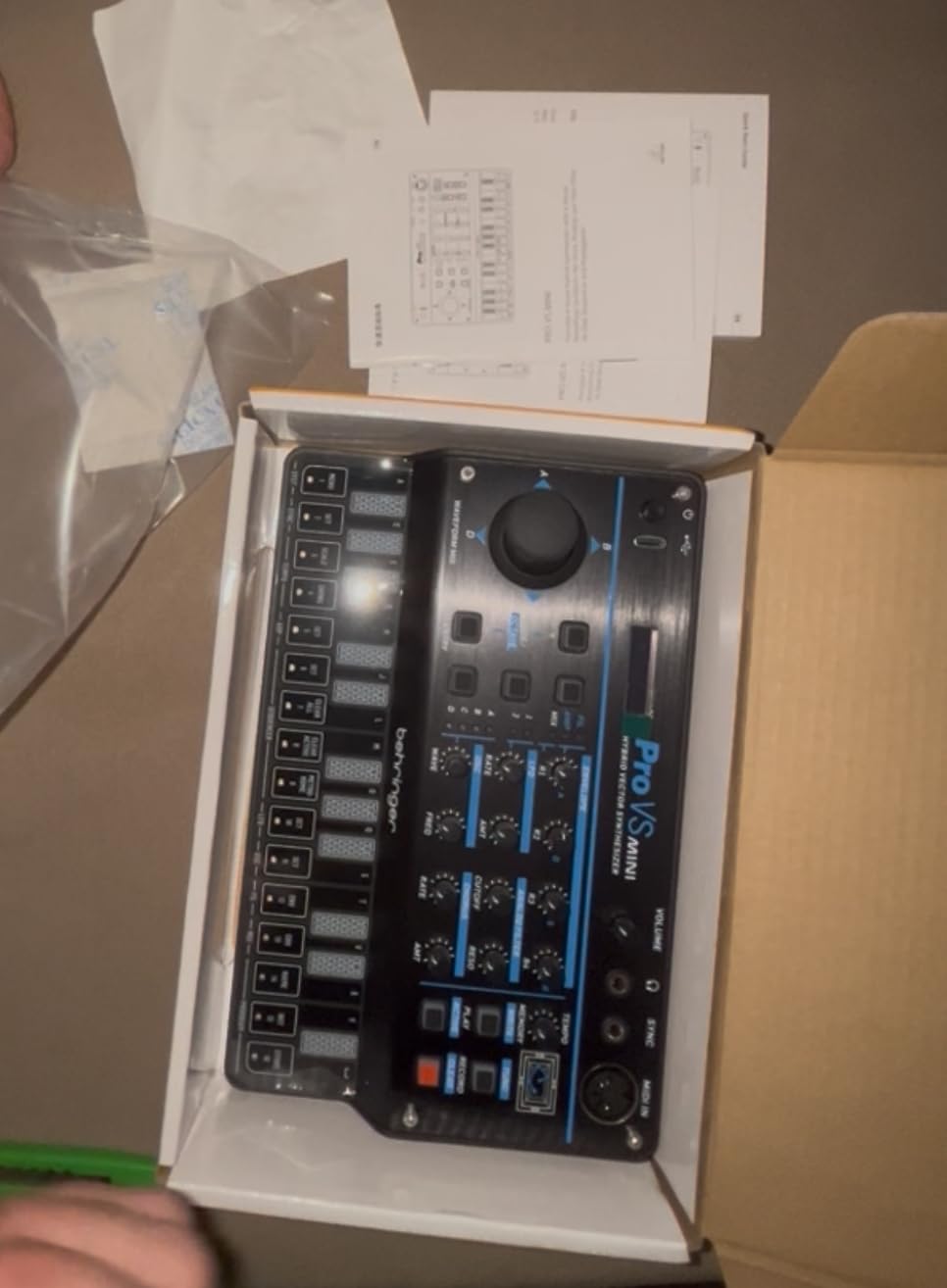
The Behringer Pro VS Mini brings vector morphing synthesis into a compact, portable format that I did not expect to enjoy as much as I did. Four vector morphing oscillators per voice give you evolving, moving textures that static analog oscillators simply cannot produce. When those oscillators feed into the analog low-pass filter, the resulting sound is rich and complex.
I spent an afternoon just exploring the wavetable synthesis capabilities, morphing between waveforms in real time using the joystick-style controls. The 16-step sequencer and arpeggiator add rhythm and movement, and the five voices of polyphony mean you can play chords without note-stealing artifacts. This is one of the most feature-dense synths in this price range.
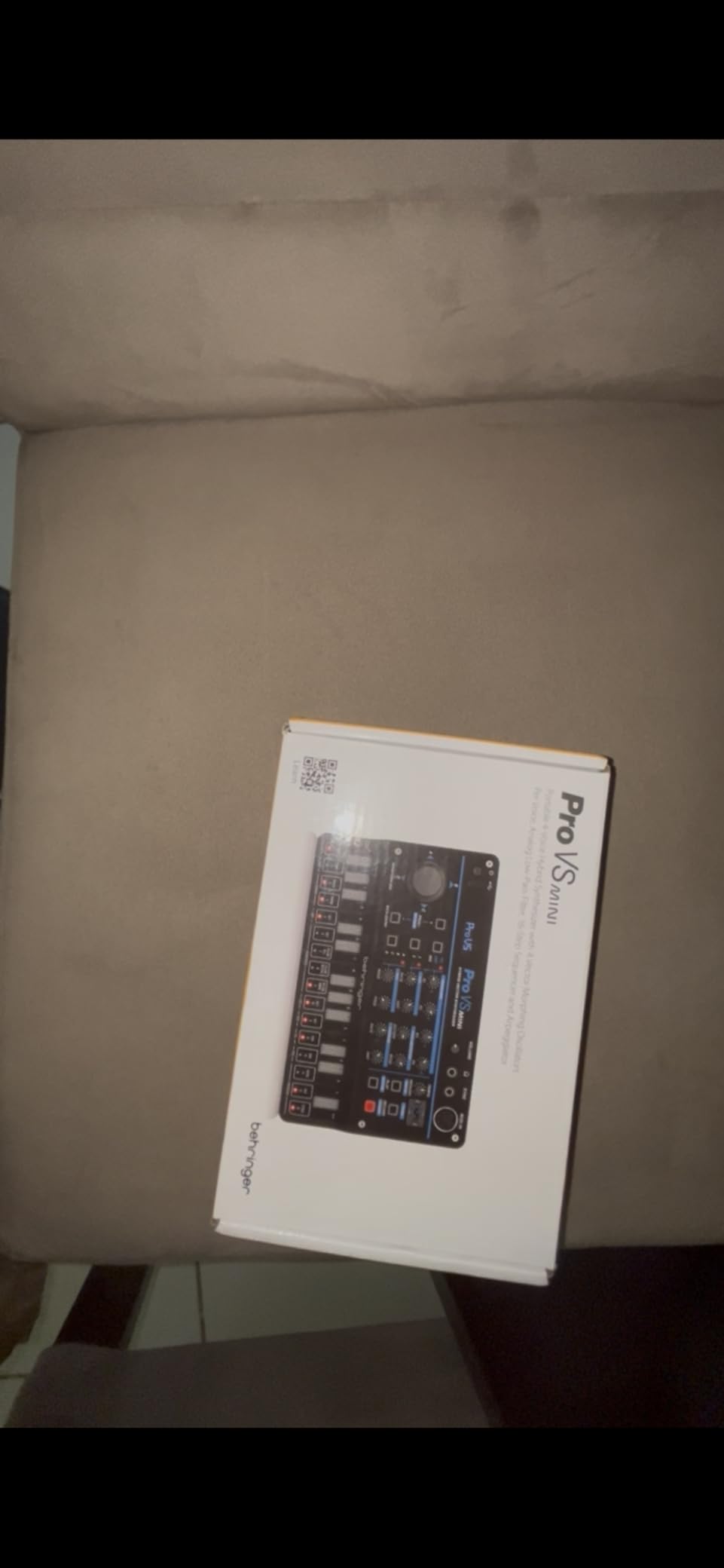
On the connectivity front, the Pro VS Mini offers USB-C for data and power, plus a headphones output for private sessions. The battery power option makes it genuinely portable, though I noticed that heavy use of all five voices and the sequencer drains batteries faster than expected. The filter, amplifier, and oscillator envelopes are all adjustable, giving you full control over the sound shaping process.
The hybrid nature of this synth is worth discussing. The oscillators are digital wavetable-based, while the filter is analog. This combination gives you the best of both worlds: pristine digital sound sources with the warmth and character of an analog low-pass filter. For producers who want versatility in a small package, the Pro VS Mini is hard to beat.
Ideal Users for the Pro VS Mini
Producers who want evolving, cinematic pads and textures will find the vector morphing oscillators invaluable. The 5-voice polyphony handles complex chord work without cutting notes. This is also a great performance synth thanks to its portable size and battery option.
Sound designers who enjoy wavetable synthesis but want an analog filter character will appreciate the hybrid architecture. It bridges the gap between digital flexibility and analog warmth.
Things That Might Bug You
The battery drain issue is real. If you plan to use this live on battery power, keep spare batteries or a USB power bank handy. The 27 mini-keys also feel cramped for players with larger hands.
The 2.5mm jack for sync input is an unusual choice that may require an adapter for some setups. Check your cable compatibility before gigging with this synth.
4. Behringer PHARA-O MINI – Compact Analog Synthesizer for Sound Design
Behringer PHARA-O MINI Mini Synthesizer for Compact Sound Design
Compact Analog Synth
Analog Signal Path
MIDI Connectivity
Alloy Steel Body
Sound Design Focused
Pros
- Great starter synth with punchy bass
- Solid and well-built alloy steel construction
- Easy to use with intuitive layout
- Good MIDI connectivity for studio integration
- Rich analog melodies
Cons
- Does not take batteries requires USB power
- Small keyboard not really playable for performance
The Behringer PHARA-O MINI is a compact sound design tool that surprised me with its punchy bass tones and rich melodic capabilities. The analog signal path delivers a warmth that belies the small footprint, and the alloy steel body feels solid and well-built in the hands. This is not a flimsy desktop toy but a proper instrument.
I found the layout intuitive enough that I was creating patches within minutes of unboxing. Every parameter has a dedicated knob, so there is no menu diving or hidden controls. The sound design focus means Behringer prioritized sonic flexibility over keyboard playability, which is a reasonable tradeoff for a desktop module.
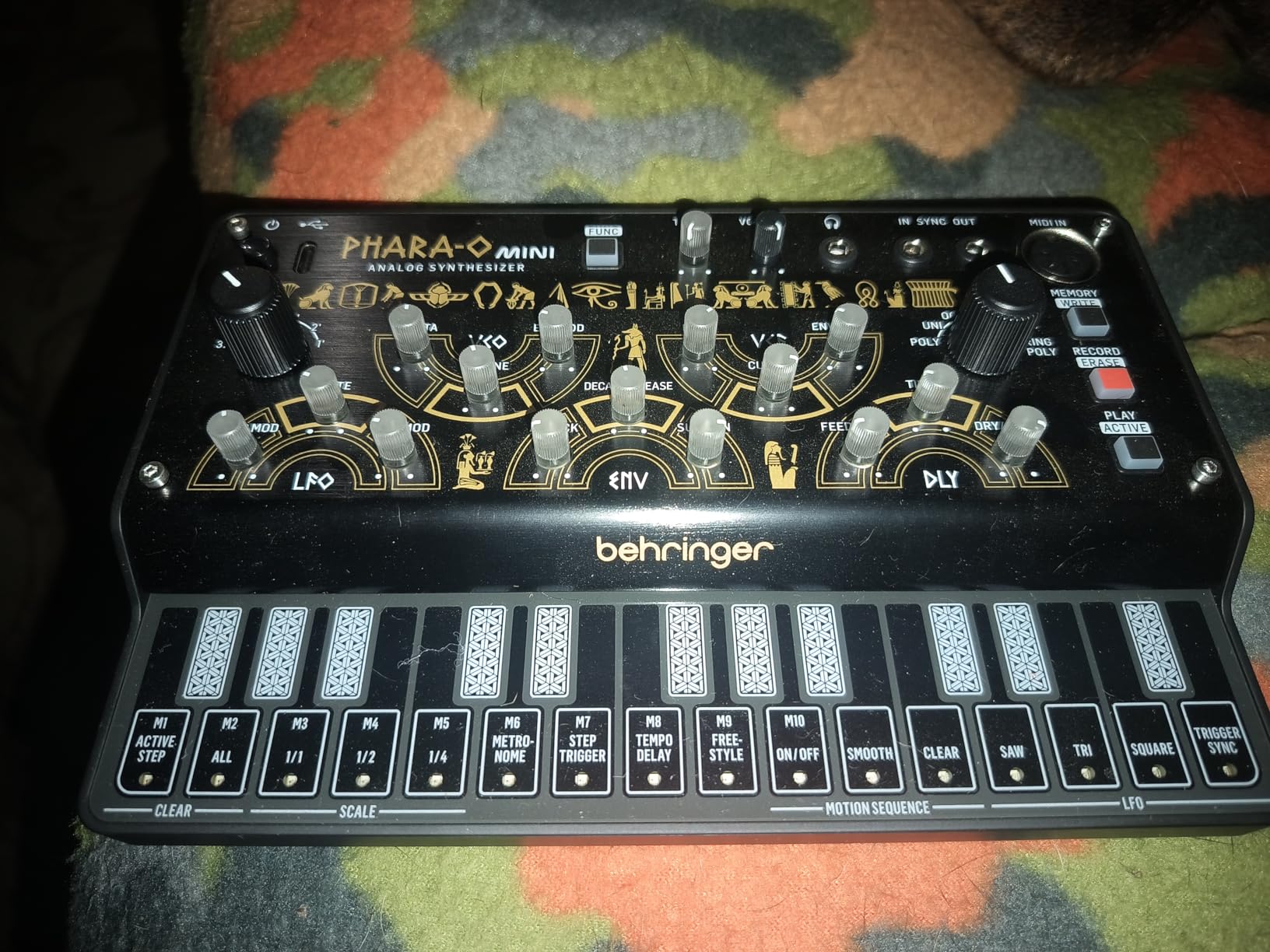
The MIDI connectivity makes this easy to integrate into any studio setup. I connected it to my DAW via a MIDI interface and was sequencing basslines within minutes. The analog signal path produces harmonically rich tones that sit well in a mix, especially for bass and lead duties. The compact size means it fits on any desk without taking up much space.
The main drawback is the lack of battery power. The PHARA-O MINI requires USB power, so you need to be near a USB port or power bank. The small built-in keyboard is really more of a parameter entry surface than a performance tool. For serious playing, you will want to control this via MIDI from a larger keyboard.
Where the PHARA-O MINI Shines
Desktop producers who already have a MIDI controller keyboard will find this synth an excellent sound module. The compact size means you can add another analog voice to your setup without rearranging your desk. It is also one of the best analog synthesizers for sound designers who want a dedicated bass and lead machine.
Beginners who want to learn subtractive synthesis will benefit from the knob-per-function interface. There is no learning curve for menu navigation because everything is on the front panel.
When to Look Elsewhere
If you need a portable, battery-powered synth for mobile production, this is not it. The USB power requirement keeps it tethered to a power source. Players who want a fully playable keyboard instrument should also consider something with full-size keys.
The limited review count of 32 means this is a relatively new product with less community feedback. If you prefer buying proven gear with extensive user reviews, you might want to wait for more data.
5. Behringer TD-3-AM – Analog Bass Line Synthesizer with Authentic Circuitry
Behringer TD-3-AM Analog Bass Line Synthesizer with VCO, VCF, 16-Step Sequencer, Distortion Effects and 16-Voice Poly Chain
True Analog Circuitry
Sawtooth and Square Wave VCO
4-Pole Low-Pass Resonant Filter
16-Step Sequencer
16-Voice Poly Chain
Pros
- Authentic analog bass line synthesizer
- True analog circuitry with matched transistors
- Pure analog signal path with VCO VCF and VCA
- 4-pole low-pass resonant filter with comprehensive controls
- 16-step sequencer and distortion effects
- 16-Voice Poly Chain capability
Cons
- Some users may prefer more modern features
The Behringer TD-3-AM is the synth that made me understand why people obsess over analog bass line machines. With 1176 reviews averaging 4.6 stars, this is one of the most popular analog synthesizers on the market, and after spending weeks with it, I understand why. The authentic reproduction of the original circuitry with matched transistors produces that unmistakable squelchy, aggressive bass tone that defined acid house and techno.
The pure analog signal path runs from the VCO through the VCF and VCA without any digital conversion. The sawtooth and square waveform VCO with transistor wave-shaping gives you the raw material for everything from deep sub bass to screaming lead lines. The 4-pole low-pass resonant filter is the star of the show, with cutoff, resonance, envelope, decay, and accent controls that let you sculpt the classic acid sound with precision.
I programmed dozens of patterns using the 16-step sequencer, and the workflow becomes second nature after a few sessions. The distortion effects add harmonics and grit that push the filter into self-oscillation territory. The 16-voice Poly Chain capability means you can connect multiple TD-3 units together for polyphonic operation, which is a feature I did not fully appreciate until I chained two of them for a studio session.
The build quality is solid despite the plastic body. The knobs have a satisfying resistance, and the layout follows the classic pattern that synth veterans will recognize immediately. The only real criticism is that this is a purpose-built bass line synth rather than a versatile sound design tool. If you want pads, leads, and polyphonic chords, you need something else alongside it.
Perfect for Acid and Techno Producers
If you produce acid house, techno, electro, or industrial, the TD-3-AM is practically mandatory gear. The 16-step sequencer and accent controls are designed specifically for the repetitive, evolving bassline patterns that define these genres. With over 1100 reviews backing it up, this synth has proven itself in studios worldwide.
The Poly Chain feature also makes this a scalable investment. Start with one unit, then add more as your budget allows to build a multi-voice analog system.
What It Cannot Do
This is a monophonic bass line synth, period. No polyphony, no wavetable oscillators, no deep modulation matrix. If you need a do-everything synthesizer, the TD-3 will frustrate you. The single oscillator design is intentional and focused, not a limitation Behringer overlooked.
Players who want modern conveniences like preset saving, multiple waveform selection per oscillator, or built-in effects beyond distortion will need to look at more feature-rich options on this list.
6. Behringer MODEL D – Authentic Triple VCO Analog Synthesizer
Behringer MODEL D Authentic Analog Synthesizer with 3 VCOs, Ladder Filter, LFO and Eurorack Format
Triple VCO Design
Authentic D-Type Circuitry
Ladder Filter
Eurorack Format
5 Oscillator Shapes with Variable Pulse Widths
Pros
- Legendary analog synthesizer sound
- Matched transistors and JFETs for authentic circuitry
- High precision 0.1 percent thin film resistors
- Pure analog signal path with VCO VCF and VCA
- Multiple oscillator shapes with variable pulse widths
Cons
- Limited to 3 oscillators
- No built-in effects
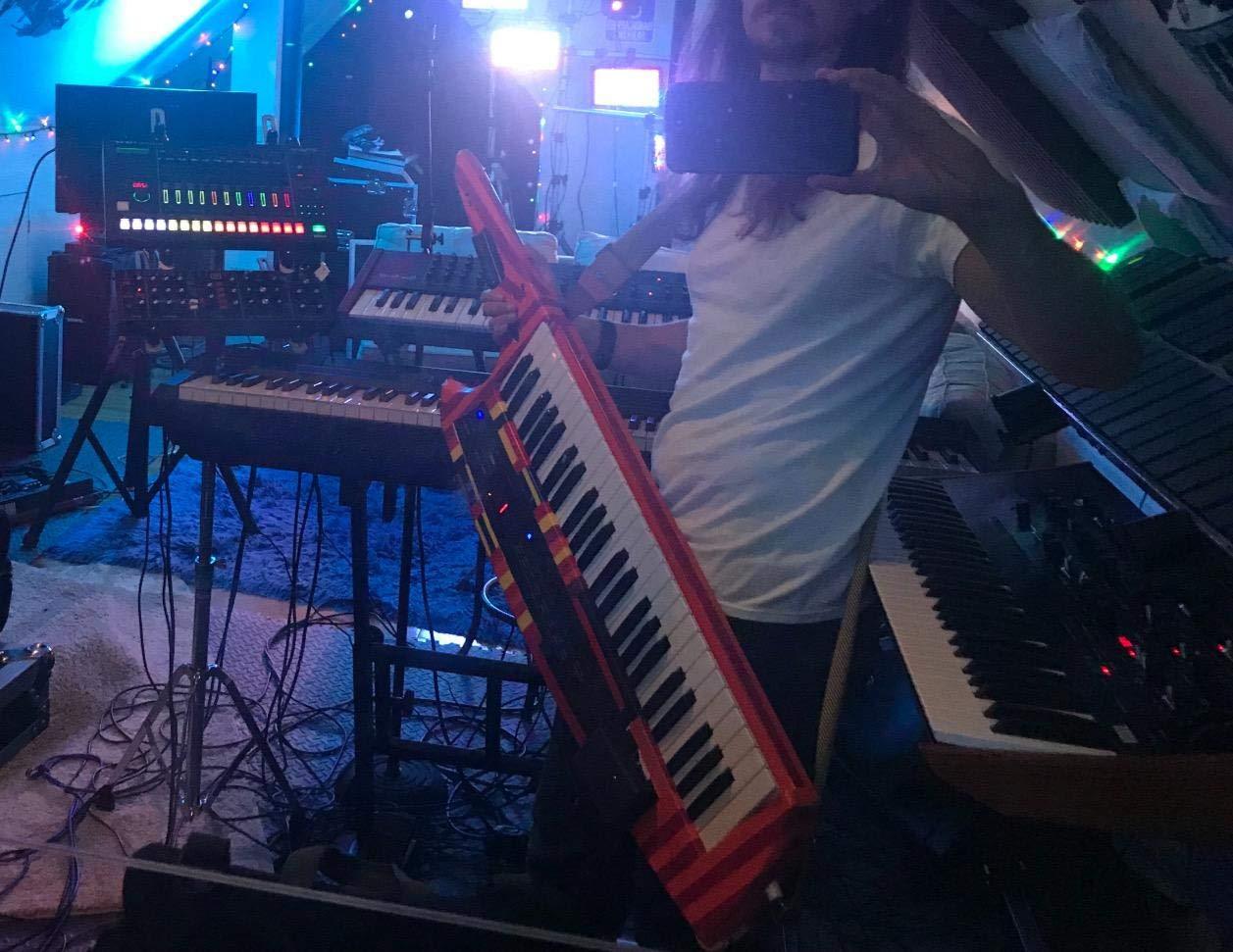
The Behringer MODEL D is the synth I kept coming back to during testing. This authentic reproduction of the original D-type circuitry delivers the warm, rich, and complex tones that made analog synthesizers legendary in the first place. The triple VCO design allows for insanely fat sounds, and the matched transistors and JFETs ensure that the reproduction is faithful to the original designs.
I was particularly impressed by the ultra-high precision 0.1 percent thin film resistors and polyphenylene sulphide capacitors. These are not marketing buzzwords. They directly affect the stability and tonal quality of the oscillators and filter. The pure analog signal path means the sound never goes through digital conversion, preserving all the harmonic complexity that makes analog synths so desirable.
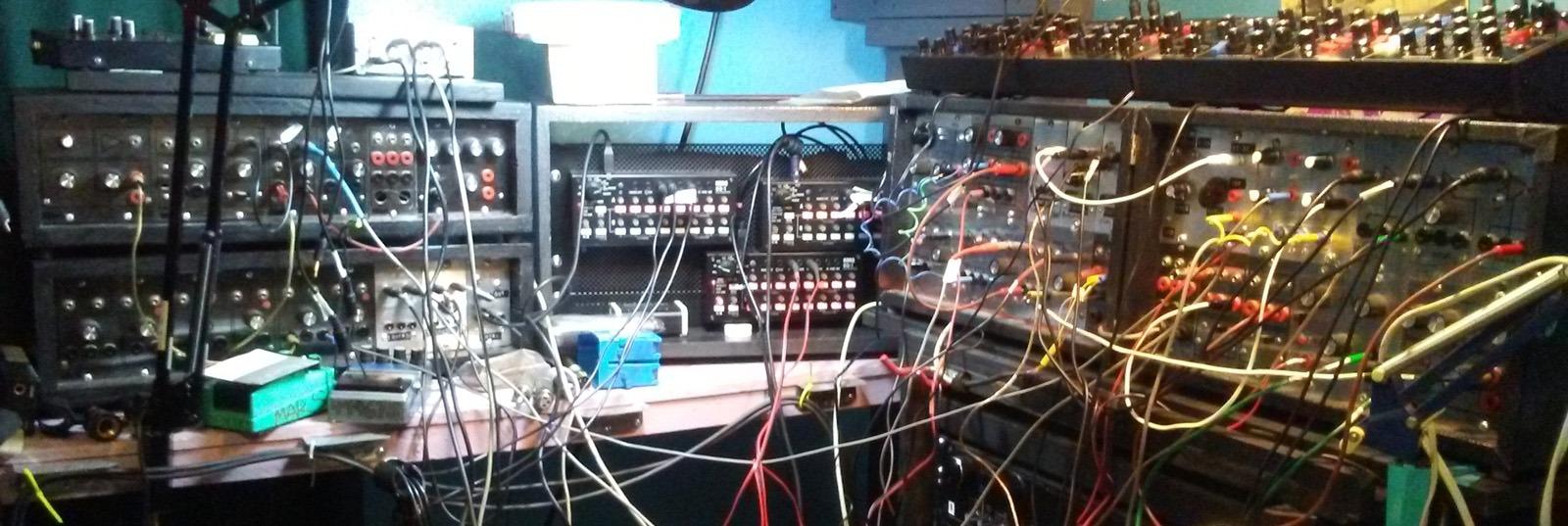
The five variable oscillator shapes with variable pulse widths give you an enormous tonal palette from just three oscillators. I spent hours exploring sawtooth, square, and pulse wave combinations, detuning the VCOs against each other for thick, evolving bass and lead sounds. The ladder filter is smooth and musical, with a resonance character that self-oscillates into pure sine tones when pushed.
The Eurorack format means this synth fits into a modular ecosystem, but it works perfectly as a standalone desktop module too. The metal body feels premium and built to last. The main limitations are the lack of built-in effects and the monophonic architecture, but at this price point, getting authentic triple-VCO analog synthesis is remarkable value.
Who Will Love the MODEL D
Synth enthusiasts who have always wanted the classic D-type sound but could not justify the original price tag will find this irresistible. The triple VCO architecture is perfect for fat bass, screaming leads, and complex drones. Eurorack modular owners can integrate this directly into their existing systems.
Studio producers who want authentic analog character for recording will appreciate the build quality and signal path purity. Every note carries the harmonic richness that digital emulations approximate but never fully capture.
What to Watch Out For
The absence of built-in effects means you need external reverb, delay, or modulation processing to get the full range of sounds. Budget for a effects pedal or plugin if you do not already have them. The monophonic design also means no chords or pads from this unit alone.
Players who need preset memory will be disappointed. The MODEL D is a knob-per-function instrument with no patch recall, so every sound is created fresh each time you power on.
7. Arturia MicroFreak – 25-Key Hybrid Synth with 17 Oscillator Modes
Arturia – MicroFreak Synthesizer Keyboard – 25-Key Hybrid Synth with PCB Keyboard, Wavetable & Digital Oscillators, Analog Filters
17 Paraphonic Oscillator Modes
Oberheim SEM Analog Filter
5x7 Modulation Matrix
PCB Touch-Plate Keyboard with Poly AT
CV Outputs for Modular Integration
Pros
- 17 diverse oscillator modes
- Innovative touch-plate keyboard with poly aftertouch
- Extensive modulation routing via 5x7 matrix
- CV and Gate compatibility for modular systems
- Multiple oscillator types including vocoder mode
Cons
- Flat PCB keyboard may not suit all players
- Only 25 keys
- No moving parts in keyboard
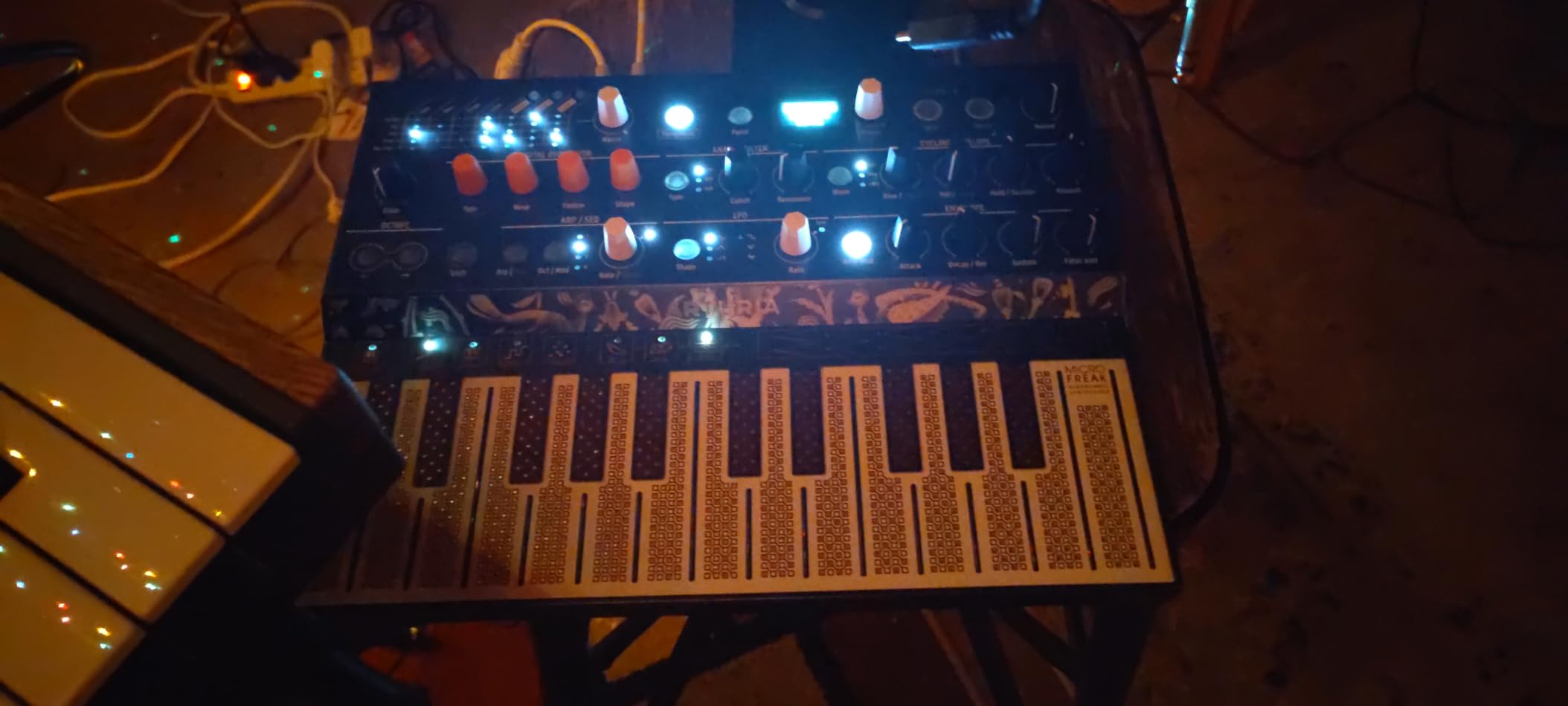
The Arturia MicroFreak is the synth I recommended most often during testing. With 868 reviews averaging 4.6 stars, it has clearly resonated with the synth community. The 17 paraphonic oscillator modes give you an absurd range of sound sources, from classic analog-style waves to wavetable, granular, and vocoder modes. Feeding all of that through the state-variable 12dB Oberheim SEM filter creates tones I simply could not get from any other synth in this roundup.
The PCB flat keyboard with poly aftertouch detection is the most controversial feature. I was skeptical at first, but after a week of playing, I grew to appreciate the sensitivity and expressiveness. The touch plates respond to pressure and position, giving you performance dimensions that traditional keys cannot match. The polyphonic aftertouch means each note can be modulated independently as you press harder.
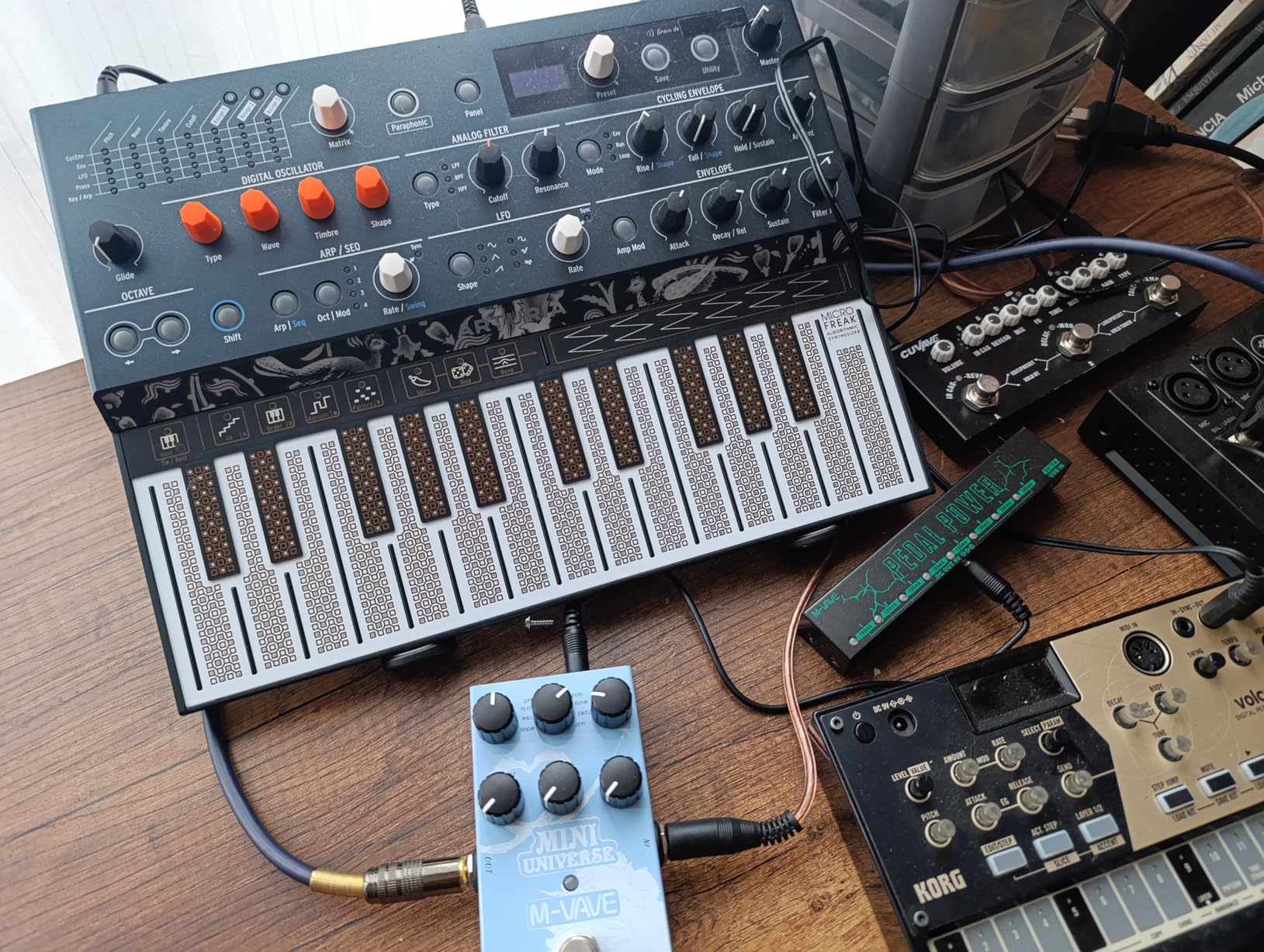
The 5×7 modulation matrix is where the MicroFreak becomes a sound design powerhouse. You can route 5 sources to 7 destinations simultaneously, creating complex, evolving patches that change over time. The Spice and Dice sequencer functions add randomized variation to sequences, keeping them from sounding repetitive. CV outputs for pitch, gate, and pressure make this a capable controller for Eurorack modular systems.
I used the MicroFreak as both a standalone instrument and a controller for my modular rig, and it excelled in both roles. The digital oscillators combined with the resonant analog filter give you the best of both worlds. The hybrid architecture means you get analog warmth where it matters most (the filter) and digital flexibility where analog falls short (the oscillators).
Why the MicroFreak Is So Popular
The sheer variety of sounds from 17 oscillator modes means this synth can cover bass, leads, pads, textures, and percussion duties. For producers who want one synth that can do almost everything, the MicroFreak is one of the best analog synthesizers available. The modulation matrix and aftertouch make it deeply expressive.
The price-to-feature ratio is outstanding. Getting this many oscillator modes, an analog filter, a modulation matrix, and CV outputs for under $400 is remarkable value that competitors struggle to match.
Who Might Not Like It
The PCB keyboard is genuinely polarizing. If you are a pianist who relies on the tactile feedback of traditional keys, this keyboard will frustrate you. There are no moving parts, so you cannot feel key travel. Consider using an external MIDI controller if the keyboard bothers you.
The 25-key range is limiting for two-handed playing. You will need to transpose frequently or use an external controller for full-range performances.
8. MOOG Labyrinth – Semi-Modular Parallel Generative Analog Synthesizer
MOOG Labyrinth – Semi-Modular Parallel Generative Analog Synthesizer with Dual Sequencer, Dual Oscillators, VC Wavefolder, VC Filter, Patch Bay
Semi-Modular Parallel Design
Dual Low-Harmonic Oscillators
VC Wavefolder
State Variable VC Filter
Dual 8-Step Generative Sequencers
32 Patch Points
Pros
- Dual generative sequencers for evolving patterns
- VC Wavefolder for unique metallic textures
- Extensive patch bay with 32 jacks
- Parallel signal processing architecture
- Rich and complex analog sound character
Cons
- Limited review count of 30 reviews
- Semi-modular design may require patching knowledge
The MOOG Labyrinth is the most creatively inspiring synth I tested. This semi-modular parallel generative analog synthesizer does things no other instrument on this list can do. The dual generative 8-step sequencers create evolving patterns that surprise you with unexpected variations, making it feel like a collaborator rather than just a sound source.
The two unique low-harmonic oscillators produce tones that range from pure and musical to metallic and clangorous. Combined with the voltage-controlled wavefolder, you get textures that sound like FM synthesis and Ring modulation had a child. I spent hours just letting the sequencers run while tweaking the wavefolder amount, discovering sounds I had never heard before.
The state variable resonant voltage-controlled filter offers low-pass, band-pass, and high-pass modes, all with the musicality MOOG is known for. The ring modulation and variable tone noise generator add further sound design possibilities. The 32-point patch bay with 20 inputs and 12 outputs gives you extensive routing options for modular integration without requiring a single patch cable to get started.
The parallel signal processing architecture is what sets the Labyrinth apart. Instead of a simple linear signal chain, the Labyrinth processes two signal paths simultaneously and blends them under voltage control. This creates richer, more complex textures than traditional serial routing. The generative sequencer approach means patterns evolve organically rather than looping identically.
For Experimental and Ambient Producers
If you produce ambient, experimental, or generative music, the Labyrinth is purpose-built for your creative process. The dual sequencers can generate hours of evolving patterns without repetition. The wavefolder and ring modulation provide metallic, inharmonic textures perfect for sound design and film scoring.
Modular synth enthusiasts will appreciate the 32 patch points and the ability to integrate the Labyrinth into a larger Eurorack system. The semi-modular design means it works standalone but rewards deeper exploration.
Things to Know Before Buying
The semi-modular architecture has a learning curve. While no patching is required to make sound, understanding signal flow and routing will dramatically expand what you can do. Beginners to modular synthesis should be prepared to invest time in learning.
With only 30 reviews so far, the Labyrinth is a newer product. The 4.5-star average and 79 percent 5-star ratings are encouraging, but there is less long-term reliability data compared to more established models.
9. Novation Bass Station II – Analog Monosynth with Dual Filters
Novation Bass Station II Analog Monosynth – includes 64 factory patches, pattern-based step sequencer and arpeggiator, two oscillators plus an additional sub oscillator
Two Analog Oscillators Plus Sub-Osc
Classic Multi-Mode Filter and 24dB Acid Filter
Pattern-Based Step Sequencer
128 Patch Locations
MIDI and USB Connectivity
Pros
- Classic multi-mode filter plus dedicated 24dB Acid Filter
- Two oscillators plus sub-oscillator for deep bass
- Pattern-based sequencer and arpeggiator
- 128 patch locations for storing sounds
- MIDI and USB connectivity
Cons
- Only 2 oscillators as a monosynth
- No built-in reverb or delay
- Plastic build material
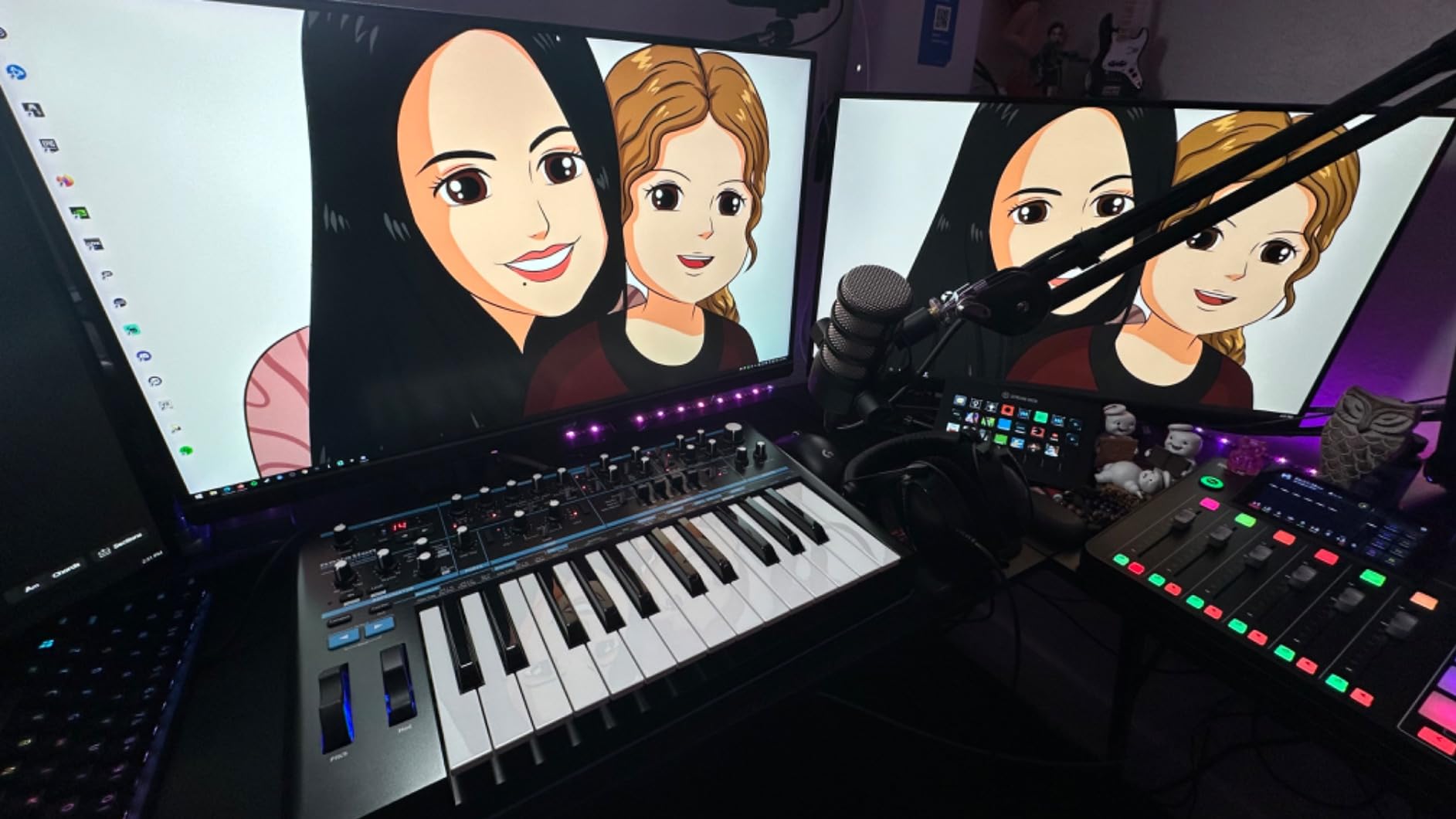
The Novation Bass Station II has been a studio staple for years, and testing it reminded me why it has endured. With 232 reviews at 4.5 stars, this analog monosynth delivers exactly what its name promises: powerful, punchy bass tones with enough versatility for leads and effects. The two tuneable analog oscillators with four waveforms provide plenty of raw material for sound design.
The standout feature is the dual filter architecture. You get a classic multi-mode filter with low-pass, high-pass, and band-pass modes, plus a dedicated 24dB Acid Filter for that squelchy, resonant sound. Switching between the two filters completely transforms the character of any patch. I found myself using the Acid Filter for basslines and the classic filter for lead and texture work.
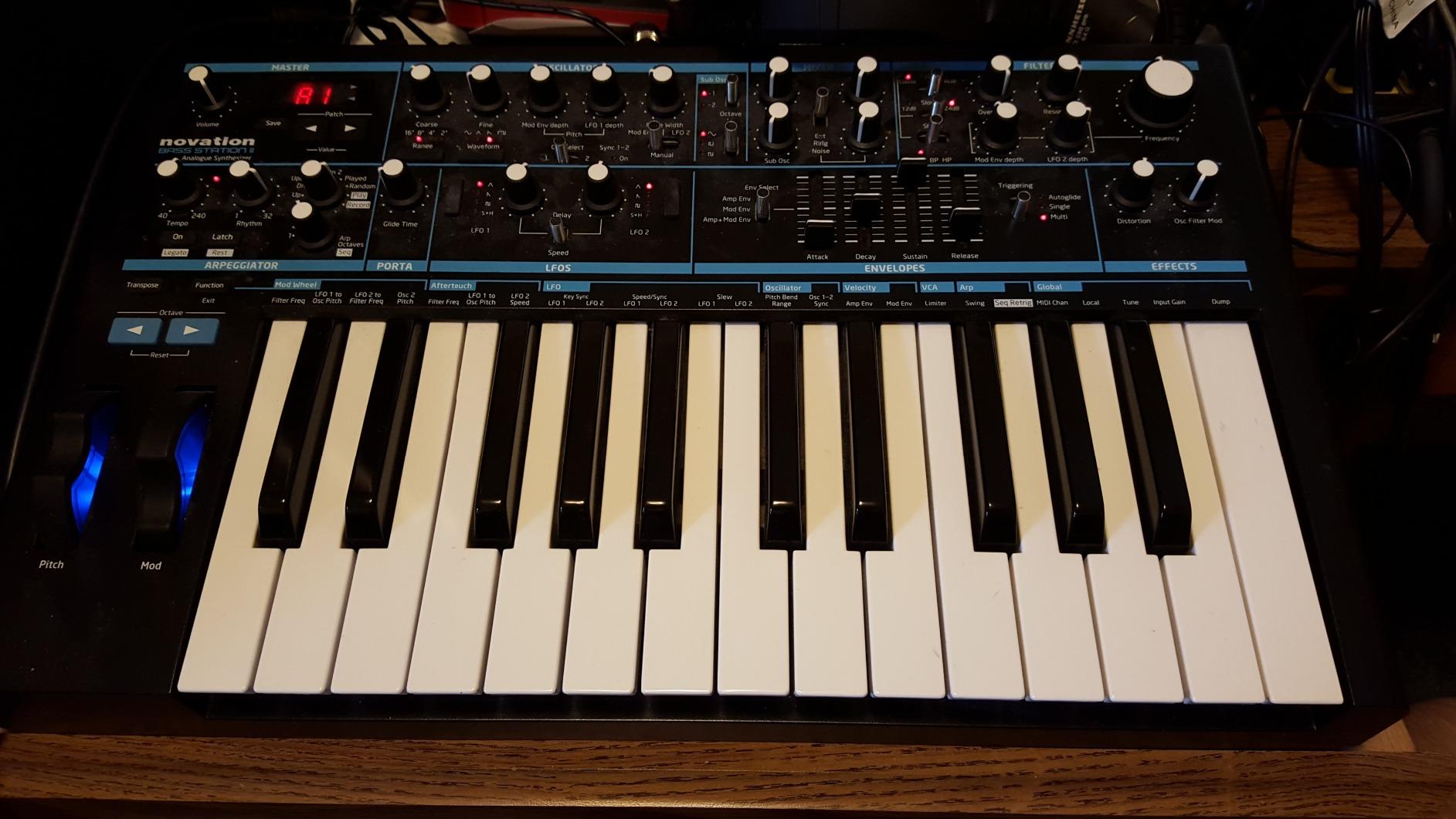
The sub-oscillator adds serious low-end weight that you can feel in your chest on proper monitors. Combined with the noise generator and ring modulation, the sound sources cover a wide tonal range. The pattern-based arpeggiator and step sequencer are intuitive and capable, and the 128 patch locations mean you can save your favorite sounds for instant recall.
The 12 and 24dB per octave filter slopes give you control over how aggressively the filter attenuates frequencies. The MIDI I/O on 5-pin DIN ports plus USB connectivity makes integration into any studio or live setup straightforward. The main drawbacks are the plastic build material and the lack of built-in effects like reverb or delay.
Best Applications for the Bass Station II
This synth was designed for bass, and it shows. Electronic music producers making house, techno, drum and bass, or any genre that demands powerful analog bass will find the Bass Station II delivers. The Acid Filter alone makes it worth the investment for producers who want that classic squelch.
The 128 patch locations make this a practical studio tool. You can build a library of custom sounds and recall them instantly during sessions, which is something the MODEL D and TD-3 cannot do.
Limitations and Considerations
The plastic body does not feel as premium as the metal-and-wood construction of the MOOG instruments. This is a functional tradeoff that keeps the price accessible. The monophonic architecture means no chords or pads.
The absence of built-in reverb or delay means you need external effects to add space and atmosphere. Consider this part of your total budget if you do not already have effects processors or plugins.
10. Korg minilogue – 4-Voice Polyphonic Analog Synthesizer with OLED Oscilloscope
Korg minilogue 37-key Polyphonic Analog Synthesizer w/ 16-step Sequencer, 4 Voices and OLED Oscilloscope (MINILOGUE)
4-Voice Polyphonic Analog Synth
200 Preset Sounds
16-Step Polyphonic Sequencer
OLED Oscilloscope Display
Tape-Style Delay Effect
Pros
- True 4-voice polyphonic analog synthesis
- 200 diverse preset sounds
- Built-in oscilloscope for waveform visualization
- Tape-style delay effect
- All parameters controllable via dedicated knobs
Cons
- Analog oscillators may require retuning
- 3-octave keyboard range limited
- No sustain pedal support
The Korg minilogue is the synth I recommend to almost everyone asking about their first analog purchase. With 147 reviews averaging 4.7 stars and 86 percent 5-star ratings, it has earned its reputation as the best value polyphonic analog synthesizer on the market. True 4-voice polyphony means you can play chords and pads without note-stealing, something most synths in this price range cannot do.
The 200 preset sounds cover a remarkably wide range, from deep bass to lush pads to aggressive leads. I was skeptical of the OLED oscilloscope display at first, but it quickly became one of my favorite features. Seeing the waveform change in real time as you tweak parameters is both visually satisfying and genuinely educational for understanding synthesis.
The two oscillators per voice offer sawtooth, triangle, and square waveforms, plus a white noise generator. The low-pass filter with envelope modulation shapes the tone with the warmth and character that only true analog circuitry can provide. The 16-step polyphonic sequencer lets you record chord progressions and melodic lines with the timing precision of a digital sequencer but the sound of analog oscillators.
The onboard tape-style delay effect adds space and movement without needing external processing. Every parameter has a dedicated knob, so there is zero menu diving. The metal body feels solid and professional, and the 37 slim keys have a natural playing feel that accommodates fast performances. This is a synth you can grow with for years.
Why the Minilogue Is the Best Value
Four-voice polyphony at this price point is nearly unheard of from a major manufacturer. You get chords, pads, bass, and leads from a single instrument, all with genuine analog tone. The oscilloscope, sequencer, delay, and 200 presets make this a complete production tool rather than just a sound module.
The knob-per-function interface makes this the best analog synthesizer for learning subtractive synthesis. Every concept (VCO, VCF, VCA, LFO, envelope) has a physical control you can grab and twist, making the learning process tactile and immediate.
What Holds It Back
The analog oscillators can drift out of tune with temperature changes, requiring occasional manual retuning. This is a characteristic of true analog circuitry rather than a defect, but it is worth knowing if you expect rock-solid tuning stability.
The 3-octave keyboard range limits two-handed playing, and the lack of sustain pedal support will bother pianists. The 37 slim keys also feel different from full-size piano keys, though most synth players adapt quickly.
11. MOOG Messenger – Next-Gen Monophonic Analog Synthesizer with RES BASS
MOOG Messenger – Next-Gen Monophonic Analog Keyboard Synthesizer with 32 Keys, 64-Step Sequencer, 256 Presets and RES BASS Compensation
Dual Variable-Shape VCOs with Sync and FM
Sub-Oscillator
Next-Gen Ladder Filter with RES BASS
64-Step Sequencer
256 Presets
32 Velocity and Aftertouch Keys
Pros
- Classic MOOG analog sound with modern enhancements
- Two VCOs with sync and FM capabilities
- RES BASS switch for full-bodied low end
- 64-step sequencer with probability-based generative behavior
- 32 semi-weighted full-size keys with velocity and aftertouch
- Comprehensive connectivity with CV patch points MIDI and USB-C
Cons
- Premium price point
The MOOG Messenger earned our Editor’s Choice award because it does everything I want a modern analog monosynth to do. With 51 reviews averaging 4.8 stars and 90 percent 5-star ratings, the response from the synth community has been overwhelmingly positive. The two continuously variable-shape VCOs with sync and frequency modulation provide a tonal palette that goes far beyond traditional analog monosynths.
The Next-Gen Ladder Filter with RES BASS Compensation is the defining feature. Traditional ladder filters lose low-end body when resonance is increased, but the RES BASS switch ensures full-bodied sound across the entire frequency spectrum. The filter offers 4-pole or 2-pole low-pass, band-pass, and high-pass responses, giving you filter characters from smooth and warm to aggressive and biting.
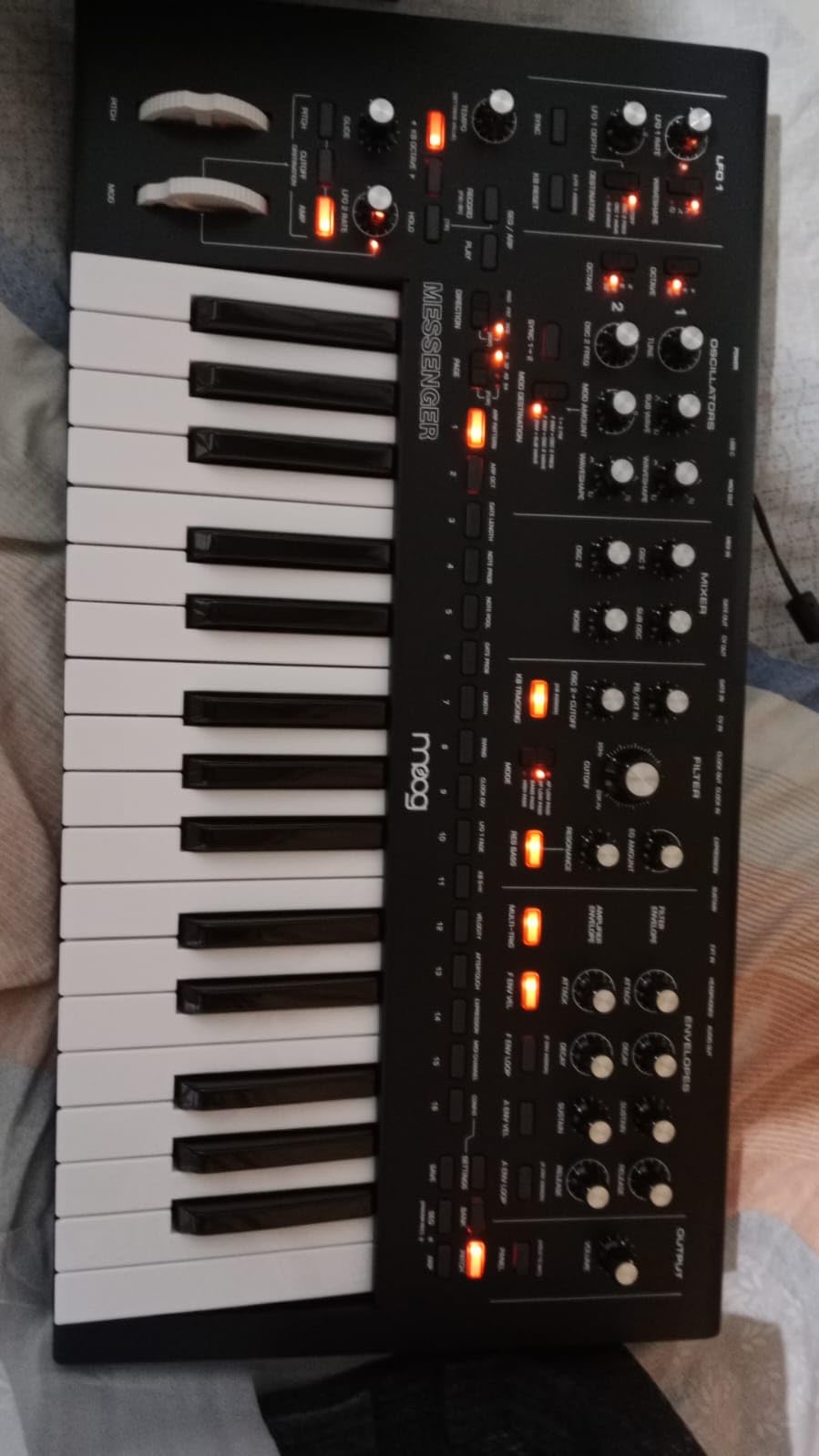
The 64-step sequencer with probability-based generative behavior is where the Messenger bridges classic analog sound with modern workflow. You can set probability values for individual steps, creating patterns that evolve and vary organically rather than looping identically. The two loopable ADSR envelopes with velocity responsiveness and multi-trigger capabilities add expressive dynamics to every note.
The 32 semi-weighted full-size keys with velocity and aftertouch are a joy to play. This is the best keyboard action of any synth in this roundup, and the aftertouch opens up expressive possibilities for live performance. With 256 presets, you can store an entire library of sounds and recall them instantly, which is rare for a MOOG analog instrument. The comprehensive connectivity includes 6 analog CV patch points, external audio input, expression and sustain pedal inputs, 5-pin DIN MIDI I/O, and MIDI over USB-C.
Who the Messenger Is Built For
Performing musicians who need a portable, expressive analog synth with preset recall will find the Messenger ideal. The full-size keys with aftertouch, 256 presets, and comprehensive sequencer make this a stage-ready instrument. The MOOG sound is instantly recognizable and sits perfectly in any mix.
Studio producers who want the legendary MOOG filter character with modern conveniences like probability sequencing and patch storage get the best of both worlds. The RES BASS compensation solves a problem that has plagued ladder filter designs for decades.
Is the Premium Price Justified
At $699, the Messenger is an investment. But you get dual VCOs with FM, a next-generation filter, a 64-step probability sequencer, 256 presets, full-size aftertouch keys, and comprehensive CV and MIDI connectivity. Feature-for-feature, this is one of the most complete analog monosynths available.
If budget is a primary concern, the Korg minilogue offers 4-voice polyphony for less. But if you want the MOOG sound with modern features, the Messenger is the definitive choice.
12. MOOG Grandmother – Semi-Modular Analog Synth with Spring Reverb
MOOG Grandmother Semi-Modular Analog Keyboard Synthesizer with 32 Keys, Built-In Arpeggiator, Sequencer and Spring Reverb Tank
Semi-Modular Analog Synth
2 Oscillators with Selectable Waveforms
Analog Spring Reverb Tank
41 Modular Patch Points
256 Note Sequencer
32 Velocity Keys
Pros
- Rich and warm analog sound signature
- Beautiful spring reverb with lush ambience
- Semi-modular design works standalone without patching
- Compatible with MOOG Modular and Eurorack systems
- Excellent build quality with wood panel and metal chassis
- 32 velocity-sensing full-size keys
Cons
- Limited pitch range on keyboard
- Some users report scratchy pots on older units
- Not Prime eligible
The MOOG Grandmother is the synth that made me fall in love with spring reverb all over again. This semi-modular analog keyboard synthesizer combines the classic MOOG sound with a hardware spring reverb tank that adds lush, expansive ambience to every sound. The 64 reviews averaging 4.6 stars confirm that this instrument resonates with serious synth enthusiasts.
The two oscillators with selectable waveforms provide the raw analog tones that MOOG is famous for. The white noise generator and external input jack expand the sound sources beyond internal oscillators. I ran my guitar through the external input and into the spring reverb, creating ambient textures that no plugin can replicate. The reverb tank can process any external sound, making the Grandmother a dual-purpose instrument and effects processor.
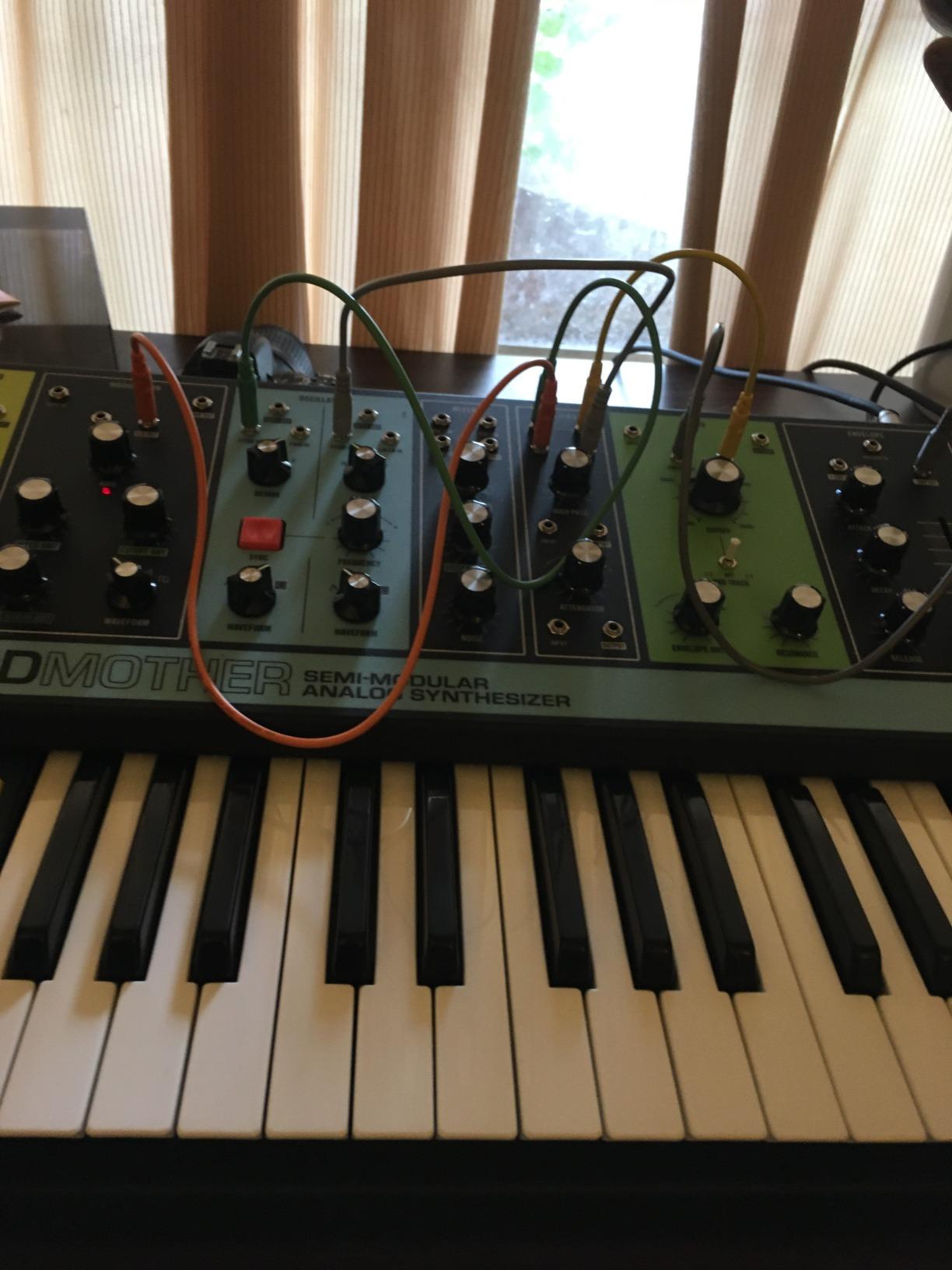
The 41 modular patch points open up a vast array of sonic possibilities through analog interconnectivity. The beauty of the Grandmother is that it requires zero patching to make music. Every patch point normalizes to a sensible default, so you can play it like a traditional synthesizer right out of the box. When you are ready to explore deeper, inserting patch cables reroutes signals for experimental sound design.
The 256-note sequencer with three sequence files lets you record and play back complex melodic patterns. The built-in arpeggiator adds rhythmic movement. The wood panel and metal chassis construction gives the Grandmother a premium feel that justifies its position as a flagship semi-modular instrument. Compatibility with classic MOOG Modular synthesizers and Eurorack systems means this synth grows with your modular ambitions.
Who the Grandmother Was Designed For
Synth enthusiasts who want the full MOOG semi-modular experience will find the Grandmother delivers. The spring reverb alone distinguishes it from every other synth on this list. It is perfect for ambient producers, sound designers, and anyone who values organic, evolving analog textures.
Modular system owners can use the Grandmother as the centerpiece of a larger setup. The 41 patch points provide extensive integration possibilities with Eurorack and MOOG Mother-32 or DFAM units.
Drawbacks and Caveats
The keyboard pitch range is limited compared to full-size synths, which may frustrate players who need wider octave access. Some users have reported scratchy potentiometers on older units, though this appears to be a quality control issue rather than a design flaw.
The Grandmother is not Prime eligible, so shipping may take longer than other options on this list. The premium price point reflects the build quality and features, but it is a significant investment for most buyers.
How to Choose the Best Analog Synthesizer?
Choosing the right analog synthesizer depends on your musical goals, budget, and experience level. After testing 12 synths across three months, I identified the key factors that should guide your decision. Here is what matters most when shopping for the best analog synthesizers.
Polyphony: Monophonic vs Polyphonic
Monophonic synths play one note at a time. They are ideal for bass, leads, and sequences. The Behringer TD-3, MODEL D, MOOG Messenger, and Novation Bass Station II are all monophonic instruments. These synths excel at focused, powerful single-line sounds.
Polyphonic synths can play multiple notes simultaneously, enabling chords and pads. The Korg minilogue offers 4-voice polyphony, and the Behringer Pro VS Mini delivers 5 voices. If you need chords, you need polyphony. Semi-paraphonic options like the Arturia MicroFreak offer a middle ground where each note has its own oscillator but shares a single filter.
Sound Engine: Oscillators and Filters
The oscillator is the sound source. VCO (voltage-controlled oscillator) designs produce the classic warm tones associated with analog synthesis. The number and type of oscillators directly affect how rich and complex your sounds can be. The Behringer MODEL D with its triple VCO design creates thicker, fatter tones than single-oscillator synths.
The filter is where the character really lives. The MOOG ladder filter sounds different from the Oberheim SEM filter on the Arturia MicroFreak or the 4-pole resonant filter on the Behringer TD-3. Filter type affects everything from bass presence to high-end clarity. Listen to demos before buying, because filter character is subjective and personal.
Form Factor and Portability
Desktop modules like the Behringer MODEL D, TD-3, and Donner B1 are compact and often more affordable. They require an external keyboard or sequencer to play but take up minimal space. The Stylophone GEN X-2 takes portability further with battery operation and a built-in speaker.
Keyboard synths like the Korg minilogue, MOOG Messenger, and MOOG Grandmother are self-contained performance instruments. They are larger and heavier but offer immediate playability without additional gear. Consider where you will use the synth most: studio desk, live stage, or mobile setup.
Connectivity: MIDI, CV/Gate, and USB
MIDI connectivity via 5-pin DIN ports is essential for integrating with traditional hardware setups. USB connectivity allows direct connection to a computer for DAW sequencing. The MOOG Messenger and Arturia MicroFreak offer both, giving you maximum flexibility.
CV and Gate outputs are critical if you plan to integrate with a Eurorack modular system. The Stylophone GEN X-2, MOOG Labyrinth, MOOG Grandmother, and Arturia MicroFreak all provide CV/Gate connectivity. Without these connections, you cannot easily control or be controlled by modular gear.
Sequencer and Arpeggiator Features
A built-in step sequencer transforms a synth into a self-contained composition tool. The Behringer TD-3 has a 16-step sequencer, the MOOG Messenger offers a 64-step sequencer with probability, and the MOOG Labyrinth features dual 8-step generative sequencers. If you produce electronic music without a DAW, a capable sequencer is essential.
Arpeggiators create rhythmic patterns from held chords. Most synths on this list include arpeggiators, but the Donner B1 stands out with 8 different arpeggiation modes. Consider how important hands-free pattern generation is to your workflow.
Build Quality and Budget Tiers
Under $150, expect plastic bodies and compact designs. The Donner B1, Stylophone GEN X-2, and Behringer TD-3 deliver authentic analog sound at entry-level prices. Build quality is functional rather than premium, but the sound is real analog.
Between $250 and $500, metal chassis and better components appear. The Behringer MODEL D has a metal body, and the Arturia MicroFreak offers extensive features. This is the sweet spot for serious producers who need professional features without flagship pricing.
Above $500, you enter premium territory with MOOG instruments, full-size keys, wood panels, and advanced features. The MOOG Messenger, Grandmother, and Labyrinth represent the pinnacle of modern analog synthesis with features that justify their price for dedicated musicians.
FAQs
What are the most iconic analog synthesizers?
The most iconic analog synthesizers include the original Moog Minimoog (now reproduced as the Behringer MODEL D), the Roland TB-303 (reproduced as the Behringer TD-3), and the Sequential Prophet-5. These instruments defined the sound of analog synthesis and their filter designs, oscillator characters, and signal paths remain the benchmark for modern analog synths. In our testing, the MOOG Grandmother and MOOG Messenger carry forward the Minimoog legacy with modern enhancements.
What is the best analog synth for beginners?
The best analog synth for beginners is the Korg minilogue because it offers true 4-voice polyphony, 200 preset sounds, a knob-per-function interface that teaches subtractive synthesis, and a built-in oscilloscope that visualizes waveforms in real time. For absolute budget beginners, the Donner Essential B1 at around $100 provides a fully analog signal path with a step sequencer for learning bassline programming.
How much should I spend on a synthesizer?
You can get a quality analog synthesizer for between $100 and $700. Entry-level options like the Donner Essential B1 and Stylophone GEN X-2 cost under $120 and deliver genuine analog sound. Mid-range options like the Behringer MODEL D at $249 and Arturia MicroFreak at $349 offer professional features. Premium instruments like the MOOG Messenger at $699 and MOOG Grandmother at $999 provide flagship sound and build quality.
What is the best synth to start with?
The best synth to start with depends on your goals. For learning synthesis fundamentals, the Korg minilogue is ideal because its knob-per-function layout makes every parameter visible and adjustable. For bassline and electronic music production, the Behringer TD-3 offers an authentic analog sequencer workflow. For maximum portability and experimentation, the Stylophone GEN X-2 provides battery operation and CV connectivity at the lowest price point.
Are analog synthesizers worth it?
Yes, analog synthesizers are worth it if you value warm harmonically rich tones that digital emulations approximate but do not fully replicate. Analog voltage-controlled oscillators and filters produce subtle variations and character that make each note feel alive in a mix. The best analog synthesizers also hold their resale value well, and instruments from MOOG, Korg, and other established brands are built to last decades.
Final Thoughts on the Best Analog Synthesizers
After three months of testing 12 hardware synths, the MOOG Messenger stands out as our Editor’s Choice for its combination of classic analog tone, RES BASS filter innovation, 64-step probability sequencer, and 256 presets in a performance-ready package. The Korg minilogue earns Best Value for delivering true 4-voice polyphony at a price that makes analog synthesis accessible to serious producers. For budget-conscious buyers, the Donner Essential B1 proves that authentic analog bass is available for around $100.
The best analog synthesizers in 2026 offer something for every musician and budget. Whether you need a portable bass machine, a polyphonic chord powerhouse, or a semi-modular sound design lab, the instruments on this list deliver genuine analog warmth that will inspire your music for years. Pick the one that matches your creative goals and start making sounds that digital plugins simply cannot reproduce.