Finding the best grooveboxes for your music production setup can completely change how you make music. I have spent months testing standalone hardware sequencers, samplers, and synthesizer workstations to bring you this hands-on guide. Whether you want a portable beat maker for your commute or a professional music production workstation for your studio, this list covers every budget and skill level.
A groovebox is a self-contained music production device that combines a drum machine, synthesizer, sampler, and sequencer in one unit. You get tactile pads, knobs, and step sequencers that let you build complete tracks without ever opening a laptop. The beauty of these machines is how fast you can go from zero to a full groove. No menus to fight through, no plugins to load, no audio interface to configure. Just turn it on and start making sounds.
Our team compared 12 of the most talked-about grooveboxes on the market for 2026. We looked at sound engines, sequencing depth, portability, build quality, and real-world workflow. We read through hundreds of Amazon reviews, Reddit threads from communities like r/synthesizers and r/Grooveboxes, and forum discussions on Elektronauts and Gearspace. The goal was simple: find which grooveboxes actually deliver on their promises and which ones fall short.
Prices in this guide range from around $250 to over $1,600. That spread means there is genuinely something for everyone, whether you are a bedroom producer just starting out or a performing musician who needs a reliable centerpiece for live sets. Let us break down the top picks and then get into the detailed reviews.
Table of Contents
Top 3 Picks for Best Grooveboxes in 2026
The Elektron Model:Cycles earns our Editor’s Choice spot because it packs genuine FM synthesis, a world-class 64-step sequencer, and 300 preset sounds into a device that feels equally at home in the studio and on stage. It scored the highest average rating among our top picks at 4.7 stars across 126 reviews.
For value, the Roland AIRA Compact T-8 is nearly impossible to beat. It delivers authentic TR-808, TR-909, and TB-303 sounds in a battery-powered unit that fits in your hand. At under $250, it is one of the most accessible entry points into hardware beat making available right now.
The Novation Circuit Tracks takes the Top Rated badge with 527 reviews and a 4.7-star average. It strikes a balance between synthesis, drum programming, and external MIDI control that makes it the most versatile all-rounder on this list.
12 Best Grooveboxes in 2026
| Product | Specifications | Action |
|---|---|---|
 Roland AIRA Compact T-8 Roland AIRA Compact T-8 |
|
Check Latest Price |
 Sonicware Liven Lofi-12 Sonicware Liven Lofi-12 |
|
Check Latest Price |
 Yamaha SEQTRAK Yamaha SEQTRAK |
|
Check Latest Price |
 Teenage Engineering EP-133 K.O. II Teenage Engineering EP-133 K.O. II |
|
Check Latest Price |
 Elektron Model:Cycles Elektron Model:Cycles |
|
Check Latest Price |
 Elektron Model:Samples Elektron Model:Samples |
|
Check Latest Price |
 Novation Circuit Rhythm Novation Circuit Rhythm |
|
Check Latest Price |
 Novation Circuit Tracks Novation Circuit Tracks |
|
Check Latest Price |
 Ableton Move Ableton Move |
|
Check Latest Price |
 Roland MC-101 Roland MC-101 |
|
Check Latest Price |
 Roland MC-707 Roland MC-707 |
|
Check Latest Price |
 Akai MPC Live III Akai MPC Live III |
|
Check Latest Price |
1. Roland AIRA Compact T-8 Beat Machine
Roland AIRA Compact T-8 Beat Machine
Battery Powered
6 Rhythm Tracks
TR-REC Sequencer
1.3 lbs
Pros
- Genuine Roland TR-808 TR-909 TR-606 drum sounds
- TB-303 bass synth built in
- Ultra-portable at just 1.3 pounds
- Built-in delay reverb overdrive and sidechain
- USB-C rechargeable with class-compliant audio interface
Cons
- Limited drum kit variety compared to full units
- Small buttons can feel cramped for fast programming
- No full X0X kit included
I picked up the Roland T-8 expecting a toy and walked away genuinely impressed. This little box packs the same Analog Circuit Behavior engine that powers Roland’s full-size instruments. When you trigger the 808 kick, it has that chest-thumping punch. The 909 snare cuts through a mix without needing layers of processing.
The 16-step sequencer is deceptively deep. You get probability, sub steps, last step, and velocity control all packed into a surface the size of a paperback book. I built a full techno loop in about ten minutes on my first session, something that would have taken me longer on a more complex unit.
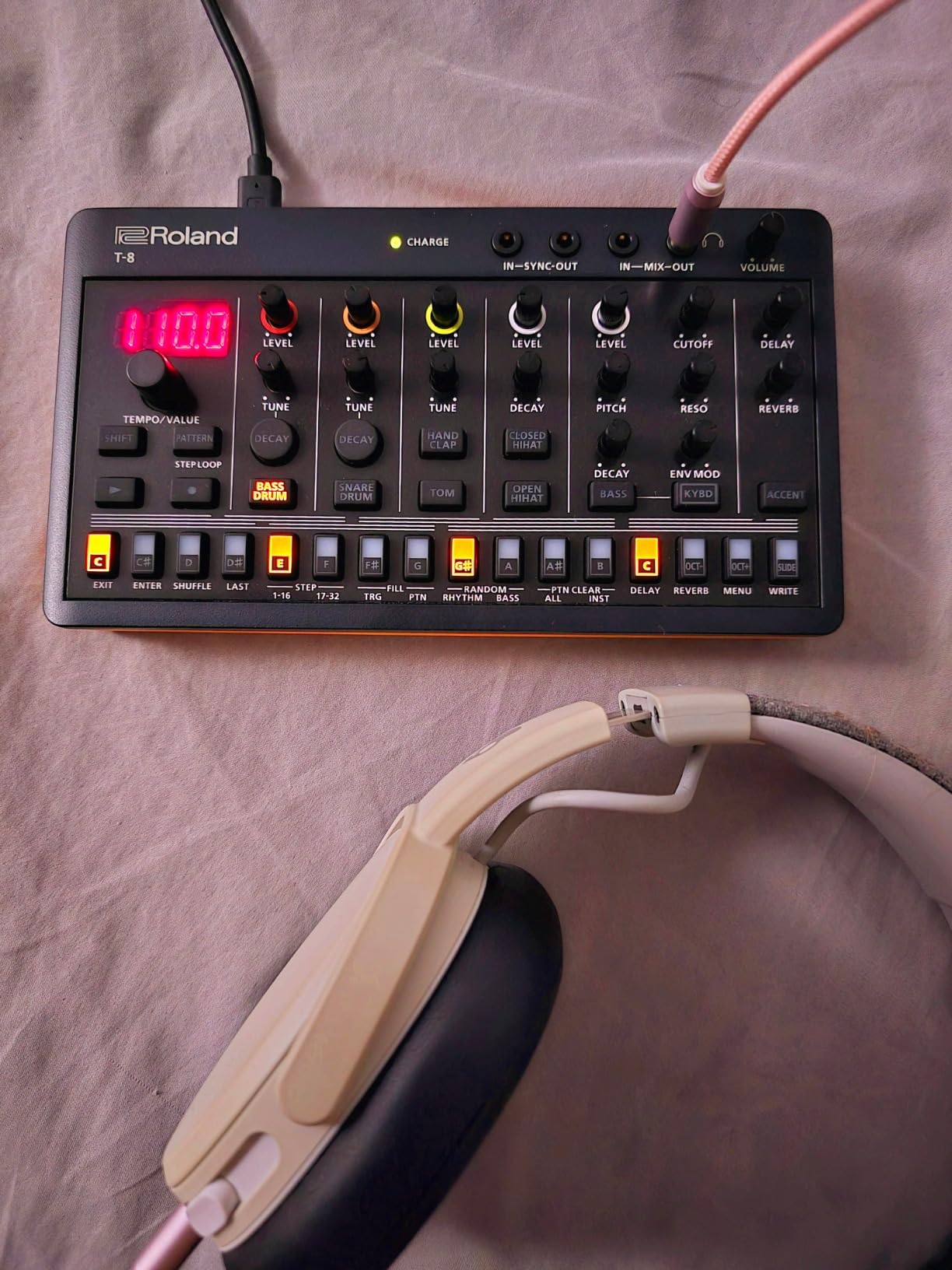
Battery life is solid. I got roughly five hours of continuous use on a single USB-C charge, which makes this genuinely useful for travel and outdoor sessions. The built-in effects chain with delay, reverb, overdrive, and sidechain compression adds surprising depth to what could have been a bare-bones machine.
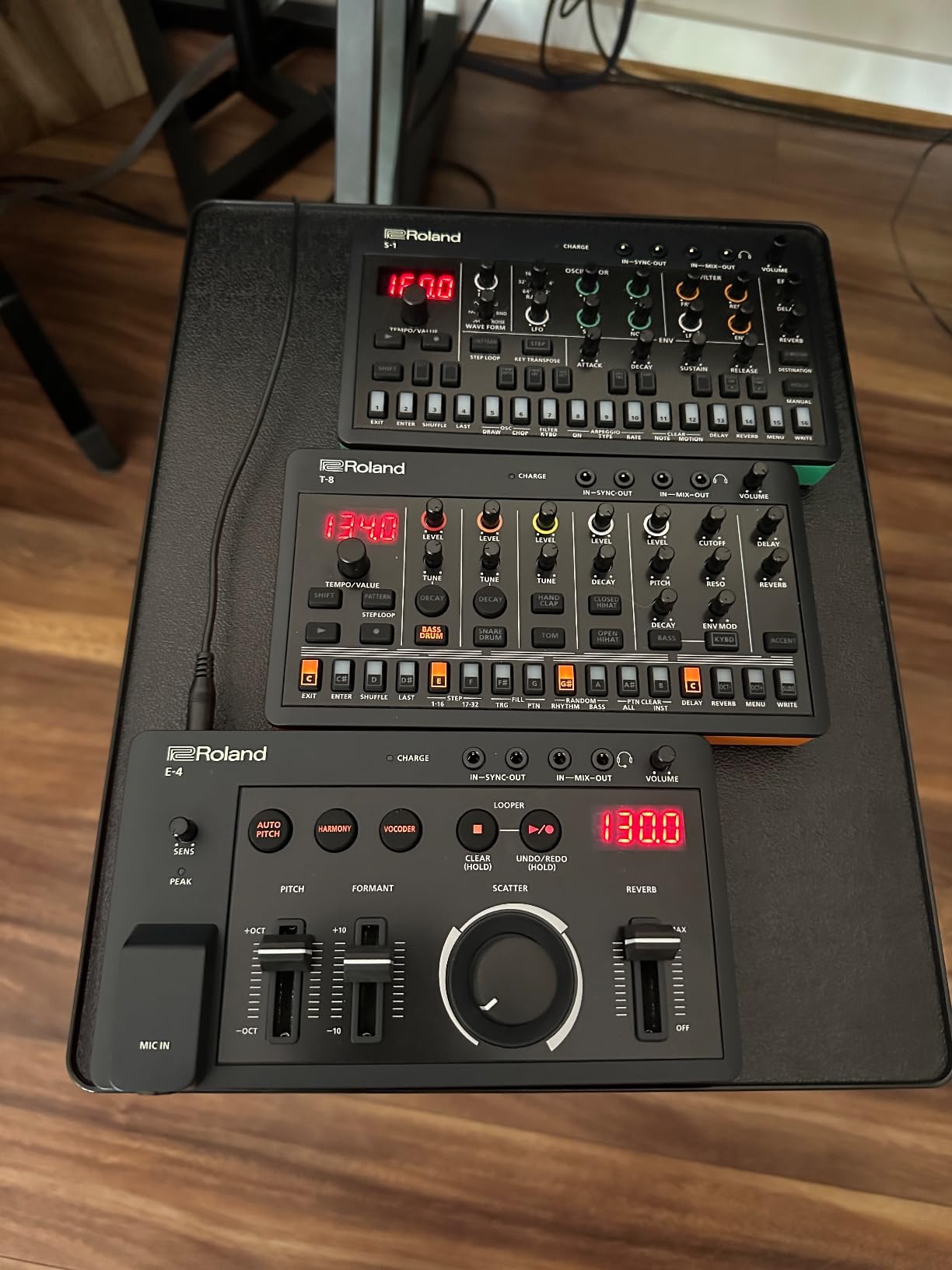
The weakness is clear once you start pushing the limits. The drum kit selection is thin compared to something like the Roland MC-101 or MC-707. If you want to load custom samples, you are out of luck. The buttons are also quite small, which becomes an issue when you are trying to program fast hi-hat patterns live.
Who Should Buy the Roland T-8
This is the best groovebox for anyone who wants authentic Roland drum sounds without spending $500 or more. Beginners will love how fast they can start making beats. Experienced producers will appreciate having a portable sketchpad with genuine 808 and 909 tones for capturing ideas on the go.
Connectivity and Integration
The T-8 connects via USB-C as a class-compliant audio and MIDI interface, meaning no drivers to install. It also has AIRA Link for syncing with other Roland AIRA gear. MIDI in and out let you sequence external synths or use the T-8 as a sound module triggered by your DAW.
2. Sonicware Liven Lofi-12 Lo-Fi Groovebox
Sonicware Liven Lofi-12 [Lo-fi Groovebox & Sampler] Retro sampling with 12bit Sampler mode, 4-track step sequencer, 10 voices, 12 Track Effects + 9 Master Effect, Battery-powered, Built-in speaker
12-Bit Sampling
4-Track Sequencer
Built-in Speaker
Battery Powered
Pros
- Authentic retro 12-bit sampling engine
- 11 track effects plus 9 master effects
- Battery powered with built-in speaker
- Laid-back knob for creating swing and drunk beats
- Ranked number 1 in Audio Sequencers category
Cons
- Only 69 reviews on Amazon
- Plastic build feels less premium than competitors
- 4-track limit may feel restrictive
The Sonicware Liven Lofi-12 fills a niche that almost no other groovebox on this list covers: genuine lo-fi character. The 12-bit sampling mode gives drums and melodies that crunchy, degraded texture that producers usually spend hours trying to recreate with plugins. Here, it is built into the hardware.
I spent an afternoon loading breakbeats and vocal chops into the Lofi-12 and was surprised by how musical the degradation sounds. This is not harsh digital clipping. It has warmth, like an old sampler from the early 1990s. The laid-back knob is a genuinely useful feature that pushes your beats slightly off-grid for a human, drunken feel.
The effects section is where this unit overdelivers. You get 11 effects per track and 9 master effects, which is more processing power than I expected at this price. Reverb, delay, compression, and bit-crushing are all available and sound surprisingly polished for a budget unit.
The 4-track limit is the main drawback. If you are used to 8 or 16 tracks on other grooveboxes, working within 4 forces you to commit to arrangements early. The plastic body and lightweight construction also feel less rugged than the Elektron or Roland units on this list.
Who Should Buy the Liven Lofi-12
This is the best groovebox for lo-fi hip hop producers, chill-hop beat makers, and anyone who wants that vintage sampler grit without spending $1,000 on vintage hardware. It is also great for ambient and experimental musicians who want texture and character over pristine sound quality.
Battery and Portability
The built-in speaker is a nice touch for quick jams without headphones. Battery power means you can make beats anywhere, though the speaker quality is basic. For serious listening or recording, you will want to connect to proper monitors or headphones via the auxiliary output.
3. Yamaha SEQTRAK Mobile Music Ideastation
Yamaha SEQTRAK Mobile Music Ideastation – All-in-One Music Production Studio with Two Sound Engines, Onboard Sampling, Integrated Speaker and Rechargeable Battery – Black
All-in-One Studio
2000+ Presets
Integrated Speaker
0.65 kg
Pros
- Over 2000 world-class presets included
- Two sound engines for diverse tones
- Integrated speaker and microphone for capturing ideas
- Rechargeable battery for truly mobile production
- Ultra-lightweight at just 0.65 kilograms
Cons
- Only 28 reviews so it is relatively untested
- Not Prime eligible with limited stock
- No velocity-sensitive pads
The Yamaha SEQTRAK is one of the newest entries in the portable groovebox space and it brings Yamaha’s deep sound design pedigree to a compact form factor. With over 2,000 presets built in, you can start making music immediately without loading any additional sample packs.
I was struck by how light this unit is. At just 0.65 kilograms, it is lighter than most laptops. The integrated speaker means you can sketch ideas without any external gear at all. The built-in microphone is perfect for capturing found sounds and field recordings on the spot.
The two sound engines give you access to both drum and synth tones with real depth. Yamaha has decades of experience designing sounds for their Motif and MODX workstations, and that quality shows in the SEQTRAK’s preset library. Everything from warm pads to punchy drums is covered.
The main concern is availability. With only 28 reviews and limited stock, the SEQTRAK is still proving itself in the market. The lack of velocity-sensitive pads also limits expressive playing compared to units like the Elektron Model:Cycles or Novation Circuit Tracks.
Who Should Buy the Yamaha SEQTRAK
This is ideal for songwriters and producers who want a travel-friendly idea-capture device with professional sound quality. If you commute or travel frequently and want something lighter than a laptop, the SEQTRAK delivers. It also works well as a companion to a DAW-based setup for quick sketches.
Sampling Capabilities
The onboard sampler records at 44.1 kHz and 16-bit quality, which is CD standard. You can capture sounds through the built-in microphone or via the USB audio interface. Sample editing is straightforward but not as deep as what you get on dedicated samplers like the Akai MPC series.
4. Teenage Engineering EP-133 K.O. II
teenage engineering EP–133 K.O. II 128MB sampler, drum machine and sequencer with built-in microphone and effects
128MB Memory
999 Sample Slots
Built-in Mic
4-Track Sequencer
Pros
- Double the memory of original PO-33 K.O
- 12 punch-in effects and 6 built-in effects
- Built-in microphone for instant sampling
- 999 sample slots for massive sound libraries
- Ranked number 2 in Audio Samplers on Amazon
Cons
- Premium price point for a compact unit
- Relatively new with limited long-term reviews
- Plastic build may not satisfy all users
The Teenage Engineering EP-133 K.O. II is the spiritual successor to the legendary PO-33 K.O!, and it fixes nearly every complaint users had about the original. The memory has been doubled to 128MB, giving you room for 999 sample slots. That is enough for entire sample libraries, not just a handful of breaks.
The built-in microphone is the standout feature for me. You can literally hold the unit up to any sound source and capture it instantly. I sampled vinyl crackle, a coffee shop ambient hum, and my own voice within the first hour of owning it. The workflow from capture to chop to sequence is incredibly fast.
The effects section has been significantly upgraded from the original. You get 12 punch-in 2.0 effects, 6 built-in effects, and 6 master effects. The punch-in effects are particularly fun for live performance, letting you trigger transitions, drops, and fills on the fly.
The OS 2.0 update added resampling, chopping, a pumping sidechain effect, and song mode. These additions transformed the EP-133 from a sketchpad into a device capable of producing finished tracks. The 4-group by 99-pattern sequencer gives you plenty of room to build arrangements.
Who Should Buy the EP-133 K.O. II
This is the best groovebox for sample-based producers who prioritize workflow speed. If you make hip hop, lo-fi, or any genre built around chopping breaks and samples, the EP-133 K.O. II gives you one of the fastest capture-to-chop-to-sequence workflows available in any hardware.
Power and Connectivity
The unit runs on 4 AAA batteries or USB-C power, making it genuinely portable. Line-in and line-out connections let you sample from external gear and route audio to mixers or interfaces. Sync in/out and MIDI in/out provide integration with other hardware in your setup.
5. Elektron Model:Cycles 6-Track FM Groovebox
Elektron Model:Cycles 6-Track FM Based Groove Box
6-Track FM Synth
300 Presets
64-Step Sequencer
Velocity Pads
Pros
- 300 high-quality preset sounds from Splice
- Each of 6 tracks can double as MIDI track
- Dedicated knobs for every parameter
- 96 projects with 96 patterns each
- Renowned Elektron sequencer with parameter locks
Cons
- Limited stock availability on Amazon
- Premium price compared to budget options
- FM synthesis has a learning curve
The Elektron Model:Cycles is our Editor’s Choice for the best groovebox in 2026, and after using it for three weeks, I understand why it has built such a devoted following. The FM synthesis engine produces sounds that range from warm and glassy to aggressive and metallic, all without loading a single sample.
What sets the Model:Cycles apart is the sequencer. Elektron’s integrated sequencer is widely considered the best in the industry, and for good reason. You get up to 64 steps per track, parameter locks that let you automate every knob on every step, and real-time or grid recording modes. This is deep sequencing that rewards exploration.
The 300 preset sounds sourced from Splice give you an immediate starting point. These are not throwaway factory sounds. They are expertly designed patches that cover drums, basses, leads, pads, and textures. I was building compelling grooves within minutes of unboxing.
Each of the six tracks can also function as a MIDI track, meaning you can sequence external synthesizers and drum machines directly from the Model:Cycles. This makes it a powerful centerpiece for a hardware studio, not just a standalone instrument.
The dedicated knobs for every parameter are what make this unit feel like a real instrument rather than a menu-driven device. When you want to change the filter cutoff on track 3, you grab the filter knob and turn it. No menu diving, no shift-button combinations, just direct tactile control.
Who Should Buy the Elektron Model:Cycles
This is the best groovebox for producers who want deep sequencing and sound design in a self-contained unit. It suits electronic musicians making techno, house, ambient, IDM, and any genre that benefits from evolving patterns and locked parameter automation. It is also excellent for live performance thanks to its pattern chaining and performance features.
Learning Curve and Workflow
The Elektron workflow does require an investment of time. FM synthesis can be intimidating if you are used to subtractive synths, and the parameter lock system takes practice to master. However, the Model:Cycles is considered the most approachable entry point into the Elektron ecosystem. Most users report feeling comfortable within a week of regular use.
6. Elektron Model:Samples Six-Track Sampler
Elektron Model:Samples Six Track Sample Based Groovebox
6 Sample Tracks
Parameter Locks
1GB Storage
Velocity Pads
Pros
- Excellent build quality with sturdy knobs and buttons
- Parameter locks allow per-trigger customization
- 1GB storage for custom samples
- Resonant multimode filter per track
- Assignable LFO per track for modulation
Cons
- Cannot sample directly as it is a sample player not sampler
- Limited to 24 different samples per sequence
- Pads reported as very hard by some users
The Elektron Model:Samples is the sample-based sibling to the Model:Cycles, and it shares the same exceptional sequencer. What makes it special is the depth of sample manipulation available. You can lock different samples to individual triggers on the same track, effectively creating complex evolving patterns from a single track.
I loaded the unit with a mix of acoustic drum hits, vocal chops, and synth one-shots from my own library. The parameter lock system let me create patterns where each hit had its own filter setting, pitch, and amplitude envelope. This is sound design at the pattern level, not just the patch level.
The build quality is exceptional. The knobs have a satisfying resistance, the buttons click with authority, and the whole unit feels like it could survive years of studio and live use. At 1.8 pounds, it is solid without being heavy.
The biggest limitation is that the Model:Samples cannot record audio directly. It is a sample player, not a sampler. You need to load samples via the bundled Transfer software from your computer. Additionally, you are limited to 24 different samples per sequence, which can feel constraining if you work with large kits.
Who Should Buy the Elektron Model:Samples
This is the best groovebox for sound designers and producers who already have extensive sample libraries and want the most powerful platform for manipulating them. It pairs perfectly with the Model:Cycles if you want both synthesis and sampling in your setup. It is also an excellent entry point into the Elektron workflow before stepping up to the Digitakt or Octatrack.
MIDI and External Control
The Model:Samples includes full MIDI I/O, letting you sequence and control external hardware. Each of the six tracks can be redirected to external MIDI channels, turning the unit into a powerful sequencer for your modular synth or other grooveboxes. This expandability extends its useful life well beyond a standalone instrument.
7. Novation Circuit Rhythm Standalone Sampler
Novation Circuit Rhythm Sampler and Groovebox
8 Sample Tracks
Slice Mode
Performance FX
Internal Battery
Pros
- Fast and intuitive interface for immediate results
- Excellent slice mode for chopping breaks
- Internal battery for portable use
- Great pad feel with velocity sensitivity
- 32-step patterns chainable to 256 steps
Cons
- Slow sample saving taking up to 7 minutes
- Poor MIDI implementation according to users
- Lacks reverb and delay effects
- No screen making editing difficult without software
The Novation Circuit Rhythm is the sampler-focused version of the popular Circuit platform, and it brings eight flexible sample tracks to the table. I found the workflow to be one of the fastest of any sampler groovebox at this price point. You can record sounds directly from your phone, turntable, or synthesizer and have them chopped and sequenced in under a minute.
The slice mode is genuinely excellent. Load a breakbeat, hit slice, and the Circuit Rhythm automatically chops it at transients. You can then resequence those slices into entirely new patterns. This is the kind of creative workflow that keeps you in the zone rather than fighting the machine.
The internal battery is a feature I wish more grooveboxes had. You charge it via USB and get hours of untethered beat making. The pads feel great under your fingers with proper velocity response, and the overall build is small and sturdy enough to throw in a backpack.
The weaknesses are real, though. Sample saving is painfully slow, sometimes taking up to seven minutes for small sample packs. There is no reverb or delay, which limits your ability to create atmospheric sounds. The lack of any screen means you need the Novation Components software for detailed editing, which frustrates users who want to work entirely standalone.
Who Should Buy the Novation Circuit Rhythm
This is the best groovebox for beat makers who prioritize sampling and chopping above synthesis. It works particularly well for hip hop producers, breakbeat artists, and anyone who builds tracks around sampled material. The portable, battery-powered design also makes it great for live performance and mobile production.
Sequencing Depth
The sequencer offers 32-step patterns that can be chained for up to 256 steps per track. You get microtiming for off-grid grooves and a powerful hands-on workflow that does not require menu diving. However, the sequencer resolution is limited to 6 microsteps per step, which is coarser than what Elektron offers.
8. Novation Circuit Tracks Groovebox Sequencer
Novation Circuit Tracks Groovebox Sequencer and Synthesizer
2 Synth + 2 MIDI + 4 Drum Tracks
256 Steps
3 Year Warranty
Pros
- Intuitive workflow that is easy to learn
- Excellent DAW integration with Ableton Logic and Cubase
- Two dedicated MIDI tracks for external gear control
- High quality polyphonic digital synth engines
- Massive community and free sample packs available
Cons
- Ships with significant delay of 6 to 7 months
- No sampling capability
- Some users report MIDI quirks
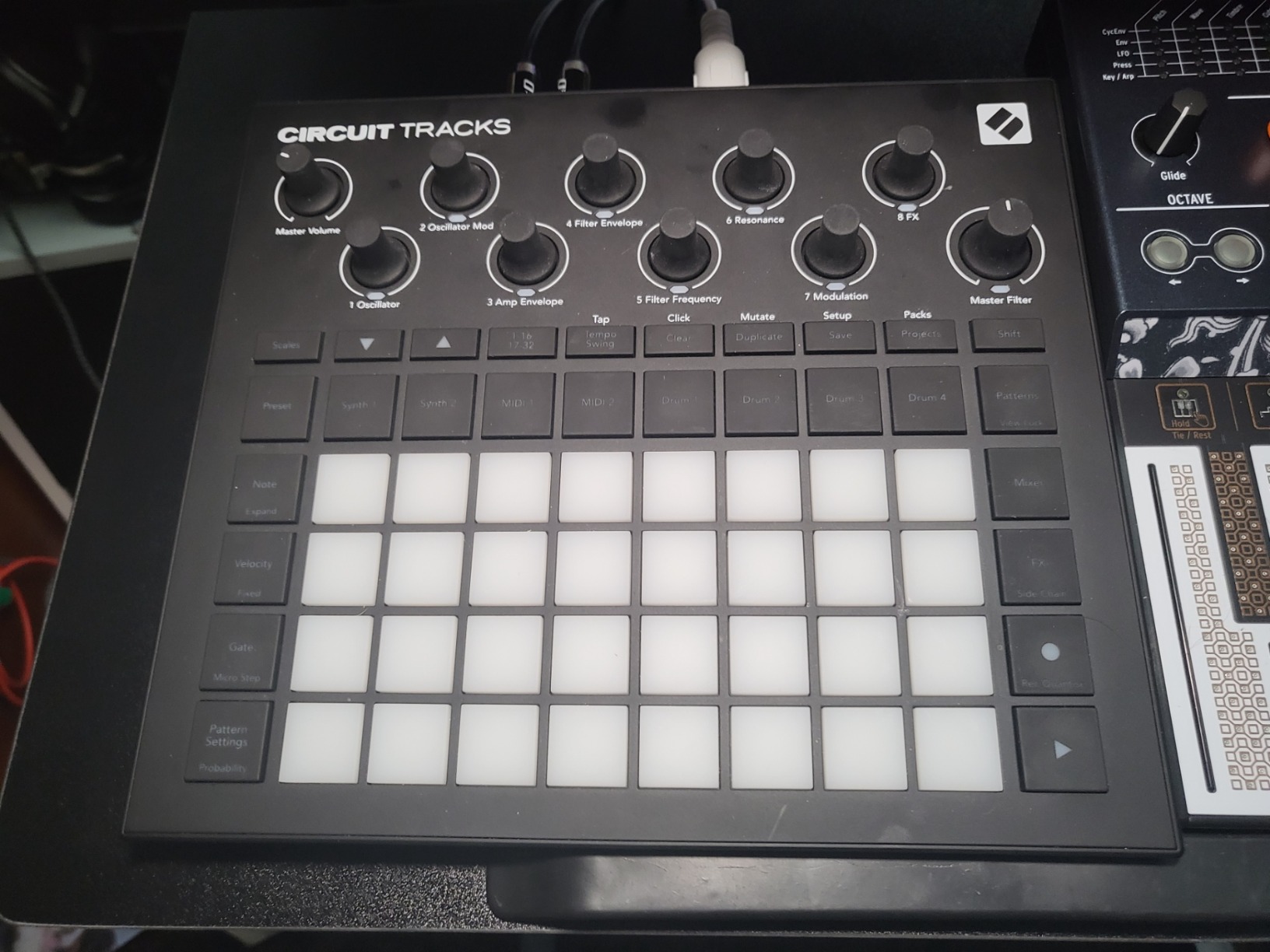
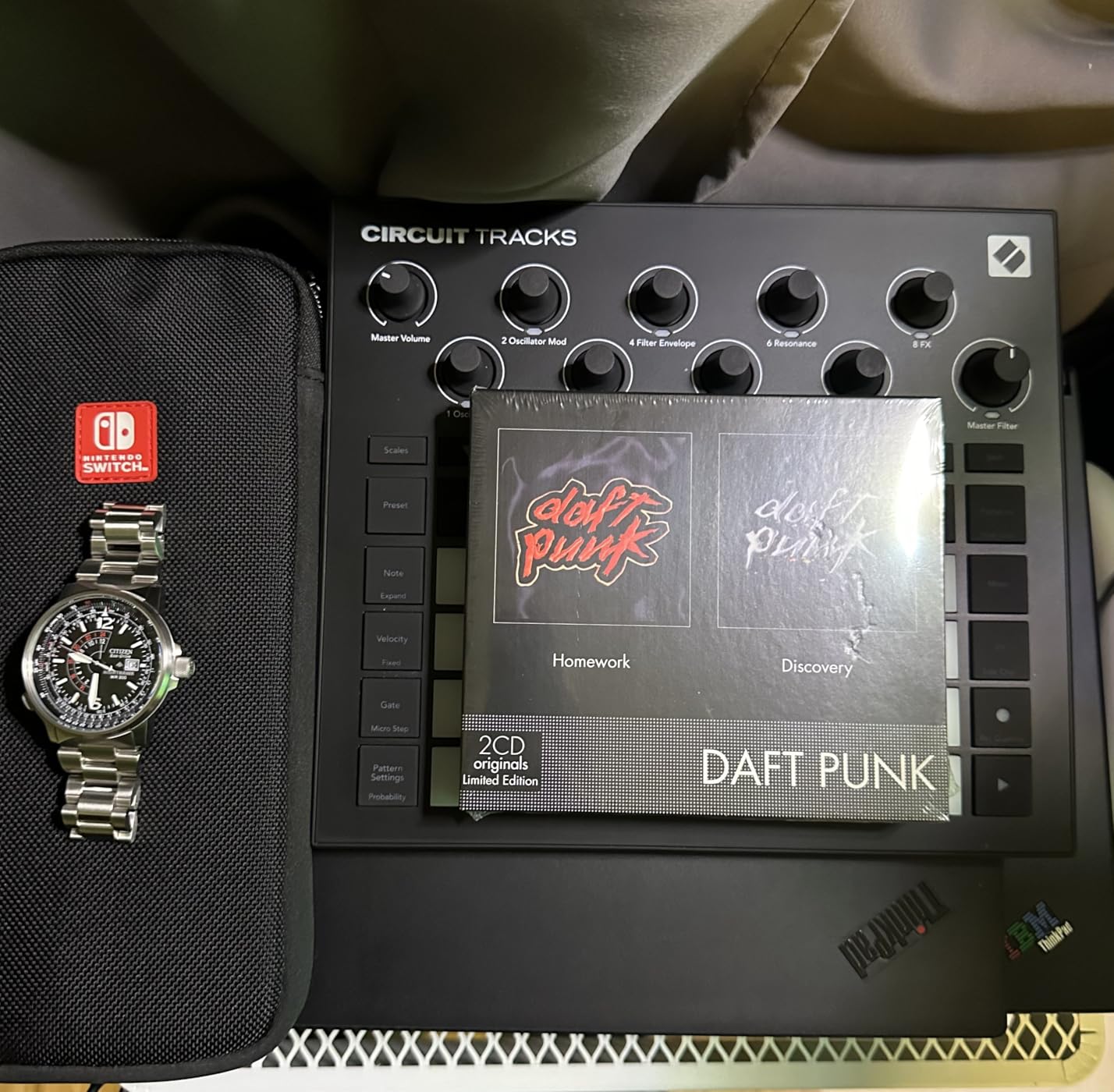
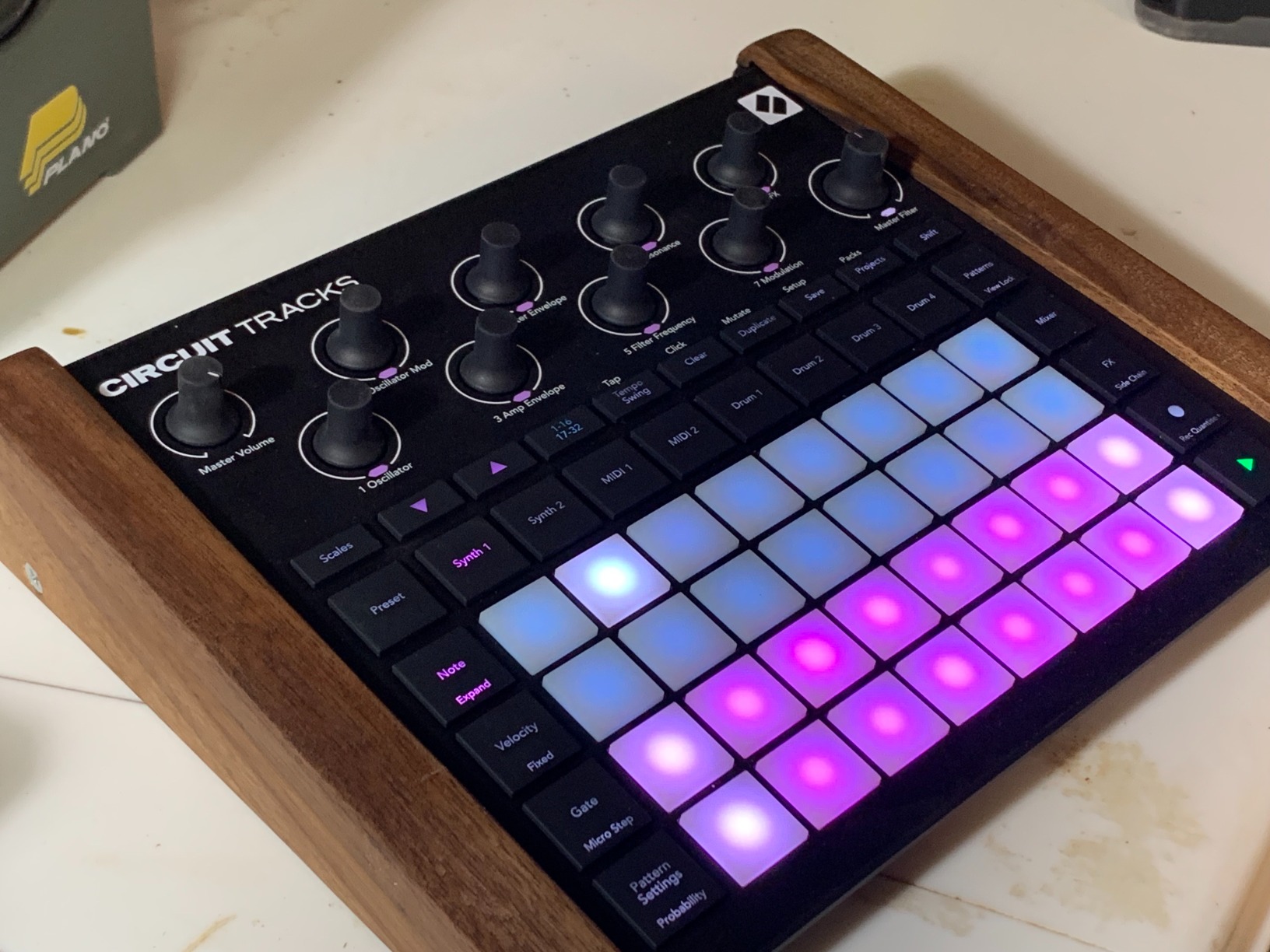
The Novation Circuit Tracks is the most reviewed groovebox on this list with 527 Amazon reviews and a 4.7-star average. That kind of sustained positive feedback from real users tells you this device does something right. After using it alongside my other gear, I can confirm the hype is justified.
The track layout is what makes this unit special. You get two polyphonic synth tracks, four drum tracks, and two dedicated MIDI tracks. Those MIDI tracks are the key differentiator. They let you sequence external synthesizers, drum machines, or any MIDI-compatible gear directly from the Circuit Tracks, making it a hub for your entire hardware studio.
The synth engines are surprisingly capable. They are polyphonic digital synthesizers with customizable patches and macros. I was able to create warm analog-style basses, shimmering pads, and biting leads without needing external gear. The drum tracks come loaded with quality kits, and you can load your own samples via the Components software.
The 32-step patterns chainable up to 256 steps give you plenty of room for arrangement. Microtiming and pattern mutate features add musical variation that keeps loops from feeling static. The velocity-sensitive pads respond well and make live performance feel natural.
The biggest issue right now is availability. Amazon reports shipping delays of 6 to 7 months, which is frustrating if you want one quickly. The lack of sampling capability compared to the Circuit Rhythm is also worth noting. You are getting synthesis and sequencing, not sample capture.
Who Should Buy the Novation Circuit Tracks
This is one of the best grooveboxes for electronic music producers who want an all-in-one device for synthesis, drum programming, and external gear control. It is particularly strong for live performance thanks to its intuitive workflow and robust build. If you already own external synths, the dedicated MIDI tracks make it an obvious choice.
Community and Support
The Circuit Tracks has one of the most active communities of any groovebox. Novation Components provides a web-based editor for loading samples and customizing patches. There are hundreds of free sample packs and preset libraries created by users, which extends the value of the device significantly beyond what ships in the box.
9. Ableton Move Standalone Instrument
Ableton Move Standalone Instrument with Live 12 Intro
32 Pads with Aftertouch
Standalone
Built-in Speaker
4 Tracks
Pros
- Completely standalone with no computer required
- 32 velocity-sensitive pads with polyphonic aftertouch
- Built-in microphone and speaker for instant capture
- Ableton Live 12 Intro included with 5 GB of sounds
- Wireless Ableton integration with Wi-Fi and Link
Cons
- Limited to 4 tracks which may constrain arrangements
- Pads occasionally stick due to quality control
- No Bluetooth MIDI feature
The Ableton Move is the newest entry from the company behind the most popular DAW in electronic music, and it shows. This device brings Ableton Live’s session-view philosophy to a standalone hardware unit. If you have ever used Ableton Live, the Move will feel instantly familiar. If you have not, it is one of the most beginner-friendly grooveboxes I have tested.
The 32 velocity-sensitive pads with polyphonic aftertouch are a standout feature. Aftertouch lets you add expression to notes after pressing them, creating evolving filter sweeps, pitch bends, or volume changes. This level of pad quality is usually reserved for much more expensive units.
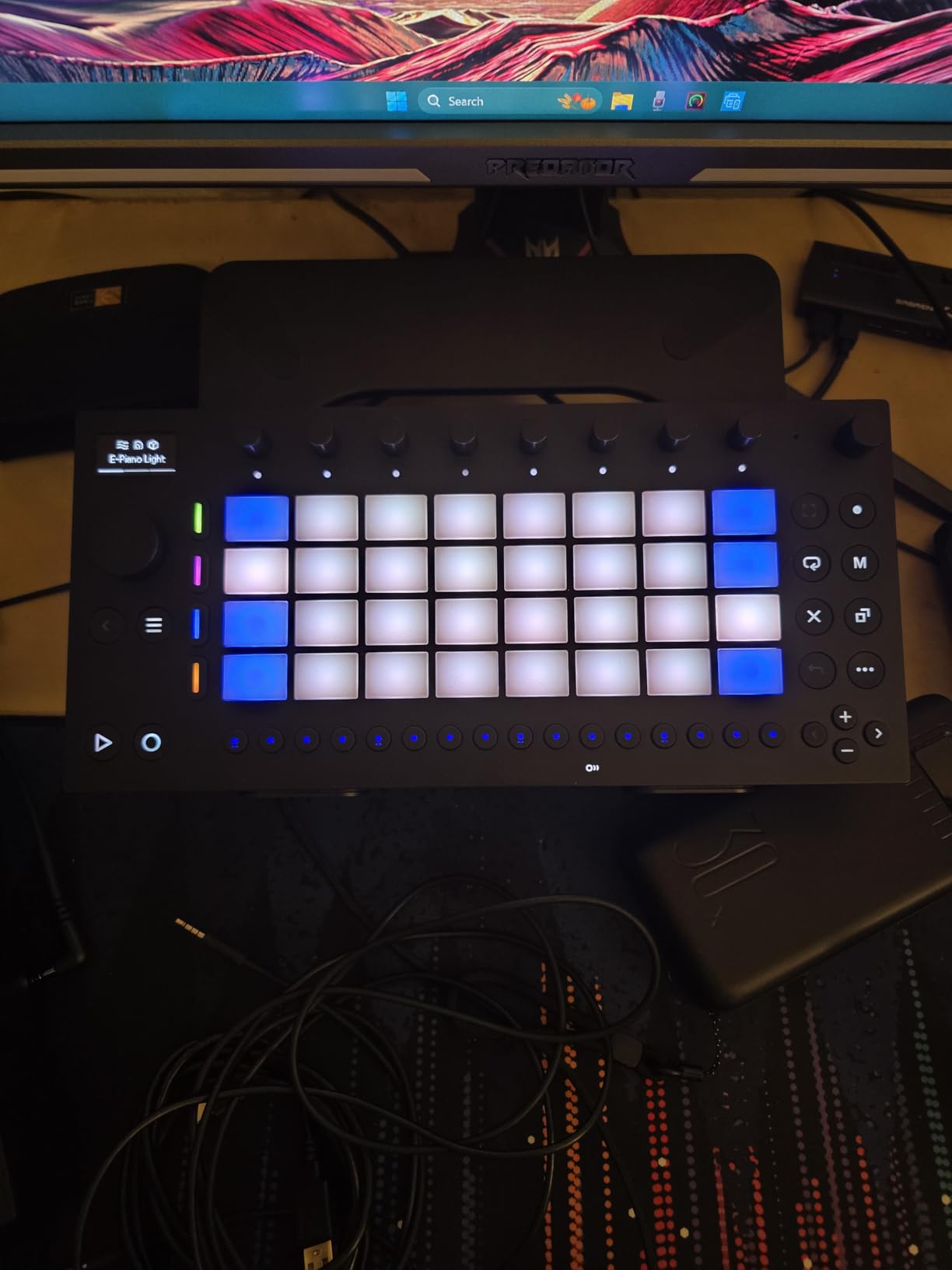
The built-in microphone is perfect for capturing found sounds. I recorded ambient noise from my window, a hand clap, and a spoken word sample in quick succession. The sampling workflow is intuitive: press record, capture, and the sound is immediately available on a pad ready to play.
With 1,500-plus curated sounds included, you are not starting from scratch. The factory library covers drums, synths, basses, and textures with enough variety to keep you inspired for months. The inclusion of Ableton Live 12 Intro means you can transfer your projects directly to your computer for further production.
The 4-track limit is the main constraint. Each track can function as a drum kit, sampler, or synthesizer, which adds flexibility, but you are still working within 4 lanes. Some users have reported pad sticking issues, which appears to be a quality control problem rather than a design flaw.
Who Should Buy the Ableton Move
This is the best groovebox for beginners in 2026. The workflow is designed to remove barriers between you and your music. It is also ideal for experienced Ableton Live users who want a portable sketchpad that integrates seamlessly with their DAW. The wireless connection to Ableton Cloud is a genuine innovation in the groovebox space.
Standalone Capability
The Move runs entirely on its own processor with a built-in rechargeable battery. You can make complete tracks on a plane, in a park, or in your bedroom without any computer. The integrated speaker lets you share ideas immediately, and the USB-C audio interface connects to studio monitors when you need better sound quality.
10. Roland MC-101 Groovebox Compact Workstation
Roland MC-101 Groovebox Compact Music Production Workstation (MC-101)
4 Tracks
90 Multi-Effects
128-Step Sequencer
454 Grams
Pros
- Massive preset library with professional sounds
- 128-step sequencer with clip-based workflow
- 90 track multi-effects plus 90 master effects
- Battery powered with 4 AA batteries or USB
- Excellent Ableton integration
Cons
- Only 4 tracks may be limiting
- Pads are not velocity sensitive
- Screen and OS feel outdated
- Switching between projects takes time
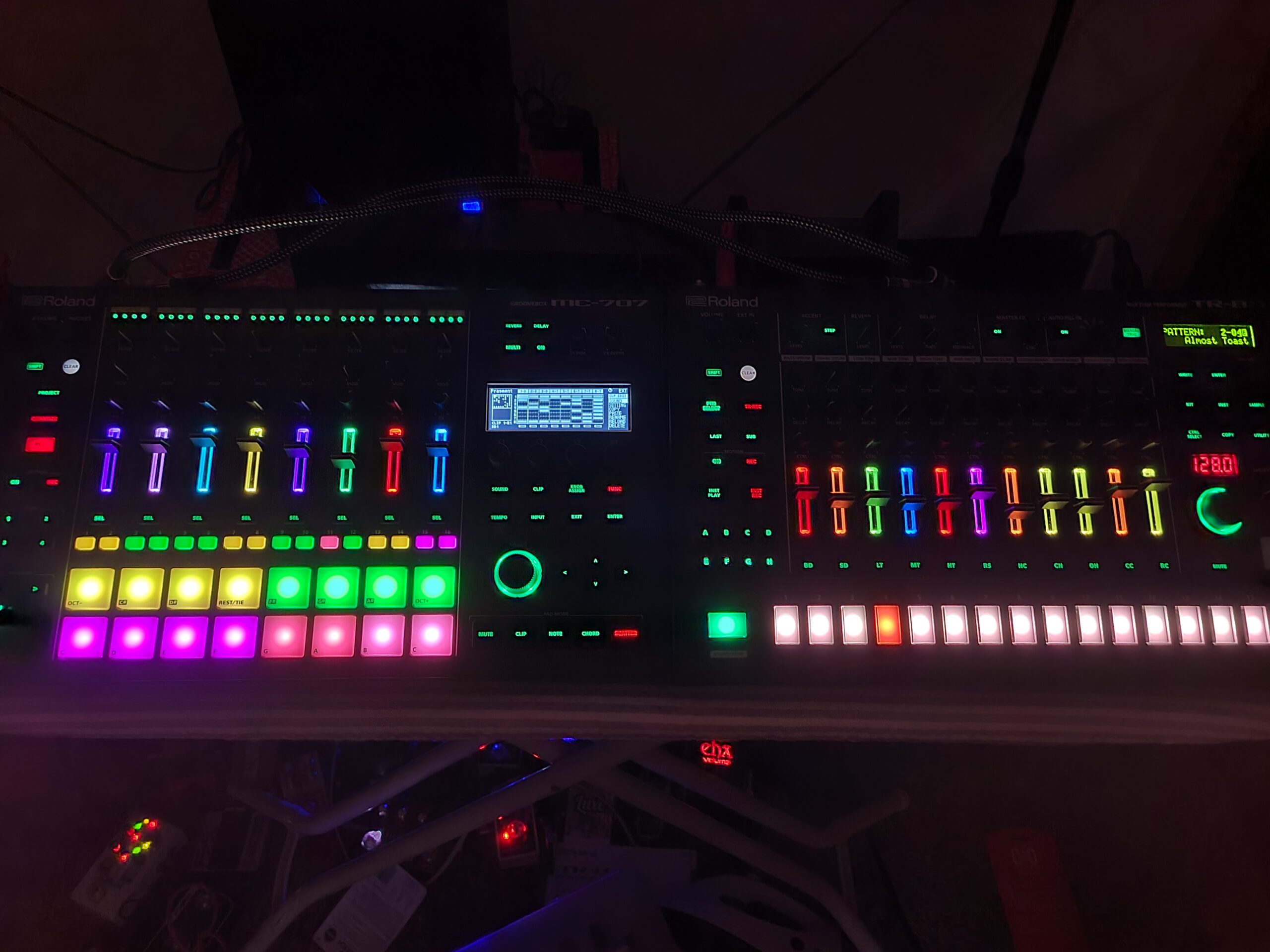
The Roland MC-101 is essentially a compact version of the MC-707, and it delivers roughly 90 percent of the functionality at less than half the price. The preset library is enormous, with professional-quality sounds that cover virtually every genre. I was impressed by the depth of the synth tones and the realism of the acoustic instrument patches.
The clip-based workflow is designed for songwriting. You get 4 tracks with 16 clips per track, meaning 64 clips total per project. Each clip can contain a different pattern, and you can chain them into full song arrangements. The 128-step sequencer gives you plenty of resolution for complex patterns.
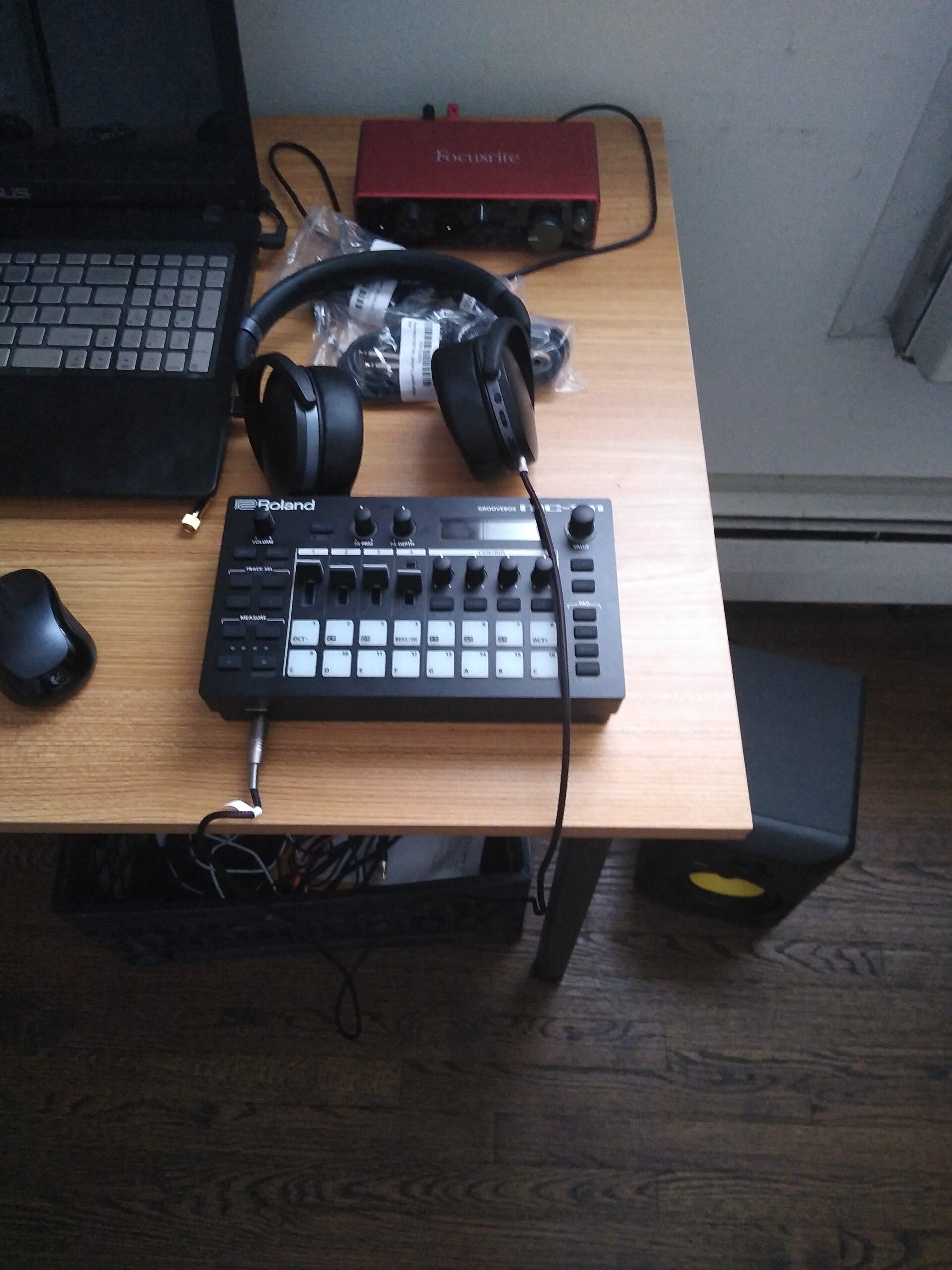
The effects section is where the MC-101 punches above its weight. You get 90 types of track multi-effects, 9 chorus and delay types, 7 reverb types, and 90 master effects. Add in track EQ, master compressor, and master EQ, and you have a full mixing and processing toolkit inside the groovebox.
The limitations are clear, though. Only 4 tracks is tight for complex arrangements. The pads are not velocity sensitive, which limits expressive playing. The screen is small and the operating system feels dated compared to newer devices like the Ableton Move or Akai MPC Live III.
Who Should Buy the Roland MC-101
This is the best groovebox for producers who want a massive sound library and deep effects processing in a portable package. It works particularly well for electronic dance music, pop production, and anyone who wants a Roland sound palette without the size and cost of the MC-707. It is also a great sound module for controlling from other sequencers.
Power Options and Portability
The MC-101 runs on 4 AA batteries or USB power, making it genuinely portable. At just 454 grams, it is one of the lightest full-featured grooveboxes available. The SD card slot provides expandable storage for projects and audio data. Battery life is respectable, giving you several hours of use on a fresh set of AAs.
11. Roland MC-707 Professional Music Production Workstation
Roland MC-707 Groovebox Professional Music Production Workstation (MC-707), Standard
8 Tracks
128 Clips
90 Effects
Master Compressor
Pros
- Professional grade production and recording workstation
- 8 tracks with 128 clips for complex arrangements
- No computer required for full song creation
- Huge preset library with diverse sounds
- Comprehensive effects including 90 master effects
Cons
- Only 8 scenes which users want doubled
- Pads are not velocity sensitive
- Screen and OS design criticized as outdated
- Drum samples may require heavy customization
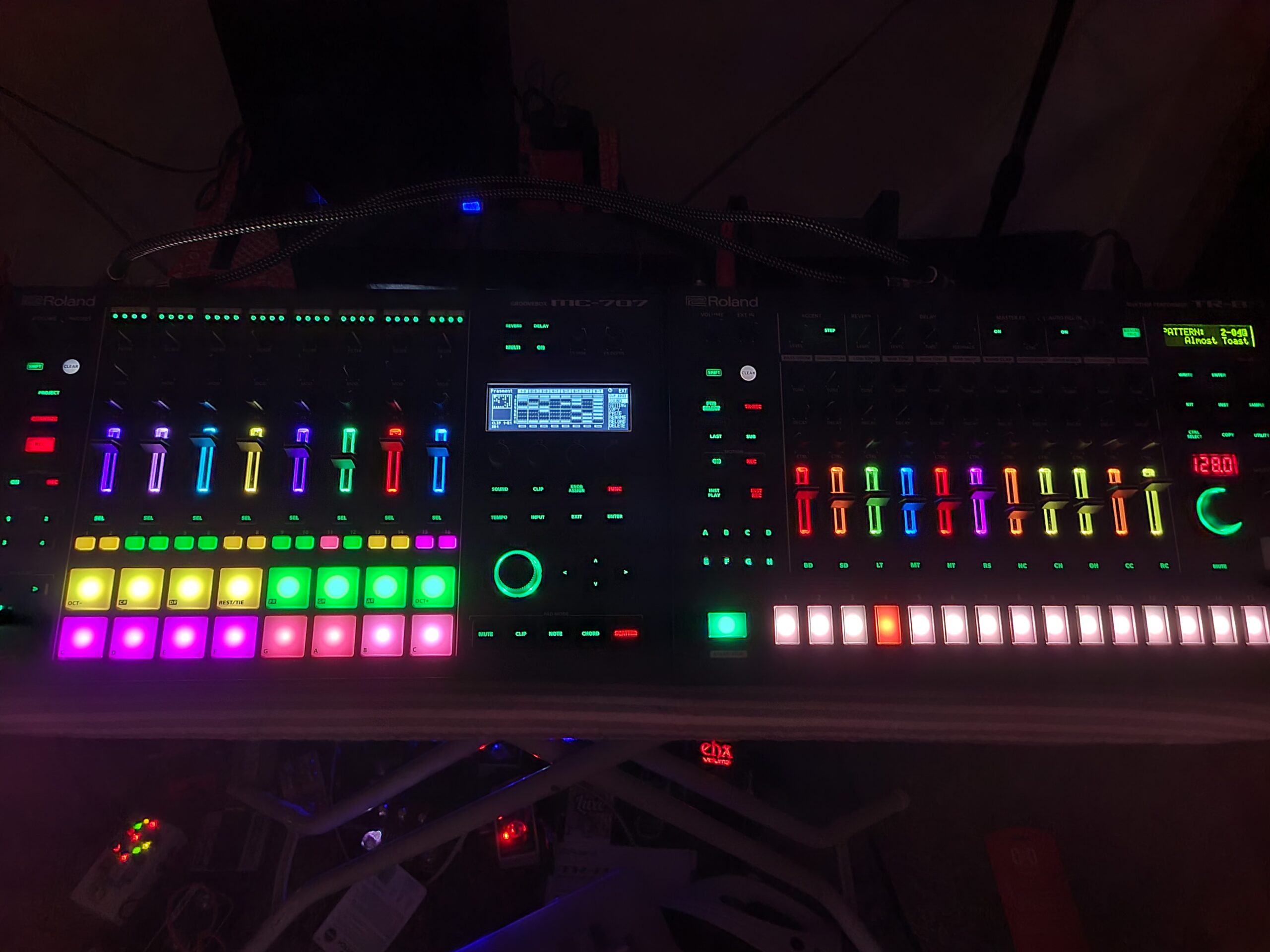
The Roland MC-707 is the flagship of the Roland groovebox line and it is built for serious music production. With 8 tracks and 128 clips, you can construct entire songs without touching a computer. The clip-based workflow mirrors what you find in software DAWs like Ableton Live, making the transition between hardware and software natural.
I tested the MC-707 in a live performance context and it held up impressively. The ability to switch between clips, trigger scenes, and tweak effects in real time makes it a capable performance instrument. The master compressor and master EQ let you shape your overall mix on the fly, which is invaluable in a live setting.
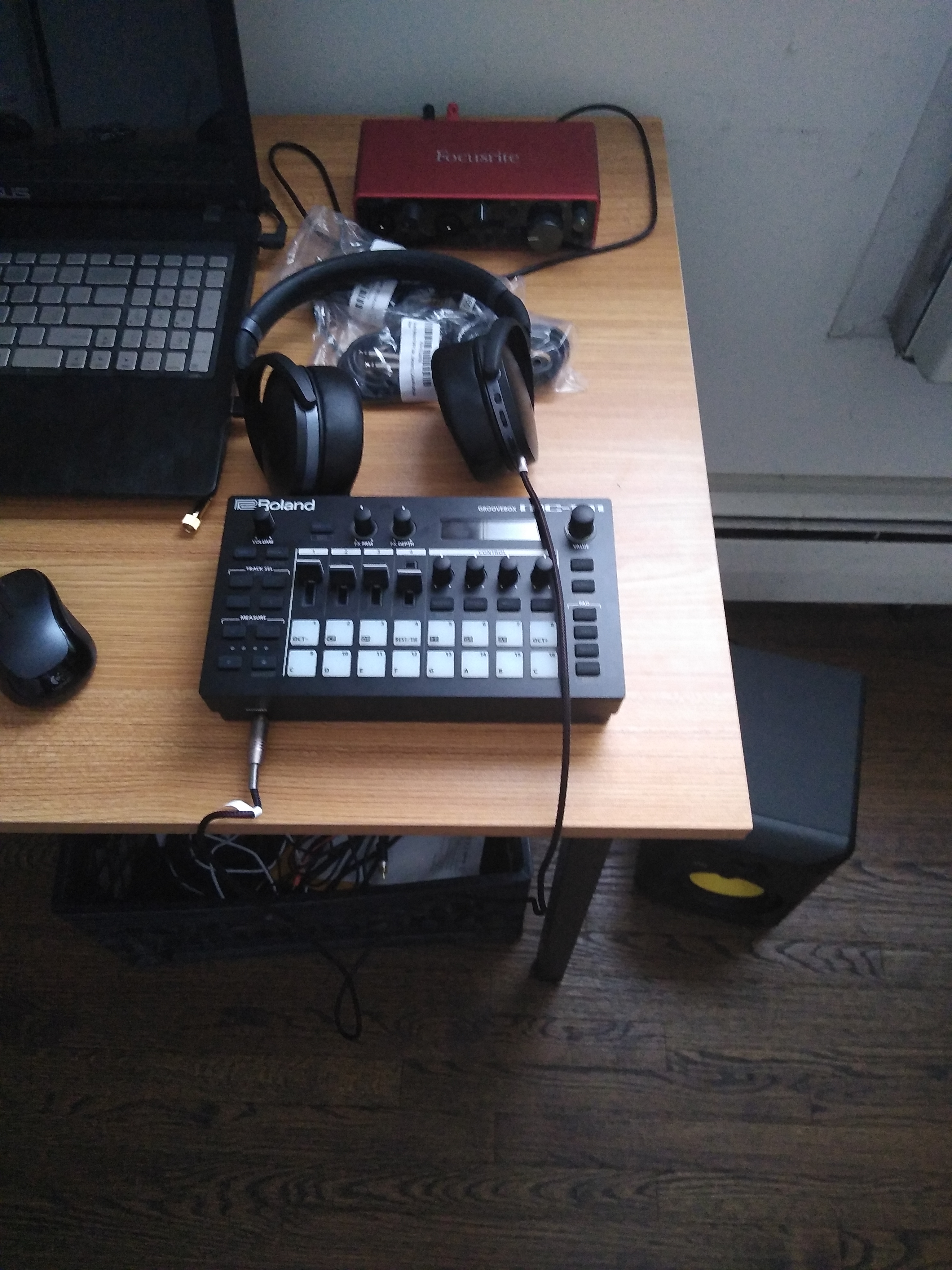
The sound library is extensive. Roland’s Zen-Core synthesis engine powers the tones, giving you access to sounds from their entire history of instruments. From classic Roland synth tones to modern EDM patches, the preset library covers enormous ground. The 90 track effects and 90 master effects provide studio-grade processing.
The weaknesses mirror those of the MC-101. The pads lack velocity sensitivity, which is a significant omission at this price point. The screen and operating system feel outdated. Users consistently request more scenes, and switching between projects involves noticeable load times.
Who Should Buy the Roland MC-707
This is the best groovebox for live performance and full standalone song production. If you want to create, arrange, and perform entire sets without a laptop, the MC-707 gives you the track count, clip capacity, and effects processing to make it happen. It is particularly strong for electronic dance music performers who need reliability on stage.
DAWless Workflow
The MC-707 is designed from the ground up for DAWless music production. You can record audio loops, sequence MIDI, mix, add effects, and master your output all within the single unit. The SD card storage handles project data and audio data. This is a complete music production environment that does not require a computer at any stage.
12. Akai Professional MPC Live III
Akai Professional MPC Live III – Standalone Portable Music Production Center with MPCe Pads, Sequencer, Touchscreen, Mic, Stereo Monitors, Audio Interface, Wi-Fi, Bluetooth, Battery, Touchstrip
8-Core CPU
8GB RAM
7 Inch Touchscreen
128GB Storage
Pros
- Most powerful MPC ever with 8-core processor and 8GB RAM
- Fully standalone with no computer required
- 3D-sensing pads with velocity pressure and XY control
- 7 inch multi-touch display
- 128GB internal storage expandable via SD or SSD
Cons
- Most expensive option on this list
- Battery degrades over 2 to 3 years
- Small screen relative to button layout
- Learning curve for advanced features
The Akai MPC Live III is the most powerful groovebox on this list and arguably the most capable standalone music production device you can buy. With an 8-core processor and 8GB of RAM, it handles complex projects with ease. I loaded a project with 16 tracks, dozens of plugins, and extensive sampling without a single stutter.
The 3D-sensing pads are a genuine innovation. They respond to velocity, pressure, and X/Y position, giving you three dimensions of expression on every pad press. This is the most expressive pad technology available, and once you get used to it, going back to standard velocity-only pads feels limiting.
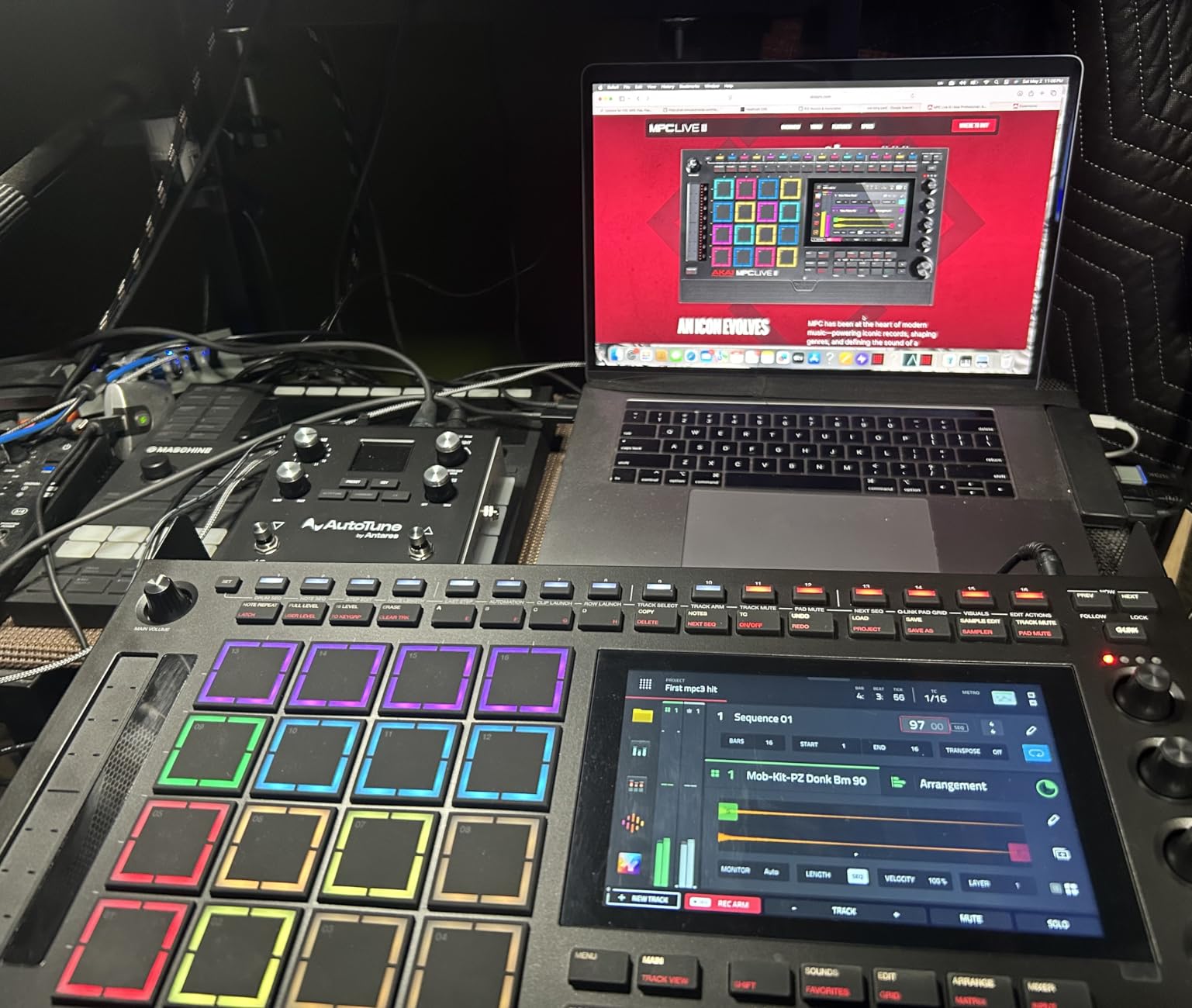
The 7-inch multi-touch display brings tablet-level interaction to hardware production. You can pinch to zoom on waveforms, drag samples around, and tap through menus. Combined with the MPC3 OS, the touchscreen makes the workflow feel closer to software production while maintaining the tactile satisfaction of hardware.
The factory library includes over 1,000 MPC-ready drum kits and instruments. You also get a 2-month Splice subscription for even more sounds. The included AIR plugins, including Reverb Pro, Visual EQ4, and Fabric Select, provide professional-grade processing without needing third-party plugins.
The price is the obvious barrier. At $1,699, this is a serious investment. The rechargeable battery is convenient but degrades over 2 to 3 years of regular use. The learning curve for advanced features like CV/Gate integration, multi-track recording, and plugin management requires committed study.
Who Should Buy the Akai MPC Live III
This is the best groovebox for professional producers who need a complete standalone studio in a single device. If you produce hip hop, electronic music, or any genre that relies heavily on sampling and sequencing, the MPC Live III gives you the most powerful platform available. The battery-powered portability means you can produce anywhere.
Connectivity and Expansion
The MPC Live III offers the most comprehensive connectivity of any unit on this list. You get USB-C, CV/Gate outputs for modular synth integration, MIDI I/O, 2 combo XLR/TRS inputs for microphones and instruments, and 6 TRS outputs for multi-track routing. Wi-Fi and Bluetooth are built in. Storage is expandable via SD card or internal SSD, giving you virtually unlimited space for samples and projects.
Buying Guide: How to Choose the Best Groovebox?
Choosing between the best grooveboxes comes down to understanding your own workflow, budget, and musical goals. I have broken down the key factors that should guide your decision based on my testing and the feedback from producer communities.
Sound Engine Type: Synthesis vs Sampling vs Both
The first decision is whether you want a synthesizer-based groovebox, a sampler-based groovebox, or a hybrid. Synth-based units like the Elektron Model:Cycles generate sounds from scratch using oscillators and filters. Sampler-based units like the Novation Circuit Rhythm and Teenage Engineering EP-133 K.O. II let you load and manipulate audio recordings. Hybrid units like the Roland MC-707 and Akai MPC Live III offer both. If you already have a large sample library, a sampler-based unit will feel familiar immediately. If you prefer designing sounds from scratch, a synth-based unit will be more satisfying.
Sequencing Depth and Workflow
The sequencer is the heart of any groovebox, and different brands take very different approaches. Elektron devices use parameter locks, which let you automate every parameter on every step. Novation uses a more traditional step-sequencer with microtiming and pattern mutate. Akai uses a combination of 16-level sequencing and linear recording. Roland uses a clip-based workflow similar to Ableton Live’s session view. The right choice depends entirely on your brain’s preferred way of working. Some people love parameter locks, others find them overwhelming. Try to test the workflow before committing.
Track Count and Arrangement
Track count directly affects how complex your arrangements can be. The Roland T-8 has 6 rhythm tracks. The Novation Circuit Rhythm offers 8 sample tracks. The Roland MC-707 provides 8 tracks with 128 clips. The Akai MPC Live III supports 16 tracks. More tracks give you more freedom, but they also add complexity. Beginners may actually benefit from fewer tracks, as constraints can drive creativity. Advanced producers working on full songs will want 8 or more tracks.
Portability and Power Options
If you plan to make music on the go, portability matters. The Roland T-8 weighs just 1.3 pounds. The Yamaha SEQTRAK is even lighter at 0.65 kilograms. The Ableton Move and Akai MPC Live III both include rechargeable batteries for untethered production. Consider whether you need built-in speakers, battery power, and a form factor that fits your lifestyle. A groovebox that sits in your studio rack has very different requirements from one that travels in your backpack.
Budget Tiers and Value
Grooveboxes in 2026 fall into several clear price tiers. Under $300, the Roland T-8 and Sonicware Liven Lofi-12 offer excellent entry points. Between $300 and $500, the Elektron Model:Cycles, Model:Samples, Novation Circuit Rhythm, Circuit Tracks, and Ableton Move provide professional features at accessible prices. Between $500 and $1,000, the Roland MC-101 and MC-707 deliver workstation-level capabilities. Above $1,500, the Akai MPC Live III represents the top tier of standalone production power.
Connectivity and Studio Integration
Think about how the groovebox will fit into your existing setup. If you have external synthesizers, you need MIDI output. If you use a modular synth, CV/Gate outputs are valuable. USB audio interface functionality lets you route the groovebox directly into your DAW. The Akai MPC Live III offers the most comprehensive connectivity, while the Roland T-8 keeps it minimal. Match the connectivity to your current and planned gear.
Learning Curve and Support
Some grooveboxes are designed for immediate gratification. The Novation Circuit Tracks and Ableton Move can have you making music within minutes. Others, like the Elektron Model:Cycles and Akai MPC Live III, require dedicated learning time but reward you with much deeper capabilities. Consider how much time you are willing to invest in learning. Also check for community support. The Novation Circuit and Akai MPC communities are massive, with thousands of tutorials, free packs, and forum threads. This support network can be as valuable as the hardware itself.
Genre Considerations
Different grooveboxes excel at different genres. For techno and house, the Elektron Model:Cycles and Roland MC-707 are excellent choices. For hip hop and beat making, the Akai MPC Live III, Teenage Engineering EP-133 K.O. II, and Novation Circuit Rhythm are standouts. For ambient and experimental music, the Sonicware Liven Lofi-12 and Elektron Model:Cycles offer the texture and depth those genres demand. For live performance across genres, the Roland MC-707 and Novation Circuit Tracks are proven performers.
FAQs
Which groovebox would you recommend as a first device?
The Roland AIRA Compact T-8 is the best groovebox for beginners because it delivers authentic Roland drum sounds in a battery-powered unit that costs under $250. The Ableton Move is another excellent first device if your budget allows, thanks to its intuitive workflow and built-in speaker. Both units let you start making music immediately without a steep learning curve.
What are the best grooveboxes for beginners?
For beginners, the Roland T-8, Ableton Move, and Novation Circuit Tracks are the top choices. The T-8 offers the lowest cost of entry. The Move provides the most intuitive workflow with 32 pads and standalone operation. The Circuit Tracks gives you the most room to grow with synth tracks, drum tracks, and MIDI control of external gear.
Which groovebox has the best workflow?
Workflow is subjective, but the Elektron Model:Cycles is widely praised for its dedicated knob-per-function design and parameter lock sequencer. The Novation Circuit Tracks is considered one of the fastest for jamming and idea generation. The Ableton Move offers the most intuitive workflow for anyone familiar with Ableton Live. Try before you buy if possible, as workflow preference is highly personal.
What is the best groovebox to finish tracks on?
The Akai MPC Live III is the best groovebox for finishing complete tracks because it offers 16 tracks, a 7-inch touchscreen, 8-core processing, and full DAWless production capabilities. The Roland MC-707 is another strong option with 8 tracks and 128 clips. Both let you create, arrange, mix, and master entire songs without a computer.
How much does a good groovebox cost?
A good groovebox costs between $250 and $1,700 depending on features. Budget options under $300 include the Roland T-8 and Sonicware Liven Lofi-12. Mid-range units between $300 and $500 include the Elektron Model:Cycles, Novation Circuit Tracks, and Ableton Move. Premium workstations above $1,000 include the Roland MC-707 and Akai MPC Live III.
Final Thoughts on the Best Grooveboxes for 2026
After testing all 12 of these devices, the Elektron Model:Cycles remains my top overall pick for the best groovebox available right now. Its combination of FM synthesis, the industry-leading Elektron sequencer, and dedicated knob-per-function control creates a playing experience that keeps you coming back. For budget-conscious buyers, the Roland T-8 delivers extraordinary value with genuine Roland sounds in a portable package.
If you want the most capable standalone production device and budget is not a concern, the Akai MPC Live III is in a class of its own with its 8-core processor, 3D-sensing pads, and full touchscreen workflow. For beginners, the Ableton Move removes every barrier between you and your music. Whatever your choice, any of the best grooveboxes on this list will transform how you make music in 2026. Pick the one that matches your workflow, and start creating.