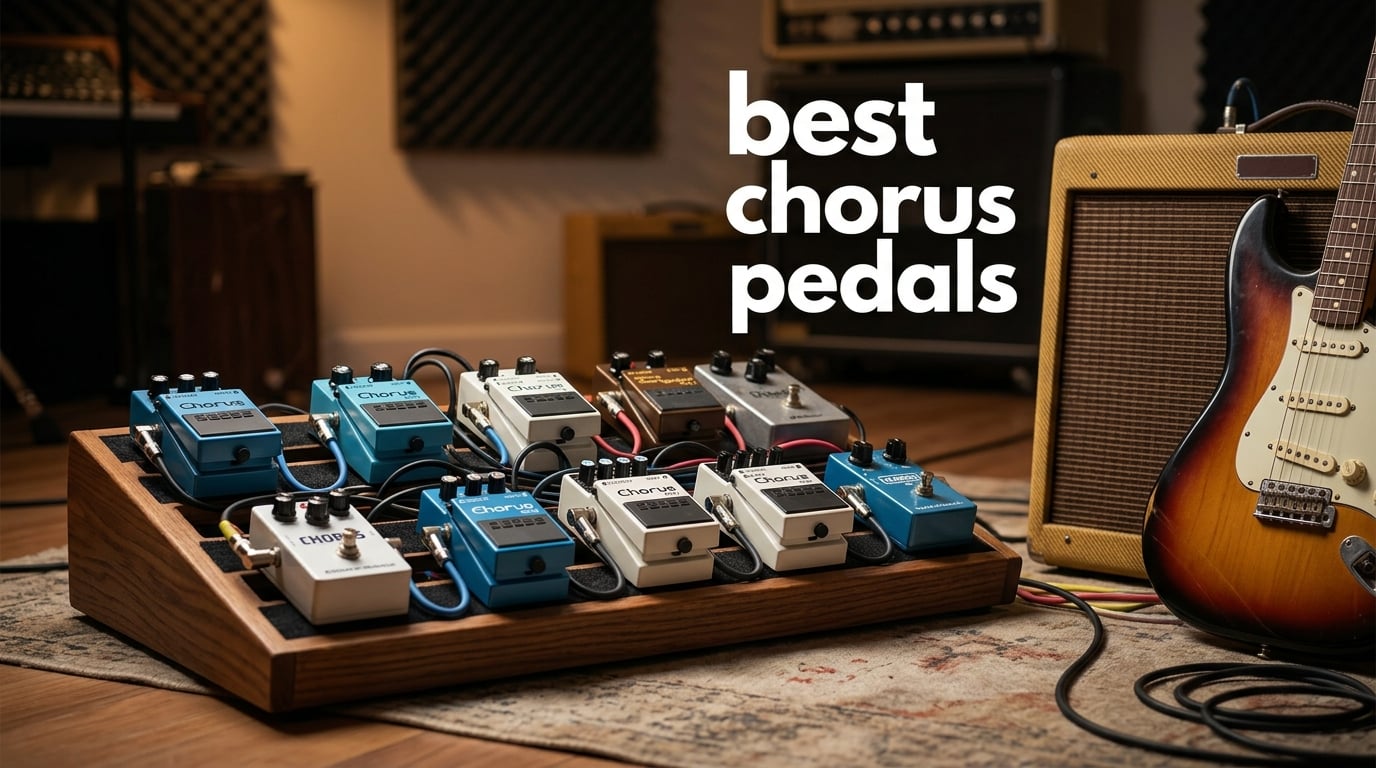
Chorus pedals are some of the most expressive tools a guitarist can add to their signal chain. Whether you are chasing the lush, shimmering textures of 80s pop, the thick washes of shoegaze, or just a subtle widening effect for your clean tone, the right chorus pedal can completely transform your sound.
Over weeks of hands-on testing with these pedals, I played through vintage-inspired analog circuits, modern digital processors, and everything in between. I evaluated each pedal on sound quality, build construction, versatility, and overall value.
If you are searching for the best chorus pedals available in 2026, this guide covers every price point and playing style. From the legendary BOSS CE-2W Waza Craft to budget-friendly options under $40, we have something for every guitarist and bassist on this list.
Before we jump into individual reviews, let us quickly break down what makes a great chorus pedal. The magic comes from a bucket brigade device (BBD) chip or digital processor that splits your signal, slightly delays one copy, and modulates its pitch using a low-frequency oscillator (LFO). When blended back with your dry signal, this creates that wide, shimmering effect that simulates multiple guitars playing at once.
Key things I looked at include the type of circuitry (analog vs digital), control layout, stereo capability, bypass type, and how the pedal responds at different settings. Some players want subtle doubling, while others want seasick, warbling modulation. The pedals on this list cover that entire spectrum.
Table of Contents
Top 3 Picks for Best Chorus Pedals
If you want a quick recommendation without reading all 10 reviews, here are our three favorites. These pedals stood out from the pack based on sound quality, value, and real-world usability across multiple genres.

BOSS CE-2W Waza Craft Chorus
- All-analog BBD circuitry
- Made in Japan
- CE-2 and CE-1 modes
- Premium Waza Craft build

JHS 3 Series Chorus
- Made in Kansas City USA
- Chorus and vibrato modes
- Rate and Depth controls
- Vibe toggle switch

Donner Tutti Love Chorus
- Warm analog chorus tone
- Level Depth Rate controls
- True bypass
- Amazon's Choice
10 Best Chorus Pedals in 2026
Here is a side-by-side look at all 10 chorus pedals we reviewed. Use this table to compare key features at a glance, then read the individual reviews below for our detailed hands-on experience with each one.
| Product | Specifications | Action |
|---|---|---|
| BOSS CE-2W Waza Craft |
|
Check Latest Price |
| JHS 3 Series Chorus |
|
Check Latest Price |
 BOSS CH-1 SUPER Chorus BOSS CH-1 SUPER Chorus |
|
Check Latest Price |
 MXR M234 Analog Chorus MXR M234 Analog Chorus |
|
Check Latest Price |
 EHX Small Clone Chorus EHX Small Clone Chorus |
|
Check Latest Price |
 Walrus Audio Fundamental Chorus Walrus Audio Fundamental Chorus |
|
Check Latest Price |
 Ibanez Chorus Mini Ibanez Chorus Mini |
|
Check Latest Price |
 EHX Bass Clone EHX Bass Clone |
|
Check Latest Price |
| Donner Tutti Love Chorus |
|
Check Latest Price |
 SONICAKE Chorus Pedal SONICAKE Chorus Pedal |
|
Check Latest Price |
1. BOSS CE-2W Waza Craft Chorus – Premium Analog Perfection
BOSS CE-2W Chorus | Premium Waza Craft Guitar Effect Pedal with Analog Circuitry | True Reproduction of the Legendary CE-2 & CE-1 Chorus Pedals | Made in Japan | 5-Year Warranty
All-analog BBD circuitry
Made in Japan
CE-2 and CE-1 modes
9V powered
1.23 lbs
Pros
- Premium all-analog bucket-brigade circuitry
- True reproduction of legendary CE-2 and CE-1 chorus sounds
- Rate and Depth knobs for fine sound adjustment
- Waza Craft premium build quality
- Made in Japan with 5-year warranty
Cons
- Higher price point than most chorus pedals
- Limited to two control knobs
When I first plugged into the BOSS CE-2W Waza Craft, I immediately understood why this pedal has such a devoted following. The sound is warm, thick, and musical in a way that cheaper digital choruses simply cannot replicate. This is the pedal that other chorus pedals are measured against, and it earns that reputation every time you stomp on it.
The Waza Craft series represents the premium lineup from BOSS, and the attention to detail shows throughout. The all-analog bucket-brigade delay line produces that classic shimmer that defined 80s guitar tones. I tested it through both a Fender clean amp and a slightly overdriven Vox, and the CE-2W sounded gorgeous in both contexts.
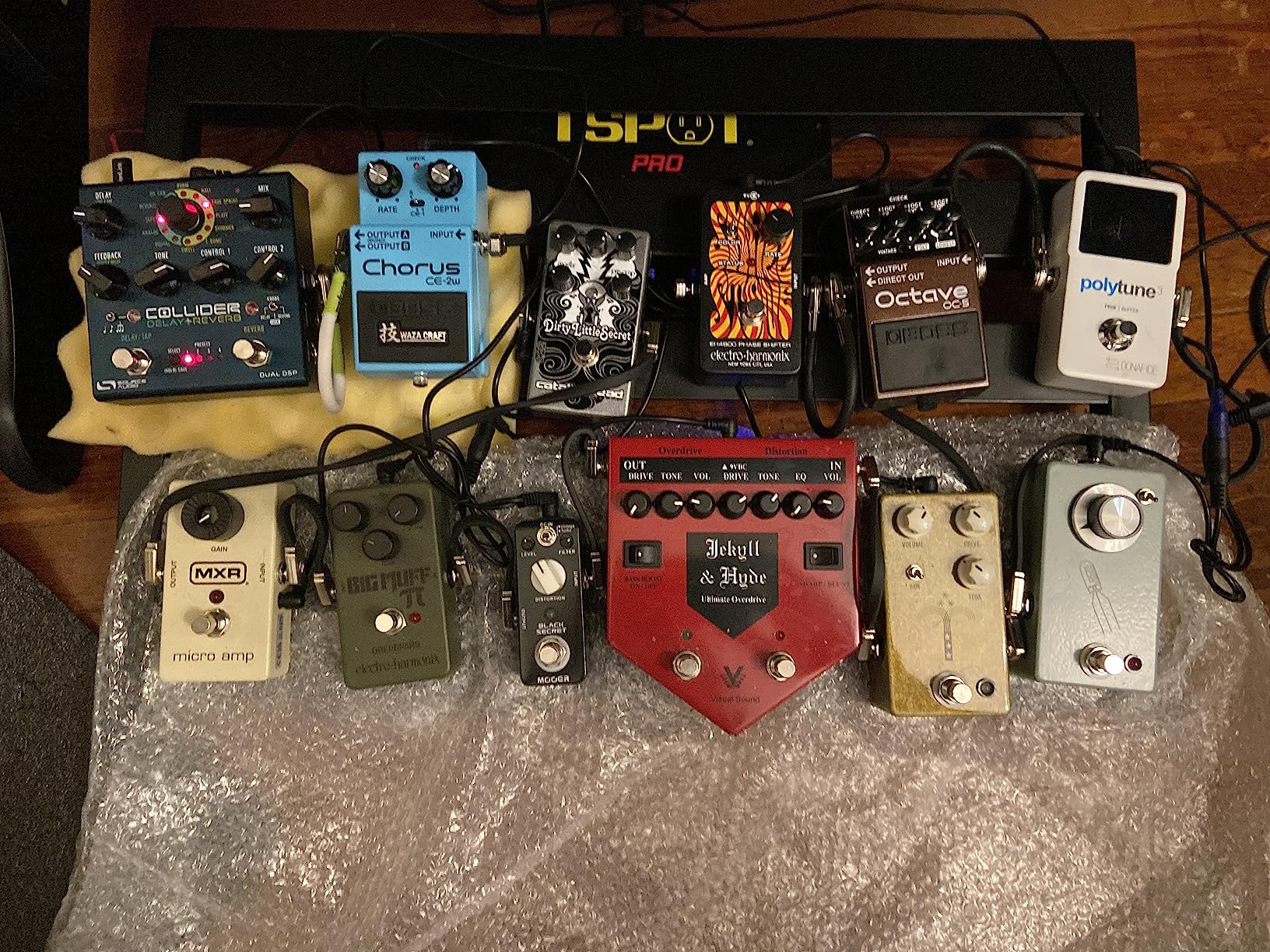
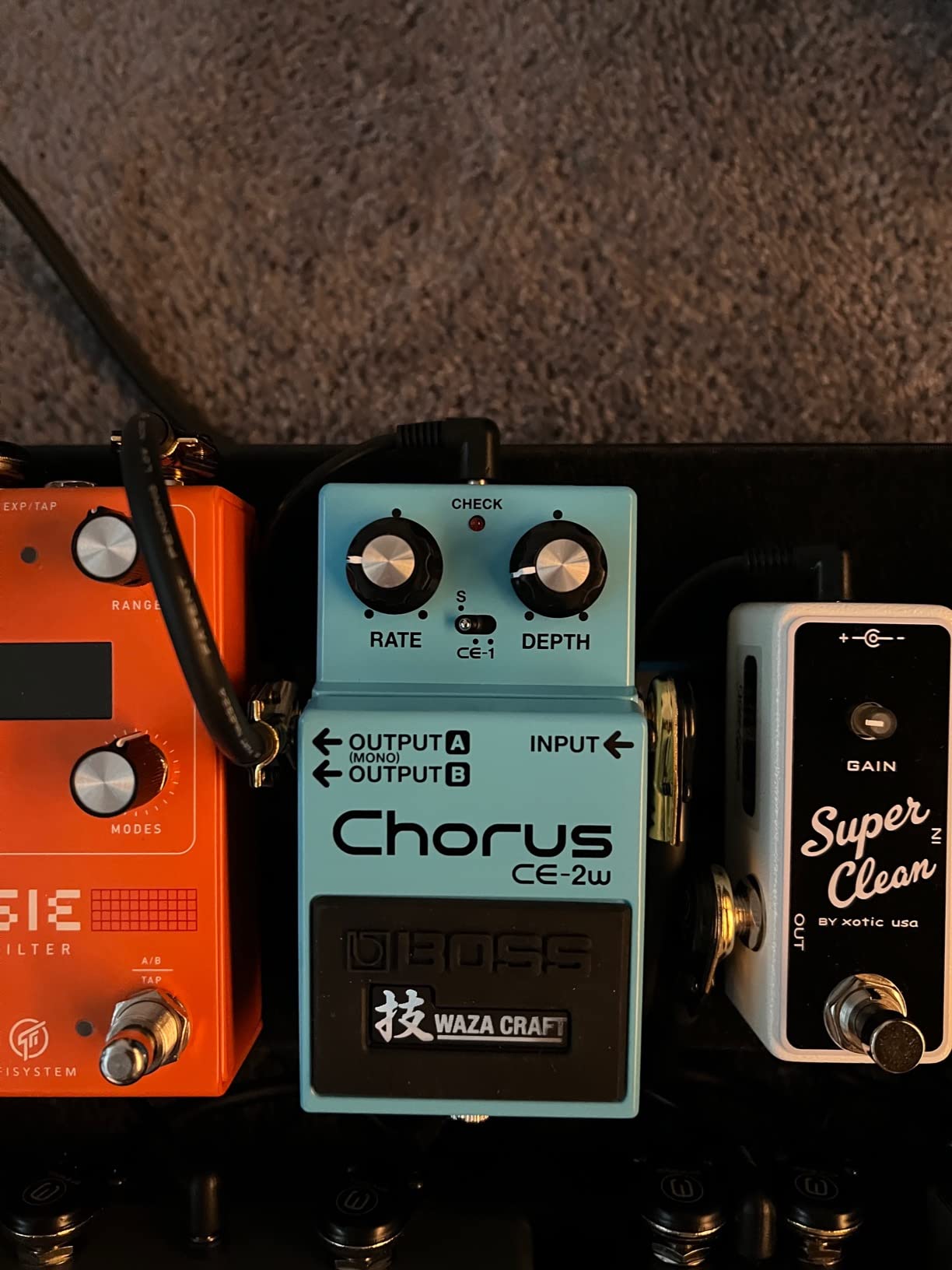
What makes this pedal special is the dual-mode operation. The CE-2 mode gives you the classic 1979 chorus sound that guitarists have loved for decades. Flip it to CE-1 mode and you get the broader, more immersive chorus from the BOSS first-ever effects unit. The CE-1 mode adds a vibrato component that creates a wider, more dramatic modulation.
The Rate and Depth controls are surprisingly versatile despite the simple layout. Subtle settings give you a gentle widening effect that works beautifully for clean arpeggios. Push the Depth up and you get that lush, liquid chorus that defined countless recordings. I found myself settling into a mid-range Rate with about 60 percent Depth for most of my playing.
Who Should Buy the CE-2W
This pedal is perfect for tone purists who want authentic analog chorus without compromise. If you play funk, jazz, ambient, or any genre where chorus quality matters, the CE-2W delivers in spades. It is also ideal for studio recording where the premium analog character adds warmth and depth to your tracks.
Players who need extensive tonal shaping options or presets may find the two-knob layout limiting. If you need MIDI control, tap tempo, or multiple waveforms, you should look at more feature-rich alternatives like the Walrus Audio Mako series.
Analog vs Digital Consideration
The CE-2W uses a true analog bucket-brigade device, which means the signal stays in the analog domain throughout. This produces a natural high-frequency roll-off that many players find warmer and more pleasing than digital chorus. The trade-off is that BBD chips add a slight noise floor, but BOSS has engineered this pedal to keep noise to an absolute minimum.
Compared to the standard BOSS CH-1, the CE-2W offers a distinctly different character. The CH-1 is brighter and more modern sounding, while the CE-2W is warmer and more vintage. Both are excellent pedals, but they serve different tonal goals and sit at different price points.
2. JHS 3 Series Chorus – Best Value Analog Chorus
JHS 3 Series Chorus
Made in Kansas City USA
Chorus and vibrato modes
Rate and Depth controls
9V 70mA
0.3 kg
Pros
- Handmade in Kansas City USA
- Classic chorus and vibrato in one pedal
- Vibe toggle for true pitch vibrato
- Rate and Depth offer wide range from subtle to seasick
- Straightforward and intuitive control layout
Cons
- 4-year warranty is non-transferable and requires registration
- No stereo outputs
The JHS 3 Series Chorus immediately impressed me with how much tonal range it packs into such a simple design. With just Rate and Depth knobs plus a Vibe toggle, this pedal covers everything from gentle doubling to full-on seasick modulation. It is the kind of pedal you set and forget because every position sounds good.
JHS builds these pedals in Kansas City, and the construction quality feels solid and reliable. The 3 Series represents their approach to making premium pedals at accessible prices, and the Chorus is one of the standout models in the lineup. Over 1,400 reviews on Amazon with a 4.6-star average tells you this pedal resonates with real players.
I spent time testing the Vibe toggle, which removes the dry signal and gives you pure pitch vibrato. This is a feature usually found on much more expensive pedals. Switching between chorus and vibrato modes opens up creative possibilities that a standard chorus pedal cannot match.
Best Use Cases for the JHS 3 Series
This pedal shines in live performance settings where you need one pedal to cover multiple modulation duties. The Vibe toggle means you can use it for chorus on verses and switch to vibrato for atmospheric breaks. It is also excellent for home recording where simplicity and great sound matter more than extensive feature sets.
The JHS 3 Series Chorus is particularly well-suited for players who want that warm, analog sound without spending over $150. It competes with pedals twice its price in terms of sound quality and reliability.
Control Range and Versatility
The Rate control sweeps from very slow, subtle modulation to fast, almost vibrato-like warbling. The Depth control determines how pronounced the pitch modulation is, from barely-there widening to dramatic pitch shifts. Together, these two controls give you access to an impressively wide range of sounds.
One thing I noticed is that the JHS Chorus sounds particularly good with single-coil pickups. The warm analog character complements the brightness of single-coils beautifully, adding body and dimension without harshness. Humbucker players will also love it, but the single-coil pairing is special.
3. BOSS CH-1 SUPER Chorus – Stereo Modulation Classic
BOSS CH-1 SUPER Chorus | Classic Compact Chorus Effects Pedal | Cystal-Clear Tone for Guitar & Keyboards | Versatile Sound Shaping | Mono & Stereo Connectivity | Easy-to-Use Controls
Mono in and stereo out
Effect Level EQ Rate Depth
Sounds great since 1989
9V 13mA
1.12 lbs
Pros
- Classic BOSS chorus sound since 1989
- Crystal-clear tone with brilliant clarity
- Stereo outputs for dual amp setups
- Four controls for precise sound shaping
- Versatile enough for vibrato and flanger-like tones
Cons
- AC adaptor not included
- Brighter and more modern than vintage analog chorus
The BOSS CH-1 SUPER Chorus has been on pedalboards since 1989, and for good reason. This pedal produces a clean, bright chorus sound that cuts through any mix with clarity and presence. I have used this pedal extensively, and it remains one of the most dependable chorus pedals ever made.
What sets the CH-1 apart from other chorus pedals is its stereo output capability. Running this pedal into two amps creates a wide, immersive modulation effect that fills the room. If you have a stereo rig, the CH-1 is one of the most affordable ways to get true stereo chorus.
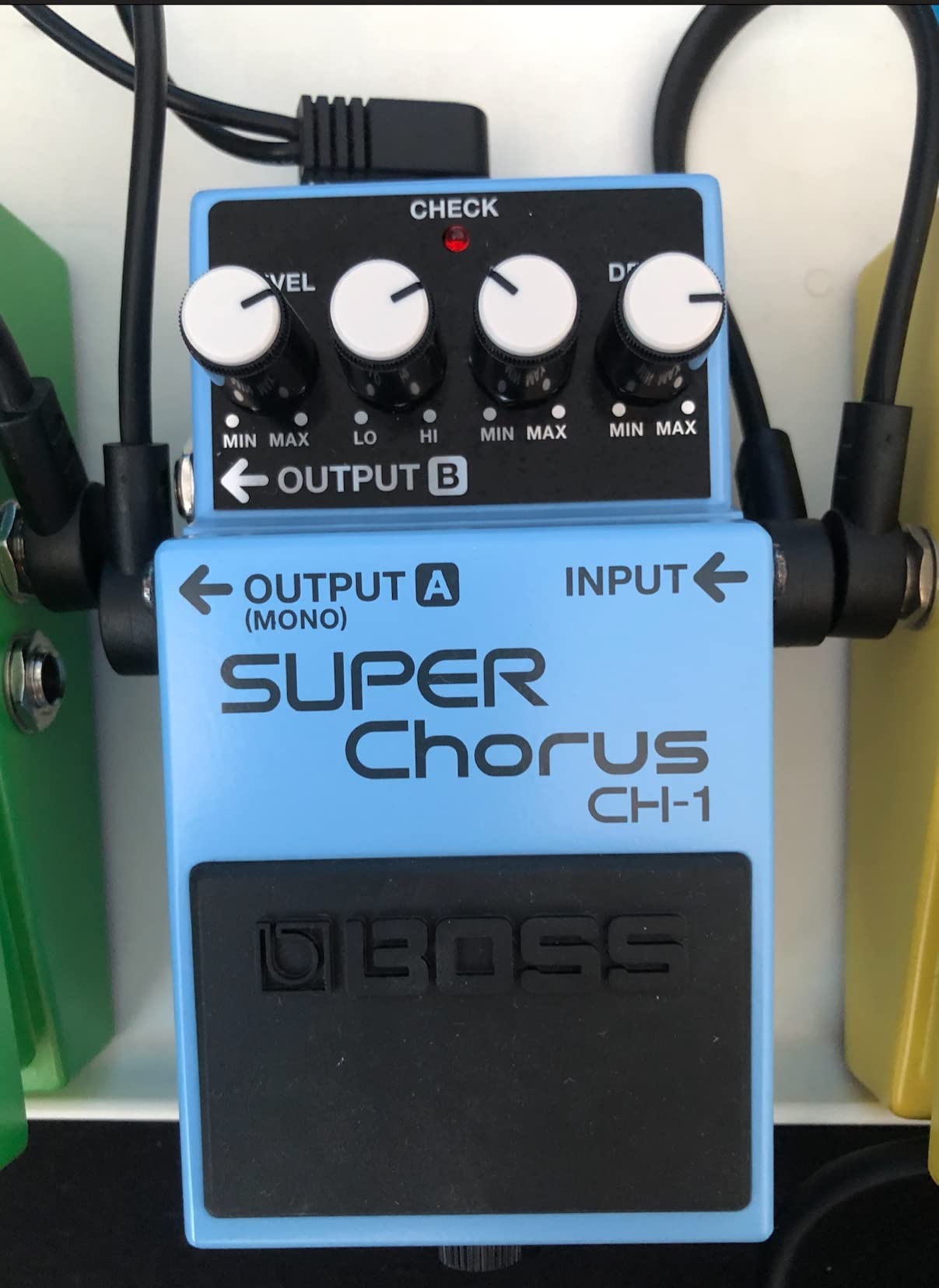
The four-control layout gives you more tonal shaping than the simpler CE-2W. Effect Level controls the wet signal volume, EQ shapes the tonal character of the chorus, and Rate and Depth control the modulation speed and intensity. This makes the CH-1 one of the most tweakable chorus pedals in its price range.
I found the EQ knob particularly useful for dialing in the right amount of brightness. Rolling it back gives you a warmer, more vintage-flavored chorus. Pushing it forward creates a sparkling, modern sound that works great for funk and pop playing.
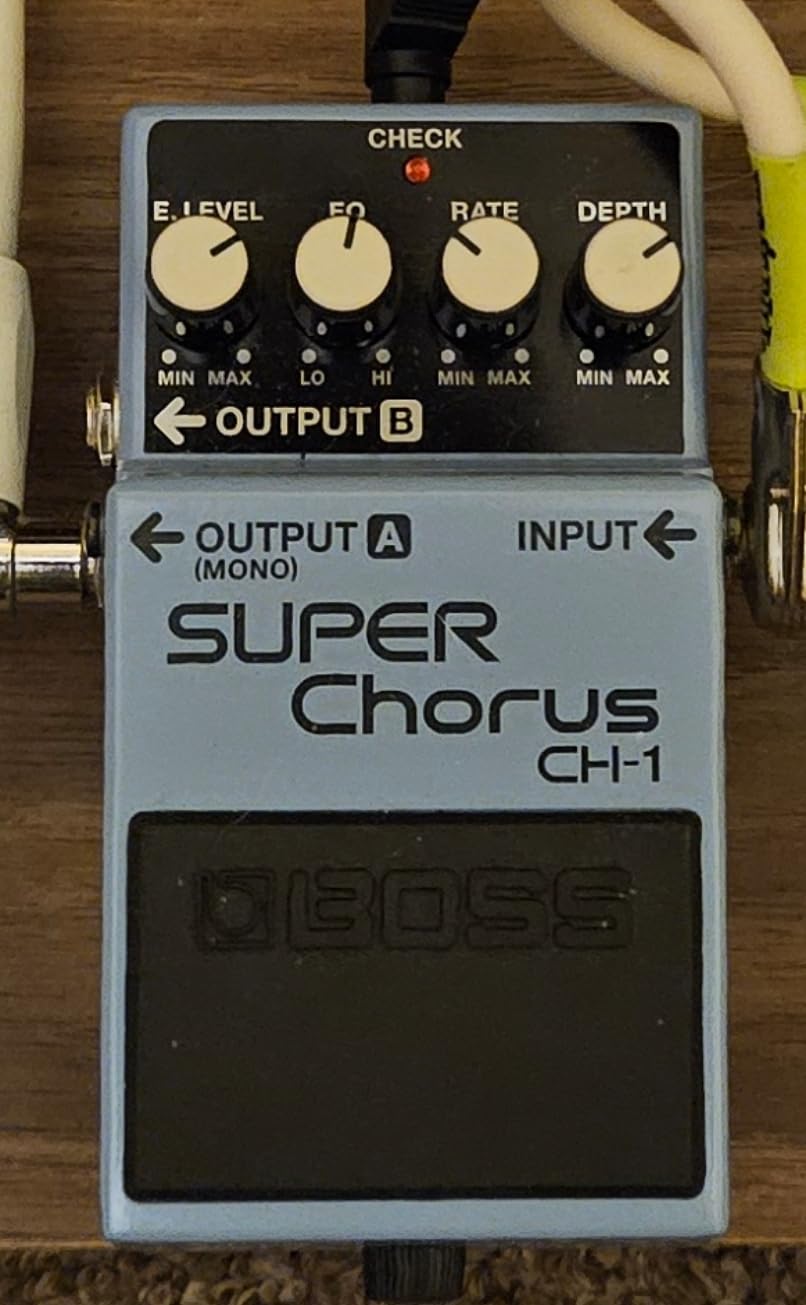
Stereo Setup Benefits
If you run two amplifiers, the CH-1 truly shines. The stereo outputs create a ping-pong modulation effect that is wider and more immersive than any mono chorus can achieve. This is why so many professional guitarists rely on the CH-1 for live performances.
Even in mono, the CH-1 delivers a punchy, present chorus that sits well in a band mix. Lead players especially benefit from the clarity and edge this pedal provides.
Long-Term Reliability
BOSS pedals are legendary for their durability, and the CH-1 is no exception. The rugged metal housing, recessed knobs, and reliable footswitch mean this pedal will survive decades of gigging. The five-year warranty from BOSS backs up their confidence in the build quality.
One consideration is that the CH-1 uses buffered bypass rather than true bypass. In most setups, this is actually an advantage because the buffer prevents signal degradation over long cable runs. However, tone purists with vintage-style rigs may prefer true bypass alternatives.
4. MXR M234 Analog Chorus – Lush Bucket-Brigade Warmth
MXR® Analog Chorus
All-analog bucket-brigade circuit
Bass and Treble EQ controls
Rate and Depth knobs
9V powered
0.32 kg
Pros
- All-analog bucket-brigade circuitry for lush textures
- Bass and Treble EQ for tonal shaping
- Compact MXR housing
- Trusted brand with decades of pedal-making experience
Cons
- Lower average rating compared to top picks
- Single output only
The MXR M234 Analog Chorus delivers that classic, warm bucket-brigade sound that chorus enthusiasts love. When I first engaged this pedal, the modulation was immediately thick and musical, with a liquid quality that reminded me of vintage chorus units from the early 80s.
What makes the M234 stand out is its EQ section. Unlike simpler chorus pedals, this one includes Bass and Treble controls that let you shape the tonal character of the effected signal. This is incredibly useful for matching the chorus to different guitars and amps.
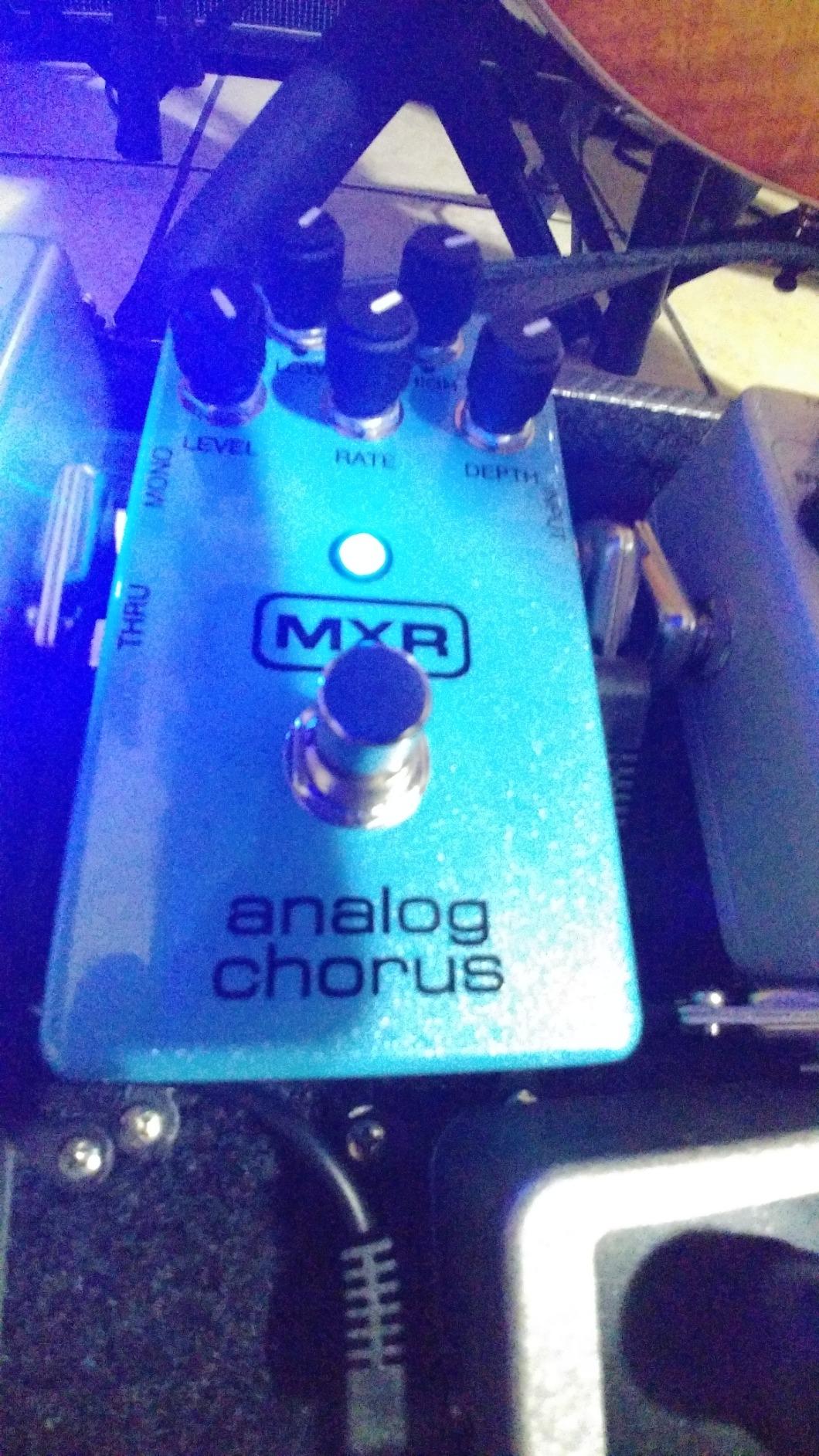
I tested the M234 with both a Stratocaster and a Les Paul. With the Strat, rolling back the Treble gave me a warm, rounded chorus that complemented the single-coil bite. With the Les Paul, boosting the Treble added sparkle that cut through the humbucker thickness. This flexibility is something most chorus pedals lack.
The all-analog circuit produces a natural warmth that digital choruses struggle to replicate. The BBD chip adds a subtle, pleasing saturation that enhances the overall tone. At higher Depth settings, you get those lush, seasick waves of modulation that work beautifully for ambient and shoegaze styles.
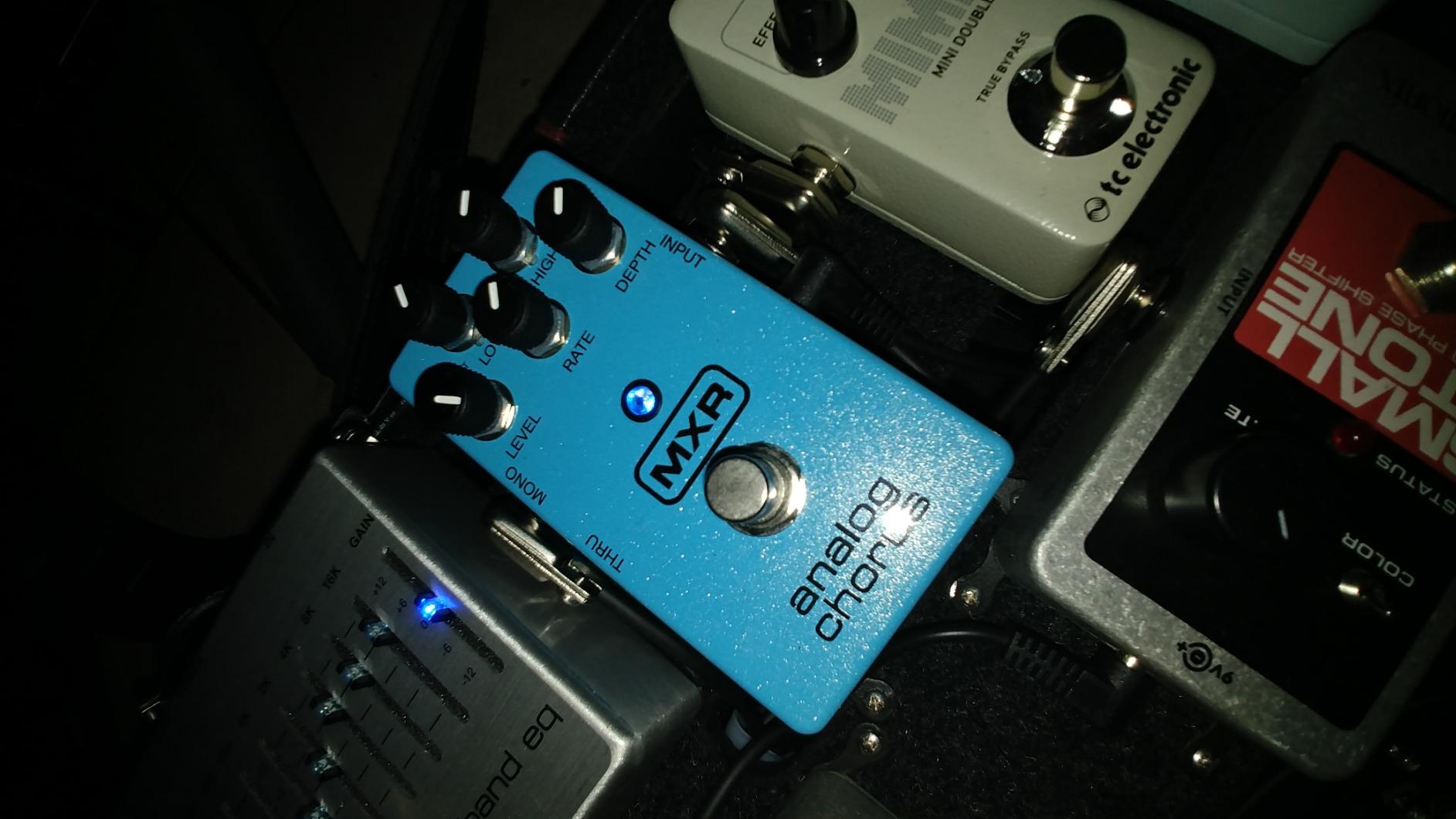
How the EQ Changes the Game
The Bass and Treble EQ controls are the real selling point of this pedal. Most chorus pedals give you rate and depth and leave it at that. The M234 lets you sculpt the frequency content of the chorus effect itself, which means you can dial out muddiness or add sparkle as needed.
For bass players, the MXR M234 can work well too, though it is not specifically designed for bass like the EHX Bass Clone on our list. The EQ controls help keep the low end defined when used with bass guitar.
Comparison to MXR M83 Bass Chorus
MXR also makes the M83 Bass Chorus Deluxe, which is specifically designed for bass with a crossover circuit. The M234 is a more traditional guitar chorus that works well for general use. If you primarily play bass, the dedicated bass chorus may be a better fit, but guitarists will love the M234 for its warmth and flexibility.
5. Electro-Harmonix Small Clone – The Nirvana Sound
Electro-Harmonix Small Clone Chorus
Analog circuit
True bypass
Single Rate knob
9V battery included
Vintage-inspired
Pros
- Classic Nirvana Come As You Are chorus tone
- True bypass for clean signal path
- Simple single-knob operation
- Durable EHX construction
- Lightweight and compact
Cons
- Limited controls with only one knob
- Some users report noise when engaged
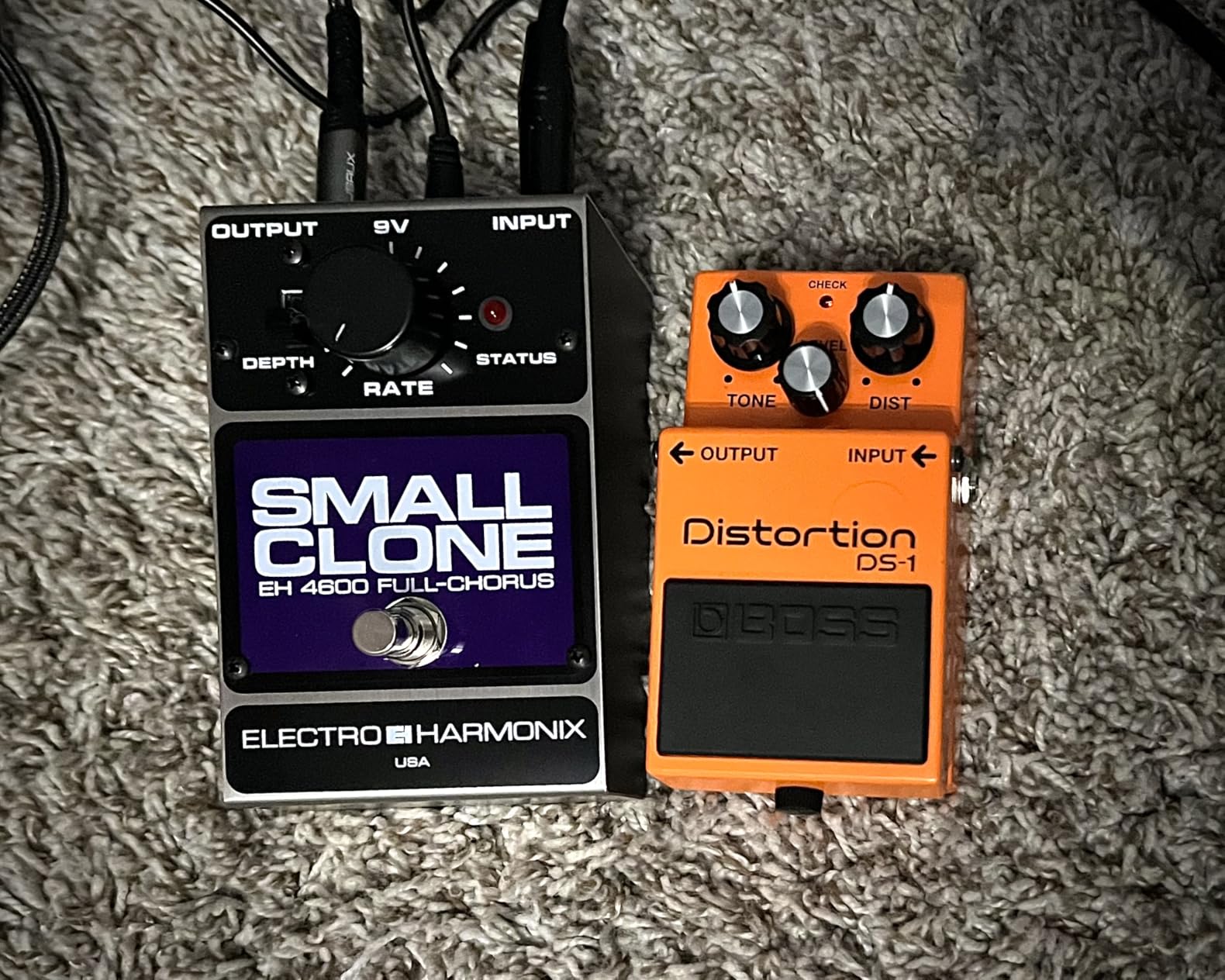
The Electro-Harmonix Small Clone is famous for one thing above all else: it is the chorus pedal that Kurt Cobain used on Nirvana’s Nevermind album. When I plugged into this pedal and hit that opening riff to Come As You Are, the sound was instantly recognizable. That alone makes it worth considering for any guitarist who loves 90s alternative rock.
What surprised me is how versatile the Small Clone actually is beyond its famous association. The single Rate knob controls the modulation speed, and the circuit is voiced to sound good at every setting. This is a pedal that does one thing and does it exceptionally well.
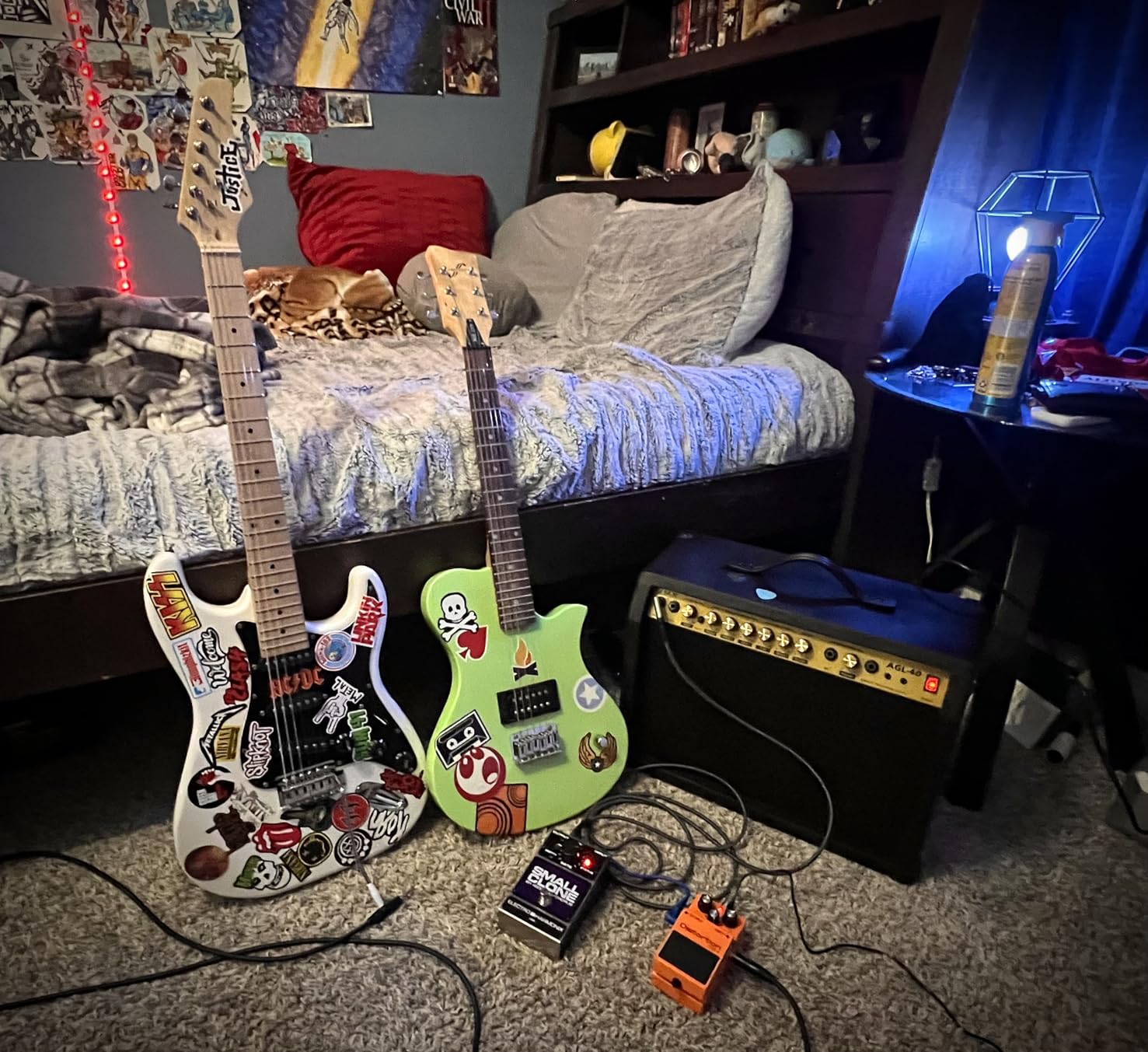
The analog circuit produces a warm, vintage-inspired chorus that has a distinctive character. It is not as clean or transparent as the BOSS CH-1, but that is part of its charm. The Small Clone adds personality and warmth to your tone that works beautifully for indie rock, grunge, and alternative styles.
True bypass switching means your signal passes through unaffected when the pedal is off. This preserves your core tone when you are not using the chorus. The included 9V battery is a nice touch, though most players will want to use a power supply for consistent operation.
The Single-Knob Design
Having only one knob might seem like a limitation, but it is actually liberating. You cannot dial in a bad sound with the Small Clone. Every position of the Rate knob produces a usable, musical chorus. This makes it perfect for players who want great chorus without fiddling with multiple controls.
The trade-off is that you cannot fine-tune the depth or mix level. If you need precise control over every aspect of your chorus, look elsewhere. But if you want instant, great-sounding chorus, the Small Clone delivers.
Best Genres for the Small Clone
This pedal excels at 90s alternative rock, grunge, indie, and punk. It is the sound of an era. But I also found it useful for cleaner, more atmospheric styles where the warm vintage character adds depth to arpeggiated chords and clean passages.
6. Walrus Audio Fundamental Series Chorus – Modern Versatility
Walrus Audio Fundamental Series Chorus
Rate Depth Mix controls
Light Medium Heavy modes
Analog and digital processing
9V 100mA
237 grams
Pros
- Three modes for different chorus intensities
- Mix control for precise wet-dry balance
- Sleek modern design
- Limited lifetime warranty
- Simple to operate
Cons
- Limited stock availability
- Only three modes with no fine-tuning between them
The Walrus Audio Fundamental Series Chorus brings boutique quality at an accessible price point. Walrus Audio is known for their premium pedals, and the Fundamental Series distills their design philosophy into a straightforward, affordable package. The moment I engaged this pedal, the sound quality was clearly a step above typical budget chorus pedals.
The three-mode toggle is the standout feature. Light mode gives you subtle, barely-there modulation that adds width without obvious chorus. Medium mode delivers classic chorus tones suitable for most playing situations. Heavy mode pushes into dramatic, almost seasick territory that works great for ambient and experimental styles.
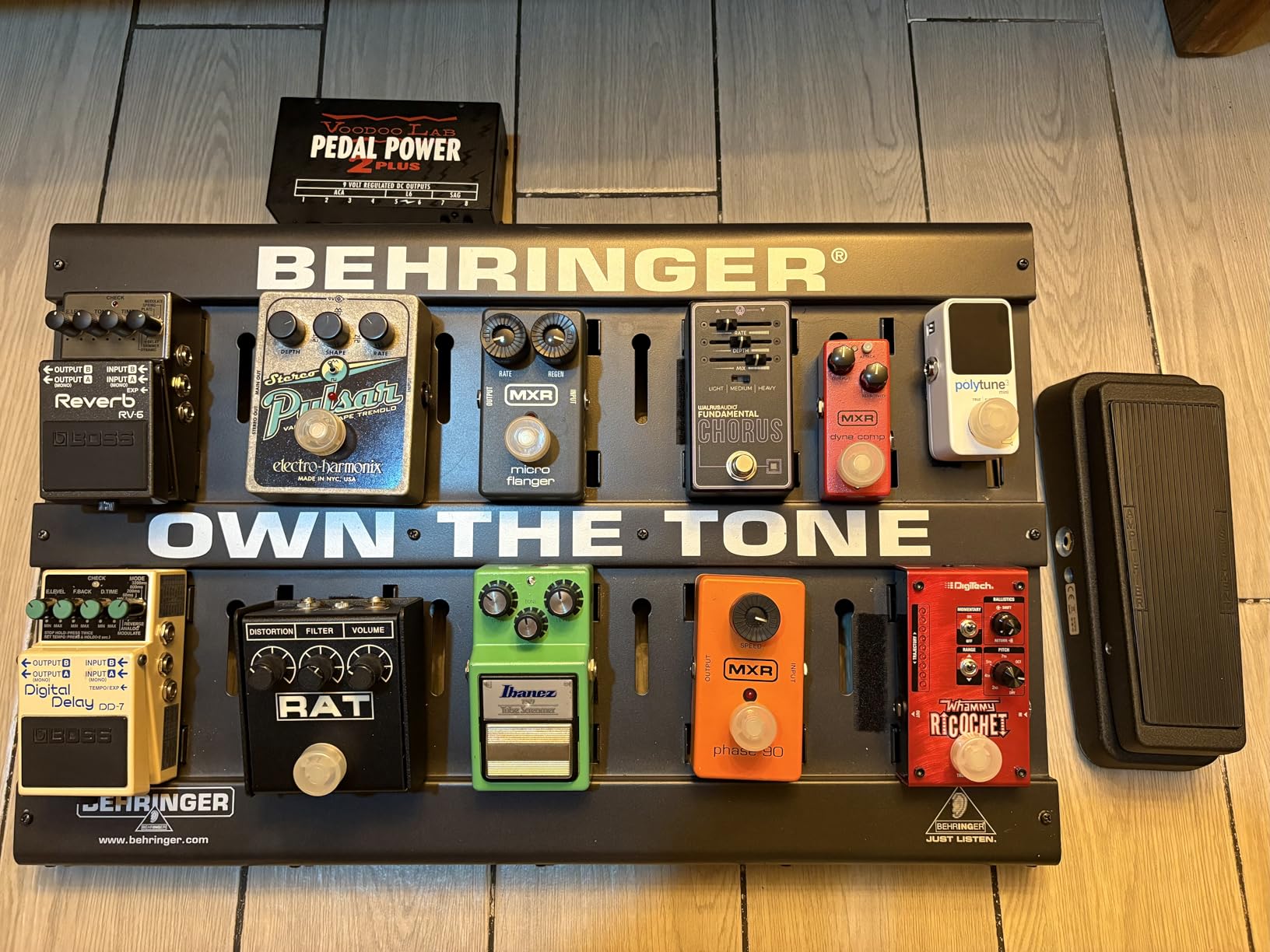
Having a Mix control is something I wish more chorus pedals included. It lets you blend the wet and dry signals to taste, which means you can dial in anything from a hint of modulation to a full, immersive chorus wash. This control alone makes the Fundamental Chorus more versatile than many pedals at twice the price.
The build quality reflects the Walrus Audio attention to detail. The housing feels solid, the footswitch is satisfying, and the knobs have a smooth, precise feel. The limited lifetime warranty backs up their confidence in the construction.
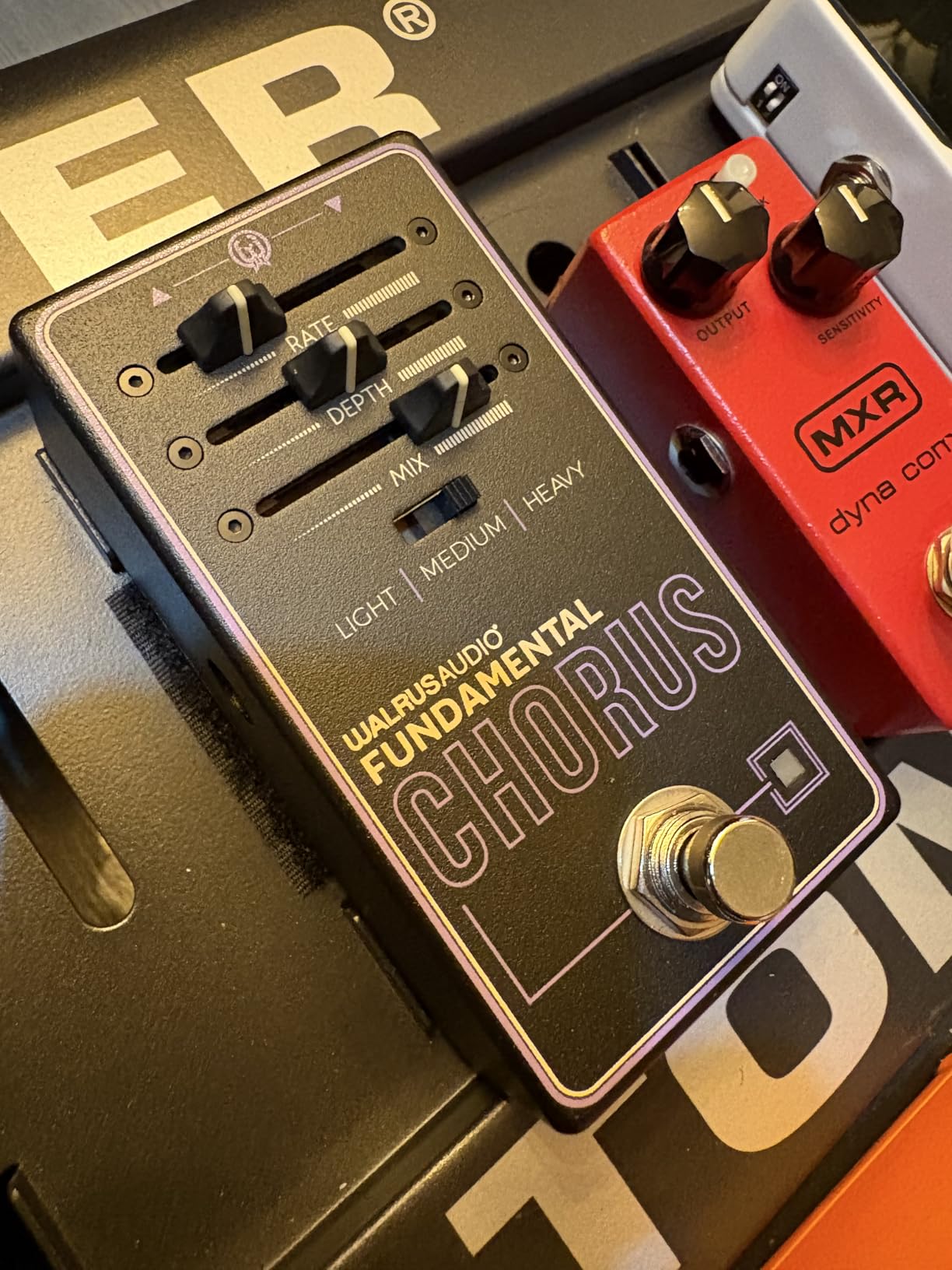
Mode Selection Guide
Light mode is perfect for adding subtle dimension to clean tones. Think of it as a gentle widening effect rather than obvious chorus. This works beautifully for rhythm guitar parts that need to fill space without dominating the mix.
Medium mode is your go-to for classic chorus sounds. It nails the 80s pop and new wave tones that made chorus famous. Heavy mode is where things get interesting for experimental players who want extreme modulation and dramatic movement.
Who Is This Pedal For
The Fundamental Series Chorus is ideal for players who want boutique sound quality without the boutique price tag. It is perfect for modern guitarists who appreciate clean design and intuitive controls. If you are building your first real pedalboard, this is an excellent choice that you will not outgrow.
7. Ibanez Chorus Mini – Compact Analog Chorus
Ibanez Chorus Mini Pedal
All-analog signal path
True bypass
Compact mini size
Level Speed Depth controls
8 ounces
Pros
- Genuine all-analog signal path
- True bypass switching
- Ultra-compact mini pedal design
- Level Speed and Depth controls
- 1-year warranty
Cons
- External DC power supply not included
- Small form factor may not suit all pedalboards
- Mini knobs can be hard to adjust
The Ibanez Chorus Mini proves that good things come in small packages. This pedal takes up minimal pedalboard space while delivering a genuine all-analog chorus sound. I was skeptical about the mini format at first, but the sound quality immediately won me over.
Ibanez has a long history of making great modulation pedals, and the Chorus Mini continues that tradition. The all-analog signal path produces warm, organic modulation that sounds natural and musical. True bypass switching ensures your tone stays pristine when the pedal is disengaged.
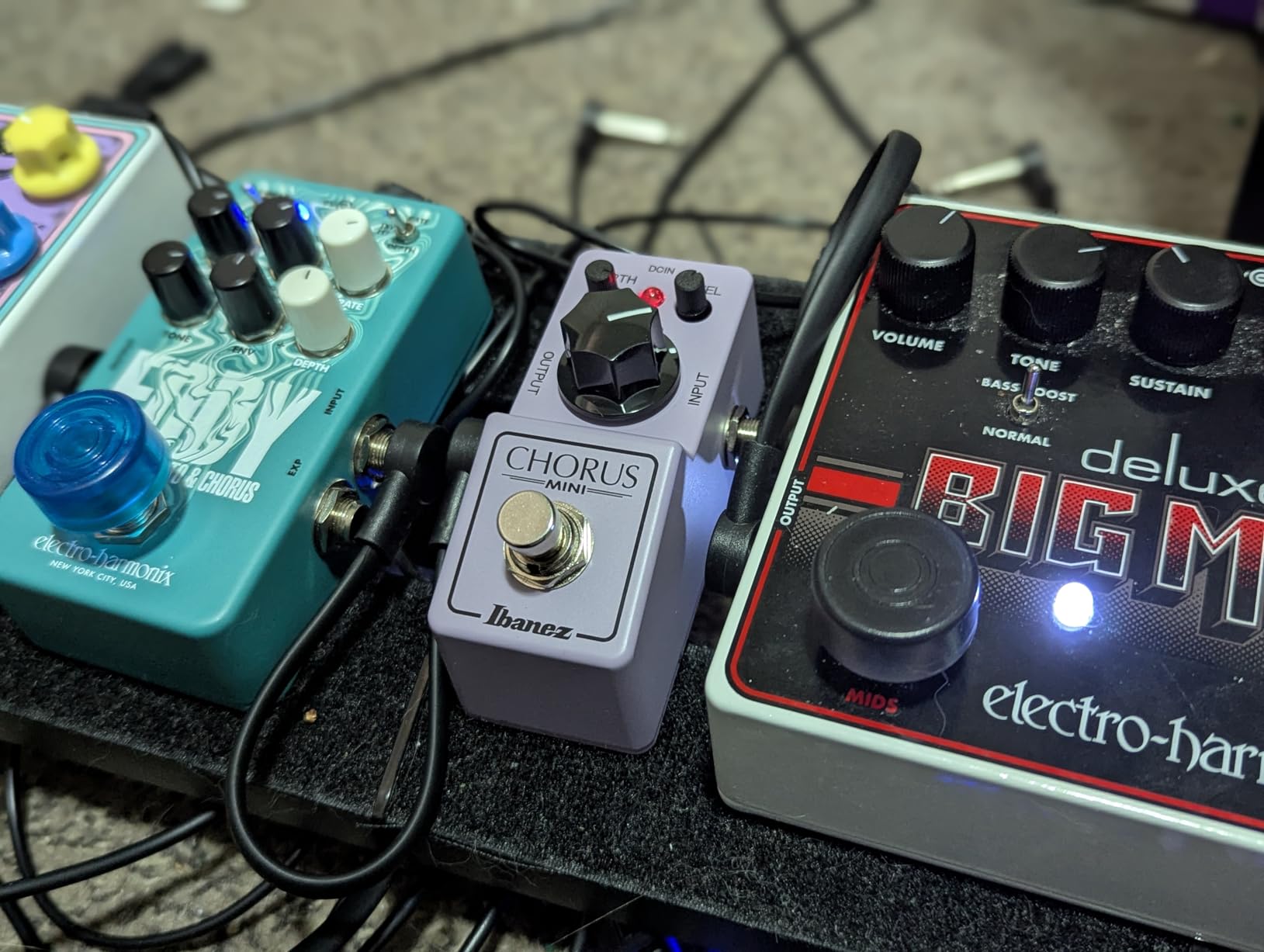
The three controls, Level, Speed, and Depth, give you enough range to cover most chorus needs. The Level control is particularly useful because it lets you set the overall output volume, ensuring the engaged chorus does not change your perceived volume level.
I found the Speed control to have a very usable range. At slower settings, you get gentle, swaying modulation. Speed it up and you approach vibrato territory. The Depth control works in tandem to determine how dramatic the pitch modulation is.
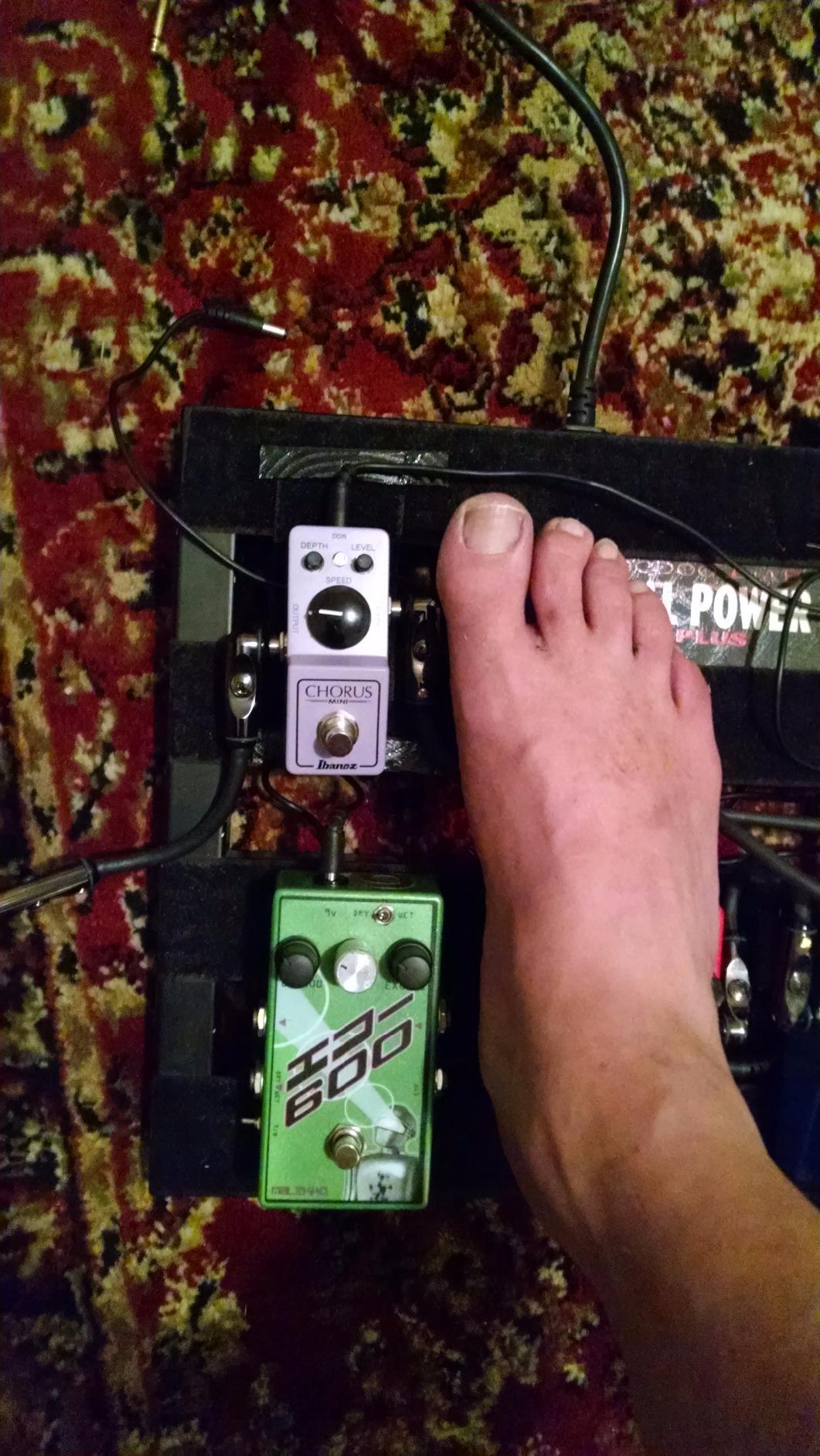
Pedalboard Space Savings
The main selling point of the Chorus Mini is its size. At just 3.85 by 2.5 by 2.4 inches, this pedal takes up a fraction of the space of standard chorus pedals. If you have a crowded pedalboard and need to squeeze in a chorus, this is one of your best options.
The trade-off is that the mini knobs can be tricky to adjust, especially during live performances. If you need to change settings on the fly, you may find the small controls frustrating.
Sound Quality vs Full-Size Pedals
Despite its small size, the Chorus Mini does not compromise on sound. The analog circuit produces the same warm, lush modulation as larger pedals. I compared it side by side with full-size analog chorus pedals and the difference was negligible for most playing situations.
8. Electro-Harmonix Bass Clone – Best Chorus for Bass Guitar
Electro-Harmonix Bass Clone Bass Chorus Pedal
Bass-specific crossover circuit
Bass and Treble EQ
True bypass
9V battery included
313 grams
Pros
- Crossover circuit preserves bass frequencies
- Bass and treble EQ controls for tonal shaping
- Works on guitar as well as bass
- True bypass switching
- Compact die-cast housing
Cons
- Some users report footswitch noise
- Can hiss when effect is engaged
- Not ideal for quiet studio environments
The Electro-Harmonix Bass Clone solves the biggest problem with using chorus on bass: the loss of low-end definition. Standard chorus pedals can make bass guitar sound muddy and unfocused. The Bass Clone uses a crossover circuit that lets your low frequencies pass through unaffected while adding shimmering chorus to the higher frequencies.
When I tested this pedal with a Fender Precision bass, the results were immediately impressive. The low E string stayed punchy and defined, while the higher strings got that classic chorus shimmer. This is exactly what bass players need from a modulation effect.
Beyond bass, I also tried the Bass Clone with guitar and was pleasantly surprised. It produces a unique chorus character that is slightly different from standard guitar chorus pedals. The crossover circuit gives it a tighter, more focused sound that works well for rhythm guitar parts.
The Crossover Circuit Explained
The genius of the Bass Clone is in its crossover design. Low frequencies pass through the pedal without being processed, preserving your fundamental bass tone. The chorus effect is applied only to mid and high frequencies, which is where modulation sounds best on bass.
This means you get the widening and movement of chorus without sacrificing the power and definition of your low end. It is the same principle used in much more expensive bass chorus units.
Ideal Genres and Styles
The Bass Clone excels at post-punk, new wave, funk, and any genre where bass chorus is a signature sound. Think of the bass tones on recordings by bands like The Cure, Joy Division, or New Order. This pedal nails those sounds beautifully.
For metal and hard rock bass, the Bass Clone can add subtle dimension without muddying your aggressive tone. Just keep the Depth low and the Rate moderate for best results in heavier contexts.
9. Donner Tutti Love Chorus – Best Budget Chorus Pedal
Donner Chorus Pedal, Tutti Love Analog Chorus Effect Classic Warm Chorus for Electric Guitar True Bypass
Analog chorus pedal
Level Depth Rate controls
True bypass
Aluminum alloy casing
Works on bass
Pros
- Exceptional value for money
- Warm analog chorus tone
- Works for both guitar and bass
- True bypass switching
- Compact aluminum alloy housing
- 2-year manufacturer warranty
Cons
- Power supply not included
- Small knobs can be difficult to operate
- Build quality is basic compared to premium pedals
The Donner Tutti Love is the pedal that proves you do not need to spend a fortune to get a usable chorus effect. At under $40, this pedal delivers a warm, analog chorus sound that is genuinely impressive for the price. With over 2,000 reviews and an Amazon’s Choice badge, it is one of the most popular budget chorus pedals on the market.
When I first plugged in the Tutti Love, my expectations were modest given the price. But the analog circuit produces a surprisingly warm and musical chorus that works well for practice, bedroom recording, and even casual jamming. It is not going to replace a CE-2W on a professional pedalboard, but it offers remarkable value.
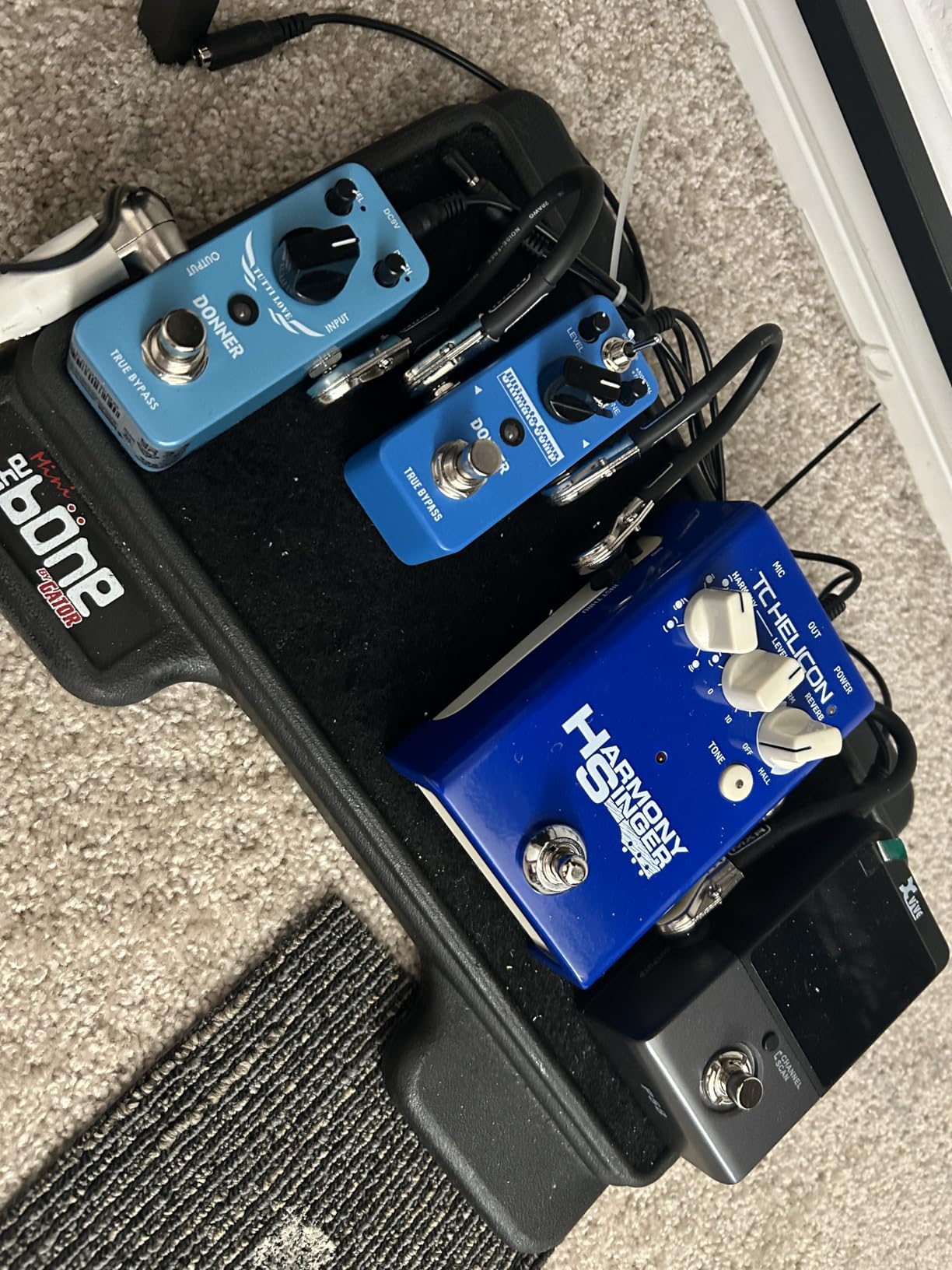
The three controls, Level, Depth, and Rate, cover the essentials. Level sets the output volume, Depth controls the intensity of the modulation, and Rate sets the speed. The range of sounds you can dial in is broader than I expected from a pedal at this price point.
I was also impressed that the Tutti Love works on bass guitar. While it does not have the crossover circuit of the EHX Bass Clone, it still produces a usable chorus effect on bass. For the price, this versatility is a significant bonus.
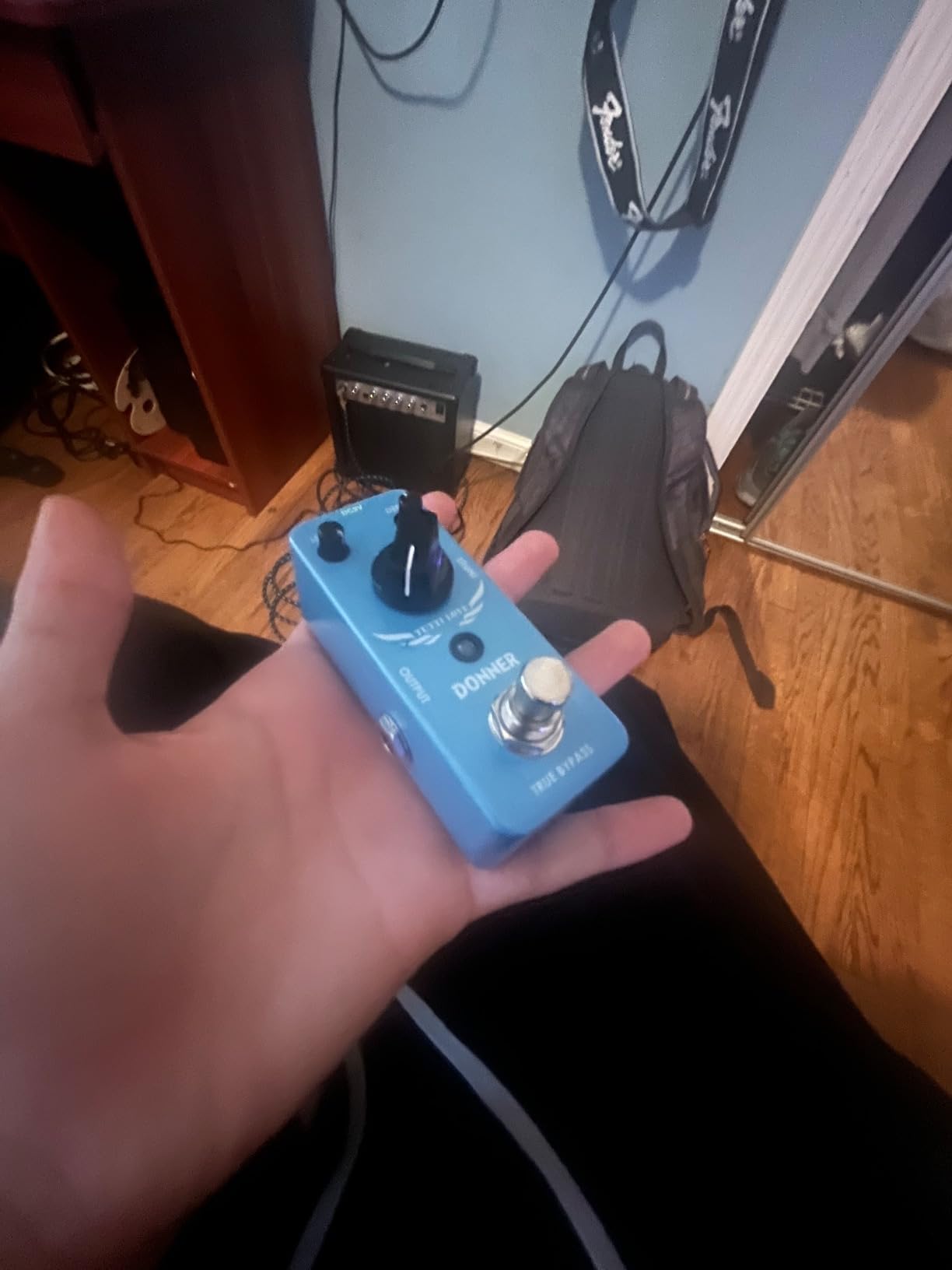
What You Get for the Price
At this price point, you are getting a functional analog chorus pedal with true bypass, a sturdy aluminum housing, and a two-year warranty. The components are not premium, and the construction is basic, but the pedal does what it promises. For beginners, students, or anyone on a tight budget, the Tutti Love is an excellent entry point into the world of chorus effects.
The Amazon’s Choice badge and Best Seller status reflect real customer satisfaction. Over 2,000 buyers have chosen this pedal and the majority are happy with their purchase.
Limitations to Be Aware Of
The small knobs can be difficult to adjust, especially if you have large fingers or need to change settings during a performance. The power supply is not included, so you will need to purchase one separately. Some users have noted that the build quality feels light compared to BOSS or MXR pedals.
These are reasonable trade-offs for a pedal that costs less than a set of guitar strings. If your budget is tight, the Donner Tutti Love is one of the best chorus pedals you can buy.
10. SONICAKE Chorus Pedal – Budget BBD Analog Chorus
SONICAKE Chorus Pedal Chorus Guitar Pedal Guitar Effects Pedal Classic BBD Analog True Bypass
BBD analog technology
Level Speed Depth controls
True bypass
Ultra-compact size
9V powered
Pros
- Genuine BBD analog chorus technology
- True bypass switching
- Level Speed and Depth controls for good tweakability
- Compact size fits any pedalboard
- Excellent value for money
Cons
- Power supply not included
- Short 90-day warranty period
- Some users report inconsistent quality control
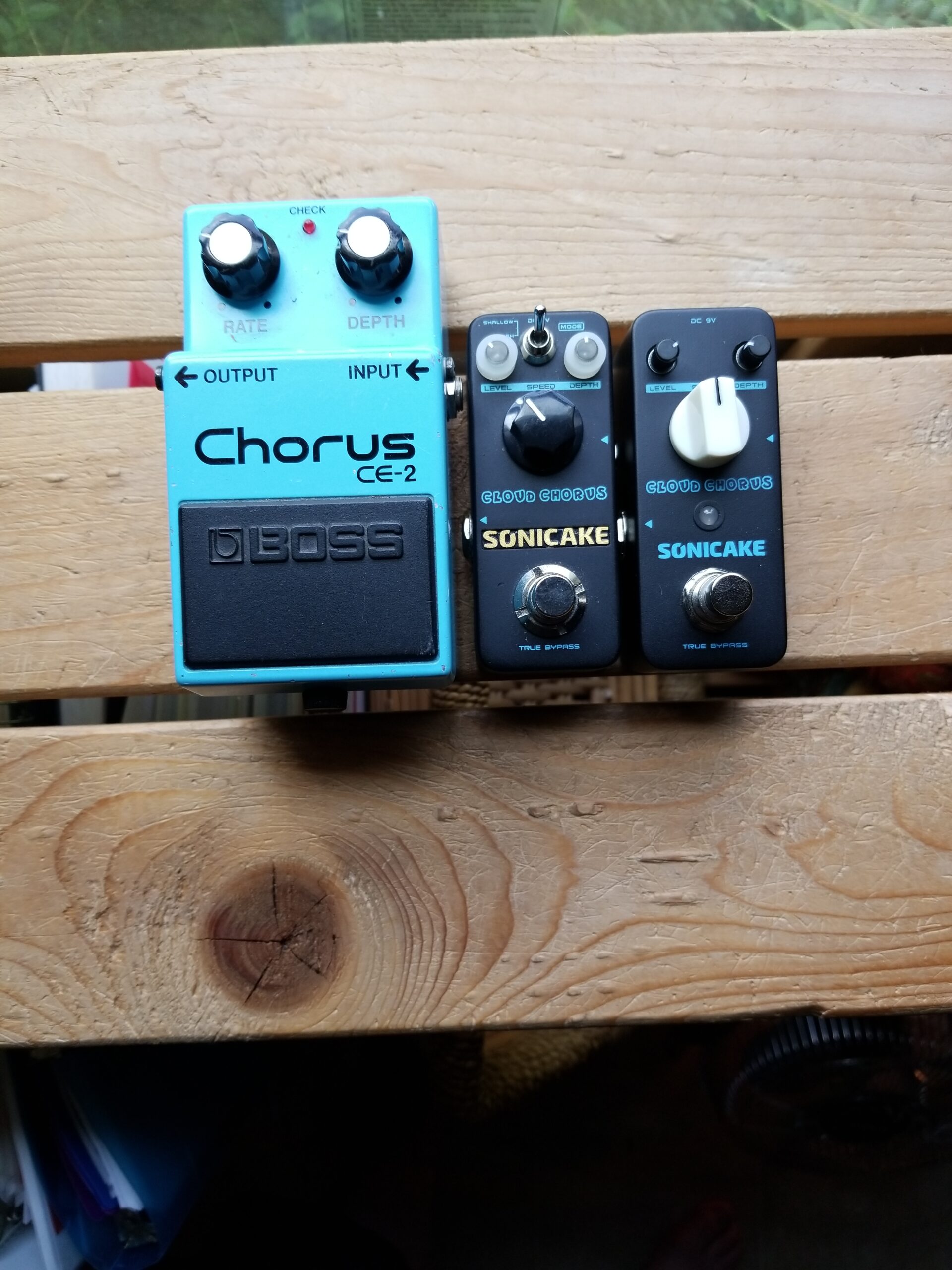
The SONICAKE Chorus Pedal rounds out our list as another exceptional budget option. Like the Donner Tutti Love, this pedal uses genuine bucket-brigade device technology to produce a warm, analog chorus sound. With over 2,500 reviews, it is one of the most reviewed chorus pedals on Amazon.
What immediately struck me about the SONICAKE was how warm the chorus sounded. The BBD circuit produces that vintage analog character that is hard to find at this price point. The Level, Speed, and Depth controls give you enough range to dial in everything from subtle modulation to dramatic pitch warbling.
The true bypass switching ensures your dry signal passes through unaffected when the pedal is off. This is impressive at this price, as many budget pedals use cheaper bypass methods that can degrade your tone. The aluminum housing feels surprisingly solid for a pedal at this cost.
I compared the SONICAKE directly with the Donner Tutti Love, and both pedals have similar strengths and weaknesses. The SONICAKE has a slightly warmer character, while the Donner has a bit more clarity in the high end. Both are excellent values that deliver far more than their price suggests.
Real-World Performance
In practice, the SONICAKE works well for practice, bedroom recording, and casual playing. It handles clean tones beautifully, adding warmth and width without sounding artificial. With overdrive or distortion, the chorus adds a nice dimension that works for rock and alternative styles.
The main concern from user reviews is quality consistency. While most units perform well, some buyers report issues with noise or component failure. The 90-day return window gives you time to test your unit and ensure it works properly.
SONICAKE vs Donner Tutti Love
Both pedals are excellent budget options, and the choice between them comes down to subtle tonal preferences. The SONICAKE has a warmer, more vintage character, while the Donner is slightly brighter and more modern. At this price point, either pedal is a solid choice for a first chorus pedal or a backup unit.
How to Choose the Best Chorus Pedal: Buying Guide
Choosing the right chorus pedal depends on your playing style, budget, and tonal preferences. Here is a breakdown of the key factors to consider when shopping for one of the best chorus pedals for your needs.
Analog vs Digital Chorus
The most important decision is between analog and digital chorus. Analog chorus pedals use bucket-brigade device (BBD) chips to create modulation. These circuits produce a warm, natural sound with a pleasing high-frequency roll-off. The BOSS CE-2W, MXR M234, and JHS 3 Series all use analog BBD circuits.
Digital chorus pedals use processors to create the modulation effect. These pedals tend to be cleaner, more transparent, and offer more features like presets and tap tempo. The trade-off is that some players find digital chorus to sound cold or sterile compared to analog alternatives.
If warmth and vintage character matter most to you, go analog. If you need pristine clarity and modern features, digital may be the better choice for your rig.
Understanding BBD Technology
Bucket-brigade devices are the heart of analog chorus pedals. These chips pass your audio signal through a series of capacitors, creating a short delay that is modulated by an LFO. The delayed, pitch-modulated signal is then blended with your dry signal to create the chorus effect.
The quality of the BBD chip significantly impacts the sound. Higher-quality chips produce less noise and more pleasing modulation. This is why premium pedals like the CE-2W sound better than budget BBD pedals, even though they use similar underlying technology.
Essential Controls to Look For
Most chorus pedals include Rate and Depth controls at minimum. Rate determines the speed of the modulation, from slow swells to fast vibrato-like warbling. Depth controls how pronounced the pitch modulation is, from subtle widening to dramatic seasick effects.
Additional controls that add versatility include Mix or Level (to balance wet and dry signals), EQ controls (to shape the tonal character), and Mode selectors (for different chorus flavors). Pedals with more controls give you more tonal options but can be more complex to operate.
True Bypass vs Buffered Bypass
True bypass means the pedal circuitry is completely bypassed when off, preserving your original tone. This is preferred by players with short signal chains and vintage-style guitars. Most of the pedals on our list feature true bypass switching.
Buffered bypass, used by BOSS pedals like the CH-1, keeps a buffer circuit active even when the pedal is off. This can actually be beneficial if you have long cable runs or many pedals in your chain, as the buffer prevents signal degradation. The debate between true and buffered bypass is ongoing, but both have their place depending on your rig.
Stereo vs Mono
If you run a stereo rig with two amplifiers, a stereo chorus pedal can create a dramatically wider, more immersive sound. The BOSS CH-1 is the standout stereo option on our list. Stereo chorus sends the modulation to two outputs, creating a ping-pong effect that fills the room.
For most players with a single amp, mono chorus is perfectly adequate. Do not pay extra for stereo capability unless you actually plan to use it in your setup.
Signal Chain Placement
Where you place your chorus pedal in your signal chain affects how it sounds. The most common placement is after overdrive and distortion pedals but before delay and reverb. This lets the chorus modulate your already-shaped guitar tone without interfering with ambient effects.
Some players prefer chorus before dirt pedals for a different character. Placing chorus before overdrive produces a more compressed, synth-like modulation that works well for certain styles. Experiment with placement to find the sound that works best for you.
Genre-Specific Recommendations
For shoegaze and ambient, look for pedals with wide Depth ranges and Mix controls like the Walrus Audio Fundamental. For 80s pop and new wave, the BOSS CE-2W and CH-1 nail those classic tones. For grunge and alternative rock, the EHX Small Clone is the iconic choice. For bass, the EHX Bass Clone is purpose-built for low frequencies and preserves the punch that bass players need.
Frequently Asked Questions About Chorus Pedals
What chorus pedal does John Mayer use?
John Mayer has been seen using several chorus pedals over the years, most notably the BOSS CE-2 and the CE-1 Chorus Ensemble. He has also used the TC Electronic Stereo Chorus Plus. His chorus tones tend to be subtle and warm, adding dimension to his clean Stratocaster sound without overwhelming the fundamental tone.
What famous song uses a chorus pedal?
Some of the most famous songs featuring chorus pedals include Come As You Are by Nirvana (EHX Small Clone), Sweet Child O Mine intro by Guns N Roses, Every Breath You Take by The Police, and countless tracks by The Smiths featuring Johnny Marr. The 1980s were the golden era of chorus pedals, with the effect appearing on hit after hit across rock, pop, and new wave genres.
What chorus pedal did Eddie Van Halen use?
Eddie Van Halen primarily used the Roland CE-1 Chorus Ensemble, which was one of the first chorus pedals ever made. The BOSS CE-2W Waza Craft on our list actually includes a CE-1 mode that recreates this legendary sound. Eddie used the chorus for his clean tones and famously combined it with his phaser for signature Van Halen textures.
What is the difference between chorus and vibrato?
Chorus blends a modulated pitch-shifted signal with your dry signal, creating the effect of multiple guitars playing at once. Vibrato modulates the pitch of your entire signal without blending it with a dry signal, creating a wobbling pitch effect. Many chorus pedals, including the JHS 3 Series and BOSS CE-2W, can produce vibrato by removing or reducing the dry signal.
Where should I place my chorus pedal in my signal chain?
The standard placement for a chorus pedal is after your dirt pedals (overdrive, distortion, fuzz) and before your time-based effects (delay, reverb). This allows the chorus to modulate your shaped guitar tone. Some players prefer placing chorus before dirt for a more compressed, synth-like sound. Experiment with both placements to find your preferred tone.
Conclusion: Finding Your Perfect Chorus Pedal
The best chorus pedals each have their own character and strengths. The BOSS CE-2W Waza Craft remains our top pick for players who want premium analog chorus with authentic vintage warmth. The JHS 3 Series Chorus offers the best balance of quality and value, while the Donner Tutti Love proves that great chorus does not have to be expensive.
Whether you play shoegaze, funk, metal, or 80s covers, there is a chorus pedal on this list that will suit your needs. Consider your budget, playing style, and tonal preferences when making your choice. Any of these 10 pedals will add depth, width, and movement to your guitar tone in 2026 and beyond.