I have spent years building pedalboards for studio sessions and live gigs, and few effects transform a guitar signal as dramatically as a good octave pedal. Whether you want to turn your six-string into a rumbling bass, thicken your riffs with 12-string shimmer, or dive into wild synth-like textures, the best octave pedals give you an entirely new instrument without picking up a second one.
An octave pedal works by generating artificial notes at octave intervals above or below what you play. Some use analog circuitry for warm, vintage tones that track monophonically. Others use digital signal processing (DSP) to handle polyphonic chords with pristine accuracy. The right choice depends on your playing style, your genre, and how much real estate you have left on your board.
Our team compared 10 of the most popular octave pedals on the market, testing everything from tracking accuracy on complex chords to how each unit behaves when stacked with fuzz and distortion. We looked at budget options under $50, professional-grade analog units, and cutting-edge digital pitch shifters. If you are searching for the best octave pedals in 2026, this guide breaks down exactly what each one does well and where it falls short.
Table of Contents
Top 3 Picks for Best Octave Pedals

Electro-Harmonix Pitch Fork
- 3 shift modes
- 11-position Shift knob
- Expression pedal input
- Polyphonic tracking

TC Electronic SUB N Up Octaver
- 3 blendable octaves
- TonePrint technology
- Poly and classic modes
- Compact footprint
10 Best Octave Pedals in 2026
| Product | Specifications | Action |
|---|---|---|
| EHX Pitch Fork |
|
Check Latest Price |
| TC Electronic SUB N Up |
|
Check Latest Price |
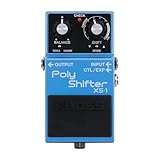 BOSS XS-1 Poly Shifter BOSS XS-1 Poly Shifter |
|
Check Latest Price |
 EHX Nano POG EHX Nano POG |
|
Check Latest Price |
 MXR Poly Blue Octave MXR Poly Blue Octave |
|
Check Latest Price |
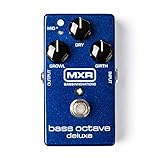 MXR Bass Octave Deluxe MXR Bass Octave Deluxe |
|
Check Latest Price |
 MOOER Harmony X2 MOOER Harmony X2 |
|
Check Latest Price |
 MXR Blue Box Octave Fuzz MXR Blue Box Octave Fuzz |
|
Check Latest Price |
 JOYO XVI R-13 Octave JOYO XVI R-13 Octave |
|
Check Latest Price |
 Donner Harmonic Square Donner Harmonic Square |
|
Check Latest Price |
1. Electro-Harmonix Pitch Fork – Versatile Polyphonic Pitch Shifter
Electro-Harmonix Pitch Fork Polyphonic Pitch Shift Pedal
3 shift modes
11-position Shift knob
Expression pedal input
Polyphonic DSP
Pros
- Three shift modes for up down and dual octave
- 11-position transposition interval selection
- Expression pedal input for real-time pitch control
- Latch and Momentary footswitch modes
- 297 reviews with 4.5 star rating
Cons
- Not Prime eligible
- Requires 200mA power draw
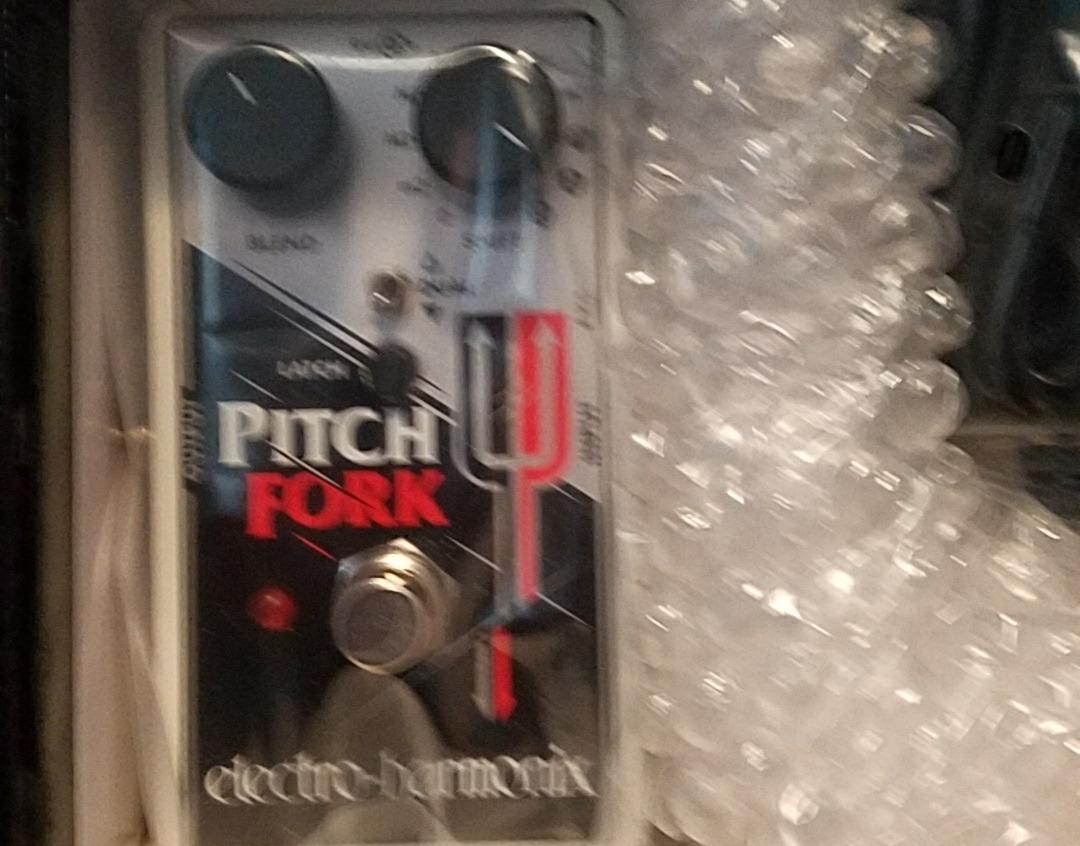
The EHX Pitch Fork was the first octave pedal I reached for when I wanted something that could do more than just standard octave up or down. It gives you three shift modes that let you pitch your signal up, down, or both simultaneously. The 11-position Shift knob is the standout feature here, letting you select exact transposition intervals from minor second all the way to a full octave.
I spent a weekend running this pedal through everything from clean fingerpicking to heavy distortion. The polyphonic tracking held up impressively well on full chords, which is not something every pitch shifter can claim. The expression pedal input opened up Whammy-style glissando effects that added a whole new dimension to solos.
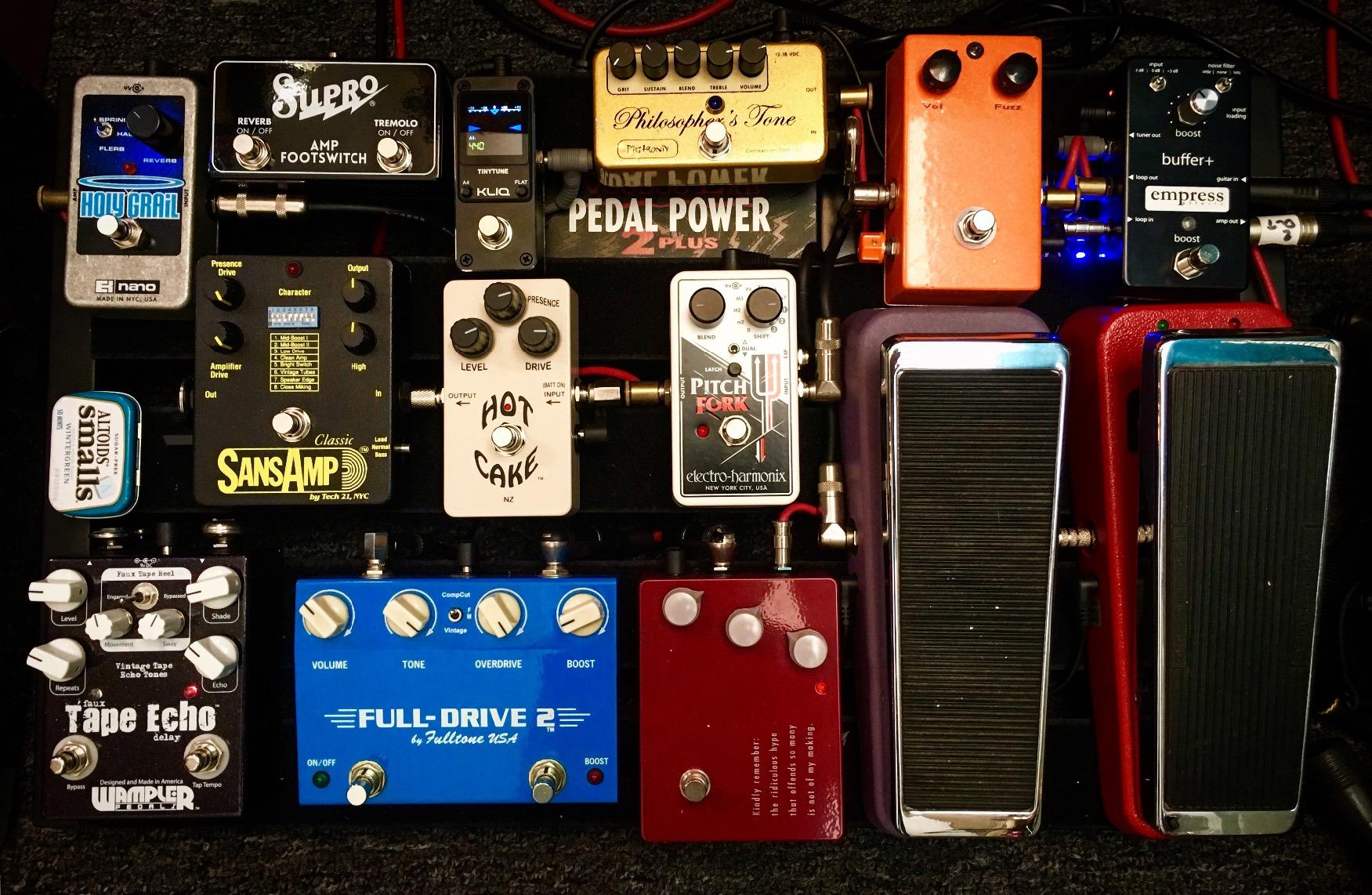
What sets the Pitch Fork apart from cheaper alternatives is the quality of its digital processing. The shifted notes sound natural and retain the character of your original tone rather than feeling synthetic or glitchy. In Latch mode the effect stays on until you stomp again, while Momentary mode only applies the shift while you hold the footswitch, which is perfect for quick bursts of harmonic texture.
The 200mA power draw is higher than most analog pedals, so you will need a power supply that can deliver adequate current. I ran mine off a dedicated output on my isolated supply without issues. The compact size fits nicely on crowded pedalboards, and the white enclosure looks distinctive without being flashy.
Who Should Buy the Pitch Fork
Guitarists who want a single pedal capable of covering octave up, octave down, and everything in between will love the Pitch Fork. It is particularly well-suited for players who perform live and need quick access to multiple pitch intervals without menu diving. The expression pedal compatibility makes it a serious alternative to a full DigiTech Whammy for players with limited board space.
Where It Falls Short
The Pitch Fork is a digital pedal, which means analog purists will notice a slightly different character compared to something like the MXR Bass Octave Deluxe. The higher current requirement of 200mA may also be an issue if you are running a compact power supply. Some players also report that the shifted notes can sound slightly processed on very clean settings compared to true analog octave circuits.
2. TC Electronic SUB N Up Octaver – TonePrint-Powered Versatility
TC Electronic SUB ‘N’ UP OCTAVER
3 blendable octaves
TonePrint technology
Poly and classic modes
Compact footprint
Pros
- TonePrint technology for custom sounds
- 3 blendable octaves with dry control
- Poly and classic modes
- Compact footprint with excellent tracking
Cons
- Some latency reported in stock poly mode
- Limited stock availability
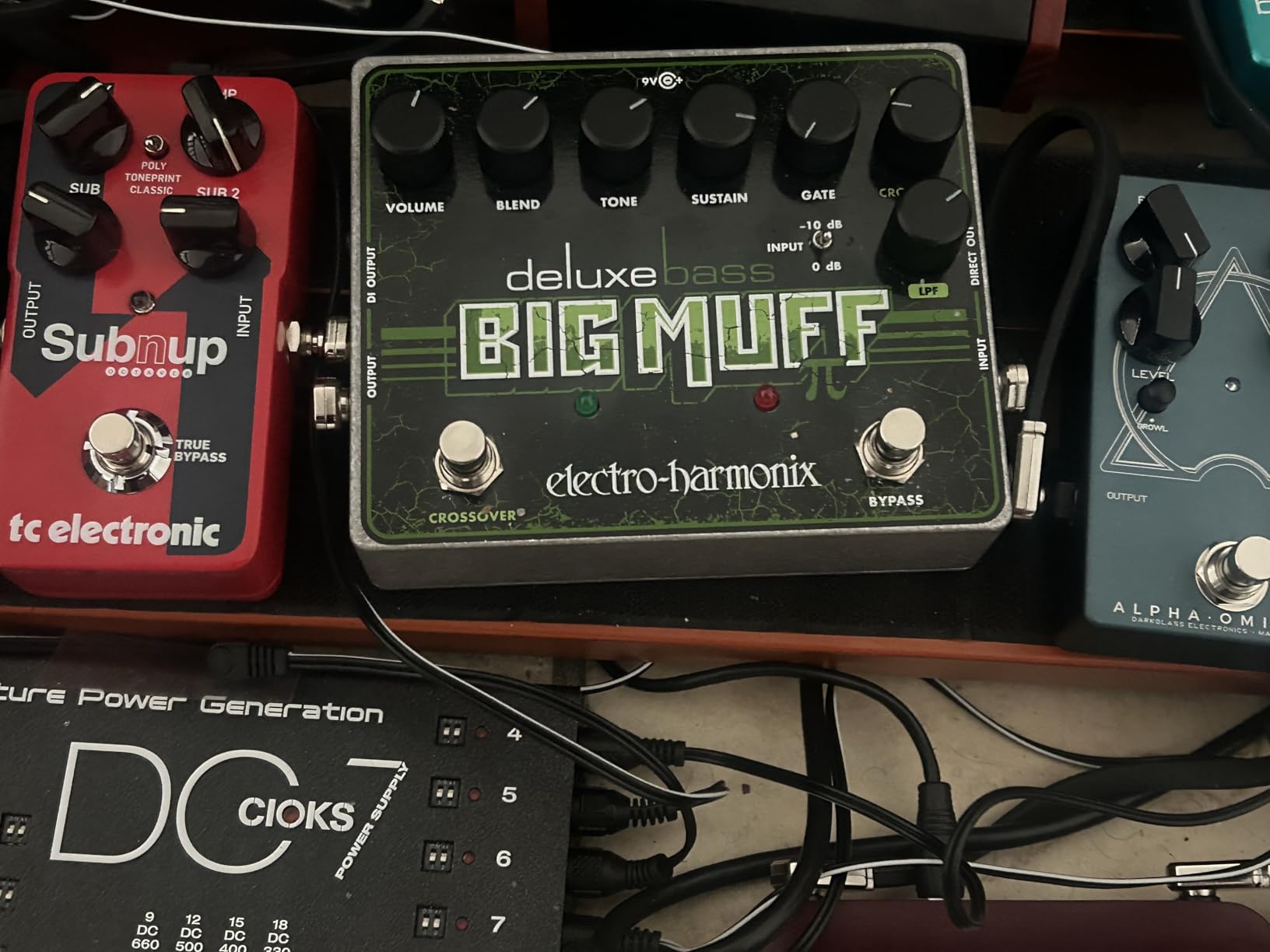
The TC Electronic SUB N Up earned its place on my board through sheer versatility. It gives you three blendable octaves plus your dry signal, meaning you can dial in sub octave, octave up, and octave down all at once or individually. The three-way mode switch toggles between polyphonic and classic modes, giving you modern tracking precision or vintage analog-style warmth.
What sold me on this pedal was the TonePrint technology. You can beam custom preset sounds directly to the pedal via the TC Electronic smartphone app. This opens up access to hundreds of artist-created tones that completely transform what the SUB N Up can do, from organ emulations to wild synth textures.
In poly mode, chord tracking was tight and responsive across the fretboard. I tested it with everything from open position cowboy chords to barre chords up the neck, and it handled them without the glitching that plagues budget octave pedals. The classic mode delivers that warm, slightly imperfect analog octave sound that works beautifully for single-note riffs.
The compact footprint is a major advantage for players running crowded boards. At just 4.8 x 1.97 x 2.87 inches, this pedal takes up minimal space while delivering professional-grade octave effects. The Prime eligibility also makes it an outstanding value proposition in the best octave pedals category.

Who Should Buy the SUB N Up
Players who want maximum control and customization without spending premium prices should look no further. The TonePrint system alone gives you access to hundreds of different sounds, making this one of the most versatile octave pedals per dollar on the market. It is ideal for guitarists who play multiple genres and need their pedal to adapt.
Where It Falls Short
Some users report minor latency in the stock poly mode, though switching to TonePrint presets or classic mode largely resolves this. The limited stock availability can also make it harder to find during peak shopping seasons. The 9V power requirement is standard, but you will want an isolated supply to avoid noise issues.
3. BOSS XS-1 Poly Shifter – Class-Leading Pitch Algorithms
BOSS XS-1 Poly Shifter | Compact Pitch Shifting Pedal | Class-Leading Quality | Change Guitar/Bass Pitch Across 7 Semitones or 3 Octaves | Natural Feel & Response | Connect External Footswitches
+/- 7 semitones or +/- 3 octaves
Detune function
Expression pedal support
5-year warranty
Pros
- Class-leading pitch shifting quality
- Natural feel and response
- Polyphonic tracking works well
- 5-year manufacturer warranty
- External footswitch compatibility
Cons
- Not Prime eligible
- Requires AC adapter not battery powered
- Higher price point
The BOSS XS-1 Poly Shifter represents the newest generation of pitch shifting technology from a company that has been building octave pedals since the original OC-1. BOSS engineered entirely new DSP algorithms for this pedal, and the results are immediately noticeable. The shifted notes have a clarity and natural decay that puts most competitors to shame.
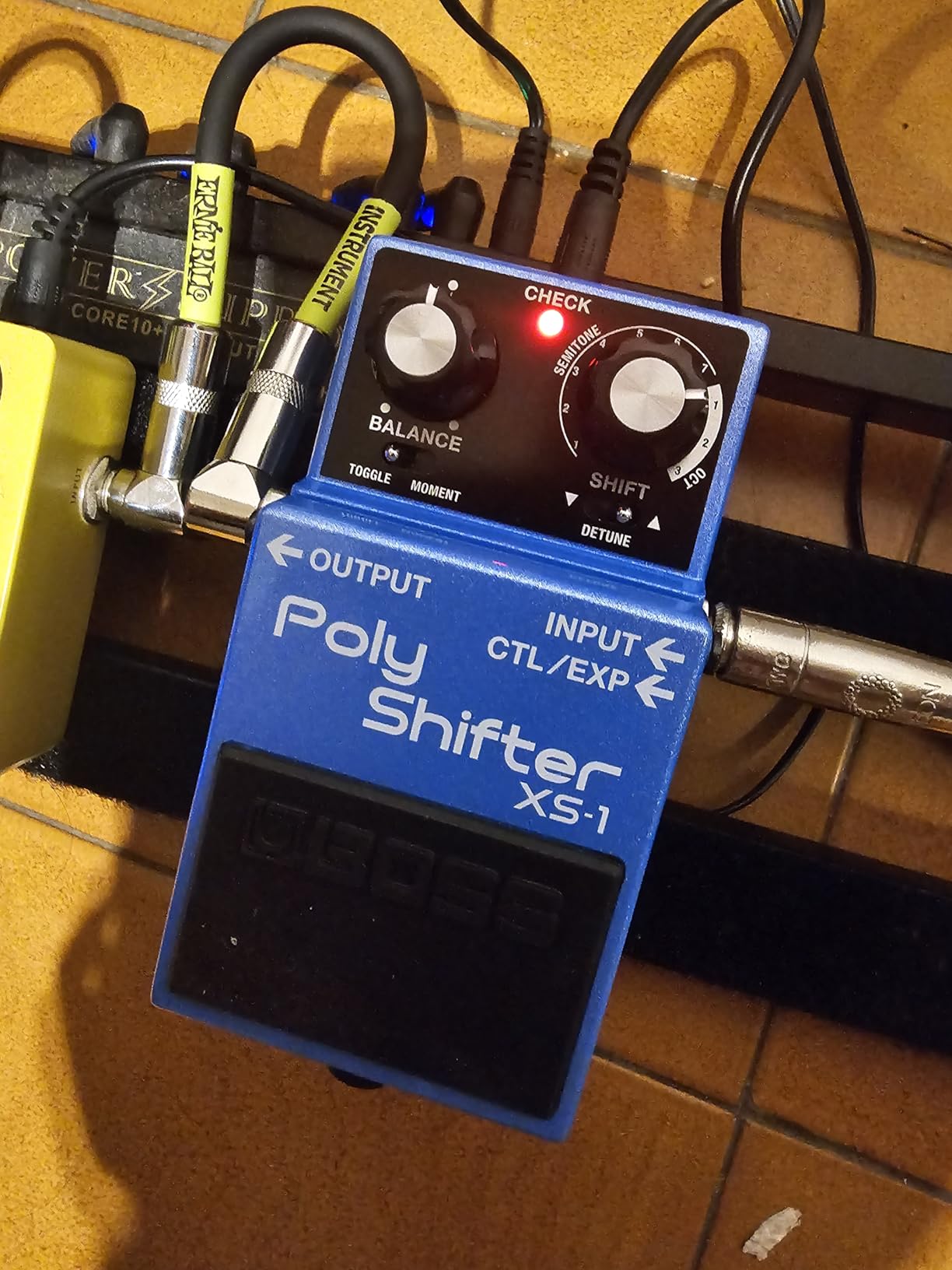
I was particularly impressed by the range on this pedal. It covers plus or minus seven semitones or plus or minus three full octaves, which is a wider range than most pedals in this class. The balance knob lets you blend the effect and direct sound to taste, and the detune function adds subtle pitch variation for rich doubling effects.
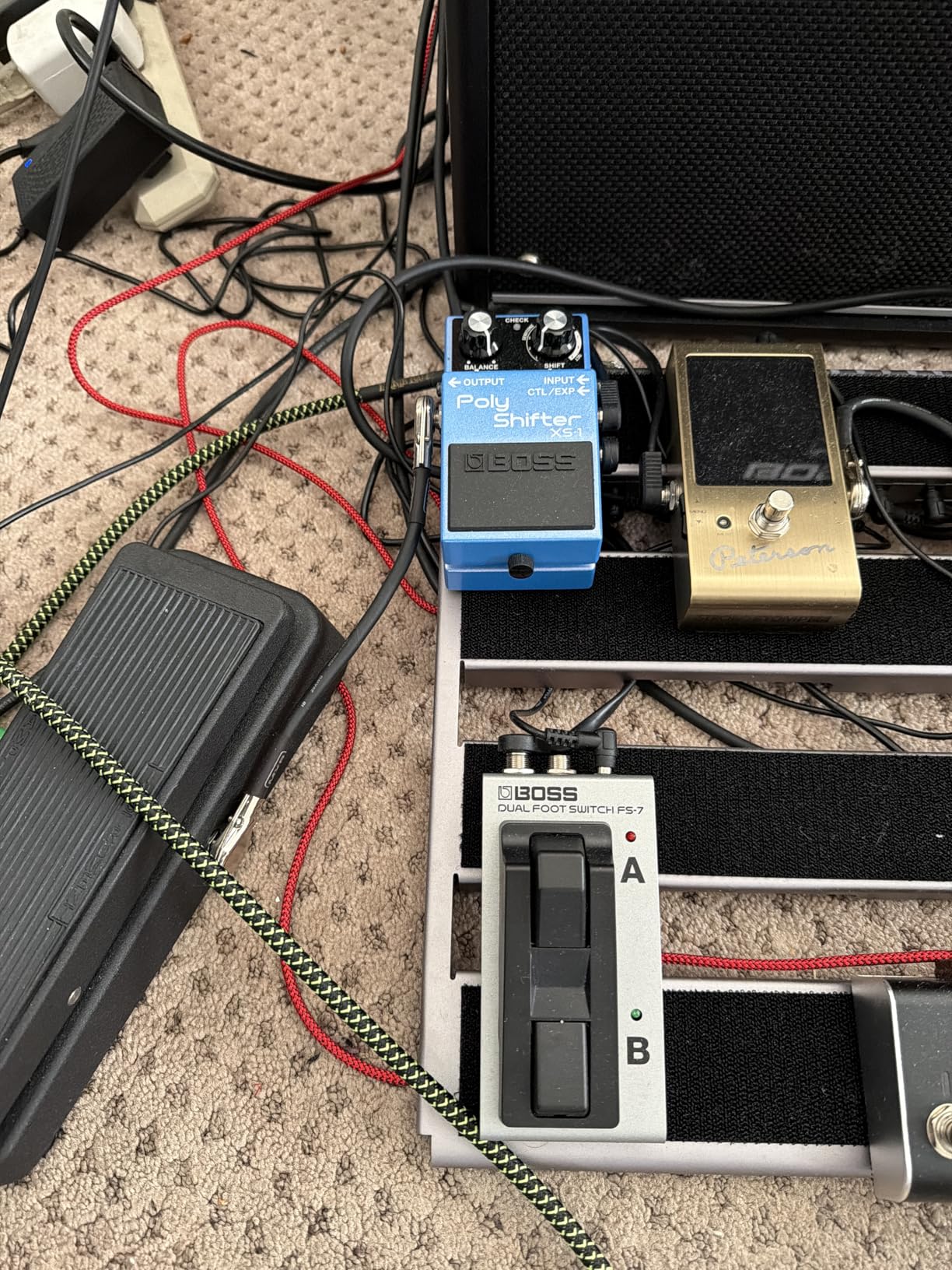
The selectable pedal switch modes are a thoughtful touch. You can choose between toggle operation for traditional stompbox behavior or momentary operation for quick pitch drops and rises. The external footswitch support lets you access up to three different tuning setups on the fly, which is invaluable for live performance.
BOSS backs this pedal with a 5-year manufacturer warranty, which speaks to their confidence in the build quality. The familiar BOSS compact enclosure is built to withstand decades of stomping, and the buffered bypass preserves your signal over long cable runs. This is a serious tool for working musicians who need reliability night after night.
Who Should Buy the XS-1 Poly Shifter
Guitarists who prioritize sound quality above all else will find the XS-1 hard to beat. The new BOSS algorithms deliver pitch shifting that sounds natural across the entire range. It is especially good for players who need reliable performance in live settings and want the peace of mind that comes with a 5-year warranty.
Where It Falls Short
The pedal requires an AC adapter rather than running on battery power, which limits placement flexibility. It is also not Prime eligible, and the higher price point may put it out of reach for casual players. Some users may also find the single-knob interface limiting compared to multi-knob alternatives.
4. Electro-Harmonix Nano POG – Polyphonic Octave Generator
Electro-Harmonix Nano POG Polyphonic Octave Generator Pedal
Polyphonic octave generation
Adjustable pitch volumes
Silent footswitching
Die-cast chassis
Pros
- Excellent tracking for chords and single notes
- Creates 12-string or guitar-to-bass sounds
- Silent footswitching
- Road-worthy die-cast package
Cons
- Limited stock availability
- Higher price point
The Nano POG is the pedal I recommend when someone asks for an octave pedal that just works. No modes to scroll through, no presets to manage, just three straightforward knobs controlling your original pitch, one octave up, and one octave down. This simplicity is actually its greatest strength because it lets you focus on playing rather than tweaking.
I ran full chord progressions through the Nano POG and the polyphonic tracking never missed a beat. It handles sweeps, arpeggios, and complex jazz voicings with zero glitches. Crank the octave up and roll off your dry signal for a convincing 12-string acoustic tone. Push the octave down and you have a believable bass guitar at your feet.
The organ-like sounds you can achieve by blending all three signals are genuinely remarkable. I have used the Nano POG on studio recordings where producers wanted lush, keyboard-like textures without hiring a session keys player. The silent footswitching means you can engage and disengage the effect between songs without any audible pops or clicks.
The die-cast chassis feels built for the road. This pedal can take a beating and keep performing, which is why so many touring professionals rely on the POG family. The battery-powered option gives you backup if your power supply fails mid-gig, though you will want the included adapter for regular use.
Who Should Buy the Nano POG
Players who want professional polyphonic octave generation in a simple, no-nonsense package will find the Nano POG ideal. It is perfect for songwriters who need quick access to octave sounds without fiddling with controls. The 12-string and bass simulation capabilities also make it excellent for solo performers and loop artists.
Where It Falls Short
The Nano POG sits at a premium price point that may exceed casual players’ budgets. Stock availability is frequently limited, which can make purchasing frustrating. The pedal also offers only basic octave up and down rather than the wider interval options found on pedals like the Pitch Fork.
5. MXR Poly Blue Octave – Four-Octave Fuzz Monster
MXR® Poly Blue Octave
4 octave divisions
Poly and mono modes
Built-in fuzz
Expression pedal compatible
Pros
- Four separate octave divisions with individual level controls
- Toggle between polyphonic and monophonic modes
- Built-in fuzz inspired by MXR Blue Box
- Expression pedal compatible
Cons
- Limited stock of 7 units
- Can be overwhelming to dial in
The MXR Poly Blue Octave is unlike any octave pedal I have used because it combines four separate octave divisions with a built-in fuzz circuit. Each octave has its own level control, meaning you can create massive walls of sound from a single guitar. The blue enclosure also looks absolutely stunning on any pedalboard.
Being able to toggle between polyphonic and monophonic modes is what makes this pedal special. Poly mode handles chords with ease, while the monophonic mode delivers that gritty, vintage octave sound reminiscent of classic octave fuzz pedals. The built-in fuzz adds an aggressive character that works perfectly for hard rock and metal riffs.
The expression pedal compatibility is a feature I did not know I needed until I tried it. Connecting an expression pedal lets you sweep through octave divisions in real time, creating dramatic pitch drops and rises similar to a Whammy pedal. This transforms the Poly Blue from a standard octave pedal into a performance instrument.
Who Should Buy the Poly Blue Octave
Hard rock and metal guitarists who want octave effects with built-in fuzz will love this pedal. It is also great for experimental players who enjoy creating dense, layered tones from a single effects unit. The four-octave range with individual controls makes it one of the most flexible octave pedals available.
Where It Falls Short
Having four octave divisions plus fuzz can be overwhelming to dial in, especially for players used to simpler pedals. The learning curve is steeper than a standard three-knob octave pedal. Stock levels are also frequently low, so you may need to act quickly when units become available.
6. MXR Bass Octave Deluxe – Analog Tone for Bass and Guitar
MXR® Bass Octave Deluxe
Analog signal path
Constant Headroom Technology
True bypass
Two octave voices
Pros
- Constant headroom technology for excellent tracking
- True bypass for clean signal
- Organic analog tone
- Two independent octave voices
- Mid+ switch for midrange boost
Cons
- Only 17 units in stock
- 18V power requirement
- Analog warmth may not suit all genres
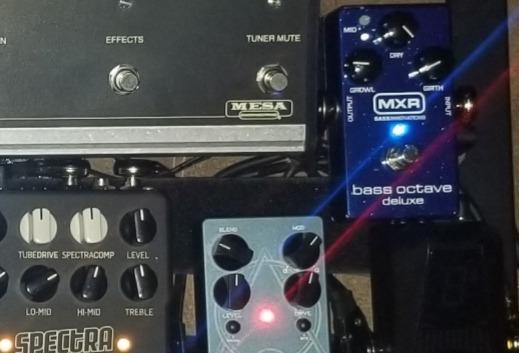
The MXR Bass Octave Deluxe is an analog octave pedal that delivers the kind of warm, organic tone that digital units struggle to replicate. MXR designed this pedal with their Constant Headroom Technology, which provides exceptional tracking and dynamic response. Although it is marketed primarily for bass, I found it equally compelling on guitar.
Two independent octave voices give you tonal flexibility that single-voice analog pedals cannot match. I spent time blending both voices to create thick, layered sub-octave textures that filled out the low end beautifully. The Mid+ switch adds a midrange boost at a user-selected frequency, which helps your signal cut through dense mixes.
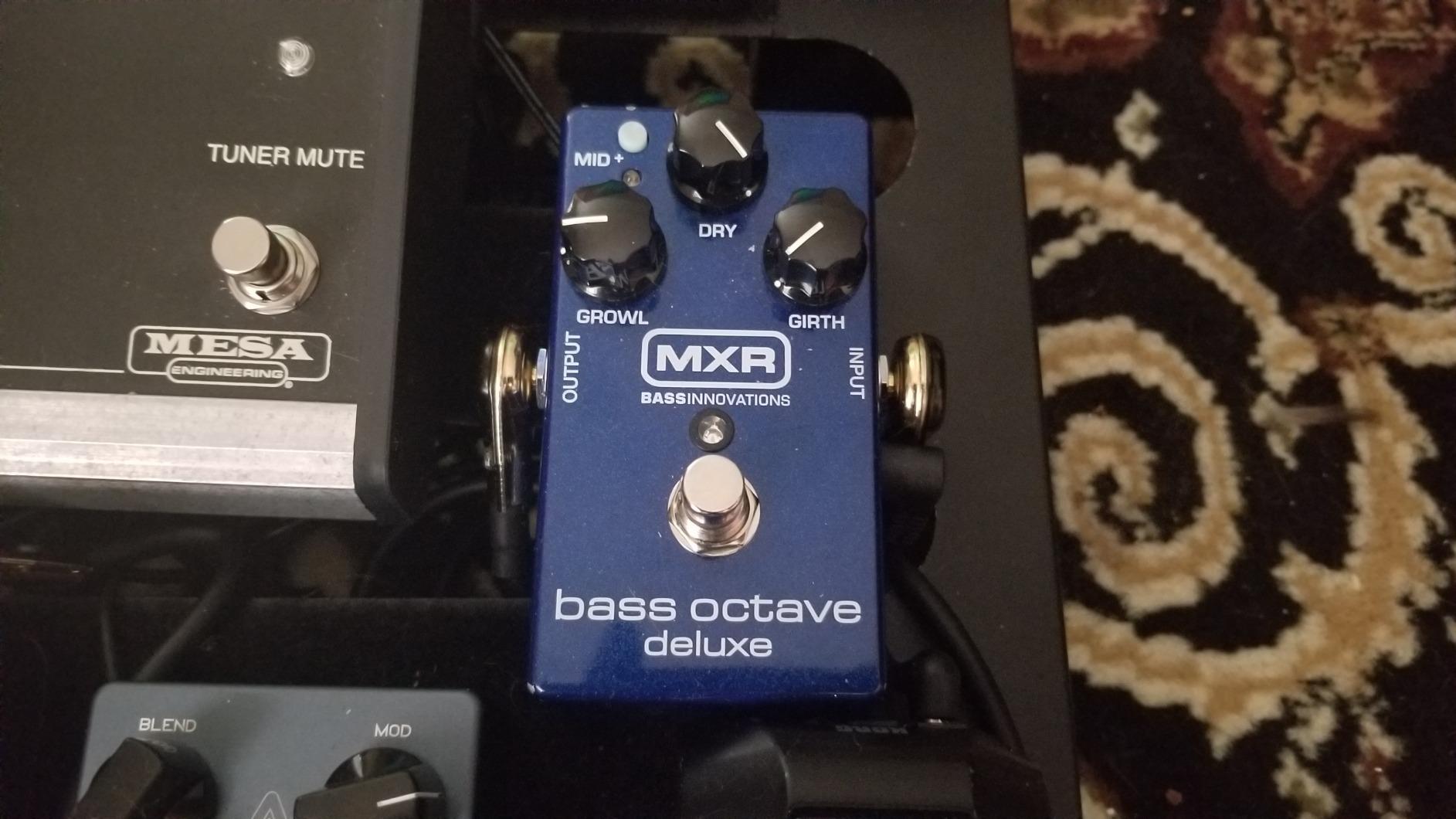
The true bypass switching ensures your dry signal remains pristine when the pedal is disengaged. This is particularly important for analog octave pedals, as buffered bypass can color your tone in unwanted ways. The analog signal path has a warmth and musicality that makes even subtle octave settings sound rich and full.
Bass players on Reddit consistently praise this pedal for its tracking on the low B string, which is where many octave pedals fall apart. The 18V power requirement means you need a compatible supply, but the headroom and clarity you get in return are worth the investment.
Who Should Buy the Bass Octave Deluxe
Bass players seeking organic analog sub-octave tones will find this pedal exceptional. Guitarists who prefer vintage warmth over digital precision should also consider it. The true bypass and analog signal path make it ideal for players who already have digital pedals on their board and want to balance them with analog warmth.
Where It Falls Short
The 18V power requirement means this pedal will not work with standard 9V-only power supplies. The analog design also means tracking is monophonic, so chord work will produce glitchy artifacts. Players who need polyphonic octave processing should look at digital alternatives like the Nano POG or Pitch Fork.
7. MOOER Harmony X2 – Preset-Packed Digital Octave
MOOER Octave Guitar Pedal Cover for 2 Complete Octaves Individual Tone Adjustment for the Octave Effect 14 Presets Slots (X2)
2 full octaves coverage
14 preset slots
Stereo I/O
Individual tone adjustment
Pros
- Great sound quality with 14 preset slots
- High and low cut filters for tone shaping
- Stereo inputs and outputs
- Solid metal construction
- Works well with Mooer PreAmp X2
Cons
- Documentation requires product registration
- Some users report complex setup
The MOOER Harmony X2 is a feature-dense octave pedal that punches well above its price class. It covers two complete octaves and stores 14 presets, which means you can recall different octave configurations for different songs instantly. The individual tone adjustment for the octave effect lets you shape the shifted signal to sit perfectly in your mix.
I was genuinely surprised by the sound quality coming from a pedal at this price point. The high and low cut filters are a welcome addition that many competing pedals lack entirely. Being able to trim harsh highs or muddy lows from the octave signal makes a real difference in a band context.
The stereo inputs and outputs open up routing possibilities that most compact octave pedals simply cannot offer. I ran the Harmony X2 in stereo through two amps and the octave-doubled sound filled the room with a richness that mono setups cannot match. Pairing it with the Mooer PreAmp X2 creates a complete rig in minimal space.
Who Should Buy the Harmony X2
Players who want preset capabilities and stereo routing in a compact package will find the Harmony X2 outstanding value. It is ideal for guitarists who need different octave settings across a setlist and want to recall them instantly. The 643 reviews on Amazon indicate this is a popular choice among budget-conscious players.
Where It Falls Short
The documentation requires product registration to access, which is an unnecessary hurdle. Some users report that the interface takes time to learn, especially when navigating between 14 presets. The analog signal format label on the product listing is misleading, as this is actually a digital processing pedal.
8. MXR Blue Box Octave Fuzz – Legendary Chaotic Tone
MXR Blue Box™ Octave Fuzz
Analog octave fuzz
Two octaves down
9V battery or adapter
2-year warranty
Pros
- Beautiful huge lead tone
- Deep and unique octave and fuzz tone
- Organic analog sound with quirks
- Used by Jimmy Page and Slash
- Built like a tank
Cons
- Volume suck when engaged
- Monophonic only not for chords
- Can sound muddy on low end
The MXR Blue Box is not a clean, precise octave pedal. It is a chaotic, aggressive fuzz that takes your guitar signal, fuzzes it up, and then drops it two octaves down. This pedal has a cult following for good reason, and legends like Jimmy Page and Slash have used it to create some of the most distinctive guitar tones in rock history.
When I first plugged in the Blue Box, I understood immediately why people love it. The lead tones are absolutely massive, with a depth and character that no clean octave pedal can replicate. Each session with this pedal feels unique because its chaotic personality responds differently depending on your picking dynamics and guitar volume.
The fuzz circuit is inspired by the original MXR Blue Box design that has been around since the 1970s. It does not try to be polite or refined. Instead, it embraces its unruly nature and rewards players who are willing to experiment. The organic, analog sound has a warmth and grit that digital simulations cannot match.
This pedal is monophonic, meaning it is designed for single notes rather than chords. That is not a flaw but a design choice that shapes its entire character. If you try to play chords through it, you will get glitchy, unpredictable sounds that might be exactly what you want for experimental music or might be frustrating if you expected clean tracking.
Who Should Buy the Blue Box
Lead guitarists who want a distinctive, aggressive tone with serious vintage credentials should look no further. This pedal is perfect for rock, stoner metal, and experimental genres where character matters more than precision. Players who already have a clean octave pedal and want something wild and different will find the Blue Box inspirational.
Where It Falls Short
The volume drop when engaging the pedal is a well-known issue that frustrates many users. It is strictly monophonic, so players who need chord tracking should choose a different pedal. The muddy low end can also be problematic unless you adjust your playing and EQ accordingly.
9. JOYO XVI R-13 Octave – Budget Polyphonic With Modulation
JOYO Polyphonic Octave Guitar Pedal, Independent Sub & Upper Octave with MOD Modulation Effects & Dry Blend, True Bypass (XVI R-13)
Polyphonic tracking
SUB and UPPER controls
MOD modulation effects
True bypass
Pros
- Polyphonic tracking handles chords well
- Independent sub and upper octave controls
- Built-in MOD phaser/vibrato effects
- Dry blend for tonal flexibility
- True bypass preserves tone
- Rugged aluminum alloy chassis
Cons
- No battery compartment requires adapter
- Some power issues with non-isolated supplies
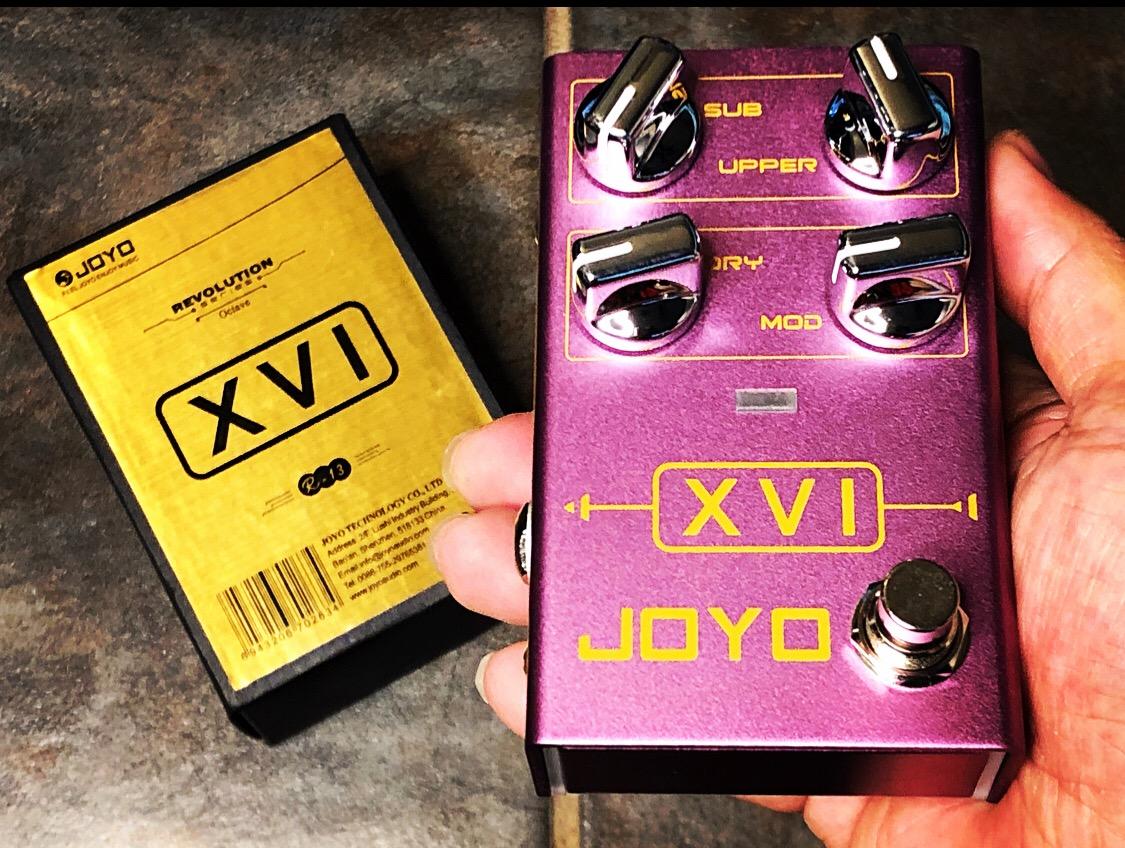
The JOYO XVI R-13 packs polyphonic octave tracking, modulation effects, and a dry blend into a compact pink enclosure that costs less than a set of premium strings. I was skeptical about the tracking quality at this price, but the XVI handled open chords and barre chords with surprisingly few artifacts.
Having independent SUB and UPPER octave volume controls gives you real tonal flexibility. You can dial in just a touch of sub octave to thicken your tone, or push both controls up for a full octave-doubled sound. The MOD control adds phaser and vibrato textures to the octave signal, which opens up creative possibilities that pricier pedals do not offer.
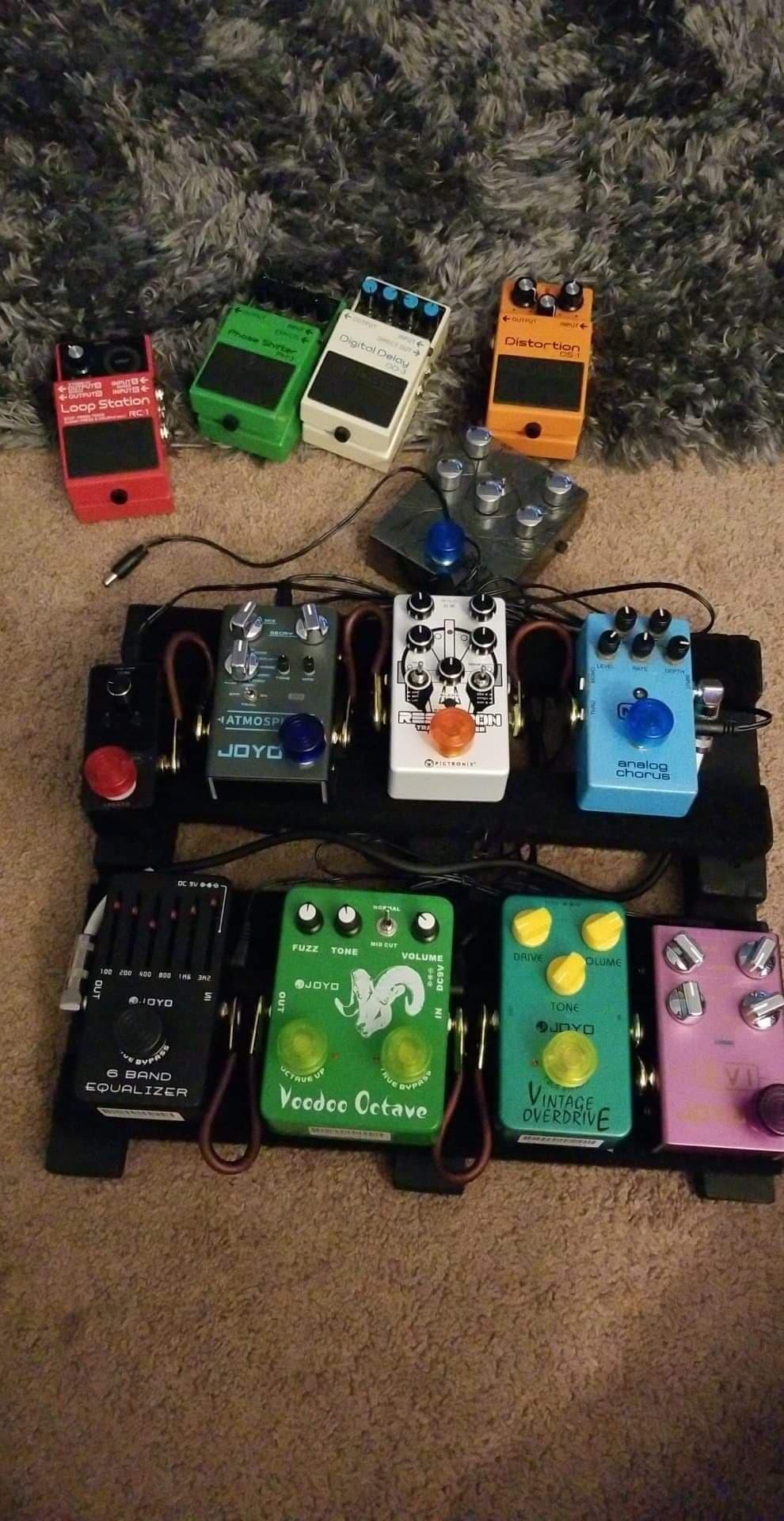
The DRY knob lets you blend your unprocessed signal with the octave effect, which is essential for maintaining clarity. Too much octave signal can muddy your tone, especially in a band mix. Being able to control the dry blend means you can find the sweet spot where the octave adds thickness without overpowering your fundamental tone.
The R Series ambient LED lighting is a nice visual touch with three modes to choose from. The rugged aluminum alloy chassis feels solid and should withstand regular gigging. True bypass switching ensures your signal passes through unaffected when the pedal is off.
Who Should Buy the XVI R-13
Budget-conscious players who want polyphonic tracking and modulation effects in one pedal will find the XVI R-13 hard to beat for the price. It is ideal for beginners building their first pedalboard and intermediate players who want octave effects without a major investment. The built-in modulation makes it a versatile multi-effect unit.
Where It Falls Short
The lack of a battery compartment means you must use a 9V DC adapter, which is not included. Some users report power issues when using non-isolated supplies, so plan accordingly. The pink color may also not appeal to players who prefer more traditional pedal aesthetics.
10. Donner Harmonic Square – Best Budget Octave Pedal
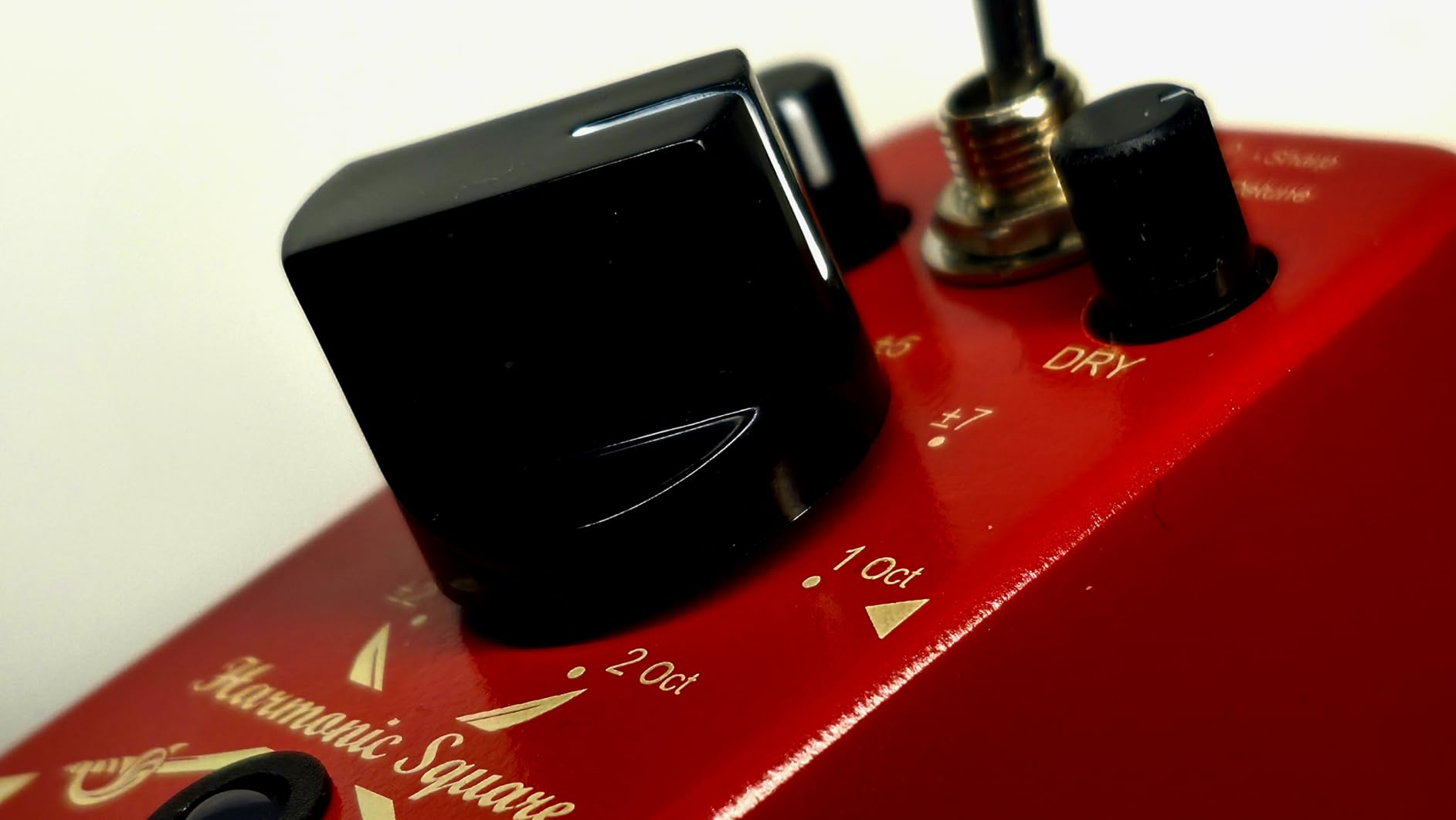
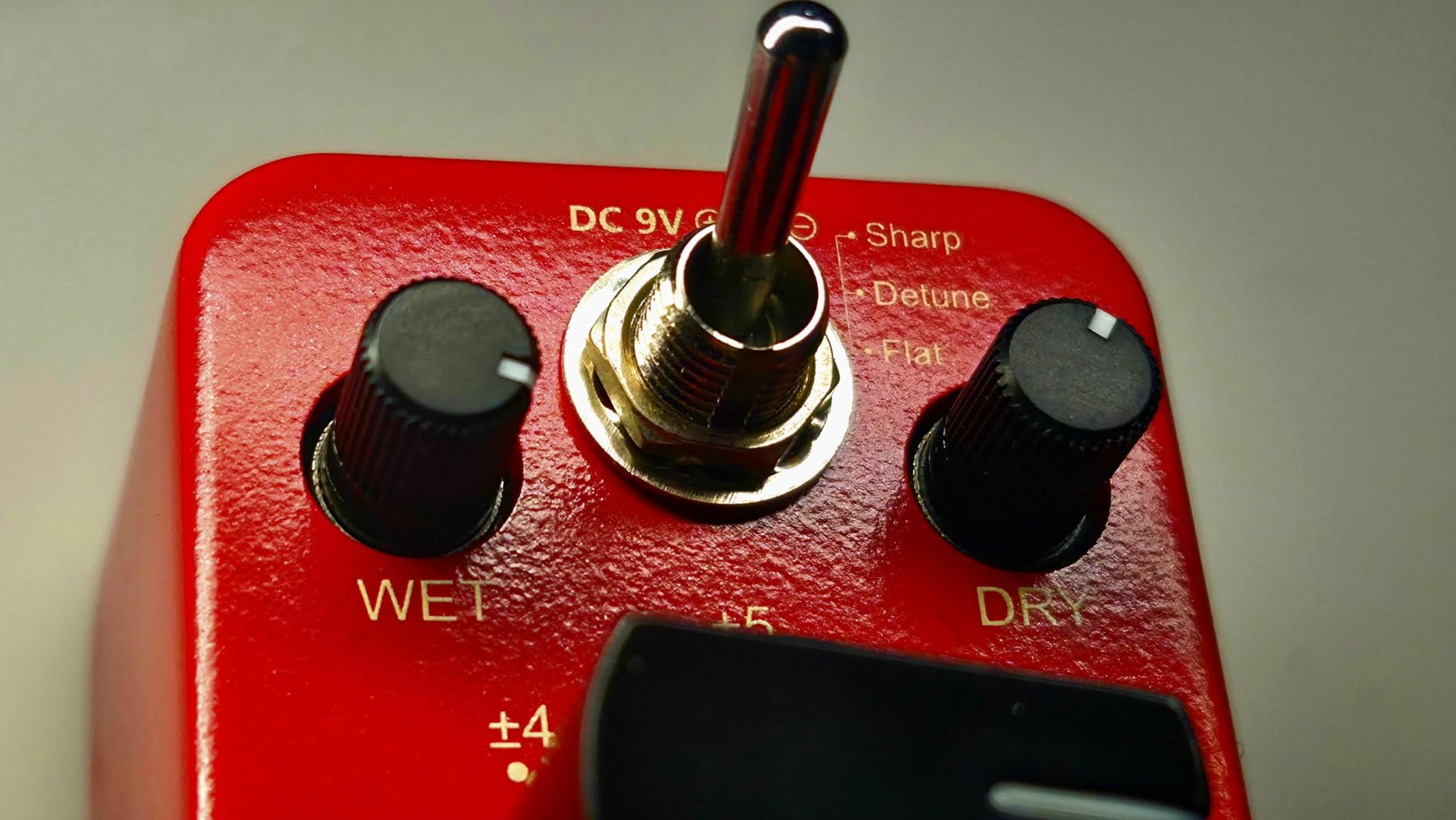
Donner Octave Guitar Pedal, Harmonic Square Digital Octave Mini Pedal Pitch Shifter 7 Shift Types 3 Tone Modes Sharp Detune Flat True Bypass
7 shift types
3 tone modes
21 total options
True bypass
Pros
- 21 options from 7 shift types and 3 tone modes
- Sharp Flat and Detune modes for versatility
- WET and DRY knobs for mix control
- True bypass preserves tone
- Very affordable with 1665 reviews
Cons
- 9V adapter not included
- Requires 500mA current
- No battery option
The Donner Harmonic Square is the best-selling octave pedal on Amazon with over 1,665 reviews, and the value proposition is immediately clear. For a fraction of what premium pedals cost, you get 21 different tone options from seven shift types and three tone modes. That level of versatility at this price is remarkable.
I tested the Harmonic Square across all three tone modes. Sharp mode pitches your signal up, Flat mode drops it down, and Detune mode shifts by 10 cents for lush chorus-like doubling effects. Combined with the seven shift type options, you have an enormous palette of sounds to explore. The WET and DRY knobs let you balance the shifted signal against your original tone.
The true bypass switching means your guitar signal passes through unaffected when the pedal is disengaged. The aluminum alloy construction feels durable enough for regular use, and the compact size takes up minimal board space. For players just starting their octave pedal journey, this is an ideal entry point that will not break the bank.
The 500mA current requirement is higher than typical analog pedals, so make sure your power supply can handle it. While this is a digital pedal, Donner has tuned the algorithms to produce musical results rather than sterile, clinical pitch shifting. For practice, bedroom recording, and even casual gigging, the Harmonic Square delivers more than its price suggests.
Who Should Buy the Harmonic Square
Beginners and budget-conscious players will find the Harmonic Square an exceptional starting point. With 21 tone options and 1,665 reviews backing it, this pedal offers more versatility per dollar than almost anything else on the market. It is ideal for players who want to experiment with octave effects before committing to a premium purchase.
Where It Falls Short
The 9V adapter is not included, so factor that into your budget. The 500mA current draw may exceed what basic daisy-chain power supplies can deliver. As a budget pedal, the tracking quality and sound fidelity will not match premium options like the Nano POG or Pitch Fork, though it is more than adequate for practice and casual use.
How to Choose the Best Octave Pedal for Your Needs?
Choosing from the best octave pedals requires understanding a few key factors that determine how each pedal will perform in your specific setup. Here is what our team learned from testing these pedals across different guitars, amps, and playing styles.
Analog vs Digital Octave Pedals
Analog octave pedals use circuitry to generate octave signals, producing warm, organic tones that many players prefer for their natural character. They typically track monophonically, meaning they work best with single notes rather than chords. The MXR Bass Octave Deluxe and MXR Blue Box are excellent examples of analog design.
Digital octave pedals use DSP chips to process your signal, allowing for polyphonic tracking that handles full chords without glitching. They tend to sound cleaner and more precise, though some players find them less musical than analog alternatives. The EHX Pitch Fork, BOSS XS-1, and Nano POG represent the best of digital octave processing.
Tracking Quality Matters Most
Tracking is the single most important factor when evaluating octave pedals. Good tracking means the pedal accurately follows your playing without latency, glitching, or false notes. Polyphonic pedals like the Nano POG and Pitch Fork track chords beautifully, while monophonic pedals like the Blue Box are designed for single notes only.
Forum discussions on r/guitarpedals consistently highlight tracking as the number one complaint with budget octave pedals. If tracking is poor, nothing else about the pedal matters because the effect will be unusable in performance settings. This is why spending a bit more for proven tracking is almost always worth it.
Signal Chain Placement
Where you place your octave pedal in your signal chain dramatically affects its performance. Octave pedals generally perform best when placed early in the chain, right after your tuner and before distortion or modulation effects. This gives the pedal the cleanest possible signal to track, which improves accuracy.
If you place an octave pedal after distortion, the harmonic complexity of the distorted signal can confuse the tracking algorithm. The exception is octave fuzz pedals like the MXR Blue Box, which are specifically designed to combine fuzz and octave in one circuit. Experiment with placement to find what works best for your particular setup.
Power Requirements and Bypass Type
Check the power requirements before buying. Some pedals like the MXR Bass Octave Deluxe need 18V, while others like the Donner Harmonic Square draw 500mA. Make sure your power supply can handle these requirements, as insufficient power leads to noise and unreliable performance.
True bypass means your signal passes through the pedal unaffected when it is off, preserving tone across long cable runs. Buffered bypass, like on BOSS pedals, actively drives your signal to prevent high-frequency loss. Both have their merits, and many professional boards use a mix of both types.
FAQs
What is the best octave pedal?
The best octave pedal depends on your needs. For overall versatility, the Electro-Harmonix Pitch Fork offers three shift modes and polyphonic tracking. For value, the TC Electronic SUB N Up provides TonePrint customization. For budget players, the Donner Harmonic Square delivers 21 tone options at an entry-level price.
What are octave pedals good for?
Octave pedals are good for thickening your guitar tone, simulating bass lines, creating 12-string effects, generating organ-like sounds, and adding synth textures to riffs and solos. They let a single guitarist cover sonic territory that normally requires multiple instruments.
What octave pedal does John Mayer use?
John Mayer has used the Boss OC-2 and OC-3 octave pedals extensively in his rig. The Boss OC series is known for its warm analog octave-down tone that complements Mayer’s blues-inspired playing style and clean tone aesthetic.
Are analog or digital octave pedals better?
Analog octave pedals produce warmer, more organic tones but typically only track single notes. Digital octave pedals offer polyphonic chord tracking, wider octave ranges, and more precise pitch shifting. Neither is objectively better; it depends on whether you want vintage warmth or modern versatility.
Where should I place an octave pedal in my signal chain?
Place your octave pedal early in the signal chain, ideally right after your tuner and before any distortion, overdrive, or modulation effects. This gives the pedal the cleanest signal to track, which improves accuracy and reduces glitching on complex passages.
Final Thoughts on the Best Octave Pedals in 2026
Finding the best octave pedals comes down to matching the pedal’s strengths to your playing style and budget. The Electro-Harmonix Pitch Fork remains our top pick for its unmatched versatility across three shift modes and 11 transposition intervals. The TC Electronic SUB N Up wins on value thanks to TonePrint technology that gives you hundreds of sounds in a compact package.
For bass players, the MXR Bass Octave Deluxe delivers analog warmth that digital pedals cannot replicate. Budget-conscious players have excellent options in the Donner Harmonic Square and JOYO XVI R-13, both of which offer more features than pedals twice their price. And for players who want something truly wild, the MXR Blue Box provides legendary octave fuzz tones used by Jimmy Page and Slash.
Whatever you choose, place it early in your signal chain, use an isolated power supply, and spend time exploring the full range of sounds each pedal can produce. The best octave pedal is the one that inspires you to play differently, and every pedal on this list has that potential.