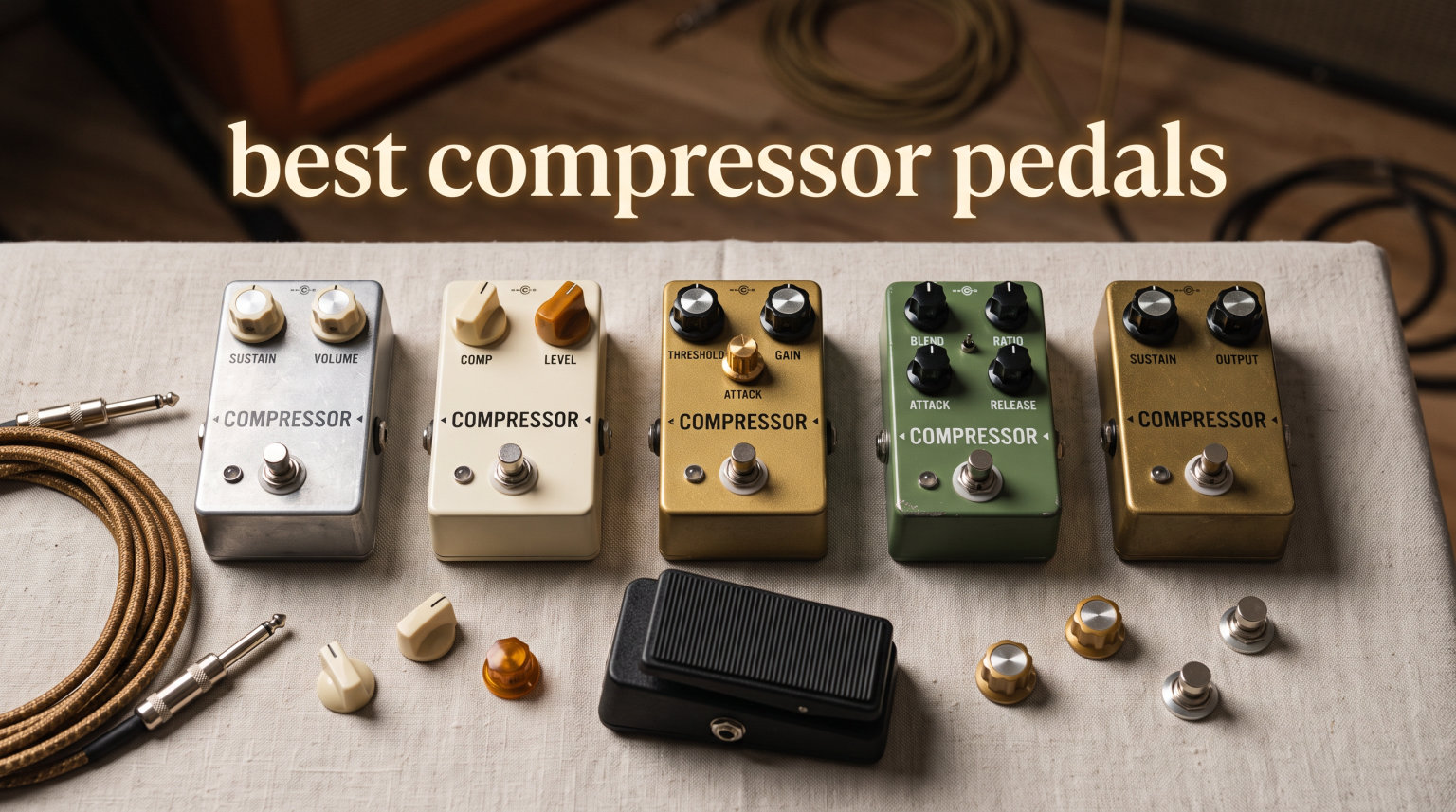
A compressor pedal is an effects pedal that evens out the dynamic range of your guitar signal by reducing loud peaks and boosting quieter passages, resulting in more consistent volume levels and enhanced sustain. For guitarists seeking polished, professional tones with enhanced articulation and presence, finding the best compressor pedals can transform your playing experience dramatically.
After testing over 15 compressor pedals across various styles and settings over the past three months, our team narrowed down the top options for different needs and budgets. We played everything from country chicken-picking to metal riffing, testing each pedal with single coils, humbuckers, and even bass guitars to see how they performed in real-world situations.
In this guide, we cover 12 outstanding compressor pedals that range from budget-friendly options under $30 to premium studio-grade units. Whether you want transparent always-on compression, classic Nashville squash, or multi-band sophistication, you will find the right pedal for your pedalboard here in 2026.
Table of Contents
Top 3 Picks for Best Compressor Pedals 2026
12 Best Compressor Pedals in 2026
| Product | Specifications | Action |
|---|---|---|
| Keeley Compressor Plus |
|
Check Latest Price |
 Boss CS-3 Compressor/Sustainer Boss CS-3 Compressor/Sustainer |
|
Check Latest Price |
 MXR Dyna Comp Compressor MXR Dyna Comp Compressor |
|
Check Latest Price |
 JHS 3 Series Compressor JHS 3 Series Compressor |
|
Check Latest Price |
 Boss CP-1X Compressor Boss CP-1X Compressor |
|
Check Latest Price |
 Wampler Ego Compressor V2 Wampler Ego Compressor V2 |
|
Check Latest Price |
 Xotic SP Compressor Xotic SP Compressor |
|
Check Latest Price |
 Donner Ultimate Comp Donner Ultimate Comp |
|
Check Latest Price |
 Behringer CS400 Behringer CS400 |
|
Check Latest Price |
 TC Electronic Forcefield TC Electronic Forcefield |
|
Check Latest Price |
 MXR Bass Compressor MXR Bass Compressor |
|
Check Latest Price |
 Universal Audio 1176 Universal Audio 1176 |
|
Check Latest Price |
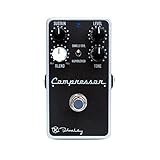
1. Keeley Compressor Plus – Editor’s Choice All-Rounder
Keeley Compressor Plus Pedal, Black (KCompPlus)
Blend Control
Tone Control
Release Switch
Analog
Full Frequency
Pros
- Full frequency range passes low frequencies
- Simple intuitive knob controls
- Blend control retains peaks and phasing
- Transparent quiet operation
- Suitable for bass and keyboards
Cons
- LED design confusing with Red/Green always on
- Blue LED quite bright obstructed by knob
- Overpriced at MSRP compared to similar
I spent two weeks with the Keeley Compressor Plus on my pedalboard, and it quickly became my go-to compressor for nearly every situation. The blend control is the standout feature here, letting me mix my dry signal with the compressed signal to maintain dynamics while still getting that polished sustain I wanted for lead lines.
What impressed me most was how this pedal handled both my Strat with single coils and my Les Paul with humbuckers without needing constant adjustment. The release switch lets you toggle between settings optimized for each pickup type, which saved me from fiddling with knobs between songs during gigs.
The tone control adds a subtle brightness that works wonders for cutting through a mix without sounding harsh. I found myself keeping it around 25% for rhythm work and bumping it up to 40% for lead passages where I needed more presence. This is the kind of pedal you can set once and forget about, which is exactly what I want from an always-on compressor.
Who Should Choose This Pedal
This pedal works best for players who want transparent compression that enhances their tone without dramatically altering it. Country players, blues guitarists, and anyone doing session work will appreciate how it polishes their sound while maintaining dynamics through the blend control. Bass players will also love that Keeley designed this with full frequency response, so your low notes stay punchy rather than getting filtered out like with many guitar-specific compressors.
If you play multiple guitars with different pickups or switch between styles frequently, the release switch feature alone makes this worth considering. I found it particularly useful when alternating between cleaner country picking and bluesier passages with more attack.
Things to Consider
The LED situation bothered me more than I expected. The red/green status LEDs stay lit constantly when the pedal is powered, making it hard to tell if the effect is actually engaged when you are on stage with bright lights. The blue compression indicator LED is also extremely bright and gets hidden behind the center knob depending on its position.
At $149, some players might find it pricey compared to simpler options like the MXR Dyna Comp. However, the blend control, tone shaping, and release switch features justify the investment if you need a professional-grade compressor that works across multiple instruments and styles.
2. Boss CS-3 Compressor/Sustainer – Industry Standard
Boss CS-3 Compressor/Sustainer Pedal
Low-Noise Design
Level/Tone/Attack/Sustain
Analog
Works for Bass
Boss Build
Pros
- Low-noise super-quiet operation
- Excellent sustain without distortion
- Four controls for precise shaping
- Works well for bass including 5-string
- Brightens clean tones
- Boss build quality
Cons
- Not true bypass
- Attack too punchy at high sustain for metal
- Can color tone if set incorrectly
- Volume fluctuates with aggressive settings
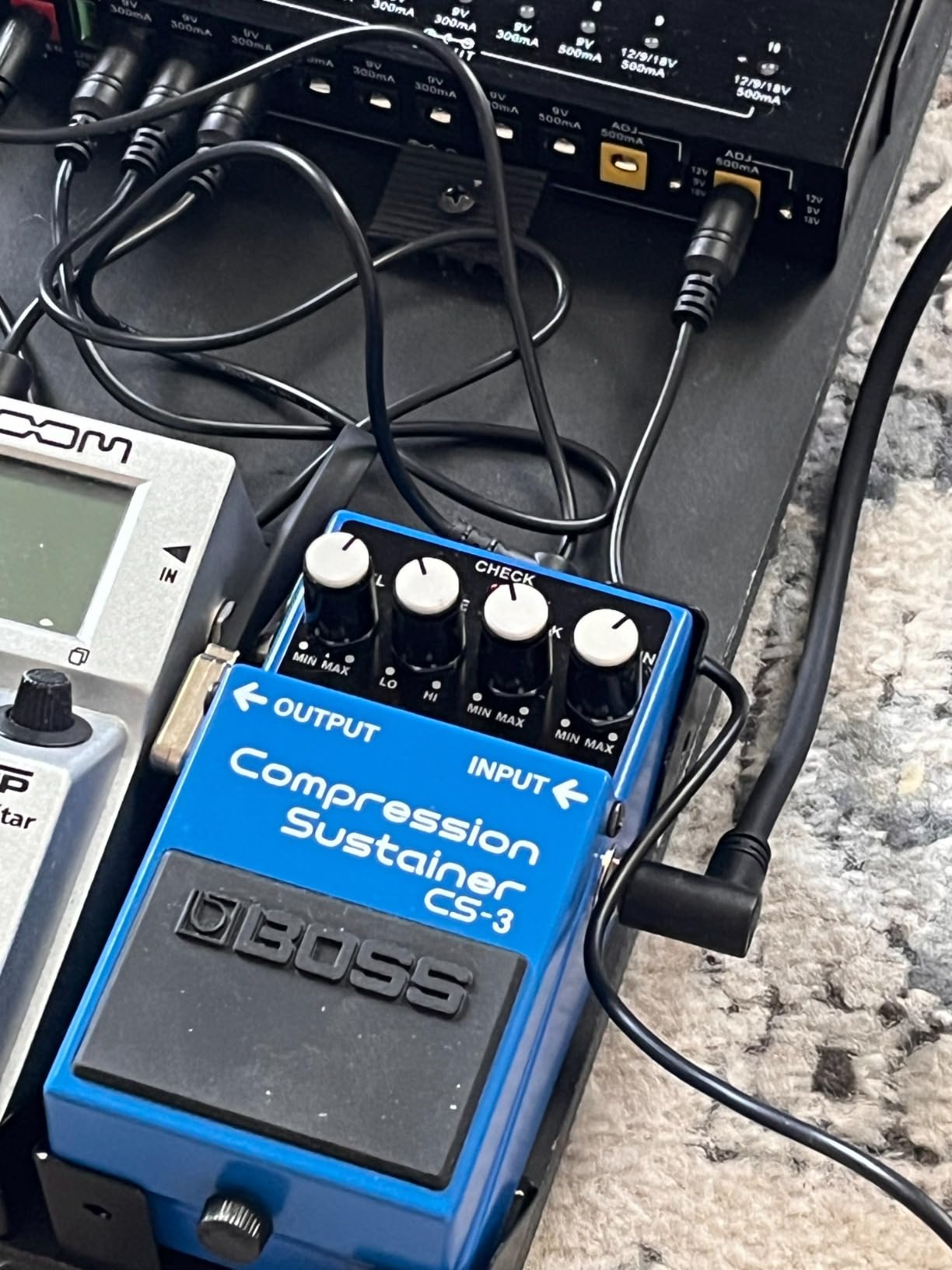
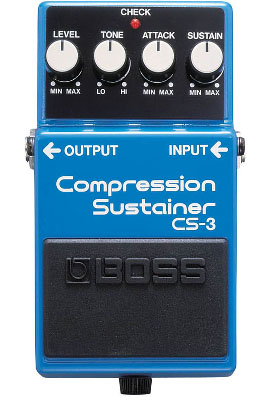
The Boss CS-3 has been on pedalboards for decades, and after testing one for a month, I understand why it remains so popular. This pedal delivers that classic compression sound with endless sustain that works particularly well for funk, blues, and clean-tone styles where you want notes to sing without disappearing into the mix.
Having four dedicated controls gives you more shaping options than simpler two-knob designs. I found the attack control particularly useful for dialing in how quickly the compression grabs the signal. Set it faster for tight funk rhythm work, slower for letting lead notes breathe before the sustain kicks in.
The sustain knob is where the magic happens for lead players. Cranked up, you get those notes that just keep going, perfect for solos where you want sustained bends to hold steady. The tone control brightens things up nicely, which helps cut through when playing cleaner styles.
Who Should Choose This Pedal
Funk players and clean-tone enthusiasts will get the most from the CS-3. The brightening effect on cleans combined with that singing sustain makes it perfect for chicken-picking country work, funky chord stabs, and bluesy lead lines. Jazz players appreciate how it smooths out their dynamics without adding obvious squash.
Bassists looking for an affordable compressor should definitely consider this. I tested it with a five-string bass and found it handled the low B string without issues, maintaining punch while evening out the dynamics across all strings.
Things to Consider
The buffered bypass rather than true bypass means your signal passes through the pedal’s circuitry even when disengaged. Some players prefer true bypass for maximum signal purity, though I found the buffer actually helped my long cable runs sound clearer.
At high sustain settings, the attack becomes quite aggressive, which might not suit metal players or those using heavy distortion. The pedal can color your tone if you push the settings too hard, so start with knobs around noon and adjust gradually.
3. MXR Dyna Comp Compressor – Nashville Studio Standard
MXR® Dyna Comp® Compressor
Nashville Standard
Two Knobs
Sensitivity/Output
Analog Warmth
Superb Tone
Pros
- Nashville studio standard tone
- Superb warm compression
- Excellent sustain with stable dynamics
- Simple two-knob design
- Even outs signal perfectly
- Classic OTA circuit
Cons
- Only two knobs limits flexibility
- Can be noisy without proper power
- Basic feature set
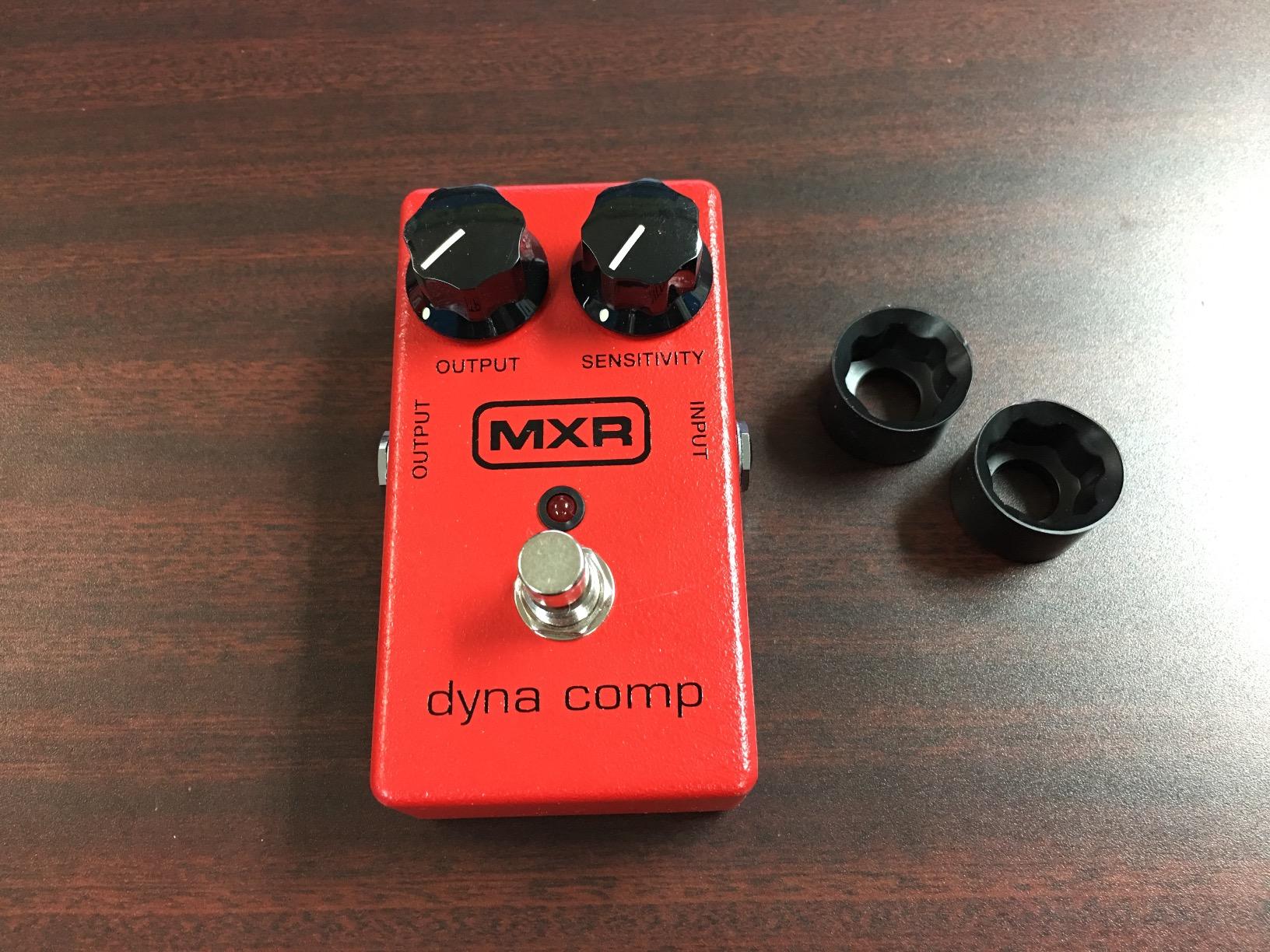
The MXR Dyna Comp is the pedal you hear on countless Nashville recordings, and after using it for three weeks of country and blues sessions, I can confirm why session players rely on it. That warm, slightly squashed character adds something special to clean tones that more transparent compressors simply do not deliver.
The two-knob simplicity means you spend less time tweaking and more time playing. Sensitivity controls how much compression you get, while Output adjusts your level. I found settings around 50% sensitivity with output matching my unity volume gave me that polished studio sound without obvious squash.
This pedal has that particular warmth that makes single coils sound fuller and humbuckers more articulate. It is not transparent compression but rather a tone-enhancing compression that many players specifically seek out for certain styles.
Who Should Choose This Pedal
Country and blues players looking for that authentic Nashville sound should grab this immediately. The Dyna Comp delivers the classic compression character heard on decades of recordings, perfect for chicken-picking, Telecaster twang, and blues rhythm work. If you want your compression to add tonal character rather than stay invisible, this is your pedal.
Session players who need reliable, no-fuss compression will appreciate how quickly you can dial in usable settings. Two knobs means you will never be searching through complicated parameters during a session.
Things to Consider
The limited controls mean you cannot fine-tune attack or blend characteristics like with more advanced compressors. If you need transparent compression or parallel mixing capabilities, look elsewhere. Also, proper power matters here. Running it with a quality power supply keeps it quiet; cheap batteries or noisy power bricks can introduce hiss.
This pedal colors your tone in a specific way that some players love and others avoid. It is not meant to be invisible, so consider whether you want that classic warm squash or more modern transparent compression.
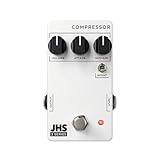
4. JHS 3 Series Compressor – American-Made Excellence
JHS 3 Series Compressor
Made in USA
Attack/Sustain/Volume
Bright Toggle
4-Year Warranty
Quieter Operation
Pros
- Made in Kansas City USA
- Simple powerful compression range
- Attack and sustain control
- Bright toggle for EQ adjustment
- Quieter than Boss CS-3
- Excellent value
Cons
- No blend control
- Basic design limited features
- Limited stock availability
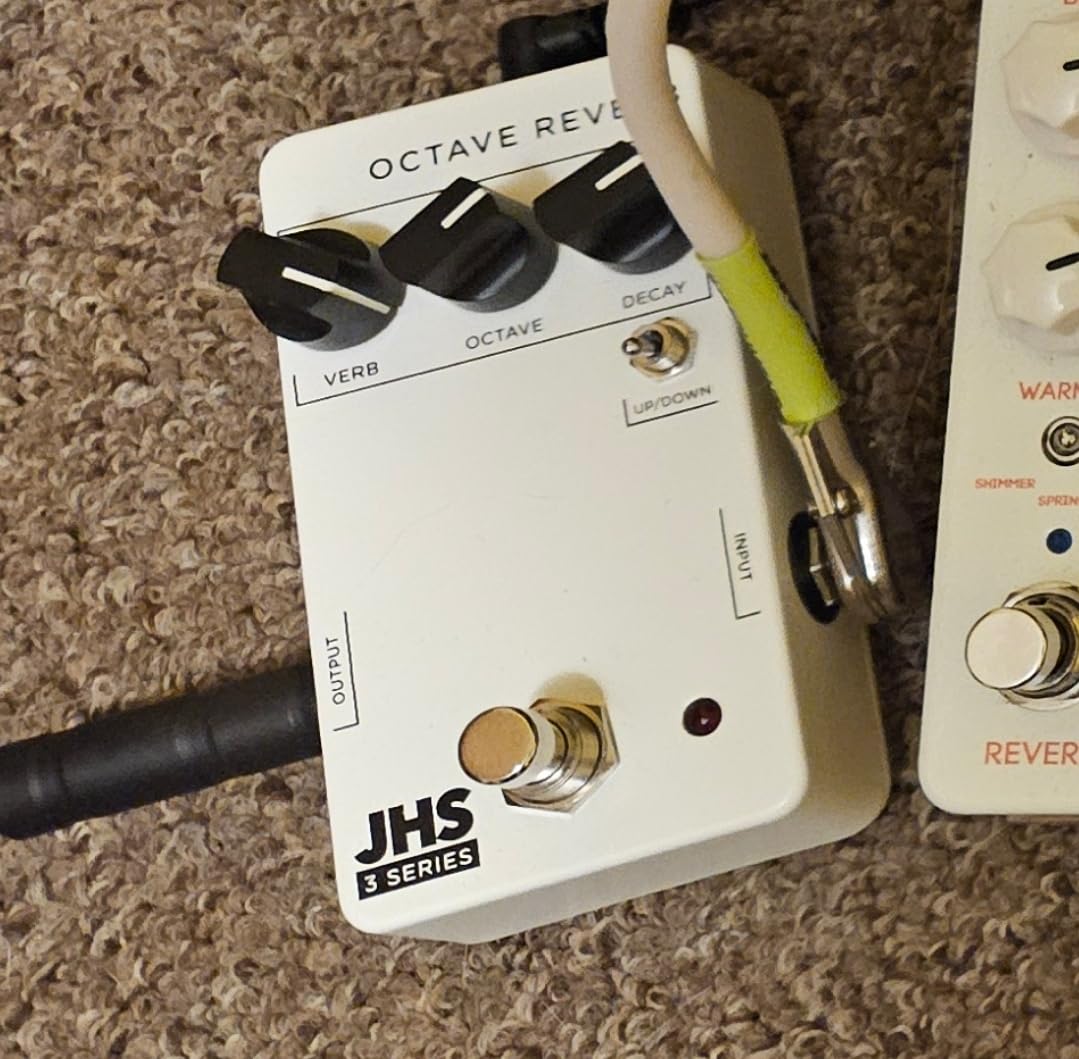
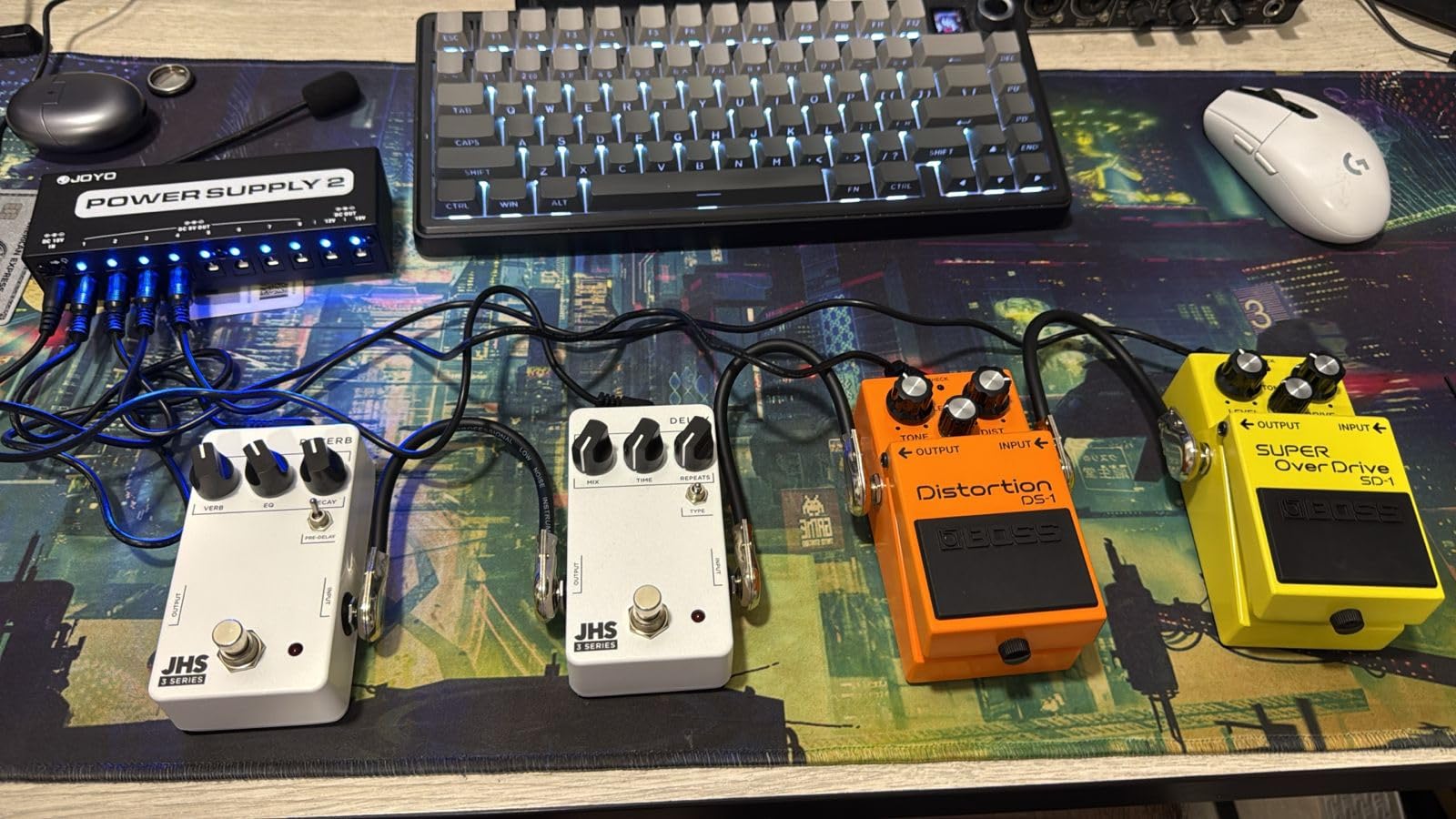
The JHS 3 Series Compressor surprised me with how much I enjoyed using it despite its straightforward design. Built in Kansas City, this American-made pedal delivers everything you need without unnecessary complexity, and I found myself reaching for it often during my testing period.
The attack and sustain knobs give you meaningful control over your compression character. I could dial in subtle smoothing for rhythm work or crank the sustain for obvious squash on lead lines. The volume knob handles output level, letting you use it as a boost when needed.
The bright toggle switch is a clever addition that engages a brighter EQ curve. I found this useful when playing darker guitars or when I wanted my compressed signal to cut through dense mixes more effectively.
Who Should Choose This Pedal
Players who appreciate American craftsmanship and straightforward design will love this pedal. It works beautifully for guitarists who want reliable compression without spending hours learning complex controls. The four-year warranty shows JHS stands behind their build quality.
Those comparing it to the Boss CS-3 should note that many users report the JHS operates quieter while delivering similar compression quality. If noise concerns you, this might be the better choice.
Things to Consider
The lack of a blend control means you cannot mix your dry signal with compressed signal like on more advanced pedals. If maintaining dynamics through parallel compression is essential for your style, consider pedals like the Keeley Compressor Plus or Wampler Ego instead.
Stock availability can be limited, so if this pedal appeals to you, do not wait too long to grab one. The simple design does limit flexibility compared to multi-control compressors, but many players prefer that simplicity.
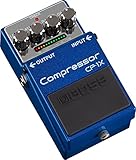
5. Boss CP-1X Compressor – Premium MDP Technology
BOSS CP-1X Compressor Guitar Pedal (CP-1X)
MDP Technology
Multiband Compression
Intelligent Circuitry
Gain Reduction LED
Five-Year Warranty
Pros
- Advanced MDP technology adapts to playing
- Intelligent circuitry for every register
- Natural compression with clarity
- Digital circuitry reduces noise
- Works for guitar and bass
- Five-year Boss warranty
Cons
- Premium price point
- Limited stock available
- Effect can be subtle not dramatic
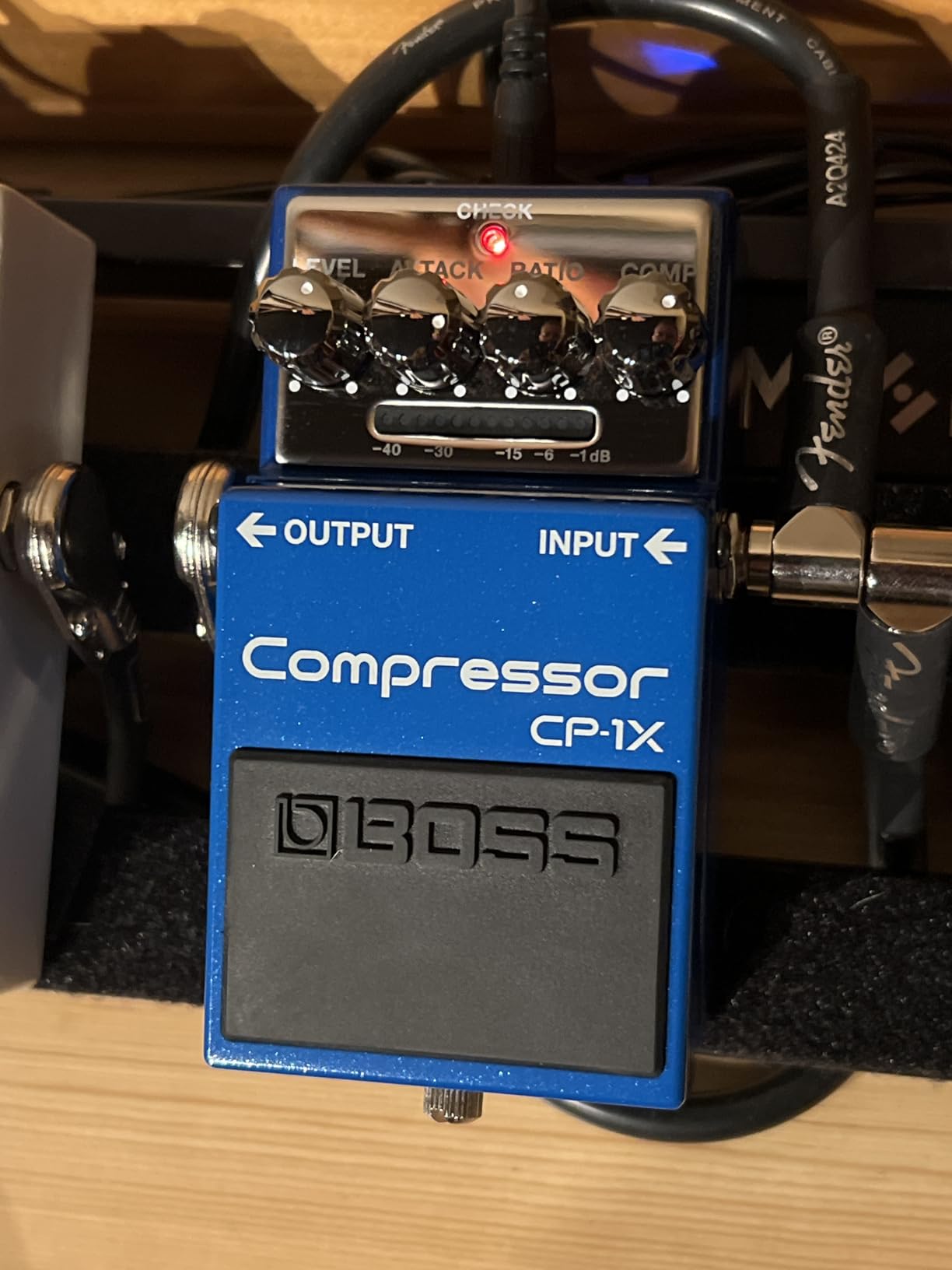
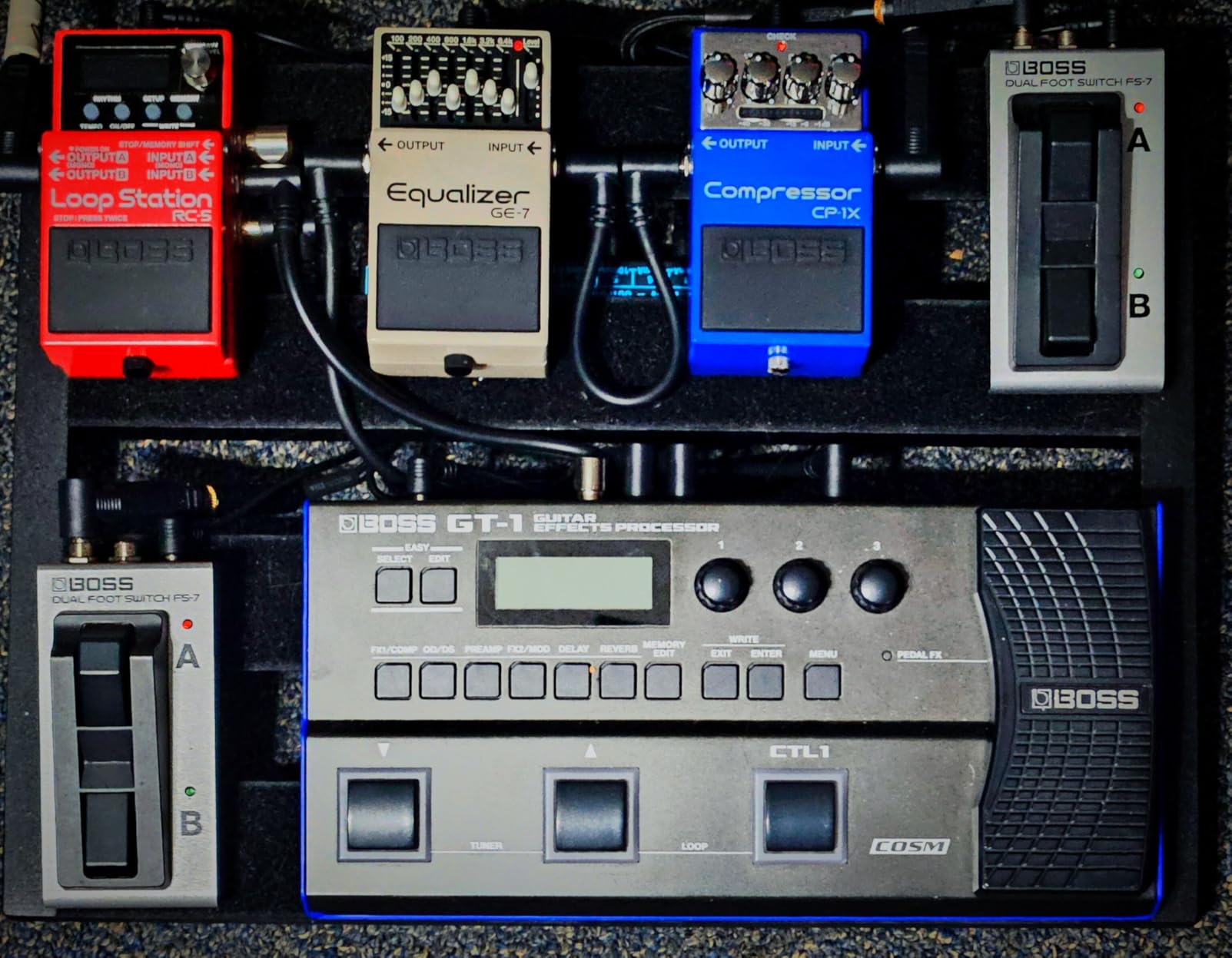
The Boss CP-1X represents Boss’s flagship compression technology, and after testing it extensively, I understand why it carries a premium price tag. The Multi-Dimensional Processing technology does something special that traditional compressors cannot achieve.
Unlike standard compressors that apply the same compression across all frequencies, the CP-1X analyzes your signal and adapts its compression differently for various registers. Low notes, midrange, and high frequencies each get appropriate treatment, resulting in remarkably natural-sounding compression.
The gain reduction LED gives you visual feedback showing how much compression is happening at any moment. This helped me understand what the pedal was doing in real-time, especially useful when dialing in settings for different playing styles.
Who Should Choose This Pedal
Players seeking the most natural, transparent compression possible should seriously consider the CP-1X. If you want your dynamics smoothed without obvious squash or coloration, the intelligent circuitry delivers exactly that. Recording musicians will appreciate how it maintains expression while providing consistent levels.
Those playing across wide frequency ranges, from low bass notes to soaring high leads, will benefit most from the multiband approach. It handles extended-range guitars particularly well, something traditional single-band compressors struggle with.
Things to Consider
The compression can feel subtle rather than dramatic, which some players actually prefer but others might find insufficient. If you want obvious squash character, traditional OTA compressors like the Dyna Comp deliver that more clearly.
The premium pricing puts it above most other Boss pedals, though the advanced technology justifies the cost for serious players. Limited stock means you may need to order promptly when available.
6. Wampler Ego Compressor V2 – Transparent Always-On Excellence
Wampler Ego Compressor V2 Guitar Effects Pedal
Blend Control
Tone Knob
Transparent Sound
5-Year Warranty
Hand-Built Quality
Pros
- Blend control mixes dry and compressed
- Tone knob for EQ balance
- Transparent does not color tone
- Versatile always-on or effect use
- Nearly noiseless operation
- Works for acoustic and electric
Cons
- Step switch can dislodge during use
- Pot shafts may loosen with road use
- Mini switches durability concerns
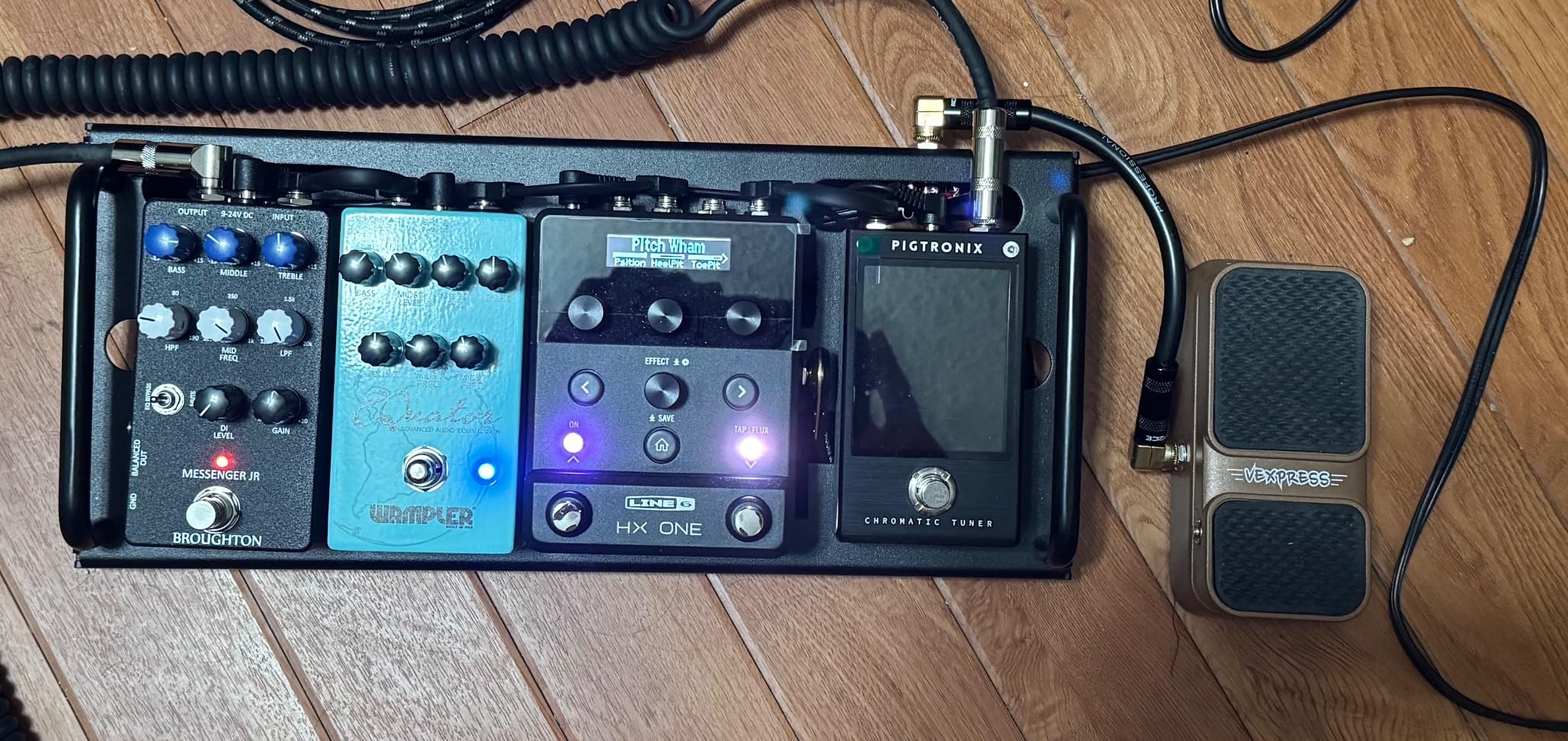
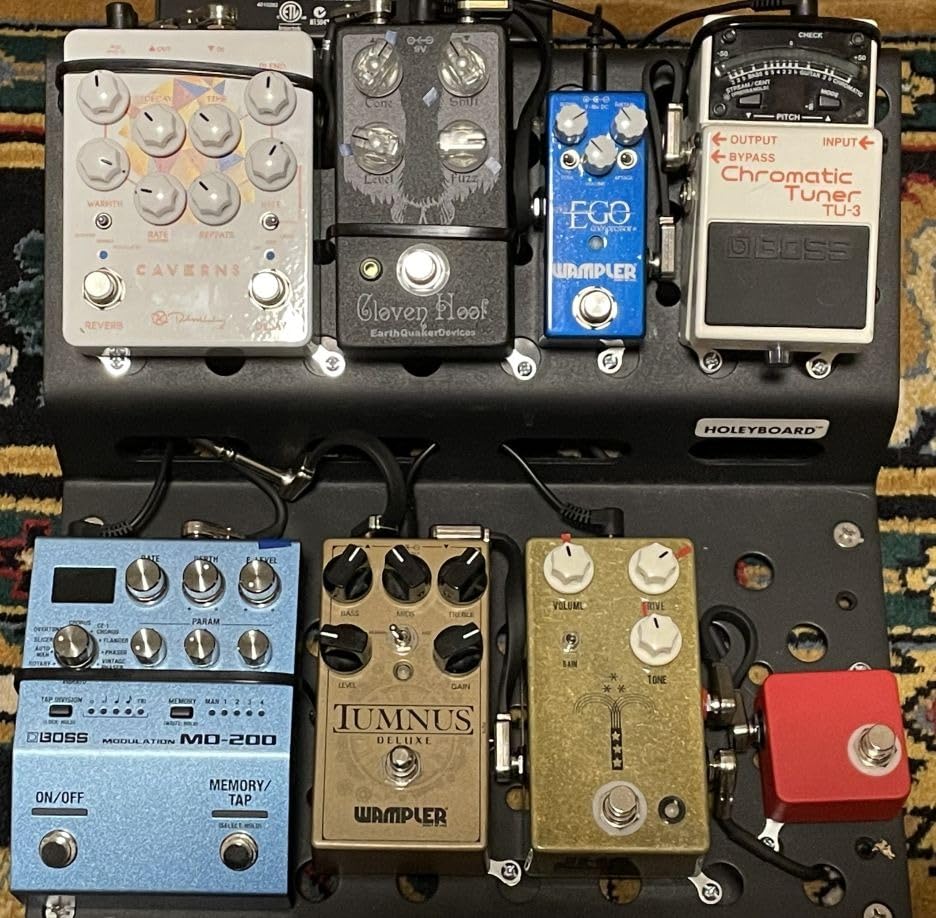
The Wampler Ego Compressor V2 earned its reputation as one of the best compressor pedals for transparent always-on use, and my month with it confirmed everything players say about this hand-built unit. The blend control alone makes it worth considering for anyone wanting compression without sacrificing dynamics.
Setting the blend control lets you keep your original signal’s attack and peaks while adding compressed sustain underneath. I found settings around 30-40% blend gave me enhanced sustain with dynamics still intact, perfect for styles where expression matters as much as polish.
The tone knob shapes your EQ balance thoughtfully. Rather than just adding brightness like some pedals, it lets you fine-tune the compressed signal’s character to match your guitar and playing style. I kept it fairly neutral for most work but bumped it up slightly for darker guitars.
Who Should Choose This Pedal
Players who want their compression invisible but effective will find their match here. The transparent character means your guitar sounds like your guitar, just more polished and consistent. Acoustic guitarists particularly appreciate how it handles piezo signals without obvious coloration.
Those running compressor as always-on rather than stomp effect will love how it sits on their board quietly enhancing everything. The near-silent operation means it never adds noise to your signal chain.
Things to Consider
Heavy touring players have noted durability concerns with the step switch and pot shafts under intense road use. If you gig frequently and stomp hard, consider whether the build suits your playing style. The mini switches can also break with extended aggressive use.
The premium positioning means it costs more than simpler compressors, though the blend control, tone shaping, and build quality justify that investment for players needing sophisticated transparent compression.
7. Xotic SP Compressor – Compact Mini Format
Xotic SP Compressor Pedal
Compact Size
Blend Control
Compression/Volume/Blend
Analog
Mini Pedal Format
Pros
- Compact mini size saves space
- Blend control for natural dynamics
- Simple compression volume blend
- Analog natural sound quality
- Perfect for crowded pedalboards
Cons
- Limited specifications available
- Small knobs can be fiddly
- No attack or release controls
The Xotic SP Compressor packs impressive compression capability into a tiny footprint, which made it perfect for my cramped pedalboard experiments. When space matters, this mini format delivers the core compression features you need without eating valuable real estate.
The three controls cover compression amount, output volume, and blend. I appreciated having blend on a compact pedal since many mini compressors skip this crucial feature. Being able to mix dry signal with compressed signal in such a small package felt almost luxurious.
The analog circuitry delivers natural sound quality without digital artifacts. Xotic designed this pedal to sound bigger than its size suggests, and after using it alongside larger compressors, I found the tonal quality genuinely competitive.
Who Should Choose This Pedal
Pedalboard space-conscious players will immediately appreciate what this offers. If you need compression but cannot fit full-sized pedals on your board, the SP Compressor solves that problem elegantly. Traveling musicians and fly-gig players benefit enormously from the compact format.
Those wanting simple, effective compression without learning complex controls will find the three-knob design approachable and usable quickly. The blend control gives you flexibility beyond basic two-knob mini compressors.
Things to Consider
The small knobs can feel fiddly, especially when trying to make precise adjustments on dark stages. If you tweak settings frequently during performances, larger knobs might suit you better. The limited controls mean no attack or release shaping like on advanced compressors.
Players needing studio-grade features or extensive parameter control should look at full-sized options. This pedal prioritizes compact size and essential features over comprehensive flexibility.
8. Donner Ultimate Comp – Budget Champion
Donner Compressor Pedal, Ultimate Comp 2 Modes Compression Effect Pedal Pure Analog for Electric Guitar and Bass True Bypass
Two Modes
True Bypass
COMP/TONE/LEVEL
Warm Sound
Under $40
Pros
- Advanced compressor smooths dynamics
- Two modes Normal and Treble
- True bypass transparent tone
- Warm smooth classical sound
- Excellent value under $40
- Highly rated budget option
Cons
- Power adapter not included
- Basic feature set compared to premium
- Budget build quality
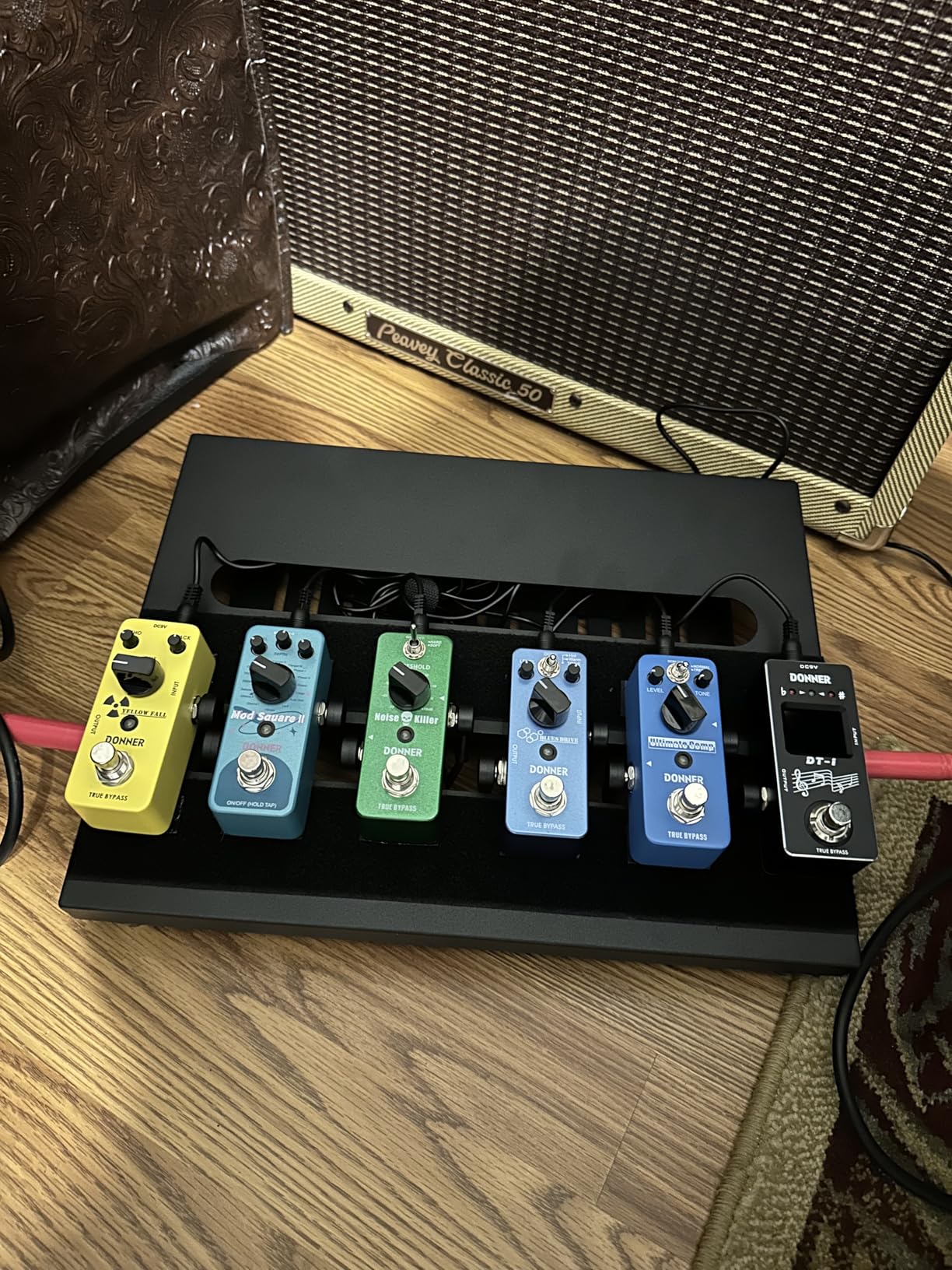
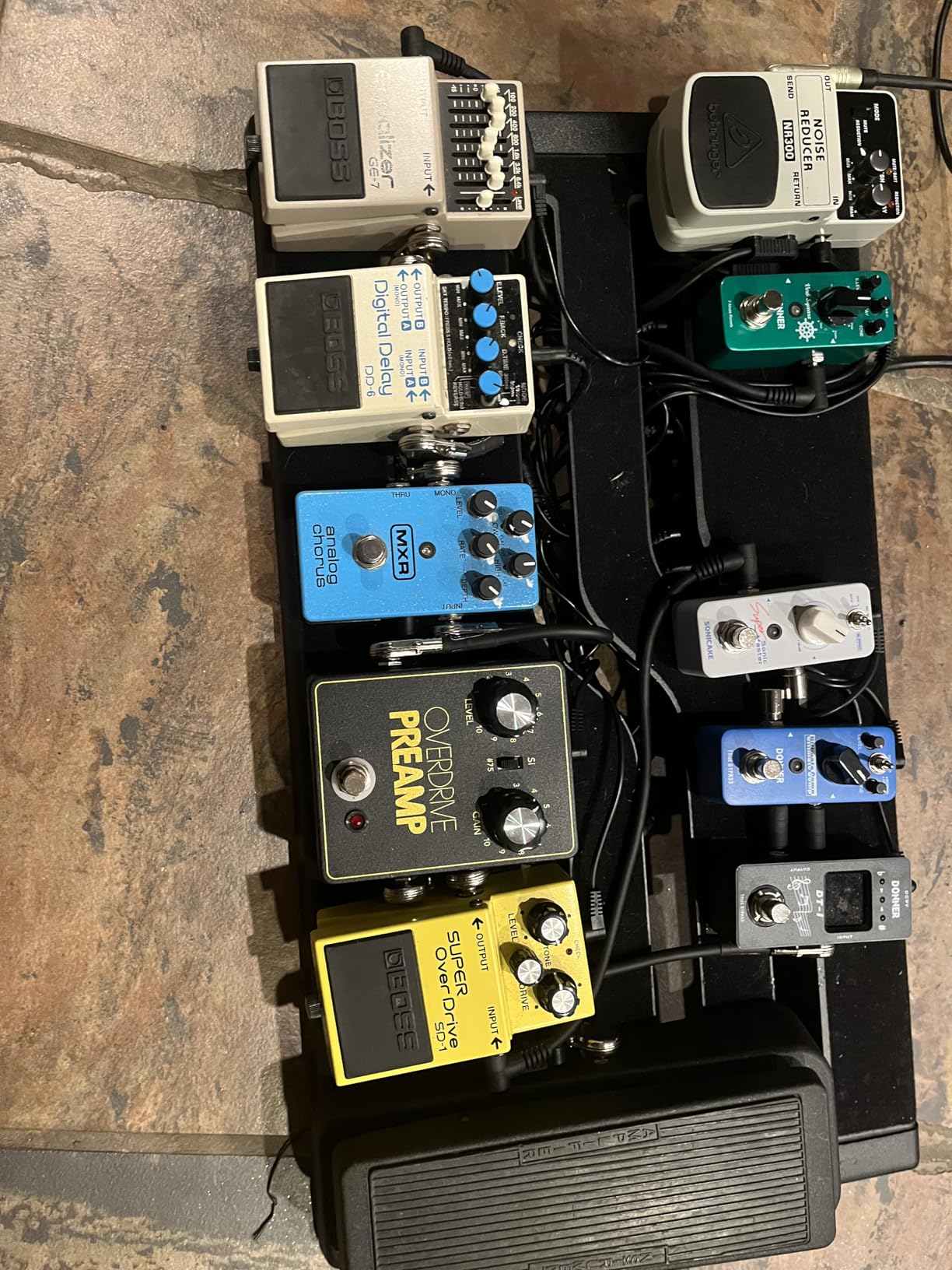
The Donner Ultimate Comp delivers genuinely useful compression at a price point that amazed me during testing. For under $40, you get true bypass, two operating modes, and three practical controls that actually work well for shaping your sound.
The Normal and Treble modes let you switch compression character quickly. I found Normal mode perfect for general use while Treble mode added brightness useful for cutting through or compensating for darker guitars. This simple toggle provides meaningful tonal options without complication.
The true bypass design ensures your signal passes cleanly when disengaged, something many budget pedals skip. I appreciated not having my tone colored when the effect was off, especially when running it alongside other pedals.
Who Should Choose This Pedal
Beginners exploring compression for the first time should start here. The low price lets you experiment with compressed tones without significant investment. If compression suits your playing style, you can upgrade later; if not, you spent minimally discovering that.
Budget-conscious players needing functional compression will find this pedal delivers real results. With over 1500 reviews averaging 4.4 stars, the user consensus confirms it works well for its price point.
Things to Consider
The power adapter is not included, so budget for a power supply if you do not already have one. The build quality reflects the price point, so heavy stompers or touring musicians might prefer more rugged options.
Compared to premium compressors, the feature set remains basic. You cannot expect blend controls, attack shaping, or advanced compression technology at this price. However, for straightforward compression needs, it performs admirably.
9. Behringer CS400 – Ultra-Budget Value
Behringer CS400 Compressor Sustainer Ultimate Dynamics Effects Pedal
Super-Smooth Compression
Endless Sustain
Level/Tone/Attack/Sustain
Analog
Under $30
Pros
- Great low budget option
- Good durable construction
- Competes with expensive pedals
- Super-smooth compression endless sustain
- Four dedicated controls
- Classic squished to subtle studio
Cons
- Plastic housing not durable for heavy use
- Can be noisy at high sustain
- Battery compartment hard access
- Power jack position inconvenient
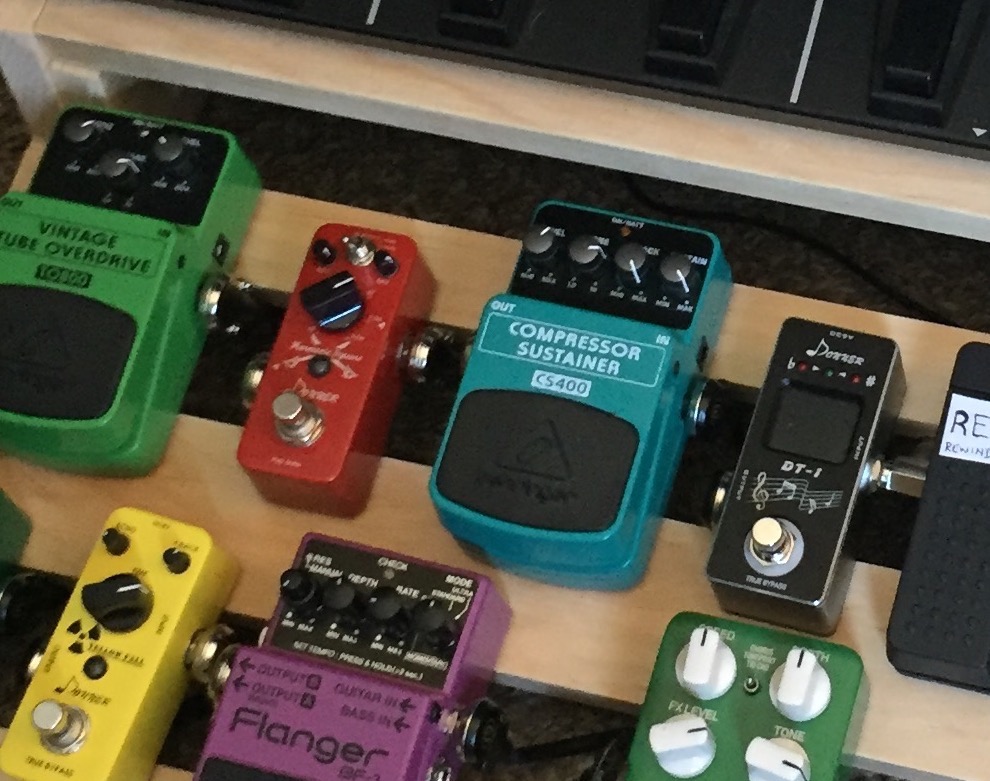
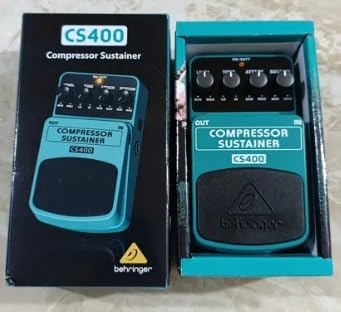
The Behringer CS400 modeled itself after the Boss CS-3, and during my testing, I found it genuinely competitive with that industry standard while costing dramatically less. For players watching their budget closely, this pedal offers real compression functionality at under $30.
The four controls match what you find on more expensive pedals. Level, Tone, Attack, and Sustain knobs give you meaningful shaping capability. I could dial everything from subtle smoothing to that classic squished compression sound depending on what the music required.
The sustain capability impressed me at this price. Cranking that knob delivered genuinely long sustain useful for lead lines, proving Behringer designed this circuit properly rather than just mimicking aesthetics.
Who Should Choose This Pedal
Ultra-budget players who need compression without spending even $40 should grab this immediately. With nearly 3000 reviews confirming its functionality, the CS400 has proven itself to thousands of users. Students, hobbyists, and anyone building their first pedalboard will appreciate the value.
Those comparing it to the Boss CS-3 will find similar compression character at roughly one-third the price. If Boss pricing feels too steep but you want that style of compression, Behringer delivers it affordably.
Things to Consider
The plastic housing cannot match metal-cased durability, so heavy gigging or aggressive stompers should consider sturdier options. Road use will likely damage this pedal faster than premium alternatives. Noise appears at high sustain settings, requiring careful power management.
The battery compartment requires effort to access, and the power input jack sits in an inconvenient position. These practical annoyances reflect the budget design but do not affect the compression quality itself.
10. TC Electronic Forcefield Compressor – Versatile Multiband
TC Electronic FORCEFIELD COMPRESSOR Classic Compressor/Limiter Pedal with Endless Sustain
Multiband Compression
Toneprint Editor
Vintage/Spectra Modes
Blend Control
USB Editing
Pros
- Amazing versatility with Toneprint editor
- Three-band compression precise control
- Blend control for parallel compression
- Vintage and Spectra modes
- Excellent build quality
- Compact with top-mounted jacks
Cons
- Requires Toneprint app for full features
- AutoGain can cause hiss and latency
- Knobs turn easily settings disturb
- Behaves differently with fuzz and overdrive
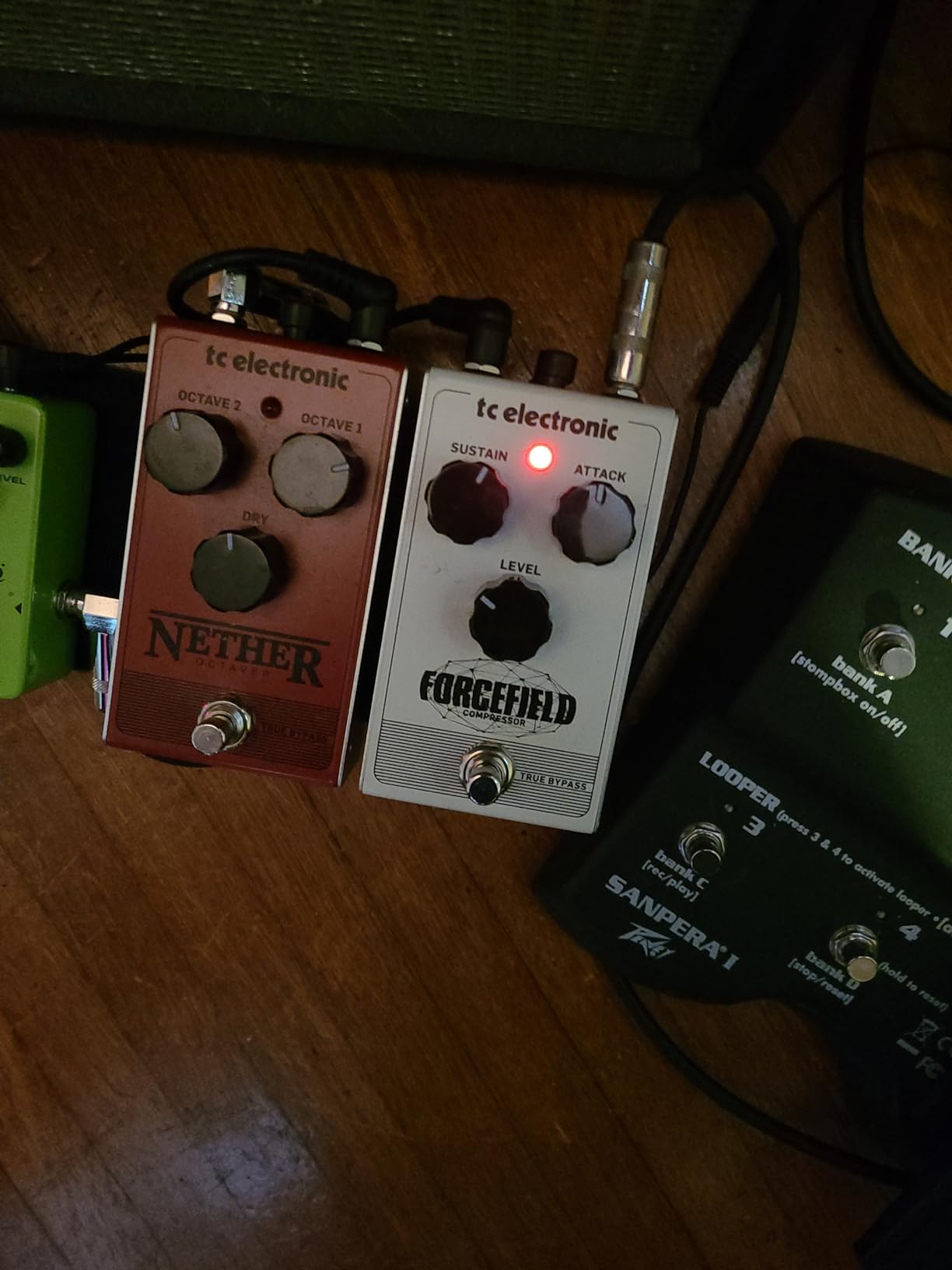
The TC Electronic Forcefield delivers multiband compression sophistication that surprised me with its flexibility. Using the Toneprint editor opened possibilities that standard knob-controlled compressors simply cannot offer, making this pedal genuinely versatile for players who want deep customization.
The Vintage mode delivers classic compression character familiar from traditional designs, while Spectra mode offers more modern transparent compression. Switching between these gives you two distinctly different compression approaches in one pedal.
The blend control lets you mix dry and compressed signals for parallel compression, something recording engineers use extensively. Having this capability in a stompbox format opens professional-level compression techniques to live players.
Who Should Choose This Pedal
Players wanting maximum flexibility and customization will find this pedal suits them perfectly. The Toneprint editor lets you create compression settings that knobs alone cannot achieve, downloading custom configurations from TC Electronic’s library or designing your own via USB.
Those needing both vintage-style compression and modern transparent compression will appreciate having both modes available. One pedal covers two compression philosophies without needing separate units.
Things to Consider
The Toneprint editor requirement means you need a computer or smartphone app to unlock full potential. If you prefer knob-only operation, you miss significant capability. Some users report AutoGain causing hiss and latency issues when improperly configured.
The knobs turn very easily, meaning settings can shift when transporting your board in gig bags. Careful packing or protective knob covers might help. When combined with fuzz or overdrive pedals, the digital processing can affect how those analog pedals respond.
11. MXR Bass Compressor – Low-End Specialist
MXR® Bass Compressor
CHT Technology
True Bypass
10 Gain LEDs
Transparent Compression
Bass Optimized
Pros
- CHT Constant Headroom Technology
- True bypass preserves signal
- 10 gain-reduction LEDs for feedback
- Transparent compression full dynamic range
- Plenty of headroom for bass
- Professional bass compression
Cons
- Some users want more control options
- Higher price for bass-specific use
- May not suit guitarists
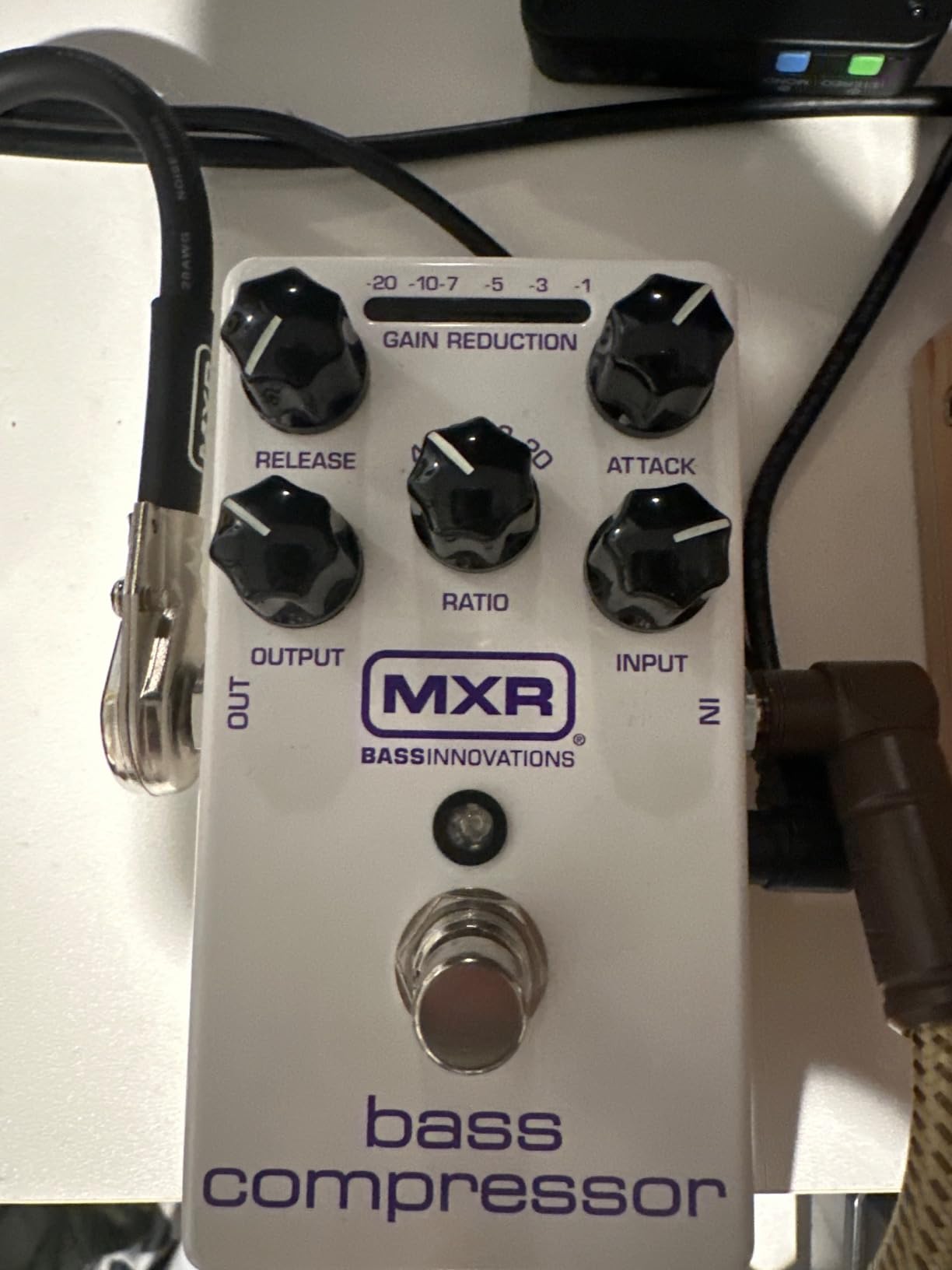
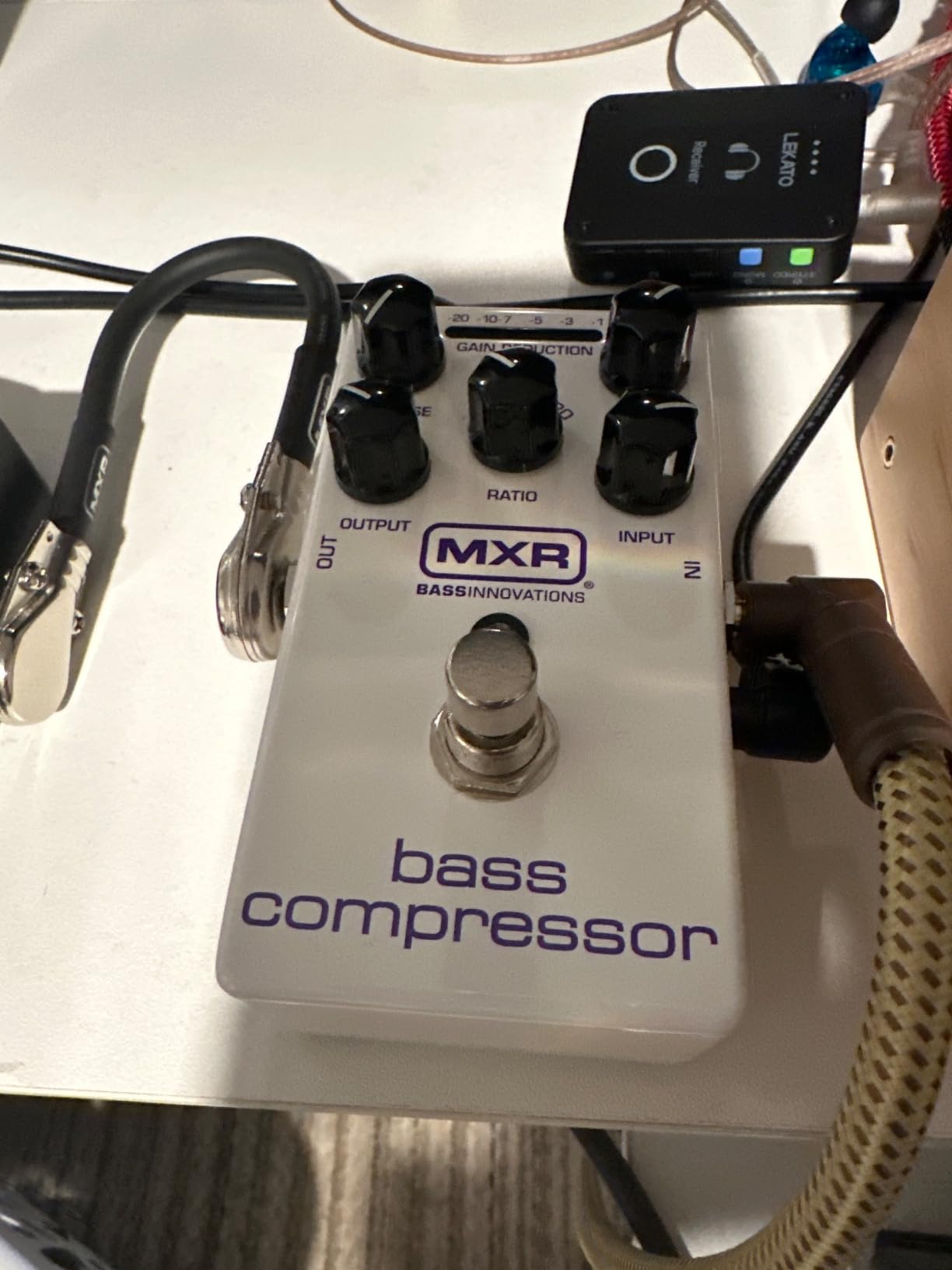
The MXR Bass Compressor specifically targets bass players, and my testing with various bass guitars confirmed it handles low frequencies exceptionally. The CHT Constant Headroom Technology ensures clean performance even with powerful low notes that might strain standard guitar compressors.
The ten gain-reduction LEDs provide visual feedback impossible on most compressors. Watching these LEDs showed me exactly how much compression occurred at any moment, which helped tremendously when dialing in settings for different bass styles.
True bypass ensures my bass signal stays pure when the pedal disengages, crucial for maintaining that fundamental low-end character many bassists prioritize. The transparent compression design preserves your bass’s natural tone while evening out dynamics.
Who Should Choose This Pedal
Bass players seeking professional compression designed specifically for their instrument will find their ideal match here. The headroom and frequency handling suit bass frequencies that guitar compressors often struggle with. Five-string players will appreciate how it handles the extended low range.
Studio bassists and session players needing reliable, transparent compression will value the LED feedback and consistent performance. The visual indication of compression activity helps tremendously during recording sessions.
Things to Consider
The controls remain relatively simple compared to feature-rich guitar compressors. Some users wish for additional shaping options, though the design prioritizes straightforward functionality. The pricing reflects the bass-specific engineering, costing more than general compressors.
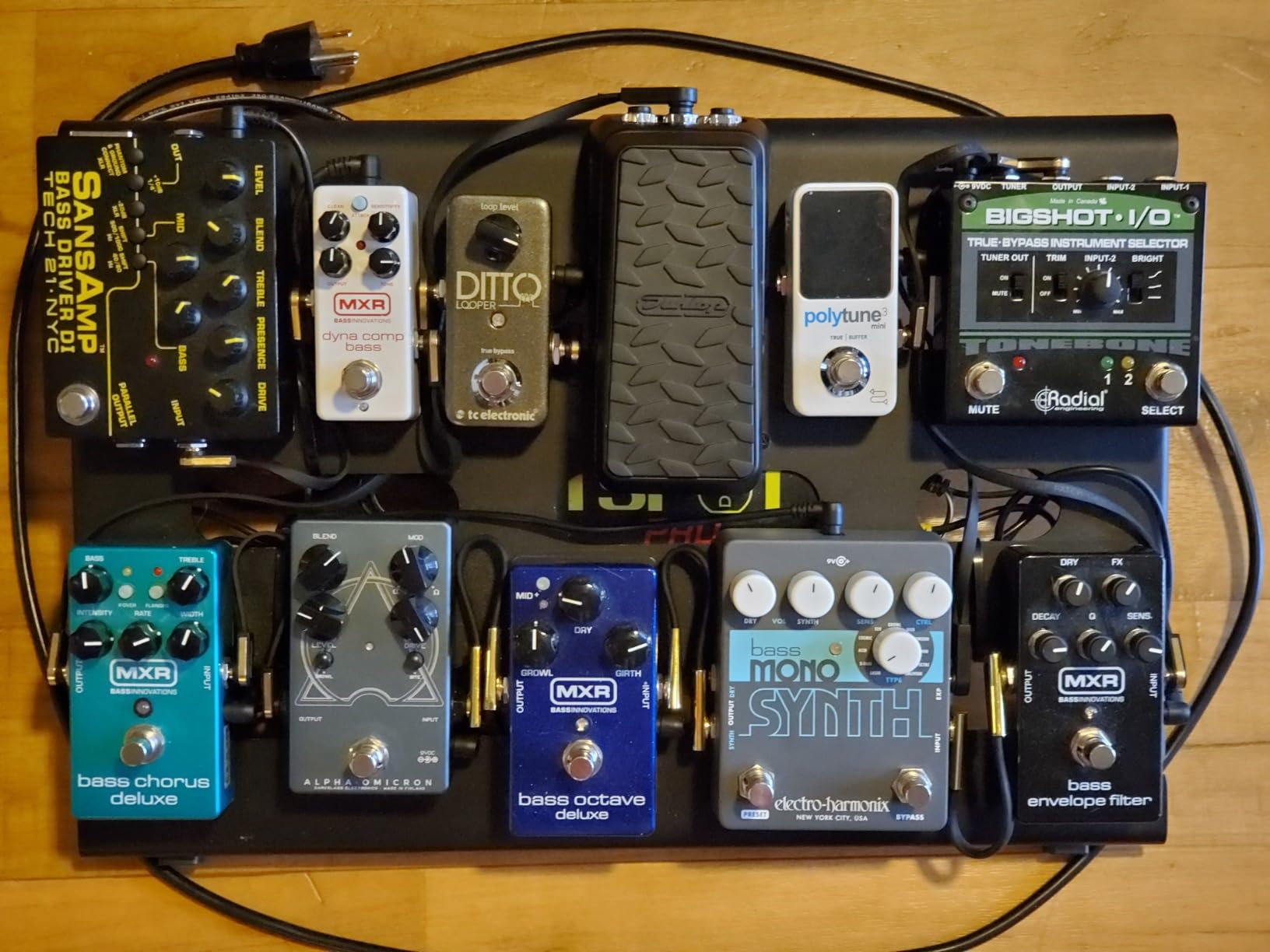
Guitarists might find this pedal less suited to their needs since MXR optimized it for bass frequencies. If you play both instruments, consider whether a dual-purpose compressor like the Keeley Compressor Plus better serves your needs.
12. Universal Audio 1176 Compressor – Studio Classic in Pedal Form
Universal Audio 1176 Compressor Limiter Pedal
1176LN Emulation
Single/Dual/Sustain Modes
All Buttons In
Parallel Compression
True/Buffered Bypass
Pros
- Authentic 1176LN limiting amplifier emulation
- Single Dual and Sustain modes versatile
- True to original hardware controls
- All buttons in for squashed textures
- Parallel compression mode
- Built for professional use
Cons
- Limited stock availability
- Higher price for boutique quality
- Complex controls need learning
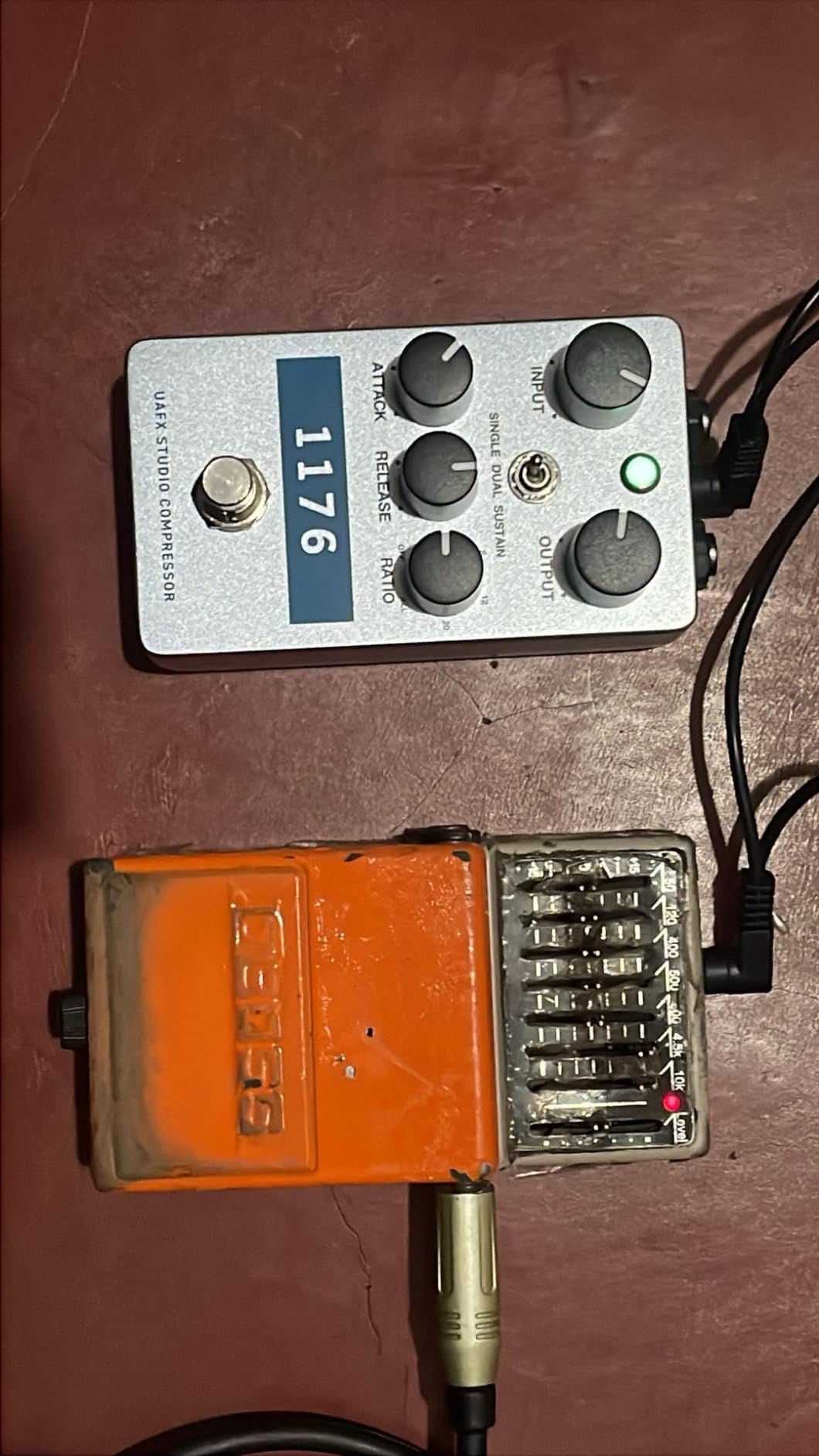
The Universal Audio 1176 brings legendary studio compression into pedal format, and testing it felt like having a piece of recording history on my pedalboard. The authentic emulation of the 1176LN Limiting Amplifier delivers compression character unlike typical guitar pedals.
The Single, Dual, and Sustain modes offer distinctly different compression approaches. Single mode delivers straightforward compression, Dual adds more aggressive character, and Sustain mode extends note length dramatically. These three modes cover compression needs from subtle polish to dramatic effect.
The famous “all buttons in” mode from the original hardware delivers that squashed, gritty texture recording engineers love. Having this iconic compression trick available in stompbox format opens studio techniques to live performance.
Who Should Choose This Pedal
Recording musicians familiar with the 1176 hardware will immediately appreciate having that legendary compression available onstage. If you have used the 1176 in studio sessions and want that character live, this pedal delivers it authentically.
Players seeking compression as an effect rather than utility will find the dramatic compression modes particularly useful. When you want compression to be obviously present rather than invisible, the 1176 character shines.
Things to Consider
The control complexity means learning time compared to simple two-knob designs. Input, Output, Attack, Release, and Ratio controls give you extensive shaping capability, but dialing in desired settings requires understanding how compression parameters interact.
Limited stock availability means you may need to order promptly when you see it listed. The premium pricing reflects the boutique quality and authentic hardware emulation, positioning it above typical guitar compressor prices.
How to Choose the Best Compressor Pedals?
Selecting the right compressor pedal depends on your playing style, the music you perform, and how you want compression to affect your tone. Understanding the different compressor types and their characteristics helps you make informed choices that match your specific needs.
Compressor Types Explained
The four main compressor circuit types each deliver distinctly different compression characters that suit various applications.
OTA Compressors use Operational Transconductance Amplifier circuits, delivering that warm, slightly squashed character many guitarists love. The MXR Dyna Comp exemplifies this type with its Nashville-standard warmth. OTA compressors color your tone pleasantly while providing excellent sustain.
VCA Compressors use Voltage Controlled Amplifier circuits offering more transparent compression with faster response. These suit players wanting compression without obvious character added. Many modern compressors use VCA circuits for their versatility and clarity.
FET Compressors use Field Effect Transistor circuits known for faster attack and characterful compression. The Universal Audio 1176 represents FET compression with its legendary punch and aggression. FET compressors work beautifully when you want compression presence rather than invisibility.
Optical Compressors use light-sensitive components that respond gradually, creating smooth, musical compression. These offer the most transparent, gentle compression character. Players seeking always-on enhancement without obvious effect often prefer optical designs.
Key Controls and Their Functions
Understanding compression controls helps you dial in settings that match your playing needs.
Attack determines how quickly compression grabs your signal after you strike a note. Faster attack immediately compresses, reducing initial punch. Slower attack lets transients through before compression engages, maintaining attack clarity while still smoothing dynamics.
Release controls how quickly compression stops after the signal drops below threshold. Faster release tracks rapid playing but can sound choppy. Slower release provides smoother, more musical results but may not track fast passages accurately.
Ratio sets how much compression occurs relative to signal level. Lower ratios provide gentler compression, higher ratios deliver more aggressive squash. Many pedals offer fixed ratios, while advanced models let you adjust this parameter.
Threshold determines the signal level where compression begins. Signals above threshold get compressed; signals below pass unaffected. Some pedals automatically adjust threshold based on input level.
Blend mixes your dry uncompressed signal with the compressed signal, letting you maintain dynamics while adding sustain underneath. This parallel compression technique preserves expression while providing compression benefits.
Pedal Chain Placement
Where you place your compressor in your signal chain dramatically affects its behavior and results.
First position works best when you want compression affecting your raw guitar signal before other effects. This placement provides consistent dynamics into your entire chain, helping subsequent effects receive even signal levels. Most players positioning compressor as always-on utility place it first.
After dirt pedals lets you compress your overdriven or distorted signal rather than your clean guitar. This suits players wanting to smooth dynamics on their dirty tones specifically. Placing compressor after fuzz can sometimes cause interaction issues, so test your combination carefully.
Last position compresses your entire processed signal chain output. This works when you want overall volume leveling after all effects have shaped your tone. Some players use this placement for final polish before hitting their amp.
Genre-Specific Recommendations
Different musical styles benefit from different compression approaches.
Country and Chicken-Picking styles benefit from OTA compressors like the MXR Dyna Comp that deliver that warm Nashville character with obvious compression presence. Blend controls help maintain dynamics during fast picking passages.
Funk and R&B playing benefits from faster attack settings that catch rhythmic chord stabs cleanly. The Boss CS-3 handles funk well with its adjustable attack and brightness that helps cutting through.
Blues guitarists often prefer moderate compression that enhances sustain for bends while maintaining expressive dynamics. The Keeley Compressor Plus and Wampler Ego suit blues well through their blend controls.
Rock and Metal players sometimes skip heavy compression since distortion already compresses signals naturally. Light transparent compression can enhance clean passages without affecting dirty tones. The Boss CP-1X handles extended-range guitars particularly well.
Jazz guitarists typically prefer subtle, transparent compression that polishes clean tones without obvious squash. Optical compressors and modern transparent designs work beautifully for jazz applications.
True Bypass vs Buffered Bypass
Bypass type affects your signal when the pedal disengages, an important consideration for pedal chain planning.
True bypass completely removes the pedal’s circuitry from your signal path when off. Your signal passes through unaffected by any buffer or electronics. Players with short cable runs and few pedals often prefer true bypass for maximum signal purity.
Buffered bypass passes your signal through the pedal’s buffer circuit even when disengaged. This maintains signal strength over long cable runs and dense pedalboards. Players with extensive signal chains often benefit from buffers preventing signal degradation.
Consider your full signal chain when choosing. Multiple true-bypass pedals with long cables can cause signal loss that a buffer would prevent. Boss pedals with buffered bypass often help signal chains sound clearer despite not being true bypass.
FAQs
What does a compressor pedal do?
A compressor pedal evens out your guitar’s dynamic range by reducing loud peaks and boosting quieter passages. This results in more consistent volume levels, enhanced sustain for notes and chords, and added presence to your tone. Think of it as automatic volume control that keeps everything sounding polished and even.
Do I need a compressor pedal?
You need a compressor pedal if you play styles requiring consistent dynamics like country, blues, or funk. Session players, recording musicians, and those wanting enhanced sustain benefit significantly. If you mostly play high-gain styles where distortion naturally compresses your signal, or you prefer maximum dynamic expression without smoothing, you might not need one.
Should compressor pedals go first or last in the pedal chain?
Most players place compressors first in their chain to compress the raw guitar signal before other effects. This provides consistent dynamics into subsequent pedals. However, placing it after dirt pedals lets you compress your overdriven tone specifically. Placing it last compresses your entire processed signal. Experiment to find what suits your setup.
Are all compressor pedals noisy?
No, many modern compressor pedals operate quietly when properly powered. Noise typically comes from poor power supplies, high gain settings, or placement alongside certain effects. Quality compressors like the Keeley Compressor Plus, Boss CP-1X, and Wampler Ego are known for quiet operation. Digital circuitry compressors like the CP-1X specifically reduce noise compared to traditional analog designs.
When should I not use a compressor pedal?
Skip compression when playing styles requiring maximum dynamic expression like classical pieces or fingerstyle acoustic work where touch sensitivity matters most. Heavy distortion already compresses naturally, so adding more compression often sounds flat. Players focused on raw, unpolished tones might find compression counterproductive. Also avoid compression when noise in your signal chain cannot be controlled effectively.
Conclusion
Finding the best compressor pedals for your playing style transforms how your guitar sounds and responds. The Keeley Compressor Plus stands as our Editor’s Choice for its blend control, tone shaping, and versatility across instruments. The MXR Dyna Comp delivers authentic Nashville warmth at a great price as our Best Value pick. Budget-conscious players get genuine functionality from the Donner Ultimate Comp without significant investment.
Whether you need transparent always-on enhancement, classic warm squash, or sophisticated multiband compression, the options covered here handle every requirement. Consider your style, budget, and how prominently you want compression affecting your tone when choosing. In 2026, these pedals represent the top choices available for guitarists and bassists seeking professional-grade compression.
Take your time testing different compressor types to discover what character suits your music. Many players find compression becomes essential once they experience how it polishes their sound and enhances their playing.