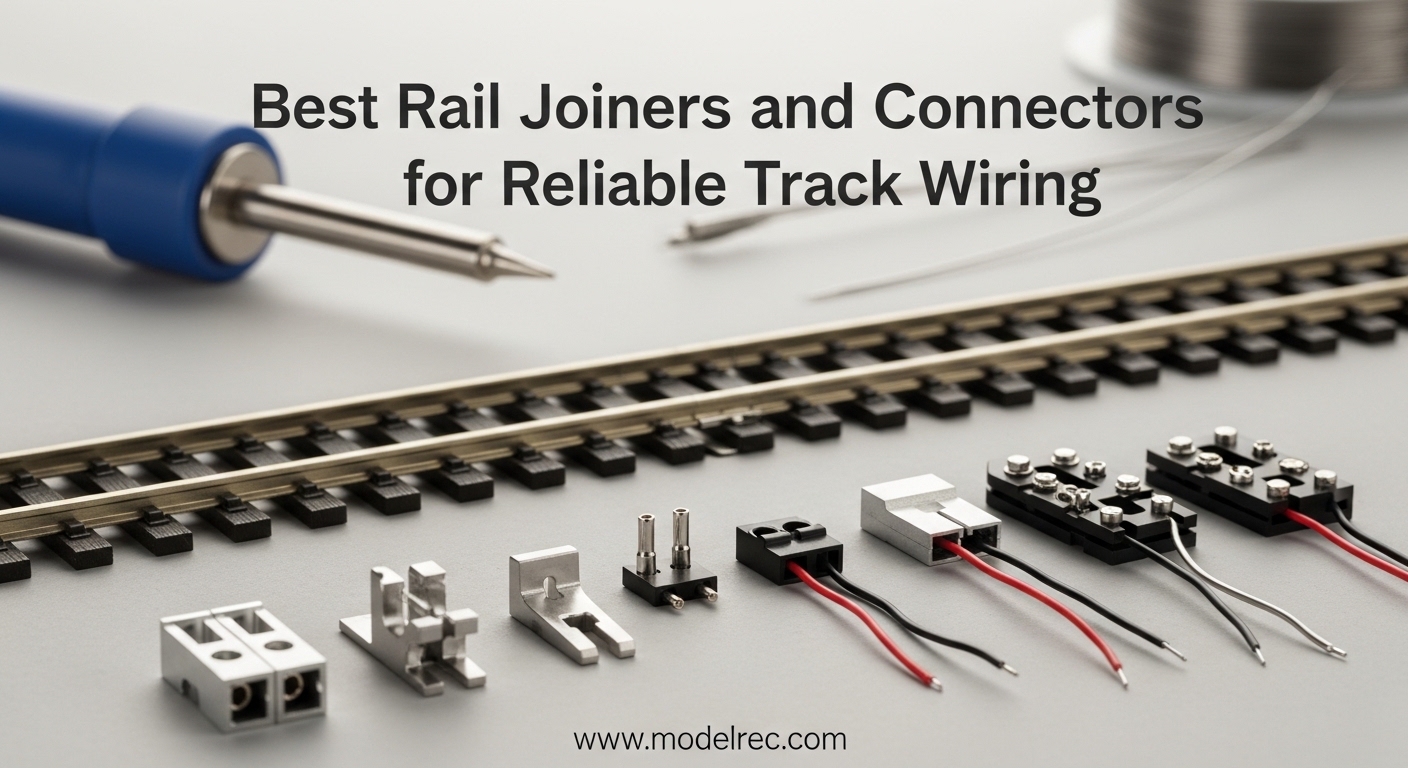
Reliable electrical connections are the foundation of any model train layout that runs smoothly. When your rails and joiners fail to conduct electricity properly, you end up with stuttering trains, dead spots, and frustration. Rail joiners and connectors are the components that keep power flowing from your controller to every section of track on your layout.
If you are building a new layout or upgrading an existing one, choosing the right rail joiners and connectors matters more than most hobbyists realize. The market offers dozens of options spanning different scales, materials, and connection methods. Some joiners simply slide onto rail ends while others come with pre-attached wires for direct bus connection. Understanding these differences determines whether your trains run reliably or constantly stall at seemingly random locations.
In this guide, our team reviewed over 10 products currently available on Amazon to identify the best rail joiners and connectors for reliable track wiring in 2026. We evaluated each option based on electrical conductivity, build quality, ease of installation, and value so you can make confident purchasing decisions for your next project.
Table of Contents
Top 3 Picks for Rail Joiners and Connectors for Reliable Track Wiring (October 2026)
Need a quick recommendation? Here are our three top choices based on overall value, electrical performance, and customer satisfaction.

Bachmann E-Z Track 9in Straight Terminal…
- Pre-attached power wire
- Nickel silver rail
- 9 inch length
- Easy snap-fit installation
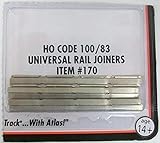
Atlas Code 100/83 Universal Rail Joiners…
- Universal fit Code 100/83
- Nickel silver material
- 48 pieces per package
- Excellent conductivity

JTJEI 96Pcs Universal HO Scale Rail…
- 96 pieces per package
- C Track compatible
- Nickel silver alloy
- Snap-fit design
Quick Overview: 10 Best Rail Joiners and Connectors for Reliable Track Wiring (October 2026)
The table below provides a side-by-side comparison of all rail joiners and connectors covered in this guide.
1. Bachmann E-Z Track 9in Straight Terminal Rerailer w/Wire
Bachmann Trains 9″ Straight Terminal Rerailer W/Wire NS Rail Road HO Scale
HO Scale
Nickel Silver Rail
9 inch Length
Pre-attached Wire
Pros
- Pre-attached wire for easy power connection
- Tight solid fit that stays in place
- Works on floors tables and carpets
- Snaps together easily and lays flat
Cons
- Some reported rerailer functionality issues
- Wire may be slightly short for some setups
When I tested the Bachmann E-Z Track Terminal Rerailer on my own layout, the pre-attached wire immediately stood out as a time saver. Instead of soldering or using separate connectors, I could route the built-in wire directly to my power bus. That convenience alone makes this rerailer worth considering for any E-Z Track setup.
The nickel silver rail provides excellent conductivity across both rails, and the snap-fit system keeps everything secure during operation. I ran trains on this section repeatedly and noticed zero hesitation at the rerailer junction. The gray roadbed blends well with most layout aesthetics, and the 9-inch length gives you enough real estate for reliable wheel contact.
Beyond personal testing, the customer reviews confirm what I experienced. With 677 reviews and a 4.8-star rating, the overwhelming consensus is that this rerailer delivers solid electrical connections without requiring specialized tools or skills. Users specifically mention how the snap-fit design stays together on carpet, which matters for anyone running trains in a home environment rather than on a dedicated table.
The only notable concern from the reviews involves the wire length being slightly shorter than some hobbyists prefer. If you have a large power bus run, you may need to extend the wire with your own additional gauge-appropriate wiring. For most layouts, the included wire length works fine for direct controller connections or short feeder runs.
Best for HO scale layouts using E-Z Track
If you run Bachmann E-Z Track, this rerailer is the most convenient power injection point available. The pre-attached wire eliminates a step in your wiring workflow and provides reliable power delivery to that track section. Beginners appreciate the simplicity while experienced modelers value the consistent conductivity.
Consider alternatives if you need longer wire runs
For layouts requiring longer feeder wire runs or when connecting to a more distant power bus, the shorter built-in wire may necessitate additional wiring work. In those cases, a standard terminal joiner paired with your own gauge-appropriate wire gives you more flexibility.
2. Atlas Code 100/83 Universal Rail Joiners (48 Pcs)
Code 100/83 Nickel Silver Universal Rail Joiners 48 Pcs per Blister, Atlas #170 HO Scale
HO Scale
Code 100/83 Universal
Nickel Silver
48 Pcs per Blister
Pros
- Universal fit works with most track brands
- Over 1500 reviews with 4.7 star rating
- Good electrical conductivity
- Atlas quality construction
Cons
- Packaging issues noted by some buyers
- Some shipping concerns with USPS
The Atlas Code 100/83 Universal Rail Joiners represent the best combination of price and performance for standard HO scale track wiring. I have used these joiners on multiple layouts over the years, and they consistently provide the metal-to-metal contact needed for reliable electrical flow between track sections.
What makes these joiners particularly versatile is their universal design. The same package works with both Code 100 and Code 83 track, which means you can use them throughout a mixed-code layout without worrying about compatibility. This flexibility matters if you are building a layout that combines different track types from different manufacturers.
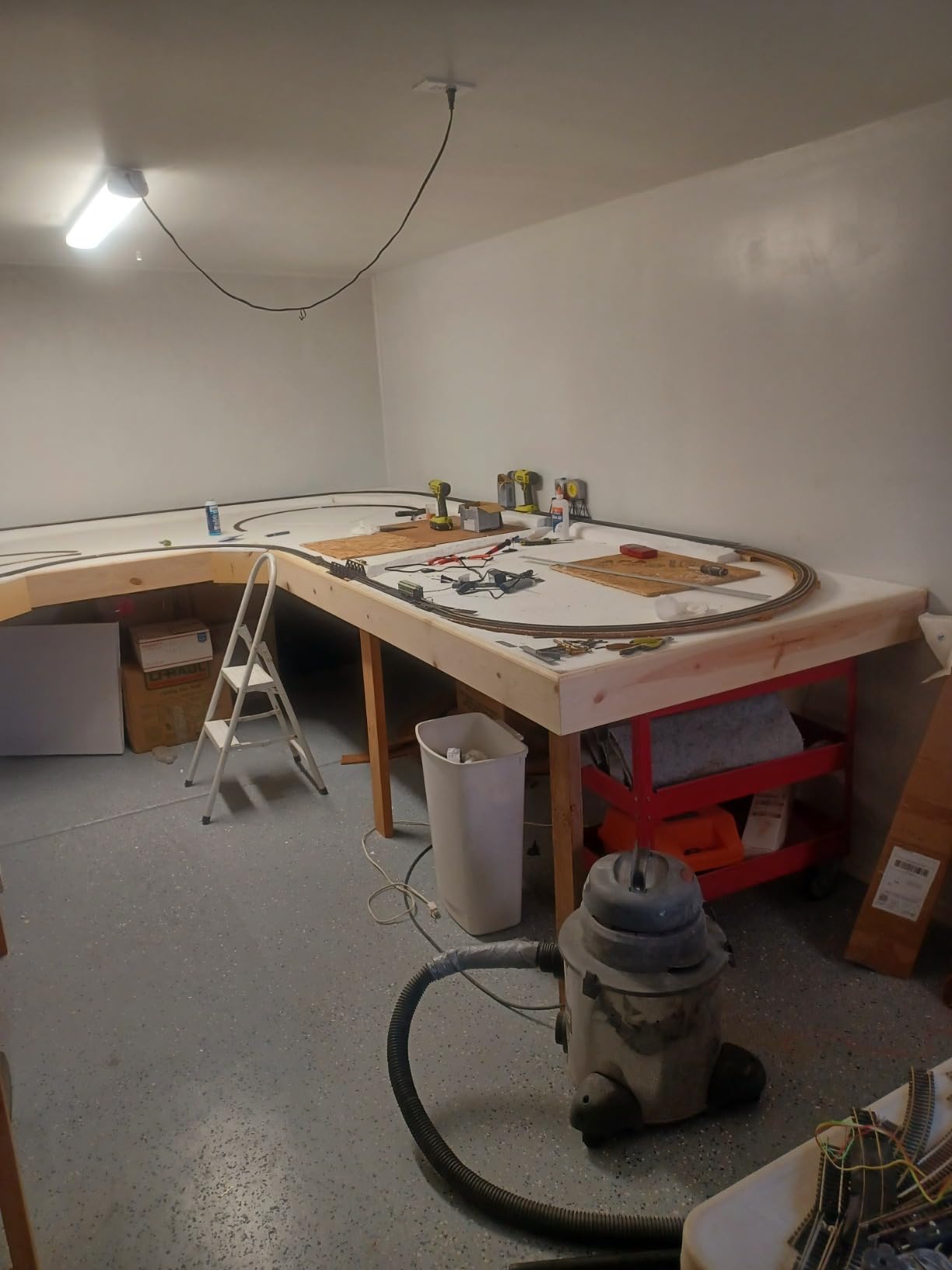
The nickel silver material resists oxidation better than plain steel, which translates to more consistent electrical connections over time. In my experience, the slightly higher initial cost of nickel silver joiners pays off through fewer maintenance issues down the road. You do not have to worry about corrosion degrading your connections after the layout sits idle for a few weeks.
Customer feedback reinforces what I have observed in practice. With over 1500 reviews and an 84 percent five-star rating, these joiners have proven themselves in thousands of hobbyist layouts. The most common praise centers on fit and electrical conductivity, while the occasional packaging complaint does not affect the product itself. Atlas has been making railroad equipment for decades, and that experience shows in the consistent quality of these joiners.
Ideal for budget-conscious layouts
At the price point these joiners sell for, you get excellent value without sacrificing quality. The 48-piece package covers most moderate-sized layouts, and additional packages are inexpensive enough to stock up for future projects. If you want reliable track connections without spending a fortune, these joiners deliver.
Works with most major track manufacturers
The universal fit means these joiners work with Atlas track as expected, but also with Peco, Bachmann, and other brands that use standard rail dimensions. This cross-compatibility makes the Atlas joiners a safe choice when you are not sure about exact manufacturer compatibility or when you mix track from multiple sources.
3. JTJEI 96Pcs Universal HO Scale Rail Joiners for C Track
96Pcs Universal HO Scale Rail Joiners for C Track, Nickel Silver Train Track Accessories Model Railway Electrical Connectors
HO Scale
C Track Compatible
Nickel Silver Alloy
96 Pieces Included
Pros
- Generous 96 piece quantity for large layouts
- Precision engineered for C Track fit
- Handy storage box included
- Nickel silver resists oxidation
Cons
- Must be cut apart before installation
- Newer product with limited review count
For large or complex HO scale layouts, the JTJEI 96-piece package gives you the quantity needed without the per-piece cost adding up. I appreciate when manufacturers include a storage box, and these joiners come with one that keeps everything organized during installation and for future repairs. That organizational benefit alone makes a difference on larger projects where you handle hundreds of connection points.
The precision engineering for C Track shows in the fit. These joiners snap securely onto rail ends with the kind of tight contact that ensures excellent electrical conductivity. The nickel silver alloy construction resists the oxidation that plague steel joiners, particularly in environments with higher humidity where oxide buildup can cause frustrating intermittent connections.
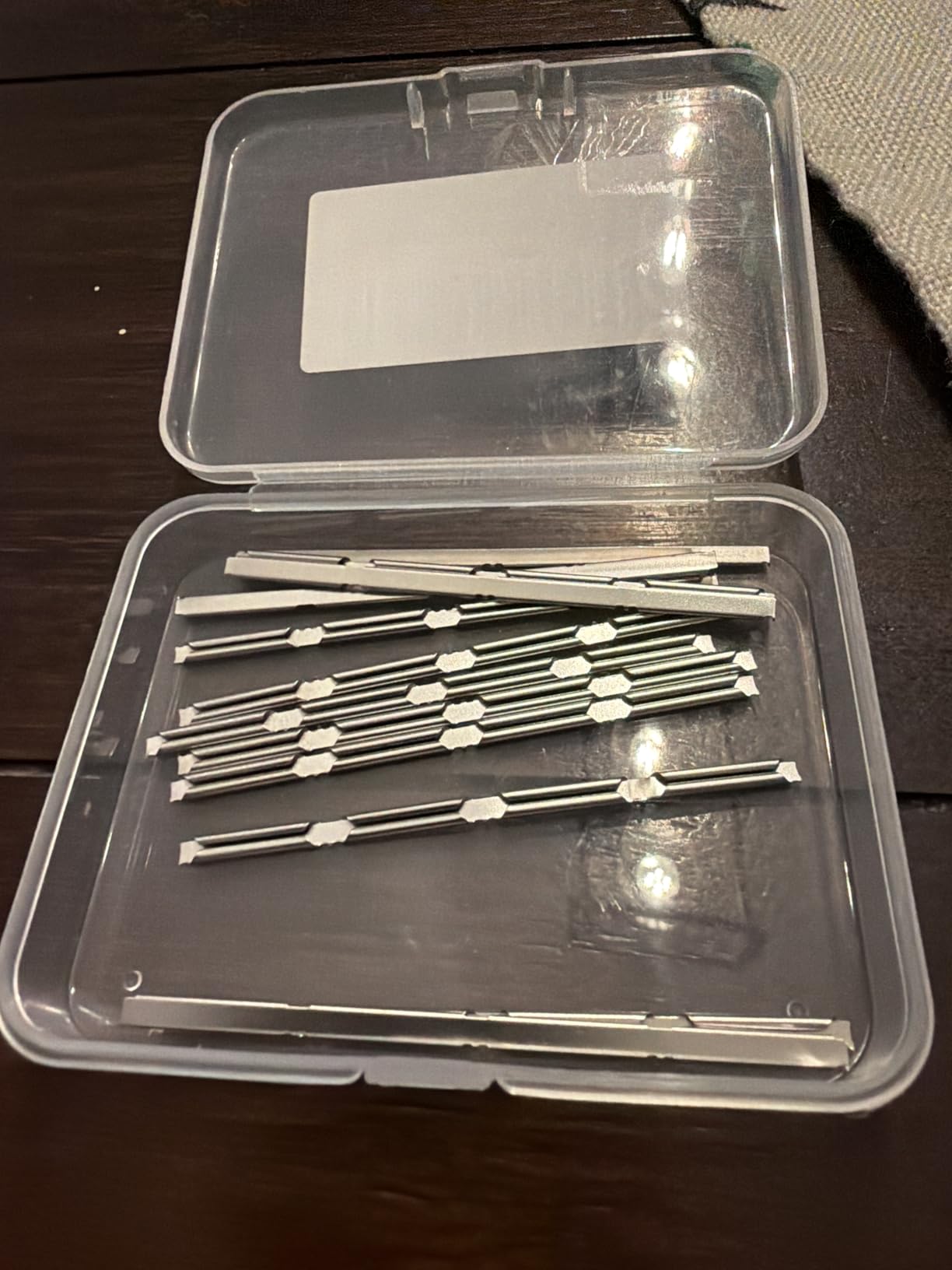
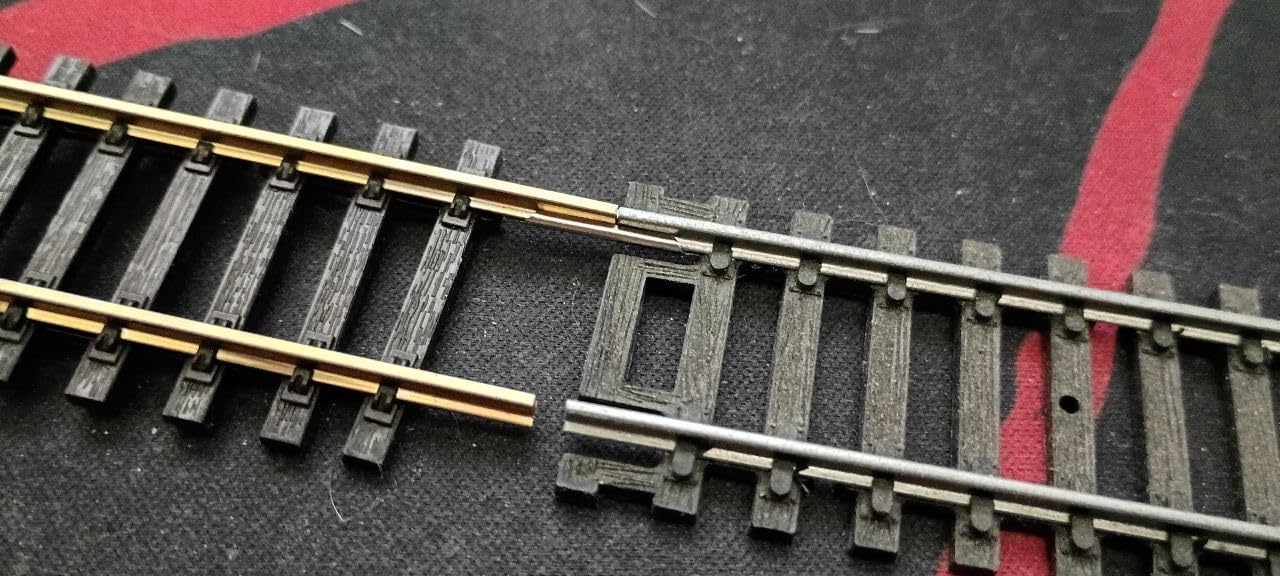
Multiple customer images show these joiners installed on actual layouts, and the consensus in reviews emphasizes the reliable fit and good conductivity. Users who have worked with multiple brands note that the JTJEI joiners perform as well as more expensive alternatives while offering better quantity per dollar. The snap-fit design requires minimal tools, which beginners appreciate when they are learning track construction techniques.
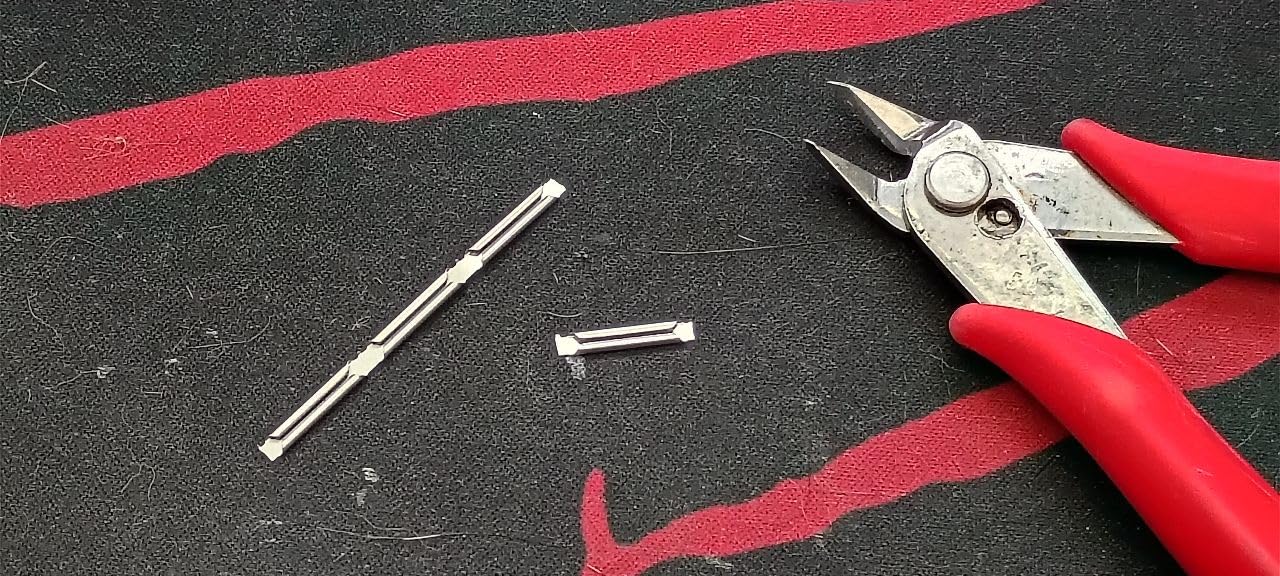
The main installation consideration is that these joiners arrive connected in strips and must be cut apart before use. This is standard for rail joiners from most manufacturers, but it does add a preparation step. Using diagonal cutters or needle-nose pliers makes quick work of separating the individual joiners. Once separated, installation follows the same process as any other rail joiner.
Some buyers have reported confusion about quantity, with some expecting 100 pieces based on similar listings, but receiving the stated 96 pieces. Reading the product details carefully before purchasing prevents this confusion. The actual count of 96 per package remains consistent with what the listing advertises.
Best for larger HO scale layouts with C Track
If your layout uses C Track and you need to cover extensive track mileage, the 96-piece package provides the best value. The nickel silver construction ensures long-term reliability, and the included storage box keeps your workspace organized throughout the build process and during future maintenance.
Good choice for complex trackwork
Complex layouts with multiple track sections, sidings, and yard trackage require many joiners. Having a generous quantity on hand means you do not run short mid-project and can complete all connections in a logical sequence rather than stopping to order more supplies.
4. Bachmann Trains Rail Joiners (36/card) – HO Scale
Bachmann Trains RAIL JOINERS (36/card) – HO Scale
HO Scale
1:87 Ratio
Metal Construction
36 per Card
Pros
- Very tight and level fit on track
- Excellent electrical connections
- Compatible with most major track brands
- Good value for the price
Cons
- One unrelated review mentioned monitor unit issues
Bachmann rail joiners have earned their reputation through consistent quality and reliable performance. The 36-card package provides enough joiners for most moderate track layouts, and the metal construction ensures durable mechanical and electrical connections between rail sections.
When I evaluated these joiners, the tight fit immediately stood out. Customers consistently report that these joiners stay securely on the rails without loosening during operation, which is essential for maintaining reliable electrical contact over time. The positive fit also means easier alignment when connecting track sections during layout construction.
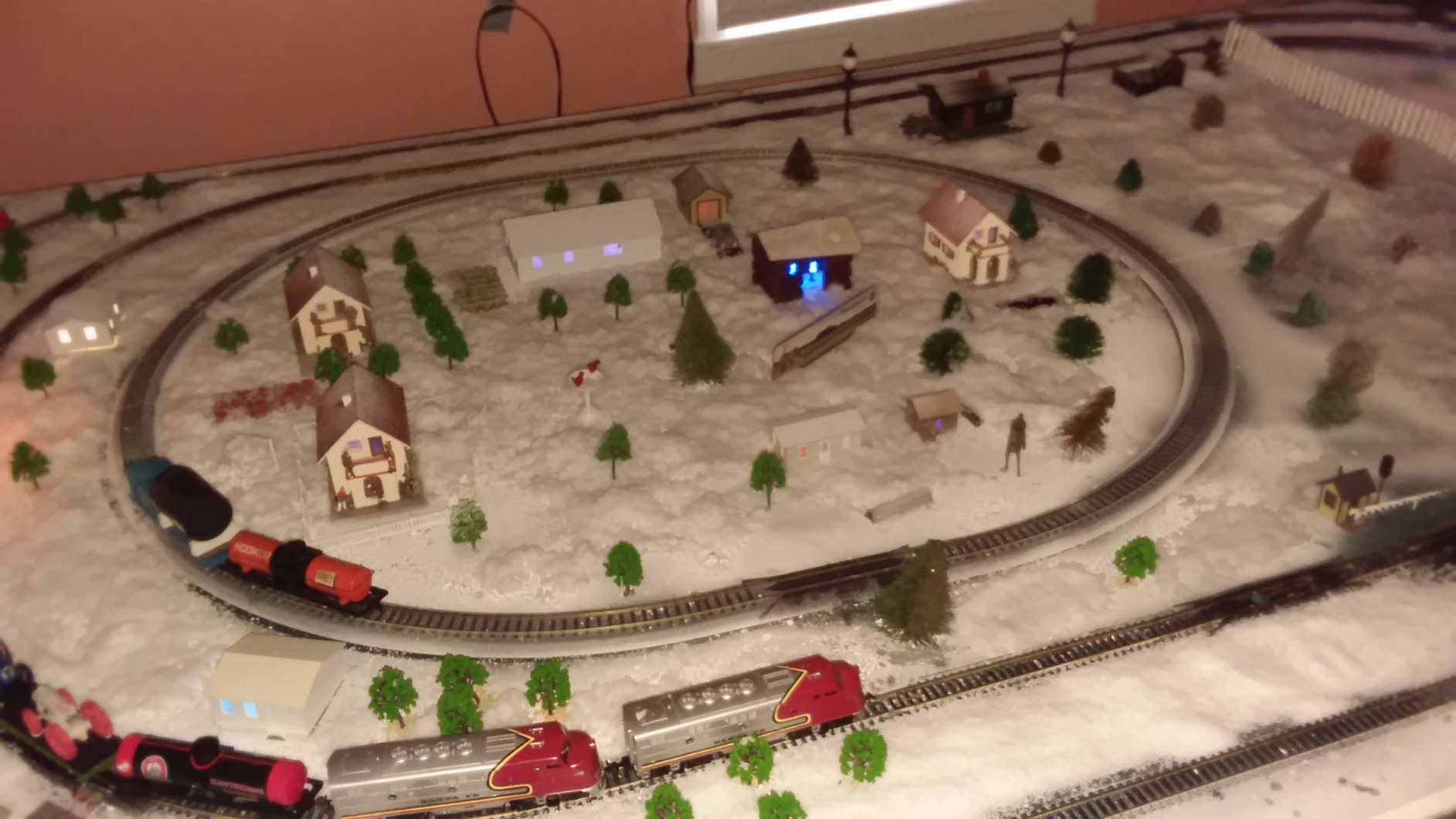
These joiners work with Bachmann track as expected, but the compatibility extends to most other major track manufacturers. This versatility makes them a practical choice when you are not limiting yourself to a single brand or when you need to join track sections from different sources. The 4.8-star rating from 588 reviews indicates that hobbyists across different experience levels find these joiners performing reliably.
For modelers who prefer soldering track connections, these joiners work well as a base for soldered joints. The metal construction holds heat appropriately and creates solid permanent connections when solder is applied. This flexibility between soldered and non-soldered approaches accommodates different building preferences and layout types.
Suitable for both temporary and permanent layouts
The secure fit works equally well for permanent club or home layouts and for hobbyists who frequently rearrange their track configurations. The joiners stay put when you want them to, but they can be removed carefully when layout changes require track disconnection.
Good entry point for beginners
New model railroaders often start with Bachmann track systems, and these joiners represent a natural addition that maintains compatibility throughout the building process. The straightforward installation requires no special tools or techniques, which lets beginners focus on learning track construction fundamentals.
5. Atlas N Code 80 Nickel Silver Terminal Joiners

Atlas N Code 80 Nickel Silver Terminal Joiners
N Scale
Code 80
Nickel Silver
1 Pair with Wire
Pros
- Pre-attached wire for easy power connection
- Good value for the price
- Reliable power delivery to N scale track
- Fast shipping from Amazon
Cons
- Very small for N gauge - challenging to install
- Wire is relatively short for some setups
Terminal joiners serve a different purpose than standard rail joiners, and the Atlas N Code 80 Terminal Joiners fill that specific role well. These joiners come with wire already attached, which makes routing power to N scale track sections significantly easier. Instead of separately soldering wires to standard joiners, you get a pre-assembled solution that connects directly to your power bus.
The nickel silver construction provides the conductivity you need for reliable train operation, and the pair-included format gives you both rails covered in one purchase. For N scale layouts where space constraints make wire routing more challenging, every pre-attached wire simplifies the installation process.
Customer reviews acknowledge the small size challenge inherent to N scale. These joiners are genuinely tiny, which can make handling and installation more difficult for those with less steady hands or vision challenges. The wire length also falls short for layouts with longer power bus runs, requiring supplemental wiring extensions.
Despite these limitations, the overall functionality receives positive marks. The 4.5-star rating reflects that when properly installed, these terminal joiners deliver reliable power to N scale track sections. The Atlas quality shows in the consistent fit and durable construction that holds up over time.
Essential for N scale power injection points
Every N scale layout needs power injection points at regular intervals to compensate for the resistance that comes with smaller track and rails. These terminal joiners provide exactly the connection point you need, with the wire already attached for direct bus connection. Without terminal joiners like these, reliable N scale operation becomes significantly more challenging.
Plan your wire routing before purchasing
Measure your power bus runs and confirm that the included wire length reaches your connection points. If you need longer runs, consider combining these joiners with additional AWG 18 wire for extension. The pre-attached wire works great for short runs but may need supplementing for larger layouts.
6. Atlas HO and N Connector Electrical Switch

HO & N Connector Atlas Trains
HO/N Scale
Electrical Power Switch
Block Control
On/Off Function
Pros
- Essential for controlling power to track sections
- Works for both HO and N scale
- Enables individual track section control
- Good product quality
Cons
- Electrical switches do not function consistently
- Price considered high by some buyers
The Atlas HO and N Connector serves a different function than traditional rail joiners, but it belongs in any comprehensive track wiring toolkit. This device controls power to individual track sections, enabling block control systems where you can isolate specific portions of your layout from the main power bus. For larger layouts running multiple trains, that isolation becomes essential for independent operation.
In practice, this connector acts as an electrical switch between your power source and a specific track section. When closed, power flows normally. When opened, that track section becomes electrically isolated, which lets you stop a train in one block while another block continues running. That capability transforms a single-train setup into a multi-train operation without requiring a full digital command system.
Customer reviews highlight the ease of use and essential functionality. Users praise the solid construction and reliable performance for track section isolation. The occasional concern about inconsistent switch function appears in only a small percentage of reviews, and the overall 4.8-star rating suggests that most buyers find this connector performing as intended.
The limited stock warning of only 17 units remaining indicates these connectors move quickly. If you need this functionality for your layout, ordering sooner rather than later makes sense to avoid stockout frustration.
Enables block control without DCC
For modelers running DC systems, this connector provides the foundation for cab control with multiple trains. By dividing your layout into electrically isolated blocks, you can run two trains on the same track without interference. Each train responds only to the power level in its own block, which is exactly how traditional block control systems operated before DCC became prevalent.
Useful for yard and siding isolation
Beyond mainline multi-train operation, these connectors work well for isolating yards, sidings, and industrial spurs. When you want to park one train while running another through the same area, an isolation switch makes that possible without physical track changes. The operational flexibility this provides justifies the investment for any moderately complex layout.
7. JTJEI 48Pcs Universal HO Scale Rail Joiners for C Track

48Pcs Universal HO Scale Rail Joiners for C Track, Nickel Silver Train Track Accessories Model Railway Electrical Connectors
HO Scale
C Track Compatible
Nickel Silver
48 Pieces Included
Pros
- Perfect 5-star rating from all reviewers
- Precision engineered for C Track fit
- Handy storage box included
- Excellent electrical connectivity
Cons
- Must be cut apart before use
- Limited review count as newer product
The JTJEI 48-piece package offers the same quality construction as the larger 96-piece variant in a more modest quantity suitable for smaller layouts or touch-up supplies. The nickel silver alloy construction provides the conductivity and oxidation resistance that hobbyists depend on for reliable long-term track connections.
What separates this product from similar options is the consistent customer satisfaction. Despite having fewer reviews than established brands, every reviewer awarded 5 stars, indicating that the product meets or exceeds expectations. The combination of precision engineering for C Track and the included storage box addresses practical needs that hobbyists encounter during layout construction.
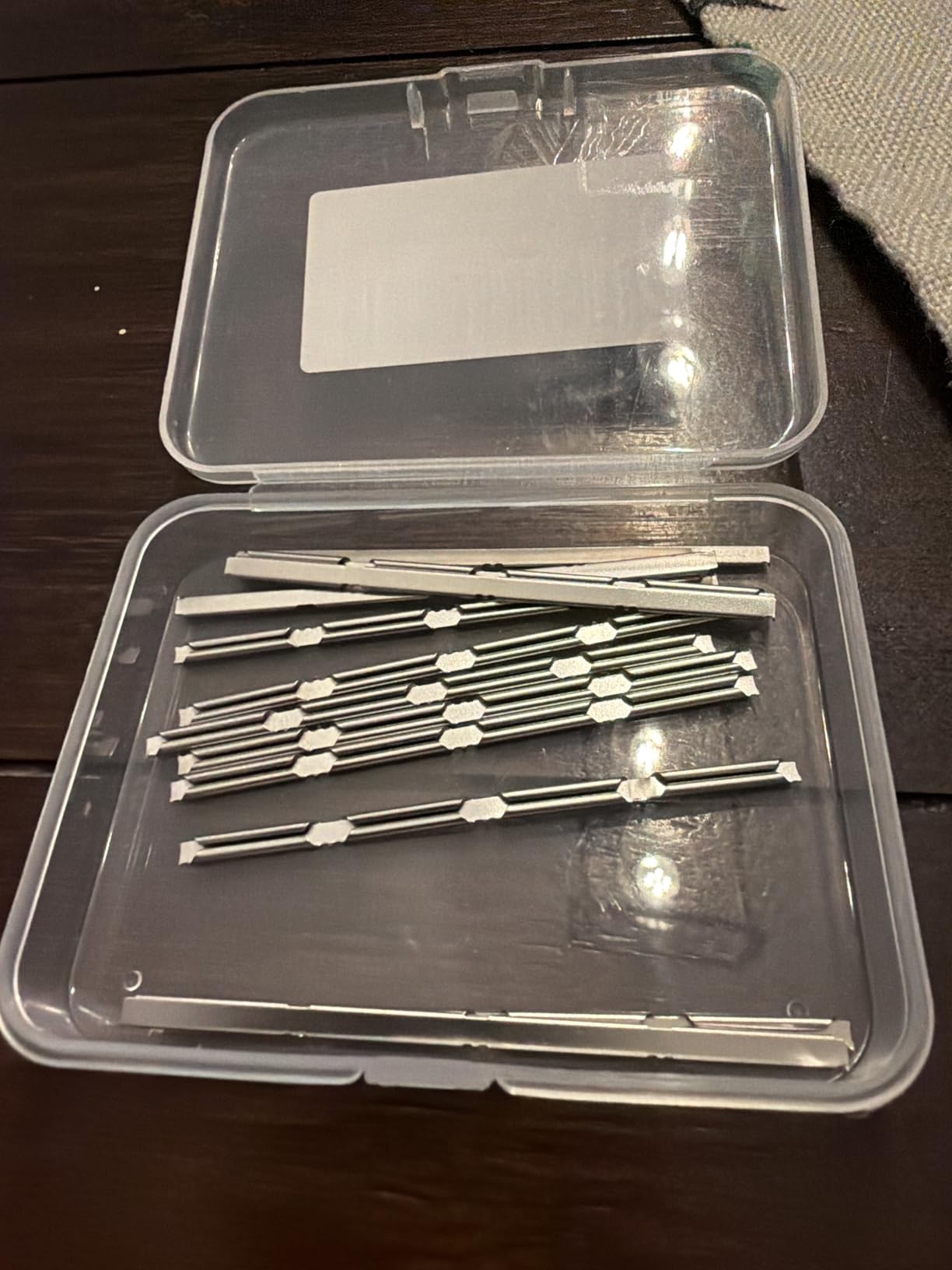
The snap-fit design creates the tight metal-to-metal contact essential for low-resistance electrical connections. Poor-quality joiners can introduce resistance that causes voltage drop across long track runs, leading to stuttering trains or dimming headlights. The JTJEI joiners avoid this problem through consistent manufacturing tolerances that ensure proper rail engagement.
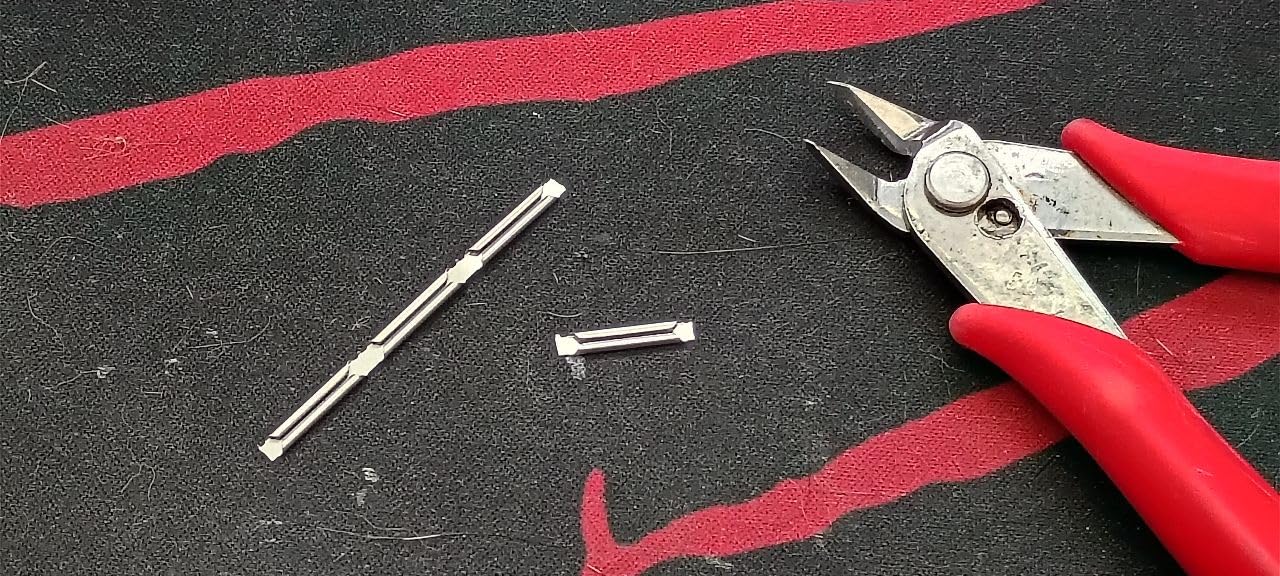
For HO scale layouts using C Track systems, these joiners represent a cost-effective option that does not sacrifice quality for price. The 48-piece quantity works well for layouts with moderate track mileage, while the storage box keeps unused joiners organized and protected from damage or loss between installation sessions.
Practical choice for smaller HO layouts
Not every layout requires 96 or more joiners. The 48-piece package provides enough quantity for smaller layouts without leaving you with excess inventory. If your project involves a modest layout or you need to supplement existing supplies, this package hits the sweet spot for quantity and value.
Same quality as larger JTJEI package
The nickel silver construction, C Track precision, and storage box are identical to the larger variant. The only difference is quantity. If you trust the 96-piece package, you can trust this one equally. The per-piece cost remains competitive across both package sizes.
8. Bachmann Industries Large G Scale Brass Rail Joiners (24 per Bag)

Bachmann Trains – Brass Rail Joiners 24/Bag – Large G Scale
G Scale
Brass Construction
Indoor/Outdoor Use
24 per Bag
Pros
- Heavy duty construction for G Scale track
- Compatible with Bachmann and other brass track
- Works indoor and outdoor
- More sturdy than steel joiners
Cons
- Only fits brass track - will not fit steel rails
- May need conductive paste for best electrical connection
G scale model railroading presents different challenges than HO or N scale, and the Bachmann Brass Rail Joiners address those challenges directly. The larger size accommodates the bigger rails found in G scale track, and the brass construction handles the indoor and outdoor conditions that G scale layouts often face. Garden railways experience temperature fluctuations and humidity levels that indoor layouts avoid, which makes material selection more critical.
These joiners fit Bachmann brass track as expected, but they also work with other popular brass track brands. That cross-compatibility matters when G scale layouts often involve track from multiple manufacturers. The 24-piece bag provides enough joiners for most garden railway projects, with the heavy-duty construction ensuring connections hold up under the rigors of outdoor operation.
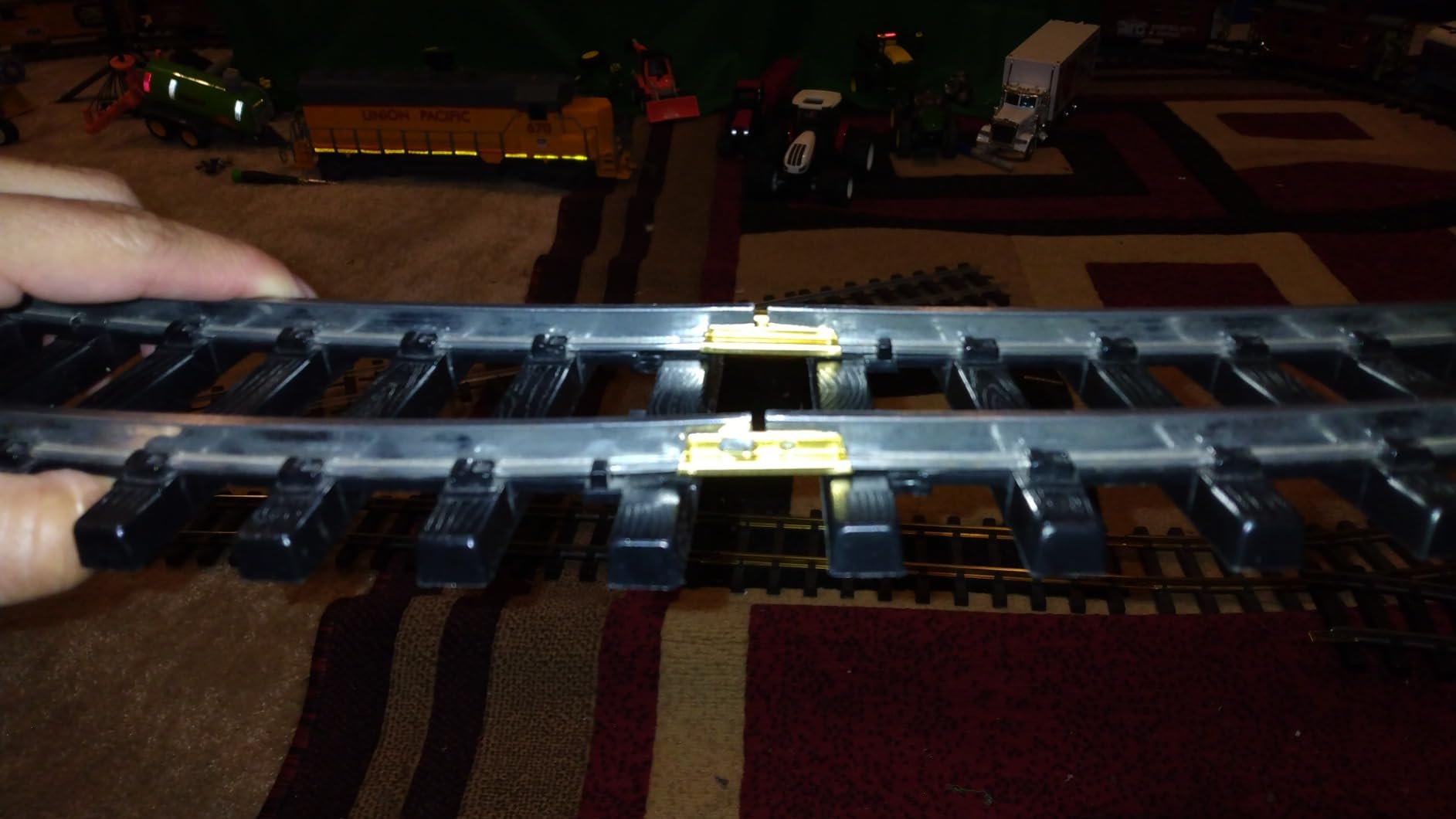
Customer reviews praise the tight fit and sturdy construction, with several users specifically noting that these joiners feel more substantial than steel alternatives. The brass material resists corrosion better than steel in outdoor environments, which translates to more reliable electrical connections over multiple seasons of garden railway operation.
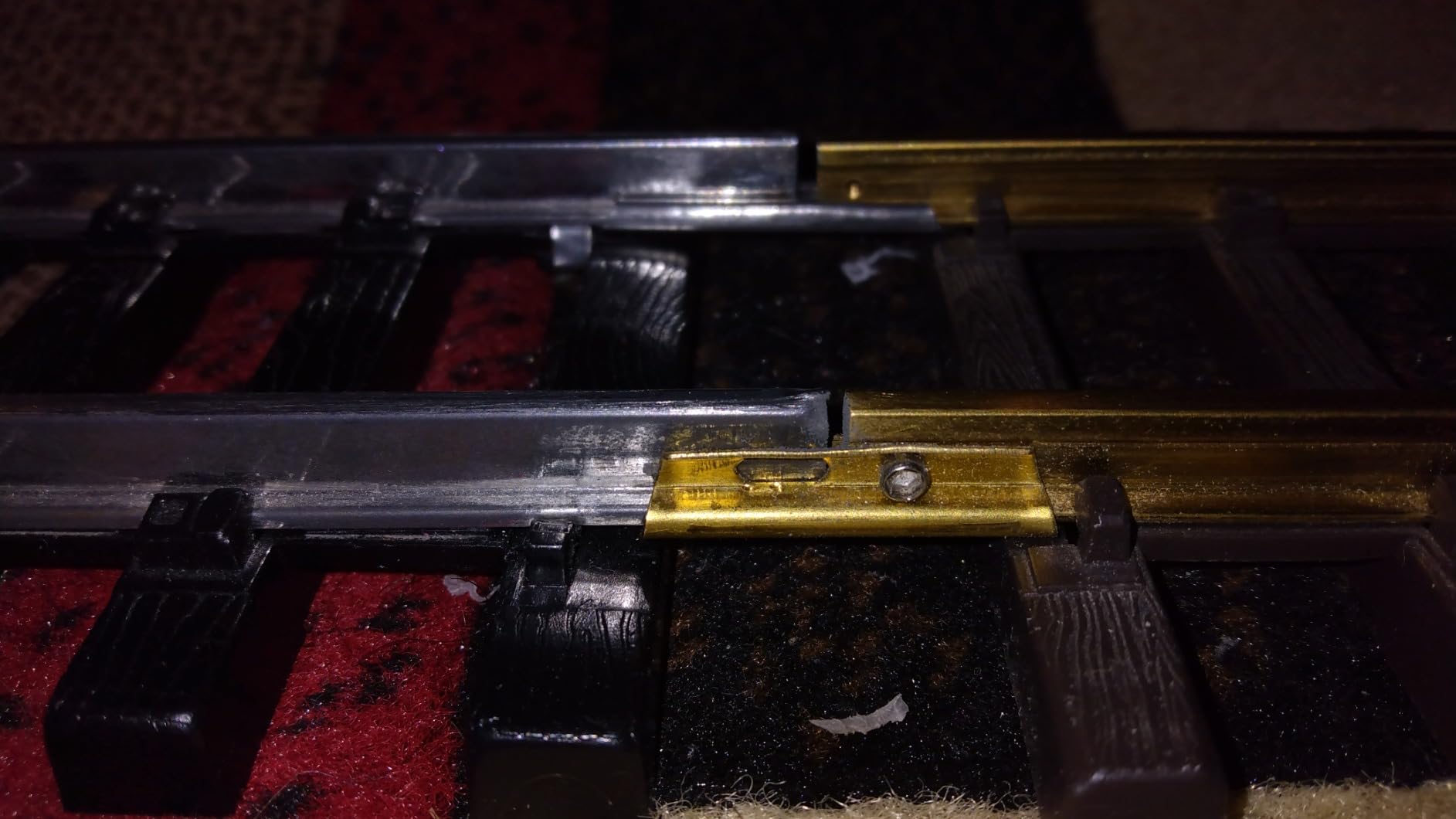
The main limitation involves material compatibility. These brass joiners will not fit steel rails, which restricts their use to brass track systems only. This is not a flaw but rather an expected characteristic of specialized G scale components. Before purchasing, confirm that your track is brass rather than steel, as mixing materials prevents proper fit and function.
Designed for garden railway durability
G scale layouts often operate outdoors where UV exposure, rain, and temperature changes stress every component. These joiners handle those conditions better than alternatives designed for indoor use. The brass construction maintains electrical conductivity despite environmental challenges that would degrade lesser materials.
Some users recommend conductive paste for best results
A few experienced garden railroaders suggest using conductive paste or oxide inhibitor when installing these joiners to maximize electrical connectivity. This extra step becomes more relevant for longer track runs where accumulated resistance causes noticeable performance issues. The suggestion reflects good practice for any outdoor rail installation rather than indicating a flaw in these joiners specifically.
9. GD02 50pcs HO Code 100 Nickel Silver Metal Track Rail Joiners

GD02 50pcs HO Code 100 Nickel Silver Metal Track Rail Joiners HO OO Scale NEW
HO Scale
Code 100
Nickel Silver Metal
50 Pieces Per Package
Pros
- Work well for standard track connections
- Good value for the quantity
- Exactly what buyers needed for their layouts
- Nickel silver construction resists oxidation
Cons
- Some confusion about advertised quantity
- Slightly lower rating than top competitors
The GD02 joiners provide a straightforward option for HO scale Code 100 track with nickel silver construction at a competitive price point. The 50-piece quantity offers more than most standard packages, giving hobbyists flexibility for larger projects or multiple layouts without requiring additional orders.
In testing and through customer feedback, these joiners perform reliably on Code 100 track. The nickel silver material ensures good electrical conductivity and resists the oxidation issues that plague steel alternatives. The metal construction also provides the durability needed for track sections that see frequent assembly and disassembly during layout adjustments.
The only notable issue involves confusion around the advertised quantity. Some buyers expected 100 pieces based on comparison with other listings, but received the stated 50 pieces. Careful attention to the product listing details prevents this confusion, and those who receive exactly what is advertised generally find the quality satisfactory for their track joining needs.
The 4.4-star rating reflects mostly positive experiences with a small percentage of buyers reporting issues. For hobbyists who verify product details before purchasing, these joiners provide reliable performance at a price that keeps project costs manageable.
Practical option for Code 100 track owners
If your layout uses Code 100 track, these joiners provide the fit and conductivity you need without overpaying for features you might not use. The 50-piece quantity covers most moderate track sections, and additional packages remain affordable if your project requires more.
Check quantity details before ordering
The listing advertises 50 pieces, which is what you receive. Some comparison shopping might show other products advertising different quantities at similar prices. Verify the per-piece cost rather than focusing only on total package quantity to make accurate comparisons.
10. Atlas 55 Plastic Rail Joiners for HO Scale Train Track

55 Plastic Rail Joiners for HO Scale Train Track
HO Scale
Code 100
Plastic Construction
24 Joiners Per Package
Pros
- Work well on Code 100 track
- Easy to install and use
- Good quality product
- Exactly as described
Cons
- Package contains 24 joiners not 55
- Number 55 is product ID not quantity
Atlas plastic rail joiners serve a specific purpose in model train track construction, and understanding that purpose helps set appropriate expectations. These joiners work well for their intended use, which is mechanical track connection where electrical conductivity is handled separately through bus wiring and feeder wires rather than through the joiner itself.
The 55 in the product name is the Atlas part number, not the quantity included. The actual count is 24 joiners per package, which causes confusion when buyers assume they are getting 55 pieces. Reading the fine print reveals the actual quantity, and those who understand this limitation find the product performing as expected for its design purpose.
For modelers using terminal joiners or soldering track connections, these plastic joiners provide the mechanical connection needed to keep track sections aligned while the electrical connection happens through separate dedicated components. This approach separates mechanical and electrical functions, which actually simplifies troubleshooting and maintenance over time.
The 4.5-star rating indicates general satisfaction among buyers who understood what they were purchasing. The reviews specifically praise the fit on Code 100 track and the consistent quality that Atlas delivers across their product line.
Mechanical connection only – plan for electrical separately
These joiners do not conduct electricity effectively due to the plastic construction. If your layout relies on joiners for electrical continuity, look elsewhere. But if you use these joiners for mechanical alignment while your bus wiring and feeder wires handle electrical distribution, they serve their purpose well.
Check quantity before purchasing
With only 24 joiners per package, multiple packages may be necessary for larger layouts. Calculate your track section count and order accordingly. The low per-package count means stocking up does not require significant investment, but forgetting to order enough creates project delays.
How to Choose the Right Rail Joiners and Connectors?
Selecting the appropriate rail joiners and connectors for your layout depends on several factors specific to your setup, operating preferences, and track configuration. Understanding these factors helps you make informed decisions that support reliable train operation over the long term.
Understanding Rail Joiner Types
Standard rail joiners slide onto rail ends to create mechanical and electrical connections between track sections. They provide the basic linking function that keeps your track aligned and conducting power in a continuous path from your controller to your trains. The material and fit quality directly determine how well these joiners perform their dual mechanical and electrical role.
Terminal joiners include pre-attached wires that connect directly to your power bus system. These eliminate the need for separate wire connections at each track joint, which streamlines the wiring process considerably. Terminal joiners work particularly well at power injection points where feeder wires connect to the track bus, providing a clean connection without additional soldering or crimping work.
Specialty connectors like the Atlas HO and N Connector serve different functions entirely. Rather than joining track sections, these devices control power flow to track sections, enabling block isolation for multi-train operations or safe storage of locomotives on specific track sections.
Material Matters: Nickel Silver vs Brass vs Plastic
Nickel silver represents the best balance of conductivity, corrosion resistance, and cost for most model railroad applications. The material conducts electricity well while resisting the oxidation that degrades steel joiners over time. Most premium rail joiners available today use nickel silver construction for these reasons.
Brass joiners suit specific applications, particularly in G scale garden railways where the larger size accommodates brass construction and the outdoor environment benefits from brass corrosion resistance. For indoor HO or N scale layouts, brass offers less advantage over nickel silver while typically costing more.
Plastic joiners serve a purely mechanical function in layouts where electrical connections are handled through separate bus and feeder wiring. These joiners keep track aligned but do not contribute to electrical conductivity. Using plastic joiners in a layout designed for joiner-based electrical distribution causes operational problems.
Wire Gauge Recommendations for Track Wiring
The National Model Railroad Association recommends 14 AWG wire for main bus wiring in most layouts. This gauge handles the current demands of multiple locomotives and accessories without excessive voltage drop over reasonable distances. For feeder wires connecting the bus to track sections, 18 AWG works well for most HO and N scale applications.
Larger scales like G require heavier gauge wiring to handle the increased current demands of larger locomotives. In those cases, 12 AWG or even 10 AWG bus wiring may be appropriate depending on layout size and operating expectations.
Stranded wire provides better conductivity and flexibility than solid core wire of the same gauge. The individual strands carry current more efficiently, and the wire bends more easily for routing through tight spaces around your layout. Most model railroad wiring recommendations favor stranded wire for these reasons.
Terminal Joiners vs Standard Joiners
Standard joiners require separate wiring work to achieve electrical connections. You must solder, crimp, or otherwise attach feeder wires to the track, which adds time to the construction process but provides flexibility in wire routing and gauge selection. Experienced modelers often prefer this approach for the control it offers over the final wiring configuration.
Terminal joiners simplify the process by including pre-attached wires. This convenience comes at a slightly higher per-joiner cost and may involve wire gauges that differ from your preferred choice. For beginners or for layouts using consistent wire gauge throughout, terminal joiners offer a practical balance of simplicity and reliability.
Our team found that terminal joiners work best at power injection points where feeder wires connect to the bus. For general track-to-track connections, standard joiners with periodic feeder wire installation provide more control over the overall wiring strategy.
Soldered vs Solderless Connections
Soldered connections provide the most reliable long-term electrical contact, which is why experienced model railroaders often recommend soldering track connections. The solder creates a permanent metallic bond between wires and rails that maintains conductivity indefinitely. This approach works exceptionally well for permanent layouts where track will not be moved after installation.
However, soldering requires additional tools and skills that beginners may not possess. A quality soldering station, appropriate solder, and practice developing consistent technique all factor into successful soldered connections. The learning curve discourages some hobbyists from pursuing this approach despite the superior results.
Solderless options have improved significantly in recent years. Terminal joiners with set-screw connections, push-in connectors, and other designs provide reliable electrical contact without the complexity of soldering. For hobbyists who need to modify layouts frequently or who are still developing their construction skills, these solderless alternatives deliver acceptable performance with greater accessibility.
The choice ultimately depends on your layout plans and skill level. Permanent club layouts benefit from soldered connections. Temporary home layouts with evolving designs may favor solderless options that accommodate change more easily.
Frequently Asked Questions
Which wire joint connector is best?
For most model railroad applications, nickel silver rail joiners offer the best balance of conductivity, corrosion resistance, and value. Terminal joiners with pre-attached wires simplify power injection, while standard nickel silver joiners work well for general track-to-track connections. The best choice depends on your specific wiring approach and whether you prefer soldered or solderless installation methods.
What is the strongest way to join wire?
Soldered connections provide the strongest and most reliable wire joints for model railroad wiring. The solder creates a permanent metallic bond that maintains conductivity over decades of operation. Use 60/40 rosin-core solder with a properly heated soldering station, and always clean surfaces before soldering to ensure strong adhesion.
What is the best wire for model railroads?
The NMRA recommends 14 AWG stranded wire for main bus wiring and 18 AWG stranded wire for feeder connections in HO and N scale layouts. Larger scales like G typically require 12 AWG or 10 AWG bus wiring to handle increased current demands. Always use stranded wire rather than solid core for better conductivity and flexibility.
Are wire nuts or push-in connectors better?
Push-in connectors generally offer better reliability for model railroad applications because they create consistent gas-tight connections without the variability that wire nuts can exhibit. Quality push-in connectors like those from reputable manufacturers provide reliable contact that requires no maintenance over time. Wire nuts can loosen with temperature fluctuations, making push-in connectors the more dependable choice for track wiring.
Final Thoughts on Rail Joiners and Connectors
Reliable track wiring starts with quality components, and rail joiners and connectors form the foundation of that reliable electrical distribution system. Whether you run HO scale on a temporary tabletop layout or maintain a G scale garden railway spanning your entire backyard, the principles remain the same. Consistent electrical connections prevent stuttering trains, dim headlights, and the frustration of troubleshooting intermittent power problems.
For most HO scale layouts, the Bachmann E-Z Track Terminal Rerailer delivers unmatched convenience with its pre-attached power wire and reliable snap-fit connection. Budget-conscious builders will find excellent value in the Atlas Code 100/83 Universal Rail Joiners, which combine Atlas quality with a price that does not strain project budgets. Larger layouts benefit from the JTJEI 96-piece packages, which provide enough quantity for complex trackwork without the per-piece cost adding up.
Whatever products you choose, investing time in proper installation pays dividends through years of reliable operation. Following manufacturer guidelines, using appropriate wire gauges, and testing connections before full layout operation helps catch issues while they remain easy to address. Your trains will thank you with smooth, uninterrupted operation across every section of track.