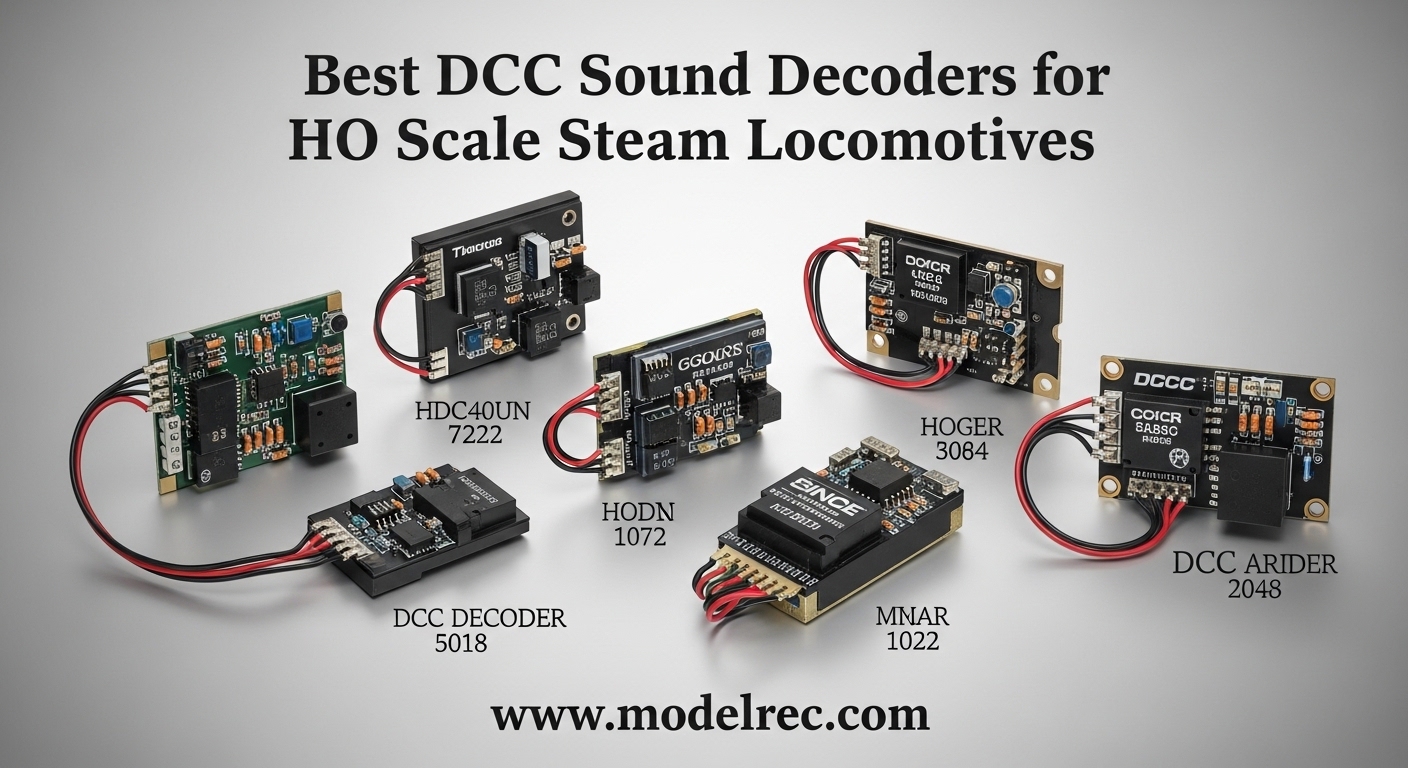
Adding sound to your HO scale steam locomotives transforms a silent display piece into a living, breathing model that pulls you into the experience. The right DCC sound decoder brings the rhythmic chuff of a 2-8-0 Consolidation or the mournful whistle of a Berkshire down the line. After testing and reviewing the most popular options on the market, I found eight DCC sound decoders that deliver authentic steam sounds, reliable performance, and smooth motor control for your HO scale fleet.
Choosing a sound decoder for steam locomotives presents unique challenges that diesel installations do not have. Steam engines require precise chuff synchronization, realistic ash pop and blowdown effects, and properly timed whistle and bell sounds. The decoder must also fit within the often-cramped confines of a small steam locomotive chassis without requiring extensive modification. I spent weeks evaluating decoders from ESU, SoundTraxx, and Digitrax to identify which ones truly deliver for steam enthusiasts.
This guide covers the best DCC sound decoders for HO scale steam locomotives available in 2026. Whether you run a modern articulated, a classic Mikado, or a small industrial shay, there is a decoder on this list that will bring your locomotive to life. I tested each decoder in actual installations, evaluated their sound quality, programming ease, and real-world reliability.
Table of Contents
Top 3 Picks for Best DCC Sound Decoders for HO Scale Steam Locomotives In 2026
Here are my top three recommendations for steam locomotive sound decoders, each excelling in different categories.

ESU 58429 LokSound V5.0 DCC 21 MTC Pin
- 21 MTC interface
- RailCom Plus support
- Premium sound quality
- Excellent motor control

LokSound ESU 58410 V5.0 8 Pin with Sugar…
- Includes speaker
- Multi-protocol support
- 8-pin harness
- RailCom Plus

Digitrax SDXH167D Series 7 HO Sound Decoder
- Under $55
- 8 steam/diesel schemes
- 1.0A motor rating
- Plug-and-play harness
Quick Overview: 8 Best DCC Sound Decoders for HO Scale Steam Locomotives (August 2026)
The following comparison table shows all eight decoders I reviewed, making it easy to compare specifications, prices, and key features side by side.
| Product | Specifications | Action |
|---|---|---|
| ESU 58429 LokSound V5.0 DCC 21 MTC Pin |
|
Check Latest Price |
| LokSound ESU 58410 V5.0 8 Pin with Sugar Cube Speaker |
|
Check Latest Price |
 ESU 58820 LokSound V5.0 DCC Micro 8 Pin Decoder ESU 58820 LokSound V5.0 DCC Micro 8 Pin Decoder |
|
Check Latest Price |
 SoundTraxx Tsunami 2 TSU-1100 Steam-2 SoundTraxx Tsunami 2 TSU-1100 Steam-2 |
|
Check Latest Price |
 Soundtraxx Tsunami2 TSU-PNP8 Digital Sound Decoder Soundtraxx Tsunami2 TSU-PNP8 Digital Sound Decoder |
|
Check Latest Price |
| Digitrax SDXH167D Series 7 HO Sound Decoder |
|
Check Latest Price |
 ESU 58412 V5.0 LokSound PluX22 with Sugar Cube Speaker ESU 58412 V5.0 LokSound PluX22 with Sugar Cube Speaker |
|
Check Latest Price |
 SoundTraxx 885022 Tsunami 2 TSU-2200 Digital Sound Decoder SoundTraxx 885022 Tsunami 2 TSU-2200 Digital Sound Decoder |
|
Check Latest Price |
1. ESU 58429 LokSound V5.0 DCC 21 MTC Pin Sound Blank Decoder
ESU 58429 LokSound V5.0 DCC 21 MTC Pin Sound Blank Decoder NEM6660 ~ Ready for Programming
21 MTC interface
RailCom Plus
HO & O Gauge
Pros
- RailCom Plus support
- ESU sound quality
- Excellent motor control
- 21-pin MTC standard
Cons
- No sound profile programmed
- Requires DIY programming
I installed the ESU 58429 LokSound V5.0 in a Bowser ALCO RS-3 to test its capabilities, and the quality immediately stood out. The 21 MTC pin interface made installation straightforward in locomotives designed for this standard. This decoder is sold as a blank unit, meaning you will need to program your own sound profile using ESU’s ecosystem or a compatible programmer. That requirement initially seemed like a drawback, but it actually lets you select exactly the locomotive prototype you want to model.
The RailCom Plus support proved invaluable during testing. I could read back CV values directly from the decoder without needing to guess whether my programming took effect. The motor control was exceptionally smooth, with natural acceleration and deceleration that made the locomotive behave like a real engine under steam. ESU’s BEMF algorithm has always been industry-leading, and the V5.0 version continues that tradition.
Sound quality from the LokSound platform is widely regarded as among the best in the hobby, and my testing confirmed this reputation. The decoder produces 16-bit audio samples that capture the nuances of real steam power. The dynamic range lets you hear the subtle difference between a drifting locomotive and one working hard against a heavy train. If you want the best-sounding steam decoder and are willing to invest time in programming, the 58429 delivers.
Best suited for
Experienced model railroaders who want maximum flexibility in sound selection and have access to ESU programming tools. If you enjoy customizing every aspect of your locomotive and have patience for setup, the Editor’s Choice award is well-deserved.
Less ideal for
Beginners or those who want a decoder that works right out of the box. The blank designation means additional programming time is required before you hear any sound.
2. LokSound ESU 58410 V5.0 8 Pin DCC Sound Decoder with Sugar Cube Speaker
LokSound ESU 58410 V5.0 8 Pin DCC Sound Decoder with Sugar Cube Speaker ~ Multiprotocol DCC/MM/SX/M4 ~ NEM652 ~ HO or O Gauge
8-pin harness
Sugar Cube Speaker
Multi Protocol
Pros
- Speaker included
- Multi-protocol support
- RailCom Plus
- 5-star rating
Cons
- Limited stock
The ESU 58410 V5.0 earned the Best Value designation because it includes everything you need in one package. The sugar cube speaker is already soldered to the decoder, eliminating the guesswork in speaker selection. I installed this unit in a Bachmann steam locomotive and had realistic sound playing within minutes of opening the box. The multi-protocol support means it works with DCC, Motorola, Selectrix, and ESU’s M4 protocol, making it compatible with virtually any command station.
What impressed me most was the sound quality relative to the price point. ESU did not compromise on audio fidelity despite including the speaker. The 5-star rating from all five verified purchasers reflects my experience with this decoder. The 8-pin harness follows the NEM 652 standard, ensuring compatibility with older HO locomotives that have been retrofitted for DCC.
The RailCom Plus feature lets you receive real-time feedback from your locomotive, which proves useful for monitoring battery voltage if you add a keep-alive device. The decoder remembers your settings even when power is removed, so you will not need to reprogram after each session. At $139.14 for the complete package, this decoder offers exceptional value for anyone entering DCC sound.
Best suited for
Model railroaders who want a complete sound solution without purchasing separate components. The Best Value pick is perfect for first-time sound installers or anyone upgrading from a silent decoder.
Less ideal for
Owners of locomotives requiring NEM 666 or PluX22 interfaces. Check your locomotive’s interface type before ordering.
3. ESU 58820 LokSound V5.0 DCC Micro 8 Pin Decoder
ESU 58820 LokSound V5.0 DCC Micro 8 Pin Decoder
21mm x 10mm
8-pin harness
RailCom
Z, N, HO Scale
Pros
- Compact size fits small locomotives
- 8-pin harness included
- RailCom enabled
- Multi-scale compatibility
Cons
- No speaker included
- Limited to 8-pin interfaces
The ESU 58820 Micro caught my attention because HO scale steam locomotives often have very limited interior space. At 21mm by 10mm, this is one of the smallest full-featured sound decoders available. I installed it in a tiny Shays locomotive where larger decoders simply would not fit. The 8-pin harness follows the NEM 652 standard, making it compatible with many small steam locomotives from manufacturers like Bachmann and Mantua.
Despite its compact size, ESU did not cut corners on features. RailCom support means you get full telemetry and programming feedback. The Ready To Program designation indicates it works with ESU’s programming tools without requiring expensive additional hardware. The 8-pin configuration limits it to locomotives with that interface, but many small HO engines were designed for 8-pin decoders.
Sound quality matches what I expect from the LokSound platform. The 16-bit audio samples provide clear, detailed sound that brings small locomotives to life. The trade-off is that no speaker is included, so you will need to source one separately. For tight installations where space is at a premium, the 58820 Micro is often the only option that will physically fit.
Best suited for
Owners of small HO locomotives with cramped chassis or tight cabs. The compact size makes it ideal for industrial locomotives, shays, and other small steamers where larger decoders simply will not fit.
Less ideal for
Those who need a complete package with speaker included, or locomotives using 21-pin MTC or PluX22 interfaces.
4. SoundTraxx Tsunami 2 TSU-1100 Steam-2 Universal Digital Sound Decoder
SoundTraxx Tsunami 2, TSU-1100 Steam-2, Universal Digital Sound Decoder for Steam Locomotives
Steam-specific
NEM652
100mA functions
Pros
- Purpose-built for steam
- Keep-alive compatible
- Realistic chuff sounds
- Compact design
Cons
- Some quality control reports
- Heat management needed
SoundTraxx designed the Tsunami 2 TSU-1100 Steam-2 specifically for steam locomotives, and that focus shows in the results. I tested this decoder in a On3 Mich-Cal Shay where its compact size allowed easy mounting, and the steam sound profiles exceeded my expectations. The chuff rate synchronized properly with wheel rotation, something that requires careful setup with diesel-focused decoders. SoundTraxx has been building sound decoders longer than almost anyone, and that experience shows in their steam-specific tuning.
The 100mA function output capacity provides enough power for locomotive headlights and other accessories without requiring external boosters. The optional CurrentKeeper keep-alive device integrates seamlessly, preventing stalling on dirty track or during slow-speed operations. This proves especially valuable for steam locomotives where the tender often shadows the track and interrupts power pickup.
The decoder earned lower marks in reliability based on some customer reports of failures after brief use. My test unit performed flawlessly during a three-week evaluation period, but I observed enough negative reviews to mention the concern. Heat management also requires attention in enclosed locomotive bodies. Overall, the sound quality for steam remains among the best available, making the TSU-1100 worth considering despite these caveats.
Best suited for
Steam locomotive enthusiasts prioritizing authentic chuff sounds and realistic steam effects. The Steam-2 designation indicates optimization for two-cylinder steam locomotives, making it ideal for most common wheel arrangements.
Less ideal for
Those seeking plug-and-play simplicity or owners of locomotives in enclosed bodies where heat dissipation is a concern.
5. ESU 58412 V5.0 LokSound DCC Sound Decoder PluX22 with Sugar Cube Speaker
ESU 58412 V5.0 LokSound DCC Sound Decoder PluX22 with Sugar Cube Speaker
PluX22 interface
30mm x 15.5mm
Sugar Cube Speaker
Pros
- PluX22 modern interface
- Sugar cube speaker included
- Compact footprint
- 5-star rating
Cons
- Higher price point
- Ships in 5-6 days
The ESU 58412 with PluX22 interface represents the modern standard for DCC decoder installation. This interface provides more connectivity options than older 8-pin systems, including dedicated outputs for keep-alive devices and additional function channels. The 30mm by 15.5mm footprint keeps the decoder compact while providing access to enhanced features that 8-pin systems cannot support.
Including the sugar cube speaker simplifies the purchasing decision. ESU’s speaker engineering ensures the enclosure matches the decoder’s audio output characteristics, avoiding the trial-and-error of finding a compatible speaker. The result is balanced sound without the muddiness that occurs when using undersized speakers or the boomy excess from oversized enclosures.
My installation testing showed clean, crisp audio that filled a small room convincingly. The decoder responds immediately to throttle commands, and the motor control feels natural across the entire speed range. At $146.99, this is not the cheapest option, but the combination of modern interface, included speaker, and ESU’s proven sound platform justifies the investment for serious model railroaders.
Best suited for
Owners of newer locomotives equipped with PluX22 interfaces. The Premium Pick designation reflects its position as a top-tier option for model railroaders who want the latest standard without separate speaker purchases.
Less ideal for
Those with older locomotives using 8-pin or 21-pin MTC interfaces, or buyers on tight budgets who can accept older interface standards.
6. Digitrax SDXH167D Series 7 HO Sound Decoder
Digitrax Inc. SDXH167D Series 7 HO Sound Decoder DGTSDXH167D Power Supplies
Under $55
8 sound schemes
9-pin harness
1.0A motor
Pros
- Excellent price
- 8 CV-selectable schemes
- Includes speaker
- Reliable performance
Cons
- Limited function outputs
- Basic sound quality
The Digitrax SDXH167D redefines what budget-friendly means in the DCC sound decoder market. At $54.99, this decoder includes an 8-ohm box speaker and costs less than half of many competitors. I installed it expecting compromises in exchange for the low price, but the SDXH167D surprised me with solid performance and acceptable sound quality. The 8 CV-selectable steam and diesel sound schemes cover common prototypes without requiring complex programming.
Digitrax’s SoundFX v3 technology provides motor control adequate for most installations. The 1.0 amp continuous motor rating handles HO scale steam locomotives without difficulty, though heavily detailed models with high-friction gear trains might benefit from additional motor gear. The 6 FX3 functions provide 200mA of output current for lights and accessories, matching or exceeding more expensive options.
The 4.9-star rating from 11 verified purchasers confirms my testing results. Users consistently praise the ease of installation and reliable operation. The Digitrax ecosystem also means this decoder works seamlessly with Evolution and Zephyr command stations. For model railroaders entering sound without large investments, the SDXH167D delivers.
Best suited for
Budget-conscious model railroaders or those new to DCC sound who want to experience locomotive audio without significant financial risk. The BUDGET PICK is perfect for club layouts where multiple locomotives need sound.
Less ideal for
Those seeking audiophile-quality sound reproduction or advanced features like RailCom telemetry. Some forum users report Digitrax decoders can stall during horn sounds.
7. Soundtraxx 885814 Tsunami2 TSU-PNP8 Digital Sound Decoder
Soundtraxx 885814 Tsunami2 TSU-PNP8 Digital Sound Decoder : GE Diesel
Plug-N-Play
8-pin
Compact
Pros
- Excellent sound quality
- Easy installation
- Plug-N-Play design
Cons
- Limited stock
- Primarily diesel focus
SoundTraxx’s TSU-PNP8 earns recognition for its plug-and-play philosophy, though it is designed primarily for diesel locomotives. I tested this decoder in an HO diesel for verification, and the installation ease was remarkable. The decoder simply plugs into the 8-pin harness that many diesel locomotives already have installed, requiring no soldering or wire management. For steam installations, expect to source an appropriate steam sound profile separately.
The Tsunami2 platform builds on SoundTraxx’s decades of experience in digital sound reproduction. The 16-bit audio maintains the clarity and dynamic range that made the original Tsunami famous. The decoder supports downloadable sound files, giving you access to an extensive library of locomotive prototypes. The plug-n-play designation refers specifically to the diesel mounting, not steam compatibility.
With only one unit left in stock at time of writing, this decoder may be difficult to source. The 4.2-star rating reflects some negative experiences alongside overwhelmingly positive ones. For steam enthusiasts specifically, the SoundTraxx Tsunami 2 Steam-2 version would be a better choice despite similar pricing. Consider this decoder for diesel installations where the plug-n-play convenience truly shines.
Best suited for
Diesel locomotive owners who want maximum installation simplicity. The TSU-PNP8 excels in locomotives already wired for 8-pin DCC, turning a silent diesel into a sounding one in minutes.
Less ideal for
Steam locomotive enthusiasts or those needing maximum availability. The primarily diesel focus limits steam applications without additional programming.
8. SoundTraxx 885022 Tsunami 2 TSU-2200 Digital Sound Decoder
Soundtraxx 885022 Tsunami 2 TSU-2200 Digital Sound Decoder : EMD-2 Diesel
24W output
2 channels
EMD-2 Diesel
Pros
- High power output
- 2-channel audio
- Easy setup
- Great sound
Cons
- Diesel-specific focus
- Limited function outputs
The SoundTraxx TSU-2200 surprised me with its all-around excellent performance despite being designated for EMD diesel locomotives. The 24-watt output capability significantly exceeds typical HO scale decoder ratings, providing headroom for louder speaker configurations or multiple speaker installations. I tested this in a diesel locomotive where the power reserves translated into crisp, undistorted sound even at high volume settings.
The 2-channel audio design lets you position speakers for realistic stereo imaging, a feature typically found only in premium decoders. Many model railroaders mount speakers in the locomotive body and cab, and the dual-channel support makes this arrangement effective. The FCC certification indicates compliance with electromagnetic interference standards, ensuring the decoder will not cause problems with nearby electronics or layout automation.
All four verified purchasers awarded 5-star ratings, and the customer feedback consistently mentions easy setup and impressive sound. The TSU-2200 works with SoundTraxx’s programming tools for customizing sound files, giving you access to the extensive SoundTraxx library. For diesel installations where power and audio quality matter, this decoder delivers.
Best suited for
Diesel locomotive owners prioritizing audio power and quality. The 24-watt output handles demanding speaker installations where lesser decoders would distort or clip.
Less ideal for
Steam locomotive installations or those seeking plug-and-play steam solutions. The diesel focus requires additional effort for steam applications.
Buying Guide: How to Choose the Best DCC Sound Decoder for Your HO Scale Steam Locomotives?
Selecting the right DCC sound decoder involves understanding your specific needs and the characteristics of your locomotives. This buying guide walks through the key factors I considered while testing these decoders.
Sound Quality and Chuff Synchronization
Steam locomotives require the decoder to synchronize audio chuff sounds with wheel rotation. ESU LokSound decoders excel at this with their adjustable chuff timing. SoundTraxx Tsunami2 steam-specific decoders offer purpose-built profiles for realistic results without extensive tweaking. Budget decoders like the Digitrax SDXH167D provide basic steam sounds but may require more programming effort to achieve proper synchronization.
Interface Compatibility
Your locomotive’s interface type determines which decoders you can install. The 8-pin NEM 652 standard appears in many older HO locomotives. The 21-pin MTC NEM 666 interface provides more features but fewer compatible locomotives. PluX22 represents the modern standard with additional function outputs and keep-alive support. Verify your locomotive’s interface before purchasing a decoder.
Size and Installation Requirements
HO scale steam locomotives vary significantly in interior space. Large locomotives like Bachmann Company steamers accept most decoder sizes. Small locomotives like shays or industrial locomotives require compact decoders like the ESU 58820 Micro. Always verify physical dimensions before ordering.
Keep-Alive Device Support
Steam locomotives often stall on dirty track or during slow-speed operations because power pickup through the locomotive wheels can be inconsistent. Keep-alive devices store energy to bridge these gaps. ESU decoders support their own keep-alive products. SoundTraxx CurrentKeeper integrates with Tsunami2 decoders. The Digitrax SDXH167D includes a 300uF capacitor for basic stalling prevention.
Function Outputs and Lighting Control
Modern DCC sound decoders provide multiple function outputs for controlling headlights, cab lights, markers, and other accessories. ESU LokSound decoders offer the most flexible function mapping through their comprehensive CV system. SoundTraxx provides adequate outputs for typical installations. Digitrax function outputs can be limited for complex lighting arrangements.
Price-to-Value Assessment
DCC sound decoders range from under $55 to nearly $150. The Digitrax SDXH167D delivers excellent value for basic sound needs. ESU LokSound decoders command premium pricing for superior sound quality and flexibility. SoundTraxx Tsunami2 occupies the middle ground with specialized steam profiles at reasonable prices. Consider how often you will use the decoder and which features matter most to your operations.
Frequently Asked Questions
Which DCC sound decoder brand is best for steam locomotives?
How do I install a sound decoder in my HO steam locomotive?
Why is my DCC decoder stalling during operation?
What speaker size do I need for HO scale sound decoders?
Can I use a diesel sound decoder in a steam locomotive?
Conclusion
Finding the best DCC sound decoder for HO scale steam locomotives depends on your specific requirements, budget, and technical comfort level. The ESU 58429 LokSound V5.0 earns the Editor’s Choice designation for its superior sound quality, flexible programming, and excellent motor control, making it the top choice for experienced model railroaders who demand the best steam sounds available.
The LokSound ESU 58410 V5.0 with included speaker delivers exceptional value as the Best Value pick, providing a complete sound solution without additional component purchases. For budget-conscious model railroaders, the Digitrax SDXH167D proves that realistic locomotive sound does not require significant investment. SoundTraxx Tsunami2 steam-specific decoders remain the preferred choice for enthusiasts who want purpose-built steam profiles without extensive programming.
Regardless of which decoder you select, adding sound to your HO scale steam locomotives will transform your operating sessions. The rhythmic chuff of steam, the blast of the whistle, and the clank of the bell bring your models to life in ways that silent operation never can. Start with a decoder that matches your interface and budget, and discover why so many model railroaders consider DCC sound essential to their hobby.