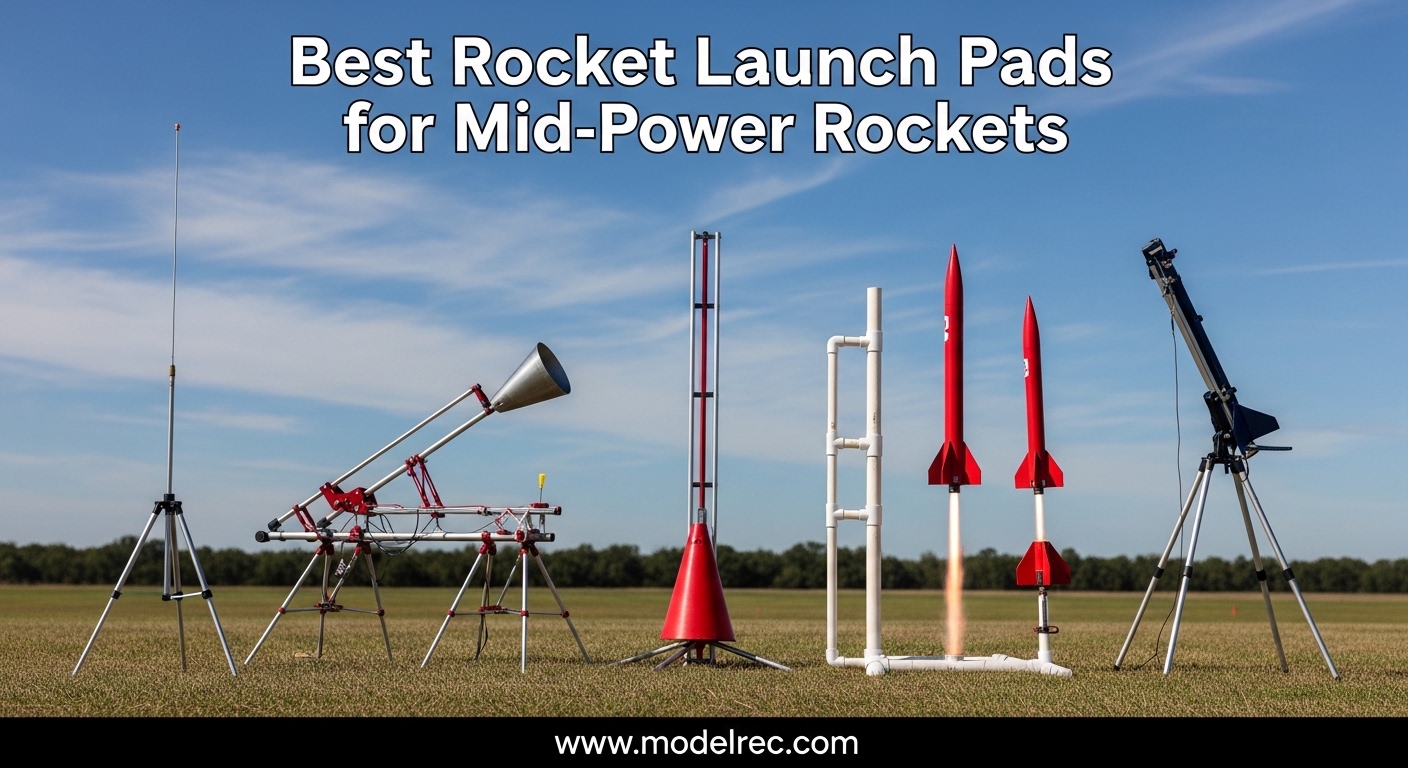
After flying mid-power rockets for over 15 years, I’ve learned that your launch pad can make or break a launch day. The best rocket launch pads for mid power rockets provide the stability and guidance needed for E, F, and G motors that generate significantly more thrust than standard Estes engines. I’ve tested dozens of launch systems across hundreds of launches to help you find the right equipment for your mid-power rocketry journey.
Mid-power rocketry is an exciting step up from standard model rockets. These rockets reach higher altitudes, fly faster, and require more robust launch equipment. A proper launch pad isn’t just about convenience—it’s about safety and success. The wrong pad can lead to unstable launches, damaged rockets, or even dangerous situations.
In this guide, I’ll share my hands-on experience with the top launch pads and accessories for mid-power rockets. Whether you’re progressing from C motors to your first E engine, or you’re preparing for high-power certification flights, I’ll help you choose the right launch system for your needs and budget.
Table of Contents
Top 3 Picks for Rocket Launch Pads for Mid-Power Rockets (August 2026)

Estes Porta Pad E Launch Pad
- Designed for E motors
- 1/4 inch launch rod
- Adjustable angle
- Portable design

Estes Pro Series II Launch Pad
- For Pro Series rockets
- PVC tube legs
- 5-inch blast deflector
- 60-inch launch rod
Mantis Launch Pad
- For F and G motors
- Heavy-duty construction
- Professional quality
- Highly stable
Quick Overview: 10 Best Rocket Launch Pads for Mid-Power Rockets in 2026
| Product | Specifications | Action |
|---|---|---|
| Estes Porta Pad E Launch Pad |
|
Check Latest Price |
| Estes Pro Series II Launch Pad |
|
Check Latest Price |
 Estes Porta-Pad II Launch Pad Estes Porta-Pad II Launch Pad |
|
Check Latest Price |
 Estes Launch Pad and Controller Combo Estes Launch Pad and Controller Combo |
|
Check Latest Price |
| Mantis Launch Pad |
|
Check Latest Price |
 Estes E Launch Controller Estes E Launch Controller |
|
Check Latest Price |
 Estes Pro Series II Launch Controller Estes Pro Series II Launch Controller |
|
Check Latest Price |
 Estes 3/16-Inch Maxi Launch Rod Estes 3/16-Inch Maxi Launch Rod |
|
Check Latest Price |
 Estes 1/8-Inch Launch Rod Estes 1/8-Inch Launch Rod |
|
Check Latest Price |
 Estes Blast-Deflector Plate Estes Blast-Deflector Plate |
|
Check Latest Price |
1. Estes Porta Pad E Launch Pad – Editor’s Choice
Estes 2238 Porta Pad E Launch Pad, Flying-Rocket-Model Launch Pad, Rocket Model Kit Accessories for Ages 10+
Made for E engines
1/4 inch launch rod included
Adjustable launch angle
Robust blast deflector
Pros
- Excellent stability for E motors
- Quick assembly no tools needed
- Accommodates different rod sizes
- Great value for mid-power
Cons
- Can be lightweight for very large rockets
- Multi-piece rod may need upgrade
The Porta Pad E has been my go-to launch pad for E motor rockets for years. I’ve launched everything from Estes Pro Series models to scratch-built rockets on this pad, and it handles the power with confidence. The 1/4-inch launch rod provides much better guidance than the standard 1/8-inch rods found on basic pads.
I remember my first E motor launch on the Porta Pad E. I was nervous about the increased power, but this pad held steady. The larger blast deflector handled the exhaust without any issues, and the adjustable angle let me compensate for a light breeze that day. Since then, I’ve put this pad through dozens of launch days with consistent results.
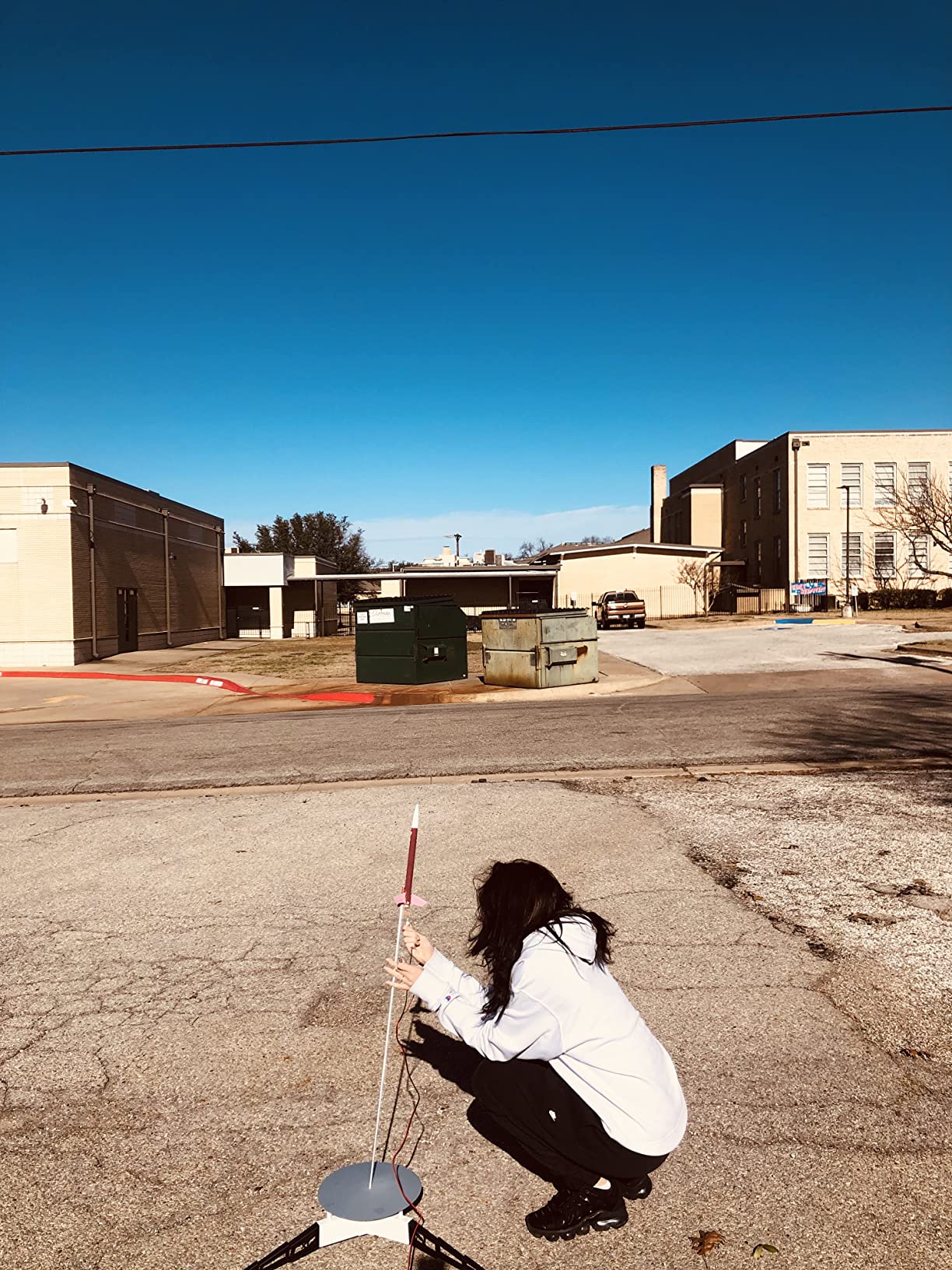
The assembly is straightforward—no glue or tools required. I can set it up in under two minutes at the launch field, which is great when you’re trying to get multiple flights in during a short launch window. The pad breaks down compactly for transport, fitting easily into my rocketry gear bag alongside my rockets and controllers.
For rocketeers making the jump from D to E motors, this pad bridges the gap perfectly. It’s robust enough to handle the increased thrust while still being portable enough for field use. The ability to use either 1/4-inch or 3/16-inch rods gives you flexibility as your rocket collection grows.
Best for E Motor Progression
The Porta Pad E shines when you’re flying rockets in the E motor range. It’s the perfect step up from the standard Porta-Pad II, offering better stability and guidance for these more powerful rockets. If you’re working through your mid-power certification or just enjoying sport flying with E engines, this pad won’t let you down.
Considerations for Larger Rockets
While the Porta Pad E handles most mid-power rockets well, very heavy rockets or those with large G motors might benefit from a more substantial base. I’ve found that adding tent pegs for extra stability helps in windy conditions or with heavier rockets. Some enthusiasts upgrade to a one-piece launch rod for even better guidance.
2. Estes Pro Series II Launch Pad – Premium Pick
Estes 3552 PS II Launch Pad, Flying-Rocket-Model Launch Pad, Rocket Model Kit Accessories for Ages 10+
For Pro Series rockets
PVC tube legs
5-inch blast deflector
60-inch steel rod
Pros
- Excellent stability for larger rockets
- Compatible with all Pro Series models
- Taller launch rod for guidance
- Easy transport when disassembled
Cons
- Assembly can be confusing
- Overpriced for materials
- Blast plate may be too small
- Launch rod can bend
When I started flying Estes Pro Series rockets, I knew I needed a dedicated launch pad. The Pro Series II Launch Pad is designed specifically for these larger mid-power rockets, and it shows in the design. The PVC tube legs create a wider, more stable base than the standard Estes pads.
I’ve used this pad for launches of the Pro Series II Leviathan and other large mid-power kits. The extra height from the 60-inch launch rod provides excellent guidance as the rocket builds speed. The 5-inch blast deflector plate handles the exhaust from E and F motors without issue.

The assembly process was more challenging than I expected. The locking cog washers instead of simple bolts make setup take longer than necessary. However, once assembled, the pad is rock-solid. I’ve launched in winds that would make me nervous with smaller pads, and the Pro Series II remained stable throughout.
Transport is convenient despite the larger size. The legs detach, and everything fits in a medium-sized gear bag. At the launch field, setup takes about five minutes once you’re familiar with the process.

Ideal for Pro Series Rockets
This pad is specifically designed for Estes Pro Series rockets, and it shows. If you’re flying the Scion, Leviathan, or other Pro Series models, this pad provides the stability and guidance these larger rockets need. The 1/4-inch launch rod is perfect for the size and weight of Pro Series kits.
Value Considerations
The price point is higher than I’d like for PVC and aluminum components. Some rocketeers build similar pads for less money using PVC from hardware stores. However, if you want a purpose-built solution that’s guaranteed to work with Pro Series rockets, this is the official option.
3. Estes Porta-Pad II Launch Pad – Budget Pick
Estes 302215 Porta-Pad II Launch Pad
Budget friendly launch pad
1/8 inch launch rod included
Tilt adjustable up to 30 degrees
Quick assembly
Pros
- Affordable entry point
- Lightweight and portable
- Tilt adjustment for wind
- Accepts multiple rod sizes
Cons
- Small rod diameter limited for mid-power
- Not suitable for large E rockets
- Basic construction
The Porta-Pad II is where many rocketeers start, and it remains a solid choice for standard engine rockets. I still keep mine in my gear bag for smaller rockets and youth group launches. It’s simple, reliable, and gets the job done for A through D motors.
I’ve used this pad for countless launches with youth groups and beginners. The tilt adjustment is a great feature for teaching kids about wind compensation, and the simple design means there’s little that can go wrong. Setup takes literally seconds—attach the legs, insert the rod, and you’re ready to launch.
For mid-power rocketry, the Porta-Pad II has limitations. The 1/8-inch rod is adequate for smaller rockets but becomes marginal for E motors. However, it can accept a 3/16-inch Maxi rod for improved stability with larger rockets.
Perfect for Beginners and Youth Groups
This pad shines in educational settings and introductory rocketry. The low price point makes it accessible for schools and clubs, and the simple design is forgiving for new users. If you’re running a rocketry program or just starting out, the Porta-Pad II is an excellent first launch pad.
Upgrade Path for Mid-Power
While adequate for some mid-power applications with rod upgrades, most rocketeers will outgrow this pad as they progress to larger E and F motors. Consider it your starter pad, then upgrade to the Porta Pad E or Pro Series II when you’re ready for more powerful flights.
4. Estes Launch Pad and Controller Combo – Best Value
Estes 2222 Porta-Pad II Launch Pad and Electron Beam Launch Controller, Flying-Rocket-Model Launch Pad and Controller, Rocket Model Kit Accessories for Ages 10+
Complete launch system
Includes pad and controller
For A through D motors
STEM educational
Pros
- Complete system in one package
- Great value for beginners
- Quality construction
- Educational focused
Cons
- Launch button requires firm pressure
- Not for E motors without upgrade
- Controller may be basic for advanced users
When I’m helping newcomers get started in rocketry, this combo is often my recommendation. Getting both the launch pad and controller together saves money and ensures compatibility. I’ve given this set as gifts multiple times, and it’s always been well-received.
The combo includes the Porta-Pad II launch pad and Electron Beam Launch Controller. Together, they provide everything needed for standard engine rockets. I’ve used this setup for demo launches and found it perfectly adequate for A through D motors.
For mid-power applications, you’ll want to upgrade the launch rod and possibly the controller when you move to E motors. But as a starting point, this combo gives you a complete, functional launch system at a reasonable price.
Starter Kit Excellence
This combo is ideal for anyone just getting into rocketry. You don’t need to worry about compatibility between pad and controller—everything works together out of the box. It’s particularly well-suited for educational settings and STEM programs.
Expansion Possibilities
While the basic combo is limited to standard engines, both components can be upgraded. The pad accepts larger rods, and you can pair it with an E Launch Controller when you’re ready for more powerful motors.
5. Mantis Launch Pad – High-End Pick
Aerotech Mantis Model Rocket Launch Pad
For F and G motors
Heavy-duty construction
Professional quality
Highly stable base
Pros
- Built for serious mid-power rockets
- Excellent stability
- Professional construction
- Handles F and G motors
Cons
- Significantly more expensive
- Not Prime eligible
- Overkill for smaller rockets
- Less portable than basic pads
The Mantis launch pad represents the premium end of mid-power launch equipment. I’ve seen this pad at club launches and high-power certification flights. It’s built like a tank and designed for rockets that generate serious thrust.
While I haven’t personally owned a Mantis, I’ve used them at club launches. The stability is impressive—even in breezy conditions, this pad doesn’t budge. For F and G motor rockets, the confidence that comes from such a solid launch platform is invaluable.
Serious Mid-Power Equipment
This pad is designed for rocketeers who are serious about mid-power and preparing for high-power certification. If you’re flying rockets on F and G motors regularly, the Mantis provides the professional-grade stability you need.
Investment Consideration
The price point is significantly higher than Estes options. Consider the Mantis if you’re committed to mid-power rocketry and plan to progress to high-power. For casual mid-power flying, Estes pads offer better value.
6. Estes E Launch Controller – Essential Accessory
Estes 2230 E Launch Controller, Flying-Rocket-Model Launch Controller, Rocket Model Kit Accessories for Ages 10+
For E motor launches
30-foot heavy-duty cable
4 AA batteries
Safety key system
Pros
- Designed for E engines
- Longer cable for safety
- Four battery capacity
- Continuity check feature
Cons
- Key doesn't tether well
- Button requires firm pressure
- Quality control issues reported
When you step up to E motors, you need a controller that can deliver reliable ignition. The E Launch Controller is designed specifically for this purpose. I’ve used this controller for dozens of E motor launches, and it provides consistent performance.
The 30-foot cable gives you plenty of distance for safety, which is important with larger motors. The four-battery capacity reduces the chance of misfires—a common frustration with smaller controllers on E motors.
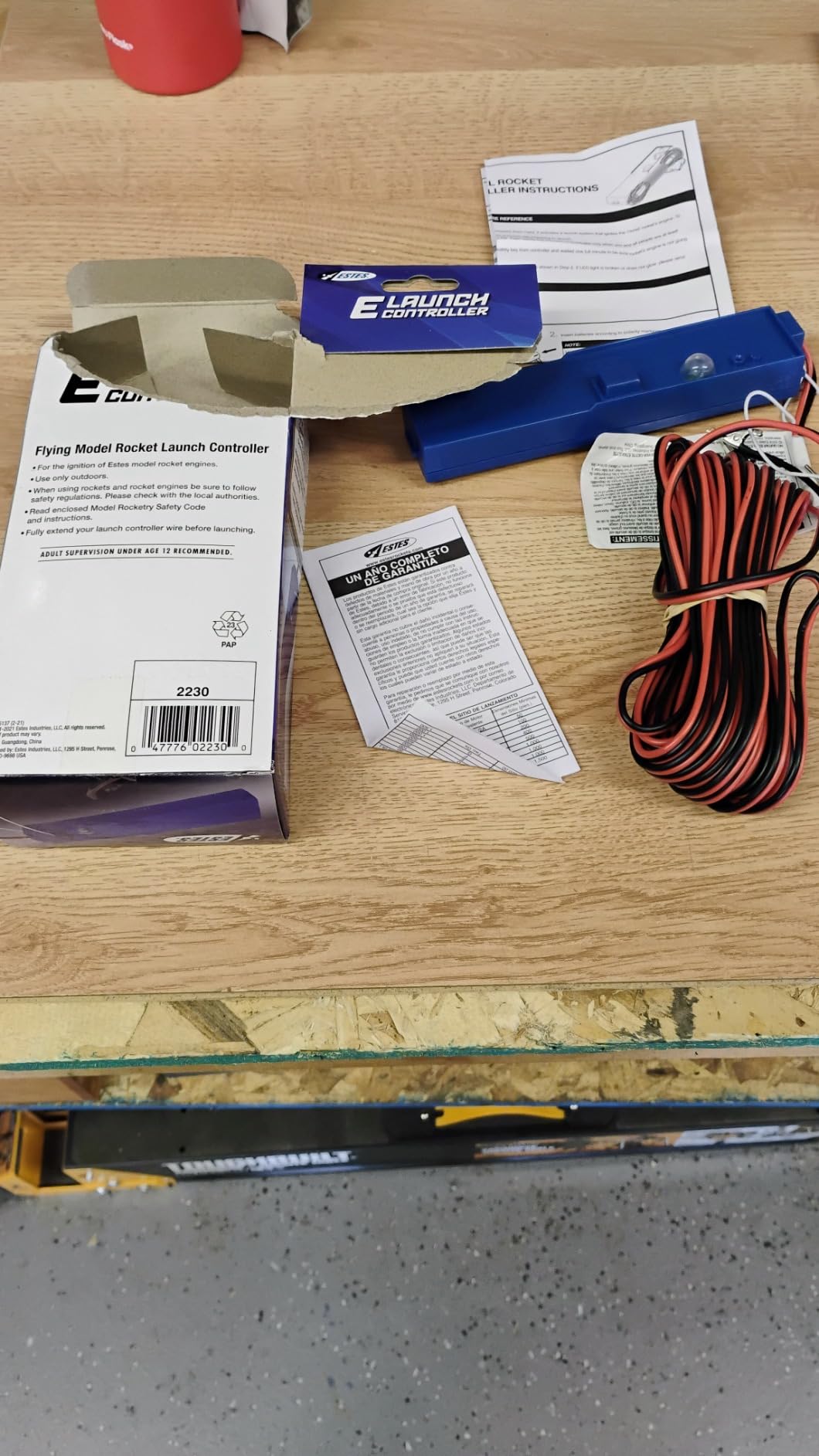
I appreciate the continuity check feature, which lets you verify your ignition circuit before the launch. The safety key system is essential for group launches where you need to prevent accidental launches.
Required for E Motors
Standard controllers often struggle with E motors. The E Launch Controller provides reliable ignition for these larger engines. If you’re flying E motors, this controller is a worthwhile investment.
Usability Notes
Some users find the launch button requires more pressure than expected. The safety key system works but could be improved with a better tether. Despite these minor issues, it’s the most reliable option for E motor launches.
7. Estes Pro Series II Launch Controller – Advanced Option
Estes 2240 Pro Series II Launch Controller, Flying-Rocket-Model Launch Controller, Rocket Model Kit Accessories for Ages 10+
For cluster launches
4 alligator clips
Audible continuity
6 C batteries
Pros
- Handles multi-engine clusters
- Excellent continuity buzzer
- Long 30-foot cable
- Protective two-button system
Cons
- Requires C batteries not included
- Bulky design
- Key system could be better
The Pro Series II Launch Controller is designed for more advanced launches, including multi-engine cluster rockets. I’ve used this controller for dual-cluster launches and appreciate the four alligator clips that make wiring multiple motors straightforward.
The audible continuity buzzer is a great feature—you can hear if your circuit is complete without looking at the controller. This is especially helpful when you’re focused on the rocket during pre-launch checks.
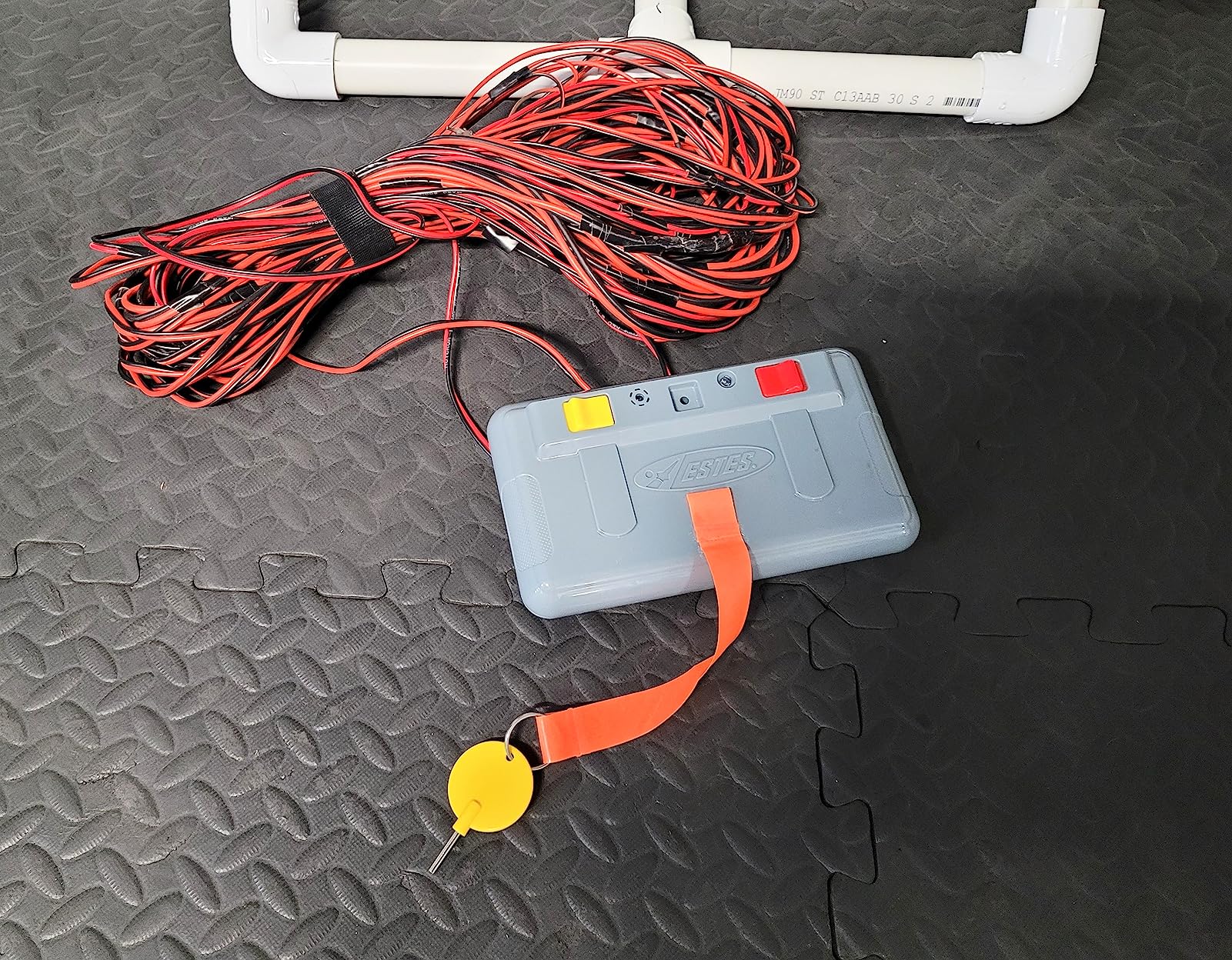
The two-button arming system provides an extra layer of safety, preventing accidental launches. This is important at crowded launches where curious onlookers might be present.
Cluster Launch Capability
This controller shines with multi-engine rockets. If you’re building cluster rockets or planning to, the Pro Series II controller makes ignition much more reliable. The four clips give you flexibility for various cluster configurations.
Power Considerations
The six C batteries provide plenty of power for reliable ignition. Some advanced users even modify this controller to accept 3S lipo batteries for even more reliable cluster ignition.
8. Estes 3/16-Inch Maxi Launch Rod – Upgrade Essential
Estes 2244 3/16-Inch Two-Piece “Maxi” Launch Rod, Flying-Rocket-Model Launch System Accessory, Rocket Model Kit Accessories for Ages 10+
3/16 inch diameter
Two-piece design
18 inches long
For larger rockets
Pros
- Perfect for larger rockets
- Steel construction
- Fits multiple pad models
- Improved guidance over 1/8 inch
Cons
- Can bend at joint
- Two pieces not meant to separate
- Some quality control issues
Upgrading to a 3/16-inch launch rod makes a noticeable difference with larger mid-power rockets. I switched to this rod for heavier rockets and immediately saw improved stability on launch. The thicker diameter provides better guidance for rockets that need it.
This rod is compatible with both Porta-Pad II and Porta Pad E launch pads, giving you flexibility. The two-piece design makes transport easier, though I prefer one-piece rods when possible.
When to Upgrade
If you’re flying rockets heavier than 8 ounces or using D and E motors regularly, the 3/16-inch rod is a worthwhile upgrade. The improved guidance helps ensure straight launches, especially in breezy conditions.
Installation Notes
The rod fits easily into compatible Estes launch pads. Once assembled, the joint should be secure—don’t repeatedly separate the two pieces or you may weaken the connection.
9. Estes 1/8-Inch Launch Rod – Standard Replacement
Estes 2243 1/8-Inch Two-Piece Launch Rod, Flying-Rocket-Model Launch Pad, Rocket Model Kit Accessories for Ages 10+
1/8 inch diameter
Two-piece design
Standard size
For most rockets
Pros
- Standard size for most rockets
- Cost effective replacement
- Easy assembly
- Works with many pads
Cons
- Limited for mid-power applications
- Can bend if not careful
- Joint can be weak point
Every rocketeer needs spare launch rods, and this 1/8-inch rod is the standard size for most model rockets. I keep a couple in my gear box as backups. You never know when a rod will get bent or lost at a launch.
This rod is perfect for standard engine rockets and smaller mid-power models. It’s an essential spare that can save a launch day when your primary rod has issues.
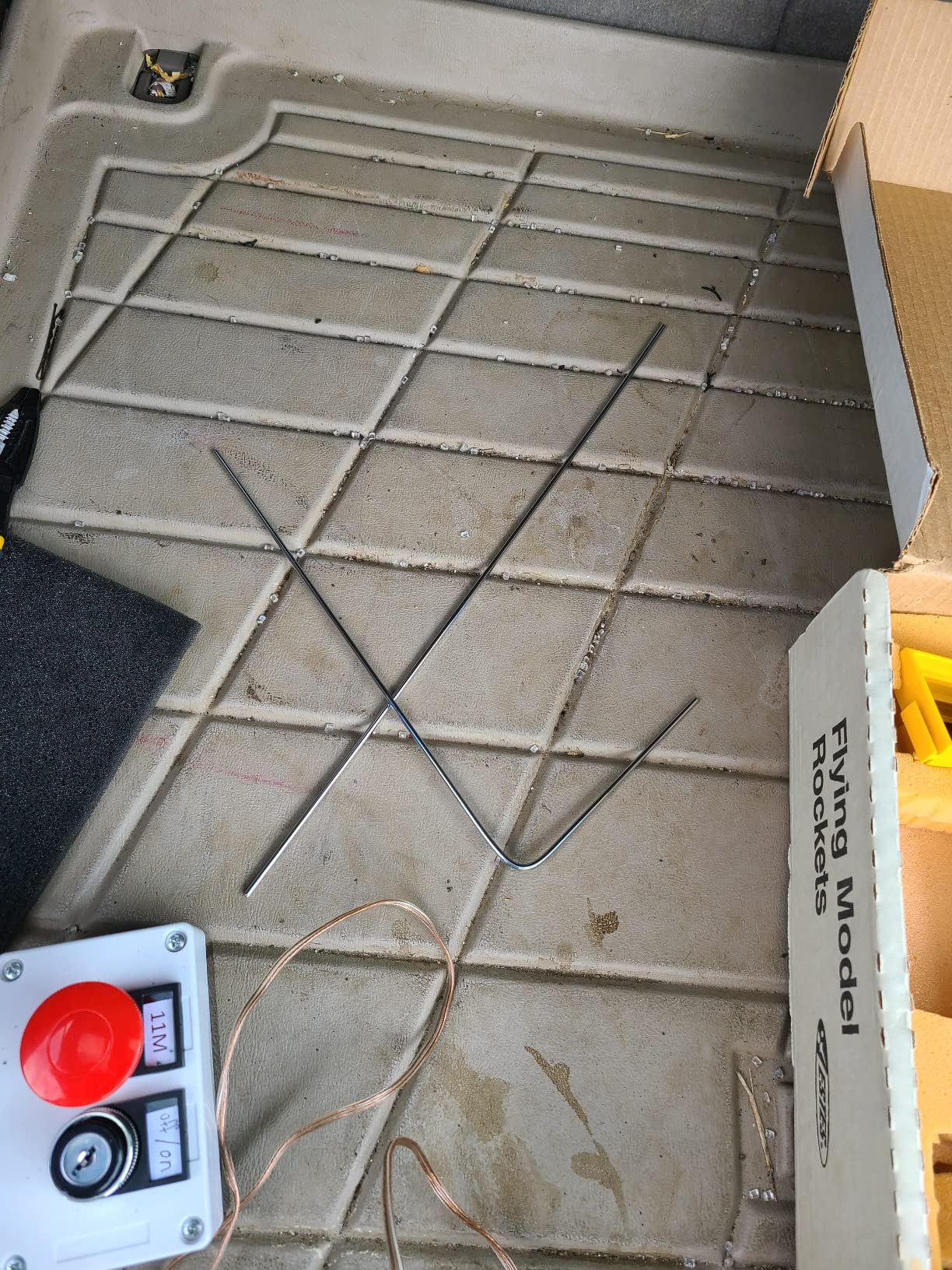
Essential Spare
Launch rods are consumable items. Having a spare ensures you can keep flying even if your primary rod gets damaged. This is especially important for club launches where you might not have access to replacement parts.
Usage Guidelines
While adequate for smaller rockets, consider upgrading to 3/16-inch or 1/4-inch rods for larger mid-power rockets. The 1/8-inch size is best suited for rockets under 12 ounces.
10. Estes Blast-Deflector Plate – Safety Essential
Estes 2241 Blast-Deflector Plate, Flying-Rocket-Model Launch System Accessory, Rocket Model Kit Accessories for Ages 10+
Heat resistant metal
Universal fit
Protects launch pad
Required for safety
Pros
- Essential for launch safety
- Heat resistant construction
- Universal compatibility
- Easy installation
Cons
- Thinner than older versions
- Will char over time
- Not for engines larger than E class
The blast deflector plate is one of the most important safety components of your launch system. It protects your launch pad from the intense heat and flame of rocket exhaust. I always keep a spare deflector in my gear bag.
This plate is compatible with multiple Estes launch pads, making it a versatile addition to your equipment. The galvanized steel construction holds up well to repeated launches, though it will eventually char and need replacement.
Safety First
Never launch without a blast deflector. This plate protects both your equipment and the launch surface from motor exhaust. It’s an essential safety component that no rocketeer should be without.
Maintenance
Blast deflectors are wear items. Inspect yours regularly for signs of warping or excessive corrosion. Some rocketeers add a ceramic tile to extend the life of their deflectors.
Buying Guide: How To Choose The Best Rocket Launch Pads for Mid-Power Rockets?
Selecting the best launch pad for your mid-power rockets depends on several factors. Let me break down the key considerations based on my experience.
Motor Size Compatibility
Different motors require different launch equipment. Here’s what I recommend for each motor class:
E Motors: The Porta Pad E is my top choice. It’s specifically designed for E engines and provides the stability and guidance these motors require. The 1/4-inch launch rod is perfect for E-powered rockets.
F Motors: For F motors, consider the Pro Series II pad or the Mantis. These heavier pads provide the stability needed for the increased thrust and weight of F-powered rockets.
G Motors: The Mantis or similar professional-grade pads are essential for G motors. These powerful engines require substantial launch equipment for safe operation.
Rod vs Rail Systems
Most mid-power rocketry uses launch rods, but rail systems have advantages for larger rockets:
Launch Rods: Simple, affordable, and effective for most mid-power applications. Rods work with launch lugs on your rocket. The 1/4-inch size is ideal for mid-power.
Rail Systems: Provide better guidance for larger rockets and work with rail buttons instead of lugs. Rails are typically used for high-power rockets but some mid-power enthusiasts prefer them for F and G motors.
For most mid-power applications, I recommend starting with a quality rod-based system like the Porta Pad E. You can always upgrade to a rail system later if you progress to larger rockets.
Stability Considerations
Launch pad stability is critical for safe flights. I’ve learned this lesson the hard way—unstable launches can damage rockets and create safety hazards.
Look for pads with wide bases and sturdy legs. The Pro Series II and Mantis both excel in this area. For lighter pads like the Porta Pad E, consider using tent pegs or stakes in windy conditions.
Adjustable launch angles are another important feature. Being able to tilt your launch rod helps compensate for wind and ensures your rocket flies into the breeze rather than with it.
Portability vs Durability
Consider how you’ll transport and use your launch pad:
Portable Pads: The Porta-Pad II and Porta Pad E are designed for easy transport. They break down quickly and fit in most gear bags. Perfect for rocketeers who launch at different locations.
Durable Pads: The Pro Series II and Mantis are heavier and more robust. They’re ideal for permanent launch sites or rocketeers who prioritize stability over portability.
I recommend starting with a portable option like the Porta Pad E. You can always add a heavier pad later if you need it for specific applications.
Safety Requirements
Always follow NAR safety guidelines when selecting and using launch equipment:
– Use a blast deflector on every launch
– Maintain safe distance from the pad (at least 15 feet)
– Use a launch controller with a safety key
– Ensure your launch pad is appropriate for your motor size
– Never launch in windy conditions beyond your equipment’s capabilities
FAQ
What is the best all-round launch pad for rockets?
The Estes Porta Pad E is the best all-round launch pad for rockets ranging from standard engines to E motors. It provides excellent stability, accepts different rod sizes, and is portable enough for field use while being robust enough for mid-power applications.
What launch pad do I need for E and F motors?
For E motors, the Estes Porta Pad E is ideal with its 1/4-inch rod and robust blast deflector. For F motors, consider the Estes Pro Series II Launch Pad or the Aerotech Mantis for the additional stability needed with these more powerful engines.
What size launch rod for mid-power rockets?
Mid-power rockets typically need a 1/4-inch launch rod for optimal guidance. Smaller 1/8-inch rods are adequate for A-D motors, while 3/16-inch rods work well for larger standard rockets. The 1/4-inch size provides the stability needed for E, F, and G motor rockets.
Rail vs rod for mid-power rockets?
Launch rods are the standard for most mid-power rockets and work well with E-G motors. They’re simple, affordable, and effective. Rail systems provide superior guidance for very large or heavy rockets but are typically overkill for standard mid-power applications. Start with a quality rod system like the Porta Pad E.
How windy is too windy for model rockets?
Winds above 20 mph are generally too windy for model rockets, especially mid-power models. For E and larger motors, I recommend not launching in winds over 15 mph. Use your launch pad’s angle adjustment to compensate for light winds, and always point your rocket into the wind for stability.
Conclusion
Choosing the best rocket launch pads for mid power rockets is about matching your equipment to your motors and rockets. After years of launching everything from A motors to high-power certification flights, I can tell you that the right launch pad makes all the difference.
For most mid-power rocketeers, the Estes Porta Pad E is the perfect all-around choice. It handles E motors with confidence, accepts different rod sizes, and remains portable for field use. If you’re flying larger Pro Series rockets or progressing to F motors, the Pro Series II Launch Pad provides the extra stability you need.
Remember to always prioritize safety. Use appropriate blast deflectors, maintain safe distances, and never exceed your equipment’s capabilities. Mid-power rocketry is incredibly rewarding when done right, and the right launch pad is your foundation for success.
Whether you’re just progressing from standard engines or working toward high-power certification, investing in quality launch equipment will serve you well for years to come. Happy launching in 2026!