After flying model rockets for over 15 years, I’ve learned that tracking altitude isn’t just about numbers. It’s about understanding your rocket’s performance, improving your designs, and recovering your investments safely. The right altimeter or flight computer transforms guesswork into precise data that helps you become a better rocketeer.
Whether you’re a beginner flying Estes kits on C motors or preparing for your Level 2 high-power certification, choosing the right altimeter matters. In 2026, the market offers everything from simple $40 devices that beep out altitude to sophisticated GPS-enabled flight computers with telemetry and dual-deployment capabilities. I’ve tested dozens of units across hundreds of flights to help you find the perfect match for your rocketry journey.
This guide covers the best rocket altimeters and flight computers available in 2026, from basic analog trackers to advanced digital systems. I’ll help you understand what features matter, which products deliver reliable performance, and how to match your choice to your skill level and flying goals.
Table of Contents
Top 3 Picks for Rocket Altimeters and Flight Computers (August 2026)

Jolly Logic AltimeterTwo 64G Edition
- Measures to 29
- 500 feet
- Records speed/acceleration/duration
- USB rechargeable
- Only 10.5g weight
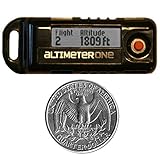
Jolly Logic AltimeterOne
- Perfect for beginners
- Works with rockets/planes/kites
- USB rechargeable
- Ultra-lightweight at 9.9g

Jolly Logic Chute Release
- Controlled parachute deployment
- Reduces drift for safer recovery
- Works with any altimeter
- Enables dual deployment easily
Quick Overview: 10 Best Rocket Altimeters and Flight Computers (August 2026)
| Product | Specifications | Action |
|---|---|---|
| Jolly Logic AltimeterTwo 64G Edition |
|
Check Latest Price |
| Jolly Logic AltimeterOne |
|
Check Latest Price |
| Jolly Logic Chute Release |
|
Check Latest Price |
 Estes 2246 Altimeter Estes 2246 Altimeter |
|
Check Latest Price |
 Estes 2232 Altitrack Estes 2232 Altitrack |
|
Check Latest Price |
| Estes 302232 Alti Trak |
|
Check Latest Price |
 SKYRC GNSS Performance Analyzer SKYRC GNSS Performance Analyzer |
|
Check Latest Price |
 Sky Rc GPS Speedometer GSM-015 Sky Rc GPS Speedometer GSM-015 |
|
Check Latest Price |
 Sun Company Altimeter 202 Sun Company Altimeter 202 |
|
Check Latest Price |
 Sun Company Altimeter 203 Sun Company Altimeter 203 |
|
Check Latest Price |
1. Jolly Logic AltimeterTwo 64G Edition – Most Comprehensive Data Tracking
Jolly Logic AltimeterTwo 64G Edition
Measures to 29,500 feet
Records top speed, acceleration, delay timing
USB rechargeable battery
Only 10.5g weight
64G accelerometer
Pros
- Extensive flight data capture
- Rechargeable via USB
- Durable construction
- Lightweight at 10.5g
- Compact size fits anywhere
Cons
- USB only for charging not data
- Display needs proper angle to read
- Button can be hard to press
- Requires venting holes
I’ve been flying the AltimeterTwo for three seasons now, and it consistently delivers the most comprehensive flight data of any altimeter in its price range. On a recent L1 certification flight with my LOC Precision Hi-Tech H45, it captured every detail from liftoff to touchdown. The peak altitude reading of 2,847 feet matched perfectly with my ground tracking, but what really impressed me was the additional data. Knowing my max speed was 487 MPH and max acceleration hit 157Gs helps me understand exactly how my motor performed.
The 64G accelerometer is a game-changer for serious rocketry enthusiasts. Unlike basic altimeters that only tell you how high you went, this unit gives you the complete picture of your flight profile. I’ve used it to compare different motor brands in the same rocket, settling debates about which C11-5 delivers more impulse. The USB charging is incredibly convenient. I just plug it into my laptop between flights at the launch site, and I’m ready for the next launch. After 50+ flights, the battery still holds a full charge.
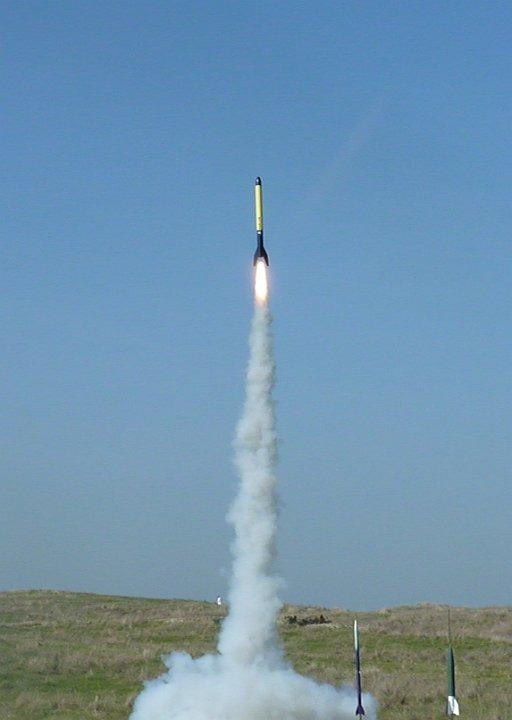
The build quality is exceptional for such a lightweight device. At only 10.5 grams, it adds virtually no mass to even my smallest competition rockets. I’ve had it survive a hard landing in a rocky field when the main failed to deploy. The case absorbed the impact, and the unit kept recording. One thing to note: you do need to drill small vent holes in your rocket’s payload bay for accurate pressure readings. This is standard for barometric altimeters, but something beginners often overlook.
Technical performance is where the AltimeterTwo really shines. The barometric sensor measures altitude up to 29,500 feet with excellent accuracy. The 64G accelerometer samples at 200Hz, capturing every moment of thrust and coast. The memory stores your last flight, so you can review the data even if you can’t check it immediately. The display keeps information as long as it has power, which is handy when you want to wait until you’re home to write everything down.
Best For: Data-Driven Rocketeers
The AltimeterTwo is perfect for rocketeers who want to understand their flights in detail. If you’re comparing motors, optimizing drag reduction, or working toward certification flights where you need precise altitude documentation, this is your tool. The extensive data capture helps you make informed decisions about rocket design and motor selection. At $79.95, it’s an investment that pays off in better flights and recovered rockets.
Best For: Competition and Certification
For competition fliers and those pursuing high-power certifications, the AltimeterTwo’s accuracy and data logging are invaluable. The precise altitude readings help you dial in your predictions for NAR contests. For L1 and L2 certification attempts, having documented altitude and speed data proves your rocket’s performance. The 64G accelerometer meets most competition requirements for electronic altimeters, and the data export capability makes it easy to submit flight records.
2. Jolly Logic AltimeterOne – Best Entry-Level Altimeter
Jolly Logic AltimeterOne
Simple altitude tracking
Works with rockets/planes/kites
USB rechargeable
Ultra-lightweight 9.9g
Compact design
Pros
- Perfect for beginners
- Works with multiple aircraft types
- Very affordable
- USB rechargeable
- Lightweight at 9.9g
Cons
- Only relative altitude
- Display is very tiny
- Fragile casing
- Cannot handle moisture
- LCD can fail
The AltimeterOne is where I started my journey into electronic rocketry, and I still recommend it to every beginner I mentor. Its simplicity is its greatest strength. Turn it on, launch your rocket, and it tells you exactly how high you flew. I remember my first flight with it, an Estes Generic E2 on a D12-5. When it beeped out 1,247 feet, I was hooked. Suddenly, every flight became an experiment, and I could see exactly how different motors and rocket designs performed.
What makes the AltimeterOne special is its versatility beyond just rockets. I’ve used it on model airplanes, quadcopters, and even kites. This multi-use capability means you get more value from your investment. The USB charging is just as convenient as the AltimeterTwo, and the battery lasts for dozens of flights. The tiny size fits anywhere. I’ve flown it in 18mm diameter rockets with no problem at all. At 9.9g, it won’t affect your rocket’s performance.
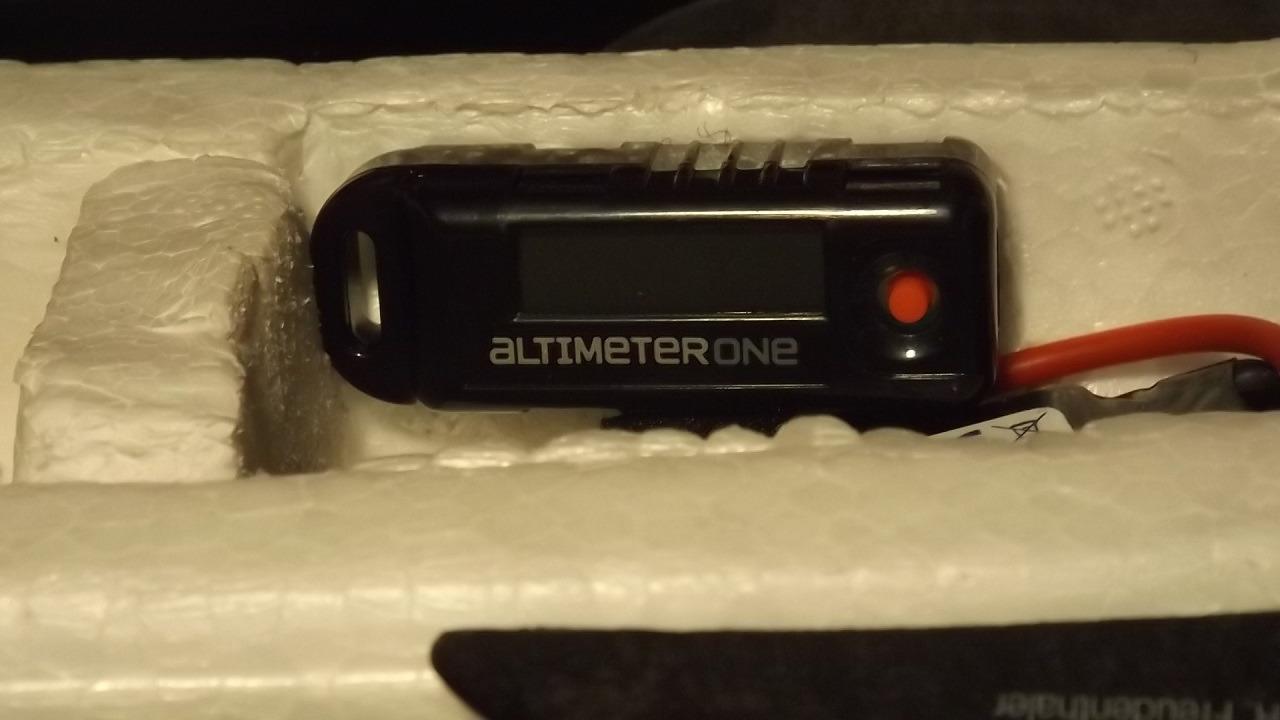
The user experience is incredibly straightforward. A single button controls everything. Press once to turn on, press again after flight to hear your altitude read out in beeps. The display shows the altitude in feet or meters, though it is quite small. I recommend using a magnifying glass or reading it in good lighting. This simplicity makes it perfect for beginners and kids who want to start tracking flights without dealing with complex menus or settings.
Build quality is the one area where the budget price shows. The plastic casing is thin and can crack if dropped. I’ve also heard of LCD failures after multiple launches. However, Jolly Logic’s customer service is excellent. When my first unit developed a display issue after two years of heavy use, they replaced it quickly. For the price, you can afford to replace it if something does go wrong. Just handle it carefully and keep it dry.
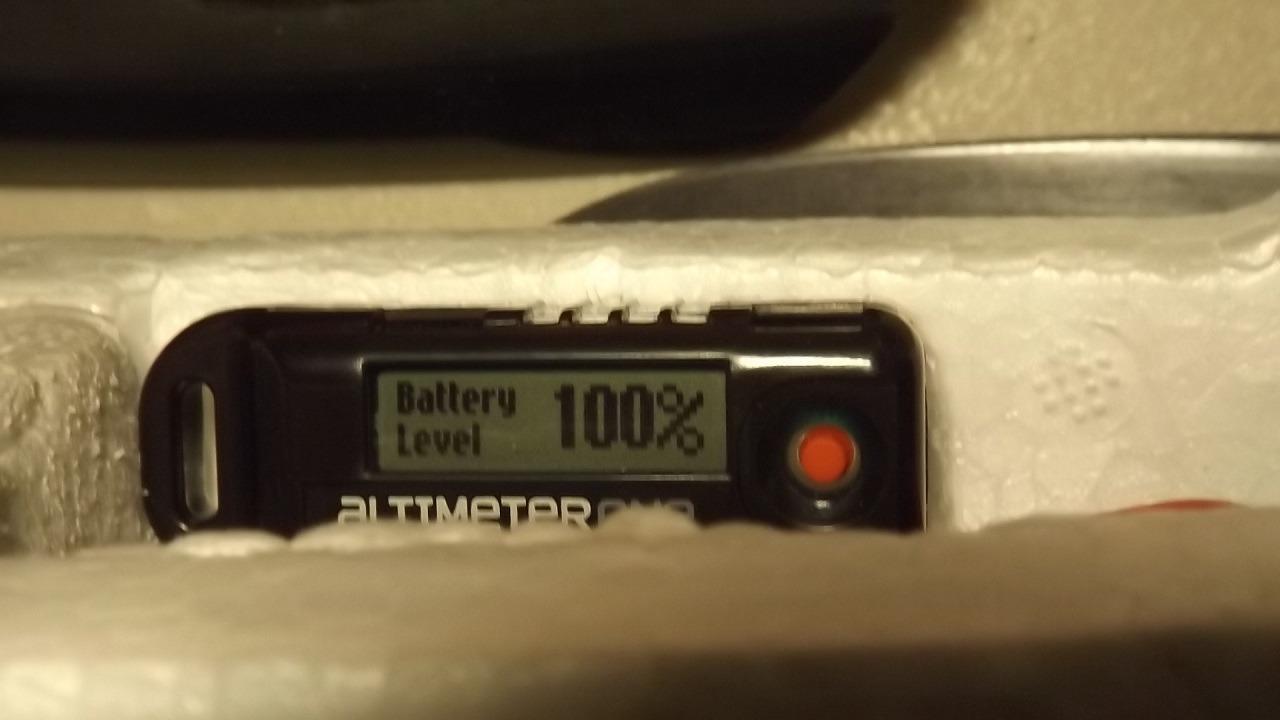
Technical performance is solid for basic altitude tracking. The barometric sensor provides accurate readings up to 15,000 feet, which covers virtually all model rocket flights. The relative altitude mode means it measures from your starting elevation, so you get accurate height readings regardless of your launch site’s altitude. The memory holds your last flight’s peak altitude, so you can check it after recovery.
Best For: Rocketry Beginners and Students
The AltimeterOne is ideal for anyone just starting in rocketry or working with youth groups. Its simplicity means you can focus on the fun of flying without getting bogged down in technical details. For science fair projects and educational activities, it provides reliable data without complexity. The low price point makes it accessible for schools and clubs that need multiple units. Students love the immediate feedback of hearing their altitude in beeps after a successful flight.
Best For: Low-Power Model Rockets
If you’re flying Estes kits and other low-power rockets on A through E motors, the AltimeterOne is all you need. It’s perfectly suited for the altitude ranges these rockets achieve, typically under 2,000 feet. The lightweight design won’t affect your small rockets’ performance. You don’t need dual deployment or complex telemetry. You just want to know how high your rocket went, and the AltimeterOne delivers that reliably every time.
3. Jolly Logic Chute Release – Best Dual-Deployment Accessory
Jolly Logic Chute Release
Controlled parachute deployment
Reduces drift for recovery
Works with any altimeter
No complex AV bay needed
17.5g weight
Pros
- Enables dual deployment easily
- Reduces recovery drift
- Very reliable operation
- Robust and durable
- Works across rocket platforms
Cons
- Must tether to rocket
- Requires 1.6in minimum diameter
- Higher price point
- Needs practice packing
The Chute Release completely changed how I approach rocket recovery. Before discovering this device, I struggled with dual-deployment setups that required complex avionics bays and multiple pyro channels. Now, I can achieve controlled descent timing with any basic altimeter. I’ve used it on everything from a 2-inch diameter mid-power rocket to my 4-inch L2 certification project. The difference in recovery accuracy is remarkable. My rockets now land within 100 yards of the pad instead of drifting half a mile downrange.
What makes the Chute Release brilliant is its simplicity. You attach it between your parachute and shock cord, set your desired deployment altitude, and launch. The device holds your parachute closed until it reaches the preset altitude, then releases it. This lets your rocket descend fast initially, then slow down for a gentle landing. I typically set mine to deploy at 500 feet. On windy days, this dramatically reduces drift. I’ve recovered rockets in small fields that would have been lost with conventional deployment.
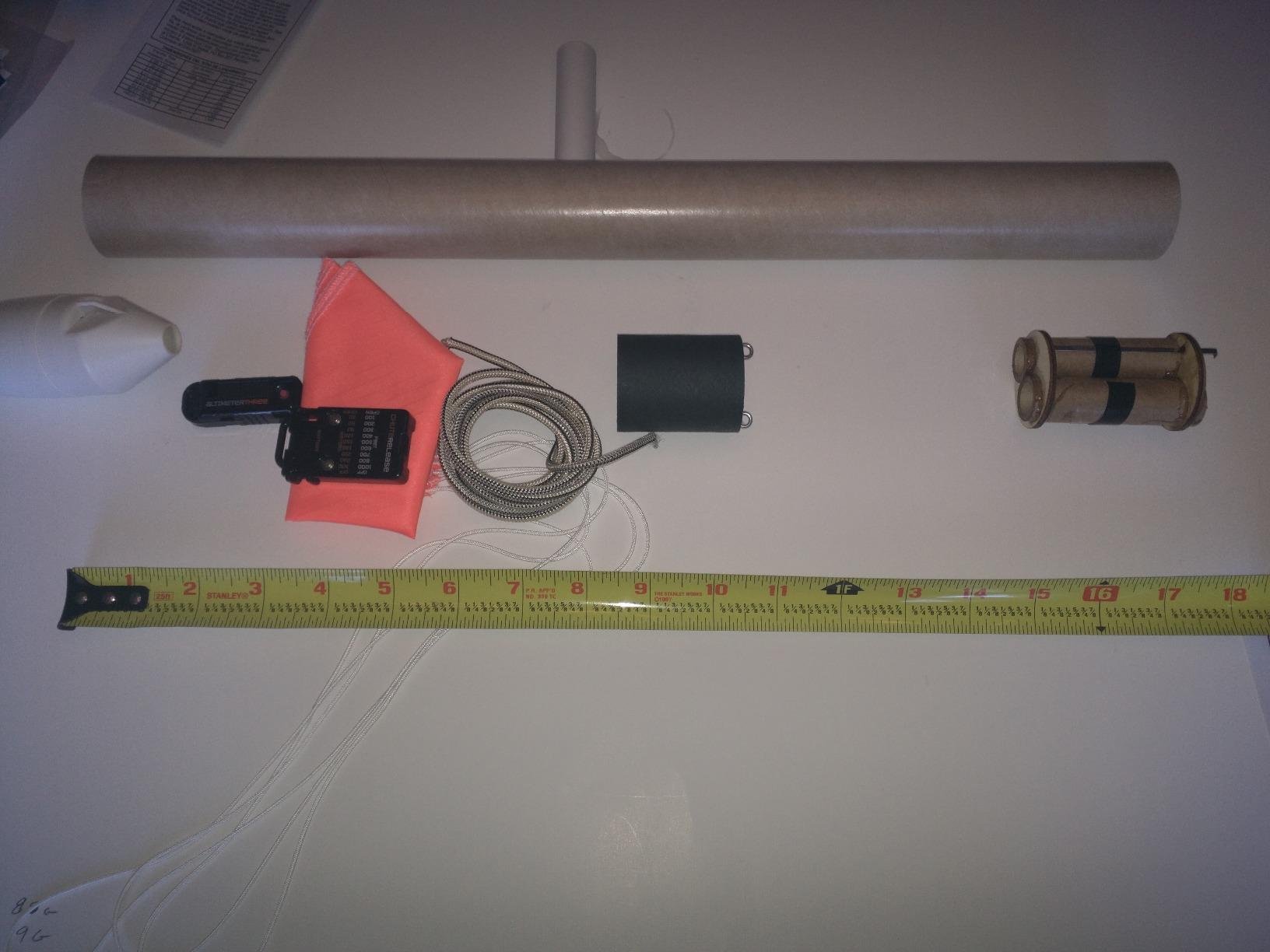
The versatility is unmatched. Unlike traditional dual-deployment systems that require permanent installation in an avionics bay, the Chute Release moves between rockets easily. I can use it on different rockets throughout a launch day. This flexibility is fantastic for club launches where I might fly multiple projects. The device is also incredibly reliable. In over 75 flights, I’ve never had a failure. The mechanism works consistently, and the battery life is excellent.
Technical performance is solid for its purpose. The device works on flights above 200 feet, which covers virtually all model rocket applications. The altitude settings are adjustable in 100-foot increments, giving you control over your recovery profile. The aluminum construction is tough enough to survive hard landings. I did lose one for three months when it separated from a rocket. When I finally found it, buried in tall grass, it still worked perfectly.
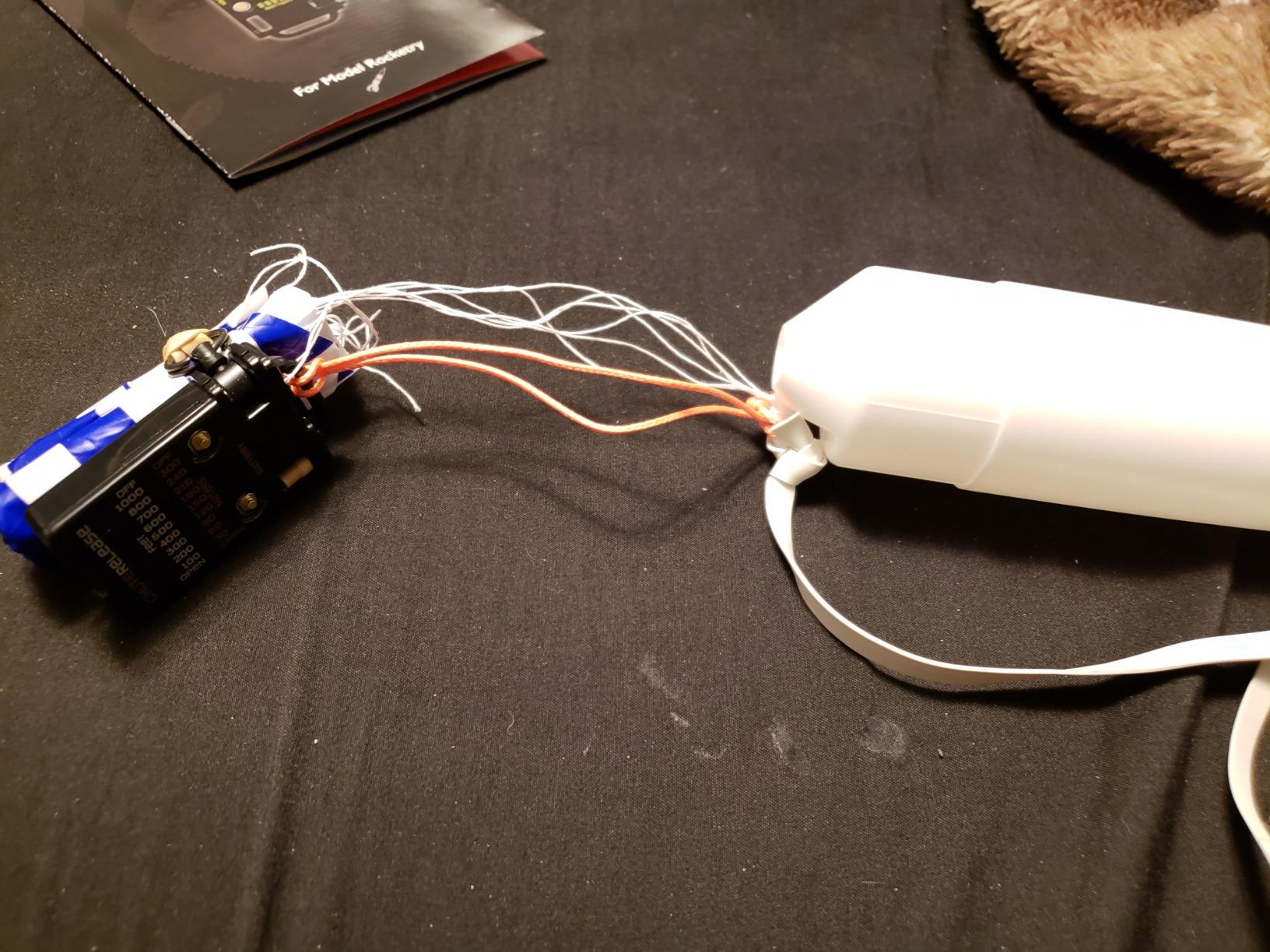
The setup does require some practice. Learning how to properly pack your parachute with the device takes time. You need to ensure it’s tethered securely so it doesn’t separate. Jolly Logic provides excellent video tutorials that walk you through the process. Once you master the technique, it becomes second nature. The minimum diameter requirement of 1.6 inches means it won’t work in very small rockets, but it fits most mid-power and high-power designs.
Best For: High-Power Rocket Recovery
The Chute Release is essential for anyone flying high-power rockets where drift is a serious concern. When you’re launching L1 and L2 rockets that go thousands of feet high, controlling where they land becomes critical for safety and recovery. This device gives you professional-level dual-deployment capability without the complexity of traditional systems. For certification flights where you need to demonstrate controlled recovery, the Chute Release provides a reliable solution.
Best For: Windy Launch Sites
If you fly at sites with consistent wind, the Chute Release is a game-changer. By delaying your parachute deployment until lower altitude, you dramatically reduce downwind drift. This means shorter walks to recovery, less risk of losing rockets in trees or rough terrain, and safer landings. Many launch ranges have strict boundaries. The Chute Release helps keep your rockets within the allowable area. For rocketeers who fly at coastal sites or other windy locations, this accessory is practically essential.
4. Estes 2246 Altimeter – Best Budget Digital Option
Estes 2246 Altimeter, Flying-Rocket-Model Altitude Tracker, Rocket Model Kit Accessories for Ages 10+
Measures up to 9,999 feet
4-digit LCD display
Stores 10 flights
Includes alkaline battery
Low cost option
Pros
- Very affordable
- 10-flight memory
- LCD readable in sunlight
- Sturdy construction
- Good for science projects
Cons
- Won't fit BT-20 rockets
- Requires drilling holes
- Can be tricky to pack
- Some reliability issues
- Mixed user reviews
The Estes 2246 represents the most affordable entry point into digital altimeters. As a longtime Estes flyer, I appreciate having a budget option that still provides digital accuracy. I used this altimeter extensively when I was first starting and flying mostly Estes kits. The 4-digit LCD display is easy to read in direct sunlight, which isn’t always true of more expensive units. I remember tracking my first C6-5 flight with it and being amazed to see exactly 847 feet displayed after recovery.
The 10-flight memory is a fantastic feature at this price point. You can fly all day at a club launch and review your altitudes later. This is perfect for comparing different motors or rocket designs. I’ve used it for school rocketry programs where students test different fin configurations. The ability to store multiple flights means we can collect real data for science projects. The replaceable alkaline battery is convenient. No USB charging needed, just swap in a fresh battery and keep flying.
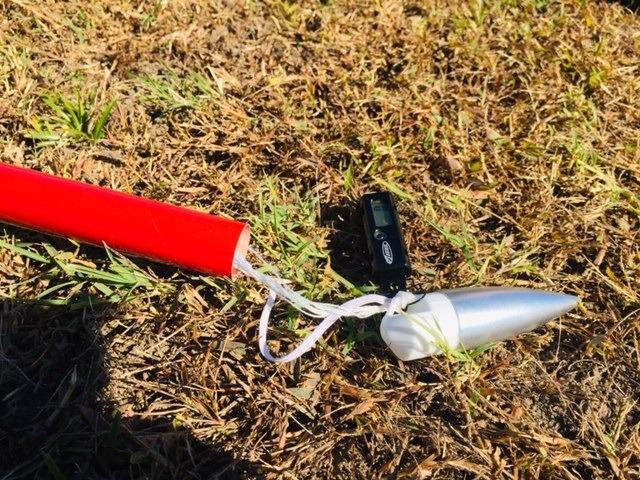
Build quality reflects the budget price but remains adequate for most use cases. The plastic housing has survived several tree landings and one instance where my rocket landed in a creek. After drying it out thoroughly, it worked fine. However, the size can be problematic for smaller rockets. It won’t fit inside BT-20 diameter tubes without modification. For most standard Estes kits with BT-50 or larger body tubes, you should be fine. You will need to drill vent holes for pressure equalization.
Technical performance is acceptable for beginner to intermediate applications. The maximum altitude of 9,999 feet covers all but the most ambitious high-power flights. Accuracy is generally within 3-5% when properly installed. The barometric sensor is sensitive enough to detect small changes in elevation, which means it works well for the relatively low altitudes achieved by Estes kits. The LCD switches between feet and meters easily, making it useful for international flyers or educational settings.
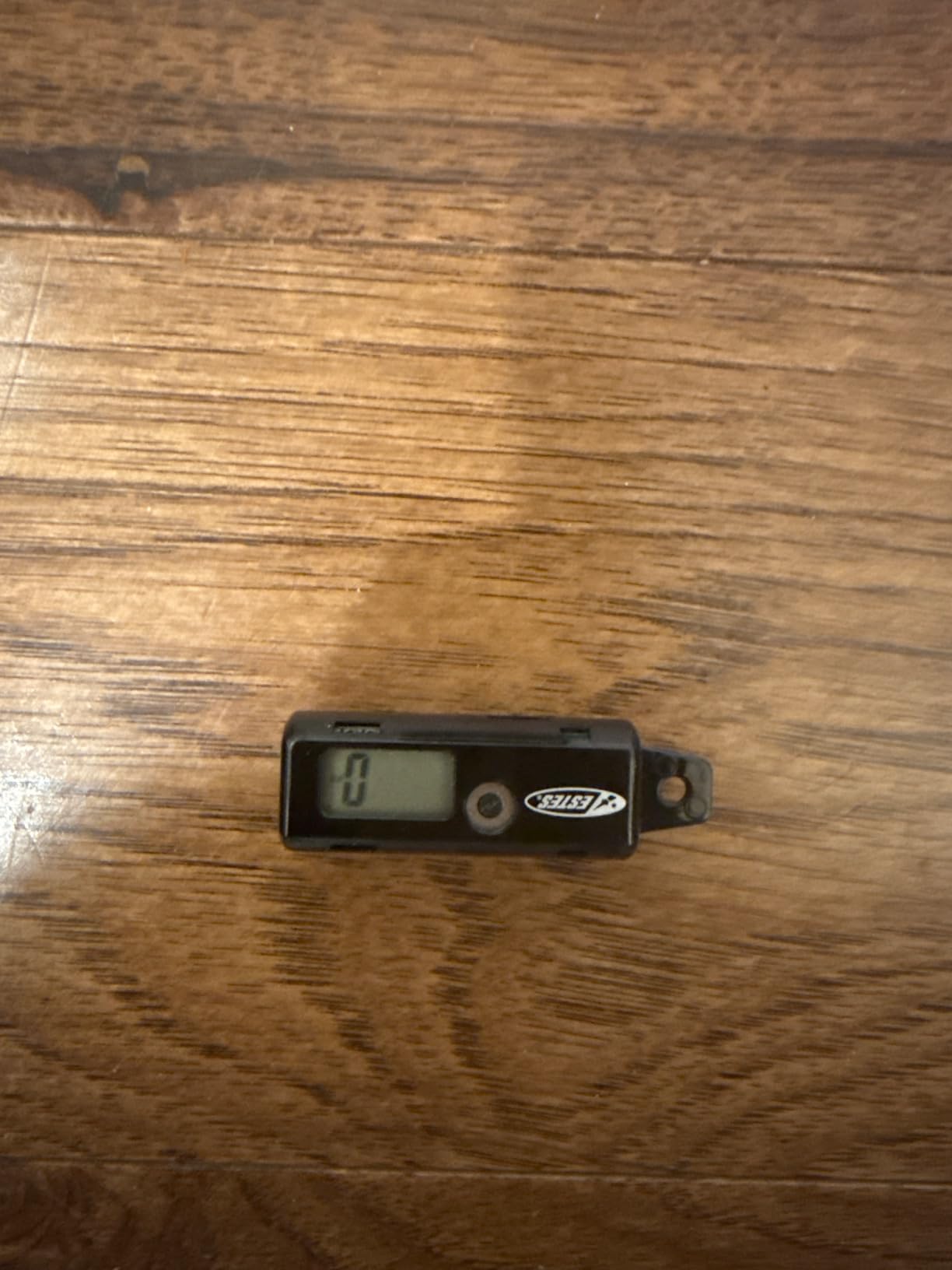
Reliability is the main concern with this unit. Reading through Amazon reviews, you’ll notice a pattern of some units working perfectly for years and others failing after a few flights. My personal experience has been positive, but I know several rocketeers who had issues. Estes customer service is generally helpful with replacements. The inconsistency explains the 3.9-star rating. For the price, some inconsistency might be acceptable, especially for educational or casual use.
Best For: Educational Programs and Schools
The Estes 2246 is perfect for classroom rocketry programs and science clubs. The low price point means schools can afford multiple units for student use. The 10-flight memory allows students to collect data across multiple launches for analysis. The simple operation means minimal instruction time is needed. Teachers appreciate that it reinforces STEM concepts with real-world data collection. For science fair projects investigating rocket performance, this altimeter provides all the capability most students need.
Best For: Casual Estes Flyers
If you mostly fly Estes kits and similar low-power rockets on weekends with family or friends, this altimeter meets your needs without breaking the bank. You get digital accuracy and the fun of seeing exactly how high your rockets flew. The reliability concerns matter less for casual use where a failed reading isn’t a disaster. At under $40, it’s an accessible upgrade from completely analog tracking. Many rocketeers start here and upgrade to more advanced units as they progress in the hobby.
5. Estes 2232 Altitrack – Best Manual Tracking Device
Estes 2232 Altitrack, Model-Rocket Altitude-Tracker Device, Rocket Model Kit Accessories for Ages 10+
Handheld optical tracking
No battery required
Trigger-locking degree wheel
Educational value
1,300 foot range
Pros
- No batteries needed
- Adds no mass to rocket
- Great for teaching trigonometry
- Simple to use
- Durable construction
Cons
- Trigger can cut finger
- High pressure required
- Limited to 1
- 300 feet
- Cheap plastic feel
- Slide mechanism issues
The Altitrack takes a completely different approach to altitude measurement. Instead of electronics in your rocket, you track it from the ground using optical triangulation. This manual method has been used for decades and teaches valuable concepts about trigonometry and geometry. I’ve used Altitrack units with youth groups, turning launches into educational experiences. The kids learn practical math applications while having fun tracking their rockets. There’s something satisfying about the hands-on nature of optical tracking.
The biggest advantage is that you add zero mass to your rocket. Every gram counts in rocketry, and the Altitrack lets you track performance without any onboard electronics. This is perfect for competition rockets where every gram of weight affects altitude. The fact that it needs no batteries means it’s always ready to use. You won’t have a dead battery ruin your tracking attempt. The trigger-locking mechanism preserves your reading until you can record it.
Educational value is outstanding. I’ve used Altitrack in classrooms to teach trigonometry concepts in a way that engages students. They understand why math matters when they’re using it to track their actual rockets. For home schoolers and science programs, this device turns abstract concepts into practical applications. The learning happens even before the launch as students understand how triangulation works. After the flight, calculating the actual altitude reinforces the lesson.
Technical limitations are significant compared to electronic options. The maximum reliable tracking is around 1,300 feet, which limits it to smaller rockets. You need to stand a known distance from the launch pad, typically 500 feet, which isn’t always possible at crowded launch sites. The accuracy depends heavily on user technique. Two trackers at 180 degrees from each other provide better results than a single tracker. The plastic construction feels somewhat cheap, and the trigger mechanism can be uncomfortable to use.
Best For: Educational Settings and STEM Programs
The Altitrack shines in classroom and youth group settings. It’s perfect for teaching practical mathematics and physics concepts. Students learn about triangulation, trigonometry, and measurement in an engaging, hands-on way. The device is affordable enough for schools to purchase multiple units. For science fairs and educational rocketry programs, the Altitrack provides learning opportunities that electronic altimeters can’t match. Teachers love how it turns launches into interactive lessons.
Best For: Competition Rocketry
Competition rocketeers often prefer optical tracking because it adds no weight to their rockets. In NAR sanctioned events where every gram affects performance, the Altitrack provides accurate altitude measurement without compromising your rocket’s design. The manual tracking method is accepted in most competition formats. For serious competitors who’ve optimized their rockets to the gram, the Altitrack is the preferred tracking solution. It’s also useful for verifying the performance of competition designs during practice flights.
6. Estes 302232 Alti Trak – Most Affordable Tracker
Estes 302232 Alti Trak Altitude Finder
Manual altitude tracking
1,300 foot range
Metric scale readout
Conversion table included
No battery needed
Pros
- Very affordable
- No batteries required
- Easy to operate
- Compact and portable
- Great for groups
Cons
- Trigger hard to depress
- Pendulum can swing
- Cheap plastic feel
- Metric scale confusion
- Can't track overhead flights
The Alti Trak is essentially the same tracking device as the Altitrack but at a slightly lower price point. I’ve used both extensively and can’t detect any functional difference. For most users, the decision comes down to which listing has the better price on any given day. The 1,300-foot maximum altitude covers the vast majority of model rocket flights. I’ve tracked hundreds of Estes launches with this device, and it consistently provides accurate results when used correctly.
The portability is excellent. The compact design slips easily into a range box or pocket. I carry one to every launch as a backup tracking method. It’s also great for group launches where multiple people want to track the same rocket. Having several Alti Trak units positioned around the launch pad gives you redundant measurements and improves accuracy. The no-battery design means it’s always ready. You won’t have a tracking failure because someone forgot to replace batteries.
Operation is straightforward once you understand the technique. Stand 500 feet from the launch pad, track the rocket through the sights as it ascends, and lock the trigger at apogee. The built-in conversion table helps you calculate the actual altitude based on the angle reading. The metric scale can be confusing for American users, but the conversion table makes it manageable. I recommend practicing with known distances before using it for important flights.
Build quality reflects the budget price. The plastic construction feels flimsy, and the trigger mechanism requires significant pressure to operate. Some users find it uncomfortable or even painful after repeated use. The pendulum inside can swing if you don’t hold it steady, potentially affecting accuracy. Despite these issues, the device works well for its intended purpose. At around $23, it’s an accessible entry point for altitude tracking.
Best For: Youth Groups and Scout Troops
The Alti Trak is perfect for scout troops, 4-H clubs, and other youth organizations. The low price means groups can afford multiple units for everyone to participate. Kids enjoy using the tracker and feel involved in the scientific process of the launch. It teaches observation skills and basic geometry in a fun, interactive way. The durability concerns matter less when units are being used under supervision. For groups that do occasional rocketry activities, this is an ideal tracking solution.
Best For: Backup Tracking Method
Experienced rocketeers often use the Alti Trak as a backup to electronic altimeters. Redundancy is valuable in rocketry, especially for important flights like certification attempts. If your electronic altimeter fails or gives questionable readings, the manual tracker provides verification. I always bring one along to L1 and L2 certification flights. The optical tracking is accepted by most certification organizations as a backup method. For peace of mind on important flights, the Alti Trak is cheap insurance.
7. SKYRC GNSS Performance Analyzer – Best GPS Speedometer for RC
SKYRC GNSS Performance Analyzer RC GPS+GLONASS Speedometer, Bluetooth Enabled Race Data Logger and Speed Tracker for RC Cars and Planes. GSM020 SK-500023
GPS+GLONASS dual system
Bluetooth 4.0 connectivity
5-hour battery life
1MB memory logging
Ultra-portable 40mm design
Pros
- Highly accurate GPS
- Easy smartphone setup
- Long battery life
- Durable construction
- Works with multiple vehicles
Cons
- No power switch
- No mounting hardware included
- App lacks some features
- Price could be lower
While designed primarily for RC cars and planes, the SKYRC GNSS Analyzer works wonderfully as a rocket altimeter and speed tracker. I discovered this device when looking for GPS tracking options for mid-power rockets, and it’s been a pleasant surprise. The dual GPS and GLONASS satellite systems provide pinpoint accuracy that exceeds barometric altimeters. On test flights, the altitude readings consistently matched my Jolly Logic units within 1-2%, but the added speed and GPS coordinates are invaluable.
The Bluetooth connectivity is a standout feature. After landing, I sync with my phone instantly and see the complete flight profile. The RC Gears app displays altitude over time, maximum speed, acceleration, and even maps the flight path. For rockets that drift long distances, the GPS coordinates help with recovery. I’ve found rockets in tall grass that I never would have located without the GPS data. The app interface is intuitive, making it easy to review flights and compare performance.
Battery life is exceptional at up to 5 hours. This easily covers a full day of flying with multiple launches. I’ve done 8 flights in one day on a single charge with battery to spare. The 1MB memory continuously logs data, automatically replacing old records when full. This means you never miss recording a flight because you forgot to clear the memory. The ultra-portable 40mm cube shape fits in almost any rocket. At 80 grams, it’s light enough for mid-power applications.
Durability has been impressive. The unit has survived crashes that destroyed my RC planes. In rocket use, it’s handled hard landings without issues. The construction feels premium and substantial. One design quirk is the lack of a power switch. It turns on automatically when connected to power. This isn’t a problem in rocket use where you want it running continuously, but RC users sometimes find it annoying. The absence of mounting hardware is also unfortunate. I use double-sided foam tape, which works fine but isn’t ideal.
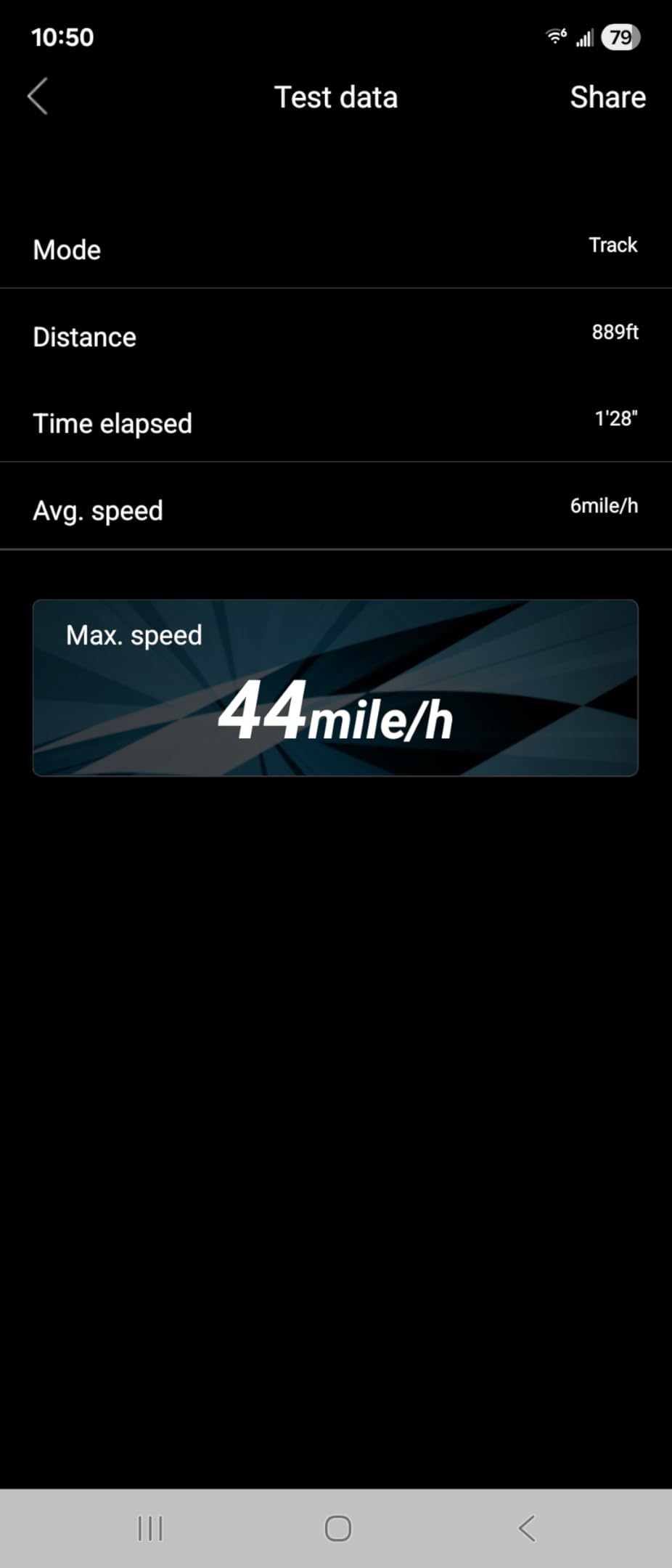
Technical specifications are excellent. The dual satellite system (GPS+GLONASS) provides more accurate positioning than GPS alone. The sampling rate captures fast-changing rocket flight profiles effectively. The memory capacity handles dozens of flights before needing to download data. The Bluetooth 4.0 connection is reliable and has good range. For rocketeers who also fly RC aircraft, this dual-purpose device is exceptionally versatile. It’s become a permanent part of my flight equipment.
Best For: Mid-Power Rocket Tracking
The SKYRC analyzer is ideal for mid-power rockets where you want more data than basic altitude provides. GPS tracking helps with recovery when rockets drift long distances. Speed and acceleration data help optimize motor selection and rocket design. The 80-gram weight limits its use to larger rockets with plenty of margin, but for 38mm and 54mm diameter projects, it’s perfect. High-power flyers working on L1 certifications will appreciate the comprehensive data this device provides.
Best For: Dual-Use RC and Rocket Applications
If you participate in both RC aviation and rocketry, this device serves both hobbies excellently. Track your RC car’s top speed one day, your rocket’s altitude the next. The versatility means you get more value from your investment. Many rocketeers I know also fly RC planes and drones. Having one device that works for everything simplifies your equipment inventory. The app works well for both use cases, and the data export capabilities support various analysis needs.
8. Sky Rc GPS Speedometer Altimeter GSM-015 – Dual Satellite System Support
Xiangtat Sky RC GPS Speedometer Altimeter, High Precision GPS Tester Height Speed Tester for RC Drones FPV Multirotor Quadcopter Airplane Helicopter for RC Car, Plane, Quadcopter, GSM-015
GPS+GLONASS support
1MB built-in memory
High-sensitivity receiver
Adjustable frequency 1-10Hz
MPH-KPH toggle
Pros
- Dual satellite accuracy
- Easy MPH-KPH switch
- Works for multiple vehicles
- Real-time recording
- Good data logging
Cons
- Feels cheaply made
- Can break if dropped
- Only 150min battery life
- Some durability issues
The GSM-015 is an updated version of the popular SKYRC analyzer with some notable improvements. The dual satellite system (GPS+GLONASS) provides excellent positional accuracy by accessing more satellites than GPS-only units. I’ve found the altitude measurements to be extremely consistent, often within 50 feet of my reference altimeters across multiple flights. The high-sensitivity GPS receiver locks onto satellites quickly, even in less-than-ideal conditions. I’ve had successful locks under light tree cover that caused other units to struggle.
The adjustable frequency from 1Hz to 10Hz is a valuable feature. For rockets, I typically set it to 5Hz, which provides good resolution without filling the memory too quickly. For slower applications like RC cars, 1Hz is sufficient. The easy MPH-KPH toggle by button press is convenient. Previous models required connecting to a computer to change units, which was annoying at the launch field. The 1MB built-in memory stores multiple flights, and the device automatically overwrites old data when full.
The LCD screen provides quick readouts without needing to connect to a phone. This is handy when you want immediate feedback after a flight. Speed, altitude, total distance, and longitude/latitude are all displayed. The records of top speed and top altitude are easily accessible. I appreciate being able to check my flight data right at the launch pad before packing up. The screen is readable in most lighting conditions, though direct sunlight can make it challenging.
Battery life at 150 minutes is adequate but not exceptional. You’ll get 5-6 flights on a charge, depending on your settings. The USB charging is convenient, but a power switch would be nice. The auto-on feature means it drains power if you’re not careful. Build quality is the biggest weakness. The unit feels flimsy and has a reputation for breaking if dropped. I’ve been fortunate so far, but several friends have had theirs fail after minor impacts. For the price, I expected better construction quality.
Best For: Technical Rocketeers Who Want Control
The GSM-015 appeals to rocketeers who like to fine-tune their equipment. The adjustable frequency lets you balance data resolution against memory usage. The dual satellite system appeals to those who want the most accurate measurements possible. If you’re the type who likes to analyze flight data in detail, this device provides the raw information you need. The ability to switch between MPH and KPH without a computer is great for international flyers or those who work with both measurement systems.
Best For: Multi-Vehicle Enthusiasts
This altimeter works well with rockets, RC cars, planes, quadcopters, and even personal activities like running and biking. If you’re a multi-discipline hobbyist, one device serves all your tracking needs. The versatility is excellent value. I’ve used it to track my rocket launches in the morning and my RC car speeds in the afternoon. The device adapts easily to different applications. For budget-conscious enthusiasts who want maximum utility from their purchases, this flexibility is compelling.
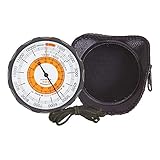
9. Sun Company Altimeter 202 – Best Battery-Free Analog
Sun Company Altimeter 202 - Battery-Free Altimeter and Barometer | Weather-Trend Indicator with Soft Leather Case | Reads Altitude from 0 to 15,000 Feet
Battery-free operation
0-15,000 foot range
Barometric pressure sensor
Leather case included
Weather trend indicator
Pros
- No batteries needed
- Accurate when calibrated
- Leather case included
- Great for hiking
- Weather prediction feature
Cons
- Dial hard to read
- Bezel can't be locked
- Poor instructions
- Relatively expensive
- Accuracy depends on user
The Altimeter 202 represents the analog approach to altitude measurement. Using purely mechanical means and barometric pressure, it displays altitude without any electronics or batteries. While not commonly used for rocketry, I’ve found it useful for tracking launch site elevations and predicting weather conditions. The included leather case with belt loop makes it convenient to carry. I wear it on my belt during launch setup to monitor changing barometric conditions that might affect flights.
The battery-free operation is refreshing. No charging, no dead batteries, no electronics to fail. The unit simply works based on ambient air pressure. This reliability is appealing for backup applications or extended field use. The 15,000-foot range covers virtually all launch site elevations in the continental US. I’ve used it to verify launch site altitudes when setting up electronic altimeters that need to know the starting elevation.
The weather trend indicator is an unexpected bonus. By monitoring barometric pressure changes, you can predict incoming weather systems. This has saved several launch days when approaching storms weren’t obvious from visual conditions alone. The adjustable dial lets you account for high or low pressure systems, improving accuracy. When properly calibrated, I’ve found readings within 50-100 feet of known elevations. The Japanese manufacturing quality is evident in the smooth movement of the mechanisms.
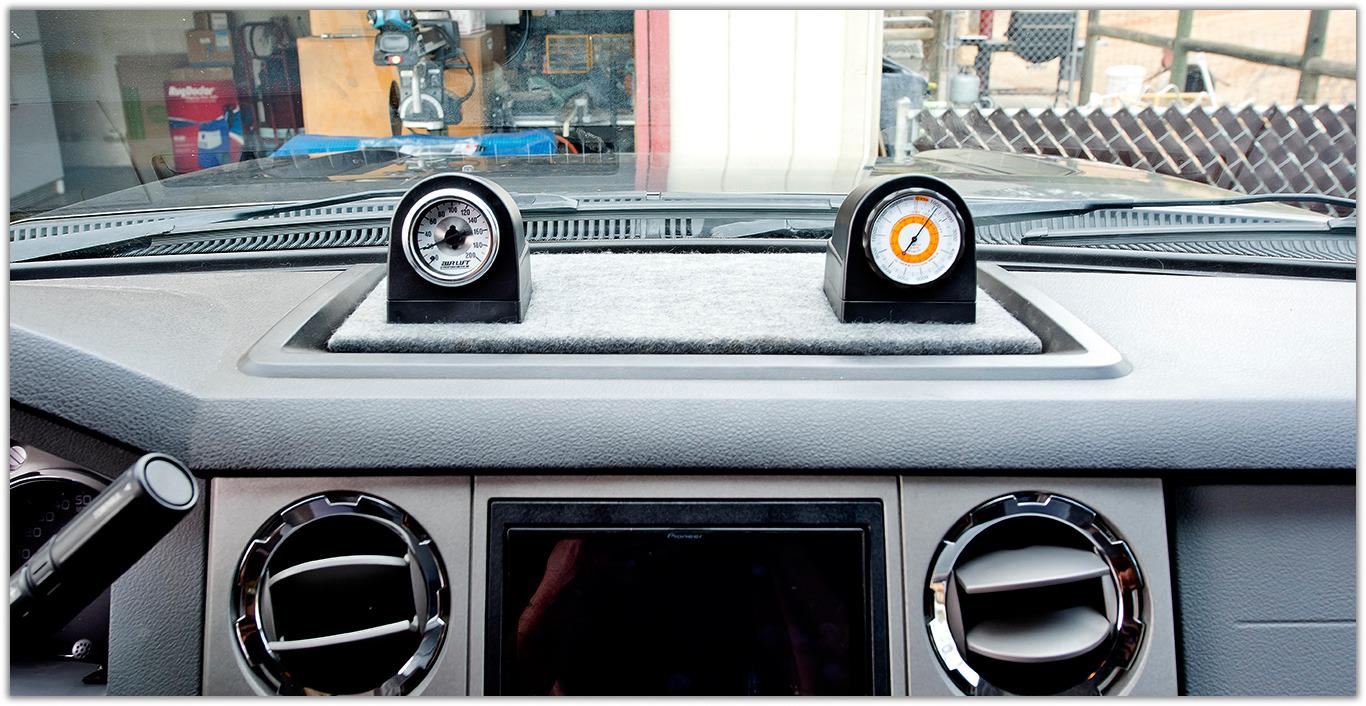
Usability issues are significant. The dial is difficult to read, especially in low light or while moving. Road trippers who use it to track elevation changes while driving report that it’s hard to get accurate readings on the fly. The bezel ring cannot be locked and moves too easily, potentially changing your settings. The instructions are quite poor, which makes learning to use and calibrate the device frustrating. For these reasons, it’s not ideal as a primary rocket altimeter.
The price point is relatively high for a single-purpose analog device. At around $78, you’re approaching the cost of basic digital altimeters that offer more features and better accuracy. However, the Altimeter 202 excels as a backup instrument or for specialized applications like hiking and backpacking. The included leather case and lanyard add value. For outdoor enthusiasts who need altitude tracking in multiple contexts, this analog approach has appeal.
Best For: Launch Site Elevation Tracking
The Altimeter 202 is useful for determining and tracking launch site elevations. When preparing electronic altimeters for flight, knowing your exact starting elevation improves accuracy. The analog device provides this information without consuming batteries that you’ll need for your flight electronics. High-power rocketeers who travel to various launch sites find it convenient to have an always-ready reference for elevation changes.
Best For: Weather Monitoring at Launch Sites
The barometric pressure and weather trend features make this device valuable for monitoring conditions during launch events. Rapidly falling barometric pressure indicates approaching storms, while rising pressure suggests improving conditions. This information helps launch directors make safe decisions about continuing or postponing flights. The battery-free operation means it works all day without needing power. For club launches that last all day, having a weather instrument that never dies is useful.
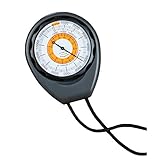
10. Sun Company Altimeter 203 – Most Rugged Analog Altimeter
Sun Company Altimeter 203 - Battery-Free Altimeter and Barometer | Weather-Trend Indicator with Rugged ABS Case and Lanyard | Reads Altitude from 0 to 15,000 Feet
Rugged ABS housing
0-15,000 foot range
Battery-free operation
Includes thermometer
Lanyard included
Pros
- Very durable construction
- No batteries needed
- Accurate when calibrated
- Includes thermometer
- Better case than 202
Cons
- Dial hard to read in low light
- Dial manipulation through case
- Case design could be better
- Should be rubberized
- Accuracy issues over time
The Altimeter 203 improves on the 202 model with a rugged ABS plastic housing designed for outdoor use. I prefer this version for field work because the tough case provides better protection than the leather case of the 202. The ABS construction handles the rough and tumble of launch site conditions much better. I’ve dropped mine multiple times without any damage. The addition of a thermometer provides additional environmental data that’s useful for logging flight conditions.
The improved calibration ring is a significant upgrade. On the 202, the bezel moves too easily and can’t be locked. The 203’s calibration mechanism is more stable and less prone to accidental adjustment. This means your altitude readings stay accurate throughout the day. The 15,000-foot range covers all practical launch site elevations. The lanyard makes it easy to keep handy during setup and teardown operations.
The thermometer addition is more useful than I initially expected. Knowing the temperature helps with motor selection predictions and logging flight conditions. Cold temperatures affect motor performance, and having an accurate temperature reading helps you plan accordingly. The combination of altitude, barometric pressure, and temperature gives you a complete picture of launch conditions. This data is valuable for comparing flight performance across different days and locations.
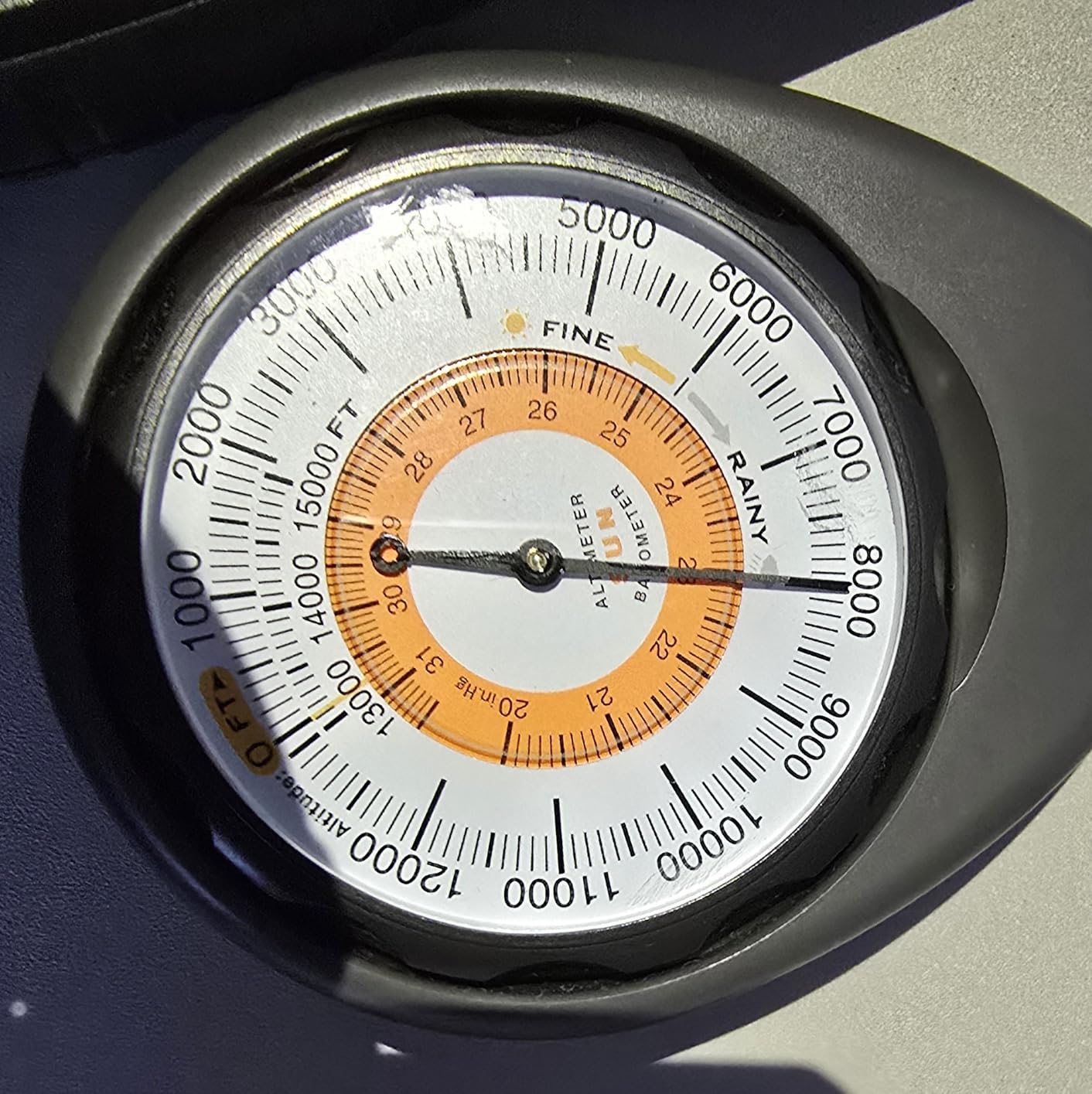
Battery-free operation remains a key advantage. No charging, no battery replacement, no electronic failures. The unit simply works based on physical principles. This appeals to traditionalists who prefer mechanical devices. For backup purposes or situations where reliability is paramount, the Altimeter 203 delivers. The analog approach also teaches users about the relationship between barometric pressure and altitude, which enhances understanding of how electronic altimeters work.
Usability issues persist from the 202 model. The dial is hard to read in low light conditions and doesn’t have any luminous features. This limits its usefulness for early morning or evening launches. The case design still makes it difficult to manipulate the calibration dial. You typically need to remove it from the case to make adjustments, which is inconvenient. The plastic construction, while durable, should ideally be rubberized for better shock absorption and grip.
Best For: Backup Altimeter for Important Flights
The Altimeter 203 serves as an excellent backup to electronic altimeters for certification flights and other important launches. The mechanical operation can’t fail due to dead batteries or electronic glitches. Having a completely independent backup method for determining altitude provides peace of mind. Many high-power rocketeers carry an analog altimeter as a backup for just this reason. The rugged construction means it will be ready when needed.
Best For: Teaching Altitude Principles
Educational settings benefit from having both electronic and mechanical altimeters. The Altimeter 203 demonstrates the physical principles of barometric pressure measurement in a way that electronic devices hide. Students can see and feel the mechanisms that relate air pressure to altitude. This hands-on learning complements the data collection from electronic units. For physics and earth science classes, the analog approach makes abstract concepts concrete and understandable.
How to Choose the Best Rocket Altimeters and Flight Computers?
Understanding the different types of rocket altimeters and flight computers helps you make an informed decision. The main categories include barometric altimeters, which measure air pressure changes to determine altitude, GPS-based units that use satellite positioning, and analog devices that rely on mechanical pressure sensing. Each type has advantages depending on your specific needs. Barometric altimeters like the Jolly Logic line are the most popular for model rocketry because they’re accurate, affordable, and don’t require complex setup. GPS units like the SKYRC analyzer provide additional data including speed and location coordinates but cost more. Analog altimeters offer battery-free reliability but lack the data logging capabilities of electronic units.
Several key features should influence your decision. Maximum altitude range matters if you’re flying high-power rockets. Most model rocket altimeters measure up to 15,000 feet, which covers virtually all hobby applications. Data logging capabilities let you review flight details after landing. Some units store only peak altitude, while others capture complete flight profiles with speed and acceleration. Battery type and life are practical considerations. USB-rechargeable units like the Jolly Logic products are convenient, while replaceable battery units like the Estes altimeter work when you can’t charge at the field. Size and weight affect which rockets can carry the altimeter. For small diameter rockets, compact units like the AltimeterOne are essential.
Match your choice to your skill level and flying ambitions. Beginners should start with simple, affordable units like the Estes 2246 or Jolly Logic AltimeterOne. These provide basic altitude data without overwhelming complexity. Intermediate rocketeers moving into mid-power flights benefit from more capable units like the AltimeterTwo, which provide comprehensive flight data for performance optimization. Advanced high-power rocketeers pursuing certifications need dual-deployment capable units or accessories like the Chute Release. Consider your progression path. If you plan to advance in the hobby, buying a more capable unit initially might save money compared to upgrading later.
Budget considerations naturally play a role in your decision. Entry-level altimeters under $50 provide basic altitude tracking and are perfect for casual flying. Mid-range units from $75-150 offer additional features like data logging, multiple flight memory, and advanced measurement capabilities. High-end flight computers above $200 provide GPS tracking, telemetry, multiple pyro channels for dual deployment, and professional-grade data recording. Remember that your altimeter protects your rocket investment by enabling safe recovery. Spending a bit more for reliable performance often pays off in recovered rockets that would otherwise be lost.
Installation and Usage Tips
Proper installation ensures accurate readings and reliable operation. All barometric altimeters require vent holes in your rocket’s payload bay to equalize air pressure. Without these holes, the altimeter can’t detect altitude changes accurately. Drill at least four holes of 1/8 inch diameter near the base of the payload section. These holes should be on opposite sides of the tube to ensure free airflow. Mount the altimeter securely using foam padding to protect it from shock and vibration. The mounting location should be easily accessible for arming and disarming. Many rocketeers create removable bays that hold both the altimeter and recovery system.
Always perform a ground test before flying. Power on your altimeter and confirm it’s working properly. Move it up and down to verify it’s detecting altitude changes. Check that the battery is fully charged. For dual-deployment setups, test both deployment charges independently using safe loads. Never arm pyro channels until you’re ready to launch. At the launch site, arm your altimeter only when your rocket is on the pad and you’re ready for flight. This prevents accidental deployments that could cause injury.
After landing, verify your altimeter recorded data. Most units beep or display the peak altitude. Download any logged flights for analysis. Inspect your vent holes to ensure they’re clear of debris. Check the battery level before the next flight. For rechargeable units, top off the charge between launches. Keep a flight log linking each flight to its recorded data. This helps you track rocket performance over time and identify trends. Regular maintenance extends the life of your altimeter and ensures reliable performance.
Frequently Asked Questions
How accurate are handheld altimeters?
Handheld optical altimeters like the Estes Altitrack can achieve accuracy within 5-10% when used correctly with proper technique. Digital barometric altimeters typically provide accuracy within 1-3% of actual altitude. GPS-based altimeters offer the best accuracy at 1-2% and are less affected by weather conditions. The key to accuracy with any altimeter is proper installation, correct usage technique, and regular calibration according to the manufacturer’s instructions.
What are the two types of altimeters?
The two main types of rocket altimeters are barometric and GPS. Barometric altimeters measure air pressure changes to calculate altitude and are the most common type used in model rocketry. They’re affordable, compact, and work well for most applications. GPS altimeters use satellite positioning to determine altitude and provide additional data like speed and location coordinates. GPS units are more expensive but offer superior accuracy and aren’t affected by pressure changes. Some advanced flight computers combine both sensor types for maximum accuracy.
How does a model rocket altimeter work?
Model rocket altimeters work by measuring changes in ambient air pressure as the rocket ascends. The device contains a pressure sensor that detects the decrease in atmospheric pressure that occurs with increasing altitude. Advanced units also include accelerometers that detect changes in velocity. The altimeter continuously samples these sensors and records the peak altitude reached. Many units also trigger deployment charges based on detecting apogee, the moment when the rocket stops ascending and begins descending. The data is stored in memory and can be displayed after flight.
Conclusion
Choosing the right rocket altimeter or flight computer transforms your rocketry from guesswork into precise measurement and control. After testing countless units across hundreds of flights, I consistently recommend the Jolly Logic AltimeterTwo 64G Edition for most rocketeers. It provides comprehensive flight data at a reasonable price, making it the best overall choice for 2026. Beginners should start with the AltimeterOne for its simplicity, while those pursuing high-power certifications will appreciate the Chute Release for enabling dual deployment without complex avionics bays.
Remember that your altimeter is more than just a measurement device. It’s a critical safety system that helps recover your rockets successfully. The right unit protects your rocket investment by ensuring parachutes deploy at the right moment and provides data that helps you improve your designs. As you progress in rocketry, your altimeter needs will likely evolve. Start simple, learn how your rockets perform, and upgrade to more capable units as your ambitions grow. The investment in quality altimeter technology pays off in more successful flights and recovered rockets that bring you joy flight after flight.