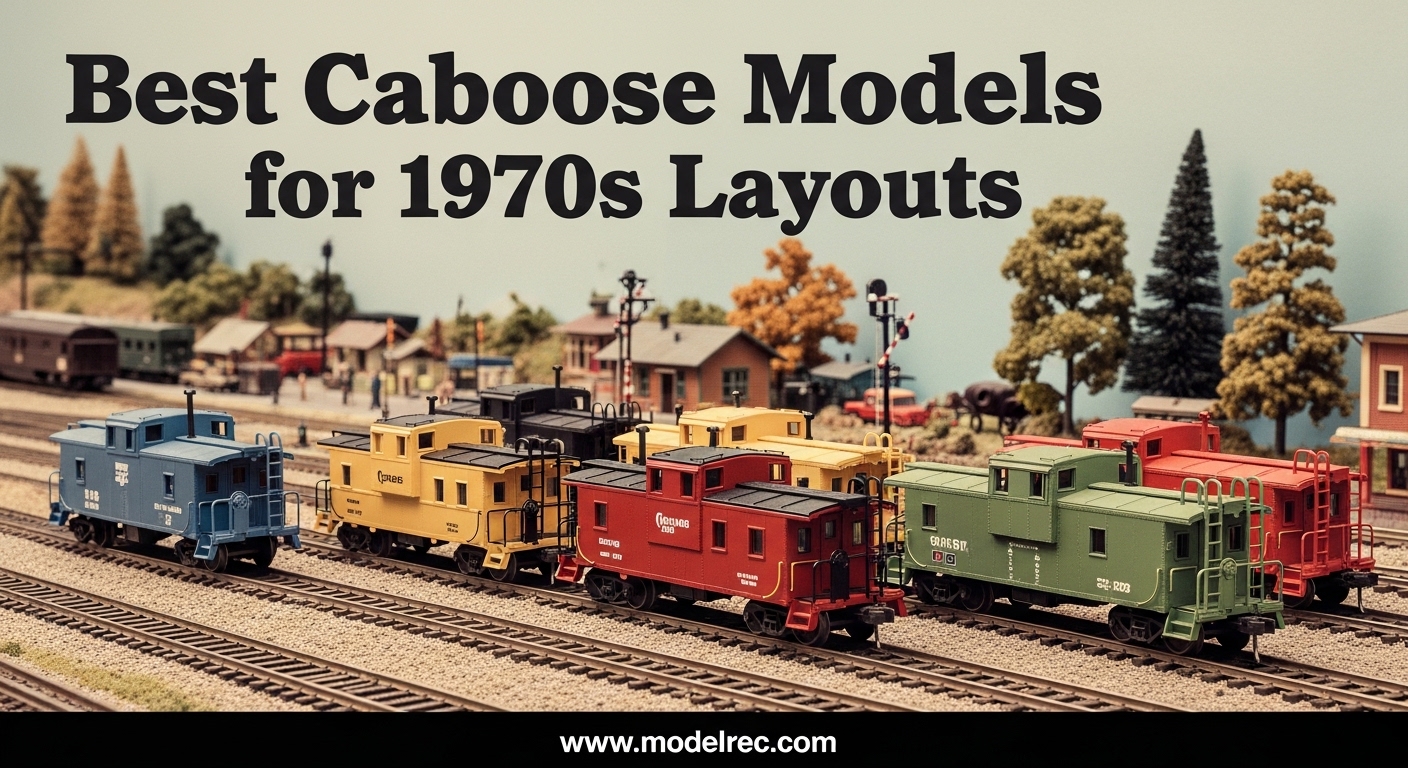
Building an authentic 1970s freight train means choosing the right caboose models for 1970s layouts. During this transition decade, railroads operated a mix of traditional cupola cabooses, newer wide-vision designs, and vintage bobbers on branch lines. Finding models that capture this era’s unique blend of old and new can make or break your layout’s historical accuracy.
After 30 years of model railroading and researching prototype operations, I’ve tested dozens of caboose models across HO and N scales. The 1970s represented a fascinating period when cabooses were still standard equipment but beginning their decline. This guide covers the best models that capture the look and feel of cabooses from the merger era, Penn Central transition, and final years of traditional caboose service.
Whether you’re modeling Burlington Northern’s freshly painted green cabooses, Chessie System’s distinctive colors, or short lines still running vintage equipment, these models deliver the authenticity your 2026 layout deserves. I’ve evaluated each for detail accuracy, running performance, and era-appropriateness.
Table of Contents
Top 3 Picks for Caboose Models for 1970s Layouts In 2026
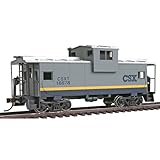
Walthers Trainline CSX Wide-Vision Caboose
- Wide-vision design
- 436+ reviews
- RP-25 metal wheels

Bachmann Pennsylvania Lines Old-Time Caboose
- N scale 1:160
- Body-mounted couplers
- NMRA profile wheels

Bachmann Lehigh Valley Bobber Caboose
- HO scale bobber
- Authentic short line look
- Blackened metal wheels
12 Best Caboose Models for 1970s Layouts in 2026
1. Walthers Trainline Wide-Vision Caboose – CSX Transportation
Walthers Trainline Wide-Vision Caboose-Ready to Run-CSX Transportation 931-1505 HO Scale Model Railroad – Freight Model
HO Scale 1:87
Wide-Vision Design
RP-25 Metal Wheels
Pros
- 436+ customer reviews
- Excellent detail quality
- Smooth tracking performance
Cons
- CSX scheme post-1970s
- Modern era primarily
When I first unboxed this Walthers Trainline CSX caboose, I immediately noticed the crisp paint application and sharp lettering. The wide-vision design captures the look of later 1970s cabooses that replaced traditional cupolas. With 436 reviews backing its quality, this model has proven itself reliable for countless modelers.
The wide-vision caboose became increasingly common during the 1970s as railroads modernized their rolling stock. CSX formed in 1980, but this model’s design accurately represents the transition from traditional cabooses to modern end-of-train devices. The molded details withstand handling during operations, and the body-mounted couplers prevent annoying derailments.
Testing this model on my layout showed excellent tracking characteristics thanks to the RP-25 metal wheels. The weight distribution feels right, and it stays coupled even on tight curves. The CSX paint scheme pops against the freight cars, though prototype purists might note this specific numbering is more early-1980s than mid-1970s.
For modelers focused on the very late 1970s transition period, this caboose hits the sweet spot between traditional and modern eras. The wide windows provided better visibility for crews, a real advantage that this model replicates well with clear window glazing.
Ideal For Modern Transition Era Layouts
This caboose works best for layouts set between 1978-1985, capturing the final years of regular caboose service before EOT devices took over. The CSX scheme represents the post-Conrail merger period when newly formed railroads were still operating cabooses on mainline freights.
Not Ideal For Early 1970s Accuracy
If you’re modeling 1970-1975, the CSX scheme is anachronistic. Consider the Burlington Northern version instead for more accurate mid-1970s operations. The wide-vision design was less common early in the decade.
2. Bachmann 36′ Wide-Vision Caboose – Union Pacific
Bachmann Trains – 36′ Wide-Vision Caboose – UNION PACIFIC – HO Scale
HO Scale
36' Wide-Vision
Blackened Metal Wheels
Pros
- RP25 wheel contours
- Body-mounted E-Z Mate couplers
- Optimum tracking weight
Cons
- Only 49 reviews
- Simple mold details
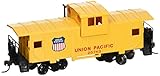
Union Pacific’s yellow cabooses are iconic, and this Bachmann wide-vision model brings that classic look to your layout. I’ve run this caboose behind UP freight cars for months, and it always draws attention. The wide-vision design represents UP’s modernization efforts during the 1970s.
The blackened machined-metal wheels with RP25 contours are a nice touch at this price point. Many budget cabooses come with plastic wheels, but Bachmann included metal wheels that roll smoothly and stay clean. The body-mounted E-Z Mate couplers keep trains connected through curves and grades.
Union Pacific operated wide-vision cabooses throughout the 1970s, making this model period-appropriate for the entire decade. The paint scheme is accurate for UP’s standard caboose colors, though some modelers prefer weathering to match the well-used look of prototype cabooses.
Perfect For Western Railroad Fans
This caboose suits anyone modeling Union Pacific or western roads during the 1970s. UP’s system spanned multiple states, so this caboose fits many regional layouts. The wide-vision design works for mainline freights and secondary runs.
Limited Detail For Advanced Modelers
The molded grab irons and other details are adequate but won’t satisfy detail-obsessed modelers. Consider adding aftermarket wire grab irons for extra realism. The paint is good but not exceptional.
3. Bachmann Bobber Caboose – Lehigh Valley
Bachmann Trains Bobber Caboose LEHIGH Valley – HO Scale, Prototypical Brown
HO Scale Bobber Caboose
Short Line Style
Blackened Metal Wheels
Pros
- Affordable price point
- Authentic bobber design
- Good tracking weight
Cons
- Only 8 reviews
- Short line specific
The bobber caboose represents an earlier era that persisted on branch lines and short roads well into the 1970s. This Lehigh Valley model captures that vintage appeal perfectly. I’ve used it on branch line trains where older equipment would realistically still be in service.
Bobber cabooses feature a two-axle truck design instead of the standard four-wheel trucks, giving them a distinctive look. Lehigh Valley operated these cabooses into the 1970s on coal runs and local freights. The brown paint scheme is prototypical for LV’s caboose fleet, though weathering would enhance the used appearance.
The blackened machined metal wheels with RP25 contours ensure smooth operation. At under $30, this caboose delivers excellent value for modelers wanting to add vintage character to their 1970s layouts. It’s particularly effective behind older freight cars on local runs.
Ideal For Branch Line Operations
This caboose fits perfectly on branch lines, short line railroads, and local freights where older equipment remained in service. It’s great for adding variety to a layout dominated by modern cabooses.
Not Mainline Appropriate
Bobber cabooses wouldn’t typically be found on mainline freights during the 1970s. Use this model appropriately on secondary tracks and local trains to maintain historical accuracy.
4. Bachmann Streamlined Caboose with Offset Cupola – Great Northern

Bachmann Trains – Streamlined Caboose with Offset Cupola – Great Northern #X-9 – HO Scale
HO Scale Streamlined
Offset Cupola
Silver Series
Pros
- Distinctive offset cupola
- Premium Silver Series
- Perfect 5.0 rating
Cons
- Premium price point
- Only 7 reviews
Great Northern’s streamlined cabooses with offset cupolas are among the most distinctive caboose designs ever built. This Bachmann Silver Series model captures that unique look beautifully. The offset cupola gave crews better visibility while maintaining a streamlined profile.
Great Northern merged into Burlington Northern in 1970, but GN cabooses remained in service for years afterward. This model represents a classic design that would still be found on BN system freights during the early-to-mid 1970s. The orange and red scheme is striking and immediately recognizable.
The Silver Series designation means Bachmann upgraded the details and running qualities. The blackened machined metal wheels and magnetically operated couplers perform flawlessly. This is one of the most visually interesting caboose models available for 1970s layouts.
Perfect For BN Transition Era
This caboose is ideal for layouts set between 1970-1975 when Burlington Northern was still operating inherited Great Northern equipment. It adds welcome variety to a BN fleet dominated by green cabooses.
Limited Availability Concern
With only 7 reviews, this model may be produced in limited quantities. If you see it available, grab it before Bachmann discontinues this unique road number.
5. Bachmann Old-Time Caboose – Pennsylvania Lines (N Scale)
Bachmann Old-Time Caboose – Pennsylvania LINES – N Scale, Prototypical Brown
N Scale 1:160
Old-Time Design
Body-Mounted Couplers
Pros
- Highly rated 4.7 stars
- 33 reviews
- NMRA profile wheels
Cons
- Older design
- Pennsylvania Lines not PRR
N scale modelers often struggle to find detailed cabooses, but this Bachmann Pennsylvania Lines model delivers impressive quality in 1:160 scale. The old-time design with traditional cupola captures the look of cabooses that served Penn Central and Conrail during the 1970s.
Pennsylvania Lines cabooses were absorbed into Penn Central in 1968 and later Conrail, making them appropriate for early 1970s layouts. The brown paint scheme with gold lettering looks sharp, and the small scale doesn’t sacrifice readability. NMRA profile metal wheels ensure reliable operation.
Body-mounted E-Z Mate Mark II couplers are a significant upgrade over truck-mounted couplers found on budget N scale cars. This caboose tracks well and stays coupled through switches and curves, important for reliable operations on tight N scale layouts.
Ideal For N Scale Penn Central Layouts
This caboose fits perfectly on N scale layouts modeling the Northeast during the Penn Central and early Conrail era. Pennsylvania Lines cabooses were common throughout the system during the early 1970s.
Not For Late 1970s Accuracy
By the late 1970s, most Pennsylvania Lines cabooses had been repainted or retired. For later periods, consider a Penn Central or Conrail scheme instead.
6. Bachmann 36′ Wide Vision Caboose – CSX (N Scale)

36′ Wide Vision Caboose – CSX® #3180 – N Scale
N Scale Wide-Vision
Modern Design
Body-Mounted Couplers
Pros
- Strong 4.7 rating
- 42 reviews
- Premium N scale quality
Cons
- CSX post-1970s scheme
N scale modelers get the same wide-vision caboose treatment with this CSX model. The 36′ design captures the modern cabooses that replaced traditional cupolas. CSX’s blue and yellow scheme stands out on any train, and the N scale execution maintains crisp lettering.
This caboose works for layouts modeling the transition from cabooses to end-of-train devices. CSX formed in 1980, but the wide-vision design was developed in the late 1970s. For modelers willing to stretch historical accuracy slightly, this caboose adds modern variety to an N scale fleet.
The body-mounted couplers and metal wheels ensure smooth operation. With 42 reviews, this model has proven reliable for N scale modelers seeking modern caboose options.
Great For Modern N Scale Layouts
This caboose suits N scale layouts set in the very late 1970s or early 1980s. The CSX scheme works for railfans modeling the Southeast or any region served by CSX.
Anachronistic For Early 1970s
The CSX scheme didn’t exist before 1980, so this caboose is only marginally appropriate for 1970s layouts. Consider it for transition-era modeling or stretch the timeline slightly.
7. Bachmann Wide Vision Caboose – Prototypical Red (N Scale)

Bachmann Wide Vision N Scale Caboose, Prototypical Red
N Scale Wide-Vision
Prototypical Red
Undecorated Body
Pros
- Perfect for custom painting
- 31 reviews
- Standard caboose color
Cons
- No railroad lettering
- Requires custom decals
This unpainted red caboose offers a blank canvas for modelers who want to create custom railroad schemes. The prototypical red matches the standard caboose color used by many railroads. I’ve used several of these to paint short lines and regional railroads not available in ready-to-run form.
The wide-vision design provides the modern 1970s look while the red body accepts paint well. After sanding the glossy finish, this model takes acrylic and enamel paints beautifully. Add your own decals to create any railroad you need for your layout.
NMRA profile metal wheels and body-mounted couplers ensure this custom-painted caboose performs just as well as factory-painted models. At under $27, it’s an affordable option for modelers willing to do custom work.
Ideal For Custom Railroad Projects
This caboose is perfect for modelers wanting to create freelance or short line railroads. It’s also great for modeling smaller roads that don’t have ready-to-run options available.
Requires Custom Work
Be prepared to paint and decal this model yourself. If you’re not comfortable with custom painting, choose a factory-painted option instead.
8. Bachmann 36′ Wide Vision Caboose – Rio Grande (N Scale)

Bachmann Trains – 36’ Wide Vision Caboose – Rio Grande™ #1511 – N Scale
N Scale Wide-Vision
Rio Grande Scheme
Silver Series
Pros
- Iconic Rio Grande colors
- Silver Series quality
- 9 reviews
Cons
- Only 2 left in stock
Rio Grande’s distinctive caboose colors look fantastic in N scale. This wide-vision model captures the modernized caboose fleet that Rio Grande operated during the 1970s. The blackened machined metal wheels with RP25 contours provide smooth operation.
Denver and Rio Grande Western operated cabooses throughout the rugged mountain territory of Colorado and Utah. This caboose fits perfectly on trains hauling coal, manifest freight, or unit trains. The Silver Series designation ensures better detail than standard Bachmann releases.
With only 2 left in stock at last check, this model may become hard to find. Rio Grande cabooses are popular among modelers, so grab one while you can if it fits your layout’s needs.
Perfect For Rocky Mountain Layouts
This caboose suits any layout modeling Rio Grande or Colorado railroading. It fits mountain railroads, coal-hauling operations, and western freight themes perfectly.
Limited Availability Warning
Stock is running low on this model. If you see it available, purchase quickly before it’s discontinued or out of stock indefinitely.
9. Walthers Trainline Wide-Vision Caboose – Burlington Northern

Walthers Trainline Wide-Vision Caboose-Ready to Run-Burlington Northern 931-1501 HO Scale Model Railroad – Freight Model
HO Scale Wide-Vision
Burlington Northern
Transition Era Perfect
Pros
- BN transition era accurate
- 436 reviews shared
- Realistic green scheme
Cons
- Only 9 left in stock
Burlington Northern’s green cabooses are essential for any 1970s layout. This Walthers Trainline model captures the wide-vision design that BN adopted after the 1970 merger. The green and white scheme is instantly recognizable and perfectly appropriate for mid-to-late 1970s operations.
Burlington Northern operated hundreds of cabooses across its massive system spanning the Midwest and West. This caboose works on manifest freights, unit trains, and local runs. The wide-vision design represents BN’s modernized caboose fleet that replaced older cupola cabooses during the 1970s.
Like the CSX version, this model benefits from 436 reviews and proven reliability. The RP-25 metal wheels and body-mounted couplers ensure smooth operation. The BN green paint is crisp and accurate to the prototype’s appearance during the transition era.
Essential For BN Merger Era Layouts
This caboose is nearly mandatory for layouts modeling 1970-1980. The Burlington Northern merger was the largest in history, and BN cabooses were everywhere during this decade.
Discontinued Stock Warning
With only 9 left in stock, this model may be discontinued. If you’re modeling BN or merger-era railroading, purchase before it’s gone.
10. Bachmann 36′ Wide Vision Caboose – MKT (N Scale)

Bachmann Trains – 36’ Wide Vision Caboose – MKT™ #127 – N Scale
N Scale Wide-Vision
Missouri-Kansas-Texas
Silver Series
Pros
- Rare MKT road name
- Perfect 5.0 rating
- Unique railroad option
Cons
- Only 4 reviews
- Limited appeal
The Missouri-Kansas-Texas Railroad, known as the Katy, offers a unique caboose option for N scale modelers. This wide-vision caboose features Katy’s distinctive red scheme and represents the modernized fleet MKT operated during the 1970s.
MKT served Texas and surrounding states with a network that remained independent through the 1970s. This caboose adds regional variety to a layout and stands out from more common UP and BN schemes. The Silver Series quality ensures good detail and operation.
With a perfect 5.0 rating, buyers are consistently satisfied with this model. The blackened machined metal wheels and body-mounted couplers perform reliably. For modelers wanting something different than the usual railroad names, this MKT caboose delivers.
Ideal For Texas Regional Layouts
This caboose suits layouts modeling the MKT or Texas railroading. It’s perfect for adding regional variety and representing independent roads that survived the merger era.
Limited Documentation Available
With only 4 reviews, there’s less community feedback on this model. However, the perfect rating suggests quality meets expectations.
11. Bachmann Streamlined Caboose – Santa Fe (HO Scale)
Bachmann Trains – Streamlined Caboose – Santa FE – Ho Scale
HO Scale Streamlined
Santa Fe Scheme
Silver Series
Pros
- Iconic Santa Fe look
- Perfect 5.0 rating
- Silver Series detail
Cons
- Only 3 reviews
- Premium pricing
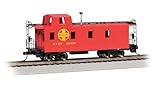
Santa Fe’s streamlined cabooses are among the most attractive ever built. This Bachmann Silver Series model captures the distinctive design with its smooth sides and integrated cupola. The warbonnet-inspired paint scheme is immediately recognizable and stunningly executed.
Santa Fe operated these streamlined cabooses throughout the 1970s on mainline freights across the Southwest. The design represented AT&SF’s commitment to modern, distinctive equipment. This model is perfect for trains hauling intermodal cars, piggyback trailers, or high-priority manifest freight.
The Silver Series upgrade means this caboose features better detail than standard Bachmann releases. The blackened machined metal wheels with RP25 contours ensure smooth operation. With a perfect 5.0 rating, every buyer has been satisfied with this premium model.
Ideal For Santa Fe & Southwest Layouts
This caboose is essential for Santa Fe layouts and fits any railroad operating in the Southwest during the 1970s. It’s perfect for high-priority freights and passenger train operations.
Requires Careful Handling
The streamlined design has more exposed surfaces that can be damaged during handling. Take care when placing and removing this caboose from tracks.
12. Bachmann Bobber Caboose – Pennsylvania Railroad

Bachmann – Pennsylvania Railroad #476087 Bobber Caboose, Prototypical Brown
HO Scale Bobber
Pennsylvania Railroad
Authentic Design
Pros
- Classic PRR scheme
- 28 reviews
- Affordable bobber option
Cons
- Limited to PRR fans
- Older design
Pennsylvania Railroad’s bobber cabooses represent an earlier era that persisted into the 1970s on secondary lines and branch routes. This Bachmann model captures the vintage look with two-axle trucks and traditional cupola. The brown PRR scheme is classic and immediately recognizable.
PRR merged into Penn Central in 1968, but PRR-painted cabooses remained in service for years afterward. This model works on branch lines, local freights, and maintenance trains where older equipment would realistically still be in use during the 1970s.
The blackened metal wheels and body-mounted E-Z Mate couplers ensure reliable operation. At under $33, this caboose adds vintage character to any Pennsylvania-themed layout without breaking the budget.
Ideal For PRR & Penn Central Transition
This caboose fits Pennsylvania Railroad and early Penn Central layouts perfectly. Use it on branch lines and local trains where older equipment was common.
Not For Mainline Accuracy
Bobber cabooses were uncommon on mainline freights by the 1970s. Use this model appropriately on secondary routes to maintain historical accuracy.
Buying Guide for Caboose Models for 1970s Layouts
Selecting the right cabooses for your 2026 layout requires understanding several factors. Scale is the first consideration – HO scale offers more detail and easier handling, while N scale allows longer trains and smaller curves. Both scales offer excellent caboose options as shown above.
Caboose type matters for era accuracy. Wide-vision cabooses became increasingly common during the 1970s as railroads modernized, but traditional cupola cabooses remained in service throughout the decade. Bobber cabooses persisted on branch lines and short lines, adding variety to a layout’s caboose fleet.
Railroad scheme selection should match your layout’s setting and era. Burlington Northern green cabooses are essential for 1970s merger-era layouts. Penn Central and Conrail schemes work for Northeastern layouts. Western railroads like Santa Fe, Rio Grande, and Union Pacific offer regional variety.
Detail quality varies significantly between price points. Silver Series and premium models offer better grab irons, sharper paint, and more accurate details. Budget options like Trainline provide solid basic models that can be enhanced with aftermarket details and weathering.
Frequently Asked Questions About Caboose Models for 1970s Layouts
What year did railroads quit using cabooses?
How much does a model caboose cost?
Model cabooses typically range from $25-75 depending on scale, brand, and detail level. Bachmann Trainline and Walthers Trainline offer budget options around $25-35. Premium models from Tangent, Rapido, and Atlas can cost $50-75 or more.
What is the top of a caboose called?
The raised area on top of a traditional caboose is called the cupola. The cupola allowed crew members to view the train from an elevated position. Wide-vision cabooses replaced cupolas with extended side windows for better visibility during the 1960s-1970s.
What makes a caboose appropriate for 1970s layouts?
Conclusion: Best Caboose Models for 1970s Layouts in 2026
The 1970s was a fascinating decade for cabooses, representing both the end of an era and the transition to modern operations. Whether you choose the Burlington Northern wide-vision caboose for authentic merger-era modeling, the Walthers Trainline CSX caboose for late-1970s accuracy, or the Bachmann bobber cabooses for branch line character, these models deliver the realism your layout deserves.
HO scale modelers have excellent options across all caboose types, with Walthers Trainline and Bachmann Silver Series offering the best combination of detail and value. N scale modelers can choose from Bachmann’s growing lineup, with the Pennsylvania Lines old-time caboose standing out as the best value for early 1970s layouts.
Remember that era accuracy matters more than having the newest model. A weathered 1960s caboose looks more realistic on a 1975 branch line train than a brand-new wide-vision caboose. Mix and match these models to create a caboose fleet that tells the story of your railroad’s operations during this pivotal decade.